






40% of dairies are hemorrhaging thousands yearly—and it’s not feed costs.
EXECUTIVE SUMMARY: We’ve just uncovered dairy’s most expensive blind spot, and it’s flowing right through your barn. Our investigation reveals over 40% of dairies nationwide face water contamination issues that silently drain ,000 to ,000 annually from 100-cow operations. Here’s the kicker—research from the Journal of Dairy Science shows adding just one inch of water trough space per cow delivers 225 pounds more milk yearly, while contaminated water causes cows to cut intake by up to 15%. From Wisconsin’s limestone-driven iron problems to the West’s dissolved solids battles, we’ve mapped how regional geology affects your bottom line. The tech revolution’s coming fast—AI-powered water monitoring systems will transform dairy management by 2027, but smart producers are already treating water as a strategic nutrient delivery system. Don’t wait for the herd to catch up. We’ve cracked the code on turning your most overlooked utility into your most powerful production tool.
KEY TAKEAWAYS
- Every inch of water trough space = 225 lbs more milk per cow annually – Grab a measuring tape tomorrow and calculate your linear inches per cow. Under 3.5 inches? You’re leaving thousands on the table (Journal of Dairy Science, 2025). One trough expansion could fund itself in months.
- Contaminated water cuts cow intake by 15%—costing 2-5 lbs milk daily per cow – Get comprehensive water testing now ($50-100 investment). Iron above 0.3 ppm? You’ve found your profit leak. Each recovered pound of milk adds $0.20 to your bottom line (Hoard’s Dairyman research).
- Regional water challenges demand targeted solutions for maximum ROI – Wisconsin limestone creates iron issues, western regions fight dissolved solids, and the corn belt battles nitrates. Know your local enemy and attack accordingly. Generic solutions waste money—precision pays.
- AI-powered water systems launching by 2027 will separate leaders from laggards – Start exploring pilot programs and vendor trials now. Early adopters who master water as nutrient delivery will dominate while others scramble to catch up. Demand trial periods and local service guarantees.
- Water isn’t overhead—it’s your secret weapon for 2025’s tight margins – While competitors obsess over feed costs, progressive producers are unlocking water’s potential as a strategic production multiplier. Every gallon optimized is money in the bank.

Ever get that nagging feeling some of the biggest wins on your farm are hiding right under your nose while you’re chasing the next shiny piece of equipment? Well, here’s the thing that’s been eating at me: that goldmine might just be water. Yeah, water. Most overlooked, definitely underestimated, but quietly bleeding tens of thousands off dairy operations every year.
Take it from someone who’s been around enough dairy farms to see the pattern. Down here, where limestone bedrock loves to mess with your wells, more producers are waking up to a tough reality—the water they’ve trusted for years has been quietly holding them back. Recent comprehensive sampling covering over 3,600 farms nationwide reveals that about 40% have water with iron or manganese levels pushing past recommended safe limits (University studies, 2024-2025). That’s not just a water quality hiccup—it’s a production bomb waiting to go off.
Why Your Milk Numbers Are Down—And It’s Probably Not Genetics
Here’s what I’m seeing more and more: iron and manganese in water aren’t just flavors that make cows wrinkle their noses. Research indicates cows reduce water intake when iron contamination exceeds 0.3 ppm, though exact reduction percentages vary by environmental and individual factors. We’re talking potentially 2 to 5 pounds of milk lost per day per cow when intake drops. Add that across your herd, and you’ve got a serious dent in your milk check.
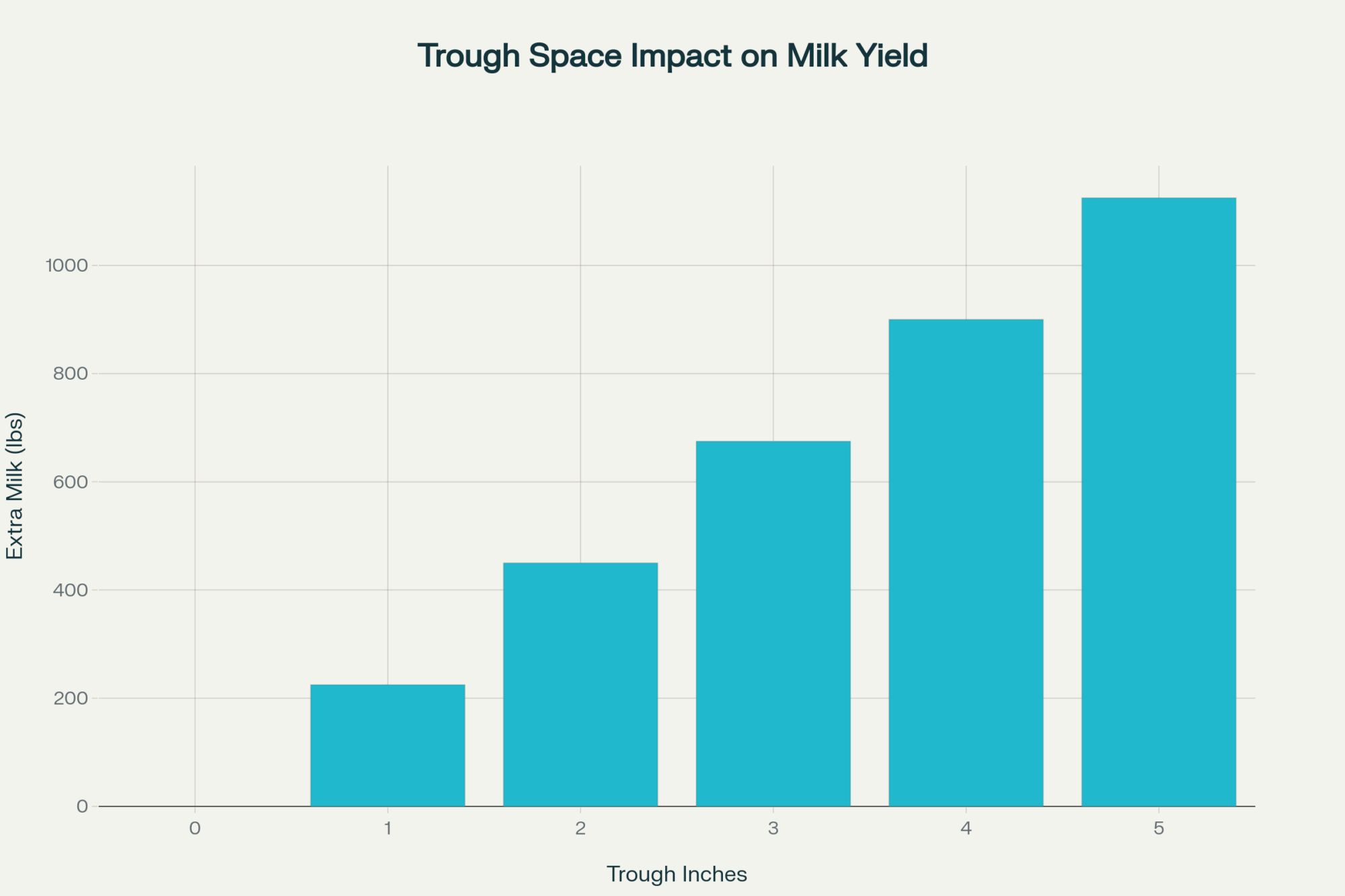
But here’s a nugget that’ll make you think differently about facility design: detailed analysis of 133 commercial herds found every extra inch of linear watering space per cow connected to an additional 225 pounds of milk annually (University research, 2025). So if you’re cramming 80 head into a trough space designed for 60, you’re basically tossing free money over the fence.
And timing matters more than most realize. High-producing cows are gulping 30 to 50 gallons daily, with 30-50% of that needed right after milking (Multiple dairy science sources). Miss that critical window, and you’re shortening every cow’s production potential before they even get settled back in the pen.
What Really Happens When Cows Hit Contaminated Water
This part genuinely blows my mind: cows can detect water contaminants down to parts-per-million levels—way beyond what our taste buds can pick up (University of Guelph research, 2025). These animals are basically walking water quality labs.
When iron and manganese get into their system, it triggers oxidative stress that damages cells throughout their bodies, hammering immune defenses and making milk production an uphill battle (Journal of Dairy Science studies). And here’s the real kicker: iron binds up crucial minerals like copper and zinc, essentially handcuffing those nutrients and making your expensive mineral supplements about as effective as throwing money in the manure pit (Industry research).
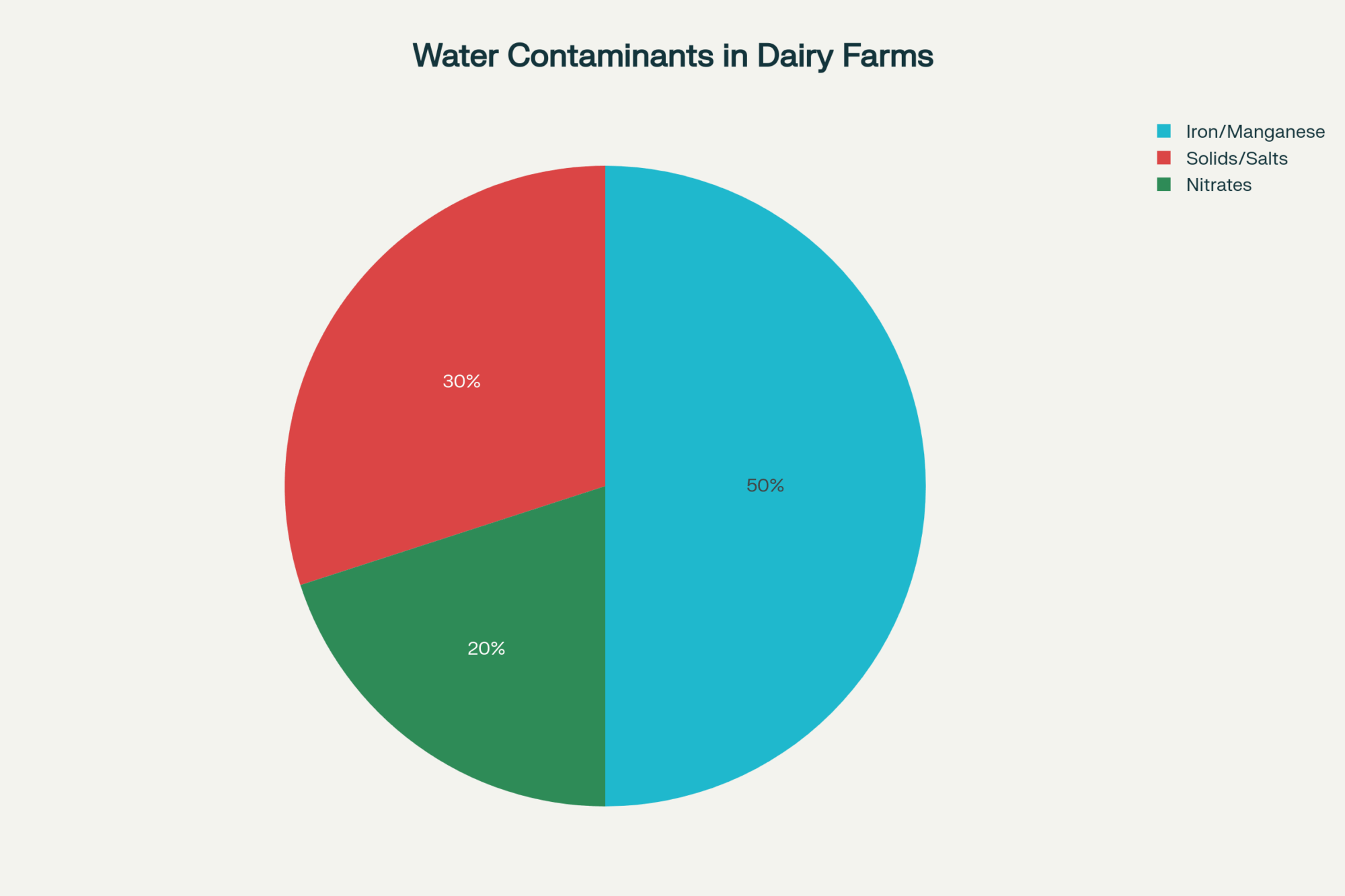
What’s particularly frustrating is how this plays out regionally for Wisconsin folks who battle iron seeping from limestone bedrock. Head west, where it’s drier, and producers fight dissolved solids and salt buildup. In heavy corn country, nitrates become the villain. Each area’s got its own water demons.
The Water Wars Most Producers Never See
Ever wonder why cows line up orderly for milking but seem to scrap over water access? Well, there’s more strategy happening than most of us realize.
Recent video analysis of Brown Swiss cattle behavior has documented that dominant cows use calculated stares and subtle positioning to keep subordinate animals away from prime water spots during peak drinking times (Journal of Dairy Science behavioral study, 2025). The result? Those pushed-out cows lose access to adequate hydration, and their milk production drops by 3 to 5 pounds daily—silently bleeding your herd’s potential.
That industry recommendation of 3.5 inches of trough space per cow? Honestly, it’s laughable during peak demand periods when half your herd wants to drink within an hour of leaving the parlor.
The Future of Feeding—Right Through the Water Line
What’s got me genuinely excited is Dr. Vern Osborne’s pioneering work at the University of Guelph. Research supports the benefits of water-delivered nutrients for transition cow management, with ongoing studies examining expanded applications (University studies, 2025). They’re delivering glucose and fatty acids directly through drinking water during those critical transition periods—targeted nutrition without wrestling stressed fresh cows for drenching.
Early results look promising, but let’s keep our expectations realistic. This is still an emerging field of science, and further peer-reviewed validation is forthcoming.
The Technology Wave That’s Actually Rolling
The tech crowd isn’t sitting idle either. Digital twin water management technologies are advancing rapidly, with commercial adoption anticipated within the next 5-7 years, though specific timelines depend on development progress and market conditions (Industry reports, 2025). We’re talking real-time water quality monitoring combined with AI-driven automated dosing.
It’s not cheap—expect $5,000 or more just to get sensors in the door. But for commercial-scale herds already wrestling with chronic water issues, the math might pencil out.
Word of advice from someone who’s watched too many producers get burned by shiny gadgets: always demand real-world trials and guarantee solid local service before you commit serious money.
Your No-Nonsense Action Plan
Step one: Get your water comprehensively tested. Not just that basic county screening, but full laboratory analysis covering iron, manganese, sulfates, total dissolved solids, pH, and bacterial counts (Extension recommendations). It’ll run $50 to $100, but the information could literally make you money.
While you’re at it, take a hard look at your water troughs. Measure total linear inches and divide by your cow count. Running under 3.5 inches per cow? That’s problem number one on your fix list.
Remember to match solutions to regional realities. Iron removal in limestone country, dissolved solids management in arid regions, nitrate issues in intensive crop areas. Know your local water enemy.
Why This Matters More Than Ever in 2025
Let’s be brutally honest about where dairy margins sit today. Feed costs are still crushing, labor’s getting harder to find, and every pound of milk production counts more than it has in years.
Investment Level | Initial Cost | Annual Return | ROI Timeline | Farm Size Best Fit |
|---|---|---|---|---|
| Basic Testing & Filtration | $2,000-5,000 | $8,000-15,000 | 3-8 months | 50-200 cows |
| Comprehensive System | $8,000-15,000 | $19,000-31,000 | 6-12 months | 200-500 cows |
| AI-Powered Monitoring | $25,000-50,000 | $40,000-75,000 | 8-18 months | 500+ cows |
Economic impacts vary significantly based on contamination severity and regional factors, but industry analyses suggest potential losses ranging from $19,000 to $31,000 annually for affected 100-cow operations under specific conditions (Industry economic studies). That’s not theoretical money—that’s real cash hemorrhaging from operations that look a lot like yours.
The farms that figure out water management first—that treat it like the powerful production tool it really is instead of just another utility—those are the operations that’ll dominate their markets while competitors struggle with basics.
Don’t wait for some magical technology solution to save the day. Get your fundamentals locked down now, and watch how your cows—and your bank account—respond.
Quick Implementation Checklist:
- Schedule comprehensive water testing within the next week
- Measure current trough space and calculate per-cow availability
- Identify regional water quality challenges specific to your area
- Calculate potential ROI based on current herd size and milk prices
- Research local water treatment options and service providers
Bottom Line:
Water isn’t just H2O flowing through your operation—it’s your most underutilized production asset. Time to start managing it like one.
All research and data cited from peer-reviewed journals and university extension services. Economic estimates represent potential impacts under specific conditions and vary by operation. Consult your local extension agent for region-specific guidance and recommendations.
Learn More:
- Your 2025 Dairy Gameplan: Three Critical Areas Separating Profit from Loss – This article provides a tactical guide to boosting profitability by focusing on feed, transition cow management, and supplementation. It perfectly complements the water-focused article by detailing other key operational areas where efficiency gains directly impact your bottom line.
- How Dairy Farmers Are Finally Breaking Free From the 365-Day Grind – and Finding More Time and Profit – Taking a strategic view, this piece explores the economic and lifestyle benefits of automation. It connects the main article’s theme of overlooked efficiencies to a larger discussion on how capital investment in technology can fundamentally change a farm’s financial future.
- Revolutionizing Dairy Herding: How a $100M AI Investment Signals the End of Traditional Cattle Management – This forward-looking article dives into the future of herd management with AI and virtual fencing. It expands on the main article’s mention of AI-powered water systems, showing how interconnected technologies are poised to transform dairy operations and management.
 The Sunday Read Dairy Professionals Don’t Skip.
 The Sunday Read Dairy Professionals Don’t Skip.
Every week, thousands of producers, breeders, and industry insiders open Bullvine Weekly for genetics insights, market shifts, and profit strategies they won’t find anywhere else. One email. Five minutes. Smarter decisions all week.




