Archive for Canadian dairy farming

Canadian Agriculture at War: How Bill C-202 Splits the Farm Gate

Canada just built the world’s first dairy trade fortress—but protection might be killing the innovation that built your industry’s success.

EXECUTIVE SUMMARY

Parliament just handed Canadian dairy farmers unprecedented legislative protection, but here’s the uncomfortable truth: this $36.9 billion fortress might be creating the very complacency that destroys long-term competitiveness. Bill C-202 legally shields your $27,640-per-cow quota investment from trade negotiations while Canadian operations average $246,264 in net farm income—nearly double U.S. competitors. But, research shows farms facing competitive pressure adopt productivity-enhancing technologies 23% faster than protected operations, raising critical questions about innovation stagnation. With genomic testing costing just $45 to identify elite genetics at two months and precision agriculture driving measurable improvements in feed efficiency and milk production, the question isn’t whether protection preserves stability—it’s whether guaranteed returns are slowly eroding the innovation edge that built Canadian dairy dominance. While your neighbors celebrate legislative victory, the global dairy innovation race continues, and standing still behind legal walls means moving backward against competitors who face daily pressure to optimize genomics, precision feeding, and automated systems. Stop assuming protection equals progress—assess whether your operation’s innovation trajectory matches the intensity of market-driven farms because the fortress is built, but what’s inside better be worth defending.

KEY TAKEAWAYS

  • Innovation Gap Risk: Farms under competitive pressure adopt advanced monitoring systems, genomic testing, and precision agriculture 23% faster than protected operations—your $27,640 quota cost exceeds many U.S. operations’ entire genomic testing budgets, potentially creating “genetic stagnation traps.”
  • Technology Adoption Imperative: With $45 genomic tests identifying elite milk producers at two months and precision livestock farming reducing carbon footprint by 6-9% while improving welfare, Canadian farmers must self-impose the innovation pressure that protection removes
  • Feed Efficiency Vulnerability: Supply chain retaliation could increase TMR costs while your guaranteed milk prices remain static—track residual feed intake (RFI) and gross feed efficiency (GFE) aggressively to maintain profitability margins regardless of input cost fluctuations
  • Consumer Cost Reality Check: Canadian families pay $276 annually to support your protected market position—maintaining political sustainability requires demonstrating that legislative privilege enables operational excellence, not comfortable complacency
  • Strategic Positioning Urgency: Conduct immediate assessment of your somatic cell counts, component levels, and TPI score advancement rates—if your metrics aren’t improving as aggressively as competitive market operations, protection becomes your biggest competitive disadvantage
Canadian dairy farming, supply management system, dairy innovation technology, precision agriculture adoption, dairy farm profitability

Parliament just handed Canadian dairy farmers the world’s first legislative guarantee against trade concessions—but this unprecedented protection comes with hidden costs that could reshape everything from your quota values to your genomic testing investments. Here’s what every dairy producer needs to know about the $36.9 billion decision that split Canadian agriculture down the middle.

You’re analyzing your latest genetic evaluations, optimizing dry matter intake (DMI) for peak lactation curves, and pushing for higher Total Performance Index (TPI) scores when Ottawa drops a legislative bombshell that fundamentally alters your operation’s competitive landscape. On June 17, 2025, Bill C-202 blazed through Parliament in just 19 days, creating an impregnable legal fortress around Canadian supply management that no future trade negotiator can breach.

But here’s what the celebration in dairy barns across Quebec and Ontario is missing: this legislative victory was built at the exact moment your grain-growing neighbors—the ones supplying your corn and barley—face their biggest trade threat in decades. The same Parliament that unanimously protected your $27,640-per-cow quota investment just handed ammunition to trade partners who’ve been targeting Canadian agricultural exports worth $45 billion annually.

The $27,640 Innovation Challenge: Understanding Your Stake in Legislative History

Let’s cut through the political rhetoric and examine what Bill C-202 means for your genetic advancement programs and operational efficiency. In Manitoba, the right to milk a single cow costs $27,640—more than most dairy operations invest in their entire genomic testing program. That quota represents your share of a $36.9 billion national asset that Parliament just made legally untouchable.

Here’s the protection formula that now governs your livelihood:

  • Canada’s trade minister cannot increase tariff rate quotas for dairy products
  • No reduction of tariffs on dairy imports above existing quota limits
  • Complete legal immunity from future trade negotiations

Think of it this way: if your operation runs 100 milking cows, you’ve got $2.76 million in quota value that’s now protected by federal law. But that protection comes with a price tag affecting everything from your feed suppliers to your precision agriculture investments.

Why This Matters for Your Operation

Canadian dairy farmers average $246,264 in net farm income—nearly double many U.S. operations. That stability isn’t market-driven; it’s legislatively guaranteed through supply management’s three-pillar system that Bill C-202 just made bulletproof. Your milk price stability depends on 200-300% import tariffs that crush foreign competition, and those barriers are now permanent.

But consider this uncomfortable reality: while you’re celebrating legislative protection, your feed corn suppliers face potential retaliation that could drive up your total mixed ration (TMR) costs. The Canadian Agri-Food Trade Alliance warns that providing “sectoral carveouts for Canada’s trade negotiations will put our trade objectives at risk.”

The Genomic Selection Paradox: When Protection Threatens Innovation

Here’s a question that should concern every progressive dairy farmer pushing for higher Net Merit (NM$) scores: Does legislative protection create complacency that undermines genetic progress?

Research shows that genomic testing can identify poor milk producers as early as two months of age, with simple genomic tests costing as little as $45. These tests examine 12,000 genetic markers in each animal’s DNA to determine which calves are most likely to become elite milk producers with superior volume, fat content, and protein levels.

The Competitive Pressure Analysis:

Why This Matters for Your Operation: Dairy farmers typically raise young cows for over two years at a cost of about $2,500 each before determining which animals can produce superior milk. Genomic testing identifies promising animals at two months, potentially saving thousands in raising inferior genetics. Are you maintaining the same drive for genetic excellence when your returns are guaranteed?

The Precision Agriculture Reality Check: Technology Adoption Under Protection

American dairy operations pushing 80+ pounds per cow daily face constant pressure to optimize metabolizable energy (ME) levels and improve feed conversion efficiency through precision agriculture tools. Precision dairy farming involves collecting real-time data on milk yield, feed consumption, cow health, and environmental conditions to make informed decisions that improve farm productivity and sustainability.

Technology Investment Comparison:

  • Competitive markets: Market pressure drives automated milking system (AMS) adoption, activity monitoring systems, and precision feeding
  • Protected markets: Reduced pressure for efficiency-driving technology adoption
  • Innovation gap: Risk of falling behind in dairy technology advancement

Research from Wisconsin shows that sensors placed in collars or embedded in wearable devices can track movement patterns, rumination, temperature, and activity levels, allowing early detection of heat cycles and illnesses like mastitis or metabolic disorders.

Why This Matters for Your Operation: The ruminal microbiome has been linked to milk production efficiency, and research demonstrates that oral swabs can effectively characterize the microbiome and its associations with milk production metrics. Are you investing in these cutting-edge technologies to optimize gross feed efficiency (GFE) and residual feed intake (RFI)?

Feed Efficiency and Supply Chain Vulnerability: The Hidden Costs of Protection

Recent research correlating oral swab microbial communities with milk production metrics in Holstein dairy cows shows significant associations between bacterial communities and production efficiency. This precision approach to feed efficiency becomes critical when feed costs represent 50-60% of total expenses.

The Supply Chain Reality: Canadian grain farmers export over 70% of their production, generating $45 billion annually. These same farmers supply your TMR’s corn, barley, and soybean meal. Michael Harvey from CAFTA explains, “when you legislatively handcuff [negotiators], it will lead to less comprehensive trade outcomes, which means you’re hurting the entire Canadian economy.”

Why This Matters for Your Operation: Calculate your annual feed costs as a percentage of milk income. Even modest increases in feed costs due to restricted grain export markets could significantly impact your profitability despite protected milk prices. To optimize performance, are you tracking residual feed intake (RFI) and gross feed efficiency (GFE)?

Trade War Mathematics: What CUSMA 2026 Means for Your Milk Check

The timing of Bill C-202 couldn’t be worse for Canadian agricultural exports. Canada is the second largest market for U.S. dairy exports, with 221,883 metric tons of product at a value of US$1.14 billion shipped across the border in 2024. Bill C-202 just made those import barriers legally non-negotiable.

The Retaliation Scenario:

  • Your protected status remains legally untouchable
  • U.S. could target Canadian grain exports worth $45 billion annually
  • Feed costs could rise as suppliers lose export markets
  • Equipment suppliers face higher input costs from trade restrictions

Why This Matters for Your Operation: Your stable milk pricing structure depends on consumer willingness to pay premiums. With Canadian milk averaging higher prices than U.S. markets, that price differential funds the system protecting your quota investment. Bill C-202 makes this trade-off permanent and non-negotiable.

The Consumer Cost Calculation: Your Protection, Their Premium Price

While celebrating legislative victory, examine the foundation supporting your protected market position. The Fraser Institute estimates that Canadian households pay $300-560 annually in higher food costs due to supply management, while the Conference Board of Canada estimates $2.6 billion annually, or approximately $276 per family.

These aren’t abstract economic costs—they’re political vulnerabilities. When consumers understand they’re paying premium prices for dairy products, support for the system protecting your operation could erode. The political sustainability of supply management depends on consumer acceptance of higher prices in exchange for food security and rural economic stability.

Precision Management in a Protected Environment: Strategic Positioning for Excellence

Bill C-202 is law, and your operation exists within its protective framework. The question isn’t whether this was right or wrong—it’s how to maximize genetic progress and operational efficiency when competitive pressure is artificially reduced.

Innovation Implementation Strategy:

1. Genomic Testing Excellence

  • Implement $45 genomic tests to identify elite genetics at two months
  • Focus on the genetic merit advancement that market-driven operations pursue
  • Track TPI scores and Net Merit improvements aggressively

2. Precision Agriculture Adoption

3. Feed Efficiency Optimization

  • Track gross feed efficiency (GFE) and residual feed intake (RFI) metrics
  • Optimize dry matter intake (DMI) and metabolizable energy (ME) levels
  • Implement precision feeding systems for component optimization

Why This Matters for Your Operation: Without market pressure for continuous improvement, you need self-imposed discipline to maintain competitive genetics and operational efficiency. The protection Bill C-202 provides could become a competitive disadvantage if it breeds complacency in precision agriculture adoption and genetic advancement.

The Innovation Imperative: Maintaining Excellence Despite Guarantees

Technology adoption becomes a differentiator. In a protected market, operations investing in precision agriculture, automated systems, and data analytics will capture disproportionate returns while others coast on guaranteed margins.

Consumer relationships matter more than ever. With higher prices built into your market structure, investing in consumer education about dairy nutrition, farm sustainability, and food quality isn’t optional—it’s essential for maintaining political support for supply management.

The Bottom Line: Your Fortress is Built, Now Prove It’s Worth Defending

Remember that opening scenario about analyzing genetic evaluations while politicians reshaped your competitive landscape? That fundamental alteration is complete, and the implications will define your farm’s trajectory for decades.

Bill C-202 delivered unprecedented protection for Canadian dairy operations. Your quota values are legally shielded from trade negotiations. Your market share is protected from foreign competition. Your pricing structure is insulated from international pressure.

But protection without purpose becomes a prison. The legislative fortress surrounding your operation will only remain politically sustainable if Canadian dairy farmers prove worthy of the privilege. That means continuous innovation in genomic programs, precision agriculture adoption, and operational excellence that justifies the $276 annual cost every Canadian family pays to support your protected market position.

The export-oriented sectors of Canadian agriculture are watching, international trade partners are calculating their responses, and consumers are increasingly aware of the premium they pay for domestic dairy products. Your industry’s future depends on demonstrating that legislative protection enabled excellence, not complacency.

Here’s your immediate action step: Conduct a brutally honest assessment of your operation’s precision agriculture trajectory over the past five years. Are you implementing $45 genomic tests to optimize genetics? Are you tracking feed efficiency metrics through oral swab microbiome analysis? Are your somatic cell counts, component levels, and TPI scores advancing at rates that justify premium consumer pricing?

If not, the protection Bill C-202 provides could become the very thing that undermines your long-term competitiveness. The fortress is built. Your job now is making sure what’s inside—your genetic advancement programs, precision management systems, and production efficiency—is worth protecting.

Because the rest of Canadian agriculture, international trade partners, and domestic consumers will be watching closely to see if legislative privilege translates into industry leadership or comfortable stagnation. The choice, as always, is yours to make.

Complete references and supporting documentation are available upon request by contacting the editorial team at editor@thebullvine.com.

Learn More:

Join the Revolution!

Join over 30,000 successful dairy professionals who rely on Bullvine Weekly for their competitive edge. Delivered directly to your inbox each week, our exclusive industry insights help you make smarter decisions while saving precious hours every week. Never miss critical updates on milk production trends, breakthrough technologies, and profit-boosting strategies that top producers are already implementing. Subscribe now to transform your dairy operation’s efficiency and profitability—your future success is just one click away.

NewsSubscribe
First
Last
Consent

From Escape to Excellence: The Extraordinary Journey of the Ekstein and Loewith Families

From the brink of destruction to dairy dynasty: How 39 Jewish refugees fled Nazi Europe and revolutionized Canadian farming. The Ekstein and Loewith families’ journey is a tale of courage, innovation, and determination. Discover how pebbles thrown at a window sparked a Holstein revolution!

In the dark of 1938, as storm clouds of hatred gathered over Europe, the peaceful hills of Czechoslovakia’s Sudetenland held their breath. For generations, Jewish families had woven themselves into the fabric of Czech society, their children playing in the same streets, their businesses thriving alongside their neighbors. The Ekstein, Loewith, and Abeles families lived this peaceful life, tending their farms in the rolling Bohemian countryside of Czechoslovakia, never imagining that their world was about to shatter.

October 1938: German troops enter the Sudetenland following the Munich Agreement. This pivotal event forced many Jewish families, including the Eksteins and Loewiths, to flee their homes in Czechoslovakia, setting in motion their extraordinary journey to Canada.

Then came March 1938. With Hitler’s annexation of the Sudetenland, the unthinkable became reality. Families who had considered themselves Czech for generations suddenly found themselves branded as outcasts. The wave of anti-Semitism that followed cut like a knife through their community, severing bonds of friendship and trust that had existed for centuries. Yet, in the face of this persecution, parents whispered in hushed tones in living rooms and around kitchen tables, weighing impossible choices as they watched their children sleep, their courage shining through the darkness.

But from this darkness emerged an extraordinary tale of courage, determination, and triumph. Through a series of fateful decisions – beginning with pebbles thrown at a window in the dead of night – the Ekstein, Loewith, and Abeles families forged a path to survival and remarkable success in a new land. Their journey from the brink of destruction to becoming pillars of the Canadian dairy industry, overcoming challenges such as financial struggles, cultural adaptation, and agricultural hardships, stands as a testament to the resilience of the human spirit. More than that, it is a powerful testament to the power of hope in the face of despair, and their story is a beacon of optimism for a better future.

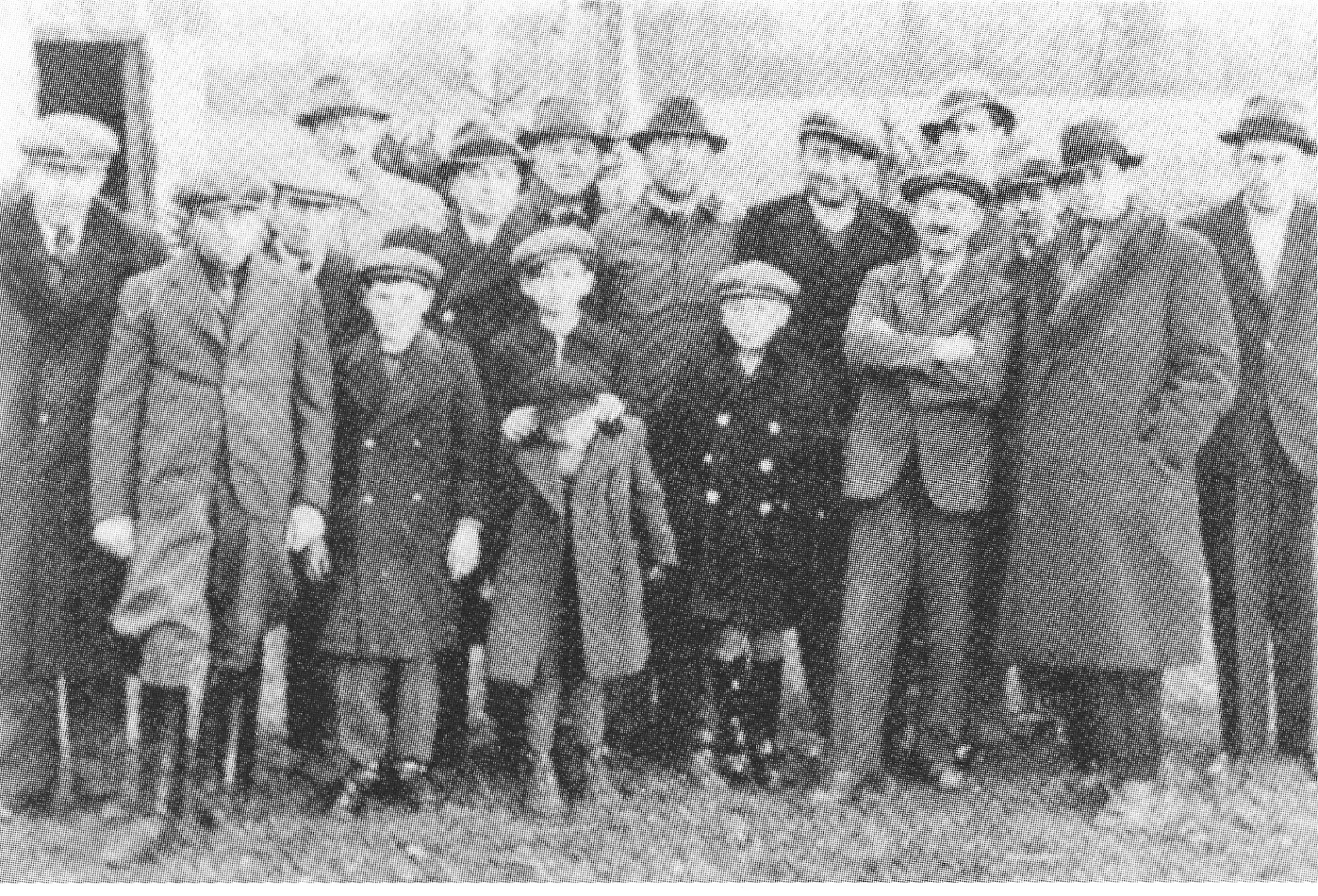
Karl Abeles with his agricultural workers
Karl Abeles (center) with his agricultural workers in Czechoslovakia, 1932. Just six years later, Karl would make the life-changing decision to flee Nazi persecution, leading 39 refugees to safety and a new beginning in Canada.

The Fateful Discovery

In the stifling summer of 1938, as darkness settled over the Sudetenland, Joe Loewith’s military boots echoed through the corridors of the local police station. As a Czech army serviceman fluent in German, he had been summoned to translate documents. This seemingly routine task would prove anything but ordinary.

When his eyes fell upon a list meant for Nazi roundups the following day, there at the top was a name that made his blood run cold: Karl Abeles. With his heart pounding against his uniform and his mind racing through the consequences of his choices, Loewith made a decision that would echo through generations. Rather than return home to safety, he stepped into the dangerous pre-dawn hours, where every shadow might have held a watchful eye. His bravery and quick thinking at this moment would prove to be a turning point for the families.

At three o’clock in the morning, Loewith stood beneath Karl Abeles’ window, his hands trembling as he gathered small pebbles to warn Abeles of the impending danger. Each tiny stone that clicked against the glass might have sounded like a gunshot in the deathly quiet of the night. When Abeles’ face finally appeared at the window, confusion gave way to fear as he recognized Loewith, and the moment’s gravity hung between them like a heavy curtain.

In hushed tones barely disturbing the night air, Loewith delivered his urgent warning – a quiet act of defiance against the rising tide of hatred. This act of courage ultimately led thirty-nine souls to safety and remarkable success in a new land across the ocean. Their bravery in the face of such adversity is truly admirable.

CAPTION: Wilma Iggers (far left) her father Karl, her sister Marianne, cousin Hannah Popper and her father Hugo Popper, in Antwerp, November 1938 on their way to Canada
Wilma Iggers (far left), her father Karl, her sister Marianne, cousin Hannah Popper, and her father Hugo Popper in Antwerp, November 1938, on their way to Canada. This photo captures a pivotal moment in their journey as part of the group of 39 Jewish refugees fleeing Nazi-occupied Czechoslovakia.

The Decision to Leave

In the summer of 1938, as storm clouds gathered over Europe, Karl and Hugo Abeles faced what might have been the most wrenching decision of their lives. The brothers, whose families farmed the rich Bohemian soil for generations, possibly spent countless sleepless nights weighing their options. The land they loved, the only home they had ever known, was transforming into a place of danger and despair. With heavy hearts but clear minds, they set their sights on Canada, seeking safety and a new beginning away from the threat in their homeland. The decision to leave was not made lightly, and the emotional turmoil they experienced during this process was palpable. The families’ struggle with this decision was a testament to the gravity of the situation and the strength of their resolve.

They purchased a farm near Mount Hope, Ontario, a decision that would prove pivotal for them and dozens of others. Then, carrying the weight of their community’s future, they made the perilous journey back to Czechoslovakia to convince others to join them. Their words must have sounded truthful and urgent, for thirty-nine souls—including members of the Ekstein, Loewith, and Abeles families—chose to follow their lead.

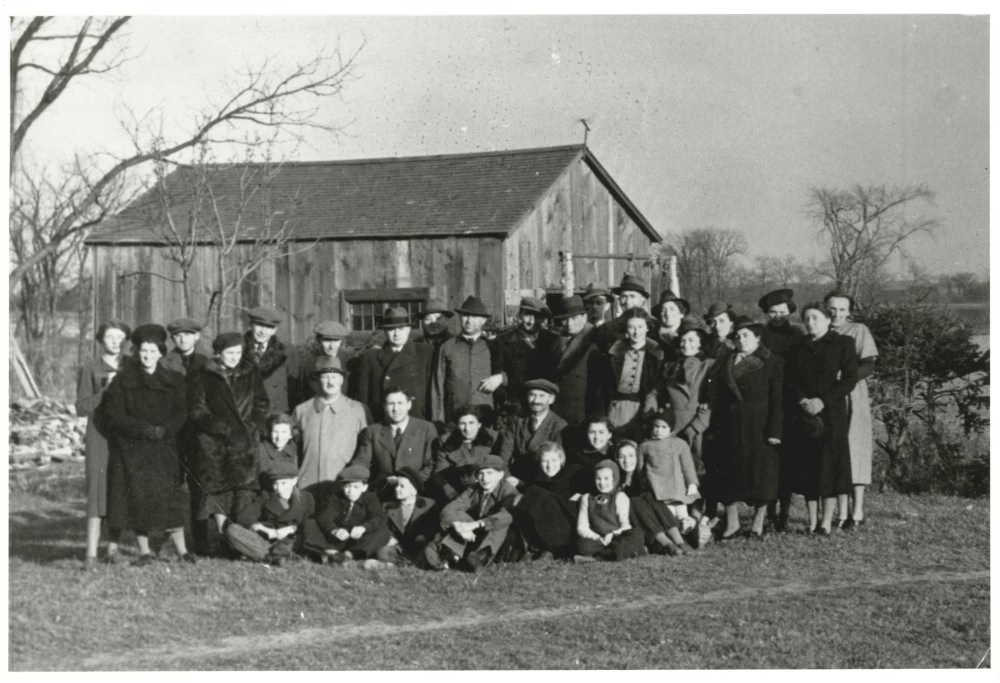
Minna Loewith with her family and the rest of the Czech refugee farmers at the Wren Farm, soon after arriving in Canada. Minna is on the far left in the second row, left of the man with a beige coat. Mount Hope, Ontario, November 1938. (Ontario Jewish Archives)
The Czech refugee farmers at the Wren Farm, shortly after their arrival in Canada in 1938. This group of 39 refugees would go on to build a remarkable legacy in Canadian dairy farming. (Photo courtesy of Ontario Jewish Archives)

In those frightening times, when every day brought new threats, these families might have felt their hearts breaking as they prepared to leave. Many were forced to abandon generations of accumulated belongings and family farms – precious pieces of their history that no one would buy in those chaotic days. Yet they moved with remarkable speed, fearing what might come, possibly overshadowing the sorrow of what they were leaving behind. As they packed only essential belongings like clothes and personal mementos, these families might have understood that they prioritized survival over sentimentality, looking towards the future rather than dwelling on the past and holding onto hope instead of clinging to their heritage, a sacrifice that weighed heavily on their hearts. These preparations’ practical challenges and emotional toll underscore the families’ determination to survive and thrive in their new home.

A Harrowing Journey

Arrival in Canada, 1938: The group of thirty-nine Jewish refugees, including the Ekstein, Loewith, and Abeles families, shortly after their harrowing escape from Nazi-occupied Czechoslovakia. This moment marked the beginning of their remarkable journey to becoming pioneers in Canadian dairy farming.

In the autumn of 1938, thirty-nine souls embarked on a journey that would test their courage and reshape their destinies forever. With their homeland dissolving into darkness behind them, they might have felt their hearts racing as they boarded the aircraft bound for Liverpool – each mile of flight over Europe possibly feeling like a step away from certain doom and toward an uncertain future. The choice to fly rather than take the train through Nazi Germany was born of desperate necessity. Every group member might have understood that detection during a ground crossing could mean death or imprisonment. The drone of airplane engines, normally anxiety-inducing for first-time flyers, might have seemed like a lullaby of freedom compared to the rhythmic click of train wheels through hostile territory. The risk and bravery of this journey cannot be overstated, and it was a testament to their determination and hope for a better future.

When they finally boarded the Duchess of Atholl in Liverpool, the salt spray and rolling waves might have carried terror and hope. Each passenger possibly carried not just the few belongings they could bring but the weight of leaving behind generations of history, family farms, and loved ones who would later perish in concentration camps.

Their arrival at Canadian shores brought its kind of tension. Frederick Charles Blair, Canada’s Deputy Minister of Immigration, had been strictly enforcing policies that excluded Jewish immigrants. As they stood before immigration officials, these thirty-nine refugees might have held their breath, their futures hanging by a thread. Whether through divine providence, bureaucratic oversight, or a moment of human compassion, they were allowed entry — possibly because officials didn’t realize they were Jewish. Their experiences upon arrival in Canada, including the challenges they faced and the support they received, were crucial in shaping their new lives and should not be overlooked.

The price of admission to their new homeland was a five-year commitment to farming — a profession most had never practiced. Yet, as they agreed to these terms at that moment, they might not have felt the weight of obligation but the lightness of possibility. This promise, which might have seemed daunting then, would ultimately be the foundation of their remarkable future in Canadian agriculture.

Starting Anew in Mount Hope

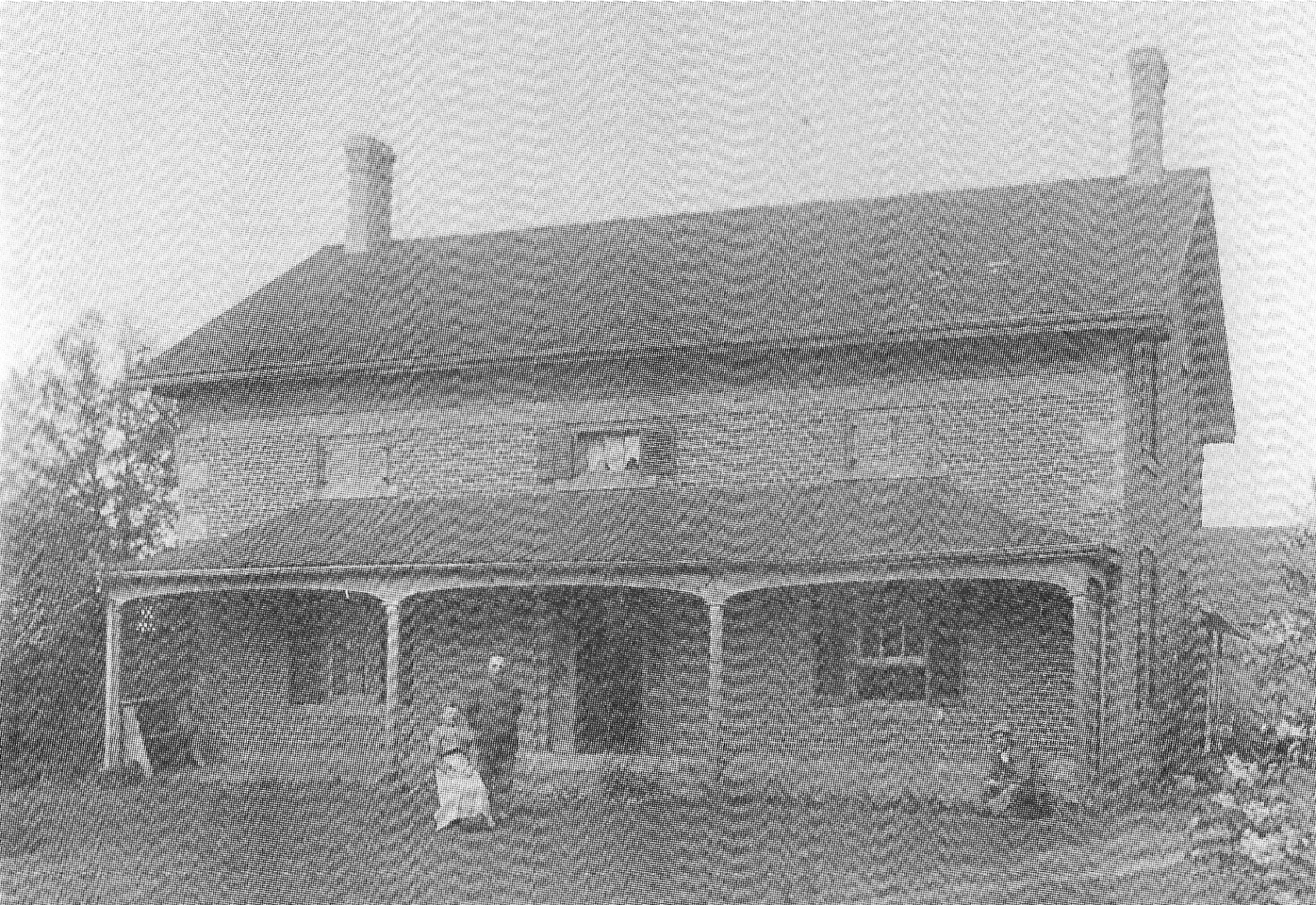
Brick farmhouse on Highway No. 6 near Mount Hope, Ontario—where 39 Jewish refugees began their new lives in Canada in 1938, laying the foundation for a legacy of resilience and excellence in dairy farming.

What might have been a moment of vulnerability – newcomers in a strange land – transformed into something unexpected. The local Jewish community, perhaps seeing in these refugees echoes of their own families’ journeys, rallied around them with remarkable speed and generosity. As furniture and clothing began arriving at the farmhouse on Highway Six, the newcomers might have felt the first stirrings of hope; each donated item was a tangible sign that they were not alone in this vast new country.

The Canadian Jewish Congress’s offer of $1,000 loans to each family represented more than just financial assistance – it was a bridge to their future. For families forced to abandon their farms and possessions in Czechoslovakia, these loans might have felt like seeds of possibility waiting to take root in Canadian soil. As they began searching for farms to rent or buy, these thirty-nine individuals might have dared to imagine, for the first time since fleeing their homeland, that they could build not just houses but homes again.

Building a Legacy in Holstein Breeding

As the harsh Canadian winters gave way to spring after spring, these refugee families transformed from desperate survivors into pioneering farmers. What unfolded over the following decades might have seemed impossible to those thirty-nine souls who first stepped onto Canadian soil. Their five-year farming commitment, which might have felt like a burden in 1938, became the foundation of an extraordinary legacy. In the quiet moments between milkings, these newcomers might have remembered their abandoned farms in Czechoslovakia, their hearts heavy with the knowledge that many of their relatives would perish in concentration camps.

Yet from this profound loss emerged an unstoppable determination. Against all odds, these families didn’t just survive—they flourished. Within forty years, they had produced eight of Ontario’s leading dairymen, including three master breeders. Each morning’s milking, each careful breeding decision, and each show ring victory became not just a business achievement but a testament to their resilience—a powerful statement that from the darkest moments of human history, something remarkable could grow and thrive on Canadian soil.

The Loewith Family’s Summitholm Farm

Joe Loewith, the man who had warned Karl Abeles that fateful night in Czechoslovakia, established Summitholm Farm. His journey from a traveling salesman and window dresser in Czechoslovakia to a successful dairy farmer in Canada is a testament to his adaptability and determination.

Joe Loewith’s love for his Holstein cows grew deep and genuine. “They don’t let you down the way that people do,” he once said, reflecting the deep bond he had formed with his herd. This sentiment would be passed down through generations of Loewiths, shaping their approach to dairy farming.

In the early years, Joe Loewith focused on building a strong foundation for his herd. He purchased his start-up cows from Karl Abeles, many of them daughters of a Braeside bull bred by Clayt Haviland. By 1951, his herd had grown to 30 head, and he bought 30 more females before moving to a 100-acre property known locally as the Kitchen farm south of Copetown.

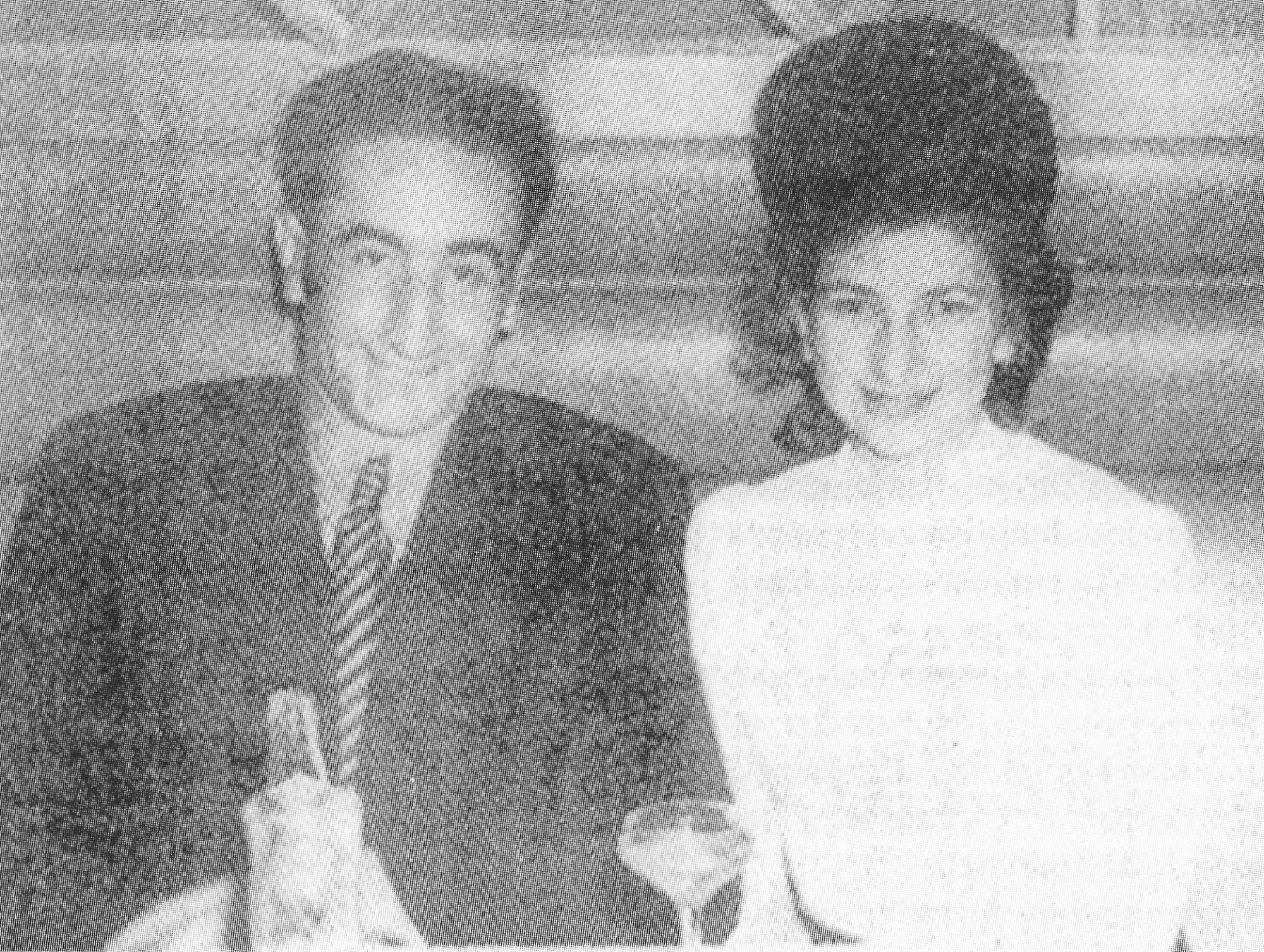
Joe Loewith and his wife, pioneers of Summitholm Farm, whose legacy of resilience and excellence continues to shape Canadian dairy farming today.

The farm that would become Summitholm Farm has a rich history. It was initially settled by George Green Kitchen and his wife, Mary Stenabaugh. Through a series of inheritances and sales, it eventually came into Joe Loewith’s possession in the early 1950s.

Joe’s success in breeding was evident early on. His first herd sire, Trout Creek Finderne Pontiac, came from the respected herd of C.W. Goodbrand at Millgrove. This bull’s pedigree was rich with high-producing bloodlines, including descendants of Springbank Snow Countess, a world lifetime champion.

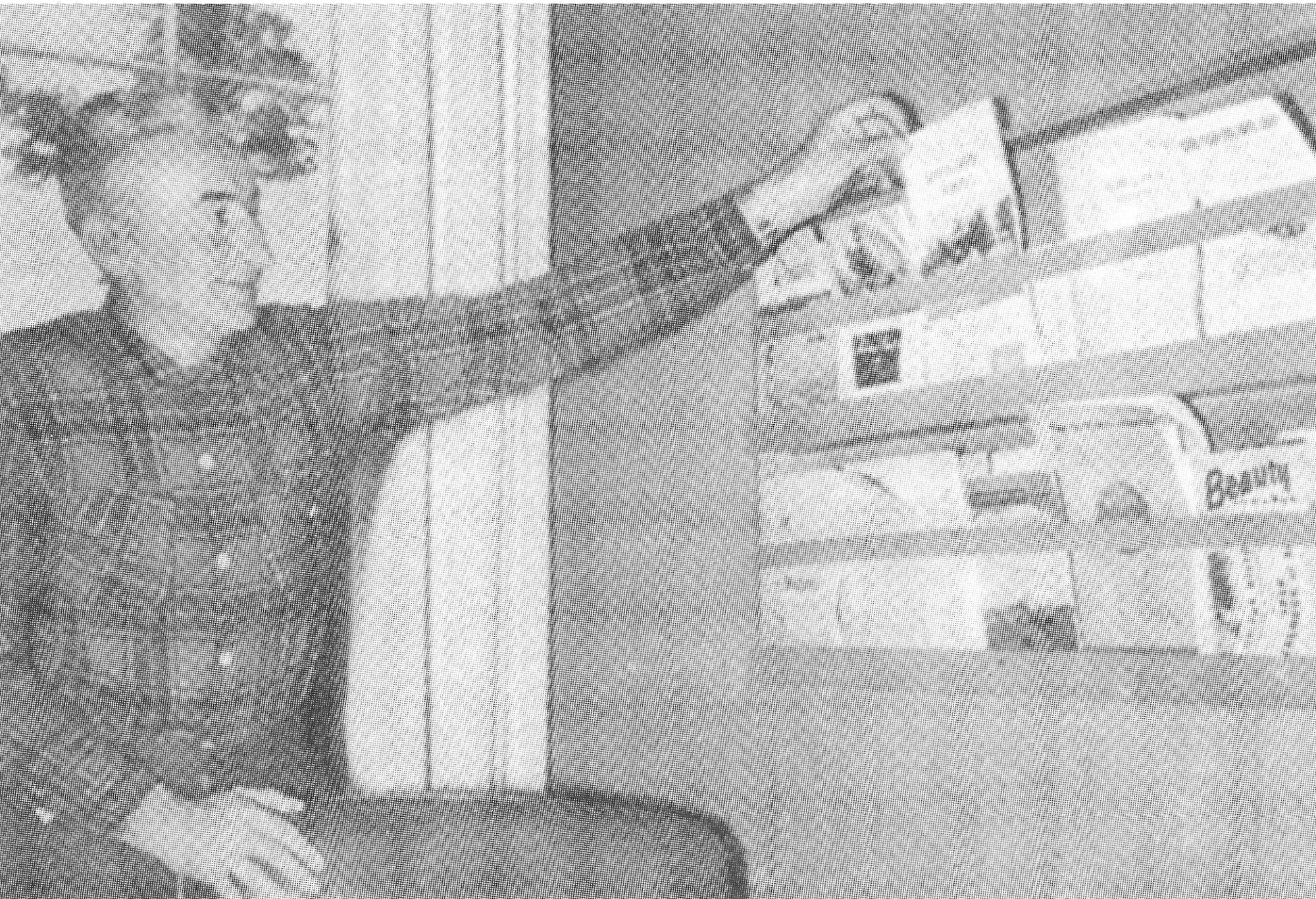
Joe Loewith proudly showcases his collection of breed magazines, reflecting his passion for Holstein breeding and dedication to advancing dairy excellence.

One of the mainstays of the original Loewith herd was Bonnie Queen Elizabeth (VG-2*), born in 1940. She produced an impressive 100,230 lbs of milk in seven lactations, with 3,975 lbs of fat at 3.97%. Her descendants would continue contributing to the Summitholm herd for generations.

By the 1950s, Summitholm Farm was making its mark in the show ring. At the Wentworth Black & White Show in 1956, showing only home-bred animals, Joe Loewith won ten red ribbons, far more than necessary to give him the Premier Breeder and Exhibitor banners.

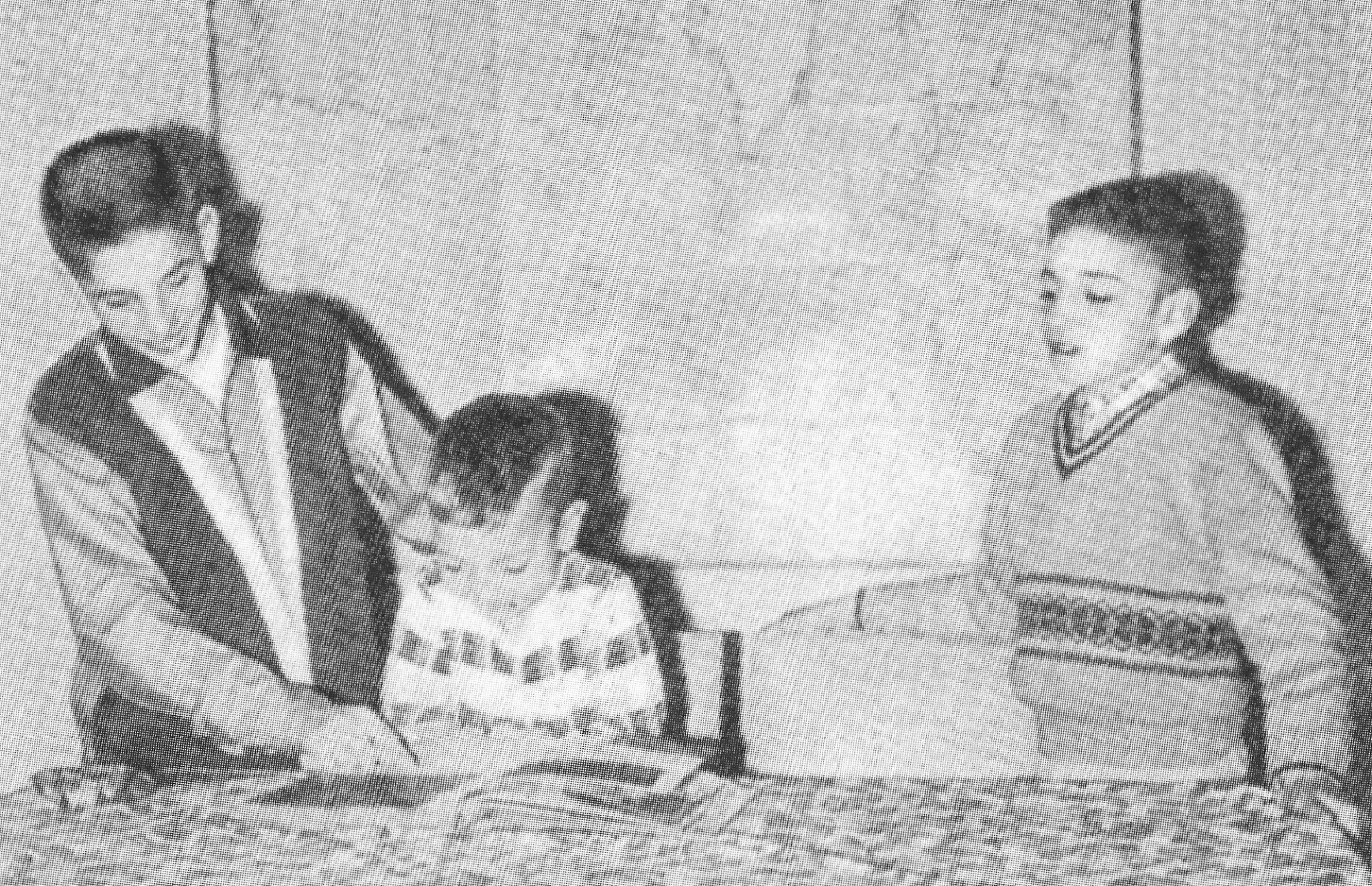
Harry, Carl, and David Loewith as young boys, long before they became the driving forces in the Canadian dairy farming.

Joe’s sons, Harry, Carl, and David Loewith, later took over the operation, expanding it into one of Canada’s most respected Holstein breeding programs. Harry joined his father in 1965 and later established his ventures, including Tavistock Dairy Sales. Carl and David, both University of Guelph graduates, took over the operation of Summitholm Farm in the mid-1970s.

Under Carl and David’s management, Summitholm Farm has become synonymous with high-producing, long-lasting cows. They focused on breeding functional, profitable cows rather than show-ring champions, and their philosophy of breeding cows that are “good enough” rather than striving for perfection has proven highly successful. Their efforts were rewarded with a Holstein Canada Master Breeder Shield in 2002.

As of 2025, Summitholm Farm has over 119 cows with a lifetime production exceeding 100,000 kg. The farm has earned accolades for consistent milk quality and breeding excellence in the industry, which speaks volumes about the longevity and productivity of its herd.

The farm has consistently ranked first in DHI management scores, winning the highest score in Canada for nine out of ten years. Its focus on efficient production and cow longevity has set a standard in the industry.

Ben Loewith, who now shares management responsibilities with his father Carl and uncle Dave, emphasizes the importance of their systematic approach: “We follow stringent protocols on everything we do, from calf care to milking procedures, ensuring the health and comfort of our cows.” Whether it is how newborn calves are handled, fertility programs, milking procedures, or monitoring herd health, we ensure everyone involved is reading from the same page. We have an excellent group of advisers and good communication with wonderful staff. All our protocols are set in the best interest of the cows’ health and comfort. Our convenience and labor come secondary.”

Summit Station Dairy and Creamery, the Loewith family’s latest venture into direct-to-consumer dairy products
The Loewith family—Carl, David, Ben, and Jen—stand proudly outside their new Summit Station Dairy and Creamery store, marking a fresh chapter in their multi-generational dairy farming legacy.

The Loewiths’ breeding strategy has evolved with the times. As of 2025, all heifers are bred to sexed genomic semen. Eighty percent of the mature cows are bred to Angus, and the remaining 20 percent are bred to sexed genomic sires. This balance allows them to benefit from the latest genetic advancements while relying on proven performance.

Paul Ekstein and Quality Holsteins

Born in 1934 in Czechoslovakia, Paul Ekstein developed an early interest in Holstein cattle through visits to his uncle’s Mount Hope dairy farm. His passion for the breed was evident from a young age, as he devoured Holstein literature and spent his holidays at the farm. After graduating from Ontario Agricultural College in 1954, Ekstein worked as a herdsman before starting his own business, Quality Seeds. He began assembling his herd in the late 1960s, initially housing them at Sunny Maple Farm before establishing his farm on Huntingdon Road near Woodbridge in 1980.

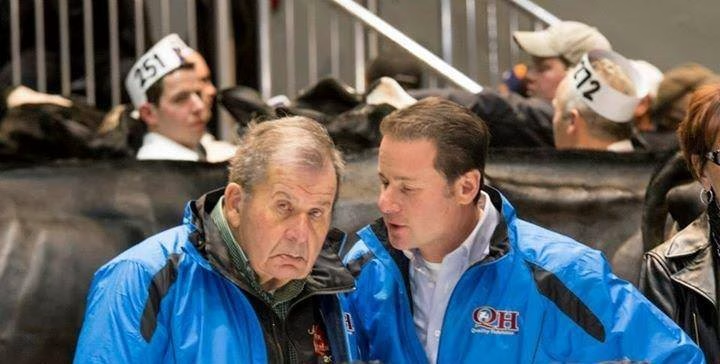
Paul and Ari Ekstein deep in discussion at the show ring – a legacy of excellence spanning generations at Quality Holsteins.

Paul’s son, Ari Ekstein, took over the reins of Quality Holsteins about 20 years ago, continuing his father’s legacy of excellence in Holstein breeding. Under Ari’s management, the farm has maintained its status as a powerhouse in the industry, winning their fourth Master Breeder Shield in 2025. This achievement showcases the continued excellence of their breeding program across generations.

The Ekstein family’s influence extends beyond dairy farming. While Ari runs on the Holstein operation, his main focus is on the seed business and has now been joined by a third generation of Eksteins at Quality Seeds. Expanding into the third generation demonstrates the family’s enduring entrepreneurial spirit and commitment to agriculture.

QUALITY B C FRANTISCO EX-96-3E-CAN 18*
ALL-CANADIAN MATURE COW, 5-YR, 4-YR, SR.3-YR, MILKING 1-YR
HM. ALL-CANADIAN MATURE COW, SR.2-YR
GRAND ROYAL 2005, 2004
INT.CHAMP ROYAL 2002
HM.GRAND ROYAL 2002
QUALITY B C FRANTISCO EX-96-3E-CAN 18*
ALL-CANADIAN MATURE COW, 5-YR, 4-YR, SR.3-YR, MILKING 1-YR
HM. ALL-CANADIAN MATURE COW, SR.2-YR
GRAND ROYAL 2005, 2004
INT.CHAMP ROYAL 2002 HM.GRAND ROYAL 2002

Recent achievements at Quality Holsteins under Ari’s leadership include:

  • Multiple EX-90+ cows, including Quality Solomon Frotastic EX-93 (95-MS)
  • Quality Solomon Lovely EX-94-2E (95-MS)
  • Marloacres Damion Lulu EX-94-5E (95-MS)
  • A strong group of first-lactation animals, with fourteen scoring VG-85 or higher

The herd continues to excel in type classification, with recent classifications showing particular strength in mammary systems. Several animals have scored 86-MS or higher in their first lactation.

Ari Ekstein has continued to innovate and adapt to changing industry trends. While maintaining the farm’s focus on breeding functional, profitable cows, he’s also embraced new technologies and breeding strategies. Quality Holsteins’ breeding program continues to produce outstanding results, as evidenced by its recent classifications and consistent excellence.

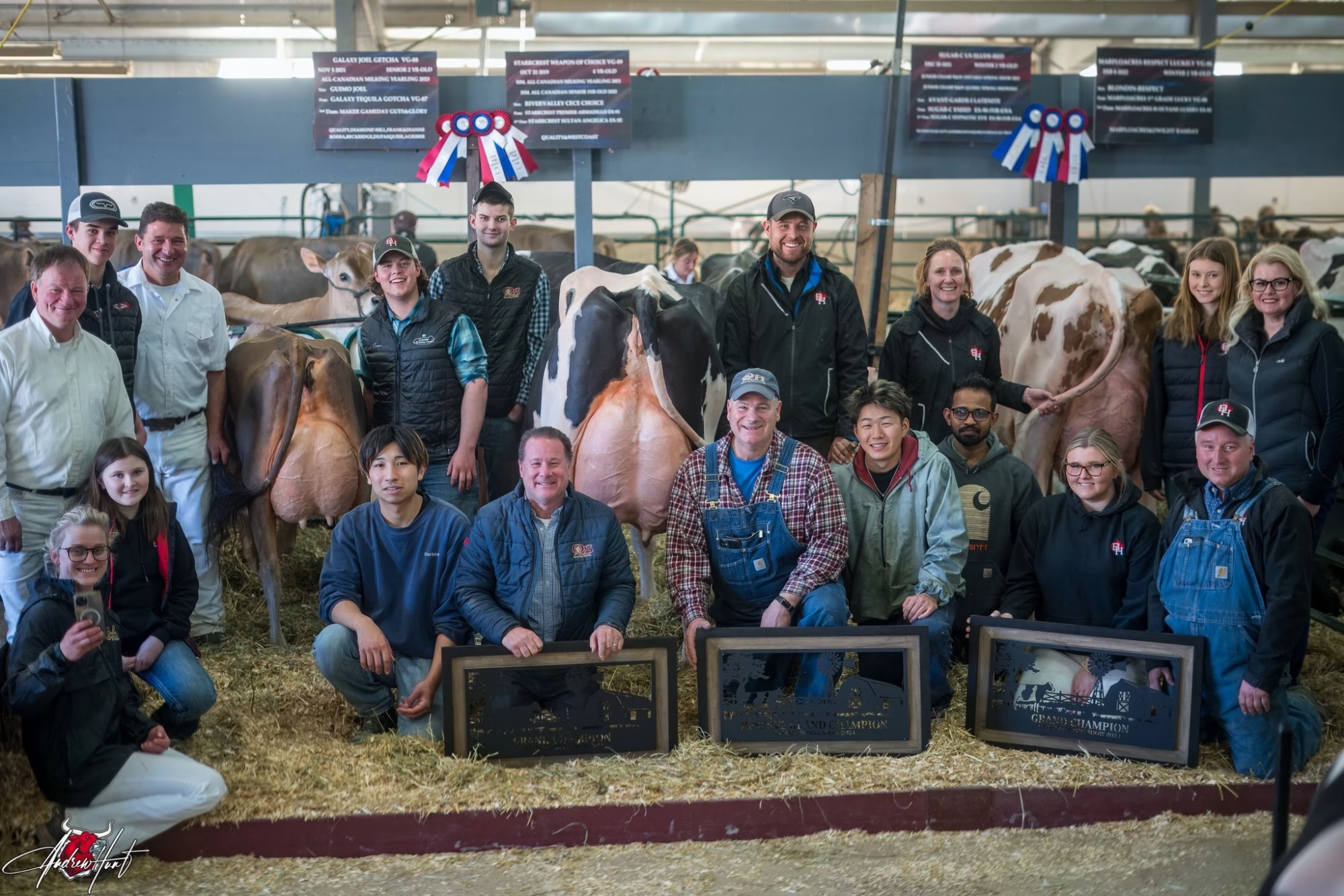
Quality Holsteins show team celebrating their success at the 2024 Ontario Spring Show! A proud moment for the team and their exceptional cows.

With three generations now involved in various aspects of the family’s agricultural enterprises, the Ekstein legacy in Canadian agriculture continues to grow and evolve, building on Paul’s original vision and passion for Holstein cattle and quality seeds.

A Legacy of Excellence

From a handful of desperate refugees huddled in a Mount Hope farmhouse in 1938, an extraordinary legacy would bloom across Canadian soil. The transformation of these thirty-nine souls from survivors to pioneers might have seemed impossible in those early days. Yet within forty years, eight descendants would become Ontario’s leading dairymen. Among them, seven would achieve the coveted Master Breeder status – Joe, Richard Popper, Carl, David and Ben Loewith, and Paul and Ari Ekstein (Four times) – an honor that might have seemed as distant as the stars when they first stepped onto Canadian soil.

Each careful breeding decision, show ring victory and production record might have been a tribute to those who never made it out of Europe. Their success became more than personal achievement—it grew into a testament to the power of resilience, a living memorial to the possibility of beginning anew, inspiring a new generation of dairy farmers, and setting a standard of excellence in the industry. Through their unwavering focus on sound breeding principles, such as selective mating for high milk production and genetic diversity, and a tireless work ethic evident in daily milking routines and animal care, these families found success and redemption in the dairy industry. They transformed their five-year farming commitment into a multi-generational legacy that would influence Holstein breeding for decades.

Reflecting on an Incredible Journey

As the sun sets over the rolling fields of Ontario’s dairy country, the legacy of those thirty-nine souls who fled the darkness of Nazi Europe continues to flourish in ways they could never have imagined. From Joe Loewith, who transformed from a window dresser into a master dairyman, to Paul Ekstein, who devoured Holstein literature as a seventeen-year-old refugee and went on to earn four Master Breeder Shields, their story stands as a testament to the extraordinary heights that human determination can reach.

These families didn’t just survive – they revolutionized Canadian dairy farming. From the ashes of their lost homes in Czechoslovakia, they built not just farms but dynasties. Their achievements – from the Loewiths’ world-record number of lifetime producers to Ekstein’s breed-defining cow families – stand as monuments to the power of human resilience and the opportunities Canada provided to those seeking refuge.

As we stand here in 2025, we’re reminded that greatness often emerges from history’s darkest moments. From pebbles thrown against a window in Nazi-occupied Czechoslovakia to the pinnacle of global dairy breeding, the Ekstein and Loewith families have shown us that with courage, determination, and the chance to begin anew, ordinary people can achieve extraordinary things. Their legacy lives on in the Holstein bloodlines they developed and the example they set for future generations. It shows that excellence can rise from despair, achievement can emerge from persecution, and the human spirit, when nurtured, knows no bounds.

Key Takeaways

  • 39 Jewish refugees, including the Ekstein and Loewith families, escaped Nazi-occupied Czechoslovakia in 1938.
  • They settled in Canada, committing to a five-year farming obligation despite limited agricultural experience.
  • Within 40 years, they produced eight of Ontario’s leading dairymen, including seven Master Breeders.
  • Joe Loewith established Summitholm Farm, now known for its high-producing, long-lasting cows.
  • Paul Ekstein founded Quality Holsteins, earning four Master Breeder Shields over the years.
  • The families embraced innovative breeding strategies and new technologies to improve their herds.
  • Their legacy continues with the next generations, like Ari Ekstein and Ben Loewith, maintaining excellence in breeding.
  • The story showcases the power of resilience, adaptability, and determination in overcoming adversity.
  • Their journey from refugees to industry leaders has significantly influenced Canadian Holstein breeding.
  • The families’ success demonstrates the opportunities Canada provided to those seeking refuge and a new start.

Summary

In 1938, as Nazi persecution intensified in Czechoslovakia, 39 Jewish refugees, including the Ekstein and Loewith families, made a daring escape to Canada. Faced with a five-year farming commitment in a new land, these families not only survived but thrived, transforming from desperate survivors into pioneering dairy farmers. Over the decades, they revolutionized Canadian Holstein breeding, producing eight of Ontario’s leading dairymen and earning multiple Master Breeder shields. From Joe Loewith’s Summitholm Farm to Paul Ekstein’s Quality Holsteins, their legacy of excellence continues to shape the industry today. This remarkable journey from the darkness of war to the pinnacle of dairy farming stands as a testament to human resilience, innovation, and the power of new beginnings.

Learn more

Join the Revolution!

Bullvine Daily is your essential e-zine for staying ahead in the dairy industry. With over 30,000 subscribers, we bring you the week’s top news, helping you manage tasks efficiently. Stay informed about milk production, tech adoption, and more, so you can concentrate on your dairy operations.

NewsSubscribe
First
Last
Consent

Send this to a friend