






That 3-day-old embryo determines if she’ll produce 2,600 more pounds of milk. Most producers have no idea.
EXECUTIVE SUMMARY: The first seven days after conception determine more about lifetime productivity than the next seven years of management—yet most producers ignore this critical window. University of Florida research proves simple interventions yield massive returns: choline-supplemented embryos produce calves 25 pounds heavier at weaning, dry cow cooling prevents $350 per heifer in losses, and avoiding bull overfeeding improves embryo quality in ways semen analysis can’t detect. Progressive dairies implementing these strategies report first-year savings of $60,000-70,000 with an 18-month payback on cooling investments. The science is clear: you’re either programming for success or accepting mediocrity before pregnancy is even confirmed. Ask your ET provider one question—’ Are you using choline?’—and start capturing gains your competitors are leaving on the table.
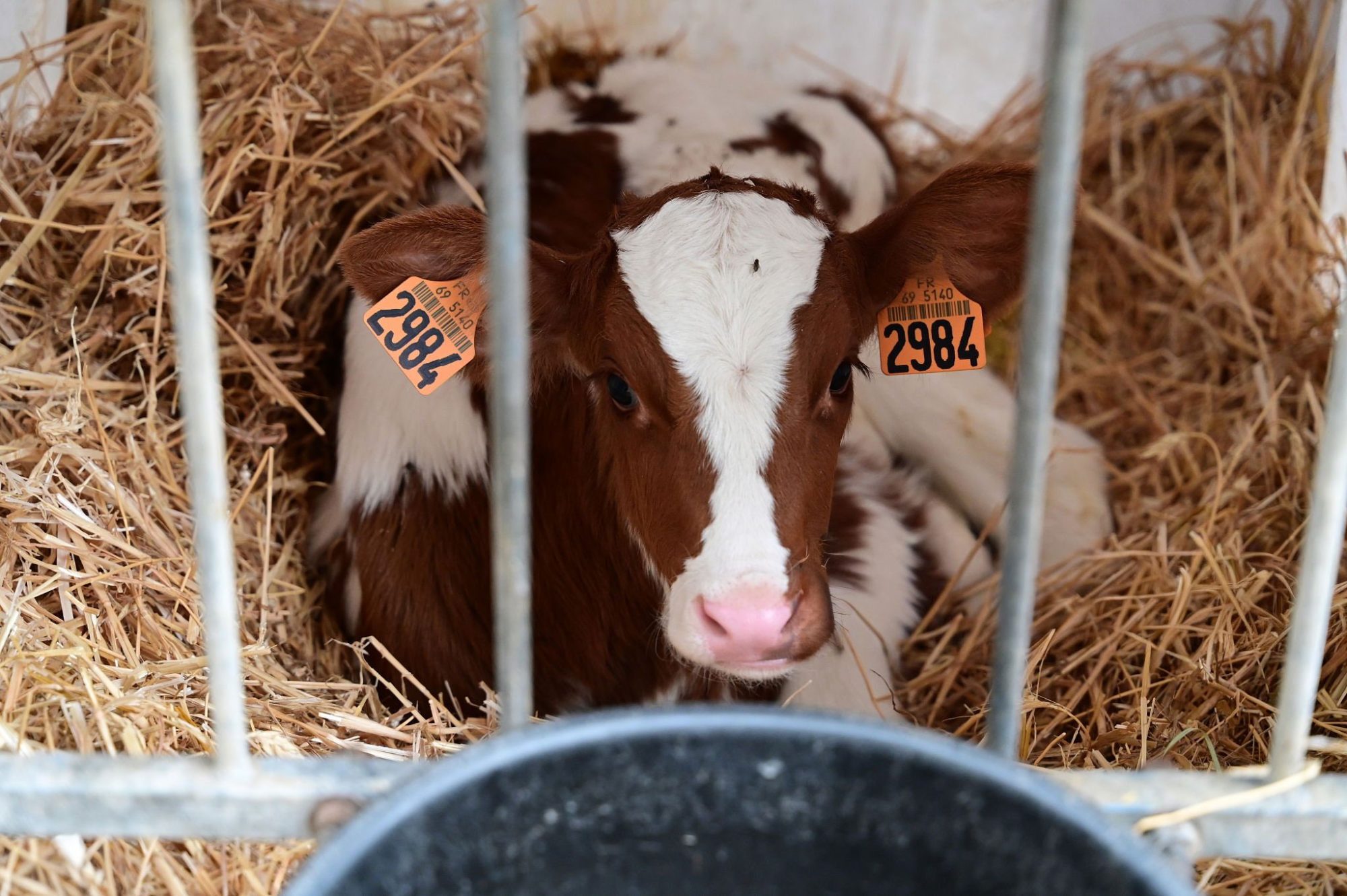
We spend millions on genomic testing, elite semen, and perfect rations. Yet new research suggests we’re leaving the biggest efficiency gains on the table by ignoring the first week of an embryo’s life. While you’re focusing on the proof, biology is focusing on the programming. If you aren’t managing the first seven days, you’re building a Ferrari engine and putting it in a Honda chassis.
I’ve been following this research coming out of Peter Hansen’s lab at the University of Florida for the past three years, and honestly, it’s completely changed how I think about reproduction. What we’re seeing from operations in California, Wisconsin, and across the Midwest suggests that producers who understand developmental programming are building advantages that compound through generations. And those who don’t? Well, they’re leaving serious money on the table.
Here’s what’s interesting—I was talking with a producer near Turlock last month, and he said something that stuck with me: “We used to think reproduction ended at conception. Now we realize that’s when the real work begins.” That pretty much sums up this whole shift in thinking.

When Genetics Meet Environment: The Choline Discovery That Changes Everything
So Peter Hansen—he’s published over 400 papers on reproductive biology, by the way—has this great way of explaining it. He says we’ve gotten really good at optimizing everything after calves are born. The best nutrition, perfect housing, optimal photo periods. But we don’t really think much about what’s happening when they’re embryos or fetuses. And that’s where we might be missing the boat.
What’s fascinating is that Hansen’s team, working with researcher Eliam Estrada-Cortes, discovered something almost embarrassingly simple. They added choline to the culture medium for IVP embryos. Now, choline’s naturally present in the uterus—we’re talking millimolar concentrations here—but it’s typically absent from commercial culture media. Their work, which appeared in The FASEB Journal in 2021 and was replicated in Biology of Reproduction just this year, shows remarkable consistency.
The results? Calves from those choline-treated embryos consistently weigh more at weaning. We’re talking 15 to 25 pounds heavier on average, and here’s the kicker—those advantages persist straight through to slaughter. Even at physiologically relevant concentrations—just four micromoles per liter, basically what you’d find in blood—you still get these effects.
Now, if you’re doing embryo transfer, this next part is really interesting. When Estrada-Cortes looked at muscle tissue from four-month-old calves, they found 670 differentially methylated DNA sites out of about 8,100 they examined. The affected genes control growth, metabolism, cellular proliferation—basically all the fundamental processes that influence an animal’s entire productive life.
As Hansen explained it to me, “We’re not changing the DNA sequence. We’re changing how genes are expressed—which ones are turned on or off, and when.” Think of it like having the same recipe but changing the cooking instructions. Makes sense, right?
The Epigenetic Revolution: Why Your Dry Lot Decisions Matter More Than You Think
Let me break this down in a way that actually makes sense. You know how DNA is like the blueprint for building a barn? Well, epigenetic modifications are like the building permits that determine which parts of that blueprint actually get built, in what order, and how big they are.
During those first seven to fourteen days after fertilization—when that embryo’s just a ball of cells—these “building permits” are being written. Environmental factors like nutrient availability, temperature, and stress hormones all influence which genes are marked for activation or silencing. And once that window closes, these marks become semi-permanent. That’s the part that should make us all pay attention.
A reproduction manager from one of those big 3,000-cow operations near Hanford had this great insight when we talked: “Once we understood that what happens in the first week determines so much, we completely changed how we think about our IVP program. We’re not just counting blastocysts anymore—we’re thinking about quality at the cellular level.” That’s exactly the shift we all need to be making.
And here’s something else to consider—this could have implications for sexed semen use too. If we’re already manipulating sperm for sex-sorting, understanding these epigenetic factors becomes even more critical. We’re stacking technologies, so we need to optimize each one.
Heat Stress: The Multi-Billion Dollar Problem Hiding in Your Dry Pen
Now, if you’re up in Wisconsin, you might think heat stress is mainly a problem for those folks down in Texas or Arizona. But the research tells a different story—and it’s one that should concern every producer north of the Mason-Dixon line.
Geoffrey Dahl’s group in Florida has been doing incredible work on this, publishing some eye-opening data in the Journal of Dairy Science. Here’s what calves born to heat-stressed dry cows face:
- They absorb about 33% less immunoglobulin from colostrum
- They’re roughly 23% smaller at birth—we’re talking 8 to 10 pounds lighter
- They produce about 19% less milk in the first lactation—that’s around 2,600 pounds over 305 days
- And they’re 20% less likely to complete that first lactation
The mechanism behind all this, which was detailed in Biology of Reproduction earlier this year, is fascinating. During those last 60 days of pregnancy—when that fetus is packing on 60% of its birth weight—heat-stressed cows redirect blood flow from the uterus to the skin for cooling. So the developing calf experiences what amounts to chronic mild oxygen deprivation.
I know a Jersey producer in central Minnesota who learned this the hard way. They had a brutal July a couple of years back—temperatures and humidity combined to push the temperature-humidity index over 72 for three weeks straight. The calves born that October? They’re still dealing with the effects. More treatments, slower growth, and now that they’re coming into milk, production is definitely off.
By the time these heat-stressed calves hit the ground, they’re already behind. Their intestinal tissue shows higher rates of cell death, reducing the surface area available for absorbing those critical immunoglobulins. Their thymus and spleen—basically the headquarters of immune development—are measurably smaller. It’s a cascade that starts before they’re even born.
Bulls: The Hidden Variable Nobody’s Measuring Right
Here’s something that genuinely surprised me when I dug into the research—your bull’s body condition might matter more than his proof. I know, I know, that sounds crazy, but hear me out.
Arslan Tariq’s work at the University of Florida examined what happens when young bulls are pushed onto high-gain diets—you know, the standard protocol to get them to market weight faster. Bulls gaining 1.81 kilos per day versus a moderate 1.22 showed completely normal sperm motility and morphology. Any AI stud would stamp them “high fertility” and ship that semen worldwide.
But when Tariq used that semen for IVF? Completely different story. Embryo cleavage rates dropped significantly, blastocysts had fewer cells, cell death rates increased, and development timing lagged behind. The kicker? Standard semen analysis can’t detect any of this. The sperm look perfect, swim fine, and fertilize eggs normally. But they’re carrying what you might call epigenetic baggage—altered small RNAs and methylation patterns that compromise embryo development.
One semen procurement manager from a Wisconsin cooperative told me recently, “We’ve been evaluating bulls all wrong. We’re looking at motility and morphology when we should be asking about how that bull was raised and fed.” That’s a pretty profound shift in thinking, isn’t it?
The Seminal Plasma Question: What Are We Throwing Away?
For decades, the AI industry has removed seminal plasma before freezing semen. Makes perfect sense from a storage perspective—seminal plasma contains proteins and minerals that interfere with freeze-thaw survival. But research from Gabriela Macay’s doctoral work at Florida suggests we might be discarding liquid gold.
Offspring from inseminations where seminal plasma remained showed some pretty impressive advantages: heavier birth weights by 5 to 7 pounds, 4 to 8% greater milk yield in first lactation, and better persistence in the herd—basically, they stick around longer through multiple lactations.
What’s in this stuff? According to work that came out in Frontiers in Cell and Developmental Biology this year, seminal plasma contains these tiny extracellular vesicles—think of them as molecular FedEx packages—carrying proteins, lipids, and RNA molecules. High-fertility bulls, particularly in some Sahiwal research, exhibit distinct vesicle signatures, with proteins involved in energy production and sperm function.
But here’s the really interesting part—these vesicles don’t just help sperm. They interact with the cow’s reproductive tract, modulating immune responses and potentially influencing early embryonic development. It’s a whole communication system we’ve been, well, washing down the drain.
What Top Operations Are Actually Doing (And Getting Right)
Looking at the numbers—2.2 million embryos produced globally last year, up almost 16% according to the International Embryo Technology Society—you’d think everyone’s on the same page. But spend time with the operations getting exceptional results, and you’ll see some distinct patterns.
Take De-Su Holsteins out in New Mexico. They’re producing about 200 embryos a month, but what sets them apart isn’t volume—it’s their obsession with details that most operations ignore. They track offspring performance through multiple lactations and feed that data back into breeding decisions. They’ve adjusted bull management to avoid overconditioning. Their culture media protocols focus on mimicking natural oviductal conditions rather than just maximizing blast rates.
Down in California, I’ve heard from several operations that reducing nutrient concentrations in culture media by as much as 75% produces the same pregnancy rates with better calf quality. As one embryologist put it, “We were providing excessive supplementation that may actually impair embryo development. More isn’t always better.” That’s a lesson we could probably apply to a lot of things in dairy, right?
The real game-changer, though? Preimplantation genetic testing. Operations using PGT-A are reporting pregnancy rate improvements of around 7.5% and live birth rates up nearly 6%. As a Texas producer told me, “At about $300 per test, it pays for itself if it prevents just one failed pregnancy.” Hard to argue with that math.
The Economics: More Compelling Than You’d Think
Let’s talk dollars and cents here, because that’s what determines whether any of this actually matters on your farm.

Dry cow cooling for a 500-cow operation runs between $20,000 and $30,000 for a basic soaker-and-fan setup. Sounds steep, I know. But economic modeling from the University of Florida shows the payback period is typically under 1.5 years, with a benefit-cost ratio of about 3-to-1. Each heat-stressed replacement heifer costs you around $350 per cow in lost first-lactation milk alone—and that’s not even counting the health costs.
Colostrum management improvements? They cost virtually nothing. A BRIX refractometer runs maybe $300 to $500. Training your calf crew to feed 4 liters within 2 hours instead of “whenever we get to it”? That’s free. The return? Calves gain an extra 15 to 25 pounds by weaning, with 20 to 30% fewer treatments. Do the math on your antibiotic bills—it adds up fast.
Bull condition monitoring is basically free, too. Actually, you’ll save money feeding bulls for moderate gains instead of pushing them hard. Research from Tennessee shows feed costs drop 12 to 15% when you target moderate versus aggressive weight gains.
“Several western dairies report savings north of $50,000 annually from reduced treatments and improved growth when integrating colostrum and cooling protocols.”
One central California operation estimated first-year savings between $60,000 and $70,000 after implementing these strategies, based on herd health and production records reviewed by their consulting veterinarian. This year, those heifers are coming fresh, and preliminary data shows they’re outproducing their older herdmates by over 4 pounds per day. That’s real money.
Regional Realities: One Size Doesn’t Fit All

What works in California might not translate directly to Vermont, and that’s worth acknowledging.
In the Southwest and Southern Plains, where you’re dealing with 100-plus days of heat stress annually according to NOAA data, dry cow cooling isn’t optional—it’s survival. These operations are already seeing the difference between cooled and uncooled cohorts in their DHI reports.
In the Upper Midwest, heat stress might be critical for only 30 to 50 days, but those days often coincide with the peak breeding season. As one Minnesota producer noted, “We only need cooling for six weeks, but those six weeks determine our entire next calf crop.” That’s a pretty important six weeks.
In the Southeast, where humidity is a challenge, the temperature-humidity index remains elevated even at night. Georgia Extension guidance confirms that producers there run fans 24/7 from May through October. Different challenge, same principle.
Up in the Northeast and Pacific Northwest, where we get those occasional heat spikes but generally milder summers, the approach is different again. Vermont and Oregon producers I’ve talked with focus on portable cooling solutions they can deploy during those critical heat events. They’re not investing in permanent infrastructure like their Southwest counterparts, but they’re not ignoring it either. Strategic shade, increased water access, and temporary fans during those 10-15 critical days can make all the difference.
For grazing operations, it’s trickier. You can’t exactly install sprinklers in your pasture. But strategic shade structures, rotational grazing to maximize tree shade during peak heat, careful dry cow management—these still apply according to pasture management literature from multiple land-grant universities.
Your Monday Morning Action Plan
So you’re convinced this matters. What do you actually do about it?
This Week:
- Order a temperature-humidity monitor for your dry pen—they’re 50 to 100 bucks
- Check the body condition on any bulls you’re using
- Pull records on colostrum feeding times for your last 20 calves
Next 30 Days:
- Get quotes for a basic cooling system—fans and sprinklers
- Buy a BRIX refractometer and start testing every batch of colostrum
- Set up a simple spreadsheet to track calf health events by birth date
Next 3 Months:
- Implement your cooling system before the heat hits
- Standardize colostrum protocols: 4 liters within 2 hours, period
- Start tracking weaning weights by birth cohort
Next 12 Months:
- Evaluate your embryo production partners—ask specifically about their culture media
- Ask your IVF/ET service provider specifically: “Are you using choline-supplemented media?” If they aren’t, ask why
- Consider PGT-A testing for your high-value embryos
- Build the data systems to connect calf performance back to prenatal conditions
The Competitive Reality Check
Here’s what I think happens over the next five years, based on everything I’m seeing.
The operations that integrate developmental programming now—really integrate it, not just dabble—will build advantages that compound. We’re talking 3 to 4% production advantages, 15 to 20% reduction in health costs, better feed efficiency, and superior reproduction. Add it up over five years, and you’re looking at an $800,000-plus advantage for a 1,000-cow dairy. That’s not pocket change.
The operations that don’t? They’ll still make progress through genetic selection—everyone will. But they’ll be leaving 40 to 50% of potential gains on the table because their animals can’t fully express those genetics.
Several nutritionists working with Midwest herds note that genetics may be the engine, but developmental programming acts like a tune-up—both matter to herd performance. You can have a Ferrari engine, but if it’s not tuned right, a well-tuned Honda will beat you every time. That pretty much nails it.
What Does This All Means for Progressive Producers
What’s fascinating about this whole field is how it connects things we thought were separate. Your dry cow cooling affects colostrum quality. Colostrum quality affects immune development. Immune development affects feed efficiency. Feed efficiency affects lifetime productivity. It’s all connected in ways we’re just beginning to understand.
The competitive landscape is shifting faster than most producers realize. Yes, genetic gains remain important—nobody’s arguing against genomic selection. But the operations that will thrive aren’t the ones with marginally better genetics. They’re the ones who that understand genetics are only half the story. The other half—how those genetics get expressed—depends on decisions you’re making right now.
The science is clear. The economics are compelling. The early adopters are already seeing results. The question isn’t whether developmental programming matters—it absolutely does. The question is whether you’ll be among those leveraging these insights for competitive advantage, or among those wondering why the neighbors’ calves always seem to do better.
Looking at this trend, one thing becomes crystal clear: we spent two decades learning how to get cows pregnant reliably. The next frontier isn’t about conception rates—it’s about ensuring those pregnancies produce calves programmed for exceptional lifetime performance.
As that reproduction manager from California put it, “We used to think breeding success meant a positive preg check. Now we know success is determined by what happens in those first seven days after conception.” That’s a fundamental shift in how we think about reproduction.
And that shift? It’s happening right now, whether your operation is ready or not.
KEY TAKEAWAYS:
- The Science: Those genetics you paid thousands for? Their expression is programmed in the first 7 days after conception—before you even know she’s pregnant
- The Money: Simple interventions = massive returns: $350/heifer saved, $60-70K year one, $800K+ over 5 years (1,000-cow dairy)
- The Action: Ask ET providers “Are you using choline?”, cool dry cows (3:1 ROI), monitor bull condition—not just motility
- The Urgency: Top 10% of herds are already doing this. Every month you wait, the competitive gap widens
Complete references and supporting documentation are available upon request by contacting the editorial team at editor@thebullvine.com.
Learn More:
- Revolutionizing Calf Rearing: 5 Game-Changing Nutrition Strategies That Deliver $4.20 ROI for Every Dollar Invested – Provides an immediate “Part 2” to embryonic programming by outlining five specific postnatal nutrition protocols that extend early advantages. Learn how targeted probiotic use and transition milk strategies deliver a verified 4:1 return on investment through reduced treatment costs.
- Currency Catalyst Creates Export Goldmine: How Smart Dairy Operators Are Capitalizing on Market Disruption While Others Miss the Boat – Explains the broader economic context for maximizing herd performance, detailing how progressive producers are capturing export premiums. This strategic analysis demonstrates why aiming for high-component milk is the single most effective hedge against volatile domestic commodity pricing in the current market cycle.
- Pair Housing’s Hidden Payoff: $50,000 More Milk Revenue and a 6-Year Head Start on 2031 – Examines the next frontier of “programming” through social environment management. Discover how pair housing acts as a cognitive multiplier for calves, resulting in 35% faster adaptation to robotic systems and reduced weaning stress that protects your genetic investment.
 The Sunday Read Dairy Professionals Don’t Skip.
 The Sunday Read Dairy Professionals Don’t Skip.
Every week, thousands of producers, breeders, and industry insiders open Bullvine Weekly for genetics insights, market shifts, and profit strategies they won’t find anywhere else. One email. Five minutes. Smarter decisions all week.




