







Two dairy farms, 15 miles apart. One’s banking $350,000 more yearly. The difference? They cracked the genetics code.
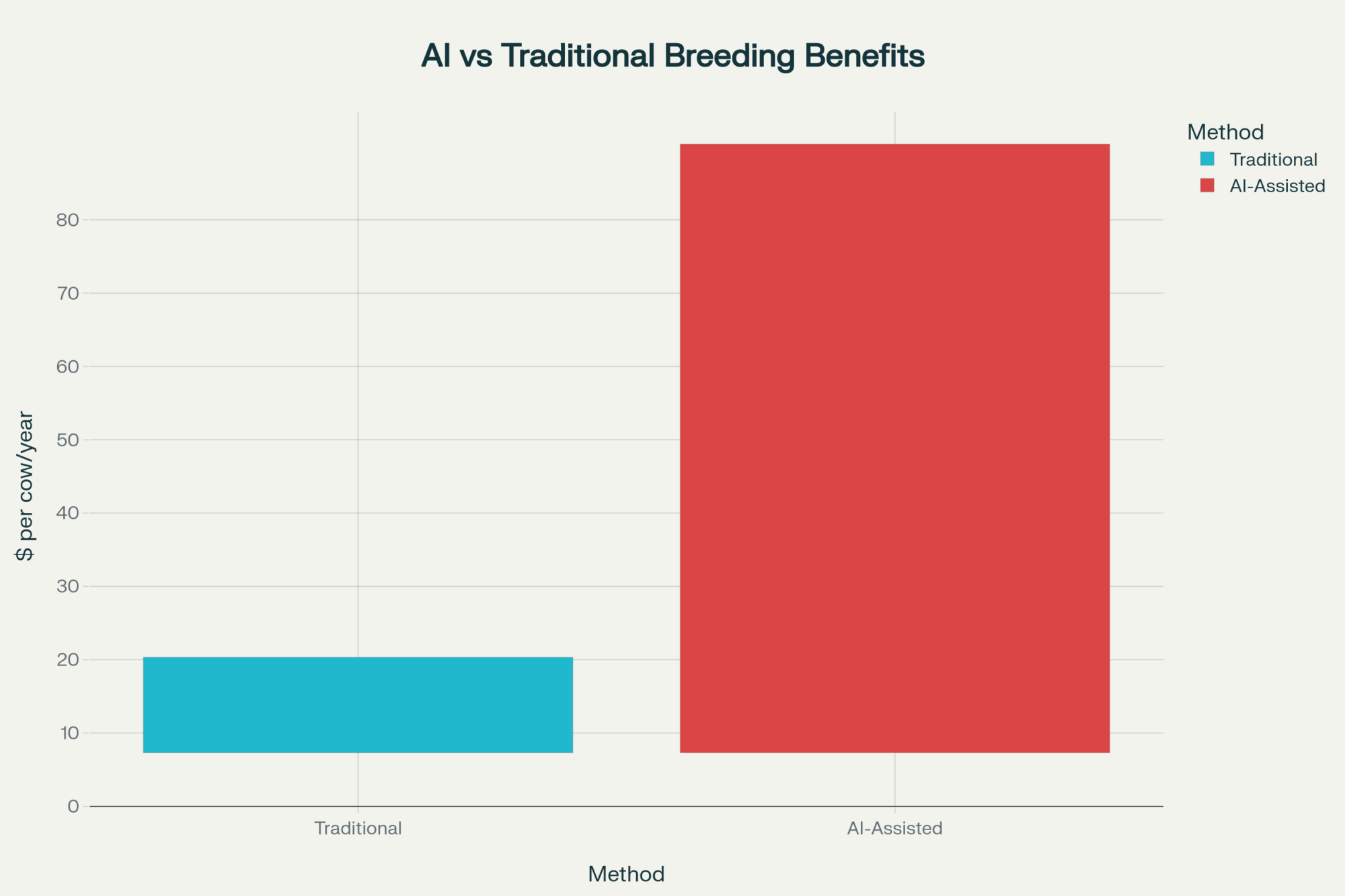
EXECUTIVE SUMMARY: Look, I’ve been watching this genetics revolution unfold for years, and the gap between early adopters and holdouts is getting scary wide. We’re talking about farms losing $200-plus per cow annually just because they’re stuck in the past with breeding decisions. But here’s what gets me fired up—some operations are pulling in an extra $350,000 yearly just by getting smart about genomics. The tech isn’t pie-in-the-sky anymore. Genomic testing hits 65-80% accuracy now, which beats the heck out of guessing based on parent averages. AI tools are cranking genetic progress six times faster—jumping Net Merit gains from $13 to $83 per cow each year. Toss in better sexed semen and strategic IVF use, and you’ve got a breeding program that actually pays for itself in under two years. I’ve seen this work on real farms—Wisconsin operations dealing with short grazing seasons, New York dairies switching low-merit heifers to beef breeding, California outfits optimizing for heat tolerance. The math’s solid, the tech’s proven, and honestly? If you’re not at least testing your top replacements, you’re leaving serious money on the table.
KEY TAKEAWAYS
- Stop bleeding $200+ per cow from genetic lag — genomic test your best 25% of replacements within 30 days and watch avoided costs add up fast
- Accelerate genetic progress 6x with AI mating systems — Net Merit jumps from $13 to $83 yearly gains per cow when you let algorithms spot inbreeding risks and optimize breeding decisions
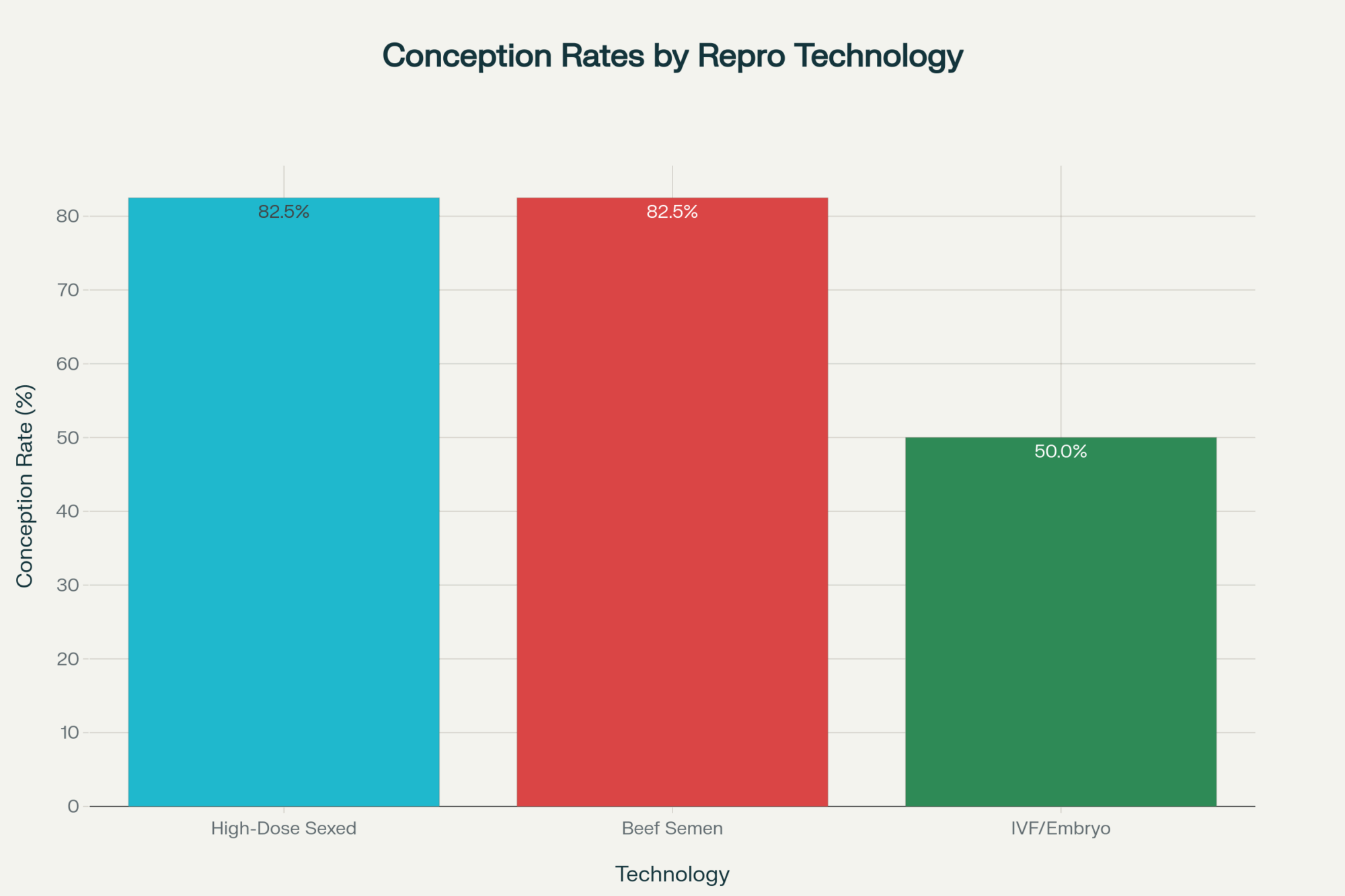
- Cash in on reproductive tech advances — high-dose sexed semen hitting 80-85% conception rates, plus strategic IVF at 50% success, means you multiply elite genetics while culling genetic dead-ends
- Match your genetics to your ground — Wisconsin’s short grazing season demands forage efficiency focus, while heat-stressed regions need tolerance traits to capture component premiums
- Start small but start now — phased implementation over 18-24 months delivers measurable ROI while competitors stick with yesterday’s breeding strategies

You ever get that feeling when you cruise past a neighbor’s dairy and wonder, how are they making this look so easy? Well, spoiler alert: it’s all about livestock genetics, plain and simple.
I was talking to a consultant the other day who’s worked with farms from Wisconsin all the way to Texas. He mentioned two dairies—less than 15 miles apart—with almost identical feed sources, the same milk pickup, and near identical weather. But one hauled in over $350,000 more last year alone. The difference? They nailed their genetics game.
But here’s the kicker—far too many dairies still using old-school breeding are losing more than $200 a cow each year because of genetic lag, and that’s money walking right out the back door. While others are cashing in with genomic testing, achieving 65-80% accuracy — far better than we ever hoped — by relying on sire averages.
When $39 Saves You from Raising a $2,000 Mistake
Let’s be honest—genomic testing isn’t cheap. You’ll be looking at anywhere from $39 for simple parentage testing up to around $200 for a full genetic profile. But what you get for your buck is priceless: a shot at knowing which heifers will actually pull their weight, and which ones will be a drain on feed and resources.

Here’s what you’re looking at:
| Test Level | Cost | Accuracy | What You Get |
| Basic Parentage | $39-$75 | 65-70% | Genetic ID and simple traits |
| Enhanced Panels | $100-$150 | 75-80% | Health, production, and fertility markers |
| Full Genome Scan | $175-$200+ | 80%+ | Comprehensive trait evaluation |
Source: USCDCB genomic evaluation data
Agriculture Victoria’s study shows customizing SNP chips can raise accuracy by up to 10%, which is a big deal when you’re making decisions on hundreds of animals.
One case I keep thinking about: Extension research documents a New York farm that tested 400 springing heifers, discovered 150 with poor genetics, and smartly moved those over to beef crosses—saving more than $216,000 on feed and calf sales that might have been wasted.
AI: Your Breeding Partner That Never Takes a Day Off
Now AI? That’s the game-changer knocking on the barn door.
Based on documented adoption patterns across the Midwest, producers typically follow a similar path: initial skepticism, gradual testing, and then growing confidence. One Wisconsin farmer told me he was downright skeptical of computers running his breeding program just two years ago. Now? He’s crediting AI with saving him $38,000 by spotting inbreeding before it turned costly and kicking his genetic progress into overdrive with a 280% increase.
These AI tools run thousands of breeding combos in a flash—way beyond what you could crunch by hand while juggling barn chores.
Here’s how that breaks down:
| Factor | Old-School Way | AI-Powered Way | How Much Better |
| Inbreeding Control | Pedigree sheets | Genomic + AI algorithms | 8-12x more precise |
| Health Prediction | Visual spotting | 71% accuracy for mastitis, 96% for digital dermatitis | Days earlier intervention |
| Breeding Choices | Maybe 20 options | Thousands evaluated | Massive increase |
| Genetic Progress | $13/year Net Merit | $83/year Net Merit | Nearly 6x faster |
Source: USDA Net Merit documentation
Heads up—AI’s track record is strongest on digital dermatitis prediction, while mastitis detection accuracy is still being refined through ongoing research.
Reproductive Tech That’s Actually Paying Off
Sexed semen? It’s come a long way.
Labs are pumping twice the sperm into high-dose straws, often matching conception rates of regular semen—not everywhere, but often enough to change the game.
Run that with beef semen on your lower genetic merit cows and IVF for multiplying your cream-of-the-crop, and your breeding program’s got some serious horsepower.
Check this out:
| Technology | Conception Rate | Cost Premium | Best Use |
| High-Dose Sexed | 80-85% | +$25-$30/straw | Elite genomic females |
| Beef Semen | 80-85% | Market-dependent | Lower-merit females |
| IVF/Embryo Transfer | 45-55% | ~$500/pregnancy | Elite genetic multiplication |
Source: Based on university extension models and industry data
Extension case studies document operations using this strategic approach—genomically testing replacement heifers, identifying those with below-average potential, and switching them to beef breeding. One frequently cited Wisconsin example netted $350,000 through avoided costs and premium crossbred calf sales.
IVF costs vary by region and setup, but best-case scenarios show around 50% conception rates for roughly $500 per pregnancy.
The Economics: What Investment Levels Actually Deliver
I gotta mention—breeding programs are no small investment.
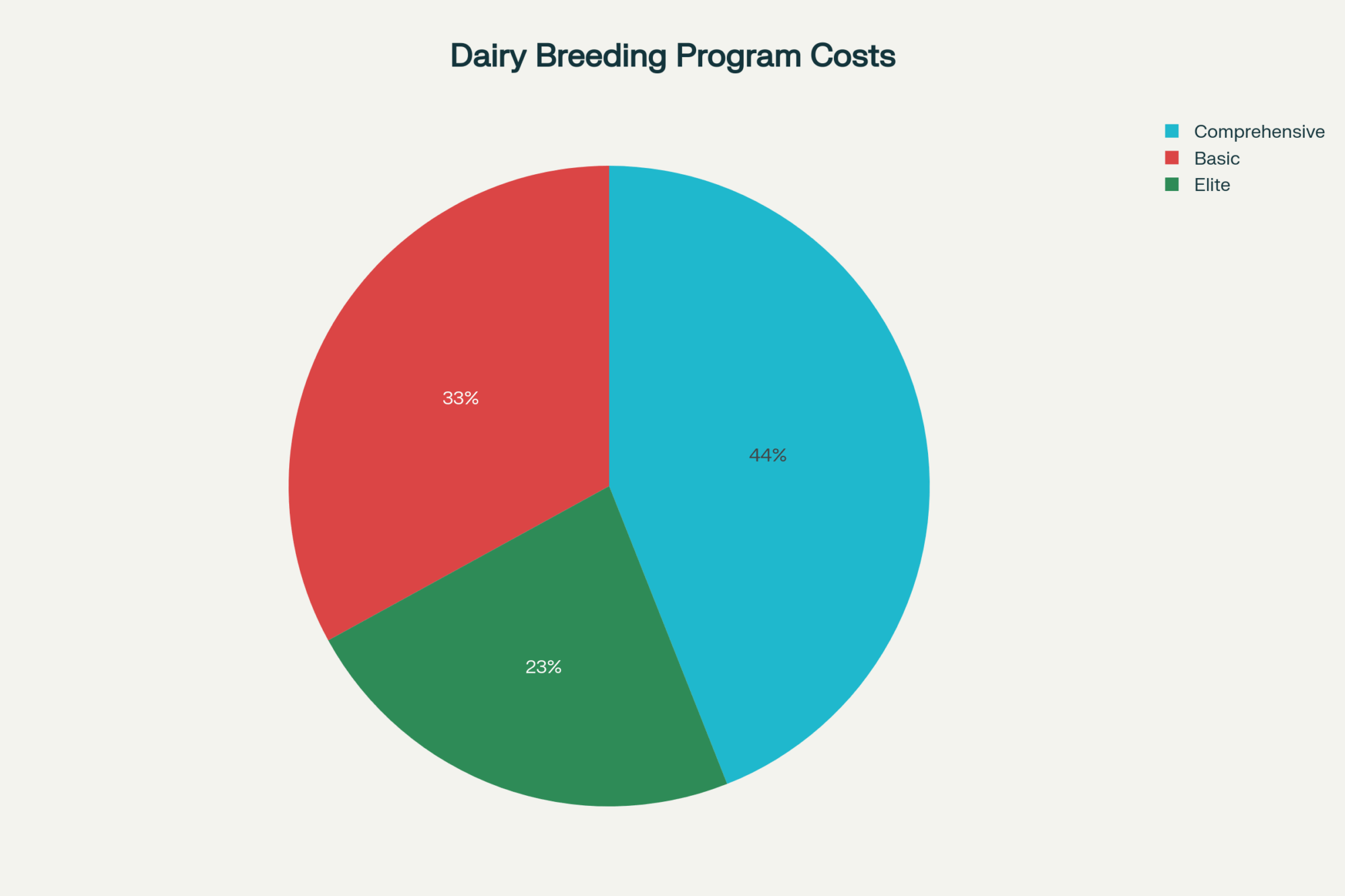
Annual spend can range from approximately $75,000 for a modest setup to over $300,000 for elite operations.
But the payback can be solid:
| Program Level | Annual Cost (1,000 cows) | Genetic Gain % | 5-Year ROI |
| Basic | $75k-$125k | 4-6% | $250k-$400k |
| Comprehensive | $150k-$300k | 8-12% | $500k-$800k |
| Elite | $300k+ | 12%+ | Highly variable |
Source: Based on university extension models and industry data
Oh, and here’s something that sneaks under the radar—research shows inbreeding costs you 37-61kg of lifetime milk per 1% increase, depending on the calculation method. It’s the quiet profit killer.
Your genetic priorities gotta fit the turf you’re farming. Wisconsin producers battling a short 150-day grazing season lock in on forage efficiency, while California operations focus on heat tolerance and milk component premiums for specialty markets.
Getting Past the Implementation Hurdles
Look, I won’t sugarcoat it—genomics ain’t a walk in the park.
Smaller farms struggle with costs and managing heaps of data—not to mention everybody’s worried about data privacy and the big genetics companies consolidating power. These are genuine concerns that warrant an honest industry discussion.
Still, most farms make the jump when they see their neighbors banking real returns.
Common barriers I hear: upfront costs, technology complexity, skepticism about results, and limited management bandwidth.
Here’s the best advice—start small, find a trusted mentor, and build a plan that fits your operation.
As one producer put it: “AI breeding cut my losses and sped up genetic progress—but it took patience and learning, just like any new management tool.”
And honestly? Watching your neighbors cash in on this stuff cuts through doubt faster than any sales presentation.
Bottom Line: The Genetics Revolution Is Banking Money Today
Every month you stall on genomic testing, you’re probably leaving more than $200 per cow per year on the table while your competitors get smarter and richer.
Your move:
Get testing scheduled in the next 30 days. Focus on the best 25% of your replacements first—you’ll see the quickest return there.
Talk to three genetics professionals. Tour farms who’ve already rolled up their sleeves with these systems.
Use extension calculators—get your own genetic lag number. It’s real money walking out your door.
The choice is documented: invest $50-200 per head in genomic testing that delivers measurable returns within 18-24 months, or keep bleeding hundreds per cow annually while neighbors bank the advantages of precision breeding.
The genetics revolution isn’t tomorrow. It’s right now.
Complete references and supporting documentation are available upon request by contacting the editorial team at editor@thebullvine.com.
Ready to join it?
Learn More:
- Genomic Testing: A Producer’s Guide to Getting Started – This guide provides practical strategies for launching a genomic program. It demonstrates how to select the right animals for initial testing and translate complex data into immediate, profitable breeding and culling decisions to maximize your return on investment.
- The 2025 Genetic Base Change: What It Means for Your Herd’s Bottom Line – Go beyond on-farm tactics and understand the market forces shaping your herd’s value. This analysis reveals how industry-wide genetic updates impact your operation’s profitability, sire selection strategy, and long-term competitiveness in a shifting market.
- Beyond Milk Volume: Are We Breeding for the Right Stuff? – Challenge your current breeding goals with this forward-looking analysis. It explores the critical shift toward new traits like feed efficiency and sustainability, revealing methods for building a more resilient and profitable herd designed for future market demands.
 Join the Revolution!
 Join the Revolution!
Join over 30,000 successful dairy professionals who rely on Bullvine Weekly for their competitive edge. Delivered directly to your inbox each week, our exclusive industry insights help you make smarter decisions while saving precious hours every week. Never miss critical updates on milk production trends, breakthrough technologies, and profit-boosting strategies that top producers are already implementing. Subscribe now to transform your dairy operation’s efficiency and profitability—your future success is just one click away.




