






31,000 farms today. 19,000 by 2035. The 920% Asia growth gap reveals exactly who survives—and how.
Executive Summary: When Danone reported 13.8% growth in Asia versus 1.5% in North America—a 920% difference—it exposed what every dairy farmer already feels: the game has fundamentally changed, and your response determines whether you’re still milking in 2035. Three paths are proving profitable today. Wisconsin farmers optimizing protein for export processors are capturing an extra $140,000-225,000 annually, while small Vermont organic operations are netting $489 per cow—six times conventional returns. Large-scale operations over 1,000 cows achieve $250,000-375,000 higher profits through efficiency, but here’s what any farm can implement tomorrow: beef-on-dairy crossbreeding delivers $122,500-183,750 extra revenue on 500 cows for just $23,500 investment. Geography now matters as much as management, with farms over 100 miles from processors facing $10,000+ annual disadvantages. December 1st’s Federal Order reforms will lock in advantages for those who’ve already optimized components, making the next 30 days critical. Of today’s 31,000 dairy farms, only 19,000 will survive to 2035—and the market is already choosing winners based on who adapts fastest to these new realities.
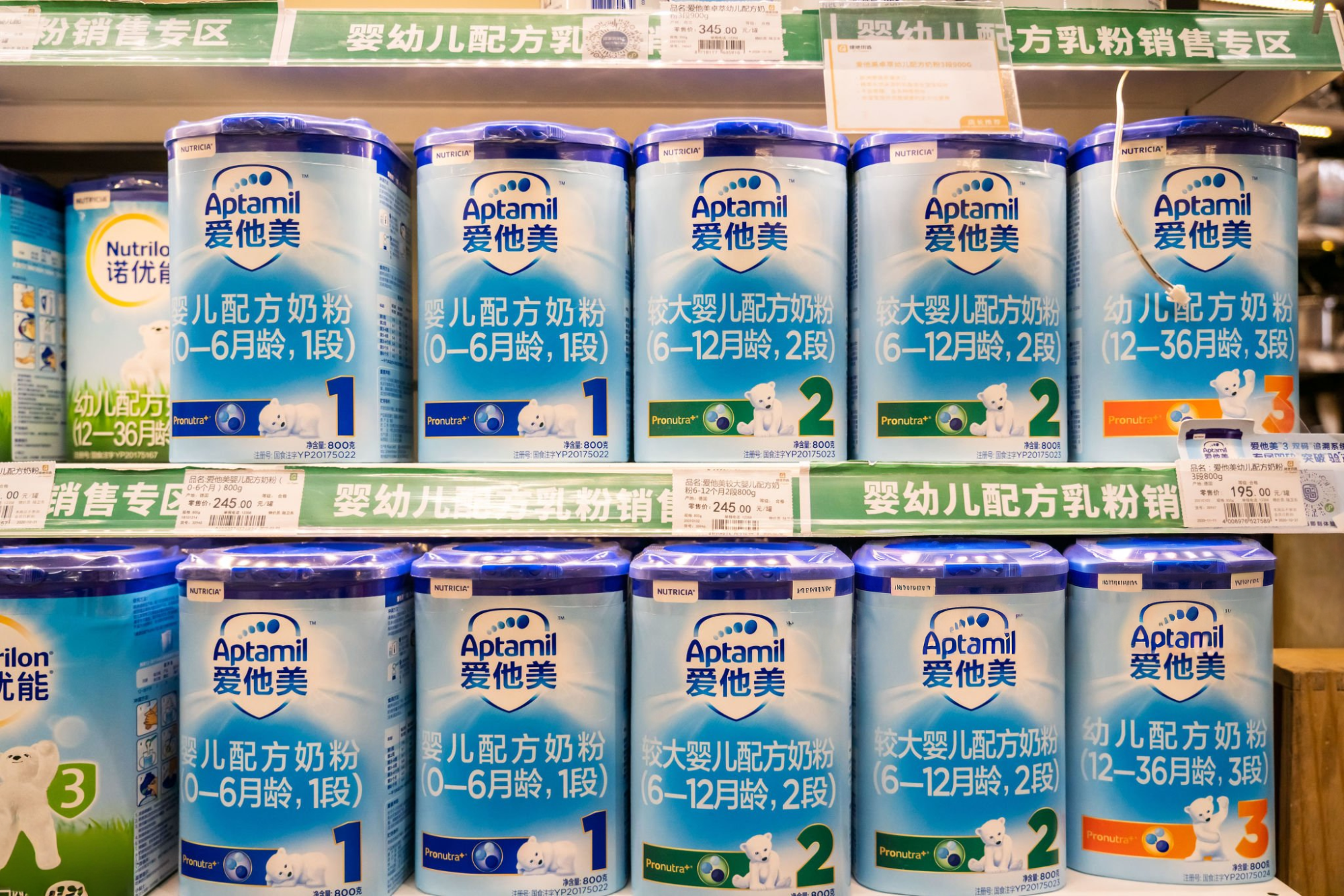
You know that feeling when you’re looking at your milk check and wondering if you’re missing something? I had that exact conversation with a Wisconsin dairy farmer last month—let’s call him Tom. He’s got his October statement in one hand, tablet in the other showing Danone’s latest earnings report. “Makes you wonder,” he said, pushing back from his kitchen table, “if we’re even in the same business anymore.”
Here’s what caught both our attention: Danone’s reporting 13.8% growth in their Asia-Pacific specialized nutrition business while North America’s crawling along at 1.5%. That’s a 920% difference, folks. Not a typo—920%.
And you know what? That conversation’s been rattling around in my head ever since, because it’s not really about Danone at all. It’s about what’s happening to all of us.

What’s Really Behind Those Numbers
So here’s what’s interesting—everyone immediately jumps to China’s infant formula market when they see these growth figures. Sure, China represents about two-thirds of the global infant formula market according to industry tracking, somewhere north of $90 billion. Can’t ignore that.
But there’s more going on here, and this is what I’ve been digging into…
The USDA’s Foreign Agricultural Service has been tracking something remarkable: 670 million people have joined Asia’s middle class since 2000. We’re talking about twice the entire U.S. population moving into dairy-consuming income brackets. And get this—another 80 million are expected by 2030.
Now, what really puts this in perspective is per capita consumption. In China, they’re consuming about 42 kilograms of dairy annually. Meanwhile, we’re sitting at 653 pounds per person here in the States according to USDA’s Economic Research Service data from 2024.
That’s… well, that’s about seven times more. Think about that for a second. Seven times more room to grow.
Meanwhile—and this is where it gets uncomfortable for those of us in North America—Dairy Management Inc.’s been tracking fluid milk consumption, and it’s declined for 70 consecutive years. Not quarters, not even decades. Seven decades straight.
The International Dairy Foods Association published some research in September showing Gen Z drinks about 20% less milk than millennials did at their age.
So we’ve got this massive growth potential over there, and over here? We’re basically rearranging deck chairs, fighting over market share in a pie that’s not getting any bigger.
I’ve been talking with economists and processor reps about this disconnect, and what keeps coming up is how differently they’re positioning themselves depending on whether they’re chasing Asian markets or focusing on domestic sales. And that positioning—here’s the kicker—directly affects what kind of milk they need from us.
Three Approaches That Are Actually Working
What I’ve found visiting farms from Vermont to California over the past few months is that there are basically three models that seem to be working. Not perfectly, mind you, and not for everyone, but they’re working.

The Strategic Ingredient Approach
I visited a 680-cow operation in Wisconsin recently where the owner showed me something that made my eyes pop. He’s pulling $3.40 per hundredweight above Federal Order minimums. Not from organic. Not from grass-fed. From protein optimization.
“Started working with the university folks on amino acid balancing,” he explained, spreading out his ration sheets on the office desk. “We’re adding about $75 per cow annually in rumen-protected lysine and methionine. But here’s the thing—we went from 3.12% to 3.38% protein in about eight weeks.”
Now, the University of Wisconsin Extension’s research backs this up. They’re showing farms implementing these protocols typically see returns of 2.5 to 1, sometimes up to 5.5 to 1, within 90 days. Income over feed cost improvements of forty to fifty cents per cow daily. That’s real money, not theoretical projections.
What’s driving this demand? Well, the U.S. Dairy Export Council’s been tracking how processors are investing in ultrafiltration systems to extract whey protein isolate. When that product’s selling for $5 to $8 per pound to medical nutrition companies in Singapore or Seoul, that extra 0.3% protein per tanker? Makes a huge difference to their bottom line.
Here’s what this looks like on the ground:
- Getting your protein to 3.4-3.6%, butterfat to 4.0-4.2%—mostly through nutrition tweaks, not waiting for genetic progress
- Keeping somatic cells under 100,000—Michigan Milk Producers Association’s paying forty to sixty cents per hundredweight bonuses for this
- Finding processors who are actually investing in fractionation technology
- Capturing $2 to $4 per hundredweight above base pricing
Premium Markets That Actually Pencil Out
I’ll be honest with you—I used to roll my eyes at some of these premium market stories. Seemed like a lot of work for uncertain returns.
Then I spent time with an 85-cow operation in Vermont that netted $489 per cow last year according to the Northeast Organic Farming Association’s financial benchmarks.
That’s… let me repeat that… nearly six times what similar-sized conventional operations are achieving.
What really opened my eyes was data from the University of Minnesota’s farm management folks showing Upper Midwest organic operations averaging $131,839 in total net farm income. This isn’t just a Vermont thing anymore. Wisconsin alone sold $125.7 million in organic milk in 2023—that’s third nationally, only behind California and New York.
“Can’t change the global market, but I can sure change how I respond to it.” —Wisconsin dairy farmer
And then there’s this A2 angle that’s fascinating. Visited a small operation in Pennsylvania—maybe 40 cows total—selling A2 milk at their farm store for $8.50 per gallon. “Testing cost us about $40 per cow through one of the genetics companies,” the farmer told me. “One-time expense. Now we’re capturing premiums that make the whole operation work.”
The market research on A2 is pretty compelling—we’re looking at a market that hit $15.4 billion last year and is projected to reach $50.9 billion by 2033. That’s over 14% compound annual growth. Not a fad when you see numbers like that.
Current premium pricing based on what I’m seeing in the market:
- Organic’s running $31 to $39 per hundredweight versus $18 to $24 conventional
- Grass-fed with intensive grazing: $36 to $52
- A2 milk’s capturing 50% to 100% retail premiums
- Direct-to-consumer: $6 to $10 per gallon versus $2 to $3 commodity
Scaling Up—If You’ve Got What It Takes
Now let’s talk about the other end of the spectrum. Visited a 2,100-cow operation in California that’s expanding to 2,800. Their production costs? $14.80 per hundredweight.
Cornell’s dairy farm business folks show 500-cow operations typically running $16.30 to $17.80. That’s… that’s a massive difference when you multiply it out over millions of pounds.
“Look, this isn’t for everyone,” the owner told me straight up, standing next to his new rotary parlor. “We’re $4.2 million into this expansion. Both my kids have advanced degrees—one’s got an MBA, the other’s a vet. Without that next generation ready and committed? I wouldn’t even consider it.”
USDA’s Economic Research Service data from September backs up what he’s experiencing—operations over 1,000 cows are capturing roughly $250,000 to $375,000 more in annual profit than 500-cow dairies. It’s mostly about labor efficiency and input cost advantages.
But man, that capital requirement…
Your Strategic Options: Side-by-Side Comparison
| Business Model | Investment Required | Typical Annual Returns* | Timeline to Profit | Best Suited For |
| Strategic Ingredient Supply | $20,000-30,000 | $140,000-225,000 | 3-6 months | Operations near processors, 300-1,000 cows |
| Premium Differentiation | $10,000-50,000** | $130,000-245,000 | 1-3 years | Farms near urban markets, any size |
| Strategic Scale | $2-5 million | $250,000-500,000 | 3-5 years | Operations with capital access, next generation |
*Returns based on actual farm performance data from University of Wisconsin Extension (ingredient supply), Northeast Organic Farming Association and University of Minnesota benchmarks (premium markets), and USDA Economic Research Service analysis (scale operations). Individual results vary based on management, location, and market conditions.
**With USDA organic transition assistance covering 50-75% of costs
The Beef-on-Dairy Opportunity (Seriously, Do This Yesterday)
If there’s one thing—just one thing—that every dairy farmer should’ve started yesterday, it’s beef-on-dairy. And I mean that literally. The economics are almost too good to believe, but the numbers absolutely check out.
UC Davis has been tracking this, and crossbred calf production’s jumped from about 50,000 head in 2014 to 3.2 million in 2024. Current market data shows these crossbred calves averaging around $1,300. Holstein bulls? You’re lucky to get $250 to $600 on a good day.
Talked with a Pennsylvania producer in October who’s all over this. “We genomic test every heifer calf—costs about $40 per head. Bottom third of our genetics gets bred to beef. Using Angus and SimAngus semen at maybe $22 per straw versus $8 for conventional Holstein. But those beef-cross calves? They’re selling for $1,400 at three days old. Three days!”

CattleFax’s October analysis projects beef-on-dairy could represent one-sixth of the entire fed beef market within two years. Why? Because the U.S. beef cattle herd hit 73-year lows—we’re at 28.2 million head as of January 2024. That shortage isn’t fixing itself anytime soon.
Here’s your action plan—and I mean implement this now:
- Test your herd if you haven’t already ($40 per cow, one-time expense)
- Breed the bottom 30-35% to beef (but keep that 25-30% replacement rate)
- Budget for $600 premiums long-term, not today’s $1,000-plus
- On 500 cows? You’re looking at $122,500 to $183,750 in additional revenue first year

Critical: Federal Order Changes Coming Fast
Effective December 1, 2025:
- Protein factors jump from 3.1% to 3.3% per hundredweight
- Other solids increase from 5.9% to 6.0%
- If you’re below these levels, you’re facing deductions, not just missing premiums
Source: USDA Agricultural Marketing Service Final Decision
Geography Is Becoming Destiny (Unfortunately)

This is tough to talk about, but we need to face it—your location might matter more than your management now.
Recent research on milk hauling charges across the Upper Midwest is pretty eye-opening. Some Wisconsin counties near Madison? They’re paying less than twelve cents per hundredweight for hauling.
But if you’re in northern Minnesota or parts of North Dakota? You’re looking at fifty to seventy-three cents.
For a 500-cow operation, that’s nearly ten grand in annual disadvantage before you even start talking about market access. Distance to processing infrastructure correlates directly with profitability now. It’s not fair, but it’s real.
That said—and this is encouraging—Midwest operations are finding creative workarounds.
Visited a 240-cow grazing operation near Viroqua, Wisconsin, where they’ve really figured something out. “Our feed costs run about $4.20 per cow daily versus $6.80 for the confinement operation down the road,” the farmer explained while we watched his cows heading out to pasture. “Yeah, we produce less milk—46 pounds versus their 85—but our profit per cow? Actually higher.”
Recent grazing systems research from Missouri backs this up—their pasture-based operations are achieving $14.08 per hundredweight production costs versus $14.52 for conventional confinement. Not a huge difference, but when every penny counts…
What Your Region Means for Your Strategy
If you’re in the Northeast: You’ve got proximity to those premium markets, but land competition is absolutely brutal. Recent data shows Vermont farmland averaging around $4,100 per acre versus about $2,800 in Wisconsin. Your path probably runs through differentiation—organic, grass-fed, or direct marketing. You’ve got the population density to support it. For specific guidance, check with your state extension service—Cornell for New York, UVM for Vermont, Penn State for Pennsylvania.
Midwest folks: Feed cost advantages and land availability are your strengths. But if you’re over 100 miles from a major processor? The math gets tough. I’d be focusing hard on cutting production costs through grazing or looking at partnership models with neighbors. University of Wisconsin-Madison Extension and University of Minnesota have excellent resources on managed grazing economics.
Western operations: Scale is your game, no question. But water rights and environmental regulations keep tightening. California’s new sustainability requirements are adding compliance costs that really bite into margins. You’ve got to factor that in. UC Davis and Oregon State have been doing great work on water efficiency in dairy systems.
The Cooperative Question: Choose Your Risk Profile
When Danone terminated contracts with 89 Northeast organic farms back in August 2022, it sent shockwaves through the whole industry. According to the Northeast Organic Dairy Producers Alliance, fifteen of those farms went out of business entirely.
Organic Valley ended up absorbing 65 of them.
One affected farmer told me—and this still gets me—”We thought we had security with a big buyer. Turns out we were just suppliers they could optimize away when it suited them.”
Here’s the reality: you’re choosing between two different risk profiles. With a corporate buyer like Danone, you might get higher prices short-term, but you’re vulnerable to sudden termination when their strategy shifts. With a cooperative like Organic Valley, you get more stability through member ownership, but you’re subject to supply management decisions and triggering controls.
What’s interesting about Organic Valley’s response is their triggering system. They commit to purchasing milk one to three years before farms even finish their organic transition. Yes, they control who gets triggered based on their supply needs. But once they trigger you, they honor that commitment even when they’re in oversupply. During the 2016 organic oversupply crisis, they kept taking milk from triggered farms even while stopping new enrollments.
The Government Accountability Office did a report back in 2019 on dairy cooperatives—Senator Gillibrand requested it after getting complaints from constituents. They found that these consolidated cooperatives face what they called “competing interests that can create power imbalances” between large and small members.
Organic Valley’s at over 1,600 members now, adding about 84 farms annually. That’s 5.3% growth while overall farm numbers are declining.
The bottom line? Both models have trade-offs. Corporate buyers offer market pricing but zero governance control. Cooperatives provide member ownership but require you to work within their supply management framework. Neither is perfect, but understanding the trade-offs helps you make an informed choice based on your risk tolerance and long-term goals.
For farms considering organic transition, the smart move is securing your buyer commitment—whether cooperative or corporate—before investing in the three-year transition. That $180,000 mistake that Iowa farmer made? Completely avoidable with upfront buyer agreements.
Export Markets: Opportunity and Risk All Mixed Together
Let’s address the elephant in the room—China achieved 85% dairy self-sufficiency in 2023, a full year ahead of their own schedule.
According to Rabobank’s latest quarterly, their whole milk powder imports crashed 36% to just 430,000 metric tons. That’s the lowest since 2010.
Then came April’s tariff mess. By April 10, we hit 125% tariffs going both directions. U.S. dairy exports to China—which were $584 million in 2024—basically vanished overnight.
But here’s what’s interesting—Southeast Asia is a completely different story.
The six ASEAN countries represent 566 million people with a projected 19 billion liter dairy deficit by 2030. That’s actually bigger than China’s 15 billion liter gap, according to the International Dairy Federation’s latest global report.
Industry analysts I’ve talked with increasingly point out that farmers supplying processors focused on Southeast Asian markets have more stable growth prospects than those dependent on China. It’s that old wisdom about not putting all your eggs in one basket, but with real numbers behind it now.
Learning from What Doesn’t Work
Not every strategy succeeds, and we need to talk about that too.
One Iowa operation tried transitioning to organic back in 2019 without securing a buyer first. “We spent three years paying organic feed prices while getting conventional milk prices,” the farmer admitted when we talked. “Lost $180,000 before we pulled the plug.”
Another farm near Fond du Lac expanded from 400 to 800 cows in 2021. “We completely underestimated the management complexity,” they told me. “Thought we’d just double everything. Doesn’t work that way. We’re selling the expansion facilities and going back to 500.”
These aren’t failures of farming—they’re strategy lessons worth learning from before you make the same mistakes.
What Actually Needs to Happen Now
Looking at all this—the growth gaps, what’s working, what isn’t—certain decisions just can’t wait anymore.
If you’re under 500 cows:
Start beef-on-dairy immediately. I can’t stress this enough. The investment’s minimal—about $23,500 for a 500-cow operation. Returns come fast—$122,500 to $183,750 in the first year. And it doesn’t require changing your whole operation.
Also, be honest about your geography. More than 100 miles from processing? Over 200 from a metro area? Your options narrow considerably, and you need to face that reality.
If you’re 500 to 1,000 cows:
You’re in what I call the squeeze zone. Either commit to scaling up—if you’ve got the capital and management depth—or pivot hard to differentiation. Standing still is just slow bleeding at this size.
For everyone:
By November 30, you need to ask your milk buyer these questions:
- What percentage of our milk goes into export products?
- Which Asian markets are you actually targeting?
- What component premiums will you pay after December 1?
- Are you investing in protein fractionation capacity?
If those answers disappoint you, start exploring options. Now. Not next year.
The View from Here
Danone’s 13.8% Asian growth versus 1.5% in North America tells us exactly where dairy value is accumulating globally. That’s not changing anytime soon.
What can change is how we position ourselves in that reality.
The industry that emerges from all this transformation will have fewer farms—that’s just math. But those remaining will be more specialized, more efficient, or more strategically positioned. That’s not a judgment on anyone. It’s just the economic reality we’re all trying to navigate.
Remember that Wisconsin farmer I mentioned at the start? Tom? He’s implementing beef-on-dairy now, hired a nutritionist for component optimization, and he’s talking to Organic Valley about membership. “Can’t change the global market,” he told me last week. “But I can sure change how I respond to it.”
And that’s really it, isn’t it? The market’s sending us signals—loud ones. The question isn’t whether to adapt anymore. It’s how fast and how smart we can position ourselves for what’s already here.
For the 31,000 dairy farmers operating in North America today, these aren’t abstract discussions over coffee. They’re decisions that compound into survival or exit. Understanding what’s happening—really understanding it—that’s what separates the operations that’ll be milking in 2035 from those that won’t.
Sometimes the kindest thing we can do is be honest about hard truths. Even when they’re uncomfortable.
Especially then, actually.
Whether you’re in Vermont, Wisconsin, or Washington State, the fundamentals remain the same: position yourself strategically, move decisively, and don’t wait for the market to make decisions for you. Because it will.
Don’t wait: Federal Order reforms take effect December 1, 2025. If you haven’t evaluated your component levels and processor relationships yet, you’re already behind. The competitive advantages are about to lock in for those who moved early. Don’t get caught watching from the sidelines while others capture the premiums you could’ve had.
Resources for Next Steps
Northeast: Cornell PRO-DAIRY (prodairy.cals.cornell.edu), UVM Extension (uvm.edu/extension/agriculture), Penn State Extension Dairy Team (extension.psu.edu/animals/dairy)
Midwest: University of Wisconsin Dairy Extension (fyi.extension.wisc.edu/dairy), University of Minnesota Extension Dairy (extension.umn.edu/dairy), Michigan State Extension (canr.msu.edu/dairy)
West: UC Davis CLEAR Center (clear.ucdavis.edu), Washington State Dairy Extension (dairy.wsu.edu), Oregon State Dairy Extension (smallfarms.oregonstate.edu/dairy)
KEY TAKEAWAYS:
- Beef-on-dairy pays for your next pickup truck: Bottom third of your herd + beef semen = $122,500-183,750 extra revenue this year (500-cow operation, $23,500 investment)
- The 920% gap reveals three winners: Premium markets (organic/A2 earning 6x conventional), protein optimization ($140-225K extra annually), or 1,000+ cow scale—everything else is managing decline
- Your address matters more than your management: Same exact operation, wrong zip code = $10,000+ annual penalty if you’re 100 miles from processing
- December 1 splits the industry in two: Farms hitting 3.3% protein and 6.0% other solids capture premiums; everyone else faces deductions—this deadline won’t come again
- 19,000 survivors from 31,000 farms: Asia’s exploding demand rewards farmers who adapt to export markets, while domestic-focused operations fight over crumbs—choose your side now
Complete references and supporting documentation are available upon request by contacting the editorial team at editor@thebullvine.com.
Learn More:
- Mastering Beef on Dairy Programs: Strategies for Thriving in an Uncertain Future – This tactical guide provides the essential “how-to” for the main article’s most urgent recommendation. It details practical implementation, from sire selection and genetic strategies to marketing calves, turning the beef-on-dairy concept into an actionable, profitable plan.
- Weekly Dairy Outlook: October 7, 2024 – Navigating Falling Butter and Cheese Prices Amid Market Shifts – To complement the main article’s long-term strategic view, this piece delivers crucial market-level analysis. It demonstrates how global trends translate into weekly price volatility for butter, cheese, and powders, directly impacting the risk and profitability of your operation.
- Tech Reality Check: The Farm Technologies That Delivered ROI in 2024 (And Those That Failed) – For those considering the “Strategic Scale” model, this article offers a critical ROI analysis of key technologies. It reveals which investments, like robotic milkers and health sensors, actually delivered financial returns and why management, not machinery, is the deciding factor.
 The Sunday Read Dairy Professionals Don’t Skip.
 The Sunday Read Dairy Professionals Don’t Skip.
Every week, thousands of producers, breeders, and industry insiders open Bullvine Weekly for genetics insights, market shifts, and profit strategies they won’t find anywhere else. One email. Five minutes. Smarter decisions all week.




