Archive for Management – Page 50

Could once-a-day milking work on your dairy farm?

Teagasc is not promoting once-a-day milking for every farmer in the country, but it is a system that can work and is already working for some, according to Brian Hilliard of Teagasc.

“Over past number of years there has been a growing interesting in once a day milking from advisors around the country.

“We are not here to promote it for every farmer in the country but it is a system that can work and is working for some. It has a future and it does work well,” he told the recent Teagasc once-a-day milking seminar.

Labour

One of the main attractions of once-a-day milking, he said, is the ongoing issue of labour on dairy farms.

“We’ve had more queries from farmers last year that they can’t find labour or good labour. Last year was a particularly difficult year for farms.”

Lifestyle

Lifestyle, he said is also a huge factor. Even if it’s to pick up the children from school in the evening, while it makes farming a more attractive career for young people to see there parents having a life.


Walking Distance

The reduced amount of walking for cows, he said, means things are also a lot easier for cows if they are currently walking a distance.

Outside Farms

With the increased number of outside farms, many farmers are looking at a twice a day herd at home and looking to establish a second dairy unit on outside bock and milking once a day on it.

Off-Farm Jobs

He also said that once-a-day milking will allow more and more farmers an off-farm job and can offer farmers a means to retirement.

“Many farmers in their late 50s or 60s want to keep up the routine of milking cows, but don’t want to retire. There is less stress on the operator and it’s hard to put a value on that.”

Impact on Cow Health

While herds will experience a drop in yields, there will be better fertility and health and potentially a higher price/litre.

Cows are healthier so less vet bills, he said, while there are lower costs for labour, electricity and the parlour.

According to Gillian O’Sullivan, the Zurich Insurance/Farming Independent Farmer of the Year, moving to once-a-day milking saw an immediate drop in milk solids.

But, once a day suited the farm layout and landscape. “It’s fragmented, with one block 5km away and a 400ft climb for cows to get to the milking parlour.”

She said that by halving walking distances lameness became virtually non existent on the farm.

Fertility improved, she said, but it was a profit V profit, lifestyle and family decision for her and her family.

Source: independent.ie

Calf Health: Developing a Better, Faster Diagnostic for Cryptosporidiosis

Cryptosporidiosis is the primary cause of diarrhea in 1-3 week old dairy and beef calves, with conservative estimates placing the economic impact of the disease at $175 million per year in the U.S. in cumulative losses from death, treatment expenses and decreased production. Unlike the other major causes of neonatal calf diarrhea, no effective drugs or vaccines are presently available to combat the costly parasitic infection. The disease is of particular interest to Dr. Michael Riggs

, a veterinarian and professor in the Department of Animal and Comparative Biomedical Sciences at the University of Arizona College of Agriculture and Life Sciences . Riggs researches the immunobiology and molecular pathogenesis of parasitic protozoal diseases of zoonotic importance including Cryptosporidiosis, or Crypto, which is caused by the microscopic parasite Cryptosporidium. The the parasite infects not only humans, but also domesticated mammals, fish and poultry, and young livestock, such as calves and lambs, are especially susceptible. For its victims, Crypto creates a multitude of problems. What starts as nausea can quickly bloom into abdominal pain and full-blown diarrhea, followed by a fever and dehydration. In most instances, healthy people recover within two weeks. But for people with weakened immune systems, an extended, persistent infection can be much more dangerous, causing rapid and sometimes life-threatening weight loss and dehydration. The tiny bug is spread through any contact with infected feces and is frequently contracted via water sources ­such as mountain streams, public pools or contaminated municipal drinking water. It can be found on babies’ changing tables and in the pens of newborn calves. Given the dangers of infection and how quickly the parasite can spread, early diagnosis is key in keeping it under control. To that end, Riggs and UA research specialist Deborah Schaefer have developed a panel of monoclonal antibodies that have proven useful for detecting Crypto. To maximize the impact of their work, the team has been working with Tech Launch Arizona , or TLA, the office of the UA that commercializes inventions stemming from research. As a result, the UA has licensed the first group of reagents to Kerafast , a Boston-based reagent company. Plans are to continue to add additional reagents in the future. “Ultimately, the goal is to get this technology out into the world where it can help the most people,” said Tod McCauley , senior licensing manager for the College of Agriculture and Life Sciences at TLA. “Kerafast will be a great partner to make that happen.”

Toward Faster, More Accurate Diagnosis

Riggs’ research concentrates on characterizing immune responses to Crypto – specifically on the development of recombinant vaccines, immunotherapies and drug discovery for Cryptosporidiosis – and improved methods for diagnosis. Current means of detecting and diagnosing Crypto present challenges including cost, performance, clinical significance and assessment of co-infection with other pathogens. In addition, the use of a wide variety of diagnostic methods and the inconsistent application of techniques makes it difficult to compare results from clinical and veterinary studies. Microscopy, for example, requires simple instrumentation and inexpensive consumables, but the process is laborious and lacks sensitivity and specificity. Molecular methods of detection such as polymerase chain reactions can be used identify the parasite at the species level, but testing for Crypto is not routine in most laboratories. The reagents developed in Riggs’ laboratory offer the opportunity for the creation of a rapid, highly sensitive diagnostic test for Crypto. “We are now making a characterized panel of mouse monoclonal antibodies available to the community for a variety of applications including rapid, simpler diagnostic assay development, antigen characterization and immunotherapeutic development,” Riggs said. “These antibodies are a useful resource for a broad range of research and development purposes,” he continued. “After years of development and characterization, we decided to make them available to others for a variety of applications which are expected to advance the field. TLA has been the perfect liaison to partner with Kerafast and allow this to happen.” McCauley says the university-industry arrangement is doing much more than getting this specific technology out into the marketplace; it represents a relationship and a pathway that will continue to serve both organizations going forward. “We are exploring ways we can work with Kerafast long term to add additional value to particular reagents and create new research avenues for antibodies through technologies available to create customized antibody sequences.” Kerafast’s Director of Business Development Matt Takvorian is likewise optimistic about the opportunity for impact. “At Kerafast, we are committed to accelerating scientific progress by facilitating access to the unique and useful research reagents developed by academic laboratories,” Takvorian said. “We are excited to partner with the Riggs lab to make these antibodies more easily available to scientists worldwide to advance research toward better Crypto diagnosis and treatment. We look forward to continuing to expand our relationship with the University of Arizona to bring more of its lab-made reagents to the wider scientific community.”

Source: University of Arizona

Canadian agriculture moves to lift stigma of mental health talk

The topic of mental well-being is growing in recognition and acceptance in the Canadian agricultural sector.

Topics once never talked about on coffee row, or maybe, not even in a household, are more likely to be shared. This new openness may be one of the only ways to change perceptions and actions – whether that be recognizing when someone isn’t themselves, offering wise advice if someone says they are facing challenges or even knowing when to reach out yourself.

Mental health on the farm

Mental wellness is an issue on the farm. How could it not be? Largely solitary work, production factors like weather and markets that aren’t controllable, short growing seasons, start-up and seasonal investments, finances and the tremendous responsibility of producing safe consumer products that meet a basic human need – food.

The good news is that along with more discussion, there’s tactical action.

4-H launches new support

Earlier this week, 4-H Canada announced a two-year, multi-partnership agreement that supports the emotional and physical well-being of rural youth across Canada through the 4-H Canada Healthy Living Initiative, beginning in spring 2019. The partnership brings a total of $150,000 in funding from Farm Credit Canada, UFA Co-operative Limited, Corteva Agriscience Agriculture Division of DowDuPont and Cargill together for the healthy living initiative.

FCC encourages dialogue

Also this week, Farm Credit Canada released a new publication, Rooted in Strength: Taking Care of our Families and Ourselves. It’s being delivered through the mail to 165,000 rural mail boxes this week. 

“Our desire is to help lift the stigma around mental health by promoting awareness, encouraging dialogue and enabling people throughout the agriculture industry to seek support if they need it,” writes Michael Hoffort, FCC president and CEO, adding when it comes to mental wellness, the ‘just tough it out attitude’ isn’t the right one.

Lift the stigma. Canadian agriculture is talking about mental health, whether it’s one-on-one with neighbours, staff or family, in federal committees, or with new resources and programs.

“I shared my own journey with anxiety because if it can happen to me, it can happen to anyone,” says Kim Keller, a Saskatchewan producer featured in the publication.

Open the conversation

As co-founder of Do More Agriculture, a Canada-wide non-profit focused on mental health in agriculture, Keller is a public advocate and presenter on self-care, but she’s well aware that stigmas still need to be broken.

She promotes noticing when someone deviates from normal behaviours and checking-in with them in a genuinely compassionate way.

“It’s OK to say, ‘Hey, I’ve noticed you haven’t been yourself lately,’” Keller says, explaining it opens the door for conversation even if there’s fear.

Also at the federal level, mental health challenges in agriculture are currently being studied by the Federal Standing Committee on Agriculture and Agri-Food. It’s hearing from individuals and groups in agriculture and mental health organizations to understand the issues facing the sector and share best practices, review available resources and identify gaps related to mental health in the agriculture community. Records of all the presentations are on the Standing Committee website.

Canada, unlike other countries, doesn’t track data about suicide in the agricultural community but stories shared with the Standing Committee show it’s happening. A 2016 reported study by the Centre for Disease Control found agriculture, forestry and fisheries workers in the United States five times more likely than the population at large to take their own life.

Mental health first aid

To help address the fear of talking with someone in a mental health crisis, the Mental Health Commission of Canada offers Mental Health First Aid training for individuals across the country. MHFA is like CPR training, but instead of learning the basics of helping someone in physical distress like a heart attack, it helps assist someone experiencing a mental health crisis. Courses on becoming a certified trainer are offered at the MHFA website.

Bottom line

Avoiding mental challenges doesn’t make them go away. A newly released booklet on the topic is an easy-to-read resource to learn more, whether it’s for self-care or used as the door-opener to initiate a conversation about mental-wellness.

Source: FCC

How dairy farm is controlling Johne’s while buying-in cows

When Jonathan Lovegrove-Fielden decided to covert Longden Manor Farm back to an organic autumn-block and expand to 300 cows his farm manager, Colin Bowen, knew they would have to buy-in cows to facilitate the move in a reasonable timeframe.

But having made good progress in reducing the prevalence of red and yellow Johne’s cows within the herd from 9% to 1.5%, he was keen not to undo the farm’s hard work.

The farm had begun whole herd testing for Johne’s some two years earlier, in April 2014, with tests carried out every quarter as part of their milk testing regime.

Although it wasn’t a requirement of their milk contract at that time, Mr Bowen believes that further down the line milk buyers could create a two-tier milk market and wanted to get ahead of the game.

Farm facts

  • 303ha owned
  • 285 autumn-calving crossbred cows (Holstein, Norwegian Red and Fleckvieh)
  • Grass-based, organic system
  • Producing 8,000 litres at 3.89 fat% and 3.36% protein
  • Supply OMSCo
  • Employ two full-time staff plus a calf rearer for six months

Whole herd testing involves sampling milk from individual cows and is deemed much more accurate than bulk tank sampling, as their farm vet, Nathan Loewenstein from Shropshire Farm Vets, explains.

“Bulk milk testing is still being offered to people, but it is a complete waste of money. For a tank not to be low you need a minimum of 15% of cows in the herd to be a high [risk]. So, a lot of herds that did bulk milk test came back negative and thought they were fine.

“But the number of herds that are false negative is massive and by the time they go positive you have to dig yourself out of a massive hole.”

As well as converting to organic, they decided to streamline their system and reduce labour by getting rid of their spring block of cows and becoming a solely autumn block. 

Buying-in animals

Being short of numbers and not wanting to extend their autumn block any further by rotating cows from spring to autumn calving, their only option was to buy in.

Their shopping list was extensive; cows had to be organic, good health status and autumn calving, which left them with limited vendors.

The first bunch of 13 animals was purchased this spring and as the herd they were buying from had limited Johne’s data they decided to pay £5-6 a head to blood test the animals for the disease during the pre-movement TB test.

“The Johne’s risk was accepted and it meant that if any cows were Johne’s positive they could then be managed as such. If you’re going to have to buy something you buy with as much information as you can,” says Mr Loewenstein.

“I think as an industry we are very poor at asking questions. You wouldn’t buy a car without test driving it, but we do buy most stock without knowing the disease history.”

Questions to ask when buying in animals:

  1. Ask for the Johne’s testing history
  2. Find out what management protocols the farmer and vet use to control Johne’s. Are they better than or as good as yours? If not, you need to consider how you manage those animals when they arrive.
  3. If your herd has a lower prevalence (<14% total and <4% red cows) then you need to manage bought-in cows as medium risk until you have more information about them.

Even though only three animals tested Johne’s-positive, all animals were treated as yellow rather than run the risk of them joining the herd and failing a test at a later date (see box: “six ways they have controlled Johne’s spread”).

Another 23 milkers and 13 bulling heifers were bought in September, but this time extra precautions were taken with lessons learned after buying in the spring.

“We looked for herds that had done a more significant level of Johne’s investigation and requested results for all of the animals we were interested in,” says Mr Bowen.

As a result, none of the animals bought in had a positive test, although animals were kept in isolation for four weeks after arrival and were milked separately to limit contact with the main herd. During this time, they were vaccinated for BVD and IBR.

This approach, while not bullet-proof, has helped the herd manage the risk and as a result keep the number of red cows within the herd constant.

In the next three years, they hope to be milking 300 cows at Longden Manor and have surplus replacements to sell for a premium.

Mr Bowen hopes that being organic and having a good disease status will make them attractive to other organic herds.

So, what’s his one piece of advice for other farmers starting their Johne’s journey?

“Don’t try and do it all at once. Gradual improvements are a lot easier to manage than trying to have a big impact at the start.”

Five ways Longden Manor Farm have controlled spread of Johne’s

  1. When an animal tests positive for the disease they are tagged with red ear tags. Cows that are deemed medium risk (yellow) are treated as high risk (red)
  2. Initially, staff separated red and yellow cows out at transition stage (one month before calving) on to a separate dry cow block of grass. Now they are separated at drying off and calve in a separate area.
  3. Yellow cows are bred to beef and red cows are not bred. Instead they are culled at the end of their lactation.
  4. Calves from Johne’s-positive animals are moved to a separate area away from other calves.
  5. Previously heifer calves were fed powdered milk, but the conversion to organic has meant this would have been very costly to continue so a necessary progression has been to pasteurise all colostrum and feed whole milk to calves. Only colostrum and milk from low-risk ‘green’ cows are fed to calves. The cow number is recorded so staff know which cow’s colostrum each calf has been fed.

About Johne’s disease

A slow-developing, incurable disease caused by MAP (Mycobacterium avium subspecies paratuberculosis). Clinical form causes thickening of the intestine which means cows are unable to absorb nutrients.

At a sub-clinical level, it affects the immune systems and results in poor fertility, lower production, and other disease. It is spread through muck, milk, colostrum and in the womb.

It is closely related to avian tuberculosis and therefore, can affect the top lump on the TB test.


US dairy farmers struggle to make ends “meat”

Because the price of milk has been marginal for the last four years, Dairy Farmers have been struggling with keeping their farms going. Dairy Farmers like Scott Sawyer have turned to beef cattle as a means to supplement their income, but Cornell Cooperative Extension’s Jeff Miller tells us it’s not an easy choice.

“There are examples of people that have made that transition, or maybe I’m going to say not transition, but kind of that addition of that diversification of dairy production, but again it’s not going to be the answer for everybody.”

Other farmers are turning to soy beans, hay, grains, and even hemp, but Scott Sawyer of Hidden Hill Ranch isn’t ready to go that route.

“Certainly we could do it, but I don’t see us doing it. I can understand other people going that way, and I think it’s going to be very interesting to see it develop. I think it will develop actually, but I’m a cow guy. I like cows.” (laughs)

Cornell Cooperative Extension held a discussion with local farmers interested in what the beef industry might have to offer, but the interest was low. You’re probably not going to see a massive number of farmers making the transition from dairy to beef, but given the financial stresses of the dairy industry, farmers are likely going to look to diversify into other markets. It might sound like an easy answer, but each farm has individual challenges.

Jeff Miller says: “So there’s no cookie cutter… ok if you’re in dairy now and you’re finding it really tough to stay in because of the margins, here’s your answer. It’s going to be on an individual case by case method.”

Hidden Hill Ranch is hoping to sell their beef products in local farmers markets, an already established group of buyers, and right on his own farm.

Source: wktv.com

Tips to Keeping Livestock Healthy During Winter Months

Most animals need some shelter during the winter months, however their natural winter coats allow them to endure cold temperatures. ( Drovers )

Winter has arrived in full force in Michigan. Cold temperatures can cause some challenges in our barns, but utilizing some easy techniques on your farm will help you manage your herd successfully during the winter months.

Water

Ensuring your herd has access to fresh, clean water is essential to their health. In the winter, battling frozen water buckets and tanks can be a challenge. By utilizing tank heaters, heated buckets or automatic waterers, water is kept ice-free and at a temperature the animal is comfortable drinking.

Products that utilize electricity, such as tank heaters and heated buckets, should be checked with a voltmeter to ensure there is no current running through the water. Any electrical current will deter animals from drinking from the water tank or bucket. By inserting one end of the voltmeter in the water tank and the other into the ground, you will get a reading that will indicate if there is a problem. Make sure to check this often.

The University of Wisconsin Extension has published a water consumption chart that outlines the amounts of water certain species will consume per day. Ensuring that your animal is consuming enough water each day is critical to their overall health and well-being.

Amount of water livestock will consumer per day
Species Water needs, gallons per day
Cattle 7-12
Goats 1-4
Hogs 6-8
Horses 8-12
Llamas 2-5
Poultry Up to 1
Rabbits Up to 1
Sheep 1-4

Housing

Most animals need some shelter during the winter months, however their natural winter coats allow them to endure cold temperatures. Providing shelter or wind breaks that can be easily accessed by animals is key. Humans oftentimes are prone to making the winter environment for their animals too warm, which is unhealthy for animals.

Michigan State University Extension recommends the following factors to consider when evaluating the housing of your animals:

  • Air quality. Is there adequate ventilation to help dispel respiration gasses and manure odor? Depending on the type of barn you have, there are various ways the barn can be ventilated. Ridge vents are more prevalent in newer barns and are based on the premise that heat rises. Older barns may require opening doors or windows to allow for air circulation. Poorly ventilated spaces can cause irritation in the animals’ lungs and lead to respiratory infections such as pneumonia. If you notice condensation on walls or ceilings, that is a good indication your air isn’t ventilating enough for the number of animals occupying the space. You will need to adjust accordingly.
  • Dry bedding areas. Dry bedding provides insulation from the cold ground and helps decrease the amount of energy animals use to keep them warm. There are many options for bedding you can use; straw, wood shavings and with cattle in particular you can use corn stover or similar crop residues for cows and bulls.

Feed

Animals must maintain their energy reserves in order to endure cold temperatures. Before the weather gets cold, asses the body condition of each animal and adjust the nutrition they are receiving to adequately prepare them to thrive in winter conditions. It is critical to continue to assess body condition scores throughout the winter, as it may be necessary to increase the amounts of good quality feed and forages. Supplying adequate amounts of feed is essential in your herds well-being through the winter months.

This article was published by Michigan State University Extension. For more information, visit http://www.msue.msu.edu

More Women Returning to the Farm in Management Roles

Knowing that women approach business with different priorities can help farm and ranch families maximize their effectiveness in management roles.

This was the theme of the “Making Room for Women Managing Family Business” workshop, presented by Jeanne Bernick, principal and market strategist with KCoe Isom, at the American Farm Bureau Federation’s 100th Annual Convention.

“We’re seeing more and more women come back to the farm – and all kinds of family businesses,” said Bernick.

Today, women comprise 31 percent of all U.S. farmers and ranchers, run 14 percent of all U.S. farms and ranches, and own 30 percent of all farmland in the country, said Bernick. Forty-four percent of FFA students are girls.

“Yet women are still less than 10 percent of senior executives at major agribusiness companies. But that’s changing,” she said.

Bernick helps families transition businesses between generations. She has worked with many daughters, nieces and sisters-in-laws who are returning to the farm and are interested in management roles.

Women want fulfillment in their work.

“Women bring heart to business. They want to do what they’re passionate about,” said Bernick.

Women also want to leave a strong legacy.

“They’re interested in what is going to happen to the family business in the next generation and beyond. ‘How do we make this legacy stick?’ This is what I hear most,” she said.

Having a plan is an effective way to maximize a woman’s success in a leadership role.

“It works well for women in managing a family business when they run from a plan rather than off the cuff,” said Bernick. “Map out a one-year plan, a five-year plan. Once they have a plan, women are incredibly focused. This makes them incredible leaders.”

Women are also more inclined to continue learning on the job, proactively seeking knowledge in books, trainings, online classes and support groups.

Women in leadership roles make great mentors; they’re interested in paying it forward.

“Women supporting other women is really important. They’re really community-based. When we feel like we have a community we can be a part of, we blossom,” she said. 

It’s also important to teach women their value.

“I find women tend to see their value in what they do, like raising kids or meal planning. I help them remember they’re also valuable for who they are. Their ideas are valuable.”

While it can be a change for a farm or ranch to have a woman assume a leadership role, there are many advantages to be gained.

Bernick quoted Kevin O’Leary, “Mr. Wonderful” from the Shark Tank TV show: “My most successful business ventures are those with women leaders.”

“There are lots of reasons for this, but the one that sticks out: women can multitask,” said Bernick. “There’s a reason for the old saying, ‘If you want something done, give it to a busy mom.’”


Source: Southeast Ag Net

High-tech Holsteins: Robots run Smiths Grove dairy

Elkins, a fourth-generation dairyman, is one cowpoke who these days does his poking at touchscreens on an operation that would be more at home on an episode of “Star Trek” than on the set of “Green Acres.”

A typical day for Elkins might involve checking a computer report to get data on how production is going, troubleshooting a robot or making sure a device called a Juno does its job of pushing grain so it’s within reach of the 410 Holstein cows on this farm.

Those contented cows eagerly munch the grain and then dutifully head into a chute that leads to one of the eight bright red robots that do the work once done by hand.

Lasers guide mechanical nozzles that do the milking while the cow – outfitted with a unique ear tag and collar for identification – is weighed. The robot, after enticing Bossy with a food pellet, gathers information on the volume and temperature of the milk and the animal’s milking history.

Welcome to the brave new world of dairy farming, one in which depressed milk prices and a depressing scarcity of farm labor have made such automation almost as necessary as calcium in your diet.

“The biggest thing with these robots is the labor savings,” said Elkins, a 37-year-old who runs Knob View Dairy and the nearby Elkins Dairy with his father, Tim Elkins, and brother Chad Elkins. “We’re milking 600 or so cows at the other dairy, and it takes six or seven people to do the milking. That labor is getting harder and harder to find.”

Despite that need to save on labor costs, the Elkins family didn’t jump into the world of high-tech farming overnight. They ruminated for months over how best to handle this herd of ruminants.

“We probably thought about it for a couple of years,” Bradley Elkins said. “We visited some dairies that already had robots.”

Watching many of their fellow dairymen get out of the business as milk consumption and bulk milk prices both headed south, the Elkins family members pondered if there was a future in the business.

Such thoughts are understandable when you look at the numbers. U.S. milk farm prices, which floated above $25 per 100 pounds as recently as 2014, sunk down to the $15 range last year.

With U.S. Department of Agriculture statistics showing that Americans, on average, are drinking 37 percent less milk today than they did in 1970, that market price isn’t likely to rebound.

Small wonder that the number of Kentucky dairy farmers has plummeted from 2,000 to around 600 over the past 20 years.

Rather than join the ranks of ex-dairymen, Bradley Elkins explained that he and his family decided on the bold survival strategy of investing in eight Lely Astronaut robots listed on the website of the Netherlands-based company at a price tag of about $200,000 apiece.

The Lely machines started milking in June, making Knob View the biggest robotic dairy operation in the state.

“We’re all in,” Bradley Elkins said. “There’s no turning back now.”

In fact, the Knob View dairy barn was built to accommodate eight more robots, although Elkins said any expansion will depend on milk prices.

For now, he’s pleased with the results.

“It was an adjustment for the cows and for us,” he said. “But the cows are getting used to it, and they will typically give more milk in these systems.”

Elkins explained that cows are normally milked twice a day on traditional dairy farms. In a robotic operation, he said: “Each station can handle 60 cows per day and milk them three times a day on average.”

Knob View’s cows are producing 33,000 pounds (nearly 4,000 gallons) of milk per day, and Elkins believes the “cow comfort” features of the robotic operation can potentially help that number go higher.

As a result of increased production and lower labor costs, Elkins reasons that the robots that have a useful life of 15 years will pay for themselves in 10 years.

Another local dairy farmer, Carl Chaney, can vouch for the efficiency of the Lely robot. The dairyman and owner of the Chaney’s Dairy Barn restaurant and ice cream shop converted his 60-cow operation to the robot in 2016 and doesn’t regret it.

“We’ve been extremely happy with it,” Chaney said. “We had milked in the old barn from 1962 through 2016 twice a day, every day. It got to where we were always working around the schedule of those who were milking for us. It was very difficult. Dairy help is very hard to find.”

So Chaney eliminated his labor costs and also made his dairy more efficient by investing in a robot bought from Lely dealer Dairy Express Services in Columbia.

“You usually expect a 15 percent increase in production when you go from a standard operation to the robot,” Chaney said. “That’s what we based our budget on. But we’ve been getting about a 25 percent increase in production.

“The robot milks 24 hours a day, and the cows are able to go in at any time. We had figured the robot would pay for itself in a little over 10 years, but now we’re figuring about eight years.”

Josh Kemp, co-owner of Dairy Express Services, said the trend toward automation is here to stay as dairy farms look for efficiency.

“The market is definitely moving in that direction,” he said, adding that Lely continues to produce newer and better versions of the robot milkers. “The lack of a labor force is the No. 1 factor.”

Elkins, while saying he never dreamed just a few years ago that he would be milking with robots, now embraces the trend.

“It’s amazing how fast technology has taken over,” he said. “In another 50 years, there’s no telling what this business will look like.”


Source: Bowling Green Daily News

Nitrate Nitrogen (NO3-N) or Nitrate (NO3-) – Know the Difference

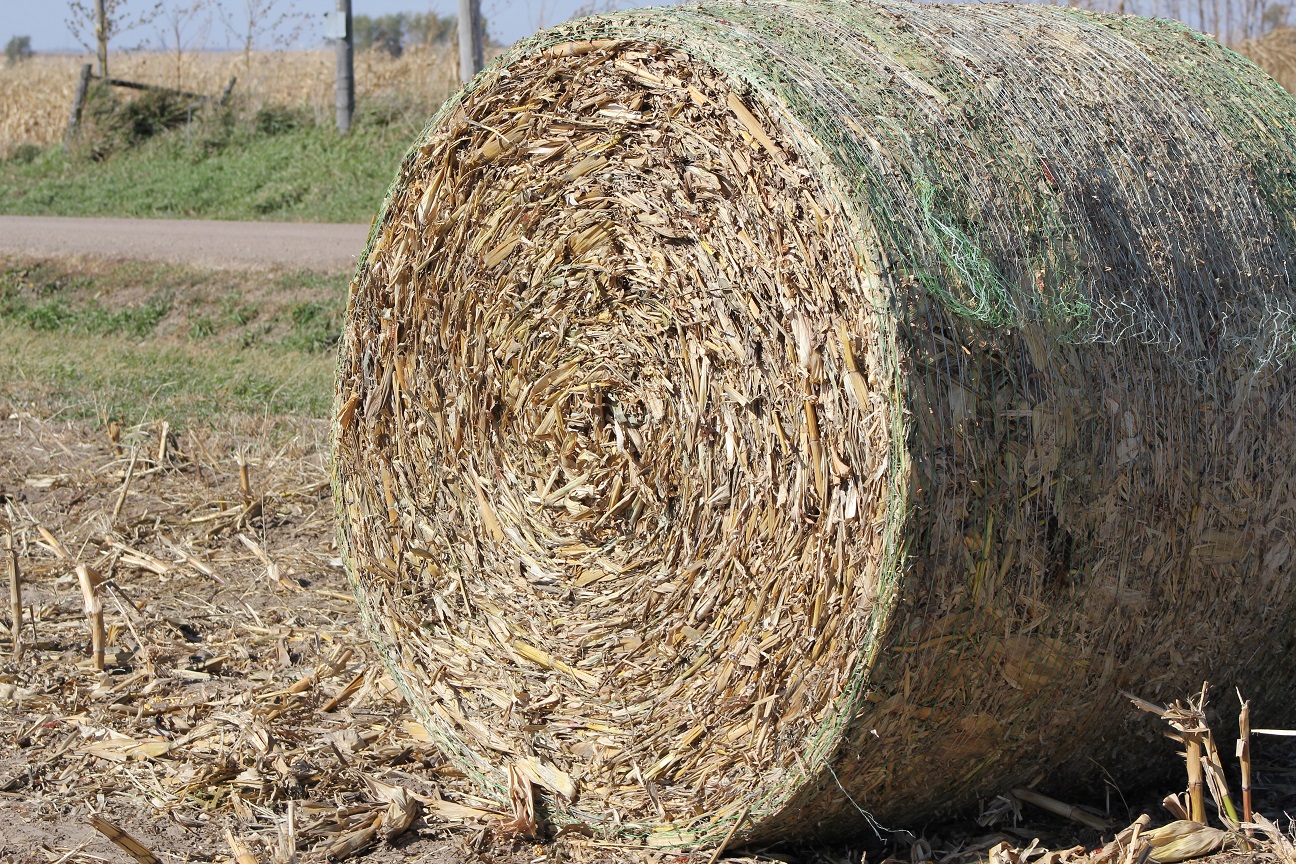
When you test your hay or corn stalks or cover crop for nitrates, look closely at the report to see what method your lab used to report your nitrate results. Photo courtey of Troy Walz, NE Extension.

I just got the forage test results back from the lab and the nitrate score was 3,000. Am I in trouble?

Every year I get multiple questions similar to this one. Unfortunately, with just this information I’m unable to give a useful answer. So – the first question I ask is “Was this reported as nitrates or as nitrate nitrogen?”

Why is it important to know the difference between nitrate nitrogen and nitrates? Well, using the example above, if the score was 3,000 parts per million of nitrate nitrogen, then the forage may have a nitrate concentration that is almost 50 percent higher than what we often consider to be the potentially toxic level for nitrate nitrogen. It would be risky for cattle to eat this forage without taking some precautions.

However, if the score was 3,000 parts per million of nitrate there should be no worries since this is less than one-third the danger level for nitrates. So the same score or value can range from quite dangerous to perfectly safe depending on how it is reported.

So what is the reason for these big differences? Basically, it comes down to how each individual laboratory tests for and then reports results for nitrates. When a laboratory reports directly the concentration of nitrate, it is referring specifically to the nitrate ion, which is designated chemically as NO3-. Most labs and advisors consider a level of 9,000 to 10,000 parts per million of the nitrate ion to be the level where toxicity concerns begin.

Some labs, though, report the amount of nitrogen that is in the nitrate ion and call it nitrate nitrogen and report it chemically as NO3-N. Nitrate is one part nitrogen plus three parts oxygen so nitrogen only makes up about 22.6 percent on the nitrate ion. Thus, a much smaller amount of nitrate nitrogen is needed to produce the same effect as the entire nitrate ion. As a result, the danger level for nitrate nitrogen begins somewhere between 2,000 and 2,300.

Is one method better than the other? No – both give the same result and either one can be used to determine the safety of your feed. In fact, it is easy to mathematically convert between nitrate and nitrate nitrogen by using the following formulas:

Nitrate = Nitrate Nitrogen x 4.43
Nitrate Nitrogen = Nitrate x 0.226

Next time you test your hay or corn stalks or cover crop for nitrates, look closely at the report to see what method your lab used to report your nitrate results. Then, if you want to talk with someone about the safety or feeding alternatives for your forage you can be sure both of you are talking the same language.

Source: newsroom.unl.edu

Feeding baby calves in winter a chilly proposition

 When Old Man Winter and Mother Nature start two-stepping through the short days and long nights of winter, big changes can happen quickly for baby calves. 

During the first three weeks of life, calves rely almost solely on the milk ration to meet their nutrition needs.

“Calves are more susceptible to cold stress than older animals, due to their low body fat reserves and larger surface-area-to-body-mass ratio, which causes them to lose body heat more rapidly,” says Skip Olson, technical services veterinarian for Milk Products.

“While young calves have the ability to consume and digest small amounts of starter grain, their energy needs come primarily from the milk ration,” says Olson. “Calves over three weeks of age consume more starter, providing them with more energy to resist cold weather challenges.”

Since baby calves depend on milk for most of their energy needs, it’s especially important to adjust the liquid ration for cold conditions. Olson says not doing so can have a snowball effect on young calves.

“Calves can stop gaining and possibly even lose weight,” he notes. “Their immune system can become compromised, leading to health challenges.”

Pour on the nutrients

Here are three main ways to adjust the milk ration and help baby calves meet the demands of cold weather:

1. Increase the volume fed per day by feeding more often, a larger quantity at each feeding, or both.

2. Increase the concentration of the milk offered by adding more solids to the existing volume.

3. Increase the fat content of existing milk volume.   

“By far the best method to feed more nutrition is to feed the same diet more frequently during the day,” Olson advises. “Not every farm can adjust to feeding three times per day, but if they can manage to do it for just baby calves, an important need can be met.”

Feeding higher solids, or added fat, to the existing milk increases the total solids fed and may subject baby calves to a higher risk of bloat. The following chart using the National Research Council (NRC) calf model equations comparing different feeding rates of milk – one with fat added and two with increased volume – clearly shows that a little extra volume goes a long way in meeting the energy needs of a young calf.


Beyond the liquid ration

Boosting milk replacer feeding rates requires attention to other details to keep calves in balance. Olson offers the following advice for effectively transitioning calves to winter rations:

1. Timing – Pick a date in advance of when you are going to change the feeding program in the fall and stick with it until spring, despite weather fluctuations. One of the worst things you can do to a calf is change the rules.

2. Water – Do your best to deliver warm water shortly after milk feeding. Calves will reward your effort by drinking more water, eating more starter grain and continuing to grow during the coldest weather.

3. Starter – Even during cold weather, pay close attention to the starter bucket. Make sure the grain is available and palatable to encourage young calves to eat as much as they can. 

4. Housing – A clean, dry, draft-free environment, with deep bedding and possibly calf jackets, will help calves reserve energy and channel their metabolic efforts toward immune function and growth.

5. Milk Preparation – Milk prepared for feeding during extreme cold will cool rapidly outdoors. Adjust the initial temperature accordingly to achieve a milk feeding temperature of 100-105 degrees Fahrenheit. Dry milk replacer stored in cold conditions will affect the final feeding temperature when mixed. Adjust warm water accordingly with an accurate thermometer to achieve consistent feeding temperatures.

“Cold weather can be challenging for raising calves,” says Olson. “But it doesn’t have to make raising healthy calves impossible. With careful attention to the liquid ration and other surrounding details, many farms successfully raise healthy, well-grown replacements through the most brutal conditions.”

Source: milkproductsinc.com

Preventing and preparing for barn fires

Have you ever thought about how you can prevent a fire in your barn? Read this tips for reducing the risk and being prepared for a barn fire.

Have you ever considered what you would do if you had a barn fire? How would you protect your animals and all the other assets you have in your barn? What could you have done to prevent it? The thought of a fire is very scary. Although you cannot completely eliminate the risk that there could be a fire in your barn, there are some steps you can take to reduce the risk and be more prepared.

Tips for reducing the risk of a barn fire

Contact your local fire department to have them do a “checkup” of your barn and offer more recommendations for your individual situation. The University of Kentucky’s “Preventing Barn Fire: Tips for Horse Owners” recommends the following steps in reducing your chances of having a barn fire.

  • No smoking! Bedding and hay can easily be ignited by a person smoking in or around the barn. Enforce a strict no smoking policy in your barn. Post signs inside and outside your barn.
  • Place a fire extinguisher next to each exit, utility box and at roughly 30-40-foot intervals in your barn. Inspect and recharge each extinguisher every year, and use a ABC (general purpose) extinguisher.
  • Clean off cobwebs and pick up loose bailer twine. By making sure your barn is clutter-free, you are helping eliminate ways for fire to spread.
  • Electrical devices need to be professionally installed and encased in conduit. Pay attention during winter months to water tank heaters and heated buckets—they continue to generate heat even if there is no water present, which can cause the plastic to melt and a fire to ignite bedding and hay. If you are using electrical cords, make sure that they are professional grade, inspected often and are not overloaded. Keep lights caged and only use lights that are designed for barn use.
  • If possible, keep hay and bedding stored away from a barn housing animals. If you only have one barn, like many of us, make sure hay has properly cured before storing it in the barn. Check the internal temperature of curing hay by poking a thermometer into the middle of the bale. If the temperature reaches 150 degrees, the hay should be monitored. If it reaches 175 degrees, contact the fire department.
  • Keep tractors, fuel, other petroleum products and machinery away from the barn. Clear any grass, hay, leaves or other combustible materials from equipment before storage.

Tips for being prepared in case there is a barn fire

Mentally prepare yourself so that you can act calmly and safely in the case of a fire. Remember that human safety is the top priority—ensure your own safety and the safety of others before taking care of animals. The University of Kentucky’s “Preventing Barn Fire: Tips for Horse Owners” recommends the following steps for preparing yourself and being ready if a fire does occur in your barn.

  • Identify and designate a safe place for your animals to go if you can get them out of the barn safely. This location should be away from the fire and allows fire crews enough room to do their jobs.
  • Handling equipment such as halters, leads, etc. should be quickly accessible. Consider the materials these items are made of. Remember that plastic and nylon will melt in heat.
  • Talk about the plan with members of your family and any employees you might have so they can also be prepared in an emergency.
  • Mark gates, pens or stalls with reflective tape or glow-in-the dark paint. This will make it easier to see where you are going in the dark.
  • If you are removing animals, start closest to the exit first and handle animals one at a time or by groups if they are herd animals. Always maintain control of the animals to help reduce their stress, which can prevent other injury risks.

If there is a fire, call 911 and get people out of the barn. Only get animals out if you can do so without risking human safety. Follow the directions from the fire department or 911 dispatcher.

No one ever wants to think about the risk of a fire, but it is best to be fully prepared so that you can react fast and appropriately.

This article was published by Michigan State University Extension.

Dairy Genomic Indexes Stand The Test of Time

A major new study of Holstein dairy sires has confirmed that genomic indexes are a remarkably reliable predictor of actual daughter performance. This provides reassurance to the thousands of UK dairy producers who select service sires on the strength of an index based on their DNA.

Our study included every genomic sire marketed in the UK in August 2014 and compared its genomic index at that time with its daughter-proven index in August 2018.  

Some 7,745 bulls were included in the analysis which showed there was little difference between their average genomic index in 2014 and their proven index four years later.

Marco Winters, head of animal genetics for AHDB Dairy says: “This study should give complete reassurance that UK genomic indexes are amongst the most stable and reliable in the world. Provided they chose their service sires wisely, the many producers who put their faith in genomic indexes should have made substantial genetic gains in their herds.”

We introduced genomic indexes for bulls marketed in the UK in 2012. At that time, the technology to calculate the indexes was still in its early stages, and producers were made aware they were more likely to change over time than indexes for proven sires which already had many daughters milking.

However, the attraction of using these young sires was their generally superior genetics which would help producers breed better replacement dairy heifers. Thousands of producers took this opportunity and some now breed 100 per cent of their replacements from genomic sires. Across the UK, around 70 per cent of dairy replacements are now bred from these young bulls.

Full results from the study group are shown in Table 1. The correlation figure, also in the table, gives an indication of how close all of the sires are to that average change figure. Correlation figures for all traits were generally considered high, indicating there was a narrow spread of bulls around the average. In other words, as well as the average index in 2018 being close to, or the same as, the average in 2014, there was not a wide spread of bulls around that average. This means that most individual bulls’ indexes were close to their former prediction. The graph depicts this information in figures and indicates that between 2014 and 2018, 34.2 per cent of bulls’ indexes (in this case for Lifespan but equally applicable for other indexes) did not change at all and most others have changed very little.

A second analysis of a smaller sub-set of bulls which now have far more daughters showed exactly the same pattern. This gives further reassurance that as large numbers of daughters finally contribute to a bull’s index later in life, their indexes are still unlikely to see much change on average from their initial genomic predictions.

Marco continued: “We were confident in the system when we launched genomic indexes in the UK in 2012, and this analysis confirms the reliability of the techniques we used.”

Remarking that the UK teamed up with the USA, Canada and Italy to provide one of the largest reference populations in the word, he said this helped ensure the reliability of the UK indexes.

Table 1: Aug ’18 PTAs for daughter-proven sires compared with their genomic indexes in Aug ’14

Predicted Transmitting Ability (PTA) Aug ’18 (average) Change since 2014 Correlation between Aug ’14 and Aug ’18
Reliability (milk, fat and protein) % 83 15  
Milk kg 452 30 0.85
Fat kg 15.0 -0.6 0.85
Protein kg 13.7 0.1 0.86
Fat % -0.03 -0.02 0.90
Protein % -0.01 -0.01 0.87
Reliability (SCC) 83 14  
SCC -11 0 0.83
Reliability (Lifespan) 69 9  
Lifespan 0.25 -0.01 0.80
Reliability (Fertility Index) 72 9  
Fertility Index 3.2 0.3 0.85

 7,745 sires contributed to the data in this table

 Graph 1 Distribution Of Percentage Change Of Genomic Indexes


Graph 1: Distribution of percentage change between young sires’ genomic indexes for Lifespan PTA in August 2014 and the same sires’ daughter-proven indexes in August 2018


Genomic reminder

What’s a genotype?

The genotype is the genetic make-up (or gene-set) of the animal. It is measured from a tissue sample containing the animal’s DNA (its genetic blueprint) and expressed as a raw code which goes on to be interpreted by AHDB Dairy, through its contract partners, Egenes, and converted to a genomic index.

What’s a genomic index?

A genomic index is a genetic index which is calculated from the gene-set or genotype of a young animal, rather than from its own, its daughters’ or its parents’ and ancestors’ actual performance. In reality, the genomic component of an animal’s index is used alongside other genetic information from these alternative sources, in a smooth transition towards an index which will ultimately be based on actual or daughter performance.

What’s a reference population?

A reference population (also called a training population or a predictor population) comprises several thousand animals whose phenotype (actual performance/appearance) and genotype (or gene-set) are compared. This allows relationships to be established and from these, genomic Predicted Transmitting Abilities (PTAs) are calculated.

What do the correlations mean?

Correlation figures indicate how widely spread the population is around the average (in this case, the mean). To demonstrate with the extremes, a correlation of zero would indicate that the spread around the average was huge – in other words, while the average change in index for all sires may have been small, large numbers of bulls would not have been close to their former prediction.

Conversely, a correlation of one would mean that every bull’s daughter index was identical to its former genomic index. Obviously that would be an impossibility, and wouldn’t even happen between index runs for a group of daughter-proven sires!

What’s the recommended usage of genomic sires?

Genomic indexes remain marginally less reliable than daughter-proven indexes which means their likelihood of change is greater. However, this study has indicated the indexes used over the past four years have been extremely accurate. Ultimately, farmers have to take their breeding decisions based on their attitude to risk. Usage should continue to be based on the existing advice, which is to limit the use of any single young sire to 12.5% of the herd, which – if all inseminations are to genomic sires – means using a minimum of eight young sires each year. Current young sire usage runs at about 70% of dairy inseminations in the UK.


Source: AHDB Dairy

Dairy farmers feel the strain as feed prices keep climbing

Prices climb: The year opens with milling grade Hard 2 wheat trading at $451 a tonne delivered to Melbourne end users, a $172 hike over the same time last year.

THE drought-starved production sector and limited volume grower selling is supporting cereal grains.

The year opens with milling grade Hard 2 wheat trading at $451 a tonne delivered to Melbourne end users, a $172 hike over the same time last year.

Australian General Purpose wheat prices have strengthened more in the past year and have been trading in limited volume at $429 a tonne delivered to Melbourne.

The tail end of the southern harvest continues following the delays caused by rainfall last month. The 90mm of rain that has fallen in the southern Wimmera and Western District during November and December has caused some wheat to succumb to the enzymatic breakdown of starches in the grains.

Growers in the west Wimmera have achieved falling number readings of 230 to 250 seconds, below the 300 seconds minimum required for milling wheat classification.

The dry winter and early spring combined with the wet and mild finish to the growing season in the Wimmera and Mallee has had some unexpected consequences. Wheat crops that had reached harvestable yields have produced Hard grade 1 quality.

With a small number of grains in each head that all filled in the mild conditions, protein levels of over 15 per cent were achieved.

Feed grade one barley prices are also firm trading at a nominal $390 delivered to stockfeed mills in Melbourne and the Western District. After trading at a $5 a tonne premium to AGP wheat during August, the price discount for F1 barley has extended to $49 a tonne. This is an attractive discount for barley buyers in Victoria as most of the east coast market is being set from the price of wheat and barley imported from Western Australia.

The price discount for F1 under AGP in Western Australia is currently $30 a tonne.

Livestock operators who depend on grain for their production are struggling with the ramped up grain prices. While barley is a cheaper grain in absolute terms, AGP wheat and F1 barley are priced at a similar level when considered on a cents per megajoule basis.

For most livestock producers the high grain prices are biting deeply into their profitability. Dairy farmers in the Goulburn and Murray Valleys are struggling and the level of grain and concentrates in many herds has fallen from 8kg per cow to under 5kg.

Any claim arising from the information contained on the eDairy News website will be submitted to the jurisdiction of the Ordinary Courts of the First Judicial District of the Province of Córdoba, Argentine Republic, with a seat in the City of Córdoba, to the exclusion of any another jurisdiction, including the Federal.

Source: The Weekly Times

Averages Don’t Tell the Whole Story: Cost of Raising Dairy Calves

Periodically, UW-Extension Specialists and Agriculture Agents have collected farm level data to benchmark calf and heifer raising costs. Our first fact sheet The cost of raising dairy calves using individual or automated feeding systems covered the key findings comparing individual feeding systems (bottle or bucket) to using an automated milk feeding system.

In the factsheet Averages don’t tell the whole story, UW-Extension St. Croix County Agriculture Agent Ryan Sterry digs deeper into the variation in costs to rear calves in both systems. The lowest cost producer was $232 per calf, and the highest was $816 per calf, a significant range of $584.

For more information, please visit UW-Extension Dairy Replacement Management.

Investing in success The pay-offs of boosting milk production

Being a dairy producer is more than a job or even a career — it’s your life. With faith, drive and mindful decision-making, you can help your dairy succeed by identifying opportunities for increased profit potential.

You are in the business of making and selling milk, so to the extent that you can make more milk on a pounds per cow per day basis, the more profitable you are going to be. In fact, a study by Zoetis and Compeer Financial found that herds with high milk production increased their profitability by $192 per cow per year.1,*

The study analyzed 11 years of herd data from 489 year-end financial and production-record summaries to identify key areas driving profitability on dairies. When adjusted and sorted, the difference in individual cow production between the top third and bottom third of herds in this study was 20 pounds of milk per cow per day that’s a difference of $209,000 per year in net farm income.1

Produce more milk to outpace production costs

Here’s how. You have low variable costs, such as the small incremental cost of additional feed needed to make more milk. As milk production goes up, maintenance costs, on a per-hundredweight (cwt) basis, go down. The revenue increases from producing and selling more milk will outpace any additional costs associated with making that milk. Subsequently, dairies that generate an additional 20 pounds of milk per cow per day are generating more net farm income.

The bottom line is making more milk makes you more profitable.

Milk production and profit drivers: It’s all relative

The study also found that increased milk production correlated with other dairy financial drivers and positive management benefits. Herds producing more milk also had an improved 21-day pregnancy rate, lower feed cost per cwt of milk, fewer days open and lower death losses, as well as reduced somatic cell counts.

Prioritizing reproduction helps increase productivity, profits

Milk production positively correlated with increased 21-day pregnancy rates in the study.1 Cows get pregnant on a faster basis and we see fewer days open, benefiting dairies because the cows are not in late lactation for extended periods of time. Average milk production per day goes up, as does herd profitability and net farm income.

Additionally, it is my opinion that producers managing high-producing herds have increased confidence in their ability to get cows pregnant. Therefore, they invest more in their breeding program — purchasing semen from top sires and increasing the rate of genetic progress in their herds at a faster rate than herds with more moderate levels of milk production. Over time, these progressive dairies enhance their herd genetics, health and wellness, improving the overall herd. This results in healthier cows that produce more milk and higher profits. This positive feedback cycle allows producers to differentiate their operation from others across the industry. 

Older cows are more productive, profitable

Keeping cows healthy, so they can produce milk in the prime of their careers, helps drive profitability. Managing death losses and somatic cell counts are important profitability drivers and pushing these rates lower can help reduce herd turnover and increase milk production.

Herds in our study with higher average levels of milk production per cow had lower death rates. I believe this is credited to excellent animal husbandry within those high-producing herds. Excellent animal husbandry improves animal wellness and performance, partly by reducing overall health risks, therefore reducing death losses and elevated cow turnover rates, so we can keep older, higher-producing cows in the herd longer.

Finally, increased milk production had a strong negative correlation to somatic cell counts. Not surprisingly, when cows are exposed to intramammary challenges, such as mastitis, they produce less milk. However, we also saw herds with higher energy-corrected milk were milking more older cows, ultimately producing more milk per cow on a per-day-of-productive-life basis.

Three tips to make more milk

Now that we understand the connection between making more milk and improving net farm income, let’s discuss how to make more milk on your dairy. 

  1. Optimize reproduction. Recent reports show that energy-corrected milk production is positively correlated with 21-day pregnancy rates, as well as profitability.1 Use a high conception fertility synchronization program to help increase the number of cows that become pregnant at first service with fixed-timed artificial insemination.
  1. Reduce somatic cell counts. Cows with a somatic cell count (SCC) greater than 200,000 cells/mL can experience a loss of 576 pounds of milk.2 To reduce somatic cell counts, start by monitoring first-test SCC data from your most recent Dairy Herd Improvement test records. Then, work closely with your veterinarian to establish best practices for culturing, record-keeping, hygiene, parlor management and employee training. Your prevention efforts can help achieve more marginal milk for your dairy.
  2. Keep the right cows in your herd longer. It is well established that third-lactation cows produce about 25% more milk per day than first-lactation cows. Could adverse health events be threatening your herd’s longevity and milk production? By conducting genomic testing with CLARIFIDE® Plus, you can identify and invest in the right heifers — those with the lowest risk for disease and greatest livability. 

Source: dairywellness.com

New Zealand Dairy Farmers: enough is enough

But dairy farmers not compliant on effluent matters can be easily fixed.

Waikato dairy farmer Ross Wallis feels effluent non-compliance in the Waikato region can be easily fixed – by cracking down on offenders.

The Waikato Regional Council (WRC) recently announced that 31 per cent of “high-risk” Waikato farms inspected for effluent compliance were found to be significantly non-compliant. The Council targeted 239 of the 3800 farms in the region – those that are known to have less than seven days effluent storage, those on high risk soils or repeat offenders.

Wallis, a member of DairyNZ’s Waikato Dairy Leaders Group, says the non-compliance figures in the Waikato are “unacceptable”.

“If you look at farmers across the board, about 95 per cent nationally are compliant,” says Wallis. “So what’s happening in Waikato is not fair on them – and a lot of farmers are now saying enough is enough and that there needs to be more enforcement, especially on repeat offenders.


Having said that, my personal view is that most of the non-compliant farms are easily fixed; it is only a minority who have big problems and who need to be held to account.”

The WRC farm services team has inspected 239 “high risk” farms since July 1. Of the high-risk farms inspected, 34 had upgraded their effluent operations. However, 31 per cent were found to be significantly non-compliant, including some who had been non-compliant the previous season.

While the inspections focused on high-risk farms, the team emphasised that the bulk of the regions 3800 dairy farmers were “outstanding ” with their compliance.

Wallis, who farms at Raglan, says dairy farmers who were putting in the effort with good effluent management were now looking out for non-compliers, and were reporting them.

“It’s not as if dairy farmers can’t get help to manage this issue,” he says. “There have been so many tools put out there to help farmers with this over the past three years – there’s really no excuse for not addressing it.

“From a personal perspective, my interaction with the WRC has been terrific – I couldn’t speak more highly of them and their engagement officers who helped me get an effluent plan together and helped me with planting round waterways.

“I know too that companies like Fonterra have been actively employing more sustainable dairying advisors to help with this kind of problem and others.”

Dr Caleb Higham, catchment engagement leader for DairyNZ, said the increased detection of non-compliance stemmed from the council’s decision to target high-risk farms.

His role, amongst others, is to help coordinate farmers’, council’s and dairy companies’ efforts to improve effluent compliance and he agreed with Wallis that the regional council officers had been “very pro-active” in their work.

They had reinstated aerial monitoring and “because they had that specific focus on high-risk farms, they have confirmed that despite much effort aimed at addressing effluent compliance, there are still a number of farmers who are not meeting requirements.

“The monitoring is a good thing – effluent compliance has to be addressed – and I think the increased effort will help bring the minority in line with the rest of farmers who are prioritising effluent management and meeting the rules. A lot of the farms that have been found to be non-compliant generally have less than seven days’ storage of effluent.

Jim van der Poel, Waikato Dairy Leaders Group chairman, says a well-designed and constructed effluent storage pond is not only good for the environment but also great for the farm.

An effluent pond is a big investment on farms but there is no doubt they provide better environmental management, peace of mind, flexibility to spread effluent in the right weather conditions and reduce the risk of effluent non-compliance, he says.

“The pond, and how the effluent system is managed, will deliver good farm performance and prevent environmental harm. It’s win-win.

“Most farmers care deeply about the environment and are doing everything they can to protect land and waterways, and prevent any environmental risks.

“Nationally, most farmers follow the rules and are very concerned about other farmers who do not. Those who are seriously non-compliant with local councils’ effluent management rules are damaging the reputation of all dairy farmers.”

Higham says he had recently attended the Dairy Effluent Expo in Waikato which drew a crowd of 1600 people, a really encouraging number for such a forum.

“The numbers reflect the interest and the willingness of people attending to learn more about the issue, and upskill on the systems available.

Source:  nzherald.co.nz

Breeding focus nails results with Sexed Semen

A trial of sexed semen three years ago ignited one Tasmanian dairy farming family’s passion for breeding.

And the decision has laid down a foundation for the business’ future.

Stuart and Kylie Nailer milk 215 cows at Ringarooma, in Tasmania’s north-east, with their children Sophie, 14, Kaiden, 13, McKenzie, 11, and Oaklea, 8.

They moved from Queensland to the farm six years ago, initially buying the farm in partnership with Stuart’s parents.

Since 2014 the herd has recorded a 425 per cent rise in Balanced Performance Index (BPI), a measure of the traits that contribute to profitable dairy businesses. It now sits at about $105.

The sexed semen result provided a boost for the family in what was otherwise a tough year, with the farm gate milk price cut and drought.

“That year we did the experiment with the sexed semen, it was a really good result,” Stuart Nailer said.

“We had 25 heifers and got 60 per cent in calf — we were stoked.”

From this joining, the couple decided to focus on breeding Holsteins, rather than the Jersey-Holstein and three-way cross which they had been breeding.

They believe there’s more opportunity for gains with Holsteins and have made the most of tools such as genomics and corrective mating in recent years.

They ramped-up their use of sexed semen across both heifers and cows and this coming year plan to sell no bobby calves. Instead, they will use sexed semen to breed replacements and an Angus mop-up to provide calves for the local F1 market.

Last year they joined with two sexed semen sires; one delivered a 72 per cent in-calf rate and the other 55 per cent.

But using sexed semen for the first time wasn’t the Nailers’ first foray into changing breeding at their farm.

Their first priority — when they took over the property — was to tighten the seasonal calving. It was initially spread across four months and they now have it back to August and September, following three weeks of artificial insemination.

“We had to take a whack to tighten-it,” Mr Nailer said.

“We had an empty rate of about 20 per cent for two years, but then it tightened-up.

“It was then, we woke up to the fact we needed higher fertility bulls and bulls with high daughter fertility. It was then we got some really good results.”

The Nailers use the Good Bulls App to make breeding decisions. Calving ease and daughter fertility are “paramount” and they look for sires with a reliability of at least 70 per cent. BPI has also been a focus.

Mr Nailer said the Good Bulls App made decision-making easier, by narrowing-down bulls which suited their breeding focus.

“We don’t get caught-up in the nice pictures (of bulls) or anything like that,” he said.

Genomic testing has started to play a larger role in the Nailers’ decision-making.

“We now have numbers to play with and hope to eliminate the bottom 20 per cent (through genomic testing) by culling early and before we spend money on them for rearing,” Mr Nailer said.

They would like to sell these calves to local farmers as replacements, putting the income towards paying for genomic testing.

The Nailers currently service a local market for F1 calves and hope to continue this to make the most out of every animal on-farm.

“Our goals are to maximise every calf that’s born,” Mr Nailer said.

“Our attitude would be that if we have a good 60 replacement heifers, they are the ones that get sexed semen, and the best cows.

“Everything else gets, if possible, F1 beef sires to maximise the calf value. That’s our ultimate goal in the back of our minds for two-to-three years’ time.”

Changes have also been made across the entire farming system.

Ten per cent of the farm undergoes pasture renovation each season, initially planted out for a summer crop and then back into perennial rye-grass. This crop — which includes pasja and millet this year — provides feed for the warmer months on top of 60 ha of irrigation.

The farm is about 82ha, with some agistment.

The herd is fed about 1.8 tonne/cow/lactation in the bail. Production has lifted from a herd total of 75 000 kg of milk solids three years ago, to 96 000 kg MS last year and the herd is on-track for 105 000 kg MS this season.

During this time the total herd has increased by 30 cows but production per cow has lifted 40 kg MS. Average production is now 500 kg MS/cow and the cows’ weights about 550 kg.

Starting a career in dairy was something Kylie Nailer had never considered. Her husband, on the other hand, had completed a dairy apprenticeship in Tasmania, after school, before moving to Queensland where he worked at a power station.

Stuart’s parents were farmers in north-east Tasmania, but Kylie, a Queensland girl, had never milked a cow before venturing down south.

“I saw Stu working in the power station and he was not really enjoying it in the end and I knew he wanted to get back to farming,” she said.

“I didn’t know anything about it, I had never milked a cow, but then Stuart had an accident (got kicked in the calf) and from there it was a natural progression for me and I’ve become more involved as time goes on.

“For me, especially the last two years, the progress with the cows themselves has kept the passion there when the price certainly hasn’t been there.”

Source: dairynewsaustralia.com.au

The deadly stress of farming

It is widely known that military veterans have among the highest suicide rates in our country. Sadly, in any given year, 38 of every 100,000 veterans take their lives.

We know too well why they end it all — they saw things overseas that none of us could ever imagine, they battled post-traumatic stress disorder, and they could have had disabilities ranging from traumatic brain injury to dismemberment.

Many reading this column will be surprised to learn that there is segment of our population that has a suicide rate rivaling that of our struggling veterans: Farmers.

Those who put food on our tables are taking their lives in unprecedented numbers. Just a few years ago their rate of suicide was 85 per every 100,000 farmers — 2.2 times the occurrence among veterans and 5 times that of the general population. Although last year’s numbers aren’t available, it’s well known in ag circles that that number is growing.

Even though this is a rural social crisis of epic proportions it has received little attention in the public eye and, therefore, a similar amount of concern from the masses.

That said, it’s probably mind blowing to most Americans because they have a vision of the farming life that is made of serene, pastoral landscapes, healthy country living, strong men and even stronger families.

They know little of the incredible stresses put upon farmers.

First, there’s the weather. They have to hope that Mother Nature accommodates their needs and business cycles and ensures a timely planting and a productive harvest. But, in many years, she’s not very helpful. Western New York farms were hit hard by drought in 2016 when unirrigated, rain-fed fields and orchards had crop losses between 30 and 90 percent. They prayed hard for rains after that, and the skies responded in 2017 with too much, which delayed plantings and harvests while damaging crops.

Then there’s animal disease. Back in 2015, deadly strains of bird flu killed off unbelievable numbers of chickens and turkeys throughout the central United States. Even if it didn’t, the poultry farmers had to cull their flocks to prevent the spread of disease. Halfway through that year, 50 million birds had died and the losses to farmers and producers exceeded $3.3 billion.

Farmers are also besieged by the economy. Dairy prices have plummeted over the past few years. In 2014, dairymen were getting $24 per hundredweight for their milk. Now, that number sits around $13. Farmers are producing and shipping milk because they have to, yet are losing money every single day for doing it. In Wisconsin alone, 500 dairy farms closed their doors last year. Here in New York, last year’s net farm income was a third of what it was in 2014.

Then, there’s the opioid crisis. The stereotype is that it’s hitting the cities and suburbs the hardest, but three-quarters of farmers say it is affecting them or their workers. It’s easy to see why. Farming is physically demanding work, from heaving hay bales to lifting feed bags to picking vegetables to bending down to milk cows. Back injuries and other aches are common. To work through it, they were prescribed pain killers, which in turn became an addiction.

There you have just four factors of many that make it seem like there’s no hope for farmers. Too often, the odds are stacked against them and there are so many things beyond their control. Seeing the very real chance of losing the farms and homes they love so much — the places that receive their attention, blood, sweat, and tears 24/7/365 — they see suicide as the only way out. It’s sad.

There is help available for those living those dark days. NY FarmNet is a free and confidential consulting service available to any farm located in New York state to discuss financial and health issues. They have a 24/7 hotline at 1-800-547-FARM. Crisis Services of Erie County has a 24-hour hotline (716-843-3131) to serve anyone contemplating taking their life. The YWCA of Genesee County has one, too, at 585-344-4400 and so does Niagara County’s Department of Mental Health at 716-285-3515.

I encourage those reading this paper who are not farmers or counselors to lend a hand. Outreach can be done in any number of ways, from checking up on your neighbors to supporting local farm stands to buying only local or American-grown produce, meats and dairy products at the grocery store to writing elected officials about foreign trade and frustrating price controls on milk and foods.

As Paul Harvey once said: “And on the 8th day, God looked down on his planned paradise and said, ‘I need a caretaker.’ So God made a farmer.”

It’s time that we, as good citizens, acted as caretakers for them. These are some dark days in agriculture. Farmers need help. They need to know that they can ask for it and we need to know we should give it to them.

Source: lockportjournal.com

Variation Makes all the Difference for Researchers

Just as variety is the spice of life, it’s also a key focus for those behind the “Efficient Dairy Genome Project”.  As they seek to apply genomics in breeding dairy cattle that are more feed efficient and produce less methane, scientists know that genetic variance could be the difference between success and failure.

“We’re examining the transcriptome (RNA) and genome (DNA) of dairy cattle to improve feed efficiency and reduce methane emissions,” said Stephanie Lam, a PhD student working with Dr. Angela Cánovas and Dr. Filippo Miglior at the University of Guelph.

Can you spot the difference?

Using public data available from the National Center for Biotechnology Information (NCBI) Gene Expression Omnibus (GEO), Lam and her colleagues developed a methodology for accurately detecting structural changes or variations in dairy cattle DNA. They then applied the method to another dairy cattle population from the center consisting of Holstein and Jersey cows. The goal was to find genetic variance in the genome – such as insertion, deletion or duplication of base pairs – of animals with high feed efficiency.

“Essentially we are seeking genetic clues to help us determine what makes certain animals more feed efficient than others. When we see structural changes in DNA between two extreme groups of animals with high and low feed efficiency, it’s possible that these changes in the high efficiency group are behind their improved metabolic performance.”

Through their research, the team found about 14,000 SNP’s that were unique to either the high or low group. A SNP or single nucleotide polymorphism is a variation at a single DNA site, and is the most frequent type of variation in the genome.

Of course, not all variations will necessarily have a functional impact on metabolic pathways or biological processes, so the next step was determining which SNP’s or genetic markers were causal. Using specially designed software, the team found 400 – 500 SNP’s that may have a functional impact on feed efficiency.

“We then took the 400 – 500 SNP’s and, using the same software, found that the genes containing these SNP’s were mainly associated with metabolic pathways related to fat metabolism and protein digestion and absorption. That suggests that these markers may play a role in regulating feed efficiency and helping cows perform more effectively when it comes to milk production.”

Though the work itself is highly complex, the possible implications for the dairy industry are both easy to understand and exciting to ponder.

Panel discussions

“Once we identify these key markers, we can incorporate them into SNP panels or even make custom panels to specifically select for feed efficiency in a herd. By evaluating two different cow populations, we are confirming genetic information and narrowing our focus to what is most important. In doing so, we can provide producers and industry with applicable results that have more functional data and reliability.”

Lam is pleased with the progress thus far. At the same time, she is encourage by how the work to date could fuel further research and possible breakthroughs.

“These results help us decide what we can do in our next studies. For example, we have a lot of genes associated with fatty acid metabolism and protein digestion, so we may want to look at more specific target tissues related to those pathways. When we find common genes across breeds, it can assist future studies in deciding what genes to focus on regarding genetic markers that relate to feed efficiency.”

Few would argue that variety is the spice of life. If research can fully tap the potential of genetic variance, there could be more spicy findings for the dairy sector in the years to come.

Source: genomealberta.ca

Dairy producers switching to beef should do research

Logan Edenfield with Equity Livestock in Stratford discussed beef cattle marketing techniques and what buyers are seeking at a workshop on transitioning from dairy to beef held in Baldwin. Photo by Heidi Clausen

With milk prices stuck below the level of profitability for many dairy farmers this past year, more have been getting out and making the transition to raising beef cattle.

About 20 farmers and others attended a Dec. 11 workshop entitled “So You Want to Raise Beef?” in Baldwin. A similar workshop was offered the same day in Eau Claire.

“It’s getting to be a more popular topic for us,” said Ryan Sterry, UW-Extension agriculture agent for St. Croix County.

Rooted in the heart of dairy country, NorthStar Select Sires has seen its beef semen sales skyrocket by 300 percent this past year, according to the company’s Scott Ellevold, who also raises beef cattle north of New Richmond.

Ellevold said not only are more people breeding their whole herd over to beef as they exit dairy altogether, but many dairy farmers are breeding their best cows with sexed semen to increase their odds of getting heifer calves that will grow into replacement animals and their lower-end cows to beef bulls, as beef bulls generally fetch a better price at market than their Holstein counterparts.

Holstein bull calves are bringing anywhere from nothing to $60 at market, while a black part-beef calf from a Holstein dam might be worth $100 to $300, according to Logan Edenfield with Equity Livestock in Stratford. Edenfield grew up on a 50-cow dairy farm in Ohio that has since transitioned to beef. He came to Stratford in 2017.

He said farmers exiting dairy and going into beef must change their way of thinking. Those still milking cows and looking to retire should breed everything to an Angus bull, which will result in black-hided calves that tend to be worth the most, he said, and “then, you automatically have put a date on when you won’t have replacement heifers. It gives you a deadline and, in the meantime, gets you more value out of the calves you are selling.”

Edenfield recommends dairy farmers sell those calves at 3 to 5 days of age to reap the most benefit.

“Don’t keep them as beef cows,” he said. “You’d be starting behind the eight-ball. (The next generation) would be one-fourth Holstein, and those calves wouldn’t bring much.”

The other optimal time to sell these animals is after they’re finished.

None of the major packers, including Tyson and Greater Omaha, want those partial dairy animals, he said, and those slaughtering Holsteins won’t pay extra for animals with a black hide.

“There’s going to be a lot of them around and a lot finished,” he said. “Just know they’re black Holsteins, not beef animals. Some may bring close to beef prices, but not all will.”

With more black calves now entering the market, Edenfield said, those prices could move lower, but they’ll still be better than prices for Holstein bull calves and, currently, more than Holstein heifer prices, too.

“Over time, if you can make those cattle look uniform, it will help you, no matter what they are,” he said. “If finishing animals, there’s not much difference in hide (color). if you’re selling feeders, uniformity is the main thing. Black-hided cattle typically bring more; they don’t have to be quite as good to bring as much.”

He said it’s not so much about the color of the cattle as all the other details regarding management, and that’s why Beef Quality Assurance certification — now required by a growing number of packers — is increasingly important. Dairy farmers are automatically covered under the national FARM Program, but once they sell their herd, they must become BQA-certified. Certification is available free online.

“The buyer wants to hear the story. They want to know they’ve been cared for the right way,” Edenfield said.

Fast gain is the goal

Edenfield said there are a lot of opportunities for those entering the beef industry, but before dropping off a load of cattle at market, producers would be wise to talk with their sales barn manager to learn more about what buyers want. Many marketers are happy to visit farms and help producers figure out their next phase, he said. Producers also should consult with their UW-Extension ag agent, veterinarian (especially if buying calves), feed company representative and nutritionist before switching from dairy to beef.

“Too many dairymen … want to fatten them like your dairy heifers when you fatten steers. It doesn’t work,” he said. “Feeding steers, you want to shorten their life as much as you can” in order to minimize feed costs. In contrast, the goal with dairy cattle is to keep them productive for as long as possible.

“You can’t make them gain too fast or go (to market) too young,” Edenfield said of beef cattle.

If the decision is made to finish cattle, Edenfield said, farmers should be prepared to feed more energy than they did with their dairy herd. He encourages producers also to consider implants, which can be especially beneficial with Holstein steers.

“It’s not worth it to go implant-free,” he said.

Silage-fed Holstein steers may be discounted because they’re too old and too big, he said. Cattle may be discounted if older than 30 months; age is determined by looking at the teeth.

“There’s nothing wrong with feeding silage, but you could feed them all the silage they want and nothing else,” he said. “They can use a lot of forage, but you have to have the energy to back it up.”

The two packers killing the most Holsteins in the U.S. are in Green Bay — JBS and Green Bay Dressed Beef. JBS tends to want a smaller animal than Green Bay Dressed Beef will buy, according to Edenfield. The only option with animals weighing more than 1,600 pounds is Green Bay Dressed Beef, he said, so aiming for between 1,500 and 1,600 pounds gives producers more competition for their cattle because they could go to either plant.

“You gotta go at it with a game plan,” Edenfield said of transitioning from dairy to beef. “The first thing to do is get the stalls out of (the barn) to prevent injuries and aggravation, and make sure to figure out a way the barn can go cold.”

Old stall barns are best suited for backgrounding calves — taking them from 300 to 400 pounds up to 700 to 800 pounds, “correcting” any problems and creating a bigger lot, he said. Certain advantages often come with size and scale and being able to fill a semi-load for market.

“If your land base is limited, consider backgrounding,” Edenfield said. “There’s where your profit is.”

If going the cow/calf route, he recommends buying straight-bred beef cattle and keeping with “something standard” such as Angus or Hereford.

“You don’t want to be the odd calf in the bunch; you probably will take a discount,” he said. “Don’t bring in a Swiss cross if you’re going to do Holsteins. If you’re going to fatten, it doesn’t matter as much because they’ll sell on their individual merit.”

Edenfield also advises farmers to buy a good mineral. Animals lacking a certain mineral may not be best using all the other nutrients they consume. Also, proper castration of steers could mean the difference between getting 85 cents per pound at market or 40 cents, so it’s worth taking the time to do it correctly.

Grass-based and organic may be good options for some, he said, and with the down dairy market, there could be some opportunity in buying and fattening Holstein heifers.

Source: leadertelegram.com

Improve pregnancy rate to help maximize profitability

Quicker pregnancies equal more profit. When cows get pregnant quickly, they produce more milk, have shorter calving intervals and generate more replacements. Managing cows for higher milk production requires a solid reproduction program to optimize your pregnancy rate.

According to a field study by Zoetis and Compeer Financial that analyzed 11 years of herd data from 489 year-end financial and production-record summaries,1 the impact pregnancy rate can have on your profitability is too large to leave to chance.

The profit opportunity

According to the study, a 9% difference in pregnancy rate between the top one-third of herds and the bottom one-third resulted in an additional $143/cow/year in net farm income. Additionally, the top herds in the study also produced almost 7 pounds more milk/cow/day than the bottom herds1,*

Associations between a 21-day pregnancy rate and other financial drivers revealed the impact quick pregnancies can have across a dairy.

Quicker pregnancies produce more milk

In the study, increased energy-corrected milk production was associated with a higher 21-day pregnancy rate and fewer days open.  As animals get pregnant at a more rapid pace, overall milk production on a per day basis goes up. This is because cows spend more time at the front end of the lactation curve, when milk production is higher— ultimately driving profitability. 

Conversely, an elevated somatic cell count (SCC) was associated with a reduced 21-day pregnancy rate. This is due to the negative physiological effect a high SCC has on reproductive performance. When SCC is high, pregnancy rates are sure to be reduced.

Three tips for improving pregnancy rate

Maximize profit opportunities on your dairy with three tips to improve pregnancy rates:

  1. Get cows pregnant earlier in lactation. — Staying at the front end of the milking curve means more efficient milk production. Optimize pregnancy rate by implementing a high-conception rate fertility synchronization program followed by an intensive heat detection program to identify open cows for prompt re-insemination.
  2. Keep your fresh cows healthy. — Good fresh cow care is key to ensuring fresh cows are ready to breed. Evaluate your fresh cow program to make sure stress is minimized, rations are balanced, and health evaluations are done at the front and back of a cow. Look for signs of illness such as loss of appetite, drooping ears, depressed attitude, increased temperature, abnormal tail carriage and vaginal discharge, in addition to the telltale foul smell which may signal a metritis infection. If metritis is an issue, eliminate the need for hospital pen moves and avoid the cost of discarding milk by using a proven, on-label treatment.
  3. Calve in the right heifers for your dairy. — First-lactation animals typically make 15% less milk than second-lactation animals. Therefore, it’s important to manage and monitor heifer inventories closely with the goal of balancing your heifer and adult cow population. Having the right number of heifers with genetics that achieve your herd goals will allow you to minimize replacement costs while avoiding milk production gaps. Genomic testing with CLARIFIDE® Plus can help identify heifers that will live longer in your herd.

Don’t leave pregnancy rate, or profitability, to chance.

Source: dairywellness.com

Gain a net farm income advantage with thriving heifers

Two months isn’t a lot of time, but it can make a big difference for profitability. In fact, getting heifers pregnant two months earlier can result in an additional $200 to $250 in lifetime net farm income per cow.1,*

Age at first calving is an important metric in terms of managing heifer inventories and is, therefore, important in helping minimize net herd turnover cost. Young stock health is paramount in allowing animals to grow properly so that they reach appropriate breeding age in a timely fashion. As such, it is no surprise that a recent study Zoetis conducted with Compeer Financial found that heifer survival rate is one of the top six factors affecting dairy net farm income.2 The analysis of 11 years of herd data from 489 year-end financial and production-record summaries quantified the value of decreased heifer survival rates on lifetime net farm income. The top one-third of herds in this study achieved an earlier age at first calving of approximately two months compared with the bottom one-third of herds. This had a significant compounding effect on the number of animals in a herd over time, which contributed to an average of $200 to $250 in additional lifetime net farm income per cow.1,2 

Let’s look at a couple of ways you can help heifers not only survive but thrive like the top herds in the study.

Getting a higher heifer survival rate

It’s a no-brainer that a dairy needs heifers that survive to be profitable. Scours and bovine respiratory disease (BRD) are responsible for decreasing calf and heifer survival rates. Scours is the leading cause of calf death and sickness, responsible for 56.5% of mortality among pre-weaned dairy calves.3 Pneumonia during the first 90 days of a calf’s life is more likely to increase mortality before first calving.4

Vaccination of healthy pregnant cows and heifers with SCOURGUARD® or oral vaccine before colostrum uptake can help prevent death loss from scours. Along with this, proactive management — including a clean, dry calving area, optimal nutrition and minimizing exposure to environmental contaminants — is important to help prevent scours and ensure vaccine efficacy. To help prevent BRD, early detection of these respiratory disease symptoms and treatment with an antibiotic approved for use in calves, if needed, can help get health back on track.

Getting heifers that thrive

Guarding against these diseases is an important factor for lowering age at first calving and for future productivity as well. Calves that survive scours can face lifelong setbacks, including delayed growth, and are slower to reach the milking string as heifers.5 Pneumonia during the first 90 days of a calf’s life is more likely to increase their age at first calving, among many other challenges.4

Also, producers have a better chance to get heifers pregnant sooner by raising the right heifers. Raising heifers is expensive. Herd owners have reported spending between $1,860 and $2,263 for each heifer raised.At this cost, producers need heifers that have a better probability of adding value to a herd now and into the future. Genomic testing can help ensure the right heifers are being raised to pass on better traits to their offspring. 

Finally, getting heifers inseminated as early as possible can have an enormous impact on age at first calving. And, it will get them to the milking herd sooner. Read a few simple steps to improve your heifer reproduction program, including more timely pen moves, use of LUTALYSE® HighCon Injection (dinoprost tromethamine injection),  which is approved for use with EAZI-BREED™ CIDR® Cattle Insert (progesterone intravaginal insert), and routine pregnancy checks.

With heifers that survive and thrive on a dairy, the opportunity exists to increase net farm income and stay among the top one-third of dairy herds across the country.

Source: dairywellness.com

Is a Robotic Milking System in Your Future?

According to Dr. Doug Reinemann, UW-Madison milking system specialist and College of Agricultural and Life Sciences Associate Dean for Extension and Outreach, over 300 U.S. dairy farms have automatic milking systems (AMS), also known as robotic milking systems. That number is much higher in Canada and even greater in Europe. Some reasons for choosing automatic milking systems include a lack of labor, including reliable labor, and flexibility when cows are milked. Although dairy farmers may choose robotic milking systems for the aforementioned reasons, AMS requires a very high level of management and service skills. In addition, robotic milking systems are capital-intensive investments.

Dairy farmers, consultants, and service providers interested in learning more about automatic milking systems technology are encouraged to attend the Building Our Dairy Future: Robotic Milking Systems Performance and Efficiency Seminar scheduled for Monday, January 28, 2019. The seminar will be held at the Osthoff Resort, Elkhart Lake, Wisconsin beginning with registration at 10 am.

The program will start at 10:30 with a presentation entitled, “Robotic Facilities Design Considerations” by Jouni Pitkaranta, an architect with 4d Barn located in Oulu, Finland. Mr. Pitkaranta specializes in dairy, young stock, and calf barn design especially focused on robotic milking barn design. He has designed about 600 dairy barns mostly in Finland, but also in Sweden, Estonia, Russia, Lithuania, Holland, and Germany.

His presentation will be followed by a presentation on the “Economics of Automatic Milking Systems”, by Dr. Larry Tranel, a Dairy Field Specialist with Iowa State University Extension and Outreach. Dr. Tranel specializes in financial analysis of all types of dairy farms.

Mr. Pitkaranta will return for the afternoon session with a presentation on labor efficiency of automatic milking system barns. This presentation will be based on his work on an international robot barn labor efficiency project monitoring robot barn performance in numerous barns in Finland, Sweden, Denmark, Holland, and the United States.

A panel entitled, “The Good, The Bad, and The Unknown” will complete the day-long program. The discussion will focus on a single robotic dairy farm along with their lender, AMS equipment installer, and barn builder.Panelists include Larry and Jennifer Meyer, owners of JenLar Holsteins. Switching to an automatic milking system in early 2017, both Larry and Jennifer have full-time off-the-farm jobs while milking 120 Swiss and Holstein cows. JenLar Holsteins’ lender, Kevin Coffeen, vice president of BMO Harris, will accompany Jennifer and Larry Meyer on the panel. Representing JenLar’s AMS equipment dealer will be Barry Pavlat, Farm Management Support Manager for Abts Lely Center. Fox Cities Builders, Meyer’s robotic barn builder, will be represented by the president of FCB, Phil Ullmer.

To register for this event, please make checks payable to UW-Extension and send them to: Robotic Milking Systems, 121 West Main Street, PO Box 994, Port Washington, Wisconsin 53074. Registration may also be made by credit card for a $3 per person convenience fee. To do so, please call 920-929-3171. Cost for the program is $30 per person and the registration deadline is January 18th.

The program is sponsored by UW-Extension offices in Washington, Ozaukee, Calumet, Fond du Lac, and Manitowoc counties.Financial support is provided from those offices as well as from Compeer Financial and GreenStone Farm Credit Services. For more information contact Steph Plaster at 262-335-4482; Tina Kohlman at 920-929-3180; Amber O’Brien at 92-849-1450; or Scott Gunderson at 920-683-4175.


Know Your Employees Before Hiring

The people you hire, no matter how qualified, can take your dairy in the wrong direction if their goals and values differ from the operation’s. You can prevent that from happening by taking time to evaluate the goals of your operation and your employees. Interview your current employees first. They can help you make better hiring decisions.

Ask your current employees these questions:

  1. Who are we looking for?
    Determining how a candidate will fit within the culture of your operation is extremely important. Recognize the core competencies of your top employees and ask them what they like about their job. Then look for candidates with similar goals and attributes.  
  1. What questions are we asking in the interview?
    Make sure everyone is asking behavior-based questions that offer insight into applicants. Asking only yes-or-no questions won’t allow you to fully understand whether a candidate will be a good fit for the team. Asking job candidates how they would handle a situation, for example, will give you more perspective about them.
  1. When are we looking for new employees?
    By interviewing candidates year-round, you’ll hone your skills and process. More important, you’ll find quality candidates who best fit your company rather than hiring the first person who walks through the door.
  1. Where are we looking for candidates?
    Ask your best current employees about potential candidates regularly. This can be just as essential as advertising in trade publications and classifieds. Through word of mouth, your employees might help find someone who would be a great fit for the company.
  1. Why are employees leaving?
    Having a formal, consistent process for hiring can help your dairy find the right people who want to work for you and are more likely to stay long term. However, you should also make sure to inquire why your employees left by conducting exit interviews. Assign a point person to handle everything from recruitment, selection and orientation to exit interviews. Also, involve other team members in the interview process so they can weigh in and be engaged with potential employees as well.

Using the right strategy and finding the right people are essential for maintaining a successful dairy operation. For more questions and help on hiring better employees, talk with a certified consultant, such as those available through PeopleFirst. Visit GrowPeopleFirst.com to learn more.

Heifer Management Raising Too Many Heifers Is Not a Good Thing

Gone are the days when a surplus heifer inventory defined a dairy’s profitability.

 As a progressive dairy producer, you are acutely aware of our industry’s sensitive climate. You know that every decision you make — even those that seem simple — can weigh heavily on your dairy’s success. Grab a pen and paper and get ready to take notes. Let’s talk about the three most common misconceptions when raising heifers.

 Misconception 1: Raising every heifer increases profits.

  • In our industry’s current state, raising heifers is a costly expense that must be carefully evaluated. In fact, heifer replacement costs can be the second- to third-highest expense on dairies, sometimes up to 20% of total production cost.1,2 Take the general cost for raising a heifer from birth to springing — between $1,700 and $2,200 — and multiply that across the number of heifers you’re raising.3 Consider that it typically takes until midway through second lactation for cows to become profit generators for the dairy. Also, keep in mind that not all heifers will pan out. Some might be genetically prone to disease risks, such as mastitis, lameness or metritis, and may not survive long in the milking herd. Is raising every heifer really the most profitable plan? Additionally, consider how a surplus of heifers potentially pushes out older, higher-producing cows, ultimately decreasing milk production, lowering income, raising expenses and overall plummeting profits.

DID YOU KNOW? First-lactation cows typically make 15% less milk compared with second-lactation cows and up to 25% less milk than third- or fourth-lactation cows.

Misconception 2: Every heifer is needed to manage turnover.

  • Keeping every heifer as a replacement is not necessary to successfully manage herd turnover. In fact, a recent study by Zoetis and Compeer Financial showed how managing herd turnover cost to be as low as possible can drive profitability.4 Additionally, while you need to have replacement heifers, it should not be at the expense of older milking cows. A turnover rate of lower than 35% is ideal. This will allow you to maintain a fresh source of animals with high-genetic potential while still allowing cows to reach lifetime production peaks.

Misconception 3: Culling is too random, so why even try?

  • Thanks to new genetic technologies in our industry, you can stop guessing and more accurately identify animals most likely to survive and thrive. Using genomics, producers can avoid random culling and make more-informed decisions. Through genomic testing results, you can identify top-performing and risk-adverse heifers within your herd. Calf wellness traits from CLARIFIDE® Plus can help you create calves with less risk of disease. Additionally, wellness traits from CLARIFIDE Plus determine risk for metabolic diseases such as mastitis, metritis, lameness, ketosis, displaced abomasum and retained placenta. Having this data on hand allows you to make more accurate, strategic breeding decisions for your herd, such as sexed semen for top-genetic heifers and beef semen for bottom-genetic heifers.

 By evaluating your heifer-raising strategy, you can help move the needle on your profitability.

Source: dairywellness.com

Somatic cell count impacts everything

Today’s dairy industry is challenging. It takes business sense, strong instincts, dairy know-how, innovation and continuous improvement to succeed. Labor, health management, reproductive efficiencies and genetics are just a short, but critical, list of things that demand your attention and offer tremendous opportunities for improvement. What if you could prioritize the items that will have the greatest impact on your profitability?

To help you do just that, Zoetis and Compeer Financial analyzed 11 years of herd data from 489 year-end financial and production record summaries,1* resulting in six factors that drive profitability on a dairy. Management of these factors will have the biggest impact on your bottom line.

One driver of net farm income the study identified is the impact of somatic cell count (SCC), as it is an indicator of overall performance, management and animal husbandry. Elevated SCC was associated with lower milk production, reduced pregnancy rates and greater death losses, according to the study.

SCC touches nearly every part of your dairy. Its wide-ranging impact on your operation means lowering SCC provides an excellent opportunity to increase profit.

The low-SCC profit opportunity

The best-third of herds in our study had a bulk tank SCC average of 132,000 cells/mL. Meanwhile, the worst one-third of herds had a bulk tank SCC average of 284,000 cells/mL. This difference in SCC was associated with an 11-pound difference in milk per cow per day, adding up to $159 in net farm income per cow.1*

As you can see, there wasn’t much difference between the bulk tank SCC averages of top- and low-performing herds. This indicates that 200,000 SCC is not low enough as an industry standard. In the study, 5.5 pounds per cow per day was lost with every 100,000-cell increase in bulk tank SCC.

Knowing this, the long-term impact of cell counts at the accepted standard of 200,000 can be very expensive. To combat this, the challenge is to set a lower goal to reduce your SCC to 150,000 or even 100,000.

Is 100,000 SCC even possible?

Based on the above results, aggressively managing SCC to push levels below 200,000 can help drive profitability on your dairy. The key to keeping SCC levels in check is through a proactive and thorough monitoring program, preventing new infections in the dry period, and reducing your overall risk of mastitis.

  1. Keep SCC in check — Without a management strategy that includes actively monitoring individual cow SCC and new infections, you are taking a financial risk. Make sure you know your levels and have protocols in place for identifying mastitis pathogens and treating them.
  2. Prevent new infections — Coliform intramammary infection rate is about four times greater during the dry period than during lactation.2 When going into the dry period, make sure your protocols are both tailored to clear up existing infections and prevent new ones. Implement a dry cow treatment program that includes a broad-spectrum tube, a proven internal teat sealant and vaccination against coliform infections.
  3. Reduce mastitis risk — One way to lessen the financial impact of mastitis is to reduce the risk of it occurring. Genomic testing with CLARIFIDE® Plus can help you identify which animals are most likely to not get sick in the first place. This has been proven with first- and second-year results from a field study that show cows in the best 25% of a herd based on their respective genetic trait herd rankings had 47% fewer cases of mastitis.3 Effectively, those cows in the top quartile need half as many mastitis tubes, they have half as much discarded milk, and they spend half the number of days in the hospital pen when compared with the cows in the bottom quartile.

The big impact of lower SCC

SCC impacts almost every aspect of your dairy, so it is important to think beyond the risk of mastitis when thinking about SCC. This is a critical shift in mindset, not because of the premiums that are paid based on SCC levels, but because of the impact high SCC has on key factors that drive profit.

The study showed high SCC is associated with reduced reproductive performance and increased days open. This is due to the negative physiological effect high SCC levels have on a cow’s reproductive system. Lower reproductive performance means lower net farm income and, ultimately driving up replacement costs and driving down profit.

Elevated SCC levels were also associated with higher rates of death loss. A broader review of the data shows that this is not necessarily due to mastitis alone, but rather cows in herds with elevated SCC are being lost for many reasons. So SCC is really a measure of overall animal husbandry skills. Dairies that manage SCC well are generally better at managing all types of animal health risk.

Elevated cell counts are associated with producing less energy-corrected milk and higher net herd turnover costs. Herds with higher turnover rates have more younger cows. Milking a larger percentage of younger cows results in less production and fewer pounds of milk shipped per day, ultimately driving up replacement costs and driving down profit.

Managing SCC to push levels as low as possible presents a large opportunity to improve your long-term profitability. Learn more about strategies to aggressively manage SCC and contact your Zoetis representative to discuss how the dairy financial drivers can be applied on your dairy.

Curious about the other five dairy financial drivers? Read this overview and watch DairyWellness.com for more information.

Source: dairywellness.com

Reality Check – Is Balanced Breeding Working?

‘Balanced Breeding’ has been promoted and followed in dairy cattle breeding for at least the past forty years. It is when the important traits that breeders desire to improve are combined in what is called a total merit index. All the traits in the index are weighted according to their relative importance for the breed but not for individual breeders. An example could be applying a weighting of 5% for SCS in an index and expecting that all bulls in the top hundred for that index will be improvers for mastitis resistance. On average, there is increased total genetic merit but not an increase for all trait in the index.

Reality Check Time

Here’s the question The Bullvine puts to you – “Is using total merit indexing (aka balanced breeding) the best way to select and mate animals to achieve maximum genetic gain for profit? It could very well be that using balanced breeding gives breeders false hopes of improving all traits in the total merit index.

Check the Facts

If you say it isn’t so, then do this quick check. How many top (25x) daughter-proven US Holstein sires are above 2.90 for SCS and less than 2.0 for DPR? The truth is that that number is higher than you might guess it to be. For TPI there are seventeen (68%), for DWP$ there are sixteen (64%) and for NM$ there are twenty-two (88%) sires that are higher for SCC and lower for DPR than those levels. The Bullvine chose those levels because they are the index values needed to improve a herd that is average for mastitis resistance and fertility.

Furthermore, it is not just US Holstein sires or US total merit indexes. 80% of the top ten LPI Canadian proven Jersey sires, 60% of top ten Pro$ Canadian proven Jersey sires, 80% of top ten LPI Canadian proven Holstein sires and 100% of the top ten Pro$ Canadian Holstein sires are not rated as significant breed improvers for resistance to mastitis and daughter fertility.

The truth is that, by using a high-ranking sire based on North American total merit indexes, a breeder can only in about 30% of the time expect to achieve meaningful improvement in resistance to mastitis and female fertility.

What does Genetic Theory Tell Us?

When practicing single trait selection, breeders can expect to make 100% of the possible genetic gains from a given sire mated to a given dam. Table 1 shows the possible gain for each trait as the number of traits selected for is increased.

Table 1 – Expected Genetic Response

# of Traits Selected For Average % of Genetic Gain Achieved for Each Trait
1 100%
2 71%
3 58%
4 50%
5 45%
6 41%
9 33%
12 29%
16 25%

Of course, the genetic gain achieved is also a function of the merit of the parents. A sire needs to be 1 Standard Deviation above the breed mean (67%RK) before his progeny will exhibit improvement when he is mated to average females.  If a female in the top 1% of the breed (99%RK) for a trait is mated to a 67%RK sire their progeny will be 83%RK. Some breeders mistakenly feel that if they mate their 99%RK cow to a slightly above average sire (60%RK) that the progeny will retain the breed leading genetic merit of the dam. It just isn’t so.

Total merit indexes usually contain a dozen or more traits and as can be seen from Table 1, on average, for each of twelve traits the maximum gain possible will be 29% of what would be possible if single trait selection was practiced for each trait.

Bulls of the Past

Total merit indexes were partially implemented so there could be one ranking system for animals in a breed. Before there were total merit indexes marketers were all claiming to have the #1 sire – albeit they may have been #1 for type or production but not #1 overall.

Before total merit indexes, sires were known for what they did best – Marquis (type), Bell (milk yield), Fond Matt (udders), Sheik (% Fat), Rudolph (calving and fertility), Duncan Lester (production), Gemini (type), etc. Most often a sire’s weaknesses were ignored by breeders. So total merit indexes were good as they positioned a sire in the breed according to a combination of his strengths and weaknesses.

Dairy Cattle Breeding in 2025

2025 is less than three generations of cattle into the future. Profitable cows then will need to yield more lifetime profit that our cows do now. How will that come about? It will be by having cows that generate more revenue and decrease some costs. For farms that produce 95% of the milk, cows will generate more revenue by the uniqueness of the milk (i.e. %F, A2A2, BB, … etc.) and by reducing costs by having superior genetic indexes for traits like feed efficiency, productive life, disease resistance, fertility, mobility and milk ability.

Future Focused Selection

Selecting for the six cost reducing indexes mentioned above will slow genetic progress to 41% (see Table 1) of what is possible. The best route for a breeder to follow is to identify the three limiting traits in the herd and to select primarily for those three traits. That way the herd would make 40% more genetic improvement for those traits.

A.I. centers are already doing this when selecting the sire that they mate to a bull dam. They identify the dam’s three most limiting traits and find the bull that does the best job of improving those three traits.  They are having excellent success at producing top young sires using this method of breeding. A.I. sire analysts may use a total merit index (i.e. TPI, NM$, JPI, …etc.) to narrow down the list of sires to be considered but they require that a service sire for the bull dam be outstanding (95+%RK) for the dam’s limiting traits.

The Bullvine Bottom Line

Breeding for a balance for a host of traits, some of which do not need to be significantly improved in a herd, is not the way of the future. To maximize the rate of genetic improvement in a herd, breeders will need to identify their 3 most limiting traits and then find and use the best sires for those three traits. In the future, focused breeding on the traits needed to maximize a herd’s future profit rather that a balance of traits will lead the way.


Get original “Bullvine” content sent straight to your email inbox for free.


[related-posts-thumbnails]

6 Tips to Drive Profit in 2019

As 2018 winds down, it’s time to reflect on how your dairy performed this year. Did you meet your operational goals? What do you need to improve for 2019? While there are factors beyond your control affecting your success, let’s focus on your opportunities for 2019. Consider how the six dairy financial drivers discovered in a Zoetis and Compeer Financial study can improve your net farm income.1*


Minnesota farmers learn to detect depression, embrace self-care

Central Minnesota dairy farmers on Friday, Dec. 7 joined a sobering discussion: how to detect symptoms of depression and step in to prevent suicide.

The talks put on by the University of Minnesota Extension aimed to help producers and other better understand mental health and provide support as they weather another tough year.

Low milk prices and the hit from tariffs have left farmers reeling. Farm bankruptcies, especially among dairy farmers are up. And others are simply leaving the industry.

“It’s more people just quitting,” Merri Post, a Chandler dairy farmer, said. “They just can’t do it anymore.”

And as farmers feel the financial strain, it’s crucial that they acknowledge to themselves and others what they’re feeling rather than keeping it bottled up, said Dennis Hoiberg, a consultant who helps communities navigate change.

“You folks have got to start taking care of yourselves,” Hoiberg said. “You people are really important to the future of the world.”

And above all, Hoiberg said, farmers need to talk to someone, whether that be a loved one, friend, counselor or another trusted person about what they’re going through.

Emily Wilmes, a University of Minnesota Extension educator, said farmers, as well as their friends and family members, should also offer an open ear if it’s needed. And though it can be awkward, she urged attendees to say something if they see a farmer who shows signs of stress or depression.

“Don’t make excuses for people because you’re afraid of having a conversation,” Wilmes said.

She said those check-in conversations should center around expressing concern for a person and emphasizing a desire to listen.

Area farmers also shared their stories of navigating tough times and strategies for rebounding.

Mark Koehn, a Stearns County agricultural assessor and former hog farmer, said he’d had to leave farming after his daughter and wife had serious health issues and their family could no longer afford it.

While the fourth-generation farmer struggled emotionally with the transition, Koehn said he’s found joy in his new profession and is still able to work with producers.

“Not all of you are going to survive this and that’s OK,” Koehn said. “There’s life after farming.”

Farm advocacy groups have said they’ll ask Minnesota lawmakers for additional mental health resources in the 2019 legislative session. Lawmakers return to St. Paul on January 8.

Mental health and stress management resources:

Minnesota Farm and Rural Helpline – (833) 600-2670 x 1

Mental Health and Family Services Line – 1-800-FARM-AID

Ted Matthews, rural mental health counselor – (320) 266-2390

Mental Health Minnesota – text “MN” to 741741


Source: Brainerd Dispatch

Dairy Margin Reaches Highest Point of Year, but Still Below 2017

The following is from Lee Mielke, author of a dairy market column known as “Mielke Market Weekly.”

A higher U.S. All-Milk price average and some lower feed prices pushed the October milk-feed-price ratio higher for the third month in a row and the highest level since January 2018, but farm margins have since fallen. The Agriculture Department’s latest Ag Prices report shows the October ratio at 2.20, up from 2.10 in September but down from 2.47 in October 2017.

The U.S. All-Milk price averaged $17.40 per hundredweight, up 70 cents from September but 70 cents below October 2017. New Mexico again had the low at $15.80, followed by Michigan at $16.50. California, at $16.46, was up 49 cents from September; and Wisconsin was at $17.60, up 20 cents.

The national average corn price averaged $3.41 per bushel, up 2 cents from September and 15 cents per bushel above October 2017. Soybeans averaged $8.58 per bushel, down 19 cents from September and 60 cents per bushel below a year ago. Alfalfa hay averaged $178 per ton, down $2 from September but $25 per ton above a year ago.

The milk-over-feed margin was up 70 cents from September, at $8.96 per hundredweight, based on the Margin Protection Program calculation, highest margin of the year but still $1.17 below a year ago.

Looking at the cow side of the ledger, the October cull price for beef and dairy combined averaged $57.80 per hundredweight, down $3 from September, $7.60 below October 2017 and $13.80 below the 2011 base average of $71.60 per hundredweight.

Cash cheese prices ended November strengthened but still in the cellar. Block Cheddar, after dropping 10¾ cents Thanksgiving week, finished the week after and the month at $1.36 per pound, up 1½ cents on the week but 9½ cents below its Nov. 1 level and 20¼ cents below a year ago. The barrels closed at $1.3150, up 7½ cents on the week, after plunging 12 cents the previous week, but 6 cents lower on the month, 22 cents below a year ago, and 4½ cents below the blocks. There were seven cars of block sold on the week, 71 on the month, plus eight cars of barrel sold on the week; 44 on the month.

Midwest cheese production has slowed, reports Dairy Market News, and some plants are shifting away from barrel production to other varieties, such as curds, or selling milk into bottling. Shredded cheese demand is reportedly strong. Other orders are average to slow, according to a growing number of contacts.

Western cheese prices are low and overall U.S. cheese prices are lower than that of the European Union. Western processors are seeing more demand from the export market, particularly from Mexico. However, the general market undertone seems mixed, as some market players say they have been seeing more pushback on cheese demand. Cheese output remains active as milk is plentiful. Cheese is abundant in the West.

October Cold Storage data was a bit bullish for butter but that didn’t do much for the CME price. It closed the week and the month at $2.2425 per pound, down 3¾ cents on the week and 5¾ cents lower on the month, but is 2¾ cents above a year ago when it fell 14 cents. Seven cars sold on the week; 59 on the month.

Butter markets typically see a significant decline this time of year, warned DMN. The difference of the weekly average CME butter market price, between weeks 48 and 52, from 2013 to 2017, was a decrease of 24.15 cents. Contacts are concerned about the potentiality of a large drop-off this year. Cream is becoming more available for butter in the region, although some suggest the momentum is slow to build. Butter inventories are balanced to declining says DMN.

Western contacts say retail sales have been strong and print orders are coming in for the final holiday push. Butter inventories are seasonally lower but butter makers know they will have the opportunity to rebuild stocks after the holidays.

Dairy margins weakened further through the first half of November as lower milk prices more than offset a slight decline in projected feed costs, according to the latest Margin Watch (MW) from Chicago-based Commodity and Ingredient Hedging LLC. The MW stated, “Nearby dairy margins in both spot fourth quarter and first quarter 2019 are now negative with deferred margins in second and third quarters only slightly positive and above average from a historical perspective.”

“Milk prices continue to suffer from insufficient demand being able to absorb increased production,” the MW warned. “USDA reported October Milk Production of 17.9 billion pounds, up .8 percent from last year despite increased cow slaughter as the remaining cow herd becomes more efficient. USDA reported the October dairy herd at 9.365 million head, down 2,000 from September and 30,000 below last year. The Midwest continues to struggle with milking economics where production shrank last month, while production increases in Western states more than offset those losses.”

Penn State’s November Dairy Outlook examined the state’s dairy industry and reported: “Based on our sample of nearly 100 annual actual cash flow plan analyses, more than 50 percent of dairy farmers reported cash surpluses in 2013 (i.e., gross milk prices above their break even cost). In 2014, while the production costs were reported to be higher than 2013, the increase in gross milk prices compensated for the increase in the production costs and more than 75 percent of dairy farmers in our sample reported gross benefits.”

“However, the picture reversed in 2016, where the gross milk prices were below their average levels in 2014 and 2015 in such a way that producers could not benefit from lower costs of production. More than 75 percent of dairy farmers in our sample reported cash losses. In 2016, the increase in the costs of production, accompanied with flat gross milk prices made a dire situation even worse. Almost all of the dairy producers in our sample reported losses in 2016. While the situation got slightly better in 2017 due to a small increases in the gross milk price and lower production costs, more than 50 percent of dairy farmers in our sample reported cash losses,” according to the outlook.

University of Wisconsin emeritus professor Robert Cropp and Mark Stevenson state in their latest podcast that “we’re range-bound. Dairy markets are prepared to move up a bit and then retreat from those gains in the absence of any strong evidence that milk supplies are tightening or demand is picking up.”

The fundamentals wouldn’t seem to dictate where cheese prices are today, Stevenson said. They cited abundant cheese output, mixed reports on demand, and tariff-affected export losses as the factors impacting prices.

They also pointed to disappointing global prices as evidenced in the past seven Global Dairy Trade auctions, and stated that weather will be a big factor ahead. New Zealand milk output looks to be very strong, they said, Australia is in drought, and the EU milk output is questionable because of drought.

Cropp believes Class III futures prices are “too soft.” He’s a little more optimistic but doesn’t see “a great rebound in milk prices where farmers like to see them,” but should mirror those in 2017, “even though the futures aren’t there yet.”

HighGround Dairy’s director of market intelligence, Lucas Fuess, stated in the Dec. 3 Dairy Radio Now broadcast that the fundamentals look pretty bearish after the holiday season and into 2019. A look at Class III futures underscores that. Prices are below $16 per hundredweight through the first half of 2019, but Fuess says a continued drop in cow numbers could change that.

The last Milk Production report showed numbers continue to tick lower and are well below a year ago. If that continues and milk output slows to levels lower than where they were in 2018, that could indicate a rebound in the making, but “there’s plenty of product to work through before that happens,” he said.

When asked if the tariff and trade wars are responsible for the depressed prices, Fuess said they certainly contribute to it as it remains difficult to get product into China and, even with the new USMCA agreement, Mexico still has tariffs on some U.S. dairy products, he concluded.

Dairy producers must call on their elected representatives to respond to the financial crisis on U.S. dairy farms, according to Arden Tewksbury, manager of the Progressive Agriculture Organization. Tewksbury charged, “For the last four years, United States dairy farmers have been underpaid nearly $11 billion per year,” and he called for three specific actions.

First, lawmakers need to immediately implement a $20 per hundredweight floor price under milk used to manufacture dairy products. Second, agriculture committees need to hold hearings for dairy farmers to testify “how bad things are, and develop a new milk pricing formula which includes the dairy farmer’s cost of production.” Thirdly, he called for an investigation “to determine if whey and milk protein concentrate products are causing an unnecessary surplus of milk.”

“We’re losing thousands of dairy farmers each year, and this cannot continue,” he writes. “Many other dairy farmers are on the verge of going out of business. Demand congressmen and senators take immediate action,” he concludes.

The loss of dairy operations will impact several state economies, according to 10 new videos created by a coalition of dairy organizations and posted on the U.S. Dairy Export Council website. The posting talks of dairy’s “ripple effect” to related industries like retailing and manufacturing and “the numbers are eye-opening.”

The dairy industry supports more than 390,000 jobs and pumps $98 billion into the California economy alone, the video states. Dairy in Wisconsin creates 215,128 jobs and $62 billion, plus 203,254 jobs and $39.5 billion in Texas. Nationally, dairy supports 2.9 million American jobs, according to the videos.

The data come from “Dairy Delivers”, the International Dairy Foods Assn’s. economic impact tool, as well as quantitative analysis by the U.S. Dairy Export Council and National Milk. Bottom line, “Dairy creates jobs and exports create more.” Other states especially benefiting from the dairy industry include New York, Florida, Pennsylvania, Ohio, Illinois, Minnesota and Michigan.

Source: farmers-exchange.net

Dairy calves’ personalities predict their ability to cope with stress

Researchers measure calves’ sociability trait by the proximity they choose between themselves and other calves in a group pen. Credit: University of British Columbia Read more at: https://phys.org/news/2018-12-dairy-calves-personalities-ability-cope.html#jCp

A UBC study published earlier this year found that dairy calves have distinct personality traits from a very young age. Researchers from the faculty of land and food systems tested calves for pessimism, fearfulness and sociability at both 25 and 50 days old, and learned that each calf has an inherent outlook that changes little with the passing of time.

Now the researchers have followed up that study by examining those same at four months of age, to find out how their govern their reactions to real-world situations.

Benjamin Lecorps, a Ph.D. student in UBC’s animal welfare program, was lead author of the latest study published Nov. 5 in Scientific Reports. We asked him about the findings.

You already knew which calves were optimistic, pessimistic, fearful and sociable. Why the second experiment?

This paper really focuses on the validity of the different traits we identified in our earlier paper. We set out to confirm, for example, that a calf with a fearful would be more stressed in certain situations than a calf that isn’t fearful.

How did you go about that?

One routine procedure that can potentially stress calves is transportation. It’s novel for them, there’s a lot of handling involved, and the calves usually don’t enter the trailer by themselves but have to be pushed in. Since we had to transport those calves from one barn to another as part of our routine management, it was a good opportunity to measure their reactions to a potential stressor.

Dairy calves’ personalities predict their ability to cope with stress
An infrared image shows increased temperature in the area of a calf’s eyes—a sign that the animal feels threatened. Credit: University of British Columbia

How do you tell if a calf is stressed while being transported?

Farm often vocalize when they’re in distress. It’s a good marker of the intensity of the emotional response; the more they vocalize, the more stressed they are. Typically, the temperature in their eyes also increases when they feel threatened, because the sympathetic nervous system is activated and that increases the blood flow to the eyes. In this study we used a combination of both measures.

So you had already identified some calves as pessimistic or fearful when they were newborns. How did those calves react to being transported three months later?

As expected, having information about the fearfulness trait allowed us to predict how calves reacted to transportation. What surprised us was that the pessimism was an even better predictor. The more pessimistic calves vocalized more often and had higher eye temperatures after transportation. We speculate that the more pessimistic calves have more negative expectations about any new experience.

How can this knowledge ultimately be used for the animals’ benefit?

The whole idea of studying personality traits for animal welfare is to detect which animals might be more vulnerable to stress. Knowledge about their individual personalities may enable us to understand better why some animals fail to cope under standard management practices, and are more likely to become ill. The time around calving is a good example. At that time, many things are changing for the cows, including the food that they get, unfamiliar pen-mates, learning how to be milked in the milking parlour, and of course all the physiological changes that come with having offspring. Dairy cows often get sick after calving, and the animals that are more vulnerable to stress may be more vulnerable to infectious disease.

More information: Benjamin Lecorps et al. Dairy calves’ personality traits predict social proximity and response to an emotional challenge, Scientific Reports (2018). DOI: 10.1038/s41598-018-34281-2

Source: phys.org

Cleaning Out and Restarting Your Compost Bedding Pack Barn

Compost bedded pack (CBP) barns have become an increasingly popular alternative housing system for the lactating herds of many dairy farmers in Kentucky and around the world. Past research has driven the rise in popularity largely due to the evidence that cows housed in CBP barns have improved cow comfort, heat detection, decreased lameness problems and in many studies decreased somatic cell count. However, effective management of the compost-bedding must be maintained by producers in order to successfully reap the benefits of a CBP barn. The most critical factor for managing a successful CBP barn is providing a comfortable, dry resting surface for the cows at all times.

Compost Bedding Cleanout
 
Compost bedding should be cleaned out once a year, with many producers doing so in the fall. Some producers will clean out the packs in the spring; it really depends on what the end product will be used for. There should be 6 to 12 inches of old bedding material remaining in the barn to help start microbial activity in the new pack. Once the bedding is removed from the barn, it can be used as a fertilizer for crops or it can be managed to produce a finished compost product and then sold.Restarting Compost Bedding

Figure 1Figure 1. Restarting compost bedding at UK Coldstream Dairy: May, 2018

Educational programs of Kentucky Cooperative Extension serve all people regardless of race, color, age, sex, religion, disability, or national origin. The time of the year to start up a compost bed is extremely important and often forgotten. Producers should restart a fresh compost bed when at least the next four to six weeks of weather is expected to have highs above 50°F. This allows enough time for the bedding to begin actively composting, thus generating heat. The rate of heat production should ideally be at its peak prior to freezing temperatures. Not achieving adequate heat production through the composting process when going into winter may result in a decrease in overall heat production; in return producers have experienced increased difficulties in managing and maintaining proper bedding characteristics throughout those winter months. Many producers choose to restart their compost beds in the fall.

The key requirement for compost bed start-up is to apply 1 foot of bedding, either sawdust or dry, fine wood shavings, to the barn floor. Add enough bedding so that the mixing equipment is not able to touch the barn floor, as shown in Figure 1. Several semi-loads of bedding material (Figure 2) may be necessary and is dependent on barn size, number of cows, and the size of the pack.

Addition of Bedding Throughout the Year

Figure 2Figure 2. New sawdust used for the CBP barn at UK Coldstream Dairy: May 2018

Take Home Message New bedding should be added to the pack to help maintain a dry surface for the cows to lay on which occurs when the bedding moisture is at 40-60%. Any amount higher than 60% requires additional bedding. A simple way to check moisture is to grab a handful of bedding and squeeze it. If water comes out or droplets drip from it, the pack is too wet. Frequency of adding bedding can vary, but the recommendation is to add 4 to 8 inches every one to six weeks depending on ambient humidity. Some producers add smaller amounts of bedding more frequently. Keep in mind that the frequency of adding bedding can increase during humid or wet weather, if the barn is overcrowded, and if moisture evaporation from the pack is low.Why is this necessary?
 
The general concept of composting is mixing a carbon source with organic material high in nitrogen in the correct environmental conditions, in this case incorporating a sufficient amount of oxygen throughout the pack. This mixture initiates microorganisms to begin breaking down all of those compounds, producing carbon dioxide, water, and heat. The main carbon source is the bedding material: sawdust or wood shavings. The amount of carbon required for composting is directly dependent on the amount of nitrogen that is present. The recommended carbon to nitrogen ratio is 25:1 to 30:1. This means that much more carbon needs to be present in the pack compared to nitrogen. If you can smell ammonia in the barn, the carbon to nitrogen ratio is likely below 25:1. The main nitrogen sources are manure and urine. Since nitrogen is continuously being added to the pack via the cow, the addition of new bedding or a carbon source is necessary. The addition of new bedding also helps with absorbing any excess moisture. If any one of these conditions or sources are absent, the process will not work.

Compost Bed Stirring/Tilling
 
Uniform stirring of the pack twice a day is an absolute requirement in producing a soft, dry surface for the cows to lie on. Aeration, which is exposing and circulating air (specifically oxygen) through a substance, in this case compost bedding, is precisely what stirring the pack does. Ideal depth of stirring should be around 12 inches using a cultivator or a roto-tiller attached to a skid steer or small tractor. Stirring at depths more than 12 inches, usually with a chisel plow, will reduce the amount of additional bedding needed and will increase the overall bedding temperature. Pack temperature should be measured at about 6 to 12 inches below the bedding surface using a long thermometer. The pack should have an internal temperature of 110-150°F to allow for effective composting. An easy and effective management strategy is to stir the pack at every milking, when the cows are out of the barn. Not only does this reduce the stress on the cows, but it also minimizes the chance of dust from tilling causing respiratory issues for the cows. Once tilling is finished, the top layer of bedding will need time to dry. Running fans located above the pack and if possible, keeping the cows off of the pack for at least one hour are ways to quicken the drying process.

Take Home Message

Figure 3Figure 3. UK Coldstream Dairy herd enjoying the freshly cleaned CBP barn; May 2018

Successful compost bedded pack barns rely on key management practices. Understanding the process of cleaning out and restarting compost bedding is necessary for the success of this type of housing system. Key concepts include keeping 6 to 12 inches of old bedding material in the barn when restarting the pack, restart a fresh compost bed when the next 4-6 weeks of weather is expected to be above 50°F, maintain an internal pack temperature of 110-150°F, and add new bedding when the bedding moisture exceeds 60%. The end goal of any dairy producer is high milk production which occurs when cows are happy and healthy (Figure 3). Providing proper housing facilities will help achieve that goal.

Source: afs.ca.uky.edu

Heifer Hoarding: Raising Too Many Heifers Is Not a Good Thing

Gone are the days when a surplus heifer inventory defined a dairy’s profitability.

As a progressive dairy producer, you are acutely aware of our industry’s sensitive climate. You know that every decision you make — even those that seem simple — can weigh heavily on your dairy’s success. Grab a pen, paper and get ready to take notes. Let’s talk about the three most common misconceptions when raising heifers.

Misconception 1: Raising every heifer increases profits.

    • In our industry’s current state, raising heifers is a costly expense that must be carefully evaluated. In fact, heifer replacement costs can be the second- to third-highest expense on dairies, sometimes up to 20% of total production cost.1,2 Take the general cost for raising a heifer from birth to springing — between $1,700 and $2,200 — and multiply that across the number of heifers you’re raising.3 Consider that it typically takes until midway through the second lactation for cows to produce enough milk to start paying their bills. Also, keep in mind that not all heifers will pan out. Some might be genetically prone to disease risks, such as mastitis, lameness or metritis, and may not survive long in the milking herd. Is raising every heifer really the most profitable plan? Additionally, consider how a surplus of heifers potentially pushes out older, higher-producing cows, ultimately decreasing milk production, lowering income, raising expenses and overall plummeting profits.

Misconception 2: Every heifer is needed to manage turnover.

      •  Keeping every heifer as a replacement is not necessary to successfully manage herd turnover. In fact, a recent study by Zoetis and Compeer Financial showed how managing herd turnover cost to be as low as possible can drive profitability.4Additionally, while you need to have replacement heifers, it should not be at the expense of older milking cows. A turnover rate of lower than 35% is ideal. This will allow you to maintain a fresh source of animals with high-genetic potential while still allowing cows to reach lifetime production peaks.

Misconception 3: Culling is too random, so why even try?

      • Thanks to new genetic technologies in our industry, you can stop guessing and more accurately identify animals most likely to survive and thrive. Using genomics, producers can avoid random culling and make more-informed decisions. Through genomic testing results, you can identify top-performing and risk-adverse heifers within your herd. Calf wellness traits from Clarifide® Plus can help you create calves with less risk of disease. Additionally, wellness traits from Clarifide Plus  determine risk for diseases such as mastitis, metritis, lameness, ketosis, displaced abomasum and retained placenta. Having this data on hand allows you to make more accurate, strategic breeding decisions for your herd, such as sexed semen for top-genetic heifers and beef semen for bottom-genetic heifers.

By evaluating your heifer-raising strategy, you can help move the needle on your profitability.

Remember, the future of your dairy begins with the genetic potential of your herd. I encourage you to hear insights and success stories from your peers who have implemented genomics into their management programs. For additional resources, please visit CLARIFIDEPlus.com or speak with your Zoetis representative.

About Zoetis

Canola meal boosts milk performance in dairy cattle trials

The trial ration is competitive or even cheaper than the current diet

Feeding trials from Wisconsin dairies showed that cows produced more litres of milk per day with canola meal in their feed rations.

On-farm trials carried out at two dairies by the Canola Council of Canada and GPS Dairy Consulting, a group of independent dairy nutritionists, replaced animal protein and high-bypass soybean meal with canola meal and rumen-protected lysine.

The cows were monitored for four months — two months on a control diet and two months on the trial diet.

One dairy involved in the study milked 2,100 cows with an average of 45 kilograms of milk per cow per day. The other dairy milked 700 cows and also averaged 45 kg of milk per cow per day.

Following the trial, both dairies reported their yield weight of milk, fat and protein increased, including an increase of almost two litres per cow per day on the larger farm and an increase of 3.5 litres on the smaller farm.

The study also noted the trial ration was about the same in price or less expensive than the control diet.

“Canola contributes to cost-efficient production. We no longer have to source and store expeller soybean meal,” Gordon Speirs, manager of Shiloh Dairy, the larger dairy involved in the trial, said in a news release.


Source: Manitoba Co-Operator


Dairy federation sues over Washington manure rules

The Washington State Dairy Federation is challenging rules meant to protect groundwater, saying it will delay fertilizing crops with manure.

Capital Press reports the state Department of Ecology rules impose statewide a formula that prohibits spreading manure until temperatures are above freezing for a prolonged period.

The dairy federation says the formula will work in western Washington’s milder climate but prevent fertilizing in eastern Washington’s colder climate until mid-March in some cases.

The federation says that delay will deprive crops of nutrients without any benefit to water quality.

Dairies already must follow a separate manure-management law enforced by another state agency.

An Ecology spokeswoman says her agency used the best available science and broad input to develop clear, understandable rules.

Environmental groups separately have sued over the rules, alleging deficiencies.

Source: KOMOnews

Feed Bunk Management

The largest two factors driving cows to the bunk are delivery of fresh feed and milking. Pushing feed up to the bunk does help, but the increase in cows at the bunk is less and for a shorter period than providing fresh feed or milking (DeVries et al., 2003, 2005). With this in mind, design a feed management schedule that corresponds to the milking schedule. Feed must be available and within reach as cows return from the parlor to the bunk. To keep feed within reach it would be best to have a bunk push-up within 90 minutes of the cows returning. This is particularly true in facilities where feed space is limited due to stocking density.
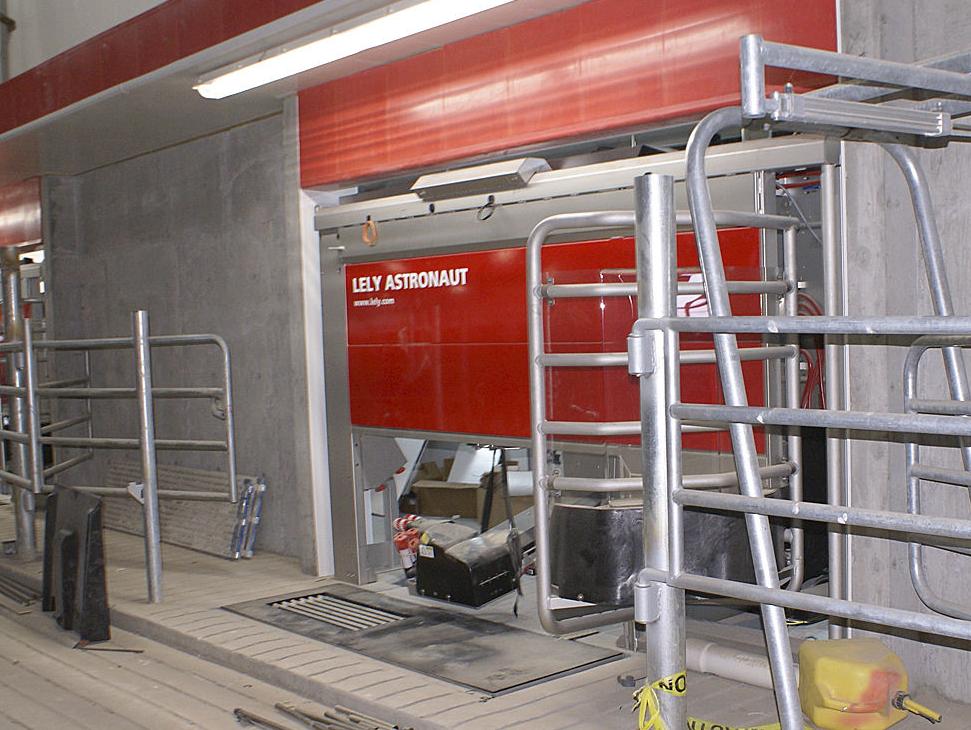
As I have spent the summer reviewing several time-lapse videos from various farms, the one thing that has come up over and over is the question of feed availability as cows return to the barn. The video would seem to show that as cows return they head to the bunk to look for feed. However, if feed is not within reach they go in search of a stall.

While it may be easier to schedule feed push-ups as a whole farm event, the truth is we manage and move animals by groups. Therefore, the push-up may or may not be timed correctly for when an individual group returns to the shelter. Adding the push-up responsibility to the person that is moving cows to the parlor and grooming stalls may be one way to ensure that feed will be within reach as the cows return.

So ask yourself, “Do my cows return to a bunk that not only has feed in it, but feed that is within reach?” and “How long does it stay within reach?” While this may seem like a small detail to feeding management, it remains true that attention to detail is what separates the high-performance herd from the average herd.

Source: extension.psu.edu

Into the future: Dairy takes robotic leap

Todd Webb is a fifth-generation dairy producer, having learned the business from his father, who milked cows by hand like his father before him.

There have been many changes to the operation over the decades, and Heglar Creek Dairy is on the precipice of another — a move to robotic milking.

A couple of years ago, Webb and his partners — brothers Scott Webb and Mark Webb and longtime neighbor Mike Garner — were at a crossroads with the 2,000-cow dairy. The milking barn was showing its age, pens needed maintenance and a tight labor market was a growing issue.

“We were trying to decide where we were going with the dairy,” Todd Webb said.

It was a question of whether to expand or let the dairy run its course and eventually sell, he said.

Weighing the options led them to contact Lely, a Dutch company that manufactures automated systems for dairies worldwide. Lely is one of several companies that manufacture robotic systems for dairies.

Soon after, he and his partners jumped on a plane to look at robotic dairies in the Midwest. That experience, as well as visits to many more robotic dairies and a lot of research, convinced them.

“We decided we wanted to go into robotics,” he said.

As is the case at most U.S. dairies, labor had become a huge issue. Competition from other industries in a tight labor market made it harder to keep workers and caused wages to skyrocket. While going robotic would also raise wages, it would require fewer workers and reduce overall labor costs by 60 to 70 percent.

The savings don’t fully cover the investment in robotic milkers — but if wages go up another couple of dollars, the savings would cover it, Webb said.

“But it’s not just about reducing labor costs,” he said.

There are other reasons the partners decided to go robotic. Improved milk production, better efficiency and cow health are a few. In addition, the technology has evolved beyond its original application for smaller dairies and costs have come down, he said.

“In the last couple of years, the technology has turned the corner and we’re seeing extreme benefits in large operations,” he said.

The technology has evolved to a point that robotic milkers are fast and efficient — and they can collect much more information on individual cows than a conventional dairy, he said.

Making the switch

The partners have built a new 160,000-square-foot, climate-controlled, energy- and water-efficient facility overlooking the conventional dairy. Half of their herd will be housed and milked in the new facility, which will be equipped with 18 robots that can each milk an average of 60 cows each three times a day.

The facility is divided into six living areas with 180 cows and three robots in each. There the cows can freely eat, relax on water beds and head to the robotic milker when they’re ready. The cows are fitted with electronic collars that collect data around the clock and feed information to the milking robots.

When the cow comes to be milked, the robot identifies her and her production when last milked. If she’s due for another milking — with the robot calculating the time it would take her to produce her potential — she is let into the milker. Tasty grain pellets are released according to her production.

How often she is milked depends on her lactation. It can range from twice a day to five times a day, Webb said.

“The robot is doing the math all the time,” he said.

It will only let her in if she needs to be milked. If she doesn’t and has only come back for feed pellets, it will turn her away, he said.

“It’s making those determinations,” he said.

It’s also collecting and storing information and notifies the appropriate person if there’s a problem, such as not being able to hook up the milking apparatus.

“It has to notify us when it’s not working right, and we can dictate what we want to be notified about and who it goes to,” he said.

Detailed dataWhen cows are accepted into the milker, the robot cleans and stimulates the teats and attaches the milking apparatus with the aid of a laser eye.

The robot can measure the quantity and characteristics of the milk collected in each quarter and can detect temperature in any quarter. It also can detect blood in the milk, dumping that milk, and it measures the somatic cell level and diverts the milk to a calf-milk tank if the level is too high.

In addition, the robot will sort the cows with elevated temperatures, blood in the milk or elevated levels of somatic cells out of the herd after milking and into a pen for hospital staff to address.

Because it also monitors the chemical properties of the milk, it can detect subclinical mastitis and sorts out those cows as well.

“Those are things that a robot can do that you can’t do on a conventional dairy. It’s just turning out to be an incredible management tool,” he said.

In a conventional barn, those things wouldn’t be detected for days. But with the robots, issues are detected immediately. Treatments can be less invasive, and it can reduce the use of antibiotics and reduce medical costs, he said.

The collars also detect when the cow is eating, lying down or moving around. Increased activity typically denotes a cow is in heat and when that information goes through the robot, the robot sorts it to the waiting pen to be bred.

“The robot monitors cows and milk. Whatever we put in the computer, the robot will manage for that. And quite honestly the robot does a better job at doing that,” he said.

Looking ahead

In addition to moving to robotics, the partners saw an opportunity to be a Lely dealer and launched Snake River Robotics.

“It fit into our diversification model,” Webb said.

They had toyed with the idea of diversification 10 to 15 years ago and decided to get serious about it five or six years ago, he said.

In addition to the dairy, the partners own and operate Heglar Creek Electric, Heglar Creek Cattle and Raft River Sod. Snake River Robotics includes one more partner, Jared Simkins.

The cows at Heglar Creek will start moving into their new digs any day, and the longer term plan is to build another robotic facility for the other half of the herd.

The partners are banking on research that shows lowering cows’ stress results in higher productivity, better health, a longer life span, lower cull rates and more pregnancies on average, Webb said.

The operation is geared for calm, comfortable and healthy cows, and keeping people and equipment out of the facility as much as possible is an important factor, he said.

“We don’t want to stress the cows any more than we have to,” he said.

When asked what he thought his father, now deceased, would think of cow waterbeds and robotic milkers, Webb laughed.

“He’d probably shake his head a little bit then think it’s great. He loved to see new ideas and new things,” he said.


Source: Capital Press

Oocyte Development during Negative Energy Balance

The high producing dairy cow is a marvelous high-octane beast who can turn feed into large amounts of nutritious milk. One downside is it often harder to get her pregnant compared to her lower producing herdmates and heifers. In this article, we will chat about how the development of the oocyte can be a factor in why high producing cows who experience negative energy balance can be harder to get pregnant.

The oocyte, also known as the ovum or egg, is the female gamete or reproductive cell found in each ovarian follicle. The life of an oocyte begins in the fetal ovary. Only a few are ovulated and most degenerate as the follicle they reside in regresses. Many that are ovulated and fertilized do not survive the early stages of development.

Most early lactation high producing cows are in negative energy balance because the demand for energy exceeds the energy the cow is able to consume. The result is body fat is mobilized to provide the extra energy. Blood concentrations of free fatty acids are elevated when cows are mobilizing body fat to support milk production. Follicular fluid is also higher in free fatty acids in this situation.

One interesting question is what happens to oocytes when the level of free fatty acids in the blood and follicular fluid are elevated. Results of recent research have shown oocytes which mature in a high free fatty acid environment are compromised and result in less robust embryos after fertilization. Less robust embryos could result in lower embryo survival and lower conception rates. One researcher has even suggested this oocyte environment may have persisting negative effects on fetal development and the newborn calf. An interesting side note is Kentucky native, Dr. Jack Britt, hypothesized way back in 1992 that follicles growing in early lactation may contain a compromised oocyte. Well done Dr. Britt!

In conclusion, we need to minimize the magnitude and duration of negative energy balance in the high producing early lactation cow. There are thousands of articles written on how to manage transition and early lactation cows to accomplish this goal, so I will not enter that discussion here.

Source: afs.ca.uky.edu

STOP Limiting Dairy Progress – START Looking After Heifer Data

How often have you heard that the post-weaning heifers are the most ignored, yes even neglected, animals on a dairy farm? From birth and until weaning, calves are fed and observed two or more times per day by humans and now increasingly by specialized machines …  so, there can be on-farm records maintained either in hard copy or electronically. However, no matter how extensive the on-farm heifer records, much of the health, growth, sexual maturity, mobility and vaccination records never make it to the central national database. 

We have Created the Impasse

Somewhere back in time, the dairy farming industry decided that cows and their information was important but that heifers were not important. Of course, that is not the case on all farms, but as an industry, we have not monitored and analyzed the performance of pre-producing animals in the way it occurs in the swine and poultry industries and partially in the beef, sheep and fish industries.

Why? Perhaps there is not a right answer to that question. Likely it has something to do with milk production being over 90% of the revenue from dairy herds. However, the more important question is how much is the dairy cattle industry missing out on increased on-farm profits by not performance recording and genetic indexing for heifer traits?

Times are Changing. Why Aren’t We?

It used to be that 52% of births were females and on average 90+% of heifers survived to first calving. In the past, it took $500 to feed and $800 total to raise a heifer to calving and fresh heifers sold for $1,500 to $2,500. So, raising all heifers meant that concern about heifer rearing costs and age at first calving did not significantly affect a farm’s bottom line.

Those days are history.

Today, with sexed (female) semen, 90+% of births are heifers and, as well, 95+% of heifers get to their first calving. It now costs $2,000+ to rear a heifer to calve at 24 months of age, and fresh heifers sell from $800 to $2000 depending on demand, pedigree and genetic merit. Where it was once a profit centre, rearing all heifers is now a losing proposition.

However, the important consideration is what will the best future program be for producing and rearing heifers as herd replacements? Dairy producers can avail themselves to heifer software management programs but, without a central producer owned database system, there will not be publicly available research, development, benchmarking and genetic analysis for heifer traits.

Think of the Possibilities

What would you like to know about your calves and heifers in the future for management, nutrition and genetic purposes? Some, but by no means all, items could be:

  • Temperature, rumination, respiration, …
  • Growth, …
  • Immunity (including colostrum transfer and vaccination effectiveness), …
  • Feed intake, feed efficiency, visits for feeding, magnet effectiveness, …
  • Mobility, gate, stance, hoof care, …
  • First heat, stage of estrus cycle, pregnancy, …
  • Data to support guaranteed food safety, …

Some of these may be possible now; others will require new technology or devices. Most likely we will only get the heifer details if the data is captured electronically. Of course, the additional data points will be added to what is already known for animals on pedigree, DNA profile, …etc.

What is Currently Available? Is it enough?

Calf and heifer software management systems and devices are currently available, but some are stand-alone or not linked to an on-farm system.

A.I. and private companies have seen the need for more facts on calves and heifers and are producing private proprietary indexes for sires on immunity, disease resistance, feed conversion efficiency, wellness and other non-traditional traits. However, those indexes are just scratching the surface on what needs to be known.

Do We Have the Will to Change?

Ideally, all facts and figures must be in one data system on a farm that can be transferred to the national dairy data system that already stores the milk cow data. Until we have this calf and heifer data stored in the national dairy databases, it will not be possible to know their effect on and relationship with performance, economics and genetics.

A supplementary thought could be that if we knew more facts about young bulls destined for A.I. would we be able to more accurately know if they should enter A.I. or not?

The need is there. Yet … 1) will dairymen see that need and capture and transmit the data? and 2) will data centres do the analysis and provide the services in the areas of farm management and genetic evaluation?

The Bullvine Bottom Line

The dairy improvement industry must move beyond thinking that dairy cattle monitoring and improvement is only about milk cows. Extensive data for all heifer traits and characteristics are needed from conception all the way to herd removal. The average female spends sixty months in a herd. Twenty months or 33% of an animal’s lifetime, is being ignored.

 The extent of this untapped opportunity to take the dairy cattle industry forward in viability and sustainability is significant. Is extensive calf and heifer data needed in the central data system? The answer to that question is – YES!


Get original “Bullvine” content sent straight to your email inbox for free.


[related-posts-thumbnails]

Is my dairy farm a good place for employees to work?

One of the key themes at this year’s National Dairy Conference was the topic of making Irish dairy farms better workplaces for employees, as labour becomes an increasingly important issue.

The conference, organised by Teagasc, covered the topic in one of six workshops which took place earlier today (Tuesday, November 27) in Cork.

With an additional 300,000 dairy cows in the country since 2010, more and more dairy farmers are now employing either full or part-time workers to manage the increased herd sizes.

Employees

At the same time, with labour availability reducing to 5.4% in 2018 with the upturn in the economy, from 15% in 2010, there is now increased competition for workers.

This has meant that attracting and retaining employees is crucial for the success of Irish dairy farmers and so it is essential Irish farms are attractive places to work, according to Teagasc.

At today’s workshop, Teagasc advisors Mark O’Sullivan and Paidi Kelly mediated a discussion on what makes dairy farms more attractive work places for employees, featuring presentations from dairy farmer and employer Diarmuid Hegarty and farm worker Cormac Desmond.

It was noted that two key questions which dairy farmers must ask themselves are: “What is it like for someone else to work on my farm?” and “What am I like to work for?”

Kelly noted that employees for dairy farms want a variety of things from their work: fair reward for their efforts; a nice place to work; work they enjoy doing; a nice person to work for; and a job that fits in with their personal lives.

Hegarty explained his own situation as a dairy farmer, noting that he had one farm assistant and took on a student, either second or third level, in the spring and for relief milking later in the year. He noted that effective communication is very important for good relationships with workers.

Meanwhile, Desmond outlined his experience working for local dairy farmers both as an agricultural college student on placement and as a full-time worker.

He explained that, as a dairy employee, he appreciated good structure and organisation, as well as good routines and knowing what his schedule was – while good facilities made working that bit easier.

Regarding what he looks for in an employer, Desmond explained that he seeks:

  • A good introduction, not expecting too much too soon;
  • An employer willing to teach things such as grass measuring;
  • An employer who is well organised with rosters and the flexibility to take hours or days off when needed;
  • A good relationship, understanding that people have lives outside of work;
  • Having one employer, not two; and
  • Acknowledgement and appreciation – even just saying “well done” on occasion.

In a farm as a workplace, aspects earmarked as benefits included: an organised working day with set finishing times; a well-planned working day with a clear outline of jobs to be done; good facilities working well; and some responsibility, such as a specific job like looking after calves.

Farming workplace

Having a farm that is a good workplace is crucial not just for employees, but also the farm family and the farmer himself or herself, according to Teagasc guidelines.

A good farm workplace is a safe place to work, well organised, and people have the resources they need to efficiently complete all tasks.

There are many aspects of providing a good farm workplace including:

  • Being a good employer – ensuring that the farm follows best practice in recruiting and managing employees including meeting all legal requirements;
  • Promoting good communication;
  • Providing adequate farm facilities in good working order – e.g. milking parlour, cow and calf accommodation; and
  • Setting the farm up for success – farm maps, whiteboards, standard operating procedures.

Summing things up in the workshop, Kelly said that making farms better workplaces has a number of benefits.

As well as attracting and retaining employees, such a move will help attract the next generation and make farming more enjoyable for farmers themselves.

Source: agriland.ie

Send this to a friend