Archive for News – Page 97

Want to Save Animals? Stop Supporting PETA

A Wildlife Biologist/Conservationist Perspective

I realize my chosen field of study is very unique to the average person. After dual majoring in Secondary Education and French for over 4 years, I took half a year off to really reevaluate my interests and passions and decided to obtain my Bachelor’s degree in Fisheries and Wildlife Science with a specialization in wildlife conservation. I started volunteering at local wildlife rehabilitation centers, which then turned to moving a couple of hours away to a random person’s house to intern at a wildlife refuge, which then turned to moving out of state and living in someone’s basement who I found off of Craiglist to work at a conservation center for canids (dog and dog-related species, ie. wolves, African wild dogs, foxes, etc.), which then turned to moving away yet again to work at a zoo or two, which turned into traveling to South Africa for two weeks on somewhat of a whim to study endangered predatory species in a natural setting. Which leads me to where I am now- a graduate student in Wildlife Biology, Management, and Conservation who is yet again about to travel internationally to Scotland to better learn field study techniques.

With all that being said, it’s not far-fetched to assume that I am an overall huge lover of both wild and domestic animal species alike. You would be very correct in that assumption. I am a lover of all species; and when I say all, I mean all. I am the type of person who catches the spider (well, makes my husband catch the spider) despite my lingering childhood arachnophobia and bring it outside rather than kill it. The next assumption that most people often make is that I am also a supporter of PETA. That assumption could not be more wrong. As someone who has dedicated the last 7 or so years of her life studying animals and working towards several conservation projects, please believe me when I say that supporting PETA is NOT equivalent to supporting animal welfare; in fact, it’s the furthest thing from it. Most people who do support PETA have done so flippantly throughout their lives, not really knowing the depths of their corruption and malpractices. Others have been brainwashed and pandered to with the relatively recent upsurge of veganism into thinking this cult-like organization really has animals’ best interests at heart, disillusioned by their true sole aim which is, unsurprisingly, the aim of most big-wig corporations: money and power.

Before I get into what you are really supporting when you support PETA, please note that I don’t think that all PETA advocates are corrupt. The vast majority of them have their heart in the right place. The organization may have even started with its heart in the right place. But, again, it is not the supporters or campaigners that are always corrupt, it is the current entity itself. It’s just that the supporters are unaware. This is where I come in. Here are some examples of gross malpractices that PETA has been directly involved with:

1. PETA believes that the idea of “pets” should have never existed but has record high kill-rates for their shelter. A direct quote from their site states, “This selfish desire to possess animals and receive love from them causes immeasurable suffering, which results from manipulating their breeding, selling or giving them away casually, and depriving them of the opportunity to engage in their natural behavior. They are restricted to human homes, where they must obey commands and can only eat, drink, and even urinate when humans allow them to.” Many companion species began to be domesticated because they had a predisposition of an “interest” and dependence on humans without necessarily being prompted to do so (hence why we have domesticated rabbits and not domesticated squids). This is how dogs became the domesticated descendants of wolves. They showed curiosity in humans, began to be dependent on them once humans started feeding them, and then humans made the conscience decision to tame them to use the wolves in a way that would benefit the humans’ survival (keep in mind, this was ten to tens of thousands of years ago). But the relationship was a mutual one. The dogs were provided food and safety/shelter, the two core components of their survival in the wild, while the humans were provided with an animal that could help more efficiently complete a task for their own survival. Not a bad setup for either. And now, most companion animals are not required or expected to complete any sort of task. So, as long as the animal is being treated humanely, again, this is not a bad gig for the pet. Also, domesticated animals are different than their wild counterparts, which means their brains act differently, as well, allowing them to emit oxytocin, the “love hormone,” when physically interacting with their human owners.

So, where’s the biggest hypocrisy in PETA’s “don’t own pets because it causes immeasurable suffering” statement? PETA continually has some of the highest kill rates for their shelter, in some years going above even 90%. “New figures from the animal ‘shelter’ at PETA’s headquarters in Norfolk, Virginia show that, of the 2,470 cats and dogs the group received in 2018, 1,771 of them were killed. PETA was single-handedly responsible for two-thirds of the cats and dogs killed by private animal shelters in Virginia. Just 35 cats and dogs were adopted out. PETA’s adoption rate of barely 1% is shockingly low in comparison to the rest of Virginia, where the adoption rate at private shelters is 71% and at public shelters is 33%. PETA’s kill rate of 73% also greatly exceeds the average for Virginia shelters.” While Daphna Nachminovitch, the senior vice president of PETA’s Cruelty Investigations Department, argues that PETA kill rates are higher because they often take in the “worst case” animals, there have been cases of animal abuse/cruelty from this organization that are inexcusable. “The group’s reputation wasn’t helped last October [2014] after news broke that PETA had taken a healthy chihuahua from its owner’s porch on Virginia’s Eastern Shore and euthanized it. Nachminovitch said PETA was ‘devastated’ by the mistake, and she drove to the owner’s home and personally, tearfully, apologized. The employee was fired for what Nachminovitch said was a breach of PETA rules.” In another incident, a veterinarian gave the PETA shelter a mother cat and her two kittens, all of which were healthy, under the false pretenses that they would be adopted out. Allegedly, within minutes, they were killed in the back of their van. And despite identifying themselves as a public shelter, in 2010, the Virginia Department of Agriculture stated that the PETA facility “does not contain sufficient animal enclosures to routinely house the number of animals annually reported as taken into custody… The shelter is not accessible to the public, promoted, or engaged in efforts to facilitate the adoption of animals taken into custody.” And with an organization who has many supporters that think companion animals are better off dead than under human ownership, it’s not hard to see why they would do such little promotion to attempt to adopt out these animals. On their own page, PETA writes, “Because of the high number of unwanted companion animals and the lack of good homes, sometimes the most humane thing that a shelter worker can do is give an animal a peaceful release from a world in which dogs and cats are often considered ‘surplus’ and unwanted.” This would also apply to healthy animals who are not suffering from untreatable life-threatening illnesses or injuries. I could go on and on about the hypocrisy on PETA’s stance on animal cruelty. Nathan J. Winograd wrote a detailed article for the Huffington Post in 2017 that contains many of these facts plus other alarming stories and statistics. Read it here.

2. PETA doesn’t believe in hunting, a practice that can attribute to the health of a species. A lot of us don’t like the idea of hunting. I’ll be honest with you, I’ll never partake in it because I am fortunate enough that I currently am not in the position that I’d ever have to for my own survival. However, this doesn’t mean that I am so blinded by my affection for animals that I can’t see the immense benefits in responsible hunting practices. You know “deer season” or “bird season” where hunting is opened up to a limited amount of hunters for a specified period of time? This is done to not only contribute to the health of the species being hunted but the ecosystem in general. The time frame is also determined by those who understand population dynamics who can specify a period of time where hunting would not have an irrecoverable impact on the population. Throughout the U.S., several deer species are being ravaged by a number of diseases and parasites because of overpopulation. They are overpopulated because of habitat loss from humans but also from previous years of humans killing off predatory species like wolves that acted as natural predators for deer. So, in many areas, deer populations are booming out of control because there are no natural predators that can hunt them, and thus, the number of individuals who act as hosts for parasites and diseases go unchecked, as well. This is where hunting comes in. And if the hunting is being done responsibly by obtaining the proper permits, using the proper equipment, hunting in allowed areas, and all of the animal parts are being used, then, again, this could be very beneficial. While I worked for a canid conservation center for a brief stint, local hunters would often donate fresh dear carcasses or parts to the wolves and African wild dogs. But while PETA doesn’t support hunting, a practice that can benefit both people, the animal, and the ecosystem, it does support the mass killing of feral cats in order to combat feral cat numbers. PETA directly opposed a bill that would promote trap, neuter, and release programs instead of euthanasia.

3. PETA believes that no animal should be in captivity. I know this is a controversial one. But here’s the deal- the mission of zoos have changed considerably in the past decade or so. Yes, there are still some bad zoos out there. But the majority of zoos within the U.S., particularly those accredited by the Association of Zoos and Aquariums (AZA), are held to a very high standard and operate with the intent of conservation at their forefront. In fact, AZA zoos and aquariums even participate in, coordinate with, and financially contribute to conservation projects outside of zoos. Many zoos are primarily responsible for bringing back numerous endangered species from the brink of extinction in conjunction with Species Survival Plans (SSPs). Some examples of species saved by zoos include: the Arabian oryx, Przewalski’s horse, California condor, Corroboree frog, the bongo, regent honeyeater, Panamanian golden frog, Bellinger river turtle, golden lion tamarin, Amur leopard, Puerto Rican parrot, and freshwater mussels. A recent AZA article stated that, “AZA-accredited zoos and aquariums rescued over 2,800 sea turtles, and rehabilitated nearly 4,400 [in 2018]. Brevard Zoo alone rehabilitated 2,362 sea turtles, and Texas State Aquarium rehabilitated 1,247. In total, AZA-accredited zoos and aquariums returned 3,441 sea turtles to the ocean last year.” Additionally, by the logic of no animals being allowed in captivity, conservation centers, centers that are solely dedicated to the conservation and repopulation of endangered species, would cease to exist, as well. Sometimes the only way to repopulate a species is by removing healthy individuals from the wild to breed them in captivity to help increase not only numbers but also genetic diversity within the population. Some successful conservation centers in the U.S. include the Endangered Wolf Center, Fossil Rim Wildlife Center, White Oak Conservation,and Smithsonian Conservation Biology Institute. Check out the Facebook page Zoos Saving Species to read about more amazing strides in conservation from zoos and conservation centers around the world.

4. PETA is not a research or science-based organization and often promotes practices that are not scientifically sound, including practices that are harmful to pets. This can tie into any of the other points I made above, such as not understanding how hunting can positively impact ecosystems, how conservation centers and zoos can contribute to not just population increases but genetic diversity which is crucial to saving a species, and how wild and companion animals differ genetically and behaviorally as two distinct species. A further point to add to this is that throughout the years, PETA has been promoting vegan pet food and treats to its supporters and followers. PETA’s site states, “The nutritional needs of many dogs and cats can easily be met with a balanced vegan diet and certain supplements… Making vegetarian food for dogs is easy because dogs are omnivorous and usually hearty eaters.” Sigh. Where to begin again…Just because a human adopts a particular eating habit, whether that stems from political, religious, economical, or ethical reasons, that does not mean that you can impose said eating habits on an animal who has different dietary needs than you. And while dogs do possess omnivorous traits, veterinary health professionals as well as scientific researchers conclude that dogs have a strong carnivorous bias (unsurprisingly, given their wolf ancestors) and should have a diet primarily consisting of meat-based products. Veterinarians have concluded that it is possible that dogs can survive on vegetarian or vegan diets but that it is not recommended and can even be dangerous. Researchers from Tufts University stated, “Designing a meat-free food for dogs that contains all of the necessary nutrients for them to thrive is extremely difficult, even for licensed veterinary nutritionists. While the canine digestive system can get nutrition from plant matter, it has a much easier time processing animal matter. Fruits and vegetables are great for providing vitamins and antioxidants that can help your dog thrive, but they lack the necessary amounts of fat and protein. Proteins derived from animal products, like collagen, elastin, and keratin— all of which are vital for healthy skin, muscles and joints — are difficult, if not impossible, to derive from a vegan diet. The bottom line is that, unless it’s done very carefully under the guidance and supervision of a licensed veterinary nutritionist, making your dog vegan could lead to severe health complications and malnutrition…It’s important to realize that the health benefits that you derive from eating vegan don’t extend to your dog.” Cats’ diets are even more cut and dry than dogs’; they are considered true obligate carnivores. From the New World Encylopedia: “An obligate carnivore (or true carnivore) is an animal that must eat meat in order to thrive (Syufy 2008). They may eat other foods, such as fruits, honey, grains, and so forth, but meat must be included in their diet. True carnivores lack the physiology required for the efficient digestion of vegetable matter, and, in fact, some carnivorous mammals eat vegetation specifically as an emetic. The domestic cat is a prime example of an obligate carnivore, as are all of the other felids (Pierson 2008).” So, NO, PETA, it is not healthy or ethical to feed a cat a vegan diet by any means.

5. PETA promotes radical behavior and violence. You will not find a shortage of information looking into  how many instances of outward violence and radical behavior PETA leaders and advocates have promoted over the years. Former PETA Vice President Bruce Freidrich stated, “If we really believe that animals have the same right to be free from pain and suffering at our hands, then, of course, we’re going to be blowing things up and smashing windows. For the record, I don’t do this stuff, but I advocate it. I think it’s a great way to bring about animal liberation, considering the level of suffering, the atrocities. I think it would be great if all of the fast-food outlets, slaughterhouses, these laboratories and the banks who fund them exploded tomorrow. I think it’s perfectly appropriate for people to take bricks and toss them through windows. Hallelujah to the people who are willing to do it.” In 2013, they promoted their video game, in which the premise was traveling around pharmaceutical laboratories and assaulting scientists, by tweeting, “Ever wish you could punch an animal experimenter in the face? Here’s your chance.” When Dr. Walter Palmer killed Cecil the lion, PETA tweeted that Palmer should be “extradited, charged, and preferably hanged.” I didn’t agree with the killing of Cecil, either, but I think it’s more than a tad hypocritical that this statement not only comes from an organization that claims they promote “nonviolence,” but also from one that kills thousands of animals, including cats, each year. The FBI has also found that PETA has provided support to the two groups that are known as the most serious domestic terrorism threat to the U.S.- the Animal Liberation Front (ALF), an international radical leaderless resistance that believes in destroying laboratories and farms and illegally removing animals in the name of “freeing animals,” and the Earth Liberation Front (ELF), an international coalition that uses “economic sabotage and guerilla warfare to stop the exploitation and destruction of the environment.” I can sympathize with those who feel they need to go in and rescue puppies from squalid conditions in puppy mills. The problem is when organizations like PETA, ELF, and ALF don’t openly condemn illegal or violent behavior and oftentimes partake in the criminal activity. In fact, leaders in these groups acknowledge that it’s illegal and still promote it. One PETA cofounder, Alex Pacheco, stated, “arson, property destruction, burglary, and theft are acceptable crimes when used for the animal cause,” while the other, Ingrid Newkirk, said that she wished she had “the guts to light a match” in reference to burning down animal laboratories.

6. PETA leaders have provided support to criminals and have participated in criminal activity in the name of “animal welfare.” This ties into my last point, but I wanted to touch on the depths in which PETA leaders involve themselves in acts of domestic terrorism. PETA Senior Vice President of Communications, Lisa Lange, openly admitted on Fox News to giving ELF $1,500 for one of their programs. This article states: “PETA also has given $2,000 to David Wilson, then a national ALF ‘spokesperson.’ The group paid $27,000 for the legal defense of Roger Troen, who was arrested for taking part in an October 1986 burglary and arson at the University of Oregon. It gave $7,500 to Fran Stephanie Trutt, who tried to murder the president of a medical laboratory. It gave $5,000 to Josh Harper, who attacked Native Americans on a whale hunt by throwing smoke bombs, shooting flares, and spraying their faces with chemical fire extinguishers. All of these monies were paid out of tax-exempt funds, the same pot of money constantly enlarged by donations from an unsuspecting general public.”

But perhaps what is most alarming is PETA cofounder Ingrid Newkirk’s collaboration with ALF bomber Rodney Coronado in a multi-million dollar arson at Michigan State University. Newkirk arranged to have Coronado send packages (at least one of which was intercepted by the FBI) of stolen university documents before committing the bombing. Newkirk even asked Maria Blanton, a longtime PETA member, to accept one of the packages on her behalf. After Coronado’s arrest, PETA donated over $45,000 for his defense and $25,000 to his father. A search at Blanton’s home revealed that Alex Pacheco (the other PETA cofounder) had been planning other burglaries and break-ins with Coronado. Federal agents seized “surveillance logs; code names for Coronado, Pacheco, and others; burglary tools; two-way radios; night vision goggles; [and] phony identification for Coronado and Pacheco.”

7. PETA spends ~2% of its received donations on animal research. In 2010, PETA made $68 million in revenue, of which $33 million came from donations. While approximately 17% of donation revenue was spent on campaigns to raise more money, only  2% was used to go towards grants to help researchers discover animal alternatives. Other chunks of money are going towards defending and funding radical animal activists engaging in violent and terrorist behavior (see above point for some of those expenses broken down). Much of their other funds go towards buying stocks in opposing-minded companies in order to gain enough of a share to have an influence on their practices… aka they buy shares in companies that practice what they deem as “animal cruelty” in hopes to force them to change their practices. This type of investment is not unique to PETA, but it is quite jarring when PETA buys into companies that are inherently against its values in every way, shape, and form, such as its new partnership with AZA. And given their radical practices, it becomes questionable if their true motives are to change an organization or destroy it through demands that will gain them massive media attention. They are self-proclaimed “press sluts,” after all.

8. PETA manipulates children by feeding them propaganda meant to elicit fear. PETA has released several children’s books that scream cult and often include themes of violence and adult topics. In 2017, a child received the book, Fetch: How a Dog Brought Me Home, from PETA that contained profanity, images of a father beating a mother, and discussion of the mother’s suicidal thoughts. Another book that PETA circulated to children was a comic book called Your Mommy Kills Animals with a violent image on the front of a woman holding a bloodied knife and stabbing a rabbit. Inappropriate advertisements include an image of Santa looking down his pants with the words, “Santa isn’t coming this Christmas. Milk can make you impotent. Soy is joy,” as well as another picture of a bloodied knife and the words, “Question authority.” I truly can’t make this up, folks.  Former PETA Vice President, Dan Matthews, stated that PETA’s campaigns are and always will be geared towards children. If this point alone doesn’t make you want to never give PETA the time of day again, I don’t know what will.

Please don’t follow and support organizations blindly, even if they are ones that have had a strong public presence for many years. Wherever big-money is involved, there is a high potential for corruption so please do your research before pledging your support or you may just be funding the exact opposite cause of what you thought you were. If you are an animal lover like myself, please consider donating time, money, or tangible goods to local animal shelters. If you are even more like me and feel impassioned in issues of wildlife conservation, volunteer time and research for your state’s department of Fisheries and Wildlife programs, volunteer internationally for reputable organizations, become an advocate for scientifically sound campaigns, or even pursue a career in the field. The world is at its tipping point in the area of conservation at the moment, and we are teetering over the edge of losing many of the species and habitats that are so important to all of us. Your support may mean a world of difference.

Source: cpisarek.wordpress.com

Berge Begins as WDE Trade Show Coordinator

World Dairy Expo is pleased to welcome Mikayla Berge as Trade Show Coordinator. Berge’s responsibilities include assisting with all aspects of sponsorship and Trade Show management, from corresponding with past, present and prospective exhibitors, to floor plan design and sponsor deliverables.

Berge, a December 2017 graduate of the University of Wisconsin-Platteville, holds a degree in dairy science with a minor in business administration. Most recently, she was a customer service representative for Madison based, Boviteq, USA. In addition, Berge gained on-farm experience as a Dairy Field Technician for AgSource Dairy and as a Loss Control Representative surveying farmers with Nationwide Insurance.

“Mikayla’s background in customer service and organizational skills will serve our exhibitors and sponsors well as they plan their Expo experience,” says Crystal Ripp, WDE Trade Show Manager. “Her on-farm professional experiences and customer-focused mentality will also be great assets to the WDE team as we look to enhance the offerings that World Dairy Expo provides to our attendees and stakeholders.”

Serving as the meeting place of the global dairy industry, World Dairy Expo brings together the latest in dairy innovation and the best cattle in North America. Crowds of more than 65,000 people, from nearly 100 countries, will return to Madison, Wis. for the 53rd annual event, October 1-5, 2019, when the world’s largest dairy-focused trade show, dairy and forage seminars, a world-class dairy cattle show and more will be on display. Visit worlddairyexpo.com or follow WDE on Facebook, Twitter, Instagram, Snapchat or YouTube for more information. 


Emergency crews battle fire at Adams (WI) dairy farm

Several emergency crews from across Jefferson County responded to a milk house fire Sunday evening at Hylight Dairy Farm.

Jefferson County 911 dispatch received a call at 6:09 p.m. and crews were still battling the blaze at 13723 County Route 75 around 7 p.m.

Smithville Fire served as the command center for emergency responders.

Downed power lines, strong winds and the retrieval of water posed challenges for the firefighters.

Source: Watertown Daily Times

Wisconsin dairy farmers see spike in hauling costs

Wisconsin dairy farmers are facing higher trucking costs as an oversupply of milk continues to strain the market, according to a report released this month.

The Upper Midwest Federal Milk Marketing Order found that the average cost to haul 100 pounds of milk in Wisconsin was 24 cents in 2018, a 40 percent increase from 2017.

Agricultural economist Corey Freije told Wisconsin Public Radio that milk hauling charges usually increase by 1 or 2 cents every year.

Last year’s unusual jump “is partially a result of an increase in the diesel fuel costs,” said Freije, who compiles the report for the order. “But it also seems to be an indication that the dairy farmers, with the supply that’s out there, have kind of lost their market power.”

The oversupply of milk means that dairy processors don’t have to subsidize hauling costs to attract farmers, according to Freije.

“The handler, particularly a co-op, would subsidize that hauling (charge),” Freije said. “I’ve heard over time that the handlers and some of the co-ops want to reflect more fully the cost of the hauling to those deductions for dairy farmers.”

The hike in trucking costs comes as farmers face years of low milk prices, trade disputes and other pressures, which have led to a shrinking number of Wisconsin dairy operations in recent years.

Mark Stephenson, director of dairy policy analysis at the University of Wisconsin-Madison, said continued consolidation in the dairy industry means that farmers will likely have to take on more production costs, such as hauling, to stay competitive.

Source: startribune.com

2019 European Competition “Made in Belgium” – D-50 days Everything is coming together!

The European Holstein and Red Holstein Competition is a highly anticipated event for international Holstein breeders.

Organised every three years by a member of the European Holstein and Red Holstein Confederation (EHRC), its programme includes the most prestigious Holstein and Red Holstein competition in Europe.

The event has returned to Belgium after 20 years and is being held at the Libramont Exhibition & Congress (LEC) in Libramont.

Preparations are well under way to welcome the upcoming Holstein Competition “Made in Belgium”. The doors will open in fewer than 50 days.

Nineteen countries have officially confirmed their participation in the event. 173 cows (133 Holstein and 40 Red Holstein) and 37 young breeders are expected to participate.

There is a great deal of suspense concerning the names of the candidate cows chosen by each country. They will be revealed through the national competitions at the beginning of March. Every federation is ready for action!

The table below shows the details of the participating countries as of 20 February 2019:

The number of cows participating is greater than at the last French edition. It should be noted that Portugal and Ireland have returned after many years of absence. Belgium, the host country, will participate with 16 animals. Latvia will be represented during the young breeders’ competition.

The international judges have been carefully selected by the European Holstein and Red
Holstein Confederation (EHRC):

  • Red Holstein judge: Mr Markus Gerber (CH)
  • Holstein judge: Mr Mark Nutsford (UK)
  • Young breeders judge: Cord Hormann (D) and Michael Halliwell (UK)

Schedule
THURSDAY, 11 APRIL 2019
Four Walloon farms will open their doors to Belgian and international visitors in advance of the Competition at Libramont.
• Bois Seigneur Holstein – Pussemier family – Ophain Bois Seigneur
• Hautmont Hill Holstein – Neuville family – Lierneux
• Herbagère Moureaux – Moureaux family – Flavion
• Horimetz Holstein – Feys family – Chièvres

Belgian Home sale: a silent auction will be organised at each of the farms by Roccafarm
Holstein. The breeders will offer about 40 high-quality animals at an affordable price for
everyone!

TWO DAYS AT THE LIBRAMONT LEC
The LEC (Libramont Exhibition & Congress) will house the animals participating in the
competition as well as the national federation stands. Exhibitors from the sector will be also be present in the various exhibition halls, surrounded by animals. Each country will be determined to present their animals in the best way possible. The animals offered for the European Master Sale will also be present for the entire duration of the event.

FRIDAY, 12 APRIL 2019
10:00 am to noon : Young breeders Holstein clipping competition
2:00 pm to 2:45 pm: Opening ceremony
3:00 pm to 6:00 pm: Red Holstein Competition
7:30 pm: European Master Sale – the best of Holstein genetics will be up for sale

SATURDAY, 13 APRIL 2019
09:30 am to noon: Showmanship Competition
Noon to 6:00 pm: Holstein Competition
8:00 pm: Breeders’ evening – Meal tickets are available in advance via the online ticket service.

Share a convivial evening with many international visitors.
Important information:

• Catering available on-site
• Preferential pricing for groups (groups@holsteinlibramont2019.com)
• Visitor parking nearby
• Motorhome parking option (via online reservation)
• Bus/coach parking option (via online reservation)

Find more information at Holstein Libramont 2019.


Why supermarkets can’t squeeze oil giants to cap fuel prices as they do with our farmers

Compare milk to petrol, two staples of our lives where the supermarkets maintain an interest.

The suppliers of petrol are big enough to vary their prices and the supermarkets follow the lead.

There is no doubt supermarkets would become more popular if they changed the price of fuel to $1 per litre and held it there for a decade. But they don’t because they cannot bully BP and Shell.

Nothing prevents a supermarket from offering $1 petrol, but what they cannot do is bludgeon international oil companies into a lower price as they do with processors and farmers.

The dairy industry doesn’t mind if supermarkets make milk cheap. In fact the dairy industry wouldn’t mind if the supermarkets gave the milk away for free if they still paid the processors and farmers a price that reflected the cost of production.

Dairy farmers, including Steve Treloar, are selling up due to the low price of milk.

The problem is supermarkets artificially declare prices then expect to be subsidised by both processors and farmers.

To find the genesis of the milk crisis we need to go back to 2001. Then, the milk-pricing mechanisms were changed to allow the markets, not regulation, to set the price.

For a decade things ticked along and the market operated so that the milk price paid by the consumer was reflective of the whole supply chain, the supermarkets, the processors and the farmers.

In the middle of this world sat the farmer co-operative, Murray Goulburn. Everything orbited around MG.

MG represented both processors’ and farmers’ interests because it was a co-operative and a seller of milk. MG’s size and broad representation meant it was mindful of the whole supply chain.

Then several things happened. MG lost its way as it sought to become a company rather than a co-operative. It failed to negotiate the challenges of the commercial world and it failed to balance the needs of farmers and processors.


Coles comes under fire for milk prices

In 2011, as MG commenced its metamorphosis, the major supermarkets, Coles then Woolworths, began their $1 milk campaign. This campaign didn’t focus on the cost of production, it focused on the retail price. In its quest to be “commercial” MG played along and suddenly the power to set a price shifted. A few years later, MG collapsed.

Since that time there has been no single processor big enough to challenge the supermarkets, leaving the major retailers in charge of prices while demanding their $1 milk continued to be profitable. By 2017 the distorting forces had become so pronounced the Commonwealth Government referred the industry to the ACCC.

The ACCC made many findings but basically laid the blame of farmers suffering at the feet of the processors. All that was needed was that when the cost of production changed, the processors exercise the price variation clauses in their contracts.

There is little evidence any of the major processors have exercised their options under their price variation clauses with the supermarkets. No processor is large enough to challenge the supermarkets with a price variation. To do so would be at the peril of their other products on the shelf.

David Gillespie calls for 10 cent-a-litre milk levy

While welcome, the Woolworths announcement of $1.10 litre milk does nothing to address the artifice which is a milk price totally disconnected from the cost of production.

The South Australian Dairyfarmers’ Association, supports a free market to set a milk price. What is occurring isn’t a free market. The supermarkets are setting a course and shackling farmers and processors to it.

The supermarkets need to be mindful they are placing demands that will break the system. The casualties are already real. Since the introduction of $1 milk the number of dairy farms in SA have fallen from 286 to 228. They continue to walk away.

The supermarkets sell water which reflects the cost of production, which is why bottled water now costs much more than bottled milk. If processors cannot move on price it won’t be long before some of them join Murray Goulburn as a memory and many more farmers go with them.

Source: The Advertiser

Air Force Base water contamination puts New Mexico dairy farmer out of business

A New Mexico dairy farmer says he may have to kill thousands of his cows and he’s dumping out tens of thousands of gallons of their milk daily.
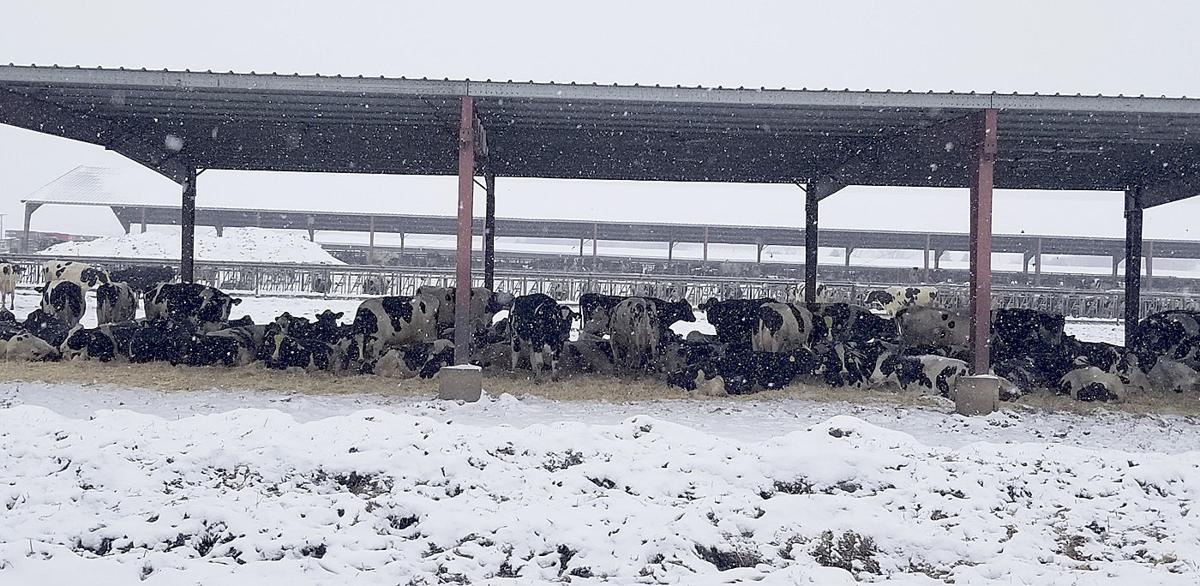
He says it’s all a result of the water contamination caused by Cannon Air Force Base and the firefighting foam they used.

For 27 years, Art Schaap has been running Highland Dairy in Clovis. Last year, he found out the milk he was producing here was no good.

“We can’t sell our cows, we can’t sell our milk. So basically we have no income,” he said.

The farm borders Cannon Air Force Base. The New Mexico Environmental Department discovered water from wells within a four-mile radius of the base had chemicals from foam used to fight fires in it, which can increase the risk of cancer and other diseases.

“We’re living it every day. It saddens me to see my cows suffer, and what really scares me is the unknown of the health of our family,” said Schapp.

He’s currently dumping 15,000 gallons of milk a day, has had to let go of 40 employees, and may have to euthanize all of the cows if they can’t be sold for beef.

Schaap is going on four months with no income. As far as efforts to work with Cannon Air Force Base, he says he’s reached out but they’ve refused to do anything.

“They have no solution. Their solution is, ‘I hope it goes away.’”

He’s now suing the chemical companies that produced the chemical foam, like 3M and Dupont.

Schaap says thankfully, local and county governments have been very supportive.

He says he keeps in contact with state lawmakers too, and Rep. Ben Ray Lujan was there on Wednesday.

“The advisory levels are good enough to put me out of business, but it’s not good enough to keep the air base accountable for what they’ve done,” said Schaap.

The companies named in the lawsuit have not filed a response yet.

Schaap has also filed a tort claim against Cannon Air Force Base. KRQE News 13 reached out to them, but they said they don’t comment on pending litigation.

Many other Air Force bases are also dealing with the effects of the firefighting foam, including Holloman Air Force Base in Alamogordo.

Source: krqe.com

Canada’s Saputo to buy Dairy Crest in near-£1bn deal

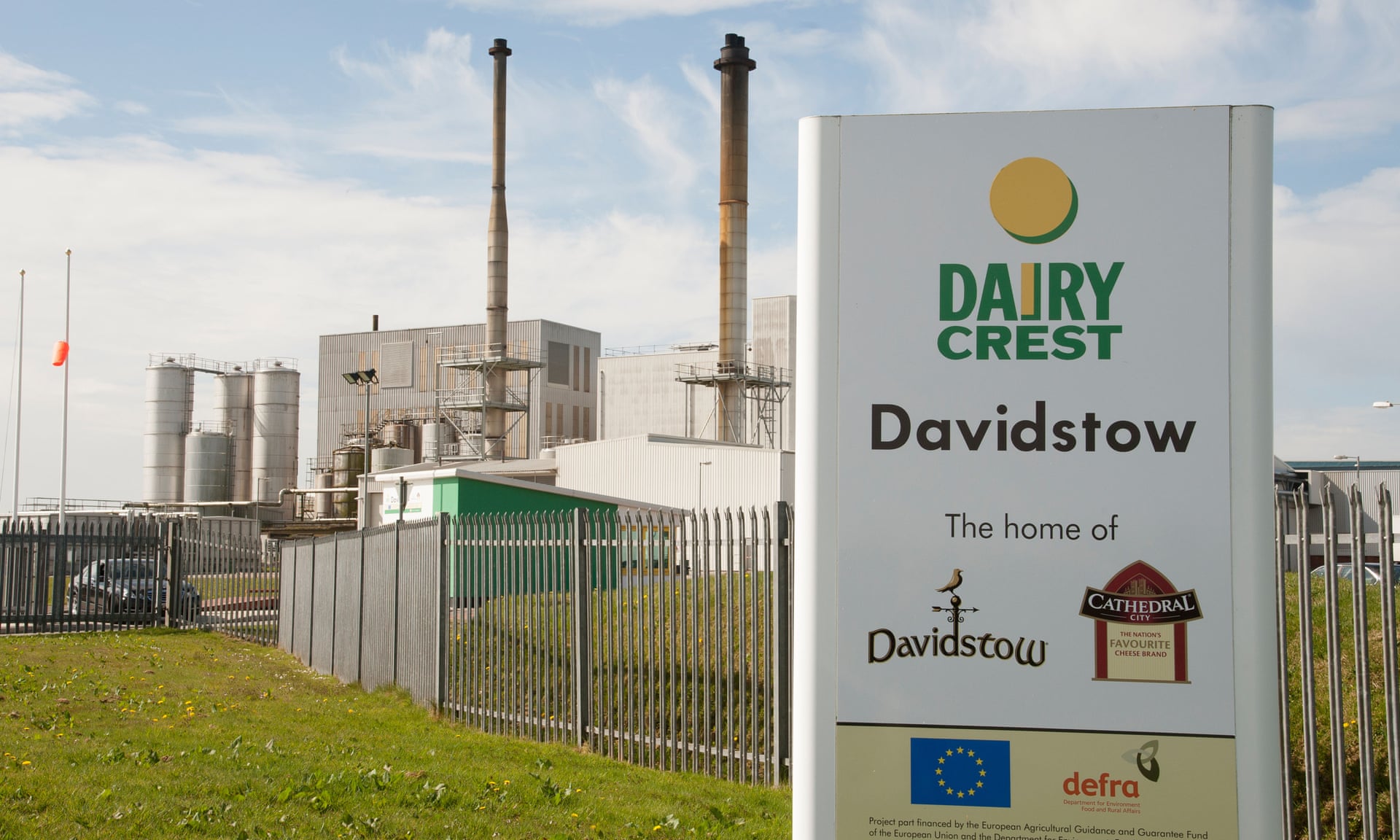
Saputo said there would be a ‘limited rationalisation of employee roles’ at Dairy Crest. Photograph: Pete Titmuss/Alamy

The British owners of Cathedral City cheddar and Clover margarine have agreed a near-£1bn takeover from the Canadian dairy company Saputo.

On Friday Dairy Crest recommended shareholders accept an offer from Saputo that values the FTSE 250 company at £975m.

In a statement to the stock market, Saputo said there would be a “limited rationalisation of employee roles” at Dairy Crest, mainly related to no longer needing to report as a UK-listed company.

However, the statement said Saputo did not intend to make any material change in how the company was run. Saputo is understood to have no plans to change agreements with dairy farmer suppliers in Devon and Cornwall.

Saputo is one of the top 10 largest dairy companies in the world, and has made 30 acquisitions since 1997, but it does not currently have any operations in the UK. The Montréal-based company is listed in Toronto but the Saputo family’s investment vehicle still holds more than 30% of its shares.

Dairy Crest employs more than 1,100 people in seven locations, including a creamery in Davidstow, Cornwall. Its other well-known brands include Country Life butter and Frylight cooking oil.

Stephen Alexander, chair of Dairy Crest, said it would allow the company to “accelerate its growth ambitions”. The existing management team will continue to run Dairy Crest.

Last May, Dairy Crest raised almost £70m from investors to expand the Davidstow creamery to meet overseas demand for Cathedral City in markets such as China.

Dairy Crest’s share price has surged in the past week, although there have been no media reports about the potential acquisition. The company’s shares were valued at 476.2p on Friday 15 February and jumped almost 13% to 625p after news of the deal. A spokesperson for Dairy Crest said the company had been in discussions with the Takeover Panel throughout the past week.

Saputo’s offer, of 620p per share, represents a premium of only 12% over Thursday’s closing price of 555p. However, it represents a premium of 33.8% over the average price of share in the past 90 days.

Lino Saputo Jr, the chair and chief executive of Saputo, said the offer gave “immediate value certainty” to shareholders.

Source: theguardian.com

Washington state dairy officials put livestock losses at $4 million from February blizzard

The value of the more than 1,800 dairy cattle that perished in a south central Washington blizzard earlier this month has been placed at $4 million.
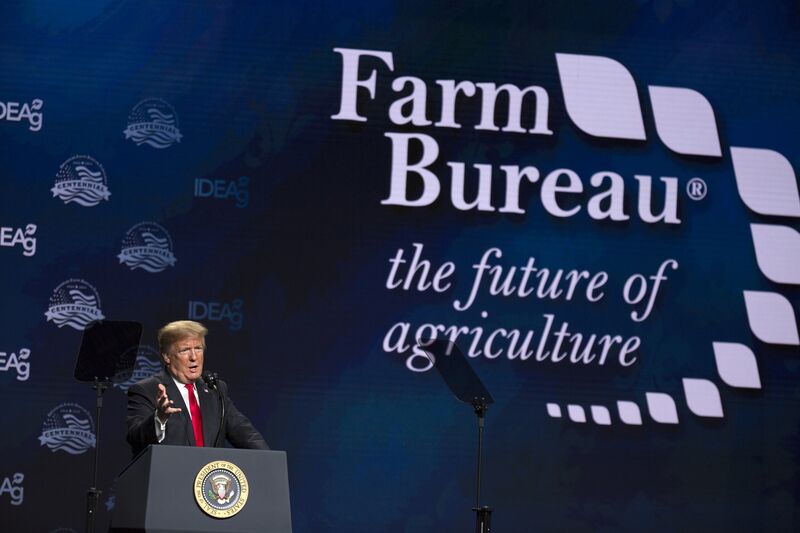
State agriculture officials made the monetary determination this week and say the figure does not include milk production losses.

Farm Service Agency program specialist Gerri Richter told the Capital Press that seven dairy farms have already submitted claims for lost livestock to the agency’s office in Yakima, and that more reports are expected soon.

State dairy producers are required to give notice of any lost animals within 30 days of their demise to the agency’s Livestock Indemnity Program, whose general protocols return 75 percent of an animal’s market value.

Steve George, an issues manager for the state dairy federation, told station KING that as many as 15 farms around the area of Sunnyside lost cows during the fierce winter storm on Feb. 9, with one reporting the death of 600 livestock alone.

Source: ifiberone.com

Trump’s China Focus Imperils $14 Billion in Japan Farm Sales

Bill Flory sends about a quarter of the wheat he grows in Idaho to Japan, a country so key to the fourth-generation farmer that he’s visited there three times in five years.

Now he’s worried. While Canada, Australia and the European Union have all recently secured new or adjusted trade deals with Japan, the U.S. has not. That could give rivals an edge on prices with a customer that regularly imports about $14 billion a year in U.S. agriculture and farm-related products.

Flory, who supports President Donald Trump politically, said he believes the U.S. will eventually finalize a deal with Japan, but he’s concerned about the interim. Meanwhile, the Trump administration instead appears laser focused on trade talks with China, risking the 50 percent market share now controlled by American wheat supplies in Japan.

“How much market share will we lose until these trade issues are settled?” Flory asked. “My biggest fear is we lose market share not because of quality, but because of a lack of trade negotiations being settled.”

While Trump and Japanese Prime Minister Shinzo Abe have long signaled the intention to reach a trade deal, the administration has been engulfed in negotiating with China before a March 1 deadline, which could trigger a new increase in tariffs.

“Our competitive position is right now starting to be whittled away and we need to address that with all deliberate speed,” said Tom Halverson, chief executive officer of CoBank, a $125 billion lender to the agriculture industry. “We have built up our market share in Japan over decades. It would be profoundly unhelpful to the rural economy and to the agricultural economy to see those relationships and that market access to start to atrophy.”

At the U.S. Department of Agriculture’s annual outlook forum in Arlington, Virginia, on Thursday, Gregg Doud, the chief agricultural negotiator for the Office of the U.S. Trade Representative, said the U.S. needs to make a trade pact with Japan an “extraordinary” priority.

Here are a few of the most impacted markets:

Wheat

KEY IMPACTS
  • In Japan, the ministry of agriculture, forestry, and fisheries imports grains including wheat, and resells it to flour millers with a mark-up.
  • Countries in the new version of the Trans-Pacific Partnership trade agreement will gain a 45 percent reduction in the tariffs markups by year 9 of the agreement.

As of April 1, grain shipped by American farmers will face a disadvantage of $14 a metric ton to Australia and Canada, a gap that will grow to $70 a ton after nine years, said Vince Peterson, president of U.S. Wheat Associates. By then, he said, “most of the market will be long gone.”

“Japanese food processors are looking for ways to reduce their exposure to U.S. wheat right now,” Peterson said at a Dec. 10 hearing by the U.S. Trade Representative. “They will reformulate products to adapt to wheat from different origins.”

The price disadvantage means Japanese millers are expected to cut average annual imports of U.S. western white, dark northern spring and hard red winter wheat by more than half to 1.35 million tons or less, the National Feed and Grain Association said in its Nov. 26 feedback to USTR.

Beef and Pork

KEY IMPACTS
  • By April 1, Japan will cut the beef import duty for CPTPP partners and the EU to 26.6 percent, while America’s product will face tariffs of 38.5 percent.
  • These tariffs will also decline to 9 percent over 15 years, according to the EU.
  • Tariffs are eliminated by 2023 for EU prepared pork and sausages, by 2027 for chilled and frozen pork cuts and by 2028 for ham and bacon, according to the nonprofit U.S. Meat Export Federation.
  • Duties on all processed pork products will also be phased to zero under CPTPP.

Japan is the top market for American beef, with the U.S. enjoying a 48 percent market share. While a previous agreement already gave Australian beef an advantage, that will widen even further. It’s a “huge roadblock,” said Don Close, a senior analyst of animal protein at Rabobank. Canada is also looking to gain market share.

American pork exporters will also see more competition, especially from the EU. The U.S. was the top supplier of pork to Japan in 2018. But with the new trade agreements implemented and the absence of a U.S. deal by April 1, American export losses would amount to more than $600 million by 2023 and $1.06 billion by 2028, the U.S. Meat Export Federation estimates.

“It is critically important that the U.S. get that long-term agreement with Japan,” Close said. “I think a lot of the heavy lifting with those negotiations has already been done, it’s just that we’re so occupied with China and all of these other fracases, that they haven’t had time to ‘okay let’s sit down and get this done’.”

Dairy

KEY IMPACTS
  • The cheese market would be the most impacted under CPTPP and the EU agreement, with a nearly 30 percent tariff on most products eliminated within 16 years.
  • High tariffs on whey for food will also be phased out in six to 21 years.

Japan is the fourth-biggest market for American dairy and the industry stands to lose $5.4 billion in the 21 years through 2038, the U.S. Dairy Export Council estimates. By 2027, almost half of American shipments to Japan will have been replaced without an agreement.

The cheese market would feel the “most significant overall impact,” according to the lobby group, which estimates the U.S.’s market share in Japan could grow to 24 percent by 2027 from 13 percent a decade earlier.

“Beef has been hurt, and pork has been hurt, wheat has been hurt,” said former Agriculture Secretary Tom Vilsack, who now heads the Dairy Export Council. It’s the responsibility of the administration “not to forget about agriculture generally, and dairy specifically, because the losses can mount pretty quickly at a time when prices are low.”


Source: Bloomberg

Troubled Oregon megadairy Lost Valley Farm sold to lone bidder, cows auctioned

The troubled Lost Valley Farm in northeast Oregon has sold to its only bidder, and its herd has been auctioned off.

  The Statesman Journal reports a federal bankruptcy judge approved the dairy farm’s sale to Canyon Farm LLC for $66.7 million earlier this month.

  The sale is scheduled to close March 1. The last of the dairy’s approximately 8,360 cows were sold Tuesday.

  The dairy’s owner declared bankruptcy in April 2018, forestalling an auction of his cows as part of a bank foreclosure.

  The operation south of the Columbia River near Boardman was out of compliance with its wastewater permit since it opened in 2017, resulting in $200,000 in state fines for more than 200 environmental violations.

  The court-appointed trustee will ensure the diary’s wastewater lagoons are emptied to an acceptable level by the end of October.

Source: ktvz.com

Dairy Farmers Press Against Labeling of Nut ‘Milk’

Al Overland is not saying you should refer to almond milk as nut juice. He’s also not saying you shouldn’t.
“I’ve heard it called that,” said Overland, a dairy farmer near Sturgeon Lake, Minn. “They can call it juice or beverage, or whatever they wish, but we just don’t want them to call it milk.”

Dairy farmers, who are struggling with widespread industry consolidation, low prices and declining demand, are becoming even more fed up with all the non-dairy products in the grocery store labeled as milk.

The number of different types of “milk” available to consumers has ballooned in recent years. First it was soy, then almond milk, coconut milk and rice milk. Now, there’s oat milk and pea milk.

The Food and Drug Administration is mulling whether to update its rules for how to label plant-based foods, and has been lobbied hard by both dairy and plant-based producers. A four-month public comment period closed at the end of January, and 8,624 comments were submitted.

Dairy groups say the FDA has allowed an “anything goes mentality in the marketplace.” Plant-based groups say the objections are much ado about nothing, and would disrupt the marketplace.

“This entire exercise is a solution in search of a problem,” said Michele Simon, executive director of Plant Based Food Association. “At a time when resources are scarce, our federal government should not be concerned with how ‘almond milk’ is labeled. Aren’t there higher priorities, such as the safety of our food supply, for FDA to worry about?”

According to the federal “standards of identity” regulations, milk is “the lacteal secretion, practically free from colostrum, obtained by the complete milking of one or more healthy cows.”

Lucas Sjostrom, executive director of Minnesota Milk, said the federal regulations should be enforced. And the dairy industry, he added, if fine with lacteal secretions from other types of animals being labeled as milk.

“We have no problem with goats,” Sjostrom said.

Plant-based products that resemble dairy foods do not have standards of identity, and therefore are nonstandardized foods.

The debate is a throwback in some ways to one that played out from the late 19th century up to World War II over the proliferation of margarine in the U.S. In those days, dairy farmers prodded politicians to imposes taxes and fees on the competitor to butter.

Overland, the farmer near Sturgeon Lake, Minn., remembers that his father, also a dairy farmer, used to bemoan the fact that margarine was colored yellow to make it seem more like butter. Today, he views the labeling of plant-based beverages as “milk” in the same way.

But, he said, plant-based drinks are not nutritionally equivalent to milk, and yet they have benefited from decades of milk promotion by farmers who raise and milk cows, and are now struggling to stay in business.

“Dairy farmers have spent a lot of money over the years promoting milk, and promoting it as the nutritional product that it is, and they are taking advantage of all of this investment,” Overland said.

Plant-based milk alternatives remain a small portion of the beverage market, but they’re growing and sales of dairy products are declining. In the 12 months that ended in July 2018, sales of traditional milk products dropped by 4 percent, while sales of milk alternatives rose by 8 percent.

By far the most popular plant-based milk alternative in the U.S. is almond milk, which is made by soaking almonds in water, grinding them up with more water, and then straining out the pulp of the nuts, leaving a white, frothy beverage.

“The marketplace disruption being pushed by the dairy lobby would hinder innovation, create untenable costs for our members, and ultimately be found unconstitutional, making the entire effort a waste of everybody’s time and resources,” Simon, the director of the Plant Based Food Association, said in a statement. “We encourage the FDA to abide by free market principles and not restrict labeling to unfairly favor the dairy industry.”

Simon could not be reached for an interview, and a spokeswoman for the Almond Alliance, a trade association, declined to comment.

A spokeswoman from the FDA said the agency has not set a date for a decision on labeling rules “but will carefully consider the comments before determining next steps.”


Source: Chicago Tribune

How four family dairy farms in Wisconsin are fighting to survive

Brandi Harris (left) and her wife, Emily, check on their heifers on the dairy farm they own. Mark Hoffman/Milwaukee Journal Sentinel

Wisconsin is losing dairy farms at a rapid rate, driven out by milk prices that often don’t even cover expenses. A cherished way of life, rich in family traditions, is at stake along with a livelihood that’s supported rural Wisconsin for more than a century.

Those dairy farmers who remain slash expenses, take off-farm jobs, go deeper in debt and endure financial, physical and emotional strain.

As part of a yearlong project, journalists from the Milwaukee Journal Sentinel and USA TODAY NETWORK-Wisconsin ar following dairy farms of different sizes at a time when the state’s rural landscape and cultural identity could be altered permanently. 


Wylymar Farms: ‘It was always my dream’ 

Owner/operators:  Emily and Brandi Harris

Founded: 2010

Herd size:  Milking 40 Jerseys

How they are addressing the downturn: Brandi has taken an off-farm job as an administrative assistant at Blackhawk Technical College in Monroe, so she and Emily have health insurance and can pay other bills. They’ve downsized their milking herd to about 40 cows and keep fixing old equipment instead of taking out loans to replace it.

Organic dairy farmers Emily and Brandi Harris

Organic dairy farmers Emily and Brandi Harris have the same challenges conventional dairy farmers face.

Mark Hoffman, Milwaukee Journal Sentinel

MONROE – This has been the winter Emily Harris said she will never forget. Frozen water pipes in the milking parlor, a busted barn cleaner. A silo unloader that wouldn’t run in the extreme cold. A barn roof that’s failing.

Some days, Harris said, you can hardly touch anything without it breaking.

“And the extra money just isn’t there for repairs.”

Harris is a fourth-generation farmer and U.S. Navy veteran. She started farming with her grandfather in 2003, raising beef, and went on her own seven years later in dairy. She runs an organic dairy farm tucked away on 100 acres in the Driftless Region of southern Wisconsin.

“It was always my dream, always what I wanted to do,” she said.

But it’s been a hard road. The place, now named Wylymar Farms, was in bad shape when she acquired it.

Fence gates were missing; the land hadn’t been touched for a year.

“You couldn’t even see the barn doors through the weeds,” Harris said.

Her barn was built in the late 1800s then expanded in the 1940s and ’70s. Its roof has started to go bad, a death knell for some old farm buildings.

The newest tractor is about 50 years old.

“Everything’s in need of some sort of repair,” Harris said.

When something breaks, it can cost thousands. And that’s even with the former Navy construction equipment mechanic doing the work. 

“We fix a lot ourselves,” she said.

She and her wife, Brandi, have downsized to milking 40 Jersey cows. They’ve pulled every lever imaginable to cut expenses as the price for their organic milk, once a profitable niche, has fallen. 

“A lot of our income needed to make repairs, or to do something like replace a roof, used to come from selling 20 heifers for about $20,000,” Harris said. “Now, heifers aren’t worth $300 each. We’ve lost any extra income we used to have.”

She and Brandi have considered other types of farming such as growing vegetables or hemp. But it’s not what they know — and a lot of other people are getting into those fields as dairy declines.  

They plan to keep milking cows through the summer and then evaluate their plans for the rest of the year. 

“There are going to have to be some decisions made,” Emily said.

That said, farming is in her blood, and she enjoys the outdoors and the physical labor. It all came together on a recent winter day:

“Nothing broke. The barn cleaner ran, the silo unloader ran, everything went like clockwork. The chainsaw fired right up, and I was cutting and dragging logs. … I was busy all day, but I wasn’t stressed.

“It was a great day.”

— Rick Barrett, Milwaukee Journal Sentinel

Owner Jenny Briggs feeds a 4-day-old calf Feb. 1 at the Briggs Family Farm in Frankfort.

 
Owner Jenny Briggs feeds a 4-day-old calf Feb. 1 at the Briggs Family Farm in Frankfort.

T’xer Zhon Kha/USA TODAY NETWORK-Wisconsin

Briggs Family Farm: ‘We’re day-to-day right now’

Owner/operators: Jim and Jenny Briggs, along with their son, Justin

Founded: November 2014

Herd size: The Briggses milk about 56 cows. Counting heifers, calves and dairy steers, they own about 100 head of cattle. 

How they are addressing the downturn: They rely on Jenny Briggs’ off-farm job as a surgical nurse for the Bone & Joint Center in Rib Mountain for income and health insurance. Even with that job, “we’re day-to-day right now,” Jim Briggs said. “Essentially, even since we bought the farm, the majority of time have had depressed milk prices.”

Briggs Family Farm’s day-to-day work and routine

Even before Jim and Jenny Briggs bought their dairy farm north of Stratford, they knew the struggles they would face.

Txer Kha, Milwaukee Journal Sentinel

FRANKFORT – Even before Jim and Jenny Briggs bought their dairy farm north of Stratford, they knew the struggles they would face.

Jim, 43, grew up on a dairy farm about 25 miles southwest of Boston. The dairy, started by Jim’s grandfather, was “somewhat unique,” Jim said. “We were able to make it by bottling and selling our own milk.”

That direct-to-consumer business model worked for two generations. But in the early 2000s, pressure from a variety of fronts began to plague the business. Urban sprawl was taking chunks of property that Jim and his parents once rented to grow hay and other feed for the dairy herd. And increasing regulations regarding the direct sale of the milk made it very difficult for the small operation to make a go of it.

The family sold out in 2004.

Jim and Jenny were dating at the time. They met online — not through a dating app, but an agriculture and farming chat room. Jenny, who lived in southeast Iowa, moved to the Boston area as Jim’s family was going through the process of shutting down the farm.

The stress of selling the farm was intense. “Honestly, I still wrestle with it today,” Jim said. “It’s still challenging, it’s still a demon.”

Jim and Jenny got married, and moved back to the area where Jenny grew up.

Jim got jobs on Iowa farms, one a family dairy operation, another a larger crop grower. They were good jobs.

“They were nice people, and they paid well,” Jim said. 

But the allure of owning their own farm was strong. They decided central Wisconsin might be a good place to start.

Jenny applied for and got a nursing job at the Bone & Joint Center in Rib Mountain in 2014, and the couple lived in a camper for about six months while they searched for property.

They bought land, a house and outbuildings in the town of Frankfort, and began building the business virtually from scratch. Jim had collected some equipment and tools through the years, but other things had to be purchased, including new cattle.

“We started out with close to a half million dollars in debt,” Jim said. “A normal person would look at it and say, ‘No way.'”

To this day, they could not pull it off financially without Jenny’s nursing job, which provides the family a steady income and health insurance. They need that money to subsidize the farm.

Farming is addicting, Jim said.

“After a while, the dairying, it’s like a disease. It gets in you, and you can’t get away from it sometimes.”

— Keith Uhlig, USA TODAY NETWORK-Wisconsin

Peter Thewis (left) talks with his wife, Kendra, while doing morning chores in the milking parlor.

 
Peter Thewis (left) talks with his wife, Kendra, while doing morning chores in the milking parlor.

Mark Hoffman / Milwaukee Journal Sentinel

Thewis family farm: ‘It’s what I know how to do’

Owner/operators: Michael and Jennifer Thewis, owners; their son, Peter, and his wife, Kendra, work full time on the farm and hope to be the next-generation owners.

Founded: 1935 

Herd size:  Milking 130 cows.

How they are addressing the downturn: No outside employees; they do all of the work themselves. Jennifer works full time as a librarian in Mellen.  

Thewis Valley Farm: ‘This is our lifestyle. Our legacy’

Thewis Valley Farm Inc. is run by Mike and Jennifer Thewis and their son and daughter-in-law Peter and Kendra Thewis

Mark Hoffman, Milwaukee Journal Sentinel

MELLEN – Thirty miles south of Ashland, in a part of northern Wisconsin known for forests, copper mines and the Lake Superior shoreline, Kendra Thewis has an unlikely occupation: dairy farmer.

She and her husband, Peter, milk 130 cows on a farm owned by Peter’s parents, Michael and Jennifer Thewis. It’s been in their family for 84 years.

Kendra and Peter hope to be the next generation. They work on the farm day and night, raising their children, milking cows, taking care of livestock, planting and harvesting crops.

And Kendra cares about it. A lot.

“This is our lifestyle. Our legacy. It’s not just a job for us,” she said. “It’s working to produce a quality product to feed people.”

But that legacy could be slipping away as farm milk prices, adjusted for inflation, have sunk to some of the lowest levels in a half century.

In the 10 years she’s been on the farm with her husband, Kendra said the milk price has only been “decent” one year. 

“It makes you feel dumb sometimes. Like why do I keep doing this when it costs more to feed the cows … than what we’re making? But, for me, I do it because I love it and because it’s all I’ve ever known. I was born on a farm, raised on a farm, and have lived on a farm for 33 years,” she said.

“Even when I went away to college, I worked on the lab farm there. So cows have always been my life. The calves, they are my babies.”

Farming in northern Wisconsin is especially challenging. The climate is more suited to pine trees than feed corn. The growing season is short, and grain and supplies have to be shipped in from other places.

“Beautiful country, but as far as farming goes, it’s rough,” Kendra said.

She grew up on a dairy farm in central Wisconsin, so like Peter she’s no stranger to the ups and downs of milk prices. But this downturn, now in its fifth year, is one of the longest in decades.

 “I don’t know what the future holds. It makes me so nervous,” Kendra said.

In 2009, six months after she and Peter were married, the barn burned, killing 24 cows and destroying the milking parlor. Dairy farmers were mired in a slump then, too.

Her in-laws borrowed money to rebuild the milking parlor and replace the cows lost in the fire. It was the only way to keep the dairy operation going. 

“My husband and I have been looking for ways that we can become (their) successors, but debt has been an issue for the past 10 years. I believe it is a combination of consistently low milk prices and the barn fire we had,” Kendra said. 

Jennifer has a full-time job as a librarian in Mellen.

Michael runs a school bus business. And he does “a ton of the work” on the farm, Kendra said, including the 4:30 a.m. milking and taking care of livestock. 

Peter drives a school bus sometimes, in addition to putting in long hours on the farm. 

She and Peter’s children, Skyler, 4, and Starr, 7, are part of the farm — just like their parents were when they were growing up.

She and Peter met while in college at University of Wisconsin-River Falls. Kendra has a bachelor’s degree in marketing communications, with an agriculture emphasis, while Peter has a bachelor’s in agricultural business.

What keeps her farming?

“Just crazy I guess,” she quipped.

But it’s a treasured way of life and a decent livelihood when times are good. Sometimes in the barn, she can forget about the bad stuff for a while.

“It’s amazing to see a calf born, new life, knowing you can take care of it well,” she said. “And even when I get annoyed, it’s what I know how to do.”

— Rick Barrett, Milwaukee Journal Sentinel

Tom Horn, Lori and Brian's son, feeds two calves whole milk at Hornstead Dairy during a polar vortex Jan. 30 in Brillion.

 
Tom Horn, Lori and Brian’s son, feeds two calves whole milk at Hornstead Dairy during a polar vortex Jan. 30 in Brillion.

Joshua Clark / USA TODAY NETWORK-Wisconsin

Hornstead Dairy: ‘We’re going to come out of this’

Operators/owners: Lori and Brian Horn (mom and dad); Tom and Elizabeth Horn (brother and sister-in-law); Amber  and Kevin Leiterman

Founded: 1863

Herd size (all animals): 3,000

How they are addressing the downturn: The herd and farm have modernized and expanded in the last five years.“We need see what we can cut here, cut there, and still make this work as efficiently as possible, or more efficiently,” Amber Horn-Leiterman said. 

Hornstead Dairy: A family affair

Amber Horn-Leiterman runs Hornstead Dairy in Brillion with her parents, Brian and Lori Horn, and brother Tom Horn.

Manitowoc Herald Times Reporter

BRILLION – On a day when frigid weather shut down most of Wisconsin, Amber Horn-Leiterman and her family were outside feeding calves.

Facing polar vortex temperatures of 20 degrees below zero and wind chills of negative 50, Horn-Leiterman, two of her children, and her mom and dad bundled up and moved along a line of small hutches, clearing snow and filling pails with whole milk.

Dairy farming doesn’t stop for bad weather. It doesn’t stop when milk prices are bad.

And, despite technological advances, it’s still very much a hands-on job.

The morning hours were spent feeding young animals and making sure water was available to the milk cows in the barn, as well as checking the function of the manure handling system and dealing with a broken pipe.

“It didn’t feel hectic,” Horn-Leiterman said during a lull before lunch. “It’s just what you had to do.”

She grew up farming with her family. That’s part of what brought the 36-year-old back to Brillion in eastern Wisconsin, where she works daily with her parents, brother and other members of the family.

A graduate of Brillion High School and the University of Wisconsin-River Falls, Horn-Leiterman considered going to law school, but pursued internships in agribusiness before being drawn back to the hands-on work of production agriculture.

Ultimately, that led back to working on the family farm, a decision reinforced by her desire to give her four sons, ages 2 to 13, a childhood similar to her own.

“There’s nothing cooler than hanging out with your grandpa in the milking parlor, or your grandma. My grandma milked cows when I was in high school,” Horn-Leiterman said. “Now my kids are tooling around with grandma and grandpa.”

The 156-year-old farm completed an expansion in 2017 (planned five years previous) that saw the number of cows it was able to milk at any given time grow from 900 to 1,500 — one of the ways the farm has evolved to support several families and the farm’s 19 full-time employees.

Like other farmers across the state and nation, they continue to deal with depressed milk prices that are eating into equity and forcing some producers to make tough choices, including the decision to leave the business.

Hornstead Dairy is putting off equipment purchases and trimming expenses — both those related to the farm and to the people working it.

“This (downturn) has lasted longer than it’s ever lasted,” she said. “There are farmers out there still recovering from either 2009 or 2012 … so it’s really put a financial damper on, I’d say, everybody.”

With a herd size of 3,000, the farm is a concentrated animal feeding operation, or CAFO, regulated by state permits and rules, many of which required facility improvements and other large-scale investments aimed at controlling runoff and other environmental impact.  

Horn-Leiterman said she’s an optimist and sees better days somewhere in the future.

“I know it’s a cycle, because that’s what I’ve experienced in the past,” she said. “My previous experience tells me we’re going to come out of this, and it’s going to be better.”

Source: jsonline.com

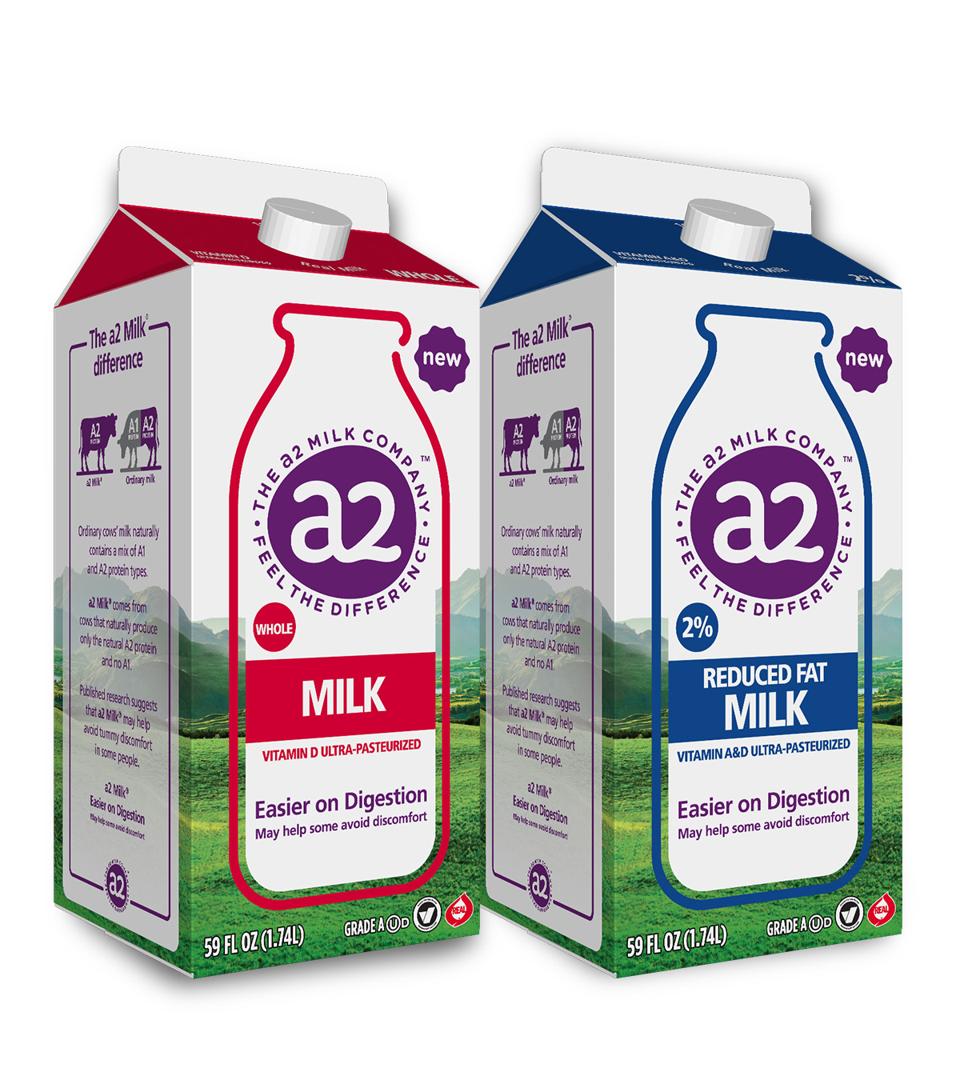
Deals With Kroger, Walmart And Costco Fuel U.S. Growth of A2 Milk Company

The competitive world of alternative milks has a new insurgent: the A2 Milk Company. The publicly traded Australian firm sells milk from cows that naturally produce the A2 kind of beta-casein protein only. Most cows produce another protein, called A1, and it’s the A1 version that the company’s research now suggests is responsible for digestion issues. “We know that there are millions of consumers in the U.S. who are self-diagnosing as being lactose intolerant when in fact they just might be A1 intolerant,” says U.S. CEO Blake Waltrip. “We’ve certainly spent time developing our consumer persona. These tend to be people that view food as an important part of their health overall.”

Even with the scientific learning curve, A2 milk has officially gone mainstream in America. It’s now sold in more than 12,400 stores, thanks to a new nationwide distribution deal with Kroger, as well as launching into more regions with Walmart, Costco and Safeway. Its store count has increased 45% since last November.

In the U.S., sales rose 114% for the first half of this year, according to its reported results, released on Tuesday. It’s still just a small slice of total revenue.

“Retailers are embracing this with open arms. Retailers are dealing with category of dairy declining. They’re looking for premium propositions that bring people back into milk but also are delivering on margin because in many cases the milk category is a loss leader for a lot of retailers,” says Waltrip. “Fundamentally, what retailers know is that if they get the milk purchase, then they get the rest of the shopping basket. It is a routine stock-up item, so they’re going do the rest of their shopping there.”

Founded in 2000 by a New Zealand research scientist, A2 Milk has been a leader in Australia for years. It is now the leading premium milk brand there, with $300 million in sales reported for the first half of this fiscal year, up 37.5% from this period last year. It controls more than 10% of the supermarket milk market. Its infant formula business is also a growth point: In Australia, it controls 33% of the market, and in China it has 5.6%. The company’s sales in China top $120 million overall.

A2 Milk came to the U.S. in 2015, starting small in California before picking up slots with natural nationwide chains the following year. Then Publix called and A2 Milk found a new home in the Southeast. At the same time, distribution grew both in natural and conventional chains like Whole Foods and Target. Last November the company also added more than 1,000 Food Lion stores throughout the Southeast. A2 is now also sold at every major retailer in the Northeast.

“The number one growth engine for the company is China. There’s such a strong linkage with Australia and China with the way we go to market,” says Waltrip. “But we view the U.S. as the second growth engine for the company. It’s an enormous milk market, worth $13 billion. The consumers are very open to innovation, and they’re very health and wellness driven.”

In the U.S., A2 Milk’s supply comes from a partner network of farmers in upstate New York, Colorado and California who are paid a premium to farm this way. That’s good news for American dairy farmers, who have been struggling with low milk commodity prices levels. “Farmers are looking for innovation. They want to be part of this,” says Waltrip.

The company helps farmers convert traditional dairy farms into ones that are A2-approved. First, they help perform genetic testing to identify which cows produce only A2 milk. (On average, around a third of U.S. cows are A2 producers. Another third produce just A1, and the remaining third produce both. Researchers have traced this mutation of the A1 gene back thousands of years to crossbreeding in Europe.) Then, A2 Milk helps the farmers segregate the A2-producing cows to special pens, because the farmers are allowed to still produce conventional dairy, should they want. “Then when we milk the cows, we clean the lines out and then we test the milk throughout the proposition. We ensure that we’re delivering to the consumer a completely clean A1-free proposition. And that’s what’s important,” adds Waltrip.

What’s next for A2 in the U.S.? New products. Right now, A2 Milk Company sells only the basics: cartons of whole milk, 2% fat, 2% chocolate and 1%.


Source: Forbes

Former Co-Op Manager Pleads Guilty in $5.3 Million Swindle

The former manager of a western Minnesota grain elevator pleaded guilty Thursday in a swindle that cost his employer millions of dollars so he could pay for hunting safaris, taxidermy services and real estate.

Jerry Hennessey, 56, of Dalton pleaded guilty Thursday to federal charges of mail fraud and tax evasion, the Star Tribune reported . Sentencing is set for June 13.

Hennessey, a nearly 30-year employee, was accused in a 15-year scheme to defraud the Ashby Farmers’ Co-Operative Elevator Co. in Ashby, Minnesota. Prosecutors say he used the money to pay for exotic hunting trips, taxidermy, real estate and credit card debt.

Hennessey obtained a line of credit of about $7 million for the co-op by misrepresenting the amount of grain it had in storage. He then used that account to cover money he stole from his employer, which federal prosecutors say totaled about $5.3 million.

Hennessey also admitted that he had not reported $3.5 million of that income between 2011 and 2017, resulting in a loss of $1.2 million in revenue to the IRS and $400,000 to the Minnesota Department of Revenue. He will be required to pay restitution to the victims for the money he stole and their related losses, as well as the tax losses.

Hennessey reserved the right to object to the total amount of restitution after reviewing more than 16,000 pages of records that the government collected in its investigation. Any final adjustment is not expected to affect the plea agreement, Assistant U.S. Attorney John E. Kokkinen said.

Hennessey had no comment after the hearing.

Hennessey’s attorney, Thomas Kelly, said his client was trying to “recover assets that might have been on his property” before the scheme became public so those assets can help pay restitution. Kelly said Hennessey’s Dalton home, on about 90 acres of land, also is on the market for nearly $800,000.

Properties also listed on forfeiture documents filed by the government include 400 acres with a cabin in Brook Park, Minnesota, and an 80-acre parcel in Eagle Lake Township, Minnesota, that Hennessey said is in foreclosure proceedings and which he described as “pasture hunting land.”

A regular customer of big-game guides, Hennessey paid $50,000 or more for hunting safaris in Africa, New Zealand and Alaska. He also spent money to have his trophies mounted and built a barn-sized addition to display them at his home outside Ashby, about 146 miles (235 kilometers) northwest of Minneapolis.

In September, the co-op contacted authorities about payments Hennessey made to himself or for his personal expenses. When the co-op asked to meet with Hennessey, he didn’t show up and instead met a friend who drove him to Des Moines, Iowa. He turned himself in after being missing for nearly three months.

Source: apnews.com

South Australian dairy farmer Casey Treloar meets federal MPs over farmers’ plight

South Australian dairy farmer Casey Treloar was brought to tears as she met with politicians in Canberra.

Ms Treloar made headlines after she took to Facebook to protest increased costs of milk production due to the drought, with a video viewed almost 1.5 million times.

On Wednesday, visited federal Parliament House with lobby group Farmer Power to campaign for a better price for dairy farmers.

Some conversations with senior Liberal and Labor Party MPs, and crossbenchers brought her to tears.

“Every conversation we are having is still a positive step in terms of being able to create a brighter future for the industry,” Ms Treloar said.

Ms Treloar said she supported a floor price because “at the end of the day if it means a better price for farmers, that’s what we want”.

Her efforts also prompted Justice Party Senator Derryn Hinch to write to Agriculture Minister David Littleproud, calling for him to act on a temporary 12-month levy of 10 cents per litre on milk.

Mr Littleproud, who sat down with Ms Treloar, said they had a constructive meeting but pushing for a mandatory minimum price for milk was an outdated stunt.

Labor tried to force a vote requiring the competition watchdog to investigate setting a minimum price on milk but it was voted down.


Source: The Advertiser

How meat producers are trying to avoid becoming like dairy farmers competing with nut ‘milks’

At 7 p.m. on a Tuesday night last May, Fancy Radish, a vegetarian restaurant in Washington’s H Street corridor, was hopping. A willowy 20-something dressed in a flowing jumpsuit stood by the door chatting with two asparagus-thin friends in off-the-shoulder tops. So it was easy to spot Kevin Kester, then the president of the National Cattlemen’s Beef Association, in his light brown cowboy hat and a gold, steer-shaped pin emblazoned with the stars and stripes on the lapel of his blazer. (The hat, I later learned, is 100 percent beaver and was custom-made in honor of his tenure by Greeley Hat Works in Colorado; it would retail for about $1,000.) For the beef industry’s top lobbyist, trips to Washington often involved dinners at restaurants like the Capital Grille, Mastro’s, Ruth’s Chris or Fogo de Chão, where he usually ordered a porterhouse because, he said, “it has both the New York strip and the filet. And it’s a very large steak.”

I’d invited him here to see how he would fare at a restaurant that prides itself on vegetarian “charcuterie.” But I quickly learned that Kester has no beef with vegetarians. In fact, he enjoys many a vegetable himself: “Avocado, yes. Beets, yes. Radishes, yes,” he said as he scanned the menu. By the time he had drained his pineapple-pandan soda and dutifully swallowed part of the last course, an avocado topped with pickled cauliflower, I’d learned that what worried him — and what brought him to Washington often — was “fake” meat.

By fake, Kester meant the plant-based burgers from Beyond Meat and Impossible Foods, which have elbowed their way into grocery-store meat cases next to the sirloins and ground round. In January, Impossible Foods, which is backed by Bill Gates, announced that it is developing a plant-based “steak” that bleeds. Even more worrisome is the much-ballyhooed, but not yet commercially available, “lab” or “cultured” meat, cultivated from animal cells without raising or slaughtering an animal.

Fighting fake meat is NCBA’s top priority for 2019. According to the Center for Responsive Politics, in 2018, it spent $766,500 on the midterm elections, nearly all of it going to Republicans. The cattlemen are trying to persuade federal officials to more closely oversee meat alternatives. The Food and Drug Administration regulates plant-based “meat” and the U.S. Department of Agriculture regulates meat. The meat industry wants the USDA to inspect lab-grown products and regulate what they are called: Kester and his colleagues want to ban terms such as “clean meat,” which seems to imply that your steak is dirty. In November, the USDA and FDA announced a joint framework for cell-based meat regulation. In a statement, NCBA called it a positive step but still a skeleton: “Now the federal agencies need to put (real) meat on the bones.”

Meat lobbyists have also taken their fight to the states. On Jan. 1, Missouri became the first to regulate the names of aspiring meat alternatives, restricting the word “meat” to only products harvested from livestock. (It has already been challenged in court.) Nebraska lawmakers are considering making it a crime to advertise or sell any product as meat “that is not derived from poultry or livestock.” Tennessee, Virginia and Wyoming are also looking at the issue.

The level of concern over what is essentially a marketing question is a little surprising given that the beef industry has seemingly bigger problems. Day after day, animal-welfare advocates and environmentalists depict its industrial system — in which cattle live cheek by jowl and are fattened on grain and pumped full of antibiotics before slaughter — as cruel and dangerous and a major driver of climate change. But burying emerging competitors is simpler than retooling an entire industry — and it’s long been part of the standard food-producer playbook.

In the 1870s, the dairy industry viciously attacked margarine, a cheaper, shelf-stable alternative to butter. Dairy states, including New York, Ohio and Pennsylvania, went so far as to ban margarine. Later, Congress passed the federal Oleomargarine Act, imposing a 2-cent-per-pound tax on the stuff. In 2014, Unilever went after egg-alternative producer Hampton Creek Foods (now Just Inc.), arguing that it couldn’t call its product Just Mayo because the FDA’s definition of mayonnaise mandates real eggs. (Unilever dropped the suit.) The dairy industry has also argued that the FDA should prevent plant-based milks, such as soy and almond, from using the word “milk” — though it has been used since the 1980s. (The courts have consistently ruled against the dairy industry, but FDA Commissioner Scott Gottlieb appears sympathetic, telling an audience in Virginia in July that “an almond doesn’t lactate.”)

In Kester’s view, the dairy industry’s lackadaisical approach to competitors and the FDA’s lax enforcement of its definition of milk — which states that it must come from the lacteal secretion of one or more healthy cows — created the problem. “Five or 10 years from now, fake meat will have a product that is viable from a cost standpoint,” Kester told me at dinner. “We have to make sure that everyone plays by the same rules.”

But do those rules mean that so-called fake meat companies can use the word “meat”? “I certainly wouldn’t be doing this if there wasn’t a path to calling our cultured meat products ‘meat,’ ” said Josh Tetrick, Just Inc.’s chief executive, who plans to soon unveil cultured chicken and recently inked a deal to work with Toriyama, a Japanese producer of wagyu beef. He added that he is happy to put the word “cultured” on the front of a package for now but expects that as cultured meat becomes more common it will no longer be necessary: “We used to call an iPhone a smartphone. Now we just call it a phone.”

Even if cattlemen succeed in Washington, their industry remains at the mercy of consumers, a less predictable audience than Congress. If fake meat tastes good and costs less, the cattlemen may still find themselves in the same situation as the dairy industry. After all, the growth of nondairy milk sales (up 61 percent between 2012 and 2017) is driven by more than the product name. Some meat producers are even hedging their bets by buying into fake meat. Tyson Foods has invested in Beyond Meat and, along with Cargill, another major U.S. meat producer, taken a stake in cultured-meat firm Memphis Meats.

Kester, though, is confident that U.S. tastes won’t change. “Personally, I’d choose a tasty, traditionally produced rib-eye steak over a tofu burger or something out of a petri dish every single day of the week,” he said. “And I’m guessing that the vast majority of American consumers will do the same.”

Source: washingtonpost.com

How much longer can the average dairy farmer endure their financial crisis?

The question is very simple: How much longer can the average dairy farmer endure their on-going financial crisis that the majority of dairy farmers are continuing to live with? Pennsylvania dairy farmers are being shortchanged at least $550 million dollars each year, and New York dairy farmers are facing a $650 million dollar shortfall, which should make everyone anxious to do something to correct these criminal prices that dairy farmers are facing every day. Our figures indicate that the total underpayments to all the US dairy farmers each year are approximately 12 Billion dollars.

But wait, it gets much worse. Using a multiplier of five, the total loss to our rural economy across the US is approximately 60 billion dollars per year.

I receive calls all the time indicating how horrible the situation is on the average dairy farm. I even hear women crying, I’ve heard of suicides, and on and on it goes. I can’t believe that members of Congress, other farm organizations, and even our dairy cooperatives are not receiving these kinds of calls. We have petitioned the dairy division of the USDA to have milk hearings. These requests have been denied. We have urged Congress to have several hearings involving hundreds of dairy farmers. Unfortunately these attempts have been in vain.

Earlier in 2018, the US House Ag Committee held a hearing in Washington DC. I was told all the spots were taken, and I was not allowed to testify. I drove to Washington DC and passed out the testimony to the members. Dang, they did not lie. The two spots they had were taken by Dr. Dykes of IDFA, and Jim Mulhearn from National Milk Producers. Yes, there were two spots, but not one for any dairy farmer! What a sham.

Now we have thousands of petitions that we’re going to take to the US Secretary of Agriculture Sonny Perdue, urging him to have immediate hearings for dairy farmers and urge him to take further action. On top of these problems, we are now receiving word that some dairy farmers shipping to a dairy coop in the Northeast are receiving a 60 day notice to find a new market. What the devil is going to happen next?

Furthermore, we are receiving additional word that several Agri-businesses that serve dairy farmers are having problems getting refinancing, just like the dairy farmers are experiencing. What about the present administration? They may have helped many people, but they sure haven’t helped the dairy farmers. Now many of the best dairy farmers are crying the blues.

We must ask, where are our agriculture leaders in Washington? In the Senate, where is Senator Leahey and where is our friend Sen. Bob Casey? And what has happened to good ole Sen. Bernie Sanders? He was always going to fight for the dairy farmers. Where is Sen. Gillibrand? I thought she was supposed to be the champion for dairy farmers. What has happened to her?

What about the chairman of the Senate Ag Committee, Sen. Pat Roberts? He promised me he would always stand up for dairy farmers.

Now we have Rep. Collin Peterson, Chair of the House Ag Committee. Pro-Ag recommended Rep. Peterson for the Chairmanship. We believe that Rep. Peterson is a good man for dairy farmers, but he must divorce himself away from some of the silly things that some of his members are advocating and concentrate on doing something more for the dairy farmers.

Time is running out, and with spring around the corner, and with nothing being done for dairy farmers, you may witness hundreds, maybe even thousands of dairy farmers being forced out of business. With all these problems facing dairy farmers, it is having an adverse effect on our beef farmers.

These conditions, all these problems, will be something for our leaders to bear on their conscience.

Arden Tewksbury is the manager of Pro-Ag, 1300 Rattlesnake Hill Road, Meshoppen, Pa. Its phone number is 570-833-5776.

Source: pennlive.com

Fake milk is real news, as synthetic alternatives threaten traditional dairy farms

The old question “Got milk?” has a complicated answer these days, because it all depends on what you mean by “milk.”
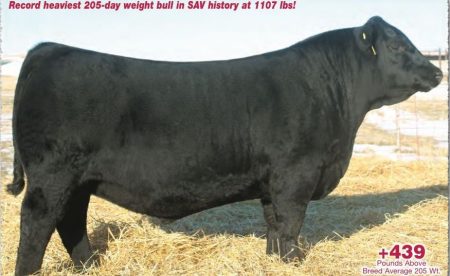
Consumers could soon be faced with confusion in the dairy aisle as they wonder if the milk they’re drinking came from a cow — or was made in a lab.

Perfect Day Foods is one company creating a synthetic milk alternative. It’s similar to milk in that it consists of casein and whey, the proteins found in milk. However, a cow was never used to produce their product. Instead, the animal-free dairy product is made in a lab using genetically engineered yeast programmed with DNA to produce the same proteins found in cow’s milk.

Silicon Valley-based Perfect Day Foods says its animal-free milk is better for the environment and healthier than cow’s milk because it’s lactose-free, hormone-free, antibiotic-free, gluten-free and cholesterol-free. The company also claims the product tastes more like milk than other plant-based milk alternatives. Plus, its overall environmental impact is substantially lower than that of conventionally produced milk, according to a preliminary report by The University of the West of England.

While some vegan consumers may be excited about the new alternatives coming to the market, dairy farmers aren’t. Many small dairy farmers are worried this new “fake milk” will confuse consumers and could put them out of business as they already face extinction from an oversupply of milk, increased competition from plant-based dairy alternatives, and industrial farming.

The U.S. dairy industry has been under extreme pressure recently, experiencing a sales decline since 2014, which is expected to continue until 2020, according to a report by Mintel. As a result, dairy farms have been closing in record numbers. In 1970 there were nearly 650,000 dairy farms in the U.S., but just 40,219 remained at the end of 2017, according to the U.S. Department of Agriculture.

Mike Eby, Chairman of the National Dairy Producers Organization and a seventh-generation dairy farmer, was forced to sell his herd of 60 dairy cows two years ago because he, like many others, couldn’t compete with corporate agriculture and the continuing decline in milk prices. He is worried Perfect Day’s product is so similar to milk’s composition that it could look and be labeled like milk produced from a cow, making it difficult for a consumer to decipher.

“If [processors] are successful in considering Perfect Day as milk, they [could] use Perfect Day to make ice cream or yogurt or cheese,” Eby said. “And the worst part about it would be that it wouldn’t be labeled as such. No one would know the difference and they would actually claim there is no scientific difference.”

Dairy advocates say Perfect Day’s product is so similar to milk’s composition that it could look and be labeled like milk produced from a cow, making it difficult for a consumer to decipher.Perfect Day

Currently, the Food and Drug Administration allows makers of almond milk, soy milk, and rice milk to label their products as “milk.” In countries such as England and Canada, where they are much more protective of dairy farming, those plant-based products aren’t permitted to use the word “milk,” and must use alternatives like “beverage” or “drink.” Many U.S. dairy farmers are fighting the FDA to enforce the definition of milk as “lacteal secretion” produced by “the complete milking of one or more healthy cows.” While the FDA has the definition in place, historically it hasn’t enforced it.

“It appears that the FDA is not very farmer friendly; they are more processor friendly,” said Eby. “So if history is our guide, look no further than to see how they have not taken proper care of the word ‘milk’ and they’ve allowed it to be exploited. So why would anyone think that this is any different?”

This week, Perfect Day Foods announced it had raised $34.75 million, bringing its total fundraising so far to $60 million. The company received $24.7 million in investments last year, making its product one of the most-backed early-stage food tech startups ever. Lab-grown meat companies such as Memphis Meats and Future Meat Technologies have garnered the interest of billionaire investors such as Bill Gates and Richard Branson, and food giants Tyson Foods and Cargill.

Kate Krueger, research director at cellular agriculture non-for-profit New Harvest, said there are significant benefits to making food products in a lab.

“When you make something in a lab, you’ve got a lot more control over it and what goes into it,” Krueger told NBC News. “So that means you make it healthier, you can make it more delicious, you can make it different; different from what you can produce otherwise.”

But many farmers are cautious about putting America’s food supply in the hands of Silicon Valley investors instead of Lancaster County farmers.

“I think it’s more about making money than it is anything else,” said Lorraine Lewandrowski, an agricultural lawyer who represents farmers in New York and Pennsylvania. “I don’t see them pouring their heart and soul into land or people going for generations trying to hang on to a farm or people who are little farmers who work with their community. They’re the volunteer firemen, they’re on the board of education, they’re committed to an area. I don’t see that with these guys. They will go wherever the money is.”

In addition to the typical dairy items, Perfect Day’s animal-free dairy proteins could also wind up in a lot more products after the company penned a partnership with Archer Daniels Midland, one of the world’s largest food ingredient providers.

“Instead of Perfect Day, Call it Perfect Storm,” said Eby. “Because that’s exactly what’s been happening to the dairy industry. And it’s coming at the worst time possible.”

Source: nbcnews.com

Angus Bull Smashes World Record Price Selling for $1.51 Million

Another world record has been set by Schaff Angus Valley with a bull produced on the ranch named America selling for a record setting $1.51 million.  SAV America 8018 was sold to Herbster Angus Farms for $1.51 million! Congratulations to Schaff Angus Valley! A round of applause at the end was given to America, the bull, and to Charles Herbster of Herbster Angus Farms.

Kelly Schaff, a rancher in Saint Anthony, N.D., says his family is actively involved on the ranch as well as the Schaff’s Angus Valley team and strive to breed the best quality Angus for ranchers all around the country.

Schaff just set the noted world record for breeding bulls.

“Probably a record that won’t be broken in my life time, but you never know. He was our greatest breeding achievement to date, and all the stars lined up with this bull in terms of not only his performance data, but his EPD’s, his cow family, he put everything you look for in a great bull in one package,” said Schaff.

Charles W. Herbster, of Herbster Angus Farms in Nebraska, purchased the bull named America for $1.51 million.

“His value and genetics is strictly for seed stock to produce that will be put into straws and in artificial insemination and breeding programs across the U.S. and the world,” said Schaff.

Schaff says America’s mother was considered a maternal matriarchy.

“This bull happened to be produced from one of her last embryos when she was nearly 18 years of age, so this was the last embryo she produced which resulted in the greatest calf she ever had,” he said.

Herbster Angus will keep 80-percent breeding rights on America, while the bull will remain at Schaff Angus Valley who has 20-percent breeding rights.

“Here is one unique animal that possesses the female’s 4136 and 0075 in the same pedigree, which is not only the top cow at Schaff’s Angus Valley, but two of the top cows in the entire world,” said Herbster.

Herbster believes there is only a one-percent chance that this bull isn’t the best bull that’s ever been bred.

Groundwater contamination devastates a New Mexico dairy

Art Schaap looking over some of the 1800 Holstein cows on the Highland Dairy in Clovis.

For months, Clovis dairy farmer Art Schaap has been watching his life go down the drain. Instead of selling milk, he is dumping 15,000 gallons a day – enough to provide a carton at lunch to 240,000 children. Instead of working 24/7 to keep his animals healthy, he’s planning to exterminate all 4,000 of his cows, one of the best herds in Curry County’s booming dairy industry.

The 54-year-old second-generation dairy farmer learned last August that his water, his land, his crops – even the blood in his body – were contaminated with chemicals that migrated to his property from nearby Cannon Air Force Base.

The toxins, collectively known as PFAS, have caused rampant pollution on military installations, something the Department of Defense has known about for decades but routinely failed to disclose. Now the state’s dairy industry is ground zero in an unprecedented crisis. For the first time ever, PFAS is threatening the U.S. food supply.

“This has poisoned everything I’ve worked for and everything I care about,” Schaap (pronounced ‘skahp’) said. “I can’t sell the milk. I can’t sell beef. I can’t sell the cows. I can’t sell crops or my property. The Air Force knew they had contamination. What I really wonder is, why didn’t they say something?”

There is plenty the Air Force could have said. It has for decades been aware that PFAS chemicals are toxic to humans, animals and the environment. By 2000, industry scientists and the Environmental Protection Agency had meticulously documented that the compounds persist in the environment for millennia. They are linked to cancer, thyroid disease, lowered immunity and developmental disorders, among other serious health problems.

They have poisoned the groundwater on at least 121 U.S. military installations, the DOD disclosed in 2018. Several of those sites are located in New Mexico.

The contamination casts a long shadow over New Mexico’s all-important dairy business – the leading agricultural industry in the state, generating more than $1.3 billion annually. Curry County is one of the nation’s top milk producers. Home to 86,000 milk cows, it boasts 25 dairies that sell nearly 8 billion pounds of milk around the country.

Schaap’s dairy is ground zero, but this may soon change. The toxic plume is spreading slowly and inexorably – not only under Schaap’s fields but across the Ogallala Aquifer, the largest aquifer in the nation, which spans 174,000 miles and parts of eight states.

Based on more than a dozen interviews and an examination of more than 100 chemical studies, government reports and court cases, Searchlight New Mexico discovered that:

  • A July 2017 inspection by Air Force scientists found contamination near the Schaap dairy – an inspection that came eight years after the Air Force identified the need for it. That report specified evidence of at least 10 serious contamination sites where trainees had sprayed hundreds of gallons of PFAS-containing firefighting foam on the ground or where it had washed into unlined ponds or down storm drains.
  • The Air Force reported its findings to the New Mexico Environment Department, but not to the people living nearby.
  • NMED failed to notify nearby residents in 2017. More than a year later, it issued a notice of violation to the Air Force, which has refused to take corrective actions in response.
  • When the Air Force finally tested Schaap’s water on Aug. 28, 2018, it was found to be so polluted that the military immediately began delivering bottled water to the family home. One of Schaap’s wells tested at 12,000 parts per trillion, or171 times the EPA health advisory level of 70 ppt.
  • To date, there has been no definitive accounting of the harm done to the public health, food chain and economy in New Mexico, impacts that are especially pointed in the Air Force communities of Clovis and Alamogordo.

“This is a national contamination crisis at this point, and we’ve really only scratched the surface in understanding how large of an impact it’s having on health, both in highly contaminated communities like Clovis and across our entire population,” said David Andrews, a senior scientist for the Environmental Working Group, which leads a campaign to regulate PFAS chemicals.

The milking facility at the Highland Dairy.

The PFAS family contains thousands of compounds known as per- and polyflouroalkyl substances. The best-known are perfluorooctanesulfonic acid (PFOS) and perfluorooctanoic acid (PFOA), but scientists believe the more obscure varieties pose health and environmental risks as well. These chemicals “seem to have the ability to harm an incredible number of different biological processes, and often at incredibly low concentrations,” Andrews said.

On Jan. 23, in Albuquerque, Sen. Tom Udall met with Schaap, four neighboring dairy farmers and representatives from the Dairy Producers of New Mexico and vowed to find solutions. A long list of New Mexico lawmakers – from Gov. Michelle Lujan Grisham to U.S. Rep. Ben Ray Luján and Sen. Martin Heinrich – have taken up the cause.

So have authorities at the local level.

“Property values are going to go down, and that’s going to hurt the tax base,” said Seth Martin, a Curry County Commissioner and a dairy farmer himself. “That’s something we really have to be prepared for.”

Udall, Heinrich and other New Mexico lawmakers have for months called on the Environmental Protection Agency to develop federal regulations and drinking water standards for PFOS and PFOA, the chemicals that are front and center in the Clovis crisis.

The EPA on Feb. 14 announced its intention to regulate the chemicals by year’s end, but the agency’s plan does not include immediate cleanup actions and has been widely criticized as foot-dragging.

The EPA has failed for 20 years to regulate PFAS or any other new hazardous substance for drinking water, advocates have noted. In 2016, it issued a “lifetime health advisory” for PFOA and PFOS, recommending that individual or combined concentrations of the chemicals in drinking water should be no greater than 70 ppt. (One part per trillion is roughly equivalent to a grain of sand in an Olympic-sized swimming pool.)

Its reluctance to act on PFAS – used not only in firefighting foam, but also in non-stick cookware and hundreds of other products – comes despite the dogged efforts of environmental advocates like the EWG and lawmakers from states like Michigan, New York and Pennsylvania, where contamination is profound.

Scientific research long ago established a link between the chemicals and serious health impacts, such as altered puberty, endocrine disruption, pregnancy disorders, lowered fertility and increased risk of cancers (liver, testicular, kidney and pancreatic).

“The situation is urgent,” Udall told Searchlight. He and New Mexico’s congressional delegation want the DOD to immediately start providing clean, safe water to affected farmers.

Though the NMED has known of the threat since at least 2017, it neglected to contact the community and its many dairy farmers. Milk was bought and sold, crossed state lines, mixed with that from other dairies, and consumed in vast quantities before Schaap’s Highland Dairy was informed of a problem.

The thought of a contaminated milk supply horrifies Schaap. “It’s potentially been in the groundwater the whole time I’ve owned the dairy,” he said.

For years he watched from his fields as trainees at Cannon Air Force Base set fire to mock airplanes and smothered the flames with clouds of PFAS-laced firefighting foam. The chemicals make the foam resistant to grease, water, dirt and heat, which makes it extremely effective at snuffing out jet-fuel fires.

The Air Force says it is going above and beyond to address the contamination.

“I really want to emphasize this: Our focus is drinking water for human consumption – not for agriculture, not for anything else,” Air Force spokesman Mark Kinkade told Searchlight.

For Schaap, the impact is personal. He has already laid off 40 employees and is now preparing to euthanize his cattle. With no income, he can’t afford to buy feed, which costs him $350,000 a month. He says he can’t even sell his cows for dog food.

And he and his wife potentially face health problems, some of which could be life-threatening.

“I don’t care what they do, my property will never have the same value again,” Schaap said. “Who wants to live in a community with contaminated water?”

Source: Search Light New Mexico

Lafayette NY’s last dairy farm to auction off equipment, cattle


The last remaining dairy farm in the Town of LaFayette is stopping milk production.
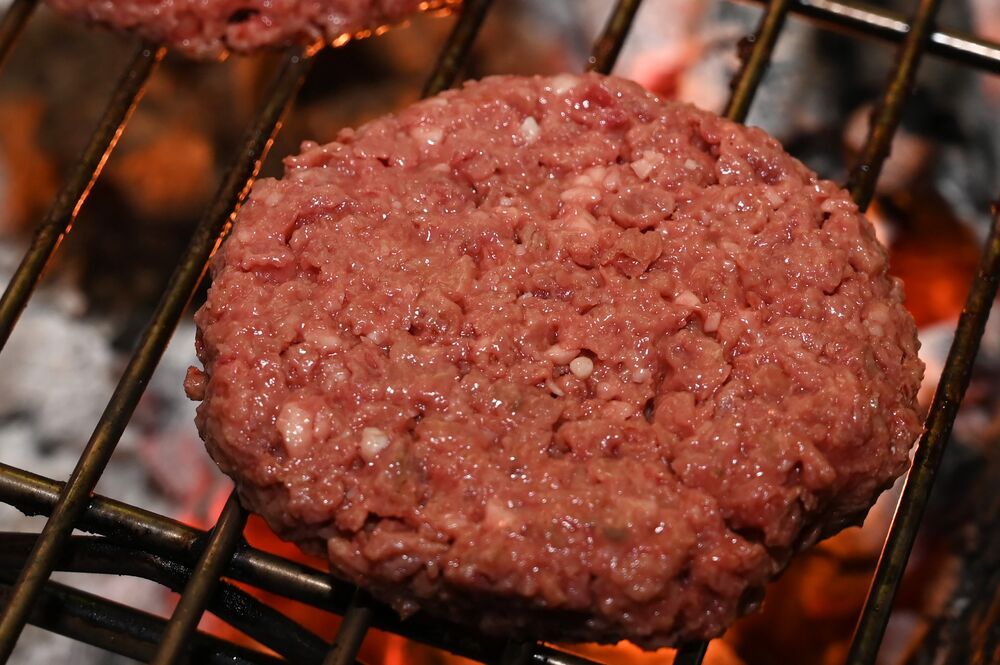
Owner Bud Nurse told NewsChannel 9 due to his health and the dairy economy, he has decided to auction off all of his equipment and cattle.

“It is mixed emotions. I mean part of me is excited to start another chapter in your life and you know?” Nurse said. “Hopefully everything will go good.”

The auction is set to take place at 9:30 a.m. on Tuesday at the Ameslea Farm in Lafayette.

Nurse says when he moved to LaFayette to farm back in 1989, there were eight dairy farms. Now there won’t be any that produce milk in the town.

“Last four years has been pretty tough,” he said when asked about selling milk.

Farmers from across the state are expected to attend Tuesday’s auction.

Source: localsyr.com

Waikato New Zealand farming company slapped with $116,000 fine over dairy effluent breaches

A Waikato farming company and its director have been handed a $116,000 fine over unlawfully discharging dairy effluent into the environment.

Inspections carried out by Waikato Regional Council staff looking into the farms’ effluent systems found that two of the five Fonterra supply farms owned by Nagra Farms Limited and its director, Naginder Singh, were identified as having dairy effluent breaches.

Investigations also revealed that the effluent management systems on the farms, based in Gordontown, near Hamilton, were inadequate and unable to safely contain the amount being produced.

Small and unsealed storage facilities were also found overflowing, as well as large volumes of effluent ponded on paddocks from over-irrigation. All of the discharges posed a significant risk of contaminating groundwater.

A farm manager on one of the farms, Nikolai van den Einden, was also sentenced to 12 months supervision for breaches to the Resource Management Act and ordered to attend a dairy effluent management course.

“This is a large fine and sends a very clear message,” council investigations manager Patrick Lynch said.  

“A fine of $116,000, as well as the convictions for the company and director, has to be seen as a sign the court is losing patience with those remaining farmers who, quite simply, are causing environmental harm.

“I am sure the rest of the dairy industry, as well as the wider community, who are working hard to improve the environment, are extremely disappointed with the farmer in this case, as he will be seen to be undoing the good work of so many.”

Two of the five dairy farms owned by a Waikato farming company was identified as having dairy effluent breaches. Source: Waikato Regional Council

Source: tvnz.co.nz

We’ll Always Eat Meat. But More of It Will Be ‘Meat’

More and more people are choosing to eat less and less meat. Concerns over the environment, personal health and animal welfare are driving the change. The number of people committing to a strictly plant-based (vegan) diet is rising in many developed countries, as are the ranks of “flexitarians” — those who only occasionally consume meat. The trend is spawning a rapidly expanding industry for meat substitutes, both plant-based and a new high tech generation grown from animal cells in laboratories. From Bill Gates to Leonardo DiCaprio, investors are betting hundreds of millions of dollars that the appetite for meat alternatives will mushroom.

1. Are people really eating less meat?

Actually, no. Overall meat consumption continues to increase on a global scale, buoyed by rising affluence in developing economies such as China and Brazil. But while per capita consumption in the U.S., the world’s biggest beef consumer, is also growing, countries such as France, Germany, Spain and Sweden are cutting back on meat. What’s more, there’s a discernible shift in attitudes in wealthy nations, including the U.S. In a 2015 study, two-thirds of Americans said they had reduced their meat intake and a recent Gallup poll showed the number of U.S. vegans had risen by more than 3 million between 2012 and 2018 to about 3 percent of the population. While a third of U.K. consumers have lowered or stopped meat purchases, Germans have been winding down meat consumption since 2011.

2. Why are people shunning meat?

Health and cost are among the main reasons. Red meat consumption has been linked with heart disease, diabetes and cancer, and processed meat has been classified as a carcinogen by the World Health Organization. At the same time, studies have pointed to the health benefits of a flexitarian or vegan diet. There’s also increasing concern over the environment. Livestock produces 14.5 percent or more of the world’s greenhouse gas emissions that stoke global warming. Avoiding meat and dairy products is the most effective way for an individual to reduce his or her environmental impact, according to a 2018 study in Science magazine. Another paper in the journal Nature estimated meat consumption must fall by 90 percent in western countries to keep global temperatures under control. With the world’s population expected to swell by more than 2 billion by 2050, the strain on Earth’s resources is likely to intensify. And while factory farming has made chicken, pork and beef more affordable, critics say it can be harmful to human health and make conditions for animals unacceptable. In one survey of U.K. consumers, animal welfare was the No. 1 reason for reducing meat intake.

Meat and Greet

A glossary to help dinner party hosts keep their guests happy

3. What are the alternatives?

Although there have always been protein-rich substitutes (beans, peas, tempeh), a whole class of products that imitate meat has emerged. These fall into two categories. First are those made purely (or mostly) from plants, from soy-based sausages or bacon to the more modern incarnations such as the Beyond Burger (made of pea protein, canola oil and coconut fat, colored with beets) and the Impossible Burger (soy protein, coconut oil and its central meat-like ingredient soy leghemoglobin, or “heme,” produced with a genetically modified yeast). The other variety is cultured meats, derived from extracted animal cells and cultivated into products that manufacturers claim are virtually identical to meat from slaughtered animals. Such products have yet to reach the market (chicken nuggets may be first this year), partly because the manufacturing costs have not yet fallen enough to generate supermarket-friendly prices. There are also food regulations to consider.

4. What are the objections to meat alternatives?

Meat producers have long opposed billing anything not from an animal as “meat.” Environmental group Friends of the Earth has warned that the advent of genetically engineered ingredients — such as the heme that makes Impossible Burgers taste meaty — and lab-made meat hasn’t been accompanied by sufficient research. It’s calling for more rigorous safety assessments. Unanswered questions include how exactly cultured meat will be regulated, how production will be scaled up and how much energy the process will require. Another objection is on health grounds, since some meat alternatives are heavily processed and contain high amounts of salt and refined ingredients.

Quorn Ownership Switches to Philippines in $833 Million Sale

Meat-free ‘chicken pieces’ inspected at Quorn’s factory in Stokesley, U.K.

Photographer: Simon Dawson/Bloomberg

5. Who’s making the imitations?

Most of the innovation is coming from startups, with big legacy companies playing catch-up. Silicon Valley is a hotbed. Beyond Meat filed for a $100 million initial public offering in November and Impossible Foods Inc. has raised $450 million. JUST Inc. is responsible for the cultured chicken nuggets that may debut soon as well as a version of foie gras. Outside the U.S., Moving Mountains has created a popular vegan burger in Britain, Quorn Foods Ltd. has been at it for decades, while Netherlands-based Mosa Meat — started by cultured meat pioneer Dr. Mark Post — is working on bringing products to the market by 2021. Israel’s Aleph Farms Ltd. recently showcased the first lab-grown steak, a process that takes three weeks from cell sampling to finished product. Also in the U.S., New Age Meats has produced the first cultured pork sausage and Memphis Meats the first meatball.

6. Why the buzz among investors?

They’ve been seduced by the startups’ goal to disrupt the meat industry. Already, sales of substitutes for all types of animal products comprise a $3.7 billion market, according to Nielsen. Microsoft Corp. co-founder Bill Gates has invested in both Impossible Foods and Beyond Meat, and celebrities like Leonardo DiCaprio and billionaires Sergey Brin and Li Ka-shing are also backing lab-grown alternatives. Traditional food companies are joining in. Conagra Brands Inc. bought meatless meat producer Gardein and Nestle SA is lining up a plant-based Incredible Burger, while Germany’s biggest poultry processor, PHW Group, is now selling Beyond Burgers. In a twist that would have seemed impossible not long ago, big meat processors are taking stakes: Tyson Foods Inc., the largest U.S. meat producer, is an investor in Beyond Meat, Memphis Meats and Future Meat Technologies.

7. Will people eat meat alternatives?

The appetite is growing. According to Nielsen, U.S. plant-based meat sales rose 23 percent to $684 million in the year through mid-2018. Some of the new-wave products are only just hitting Europe and Asia — a Tesco Plc executive described the Beyond Burger’s arrival in the U.K. in November as “one of the most eagerly anticipated food launches of the year.” Taste will be crucial in determining whether meat alternatives are a fad or a genuine trend. While the original Impossible Burger received a mixed reception — “amazing but just a tad too soft and mushy,” according to the BBC — the latest incarnation is earning rave reviews. Most cultured meats are several years from reaching a plate near you, at a price you’d be willing to pay, but tastings of lab-grown foie gras, steak and sausages have underlined the promise. Consumer caution could make them a harder sell than plant-based varieties, but advocates see lab-grown meat as potentially revolutionizing protein production in a way that’s kinder to the environment, animals and human health.

The Reference Shelf

  • Something’s got to give: The United Nations warns of a climate crisis by 2040.
  • QuickTakes on climate change and deforestation.
  • Americans eat a record amount of meat, but more are going flexitarian.
  • Avoiding meat and dairy is the most effective way to reduce your environmental impact, according to a 2018 study in Science magazine.
  • A paper in the journal Nature estimated meat consumption must fall by 90 percent in western countries to keep global temperatures under control.
  • Author Paul Shapiro tries out lab-grown foie gras for the Guardian.
  • Bill Gates asks: Is there enough meat for everyone?
  • Is it too early for fake meat?

Source: bloomberg.com

Built with Chocolate Milk announces new player, Boston Celtics All-Star Al Horford

Professional basketball All-Star Al Horford has officially joined Built with Chocolate Milk in a new marketing campaign.

This robust English and Spanish language campaign, which includes new TVCs and digital ads, marks the first ever Hispanic launch, and will offer a strategic opportunity for the industry to tap into a key audience and new usage occasion with adult athletes. Additionally, by increasing the number of athletes and everyday exercisers who include chocolate milk as part of their post-workout routine, the campaign will help drive demand, consumption and sales of chocolate milk.

Since beginning his professional basketball career as the third overall pick in 2007, Al Horford has dominated the league and made a name for himself earning five NBA All-Star appearances. With over a decade in the league, Al has battled for rebounds at an astounding rate and consequently battled injuries as well. After working with a nutritionist, he quickly learned he needed to switch up some of his nutrition choices to properly recover, and turned to lowfat chocolate milk to help. Horford joins an impressive list of elite athletes, including tennis star Sloane Stephens and pro-triathlete Mirinda Carfrae.

You can check out his new ad creative here.


Woolworths to stop selling $1 milk

Woolworths has announced it will stop selling $1 per litre milk for good, in a move described as a “game changer” by the dairy industry.


The supermarket chain will start charging consumers $1.10 per litre from tomorrow, with the extra money going directly to farmers.

Woolworths Group chief executive Brad Banducci said the corporation believed in the long-term sustainability of the dairy industry.

“In our consultation with industry bodies … we’ve heard the outlook will continue to be extremely tough for dairy farmers,” he said.

“This is affecting milk production and farm viability, which is devastating for farmers and the regional communities in which they live.”

The decision follows an east coast trial of drought relief milk sales, which saw 50 per cent of consumers willing to pay more to help farmers.

Mr Banducci acknowledged the 10 cent increase was less than inflation, but would not rule out a further price rise in the future.

“There’s a fine line between lifting the price and supporting our dairy farmers and also focusing on affordability for our customers, so this felt like the right first, safe step.”

Australian Dairy Farmers Association CEO David Inall called the supermarket’s move was a “game changer”.

“It is reassuring that Woolworths has committed to deliver the full 10 cent increase back to those famers who supplied the milk.”

Dubbo dairy farmer Erika Chesworth said Woolworth’s decision puts dairy farmers over a psychological hurdle.

“Of course we’d love it to be $2 a litre, but today we’re just really happy that we’re on the path to returning where we belong in society.”

The NSW Farmers Association said it was a big win for dairy farmers, who had been fighting against discount milk since 2011.

It said other retailers should follow Woolworths’ example.

Source: abc.net.au

Number of dead dairy cows in Yakima Valley at 1,830, industry group says

Nearly 2 percent of the Yakima Valley’s dairy cows died as a result of winter storms that swept through the county last week.

As of Friday, the death toll for cattle at the valley’s dairy farms was 1,830, said Chelsi Riordan, community relations manager for the Dairy Farmers of Washington, a Lynnwood-based industry group.

Initial reports said 1,600 head diedin Saturday’s powerful winds and sub-freezing temperatures. Many cattle clustered together, resulting in the animals trampling each other in an effort to escape the wind and cold.

During the storm, dairy farmers worked to provide the animals shelter from the wind, which reportedly gusted to 80 mph. They also cleared drifting snow from roads so food could be brought to the animals, and milk shipped out.

There are 100,000 dairy cows in the Valley, Riordan said. She called the death toll unprecedented.

Hector Castro, state Department of Agriculture spokesman, said the state is still developing plans for disposing of the dead animals. Among the options are composting the remains or burying them in landfills, officials with the departments of Agriculture and Ecology said.

Source: yakimaherald.com

Fonterra seeks radical revamp of rules it operates under

Fonterra’s comments have come in submissions to the biggest structural change in the dairy industry for almost two decades.

At stake are a range of state-enforced constraints that were imposed on Fonterra when it was set up at the start of the century. They were intended to stop the company from exploiting its market dominance to suit its own advantage.

In its submission to this reform process, Fonterra said dairy exports had tripled and competing companies had multiplied in the years since it began, meaning the anti-market-dominance rules imposed on it were no longer needed.

One of these rules compelled Fonterra to buy milk from any farmer who wanted to sell it. This rule was known as the Open Entry provision.

Although there were limited opt-out opportunities, the rule meant Fonterra had to invest in expensive infrastructure for bulk storage of milk that it did not always want.

It was also distracted from investing in targeted, value-added product.

Fonterra also had to buy from farmers whose environmental standards fell short of what it wanted. The company said this compulsion-to-buy should be scrapped, as a first preference, but reduced in scale as a second option.

Under this alternative, it might still apply in cases where Fonterra had 75 percent of the market.

The company also disliked having to sell milk at cost to large export-focused dairy companies that compete with it on the world market.

It also wanted oversight of its milk price by the Commerce Commission to apply to other milk companies.

“Efficiency and informed decision-making by farmers would be improved if the transparency of price setting and payments was spread throughout the industry,” Fonterra said.

“Our co-operative has created a transparent milk price calculation that is the envy of farmers the world over.”

Fonterra added that the system had raised incomes for dairy farmers, who spent half of what they earned in their local communities .

It had achieved its goals, but many of its provisions were now past their use-by date.

The deadline for submissions has passed and a final report and subsequent legislation are both expected this year.


Source: Radio NZ

I’m sorry, from a peaceful vegan

As I started my day this morning, I was some-what horrified upon reading the story of the farmer firing a gunshot at a vegan activist who was filming on his property.

I’m a vegan. I have been for two years.

Stories like this have become increasingly common with the rise of veganism.

And it makes me embarrassed.

According to The Vegan Society, demand for meat-free food increased by 987% in 2017 and going vegan was predicted to be the biggest food trend in 2018.

For me, going vegan was always for ethics. And I love it.

I love the way it makes me feel. I love the way I feel like I’m bettering myself and the environment every day. I love the way it has made me an extremely passionate person, about many issues.

But you know what I don’t like?

Coming into work and seeing another vegan taking it too far. Especially to our farmers.

Right now, in Australia we are in a farming crisis, surely, we ALL know that by now.

We are experiencing droughts and floods like never before and both animals and people are dying.

Yesterday another vegan activist story flooded my Facebook.

A high-profile vegan activist had a blunt responseto the South Australian dairy farmer who posted her tearful farewell to her beloved cows. The activist suggested the farmer just “get another job”.

But the issue is much bigger than that. It’s an extremely complex issue that not one single person can solve.

One vegan activist protesting at a farm isn’t going to stop animal product concussion just like one person buying more milk isn’t going to save the farming crisis.

Some things are simply out of our control – for now.

My heart breaks for the animals the we lose every day. But my heart also breaks for the dairy farmers who are struggling to put food on the table for their family.

I don’t like being put into a minority that is somewhat shunned in society.

People rolling their eyes to even the word ‘vegan’. I’m more of a ‘you do you’ vegan and I’ll do what I can to help.

You want to eat meat? That’s cool but let me eat my tofu without a comment or snarky look.

I would love to see a world that eats less meat and consumes less dairy products but I’m not going to force my opinion down people’s throat.

I’m Australian and I’m going to act that way.

Any claim arising from the information contained on the eDairy News website will be submitted to the jurisdiction of the Ordinary Courts of the First Judicial District of the Province of Córdoba, Argentine Republic, with a seat in the City of Córdoba, to the exclusion of any another jurisdiction, including the Federal.

Source: Sunshine Coast Daily

A2 Milk set to report another bumper profit as China fears loom

A2 Milk’s relationship with China looks set to take centre stage when the marketing phenomenon reports its first half result on Wednesday.

Market expectations are for another hefty increase in earnings, driven mostly by a2 Milk’s success in China’s infant formula market.

The result for the six months to December 31 will provide several talking points, not the least of which will be how it is faring in the People’s Republic against the background of signs of deteriorating relations with the PRC.

On Tuesday the Herald reported that Prime Minister Jacinda Ardern was scheduled to visit China early this year but the invitation had been put on hold and on Friday New Zealand’s biggest seafood exporter Sanford has been having issues getting salmon exports to China cleared through Chinese ports.

“It looks pretty tense at the moment, so that’s unfortunate,” Oyvinn Rimer, Harbour Asset Management senior research analyst, said.

Mark Lister, head of private wealth research at Craigs Investment Partners, said a2 Milk’s China relationship was key “so we will obviously be looking for evidence as to how that is going”.

Market expectations are for a2 Milk to report earnings before interest, tax, depreciation and amortisation to come it at around $200m, up 39 per cent on the previous corresponding period.

Turnover is expected to reach $600 million, up from $434.7 million a year earlier.

A2 had already pointed to a big lift in earnings at last year’s annual meeting, the first to be attended by new chief executive Jayne Hrdlicka.

The company said then that its revenue hit $368.4 million in the first four months of its financial year – up 40.5 per cent over the same period a year earlier.

A2 Milk, which has successfully marketed its a1 beta protein free brand of dairy products and infant formula, has enjoyed a strong run on share market, the stock trading on Friday at $12.85, up from $9.04 last October.

Harbour Asset’s Rimer said a2 Milk’s trend of “meaningful” earnings growth was expected to continue.

“Obviously, China is expected to be the driving force behind that with infant formula,” he said.

A2 Milk, now one of New Zealand’s biggest companies by market capitalisation, has made a big push into the United States so the market will be looking for signs of traction, and whether it can repeat the success there that it has had in Australia and China.

Lister said a2 Milk shares’ 18 per cent rally since the start of year had raised investor expectations.

“It’s been a solid performer, but that just means the bar is higher for the result,” he said.

“There is less room for a miss-step with the share price at these levels,” Lister said.

When China changed its cross-border e-commerce rules last year, A2 Milk said it was confident it would meet all requirements “on or before” the March 31 deadline.

Analsyts will be looking to a2 Milk for comment on how it is faring with the regulation change.

Likewise, investors will be looking to the company for an update on its joint venture with Fonterra, which was formed this time last year.


Source: NZ Herald

Holstein Association USA 2019 Judges Conference Registration Now Open

Registration is now open for the Holstein Association USA 2019 Judges Conference, to be held on Thursday, March 28, in Columbus, Ohio, in conjunction with the Mid-East Spring National Holstein Show.

The conference includes judging classes in addition to classroom sessions. Participants will judge several high-quality Holstein classes, one of which will be assigned for oral reasons.

Individuals that plan to apply for the Holstein Association USA Judges List in the future, must first attend and receive a satisfactory rating at a Holstein Association USA Judges Conference. Judges currently on the Holstein Association USA Judges List, must attend and receive a satisfactory rating at a Holstein Association USA Judges Conference every five years.

The one-day conference will run from 8 a.m. to 4 p.m. The pre-registration fee is $50, which closes two weeks before the conference, on March 14. Late registrants and walk-ins will pay a $100 fee. To attend the conference, you must be 22 years old by the day of the conference.

Interested participants can register for the conference on the Holstein Association USA website, visit: http://www.holsteinusa.com/shows/judges_preregister.html.

Hotel accommodations can be made at the Candlewood Suites Polaris, 8515 Lyra Drive, Columbus, Ohio; phone 614-436-6600. Ask for the Holstein Association special rate, available until March 8, subject to availability.

For more information, contact Jodi Hoynoski at 800.952.5200, ext. 4261 or by email,jhoynoski@holstein.com.

Holstein Association USA, Inc., www.holsteinusa.com, provides products and services to dairy producers to enhance genetics and improve profitability–ranging from registry processing to identification programs to consulting services.

The Association, headquartered in Brattleboro, Vt., maintains the records for Registered Holsteins® and represents approximately 30,000 members throughout the United States. 

Idaho State board approves land purchase for ‘largest research dairy in the country’

The Idaho State Board of Education on Thursday approved the purchase of land in Minidoka County that will be used for a University of Idaho research dairy.

The board voted to let UI buy land near Rupert for the Idaho Center for Agriculture Food and the Environment, otherwise known as CAFE. The university and the Idaho Dairymen’s Association will together purchase 540 acres from the Whitesides family for a total of $4.5 million.

The land will house a research dairy, one of several south-central Idaho-based facilities planned as part of the CAFE initiative. The program also plans an outreach and education center in Jerome and a food processing facility for training and research on the College of Southern Idaho campus in Twin Falls.

“One of our key focuses will be to have this dairy represent what this industry looks like in the West,” said Rick Naerebout, chief executive officer for dairy association, in a statement after the vote Thursday. “Being the largest research dairy in the country will help support the industry and put Idaho on the map as a premier location for environmental research.”

The dairy will be located near Meridian Road and 1400 North, north of Rupert. The University of Idaho will pay $2.5 million, while the IDA will contribute $2 million.

UI is currently in negotiations to buy a 5-6 acre parcel of land at Crossroads Point, at the intersection of Interstate 84 and U.S. 93, for the Jerome center, College of Agriculture Dean Michael Parrella told lawmakers in a presentation on Jan. 24.

Project leaders are in ongoing talks with CSI administrators to determine what exactly the food processing facility on campus will look like, Parrella said.

Source: mdjonline.com

Donald Trump declares national emergency to build border wall

Trump made the announcement from the Rose Garden, as he claimed illegal immigration was “an invasion of our country.”

Battling with one branch of government and opening a new confrontation with another, President Donald Trump announced Friday he was declaring a national emergency to fulfill his pledge to construct a wall along the U.S.-Mexico border.

Bypassing Congress, which approved far less money for his proposed wall than he had sought, Trump said he would use executive action to siphon billions of dollars from federal military construction and counterdrug efforts for the wall, aides said. The move is already drawing bipartisan criticism on Capitol Hill and expected to face rounds of legal challenges.

Trump made the announcement from the Rose Garden, as he claimed illegal immigration was “an invasion of our country.”

Trump’s move followed a rare show of bipartisanship when lawmakers voted Thursday to fund large swaths of the government and avoid a repeat of this winter’s debilitating five-week government shutdown. The money in the bill for border barriers, about $1.4 billion, is far below the $5.7 billion Trump insisted he needed and would finance just a quarter of the more than 200 miles (322 kilometers) he wanted this year.

To bridge the gap, Trump announced that he will be spending roughly $8 billion on border barriers — combining the money approved by Congress with funding he plans to repurpose through executive actions, including the national emergency. The money is expected to come from funds targeted for military construction and counterdrug efforts, but aides could not immediately specify which military projects would be affected.

Despite widespread opposition in Congress to proclaiming an emergency, including by some Republicans, Trump was responding to pressure to act unilaterally to soothe his conservative base and avoid appearing like he’s lost his wall battle.

Word that Trump would declare the emergency prompted condemnations from Democrats and threats of lawsuits from states and others who might lose federal money or said Trump was abusing his authority.

In a sing-songy tone of voice, Trump described how the decision will be challenged and work its way through the courts, including up to the U.S. Supreme Court.

He said, “Sadly, we’ll be sued and sadly it will go through a process and happily we’ll win, I think.”

In an unusual joint statement, House Speaker Nancy Pelosi, D-Calif., and Senate Minority Leader Chuck Schumer, D-N.Y., called it an “unlawful declaration over a crisis that does not exist” and said it “does great violence to our Constitution and makes America less safe, stealing from urgently needed defense funds for the security of our military and our nation. ”

“The President’s actions clearly violate the Congress’s exclusive power of the purse, which our Founders enshrined in the Constitution,” they said. “The Congress will defend our constitutional authorities in the Congress, in the Courts, and in the public, using every remedy available.”

Democratic state attorneys general said they’d consider legal action to block Trump. Puerto Rico Gov. Ricardo Rossello told the president on Twitter “we’ll see you in court” if he made the declaration.

Even if his emergency declaration withstands challenge, Trump is still billions of dollars short of his overall funding needed to build the wall as he promised in 2016. After two years of effort, Trump has not added any new border mileage; all of the construction so far has gone to replacing and repairing existing structures. Ground is expected to be broken in South Texas soon on the first new mileage.

The White House said Trump would not try to redirect federal disaster aid to the wall, a proposal they had considered but rejected over fears of a political blowback.


Source: The Economic Times

Australian dairy farmer filmed firing shotgun after heated exchange with animal rights activists

A dairy farmer who was filmed firing a shotgun after a heated confrontation with animal rights activists in Western Australia says the footage does not show his side of the story.

Video: Confrontation between farmer and activists in WA (ABC News)

Jason Parravicini confronted activist James Warden who, along with an unnamed woman, were filming from a car outside his Harvey property earlier this week.

The video shows Mr Parravicini demanding the pair cease filming before lunging for Mr Warden’s keys and accusing the activists of “tormenting Harvey” and telling them to “piss off”.

The video then cuts to the activists driving past Mr Parravicini’s house, where he can be seen firing a shotgun — pointed away from the vehicle — in his backyard.

“[Regarding] the firearm, I honestly thought they had left,” Mr Parravicini, who claimed the video was “heavily edited”, told ABC Radio.

“Every day at 2pm, I let a couple rounds go … a bit of a spray that will scare the vermin away from the young cattle.

“I wasn’t to know they were there.

“For anyone to say I was shooting at them — number one, no-one in their right mind would do that and number two, I have too much to lose to do anything like that.”

Documenting ‘abused animals’

Mr Warden, who describes himself as a “non-apologetic animal rights activist” said he was attempting to film male calves being “dragged from their forcibly impregnated grieving mothers” when the confrontation started.

“We live in a democratic society where we are able to take photos of these abused animals on these facilities,” Mr Warden said.

“We are not going to regress in these sorts of situations.

“The beneficiaries of us not actually taking these photos and exposing this type of abuse is the farmers who are emotionally and physically tormenting these animals.”

Mr Warden declined to reveal how he found Mr Parravicini’s property.

He says he has been receiving death threats ever since the media got hold of the story.

Tension already high after ‘roadmap to grief’ published

Australia’s farming community has been on edge since January, when a website called Aussie Farms published a map revealing the location and details of pastoral operations around the country.

While Mr Parravicini’s property is not listed on the site, industry officials say the fear of this kind of incident is driving up anxiety among farmers.

President of Pastoralists and Graziers Association of Western Australia, Tony Seabrook said the community already felt it was “under attack”, and described the Farms Australia site as a “roadmap to grief”.

“It was unfortunate that it was published and there will be repercussions,” Mr Seabrook said.

“It brings the risk of disease as well as interrupting business.

“It will not be a good thing for the industry.”

Aussie Farms Executive Director Chris Delforce said it was not intended to promote trespassing, rather to “encourage people to drive past and snap a few photos from the road.”

“We’re certainly not encouraging anyone to break the law to get material.”

The group said if requested, the group would remove contact details of farmers.

‘Atmosphere of fear’

Federal Minister for Agriculture and Water Resources David Littleproud urged “calm” in the wake of the incident but linked it to the launch of the Aussie Farms map.

In a statement, Mr Littleproud described the document an “attack map for activists” and said producers “have a right to farm without being harassed.”

Mr Littleproud said he was “genuinely concerned” there would be an incident in which someone would be “seriously hurt or worse”.

“Differences between sections of the vegan and farm communities will not be solved with confrontation,” the minister said.

“I again ask for the owners of the Aussie Farms website to pull down its farm map.

“It’s creating an atmosphere of fear and anxiety on farms around Australia.”

Source: abc.net.au

CDC warns consumers over drug-resistant bacteria detected in raw milk

Raw milk being shipped to New York could contain a drug-resistant bacteria.

According to the CDC, Brucella was detected in unpasteurized milk from Miller’s Biodiversity Farm in Pennsylvania.

A similar alert was issued back in December. 

Now, there are more concerns.

Brucella is a drug-resistant bacteria that could lead to severe problems, like meningitis.

Symptoms include fever, sweats, and muscle and joint pain.

If you have raw milk from Miller’s Biodiversity Farm, you’re urged to throw it out.

For more information from the CDC over the raw milk warning, click here.

Source: WHECTV

Price of New Zealand milk hits 19-month low in December

Farmers are facing difficult times, but consumers are benefiting from milk prices dropping to a 19-month low.

The average two-litre bottle of standard dark blue top dropped to $3.49 last month, according to Statistics NZ.

“Supermarket milk prices are highly influenced by the farmgate milk price,” Statistics New Zealand consumer prices manager Caroline White said. “Fonterra’s forecast milk payout was cut multiple times from May last year.”

Farmgate milk price is the price farmers receive from processors for the milk they produce.

“While dairy farmers face tougher times, consumers usually benefit from the lower prices when supermarkets pay less to the suppliers,” she said.

However, yoghurt prices rose 14 per cent and cheese prices rose 4.6 per cent. The price of butter also rose to 2.4 per cent, the report said.

As well, those with plans for a clean, green diet as their New Year’s resolution would have been in for a shock as lettuce and broccoli prices soared over the holidays.

Broccoli prices more than doubled in price last month, and lettuce prices rose almost 80 per cent, the report said.

The average price of a 350g head of broccoli was $2.76 in January, after jumping from seven-year-low of $1.25 the month before.

“A bumper December harvest contributed to particularly low broccoli prices in December,” Ms White said. “As the harvest returned to normal levels in January, we saw a larger than usual price rise.”

The price of a 500g head of lettuce increased from $1.04 in December to $1.86 last month. The January price tag was more than 50c more than the same time last year.

However, avocado lovers enjoyed a price drop. The price of a 200g avocado fell 43 per cent to $1.58 in January compared to the previous year. Prices of the fruit were particularly high early last year because of the small harvest.

Source:  tvnz.co.nz

Trump Considers 60-Day Extension for China Tariff Deadline

Trump Considers 60-Day Extension for China Tariff Deadline

President Donald Trump is considering pushing back the deadline for imposition of higher tariffs on Chinese imports by 60 days, as the world’s two biggest economies try to negotiate a solution to their trade dispute, according to people familiar with the matter.

The president said Tuesday that he was open to letting the March 1 deadline for more than doubling tariffs on $200 billion of Chinese goods slide, if the two countries are close to a deal that addresses deep structural changes to China’s economic policies — though he added he was not “inclined” to do so. The people said that Trump is weighing whether to add 60 days to the current deadline to give negotiations more time to continue.

“I think it’s going along very well,” Trump told reporters in the Oval Office this week. “They’re showing us tremendous respect.”

A spokeswoman for U.S. Trade Representative Robert Lighthizer declined to comment.

Chinese officials had initially proposed an extension of 90 days, but that was knocked back by the U.S. side, people familiar with that request said.

Asian stocks steadied and U.S. stock futures climbed. Treasuries slipped and the yen dipped.

Lighthizer and Treasury Secretary Steven Mnuchin are in Beijing for the latest round of high-level talks with Chinese Vice Premier Liu He on Thursday and Friday. A meeting between Lighthizer and Chinese President Xi Jinping is being tentatively scheduled for this week. Trump’s willingness to extend the deadline may depend on the outcome of that meeting, one of the people said.

Trump has indicated he will need to meet Xi to agree on a final deal. While no date has been set, a White House aide this week said the U.S. president still wants to meet his Chinese counterpart soon in a bid to end the trade war.

Negotiations this week are focused on how to enforce the trade deal and putting on paper a framework agreement to present to the two presidents.

In the talks, the U.S. is pushing for wide-ranging changes in the way China manages foreign trade and its own economy. Specifically, Lighthizer has zeroed in on China’s alleged abuses of intellectual property and state sponsorship of companies.

Trump has also railed against the size of the U.S. trade deficit with China, and negotiators have made varying demands about how Beijing addresses this. The goal of “reciprocal trade” has been a clear priority of Trump’s policies.

China wants to have the tariffs that have been imposed so far removed. To get the U.S. to do that, negotiators are trying to focus attention on their efforts to reduce China’s more than $300 billion goods trade surplus. Beijing has offered to ramp up its purchases from the U.S. massively over the next six years in order to even the scales.

It is going to take a lot of work to shrink that. While down from the record peak late last year, China still had a $27.3 billion trade surplus in goods with the U.S. in January, according to data released on Thursday in Beijing.

“The outcome of the China-U.S. high-level economic and trade negotiations may be related to the future development and stability of the world economy,” Chinese Foreign Ministry spokeswoman Hua Chunying said at a regular briefing Thursday in Beijing. “Both parties hope to reach a mutually beneficial agreement. The best thing we can do now is to let both sides concentrate on consultations.”

Source: finance.yahoo.com

‘Dirty dairy’ farmer Philip Woolley to sue Fonterra for not taking milk

A farmer with a string of environmental offences has won the right to sue Fonterra for more than $2 million for refusing to take his milk.

Philip John Woolley plans to sue Fonterra to recover losses from dumping his milk and paying out his sharemilker, after a court order stopped him from milking the cows at his Glenmae farm in Tuamarina, north of Blenheim, in 2014.

The Marlborough District Council got an order from the Environment Court to stop Woolley from using the milking shed from June 7, 2014, unless he got an engineer’s certificate approving the effluent pond as fit-for-purpose.

Woolley started milking the cows in breach of the order, which he was convicted for in 2015, despite telling the court he was concerned about the welfare of the calving cows.

Fonterra’s sustainable dairying adviser sent Woolley a letter on June 18, 2014, saying the company could not collect milk that season unless the milking ban was lifted.

Woolley told the Environment Court in 2015 he breached the milking ban out of concern for the welfare of the cows. (File photo)
LAWRENCE SMITH/STUFF

Woolley told the Environment Court in 2015 he breached the milking ban out of concern for the welfare of the cows. (File photo)

Woolley sent the council an engineer’s certificate on September 5, saying it was now fit-for-purpose, but Fonterra still refused to take the milk.

As a result Woolley was forced to dump milk into his effluent systems, and his contract milker terminated their agreement. 

A High Court decision issued in December 2018 said without Fonterra buying the milk, Woolley suffered “serious financial consequences” which resulted in the appointment of receivers. 

Woolley wanted $1.8m from Fonterra to cover the loss of milk, another $629,486 for the cost of paying out his contract milker, and an enquiry to find out how much Fonterra should pay towards the $3.4m cost of receivership and other expenses.

Fonterra sought a summary judgment from Associate Judge John Matthews in the High Court to stop Woolley from suing.

The company had to prove that on the balance of probabilities, Woolley’s suit would fail.

Philip Woolley's property Glenmae, in Tuamarina, north of Blenheim, was visited several times by council compliance staff in 2014.
STUFF

Philip Woolley’s property Glenmae, in Tuamarina, north of Blenheim, was visited several times by council compliance staff in 2014.

At a hearing in November, Fonterra’s lawyer Murray Branch said the company was under pressure from the council not to collect milk from Glenmae.

Despite receiving the requested certificate, the council’s lawyer Miriam Radich, of Radich Law, said Woolley had not yet met the enforcement order.

Woolley’s lawyer David Clark said the case should be referred to the company’s milk commissioner, appointed as an independent solicitor to resolve disputes between Fonterra and shareholders.

But the milk commissioner was Peter Radich – the council’s lawyer’s father, and partner at the same practice.

“Obviously that cannot happen as he is not independent as far as this matter is concerned,” Clark wrote to Fonterra’s lawyer, Alison Brewer-Shearer.

The council's lawyer Miriam Radich is the daughter of Fonterra's milk commissioner Peter Radich, both of whom work at Radich Law.
SCOTT HAMMOND/STUFF

The council’s lawyer Miriam Radich is the daughter of Fonterra’s milk commissioner Peter Radich, both of whom work at Radich Law.

She replied that as long as council disputed Woolley’s entitlement to start milking again, Fonterra would also refuse to take the milk.

Clark accused Fonterra of treating Woolley’s livelihood with disdain and in a flippant manner.

Brewer-Shearer said the company was giving “careful consideration” to the issues and would “continue to provide as much assistance as possible”.

She told the court Fonterra did not want to collect milk in breach of Environment Court orders.

The council’s chief executive at the time, Andrew Besley, had issued a warning to Fonterra, saying if the milk was collected, it would breach Environment Court orders.

Judge Matthews said Fonterra’s suspension notice was not the same as a termination of contract, and implied that when the problem causing the suspension was fixed, the suspension would end.

Fonterra knew Woolley had a certificate that “at least arguably complied” with the enforcement order, Judge Matthews said.

Dairy farmer Philip Woolley was banned from milking until he got an engineer's certificate for his effluent pond.
SCOTT HAMMOND/STUFF

Dairy farmer Philip Woolley was banned from milking until he got an engineer’s certificate for his effluent pond.

Fonterra must also have known that to refuse the milk meant it would have to be dumped, causing “significant adverse environmental consequences”, and at “huge financial cost” to Woolley.

However, Fonterra also knew Woolley had a poor background of compliance with environmental regulations, and had no clearance from the Environment Court until after the end of the milking season, Judge Matthews said.

Fonterra’s application fell “well short” of proving Woolley’s suit would fail, Judge Matthews said.

A trial date for Woolley’s suit has not yet been set.

Source: stuff.co.nz

Flames, smoke race through dairy farm in Pennsylvania

It was all hands on deck at one dairy farm in Chester County, after a fire ripped its way through it early Wednesday morning.

“All I know is I heard something at 1 in the morning. I looked out and there were flames a hundred feet high,” said Lois Stroh, who lives next door to the dairy farm in the 1800 block of Beaver Dam Road, near Route 10, in Honey Brook Township.

A barn on the property was damaged, and smoke could still be seen hours later.

Investigators have ruled the fire an accident, and no one was hurt. They said all the cattle were safely moved from the barn, and damage from the fire tops $300,000.

The owner of the property did not want to share any details of the fire with 69 News, but local contractors were on site for most of the day.

“What’s going through my mind is these are wonderful people,” said Stroh. “Even as we’re going through this right now, they’re rebuilding already.”

Source:wfmz.com

Aldi has cheeses named after ’80s hit songs by Def Leppard, GNR, Michael Jackson

First, it was a cheese advent calendars for Christmas. Then, it was heart-shaped cheese for Valentine’s Day. Now, Aldi is playin’ hit songs from the ’80s in the refrigerated aisle.


Humorously named Happy Farms cheeses, inspired by Def Leppard, Guns ‘N Roses, Wham! and Michael Jackson hits from yesteryear, arrive in stores on Wednesday, Feb. 6. The limited-edition goods feature cute, costumed cows struttin’ their stuff in refrigerated section. The 5- to 7-ounce blocks are $3.49, according to the grocer’s website. 

Pour Some Gouda on Me

Oh, in the name of love, chow down on this Gouda wedge and crank up Def Leppard’s “Pour Some Sugar on Me.” 

Billie Goat Is My Lover

That just doesn’t sound right. Nonetheless, do your best moonwalk and grab a block of this blend of cheddar and goat cheese that does its best to honor of Michael Jackson’s “Billie Jean.”

Sweet Cheddar of Mine

Have an appetite for destruction? This sharp and curdled cover of Guns N’ Roses’ “Sweet Child O’ Mine” will hit the spot.

Girls Just Wanna Have Fontina

Grab some crackers and serve this to your “galentines” on Feb. 14 and then turn up the volume on the Cyndi Lauper’s “Girls Just Wanna Have Fun.”

Wake Me Up Before You Goat-Goat

Pour a nice glass of white, open a packages of these goat-cheese medallions and Wham!, you’ve got a tangy snack. It also pairs well with side of a George Michael singing “Wake Me Up Before You Go-Go”.

Total Eclipse of the Havarti

Every now and then I like a creamy and mild Danish cheese, especially when it’s inspired by Bonnie Tyler’s 1983 hit “Total Eclipse of the Heart”


Source: Sun Sentinel

Send this to a friend