The co-op, which is made up of about 10,000 farmers, wanted to change its capital structure so that farmers would only need to own one share for every three kilogrammes of milk solids instead of one share per kilogramme.
With the new structure, different types of farmers would be able to own shares in the company, and the size of the associated shareholders’ fund would be limited to 10 percent of all shares on issue.
The changes are meant to protect the company’s finances and keep farmers on board in the face of a possible drop in milk supply and competition from other milk processors that don’t need farmers to put up capital.
Last night, Parliament passed the third reading of a change to the Dairy Industry Restructuring Act that was needed for the restructuring to happen.
Peter McBride, the chairman of Fonterra, said that the passing of the bill gave farmer owners the clarity they had been looking for and meant that the business could move forward with putting in place the flexible shareholding capital structure at the end of March 2023.
He said that the decision was made based on a number of things.
“We think late March is the best time to start because it avoids the time when we can’t trade shares because of the co-interim op’s results.
“It also gives shareholders time to fully understand the detailed information we’ll send them before the change goes into effect and to talk to their financial advisors,” the company said.
Fonterra plans to announce the final date of implementation along with its interim results on March 16, 2023.
John P. Connor, 73, of Kewanna, Indiana, passed away Wednesday, Nov. 23, 2022, at St. Vincent Hospital in Indianapolis. Born on June 27, 1949, in Shelbyville, Kentucky, John is the son of the late David and Joyce (Hedges) Connor. On Sept. 30, 1984, in the Indian Creek Christian Church, John married LuAn Powlen, who survives.
John retired as the director of classification for the National Holstein Association.
John’s priorities in life have always been, faith, family, golf and barbecue. He loved playing with the “blue tee golf group” and barbecuing for family and friends.
Surviving along with his wife LuAn, are two sons, JR (Kelsey) Connor, of Indianapolis, and Brian (Carolyn) Connor, of Alpharetta, Ga.; four grandchildren, Rylie, Sydney, Castella and Cruze Connor; and two sisters, Linda (Lowell) Ashby, of Shelbyville, Ky., and Janet Lanphierd, of Georgetown, Ky.
Everyone at The Bullvine extends our deepest condolences to the friends and family of John.
A celebration of life will be held at 1 p.m. Tuesday, Nov. 29, 2022, at Gundrum Funeral Home in Logansport, IN, with Pastor David Sommers officiating. Burial will follow in the Indian Creek Christian Church Cemetery.
Visitation will be held from 11 a.m. until the time of service on Tuesday, also in the funeral home.
In lieu of flowers, memorials may be made to the Grass Creek Methodist Church.
Dairy Girl Network (DGN) honored four dairywomen with awards of leadership achievement at the recent DGN Forward TogetHER biennial national conference in Prior Lake, Minnesota. The four dairywomen recognized for the DGN Forward Under 40 (+4) sponsored by Compeer Financial were Julie Abrahamzon, Kansas City, Mo.; Amanda Freund, East Canaan, Conn.; Leaine Souza, Tulare, Calif., and Emily Yeiser-Stepp, Leesburg, Virginia.
The DGN Forward Under 40 (+4) Award sponsored by Compeer Financial, recognized four passionate dairywomen working to better our industry today. The DGN Forward Under 40 award is presented biennially at the Forward TogetHER Conference. For 2022 only, women age 44 and under were eligible for the DGN Forward Under 40 (+4) award. Because the 2020 DGN Forward TogetHER event was held virtually, award recipients were not honored. Therefore, the 2022 award criteria was modified to Forward Under 40 (+4) opening the door for women who may have missed the opportunity in 2020.
Julie Abrahamzon, Kansas City, Mo. Abrahamzon has experience in leading high performing teams, business development, strategy and financial management. She has a deep passion for delivering value to dairy customers and developing her teammates. Starting as an “only” in her early days as a management associate, she has risen to be an outstanding leader and enacted positive change for the Cargill organization along the way. Early in her career, she became one of the first, and youngest, female sales leaders within the Cargill Animal Nutrition business. Thanks to her incredible work ethic and key allyship—which she always is quick to mention— she became “the only” female on the Cargill dairy leadership team before she turned 30. She is currently the commercial director for the Cargill Animal Nutrition North America Dairy Business. She has been with Cargill for 16 years in a variety of leadership roles, all within animal nutrition and health.
Amanda Freund, East Canaan, Conn. Freund was raised on a multi-generational dairy farm, embracing responsibilities and privileges from childhood through her adulthood. She served in the Peace Corps in Zambia. Freund is involved with her family’s farm market, nursery and catering operation, in addition to being a principal employee of CowPots. She is active with her Cooperative’s Young Cooperators organization, served with Connecticut Farm Bureau, Connecticut Dairy Board and hosts her own podcast that focuses on connecting people to their food. She opens her farm and business to the public to encourage and improve consumer and neighbor perceptions and knowledge. Freund has been featured by Forbes, has engaged policy makers at every level from hosting the Undersecretary of the USDA to local and congressional officials. She lends her voice and talents as a speaker and panelist often, including at the DGN Forward TogetHER Conference.
Leaine Souza, Tulare, Calif. Souza is making a difference in her local, state and national community. Her husband’s family has a dairy farm in which she is active along with her husband and children, giving back to their local community and involvement in 4-H. She continually advocates for dairy producers to ensure their voice and specific issues and concerns are being heard. Souza also serves on the board of DairyCares and the California Ag Council. She has volunteered to assist DGN in organizing events at the World Ag Expo for dairywomen to connect during the event. Souza has been a Land O’ Lakes employee for over 15 years starting her career at the Tulare Butter Manufacturing Facility, holding several roles in quality and member and government relations organization. She is currently the director of the western region for member & government relations.
Emily Yeiser-Stepp, Leesburg, Va. Yeiser-Stepp has impressed many people by how she manages a team and the dairy farmers she serves. Through her professional career, she has always made it a point to uplift those around her. Her confidence and integrity have allowed her to always speak her mind and stand up for what she believes in – and who she believes in. This has a domino effect because of her mentorship and sponsorship of other women, they have been able to do the same. Her confidence and open mind allow her to effectively lead the National Dairy FARM Program, which is creating a better life for dairy animals and a stronger trust between farmers and consumers. She has been involved in a lot of dairy organizations including, but not limited to, Dairy Girl Network, YDLI, WDE Youth Planning Committee, WDE Dairy Judging Contest Official, Maryland State Fair, PSU Dairyman’s Scholarship Committee and her local bible study. Today, she serves as the Vice President of the NMPF FARM program.
Commodity brokers fretting over broken corn export contracts
Truck freight charges to carry corn increased by 20%, or 50 reais ($9.40) per tonne, as a result of the protests over Brazil’s election outcome that clogged roads in Mato Grosso state earlier this week, Abiove, an industry association representing global trading firms, told Reuters on Thursday.
Abiove President Andre Nassar indicated over the phone that the Sorriso-Miritituba and Sinop-Miritituba routes have been hit the hardest. As a result of the road blockades, Nassar added, some Abiove members were worried about being unable to fulfil maize export obligations.
On November 7-8, 2022, following a two-year hiatus due to the COVID-19 pandemic, the TD Canadian 4-H Dairy Classic returned to the Royal Agricultural Winter Fair. During the 100th anniversary of the Royal Agricultural Winter Fair, competitors from five provinces came to compete and put all on the line when displaying their animals. The event was attended by 313 4-H members from Ontario, Quebec, Prince Edward Island, New Brunswick, and Nova Scotia. Early Sunday morning, teams began moving in to put up their exhibits and settle in their calves. During the famous competition, 4-H members competed individually in showmanship and confirmation and as teams for Best Exhibit, Best Group of Three Calves, and Champion County.
On November 7, representatives from each of the 49 competing teams, carrying signs bearing their team’s name and led by three Toronto Mounted Police on horseback, launched the performance. Maryn Hunter from Leeds County sang “O Canada,” and Troy Packett, Associate Vice President of Agricultural Services at TD Bank, began the performance. On Monday, Dominic Fortier of St-Christophe d’Arthabaska, Quebec and Kyle Rivington of Carp, Ontario were tasked with judging 4-H members’ showmanship talents in the Semex Ring of Excellence. Throughout the high-caliber competition, Fortier determined champions from each distinct group by selecting the best Junior, Intermediate, and Senior showpeople from multiple heats.
Winners in each group were as follows:
Junior Showperson: Bren Zeldenrijk, Oxford Reserve: Carson Phoenix, Durham West
Intermediate Showperson: Ty Finley, Durham West Reserve: Keaton Phoenix, Durham West
Senior Showperson: Tyler Canning, Dufferin Reserve: Sarah Dean, Dufferin
Monday night after 8 p.m., Tyler Canning was named Grand Champion Showperson, which was the main event in Showmanship. Keaton Phoenix was Honorable Mention and Ty Finley was Reserve. Holstein Canada Vice President Doug Peart gave Canning the President’s Cup on Monday evening. The President’s Cup is given to the Showmanship Champion every year.
On November 8, Emily Leblanc sang “O Canada” to start the show. Russell Gammon and Phyllis MacMaster were in charge of letting people know about the show, and then the conformation classes started. Conformation Judge Chad Ryan from Fond du Lac, Wisconsin, put the best 4-H Holsteins, Jerseys, Ayrshires, and other coloured breeds from all over the country in their heats and classes. He chose Nolan Allardyce of Brant County’s Fall Heifer, MS-Aol Realist-RED-ET, which won first place, as the Grand Champion Calf. Reserve went to Keaton Phoenix of Durham West, who showed the first-place Spring Yearling, Kentville Chief Bodacious. Honorable Mention was given to Bosdale Lambda Lusteria, the Summer Yearling that won first place and was shown by Rhett Terpstra of Perth County.
Here is where you can find all of the show’s results: https://www.assistexpo.ca/results/rawf/20/1
At the TD Canadian 4-H Dairy Classic, one of the most coveted titles is “Best Exhibit.” On Monday and Tuesday, the exhibits were judged on how clean they were, how well they interacted with the public, how well they had signs, and how well they were displayed overall. Several teams brought back old Classics by getting creative with old photos and memorabilia. This award went to Middlesex County, which also won it at the last show held in 2019. Jensen Halters has been a generous sponsor of this award every year since the show began. They gave each team member a trophy and money. This year’s Best Group of Three was shown by members of a team from Brant. Durham West from Premier County won the “Bill Edelstein Bowl.” They got the most points as a county for Showmanship, Conformation, and Best Exhibit. Eden Vis of Wentworth was the lucky person who got to take home the Classic showbox, which was made by Chairman Murray Reissner.
Fraeland Holsteins of Fergus, Ontario, was this year’s “Breeder of Distinction.” Steve Fraser and his father, Jack Fraser, were there to greet people and give away five Stanton Alligator embryos from Fraeland Emilio Blizzard EX-90, a fourth-generation Excellent from their world-famous Bonnie family. Taylor Vandermeulen from Northumberland County won the embryos this year.
During this year’s show, two awards were given out. On Tuesday morning, the Justin Parish Memorial Bursary was given out by the Parish family. Justin’s dream was to make it to the Royal, and this award, which is given to a first-time competitor at the Classic every year, keeps his dream alive. Rhett Terpstra from Perth County won this year. On Tuesday afternoon, the Bertram and Hazel Stewart 4-H Dairy Youth Education Award and Bursary was given out by the Stewart family and 4-H Ontario. This award and conditional bursary of $1,000 is given to a 4-H Ontario Dairy Club member who meets the requirements every year to help pay for their post-secondary education. Addison Dwyre of Frontenac was a worthy winner this year.
During this year’s Classic, there were a number of important people there. This year, Mary Poirier was the Guest of Honor. Since the mid-1990s, she has been an important part of the Classic committee, and her influence on the show is hard to measure. Troy Packett from TD Bank, Paul Larmer from Semex, and Doug Peart and Sylvie Mahannah from Holstein Canada were among the other well-known guests. The President of the Royal Winter Fair, Ms. Shelley Peterson, was also there to say hello and wish the competitors well. Rene VanAkker, Dean of OAC at the University of Guelph, was there to meet everyone and talk about how interested people are again in the university’s Agricultural programmes. The Hon. Lisa Thompson, the Provincial Minister of Agriculture and Rural Affairs, came to give an encouraging speech and praise 4-H and other youth programmes. At the end of the show, Clarissa McCallum of Frontenac and Savannah Crack of Quebec South East spoke on behalf of all 4-H members to thank sponsors, parents, chaperones, and the Classic committee. At the end of the show, Cassie MacIntosh from Glengarry County sang “O Canada.”
The Classic would not be possible without the generous donations from our major sponsors, TD Bank, Semex, and Holstein Canada, which show their commitment to youth. Thank you also to the many sponsors who helped make this happen. The people who helped set up the event and the 4-H members who came are very thankful. Without the help of local sponsors, parents, leaders, and other volunteers, many 4-H members would not be able to go to the TD Canadian 4-H Dairy Classic. They should also be thanked very much. The 41st TD Canadian 4-H Dairy Classic, which took place at the Royal’s 100th Anniversary Show, was a huge success, and we look forward to many more Classics in the future.
Thank you to everyone who helped with the Classic this year!
Committee: Murray Reissner (Chairman), Jason French (Vice Chairman), Ron Bird, Paul Cleave, Lowell Lindsay, Brad Sayles, Brian Slaughter, Doug Wagner, Alison West, Deanna Ringelberg, Brad Eggink, Pam Charlton
Administrators: Martina Arth, Molly McMillan, Andrea Emond, Amanda Comfort, Jenna Hedden Volunteers: Shelley Barfoot-O’Neill, Doug Green, Alain Blanchette, Bev Spriel, Roger Turner, Kris MacLeod Health Checks: Dr. Tim Henshaw and Dr. Rob Swackhammer
Ribbon Presenters: Josie McNab, Cailyn Charlton
Sanitation Technicians: Josh Brander, Dean Kelly, Emily Knutt
Hair Monitors: Robert Medwell, Al McPhedran
Announcers: Russell Gammon, Phyllis MacMaster
Singers: Maryn Hunter, Elizabeth LeBlanc, Cassie MacIntosh
Biskit the dog is one of the stars of the channel, and even has her own merchandise
A cattle farmer says that he makes more money from YouTube than from his dairy herd.
Since 2018, Ian Pullen from Wotton-under-Edge, Gloucestershire, has been adding content to the site.
His channel, Farmer P, has 37,500 subscribers, and some of his videos get hundreds of thousands of views.
Mr. Pullen shows both what goes wrong and what goes right on the farm, and he tells his audience to “stay honest.”
When Mr. Pullen started the channel, he didn’t think that anyone would pay him for his work.
“About two and a half years ago, Google sent me a message that said, ‘We just sent you £47.'”
“I thought, ‘What? Where did that come from?’
“The next was £80, and then it was £300. I now make more than 40 cattle from YouTube… who knew?”
He used the money he made online to buy a new barn and invest in high-end camera gear, such as a drone for taking pictures from above.
He has also learned what kind of content gets people most excited.
People like shiny tractors, and his dog Biskit is so popular that she has her own merchandise.
Ian Pullen’s drone and he
Mr. Pullen bought a drone licence so he can make his videos more interesting.
Mr. Pullen says that he puts all of the money he earns online back into his farm.
Katie Jarvis from the National Farmers’ Union in Gloucestershire thinks that more farmers who blog would be good for the industry.
She said, “This is a very uncertain time for farming, and it will be for a while.”
“It would be great if they could make some money while teaching people about what we do and how important it is to grow food and take care of the environment.
Michael Paul Halpin, 41, of Buckingham, passed away on November 23, 2022.
Mike was born in Kankakee on August 31, 1981. Son of George M. and Margaret E. (Hills) Halpin, she preceded him in death. Survivors include his father; two sons, Owen and Colt Halpin; one sister, Amy (Todd) Hoffman; two nephews, Bode and Holden Hoffman; and many aunts, uncles, and cousins.
Mike graduated from Tri-Point High School in 1999 and furthered his education at Joliet Junior College. He had a passion for grain farming and showing and judging dairy cattle. Mike traveled across the United States showing his cattle and cultivating lifelong friendships. He was a member of the American Milking Shorthorn Association, Tri-Point FFA Alumni, and many National Dairy Sale committees. He was an avid fan of the White Sox, Blackhawks, and always cheering on his son’s baseball teams. Mike always had a smile on his face and was a friend to everyone. You could always count on Mike to be there if there was a party or social event happening.
A private ceremony for family and close friends will be held on Saturday, November 26 at 11 a.m. at St. Margaret Mary Catholic Church in Herscher. All are welcome to join in a celebration of life at 1 p.m. at Grubbs Farm – 1553 E State Route 116, Kempton, IL. We will be remembering our beloved Mike (the man of many nicknames) “Magic Mike, Wheels, Spike, Turtle, Hotshot, Simpleton, and Happy Hour” with food, music, and libations.
Memorials in his name may be left to a charity of the donor’s choice.
American Dairy Association North East’s annual award-winning “Make Milk Moments” holiday sweepstakes campaign encourages consumers to share favorite milk moments from the season – whether leaving milk and cookies for Santa, baking a dairy-rich recipe, or enjoying hot chocolate with friends and family.
December 31, 2022, consumers can fill out the form on makemilkmoments.com, and share their milk moments to be entered to win a cash prize and a morning milk moments prize pack.
“This campaign is designed to promote fluid milk, and we’re reaching out to consumers through retailer, social media influencers, registered dietitians, county dairy promotion teams, and through radio and traditional media segments,” said ADA North East CEO John Chrisman. “We hope to appeal to everyone’s fondest family moments and encourage them to purchase even more milk and dairy during the holidays.”
ADA North East is distributing nearly 3,000 “Make Milk Moments” dairy case window clings to retailers. Renown dairy advocates, social media influencers, and dietitians, as will also be amplifying the campaign through various social media channels, including Instagram and TikTok.
Additionally, 50 school nutrition directors were selected based on school district enrollment in ADA North East school nutrition programs to receive a gift box with “Make Milk Moments” materials to capture and share their special moments.
American Dairy Association North East (ADA North East) is the dairy farmer-funded organization funded by participating dairy farmer’s checkoff investment to build demand and sales for milk and dairy foods throughout the local region. Representing nearly 9,000 dairy farm families in Delaware, Maryland, New Jersey, New York, Pennsylvania and northern Virginia, ADA North East develops and implements local programs to drive milk and dairy sales at retail outlets and in schools. The organization also conducts consumer education about dairy through events, traditional and social media, and in collaboration with health professionals through National Dairy Council®. ADA North East works closely with Dairy Management Inc.™, the national dairy checkoff organization, to support nutrition research, national partnerships and developing export markets for dairy to bring a fully integrated promotion program to the region. For more information, visit www.AmericanDairy.com, or call 315.472.9143.
The government is reiterating its intention to provide financial support to the dairy, poultry, and egg industries.
The minister of agriculture and agri-food, Marie-Claude Bibeau, has stated that the government will offer up to $1.7 billion in compensation for these supply-managed sectors as a result of the effects of the Canada-United States-Mexico Agreement (CUSMA).
She remarked, “Promise made, promise kept.” We promised to make up for the losses in the dairy, poultry, and egg markets, and we have.
The Dairy Direct Payment Program is set to receive up to $1.2 billion, while another $300 million will be used to launch a new initiative that will encourage research and development, as well as capital investment, in large-scale projects that will increase the market value of solids-non-fat, a byproduct of milk processing.
Dairy Girl Network (DGN) awarded Pam Selz-Pralle, of Humbird, Wis., with the Leading Impact sponsored by Beck’s at the recent DGN Forward TogetHER biennial national conference in Prior Lake, Minn.
New this year, the DGN Leading Impact Award sponsored by Beck’s, honored a distinguished dairywoman with passionate involvement and leadership achievements positively impacting the dairy industry. Members of the Dairy Girl Network from across the country nominated a dairywoman in their life who they believe is impacting the industry right now. The pool of applicants was judged by an outside panel of anonymous industry professionals and producers.
“Dairywomen are moving the arrow forward contributing success to the dairy industry,” said DGN President and Founder Laura Daniels. “DGN’s awards are milestone achievements honoring women in dairy who are positively influencing dairy farming into the future.”
The DGN Leading Impact nominations exemplified passionate involvement and leadership achievements that have impacted the dairy industry. Candidates have impacted dairy farming and are leaders within the agricultural industry, and their communities and paved the way for youth and/or young adults.
Pam Selz-Pralle, Humbird, Wisc., was honored with the first DGN Leading Impact Award sponsored by Beck’s. Selz-Pralle mentors and models making better leaders to lead stronger dairy organizations, be leaders in their communities, and the voice of dairy farming. Her experience and leadership range from production agriculture to industry development to consumer advocacy. Yet, Selz-Pralle still manages to adventure into new projects while still keeping things going strong at home farming with her husband, Scott. They have been awarded Holstein USA Outstanding Younger Breeders, Wisconsin Jaycee Outstanding Young Dairymen and bred the World Record Milk Cow. She was honored as a Wisconsin Master Agriculturalist, one of four women in its 45-year history to receive this award. On the farm, she instituted an uncommon calf feeding system of mob feeding, group pens, in a positive pressure ventilated barn. She has become a national spokesman for her program at major events and fields questions regularly from those touring her innovative, data-supported calf feeding program.
Selz-Pralle testifies and speaks directly to legislatures coordinated discussion forums for Wisconsin Farm Bureau and the American Dairy Coalition. She has served countless organizations impacting dairy through local, state, national, and international boards. She volunteers and speaks to consumers at farm-to-table events. She is a spokesman for Common Ground and has participated in national radio tours, national cooking shows hosted right from her calf barn, as well as in-person consumer connection events ranging from a Kansas City daycare moms’ event to regularly attending Wisconsin Dietetics annual meetings.
Selz-Pralle is a trainer in teaching other dairywomen how to tell their story. She’s also developing a “Speak up for Ag” 4-H training program to teach dairy and livestock kids not growing up on farms how to be our future farm storytellers. She has shared her successful “Dairy Day on The Farm” template with other farm women. Nearly 12,000 students follow her calves, podcasts, videos, and “Farmer Pam’s Moos” blog.
Dairy Girl Network partners with organizations valuing personal and professional development for dairywomen. DGN national partners supporting all women in dairy by enhancing lives and creating opportunities are Undeniably Dairy, Cargill, Dairy Farmers of America, Diamond V, The National Dairy FARM Program, Farm Credit Services of America, Land O’ Lakes, Merck Animal Health, Michael Best and Zoetis.
Dairy Girl Network connects all women of the dairy industry, encouraging ideas and camaraderie in an effort to achieve personal and professional development. Designed as a welcoming network of passionate women involved in dairy, relationships will grow through shared experience, support and inspiration.
Stats NZ said earlier this year that farm costs were at their highest level since they started keeping track in 1993.
Stats NZ data showed that food prices went up 10.1% year-on-year in October, which was the biggest increase in 14 years. Fruits and vegetables grew by 17% on their own.
But companies still make money even though their farmer suppliers have to pay very high prices and consumers are being pushed from all sides.
Here’s a look at some of the biggest food exporters and why they keep doing well despite pressures at home.
Alliance
Alliance Group Limited was a farmer-owned co-op that had eight sites in New Zealand where it did freezing work. They sent meat and by-products from animals that ate grass to Europe, North America, and Asia.
This week, the group said that its pre-tax profit for the year ending September 30, 2022, was just over $117 million, which was a record.
Their profit was up a huge 186% from the year before, and it was based on a record-breaking $2.2 billion in sales.
The co-op would give its farmer shareholders a profit share of $11.3 million and give each qualifying stock unit holder a bonus share worth $10 million.
Fonterra
Fonterra is a well-known company, and this year they reported a normalised profit after taxes of $591 million, which is 1% more than they made last year.
They made $23.4 billion as a group, which is 11% more than last year.
This year, the company paid its farmers a record farm-gate milk price of $9.30 per kilogramme of milk solids. The farmers gave them 1.478 billion kilogrammes of milk solids.
The company said that New Zealand benefited from their profits because milk price payments alone put $13.7 billion back into the economy this year.
Zespri
Zespri is known for being the largest local exporter of kiwifruit. They also sold to markets nearby.
This year, the company said that net sales of kiwifruit around the world went up by 12%, to just over $4 billion.
After taxes, their net profit was $361.5 million, which was more than last year’s $277.1 million.
Zespri sold more than 200 million trays of both New Zealand kiwifruit and kiwifruit from other countries.
The world’s operating income was $4.47 billion, which was 15% more than last year.
The company and kiwifruit growers had been having problems with the quality of the fruit, and it was expected that these problems would last into the next season.
Silver Fern Farms
Silver Fern Farms Limited is a New Zealand-based company that sells meat all over the world.
It was owned equally by Silver Fern Farms Co-op Ltd, a group of 16,000 New Zealand farmers who raise sheep, cattle, and deer, and Shanghai Maling, a Chinese food company.
The company was the biggest one in New Zealand that processed and sold livestock.
Last year, they made a net profit of $51.3 million before taxes and $103.8 million after taxes.
About 6000 people worked for the company.
Last year, their books showed that they made $2.7 billion in sales and paid out $46.7 million in dividends.
Why are they able to make money in this economy?
Matt Montgomerie and Margaret Bei, agriculture analysts at Forsyth Barr, said there were a number of reasons why some companies did well even though the economy as a whole was getting worse.
Montgomerie said that New Zealand agriculture as a whole focused on high-quality goods that were still in demand around the world and that exports helped these businesses.
Bei said that rising prices and the weak New Zealand dollar were positives, but that companies had also faced a lot of problems in the past year, especially with rising wages and costs.
Montgomerie said that most agriculture food companies sold finished products, like meat, or raw materials, like whole milk powder, that were used as ingredients in other products.
Montgomerie said that even though the economy is uncertain, the demand for these products should be strong by nature.
If the agricultural sector keeps doing well, it should help rural areas because many companies hire locally. Bei said that this helps local economies in a big way.
First, the bad news (for consumers): Heading into the holiday baking season, butter prices are, indeed at an all-time high. That’s for a few reasons. The biggest one is simple demand. Americans love butter, with the highest per capita consumption since the 1960s leading to the highest overall demand ever for the nation’s pre-eminent spread and ubiquitous baking ingredient. Overseas markets are also getting in on the act, with another record year for dairy trade possible in 2022.
Meanwhile, butter supplies haven’t, as of yet, been able to keep up with that demand enough to stabilize prices. That’s especially been the case in the past couple months, when retailers traditionally stock up in anticipation of the holidays. And of course, once you get past the actual cost of making butter itself and then add transportation, packaging, labor, and all the other the costs that are making everything else more expensive too, you have a recipe for record butter prices on the grocery shelf. And that’s making consumers (and media) notice.
But are higher prices the same thing as a “shortage”? We posit, not. Are store shelves empty? There’s always some one-off instances somewhere, but with those exceptions, no. Are crowds of consumers lining up for blocks outside local supermarkets to buy out rationed supplies, like early-COVID toilet paper? (Everyone stand six feet apart, please!) No again. And is anyone who wants to buy butter currently being deprived of anything other than $5 should they choose a four-pack, maybe a little extra if it’s extra-creamy European Style?!?? (And often less is you catch a good sale.)
That’s three strikes, and still, no one’s out of butter.
It’s easy to understand the concern: Butter is, after all, nature’s most perfect sandwich spread, the ingredient that makes a top-quality croissant worthy of a nasal-sounding French pronunciation. And even with all this, the underlying concern that’s fueled the “shortage” worries is itself showing signs of fading. Milk production is on the rise again, and with that, butter futures traded on commodities markets are declining. While some product prices rise and stay that way, butter goes up and down. Take a look at this chart — a dozen years of butter-price history that includes both the value of butterfat to a farmer (blue line) and the cost at the grocery store (orange line). See how they move together – and see where the blue line’s expected to go in 2023.
“What goes up, must come down” applies to butter. Production chases prices, and eventually higher production pushes prices down. That’s not always so great for farmers, by the way – and one nice thing for them about current pricing is that it’s helping farmers smooth out a challenging few years and rebuild the balance sheets they need to thrive. So be patient if you’re feeling sticker shock, and in the meantime, feel good that you’re helping a farmer.
But above all, don’t feel like you’re at risk of a butterless Christmas. The food chain, and the law of supply and demand, are ensuring that doesn’t happen. The holidays would be less happy without butter, but it just ain’t gonna happen. So Happy Thanksgiving. And here’s to, um, butter days ahead.
The United States Attorney’s Office for the Middle District of Pennsylvania announced that on November 17, 2022, Daniel Gutman, age 40, and Benjamin Gutman, age 40. both residents of Maryland, were each sentenced by United States District Court Judge Jennifer P. Wilson to 30 months in prison for a conspiracy to defraud and commit offenses against the United States. Collectively, they were ordered to pay $1,938,646.42 in fines and forfeiture.
According to United States Attorney Gerard M. Karam, Daniel Gutman and Benjamin Gutman are brothers who own and operate a livestock exporting business known as Gutman Brothers Dairy Cattle (“Gutman Brothers”), with operations in Maryland and Pennsylvania. Federal law requires cattle transported in interstate and foreign commerce to be tested for certain diseases prior to shipment, including Tuberculosis, Brucellosis, Leucosis, and Bovine Viral Diarrhea. The United States Department of Agriculture certifies that U.S. agricultural and food products shipped to international markets meet both U.S. and foreign requirements. When it comes to dairy cattle, this process relies upon the services of USDA-accredited veterinarians and the animal exporters to whom these veterinarians provide services.
The USDA’s investigation revealed that Daniel Gutman and Benjamin Gutman, with the assistance of Dr. Donald Yorlets, a USDA-accredited veterinarian, conspired to carry out a scheme to defraud foreign customers and the USDA. They did so by submitting non-authentic, bovine blood samples for the detection of disease to a USDA-accredited testing laboratory located in Harrisburg, Pennsylvania and by issuing false and fraudulent health certificates for the untested animals. In addition, Yorlets also falsely claimed in health certificates that cattle had tested negative for Bovine Tuberculosis when, in fact, the required caudal skin fold test had not been administered. Furthermore, Yorlets submitted these false and fraudulent health certificates to a USDA Veterinary Services Endorsement Office. The USDA’s endorsement of these health certificates permitted dairy cattle to be shipped in interstate and foreign commerce.
Yorlets signed international health certificates for Gutman Brothers dating back to 2014. With his assistance, Daniel and Benjamin Gutman shipped close to 20,000 head of dairy cattle to buyers in foreign countries, making millions of dollars in profits.
Previously, Daniel and Benjamin Gutman pleaded guilty conspiracy to defraud the United States in connection with the scheme. Likewise, on August 31, 2020, Yorlets pleaded guilty to a one-count criminal information charging him with conspiracy to defraud the United States. Yorlets currently awaits sentencing.
“Trade and commerce with our foreign and domestic partners require that all parties conduct themselves in a fair, legal, and transparent manner. Without trust in the system, there can be no trade. The Gutman brothers have broken this trust and damaged relations with our partners,” said William S. Walker, Special Agent in Charge of HSI’s Philadelphia office. “Thankfully, special agents with HSI and the USDA who focus on trade-based investigations were able to uncover this criminal conspiracy that impacted both the United States and our partner nations.”
“We appreciate the ongoing commitment and concerted efforts of our law enforcement partners at the U.S. Attorney’s Office and the Department of Homeland Security, U.S. Immigration and Customs Enforcement, Homeland Security Investigations, as well as the U.S. Department of Agriculture’s Animal and Plant Health Inspection Service, Investigative and Enforcement Services to investigate a long running scheme affecting the exportation of healthy animals from the U.S. and the illegitimate issuance of required health certificates based on fraudulent test results” said Special Agent-in-Charge Bethanne M. Dinkins of the U.S. Department of Agriculture (USDA), Office of Inspector General (OIG). “In order to ensure integrity in international commerce, USDA, OIG will continue to dedicate resources and prioritize work that disincentivizes those who seek to take short cuts in order to increase their own profit margins while at the same time demeaning the value and safety of American agricultural products.”
The case was investigated by the United States Department of Agriculture, Office of Inspector General and Homeland Security Investigations. Assistant U.S. Attorneys Ravi Romel Sharma and Philip J. Caraballo prosecuted the case. Now retired Assistant U.S. Attorney Kim Douglas Daniel previously worked on the case. Assistance was provided by the Department of Justice’s Office of International Affairs and the FBI Legal Attaché for Qatar and Kuwait.
Agriculture and Agri-Food Minister Marie-Claude Bibeau reaffirmed last week on a dairy farm in the Eastern Townships that the government will pay supply-managed sectors for the effects of the Canada-United States-Mexico Agreement (CUSMA). Direct payments and investment programmes will give dairy, poultry, and egg producers and processors more than $1.7 billion.
This money from the government will help producers and processors of dairy, poultry, and eggs make important investments and improve their businesses so they can be even more competitive and last longer.
Even though dairy farmers already know how much they will get next year from the fourth compensation payment for the Canada-European Union Comprehensive Economic and Trade Agreement (CETA) and the Comprehensive and Progressive Agreement for Trans-Pacific Partnership (CPTPP), the government plans to give them up to $1.2 billion more over six years through the Dairy Direct Payment Program to make up for the effects of CUSMA.
From 2024 to 2029, the owner of a farm with 80 milking cows could get about $106,000 in six payments each year, based on a decreasing scale. With these funds, producers will have the freedom to invest according to their own needs.
Starting in 2023, the government plans to put up to $300 million into a new programme to support innovation and investment in large-scale projects that add value to solids-non-fat, a by-product of processing milk. During the development of programme parameters, the government will talk with industry stakeholders a lot.
Under the Poultry and Egg On-Farm Investment Program, the Canadian government plans to give up to an extra $112 million to people who raise poultry and eggs. Producers will get payments based on how many quotas they own, which will help them improve their farm businesses. With this money, the total pay for this sector will reach $803 million.
Lastly, the federal government plans to put up to $105 million into the Supply Management Processing Investment Fund. This money will be used to help dairy, poultry, and egg processing plants invest in new equipment and automation technologies to make them more productive or efficient. This means that processors have now spent a total of $497,5 million.
These programmes will help the supply-managed sectors be more open to new ideas and grow. With this announcement, the Canadian government keeps its promise to fully and fairly compensate producers and processors who have lost market share because of CETA, CPTPP, and CUSMA. Up to $4.8 billion will be paid out in compensation.
But when the main dike broke near his land, he could see a wave of water coming toward him. At that point, 240 of the more than 500 cows in his herd had already been moved, so he knew he had to decide quickly.
“When it started to blow, I was in this yard and saw a wave. He said, “It was like, ‘Oomph!’ It’s here. “We’d been on the road all day.”
He moved the calves to the heifer barn, which is on higher ground, with the help of one worker and a couple who had become stuck. Under the barn, water had been collecting, and by the time it was full, it would be several feet deep. He shows the water marks on the side of the barn, with the top line near his shoulder.
By Thursday, November 18, the day after the floods, they were able to get a small jet boat to the farm and start saving the calves. Few at a time were moved to a trailer on the side of the road, where they were then driven to farms in Chilliwack where they were welcomed with open arms. Volunteers and vets were ready with hair dryers and warm towels.
“They were just a few weeks old when they left,” he said. “They were not very big.”
Some of them were very close to dying.
But a year later, those cows that were saved are now having their own calves. On a windy, cold November morning, Phillips was being interviewed in the shelter of the heifer barn about how the town was getting back on its feet after the flood. But the interview was cut short by a familiar farm sound.
A few feet away, one of the cows that had been saved was calmly and quickly giving birth to her own calf.
Graham jumped in and helped pull the calf out of the hole and drag it to its mother’s head, where she started bathing it right away. Graham said that they don’t always need help, but this one was born right up against a stall door, so he wanted to help.
In just a minute or two, the calf was born, and the farmer quickly checked on it.
“It’s a boy,” he said with a huge smile on his face.
Every time a calf is born on a farm, it’s a big deal, but these dairy cows have been through so much already that it’s hard not to see the miracle.
On that day, Graham was not by himself. Farmers all over the Sumas Prairie were doing everything they could to get their animals to safety, even though the RCMP and the BC SPCA had warned them to be careful.
About 200 of Graham’s 500 dairy cows died. In total, 420 cows were lost from the area’s dairy farms. About 23,000 dairy cows live on farms in the area on average.
The floodwaters also killed about 630,000 chickens and 12,000 pigs.
At the height of the flooding, more than 1,100 farms had to evacuate or were on alert, and 150 square kilometres of farmland was flooded. To keep them safe, more than 6,000 dairy cows were moved temporarily to other farms.
On November 8, 2022, a winter wind was blowing over the prairie outside Graham’s heifer barn, and the sun was shining. But when it rains, Graham and other farmers are reminded of the times when it flooded: the planning and worry, the constant watching of the dikes and the Sumas River, the sudden floodwater when the dike broke, and the weeks of cleaning up afterward.
It took a month to clean up the farm so that the Graham dairy herd could go back home, and it took even longer to get the Grahams back home.
Even though Graham hasn’t gotten any money from the Disaster Financial Assistance programme yet, he said that the first wave of volunteer help was what really got them back on their feet and on the road to recovery.
He said that if he had to list them all, it would take pages, but that local churches, a large group of about 50 hunters, and a group of students from Yale secondary were all very helpful.
At one point, there were about 100 volunteers on his farm. He was amazed to see how quickly and well they moved mud and fixed things.
When it rains a lot or when the Sumas River rises to high levels again, he and his neighbours do worry about where the next hole might be.
He said, “We found the weak link.” “But what worries me is everything else.”
Lana Popham, who is the minister of agriculture, went on a tour of some farms in the area on November 8. She told the media that most dairy and poultry farmers are now “back to normal” and that most annual field crops were planted as usual, but the sector is still “keeping its fingers crossed” for better weather this year.
Even though there are new calves, life goes on at the Graham dairy farm.
This increase in genomic testing comes as the average rate of genetic gain for Balanced Performance Index (BPI) in sires of Holstein cows has increased to $35.69 per cow per year – a rise of almost 23 per cent in the past five years.
An increase of more than 24 per cent to $22.30/cow/year was also recorded for the Jersey breed.
DataGene Chief Executive Officer Matt Shaffer revealed at the organisation’s annual general meeting on Thursday, 17 November in Melbourne that 61,531 females – including 50,000 heifers – were genomically tested during 2021-22, DataGene oversees genetic evaluation, herd testing software and herd improvement initiatives on behalf of the Australian dairy industry.
“This drive to increase the number of heifers genomically tested is a commitment by both Dairy Australia and DataGene to collaboratively drive genetic gain, which is responsible for about 30 per cent of the productivity gains,” he said.
“This has allowed us to leverage Dairy Australia’s ongoing investment in genetics to help farm productivity.”
Australia’s dairy rate of genetic gain has recorded a “sharp increase” since the introduction of genomics and DataGene and its collaborators continue to deliver innovative herd improvement products to the local dairy industry.
One of these is mid-infrared spectroscopy (MIR) Conception, one of the newest tools to sit on the HerdPlatform dashboard on the DataVat website.
MIR Conception uses information about the cow and its herd test sample to predict the odds of getting pregnant to its first insemination. It builds on the work of the MIR 4 Profit project and ongoing research by DairyBio.
Dr Shaffer told the DataGene AGM that in a “world first development” this technology was rolling out to farmers in Victoria, New South Wales and Queensland as the newer herd test centre machines allow.
Outgoing DataGene chairman Ross Joblin highlighted the organisation’s growth and how this has led to income diversification and an increase in the ability to deliver innovation for dairy farmers.
“Our sources of revenue have expanded into work with international dairy counterparts, other Australian dairy industry partners and also into new industries such as cotton and red meat,” Mr Joblin said.
“All these projects leverage the core skills of DataGene; technology, genetic evaluation, people development and project management. As a result, we have been able to not only maintain our service offering to the Australian dairy industry, but we’ve also expanded it using revenue from these projects.”
Mr Joblin stepped down from the Board and as DataGene chairman after six years and the end of his term.
“I am proud to leave an organisation that has successfully navigated its start-up years, is financially stable, has a strong governance and people culture and has a pipeline of innovation for dairy farmers,” he said.
Former Dairy Australia chair Jeff Odgers is replacing Mr Joblin as the Dairy Australia nominated director on the board.
Gippsland dairy and beef farmer Tim Jelbart and host of the DataGene’s ImProving Herds National Muster in 2018 was also re-elected to the board.
Mr Graeme Gillan has been subsequently elected as the chairman. Mr Gillan has been on the board since its inception and has more than 45 years’ experience in herd improvement, including former Chairman of the National Herd Improvement Association of Australia (NHIA), former CEO of Holstein Australia and numerous roles with genetics companies.
MOO-ville Creamery’s ice cream has been named the best in America for the second year in a row.
It was chocolate last year. This time, vanilla.
MOO-ville won first place at the national ice cream contest.
At the annual convention of the North American Ice Cream Association, the creamery from Nashville, Michigan, won an award for the second time in as many years. This year, the convention was in Fort Worth, Texas, from November 7 to 11.
“We weren’t as surprised as we were last year, but with a new university and a new judging panel, you never really know what to expect,” MOO-ville Creamery’s Troy Westendorp said. “We were happy and a little bit shy at the same time. It’s just a lot of fun.”
Like last year with chocolate, MOO-vanilla ville’s was the best ice cream in the category. It was one of five blue ribbon winners in the vanilla category.
The ice cream association, which has been around for 89 years, says that the number of blue, red, and white ribbons given out in each category is often different. This is because each flavour of ice cream is judged based on what the national standards for that flavour should be.
Each sample is judged in eight different ways, including its structure and how it feels, as well as its taste, texture, and colour. It also goes through melt tests and tests for bacteria.
“It takes a lot of work, and they take it pretty seriously when they judge,” Westendorp said.
He thinks that the way MOO-ville makes its ice cream naturally may give it an edge.
“Since we have our own dairy farm, we plant the crops that feed our cows. The cows give us milk, which we turn into ice cream. We are in charge of every step of the process from beginning to end,” he said.
Westendorp’s parents, Doug and Louisa Westendorp, started the dairy farm in 2005. They make ice cream with granulated sugar instead of corn syrup and use 20–25% more butter fat than their competitors.
The ice cream maker said that the recipe makes the taste fuller.
This year, the chocolate flavour, which is made with double dark and maroma terracotta chocolates from South America, did not get the highest score, but it did get a blue ribbon again.
Last year, Westendorp missed the convention and competition because his wife was having their second daughter. This year, he was able to go.
If MOO-ville wins another blue ribbon in Las Vegas in 2023, they will get the Grandmaster Ice Cream Award. Any creamery or dairy farm that gets a blue ribbon in three out of four years gets the award.
They just entered the traditional chocolate, vanilla, and strawberry flavours into the association’s clinical competitions, but they have a total of 60 flavours to choose from that they could enter into other categories.
Westendorp said that last year’s success brought in a lot of new business, which led to the creamery putting in a new production line in the spring.
The farm now has 25 full-time workers who work there all year and another 40 people who work there during the spring and summer. As it gets better, it might need more help.
“We definitely saw a pretty big increase in wholesale accounts last year,” Westendorp said. “Places that wanted ice cream and came looking for us.” “We’re always happy to talk to anyone who wants to sell our ice cream.”
MOO-ville ice cream is sold seasonally in shops around Battle Creek, Lansing, Grand Rapids, and Kalamazoo, as well as at MOO-four ville’s stores.
It can be found at Schultz’s Treat Street in Kalamazoo, Michigan, all year long.
The 2022 World Dairy Expo Breed Sales once again offered consignments from the Showring and top genomic heifers. Buyers from around the world vied for the many world-class cattle and embryos sold during the 55th event. Following are the highlights from the four breed sales that took place last month at WDE.
Top of the World Jersey Sale: Tuesday, October 4
The Top of the World Jersey Sale took place on Tuesday, October 4 in The Tanbark. Topping the sale was JX Pine-Tree Stoney 2770 {4}-P-ET, consigned by Pine-Tree Dairy of Marshallville, Ohio, and was purchased by Semex and Vierra Dairy, Guelph, Ontario, Canada, for $18,500. The second-high seller of the night was rights to an IVF session from Pine-Tree 2271 Feder 2718-PP-ET, also consigned by Pine-Tree Dairy of Marshallville, Ohio. Four J Farms of Tulare, Calif. purchased this for $4,000. The 16 lots averaged $3,480 with a sale total of $55,700.
World Ayrshire Event Sale: Tuesday, October 4
The World Ayrshire Event Sale was also held on Tuesday, October 4, and was topped by a pick of five March 2023 calves from Margot Precious sired by Libby’s Lochinvar. This lot was consigned by Kurt Wolf and Mike Maier of Epworth, Iowa and was purchased by Luck-E Holsteins, Hampshire, Ill. for $11,000. The sale’s 14 consignments totaled $67,475 with a sale average of $4,820.
World Premier Brown Swiss Sale: Wednesday, October 5
The World Premier Brown Swiss Sale filled the Sale Pavilion on Wednesday, October 5 following the completion of the International Brown Swiss Show and wrapped up the Word Brown Swiss Conference. Consigned by Dennis Mashek – Hilltop Acres, Calmar, Iowa, the high-selling lot was Hilltop Acres J Promise-ETV, who sold for $28,500 to STgenetics of Navasota, Texas. The second highest lot, La Rainbow Sweet Cheerful-ETV, consigned by Brian Lammers of Botkins, Ohio, was purchased by Pine-Tree Dairy, Marshallville, Ohio for $20,500. A total of 33 lots were sold, for a sale total of $280,650 and averaging $7,995 per lot. The buyers represented 9 U.S. states and Canada.
World Classic ’22 Sale: Thursday, October 6
The World Classic rounded out a week of successful breed sales with a sale average of $39,373 for 53 lots, totaling gross sales of $2,086,750. Topping the sale, for a price of $170,000, was JX FB Verstappen {6}-ET, a Jersey heifer calf purchased by Vierra Dairy, Hilmar, Calif. and consigned by FB Genetics, Dumas, Texas. The second-highest selling lot, FB World Classic, was also consigned by FB Genetics, Dumas Texas, and was purchased by STgenetics, Navasota, Texas, for $105,000. Buyers represented 10 U.S. states and two Canadian provinces.
Serving as the meeting place of the global dairy industry, World Dairy Expo brings together the latest in dairy innovation and the best cattle in North America. The global dairy industry will return to Madison, Wis. for the 56th event, October 1-6, 2023, when the world’s largest dairy-focused trade show, dairy and forage seminars, a world-class dairy cattle show and more will be on display. Download the World Dairy Expo mobile event app, visitworlddairyexpo.com or follow WDE on Facebook, Twitter, LinkedIn, Spotify, Instagram or YouTube for more information.
Here at The Bullvine, we’d like to express our sincere condolences to Paul’s friends and family.
Paul Trapp Sr., age 76, passed away peacefully on November 18th, 2022. Paul was born on August 4th, 1946 in Hastings, MN. He lived his entire life on his family’s grain and dairy farm in Ninninger. Paul was very involved in showing dairy cattle all over the country and in Canada for many years. After selling the dairy herd in the early 2000s, Paul started driving semi truck over the road, before eventually becoming a parts runner for NAPA.
Paul loved to travel, go to cattle shows and sporting events, and spending time with his family and friends. He could often be found telling stories about the “good old days.” Anyone who knew him always talked about how much he loved farming and the dairy industry. Paul was also very involved in Dakota Electric Association as a board member for eighteen years.
Paul is survived by his three children: Christina Wright (Jeff), Paul Jr. (Sarah), and Jennifer Hoeft (David). His two step-sons: Bryan Jacobson (Kelly), and Jeremy Jacobson (Lori). His two nephews, and his 9 grandchildren.
Paul is preceded in death by his wife Patricia, his parents Henry and Helen (Tank) and his sister Elizabeth Jahnz.
A Memorial service will be held on Tuesday, November 22, 2022 at 11:00 A.M with a visitation being held one hour prior at St. John’s Lutheran Church in Hastings, Minnesota. Interment will be held at a later date.
Fonterra Co-operative Group, a company that exports dairy from New Zealand, said on Friday that it was selling its Soprole dairy operations in Chile to the Peruvian company Gloria Foods in a series of deals worth about $641.42 million.
The sale is part of Fonterra’s new plan to focus on growing its business in New Zealand while phasing out its overseas milk pools and paying down debt.
The process to split off its Chilean operations, Soprole, started in April of this year and will be done through “a number of transactions” that include selling shares in a Fonterra holding company, the dairy exporter said.
Fonterra CEO Miles Hurrell said in a statement, “Soprole is a very good business, but it doesn’t depend on New Zealand milk or expertise.”
“We have decided to sell Soprole to Gloria Foods and have finished the process of divesting.”
In a statement to Peru’s securities regulator, Gloria said that the deal was real. The company said that the deal would be paid for with $210 million in cash and some amount of debt payments that were not said.
The deal depends on regulatory approval and the start of a tender process in Chile for the shares of Soprole that Fonterra does not already own.
Reuters reported on Friday that New Zealand’s a2 Milk Co Ltd chairman David Hearn will step down from the board of the dairy giant at its next annual general meeting in November 2023.
Since March 30, 2015, when Hearn became chairman, a2 Milk’s stock price has gone up more than 1,200%, and the company’s revenue has gone up by 832%.
Hearn has worked for the company since February 2014, and he will finish his job at the end of next year, said the company that makes dairy products.
The whole board has reached the same conclusion. The company said that Pip Greenwood, who is a non-executive director, “has both the skills and, more importantly, the experience to take over from David Hearn at that time.”
Greenwood joined the dairy company more than three years ago. He is also on the boards of companies like Westpac New Zealand, Spark New Zealand, Fisher & Paykel Healthcare, and Vulcan Steel.
The official website of law firm Russell McVeagh says that Greenwood also worked there for more than 10 years as acting chairman and interim Chief Executive Officer.
Hearn said about his retirement, “I know we’ve been through some rough times lately, but it’s been an amazing opportunity to be a part of the growth of this amazing business.”
A new study from Germany found that dairy cows fed industrial hemp made milk with THC, a compound that makes people feel high. This could change how hemp could be used as an ingredient in animal feed.
The dairy cows’ behaviour also changed. They yawned and sucked their lips a lot, moved a little unsteadily on their hooves, stood still for a long time, and had a “somnolent look.”
The peer-reviewed study was done on Holstein cows in Berlin and came out Monday in the journal Nature Food. It is one of the first major studies to look into the possibility of adding industrial hemp to animal feed as a supplement.
At the moment, this is against the law in the United States because THC is not allowed in the food chain. But the new research comes at a time when hemp, which has many uses in industry, is coming back to farms after being banned during the “reefer madness” scare of the 1930s.
Cannabis sativa, which is also known as “hemp,” is a type of plant. It has been grown by people for thousands of years. Its fibres are used to make ropes and for many other things. In the late 1700s, George Washington grew it at Mount Vernon, and the estate has been growing it again in recent years.
THC is a chemical that is found in large amounts in the flowers of the cannabis plant. That’s the chemical compound that gets people high when they smoke it or eat it. High-THC hemp is called “marihuana” by the federal government, which spells it in a strange way, and it is still on Schedule 1 of the Controlled Substances Act of 1970.
Industrial hemp is not the same thing as the marijuana plant that people grow to make their own weed. Under the 2018 Farm Bill, industrial hemp is no longer on the list of controlled substances if it has less than 0.3% THC.
Because of this change in the law, the market for cannabidiol, or CBD, which is also made from hemp, is booming. That is usually sold because it is said to be good for your health. If you go to the right cafe, you can get it in your coffee.
CBD is said to be good for your health, but the Food and Drug Administration hasn’t backed up most of those claims. Only a few products made from hemp have been approved by the FDA, and some companies that make claims about CBD products that aren’t backed up by science have been sent warning letters.
As scientists and government officials figure all this out, the hemp business keeps growing. It’s still a very small part of the market for agricultural goods, but that could change. Erica Stark, the head of the National Hemp Association, said that if the government lets it, hemp could be a great source of food for animals. She said that the seeds of hemp don’t have any THC and are full of protein.
“There will be such a big market for it. Right now, there isn’t enough animal feed in this country because of what’s going on in Ukraine, droughts, and other crop failures,” Stark said.
Researchers at the German Federal Institute for Risk Assessment found that giving cows the whole hemp plant, which had very low amounts of THC, did not change their behaviour. The effects on behaviour were only seen when the flowers and leaves, which have more THC, were the only parts of the hemp plant that the rats were given.
The report says that some of these effects were a slower heart rate and breathing, “pronounced tongue play, more yawning, salivation, nasal secretion formation,” and reddening of a part of the eyes. Some animals “walked carefully, but were sometimes unsteady, stood for a long time, and had strange postures.”
Robert Pieper, head of the institute’s food chain safety department and co-author of the new paper, says that the animals also ate less and made less milk.
“That has a big effect on the health of animals. “Not a good result,” he said. But he didn’t say what would happen in the world of policy.
Industrial hemp was slowly made legal in the United States through the Farm Bills of 2014 and 2018. This happened at the same time that laws against marijuana use were being loosened in many different ways.
Researchers say that THC was in the milk of cows that were fed hemp.
At the Hemp House Farm in Cheshire, Connecticut, the hemp buds that are picked are used to make medicinal oils and other products. (Photo by Douglas Hook/Getty Images/Hartford Courant)
But this legalisation is limited by rules. The FDA still thinks that THC, CBD, and other cannabinoids in food are dangerous.
“You won’t see CBD-enhanced milk on store shelves for a long time,” said Jeffrey Steiner, who runs the Global Hemp Innovation Center at Oregon State University.
Steiner has tried hemp as a feed supplement for dairy cows, sheep, and chickens. He did not take part in the research that was just published. But his team has only been allowed to study hemp since 2019, and he stressed that a lot more research needs to be done before the plant is likely to get regulatory approval as an animal feed.
During the 1930s, when accusations that Mexican immigrants used marijuana were used as part of racist and jingoistic rhetoric, the plant got a bad name and was tied to racist and jingoistic ideas. Steiner said that a federal tax on marijuana in 1937 pretty much put hemp out of business. During World War II, hemp was once again used to help the war effort. Henry Ford even showed off a car made in part from hemp. However, this was only a temporary reprieve, as the 1970 Controlled Substances Act made it illegal to grow the plant.
Steiner said that during that time, hemp was stuck in the time capsule and couldn’t be used for anything. “Now, it’s a matter of catching up, letting hemp into the market, and making decisions based on science.”
Jamie Jonker, chief science officer at the National Milk Producers Federation, said that the dairy industry will probably want to use hemp as a feed additive if it gets federal approval and can compete with other sources of protein. He said that rising feed and energy costs have been hard on the industry, but that high milk prices have helped ease some of the pressure.
Michael Kleinhenz, an assistant professor in beef production medicine at Kansas State University, said that hemp could also be used to help cows feel less stressed when they are being moved. He has done research on steers that were fed hemp, and he said that the steers became calmer.
Kleinhenz said, “We don’t know if they have that buzz or not.” He said that they do have less stress hormones, though. He thinks that the cannabinoids make people less stressed, but “we still have to figure out how that works in animals.”
Jonker said he has heard that CBD-enhanced dairy products like ice cream are being sold commercially in the Pacific Northwest. But, he said, any new way to sell milk needs to be done carefully.
“Milk has a great reputation for being clean in the minds of most people,” Jonker said. “There’s always a cautious way to go about innovation to make sure that halo doesn’t hurt your reputation.”
Reuters reported on Thursday that the Dutch animal feed company ForFarmers said it planned to use food waste and other raw materials to make new feeds to meet consumer demand for more sustainable farming practises.
The group, which makes feed for ruminants, pigs, and chickens, changed its 2025 strategy because market trends were changing faster than expected. The new strategy was first announced in 2020.
ForFarmers will set up a new organisation, which will include its organic feed division Reudink, to develop and market new feed concepts. This will help the company narrow its focus and address societal concerns about things like climate change and animal welfare, among other things.
“This is where we will start in the Netherlands. Ideas that use different raw materials or include more moist co-products and waste from the food industry are some examples “said in a statement from Farmers.
The group said that the European Union’s plan to decarbonize its economy by 2050, higher raw material and energy costs, farm consolidation and faster herd reduction, and a tightening labour market had all led to an overcapacity in feed production, which was putting pressure on its results.
The Netherlands, which is one of the world’s biggest exporters of agricultural products because it raises cattle and pigs intensively, wants to cut its nitrogen emissions in half by 2030. This has led to protests from farmers who are upset that the plans may force them to use less fertiliser and have fewer animals.
ForFarmers works in the Netherlands, Germany, Belgium, Poland, and Britain. By 2025, based on underlying operating profit, the company wants to have a consolidated return on average capital employed of at least 10%.
It didn’t give a forecast for this year because markets are changing and there are geopolitical and economic uncertainties.
The hot summer, outbreaks of animal diseases, and rising energy costs, which the group couldn’t fully pass on in the supply chain, caused the group’s core profit for the third quarter to drop by 17%. This news came earlier this month.
The team says that hemp is having a comeback, which is partly due to the interest in CBD. The study, which was published in Nature Food, found that giving cows hemp with a lot of cannabinoids changed their behaviour and made them sick.
Some of them, like the cows, got sleepy and wobbly on their feet. Researchers say that they also ate less and made less milk.
They also found that even small amounts of hemp caused small amounts of THC to be found in the milk.
Michael Kleinhenz, a veterinarian at Kansas State University, said in an interview with New Scientist that the findings are important because there was no way before to know how much cannabinoids were in the milk of dairy cows.
The study, which started more than 10 years ago, was done on ten dairy cows, and the amount of cannabinoids in their milk, blood plasma, and faeces was measured.
Cows were fed both high and low levels of cannabinoids in hemp. Even when cows ate up to 920 grammes of the weak feed, their health didn’t change in any way that could be measured. The cows ate between 850 and 1680 grammes of the more potent hemp, which was made of leaves, flowers, and stems and had about 0.12% THC.
Researchers found that after the animals ate this feed, their behaviour changed in a big way.
“The cows ate less and made less milk after the second day. Both heart rate and breathing rate slowed down. They also had more saliva, played with their tongues, and their nictitating membranes in their eyes turned red,” they wrote.
Soon after the cows started eating the more potent hemp feed, THC and other cannabinoids were found in the milk.
In some cases, the amount of THC found in the milk was higher than what European food safety regulators say is safe to eat. Researchers also said they didn’t know if it was the THC that caused the drop in milk production or if it was something else in cannabis.
The New York Times says that American hemp growers, who are left with tonnes of hemp biomass after cannabinoid compounds like CBD have been taken out, should think about whether or not THC could get into humans through milk.
The study’s lead author, Dr. Robert Pieper, told the Times, “Hemp is a very useful and versatile crop, but we need to be careful about feeding it to animals that produce food.”
This ad hasn’t loaded yet, but the rest of your article is below.
Article content
Researchers from Oregon State University did a study earlier this year to find out if feeding hemp biomass to lambs would hurt the animal or the quality of its meat in any way.
Over a four-week period, the 35 male lambs were fed different amounts of hemp biomass. After that, they went through a four-week “withdrawal” period where hemp was taken out of their feed.
They found that the hemp feed was as nutritious as alfalfa and that the extraction process left behind no mycotoxin, terpenes, or organic residues. They also found that the hemp feed had no effect on blood parameters related to liver health, kidney function, immune status, and inflammation. Also, there was no change in the quality of the meat.
During an industry roundtable in August, U.S. Food and Drug Administration (FDA) officials said that more research is needed about hemp-based feed ingredients and how they might affect animal products that are meant to be eaten by humans, according to Feed Stratey.
That old saying, “breakfast is the most important meal of the day,” is correct. Sadly, too many children start their school day on an empty stomach. Whether they miss this important meal simply due to a hectic schedule or because there is not enough to eat at home, skipping breakfast comes at a high price for all students – research shows this habit negatively impacts academic performance.
As school nutrition departments strive to compete with outside food and beverage establishments, coffee and smoothie bars have steadily grown in popularity across the country. Coffee shops have become a regular part of life for today’s teenagers, and you can often find them hanging outside their favorite local shops. So why not keep them on campus to enjoy their favorite beverages? Adding coffee and smoothies to innovative breakfast programs is increasing student participation in breakfast while helping them gain the vital nutrition to fuel student success while also elevating a school’s nutrition program. Plus, bringing this environment inside the school building can help increase school revenue and milk consumption.
“Through our Nutrition NOW program, Dairy MAX is working with school districts to feed more students through innovative breakfast programs designed to increase dairy consumption and access to good nutrition,” says Julie Stefko, M.S., director of school marketing, sales and operations at Dairy MAX.
USDA allows sales of coffee and espresso beverages in high schools up to 12 ounces and under 60 calories as part of the Smart Snacks in School program. Coffee contains essential nutrients, including riboflavin, pantothenic acid, manganese, potassium, magnesium and niacin. So along with being popular, combined with the powerhouse of milk, coffee beverages can be nutritious.
Smoothies are made with yogurt, milk, fruit and, on occasion, other healthful add-ins and offer a variety of health benefits for growing kids. Both items can count for multiple food components and can be incorporated during breakfast, lunch, or supper service as a part of a reimbursable meal.
To expand milk consumption in districts, Dairy MAX has partnered with To Taste, an organization founded by two RDNs/chefs with a focus on K-12 culinary nutrition. Together they developed nine milk-based coffee recipes, which include 8 oz of milk and 16 smoothie recipes containing one or two servings of dairy.
“It’s rewarding to see growing interest across the region for our Dairy MAX branded smoothie and coffee recipes. Our recipes are unique and designed specifically to serve the interest of all our stakeholders including child nutritionists, students and our farmers. Dairy-based smoothies and coffee drinks keep school meals relevant and attract more customers, and in turn, more customers mean higher revenue for child nutrition programs and increased dairy sales for farmers,” said Holly Stojanik, RDN, LD, Dairy MAX school marketing territory manager.
The majority of schools that offer school lunch also offer school breakfast,however, it is often underutilized by students. In fact, the number of students participating in breakfast is just half of those participating in lunch, so there is a significant opportunity to impact the growth of dairy and child nutrition programs while also increasing student access to the nutrition they need to be successful.
In a letter to lawmakers, the National Milk Producers Federation urged support for domestic infant formula production as the production shortfalls that stripped store shelves of necessary infant formula have eased. Given the improving situation, tariff waivers that could discourage the production of a safe, secure domestic infant formula supply should be allowed to expire at end of this year as scheduled, NMPF said in the letter to the chairmen and ranking members of the Senate Finance Committee and House Ways and Means Committee.
“Given that the temporary production shortfall that gripped American families in need of formula earlier this year has abated, we urge Congress to ensure that the unique, unilateral tariff benefits granted to our trading partners under the Formula Act and the Bulk Infant Formula to Retail Shelves Act end as scheduled at the close of this year,” said NMPF Chairman and CEO Jim Mulhern in the letter, dated Nov. 17. “We respectfully request your opposition to any effort to extend these preferential tariff benefits beyond the end of this year.”
A strong, diversely sourced domestic infant formula production industry ensures the highest quality, safest products while supporting rural jobs and domestic producers.
###
The National Milk Producers Federation, based in Arlington, VA, develops and carries out policies that advance dairy producers and the cooperatives they own. NMPF’s member cooperatives produce more than two-thirds of U.S. milk, making NMPF dairy’s voice on Capitol Hill and with government agencies. For more, visit www.nmpf.org.
“Just water” was what Dawson Holle wanted to drink at his election party.
Holle would have broken the law if he had chosen one of the beers on tap at Mandan’s Seven Seas Bar and Grill. He’s just 18.
When he is sworn in to the North Dakota House of Representatives next month, a dairy farmer who just graduated from high school will be the state’s youngest lawmaker ever.
Legislative staff don’t have official information about the ages of lawmakers, but they think Holle is the youngest.
Holle had to beat a well-known incumbent in the Republican primary and a former tribal chairman of the Standing Rock Sioux in the general election on Tuesday, Nov. 8.
Holle and Christensen both said that young candidates think about how political and economic decisions will affect their generation in the long run.
Christensen said that young people “have everything to lose,” while older people may not have to deal with the results of making bad decisions and taking on financial burdens.
Christensen hopes that the recent wins for young people running for office will encourage more people in this often-overlooked age group to get involved in politics.
“This should show anyone who thinks they can’t make a difference because they’re young that they’re wrong,” Christensen said.
Holle, who is now a student at the University of Mary in Bismarck, said that his win was “not that big of a deal” and that he just wants to do a good job representing his district, which goes from Mandan to the South Dakota border.
But Mark Jendrysik, a professor of political science at the University of North Dakota, said that Holle’s rise to public office at such a young age is impressive and good for the state.
Jendrysik said, “Given how old our Legislature is, I think it’s good that a younger voice will be there.”
Holle’s victory makes him stand out in history, but he won’t be the only member of Generation Z in Bismarck’s government.
In the North Dakota House of Representatives, there is a movement of young people who are conservative. Five Republican legislators under the age of 25 will serve in the lower chamber next session. One of them, Cole Christensen of Rogers, who was re-elected Tuesday, will be one of them.
Christensen gave Holle advice during his campaign, and he said that voters are becoming more aware that young people have a lot to offer in public service.
Christensen said, “People know that the next generation is the future, so they’re willing to give young people a chance.” “I think the idea that you have to be retired or well-known in your field before you can represent people is becoming less common.”
A “workhorse” campaign by a teen
Last spring, when most seniors at Mandan High School were thinking about prom and graduation, Holle was getting support for his underdog campaign for the legislature.
Holle said that he decided to run for the House after talking with his grandfather in April about how the number of dairy farms in North Dakota was going down.
“I was afraid because I want dairy to stay in North Dakota and do well,” Holle said. “I thought, ‘I want to do something because I don’t want to look back in 20 or 30 years and realise I could have done something.'”
But it’s not easy to get elected from a district where Republican Reps. Karen Rohr and Jim Schmidt are already in the House.
Holle needed about 200 signatures just to get on the ballot for the June primary. Christensen told him to go around the large district and knock on doors to meet the people he wanted to represent.
Just like he said he would, the young candidate went door-to-door in every town in District 31.
Holle said, “I feel like I have a strong message to share with the people in my district, and when I went door-to-door, people really felt that I had their best interests in mind.” “I feel like I’m moving forward.”
Holle said that besides helping dairy farmers and agriculture in general, his most important goals are to protect gun rights, help military veterans, protect the state’s energy industry, and support the interests of Native American tribes. Holle is in charge of the area that includes the Standing Rock Sioux Reservation.
Former President Donald Trump, U.S. Senators John Hoeven and Kevin Cramer, both R-N.D., and members of his family who have supported North Dakota’s dairy industry are some of his political heroes.
Holle told voters that even though he has conservative beliefs, he keeps an open mind and looks at both sides of complicated issues.
Holle, who will be 19 later this month, said, “I want to listen to people, and I do have a lot to learn.”
When it came time for the primary, Holle had more votes than both Rohr and Schmidt. He and Rohr both beat the former Standing Rock Tribal Chairman, Mike Faith, in the general election.
Christensen said Holle’s unlikely success at the polls was due to his “workhorse” attitude and willingness to listen.
Jendrysik pointed out that young candidates like Holle might be more likely to be able to handle the demands of running for office.
Jendrysik said, “In the end, and especially here, politics is a face-to-face, knock on doors, go to the church picnic, choke down the lutefisk business.” “Young people do have more stamina than old people.”
Jendrysik pointed out that young candidates may not have the same professional credentials as most politicians, but they offer a valuable perspective in an older state like North Dakota that has trouble keeping young people.
Australian Dairy Nutritionals Group (AHF.AX) said on Thursday that the U.S. Food and Drug Administration did not accept its request for faster approval to sell the dairy company’s brand-name infant formula in the country.
Since May, when baby food ran out all over the U.S., dairy companies in Australia and New Zealand have been waiting in line to get the approvals they need.
The FDA’s temporary approval process was only available until November 14, but the dairy company can now apply for registration through the normal process to sell the infant milk formula products, it said.
“We are getting ready to launch our stage 3 toddler milk in the United States next year,” it said.
This month, the New Zealand company a2 Milk Co (ATM.NZ) got permission to send infant milk formula to the United States.
NMPF called on the U.S. Food and Drug Administration to use existing legal authority to modernize its regulations allowing for faster approval of animal-feed additives that reduce greenhouse gas emissions, submitting comments to the agency today that highlighted the need for urgent action to enhance dairy’s role as a climate solution.
“Innovative and voluntary solutions are needed to reduce greenhouse gas (GHG) emissions, including methane,” said Dr. Jamie Jonker, NMPF’s chief science officer, in the comments submitted today. “Enteric emissions directly from cows currently account for roughly one third of all GHG emissions from dairy farms and present an important area of opportunity for methane reductions. Feed composition changes can directly or indirectly reduce enteric emissions resulting from livestock.”
While animal-feed additives are a promising path toward a net-zero future for dairy as outlined in industry goals, the pace of their approval lags that of competitors such as the European Union due to current FDA processes. By streamlining bureaucracy and allowing feed-additives to be treated as foods rather than as drugs, the United States can maintain and advance its global leadership in sustainability, Jonker wrote.
Through the U.S. Dairy Net Zero Initiative, a collaboration across dairy organizations, dairy-farm research is advancing new technology and new market development opportunities to make sustainability practices more accessible and affordable to farms of all sizes, including enteric methane reduction.
“One of the greatest opportunities that exists for U.S. dairy farmers is their ability to provide real solutions to many of today’s biggest environmental challenges like GHG emissions,” Jonker wrote. “Embracing new practices and technologies is key to making America’s dairy farmers an environmental solution while providing wholesome and nutritious dairy products to the U.S. and the world.”
For more on how dairy is advancing its stewardship and best practices, visit the National Dairy FARM (Farmers Assuring Responsible Management) Program’s Environmental Stewardship page.
Pierre Boulet of Ferme Pierre Boulet Inc. (prefix Pierstein), Montmagny, QC, has been presented the Curtis Clark Achievement Award for 2022. His selection was announced on November 11th during the Royal Agricultural Winter Fair in Toronto, ON, as the Royal celebrated the 100th year since its inception in 1922. Boulet is the 34th recipient of this award which was established by the Alberta Holstein Branch in 1988 to honour the late Curtis Clark of Acme Holsteins, a respected Alberta Holstein breeder, cowman and showman.
If the word “Passion” had a definition in the Holstein industry, underneath it would be the name Pierre Boulet. Pierre, 52, has been involved with dairy cattle all his life, growing up on his parents’ farm, Ferme Boulet Inc., Saint-Francois, QC. He started going to shows with his family when he was eight years old. At 16, he began buying and selling cattle. In 1993, he established his own Pierstein Holstein herd at Montmagny. That same year, he became an auctioneer and sold his first sale. Today, Pierre and his sister Johanne are partners in Les Encans Boulet Inc., the sales management company established by their father Alfred in 1986. Pierre’s expertise as an auctioneer and sales manager has led him to work and be involved in some of this country’s greatest sales. A man who never slows down, Pierre also operates a commercial dairy cattle business, selling hundreds of animals annually to customers.
In 1999, Pierre Boulet and Simon Lalande of Ferme Blondin, Saint-Placide, QC, created the Alliance Blondin-Pierstein, a partnership that existed until 2005. Together, they earned Premier Exhibitor five consecutive years at the Royal Winter Fair Holstein Show (1999-2003) and showed the Reserve Grand Champion cow in 2003.
Boulet has a keen eye for cattle. He loves the challenge of finding a young cow with potential and developing her to that next level. A talented and enthusiastic cowman and showman, he actively exhibits dairy cattle at local, regional, provincial, national and international shows. The hundreds of banners and awards that fill the Pierstein farm office are a testament to his success. Pierre was just 32 years old when he won the Premier Breeder banner at the Royal Holstein Show in 2002. He was Holstein Premier Exhibitor at the Royal in 2005, 2006 and 2008. At World Dairy Expo’s Holstein Show, he was Premier Exhibitor in 2008 and Premier Breeder in 2010.
The first “breakthrough” show cow for Boulet was Howes BC Sassy (EX-2E-7*), a three-time Royal class winner, Royal Honourable Mention Grand Champion in 1995, and multiple All-Canadian and All-American in the 1990s, whose picture still graces the front of his barn. Soon more famous Holstein show cows would emerge under his ownership like Thrulane James Rose (EX-97-2E-5*), Royal Grand Champion in 2006, 2008 and 2009, twice Royal Supreme Champion, World Dairy Expo Grand and Supreme Champion in 2008, and World Dairy Expo Reserve Grand Champion in 2009; Ms Goldwyn Alana (EX-96-2E-18*), 2015 Royal Reserve Grand Champion; Pierstein Goldwyn Sunshine (EX-96-3E) and Pineland Goldwyn Tidbit (EX-91-8*), Reserve Intermediate Champions at the Royal in 2010 and 2011, respectively; and Beaverbrock Magic Petunia (Ex-96-2E-2*), 2003 and 2005 Royal Reserve Grand Champion. In 2017, Boulet owned the Intermediate Champion at the Royal’s Red & White Holstein Show, Greenlea A Care Red ETS (EX-95-3E). These, and many more animals, have helped Boulet to earn 111 All-Canadian Holstein nominations resulting in 21 All-Canadian, 23 Reserve and 24 Honourable Mention awards. He has had nine Breeder’s Herds nominated for All-Canadian, winning the All-Canadian title in 2003 and Reserve two other times. He has won six All-Canadian, one Reserve and five Honourable Mention awards in the All-Canadian Red & White contest. In addition, he has also earned many All-American and All-Quebec nominations and awards over the years. Boulet has achieved success in other dairy breeds as well, partnering on cows like JL Vincent Sapphira (EX-95-2E), Grand Champion Jersey at Quebec’s Supreme Dairy Show in 2018, and Intense Joel Ome ET (VG-87), Intermediate Champion at this year’s Royal Jersey Show. Other cows he has partnered on include Eloc Biver Rennie (EX-90), Grand Champion Brown Swiss at the Supreme Show and Reserve Intermediate Champion Brown Swiss at World Dairy Expo in 2019; and Musqie Yankee Carabelle (EX-91), Grand Champion Ayrshire at the Supreme Show in 2019.
Boulet’s first Excellent cow was Pierstein Starbuck Lilas (EX-3E-3*) in 2001. He has since bred another 227 Excellent cows. Pierstein is the only herd in Canada to have developed three Excellent-97 Holsteins and the only herd to have had two animals classify Excellent-97 on the same day, achieving that with the earlier mentioned Thrulane James Rose, and Bruynland Storm Kendra (EX-97-3E-2*), another longtime show campaigner for Boulet. His third 97-point cow, the now 16 1/2-year-old Loyalyn Goldwyn June (EX-97-6E-5*), was a Royal class winner three times and named Holstein Canada “Cow of the Year” in 2019. Boulet has also developed an additional five Excellent-96 Holsteins.
Boulet has been an Official Judge since 2005. He has judged major breed shows across Canada, as well as in the United States, Australia, France, Italy, Brazil, Ecuador, Argentina, Colombia and Mexico. He judged the Royal Holstein Show in 2017 and Royal Jersey Show in 2019, and at World Dairy Expo judged the Holsteins in 2022 and Red & Whites in 2021. He is a member of Holstein Canada’s and Holstein Quebec’s Show & Judging Committees. In 2021, he received the Donald Dubois Showmanship Award at Canada’s National Holstein Show.
Supporting Pierre in all his endeavours are his wife and partner, Katie Coates, and their five children: Carole-Anne, Sarah Maude, Charles, Madison and Katrina. Together as a family, they now manage a Pierstein herd that numbers over 400 animals and also includes Jerseys, Ayrshires and Brown Swiss.
The Curtis Clark Achievement Award is presented at the Royal to a Canadian dairy cattle exhibitor who is respected for his ability, sportsmanship and dedication. Former recipients of the award choose the winner. Pierre Boulet received a gold belt buckle as a personal keepsake of this honour. His name will also be engraved on the distinctive Clark trophy that bears a bronzed version of Curtis Clark’s hat.
For more information, contact Bonnie Cooper, Secretary, Curtis Clark Achievement Award Committee, 904 – 12 Rockford Road, North York, ON M2R 3A2; cell: 416-579-6572; home: 416-663-8515; e-mail: becooper2010@gmail.com.
Presented by the Holstein UK Board of Trustees, the Lifetime Achievement Award recognises at least twenty years of dedication and service to the Holstein and/or British Friesian breeds. The award is presented annually to an individual who has made a remarkable contribution to the Society and provided outstanding service to the breed.
With great pleasure, the Trustees present the 2022 Lifetime Achievement Award to Richard Beard, who has recently retired from the Society after having worked for them four decades. Richard’s interest in British Friesians was ignited as a school boy, and led him to study at Askham Bryan College to complete a National Certificate in Agriculture. Richard learnt about Canadian Holstein imports while working with the Sharcombe herd which resulting in him emigrating to Canada at the age of 21, he also went on to live and work in the USA.
Whilst abroad, Richard wrote letters to the Holstein World magazine which were later published before the editor invited him to write a regular column. Richard wrote the page for over 10 years before it morphed into A Letter From Great Britain when he relocated back to the UK. Articles for many other publications were to follow and one of Richard’s favourites was Cremona: Where Stradivarius meets Starbuck, about the appearance of Starbuck daughters at the European Holstein Show, which was published in the Farmers Weekly in the mid 80’s.
In 1978, the British Holstein Society Fieldman role became available and he convinced then Chairman, John Lloyd, that his roving days were over. The BHS was a relatively small society at that stage and so he knew and visited almost every imported animal and their new owners.
After 14 years, Richard left the BHS and travelled to New Zealand where he spent a year working for World Wide Sires. By then, the British Friesian Society in the UK had changed its name to the Holstein Friesian Society and Richard was offered a job as a Classifier, which he went on to do for four years. The two societies merging in 1999 resulted in Richard becoming a Fieldman again, doing grade-ups and finding new members at sales, for the newly formed Holstein UK and Ireland (HUKI). This became the Field Officer role at Holstein UK that Richard continued to do until April this year.
Edward Griffiths, of the Yorkshire Holstein Club who nominated Richard, said “He has devoted his whole working life to working with, researching and promoting Holstein cows worldwide. He is undoubtedly an encyclopaedia of cattle breeding!”
Michael Smale, Chairman of Holstein UK concludes “My sincere congratulations go out to Richard Beard on this fantastic achievement. He has spent many years dedicating his time to the society and contributed greatly to the breed as a whole. He has a passion for the breed, a deep understanding, and an outstanding dedication to it. I look forward to the Holstein UK AGM in July 2023, when the award will be presented.”
The United Nations says that the world’s population reached 8 billion on November 15, 2022. According to World Population Prospects 2022, which was released Tuesday on World Population Day, India is expected to overtake China as the world’s most populous country in 2023.
“This year’s World Population Day falls in a special year because we expect the birth of the eight billionth person to live on Earth. UN Secretary-General António Guterres said, “This is a time to celebrate our differences, recognise our shared humanity, and be amazed by the advances in health that have made people live longer and cut the death rates of mothers and children by a huge amount.” “At the same time, it’s a reminder of our shared responsibility to take care of our planet and a chance to think about where we’re still not living up to our promises to each other,” he said.
The world’s population is growing at its slowest rate since 1950. In 2020, the growth rate fell below 1%. The United Nations thinks that the world’s population could reach about 8.5 billion people in 2030 and 9.7 billion people in 2050. It is expected that there will be around 10.4 billion people in the world in the 2080s, and that number will stay the same until 2100.
World Population Prospects 2022 also says that many countries’ birth rates have dropped a lot in the last few decades. Two-thirds of the world’s population lives in a country or area with a lifetime fertility rate of less than 2.1 births per woman. This is about the level needed for a population with low death rates to stop growing over time. Between 2022 and 2050, the populations of 61 countries or areas are expected to drop by 1% or more due to low birth rates and, in some cases, high rates of people leaving.
More than half of the growth in the world’s population that is expected by 2050 will happen in just eight countries:
Congo (Democratic Republic of)
Egypt
Ethiopia
India
Nigeria
Pakistan
Philippines
Tanzania is a country in Africa.
More than half of the growth expected by 2050 is expected to come from countries in sub-Saharan Africa.
UN Under-Secretary-General for Economic and Social Affairs Liu Zhenmin said, “The relationship between population growth and sustainable development is complicated and has many facets.” “Rapid population growth makes it harder to get rid of poverty, fight hunger and malnutrition, and expand health care and education systems. On the other hand, achieving the Sustainable Development Goals, especially those related to health, education, and equal rights for women and men, will help lower birth rates and slow the growth of the world’s population.
It is expected that by 2050, 16% of the world’s population will be 65 or older, up from 10% in 2022. At that time, the number of people over 65 will be more than twice as high as the number of children under 5 and about the same as the number of children under 12.
In 2019, the world’s life expectancy at birth was 72.8 years, which is almost 9 years longer than it was in 1990. With further drops in death rates, the world’s average lifespan is expected to reach 77.2 years in 2050. Still, in 2021, the least developed countries had a life expectancy that was 7 years less than the average for the world.
“Because the world’s population is mostly young, more things that governments could do to slow down birth rates wouldn’t make much of a difference between now and the middle of the century. Still, John Wilmoth, Director of the Population Division of the UN Department of Economic and Social Affairs, said that if lower fertility stays the same for several decades, it could slow the growth of the world’s population more significantly in the second half of the century.
The organic dairy market in the U.S. is going through a big change. After growing in the 2000s and 2010s, sales of organic milk in the U.S. have been going down steadily for the past 5 years, by 2.3% in 2022 alone, and prices have gone down by 25% from 2017 to 2022, according to data from the USDA’s Agricultural Marketing Service. Most of the drop is due to a mismatch in the market between the growing supply of organic milk and the falling demand for all dairy milk in the U.S. But problems for New Hampshire’s small organic dairy farms with 100 or fewer milking cows have been made worse by rising feed costs and the fact that large organic milk processors like Horizon Organic and Maple Hill Creamery are now buying more milk from larger dairy farms in other parts of the United States.
Andre Brito, a scientist at the NH Agricultural Experiment Station and associate professor in the Agriculture, Nutrition, and Food Systems department, says that organic dairy farmers in New England can make their farms more sustainable and competitive in the market by coming up with new ways to run their farms.
The organic grass-fed (OGF) sector of the organic dairy market has not only grown, but has grown quickly in the past few years. Traditional organic dairy farms don’t have to follow as many rules as OGF-managed farms do. But Brito says that there are two major benefits to OGF management. One is that it is more resistant to rising costs of feed grain, and the other is that the price of OGF milk is usually higher than the price of regular organic milk.
But until recently, there hadn’t been much research on the organic grass-fed management systems to find the best ways to make more milk. Brito was one of several Northeast scientists who recently worked on a paper about how OGF dairy farmers manage their farms. The paper was published in the journal Renewable Agriculture and Food Systems. The study, which was led by researchers at the University of Vermont, gives us a better idea of how this sector works and what it needs.
As part of the research, 167 OGF farmers across the country were asked questions about general farming practises, herd management, and foraging and grazing management. The main findings showed that most OGF dairy farmers are from the plain, or Amish-Mennonite, community, and that farms with more milk production used Holstein cows, had a strict rotation of pastures, and added molasses and kelp meal to the grazing diets of their cows.
“Organic dairy farmers’ profit margins have been going down over time. One way to fix this has been to lower feed costs, switch to 100% forage diets, and make a type of milk that sells for more money.
“The cheapest way to feed cows on a dairy farm is with pasture and forage, since imported grains can be very expensive,” he says. “Organic dairy farmers’ profit margins have been going down over time. One way to fix this has been to lower feed costs, switch to 100% forage diets, and make milk that sells for more money.”
Brito says that most of the responses to the survey came from the Northeast (especially New York) and the Midwest, which suggests that most OGF farms are likely in those areas. The researchers are seeing that more and more organic dairy farms are switching to OGF management as a way to stay competitive in an organic dairy industry that is otherwise not growing.
Brito says, “I’m sure that the organic dairy business in New England has helped and is helping a lot of farmers stay in business.” “Otherwise, these smaller businesses wouldn’t be able to stay in business.”
Brito’s and others’ research on OGF management gives dairy farmers another tool. This helps many small and medium-sized New England dairy farms — some of which have been run by the same families for generations — stay competitive and strong.
In an interview with the Izvestia daily, Russia’s deputy foreign minister said that Russia doesn’t want to stop global food security efforts. This was a sign that a deal allowing Ukraine to export grain through the Black Sea could be continued without any problems, according to Reuters.
The deal is set to continue unless there are objections by November 19. Moscow has said that its agreement depends on making sure it can still export its own grain and fertiliser even though Western sanctions are making it hard to do so.
“We are people for whom the human side of the issue is not just a word,” Sergei Vershinin was quoted as saying in an interview that came out early on Wednesday and was published by Izvestia.
Both Ukraine and Russia send a lot of grain around the world. Russia is the biggest exporter of wheat in the world and a major supplier of crop and soil nutrients to markets around the world.
If what the West says about letting Russia’s food exports out of sanctions is true, “everything would go on as usual” with the Black Sea grain deal, he said.
When asked if Russia would back Turkey’s recent plan to take a time limit out of the deal, he said that the current 120-day time limit seems “justified.”
Vershinin also said that the state bank Rosselkhozbank, which has been a big part of Russia’s demands in this area, was ready to provide guarantees for dealing with food and fertiliser transactions if its access to the international SWIFT bank payments system was restored, Izvestia reported.
The United Dairy Industry of Michigan (UDIM) is excited to announce an NIL partnership with University of Michigan track & field sprinter Ziyah Holman. Holman has partnered with UDIM, under the Conquer with Milk brand, to support Michigan dairy farmers by sharing the astounding impact dairy has contributed to her success in her sport and the classroom.
First Team All-American, three-time Gatorade Player of the Year, and Team USA representative are all earned results of the hard work and dedication put in by the track & field sprinter. Holman is a junior studying political science and business. “If I had to pick my favorite dairy food, it would definitely be cheese,” says the Maryland native. “But as an athlete, my go-to fueling snack is yogurt. The protein I get from yogurt provides a great source of energy for me to run my best.”
Educating current and upcoming athletes, as well as teens and young adults, on dairy’s role in an active lifestyle is a priority at UDIM. “We are excited about this partnership with Ziyah,” says Dwyer Williams, UDIM CEO. “This opportunity will allow her to engage with fellow athletes, collegiate peers, high school students, and consumers alike through her social platforms on the nutritional and physical benefits of dairy consumption. This truly encompasses our mission in working on behalf of Michigan dairy farmers.”
About UDIM: The United Dairy Industry of Michigan (UDIM) is dedicated to serving Michigan’s hard-working dairy farm families and promoting Michigan’s locally produced dairy products. UDIM is the umbrella organization for the American Dairy Association and Dairy Council of Michigan. These non-profit organizations provide dairy product promotion and nutrition education services on behalf of their funding members.
Started in September of 2020, The Dairy Show, World Dairy Expo’s podcast, recently celebrated its two-year anniversary. Available on Amazon Music, Apple Podcasts, Google Podcasts, iHeart Radio, Spotify and online at worlddairyexpo.com, new episodes of The Dairy Show are released on the second and fourth Tuesday of each month. Expo’s podcast features a new guest on every episode discussing topics related to the global dairy industry.
“As the digital meeting place of the global dairy industry, Expo’s podcast gives listeners a taste of Expo year-round,” shares Katie Schmitt, host of The Dairy Show. “The Dairy Show focuses on a variety of topics ranging from cows to the colored shavings to cutting-edge technology while introducing different guests to provide unique perspectives.”
To date, The Dairy Show’s 50-plus episodes have been downloaded and streamed more than 43,000 times. Listeners span the globe, representing over 110 countries, all 50 US states, and 12 Canadian provinces and territories. Some of The Dairy Show’s most popular episodes include “Judging on the Colored Shavings”, “Fitting and Grooming Dairy Cattle”, “Just Talking Cows” and interviews with the 2020 Expo Recognition Award winners.
Listeners can expect to hear from Mike Duckett of Duckett Holsteins during the next episode. Duckett is one of the caretakes and owners of 2022 WDE Supreme Champion, Oakfield Solom Footloose-ET.
Serving as the meeting place of the global dairy industry, World Dairy Expo brings together the latest in dairy innovation and the best cattle in North America. The global dairy industry will return to Madison, Wisconsin for the 56th event, October 1-6, 2023, when the world’s largest dairy-focused trade show, dairy and forage seminars, a world-class dairy cattle show and more will be on display. Admission tickets to WDE can be purchased at worlddairyexpo.com. Download the World Dairy Expo mobile event app or follow WDE on Facebook, Twitter, Instagram, LinkedIn, or YouTube for more information.
All photos should be emailed to rsmithling@brownswissusa.com and entries are to be emailed or mailed to the Brown Swiss Cattle Breeders’ Association, ATTN: Robin Smithling, 800 Pleasant Street, Beloit, WI 53511 and must be postmarked or emailed by Tuesday, November 15!
Photos can be submitted with your entry or be sent to us from the photographer.
The share price of A2 Milk Company Ltd (ASX: A2M) is up for another day. It’s now up 0.86% to $5.88, which means it’s gained more than 8% this week.
The company that makes fresh milk and baby formula said it would change its supply chain in China by hiring a new executive. This caused the stock price to go up.
But it’s likely that A2 Milk shares are also up because the market as a whole is up. This comes after a good night on Wall Street, when the Nasdaq Composite (NASDAQ:.IXIC) rose more than 7%.
At the moment, the S&P/ASX 200 Index (ASX: XJO) is up 2.45% and the S&P/ASX 200 Consumer Staples Index (ASX: XSJ) is up 1.5%.
Let’s look at what A2 Milk said about itself yesterday.
A2 Milk hires a new head of its supply chain.
Chopin Zhang, who has a lot of experience in the China infant milk formula market, has been hired by A2 Milk as its new chief supply chain officer.
Zhang’s job is to run the “end-to-end supply chain in all categories and markets” for A2 Milk.
He will be in charge of “bringing together the company’s operations and manufacturing teams to transform the company’s supply chain as a key part of its refreshed growth strategy.”
The company lost its most important daigou corporate customer this year, which led to the new job. “Daigou” is a term for people who sell luxury goods, like baby formula, to customers in China from outside of China.
David Bortolussi, the CEO of A2 Milk, mapped out how the company would get back on its feet after this loss. One important step was “simplifying and delaying [A2 Milk’s] English label infant milk formula distribution network.”
So, it seems like the right thing to do to hire Zhang for this job.
A2 Milk says that Zhang has worked in supply chain management for more than 35 years and has “significant experience” in China and New Zealand.
One of the best parts of his career was being Yashili’s CEO from 2017 to 2020. There, he reportedly changed the company’s growth and performance in China and improved its export business in New Zealand.
He used to work for Danone as the operations and supply chain director for Greater China.
What did management say?
David Bortolussi, the managing director and CEO of A2 Milk, said this about the appointment:
We’re happy to hire Chopin at such an important time as we change our supply chain to make it easier to get into new markets, come up with new ideas, and grow.
With the help of our strategic partners, China National Agriculture Development Group Co (CNADC), China State Farm Agribusiness (CSFA), and China Animal Husbandry Group, we will invest in Mataura Valley Milk and buy more manufacturing capacity in New Zealand and China (CAHG).
Chopin is the best person to take on this new strategic role for the company because he knows a lot about the baby formula business in China and has worked in both New Zealand and China.
A look at the share price of A2 Milk
The price of A2 Milk shares has gone up about 7% so far this year, but it has gone down about 5% over the past year. The ASX 200, on the other hand, is down 4% so far in 2022 and 3% in the past year.
The market value of the company is about $4.32 billion.
The results show that traditional farmers could sell this kind of milk to a large market if they could find the right price, and that dairy consumers can help slow the rise of antimicrobial resistance.
“Most antibiotics made around the world are used to raise animals for food. Dr. Renata Ivanek, a professor in the Department of Population Medicine and Diagnostic Sciences, said, “To deal with antibiotic resistance on a global scale, we need to cut down on the use of antibiotics in animals, including dairy cattle.” She is the study’s main author. The study came out in the Journal of Dairy Science on November 4.
In the paper, the researchers suggest putting a new label on milk that says “Responsible Antibiotic Use” (RAU). This label would use consumer preferences to reduce the use of antibiotics on commercial dairy farms. The study showed that consumers were willing to pay about the same amount for RAU-labeled milk as for unlabeled milk, but they much preferred the RAU-labeled milk over the unlabeled milk. So, the researchers think that this new RAU label would encourage farmers to use less antibiotics than they do with regular milk that doesn’t have a label.
Researchers say that when cows are given too many antibiotics, resistant strains of bacteria grow. This can make antibiotics less effective for both animals and people. Dr. Ece Bulut, a research associate in the Department of Population Medicine and Diagnostic Sciences and co-author of the study, said, “Consumers should know that their choices matter and that their knowledge of antibiotic use could help the dairy industry move toward more sustainable ways of making milk.”
The researchers surveyed U.S. adults from all over the country and found that half of them were willing to buy milk with the RAU label. They also tried a random auction with real money and milk. This showed that buyers were also willing to pay for RAU-labeled milk, but only a little more than they were willing to pay for unlabeled cartons.
“This means that there could be a big market for RAU milk as long as it doesn’t cost much more than regular milk,” said Robert Schell, M.S. ’19, the first author of the study. “It could be a new option for regular farmers.”
Bulut said that the poultry industry already uses a label similar to CRAU, which stands for “certified responsible antibiotic use.” CRAU limits the use of antibiotics that are important for medicine, which means antibiotics that are used to treat people. The researchers think that the RAU label should also be decided by veterinarians and U.S. Department of Agriculture (USDA) standards, so that any carton of milk with a RAU label would come from a cow that was only given antibiotics when it was medically necessary.
“The existing literature suggests that larger bodies that regulate these kinds of claims, like the USDA and CRAU certification, make consumers more willing to trust and, as a result, buy products with desirable labels,” said Schell, a doctoral student at the School of Public Health at the University of California, Berkeley, who started working on the study as a master’s degree student at the Charles H. Dyson School of Applied Economics and Management.
The researchers said that this study is an important first step in finding out how people feel about a RAU label and what kind of market it could be for conventional farmers.
The work was done with help from the Department of Communication in the College of Agriculture and Life Sciences, the Charles H. Dyson School of Applied Economics and Management, and the College of Veterinary Medicine. The researchers also worked with Cornell’s Survey Research Institute and Lab for Experimental Economics and Decision Research.
The National Institute of Food and Agriculture, the U.S. Department of Agriculture, and the National Institutes of Health all helped pay for this study.
Could that make food more expensive? Allen Henry from WCCO went to a farm in Wright County to see for himself and find out.
Dan Glessing, a dairy farmer, said, “It’s disappointing when you get in the combine and think you’re going to have a good harvest, but those bushels just don’t add up.”
But that’s what many farmers had to deal with this year during the harvest. Some people are going through their second drought in a row, and the costs keep adding up.
“It’s not necessary for us to play the Powerball. Every spring, we have the Powerball here,” said Glessing. “Every acre of this crop costs a lot of money, and you’re taking a chance that you’ll get your money back at the end of the season.”
Farmers told WCCO that cornfields show the effects of the drought. Not only does it affect how much this field can grow, but it also makes the normally soft soil as hard as a rock.
“They’ve always had to adjust to the weather, but it seems like disaster after disaster this year,” said Whitney Place, State Executive Director for the USDA Farm Service Agency.
Due to the drought, the USDA has said that 18 counties in Minnesota are natural disaster areas and will help farmers with money.
But the drought may have already hurt your finances.
“It’s clear that these big events can have an effect on the food market,” said Place.
Farmers say that even though rain is expected, it might not be enough to get next year off on the right foot.
“Three-tenths won’t be enough. “We need inches, but not all at once, if that makes sense,” Glessing said. “You need to let each drop of rain soak into that soil.”
The USDA says that it’s not clear how much the drought is affecting food prices because there are so many other things that affect prices.
Prices are also going up because of things like problems with the supply chain that keep going on, the war in Ukraine, and the cost of fuel.
To provide the best experiences, we use technologies like cookies to store and/or access device information. Consenting to these technologies will allow us to process data such as browsing behavior or unique IDs on this site. Not consenting or withdrawing consent, may adversely affect certain features and functions.
Functional
Always active
The technical storage or access is strictly necessary for the legitimate purpose of enabling the use of a specific service explicitly requested by the subscriber or user, or for the sole purpose of carrying out the transmission of a communication over an electronic communications network.
Preferences
The technical storage or access is necessary for the legitimate purpose of storing preferences that are not requested by the subscriber or user.
Statistics
The technical storage or access that is used exclusively for statistical purposes.The technical storage or access that is used exclusively for anonymous statistical purposes. Without a subpoena, voluntary compliance on the part of your Internet Service Provider, or additional records from a third party, information stored or retrieved for this purpose alone cannot usually be used to identify you.
Marketing
The technical storage or access is required to create user profiles to send advertising, or to track the user on a website or across several websites for similar marketing purposes.
To provide the best experiences, we and our partners use technologies like cookies to store and/or access device information. Consenting to these technologies will allow us and our partners to process personal data such as browsing behavior or unique IDs on this site and show (non-) personalized ads. Not consenting or withdrawing consent, may adversely affect certain features and functions.
Click below to consent to the above or make granular choices. Your choices will be applied to this site only. You can change your settings at any time, including withdrawing your consent, by using the toggles on the Cookie Policy, or by clicking on the manage consent button at the bottom of the screen.
Functional
Always active
The technical storage or access is strictly necessary for the legitimate purpose of enabling the use of a specific service explicitly requested by the subscriber or user, or for the sole purpose of carrying out the transmission of a communication over an electronic communications network.
Preferences
The technical storage or access is necessary for the legitimate purpose of storing preferences that are not requested by the subscriber or user.
Statistics
The technical storage or access that is used exclusively for statistical purposes.The technical storage or access that is used exclusively for anonymous statistical purposes. Without a subpoena, voluntary compliance on the part of your Internet Service Provider, or additional records from a third party, information stored or retrieved for this purpose alone cannot usually be used to identify you.
Marketing
The technical storage or access is required to create user profiles to send advertising, or to track the user on a website or across several websites for similar marketing purposes.








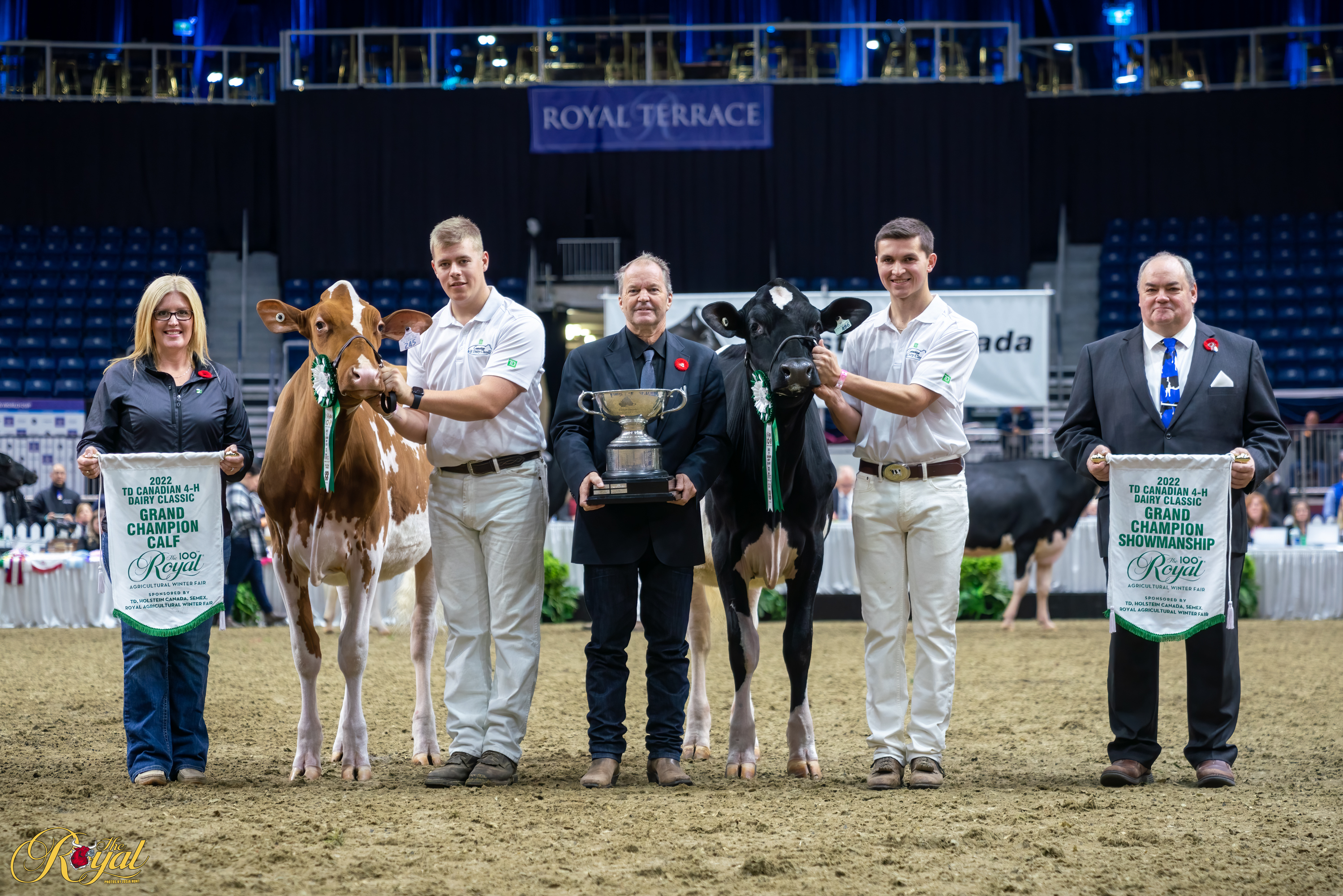
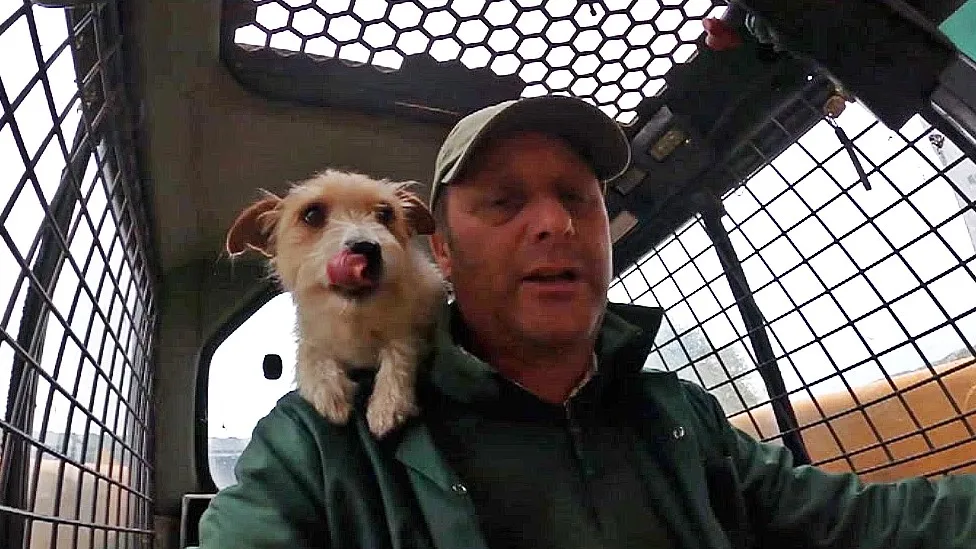
 Michael Paul Halpin, 41, of Buckingham, passed away on November 23, 2022.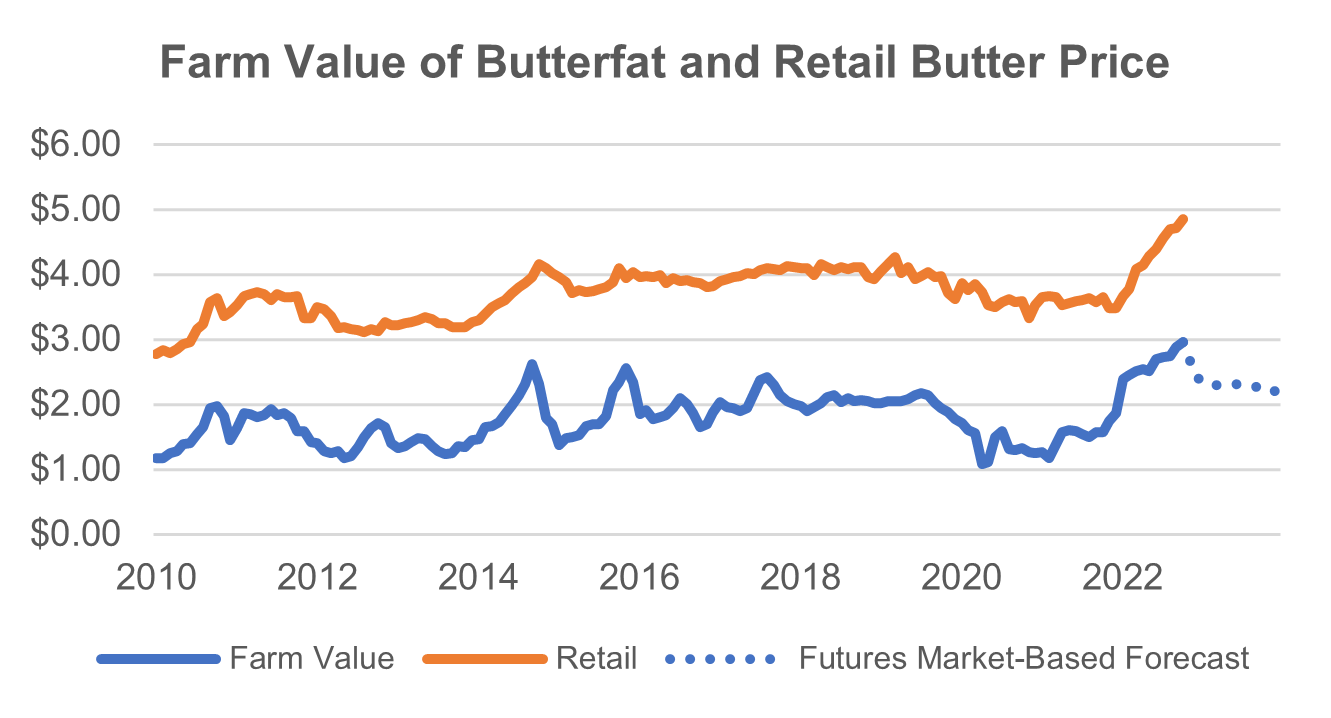
 MOO-ville Creamery’s ice cream has been named the best in America for the second year in a row.
 Here at The Bullvine, we’d like to express our sincere condolences to Paul’s friends and family.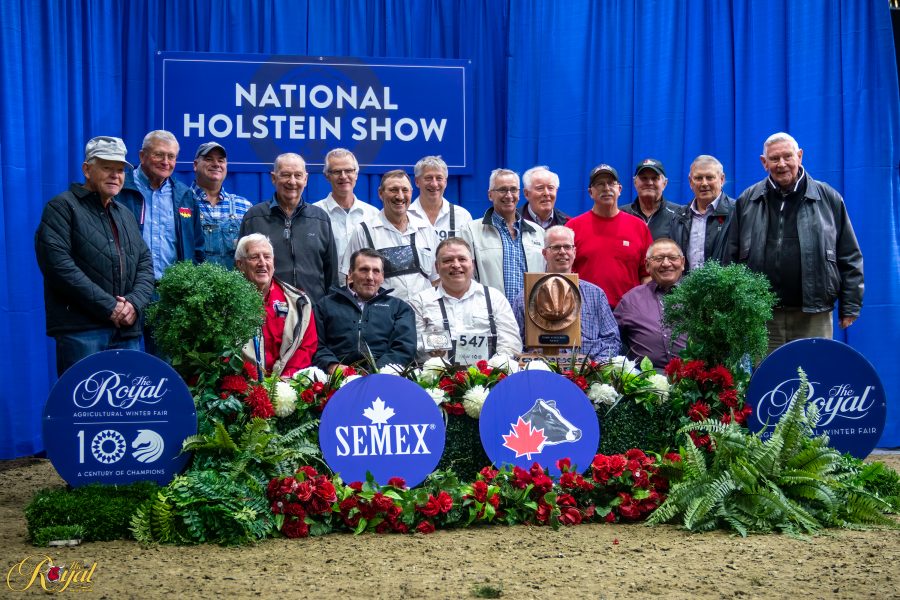
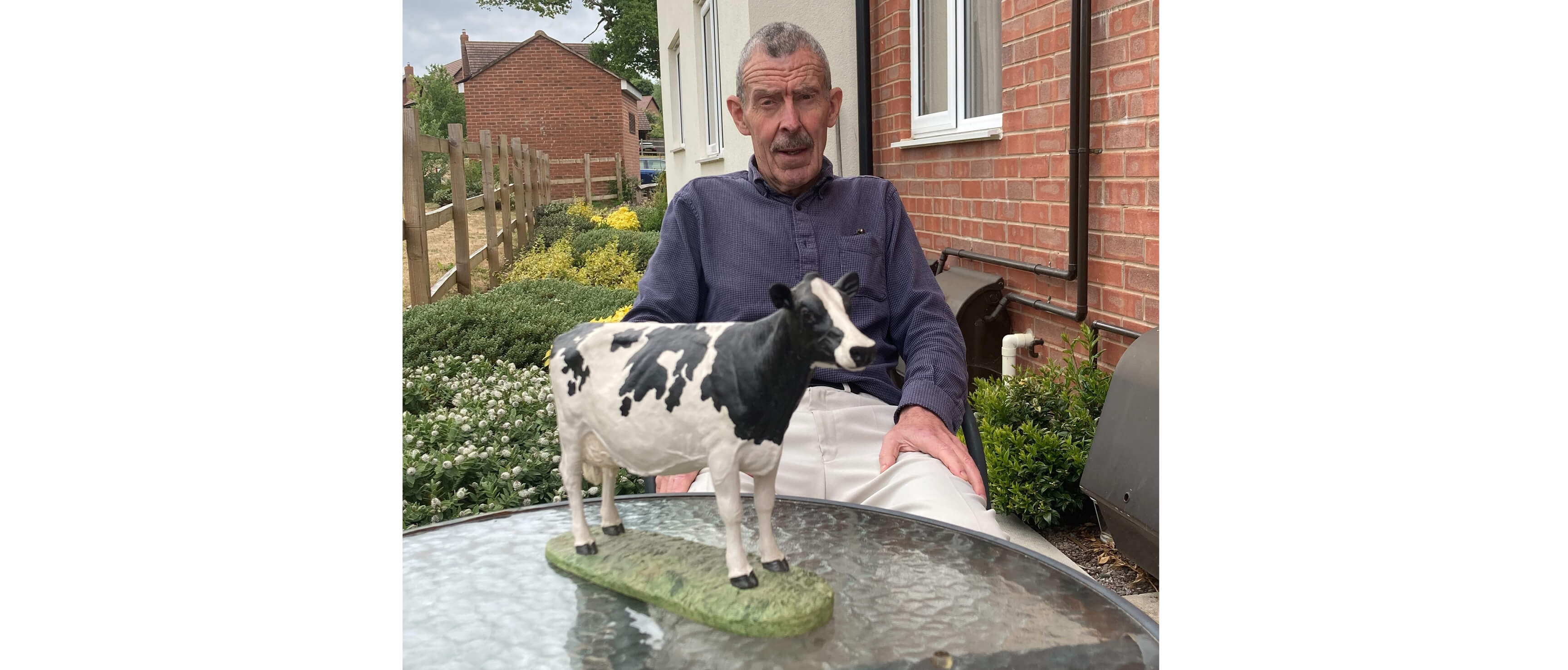 Presented by the Holstein UK Board of Trustees, the Lifetime Achievement Award recognises at least twenty years of dedication and service to the Holstein and/or British Friesian breeds. The award is presented annually to an individual who has made a remarkable contribution to the Society and provided outstanding service to the breed.




