

Archive for News – Page 142

Got ‘milk’? Dairy farmers rage against imitators but consumers know what they want

Sales of plant-based milk alternatives have been skyrocketing in recent years. Of course, no marketer in her right mind would try to sell anything with such a clunky, unappetizing name. Instead, they are sold as cashew milk, almond milk, hazelnut milk and a handful of other “milks” from unlikely sources with names that evoke creamy wonderfulness.

It drives producers of what you might call “traditional” milk — that is, the people who sell the old-fashioned, nutritious white liquid that comes from cows — a little nuts that the purveyors of nondairy drinks are calling their product “milk” and directly competing with the real thing in refrigerated cases across America.

It was one thing when there was just soy milk. But now that there are all manner of “milk” products concocted from the oddest things — cashews, hemp, even quinoa, for heaven’s sake —  the dairy industry has had enough. Last month, on its behalf, a bipartisan group of 32 members of Congress  from agricultural states sent a letter to the Food and Drug Administration asking for a crackdown on the proliferation of faux lait.

This is no frothy matter to milk producers who have seen decades of decline in milk consumption. “These hard-working Americans have experienced deep cuts in income as milk prices have plunged 40 percent since 2014,” the members of Congress  wrote in their letter. The authors include two California congressmen from the state’s agricultural heartland, Rep. David Valadao (R-Hanford) and Rep. Devin Nunes (R-Tulare).

Federal regulations (21 CFR 131.110, to be exact) define milk as “the lacteal secretion, practically free from colostrum, obtained by the complete milking of one or more healthy cows.” And that means, according to the letter from the members of Congress, that it is illegal for milk imitators to profit from using milk’s good name. 

But perhaps it is federal regulations that are out of touch with consumer trends. Though it is true that milk alternatives are generally less nutritious than the real thing, which is packed full of protein, calcium, and vitamins A and D, there’s no evidence that consumers have been tricked into buying a less nutritious plant-based alternative or that they’re unaware of the difference. Most people are smart enough to understand that quinoa milk isn’t cow’s milk flavored with quinoa (because, who would buy that?) just as as they can tell the difference between goat’s milk and Milk of Magnesia.

Indeed, Americans’ waning interest in drinking  milk may be attributable, in part, to a better understanding of its provenance and production.  These days, there are  vegans eager  to enjoy a bowl of cereal or ice cream without cow’s milk, often because they’re concerned about the treatment of the animals. There are parents concerned about the use of growth hormones in cows. There are people who, for whatever reason, don’t like the taste of cow’s milk and are pleased to have alternatives available.

So far, the FDA hasn’t responded to the letter. Even if the new leadership of the FDA were inclined to expend resources protecting the “milk” brand for the dairy lobby  and were to force imitators to change their labels, it’s uncertain whether that would have any effect on consumption habits.

Nor is it clear if a crackdown would stop the word “milk” from being used in labeling. In 2011, the FDA sent a letter to CytoSport Inc. in Northern California warning it to stop mislabeling its popular Muscle Milk brand nutritional shakes because they don’t contain milk. (Happily, it doesn’t contain muscles, either.) Yet, Muscle Milk is still readily available for purchase in major retail stores.

Perhaps that’s because the word “milk” — like its close dairy relations “butter” and “cream” — is a relatively generic term that can’t be easily controlled through trademarks and copyrights.

It’s unfortunate that the dairy industry is blaming milk imitators — rather than a change in consumers’ tastes — for its woes. This is the industry, after all, that came up with one of the more memorable advertising campaigns in recent history: “Got Milk?” 

In the end, consumers aren’t really dumb at all. Most of us know by now that  there’s no cream in Cream of Wheat, no butter in cocoa butter and no grapes in Grapenuts. Or nuts, for that matter. And we know what milk is, too. 

Source: LA Times

Canada’s supply management system is the envy of the world

A recent iPolitics article by Alan Freeman made the argument that supply management is “expensive, irrational and doomed”. It likened the system to something that could have been found in Ceaușescu’s Romania.

The argument couldn’t be more wrong; supply management is post-neoliberal and it represents the future of sensible 21st century management in the sectors in Canada in which it operates. It allows farmers to make a decent income while providing a competitive, quality product for consumers and working to guarantee Canada’s food security and food sovereignty. The prescription offered in Mr. Freeman’s piece would bring us back to the mid-19th century, when the wealthy and powerful ran the show at the expense of those less well off.

Importantly, supply management is not a subsidy — a fact that governments in Canada appreciate. Jeff Leal, Ontario’s agriculture minister, put it most appropriately when he pointed out that supply management “is one of the best economic models ever designed for agriculture because it costs governments not one nickel.”

That is not the case in other jurisdictions where government is on the hook for billions of dollars in support measures. The latest U.S. Farm Bill, passed in February 2014, allocates US$1 trillion over ten years for agricultural support. In the EU, billions of euros go to prop up agriculture. Indeed, the cost of subsidizing EU-28 farmers is about €50 billion per year. And those jurisdictions that do not provide support for agriculture, like Australia and New Zealand, have seen their farmers suffer unimaginable hardship, to the point where some have thrown in the towel and vacated the business.

In Australia, that has resulted in foreign state owned enterprises like Qatar’s Hassad, Inc., buying up big chunks of the country to feed its own population in what has been labeled as a “non-commercial transaction.” The Qatari plan is to be able to feed 30 per cent of its own population with food grown in Australia. The situation has gotten so bad that even Australia’s right-wing, ‘free enterprise’ government has changed the law to prevent that from happening in the future.

The Foreign Acquisitions and Takeovers Legislation Amendment Act (2015) has been in force since December 1 and has lowered the threshold rate where an investigation into a land purchase is triggered to a mere A$15 million from A$231 million. That is one massive change which demonstrates the enormity of the task facing Australian farmers in a totally deregulated and/or unsubsidized regime. Most of them find they cannot compete and are more than willing to sell their land to any entity with deep pockets that has an eye on the long game.

In New Zealand, farmers are facing almost impossible futures as the international price of dairy has plummeted to unsustainable levels over the past 18 months. Some pundits suggest international prices won’t recover until well into 2017, which would mean bankruptcy for numbers of farmers.

And what of the U.S., the model that Mr. Freeman might like Canada to copy? As noted, it runs on subsidies, but even so it is also suffering. Net farm income in the United States is at its lowest level since 2002 — down 36 per cent this year over 2014, the USDA tells us — and many farmers are finding it difficult to make ends meet, with attendant nasty consequences.

Does Mr. Freeman know that Land O’ Lakes, a major U.S. dairy cooperative, has imposed quotas on its members — just like the Canadian system? “Beginning January 1, (2016) the cooperative will implement a milk supply program that ‘allows us to better align member milk production with our operating capacity and provide access to the most profitable markets,’” the cooperative has stated. The cooperative simply has no place to put all the milk being produced. I am sure other dairies will follow suit; U.S. producers are now being forced to dump tens of millions of litres of milk. Part of the rationale for this is that there is no “soaring demand” for dairy products in China — Freeman’s assertion. Ask the New Zealanders about that! The Chinese market has largely evaporated.

The export markets that Mr. Freeman so confidently argues Canadians could access in the absence of supply management simply do not exist. He notes that “in a normal world, Canada would export (any milk) … surplus.” My question is: To where? Clearly, he has no idea that in a world swamped with surplus milk, and likely to remain so for a long time, remunerative exports are not possible. European dairy farmers have taken to the streets in Brussels, Paris and elsewhere, while U.S. dairy farmers are thankful that their government continues to look out for them. New Zealand dairy farmers who are dependent on export markets are on the ropes because markets have either dried up or been stolen by a cheaper, perhaps subsidized, competitor. They wonder what has happened to their world.

There is so much wrong with Mr. Freeman’s article that it would take more than 900 words to reply, but the data demonstrate that his assertions are completely wrong-headed. As well, the fact that Canada remains the only country with quotas — which he seems to find evil — is neither here nor there. As my parents used to say to me, “if everyone jumped off the bridge, would you?”

The world is moving on, as Freeman points out — but not in the direction he suggests. Land O’ Lakes has imposed quotas on its members, and I give the EU two years before they re-impose them because of the oceans of milk that cannot be sold. In the Antipodes, dairy farmers are reeling. Canada’s system makes so much sense for all concerned, and especially for producers and consumers.

Source: Dairy Farmers of Canada

Half-Ton Butter Sculpture Showcases Culture of Stewardship During 101st Farm Show

A sculpture paying tribute to the history of environmental stewardship by dairy farmers, and crafted from more than 1,000 pounds of butter, was unveiled today at the 101st Pennsylvania Farm Show in Harrisburg. The sculpture, sponsored by American Dairy Association North East (ADANE), highlights innovative practices to enrich the soil and reduce storm-water runoff, such as crop management, plants and groundcover near streams, streambank fencing, and manure storage facilities.
The 2017 sculpture showcases Pennsylvania dairy farmers and an agriculture industry that has high standards for conservation, with deep roots in a culture of stewardship.

“Many people care about the health of our local waters — none more so than farmers, who rely on our land and water to grow the food that we enjoy,” said Agriculture Secretary Russell Redding. “Our farmers have long recognized the important link between healthy soils, sustainable farming practices, and the quality of our waterways. When we have healthy, viable farms, we have healthy, viable watersheds. You can’t have one without the other.”

Redding unveiled the sculpture with the help of dairy farmer Jim Harbach of Clinton County, Pennsylvania, State Dairy Princess Halee Wasson of Centre County, and sculptors Jim Victor and Marie Pelton of Conshohocken, Montgomery County. The sculptors began working in mid-December to create the 2017 edition of a Farm Show tradition that dates back to 1991.

“The butter sculpture is a creative way to showcase the dairy industry and for dairy farmers to tell their story — about the nutritious products we produce, the practices we employ, and the standards we uphold,” explained Harbach, of Schrack Dairy Farms in Loganton, Clinton County. “Caring for the land, air and water we share with our communities is important to us all, so I’m pleased to be representing my fellow Pennsylvania dairy farm families today.”

At the close of the show, the butter, which was donated by Land O’ Lakes in Carlisle, Cumberland County, will be transported to a Juniata County dairy farm where it will be run through a methane digester and converted into renewable energy for the farm.

The Pennsylvania Farm Show is the nation’s largest indoor agricultural event, featuring 6,000 animals, 10,000 competitive exhibits, and 300 commercial exhibitors. According to a report issued by the Hershey Harrisburg Regional Visitors Bureau, the 2015 show had an estimated economic impact of $95 million to the south-central Pennsylvania region, supporting more than 18,000 jobs over the course of the week-long event.

The show runs January 7-13 from 8 a.m. to 9 p.m. and January 14 from 8 a.m. to 5 p.m. Admission is free and parking is $15 in Farm Show lots. The Pennsylvania Farm Show Complex and Expo Center is easily accessible from nearby Interstate 81.


Source: Market Wired

Holstein Canada Announces the 2016 Master Breeders

The announcement of the Master Breeder recipients has become an annual tradition at Holstein Canada, and this year is certainly no exception. Holstein Canada is pleased to announce the 20 Master Breeders who will be honoured at the 2017 National Holstein Convention Master Breeder Banquet in York Region, Ontario on Saturday, April 8, 2017.

Of the 20 breeders who received exciting news today, 45% (9) are first-time recipients of a Master Breeder shield, while the remaining are previous shield winners with eight breeders receiving their second shield and two receiving their third shield! 11 breeders are from Ontario, while the remaining nine are from Québec.

Congratulations to the 2016 Master Breeder Recipients:

Prefix Name Location Shield #
BLONDIN Ferme Blondin St-Placide, Quebec 2
CARLDOT Carldot Farms Stratford, Ontario 3
CLAYNOOK Claynook Farms Ltd. New Hamburg, Ontario 2
COTOPIERRE Ferme St. Pierre & Fils Enr. Rimouski, Quebec 3
DENISTIER Denistier Holstein Rimouski, Quebec 1
DONNANVIEW Donnanview Farms Ltd. Stirling, Ontario 2
EMBRDALE Embrdale Farm Asphodel-Norwood, Ontario 2
FRADON Fradon Holsteins Ltd. Woodstock, Ontario 2
GENO Ferme Geno Inc. St-Marc des Carrieres, Quebec 1
HAANVIEW John & Bonnie Jean Den Haan Loretto, Ontario 1
HESSHOLM Hessholm Holsteins Kemptville, Ontario 1
KAKOUNA Ferme Saindon & Fils Inc. St-Alexandre, Quebec 1
KINGSWAY Kingsway Farms Hastings, Ontario 2
LOCHDALE Lochdale Holsteins Alexandria, Ontario 1
MACO Mario Corriveau St-Vallier, Quebec 1
MEADOWBLOOM Paul Leis Elmwood, Ontario 1
MYSTIQUE Ferme Mystique S.E.N.C Mirabel, Quebec 2
TINBER Tinber Holstein Inc Ste-Cecile de Milton, Quebec 1
WEBB VIEW Webb View Farms Roseneath, Ontario 2

Please note that while the winners of the 20th shield have been notified, for privacy reasons they have not been included in the above list.

Contact information for the winners will be made available on the Holstein Canada website, once staff has had an opportunity to verify the details. Those requiring the contact information for any of the winners prior to the listing being posted are asked to contact Jennifer Kyle at 519- 756-8300 ext. 234 or jkyle@holstein.ca.

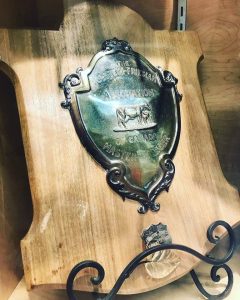
Since its beginning in 1929, the Master Breeder program has become the most coveted Holstein Canada award. 1,007 Master Breeder shields have been handed out in the award’s 87-year existence. These “Master” breeders are recognized for having mastered the art of breeding balanced cattle – high production and outstanding conformation with great reproduction, health and longevity. Congratulations to the 20 2016 Master Breeders who now join the ranks of the most elite breeders across Canada!

Knigge Dairy Farms Hosts Episode of “The Bachelor” TV Show

Knigge Farms is no stranger to visitors.


The farm routinely welcomes school and church groups as well as travelers from across the country and around the world to tour the family dairy business. Part of the allure is the fact that Knigge Farms became the first U.S. dairy to install and milk cows with robotic milkers 16 years ago.

However, this past fall, they opened up their doors to an entirely different type of audience. The popular reality television show “The Bachelor” selected Knigge Farms as the location for taping an episode of the show. “The Bachelor” began its 21st season on January 2. Knigge Farms will be featured as part of a “group date” on the fourth episode, which is scheduled to air January 23.

During the taping, the cast of bachelorettes milked a cow, fed calves, cleaned a barn, and in the final activity of the day, chased a wheel of LaClare Farms cheese (www.laclarefarm.com) down a hill in a competition. The cast ended their day at the Paine Art Center in Oshkosh, Wis., for a rose ceremony where contestants are eliminated or remain to compete the following week by receiving a rose from the bachelor.

“A show like ‘The Bachelor’ is a huge production,” said Pete Knigge, co-owner of Knigge Farms LLC. “We didn’t know what we were getting into. Fortunately, as the audio and video crew set up in our barn, the technology of the robotic milkers allowed the cows to be milked while the filming was taking place and we hosted the cast and crew,” said the lifelong dairyman. “The whole family pitched in and we told our farm story.”

“It was a fun day!” added Pete’s son, Charlie Knigge, also a co-owner of Knigge Farms LLC. “Our farm was able to show the cast and the entire crew what modern dairy farming looks like. I’m excited for a national television audience to see it as well.”

The crew showed up around 10 a.m. on October 7 and stayed until the sun was setting around 6:30 p.m. that evening.

“It was a bit of a circus around here that day; however, the opportunity sounded too good to pass up. Too few people today have a strong connection to where their food comes from,” says Charlie. “We want to clear up some of the mystery around modern dairy and crop farming.”

Source: 

Lely North America Presents 2017 Spring Showcase Promotion

North America (Lely NA) is proud to present our annual spring promotion, the Lely Showcase. Starting January 3, 2017, and ending May 15, 2017, Lely will be giving away six jackets, three Lely Luna Cow Brushes, and one lucky person will receive the grand prize, a Lely Juno 100 automatic feed pusher.This contest is eligible for all residents of the United States and its territories, as well as Canada. There will be random drawings for jackets throughout the contest, with a grand prize drawing to give away the remaining jacket, Luna brushes and the Juno. There is no cost or purchase required to enter, interested parties are encouraged to visit www.lely.com/showcase to enter.

Grand Prize Juno

Pushing feed yourself could be a thing of the past. With the Lely Juno 100 automatic feed pusher, providing fresh feed to cows around the clock has never been easier. The availability of fresh feed results in increased dry matter intake and milk production, which has been found to have a positive impact on the general health of the animal.

In a Lely research study, 100 Juno customers were polled to ask if they considered the Juno to be a farm luxury or a necessary part of their operation, among other questions. Here is what they had to say:

  • The Juno saved an average of 25 minutes of labor per day, 152 hours annually.
  • Pushing feed via tractor or skid loader expended 22.8 times more energy per year than the Juno, which pushed feed three or four times more per day.
  • Labor savings resulted in more than $2,400 (USD) annually.
  • Average milk production increases occurred.
  • Payback time averaged three to four years for producers experiencing labor and fuel savings.
  • Payback time averaged one to two years for producers experiencing labor and fuel savings as well as production increases.

Needless to say, producers further confirmed through the survey that the Juno feed pusher has become a necessity in their operations.

Luna Brush

The Luna cow brush is designed to pamper and care for your cows. Brushing not only improves blood circulation but also cleans dust and other dirt from the skin, reducing itchy skin. Brushing is relaxing for the cows and they will happily be brushed several times a day

Follow this link (www.lely.com/showcase) to enter to win one of these prizes. We invite you to learn more about Lely dairy industry innovations on Lely’s website, www.lely.com. Also, follow us on Lely’s Facebook page (Facebook.com/LelyNorthAmerica) or Twitter (@DairyRobot). To watch videos featuring Lely’s products, visit http://www.youtube.com/lelydairylife.

About Lely North America

Lely NA, based in Pella, Iowa, is part of the Lely Group, founded in 1948. Lely directs all its effort toward creating a sustainable, profitable and enjoyable future in farming for its customers. Lely is the only company worldwide to supply the agricultural sector with a complete portfolio of products and services ranging from forage harvesting to automated feeding systems, barn cleaners and milking robots. Lely is also working on business concepts to ensure energy-neutral operations in the dairy sector. For many years, Lely has remained the undisputed market leader in the sales and service of automated milking systems. The company has a strong position in forage harvesting products, and with more than 65 years of acquired knowledge of the agricultural cycle Lely has an unrivalled position. The Lely group is active in more than 60 countries and employs some 2,000 people.

Dairy Farmers Hopeful Despite Difficult Economy

Milk prices are expected to remain low. Feed costs are likely to remain high. Experts see little hope for increased federal or state milk subsidies. But Connecticut’s stubborn dairy farmers insist they see better times ahead.

Tuesday’s Connecticut Dairy Summit featured a startling contrast between the essentially gloomy short-term economic forecasts of industry experts and the determined optimism of several of the farmers who took part in the conference.

“It’s a little bit tough right now,” Seth Bahler, of Oakridge Dairy Farms in Ellington, said of the current economic climate for farming. But Bahler said his family is now expanding its operations and is building new facilities that will be able to house as many as 3,000 dairy cows in three years.

“We see a tremendous opportunity for the future,” Bahler said.

Other farmers who spoke at the conference also focused on their plans for the future: on the need to modernize by employing “robotic milkers,” diversifying their products and selling more directly to Connecticut consumers.

Instead of complaining about inadequate state and federal price supports, several farmers said their biggest challenges involve how to manage “generational transfers” of farms from aging parents to children, finding good agricultural land and changing the sometimes negative public perceptions of the dairy industry.

“Farmers are generally realistic,” said Gregory Peracchio, a member of the family that owns Hytone Farm in Coventry. He said most Connecticut farmers have decided that waging another lobbying campaign for more federal or state subsidies simply wouldn’t work in an era of major government deficits.

“That’s not necessarily a battle we’re ready to fight right now,” Peracchio said.

This state’s dairy industry contributes about $1 billion in annual sales to the Connecticut economy and provides nearly 3,800 jobs, according to Rigoberto Lopez, head of the University of Connecticut’s Department of Agricultural and Resource Economics.

Lopez told the conference that dairy sales in the state have increased by 13 percent since 2007 even though the number of dairy farms has sunk to just 146 and farm employment is down by about 6 percent.

Farmers in Connecticut and the rest of the Northeast have complained that a federal dairy price support system enacted in 2014 favors the huge industrial-scale dairy operations in Midwest and far Western states like California. The system is calculated based on national milk prices versus national average cattle feed costs, and is supposed to offer aid to farmers when feed expenses rise and milk prices fall.

But farmers in this region say feed expenses in Connecticut and surrounding states are much higher than in states to the west, and that the federal system simply doesn’t work for small New England dairies. A U.S. Department of Agriculture official said the federal price support system has provided only $28,000 in payments to Connecticut farmers since the program was begun.

Milk prices can vary dramatically depending on production increases in major states like California, or whether China and Europe import a larger or smaller portion of U.S. dairy production in any given year, according to Robert D. Wellington.

Wellington is a senior vice president with Agri-Mark, a dairy farm cooperative and the largest supplier of fresh milk in New England.

“The market place doesn’t care about how Connecticut is doing,” Wellington told the conference, noting that Connecticut provides just 1.5 percent of all dairy production in the Northeast.

Ben Freund, an East Canaan dairy farmer and co-chairman of the Connecticut Farm Bureau Association’s dairy committee, said the state of Connecticut has its own dairy subsidy formula to help farmers when milk prices sink. But he added that the state has little money available for that program because of ongoing fiscal problems.

Freund said the state’s payments to Connecticut dairy farmers in the past six months are “less than 10 percent” of the amount the state’s subsidy formula indicated should have been paid out.

Farmers, including Liz MacAlister of Cato Corner Farm in Colchester and Amanda Freund of Freund’s Farm and Cowpots of East Canaan, cited changing consumer awareness and increasing public interest in where food comes from and how it’s raised as positive signs for the future of dairy farming here.

“Connecticut is a major, major market… and a sophisticated market,” MacAlister told the conference. She said consumers are willing to pay more for cheese and other dairy products but only if they’re convinced of superior quality.

Several other speakers said Connecticut dairy farmers need to become more efficient and to connect directly with consumers in order to survive.

Source: Hartford Courant

Herding Hearts: Michigan boy gets outpouring of support….and cows

When Joanne Wirtjes asked for stuffed cows for her 9-year-old son, Ryan, she never expected their heard of cattle would become so large.
Ryan has a rare mitochondrial disorder that causes a wide array of medical issues, from hydrocephalus — a fluid build up in the brain that requires a shunt to drain excess fluid — to symptoms like frequent vomiting, bowel and colon problems, and chronic pain. He has loved stuffed animal cows ever since receiving one from the Make-A-Wish foundation several years ago.

After a difficult year filled with illness and medical appointments, Ryan was feeling lonely and sad about his health, until his mom thought of the idea to request stuffed cows from around the world to be mailed to their Wisconsin home to cheer him up.

To date, Ryan has received more then 100 stuffed cows and bulls in the mail, along with cow socks, blankets, t-shirts and slippers.

Ryan is jumping over the moon, just like the cow in the nursery rhyme did,” Wirtjes told TODAY Parents/NBC News. “He loves these cows — he’s naming them and wants to figure out how to tag them so he can make sure that we know who’s who.”

But it isn’t just the packages filled with bovines that are lifting Ryan’s spirits — it’s the notes of encouragement included in every box.

“The letters have been so encouraging,” said Wirtjes. “Some have told of the struggles the sender has faced and encourage Ryan to keep going, some are about a shared love of cows, some have asked what else they could do to help Ryan, and some have invited us to come to their farms and visit live cows.”

Wirtjes says the letters have touched her deeply as well.

“My heart has been so blessed,” said Wirtjes. “We are so blessed to be Ryan’s parents and we are so thankful for everyone who has sent cows to Ryan. This momma’s heart is so full.”

Stuffed cows for Ryan’s herd can be mailed to:

Ryan Wirtjes

3969 Meadowbrook Court

Sheboygan, WI 53081

Source: WCYB

Local Dairymen Take Part in California Milk Rose Parade Float

It’s a New Year’s Day tradition for millions – watching the Rose Parade and the Rose Bowl Game. And each year a million or more from all around the world converge in Pasadena to see one or both, up close and personal.

When watching the parade this year, South Valley residents will want to pay close attention and watch for the California Milk Advisory Board (CMAB) float – where they may just see some familiar faces. Local dairymen, Joe, Joey and Joseph Airoso, and brothers Mario and Joe Simoes were chosen to appear on the float.

This year’s parade theme is “Echoes of Success.” The CMAB chose “Legacy of Generations” as its float theme, and 11 individuals from five long-time California dairy families will ride on the float, representing the 1,300 dairy families within the state.

“It’s an honor,” Mario Simoes said of being chosen.

The Simoes

The Simoes are 81-year-old twins, having immigrated to the US from the island of Terceira in the Azores, at the age of 15. They are the eldest of 13 siblings. Their father had worked in the dairy industry in the Azores, and moved the family the US to do the same, hopefully on a larger scale.

“We’ve been twins for 81 years,” Joe Simoes said. “I think it’s an honor – they don’t invite everybody [to be involved in the Rose Parade].”

The fact that the Simoes are twins, and have been in the dairy industry all of their lives lead the brothers to their being chosen. Joe’s son, Joey, is carrying on the family legacy, as are some of Mario’s children.

The Airosos

Similarly, Joey Airoso’s great grandfather, Charles, moved from the same island in the Azores to the San Joaquin Valley in 1912. Joey Airoso is proud to continue the legacy with his parents and his children. Airoso’s father, Joe, is unable to attend the parade due to recent ear surgery. However, Joseph, Airoso’s son, is participating as he does in the family business.

This is the second year the CMAB is participating in the parade with a float. The decision, made by the organization’s board, is good for marketing, Airoso said.

“We’ve got to show people from the urban areas what we are doing, and get our message out more,” he said. “It’s a way to get the seal out more.”

Real California Milk Seal

The CMAB seal, which represents “Real California Milk,” is highly important to the industry and California dairymen. It is important for Californians to think California milk and milk products first and appears on products made of California milk.

“There’s a cow milked in each of the 50 states,” Airoso said.

However, California milk and dairy products are shipped to many states, as well as countries around the world, while being produced in the most highly regulated state, he said.

But, “any time you advertise any dairy product, it’s a benefit,” he said.

“The seal,” Airoso said, indicates the product “was made in California, under the stiffest regulations of any in the country. Our creamery, Land ‘O Lakes, procures the highest quality milk – anywhere.

“This state ships milk, everywhere. There’s not a place with cleaner milk.”

To Mario Simoes, the seal means, “it is the real stuff,” he said. “It’s not made out of almonds [or anything else],” not that he has anything against almonds, he added.

Joe Simoes said he feels the same way.

Dairy Cows

In speaking with the Simoes and Joey Airoso, there is little doubt that they think highly of dairy cows as an animal species.

“There is no better animal than a cow,” Mario Simoes said. “They are the hardest working animal around.”

Well, that and the people who own and run dairies, perhaps.

“Anybody who survives [in the dairy industry] this long has made a lot of sacrifices,” Mario Simoes said.

“Taking care of the herd takes 24-hours a day,” Joe Simoes said.

The Simoes operate dairies in Tulare and Tipton, now with their children. They worked together for more than 25 years and then, independently built up their own, individual dairies. They and their extended families now operate dairies with a total of some 10,000 cows.

Joey Airoso’s Pixley dairy operates with more than 2,000 milking cows on the same land that his great grandfather worked more than 100 years ago. Now being operated by the 4th and 5th generations in California, he has concerns about the future of the dairy industry in the state, although this is the best state, weather-wise, to operate a dairy, he said.

“The health of the herd is as good as always,” he said.

However, the regulations are of major concern, and the cost of those regulations. Then there are the animal rights protestors – they don’t want you to consume anything that comes from an animal, he said. Airoso questions the ability for California dairyman to operate in 20 or 40 years from now.

The CMAB Float

Joining the Simoes’ and Airoso’s on the CMAB float will be dairy family members from Petaluma, Lakeview and Nuevo.

“People are increasingly conscious of where the food they feed their families comes from. It begins here in California where real families for generations have successfully produced real wholesome, nutritious milk kissed by the California sun and served around the world in the cheese, butter, yogurt and ice cream we all love,” said John Talbot, CEO of the CMAB.

The five dairy farm families on the float will ride alongside a life-size animated Holstein cow and floral depictions of products that have made California the No. 1 dairy state. The float will also utilize natural décor materials, including food and fiber co-products such as cotton seed and almond hulls, reflecting some of the many sustainable on-farm practices dairy producers implement each day, according to the CMAB.

This year, the 128th Annual Rose Parade and 103rd Bowl Game will take place on Monday, January 2, as history has not allowed the parade or game to ever take place on a Sunday. The parade begins at 8am and will be aired on many local and cable television stations.


Source: Valley Voice

Report: Vilsack to head U.S. Dairy Export Council

According to a report from Agri-Pulse, U.S. Agriculture Secretary Tom Vilsack will become president and CEO of the U.S. Dairy Export Council (USDEC) when he leaves office this month.

Agri-Pulse cites a source familiar with Vilsack’s plans. A spokeswoman for Dairy Management Inc., which founded the export council, told Brownfield she could not confirm or deny that Vilsack would take over the council. A USDA spokeswoman told Agri-Pulse she could not confirm Vilsack’s plans.

Tom Suber, USDEC president since its inception 21 years ago, retired at the end of the year. USDEC is funded by checkoff revenue to track and promote trade in American dairy products and ingredients.

Source: Brownfield

Fair Oaks Farm Is Crusading To Save Big Ag

On the windswept plains of Indiana, a gang of dairy farmers are trying to save modern agriculture from the forces of ignorance.

Dairy Adventure at Fair Oaks Farm is an unusual tourist attraction, to say the least. Built on the site of a vast dairy farming operation in rural Indiana, Dairy Adventure doubles as an agricultural science center as well as an opportunity for people to directly observe the day-to-day operations of a dairy farm. The intent isn’t to evoke nostalgia for small farms or a rural idyll; instead, Dairy Adventure wants to sell the public on the value of modern, industrialized agriculture.

Fair Oaks is the flagship operation of Select Milk Producers, Inc. Although part of what is oft-stereotyped as “Big Ag,” the members of Select Milk hardly evoke a corporate vibe in-person.

The company itself was born out of the wreckage from a major agricultural recession in the late 1980s. Unhappy with their existing milk distribution options, several dairy farmers decided to found their own collective enterprise in 1994. Instead of being a centralized top-down operation, Select operates as a cooperative with more than 50 participating owners (or “families,” Select’s preferred term), operating their own farms while sharing processing facilities, transportation, and branding.


Today, Select Milk isn’t a household name, but it has a large footprint. It produces more than a fifth of the country’s cheddar cheese and is a major supplier for big-name brands like Kraft. In 2012, the company partnered with Coca-Cola to create Fairlife, LLC, a company that produces deluxe milks.

“Kraft hasn’t made cheese in years,” one Select partner told The Daily Caller News Foundation. “Kroger, Sargento, it’s the same thing. They buy from us … Mass-market cheese is a commodity.”

While Select has thrived, cooperative members perceived a long-term problem for their business in the form of ignorance, suspicion, or even outright hostility from the general public. And so, when Select expanded its operations into Indiana, it created Fair Oaks Farms as a model farm to show off to the public.

In a country where only 2 to 3 percent of people work directly in agriculture, Fair Oaks is intended to educate the public about the nature of modern agriculture in a positive manner. Visitors learn about the everyday life of a dairy cow (a bovine narrator tells visitors “It’s all about mmmme!”), can pay a visit to the cattle pens and milking facility, and can even watch live calves being born in a purpose-built birthing barn. A similar “Pig Adventure” exists where guests can visit an active hog farm.

Much of Fair Oaks functions as a kid-friendly science center, but it has a more serious purpose as well. The operators of Fair Oaks want the center to serve as an ideal operation both for other farmers and for the public. The message they hope the public takes away is that large agricultural operations are not only efficient (and necessary in a world of more than 7 billion), but can also be safe, environmentally friendly, and good for animals.

“We want people to see ‘big corporate agriculture’ for what it is,” a hog farmer told TheDCNF during a visit to Pig Adventure. “The media attacks us, family people, as big commercial corporate farming … ‘big’ doesn’t mean ‘non-family.’”

Michael McCloskey, Select’s current CEO, was one of the original founding partners, and was a veterinarian before switching into dairy. McCloskey isn’t a national name, but he served on president-elect Donald Trump’s transition team for agriculture and has even been suggested as a potential secretary of agriculture. The pick would allow Trump to include a Hispanic in his cabinet; despite his name, McCloskey hails from Puerto Rico.

During a tour of the Dairy Adventure, McCloskey rattled off facts about the operation. Dairy and pig farms are often bashed for their stench, heavy manure runoff, and climate effects (cows produce tremendous amounts of methane), so Fair Oaks shows off an innovative process of capturing cow manure and processing it on-site into fuel that powers both the farm itself as well as a fleet of more than 40 bio-diesel trucks. The farm’s website even proudly sports a “Powered By Poo” logo.

Modern livestock operations are also blasted as inhumane for the animals themselves, so Dairy Adventure takes pains to emphasize that their cows live a contented life of eating, laying on comfy sand beds, and walking to and from the milking facility. At Fair Oaks, cows are milked three times a day, a number McCloskey said is above-average and allows for their pens to be cleaned more often while keeping the cows more active and comfortable.

“Cows want to be milked,” one Select Milk partner told TheDCNF. “The milking machine doesn’t suck out milk. The cow has to be comfortable or it fails.” Treating a cow badly, he said, was destroying a valuable business asset.

When the milk is collected, McCloskey said, Fair Oaks rapidly chills it down to 34 degrees for freshness and safety. Smaller dairies rarely match that degree of rapid cooling, he said, adding that it the nearly-freezing temperature goes well beyond the 45 degrees mandated by the federal government. Going the extra mile in cooling raw milk, which is required of all Select members, has helped to extend the self-life of store milk by two weeks or more, McCloskey said.

Fair Oaks clearly sees itself as a model for how an agricultural operation can be modern, highly-productive, and also palatable for the public. When Fair Oaks expanded its visitor offerings to include a pig adventure, they demanded that the associated hog farm not use gestational cages, which are common throughout the country and keep many breeding sows enclosed for much of their lives. While pig farmers have arguments for why such cages are valuable, they were simply difficult to sell to the public as humane, Fair Oaks decided. As a result, the farm showcased at Pig Adventure doesn’t have them, and instead makes the case a successful pig farm can make do without them.

The effort to sell Big Ag to the masses appears to be bearing some fruit. Fair Oaks gets more than 700,000 visitors a year, despite being more than an hour outside Chicago and even further from other cities. Ironically, the site received very few visitors when it was completely free, but interest soared once it began charging an admission fee.
Source: Dailycaller

A dairy farmer’s plea: Bring farm-gate milk prices in line with retail markets

Ted Sheppard always loved the land. Living in southern Missouri, where crops were hard to come by but rocks and grass were plenty, he was looking to find a farming endeavor that would fit the terrain and rural lifestyle. So, in 1977 he settled on dairy farming. But after 40 years in the business, this Texas County dairyman fears there will be no next generation in dairying if milk prices do not improve.
“When we started out,” he told an audience at the Missouri Governor’s Conference on Agriculture, “it was the only way to pay for a farm in southern Missouri.” But today, it is tough.

Imagine, working in a business for almost 40 years, and today selling your product for just 25% more than when you first started. That is what is happening in the dairy industry. Low prices and costs to operate continuing to rise, creating a financial spreadsheet that many in Sheppard’s area cannot make work — so they are exiting the dairy business.

Exiting the business
When Sheppard started in dairying near Cabool, Texas County was home to 250 dairies. Today there are roughly 40. “Over the years, we have gone through a lot of sad times,” he shared. “Producers were selling as they aged out. Having to haul people’s cows off, and people were crying because they couldn’t make the bills. It has been devastating to the dairy industry.”

As a state, Missouri had 1,142 permitted dairy operations in 2015. That is a dramatic drop from the USDA Economic Research Service Dairy Yearbook for 1977, which showed there were 17,000 farm operations with dairy cattle on them. However, data back then accounts for those operations with even just one dairy cow on the farm.

1977 vs. 2016
Sheppard decided to look back to 1977 and see just what cost has done in relation to price. Remember, Sheppard was paid just 25% more just last month than in 1977. Here is what he found:

• Milk costs up 300%
• Feed increased 200%
• Milk replacement up 400%
• Barn supplies increased 450%
• Pickup truck costs 900% more
• Barn boots up 600%
• Milk insurance 1,200% higher
• Alfalfa seed up 1,000%
• Electric bill rose 50% (Shepherd considers that a bargain)
• TV was free
• Quarter-pounders up 400%
• A cup of coffee up 500% to 2,000%, depending on where you buy it
• Candy bar is 750% higher
• Can of soda up 800%
• Gallon of milk up 350%

“Think about that,” he said. “Our milk price at the farm gate is up 25%, and they sell it in the store for 350% higher than in 1977.”

As he struggled to speak, Sheppard went on. “If dairymen don’t start getting their share from the retail market” — he paused, collected himself and continued — “there is not going to be family dairies here in Missouri.”

Source: Missouri Ruralist

Canada seeks common ground on NAFTA

Canada’s ambassador to the U.S., David MacNaughton, expressed his desire to see the countries propose common-ground, common-sense ideas that improve the old agreement instead of flinging out hardball demands that could produce deep, drama-filled bargaining. (New America, Flickr/Creative Commons)

Canada’s ambassador to the U.S. stresses co-operation over confrontation

The Canadian government is signalling the approach it intends to take should Donald Trump make good on his promise to renegotiate the North American Free Trade Agreement.

Canada’s ambassador to the U.S. is laying out some starting principles such as co-operation instead of confrontation.

In a lengthy interview, David MacNaughton expressed his desire to see the countries propose common-ground, common-sense ideas that improve the old agreement instead of flinging out hardball demands that could produce deep, drama-filled bargaining.

“We have done an extensive amount of work (to prepare for this),” MacNaughton said in the year-end interview. “We have a good sense of what would be in Canada’s interest….

“(But) the areas we need to focus on -€” and I think we are focusing on – is where is it not just in Canada’s interest, but in Canada and the United States’ interest…

“I think if we’re just blatantly trying to push something that works for us but doesn’t work for them, that’s not going to be… quite as easy.”

There’s already enough potential for trade tussles with the incoming Trump administration.

They include the incoming president’s vow to fight certain tax policies of other countries; his preference for Buy American restrictions on infrastructure projects; the ongoing softwood lumber dispute; and increasing anger from U.S. dairy producers over Canadian import restrictions.

Aware of the irritants that could erupt in 2017, the Canadian government has already begun reaching out to potential U.S. allies to bolster its public advocacy on some of these issues including Buy American.

But the government wants to avoid having irritants inject uncertainty into discussions about the trade treaty that governs the region where Canada sells more than three-quarters of its exports.

MacNaughton wouldn’t elaborate on the specific improvements he has in mind, saying he wants to avoid negotiating in public.

He did confirm one potential change: to professional visas.

International businesses have complained about an out-of-date visa system that creates unnecessary red tape when employees travel across the border for work. When asked about visas, MacNaughton confirmed that was the type of mutually beneficial upgrade he favours.

It’s also unclear what the incoming administration actually wants from Canada — Trump almost never mentioned the northern neighbour during the campaign, even as he railed against NAFTA.

MacNaughton said he’s received some encouraging signals about its attitude toward Canada.

He said he’s had positive conversations with people close to Trump, including his pick for attorney-general, Jeff Sessions, and incoming White House chief of staff Reince Priebus, who attended a White House correspondents’ dinner party at the Canadian embassy.

The Trump team’s complaints about trade tend to involve currency manipulation, dumping of steel, cheap labour, trade imbalances, and low environmental standards that make it hard for U.S. companies to compete.

“None of those things apply to Canada,” MacNaughton said.

“I think they see us as pretty much the good guys, rather than the bad guys in terms of trade.”

This raises a question about the other North American amigo: Mexico, which has been a frequent target of Trump’s. That question is, would Canada seek to renegotiate NAFTA as a trilateral block, or cut Mexico loose and try getting a better result by dealing one-on-one with the Americans?

MacNaughton said he couldn’t rule out either possibility: “The reality is that we will do what is in Canada’s interest,” he said. “(But) we don’t have exclusive control over whether or not the Americans want to have trilateral conversations or bilateral conversations.”

As for the upcoming irritants, the Canadians have begun a pre-emptive pushback.

They’ve been warning American interlocutors about potential damage should Canada be included in two of Trump’s campaign policies: Buy American infrastructure restrictions, and tax changes Trump’s team wants included in trade deals.

On Buy American, MacNaughton says his team has been talking to the United Steelworkers union which has members in both countries, and whose president is Canadian Leo Gerard, in the hope of getting an exemption for Canadian steel — like the one eventually worked out between Stephen Harper and Barack Obama following the 2009 U.S. stimulus bill.

They’ve warned Americans they’ve talked to that penalizing Canadian steel might threaten co-operation in international forums, where Canada and the U.S. work together to fight product dumping.

“They can’t put up barriers to importation of steel in the United States and expect us to be working with them, hand in glove, to prevent abuses from third countries. So we’ve made that point.”

On taxes, Trump’s platform accused foreign countries of using value-added taxes as a backdoor tariff on American-based companies, offering export rebates that render the U.S. firms less competitive and entice them to move offshore.

MacNaughton says the government has already begun warning Americans that conversation risks a slippery slope. He said anything that would increase taxes on Canadian exports would be worrisome, and would hurt U.S. consumers.

“I think the thing that we’ve pointed out to any of them when we’ve talked about this is, ‘I’m not sure that you want to put an import tax on energy.’ I’m not sure U.S. consumers would think very highly of that; same for products that go back and forth across the border more than once. I’m not sure you want to tax that.”

So what does he want to see from the next U.S. administration?

MacNaughton goes right back to the original point: “Make NAFTA work better, rather than throw out the baby with the bathwater.”

Source: Morning Ag Clips

Top Dairy Industry News Stories from December 24th to December 30th 2016

Top News Stories

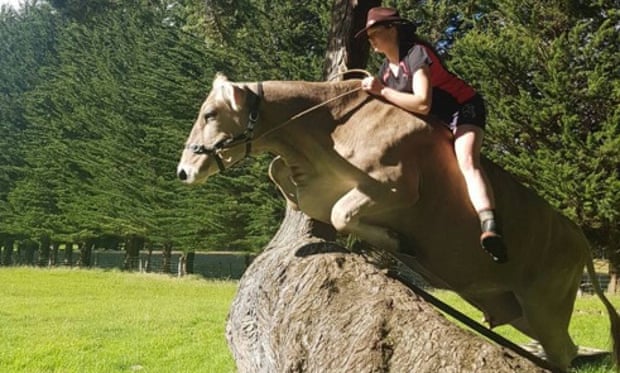
Girl denied a horse is udderly charmed by bareback cow jumping instead

When 11-year-old Hannah Simpson was told she couldn’t have a horse because it was too expensive, she decided to jump on the next best thing instead – a dairy cow.

Hannah Simpson, a farm worker from New Zealand’s Southland, enjoys riding her cow Leila, after being refused a horse as an 11-year-old. Photograph: Hannah Simpson

Now 18, Simpson and her seven-year-old Swiss Brown “best friend” Lilac have become a regular sight on their daily rides on the outskirts of the South Island town of Invercargill, in New Zealand’s deep south.

She said: “Lilac was only six months then and I was just a midget. It was a dare from my brother to jump on and she seemed OK with it so we kept going. Before then I’d only ridden a pony twice, and a sheep.”

Recently, Simpson taught the heifer to jump, and said Lilac could now scale obstacles up to 1.4 metres high – although only when she feels like it. “She is a cow and I can’t expect her to ride like a horse. Without a bit of prodding she wouldn’t really do anything, she has a very chilled-out nature.”

Lilac doesn’t like cantering, said Simpson, or going up or down hills. But bush-walks, long river swims and jumping she seems to find fun. “I have always loved jumping, I always wanted to do show-jumping on a horse,” said Simpson. “And Lilac was always jumping out of the cow shed when she was young so I think she likes it, too. We started her off with stepping over logs and it just got bigger and bigger.”

Simpson tried Lilac with a horse saddle once but she didn’t take to it, so now she rides bareback with a halter and a small stick to give the old girl a nudge when she needs it. She said Lilac had bucked her off “countless times” ever since Simpson first climbed up.

Simpson has no plans to ride her professionally, or compete in show-jumping events with her faithful steed. “I don’t think she would behave if we took her anywhere but home. And I don’t need to compete. She is more special than a horse, more rare.”

Simpson, who works on a Southland dairy farm, has attempted to ride other cows, though without much success. Lilac, she said, was undoubtedly “special”.

Two years ago Simpson got a horse – Sammy – but she still prefers to ride her cow. Their rhythm is ingrained now, said Simpson, because they grew up together.

Source: The Guardian

Ohio’s Prisons Agency Made About $4.5 Million Selling Cattle And Equipment

Ohio’s prisons agency made about $4.5 million from selling cattle and equipment after shutting down its prison-farm system, according to records from the state Department of Administrative Services.

That amount doesn’t include 12,000 acres of state-owned farmland that hasn’t been sold or leased yet, The Columbus Dispatch reported. The livestock and equipment was sold though auctions in the summer and fall.

The union representing state prison employees is criticizing the sale of the cattle and equipment and suggesting the state didn’t get its money’s worth, the newspaper reported.

“Relatively new equipment sold for pennies on the dollar,” said Christopher Mabe, president of the Ohio Civil Service Employees Association. “Hay was sold at a fraction of its value. The cattle sale didn’t even cover the cost of the recent upgrades.”

The prison farming operation dated back to 1868, but the prisons agency decided in April to leave the farm industry, just as officials were wrapping up nearly $9 million in improvements to the prison farms.

The state either doesn’t know whether the sale was a good deal for taxpayers or isn’t trying to find out, according to the Dispatch. Neither the prisons agency, nor the state department that handled the sales could answer questions from the newspaper about taxpayer value.

Ohio Department of Rehabilitation and Correction Director Gary Mohr said that farmlands are often used to smuggle contraband into prisons and that preparing inmates for farm jobs is outdated.

“We want to focus more on prison enterprises inside the walls,” Mohr said at the time.

By: Associated Press

Meet Ellie, the super mom of the MSU dairy farm

The MSU dairy cow has given birth to 10 calves and contributed more than 240,000 pounds of milk
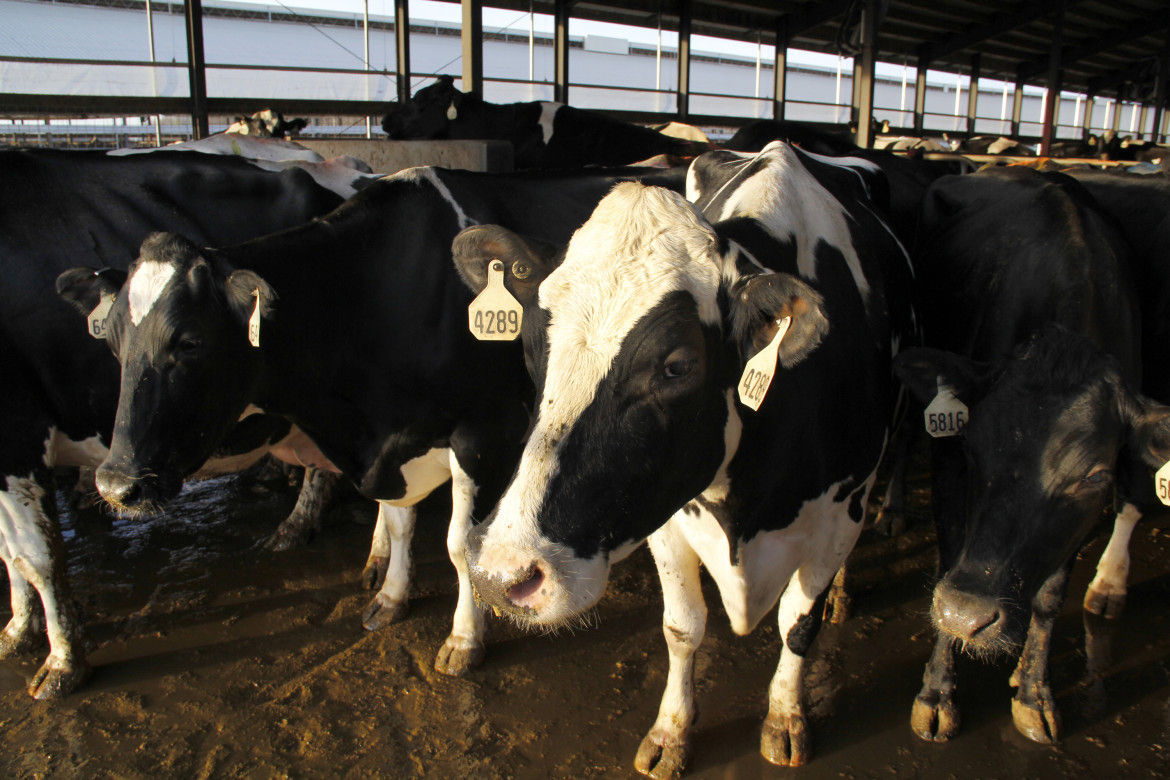
Holstein cows at Michigan State University’s Dairy Cattle Teaching and Research Center lined up Dec. 5 for their turn at the milking parlor.

Ellie, the matriarch of the farm, was among the first to be milked.  Her dark-colored eyes shined bright as she hung her head below a nearby guard rail.

You wouldn’t know she’s the most senior cow on the farm by the way she acts, said Rob West, the farm manager.


“You wouldn’t know she was there unless you looked,” West said. “She’s not a trouble-maker.”

The 11-and-a-half-year-old black and white Holstein is two years older than the next eldest cow on the farm. Ellie gave birth to her 10th calf, Scout, in November. Most cows on the farm have less than a half-dozen offspring during their lifetimes.

Her formal name is 4274 Ellie. The number designates her as the 4,274th calf born on the farm since staff started keeping track. The name Ellie was given to her by staff who helped with the birthing process.

Ellie contributed 28 pounds of milk during her time at the milking parlor Dec. 5. The 15-minute process involves attaching vacuum pumps to each udder after prepping with an iodine solution. When the cows are done, the pumps detach and farm staff cleans the cows to prevent infection.

Over her lifetime, Ellie has given more than 240,000 pounds of milk, which becomes MSU cheese and ice cream as well as going into milk cartons for school children. Beyond the milk she produces, Ellie also has cannula; a porthole-like device that gives researchers or students a way to reach into the first chamber of a cow’s stomach to study their digestive tract.

Once milking is done, the cows are led back into their assigned pens. Robin Hosmer, one of the student workers at the farm, helped Ellie and a few other cows into their pens nearby.

Hosmer is a pusher, one of the employees responsible for moving the cows to and fro. Sometimes, a simple whistle gets the cows moving. A poke or a gentle slap is necessary for the most stubborn of the bunch.

“The cows know the routine and they know how far they can push it with certain people,” Hosmer said.

The cows on the MSU farm are named by the people who helped to deliver them. A corkboard in a nearby office is covered with a rainbow of name cards corresponding to each cow. The colors indicate where the cows are in the reproduction cycle. Female cows are at peak milk production in the weeks after they give birth to their offspring.

The bulls born on the farm are sold at auction after only a few weeks. Most go on to be raised for beef, West said. Heifers, the female offspring, stay on the farm, where they’ll double in weight in their first two months.

With 10 offspring, it’s likely Ellie has never missed an opportunity to have a calf, West said, a monumental feat. She’s had six male offspring and four females, two of which are still on the farm.

Outside of the main barn are about two dozen shelters that look like large, plastic dog houses. Inside, the newborn calves meander around their stray-bed pens. Knowing it’s nearly their feeding time, several of the calves begin mouthing the fencing around their pens in anticipation when West approaches.

Each newborn gets two-and-a-quarter quarts of milk per feeding. They also have dry feed, which they’ll eventually get once they are large enough to be moved into the general population. Each adult Holstein weighing in at between 1,500 and 1,700 pounds eats around 120 pounds of dry food a day. It’s a nutritious blend of corn and grain silage known to farm staff as cow casserole.

The public is able to see Ellie and the rest of MSU’s cows on self-guided tours from 8 a.m. to 5 p.m. daily. Milking takes place between 2 p.m. and 5 p.m., for those interested in seeing that process.

Pictures of past prize-worthy MSU cows line the walls of the dairy farm offices. Their space is granted based on rankings made by The Holstein Association. Ellie’s score of 82 out of 100 puts her in the good, but not exceptional ranking. But considering her longevity and contributions to the university, West said her photo might one day rest among the most memorable MSU cows.


Source: Lansing State Journal

Plan would give large dairy farms more power in drafting of pollution permits

A day after announcing plans to streamline water quality regulation, the Wisconsin Department of Natural Resources emphatically denied that it will allow large dairy producers to write their own pollution permits.

But DNR leaders do want animal feedlot operators to take more responsibility for drafting pollution discharge permits, the legal documents that spell out standards and techniques aimed at keeping millions of gallons of manure they produce annually out of the state’s lakes, streams and drinking water.

Conservationists say the change is loaded with pitfalls that threaten water quality, while industry representatives say it doesn’t go far enough.

A key to their arguments is something that hasn’t been highlighted: Much of what goes into the permits under current practices is already written by the industry, subject to DNR oversight.

The DNR wants to start a program under which it would review the credentials of the private consultants who are hired by large dairies to write lengthy proposals that eventually form the basis for the permit, then create a list of those the DNR and the dairy operators can be “assured” would do good work that could be approved quickly with less review and revision.

A Dairy Business Association representative praised the DNR plan to give more cursory review to proposals from approved consultants but added that it would be a relatively small additional step to what the industry sees as an even better arrangement involving concentrated animal feeding operations (CAFOs) writing the whole permit.

That would speed permitting and create more efficiently designed CAFOs by giving the consultants who are experts in their fields greater control, while still allowing DNR the last word, association lobbyist John Holevoet said.

It’s important to remember that the consultants can’t risk doing poor work that would make their insurance premiums go up, Holevoet said.

“Sometimes the public thinks they’ll just do whatever the farmer wants,” he said. “That’s not true because they have to have fairly expensive insurance policies, and if something goes wrong the farmer will sue the engineering firm and the insurance company will pay out.”

But conservationists pointed to problems that have surfaced even with the existing level of DNR scrutiny.

With DNR staff stretched thin and under pressure to issue permits quickly, the agency has approved CAFOs whose manure lagoons have overflowed into trout streams and where animal waste was spread on farm fields with thin soil and porous bedrock that allowed drinking water to be tainted, said Sarah Geers of Midwest Environmental Advocates.

“It would be one thing if the process were already working really well, but from what we know about the CAFO program I don’t see how less DNR review will result in better permits,” Geers said.

‘Assured’ consultants

DNR secretary Cathy Stepp announced plans to change water permitting as part of a broad reorganization aimed at recognizing that the agency’s responsibilities have grown in recent years at the same time that elected officials have cut its staff.

Stepp said she wants to reduce time staff members spend reviewing and seeking revisions in permit applications so they can talk with CAFO operators about best practices and conduct inspections to ensure they are complying with their permits.

Critics say inspections won’t mean much if the DNR isn’t ensuring that the standards written into permits are adequate. Revising a faulty permit is a legal process that takes many months.

But Stepp said a similar “assurance program” reduced staff responsibilities without lowering standards about 10 years ago when the DNR used it to give the private sector more responsibility for mapping sensitive wetlands.

“So this isn’t about producers writing their own permit, it’s not about them writing their own regulations or standards,” Stepp said in a recent Wisconsin Public Television interview. “This is just about some of the more heavy-duty technical paperwork side of things getting done by professionals who are very well educated and credentialed to do that.”

Water pollution discharge permits include operating conditions. Some, such as required ground water monitoring or leak detection devices in production areas, may be taken from the plans and specifications submitted by the CAFO.

But the bulk of the permit document is hundreds or even thousands of pages describing how, where and under what conditions the CAFO will dispose of manure it produces. The so-called “nutrient management plan” is incorporated into the permit.

The DNR said the best case is that a CAFO submits spotless plans that don’t require the department to request additional information or revisions.

But conservationists who have challenged DNR-approved permits say the agency too often allows CAFOs to operate with inadequate permit restrictions.

A recent state audit found the DNR lacked staff to adequately run its CAFO permit program, and agricultural pollution has fouled hundreds of lakes, streams and sources of drinking water.

State oversight of the waste water discharge permits have become a hot topic as regulatory shortcomings have come to light.

Stepp wants to create lists of approved consultants for the two major portions of a CAFO application — the plans and specifications for structures in milk production areas, and the plans for manure disposal.

Both involve mapping, soil tests and highly technical calculations aimed at ensuring that rain won’t flush manure into the aquifer or surface water.

It’s not entirely clear how closely DNR staff members would review applications from assured consultants, but the idea is that they would spend less time on them so they could spend more time elsewhere.

“We’ll be doing spot audits and regular check-ins to make sure that those calculations are being done correctly,” Stepp said in the television interview.

It’s possible that spot checks would be done on an annual basis to ensure consultants were using the same methodology that DNR staff would insist upon, but details will be worked out in meetings with stakeholders, DNR director of business support and science Mark Aquino told the State Journal.

State law already requires that nutrient management plans be prepared by consultants who have been certified by professional organizations.

The plans describe how manure may be spread over hundreds of acres sometimes involving multiple landowners.

Meanwhile, at least one lawmaker is considering legislation to break up the DNR and divide its functions among three existing and two new agencies. Gov. Scott Walker said the idea should get consideration, while critics raise questions about how the plan would affect environmental protection.

Experience level varies

Engineering companies that design CAFO production areas have varying levels of experience, so a DNR list of assured firms would be useful, said Jennifer Keuning, Green Bay project manager for the international engineering and construction services company GHD.

The company specializes in construction projects involving environmental regulations, and it has handled hundreds of CAFO projects and expansions in Wisconsin, Keuning said. Like Holevoet, she said the industry could write the entire permit if the DNR wanted that.

Even if the assurance program works well, it’s difficult to imagine improvement in the DNR’s performance in protecting water quality unless elected officials stop cutting and start restoring the agency, Midwest Environmental Advocates’ Geers and others have said.
Source: JournalTimes

Cow abuse at UK dairy farm revealed by undercover filming

Animal rights group releases covert footage that shows a worker at a dairy farm punching calves and kicking cows in the face.

An animal rights group has released covert footage that shows a worker at a dairy farm punching calves and kicking cows in the face.Undercover cameras were set up at Pyrland Farm following a tip-off from a local resident that animals were being abused there.

And in just one day earlier this month multiple ‘attacks’ were caught on film at the farm in Taunton, Somerset.

Incidents included young calves being kicked to make them stand up, aggressively twisting cows’ tails and repeatedly slamming metal gates into them.

Feedlot war – Residents of Minnesota town fear big South Dakota dairy farm

Residents of the western Minnesota town of Hendricks thought they had won a feedlot war two years ago when they sued to stop a big dairy farm that was being planned just across the border in South Dakota.

They feared that any leak from the farm’s huge manure lagoons would run into streams that feed Lake Hendricks, a little gem that they had worked hard to rescue from years of pollution. The lake, which straddles the state line, was once so choked with algae that fishing lures wouldn’t sink.

But officials in Brookings County of South Dakota have, for the second time, granted a permit for the 4,000-cow feedlot and members of the Lake Hendricks Improvement Association are contemplating their next step, the Star Tribune reported Monday (http://strib.mn/2hZTLg7). Their first lawsuit cost $90,000 and they’re short on funds for another fight. Plus they find themselves up against a South Dakota governor who is actively trying to lure dairy farmers with promises of plentiful water, low taxes and light regulation.

“We’re essentially back to square one,” former mayor Jay Nelson said.

Brookings County has become South Dakota’s largest milk-producing county. Officials there say they can protect local water without shutting down an important economic engine. But opponents in Hendricks, home to about 1,100 people, cite calculations by the U.S. Environmental Protection Agency that a farm with 4,000 dairy cows would produce the same volume of waste as a city of 650,000 people.

“If there’s a major spill, it’s a South Dakota problem for one hour and it’s a Minnesota problem for a long period of time,” said Tom Landmark, the lake association secretary.

The proposal now heads to South Dakota’s Department of Environment and Natural Resources for approval.

Randy Hukriede, feedlot program manager for the Minnesota Pollution Control Agency, said South Dakota’s feedlot permitting rules are similar to those in Minnesota.

“We’re confident that they have the requirements in place in their permit process to protect the environment,” Hukriede said.

– See more at: https://www.morningagclips.com/feedlot-war/#sthash.Rynh9KrE.QajiAgRg.dpuf

Sheep’s Milk Cheeses in U.S. Earn Ribbons but Scant Profits

Seated with hundreds of colleagues at the American Cheese Society awards ceremony in Des Moines this past July, Rebecca Williams heard her farm’s name announced not once but twice, for its acclaimed sheep’s milk cheeses.

“We make good cheese,” Ms. Williams said to herself as she approached the stage to collect the second-place prize for Peekville Tomme, the farm’s aged wheel. Her ash-ripened Condor’s Ruin had just taken a blue ribbon in another category.

Those two ribbons are probably her last. In October, cheese production ceased at Many Fold Farm, the six-year-old Georgia sheep dairy that Ms. Williams operates with her husband, Ross. “It’s really hard to get such great recognition for your work, have people banging on your door, and it’s not enough to make ends meet,” she said.

Tripped up by the tricky economics of sheep dairying, the Williamses are among several disillusioned dreamers who hoped to succeed with American sheep cheese, a niche that did not exist 30 years ago. Although consumers in the United States have a sizable appetite for European sheep cheeses — Spanish manchego, French Roquefort and Italian pecorino Toscano among them — comparably priced domestic alternatives remain scarce.

“A distributor can import manchego for maybe a third of what it costs us to produce,” said Laurel Kieffer, a Wisconsin sheep farmer and the president of the Dairy Sheep Association of North America.

Still, more American producers are taking the sheep-cheese challenge. From 2010 to 2016, the number of entries in the American Cheese Society competition made exclusively from sheep’s milk jumped 40 percent — enough to merit their own categories in next year’s judging, rather than being lumped with mixed-milk cheeses as in the past. And Europe itself may soon provide a catalyst to growth.

Cheesemakers love sheep’s milk. It has twice as much fat and protein — the main components of cheese — as most cow’s or goat’s milk, and produces nutty aromas and savory flavors in aged wheels. But the sheep don’t make it easy. Many breeds are stingy with milk. A Holstein cow can supply nine gallons a day; a good ewe, on a good day, may part with three quarts.

Most sheep produce milk only six or seven months a year, and breed successfully only in the fall. This leaves many cheesemakers with no milk to sell from October to March, though they still have to pay rent and salaries. Just keeping the flock alive can be an unanticipated challenge; sheep succumb readily to parasites, predators and disease.

“There’s a joke among vets that sheep are born looking for a place to die,” said Ms. Williams, who bought her starter flock in 2010. “Pretty much the first year we were saying, ‘Uh-oh.’”

Until the early 1990s, the United States had almost no dairy sheep, only meat and wool breeds that produced less milk. Sheep-cheese pioneers like David Major of the Vermont Shepherd farm made do, gradually improving their flocks’ milk yield by crossbreeding with European dairy stock from Canada and England.

Then, in the late ’90s, the mad-cow epidemic peaked amid concerns that diseased sheep processed for cattle feed had contributed to it. The United States Department of Agriculture banned imports of live sheep and semen from Canada or Europe.

“We’ve been landlocked here,” said Liam Callahan of Bellwether Farms in Petaluma, Calif., one of the nation’s first sheep dairies. “We’re unable to access the breeds in Europe that are specialized for milk production.” Mr. Callahan would be especially pleased to mate his ewes with Lacaune sheep, a French breed that supplies the milk for Roquefort.

In the coming months, that could happen. About 875 samples, or straws, of frozen Lacaune semen are scheduled to arrive in the United States in February under stringent protocols that the federal Agriculture Department has approved.

“Believe me, it’s a bright spot,” said Mr. Callahan, who has bought some of the straws. If the offspring perform as expected, he said, a dairy farm could have double the milk with nearly the same labor.

More milk could help moderate the cheeses’ high retail prices and make them more competitive with their European counterparts.

“When I see P’tit Basque for $13.99 a pound, it’s like getting kicked in the gut,” said Seana Doughty, the proprietor of Bleating Heart Cheese in Tomales, Calif. “That’s how much it costs me to make Fat Bottom Girl,” her signature sheep cheese, which typically retails for $38 to $40 a pound.

European sheep-cheese producers often have lower land and labor costs; many operate farms that have been in the family for generations. And they benefit from decades of breed research and improvement, some of it government-supported. Budget cuts recently closed North America’s only dairy-sheep research program, at the Spooner Research Station at the University of Wisconsin-Madison.

Scaling up production would help American sheep dairies, many say. Brenda Jensen, the proprietor of Hidden Springs Creamery in Westby, Wis., started with 50 sheep and now has more than 500. And she isn’t done yet. Ms. Jensen, who has an M.B.A. and a plant-management background, said she could envision milking 2,000.

Sales of Hidden Springs Driftless, a rindless fresh cheese that can be ready in days, have fueled the company’s rapid growth. But Ms. Jensen has also embraced a hormonal technique that helps ewes reproduce year-round.

“The people who have gone to this approach are probably the most successful today,” said Tom Clark, a former investment banker who built Old Chatham Sheepherding Company, in the Hudson River Valley, into a 1,200-head sheep dairy, one of the nation’s largest, before selling it two years ago. “You’ve got a big investment in a milking parlor, people, equipment, pastures. To only use them six months a year is just not efficient.”

Year-round supply would also help these cheeses break into supermarkets; currently, the low volume and high prices limit sales primarily to specialty stores.

Marcia Barinaga understands that, but volume was never her goal. Ms. Barinaga, a former science journalist, wanted to make sheep cheese by hand, like her Basque ancestors, with milk from her own pasture-raised flock. Fifteen years ago, she and her husband bought several hundred acres in Marin County, Calif. Eight years later, Barinaga introduced two aged raw-milk cheeses, Baserri and Txiki, inspired by Basque recipes.

“I was selling them as fast as I could make them,” said Ms. Barinaga, whose wheels were fetching $40 a pound in Bay Area shops. She had to grow to be viable, but couldn’t afford the labor, or the feed, which had more than tripled in price. Her spreadsheets showed profitability at 200 ewes and 20,000 pounds of cheese annually, but she never came close.

“One hundred was my flock at its largest, and that nearly killed me,” she said. In July, Baserri won a blue ribbon from the American Cheese Society. Two months later, Ms. Barinaga announced that she had made her last cheese.

“You just can’t push the price of the product any higher,” she said, “and people are not going to pay what it costs to produce it.”

European cheeses are not the only competition for the domestic ones, said Tess McNamara, the director of retail operations for Lucy’s Whey, which has two cheese shops in New York City. Many shoppers will gravitate to a lower-priced Vermont goat cheese if the local sheep cheese seems too expensive. “People don’t understand the rareness of sheep’s milk,” she said.

Producing yogurt has kept some sheep dairies afloat. Dave Galton, the new proprietor of Old Chatham, expects to continue the brand’s popular sheep yogurts, which generate about half of all of the company’s sales, while building the flock to 2,000 ewes. Mr. Galton said he also intended to produce more mixed-milk wheels, blending cow’s milk with sheep’s milk to lower production costs.

Ms. Doughty of Bleating Heart said she, too, was reluctantly shifting to cow’s milk cheese to save her business. After 2017, sheep cheese from her farm may be history.

“I have this theory that the more expensive the cheese is at retail, the less money the cheesemaker is making,” she said. “Until somebody can start sheep dairies of real size, I just don’t see how it’s ever going to thrive.”

A Sampler of American Sheep Cheeses

For a taste of America’s answer to manchego and pecorino, these acclaimed all-sheep’s-milk cheeses are a fine place to start. (Some can be ordered by phone or online; others may be available at specialty shops or supermarkets like Whole Foods.)
Source: NYTimes

Driver dies following milk tanker and car crash in South Taranaki

The driver of a car involved in a collision with a milk tanker in South Taranaki has died.

The 53-year-old Wellington man was airlifted to Taranaki Base Hospital in a critical condition following the crash, which happened about 9.35am at the intersection of Ohangai and Tawhiti roads, east of Hawera, on Wednesday.

Police would not be releasing the dead man’s name until his family had been notified.

The road around the crash site was cordoned off while the police CIB, commercial vehicle investigation and serious crash units surveyed the scene.

The death took Taranaki’s road toll for 2016 to 13 and the national road toll for the holiday period, which ends at 6am on January 4, to 11.

Sergeant Bruce Irvine said inquiries into the cause of the crash remained ongoing.

“The truck has rolled into a paddock,” Irvine said.

“The crash has happened at an intersection and we are investigating it.”

The driver of the car was flown to hospital in a critical condition by the Taranaki Community Rescue helicopter but later died.

“It is always tragic, it doesn’t matter if it’s Christmas or June,” Irvine said.

He urged drivers to take care on the roads for the remainder of the holiday period no matter where they were.

“It’s the age old message be alert, drive carefully, obey the road rules and concentrate on what’s going on around you.”

A Fonterra spokeswoman said the tanker driver had suffered a cut to his head but wasn’t seriously injured.

She said milk was leaking from the tanker but it was being contained in the paddock and wasn’t near a waterway.

Two fire engines, an ambulance and a number police cars attended the scene.

Jim Duthie, of the Tawhiti Museum, said one or two of the staff had heard the crash which happened just down the road from the museum.

He confirmed the road had been closed while emergency services worked at the scene.


Source: Stuff

Dairy industry says milk alternatives should not be called “milk”


A fight over what can be called “milk” could change the way products are labeled in the dairy aisle. The dairy industry and some members of Congress say the label should be reserved for milk from a cow, but many plant-based alternatives like soy and almond are called milk, too. Errol Barnett reports on what’s at stake.

Upstate farmer, lawyer pokes the vegans and mocks GMO worry to her 20k Twitter followers

If you ask Lorraine Lewandrowksi, almond milk is not milk.
Vegans “just pontificate” and are bad for farmers. People trying to get rid of genetically modified crops are going to get rid of farmers, too.

“Query: if you eat anything with a GMO, do you become GMO? If you eat chicken sh*t, do you become a chicken sh*t? ” Lewandrowski recently tweeted in response to an argument against using genetically modified crops.

The Herkimer dairy farmer goes by @NYFarmer on Twitter. And when she tweets, 20,000 people see it. She uses social media to campaign for the family farmer and against popular causes and people she says are threatening farmers’ way of life.

Lewandrowski isn’t your usual anything. She has a law degree and a degree from the Fletcher School of Law and Diplomacy at Tufts University. She works in a quiet law office in Herkimer, near Utica, handling the everyday legal affairs of small-town folk. She starts and ends her days on the dairy farm where she grew up, which her brother now runs with her sister, who is the town veterinarian.

As Lewandrowski helps milk the cows and takes care of people’s wills, she is tweeting about the local food movement, vegans, milk prices and increased rates of farmer suicide.

If someone gets in her cross hairs, Lewandrowski can be an unrelenting critic. Take Mark Bittman: Lewandrowski has been doing battle with Bittman, the former New York Times food writer and best-selling author of “Eat Vegan Before 6” book for years.

Since 2011, Bittman has been a target of Lewandrowski’s. Columns about the vegan lifestyle (no products that come from an animal) with headlines like “No Meat, No Milk, No Problem,” began to irritate Lewandrowksi. But what put her over the edge, perhaps, was a 2012 piece in which Bittman wrote that people who stop drinking milk aren’t hurting farmers — at least not family farmers.

“But what about the bucolic cow on the family farm?” Bittman wrote in the New York Times. Both rarely exist now, he continued, replaced, instead by massive factory farms with between 10,000 and 30,000 cows that never see pasture.

That is the case in some places, but in the area around Herkimer where Lewandrowski’s family has farmed and lived for four generations, the majority of the farms are small, like her family’s. Their farm has 100 milking cows and the work is primarily done by family. They are exactly the image Bittman said no longer existed.

They are also the major supplier of New York City’s milk; Lewandrowski calls the region the “milkshed.” So when someone tells all of New York City, and the nation, that dairy is bad for them and small family farms don’t exist anymore, Lewandrowski feels inclined to speak up.

It’s possible she’s a bit snarky at times. Lewandrowski said Bittman eventually blocked her and sent her a twitter direct message telling her she was doing herself and her cause a disservice by the way she was taking him on.

(Bittman has not replied to an email seeking comment).

She continues to tweet at Bittman and the vegans.

“Oh poo poo,” she tweeted at @VegOs when that twitter user argued that some people simply can’t digest dairy proteins.

Lewandrowski called the makers of milk substitutes (soy, rice, almond) “freeloaders” on dairy’s good name, in support of a Vermont bill to require milk substitutes to use a term other than “milk” in their name.

Lewandrowski, though, says she doesn’t mean any harm by her tone. She’s mostly trying to poke a little fun while getting a serious message across: there are big problems looming for small farmers across the nation.

When the price of milk (which almost no normal person can explain) plummeted in 2009, people she knew lost their farms. Farm families fell apart. Many have not recovered from that drop.

Lewandrowski makes her case outside of social media, too. In 2013, she called up poet and environmentalist Wendell Berry to ask for his help. On social media, she’d been reading about a freak blizzard that ravaged cattle ranches in Wyoming and South Dakota, but had gotten virtually no attention in the media.

She looked up the 82-year-old icon’s number and called him at his home. Berry, a recipient of the prestigious National Humanities Medal, came to the phone at his farm and the two chatted, she said.

They ended up talking about the local food movement, and how many people involved often don’t really understand where the food is coming from, Lewandrowski said.

Berry and Wes Jackson, Berry’s friend and a force in the sustainable farming movement, often speak at New York City events with Lewandrowski’s nemesis, Bittman. In the past, she’s asked Jackson to talk to Bittman about the harm he’s doing to local farmers.

Jackson, who like Berry is in his 80s, said he hasn’t had that conversation with Bittman just yet.

Lewandrowski’s Facebook and Twitter feed are also full of the photographs of bucolic scenes that she snaps while she’s out and about: Morning light on a corn field. Calves in the barn. Sunsets glittering on the snow.

Her followers from urban areas like those scenes. It makes them feel peaceful to see life out on the farm. Lewandrowski, who did a stint working in corporate banking in New York City, understands that well.

She’s not sure how food and agriculture have become such divisive issues.

“It seems like food is so polarized,” Lewandrowski said. “It’s worse than religion already.”

Source: Syracuse.com

FDA urged to settle fight over what can be called milk

A fight over what can be called milk can change the way products are labeled in the dairy aisle. Many plant-based alternatives like soy and almond are called milk, too. But the dairy industry, and some members of Congress, say the label should be reserved for milk from a cow, and  they want the government to take action.

The saying goes: “Don’t cry over split milk.” But right now, there are tears of frustration on both sides of the debate over who gets to put “milk” on their label. On one side, you have the long-dominant dairy farmers and on the other, the new kids on the block, reports CBS News correspondent Errol Barnett. 

Tennis star Venus Williams and hip-hop producer DJ Khaled appear in new up-tempo ads for Silk Almond and Soy Milk. They are part of an industry of plant-based products described as milk substitutes. They generated $1.4 billion this year and grew 54 percent over the last five years in the U.S.

Milk producers are facing decline, dropping 11 percent in sales over the last year. Now they are fighting back.

We have seen a drop off in consumption of dairy products and also we have seen a significant price drop,” said Patty Leonard.

Leonard’s family has been farming in Northern Virginia for almost a century. She milks her cows twice daily, and says non-dairy milk products are successful because they’re misleading.

“They are using the good name and the good qualities and the standard of milk to share their product,” Leonard said. “What makes it all the more important that we have a clear definition and a clear standard so that our consumers have a clear understanding of what they’re purchasing and there’s no confusion.”

Thirty-two congressmen from dairy-producing states agree, penning a letter urging the FDA to enforce its existing definition of milk, which states it is: “obtained by the complete milking of one or more cows.”

But how much confusion is there between cow milk and its substitutes?

“I don’t think they’re the same as milk and I think that confuses people,” said one shopper, James Assey. 

“I think it should be continued to called milk. It’s used like milk,” said another shopper, Carla Boarden.

“Worldwide, this is the same terminology that has been used for years,” said Nancy Chapman of the Soyfoods Association.

For Chapman, the hope is the FDA widens its definition. 

“When you drink soy milk, it is equal in terms of its ability to support growth and development as is a dairy cow’s milk,” Chapman said. 

Chris Galen works for the Milk Producer’s Federation.

“Would you be all right with a looser definition?” Barnett asked.

“I have never milked a soybean — I don’t suppose if you cracked one open, you’d find much milk or any liquid there,” Galen said. “All we want is for the government to do its job and to enforce the regulation on the books that says, ‘You don’t got milk if it comes from a nut or a seed.’”

Historically, the FDA has kept out of any battles over which products can use the term “milk.” This time, it says it will respond directly to the congressmen who wrote to them.

The almond industry also responded to our request for comment, saying their products are also fortified with vitamins and calcium, and it really is up to the consumer to decide.

Source: CBSnews

Do Humans Need Dairy? Here’s The Science

A lot of people will have already made up their mind about whether humans need dairy in their diet and will be thinking that the answer is obviously “yes” or obviously “no”. But nutrition is based on science not opinion – so, here’s the latest research on the matter. 
Milk is an interesting foodstuff. The sugar in it is called lactose and lactose requires a chemical or enzyme called lactase to allow it to pass across the walls of the gut into the blood stream. When we are babies, we all produce plenty of the lactase enzyme which allows us to absorb our mother’s milk. In populations where milk consumption has been historically low, such as Japan and China, most children will have stopped producing lactase soon after weaning and – producing almost entire populations that may be unable to absorb the lactose in milk – this we call “lactose intolerance”.

In populations where milk consumption has always been high, such as in Europe, most adults continue to produce lactase for their whole lives and can digest milk quite happily with only around 5% of the population being lactose intolerant.

Continuing to produce lactase into adulthood is actually an inherited genetic variation which has become so common because being able to tolerate milk has a selective advantage. Milk is a useful source of protein, energy, calcium, phosphate, B vitamins and iodine, meaning that those with the mutation were generally healthier and produced more children than those who couldn’t tolerate milk, and so the presence of the mutation increased.

The symptoms of lactose intolerance include wind, bloating and diarrhoea so if you don’t experience any of those after drinking milk or eating ice cream then you’re fine.

Fermenting

There is good evidence that milk has been part of the human diet in Northern Europe for more than 8,000 years which is when people there first moved from being nomadic to having a more structured way of life. Because 8,000 years ago most people didn’t tolerate milk well, they quickly realised that if the milk was fermented and became cheese or yogurt it could be better tolerated. This is because these processes encourage bacteria to use up most of the carbohydrate – the lactose – in the milk so people who didn’t produce the lactase enzyme could still benefit from the nutrients in the milk. Today people with lactose intolerance can drink kefir, a fermented milk drink made with a yeast starter, which some suggest also has probiotic benefits for the gut as well as many other health benefits.

So dairy has been pivotal to nutrition and important to the survival of many populations in the world and most Europeans and North Americans are well adapted to digest it. So if you have been told that humans aren’t adapted to have dairy in their diet, that isn’t correct. Similarly, it isn’t true to say that dairy promotes inflammation or acidity.

Calcium

Nutritional scientists and dietitians have often assumed that because milk is rich in calcium, it is therefore good for maintaining the calcium levels in our bones. However, a couple of recent big studies have brought this into question. A further systematic review of the evidence concluded that actually, it doesn’t seem to matter how much calcium you get from your diet, your risk of fracturing your bones remains the same.

That said, we have seen that in cultures, where dairy plays a very minimal part in the traditional diet such as in China and Japan, the incidence of hip fracture – a common outcome of poor bone mineral density – is 150% higher than that of white American or European populations.

One thing to remember about these studies is that they are looking at calcium intake in adulthood. However, we know that the strength of our bones is actually determined by our diet as children and teenagers. When we look at studies of children who have an allergy to cow’s milk, for example, we see that the strength of their bones is significantly compromised by the lack of milk in their diet and that desensitisation through treatment so their diet can include milk also strengthens their bones.

Interestingly, children with this allergy who are given alternative sources of calcium other than milk still find the strength of their bones compromised. This suggests that calcium-containing alternatives to dairy are still not good enough at promoting bone density in children.

While milk intake is really important for the healthy development of children’s bones, consuming milk as an adult doesn’t appear to decrease your risk of fractures. But there are lots of other nutrients in milk and dairy foods.

Studies have found that if dairy is replaced in the diet by foods containing the same amount of calcium such as green leafy vegetables or soya milk fortified with calcium, the diet contains less protein, potassium, magnesium, phosphorus, riboflavin, vitamins A and B12. Milk and dairy foods are also a great source of all essential amino acids which are the small protein molecules that build muscles and repair tissue damage. Obviously the protein and micronutrients could be found from other sources but obviously not without careful planning.

When it comes to health, the bottom line is we probably don’t need dairy in our diets – as adults – but milk and dairy foods are convenient and good value and provide lots of essential nutrients which are trickier to source from other foods. Where milk drinking is the cultural norm we have adapted to tolerate it very well and it can be very nutritious.

Source:  IFLscience

James Tentinger Passes

The US Ayrshire Breeders’ Association is saddened by the death of our president, James Tentinger of Remsen, Iowa. Jim passed away peacefully on Christmas Day after a valiant fight with cancer.

Jim, 66, and his wife of 44 years, Sharon, resided on Ten-Ayr Dairy in Northwest Iowa where he was the fourth generation to farm on the family’s dairy and grain operation. He was a proud breeder of Ayrshire cattle and was a 40-year member of the Ayrshire Breeders’ Association.

He was a dedicated family man. He and his wife have two sons, Travis (Kelly) and Craig (Ann Marie). He especially loved his seven grandchildren: Samantha, Hunter, Torey, Tiara, Araya, Merekye and Bryndilin.

Jim was a well respected, service-oriented man who believed in giving back to his community, whether it was locally or his national agriculture community. His sense of duty started as a young man when he enlisted in the Iowa Air National Guard. Since then, he has been a member and board member of the Midwest Dairy Association, Iowa Ayrshire Breeders’ Association, Iowa State Dairy Association, his county water association and local farm bureau. He has served on the US Ayrshire Breeders’ Association Board of Directors since 2008 where he has lead as president for the past two years.

The family will receive visitors from 4-7 p.m. on Wednesday, December 28 at Fisch Funeral Home & Monument in Remsen where there will be a parish rosary at 5 pm, immediately followed by a vigil prayer service. A Memorial Mass will be held at 10:30 am Thursday, December 29 at St. Mary’s Catholic Church in Remsen. Burial will follow in the St. Mary’s Cemetery in Remsen.

In lieu of flowers or gifts, the Tentinger Family is asking their dairy friends to make a contribution in Jim’s honor to the US Ayrshire Breeders’ Foundation.

Residents of Minnesota town fear big South Dakota dairy farm

Residents of the western Minnesota town of Hendricks thought they had won a feedlot war two years ago when they sued to stop a big dairy farm that was being planned just across the border in South Dakota.

They feared that any leak from the farm’s huge manure lagoons would run into streams that feed Lake Hendricks, a little gem that they had worked hard to rescue from years of pollution. The lake, which straddles the state line, was once so choked with algae that fishing lures wouldn’t sink.

But officials in Brookings County of South Dakota have, for the second time, granted a permit for the 4,000-cow feedlot and members of the Lake Hendricks Improvement Association are contemplating their next step, the Star Tribune reported Monday. Their first lawsuit cost $90,000 and they’re short on funds for another fight. Plus they find themselves up against a South Dakota governor who is actively trying to lure dairy farmers with promises of plentiful water, low taxes and light regulation.

“We’re essentially back to square one,” former mayor Jay Nelson said.

Brookings County has become South Dakota’s largest milk-producing county. Officials there say they can protect local water without shutting down an important economic engine. But opponents in Hendricks, home to about 1,100 people, cite calculations by the U.S. Environmental Protection Agency that a farm with 4,000 dairy cows would produce the same volume of waste as a city of 650,000 people.

“If there’s a major spill, it’s a South Dakota problem for one hour and it’s a Minnesota problem for a long period of time,” said Tom Landmark, the lake association secretary.

The proposal now heads to South Dakota’s Department of Environment and Natural Resources for approval.

Randy Hukriede, feedlot program manager for the Minnesota Pollution Control Agency, said South Dakota’s feedlot permitting rules are similar to those in Minnesota.

“We’re confident that they have the requirements in place in their permit process to protect the environment,” Hukriede said.

Source: Capital Journal

Farmers Receive 10-Cents for Each Dollar Spent on Food

Total food-away-from-home expenditures of U.S. consumers, businesses, and government entities surpassed at-home food sales for the first time. This outcome is reflected in the 32.7-cent foodservices share of the U.S. food dollar claimed by restaurants and other eating-out place s-its highest level during 1993 to 2014.

It is also reflected in the 12.9-cent retail-trade share claimed by grocery stores and other food retailers, which is at its lowest level since 2002.

ERS uses input-output analysis to calculate the value added, or cost contributions, from 12 industry groups in the food supply chain.

Annual shifts in food dollar shares between industry groups occur for a variety of reasons, ranging from the mix of foods that consumers purchase to relative input costs.

A growing share of the food dollar has gone to farm producers, up 1.7 cents since 2009 to 10.4 cents in 2014, while food processing’s share is down 2.1 cents since 2009.

Source: USDA

Iowa farmer unsure of dairy barn’s future after fire

An 82-year-old dairy farmer says he’s unsure whether to rebuild after a massive fire destroyed his dairy barn south of Dubuque.

Leonard Schuster says he tried to douse the flames himself after discovering that the milking parlor was on fire Wednesday.

“When you got hay and straw in the barn and the wind was blowing good (at about 20 miles per hour), there’s nothing you can do,” he said.

Schuster tells the Telegraph Herald that he’s grateful for his neighbors’ help and that all of his 110 cows and calves escaped safely. Neighbors helped move the animals to a farm 13 miles away near Zwingle.

“We had the most wonderful neighbors there was, coming with all their trailers and moved them all out,” Schuster said. “I never knew we had so many good neighbors — even businesses — offering to help us. It was tremendous.”

The farm’s milking equipment and tanks were not damaged.

The blaze likely caused $250,000 to $300,000 in damage, according to Key West Fire Chief Brian Arnold. But Arnold said the cause of the fire may never be determined because of the extent of the damage.

Schuster suspects an electrical issue caused the blaze, since no one was inside or near the barn.

“I don’t think I’m going to rebuild,” he said. “We don’t know. We haven’t talked about it yet.”

Source: Wisconsin State Farmer

Obituary for Maryland Holstein Breeder Warren Knutsen

On behalf of everyone here at the Bullvine we extend their most sincere sympathies and condolences to the family and friends of Maryland Holstein breeder Warren Knutsen, of Rising Sun, MD; who recently passed away.

Warren Anton Knutsen, 74, of Rising Sun, MD, passed away on Wednesday, December 21, 2016. Born on January 29, 1942 in Jersey City, NJ, he was the son of the late Trygve Lovdal and Helen Marie (Jensen) Knutsen.

Warren was very passionate about registered Holstein cows and raised them on his farm, in partnership with his brother, Bob, for over 50 years. He also served as the Director of the Mid-Atlantic Dairy Co-Op, Director of the Cecil County Farm Bureau, and was a 4-H Leader for many years. Warren was very active with Ebenezer United Methodist Church.

Warren is survived by his wife of 47 years, Kathy Crothers Knutsen, of Rising Sun, MD; children: Donna Wilson and her husband, David, of East New Market, MD and Gregg Knutsen and his wife, Stephanie, of Harrington, DE; five grandchildren: Bethany, Evan, Emmie, Caroline, and Justin; brothers: Robert Knutsen and his wife, Ginger, and Peter Knutsen and his wife, Dorcas; as well as numerous nieces and nephews.

A visitation will be held from 6-8pm on Tuesday, December 27, 2016 at R.T. Foard Funeral Home, P.A., 111 S. Queen Street, Rising Sun, MD 21911. A celebration of Warren’s life will be held at 11am on Wednesday, December 28, 2016 at Ebenezer United Methodist Church, 1072 Ebenezer Church Road, Rising Sun, MD 21911, with a visitation beginning at 10am. Burial will follow the service at Rosebank Cemetery. In lieu of flowers, memorial contributions may be made payable to “Ebenezer United Methodist Church Memorial Fund” and sent in care of the funeral home, PO Box 248, Rising Sun, MD 21911.

Herefords Australia bull donor scheme a dairy saver

A bull donation program by Herefords Australia aims to put dairy farmers back in the black.
Up to 100 bulls will be donated to dairy farmers in northern Victoria in a program to help them raise income through sales of the dairy-beef-cross progeny.

The project is being co-­ordinated by charity Igniting Change with logistics to be organised through Elders Bendigo.

Herefords Australia chief executive officer Alex Ball said the organisation thought the project was worthwhile.

“Hereford bulls with high estimated breeding values for calving ease, growth and carcass characteristics would provide surplus calves of higher value to dairy farmers, beef finishers and processors,” Dr Ball said.

“Calving ease, marketability of the progeny and gestation length are key drivers for the dairy industry, while eating quality is a primary need of the beef industry, and Herefords are a breed that can deliver in both areas.”

Igniting Change’s Charles Lane said the organisation had been working with dairy farmers for some years to offer counselling, bill payment and food aid.

“But it would be better if farmers could be helped to trade out of their difficulties,” Dr Lane said.

Milk companies would approach farmers to apply for donated bulls, he said.

Bulls are donated and sold after two years, with the salvage value given back to the producers who donated them.

Kanimbla Herefords at Holbrook, NSW, will donate two bulls, and principal Mark Baker said it was “worthwhile” project he was happy to support.
Source: WeeklyTimes

Top Dairy Industry News Stories from December 17th to December 23rd 2016

Feature Articles

Top News Stories

Just How do Santa’s Reindeer get the Job Done?

Have you ever wondered how Santa’s reindeer can make that monumental journey on Christmas Eve?  Let’s look into some key facts about reindeer that may help us understand how they get Ole St. Nick on his appointed rounds over the world. 

First of all, historians report that reindeer have been domesticated by humans for over 5000 years.  Since Santa himself is no spring chicken, we can assume that they have worked together for quite awhile.  They should not have any trouble finding their way around.  There is no need to worry about them getting lost. 

We do know that reindeer are ruminants.  They are like cattle in this regard.  They have four compartments to their stomach.  Of course Santa gets them filled up with hay and moss before he leaves the North Pole, so they should have plenty of feed stored in the four compartments to make it all around the globe.  Also, cattle nutritionists have known for years that hay digests more slowly than grain, therefore the big meal that the reindeer eat before the journey should last even longer.  Or just like your mom says “It’ll stick to their ribs!”

As for drinking water that should be no problem whatsoever.  In their homeland the water is all frozen so they are used to getting the moisture they need by eating snow.  So as the sleigh is parked on snowy rooftops in cold weather cities, the reindeer can take on the moisture they need if they get thirsty. 

How do they keep warm while flying around on Christmas Eve?  The reindeer coat is made of two layers; an outer layer of bristles and an inner layer of dense fur.  The fur that they have is very thick and can hold a lot of air.  The “blanket” of insulation combining fur and air helps keep them warm in even the coldest of climates.  Plus flying around Christmas night in many areas of the world that are warmer than they have at home should not be a problem. 

How do they fly?  Well that’s a tougher question, but let’s look at what we do know about them. Reindeer are amazingly fast runners on the ground.  University of Alaska researchers report that a newborn baby reindeer at one day of age can out run the fastest graduate student.  By the time that they are fully grown it is hard to tell what speeds that they could reach.  Next remember those huge antlers.  Antlers of adult male reindeer can be as much as 4 feet long!  Just think about it.  Each reindeer has 2 sets; that’s 8 feet of antlers and with eight reindeer, or nine, if we count Rudolph on foggy nights, that is 64 to 72 feet of total antler span.  A typical small Cessna airplane only has about 36 feet of wingspan.  Certainly it seems feasible those eight reindeer running that fast with all that antler span could get off the ground. 

There are a couple of myths about reindeer that we should clear up.  You have probably heard the poem that says that they have tiny reindeer feet.  Actually they have a very wide large hoof that they use at home to dig through the snow to find grass and moss to eat.  You’ve got to think that those wide hooves would come in handy for sliding to rather sudden stops on the small landing sites that Santa has to work with on Christmas Eve. 

And you’ve probably heard the song about “up on the house top click, click, click”.  Well it is true that reindeer do make a clicking sound as they walk.  They have a tendon that snaps over a bone joint and makes a clicking sound on every step. 

These are just a few facts about Santa’s Reindeer.  Maybe this will help us understand that age-old mystery that occurs every Christmas Eve. 

Source:  Oklahoma State University Extension 

Wisconsin needs immigrants to fuel growth

When Congress and the Trump administration begin work on immigration reform, Wisconsin’s congressional delegation should make clear our state’s position: Wisconsin needs more legal immigration, not less.

A key word is “legal.”

The race for president focused intently on the millions of people living in the United States illegally, and whether to let most of them stay. It’s a complicated problem. Mass deportations aren’t realistic or humane.

But President-elect Donald Trump also has suggested he might make it tougher to immigrate legally to the United States, out of concern that immigrants take jobs away from American citizens.

Wisconsin’s experience contradicts some of Trump’s assumptions. In fact, restricting immigration by making it tougher for foreign-born people to gain visas to work here would hinder the state’s economy in ways that threaten growth. Consider the evidence.

One of Wisconsin’s highest barriers to economic growth is a limited supply of skilled workers. Since 2010, the state has been losing 10,000 people per year in net domestic outflow as our residents move to other states and we fail to attract new residents. Add a declining birth rate, and Wisconsin businesses cannot find the employees they need.

Seventy percent of Wisconsin companies responding to a Wisconsin Manufacturers and Commerce survey reported difficulty finding employees this year. The Metropolitan Milwaukee Association of Commerce projects that over the next 10 years, 100,000 jobs in the Milwaukee metro area will go without workers to fill them. Jobs in science, technology, engineering and math fields (known as STEM positions) are especially difficult to fill.

Wisconsin’s chief open avenue for new workers has been immigration from other countries. And opportunities exist to take even greater advantage of legal immigration — if the right policies are in place — because Wisconsin has assets attractive to immigrants.

A chief asset is our university system. About 4,500 foreign students attend UW-Madison. Statewide, the total is more than twice as large. That’s brainpower that could fill and create jobs in the state. One of every eight STEM workers in Wisconsin with an advanced degree is already an immigrant.

Currently, visa requirements to retain foreign students in Wisconsin are costly, restrictive and self-destructive. In 2011, 51 percent of patents awarded to the University of Wisconsin System included at least one foreign-born inventor with no clear path to gain citizenship. As former Google chairman Eric Schmidt put it: “Of all the crazy rules in our government, the craziest bar none is that we take the smartest people in the world, we bring them to America, we give them Ph.D.s in technical science, and we kick them out to go found great companies outside America.”

Another Wisconsin asset attractive to immigrants is the dairy industry. To find the skilled labor they need, dairy farms recruit from foreign countries. Four of every 10 dairy farm workers is now an immigrant. But visas are geared to seasonal farm labor, not full-time dairying. Without more flexible policies, the industry’s efforts to legally fill jobs will be at risk.

Reform is required to make it easier for Wisconsin to attract immigrants to fuel our economic growth. Without more immigration, the work force will be unable to meet demand, businesses will look elsewhere to expand, and Wisconsin’s prosperity will be in jeopardy.

Source: WisconsinStateJournal

2016 All-American and Junior All-American Nominees Released

The American Guernsey Association is excited to present this year’s All-American and Junior All-American Nominees. Find them here: 2016 All-American & Junior All-American Nominees

Farmers rescue cattle on Shoalhaven River rock ledge

A herd of young cattle can count themselves lucky after they were saved by local farmers from a rock ledge on the Shoalhaven River.

The dairy heifers found themselves marooned upon a rock at Wogamia and were fortunately spotted by people in a passing boat on Monday.

Geoff Cochrane and his son Daniel, who own the property on the opposite side of the river, were part of the risky rescue mission.

The confused land dwellers were almost 500 metres up stream from the nearest access point and had been marooned for close to 24 hours by the time the rescue was under way. 

“The owner of the cattle arrived with a canoe and four of us went across the river, we nearly got swamped by the waves, we were fearful for our lives,” Mr Cochrane laughed.

“We paddled across, the cliffs were so steep there was no way in the world you could have driven an animal up there. They would have scrambled onto the rock ledge, where they barely had standing room.”

The group decided the only way to save them was to swim them across the river to the Cochrane’s property and truck them home. 

“We pushed them into the river and they immediately tried to swim around and come back,” Mr Cochrane said.

“We kept pushing them in and when they got in the water all they wanted to do was mill around in a circle anti-clockwise. They came ashore maybe 20 or 30 yards further down so we had to start again.”

It was then that Mr Cochrane began to muster the 18 head using the canoe and oar, a stark contrast to the usual horse and stock whip he was most accustomed to.

“As we got a few back in the water I jumped in the canoe to try and herd them across and stop them from coming back and Daniel dived in the water behind them,” he said.

“They were being swept down the river by the current and our efforts to get them across the river were failing, so we went with the flow. Dan was nipping at their heels and barking behind them and I was in the canoe directing traffic.

“After about an hour we got them down the river, we headed for the sand and they all got out of the water.”

It is suspected the cattle were chased into the water by dogs.

“The afternoon before I heard a dog barking for a long time,” Mr Cochrane said.

“I believe that dog more than likely chased the cattle along the sand until they came to the rock cliffs and were forced into the river.”

Source: Southcoast Registar

Stiffed dairy farmers want answers

Antonio Esposito does not look like a man who has worked with dairy farmers for the past two decades.

He spends summers on his yacht on the Gold Coast, lives in a $10 million mansion in Brighton, and is known for his lavish parties, including his daughter’s christening, which featured a performance by Delta Goodrem.

And that is why the farmers owed millions of dollars for milk supplied to Mr Esposito’s National Dairy Products have urged the corporate watchdog to forensically audit his assets. They wonder how  he can maintain his flamboyant lifestyle and enviable property portfolio yet not have the money to pay them.

Mr Esposito, known as Tony, bought milk from farmers to supply manufacturers of milk-based products.

He said his assets are not linked to the dairy brokering company, and claims he has fought for dairy farmers to be paid more in the midst of supermarket price wars and multinationals dropping their prices.

The generous rates he paid farmers for milk, he believes, ultimately sunk the company, as the market did not recover as he expected, leaving him unable to pay them what he promised.

The company was incorporated in April last year and placed into administration on November 17.

On Wednesday, in a Bourke Street boardroom, another chapter will be written.

Either the creditors of NDP, who are owed more than $4.3 million, will vote to approve a last-ditch bid to keep the company afloat, or will push for liquidation, which could reveal more about where their money has gone.

Should the company stay afloat and be managed by administrators Deloitte, unsecured creditors – which include all the farmers – could be paid as little as 5¢ in the dollar.

The creditors include dairy farmers from across Victoria, predominantly the south-west and Gippsland, who each have claims ranging from a few thousand dollars to as much as $1.1 million.

Alex Robertson and his brother Robert supplied milk to Mr Esposito’s former company, United Dairy Power, before he sold it for $70 million to a Hong Kong-based company.

When he approached them early last year about his new venture, they helped him recruit other farmers.

Soon after, Mr Esposito stopped paying his bill.

“Pretty much since December last year, every month, we were ringing Tony to beg for money,” Mr Robertson said.

“By October, we were really yelling and screaming.”

When they left NDP on November 11, claiming they were owed $675,000, they were one of the first farms to do so. Others soon followed.

These farmers included Fiona and Lynden Plant, who milk 900 cows at two dairies in Riverslea, north-east of Sale.

She said it had been an awful year for dairy farmers, given the retrospective price cuts, and that the failure of NDP had only made it worse.

She said NDP owed them $558,000.

Ms Plant said she hoped a liquidation would explain why Mr Esposito was able to convert an $8 million investment he made in the company to a loan.

He then claimed payments of more than $3.3 million from the company as repayment, while the company he founded all but collapsed.

Company statements indicate that “TE Expenses” – understood to stand for Tony Esposito – accounted for $538,000 in three months from July to September alone.

“Things might have been tight, but if Tony hadn’t have taken $3.3 million out of the business, it would have survived,” Ms Plant said.

The creditors report prepared by Deloitte finds that Mr Esposito, by virtue of the loan, is the largest unsecured creditor.

“We have not yet formally verified the quantum of this debt, or its treatment as a “debt” of the company,” the report finds.

The report issued last week also found that Mr Esposito and his wife Violetta Esposito could have breached multiple sections of the Australian Securities and Investment Commission Act.

These possible breaches include trading while insolvent, as it appears NDP has been since last December.

Mr Esposito said he had nothing to hide..

“I’m proud of what I’ve done for farmers over the years and I hold my head up.”

Source: The Age

Why Milk Producers Get Whip-Sawed By Price Changes

Cyclical Fluctuations Can Cause Uncertainties For Farmers – And Consumers

High prices are a signal from customers indicating that they demand more product. In 2014, dairy farmers in Wisconsin and the rest of the U.S. received the highest prices for milk on record, signaling a demand that the world wanted more dairy products. Profit from that year provided farmers the wherewithal to produce even more, leading to 45,000 individual commitments to send milk to the U.S. market.

But this production response was excessive and the market was soon over-supplied. In 2015 and 2016, farmers in northeastern U.S. states dumped milk because the region lacked dairy plant capacity to process all of the locally produced milk. Michigan also produced considerably more milk than plants in that state could process. However, proximity allowed much of that excess to be shipped to Wisconsin, finding a home in the state’s cheese plants.

The supply of excess milk had the opposite effect of what happened in 2014, though, leading to a decline of about 30 percent in the farm price.

The dairy industry is a classic example of an uncoordinated supply chain. Individual dairy farmers fail to perceive just how much more product a market can absorb, and they do not have a formal mechanism to discipline their production response. For instance, Apple has a fairly good idea what the demand for its new iPhone models will be and does not produce more of them than is wanted. There are more automakers than there are cell phone manufacturers, but same is true for Ford or General Motors, which try to understand their competition and the likelihood of sales for each model of their product lines. These are well-coordinated supply chains.

The dairy industry gets whip-sawed by price changes roughly every three years. In response, storable dairy products are a buffer against surplus or deficit milk production. When milk supplies are tight, as they were in 2014, stocks of cheese and butter are reduced. And when milk supplies are in surplus, inventories rise from normal levels. By August 2016, stocks of natural cheese in the U.S. were about 200 million pounds higher than they were in the same month of 2014. In Wisconsin, cheese production continues to grow, with output levels in October 2016 about 6 percent higher than in 2014. This plenitude is a strong indicator of a problem — like the canary in the coal mine.

In October 2016, U.S. Department of Agriculture Secretary Tom Vilsack visited Wisconsin to announce the department had authorized $20 million to purchase cheese to help shore up milk prices. Any such effort is a nudge in the right direction, but probably no more than a nudge. That much funding can purchase maybe 10 million pounds of cheese, which would serve to reduce the surplus stocks by no more than perhaps 5 percent.

Milk price volatility is a significant issue for Wisconsin dairy farmers, and it disrupts their businesses. This pattern is a consequence of an uncoordinated supply chain and it will be difficult to overcome. To adapt to these fluctuations, dairy farmers will need to consider their milk production responses more specifically, or they will need prepare to financially manage their way through low milk price cycles.

Market prices are just beginning to recover, but it will take many more months of better prices before dairy farm profits return to anything like more normal levels.


Source: WisContect

Farm couple rescued from silo

Fall Creek area farmer Norm Anderson calmly tells the story of how he and his wife were trapped in a silo Sunday evening, but he knows it could have been much worse.



“It turned out OK, but I guess there was some danger there, that we might not have made it,” Norm said Monday morning. “Thank goodness she made that 911 call.”

Norm, 69, got stranded about 20 feet below the top of  a 60-foot silo about mid-afternoon Sunday as he was pitching silage down a chute that got plugged.

Jane, 62, who was already awake more than 24 hours because of work and projects, realized her husband had not come in for supper and went to the silo to check on him.

Concerned about his welfare, Jane made a 911 call before entering the silo chute to help free Norm at their Sweet Pine Farm, along Highway K east of Eau Claire.

“From what she said, she was 10 to 12 feet up the chute, trying to clear it out and got silage below her,” Norm said. “She was hovered in the middle of the chute with silage above and below her.

“There we were, both of us stuck in different areas,” he said Monday while standing in the milk house while his wife was recovering at HSHS Sacred Heart Hospital in Eau Claire.

“Ya, it could have been pretty serious,” Norm said. “It could have been a lot worse if the silage hadn’t been warm. It had just been put in in early November, so it was still generating some heat.”

Norm said he tugged on an electrical cord that runs through the chute to let Jane know he was still alive, but she said it was causing more silage to rain down on her.

“I had just a little flashlight on my cap and was looking around trying to assess the situation,” he said. “I found a warmer spot in the silo and I just basically sat there and kind of hovered on my knees to try and keep my hands warm, but then I discovered my back was getting kind of cold, so I kind of burrowed in like a mole you could say, and I kind of laid in a fetal position for a while.”

Norm, whose cellphone was in the house being charged, said he didn’t feel much stress about the situation, adding: “I just tried to keep calm.”

Norm said he “may have dozed off” for a short time and had some frost concerns about his left arm that was exposed. Outdoor temperatures were 7 degrees below to 21 degrees below zero Sunday.

Kerry Parker, battalion chief for Township Fire Department, on Monday said emergency officials were dispatched at 8:36 p.m. Sunday, about five hours after Norm had gone to the silo.

“We had phone contact with her, but then lost it,” Parker said Monday, adding that one of the department’s rescue division members lives a short distance away from the Anderson farm.

“He and a (Eau Claire County sheriff’s) deputy got there about the same time and started hunting for the people,” Parker said.

Three silos at the front area of the barn were checked without finding anyone, but they heard Jane tapping on the side of the chute at the fourth one.

“She was kind of digging her way up to him when the silage collapsed and trapped her,” Parker said, adding that the Fall Creek Fire Department also responded to the scene.

“I was aware of everything going on except for maybe a few seconds,” he said. “I’m just glad she noticed I hadn’t come in for supper, that she hadn’t forgotten about me.”

Once the chute was cleared and Jane was removed, Norm was able to climb down the chute.

Jane and Norm both received brief medical examinations inside an ambulance at the scene, Norm said, adding that his wife collapsed after exiting the vehicle.

“Medics with the Eau Claire Fire/Rescue gave them a quick once-over and they declined any needs, so the ambulance was getting turned around to leave when she collapsed,” Parker said.

Jane was hospitalized late Sunday with elevated blood pressure and heart rates and remained in the hospital Monday night.

“She’d been up over 24 hours without any rest when this happened, so I’m sure that added to the stress of it all,” Norm said, noting that Jane worked at a convenience store, made Christmas gifts and assisted with church-related duties as well as farm chores over that time.

The couple had a brief telephone conversation Monday morning, ending with Norm saying, “Love ya.”

“I suppose, when people heard that people had been trapped in a silo and chute for four to five hours that they would think someone would be dead,” Norm said while casually leaning against a milk tank. “It wasn’t time for me to go; I still have way too many chores to do.”


Source: Leader-Telegram

Send this to a friend