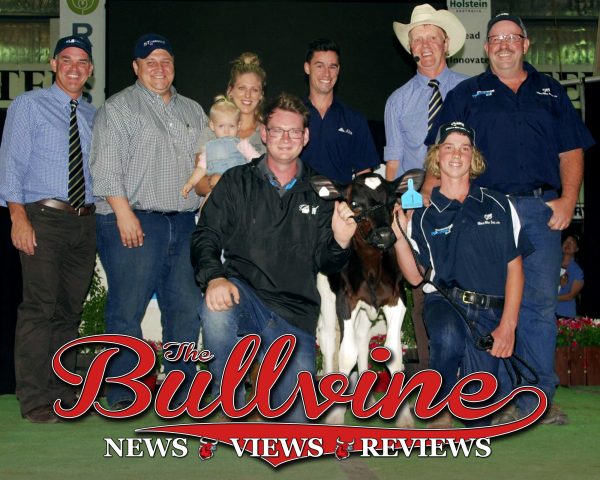
Holstein Association USA, Inc. officially identified an all-time record number of Holstein cattle in 2016 through their registration and Basic ID programs. In total, 690,553 Holsteins were identified in 2016, which is 108,867 more or 18 percent higher than 2015. Registrations totaled 377,305 and 313,248 head were enrolled in the Basic ID program.
The Basic ID program is a stepping stone to full registry status. Participation in Holstein Association USA identification programs has never been higher.
According to Holstein Association CEO John M. Meyer, “These statistics speak to the value dairy producers realize from Holstein Association identification programs. As we all know, the dairy economy was tough in 2016. Even so, dairymen across the country continued to increase their participation in our programs.”
When asked for the reason for the popularity of Holsteins, Meyer stated, “The market versatility of Holstein milk continues to pay dividends to Holstein breeders. Those looking to maximize Cheese Yield have 335 Holstein bulls to choose from with Cheese Merit Dollar indexes of 820 CM$ or higher. By comparison, no other breed has any bulls with a Cheese Merit Dollar index of 820 CM$ or higher.”
Meyer continues, “One of the great things about being in the Holstein business is that we have a bountiful array of diversified genetics to choose from that allows dairies to be the best in class in any dairy market they want to be in. The large volumes of high quality milk produced by Holsteins are coveted in all dairy markets.”
### Holstein Association USA, Inc., www.holsteinusa.com, provides products and services to dairy producers to enhance genetics and improve profitability–ranging from registry processing to identification programs to consulting services.
The Association, headquartered in Brattleboro, Vt., maintains the records for Registered Holsteins® and represents approximately 30,000 members throughout the United States.
A Utah lawmaker wants to send people to jail for harassing farm animals with drones, all-terrain vehicles and even dogs under a proposal that is unique in the U.S. but has gained an unlikely opponent.
Republican Rep. Scott Chew, who is also a rancher, said Tuesday that he introduced the bill last month because farmers incur significant costs and hardships when livestock are injured.
The measure is the first of its kind in the country, said Lora Dunn, an attorney for the Animal Legal Defence Fund, a national animal rights organization.
The Humane Society of the United States said the plan was redundant and may discourage members of the public from getting close enough to livestock to expose farmers’ mistreatment of their animals. Utah already has a law against injuring or killing farm animals.
“The biggest concern for us is that it eliminates any kind of possibility of documenting the problems that are taking place on that property,” said Sundays Hunt, the organization’s director in Utah.
Chew’s proposal calls for up to a year in jail and a $2,500 fine for someone who purposefully drives an ATV through a herd of cattle or chases chickens with a drone and seriously injures or kills the animals. He said he has not heard of drones hurting farm animals but wants to ensure farmers are covered in case they do.
Anna Marie Vail of the Utah Department of Agriculture and Food said the proposal is needed. She said young people often chase farm animals for fun, and if livestock get stressed, they can simply roll over and die.
“They don’t understand the seriousness of what they’re doing and how much that cow or calf means to the farmer,” she said.
Animal harassment also can have an economic impact, Chew said. If a cow is chased, it may lose weight, making it less valuable. Chew said his animals have been harassed.
About two years ago, his sheep were drinking water from a trough when a group of ATVs drove through them, scattering the herd, the lawmaker said. Although none of the animals were hurt, he said many lambs could have become orphans.
“The worst thing that can happen is you get mamas separated from their babies, and that’s one of my biggest concerns,” Chew said.
Newbirks Jazz 1584 VG-89-3yr (Lavanguard-Bolton) is one of the family’s current show stars. In 2016 she was 2nd at the All-European Show and Reserve Grand at the UK National Show.
The Lawson family’s Newbirks herd, located in north-east England, is home to 429 Holsteins, of the 429, 222 (52%) of them are from one bloodline the herd’s homebred Jazz family. The family has been part of the herd since it was established in 1948. The landmark registrated animal is Newbirks Solomon Jazz who marked the family’s 1800th female registration and she is the 12th generation to carry the Newbirks prefix. Congratulations to the Lawsons on this great achievement.
DairyNZ backs down as Greenpeace launches new video.
As DairyNZ backs down from a public fight over a controversial TV ad, Greenpeace has released a new video about industrial dairying and polluted rivers.
It’s called “Mildred and the Piss-Apocalypse,” and explains the science behind river pollution.
The animation describes how cow urine travels down through the soil into the groundwater poisoning rivers and aquifers with nitrates.
Hot on the heels of their first hard hitting campaign, Greenpeace’s new video outlines the important link between irrigation schemes and river pollution.
“It’s a simple message,” says Gen Toop, Greenpeace campaigner, “more irrigation equals more cows. More cows mean more pollution.”
The original ad from Greenpeace showed kiwi kids splashing about in a clear stream, saying 60 per cent of New Zealand’s monitored rivers are now unfit to swim in.
DairyNZ tried to get the original TV ad banned by complaining to the Advertising Standards Authority but lost the case last month. They publicly vowed to appeal the decision but have now backed out of the process.
“We welcome the recent overtures from DairyNZ to work with them on this problem,” says Toop, “but we will continue to pressure them to clean up their act on behalf of all New Zealanders who want a better future.”
She says revelations that the dairy industry wants to extract water from the source of the world famous Pupū springs to increase cow numbers in Golden Bay, is a clear example of how far the expansionist dairying lobby is prepared to go.
Registration is now open for the Holstein Association USA 2017 Judges Conference, which will be held Friday, April 7, in Stillwater, Oklahoma, in conjunction with the Southern Spring National Show.
The one-day conference will run from 8 a.m. to 1 p.m. Interested participants can register for the conference on the Holstein Association USA website with a credit card. The pre-registration fee is $50, which closes two weeks before the conference, on March 24. Late registrants and walk-ins will pay a $100 fee. To attend the conference, you must be 22 years old by the day of the conference.
The conference will include judging classes as well as cow-side classroom sessions. Participants will judge six high-quality Holstein classes, one of which will be assigned for oral reasons.
If you plan to apply for the Holstein Association USA Judges List in the future, you must first attend and receive a satisfactory rating at a Holstein Association USA Judges Conference before applying. If you are already on the Holstein Association USA Judges List, you must attend and receive a satisfactory rating at a Holstein Association USA Judges Conference every five years.
The Holstein Foundation’s Young Dairy Leaders Institute (YDLI), kicks off Phase I of its tenth class February 8-11, 2017, in Phoenix, Ariz. Sixty young adults from 17 U.S. states, as well as Canada and Mexico, will be a part of YDLI Class 10, a cornerstone program of the Holstein Foundation.
Before Phase I workshops begin, the class will have an opportunity to tour two Phoenix area farms – Danzeisen and Rijaarsdam dairies.The three-phase program takes place over 12 months. Phase I includes hands-on workshops to improve attendees’ leadership, communication, and advocacy skills, while offering opportunities for networking and building enthusiasm for the dairy industry.
Phase II, takes place in the year between Phase I and III, during which class members develop and use their new skills in a community outreach project of their choice.
Phase III, held January 31- February 3, 2018, will focus on group leadership skills and topics such as advanced communication training, conflict resolution skills, and influencing public policy. Class members will also give presentations on their Phase II projects.
The Holstein Foundation thanks these YDLI Class 10 sponsors:
Platinum Sponsors: Allflex USA, CHS Foundation, Dean Foods Foundation, Holstein Association USA, Northeast Agricultural Education Foundation, and Zoetis.
Gold Sponsors: Cargill, DairyBusiness Communications, Farm Credit System Foundation, Hoard’s Dairyman, Deere & Company, and Land O’Lakes.
Silver Sponsors: Center for Dairy Excellence, Dairy Farmers of America, Dairy Management Inc., and Pennsylvania Dairymen’s Association.
Bronze Sponsors: Robert L. Cain Fund, COBA/Select Sires, Farm Credit Northeast Ag Enhancement, GEA Farm Technologies, Inc., Horace Backus Fund, Merial Ltd., and Paul Mueller Company.
Family farms, like the Century Farm in Milton owned and operated by Cheryl and Harry Joseph, are what keeps Delaware’s agriculture industry going strong, said outgoing Department of Agriculture Secretary Ed Kee. MADDY LAURIA PHOTO
Ed Kee first fell in love with farming in 1968.
He was 16 and had just started spending his summers working for Halsey Knapp, pulling weeds, hoeing and doing other odd jobs around Nassau Orchards.
“I was not skilled labor,” Kee said fondly. “I also got to know the business side – how crops were marketed locally and shipped. That’s when I recognized how challenging it is, but how important.”
Fast-forward 48 years and Kee, who recently left the helm of the Delaware Department of Agriculture, still looks back on those summers fondly.
“There was just a tremendous sense of accomplishment every day,” he said, recalling the satisfaction of knowing exactly what went into a hard day’s work – about 800 bushels of apples freshly picked, carefully packaged and shipped off to nearby urban markets. A few years later, his education and subsequent 30-year career at the University of Delaware’s Carvel Center only deepened that appreciation, he said.
A lot has changed in Delaware’s agriculture industry since Kee’s summer days at Nassau, but some things have remained constant.
“Nearly every farm is a family operation in Delaware,” he said. Agriculture remains a strong economic driver in the First State and still relies heavily on family farms.
The $8 billion industry supports about 30,000 direct jobs, but farming is much more than a money-maker for the business-savvy person with a knack for early mornings, late nights and dirty hands.
“This is all about producing food,” Kee said. “Yes, it’s about farmers’ livelihoods, but I’ve always seen Delaware, Sussex County, Delmarva as a food-shed for the eastern United States and the whole country. Finding solutions to these challenges, whether it’s climate change, nutrient management or economics, is really critical not only for the livelihood of farmers, but for the quality of life for all citizens up and down the East Coast.”
Over the years, Kee said technology – improvements in irrigation, tilling practices and plant genetics – has bolstered crop yields from New Castle to Seaford and everywhere in between.
“I can remember when seeing a center-pivot [irrigation system] was a unique thing,” he said. Larger equipment and advanced technology also have made it easier for farmers to cover more ground in less time.
But the ground they’re covering is slowly dwindling. Kee estimates that Delaware is losing 1 percent to 2 percent of farmland annually, primarily because of development.
“With farming in an ever-increasing urban or suburban type of atmosphere, land is being developed for housing and other uses. That is what it is,” he said. “But it can drive the cost of land up beyond the farmer’s reach. For the land that remains, the most important thing is to make sure all policy makers and citizens understand and respect agriculture, and do what they can to give farmers a chance to be profitable.”
That means it’s becoming increasingly important for legislators to recognize the importance of the state’s Farmland Preservation Program, which has protected 120,000 acres statewide. More than 40,000 of the preserved acres are in Sussex County.
That also includes the state’s Young Farmers Program developed by Kee, which he noted as one of his biggest accomplishments as the department head.
“Frankly, the concept came out of my head, but I’m quick to say I had a lot of help to make that a reality and make it a sound program,” he said. The program, which is tied into farmland preservation, benefits farmers between the ages of 18-40 who are just getting started in the farming business.
“The funding of the ag land preservation program needs to be continued at some level, and hopefully that will be the case,” he said. “Good public policy is what government should do.”
Kee said he’s impressed with how local farmers have responded to stricter regulations regarding nutrient management. Nitrogen and phosphorous loads into local waterways have been reduced by more than 40 percent over the last 15 years, he said – but the future of farming truly depends on farmers being able to turn a profit without the cost of business being driven up by government.
“The farmers are prepared,” he said. “They’re good business people, they’re good stewards of their crops and their livestock and their poultry, they’re good mechanics. I think if they’re given a chance, and the regulatory burden isn’t too much, they’ll be just fine.”
Keeping a farm economically sound is likely the biggest challenge facing Delaware’s farmers, Kee said.
“Farmers today have to be true businessmen. They have to manage their money and be good marketers,” he said. “That may be a challenge for all independent businessmen, but especially for farmers.”
Going forward, Kee plans to take his decades of agricultural expertise to the Nuffield Farming Scholarships Trust, an international organization that provides scholarships for people interested in researching various aspects of the farming industry. He said he hopes to create opportunities for young farmers to get exposure overseas.
Kee said he also plans to finish out terms on several committees, tackle personal projects at his own farm in Lincoln and spend more time with his family and five grandchildren at Phillies games.
“I’ve been involved in [agriculture] one way or another since 1968, professionally since 1973, and I just have tremendous appreciation for all the farmers and the agricultural industry in this state,” he said. “But I can assure you I have learned probably more than I delivered with every conversation and every visit in the ag community. I truly appreciate their acceptance of me over the years.”
An inside look at a farmer’s life
Driving along the western cusp of the Cape Region, it’s clear that development is creeping outward, beyond coveted beach destinations. At the Joseph family farm, nestled between Lewes, Harbeson and Milton, new developments are popping up and so is the traffic on Route 9.
Add a tractor or other piece of farming equipment onto the already congested roadway, and it’s not surprising that heads start to spin. But the old tractors – almost matchbox-style compared to the massive combines used today – were running the roads long before newcomers began to realize the benefits of a slower-lower lifestyle.
It was 1915 when Harry Joseph’s grandfather, Harry C. Joseph, bought the 162-acre farm near Milton and began Joseph Dairy, which he passed on to his sons, Gilbert and Clayton Joseph. As a young boy, Harry would sometimes help out on Sundays so the regular drivers could have a day off. He’d hop into the truck alongside his father to hand-deliver local milk in glass bottles to residences and businesses from Milton and Lewes to Georgetown.
Gilbert Joseph, even after he sold the milk business in 1969, continued to work the farm fields until the day he died. He wouldn’t have had it any other way, his son said.
“I always say farmers don’t retire, they just die off,” Harry said matter-of-factly, with a reserved admiration for everything his father taught him about the life of a farmer and what it means to be a good family man.
Shortly before Christmas, Harry and Cheryl Joseph sat down in their kitchen to reflect on the evolution of a family farm that has been in operation for more than 100 years. They are one of 133 Century Farms in Delaware, 80 of which are found in Sussex County.
Old, empty milk bottles sitting on display in their modest home remind Harry of his family’s early roots in Sussex County. It’s been decades since milk was pasteurized at the farm, and even longer since cows graced the fields, but the Joseph family continues to produce thousands of pounds of vegetables and grains for local poultry companies and JG Townsend Frozen Foods in Georgetown – where there’s always a few boxes of baby limas or sweet peas set aside for the Josephs to enjoy.
The couple smiled as they talked about the long hours of hard work they’ve put into their farm, the hundreds of acres they tend throughout county, and the sweet, familiar smell of succotash on summer evenings.
“It’s just my way of life,” Harry said. “Farming is something you’ve got to love to do because if you don’t, you’re not going to do it. Period. You have good years, bad years. In farming, every year is different – that’s one thing you can bet on.”
He and his wife of 41 years raised their four boys on the family farm, and three of their sons now work alongside Harry tending to more than 800 acres – including the parcel once slated as the future site of the Overbrook Town Center on Route 1 near Milton.
Harry knows times are changing and development in eastern Sussex County is not going to slow down. As Kee said, it is what it is.
“I don’t need to step on anybody’s toes,” he said. “I’m just a little guy here on the corner.”
Even though the houses and heavy traffic have built up around the Century Farm on Joseph Road, some things will never change. Just as Harry grew up learning exactly where his food came from, he and his wife can now watch their grandchildren learn the same lesson.
“Well,” he said, with that warm Sussex County twang only heard among generational residents, “it means everything to you. You’ve got a place you can call home.”
Genetic engineering (GE) refers to the insertion, deletion, or modification of a specific region of DNA in an organism. This technology has the potential to transform how we improve livestock with genetics. The benefits of GE to agriculture, animals, and our environment are numerous and include:
Increasing agricultural productivity (more food for more people in our community and elsewhere)
Improving animal welfare (animals able to adapt to changing environments and weather)
Increasing disease resistance (improves animal health to use fewer antibiotics)
Improving environmental sustainability (animals use fewer resources to produce our food).
Recent use of GE in research animals has resulted in pigs that are resistant to Porcine Reproductive and Respiratory Syndrome (PRRS) virus and Holstein cows without horns. Breeding Holstein cows without horns improves animal welfare by eliminating the need for dehorning, which also improves human safety.
Genetically Engineered (GE) Foods
Although no GE animals, including fish, are currently being raised to produce food in the USA, the Federal Drug Administration (FDA) approved in November 2015 the sale of GE Atlantic salmon. (The introduction of these salmon into the marketplace is on hold until the US government decides if GE salmon need to be labeled as such.) These salmon grow twice as fast as non-GE Atlantic salmon, reducing the amount of feed required to raise them. This has a positive impact on the natural resources (less carbon footprint) used to raise this protein source, which also helps keep the price of salmon affordable to consumers.
Scientists have studied GE organisms for decades and have demonstrated that this technology is completely safe. Genetically engineered crops for human and animal consumption have been on the market for many years, and GE livestock have been developed for research purposes since the 1980’s. The National Academies of Sciences, Engineering, and Medicine found no difference in risks to human health or the environment from using GE crops when compared to non-GE crops1. All animals possess DNA, which is a biological language (or code) that directs cells to complete tasks necessary for life (e.g., movement, breathing). The alphabet for the language of DNA is composed of four “letters”: A, C, G, and T. Genetic engineering adds, deletes, or changes the sequence of these “letters” in DNA. The only change made to GE animals is a change in this biological code. A good analogy to DNA is a computer program, which directs a computer to carry out functions defined in its code. Genetic engineering is changing the biological code (DNA) of an animal, similar to how a computer programmer changes a computer code so that the computer can carry out a different task. However, just like genetic selection without the use of GE, the potential for unintended consequences of specific applications of GE to livestock needs to be evaluated. For example, researchers in the 1980’s modified pigs to produce excess growth hormone, which did increase muscle mass. Unfortunately, the excess growth hormone had adverse effects on survival and welfare, so this research was discontinued2. The US government rigorously evaluates the impact of all GE livestock on the environment and the welfare of the animals themselves. A complete and stringent approval process for GE livestock is essential to gain the public’s trust in the application of this technology to improve animal welfare, disease resistance, food yield, and environmental sustainability of animal agriculture. We must also remember that traditional genetic selection without the use of GE can also result in unintended consequences on animal welfare (e.g., lameness in broilers selected for growth rate, fertility problems in dairy cattle selected for high milk yield, etc.). Once identified, steps were taken to correct these problems. Yet, if genetic selection was never practiced, it would be difficult to envision how the meat and dairy yields taken for granted today could have been achieved. The risks of using GE livestock are no different than using conventionally raised livestock, yet the benefits to agriculture, the environment, and society may be enormous.
It seems there are no borders to how far technology can be developed as one company with headquarters in Dublin has launched the world’s first cow facial recognition software.
Cows, like humans, have their own set of unique facial features and these characteristics can now be read as usable data by technology to identify that specific animal.
Cainthus is a machine vision company with its headquarters in Dublin and offices in Ottawa and San Francisco. By using its own unique expertise it can turn visual information into actionable data.
Their focus is currently on how best to use this technology in agriculture even though its end use has greater and wider potential.
David Hunt, a former corporate banker, is the co-founder of Cainthus along with his brother Ross and together they are committed to digitising agricultural practices.
One of their major goals was to develop facial recognition technology for cows and, as David explained, they are right on track to do so.
“As far as we know we’re the only company in the world that can ID a cow solely using visual recognition, so I can only tell you how we’re doing,” says David.
“Today we have 97pc accuracy in ID on an individual image, but by sheer weight of analysis our ID accuracy is effectively 100pc.
As dairy farmers across the country gear up for the busy spring ahead the main focus is on how to best manage the next 120 days to make sure cows are fit and healthy after calving to be ready for service come April 24.
“In relation to sales, we’ve already made our first commercial sale and install. We’ll be doing our second commercial install in January and are open for general business at that point.
“In the near term we will be prioritising larger dairies of 1,000 cows plus, as that is where the system makes its greatest impact.”
David confirms that their desire to introduce facial ID came from an earlier goal to improve commercial scale measurement. It was only after some research with sensors he discovered what could actually be achieved.
“We realised many years ago that most of the big problems in agriculture can be boiled down to a lack of commercial scale measurement,” says David.
“If you can’t accurately measure something, then you can’t improve it. So we then went to see what would be the cheapest way to provide commercial scale measurement for agricultural fields, which turned out to be imaging sensors.
“Facial ID using those imaging sensors was a difficult next step to make the technology applicable to dairies.”
But what has the future got in store for the applications of sensors and new technology in agriculture? David sees robotics as a solution to a decreasing labour force.
“The combination of advanced sensor data and analytics to interpret them will create a platform capable of making constant small interventions to ensure maximum productivity,” he adds.
“The amount of interventions required combined with the cost of human labour means we are going to require low cost, robust farm robots to provide these interventions.
“So if we want to make best use of what is currently going on with sensors and analytics, then we must use robots. So I suppose I personally see them as an inevitability given the current road agriculture as an industry is on.”
Technologies are being developed at a fast pace, maybe even faster than farmers can embrace them. But David says farmers are excited about new technology. “I think farmers are sceptical of new technology because of the amount of snake oil out there, like NDVI based crop analytics, rather than pace of development,” says David.
“I’ve yet to meet a farmer who isn’t excited to use a new technology that demonstrably works. Most farmers I know are extremely progressive.
“If a technology is a good technology, then it should be cheaper and easier to use than what it’s replacing as well as being better,” he said.
‘A 5pc increase in feed efficiency is worth a lot to a dairy farmer’
The Cainthus bovine facial recognition technology has great potential for farmers as the first customers are discovering.
When cows stop eating or reduce their feed intake there is usually a good reason for this that indicates a pending health issue.
If these habits go unidentified for any period of time, farmers lose money in a reduced milk production and higher veterinary costs.
Thus, with facial recognition, cows can be identified easily in the shed or at the feed barrier and their eating habits and other attributes recorded.
“We’ve installs on two farms currently, and yes, they actively use it,” says David Hunt. “A five percent increase in feed efficiency is worth a lot to a dairy farmer, and we can contribute quite a bit more than that simply by letting you know when the cows stop feeding, enabling you to intervene earlier than otherwise possible.
“I think livestock is more readily applicable for robotics as you’re not asking these farmers to replace existing machines with robots, except for milking robots. With tillage, you’re asking a farmer to abandon the tractor or harvester, which is much harder.”
It’s anyone’s guess what a livestock farm will look like by 2050, but David thinks farms will become more mixed enterprise in the future.
“I don’t think that there will be purely livestock farms by 2050. Farms will more likely be mixed use agro-ecology style systems with many different crops and livestock.
Robots
“For a farmer to operate in this environment, well they’ll need to be extremely comfortable with data, statistics, and robots as well as being ecological experts.
“When I think of a 2050 farm, I struggle to see beyond it being one farmer and their machines. But this is true of many industries by 2050.
“The best of farmers will run far larger farms than today, only involving themselves when the machines are damaged or confused and need some human assistance.”
For the first time, researchers have genetically modified cows to be resistant to the bacterium that causes bovine tuberculosis. This disease is well-controlled in most developed countries, but it can often be fatal for cattle in developing countries and spread to people and other animals.
Researchers from China’s Northwest A&F University used a technique called CRISPR to insert a gene associated with tuberculosis resistance into 20 cows, 11 of which lived past the age of 3 months. These animals were more resistant to tuberculosis than animals who weren’t modified. They also didn’t show any unintended consequences of genetic modification. A study describing these findings was published in the journal Genome Biology on January 31.
CRISPR is an intensively researched tool developed in the last couple years, which relative to previous techniques, can quickly and cheaply insert genes into specific locations in an organism’s genome. It has been used to tweak many organisms, including modifying human embryos in the lab and correcting the gene responsible for Duchenne muscular dystrophy in mice.
For the first time, scientists have created disease-resistant transgenic cows. David Gray / REUTERS
In this case, the scientists used a new version of the technique, which inserts a gene into a single snip within one strand of DNA at a desired location in the cow genome. Previously, CRISPR involved the use of a molecular “scissors” that cleaved both strands of DNA. The advantage of this new technique is that it is potentially safer, says Suk See De Ravin, a researcher with the Laboratory of Host Defenses, part of the U.S. National Institutes of Allergy and Infectious Diseases, who wasn’t involved in the paper.
“I think this is a very neat study that demonstrates the feasibility of introducing a desired gene of interest via a potentially safer way,” De Ravin says. But “obviously further studies to demonstrate the safety of the outcome are necessary.”
He adds that the ability to raise animals “with improved resistance to infections has the potential to dramatically reduce the overuse of antibiotics in livestock,” which is a significant problem.
Harry Malech, chief of the Laboratory of Host Defenses and the National Institutes of Allergy and Infectious Diseases, says that having such resistant animals could help reduce the transmission of tuberculosis through milk, which is a significant health problem in developing countries. (The widespread use of pasteurization in the United States and most of the western world has “pretty much eliminated tuberculosis risk from milk, though the faddish enthusiasm for raw milk and cheeses… has reintroduced that risk,” he notes.)
Chuck Sattler, the vice president of genetic programs at a cow-breeding company Select Sires, says that the inserted gene is already found naturally in some cattle. The researchers used CRISPR to make changes that could occur with traditional breeding, but much more quickly and in a more specific manner, he adds.
For such transgenic cattle to be approved in the United States, they’d have to be vetted by the Food and Drug Administration. That’s cost-prohibitive at this point, Sattler adds.
The Holstein Journal is proud to present for the 75th consecutive year the winners in its annual All-Canadian Holstein contest. The 2016 competition proved to be very exciting with a number of close races and only five unanimous All-Canadians selected in the contest’s 22 classes.
The senior 2-year-olds proved to be the most hotly contested class. While the All-Canadian winner was clear-cut, the five other nominees in that class all finished within an eight point span and there was just one point eventually separating the Reserve and Honourable Mention. It was certainly fitting that after such a hard fought battle that the other senior 2-year-olds had enough points to receive an Honourable Mention designation. There was stiff competition as well for the coveted All-Canadian post in the 4-H senior calves, open junior yearlings and summer yearlings, and the intently watched 4-year-olds, where the votes were very close. Honouring the “best of the best” who have competed in showrings across the country throughout the entire year has always been the goal of the All-Canadian contest. The tightness of the votes cast by the All-Canadian Selection Committee reflects again how difficult this often can be as judges weigh the merits of each entry and their performance at shows from spring to fall.
Milksource Sid Desire, who was All-Canadian intermediate calf in 2015, is the only animal to repeat as All-Canadian in the open competition in 2016. Riverdown Atwood Jiggalea, who was All-Canadian in both the 4-H and open junior calf classes in 2015, came back as a junior yearling to be All-Canadian 4-H and Honourable Mention in the open competition in 2016. Nine other animals who achieved a Reserve or Honourable Mention designation in 2015 returned to take another prize in 2016.
The passion and commitment of Holstein exhibitors to compete at shows big and small each year is to be lauded. The hours spent raising and grooming animals may be endless, the miles travelled long, and the financial investment huge, but they do it every year for the sheer joy of showing. For the second year in a row MilkSource Genetics, the well-known Kaukauna, Wis., herd, is the leading exhibitor of All-Canadians. MilkSource had seven cows nominated from their showstring in 2016, two of whom they owned for part of the year. This group went on to finish the season with two All-Canadian, one Reserve and two Honourable Mention awards.
Handily taking the title of leading breeder of All-Canadians in 2016, and placing second for exhibitor, is Ferme Jacobs Inc., Cap-Sante, Que. They were previously leading breeder in 2013 and 2014. In this latest contest, the Jacobs prefix appeared on eight animals, six of whom were owned for all or part of the year by the Jacobs family, and they captured one All-Canadian, two Reserve and two Honourable Mention prizes. In addition, Ferme Jacobs won All-Canadian honours in the Breeder’s Herd class, the fourth consecutive year they have headed this coveted class.
Runner-up for breeder were Rob and Alice Bumstead of Loyalyn Holsteins, Owen Sound, Ont., who bred one All-Canadian and one Reserve, followed by Comestar Holstein, Victoriaville, Que., who bred one All-Canadian and one Honourable Mention. In the exhibitor race, Westcoast Holsteins, Chilliwack, B.C., took third place after showing two All-Canadians, one Reserve and two Honourable Mentions for all or part of the season. The partnership of Budjon Farms, Lomira, Wis., and Peter and Lyn Vail, Valatie, N.Y., rank fourth with two All-Canadians and one Honourable Mention exhibited for all or part of the year.
A tip of the hat should go to the mother and daughter duo, Bosdale Gold Luster and Quality Solomon Lust, who finished strong in the competition. Luster took Reserve All-Canadian 4-year-old honours, while her intermediate calf, Quality Solomon Lust, was All-Canadian in both the open and 4-H classes. This pair is owned by Quality Holsteins, Vaughan, Ont., Beckridge Holsteins, Keswick, Ont., Oscar and Eric Dupasquier, Guelph, Ont., and Agriber Societa Agricola SRL, Piacenza, Italy.
Braedale Goldwyn regained the title of leading sire of All-Canadians in the open competition in 2016 after a one year absence. One of the most highly acclaimed sires of show winners this breed has ever known, “Goldwyn” had 17 daughters nominated for All-Canadian in 2016, the most of any sire. These daughters went on to claim an impressive five All-Canadian and four Reserve awards easily giving this Semex bull the top sire designation for the ninth time out of the last ten years. Finishing in second place is Val-Bisson Doorman whose 15 nominated daughters earned three All-Canadian, one Reserve and four Honourable Mention prizes. Gillette Windbrook places third with his five nominated daughters securing one All-Canadian, two Reserve and one Honourable Mention awards. Pine-Tree Sid-ET, who was leading sire in 2015, slips to number four this time with just one All-Canadian title to be found among his four nominated daughters. Tying for fifth place are Lirr Drew Dempsey, who had one All-Canadian among his three nominees, and Maple-Downs-I G W Atwood, who had one Reserve and two Honourable Mention winners emerge from his five nominated daughters. In the 4-H classes, Walnutlawn Solomon had the most success of any bull siring one All-Canadian, two Reserves and one Honourable Mention.
The animals and groups nominated in the 22 All-Canadian Holstein classes were selected on December 1st by a Nominating Committee comprised of Yvon Chabot, Victoriaville, Que., Gerald Coughlin Jr., Peterborough, Ont., Joël Lepage, Amqui, Que., and Carl Phoenix, Sunderland, Ont. Advance page proofs of the nominations were then sent to 20 judges who served as the All-Canadian Selection Committee. By means of a ballot vote, these judges indicated their choice for first, second and third place in each class. No judge was permitted to vote in a class in which an animal he bred or owned was nominated. This will explain the variation in number of ballots cast in each class. A first place vote was worth 7 points, a second 3 points, and a third 1 point. The nominee with the highest point total is declared All-Canadian, second highest is Reserve, and 10 points or more is required for Honourable Mention.
Serving on the All-Canadian Selection Committee in 2016 were the four members of the Nominating Committee along with Jamie Black, Constable, N.Y.; Pierre Boulet, Montmagny, Que.; John Buckley, Lindsay, Ont.; Marc Comtois, Victoriaville, Que.; Pat Conroy, Angola, Ind.; Brian Craswell, Hunter River, P.E.I.; Michael Farlinger, Morrisburg, Ont.; Dominic Fortier, Saint-Christophe-d’Arthabaska, Que.; Michael Heath, Westminster, Md.; Thierry Jaton, Compton, Que.; Yan Jacobs, Cap-Sante, Que.; Carl Saucier, Champlain, Que.; Orville Schmidt, Leduc County, Alta.; Jeff Stephens, Troy, Ont.; Nathan Thomas, North Lewisburg, Ohio; and Blair Weeks, Pleasant Valley, P.E.I.
As the Holstein Journal marks the 75th anniversary of the All-Canadian contest, we say a heartfelt thank you to the Holstein exhibitors who have supported this contest over the years with their entries. Our thanks as well to the livestock photographers and their staffs who have worked diligently to ensure we receive pictures on time. And a big thank you to the Holstein field staff in Ontario and Quebec, and show organizers in other provinces, who make the Journal staff feel welcome whenever we cover shows in your area or provide us with results when we can not be there. The Holstein Journal could not continue this contest without all of you.
Congratulations to all of the 2016 All-Canadian contest winners!
For the voting results of the 2016 All-Canadian Holsteins, click here
The single biggest labour challenge for the dairy, poultry and egg commodities will be finding skilled and experienced farm managers, including owner-operators. For these commodities, management and ownership jobs account for almost two-thirds of the current workforce, and between now and 2025, they will account for the majority of the jobs going unfilled due to a lack of domestic workers.
The Canadian Agricultural Human Resource Council (CAHRC) has completed a three-year study and released the Dairy: Labour Market Forecast to 2025 and Poultry and Egg: Labour Market Forecast to 2025. These studies examine two of Canada’s most significant agricultural industries, which together account for 55,500 jobs, or 15 per cent of the total agricultural workforce.
Through consolidation, automation and other efficiencies, the dairy-cattle industry has shed more than a third of its workers since 2009, employing 39,900 as of 2014. However, despite this reduction in the size of the workforce, an additional 3,400 jobs went unfilled due to a lack of available domestic workers. This labour shortfall cost an estimated $71 million in lost sales.
While the labour demand is expected to continue to decline as a result of a stable market for the industry’s products, the labour supply is also predicted to shrink. As a result, the industry will continue to experience a labour shortage, with manager and owner-operator jobs at the greatest risk of going unfilled. Of the 1,100 jobs forecasted to go unfilled by 2025, 90 per cent will be jobs at the manager and owner-operator level, which will result in a skills shortage as well as a labour shortage.
For the poultry and egg industry, the research included farm operations engaged in breeding, hatching and raising poultry for meat or egg production, including chickens, turkeys, ducks, geese, pheasants, partridges and pigeons. Similar to the dairy industry, a leveling of demand for poultry and egg production and improved industry productivity will limit the demand for labour, while a shrinking supply of domestic labour will widen the industry labour gap. In 2014, 15,600 people were employed in the poultry and egg industry and an additional 250 jobs went unfilled due to a lack of domestic labour. These shortages cost the industry an estimated $6 million in lost sales. By 2025, 15,900 workers will be required, and 1,100 jobs are at risk of going unfilled. As with the dairy-cattle industry, manager and owner-operator jobs will be the most difficult to fill.
Both industries will be significantly impacted by retirement, with nearly one-third of the dairy workforce and nearly one-quarter of the poultry and egg workforce expected to retire by 2025. Finding Canadian workers with the right skills and experience is the greatest barrier to recruitment for both industries, despite the fact that they often offer attractive work conditions, including full-time, year-round employment located relatively close to urban centres. Both industries also have voluntary turnover rates that are below the sector average, which means that fewer employees choose to leave their jobs.
Unless these industries can find additional sources of labour with the right skills and experience, they will suffer from a critical gap at the managerial and leadership levels that could inhibit their ability to thrive.
Two undocumented Mexican immigrants are seeking to obtain class-action status in a lawsuit they have filed against an Escalon dairy that they say cheated them out of wages and subjected them to abysmal living conditions.
Plaintiffs Hernan Guzman-Padilla and Cipriano Benites say they worked for years at G & H Dairy, the defendant in the suit filed Friday in U.S. District Court in Sacramento. Besides state statutes governing wages and hours, working conditions and racial discrimination, the action also charges that the dairy violated federal law “by intentionally recruiting, hiring, and systematically underpaying solely Mexican immigrant laborers to staff their dairies, on the belief that they would quietly accept the aforementioned unlawful working conditions, wages, and housing.”
“Specifically,” the lawsuit says, “the defendants sought to hire only workers they viewed as vulnerable due to their race and alienage by tapping into an informal network for recruitment, paying them substandard wages they knew no white, U.S. Citizen worker would accept, providing them with housing that they failed to maintain or repair that no white, U.S. Citizen worker would accept, and perpetuating an abusive workplace environment in order to benefit themselves economically through the exploitation of the plaintiffs and similarly situated Mexican laborers.”
The suit was filed on behalf of the plaintiffs by California Rural Legal Assistance Foundation attorneys in Sacramento. Besides Guzman-Padilla and Benites, it seeks to represent “all Hispanic laborers of foreign alienage” who worked at the dairy in the four years before the filing of the suit and through the conclusion of the action. The class action would also cover the workers’ families.
The Sacramento filing follows an executive order signed last week by President Donald J. Trump that calls for the construction of a wall along the border between the United States and Mexico. The lead attorney for the plaintiffs, however, said that the case has nothing to with the political controversy that has erupted in the relationship between the two countries and how it might affect labor relations in California’s annual $46.7 billion agricultural industry.
“This is a suit about seeking compliance with existing law, and the things that are going on in the political arena really aren’t part of the suit,” said CRLAF litigation director Dawson Morton. “I do think it’s important that employers seek to attract immigrant labor often because they view them as vulnerable, as we allege here, and that maybe gets left out of the political discussion.
“The wall might divide the two nations, but our concern is with the workers who are here and who are working now.”
G & H Dairy representatives were not immediately available for comment Monday afternoon.
According to the lawsuit, Guzman-Padilla worked at G & H from 2002 until May 2016 while Benites was employed there from 2011 through June 2015. The two of them were paid “a fixed semimonthly salary regardless of the hours they worked,” the suit said. Usually, they worked for four 10-hour days in a row with one day of rest, while other employees worked six straight 10-hour days before being allowed to take one day off. The milking and cleaning operation sometimes required employees to work beyond the 10-hour shift without them being paid for overtime, according to the lawsuit.
Plaintiffs did not always receive adequate meal and rest periods, and they were required to attend safety training sessions on their own time or during their lunch periods without being paid, according to the suit. They also had to pay for their own work boots.
Dairy owners Gerard Van de Pol and Henry Van de Pol provided housing to the employees, but the plaintiffs’ suit describes it as decrepit. Guzman-Padilla said he lived in a trailer on South Van Allen Road that had a broken toilet, a malfunctioning water heater, unsealed windows, moldy walls and rotting floors that allowed for an infestation of mice. Guzman-Padilla said in the suit that he had previously lived in owner-provided housing that “was practically abandoned with holes that let the wind in, as well as allowing rats and cockroaches to enter the dwelling.” Guzman-Padilla said that when he and his wife tried to fix up his housing, “Defendant Henry Van de Pol was abusive and yelled at them.”
Benites alleged that he and other workers lived in small single rooms called “cuartitos” that didn’t have plumbing or a bathroom or internal heating and were overrun by fleas, cockroaches and rats.
“On information and belief, no white employees of defendants Henry and Gerard Van de Pol are provided poor quality housing, refused repairs, or required to live with vermin, water leaks, mold, rotting flooring, non-functioning heating, or without bathroom and kitchen facilities,” the suit said.
Mexican employees at the ranch also were subjected to derogatory racial comments, the suit said, with Gerard Van de Pol and his son, Daniel, a supervisor at the dairy, calling them “beaners” and threatening them with comments directed at their illegal immigration status.
“I can run you off this ranch any time I want to,” the lawsuit claims the employees were told by the Van de Pols. “If you’re not happy here, then you can go home.”
The price of the breakfast staple has risen by 42% in the last year, according to a new report.
THE price of butter has nearly DOUBLED in the past year as dairy inflation continues to spread following the UK’s historic Brexit vote.
The cost of the kitchen staple has rocketed by as much as 42% in the wake of warnings over supply shortages, according to a new report yesterday.
Data from market analysts Brand View found that block butter prices are up 7% year on year across 80 products in the major multiple retailers.
The Grocer magazine said that the shelf price increases are the result of both reduced promotional activity on block butter and higher base prices on some products.
But rising inflation following the UK’s decision to leave the European Union has seen milk and dairy prices ‘rise significantly’, reports the Telegraph.
attack and stroke’
The hikes follow warnings by manufacturers last year that falling milk production and low stocks had resulted in supply issues and soaring wholesale prices for butter.
Agriculture and Horticulture Development Board analyst Patty Clayton told the magazine: “Prices are likely to have been at least partly affected by the higher wholesale pricing that came about on the back of the lack of product in the autumn.
“If the stock situation had been strong, even though production had gone down, we might not have seen such a big increase in wholesale prices. “
Ms Clayton said that higher distribution costs had also contributed to retail price hikes although she added that this factor had less of an impact on butter than other dairy products such as cream, due to the minimal packaging needed.
A Sainsbury’s spokeswoman told The Grocer: “The cost of individual products is determined by a number of factors and prices can fluctuate, both up and down, as a consequence.
“We remain committed to providing our customers with delicious food and great quality and value every time they shop with us.”
Hostilities between the dairy industry and its competitors are flaring anew as alternatives to cow’s milk take up more space in the dairy case.
That means the politicians can’t be far behind.
U.S. Sen. Tammy Baldwin, a Wisconsin Democrat, spoke up Jan. 12, 2017 in a news release lauding herself as somebody who “stands up for Wisconsin dairy farmers.”
Baldwin wants Congress to pass the Dairy PRIDE Act — officially known (at least to a few) as the “Defending Against Imitations and Replacements of Yogurt, milk, and cheese to Promote Regular Intake of Dairy Everyday Act.”
After two years of falling milk prices, she and other federal lawmakers want the U.S. Food and Drug Administration to enforce consumer regulations defining “milk.”
Is Baldwin right that imitation dairy products — for instance, soy milk — often differ nutritionally from dairy item? And is labeling them “milk” or “cheese” or “yogurt” against the law?
To back that up, Baldwin’s office pointed us to nutritional labels, and to FDA regulations that plainly state: “Milk is the lacteal secretion, practically free from colostrum, obtained by the complete milking of one or more healthy cows.”
‘Against the law’
To dairy officials, inclusion of the word “milk” on non-dairy products is a misappropriation of the popularity of cow’s milk. But competitors say coconut milk and soy milk have long histories and aren’t confused with dairy. What’s more, they note, the FDA doesn’t punish “peanut butter” for using the dairy term “butter.”
But the FDA in 2008 and 2012 did tell two makers of drinks labeled “soy milk” that under its regulations, such labeling was inappropriate because the products did not contain “milk” as defined by the agency.
“Soy drink” or “Soy beverage” would be better, the agency said at the time.
That — and regulatory language allowing the FDA to declare a product misbranded and try to block its sale — help Baldwin’s case. Federal regulations are part of the United States Code that is the law of the land.
But to the frustration of the dairy industry, the agency has not consistently enforced that line of reasoning, allowing use of “soy milk” and “almond milk” and many others.
Rebecca Cross, a San Francisco-based regulatory lawyer for food product companies, said the FDA may be viewing labels on a case-by-case basis and allowing use of dairy terms on plant-based products so long as the use is not misleading.
Nathan Beaver, a food and drug lawyer with Foley & Lardner in Washington, D.C., explained that foods such as soy milk that have no FDA-written “standard of identity” must choose a “common or usual” name for their products.
Courts, though, have jurisdiction over disputes on the issue and therefore get final say on the meaning of the FDA rules.
On milk, courts so far have found that cow’s milk competitors are not misbranded if their names don’t confuse consumers, said Cross.
The nutrition comparison
Dairy alternatives, Baldwin said, “contain a range of ingredients and nutrients that are often not equivalent to the nutrition content of dairy products.”
This is a bit tricky to evaluate given that beverages labeled as some kind of “milk” now come from such diverse sources as soy, almonds, cashews, hemp, rice, oats, coconut and sunflowers.
For help, we turned to Vandana Sheth, a registered dietician and spokesperson for the Academy of Nutrition and Dietetics, a leading organization of food and nutrition professionals.
For starters, Sheth noted that dairy products can be a good source of calcium, vitamin D, protein and other essential nutrients.
Soy milk provides close to the same amount of protein as cow’s milk. Rice milk typically provides minimal protein and is higher in carbohydrates. Almond milk is usually quite low in protein and also less calorically dense, she said.
Plant protein tends to be of a lower quality than dairy proteins, though soy is close, said John Lucey, a food scientist who directs the Center for Dairy Research at the University of Wisconsin-Madison.
Our own review of labels found that soy and almond beverages, like cow’s milk, are all relatively low calorie, low carbohydrate, low sodium drinks. They are all heavy with calcium.
But they feature a different mix of vitamins and minerals, and fat content. Examples: soy milk has a lot of folate, while cow’s milk typically has none; cow’s milk contains some Vitamin C, but the soy, almond and hemp drinks we examined have none.
Almond and soy milks feature some iron and fiber — nutrients typically not found in cow’s milk.
“All the products profile differently,” said Susan Levin, a registered dietitian and director of nutrition education for the Washington, D.C.-based Physicians Committee for Responsible Medicine.
Bottom line: Baldwin’s nutrition observation is on target, based on a comparison of milk products.
Our rating
Baldwin claimed that imitation dairy products made from plants often differ nutritionally from the real thing, and labeling them “milk” or “cheese” or “yogurt” is “against the law.”
The nutrition point is accurate, and the legal point is partially so.
Most people dream of fairy godmothers or genies to make their wishes come true. But in reality that never happens. But for Edsel Wiegert, 90, of Brookdale Fond du Lac, his wish did come true thanks to Katie Grinstead, co-owner of Vir-Clar Farms, a 2,000-cow dairy near Fond du Lac, Wisconsin. Katie helped Edsel to fulfill his once-in-a-lifetime wish.
Edsel Wiegert was born into a farming family and grew up on a 160-acre dairy near Fond du Lac, Wisconsin. He has been working on a farm ever since he could walk. Edsel’s parents ran a small, 160-acre dairy farm, and by the age of 7, Wiegert was hand milking the cows. When Wiegert’s father fell ill during The Depression, Wiegert quit school after he finished the eighth grade to become a full-time dairy farmer. He then spent the next few decades working on the farm until kidney failure forced him to sell the place and retire. In 2009, Wiegert was diagnosed with kidney failure and could no longer care for his land or animals. As a result, he was forced to sell his farm. Unfortunately, Wiegert’s farm has since been torn down. Now, at 90 years old and living in an assisted-living community, Wiegert had one last wish for his life – to return to a dairy farm.
One of the staff at the assisted-living facility listened to his stories about life on his own farm and submitted a wish on his behalf to return to a farm one last time. Wish of a Lifetime, a nonprofit organization dedicated to honoring senior citizens and helping them live their dreams, granted Wiegert’s wish and reached out to nearby farms that would welcome a visit and allow him full access to the milking parlor. “A request like this to return to a farm is really rare, but really cool,” says Nicki Coleman, wish manager for Wish of a Lifetime. “Edsel has given back to his community throughout his life,” she says. “Also, he has a very intriguing story.” Wiegert dedicated his life to farming and taking care of his family. With his declining health, this was likely his last chance to visit a farm. Coleman says. “It’s just an incredible story. You can tell he’s really passionate about farming.” “Farming is where his heart lays — with the land, animals and fieldwork,” said Lefeber. “Being a farmer, it’s in his heart.” Colemen adds that “Edsel’s an amazing guy and has so much to give back and that he has given back, and he deserves to be honored for what he’s done and have his story heard by others.”
Wish of a Lifetime and Brookdale Senior Living recently took Wiegert, Lefeber and Brookdale associate Angela Bledsoe, to Vir-Clar Farms on Jan. 3. Bledsoe said this wish “lit up a world that Edsel had been missing.” After seven years, Wiegert not only had the opportunity to get back out on a farm and do what he loves most. Edsel was greeted by the owners of Vir-Clar Farms JR Boyke, Katie Grinstead and Gary Boyke during his visit to the Fond du Lac Farm as part of a Wish of a Lifetime. Edsel was able to reminisce with Vir-Clar Farms owners Katie Grindstead and Gary Boyke as he knew Grindstead’s grandparents, and enjoyed sharing his fond memories with them on their farms.
Wiegert asked to explore a large dairy with several thousand cows so he could learn about the advances dairy technology has made since his retirement. After touring the visitors’ center, Wiegert finally made it to his dream destination: the parlor. Having hand-milked his small dairy herd all his life, Wiegert wanted to see how an automatic milker worked and how a large operation is run, and Vir-Clar Farms fit the bill – 2,000 cows, modern equipment and wheelchair access. “He didn’t talk a whole lot, but you could just tell from when he did that he was very happy,” Grinstead says. “There were quite a few tears shed from everybody else that was there, just because we were so happy at how happy he was.”
Grinstead says it was a precious experience to have Wiegert at their farm. “We all felt very good about how happy he was.” He spent just under two hours at the farm. “They said right now, with the way his health was, that most days that was about all the time he was awake,” Grinstead says. “So they were really happy and impressed at how long he was awake and how well he was doing and how happy he was there.”
More than 5000 dairy cows are about to be shipped from New Zealand to China by the Saudi businessman involved in the so-called Saudi sheep scandal.
Critics say Sheik Hamood Al-Ali Al-Khalaf’s chequered animal welfare record means the government must guarantee the journey will not prove another debacle.
The death of thousands of sheep on their way to the Middle East on another boat owned by Mr Al-Khalaf in 2003 led to the banning of live sheep exports.
The Ministry for Primary Industries has received an export application for 5300 dairy breeding cattle.
Mr Al-Khalaf owns the livestock carrier Awassi Express which is heading to New Zealand to transport the cows. It is due to dock in Napier in a few days.
Labour Party primary industry spokesperson Damien O’Connor said the public needed reassuring the animals would be safe.
“Well I think we need to know that there’s not some kind of deal done that leaves the animals at risk.
“We need to be assured they have the very highest standards of animal welfare both on the ship and then of course once they get to China,” Mr O’Connor said.
Animal rights organisation SAFE director Hans Kriek said not only was the voyage to China tough on the animals, there was no guarantee the cows would be treated humanely at their destination.
“These animals, then, in the end, will be slaughtered at the end of their productive life, which we don’t even know how long that is in some of these countries.
“They will be slaughtered, for instance, without stunning as is required in New Zealand.
“We are sending our animals to countries that may well kill them in a way that would be illegal in New Zealand – and you could go to jail if you did it here.”
Livestock exporting firm responds
Australian livestock exporting firm Landmark International, which is planning to ship the cows, said the highest standards of animal welfare would be met on the voyage.
Only 4500 cows would be carried on a ship capable of taking 16,000 and they would be accompanied by three experienced stockmen and a large crew, it said.
“This clearly allows the Landmark consignment to utilise additional space requirements as required to ensure the highest possible animal welfare outcome and comfort during the voyage for this high-value dairy consignment,” the company’s statement said.
The company declined to disclose its Chinese customer and the company’s export manager, Stephen Reynolds, said company policy did not allow him to give interviews.
Asked by RNZ if there would be any independent observers aboard the Awassi Express the company responded: “All preparation and the voyage are conducted adhering to NZ government requirements and standards.”
‘Making competition’
New Zealand First leader Winston Peters said animals could be shipped humanely if there was appropriate veterinary care.
He said selling New Zealand dairy cows to China was short-term thinking.
“It’s economic treason, there’s no shortcut through what they’re trying to do here…we’re just wantonly making competition for ourselves,” Mr Peters said.
Mr O’Connor was not sure the shipment made strategic sense for New Zealand.
“It does beg the question, is New Zealand benefiting from such a large export of high-quality genetic material from our dairy industry?
“If we’re selling our best genetics to the Chinese then that makes it harder for us to compete in that Chinese market.”
The Ministry for Primary Industries said livestock exporters must meet requirements around water, food, space and having suitably-experienced stockmen and/or veterinarians before it issued an export permit.
Minister Nathan Guy would not comment because the export certificate was not yet issued.
The new experimental law means Italian dairy products that include dairy ingredients must list the country of origin.
The Italian government said that without a negative response from the EC, and after hearing from most national agribusiness organizations, it was creating the new ruling , which will remain operational until March 31, 2019.
The new ruling applies to all types of milk (including sheep, donkey, buffalo and goat) and dairy products.
Food items that contain dairy, however, such as pizzas with cheese, or milk chocolate, do not need to follow the new regulations. However, flavored milk and yogurt, for example, will need to apply the new ruling on labels.
The decree enters into force 90 days after publication, allowing time for companies to phase out older labels; and 180 days for labeled products already on the market.
Consumer approval
Manufacturers will have to indicate the source of the raw material used in dairy products such as cheese, butter and yogurt, as well as the country of packaging and country of processing.
The Italian government said that an opinion poll of consumers in the country showed high interest for the indication of place of origin of the milk and products derived from it.
Food with a Protected Designation of Origin (PDO) or Protected Geographical Indication (PGI) status – and Italy has 49 protected cheeses – will be exempt from the origin labeling requirements.
Also, products made elsewhere in the EU are exempt from the new rules, which will also cease to be in effect should the EU come up with a Europe-wide country of origin law.
In July, Italy approached the European Commission with its plans, which were similar to those approved months earlier in France.
A burden for industry
However, Dr Luca Bucchini, managing director of Hylobates Consulting in Rome, Italy, told this website the situations in France and Italy are not the same.
“Hopefully the EC will be able to act soon and put an end to the rise of national measures. The burden is more severe in Italy, as the country – contrary to France – is not self-sufficient in terms of milk,” Bucchini said.
He said the new ruling creates a burden for industry, while food businesses interested in promoting their products because of their origin could already do so.
“Moreover, it also does not allow businesses to simply fall back on “EU origin” if there is no interest in further specifications,” Bucchini said.
He added that it will be more difficult to switch milk suppliers from Italy to other EU countries during the year when the local milk supply decreases, as this will require label changes.
Bucchini also said that the transition period is a welcome concession to trade groups, but the short transition periods remain punishing for businesses.
“While the intent of the legislation may be good, the short transition period is not a hallmark of good policymaking,” he said.
Labeling details
When a product has been sourced, processed and packaged in the same country, the origin may be indicated using a single sentence, for example ‘Milk origin: Italy,’ or ‘cream: origin of milk – Italy.’
However, if processing and packaging takes places in different countries, the following may be used: ‘Milk origin: EU countries and/or non-EU countries’.
The ruling also states that the country of origin must be indelibly marked on the label so as to be visible and easy to read, and that it must not be in any way hidden, obscured, detracted from or manipulated by any other text or graphics or other elements likely to interfere.
Finland, Greece, Lithuania and Portugal are also considering similar country of origin labeling legislation.
List of products:
Milk and cream, not concentrated nor containing added sugar or other sweetening matter
Milk and cream, concentrated or containing added sugar or other sweetening matter
Buttermilk, curdled milk and cream, yogurt, kefir and other fermented or acidified milk and cream, whether or not concentrated or containing added sugar or other sweetening matter not flavored nor containing added fruit, nuts or cocoa
Whey, whether or not concentrated or containing added sugar or other sweetening matter; products consisting of natural milk constituents, whether or not containing added sugar or other sweetening matter, not elsewhere specified or included
Butter and other fats and oils derived from milk; dairy spreads of a fat content of more than 75% but less than 80 %
A northwest Iowa dairy has settled a federal lawsuit and promises action to prevent future manure discharges into nearby streams.
Prosecutors also said Thursday that Meadowvale Dairy, of Rock Valley, has agreed to pay a $160,000 civil penalty. The proposed consent decree is subject to a 30-day public comment period and approval by the federal court.
The lawsuit filed last February alleges that since 2001, Iowa has cited Meadowvale a dozen times for failures to maintain adequate storage for effluent. The complaint says Meadowvale operates waste systems for two interconnected feeding operations for a total of about 10,000 head of cattle. It says wastewater from two of Meadowvale’s facilities entered two tributaries of the Big Sioux River in violation of the dairy’s National Pollutant Discharge Elimination System permits.
The Wisconsin Holstein Association would like to announce the addition of Darin Johnson as Executive Director. Johnson brings an extensive background in the dairy industry, having more than a decade of experience as a Regional Sales Representative for Holstein USA. Johnson will be responsible for overseeing all aspects of the association including membership, employee relations, and all operational needs.
“We are excited to have Darin as a member of the WHA team. His experience and genuine passion for the Holstein breed will be invaluable to us as he assumes this leadership role and assists in the continuation of providing outstanding programs and opportunities for our membership,” commented Kevin Jorgensen, WHA Board President.
Previously, Johnson was an agricultural lender with River Bank of Bangor. Prior to his lending experience, he was a regional representative for Holstein Association USA, serving the Colorado area Holstein breeders by promoting Holstein USA products and services, educating members and providing genetic consultation. Johnson worked directly with the members in his area to build long-term relationships, and represented Holstein USA at various industry functions. He also holds a degree in dairy science from UW-Madison.
Johnson grew up on Elm Mound Farms, a Registered Holstein farm located in Bangor, Wis. Over the years, he was extremely involved in the Wisconsin Holstein Association where he served as a summer intern and was recognized as a Distinguished Junior Member. Darin was active in 4-H dairy judging and is a graduate of Holstein Foundation’s Young Dairy Leaders Institute.
American dairy farmers say Canada’s supply management system must be included in any NAFTA renegotiation talks — a message they’re directing at the new U.S. administration.
“The North American Free Trade Agreement (NAFTA) has opened a major door to Mexico that we don’t want slammed shut,” the National Milk Producers Federation’s president and CEO Jim Mulhern said in a statement Monday.
“In contrast, Canada, the other NAFTA party, has habitually and deliberately worked to undermine dairy trade. We have been very vocal in the past year that Canada is not living up to its dairy market access opportunities for the United States. This issue must be on the table in any discussion about the future of NAFTA.”
The National Milk Producers Federation, the largest American dairy lobby, is one of 130 American agriculture groups, companies and processors who have signed a letter to President Donald Trump detailing how a NAFTA renegotiation could affect U.S. farmers.
President Trump has said he will renegotiate the trilateral trade deal “at an appropriate time.” During the campaign, he repeatedly referred to NAFTA as “the worst trade deal” ever signed by the United States and threatened to “tear it up” if a better deal could not be renegotiated.
Monday’s letter from industry does not explicitly mention Canada’s supply management system — but a press release sent by National Milk Producers Federation does mention it. The letter highlights the fact there are “a few key sector exceptions that require attention.”
“Barriers still exist for U.S. exporters and we look forward to working with your Administration on reducing the non-tariff trade barriers that continue to inhibit our exports to the North American marketplace, as well as to addressing the remaining tariffs impeding access for some U.S. export sectors,” the letter reads.
Ottawa must defend supply management if faced with American threats, NDP Agriculture Critic Ruth Ellen Brosseau said Wednesday. Brosseau, whose riding is home to a large number of dairy farms, said producers are “very worried” about what the new American administration could mean for their industry.
“It’s a grave concern,” she said. “We see a lot of pressure coming from American groups and elected officials in the United States putting supply management on the table. They want to improve access for their dairy products into Canada … We need some reassurance.”
One of Trump’s top economic advisors, Stephen Schwarzman, told reporters in Calgary Monday the Canadian government should not be “enormously worried” about the new administration’s move to renegotiate NAFTA. Trade between the two countries, he stressed, is fairly balanced.
Schwarzman, who was in Calgary for a meeting with Prime Minister Justin Trudeau and his cabinet, did not say whether supply management would be included in the negotiations.
The Jan. 23 letter follows an earlier Jan. 11 letter from 37 American dairy groups and businesses that warned “Canada’s protectionist policies will harm the U.S. economy.” That letter focused primarily on Ontario’s decision to amend its milk classes in an attempt to dissuade imports of diafiltered milk. A similar national policy is currently being debated by industry.
The policy was supposed to have been implemented September 1, an implementation date that was delayed. The Canadian Milk Management Committee is now reviewing the proposed plan.
Top Canadian dairy officials were expected to meet about the proposed National Ingredient Strategy this week.
The Red and White Dairy Cattle Association is proud to announce the winners of the annual Cow and Heifer of the Year Contest!
Nominated and voted on by the membership of the RWDCA, winners are named in both the Open division and Junior division.
Winning Cow of the Year in the Open division is Pheasant Echo’s Turvy-Red-ET. Turvy is owned by Kenny Stambaugh of Pheasant Echo’s Farm, Westminster, MD. The highlight of Turvy’s year was topping the International Red & White Show at World Dairy Expo, Madison, WI. The Heifer of the Year was awarded to Booth-Haven Lady In-Red, exhibited by Cole, Ava, Campbell & Royce Booth, Plymouth, WI. Lady In-Red is now owned by Michael Heath, Barclay Phoenix and Tim and Sharon Abbott, Westminster, MD. Lady In-Red topped off her show season by being named the Junior Champion of the International Red & White Show at World Dairy Expo, Madison, WI.
Topping the Junior contest is Milksource DTY Tammy-Red-ET. A Four year old, Tammy topped the International Red & White Junior Show at World Dairy Expo, Madison, WI, for owners Grady & Lane Wendorf & Dawson & Kylie Nickels, Ixonia, WI. The winning Junior Heifer of the Year was awarded to Winter Yearling, Lyn-Vale Cherry Wine-Red-ET. Cherry Wine topped off her show season by being named the Junior Champion of the International Red & White Junior Show at World Dairy Expo, Madison, WI. Like her Open Division counterpart, Cherry Wine is also owned by Cole, Ava, Campbell & Royce Booth of Plymouth, WI.
Full articles on the winners will be featured in the February and March issues of The Red Bloodlines, the official publication of the Red and White Dairy Cattle Association.
The RWDCA strives to encourage and promote the progressive breeding and development of superior Red & White Dairy cattle by providing breeders with information, programs and services to help track, evaluate and improve the breed from one generation to the next.
A new federal bill seeks to improve labor standards for hiring foreign workers at farms across the country.
Congresswoman Elise M. Stefanik (R-Willsboro) and U.S. Rep. Chris Collins (R-Erie County) recently introduced the the Family Farm Relief Act of 2017.
The measure would move the H-2A Agricultural Visa program, which allows foreign entry into the county for agricultural employment, from U.S. Department of Labor to the U.S. Department of Agriculture.
Doing so would help adjust the program to meet the needs of dairy farmers who use foreign labor to maintain operations year-round, proponents say.
“When I travel the district speaking with our farmers, I often hear about how unnecessary delays in worker visas lead to difficulty meeting production goals,” Stefanik said in a statement.
“This common-sense legislation simply puts the H-2A agricultural visa program in the hands of those who best understand the specific needs of our farms.”
‘BURDENSOME’
Current regulations allow farms to use the program if they seek temporary or seasonal workers.
With dairy farming being a year-round business, however, foreign labor on such farms is needed on a more long-term basis.
According to the bill, foreign laborers admitted for the purpose of year-round livestock farming, particularly dairy farming, would be covered by the H-2A program for no longer than three years.
Additionally, it would allow visa applicants to fill out H-2A applications on paper or online, requiring a user-friendly online system and ending burdensome requirements on advertising and prevailing practice surveys, supporters say.
Jay M. Matteson, agricultural coordinator for the Jefferson County Industrial Development Agency, said dairy farms there are largely unable to utilize the program because of its burdensome process for admitting a worker.
“Farms are always interested in trying to obtain workers from outside the country to come in legally. With H-2A, it is just not possible for them to do so,” he said.
For long-term purposes, Matteson said, it would be ideal if foreign dairy-farm workers could legally stay in the country for three to five years.
Matteson said many farms in the area hire foreign employees from Mexico and Guatemala.
‘CAN’T QUESTION’
Sackets Harbor dairy farmer Ronald C. Robbins, who employs a few Hispanic workers for his dairy operation, said hiring a foreign worker involves reviewing their employment documentation.
Even if paperwork seems to be in order, it is illegal to question a potential hire over whether it is truly legal for him or her to be working in the United States.
“As long as they present documentation, we are not allowed by law to question it,” he said. “We go with what we see.”
As it stands now, Robbins said, it is “cumbersome” to go through the H-2A program for foreign employees to work longer than at least one season of farming.
He said that improving the H-2A program for dairy farmers would help ensure that foreign farm employees are legally allowed to be working in the United States.
“It would give us confidence that the folks that are here are here legally,” Robbins said.
LEADING the calf that smashed auction records was a 15-year-old boy who had just lost his dad.
Charlie Lloyd’s father, Darren, of Lloyd Star Holsteins at Kyabram, was found unconscious at the International Dairy Week campground the day before the event started and couldn’t be revived.
Charlie and his sister, Sarah, 12 — both well known in dairy showing circles — decided to stay at the Tatura event, surrounded by the IDW community.
He knew the calf would make big dollars but no one was ready for the record books to be blown apart, with the bidding reaching $251,000.
“I was really nervous at the start,” Charlie said.
“But as soon as the sale started and I started walking around a bit I felt a lot better.
“When the bids started going up I was just really concentrating. I didn’t know how much she had made until the end — I couldn’t believe it.”
Asked if he thought his dad would have been proud of his role in the auction, he said: “Yes, I hope he would have.
“He would have wanted me to keep going.
“He started me off doing this and did everything for me, running me to shows, bought me clippers, bought me heifers. He taught me everything I know.”
Dairy farmers have protested depressed milk prices by spraying a tonne of milk powder onto the European Council building in Brussels.
The farmers said a planned sale of milk powder stocks would depress prices in Europe and abroad.
The European Union has bought large quantities of skimmed milk powder to stabilize the market but said in November it would start disposing of some of it after prices had improved.
Protesters used farm machinery to cover the building and nearby police officers in a thick coat of the sticky, white powder.
The European Commission said only a small amount of the total milk powder stock of 354,000 tonnes was for sale and sales would be made without affecting prices or market stability.
The EU Commissioner for agriculture Phil Hogan said yesterday (23 January) he had difficulty understanding why dairy farmers were protesting in Brussels, given the recovery of milk prices in the last six months.
Hogan spoke at a press conference following the first EU Council ministerial of the year, with agriculture ministers from the EU’s national governments.
“It’s difficult to understand the basis for which protests have been organised outside the council today,” said Hogan.
The market situation of dairy farmers has become “a regular feature” on the agenda of the agriculture ministerial in the past 18 months, he noted.
American farm groups are anxious to see how the White House will negotiate trade deals without starting a trade war now that the Trans-Pacific Partnership (TPP) is officially dead.
President Donald Trump signed an executive order Monday officially withdrawing from talks to enter into a trade partnership with 11 other countries in the Asia Pacific, and is looking at dropping out of NAFTA, the groundbreaking trade deal of the 1990s.
The most powerful lobby for the beef industry is worried about sparking a trade war with China and Canada, which would have been partners in the TPP.
“Sparking a trade war with Canada, Mexico, and Asia will only lead to higher prices for American-produced beef in those markets and put our American producers at a much steeper competitive disadvantage,” Tracy Brunner, president of National Cattlemen’s Beef Association said in a statement Monday.
“TPP and NAFTA have long been convenient political punching bags, but the reality is that foreign trade has been one of the greatest success stories in the long history of the U.S. beef industry,” Brunner said.
Without suitable alternatives, the beef industry would suffer “tremendous loss,” Brunner said.
The White House will begin looking for bilateral trade agreements rather than agreements that put differently sized countries on par, White House Press Secretary Sean Spicer said in a press conference Monday afternoon.
Trump is reviewing all current trade deals, and will “increase market access wherever he can,” Spicer said. Any big trade deal could be at risk under the Trump administration if the president believes he can find a better deal negotiating with individual countries.
“[Trump] is always going to be fighting for the interests of the country and American worker,” Spicer said. “How we engage, and with whom, is going to decided on whether or not we can get a deal that benefits our country economically and in terms of national security.”
“It’s not about multi-lateral agreements under a Trump administration,” Spicer said. “It’s about bilateral agreements, where we can figure out, country to country, how can we fight for the American worker gain them access to another market that’s going to benefit our large and small businesses who want to sell additional goods and services.”
Negotiating trade deals soon is important for the agriculture sector, which relies on foreign exports.
“It is critical that the new administration begin work immediately to do all it can to develop new markets for U.S. agricultural goods and to protect and advance U.S. agricultural interests in the critical Asia-Pacific region,” Skippy Duvall, president of the American Farm Bureau Federation said in a statement.
Rural communities, which voted overwhelmingly for Trump, depends on agriculture trade, and “more than 25 percent of all U.S. ag production ultimately goes to markets outside our borders,” Duvall said.
A Swedish-German team of researchers has cleared up a key process for the artificial production of silk.With the help of the intense X-rays from DESY’s research light source PETRA III, the scientists could watch just how small protein pieces, called nanofibrils, lock together to form a fibre. Surprisingly, the best fibres are not formed by the longest protein pieces. Instead, the strongest “silk” is won from protein nanofibrils with seemingly less quality, as the team around Dr. Christofer Lendel and Dr. Fredrik Lundell from the Royal Institute of Technology (KTH) in Stockholm reports in the Proceedings of the National Academy of Sciences.
Due to its many remarkable characteristics, silk is a material high in demand in many areas. It is lightweight, yet stronger than some metals, and can be extremely elastic. Currently, silk is harvested from farmed silkworms, which is quite costly. “Across the globe, many research teams are working on methods to artificially produce silk,” says co-author Prof. Stephan Roth from DESY who is an adjunct professor at KTH Stockholm. “Such artificial materials can also be modified to have new, tailor-made characteristics and can serve for applications like novel biosensors or self-dissolving wound dressings, for example.”
However, imitating nature proved especially hard in the case of silk. The Swedish team focuses on self-assembling materials. “That’s a quite simple process,” explains Lundell. “Some proteins assemble themselves into nanofibrils under the right conditions. A carrier fluid with these protein nanofibrils is then pumped through a small canal. Additional water enters perpendicular from the sides and squeezes the fibrils together until they stick together and form a fibre.” The latter process is called hydrodynamic focussing, and Lundell’s team has used it before for producing artificial wood fibres from cellulose fibrils. “In fact, the process has several similarities with the way spiders produce their silk threads,” says Lendel.
In the new study, the nanofibrils were formed by a protein from cow’s whey under the influence of heat and acid. The fibrils shape and characteristics strongly depend on the protein concentration in the solution. At less than four per cent, long, straight and thick fibrils form. They can be up to 2000 nanometres long and 4 to 7 nanometres thick. But at an only slightly higher protein concentration of six per cent or more in the initial solution, the fibrils remain much shorter and thinner with an average length of just 40 nanometres and a thickness of 2 to 3 nanometres. Also, they are curved looking like tiny worms and 15 to 25 times softer than the long, straight fibrils.
In the lab, however, the short and curved fibrils formed much better fibres than the long and straight fibrils. With DESY’s bright X-ray light, the researchers could find out why: “The curved nanofibrils lock together much better than the straight ones. The X-ray diffraction patterns show that they largely keep their rather random orientation in the final fibre,” says Roth, head of the beamline P03 at PETRA III where the experiments took place.
“The strongest fibres form when a sufficient balance between ordered nanostructure and fibril entanglement is kept,” adds Lendel. “Natural silk is an even more complex structure with evolutionary optimized proteins that assemble in a way with both, highly ordered regions – so-called beta-sheet – that give strength and regions with low order that give flexibility. However, the structures of the artificial and natural fibers are essentially different. In particular, the protein chains in natural silk have a larger number of intermolecular interactions that cross-link the proteins and result in a stronger fiber.”
In their experiments, the researchers obtained artificial silk fibres that were roughly five millimetres long and of medium quality. “We used the whey protein to understand the underlying principle in detail. The whole process can now be optimised to obtain fibres with better or new, tailor-made properties,” says Lendel. This way, the results of the study could help to develop materials with novel features, for example artificial tissue for medical applications.
As an animal science major I hear a lot of people constantly tearing down the industry that I love. Every year, more people become further disconnected about where their food comes from, allowing organizations like P.E.T.A. to further the divide between farmers and consumers by using ad campaigns,blogs, and social media that thrive on the consumer’s fear. Today, I have decided to address the top four misconceptions that surround the agriculture industry .
1. “Farmers murder their animals”
One of the biggest misconception that the public has about farmers, and I receive a lot of comments from animal right activist that say I murder my animals. P.E.T.A recently released an ad campaign that shows a dead lamb that has most of its skin off of it and it says “Here’s the rest of your wool coat”. This ad campaign thrives on the misconceptions that consumers have about famers. I’ve raised lambs for about 13 years, and I can tell you this accusation is far from the truth. I shear my lambs so that they are not hot during the hot weather months. Shear is the same as you or I getting a haircut. Above you can see a couple of my lambs that I recently sheared, and you notice that they look a lot different from P.E.T.A.’s ad. My lambs have all of their skin on and they are cool and content.
2. “Farmers abuse their animals.”
As you can see in the photo above, I love my animals a lot so naturally this misconception angers me. From an early age, I’ve been taught that the animals always come first. A lot of my childhood memories involve my family and I in our barn taking care of our animals into the late hours of the night, and then getting up early in the morning to do it all over again. These memories grew into my love for large animals, and has led me to decide on a career where I work with large animals.
3. “Farmers are injecting our food with medicine”
Imagine that you’re in a grocery store and you reach for a gallon of milk and you noticed that the one you’re reaching for says “antibiotic free” and the one next to it doesn’t. As a consumer it is easy to get swept up in the advertising techniques of companies and believe that dairy farmers are putting antibiotics in the milk you drink. This misconception is not entirely false, because dairy cattle are able to get sick just like you and I. Dairy farmers do give their cattle antibiotics to help them feel better, just like a doctor gives you or I medicine. Once a farmer gives a cow medicine he wraps a ribbon around her ankle. This tells any visitor that she is sick and that she must be milked last. When the farmer milks that cow last, he puts her milk in another container and dumps it down the drain that way it doesn’t go into the milk that is ready for consumer consumption. The safety of the consumer doesn’t stop with the farmer; it continues to the dairy where they process all of the milk. About every two days milk is picked up from the farm and transferred to the dairy. When the milk trucks arrive at the dairy they test all of the milk to further make sure that there is no residue from medicine in the milk. Once the dairy confirms that the milk is free of medicine, it is then packaged into containers and shipped to the store for the consumer to purchase.
4. “Farmers are just in it for the money.”
Growing up on my family’s farm, I’ve learned this statement is far from the truth. On my family’s farm we milk dairy cattle, and for every 100 pounds of milk we produce we get a set amount of money. Dairy farmers receive a certain amount of money for every 100 pounds produced. Currently dairy farmers about $14 per 100 pounds of milk. This might seem like a lot of money especially if a farm has several hundred head of cattle, but it is not. Once you factor in the cost of feeding and housing the animals, the farmer only makes a fraction of that.
As you can tell the farmers that produce your food not only care for the health of their animals, but you as well. I hope I’ve been able to shed light on some of the biggest misconceptions that surround the agriculture industry.
By some estimates, the Trans-Pacific Partnership (TPP) would have provided an annual $4.4 billion boost to U.S. agriculture. President Donald Trump says he can do better, signing an executive order Monday morning to leave trade deal negotiations.
The news agitated several farm groups, who responded with a series of statements. Among them, the American Soybean Association expresses “significant concern” following the announcement.
“Trade is something soybean farmers take very seriously. We export more than half the soy we grow here in the United States, and still more in the form of meat and other products that are produced with our meal and oil,” says ASA President Ron Moore, who farms in Roseville, Ill. “The TPP held great promise for us, and has been a key priority for several years now. We’re very disappointed to see the withdrawal today.”
Meantime, the National Cattleman’s Beef Association (NCBA) says American cattle producers are losing around $400,000 in sales every day without TPP enacted.
“TPP and NAFTA have long been convenient political punching bags, but the reality is that foreign trade has been one of the greatest success stories in the long history of the U.S. beef industry,” according to NCBA president Tracy Brunner. “We’re especially concerned that the Administration is taking these actions without any meaningful alternatives in place that would compensate for the tremendous loss that cattle producers will face without TPP or NAFTA.”
Several members of the U.S. House and Senate also made their concerns known.
“I am disappointed in today’s executive action to withdraw the United States from TPP,” says U.S. Senator Joni Ernst (R-IA). “With one in five jobs in Iowa dependent on trade, access to new markets is critical to our state’s economy.”
Agriculture rarely speaks with one voice, however, and several groups are also on record being against the TPP, including the National Farmers Union, the Community Alliance with Family Farmers and the Red River Sugarbeet Growers Association. The TPP was “deeply flawed” in several ways, argues NFU President Roger Johnson.
“This trade agreement would have done very little, if anything, to lessen the impact of our vast trade deficit, provide actionable oversight of unfair market practices such as currency manipulation, or protect American jobs,” he says.
Meantime, RRSGA executive director Duane Maatz told U.S. Farm Report last October the TPP is a “double-edged sword for certain commodities.”
If successfully negotiated, TPP would have represented about 40% of the world’s economy. The other 11 member countries may still choose to complete negotiations, even without the U.S. on board. And it’s widely speculated that China may move in to fill that U.S. shaped hole by hammering out its own trade deal called the Regional Comprehensive Economic Partnership.
Farmers hoping for a fast replacement negotiated by Trump will have to be patient, according to Farm Journal Foundation senior policy adviser Stephanie Mercier.
“He says he’s going to get a better deal, but he hasn’t indicated what that means yet,” she says. “These things take time. It could take two or more years—if it happens at all.”
Until March 31, Alberta Milk will be accepting applications to The New Entrant Assistance Program. The program offers a quota loan at no cost to successful applicants that want to be dairy farmers anywhere in province.
Ever dreamt about owning a dairy farm? Now’s your chance. Alberta Milk’s New Entrant Assistant Program (NEAP) is now accepting applications.
The program works by matching the quota purchased by the new entrant with a loan of quota from Alberta Milk up to 25 kg/day at no cost. This loan translates to enough quota to milk about 20-25 additional cows. It gradually expires beginning in the seventh year and reduced to zero at the end of year ten.
“This is a hand up, not a hand out,” says Chairman Tom Kootstra. “This program is meant to encourage those that have the potential to be exceptional dairy farmers to invest in our industry. The result is a strong future for everyone.”
More about the Program
While using the program, new entrants can expand up to 70 kg/day of total quota holdings, or about 65-70 cows.
The process to qualify for the program consists of submitting a two-year financial business plan, a 10-year implementation plan, a risk mitigation plan, and signed letter from the applicant’s financial institution agreeing to finance their operation.
The program started in 2011 and has welcomed 15 new dairy farms into the province and is reviewed annually.
With the calving season soon approaching, the export trade is focusing keenly on markets for Irish calves, according to Joe Burke of Bord Bia.
The situation in relation to the export of dairy bred male calves has never been more unclear. Late last year, Cork Marts announced its decision to pull out of the live export trade, which means one third of the live export calves that leave Ireland at the moment will now go to different markets.
It is understood Cork Marts exported a third of all Friesian calves last year, mainly Holstein Friesian bull calves.
Meanwhile, Joe Burke highlights that over the last three years, the Irish dairy herd has grown by more than 200,000 head to over 1.4 million cows.
While, he says there has been recent growth in the usage of Angus and Hereford sires he also notes that some 60% of calf registrations to dairy cows and heifers are comprised of pure-dairy progeny.
“Male Holstein-Friesians aged between 15 and 35 days make up the vast majority of Irish calf shipments.
“The younger, lighter calves are usually exported to the Netherlands for veal production, while the slightly older, stronger ones typically go to Spain for finishing as young bulls,” he said.
The Netherlands
Burke says the Dutch veal sector is a highly integrated one.
“The leading processor, Van Drie, accounts for more than one million head, over 75% of slaughterings annually.
“The majority of veal farms operate on a contract basis, in a similar system to the Irish poultry industry.
“Producers are usually provided with the calf and feed inputs, and receive a management fee in line with pre-agreed performance targets.
Out of overall Dutch imports of approximately 750,000 calves last year, Ireland supplied just 27,000 head, well behind Germany (550,000) and Belgium (50,000).
Burke says veal producers are very complementary of the quality of Irish calves, which settle quickly onto their feeding regime and give very few health problems.
However, he did note that Dutch authorities implemented a new directive in spring 2016 which requires Irish transporters to make an additional feeding stop within 9 hours of departing the resting station in France. Unfortunately, this has impacted negatively on Ireland’s competitiveness.
The Spanish market
Similar to the Netherlands, Burke says cattle production in Spain is highly reliant on live imports.
“It is estimated that 450,000 head were imported last year: a slight decline on the previous year.
“Spain was previously an important destination for Irish weanlings.
“However, in recent years young calves have become the primary focus of the major livestock buyers there. Of the 37,000 Irish animals exported to Spain in 2016, 32,500 were calves,” he said.
In Spain, calves are reared in a conventional manner, before weaning onto a concentrate-based diet.
On many farms, Birke says average carcase weights of 250kg are achieved at less than 12 months of age.
Recently, he said Spanish finishers have enjoyed relatively stable prices, especially for ‘O’ grade young bulls, which averaged €3.47/kg at the year-end.
“Their live export trade to North Africa has provided a welcome alternative outlet for finished bulls.
“During the first 9 months of 2016, Spanish live exports increased by 55%. Key destinations included Libya, Lebanon, Algeria and Egypt,” he said.
I know it has been quite some time since we have updated all of our Reese well-wishers. First, let us start by saying thank you – thank you for your continued support, love and friendship to Reese and our entire family. Your love has been unwavering and it is such a humbling experience for us all. Reese has continued to heal well at home. The cochlear implant she received in October has been such a blessing. Her hearing has improved a great deal and has allowed her to rejoin life again by engaging her in everyday conversations. Prior to the implant she would miss out on normal dinner conversations that took place at the table and now she can hear those same conversations and partake in the comic relief that her dad is so well known for. Her grades have improved drastically and that’s all due to being able to hear again. Now, her hearing isn’t perfect, and there is still some adjusting to be done with her implant but it is a far cry from where we were in just October. Physically she is still in therapy and doing well. Today, she is learning to adjust without having her “lego” on by strengthening her core and her good leg and learning to maneuver without lego. Reese’s goal is still to shed that wheelchair and she has in some small ways. She no longer uses the wheelchair to go to the bus or to walk into a restaurant or store – instead she walks even if a break is needed. Forward progress is what we all have learned to focus on and Reese has been a life lesson to so many of us, as she lives by this example. We do have a “biggie” coming up for Reese. As most of you know, Reese came home on dialysis and required 12 hours each night. Today, she has improved enough that she only requires 8 hours but her renal team informed Claire and Justin in December that her improvements haven’t been enough. The decision has been made and Reese will need a kidney transplant. Our family has had a little time to mull this over and adjust and in true “Reese fashion”, we choose to move forward with this new revelation. Reese has just recently been through a work-up and tissue tested and we now set out to find a living donor. A living donor is much preferred as we can have more control over the timing of the transplant and the actual kidney transplanted will begin to work faster once Reese takes it over. Our hope is that we can find a donor and that the procedure can take place in mid-May to early June – because Reese will not be able to be around so many people and won’t be able to attend school for several months after the procedure. Timing the procedure to May – June will enable Reese plenty of time to heal and get stronger without missing so much school. Of course we all harbor fear when we speak of an organ transplant and the thought of more time in a hospital is scary for us all including Reese…but this is a necessity to increase her quality of life. We want Reese to be able to swim in swimming pools and have sleep overs with friends – and right now those things aren’t possibilities for her, they are merely fantasies. Yes, there is risk as there is risk in everything. To do this transplant, Reese’s body will need to be very fluid-positive and we know from experience that this is very tough on her lungs which are still healing. Her doctor team assures us that she is ready. It is actually a miracle that Reese even qualifies to be a candidate for a transplant. Many people live their lives on dialysis and just don’t qualify – but God has shown us so many times through Reese that miracles do happen. Now, we need to find a donor. The doctors have recommended it not be Justin or Claire as they will both be incredibly busy with Reese’s healing after the transplant. In addition, this will not be Reese’s only kidney transplant as they don’t last forever! Justin and Claire may very likely be a first choice later down the line but now, doctors hope to find a perfect match elsewhere. Please, help us spread the word, Reese needs kidney! Reese deserves the best quality of life that doctors and God can give her. You can help by spreading the word or even consider getting tested to see if you are a match. If you are truly interested, please message me so I can get you the information you need. You may also call: 1-888-304-5069 (option 4 then option 2) and the donor nurses will help with any questions or walk you through what needs to be done. As always, we do thank you all for your continued interest in Reese and the family. Your positive thoughts, prayers, well wishes and generosity have allowed us all to breathe a little easier each and every day. Please continue to pray big, pray hard and pray for Reese.
A U.S. senator has introduced legislation that prevents non-dairy products made from nuts, seeds, plants, and algae from being labeled as dairy terms such as milk, yogurt or cheese.
Sen. Tammy Baldwin of Wisconsin authored the Dairy Pride Act on Jan. 12 to protect the “integrity” of milk and other dairy products, and to make clear that plant-based products may not have the same nutritional value as their dairy alternatives. Under this law, almond milk and soy milk would not legally be allowed to be called milk.
“Dairy farmers in Wisconsin work tirelessly every day to ensure that their milk meets high standards for nutritional value and quality,” she said, in a statement. “Imitation products have gotten away with using dairy’s good name for their own benefit, which is against the law and must be enforced. Mislabeling of plant-based products as ‘milk’ hurts our dairy farmers.”
“While imitation may be the sincerest form of flattery, dairy imitators do not naturally provide the same level of nutrition as milk does,” added Michael Dykes, president and CEO of the International Dairy Foods Association.
But some vegan producers have hit back against Baldwin’s bill. “If a company is making a product that tastes like yogurt, feels like yogurt, happens to be made from almonds, why shouldn’t that company be able to use the word ‘yogurt?’,” Michele Simon, executive director of the Plant Based Foods Association, told Wisconsin Public Radio.
The wife of a young farmer who was killed in a freak farm accident has appealed to farmers to slow down and work safely.
Diane Banville, whose husband Kevin died on the family farm in Newbawn, New Ross last year said her “whole life was ripped apart” just ahead of the couple’s first wedding anniversary.
Kevin was killed when a silage bale fell on him on March 17th, just one month after Diane had given birth to the couple’s second child.
One month later she had to christen baby Cillian, on what was also their first wedding anniversary and the same weekend of Kevin’s Months Mind Mass.
“Myself and Kevin, we would have hit it off from the start. And as someone said just two weeks before the accident, we just had that same sense of humour. We just got each other. To me it just felt as if it was meant to be.”
“I fell in love with Kevin mostly because of his honesty. Kevin told you exactly what he was thinking; he wore his heart on his sleeve.”
“Anything you would have wanted to do, he would have done. Even days when he’d be down farming during the summer, he’d come up with a bunch of daffodils to me.”
An American dairy farm employee from Mexico says language and culture differences cause fewer problems for Latino workers now, but they still exist.
Ignacio Escamilla, who calls himself Hispanic, manages a dairy parlor near Alma Center, Wisconsin where he has been employed for 22 years. He tells Brownfield religion and certain holidays are important in their culture. “Mother’s Day is one of the big ones and it’s like a holiday for us because we celebrate our mothers, and the other is Día de Muertos, that’s another big holiday in Mexico.” Día de Muertos is a celebration of the dead that dates back to ancient Aztec culture.
Dairy farmer Chuck Ripp’s operation has grown to about a thousand cows, and he has nine employees from Mexico. After hearing Escamilla and others speak at the Dairy Strong Conference about their culture, Ripp tells Brownfield he will be making some changes. He says, “We found that the more we can work with them and help them find areas in the community that they can go to and feel comfortable, it makes their stay here much better and I’m going to work on that more on our farm because I just never thought of it until today’s session more, of listening to the three gentlemen on what’s important.”
Escamilla has become a U.S. citizen and is involved in improving communication between workers and owners at other farms.
Protection against respiratory disease early in life with INFORCE™ 3 helps calves stay healthy, develop to their full genetic potential and reduce the risk of illness later in life. Protecting young calves with INFORCE 3 is now easier than ever. INFORCE 3, the top selling cattle vaccine on the market1, has earned a single nostril administration claim to make it more convenient to administer.
Studies demonstrated that when the full 2-mL dose was administered into a single nostril in neonatal calves, INFORCE 3 protected against respiratory disease caused by infectious bovine rhinotracheitis (IBR)virus, bovine respiratory syncytial virus (BRSV) and parainfluenza 3 (PI3) virus.
In additional studies, INFORCE 3 also demonstrated the ability to override maternal antibodies to moderate IBR respiratory disease for at least 15 weeks and provided IBR respiratory protection for more than six months in IBR-naïve neonatal calves.
“INFORCE 3 delivers levels of protection and duration of immunity unmatched by any other intranasal vaccine,” said Nathan Voris, DVM, MBA, senior marketing manager with Zoetis. “Providing effective, long-lasting protection for the young calf is a big deal because illness during the calf’s first 60 days of life can set them back for their entire lifetime. Veterinarians and cattle producers utilize INFORCE 3 more than any other vaccine because they have observed the safe and effective respiratory protection it provides.”
To provide the best experiences, we use technologies like cookies to store and/or access device information. Consenting to these technologies will allow us to process data such as browsing behavior or unique IDs on this site. Not consenting or withdrawing consent, may adversely affect certain features and functions.
Functional
Always active
The technical storage or access is strictly necessary for the legitimate purpose of enabling the use of a specific service explicitly requested by the subscriber or user, or for the sole purpose of carrying out the transmission of a communication over an electronic communications network.
Preferences
The technical storage or access is necessary for the legitimate purpose of storing preferences that are not requested by the subscriber or user.
Statistics
The technical storage or access that is used exclusively for statistical purposes.The technical storage or access that is used exclusively for anonymous statistical purposes. Without a subpoena, voluntary compliance on the part of your Internet Service Provider, or additional records from a third party, information stored or retrieved for this purpose alone cannot usually be used to identify you.
Marketing
The technical storage or access is required to create user profiles to send advertising, or to track the user on a website or across several websites for similar marketing purposes.
To provide the best experiences, we and our partners use technologies like cookies to store and/or access device information. Consenting to these technologies will allow us and our partners to process personal data such as browsing behavior or unique IDs on this site and show (non-) personalized ads. Not consenting or withdrawing consent, may adversely affect certain features and functions.
Click below to consent to the above or make granular choices. Your choices will be applied to this site only. You can change your settings at any time, including withdrawing your consent, by using the toggles on the Cookie Policy, or by clicking on the manage consent button at the bottom of the screen.
Functional
Always active
The technical storage or access is strictly necessary for the legitimate purpose of enabling the use of a specific service explicitly requested by the subscriber or user, or for the sole purpose of carrying out the transmission of a communication over an electronic communications network.
Preferences
The technical storage or access is necessary for the legitimate purpose of storing preferences that are not requested by the subscriber or user.
Statistics
The technical storage or access that is used exclusively for statistical purposes.The technical storage or access that is used exclusively for anonymous statistical purposes. Without a subpoena, voluntary compliance on the part of your Internet Service Provider, or additional records from a third party, information stored or retrieved for this purpose alone cannot usually be used to identify you.
Marketing
The technical storage or access is required to create user profiles to send advertising, or to track the user on a website or across several websites for similar marketing purposes.







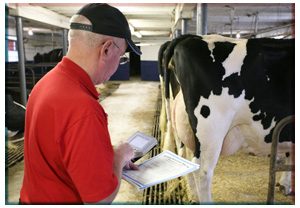 Holstein Association USA, Inc. officially identified an all-time record number of Holstein cattle in 2016 through their registration and Basic ID programs. In total, 690,553 Holsteins were identified in 2016, which is 108,867 more or 18 percent higher than 2015. Registrations totaled 377,305 and 313,248 head were enrolled in the Basic ID program.
  A Utah lawmaker wants to send people to jail for harassing farm animals with drones, all-terrain vehicles and even dogs under a proposal that is unique in the U.S. but has gained an unlikely opponent.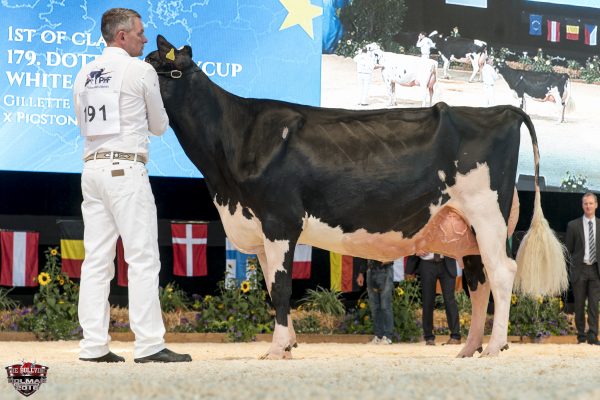
 DairyNZ backs down as Greenpeace launches new video.
 Registration is now open for the Holstein Association USA 2017 Judges Conference, which will be held Friday, April 7, in Stillwater, Oklahoma, in conjunction with the Southern Spring National Show.

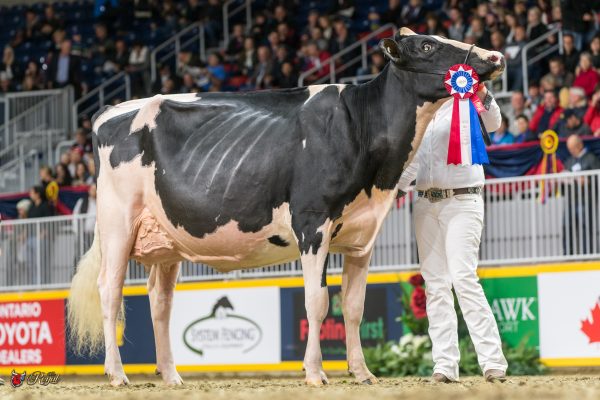 The Holstein Journal
 The single biggest labour challenge for the dairy, poultry and egg commodities will be finding skilled and experienced farm managers, including owner-operators. For these commodities, management and ownership jobs account for almost two-thirds of the current workforce, and between now and 2025, they will account for the majority of the jobs going unfilled due to a lack of domestic workers.
 The price of the breakfast staple has risen by 42% in the last year, according to a new report.
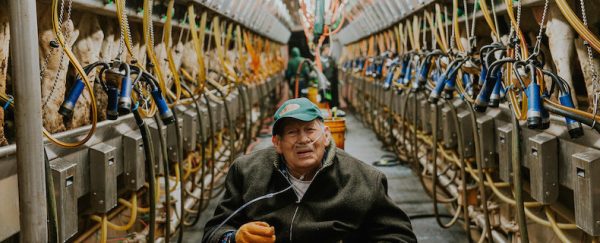
 One of the staff at the assisted-living facility listened to his stories about life on his own farm and submitted a wish on his behalf to return to a farm one last time. Wish of a Lifetime, a nonprofit organization dedicated to honoring senior citizens and helping them live their dreams, granted Wiegert’s wish and reached out to nearby farms that would welcome a visit and allow him full access to the milking parlor. “A request like this to return to a farm is really rare, but really cool,” says Nicki Coleman, wish manager for Wish of a Lifetime. “Edsel has given back to his community throughout his life,” she says. “Also, he has a very intriguing story.” Wiegert dedicated his life to farming and taking care of his family. With his declining health, this was likely his last chance to visit a farm. Coleman says. “It’s just an incredible story. You can tell he’s really passionate about farming.” “Farming is where his heart lays — with the land, animals and fieldwork,” said Lefeber. “Being a farmer, it’s in his heart.” Colemen adds that “Edsel’s an amazing guy and has so much to give back and that he has given back, and he deserves to be honored for what he’s done and have his story heard by others.”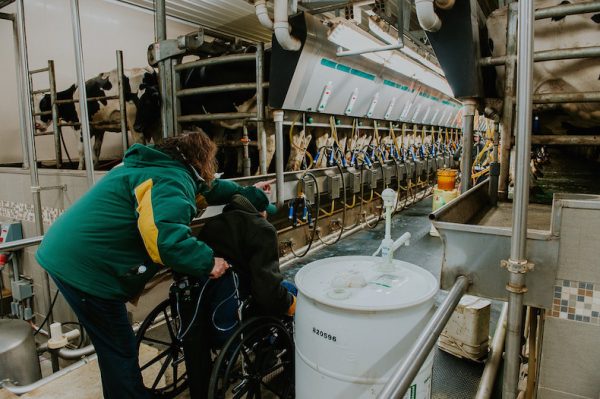
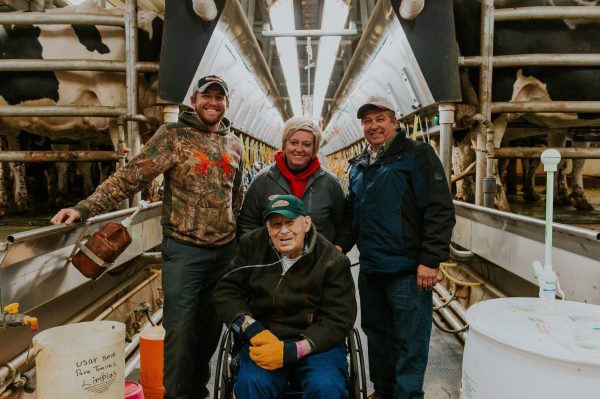
 The new experimental law means Italian dairy products that include dairy ingredients must list the country of origin.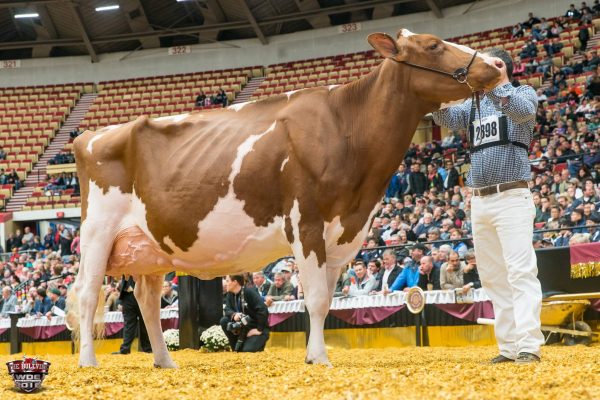
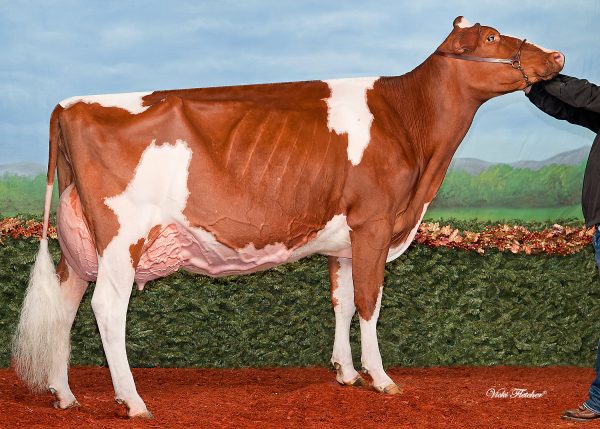

 Dairy farmers have protested depressed milk prices by spraying a tonne of milk powder onto the European Council building in Brussels.
 American farm groups are anxious to see how the White House will negotiate trade deals without starting a trade war now that the Trans-Pacific Partnership (TPP) is officially dead.
 A Swedish-German team of researchers has cleared up a key process for the artificial production of silk.With the help of the intense X-rays from DESY’s research light source PETRA III, the scientists could watch just how small protein pieces, called nanofibrils, lock together to form a fibre. Surprisingly, the best fibres are not formed by the longest protein pieces. Instead, the strongest “silk” is won from protein nanofibrils with seemingly less quality, as the team around Dr. Christofer Lendel and Dr. Fredrik Lundell from the Royal Institute of Technology (KTH) in Stockholm reports in the Proceedings of the National Academy of Sciences.


 By some estimates, the Trans-Pacific Partnership (TPP) would have provided an annual $4.4 billion boost to U.S. agriculture. President Donald Trump says he can do better, signing an executive order Monday morning to leave trade deal negotiations.
 With the calving season soon approaching, the export trade is focusing keenly on markets for Irish calves, according to Joe Burke of Bord Bia.
 Reese’s aunt Laura shares the following update:
 The wife of a young farmer who was killed in a freak farm accident has appealed to farmers to slow down and work safely.
 An American dairy farm employee from Mexico says language and culture differences cause fewer problems for Latino workers now, but they still exist.
 If you bought milk — or any dairy products in Michigan or the last 14 years you could be owed a refund.