Until March 31, Alberta Milk will be accepting applications to The New Entrant Assistance Program. The program offers a quota loan at no cost to successful applicants that want to be dairy farmers anywhere in province.
Ever dreamt about owning a dairy farm? Now’s your chance. Alberta Milk’s New Entrant Assistant Program (NEAP) is now accepting applications.
The program works by matching the quota purchased by the new entrant with a loan of quota from Alberta Milk up to 25 kg/day at no cost. This loan translates to enough quota to milk about 20-25 additional cows. It gradually expires beginning in the seventh year and reduced to zero at the end of year ten.
“This is a hand up, not a hand out,” says Chairman Tom Kootstra. “This program is meant to encourage those that have the potential to be exceptional dairy farmers to invest in our industry. The result is a strong future for everyone.”
More about the Program
While using the program, new entrants can expand up to 70 kg/day of total quota holdings, or about 65-70 cows.
The process to qualify for the program consists of submitting a two-year financial business plan, a 10-year implementation plan, a risk mitigation plan, and signed letter from the applicant’s financial institution agreeing to finance their operation.
The program started in 2011 and has welcomed 15 new dairy farms into the province and is reviewed annually.
Alberta Milk will be accepting applications from January 1 to March 31, 2017.
Kirk Liefer is readying his soybeans for shipment down southern Illinois’s Kaskaskia River. The Kaskaskia feeds into the Mississippi, which, to a great extent, feeds China: About one-quarter of the U.S. crop goes straight to the world’s biggest food market, where it gets eaten by half the planet’s pigs and provides cooking oil for a rapidly growing middle class.
“Our soybeans go to China, a lot of the corn goes to Japan or Mexico,” says Liefer, 39. “Almost everything that’s a bulk crop goes overseas. You take that away, you ripple through the entire region.”
U.S. farmers and agribusinesses are wary of the protectionism driving the trade policy of President Donald Trump, while rivals are calculating how doors closed by the U.S. could open markets for them. David MacLennan, chief executive officer of Cargill, the world’s largest grain trader, says the U.S. “cannot wall ourselves off” from world markets. He warns that protectionism can “provide famine, cause conflict and even war.”
The view is different from Brazil, where Agriculture Minister Blairo Maggi, whose family owns one of the nation’s biggest soybean shippers, says his country “is back in the game,” competing for sales it had conceded to the U.S. Now the Trump administration may slow the adoption of Asian trade pacts, giving Brazil an opening.
The outcome could be a shift away from America, the world’s traditional breadbasket. Brazil, Australia, Russia, and Ukraine are well-positioned to profit from any American disruption. “You’re shooting yourself in the foot,” says Joe Glauber, a former chief economist for the U.S. Department of Agriculture and chief U.S. negotiator on farm issues during the Doha Round of global trade talks. “If a supplier starts to be seen as unreliable, the global supply chain adjusts, and that player will lose market share going forward.”
Unlike sectors such as manufacturing, where trade deals are blamed for job losses, U.S. agriculture has benefited from globalization. Sales of U.S. corn, soybeans, cattle, and other commodities will reach $134 billion in the 2017 fiscal year, up from $129.7 billion the year before, according to the USDA. This year, Canada and Mexico will account for $39.6 billion of U.S. farm trade, or 31 percent.
About half of all global corn exports are grown in the U.S. Almost half of all U.S. wheat, half of its soybeans and rice, and three-quarters of its cotton are shipped abroad.
The U.S. is the world’s top exporter and highly competitive. Still, America’s export share is declining as rivals catch up in technology and infrastructure. Russia, once a grain importer, surpassed the U.S. in wheat exports for the first time last year, and the two countries are neck and neck this year. Brazil is rising in soybeans, thanks to weather that allows two crops per year and land that’s yet to be fully developed.
U.S. farmers need exports to keep already low commodity prices at home from collapsing. Gluts have pushed down corn prices to less than half their 2012 peak, and farmer profits may fall for the fourth straight year, the longest streak since the 1970s, the government said on Feb. 7.
That’s why U.S. farmers have backed trade deals such as the Trans-Pacific Partnership, which promised an additional $4 billion to $5 billion of sales by opening Pacific Rim nations to U.S. meat, dairy, and grain. But pulling out of the TPP was one of Trump’s first acts as president. He’s also threatening to leave the North American Free Trade Agreement with Canada and Mexico. Both moves stoke worries that attempts to protect manufacturing could harm farmers, with countries such as China retaliating against taxes on finished goods exported to the U.S. by buying commodities elsewhere, says Ed Schafer, who served as agriculture secretary under President George W. Bush. “Trade issues are not as simplistic as President Trump thinks,” he says.
Bob Young, chief economist for the American Farm Bureau Federation, the largest U.S. farmers group, rattles off a series of competitors ready to eat the U.S.’s lunch: Brazil and Argentina in global corn and soybean markets; Ukraine and Russia in grain and oilseeds; Australia and New Zealand in meat and dairy.
Australia is still pushing for a TPP without the U.S., to lock in potential trade gains in Asia. Europe is buying more Ukrainian corn, enjoying lower tariffs that squeeze out U.S. suppliers who had hoped to gain from a European Union trade deal. Brazil and Argentina are becoming the first choice for Chinese buyers who wait for those nations’ spring harvests—when prices are lower—to make purchases.
Competitors are penetrating markets the U.S. once owned. “Mexico is right on the U.S.’s doorstep, and yet Russian wheat can and does price into Mexico,” says Swithun Still, director at Solaris Commodities, a trader in Russian grain, in Morges, Switzerland.
The U.S. has hurt its farm trade before, says Glauber, the former USDA official. A ban on grain sales to the Soviet Union after its 1979 invasion of Afghanistan jump-started South America’s development, and earlier moves during the Nixon administration gave Canada, Australia, and South America market opportunities they never relinquished. “You do not want to convince your customers they need to look elsewhere,” Glauber says.
For now, the shipments go on as usual along the Kaskaskia. Liefer says he thinks trade tensions will work out, in part because Trump respects the voters who put him in the White House—rural areas supported the president by a 2-1 margin in November. But he’s watching the new leadership closely. “Where we will be six months from now, that’s a different question,” he says. “I might have a different opinion.”
Holstein UK, the representative body for Holstein cattle in the UK, is thrilled to welcome Emma Hanlon to its team as Head of Commercial.
As an exciting new position within the company, the appointment of Emma provides Holstein UK with the opportunity to address new commercial strategies and areas of growth. Holstein UK is Europe’s largest independent dairy breed society; the business is continually innovating when it comes to animal data, breed genetics, health and performance and supports a large proportion of the UK’s commercial Holstein population. Holstein UK works closely with industry partners such as AHDB Dairy and British AI companies to regularly review Holstein performance; this research is fed back to its members to help and support the ongoing genetic improvement of the Holstein breed.
Emma has a strong commercial and sales background and looks forward to applying her skills to the Holstein UK business. Before joining Holstein UK, she spent three years in the animal health industry as Large Animal Territory Manager and before that she has held account management positions in the agricultural sector. Emma will work closely with Richard Jones, CEO of Holstein UK.
Emma Hanlon, Head of Commercial, says, “I am extremely excited to be joining Holstein UK and this is a fantastic career opportunity. As a new role within the company, I am eager to evolve and shape the role, and have a beneficial impact on Holstein UK. There are no limits as to where this role could go! My role will be to explore new commercial strategies, to drive growth and efficiency – all for the advantage of the Holstein breed and the wider dairy industry.”
Richard Jones, CEO Holstein UK, adds, “Emma was a highly impressive candidate for the position of Head of Commercial at Holstein UK. Her strong sales and commercial credentials, partnered with her agricultural background, made her an instant fit for Holstein UK and we’re delighted and extremely lucky to have her join our team.”
Forty-seven cows are dead after fire ripped through a barn on a Gatineau dairy farm early Wednesday morning.
Firefighters got the call at 12:24 and rushed to 1247 Gréber Blvd., home of Scullion Farm.
According to Derek Scullion, 186 cows were housed in three barns when the fire broke out.
Scullion said he was drifting in and out of sleep in his living room chair when a passing motorist pulled into his driveway and woke him up.
A firefighter surveys the damage Wednesday morning. (Giacomo Panico/CBC)
“He flashed his lights and honked his horn. I went to the door and I said, ‘What’s wrong?’ He said, ‘Your barn’s on fire.'”
Scullion hurried over to the flaming barn, but quickly discovered he couldn’t get inside through the main entrance. He then tried to enter through the two adjacent barns.
“I was able to make my way to the second barn, and I could see that the cows had died from smoke inhalation. I realized how bad things were and I had to work at getting the cows out of the rest of the barns.”
Derek Scullion was alerted to the fire by a passerby. (Giacomo Panico/CBC)
Help soon arrived, Scullion said.
‘They are important to you. They all have names. Sounds strange but they are part of the family.’ – Derek Scullion
“Thankfully the firemen, the police and my brother and some neighbours, they all came to help. We were able to save 139 head of cows.”
Thirty-two adult cows and 15 calves died in the flames. No humans were injured.
“For every farmer with animals, it’s their worst nightmare,” said Scullion. “You work all the time with them, they are important to you. They all have names. Sounds strange but they are part of the family.”
Dale Scullion says his family has received countless phone calls and texts from friends and neighbours offering help. (Giacomo Panico/CBC)
According to Derek’s brother Dale Scullion, one of the rescued calves was given oxygen by firefighters because it was having difficulty breathing.
As for the passerby who alerted him to the fire, Derek Scullion said he never got a chance to thank the man.
For much of Wednesday morning, friends and neighbours assisted the brothers with the cleanup.
Dale Scullion said he’s been overwhelmed by the offers of help. “Lots of good friends. I have phone calls and text messages from everybody saying, ‘If you need help, we’ll be there.'”
With help from firefighters, police and neighbours, Derek and Dale Scullion were able to save 139 cows. (Giacomo Panico/CBC)
The Scullion family has owned the farm on Gréber Boulevard since 1919 and has watched the surrounding land undergo significant development including suburban homes and strip malls.
Dale Scullion said the family will recover from the fire, but it won’t be easy. “It’s going to be a lot of work.”
In the meantime, a mobile milking system is being delivered to the farm to deal with production from the surviving animals.
The cause of the fire is under investigation. A damage estimate wasn’t immediately available.
Though Robust died young, his legacy continues to grow. For the past month, his son Supersire (Robust x Planet), was once again the bull with the most registrations in the US. Also ranking high for registrations is Sandy-Valley Sterling (Robust x Planet) at #5 and Bush-Bros AltaBGood (Robust x Massey) who was 6th on the list. (Source: Holstein USA, please note values displayed are the dams’ averages.)
Marci 7716 VG-85 (Snowmaster-Bowser-Goldwyn) tops the list of genomic tested cows in Italy for February 2017 at 3432 PFT. Her Dozer daughter Go-Farm Mestalla is also the highest testing genomic female at +4241 gPFT. Mestalla is 160 points higher than Passini Battlecry (mgs. Castelbosco Judo) at +4080 gPFT followed by ET Fanny (Jedi-Uno) at +4079 gPFT.
U.S. President Donald Trump (R) listens to Canadian Prime Minister Justin Trudeau during a joint news conference at the White House in Washington, U.S., February 13, 2017. REUTERS/Carlos Barria
Although U.S. President Donald Trump says he only wants to tweak trade ties with Canada, his pledge to renegotiate NAFTA to focus on Mexico is almost impossible and Canada will not emerge unscathed, Canadian officials and trade experts said on Tuesday.
Trump had warm words for Canadian trade following a meeting with Prime Minister Justin Trudeau on Monday, but his call for major changes to the North American Free Trade Agreement to target Mexico stymied experts.
“I can’t see how it’s possible at all. It would be very complicated to do and I don’t think Mexico would … ever go along with it,” said Mark Warner, a trade lawyer and principal at MAAW Law in Toronto.
Canada and Mexico send the bulk of their exports to the United States under NAFTA.
One senior Canadian government official, asked how the agreement could be tweaked for one partner and changed in a major way for another, admitted frankly, “I don’t know.”
Trump spoke after his first meeting with Trudeau, who is trying to sell the merits of NAFTA while opposing a border tariff, an idea circulating in U.S. political circles that could badly hit Canadian industries.
Warner said that if the U.S. government decided to impose the tariff, “the consequences of that could be described as a tweak but the significance of it would be major.”
Matthew Kronby, an international trade lawyer at Bennett Jones in Toronto, said “it is very hard to tease apart the elements of the deal that I suppose Trump might think are a disaster with Mexico while leaving it intact with Canada.”
Officials say that while Trump did not reveal any details about his intentions on NAFTA, Canada would suffer collateral damage, whatever the administration pushes for.
“We cannot be untouched or unscathed by this,” said one person familiar with the matter.
Separately, another official working on the bilateral trade file said that once talks started, the U.S. dairy industry was set to demand Canada dismantle its supply management system of tariffs and taxes that keep out most dairy imports, including those from the United States.
“That could be a very unpleasant conversation,” said the official, who asked to remain anonymous because of the sensitivity of the situation.
Trudeau’s ability to make concessions is limited since all of Canada’s major political parties have vowed to protect supply management. Holding out too firmly though could irritate the American side, which might demand concessions elsewhere.
A major dairy processor is suing the B.C. Milk Marketing Board and a dairy producer over the delivery of what it claims was more than 17,000 litres of contaminated milk.
Saputo Products Canada G.P, a Montreal-based dairy processor and cheese maker, says that on Aug. 12, 2013, the board provided 17,784 litres of raw milk to its Burnaby plant.
The next day, after Saputo had used the milk in its production process, the board and a lab determined that the milk was contaminated with an amount of bacteria in excess of the allowable limit, according to a lawsuit filed in B.C. Supreme Court.
“Prior to Saputo discovering this contamination, the contaminated milk had already been blended with uncontaminated milk in Saputo’s possession,” says the lawsuit.
“Consequently, a total of 223,230 litres of milk and cream was affected by the contamination which caused damages to Saputo related to 111,921 litres of packaged product. The board’s delivery of the contaminated milk to Saputo caused various damages to Saputo totalling $65,317.57.”
Saputo is required by law to buy milk from producers through the board and to make payment for that milk to the board, which receives that payment on behalf of the producers, says the suit.
Unless Saputo makes specific inquiries, it doesn’t know which producer produces the milk that it receives, says the notice of civil claim.
“In essence, the board is the monopolistic distributor of milk on behalf of all producers in the province of British Columbia. The board deprives Saputo of having any choice with respect to the producers from whom they buy.”
Saputo says that in April 2014, the board identified the producer of the contaminated milk as Chilliwack Cattle, which is also named as a defendant in the lawsuit.
After the board declined to reimburse Saputo for the $65,000 costs, the company elected to deduct that amount from a payment Saputo owed the board for a subsequent shipment of milk, says the suit.
Saputo claims that the board breached its standard of care by failing to adequately test the milk it distributes and is seeking a court declaration that it was entitled to deduct the $65,000.
The company is also suing the board over the delivery in February 2015 of more than 120,000 litres of organic milk to Saputo’s Burnaby and Abbotsford plants.
It says that shortly after the delivery, the Canadian Food Inspection Agency advised Saputo that it was conducting an inspection of the milk to determine whether it was unfit for human consumption because it had been produced from cows whose feed had been contaminated by aflatoxin, a potent human carcinogen produced by moulds.
Nearly a week later, the agency notified Saputo that it had concluded its health risk assessment and determined milk co-mingled with the suspect milk would not pose a significant risk to human health, says the lawsuit.
But the delays in processing the suspect milk due to the agency’s investigation caused the company to suffer various damages totalling $26,303, says the suit.
The $26,000 was deducted from a payment subsequently made by Saputo to the board, says the writ.
Saputo says it was informed that the producer of the suspect milk was Cedar Valley Farms, owned by Cedarwal Farms Ltd., which is also named as a defendant in the company’s lawsuit.
No responses have been filed to the lawsuit, which contains allegations that have not been tested in court.
B.C. Milk Marketing Board spokesman Robert Delage said the board is seeking outstanding payments owed from Saputo to the board.
“We cannot get into the details at this time, but we look forward to the matter being resolved in the near future,” Delage said.
You’ve heard of barn weddings, but have you heard of dairy farm proposals? These couples combined their love of the farm with their love for each other, proving that every couple gets their dairy-tale ending.
Tyler and I met through 4-H and he proposed during our county fair week. We both had younger siblings who were still involved in 4-H and had spent the morning at the Dakota County Fair. We stopped at his parents on the way to the Goodhue County Fair as he had to “check on a sick cow”. I waited at the house and when Tyler came back, he told me we needed to check on a cow that might be calving. We went up to the dry cow pen and he had me go into the barn to open the gate to move the cow inside. Once I was inside he decided the cow was fine but we should go look at the new equipment in the shed before we left for the fair. As we were walking over he stopped to look at the front of the barn, I turned, saw it and turned back to find him on his knee. In reality the “sick cow” was him needing to paint the barn and the “cow having trouble calving” got me out of the way for him to grab the ring box. We spent the rest of the day sharing the news with our family and friends (and chasing the neighbors cows that got out.) We now live in the house on the dairy looking out the front window at the barn, still spray painted. – Kelsey Otte
My fiancé and I got engaged December 9, 2016 when we were milking cows! It was the best way for him to ask because we were in the barn where we spend most of our time together! I’m in my last semester of college, going to be a veterinarian technician, and it’s really nice to be able to come home and help him milk and do chores. I can’t wait to see what the future holds for us on the farm❤️ – Hanna Harakel
Jake and I have been together just over four years now. Everyone asked me if I was surprised by the engagement and my response is “yes, I gave up hope two years ago!” When I began coming around, I soon learned that Jake’s favorite cow, Moonlite, and I shared a birthday. So the first year I baked a cake and and let Jake write on it and that began the tradition of the cake saying “Happy birthday Moonlite & (also) Jade.” This year I forgot all about making the cake and was out for a drink on my birthday and received a text from Jake asking when I would be home because we had a picture to take. Confused, I asked the company I was with “Do you think he really baked a cake?” He’s never done that and I know I didn’t have a cake mix in the house! So I responded “Ok, we will finish our drink and be home.” He told me to tell Tammy and her daughter Anne (the ones I was out with) to stop in for a piece of cake. When we went to take the picture Moonlite was laying down so I was trying to be slow and calm so she didn’t get up and wasn’t paying attention to Jake! I turned around and he was down on one knee holding the cake. – Jade Jensen
Micah and I both graduated from college over the weekend – Micah from Arkansas State and the University of Minnesota for me. Micah told me he was driving from Arkansas back home to Cheyenne, Wyoming. While I was in Little Falls getting acquainted with the school I would teach at the next year, Micah was actually driving to my home farm in Forest Lake. Micah’s secret collaborations with my little sister resulted in a perfectly limed barn and a call for me to go to the barn when I arrived home. I walked into the barn to my husband holding a bouquet of my favorite flowers. He finished his proposal with, “I know some of your best family memories were made in this barn, so I thought we could begin our own family memories here, too.” – Erin Christensen
Paul and I have always been very connected by the farm. There is a lot of fun detail in the proposal but I will give you the short version. I was so mad at him because he hadn’t proposed yet and thought he was going to the night before. On the morning he proposed, he woke me up at 5 a.m. to do chores with him. He then made me do my least favorite jobs (scraping and liming the alleyway)… then when I was done (even more mad at this point) he told me to start washing cows… I walked up to the bucket and here inside was the ring box with the most beautiful ring. I turned around he was on one knee- and asked me to marry him and I said are you serious?! Not wanting to loose the ring in the barn, I brought it up to the house so we could finish chores. When I came back down he asked if I knew why he made me scrape and lime the middle of the walk way… I had a few choice word responses… then he said “because I didn’t want to kneel down in cow crap to ask you to marry me!” – Kristy Miron
What I thought were fall pictures with the start our brown Swiss herd turned out to be a proposal. He carved ‘marry me’ into a pumpkin and spent the whole afternoon creating this scene. – Nicole Krumrie
Jersey Canada members are eligible for awards that acknowledge leadership, successful breeding programs, top performing cows and astute management practices.
Jersey Canada would like to announce the following awards that will be celebrated at the upcoming Jersey Canada AGM in New Brunswick. If you would like to attend, register now or before February 27th. If you have registered but have not received a confirmation back, contact us to ensure you are on our list!
Master Breeder Brent & Betty Butcher and Family (BRENBE), Ayr, ON
Constructive Breeder – Marbro Farms (MARBRO), Woodstock, ON (Category 1: 5-9 registrations/year)
– Jesse & Ellen Weber (WEBERLEA), St. Clements, ON (Category 2: 10-24 registrations/year)
– Creek Edge Farms Inc. (HIDDEN DREAM), Elora, ON (Category 3: 25+ registrations/year)
Jersey Young Achievers – Bobby & Jen Jarrell (RJF), Corbyville, ON
– Glendon Graye (GRAYLANE), St-Pierre-Jolys, MB – Matt & Kerry Fraser (MAKER), Rockwood, ON
Youth of Distinction Michael Haeni, Didsbury, AB
Distinguished Service Award Charlie Thomson (CBS), Rosedale, BC
Honourary Life Members – Eric Thompson (PINE HAVEN), Oxford, NS
– Fran Edwards (Bramville), Nokomis, SK – Wayne Boswell (Marshfield), Marshfield, PEI
Award recipients will be featured in the May issue of the Canadian Jersey Breeder.
Otorohanga jersey cattle breeder Don Ferguson in 2013 with three-year-old jersey cow, Ferdon Folly’s Lulu, one of the cows in his herd co-owned by the Queen.
Prominent jersey breeder and cattle showman Don Ferguson died on February 9, aged 81.
The Otorohanga ex-dairy farmer was a mainstay at the Waikato A&P Show for over 70 years as a competitor, judge and most recently, patron.
He also competed at the National Dairy Event at Manfeild, Feilding over the past nine years and won the supreme champion cow ribbon on more than one occasion.
DOMINICO ZAPATA/FAIRFAX NZ
Don Ferguson (left) with son Warren, grandson Josh and great-grandson, Toia at the 2016 Waikato A&P Show in Hamilton where he was presented with a letter from Queen Elizabeth II in recognition for his contribution to the show.
Former Event manager Neville Turnbull said Ferguson was a “mellow, giant of a man”, who was always there to help people.
“He was a leader in his field. We’ll certainly miss him.”
Jersey New Zealand president Alison Gibb said Ferguson had done an enormous amount of work in raising the profile of the breed.
“It was only a fortnight ago that he was at the dairy event and still encouraging people, still having a laugh with members, still enjoying the successes of his family in the show ring. Wild horses wouldn’t have kept him away.”
Gibb said it was wonderful to see his passion for jerseys being carried on with his son, grandson and great-grandson.
Ferguson was also known for his relationship with Queen Elizabeth II, who part-owned some of the cows in his herd. He was one of a handful of people who was able to call the Queen directly.
The Queen visited the Ferguson’s stud in 1990 and he was subsequently requested to prepare the Queen’s Windsor herd at the World Jersey Cattle Bureau Conference.
He was recognised for his services to cattle breeding and the dairy industry when he received the Insignia of a Member of the New Zealand Order of Merit in the 2010 Queens Birthday Honours List.
He was an official judge and classifier for Jersey New Zealand and has judged at agricultural shows in Australia, Britain, Kenya, South Africa and the Channel Islands. He was also a life member of Jersey New Zealand.
Waikato A&P Show manager Jim Keyte said Ferguson’s contribution to the event over the years was enormous.
“He loved showing, not just for the accolades that he got, but he just loved other people taking part and encouraging other people to take part in it.
“His contribution to the show was marvellous. He’s got to be one of the top breeders if not the top breeder in the country in his time and he’s had accolades from everywhere.”
His 70 years of contributions to the show was recognised at last year’s event with a presentation of a letter from the Queen, Keyte said.
“He was looked up to by everybody as a breeder, his contribution to showing and the way he taught young people to show them how to show cattle and encourage them to take part in the shows.”
Jersey New Zealand general manager Pam Goodin said Ferguson was a wonderful advocate for the breed in the show ring and as a stud breeder with his Ferdon Stud.
“He knows his cows and he knows the work that goes into preparing a great show cow as well. He had been a very prominent showman over an extraordinary period of time and very successful in the show ring.”
He set a standard many others have aspired to achieve. Ferguson was incredibly helpful to other younger breeders who are now considered prominent breeders in jersey cattle.
“They would regard him as a mentor.”
He is survived by his wife June and siblings Wayne and Asi, Warren and Michelle, Bryan and Heather, Karen and Danny Corboy, Lindsay and Karen, David and Donna as well as grandchildren and great-grandchildren.
The U.S. dairy sector is urging President Donald Trump to discuss Canada’s protectionist milk pricing policy during Monday’s meeting with Prime Minister Justin Trudeau.
The National Milk Producers Federation (NMPF), the U.S. Dairy Export Council (USDEC), the International Dairy Foods Association (IDFA) and the National Association of State Departments of Agriculture (NASDA) are calling the issue “one of the most sensitive and urgent topics complicating the relationship between the two countries.” The White House will host Trudeau in Washington today to discuss matters related to trade policy and the renegotiation of NAFTA, among other issues. According to the four groups, the two leaders need to devote time to addressing an imminent change in Canada’s milk pricing policy that would further antagonize industry relations between the United States and Canada.
The pricing scheme, already implemented in Ontario last year and slated to be used by Canada’s other provinces this year, is expressly intended to slash milk imports from the United States. The policy will also enable Canada to sell dairy ingredients below cost in international markets, in effect dumping the product at below cost in competition with U.S. dairy exports. The Ontario program has already cost U.S. companies $150 million in exports, thereby harming the American dairy farmers, dairy plant employees and rural communities that depend on the benefits of those foreign sales.
Implementation of this pricing measure “comes at a time when compliance with the letter and spirit of trade agreements is of paramount importance, both here in Washington and around the world,” said NMPF President and CEO Jim Mulhern. “Despite this, Canada still wants to move ahead with a policy that clearly violates its trade agreements with our country. We hope President Trump will remind Prime Minister Trudeau how important it is that Canada honor its commitments.”
The importance of U.S.-Canada trade issues was also raised last week in a meeting between House Speaker Paul Ryan and Canadian Foreign Minister Chrystia Freeland. Ryan said after their meeting Tuesday that dairy market access is a key issue the two nations must improve upon.
Tom Vilsack, president and CEO of USDEC, said “American dairy producers and processors want a fair and level trade relationship, and have deep concerns about proposed changes to the Canadian supply-side management system, which are designed, in part, to discourage U.S. exports.”
Michael Dykes, D.V.M., president and CEO of IDFA noted: “Canada’s intentional and continued flouting of its trade obligations effectively blocks imports of U.S. ultra-filtered milk. What’s more, existing Canadian tariffs that range from 200 percent to more than 300 percent on other U.S. dairy products are unacceptable. Exports are vitally important to the health of the U.S. economy, especially in the rural heartland of our country, and we urge President Trump to stress the importance of market access for U.S. dairy products during his meeting with Prime Minister Trudeau.”
The organizations believe that this meeting between President Trump and Prime Minister Trudeau offers an ideal opportunity for the dairy pricing policy to be on the table during their discussion.
“The states are deeply troubled by recent actions taken in Canada, at the provincial and national level, which raise serious concerns about Canada’s compliance with international trade obligations,” said NASDA CEO Dr. Barbara P. Glenn. “We encourage President Trump to make this a top priority for his administration and we urge Prime Minister Trudeau to ensure Canada meets its obligations.”
Holding Canada to its dairy trade agreements has remained a strong focus for NMPF, USDEC and IDFA over the last year. Last week, a group of 17 dairy companies representing dairy farmers and processors from all over the United States asked governors in 25 states to urge Canadian policymakers to halt the national implementation of the milk pricing system. NMPF, USDEC, IDFA and NASDA also raised the matter with Trump last month before he assumed office.
It took Donald Trump 71 days to settle on an Agriculture secretary after winning the presidency. It took him 72 hours after that to unsettle much of the agriculture industry.
First, the freshly inaugurated president withdrew from the Trans-Pacific Partnership treaty, a 12-nation pact that was expected to boost U.S. agricultural exports by more than $7 billion annually over the coming decades, according to the U.S. Department of Agriculture.
Then, Press Secretary Sean Spicer said the president was thinking about financing his long-promised southern border wall with a 20 percent tax on “imports from deficit countries, like Mexico.”
That announcement, followed by a flurry of clarifications and caveats, appears to be part of a plan for a massive tax overhaul aimed at altering the trade balance country by country. U.S. farmers, who get about 20 percent of their annual revenue from trade, could be hit especially hard if countries choose to retaliate. Consumers, too, would suffer if a border tax increases the price of foreign food.
U.S. agricultural and related products — including dairy, meat, forestry products and fish — amass a $5 billion trade surplus with the world, according to the Department of Agriculture. Among the biggest sellers are soybeans, grains, dairy products, meat, nuts, hay, wine, fruit and vegetables.
Farmers and ranchers from Florida to Washington have experienced double-digit growth in many of these commodities since the mid-1990s, according to the USDA.
For example, exports of corn from Iowa to trade-agreement countries more than doubled in the past decade, with more than three-quarters of the state’s shipments going to Mexico, a partner in the North American Free Trade Agreement. Louisiana’s exports of soybeans to trade-agreement partners rose 15 percent in the same period, driven largely by trade with Latin American trade pact countries.
But no state has more at stake than California. It leads the country in agricultural revenue, and its farmers and ranchers are twice as dependent on foreign trade as the country as a whole. Last year, growers in the state earned $21 billion from trade — about 44 percent of their total revenue.
Without California, the U.S. would not have exported a single tree nut, table grape, raisin, olive oil drum, garlic clove, artichoke, fig, date, kiwi or dried plum.
The Golden State last year also exported more than 90 percent of the wine, processing tomatoes, avocados, carrots, broccoli and celery in the U.S. California’s berries, peaches, nectarines, apricots, melons, oranges, lemons, tangerines, mandarins, spinach, lettuce, seasonal vegetables and rice constituted more than half the U.S. exports of those commodities.
Some of the countries most responsible for the United States’ overall trade deficit are California agriculture’s best customers — China and Mexico among them.
As recently as Jan. 28, Trump accused China of protecting its exports by depressing the value of its currency, the yuan. He has called the North American Free Trade Agreement, which links the U.S. with Canada and Mexico, “the worst trade deal ever” and threatened to tear it up.
The comments drew quick reaction from California officials, even as they scratched their collective heads over what Trump actually intended to do.
Altering NAFTA “starts to create some market turmoil, which ripples out through the supply chain — not just the farmer but the transporter, the processor, the ports, longshoremen. It affects a lot of jobs,” said Josh Rolph, manager of federal policy for the California Farm Bureau Federation.
“The U.S.-Mexico trade relationship is very important. We would be concerned to see that relationship negatively affected,” said Ken Barbic, senior director of federal government affairs for the Western Growers Association, an agricultural industry group.
Mexico supplied the U.S. with more than $5 billion in fresh vegetables, $1.4 billion in processed fruits and vegetables, $4.5 billion in fruit and $2.8 billion in beer and wine last year, according to the USDA. All could be targets of a tax.
California’s top exports to Mexico — dairy, forestry products, prepared foods and fresh fruit — could find themselves in the political cross hairs.
Likewise, taxes could be imposed on Canada’s imports of wood products, processed foods and fish, and the country potentially could retaliate against the fruits and vegetables, wine and beer, nuts and processed foods that California exports north.
Even a small alteration in trade — a strike, slowdown or other protest in Mexico, for example — could hit consumers, who expect fruits and vegetables in the produce aisles year-round, regardless of growing seasons.
All Michigan residents, in one way or another, have had to deal with the fact that bovine tuberculosis (TB) has been an on-going problem in Northeast Michigan for the past 20 years. The continued occurrence of infected farms has resulted in frustration and fear on the part of dairy and cattle producers who live under the threat of this disease. As a recent newscast in the area showed, it has also resulted in misunderstanding and fear on the part of consumers about the safety of milk and meat from farms in that region. Frankly, everyone is tired of TB.
In an earlier article from Michigan State University Extension it was discussed why buying out all the cattle herds in the TB zone is not a wise option, and yet, something has to be done. Every year since 2004, one-to-four additional herds have been found to be infected with TB.
So, what will it take to get rid of TB in Michigan? Typically, disease prevention for cattle herds is based on the six concepts listed below.
Straightforward ways that can be applied to TB risk mitigation/eradication:
Be committed to disease reduction.
It all starts with a commitment at the top to reduce disease prevalence, a commitment that is then communicated to others. On a farm, the owners must personally commit to disease reduction and then communicate this to each employee. At the state level, achieving the goals of TB eradication can only be realized if all involved parties support the objectives.
Know the source.
With other cow diseases, like mastitis, the first step is to determine whether the source of the pathogen is other cows (contagious pathogen) or the environment to which the cow is exposed (environmental pathogens). Once the source is known, efforts can be directed to target the source and reduce exposure. Likewise, we need to agree on the source of the bacteria that causes TB. We know for sure that deer can become infected with TB and are able to pass that infection to others. While many question the role of small animals (opossums, raccoons, etc.), it has never been shown that they can transmit the disease. Focus on what is known – deer can carry and spread the disease. Contact between livestock and deer through shared food sources is the means of transmission to be avoided.
Reduce the source.
When the source of an infection is known, the most important thing to do is to reduce that source. For example, if it is determined a cow has mastitis caused by the contagious bacteria Staph. aureus, often that animal is sent to slaughter to reduce the risk to the rest of the herd. If it were known which deer were infected with TB, then those animals could be selectively removed from the population. However, because infected deer can’t be determined, it is prudent to reduce overall deer numbers to the greatest extent possible in the TB zone. Other control options such as immunization of deer may be viable in the future, but until that is demonstrated, white-tailed deer population reduction is essential to TB control.
Reduce the conditions.
In this case there are two parts to be considered: reducing the conditions that enable the TB pathogen to survive outside of a host and reducing the conditions that allow the host to survive. The use of bait or feed for deer provides opportunities for the bacteria to survive and be transferred to another animal that eats at the same bait pile. All baiting and feeding has the potential to infect more deer with TB and other pathogens like chronic wasting disease, and should be stopped. In addition, steps need to be taken to reduce the environment on and around farms that may attract deer by providing habitat and food, making farms less hospitable for deer.
Reduce opportunities for exposure of cattle to the pathogen.
Clearly, there has not been enough done to reduce the risk of TB exposure. Here are recommended steps that herds use in combatting another disease: Bovine Leukemia Virus (BLV).
Evaluate the entirety of the operation for disease risk. The risks to one farm may be different than those to another. Each one needs to be evaluated individually. Farm owners can improve in their ability to identify risks, able to understand and evaluate the potential risks his or her herd may face.
Make changes in response to risk. Generally, there will be multiple risk areas with different levels of risk. Owners must determine cost-effective ways to reduce the greater risks, being willing to bear the cost because of the potential consequences of infection.
Increase the level of management. In discussions with cattle owners about a disease like BLV, it is recommended that the changes made to protect animals from exposure need to be permanent because the risk is not expected to be eradicated in the foreseeable future. TB risk mitigation practices need to become the new standard of how things are done on the farm, even if that is different than how others may do so. Often, when changes are made to reduce the risk of one disease, there are risk reductions for other diseases as well.
Work together toward the same goal.
When trying to reduce disease it takes “all hands on deck”. To reduce TB, it will take dairy and beef cattle producers working together, it will take farmers and non-farm neighbors who manage property for wildlife habitat and hunting working together, and it will take agencies like USDA, MDARD, DNR and MSU Extension working together. Even with a difficult disease to control, like BLV, farmers can reduce its incidence in their herds, but it takes a lot of work, done consistently, and with everyone committed to it. This is also true for bovine TB.
Agriculture can gain from abandoning subsidies and embracing competition.
The challenges posed to the UK by Brexit are many and the risks real. Yet the opportunities are significant, too.
New Zealand faced a similar situation in 1973 when Britain joined what was then the European Economic Community. Apart from some quotas negotiated for lamb, beef and dairy, tariffs shut it out of a market that once took half its exports.
New Zealand’s success since then as a modern, sophisticated agricultural producer is a story of reform, liberalisation and, above all, focus on the global marketplace. Though it is a small global producer, it now engages in half of world trade in sheep meat and one-third in dairy products. Its supply chains span the globe. The country exports from the EU today as much dairy product as it exports to it. Its wine commands the highest average price of any country’s in the UK. This is all done without subsidies or import protections for farmers. In fact, that is one of the most important reasons for its success.
Locked out of high-value agricultural markets in Europe, the US and Japan by tariffs in the 1970s, New Zealand sought to diversify its economy by protecting fledgling industries. That pushed up the cost structure of the economy and farmers wanted subsidies to compensate.
By the early 1980s, agriculture had 30 separate production subsidies and export incentives. Support exceeded 30 per cent of the value of product. For sheep meat, it was a whopping 90 per cent. Unsurprisingly, the number of sheep rocketed — to 70m.
Perverse outcomes included environmental degradation and, significantly, stifling of innovation. Farmers followed the subsidies, not science and technological development. Productivity was the victim.
The economy was tanking when, in 1985, a new government set about major economic reforms, sweeping away agricultural support. The aim was to expose the New Zealand economy to international competition. Freed from the distraction of subsidies, farmers focused on the market once more. They looked to science and technology to improve productivity and increase profitability.
The results speak for themselves. Sheep industry productivity has increased by more than 100 per cent. Improved fertility and growth rates mean New Zealand exports similar amounts of lamb as before despite sheep numbers having halved. And the environment is a whole lot better off, as land unsuited to livestock farming has been planted in grapes or returned to forestry.
At the height of subsidies, production had become so dislocated from the international marketplace that farmers had to destroy tonnes of frozen sheep meat as there was nowhere to sell it. So as well as peeling back protections, New Zealand had to embark on a concerted strategy of market opening.
But competing abroad also meant accepting greater competition at home. I know some fear that trade liberalisation can lead to a race to the bottom — simply competing on price and lowering standards. But that has not been our experience in New Zealand.
In the 1980s, a 40 per cent tariff prevented imports of cheap wine, so New Zealand produced it. You couldn’t export it — the stuff was barely drinkable. With the tariff protection gone, 30 years later wine is one of the country’s biggest export earners, with better environmental standards, too.
In our experience, protection and direct income support constrain competitiveness over time and inhibit innovation and productivity. As a farmer myself, I found that being freed from bureaucratic constraints and government dictates was a powerful incentive to be better at what I do. Change brings opportunities. Grab them if you want to shape your own future.
Hans Nederend, the third-generation owner of Nederend Dairy near Marsing, mostly employs Latino immigrants for a simple reason: Idaho-born workers don’t want the jobs.
Idaho’s worker pool evaporated as the state’s unemployment rate fell to a meager 3.7 percent, causing worker shortages in agriculture as well as hospitality, construction and food manufacturing. But Nederend said the high number of immigrant workers — which the Idaho Dairymen’s Association estimates make up more than 85 percent of the state’s 8,300 dairy employees — is driven by more than economics.
“These are jobs only immigrants will do,” Nederend said. “That’s just a fact.”
Nederend needs more immigrant workers, not fewer, he said. That’s why he and dairy owners across the nation would struggle to meet demand for milk if President Donald Trump makes good on a campaign promise to deport up to 11.3 million undocumented immigrants. He launched a petition distributed by the dairymen’s association with the hope or bringing the industry’s labor plight to Idaho’s Republican lawmakers, Mike Simpson and Raul Labrador in the U.S. House and Jim Risch and Mike Crapo in the Senate. More than 2,400 have signed the petition, which organizers hope spurs the lawmakers to make noise on their behalf in Washington D.C.
“If something on immigration reform doesn’t get done soon, I fear these family businesses that rely on immigrant labor could drastically be affected,” he said.
Idaho farmers and the GOP have been longtime advocates for boosting the nation’s worker visa programs.
Bob Naerebout, executive director of the dairymen’s association, said Idaho’s delegation should voice their constituents’ concerns to the Trump administration and take a leadership role in crafting policy, including year-round worker visas.
“Any border wall needs to have a door in it that allows for legal immigration,” he said. “Our delegation needs to know this is a priority for us and for rural Idaho.”
Nederend said that the industry has had Simpson’s ear, but has had a hard time getting attention from the rest of the delegation. Simpson told the Statesman that immigration reform is needed to protect Idaho farmers’ access to labor.
“Idaho’s agriculture industry relies on a stable guest worker program and like the rest of our immigration system, the status quo isn’t working,” he said.
Labrador, who was born in Puerto Rico, has been a leading voice on immigration in Congress, including participating in the bipartisan “Group of Eight” pursuing reform in 2013. Labrador didn’t respond the Statesman’s request for comment, but his website says “fixing America’s broken immigration system is one of my top legislative priorities,” with increasing border security as his first concern.
‘Jobs for Robots’
Tony VanderHulst, owner of West Point Farms dairy near Wendell, said the nation must insure farms have access to immigrant labor or risk relying more heavily on foreign trade.
“Without workers, we’ll rely on other countries to import our milk, our vegetables, our fruit,” he said.
Philip Watson, associate professor of agricultural economics at University of Idaho, published a study in 2012 along with colleagues analyzing how foreign workers affect Idaho’s economy. The study estimated that more than 100,000 foreign workers were employed in Idaho in 2010, including about 35,000 undocumented workers.
The study found that losing undocumented workers in Idaho would result in a $900 million loss to the state’s gross domestic product.
Watson said deporting undocumented workers would result in dairies automating their work. “In kicking out foreign-born labor, you would likely not be creating jobs for American workers. You would be creating jobs for robots,” Watson said.
While dairy and other sectors may depend on undocumented workers, Idaho construction isn’t threatened by the prospect of deportations, said Wayne Hammon, CEO of the Idaho Association of General Contractors.
Hammon doesn’t agree that Idaho construction is heavily reliant on immigrant labor, and says foreign-born workers in construction are here legally. To comply with labor regulations, he said, contractors scrutinize employee documentation more than do agriculture employers.
While contractors face a work shortage that has stalled some projects, they need journeyman tradesmen or workers with higher education, not the unskilled labor offered by the immigration workforce, Hammon said.
“We see the solution here at home, not across the border,” Hammon said. “The workers we are looking for are in Idaho’s high schools and community colleges.”
More than money
VandurHulst and Nederend are both descendants of Dutch immigrants. VanderHulst said he doesn’t buy into the narrative that immigrants rely more on taxpayer-supported programs than they add to the economy. His position was supported by a 2016 study published by the National Academies of Sciences, Engineering and Medicine. The study found that first-generation immigrants cost more to governments per person than native-born citizens. But the study also found that immigrants didn’t take many jobs from those born here, and that immigration has a positive effect on the economy in the long-run.
“My grandfather had nothing,” VanderHulst said. “He worked on a dairy like many immigrants have done and do today. He built a great business. It’s the American Dream.”
VanderHulst said he thinks of many of his longtime immigrant workers as family. He was saddened to hear that an employee’s 7-year-old daughter asked his parents where they would go, since people didn’t like Hispanics anymore.
“That breaks my heart, that a child is afraid,” he said. “Right now, everything is happening so fast. I’m sure the new administration will get it figured out. But they need to sit at the table with us and hear what different industries are up against.”
Ottawa will continue to “support” supply management amidst growing pressure from the United States who want more access to the Canadian dairy industry.
“Mr. Speaker, our government fully supports our dairy farmers and our supply management system,” Agriculture Minister Lawrence MacAulay told the House of Commons Monday.
“It is our party that fought hard to implement supply management and I can assure the House that we will protect and defend it. Canada’s supply management system is a model for the world.”
The American dairy lobby wants more access to Canada’s dairy market. The industry has repeatedly written letters to the new U.S. administration and state governors arguing Canada is impeding dairy trade.
In a January 25 press release, the National Milk Producers President and CEO Jim Mulhern said Canada “has habitually and deliberately worked to undermine dairy trade.” The release accompanied calls to ensure any NAFTA renegotiation included supply management.
The current NAFTA agreement excludes supply management.
U.S. President Donald Trump has said he will renegotiate the trilateral trade deal, which he has repeatedly called “the worst trade deal ever signed by the United States.” Trump recently told senior Republicans he wants that negotiation to happen as quickly as possible.
Ottawa has said it is open to a potential NAFTA renegotiation. However, the federal government has not said whether it will keep supply management off of the table. MacAulay did not make the distinction Monday, either.
The Americans aren’t the only ones asking questions about the future of supply management.
Former Prime Minister Brian Mulroney said in a keynote speech Thursday in Edmonton that Ottawa should consider phasing out the farming system. Mulroney, who negotiated the original NAFTA agreement, has repeatedly said it may be time for supply management to go.
Mulroney has been advising Prime Minister Justin Trudeau about how to work with the new Trump administration. CBC News reported the former prime minister planned to meet with the new U.S. administration ahead of the President’s January 20 inauguration.
That connection has drawn sharp rebuke from Opposition MPs.
NDP Agriculture Critic Ruth Ellen Brosseau called Mulroney’s comments and the pressure from the United States “worrisome.”
“It’s not very reassuring at all.”
Former Agriculture Minister Gerry Ritz, now the Conservative Party’s trade critic, took to Twitter after Mulroney’s speech in Edmonton.
“He is Trudeau’s lead on a new NAFTA deal!,” Ritz said.
More than 100 cows are back in custody after they broke out of the Fox Lake Prison Farm Thursday night.
The bovine escapees were first reported in the area of Brave Road.
According to a dispatch report from the Dodge County Sheriff’s Office, a call came in at 8:30 p.m. that there were about 25 cows in the road on Brave Road.
The caller did not know who owned them, but said they were just west of Fox Lake Correctional Institution and headed for Highway AW. The caller reported the cows had cropped tails and attempted to keep the cows off of Highway AW. It appears after the break out, the cows split up, because a second person called five minutes later and reported there were cows on Lake Emily Road, just east of Fox Lake Correctional.
According to the Wisconsin Department of Corrections Public Affairs Office, about 110 of the 298 cows at the Fox Lake farm were able to leave their pens. The cows were located and it took inmates 90 minutes to return the cows to their pen. The pen was padlocked by DOC staff to ensure that he cows stayed put.
There was no indication of which cow masterminded the escape.
Fonterra have withdrawn milk from supermarket shelves due to a quality issue.
Today a Hawke’s Bay supermarket placed a notice in its window notifying its customers that there was a withdrawal of the Anchor and Value brands of milk with best before dates of February 21 and 24.
When contacted about the issue a spokesperson for Fonterra said the company was contacted by a customer to let us know of a slight flavour difference in their milk.
They said they wanted to make clear that this was not a recall of a product but rather a withdrawal.
According to Food Safety New Zealand a withdrawal, also known as a trade level recall, is the removal of an unsafe food from the distribution chain but does not extend to food sold to the consumer.
Food Safety NZ said this is different from a recall, also known as a consumer level recall, where unsafe food is removed from the distribution chain and extends to food sold to consumers and therefore involves communication with consumers.
The Fonterra spokesperson said the company has undertaken sensory testing and found that a small batch of Value Standard, Anchor Blue and Dairy Dale Standard milk tasted slightly maltier than usual.
“[This is] likely due to a type of feed one of our herds was eating,” they say.
The spokesperson said the milk is completely safe to drink.
“We simply want to make sure our consumers receive the same great tasting milk they are used to, so we are replacing the stock at those stores that sell it,” they said.
“As always, if any consumer isn’t absolutely happy with one of our products we will replace it with a fresh bottle.
“Just bring it in to the store where you purchased it and they will help.”
The spokesperson said stores have already restocked with fresh bottles, so all Value, Anchor and Dairy Dale milk on the shelves is of the same high quality our consumers know and expect.
Meet Reba, one of the Holsteins on our dairy farm. I was recently asked why Reba was so skinny. Reba is a dairy cow, not a beef cow. Reba and her herd mates are fed a ration, which is balanced by their own personal nutritionist, which is designed for milk production. The reason you can see her ribs is not because she is malnourished or underfed. When this photo was taken of Reba she was producing over 110 pounds of milk a day. To produce that much milk, she has to eat a lot. Believe me this, this girl can eat. A mature milk cow will eat over 100 pounds of feed a day.
A milk cows feed ration is designed for milk production but to also help maintain her weight. Notice I didn’t say gain weight. When dairy cows have big weight fluctuations it is hard on their metabolic systems and problems arise. Ketosis and fatty liver syndrome can be deadly.
A cow will also have natural weight variances due to how she is milking. Cows who have calved (gave birth to a calf) more recently tend to be thinner because they are producing more milk. Cows about ready to go dry (their vacation prior to calving) tend to be heavier because they are milking less. They are also 7 months pregnant at this time so some “baby weight” is expected.
Most beef cows are fed to maintain their weight and produce enough milk for their calf to eat. They are also bred to be a heavier animal, hence why we use them for meat. Dairy cows are bred to produce milk. This requires different body types thus the dairy cow would be thinner.
Genetics also play a role. Just as some people are heavy and some people are thin, cows are the same way. Reba was bred to be a cow exhibited at shows. We want her to appear fit and angular (a little ribs showing). Think of it this way, she was selectively bred to be a model. People picked her skinny genes for her. Why was I not this lucky? In the above picture she is also all shiny and styled for a cow show. This means she’s had a hair cut, her udder is full of milk to show how large it is and she has had a shiny spray put on her to make her hair coat very pretty. She is essentially all dolled up to go to town.
So what’s Reba look like on an every day basis?
Our dairy cows are thinner because their job is to make milk, not meat. Due to specified ration, milk production and genetics they appear more thin than your average beef cow. This doesn’t mean they are not healthy. If a cow is not a healthy, well cared for animals they don’t produce milk.
Everyone at The Bullvine sends their most sincere condolences and sympathies to the family and friends of Ontario dairy enthusiast and partner in the Master Breeder herd, Railhaven Holsteins, Berneta Turner, who passed away on February 9th.
Peacefully at the Kingston General Hospital on Thursday February 9, 2017. Berneta Leeder, beloved wife of the late Patrick (PJ) Turner. Much loved mother of Rodney, Carolin, and Roger Turner (Brenda). Cherished grandmother of Luke, Logan and Leah. Dearest sister of Ted Leeder (Audrey), Everett Leeder (Lenora), Borden Leeder and Grant Leeder (Dorothy). Predeceased by 3 sisters Evelyn Sheffield (Dick), Peggy Hall (Fred) and Velma Turner (Joe), and by 2 brothers Russell and David Leeder. Fondly remembered by several nieces and nephews. There will be no visitation. Funeral Service will be held from Christ Anglican Church on Friday February 17, 2017 at 11:00 am. Special thanks to the CSU Unit at the KGH for their genuine care and compassion. As expressions of sympathy donations made to the Christ Anglican Church or to the Ontario Dairy Youth Trust Fund would be appreciated by the family.
A health officer checks a cattle in a farm in Gimje as a preventive measure against foot-and-mouth disease after South Korea on Monday confirmed a case of food-and-mouth at a dairy farm elsewhere in the country, South Korea, February 6, 2017. Moon Yo-han/News1 via REUTERS
South Korea raised the country’s foot-and-mouth disease alert status to the highest level as a second strain of the disease was confirmed three days after a first outbreak was reported, Seoul’s agriculture ministry said on Thursday.
The A-type strain of the disease was discovered at a dairy farm in Yeoncheon, less than 50 miles north of the capital, said Kim Kyeong-kyu, deputy minister for food industry policy. Reacting shortly after an outbreak of the O-type strain was confirmed in southeast Korea, the ministry raised the alert status one notch to the maximum.
“We are raising the alert level as foot-and-mouth cases occurred at different parts of the country and a second type of the disease emerged,” Kim said at a briefing. As of Wednesday, 826 cattle had been culled, the ministry said.
South Korea last raised the country’s foot-and-mouth disease alert status to the highest level in 2010, when the country grappled with its worst-ever outbreak.
Since the first outbreak was discovered on Monday, Korea has taken emergency measures including a nationwide vaccination and a movement control order designed to contain the spread of the virus.
The ministry had re-vaccinated all cattle in the country against the O-type virus, and the country’s livestock would need to be inoculated again against the A-type strain, Kim said.
Oh Soon-min, a senior agriculture ministry official in charge of animal health, said the ministry was seeking to import more vaccine stocks from manufacturers such as Merial as Korea’s inventory of “O+A type” vaccines – which allow livestock to be vaccinated for both strains at the same time – was in short supply.
“We first have to check the company’s inventory and we are thinking to bring in as many (supplies) as we can,” he added.
Korea regularly inoculates its cattle and hogs against three types of foot-and-mouth diseases. It has around 3.14 million cattle and 10 million hogs nationwide.
The agriculture ministry is weighing whether or not to vaccinate hogs again, as cases of infection have so far only been found among cattle, said Park Bong-kyun, commissioner of the Animal and Plant Quarantine Agency.
Korea has also slaughtered 33 million farm birds since late last year as it tries to contain an outbreak of viral bird flu.
A delegation from Russia’s Far Eastern Sakhalin region plans to visit the United States to buy dairy cattle, the press service of the local government said on Feb. 9.
“We plan to look at a possible purchase of Holstein Frisian cows for Sakhalin dairy farms,” said Tamara Mulenkova, Sakhalin’s First Deputy Agriculture Minister.
“The United States is one of the countries boasting clear and simple logistics. Transportation by sea may take 18 days.”
According to the press service, the Sakhalin delegation plans to visit farms of five potential sellers in the States of Indiana, Idaho, and Pennsylvania. It is planned to buy about 200 heifers in 2017. In all, the region’s demand for highly productive cattle is up to 5,000 animals.
Three investment projects for the establishment of large-scale dairy farms are being implemented in the Sakhalin region within the Yuzhnaya (Southern) Territory of Accelerated Development. Two farms holding up to 1,900 dairy cows each are being built by Green-Agro. The other farm for 1,000 cows is being built by the Korsakovsky state farm.
Troubled milk broking company National Dairy Products (NDP) will now go into liquidation.
Deloitte joint and several administrator Glen Kanevsky said NDP had informed him a deed of company arrangement (DOCA) had been withdrawn, nor would there be a revised document.
“There won’t be a DOCA proposal, presented to creditors, at the reconvened meeting,” Mr Kanevsky said.
“There is no proposal, it’s going to go to liquidation.”
Another meeting of creditors will be held on February 22, at which it was expected a committee of creditors would be appointed.
Mr Kanevsky said the committee would then decide how to proceed, in retrieving the money they believed they were owed.
The creditors could decide whether or not they would fund litigation, to recover what they were owed, or seek a third party to help them.
Mr Kanevsky said the liquidation process could take up to two years before it was finally resolved.
“On balance, we recommended a better commercial outcome was a DOCA, but ultimately it is creditors’ money, and creditors get the decision,” he said.
“Instead of Eposito putting money in to fund a DOCA, he is going to be using that same money to potentially fund a defence for himself – but ultimately, it is the creditors’ call.”
Mr Esposito confirmed that his lawyers had recommended he withdraw the DOCA.
A report had been completed for the Australian Securities and Investments Commission, which might also fund a bid by creditors to retrieve what they believed they were owed.
But one of the creditors, Alex Robertson, said he was sceptical that Mr Esposito wanted the company to go into liquidation.
“It doesn’t make sense that this guy wants to go into liquidation now,” Mr Robertson said.
“He thinks we will not rock up and take him through a public hearing – think he is calling our bluff, and we are not going to stand for it.”
A second meeting of creditors was held, just before Christmas last year, and adjourned until the end of February.
“The primary purpose of that adjournment was to allow the proponents of a Deed of Company Arrangement (DOCA) an opportunity to revise their initial proposal for further consideration by creditors,” Mr Kanevsky said.
Administrators have told unsecured creditors they could expect as little as five cents in the dollar, under a DOCA.
The administrators said if NDP was declared insolvent, creditors could expect nothing or just over a cent in the dollar.
Deloitte found the company had liabilities of $9.2 million, made up of $4.3 million to unsecured creditors and a further $4.7 million owed to the Espositos.
Among those owed substantial amounts of money include Peter Stoitse Transport ($1.35 million), Warrnambool Cheese and Butter ($479,756) and and Tatura Milk ($197,000).
Farmers are also owed sums of up to $1.1 million in projected claims.
Mr Esposito agreed last week liquidation was now a real possibility.
“If that’s what’s chosen and the DOCA is not accepted in the form that is put forward, that’s what it is,” Mr Esposito said.
Creditors have said they would vote for liquidation, if Mr Esposito did not come back with a substantially revised DOCA.
Melissa Greenbacker Dziurgot, of Durham, Conn., herd manager for Greenbacker Farm, has been named the 2017 Young Dairy Leaders Institute (YDLI) Distinguished Alumni Leader by the Holstein Foundation.Each year, the Holstein Foundation honors one YDLI alum who has made notable contributions and used the skills gained during their YDLI experience for the betterment of the dairy industry. Greenbacker Dziurgot was a graduate of YDLI Class 3.
Greenbacker Farm is a 150-cow dairy where Greenbacker Dziurgot is responsible for all aspects of herd health including reproduction, nutrition, and milk quality, and works closely with their veterinarian and other consultants. She mentors a group of 4-H kids who lease, work with, and show the farm’s cattle at the local fairs. Taking the time to exhibit the cattle at the fairs allows her to interact with consumers and answer their questions.
“When I first attended YDLI, I was shy and uncomfortable speaking in front of people. My YDLI experience and training pushed me to break out of that shyness and timidity, and I started to take more active leadership roles. At YDLI, I took the Myers – Briggs personality type assessment survey. This led me to better understand and communicate more effectively with others on the farm. While at YDLI, I developed a personal mission statement and set life goals, which helped me balance my personal and farm life,” says Greenbacker Dziurgot. “The media training was extremely valuable to me as I began to take on those roles. YDLI is a fantastic program and I am grateful for the difference it has made in my life and in many other participants’ lives. I highly recommend the program to any young farmer involved in the dairy industry.”
Greenbacker Dziurgot is the instructor for on-farm clinicals enrolled in the veterinary tech and veterinary assistant programs through Middlesex Community College, Middletown, Conn. She earned her B.S. in Animal Science from Cornell University. Greenbacker Dziurgot is a member of the Dairy Management Inc. Dairy Farmer Spokesperson Network and the Dairy Emergency Response Network. She also holds the office of 1st Vice-President for the Connecticut Farm Bureau Association. Greenbacker Dziurgot is active in her community, serving as Vice-President of Durham Agricultural Commission and Agri-Mark Dairy Cooperative Legislation & Education Committee member.
“Public outreach within my community was also a valuable tool that I developed with my YDLI training,” says Greenbacker Dziurgot. “I credit the YDLI program for pushing me to step out and make a difference in not only the dairy industry but also in my community. Our farm is in a suburban area where many people are unfamiliar with agriculture. Opportunities to interact with the public arise by hosting tours and open houses at our farm.”
Greenbacker Dziurgot will be recognized during the upcoming YDLI Class 10, Phase I program, February 8-11, 2017, in Phoenix, Arizona. The Young Dairy Leaders Institute, a program of the Holstein Foundation, is a nationally recognized three-phase leadership and communication skills development program for young adults working in the dairy industry.
Reese’s aunt Laura posts the following update and request:
We wanted to update our friends and followers to ask for specific prayers and support. Recently, Reese has had several tests and scans in preparation for her kidney transplant which we had hoped would be in late May to early June. In light of new information gained from these tests, we now realize she will need a kidney MUCH sooner. Last week, a scan revealed that Reese has a small hole in her diaphragm which is allowing the (dialysis) peritoneal fluid to leak out into the body cavity, thus putting pressure on her heart and causing some concern. This was a bit of a shock to us all as Reese appears so healthy to us all as of late. Her coloring is good, her eyes are bright and she seems so happy and full of life and just seems to feel good. She is not showing any of the signs that usually accompany fluid around the heart. This last week has caused undue stress on us all, but at the end of the day, we all want only what is in Reese’s best interest. What does all of this mean? Well, it means several things must change until we find a kidney donor (which we hope will be soon). At home (PD) dialysis must come to a screeching halt, Reese must change her diet at home and consume less sodium, her fluid intake must be monitored and capped off at a certain level and more trips to Johns Hopkins are in the near future. We do ask that anyone that has considered donating a kidney to Reese but just hasn’t had time to get tested – please make that call. Her need for a kidney just got much greater…no longer is this on our own timeline. I can tell you she has a very common blood type: A+ if that helps anyone out there thinking about giving the best gift of all – an organ. Because Reese had so many necessary blood transfusions that ultimately saved her life, her best match could be anyone! The blood pumping through her body is made up of all of those wonderful blood donors so who knows where her next match might be. Please know we write this update tonight in hopes you will all continue to keep Reese and our entire family in your prayers. Her journey has been a long one but it is one we continue on each and every day. We know that Reese always thrives under pressure and duress and we hope this will be no exception. Her will to live a full life is like no other I have ever seen. I can tell you personally, being around her is the best form of therapy. Her smile lights up a room, her love of life leaves one feeling hopeful and determined. It seems unfair that she continues to battle as she has served her time struggling enough in her lifetime…but we believe God continues to use her to teach others and to remind others to keep the faith. We believe Reese has a very powerful and meaningful purpose in life and that she will do great things. We just need your prayers to help her along. Pray for Reese to stay strong and healthy. Pray her heart stays strong. Pray we find a kidney donor and soon! Pray for strength and patience for Justin and Claire. Pray that a smile stays on Reese’s face as we continue the search. Just pray for Reese. For anyone remotely interested in becoming a donor, please call 1-888-304-5069 for more information. Thanks for the support and prayers. We sure hope ours prayers are heard
15-year-old Stadel-daughter, Petra, is the highest producing Red Holstein cow in Austrian history. Owned by the Steiner family in Tyrol, Petra has reached 180,000kg lifetime production with 3.64%F and 3.37%P.
As Ottawa grapples with a pending NAFTA renegotiation, former prime minister Brian Mulroney is once again calling for the Canadian government to consider a “generous” phase-out of its supply management system for dairy and poultry.
“When governments try to ‘manage’ any form of trade they inevitably undermine both efficiencies and productivity that healthy competition can inspire. There needs to be more balance, one that ensures a measure of stability without stifling innovation,” Mulroney told attendees at the FarmTech conference in Edmonton Thursday.
“That is why, in anticipation of either a regional or multilateral consensus on serious reductions of practices that distort agricultural trade, I believe we should give some thought to the consideration of a careful, innovative and generous phase out of our Supply Managed programs for dairy and poultry.”
It’s not the first time Mulroney has suggested Canada do away with its supply management system. The former prime minister made the same remarks during a 2014 keynote speech at the Grow Canada conference in Ottawa.
The NAFTA agreement negotiated by Mulroney currently exempts Canada’s supply management system. U.S. President Donald Trump has said he wants to renegotiate that agreement, a renegotiation Trump said Thursday must be quick.
Several U.S. dairy groups have told the new U.S. administration Canada’s supply management system must be included in any NAFTA negotiation.
Ottawa has said it is open to renegotiating NAFTA. The Trudeau government has not said whether it is willing to put supply management on the negotiating table. Agriculture Minister Lawrence MacAulay has repeatedly said he plans to take a “wait-and-see approach to the file.”
“Supply management is a double constraint, not just for consumers but also for exporters and food processors who are obliged to locate plants and production for global export in countries where inputs are cheaper,” Mulroney said Thursday.
“The Australian and New Zealand examples of success are frankly compelling. We should be prepared to consider a similarly pragmatic transformation, one that allows for some consolidation as well as generous compensation packages and would position Canada to be an efficient exporter as well as a dominant, more efficient domestic supplier.”
The Harper government made concessions on supply management during its CETA trade negotiations with the European Union. Under that agreement, European cheese producers will now be able to export 17,700 tonnes of cheese to the Canadian market — representing about four per cent of Canada’s cheese products.
Under the Trans Pacific Partnership, Ottawa had been willing to give American importers access to 3.25 per cent of Canada’s dairy sector (with a significant majority of the additional milk and butter being directed to value-added processing), 2.3 per cent access to Canada’s egg market, 2.1 per cent access for chicken, 2 per cent for turkey and 1.5 per cent for broiler hatching eggs.
The federal Conservatives were prepared to deliver $4.3 billion in compensation for those concessions before they were defeated in the 2015 election. The Trudeau government has not promised the same package.
Ottawa announced $350 million in innovation funding for the Canadian dairy industry in November to help the industry adapt as it grapples with new cheese import rules in the pending CETA trade deal.
Supply management has also been the subject of much debate in the Conservative leadership race thanks to frontrunner Maxime Bernier, who has vowed to abolish the system. Bernier is the only candidate of the 14 leadership hopefuls to have proposed this.
Bernier represents the Quebec riding of Beauce, which has one of the highest concentrations of dairy farms. A 2012 paper by former Liberal leadership candidate Martha Hall Findlay counted 465, making his riding third overall at the time. Bernier acknowledged he was taking a risk when he first made the policy announcement last May.
Dairy giant Fonterra is looking to conquer the $10 billion sports nutrition market with a ‘world first’ ingredient.
Its exciting new discovery promises to pack more protein into sports drinks and energy bars.
Protein-based nutrition supplements are a staple of both pro athletes’ gym bags and supermarket shelves.
Fonterra hopes to capitalise on that with its latest product developed by its Palmerston North research and development centre.
The newly launched ingredient, intended for sports drinks and energy bars, is promised to deliver 10 per cent more protein with less fat, sugar and carbohydrates than similar protein products.
Fonterra lead technologist Neil Fraser said that was because, in what he believed was world first, their product was made using lactic casein whey instead of the standard cheese whey.
Whey is a byproduct of cheese manufacture. It’s the liquid left over after milk has been curdled and strained. Lactic casein is made using lactic acid to extract protein from milk and its whey is a similar byproduct of the process. While cheese begins with whole milk, Lactic casein begins with skim milk.
Fraser said the sports nutrition market was rapidly growing as people became more health conscious and an aging population looked for ways to maintain muscle-mass.
“As the awareness of the benefits of protein goes more mainstream, sports nutrition is no longer just for exercise fanatics.”
Protein is an essential part of human diet. It’s vital for growth and maintenance of every cell in the body, especially in muscles.
“Proteins are believed to support athletic performance, but are also important for healthy ageing, especially when it comes to maintaining muscle strength and function as we get older,” Fraser said.
Dave Elgar, one of the lead researchers of the product, said the difference from the standard cheese whey improved the product’s taste and made it clearer, important considerations for beverages.
The new process also opened up another source for protein ingredients, which gave New Zealand a competitive edge in the market, Elgar said.
New Zealand has some of the few lactic casein plants in the world, so for most of Fonterra’s competitors, cheese whey is the only way they can make the protein products.
“That gives us the critical mass needed to meet some pretty big demand for some major beverage companies.”
The South Korean authority on Monday banned the movement of all livestock for 30 hours across the country as suspected cases of foot-and-mouth disease infection were reported.
The Ministry of Agriculture, Food and Rural Affairs announced the travel ban on all pigs and cows nationwide from 6 p.m. local time (0900 GMT) on Monday to midnight on Tuesday.
Subject to the standstill order will be all of farming households, livestock vehicles and animal feed factories to be cleaned and disinfected during the period.
The move came as a series of infection cases were reported.
On Sunday, a dairy farm at Boeun county, about 180 km southeast of Seoul, reported foot-and-mouth disease contraction.
Another cow farm in Jungeup in North Jeolla province, around 100 km away from the county, also reported a suspected case on Monday.
Holstein UK is delighted to announce that dairy farmer Brian Miller, will be casting his vote among leading Holstein cattle as he is confirmed as The National Holstein Show judge at UK Dairy Show 2017.
UK Dairy Day is the leading business event for the dairy industry, bringing together over 300 businesses, more than 7,000 visitors, leading suppliers, buyers, and industry influencers for a dedicated one day dairy show – this year held on the Wednesday 13th September at the International Centre in Telford. The Cattle Show is a main feature of the day and in 2016 saw over 180 cattle parade in the main ring. The National Holstein Show has been hosted at UK Dairy Day for the last three years and this year judge Brian Miller joins the line-up.
Brian farms 450 acres in Somerset and has a dairy herd comprising of 230 Holstein and 10 Brown Swiss cattle. After completing an Agricultural Economics degree at the University of Reading Brian decided to join the family business with his father and Grandmother. Their herd has been six times finalists in the Holstein UK herd competition and the family regularly show at national and regional level.
Recent herd highlights include Moorshard Lennon Rosa 93 winning Dairy Show Championship, becoming reserve All Britain 2nd Calver in 2013 and most recently seeing Richard Thomas’ family winning The Dairy Show and Welsh Dairy Shows with Moorshard Dude Parade which he purchased at the Genetic Elite sale in 2014.
Brian has been involved in many prestigious Holstein competitions and his judging repertoire spans county, regional and international shows. Brian has judged at the National Dairy Event and in 2016 was Holstein judge at the All Breed All Britain Calf Show.
Brian Miller, 2017 National Holstein Show judge, said; “Being asked to officiate at UK Dairy Day 2017 is a huge honour that I never expected. Having the opportunity to judge the best cows from all over the country at the nation’s top show is one that I look forward to immensely.”
Hannah Williams, UK Dairy Day Event Manager added; “It is fantastic to have Brian’s expertise at UK Dairy Day 2017 and we welcome him to the team as one of the judges. The National Holstein Show brings together some of the most exceptional animals from the Holstein breed and is an opportunity to celebrate and admire both breed and breeder. We look forward to welcoming everyone to UK Dairy Day 2017 on the 13th September and encourage showing competitors to enter cattle early.”
Ontario Holsteins supports a membership that is passionate about the Holstein breed, grouped into 40 clubs throughout all farming regions in Ontario. Our mission is to assist and grow the membership of the Ontario Holstein Branch through youth activities, education and breed promotion, and to act as an advocate for the dairy industry. We do this through the support of a well-qualified team, ongoing member development, marketing and promotional activities, and advisory services. We offer a team-oriented workplace, positive Board relationships and the chance for you to play a key role in the future of our industry.
YOU are passionate about the dairy industry and inspired by the people who work in it. You build industry relationships and partnerships with ease. You combine strategic thinking and creativity with a solid tactical approach. You are a positive leader who rolls up their sleeves and leads by example. You can balance new visions, technology and social media with long-held traditions and solid business practices.
In this role, YOU WILL:
Report directly to the Board of Directors, offering options and support, and leading the implementations of Board decisions
Lead the team, setting and achieving goals based on the needs of members
Be the face of Ontario Holsteins in the industry, giving presentations and meeting with members and clubs
Create and maintain successful programs targeted at all members, with a focus on programs for younger members of the dairy industry
Maintain open communication and solid work relationships with industry partners
Provide comprehensive field service to members in West-Central Ontario
YOU OFFER:
Knowledge of and passion for the dairy industry & the Holstein breed
A Diploma in Agriculture, or related training & experience within the industry
5-10 years progressive experience, including managing teams and budgets • Creativity, new approaches, respect for tradition
Skills in networking, relationship building, public speaking and social media
Time management, priority management and organization skills
The ability to travel throughout Ontario, and at times outside Ontario
Deadline to apply: March 6, 2017 Apply to: hr@holstein.ca
We thank you for your interest in Ontario Holsteins. Due to the volume of applications, only selected candidates will be contacted. Please advise us if you require any accommodations during the recruitment process.
Trade disputes with Canada were among those flagged in a briefing for U.S. President Donald Trump’s transition team.
A confidential briefing for President Donald Trump’s transition team flagged Canada’s dairy policies and the “deeply rooted” softwood lumber dispute as trade issues to watch.
Briefing notes from the U.S. Trade Representative’s Office (USTR), obtained by CBC News under the United States Freedom of Information Act, outline 17 trade issues or disputes – four of which directly involve Canada. Others involve China, the European Union, Mexico, Ecuador and Colombia.
The document includes a warning in red type at the top of each page that the information is “for the use of authorized representatives of the president-elect’s transition team only. Subsequent disclosure of this information to an unauthorized individual, including unauthorized members of the president-elect’s transition team, is strictly prohibited.”
While the document is undated, references in the text indicate it was prepared in December 2016.
CBC obtained the document as Prime Minister Justin Trudeau is preparing to meet Trump in coming weeks. On Friday, Trump spokesman Sean Spicer told reporters that a date is expected soon for Trudeau to come to the U.S. to meet Trump.
As the Trump administration settles in and begins to implement its agenda, countries around the world have been watching closely, anxious to see what effect the administration will have on trade.
Seeking clues on what’s coming around trade
Canadian Press reported Friday that some are looking for clues in documents such as the U.S. National Trade Estimate’s annual report on foreign barriers. The report was cited in a September 2016 policy paper written for Trump’s campaign by Wilbur Ross and Peter Navarro – who have both been appointed to senior roles.
According to Statistics Canada, trade between Canada and the United States totaled $769 billion in 2015. The USTR estimates that cross border trade supported 1.7 million jobs in 2014.
On Thursday, former Conservative prime minister Brian Mulroney – a veteran of free trade talks who began negotiations on the North American Free Trade Agreement (NAFTA) – warned Canada will have to work hard to ensure it doesn’t become the target of U.S. protectionism.
Issues on administration’s radar
There is no guarantee the briefing notes foreshadow what the Trump administration will do when it comes to trade policy. However, they do give some indication of the issues U.S. trade officials put on the radar of Trump’s transition team and how disputes were portrayed.
The silences are also telling. For example, while Trump has announced plans to renegotiate NAFTA, NAFTA does not appear on the list of trade issues flagged by USTR officials.
While it outlines problems with Canada’s supply management for dairy products, the briefing notes are silent on other supply-managed products such as eggs or poultry.
A key dispute outlined in the briefing note is the fight over softwood lumber. It refers to Canadian lumber being “unfairly subsidized or dumped” and holds out little hope of a speedy resolution.
“The most recent such agreement expired in 2015 and, to date, Canada and the United States remain far apart on a new agreement,” officials wrote.
Softwood lumber dispute ongoing
On Jan. 6, the U.S. International Trade Commission (ITC) determined Canadian softwood lumber products had injured American producers.
“If the ITC determines there is a reasonable indication of injury, the investigations will continue and DOC (Department of Commerce) will make its preliminary CVD (countervailing duties) determination in February 2017 and the preliminary determination in May 2017,” USTR officials wrote.
Foreign Affairs Minister Chrystia Freeland was unavailable for comment. However, when the ITC ruled, Freeland said the government would defend the interests of Canadian softwood lumber producers.
“Our softwood lumber producers and workers have never been found in the wrong. International bodies have always sided with our industry in the past,” she said in a statement.
On dairy policy, the briefing note says Canada is planning changes.
“Canada restricts imports of dairy through supply management,” officials wrote. “With CETA and TPP providing additional access for imports, Canada is looking to implement new policies in response to Canadian dairy farmer demands that undermine current U.S. access for dairy products valued at $200 million.”
Meat-labelling rules may be raised
The briefing note also warns the U.S. country-of-origin labelling (COOL) legislation imposed on beef and pork may not be completely resolved – even though “Congress amended the law to eliminate mandatory labelling requirements.”
“Canada and Mexico acknowledge the repeal but have not formally terminated the dispute.”
The World Trade Organization ruled two years ago against COOL, which demanded meat products bear labels describing where the animal was born, where raised and where slaughtered, an expensive system that would drive up the cost of imports.
Canada is also mentioned in the briefing on the Trade in Services Agreement talks, with the comment “As of December 2016, TiSA negotiations were at an advanced stage with the most significant outstanding issues involving the EU’s approach to key e-commerce provisions.”
However, Canada isn’t the only country on the USTR’s radar. There are several references to issues involving the European Union and China.
One is Chinese steel and aluminum – a concern Trump echoed on Jan. 24 when he signed an executive order to revive the Keystone XL pipeline project and told observers the pipe should be made in the U.S.
“Chinese steel and aluminum overcapacity has led to excess global supply, harming U.S. producers,” officials wrote. “With our industry and economics experts, as well (as) other interested agencies, OGC (Office of General Counsel) is analyzing these issues to determine legal and policy options.”
Other trade issues are China’s market economy status, access to the Chinese market for U.S. agricultural products and talks on a possible U.S.-China Bilateral Investment Treaty (BIT), which officials said provides a “major opportunity to push for liberalization of China’s numerous investment restrictions” and level the playing field with China’s state-owned enterprises (SOEs) and favoured private companies.
Issues with China, EU
“As of December 2016, BIT talks were at an advanced stage with the most significant issues relating to SOEs and U.S. investors’ market access rights in key services sectors.”
Trade issues with the European Union are often rooted in agricultural biotechnology.
“The United States has lost significant market share in the EU over the last 20 years, in part due to the steady growth in regulatory restrictions to U.S. food and agriculture products, including related to agricultural biotechnology, animal drugs, pesticides and pathogen reduction treatments. The United States has been and will continue to work to combat and resolve these barriers.”
The pitfalls and hazards of farming are so many and varied that the Occupational Safety and Health Administration calls it one of the most dangerous professions in the U.S.
On top of threats to life and limb are the uncertainties of making a living in a business that depends on unpredictable weather and shifting commodity markets.
“High stress and anxiety from relying on weather, uncertain markets, and other unpredictable factors for one’s livelihood can lead to feeling out of control and hopeless,” said Brittney Schrick, extension family life specialist for the University of Arkansas System Division of Agriculture.
“Farmers and other agriculture workers are at high risk for substance use and abuse, depression, and other psychological issues because of the uncertain nature of their work,” Schrick said.
The 2016 farm season is a case in point. Division of Agriculture economist Scott Stiles said commodity prices fluctuate widely. Prices for Arkansas rice, for example, are down 17 percent from a year ago.
The low prices are piling on top of a year in which many Arkansas rice farmers have seen poor yields and damaged quality, thanks mostly to a season of extreme weather, Stiles said. Excessive rains in mid-August, especially in the northeast areas of the state, were coupled with extreme heat in July, resulting in low yields and reduced grain quality.
“Arkansas farmers in some key rice areas have been hit from two sides with poor yields and a significant drop in prices,” Stiles said.
And as commodity prices drop, some production costs continue to rise, Stiles said.
Stiles said one of those rising expenses was the price of seed. Over the past six years, seed costs for the major row crops have increased from 4 percent to 7 percent a year, he said, and seed purchases can amount to 25 percent or more of production costs.
Stiles said the chief agent of rising expenses was the price of seed. Commercial seed technologies were driving prices up 7 percent to 8 percent a year, he said, and seed purchases can amount to 25 percent of production costs.
Farmers are beginning to look at conventional rice and soybean varieties as a possible means of bringing those costs down, Stiles said, but they often come with added expenses for weed control.
Some Arkansas farmers are facing their second or third year in a row in which they’ve made no money, Stiles said.
“Some of them are facing a decision about getting out,” Stiles said. “We saw a lot of farm auctions last year, and I expect to see an unusual amount of farm sales this winter.”
Farming can be dangerous work
The work required to make even this uncertain living often exposes farmers to dangerous situations, said Sammy Sadaka, Division of Agriculture extension engineer. Each year, more agriculture-related deaths occur than in any other industry, he said.
Agriculture accounts for 25.4 deaths per 100,000 workers, Sadaka said, twice the number of deaths in the next highest risk industries — mining, transportation and warehousing.
The agricultural death rates in almost every survey published are higher from April through September, the peak growing and harvesting season, Sadaka said. In crop production alone, 245 deaths were reported in the U.S. in 2011.
Among the potentially life-threatening farm hazards OSHA lists are farm machinery and equipment, agricultural chemicals, grain bins, livestock handling, sun and heat, toxic gases, silos, wells and tractors.
The list goes on, but the leading cause of death for farmers and farm workers is tractors overturning, Sadaka said.
Most tractor rollovers are the result of going too fast, turning too short or operating too close to embankments that may crumble under the weight. Injuries and death also occur from collisions with other vehicles when a tractor or other farm vehicle is operated on roads and highways.Farm-related injuries declined from 87,503 in 2001 to 47,332 in 2009, Sadaka said. In part this is because safety features have been added to farm equipment.
“Most tractors now have roll-over protective structures,” Sadaka said. “But the risk of serious injury in a rollover is only lower if the operator fastens the seatbelt.”
Farms also employ other equipment of various sizes — combines, trailers, sprayers, pumps, just to name a few — that can be dangerous to life and limb if not operated in a safe manner, Sadaka said. “They all have the capability to maim or kill if not operated in a safe manner and treated with respect,” he said.
Advice for farmers
Schrick offers advice for dealing with the stresses from agriculture’s financial and health risks, beginning with basic stress management practices.
“Reducing or cutting out caffeine can improve sleep and mood as well as reduce headaches,” Schrick said.
She added that social networks of family, friends, community organizations, or a faith community can offer support, outlets for talking about or venting concerns, or a different perspective on issues.
“It is important to eat well, get plenty of sleep, and take frequent breaks,” she said.
Schrick advises seeking help when feeling depressed, having suicidal thoughts or hallucinations, or when feeling compelled to engage in abusive behavior or rages. Help should also be sought for substance abuse, difficulty thinking or expressing positive thoughts, or uncontrollable feelings of panic or anxiety.
Five years ago, the Florida Department of Agriculture turned its regulatory power on a small third-generation dairy farm in the Panhandle’s Calhoun County, population 14,462.
The Ocheesee Creamery, as it’s known, was caught being a little too honest.
Mary Lou Wesselhoeft, owner, was selling all-natural pasteurized skim milk – whole milk with the cream skimmed off – and labeling it exactly what it was: skim milk.
But in a strange twist with First Amendment implications, the state said Wesselhoeft was misrepresenting her product. After a decade without complaints or confusion, newly enforced regulations required artificially injected additives — something Ocheese Creamery had never done and wasn’t about to start doing.
As a result, the department issued an ultimatum: either stop selling skim milk or label it “imitation milk.”
Wesselhoeft, whose website header includes the Bible verse, “The hills shall flow with milk, Joel 3:18,” opted to stop selling her locally popular item rather than comply with a condition she believes is dishonest.
But not without a fight.
In March 2016, the U.S. District Court for the Northern District of Florida ruled in favor of the Department of Agriculture.
The First Amendment’s protection of free speech extends to commercial speech, the court said, adding that while Wesselhoeft’s label is literally true, the department has the authority to establish a “standard of identity.”
On Jan. 24, the Institute for Justice, a public interest law firm, argued her case before the U.S. Court of Appeals for the Eleventh Circuit Court in Jacksonville. The firm has represented Wesselhoeft since 2014.
“The state has turned the dictionary on its head,” managing attorney Justin Pearson told Watchdog.org.
“The state admits that Ocheesee Creamery skim milk consists entirely of pure all-natural skim milk. But because it doesn’t add any other ingredients, the state has ordered the dairy not call it what it is. That violates the First Amendment,” Pearson said.
According to the department, skim milk can only legally bear the name “skim milk” in Florida if it contains the same amount of vitamin A as whole milk. If it doesn’t, vitamin A must be artificially added.
That puts Wesselhoeft in a bind.
Ocheesee Creamery’s milk is separated so the cream rises to the top. But because vitamin A is fat soluble, it’s largely removed when the cream is skimmed.
“The thing that’s different about our creamery is that it’s pasteurized, not homogenized, and our milk goes in glass bottles and is all-natural,” Wesselhoeft said in a video produced by the Institute for Justice.
Commercial milk is typically homogenized – a mechanical process that breaks down fat globules from the cream and suspends them, along with vitamin A, throughout the milk.
The dairy’s all-natural products are produced from grazing grass-fed cows. Many of its customers frequent the small business precisely because its products don’t contain additives.
“Many older people enjoy our items because it reminds them of their growing-up days when milk in glass bottles was the norm,” the dairy’s website says.
The three-employee farm also includes a storefront where guests can watch how the family operation bottles its milk.
According to the lawsuit, department regulators routinely tested and approved the farm’s skim milk prior to October 2012, when the state issued a stop-sale order and demanded that Wesselhoeft refrain from listing any nutrient or health claims on its labels.
But not because it’s unsafe.
The state doesn’t dispute that the creamery’s skim milk is safe to drink without the full amount of vitamin A, explained Pearson. The state also agrees that the creamery’s skim milk is legal to sell without any additives, he said. It just won’t allow them to call it “skim milk.”
In 2013, Wesselhoeft proposed alternative labels, including “Pasteurized Skim Milk: No Vitamin A Added,” “Pasteurized Skim Milk: No Lost Vitamin A Replaced,” and “Pasteurized Skim Milk: Most Vitamin A Removed by Skimming Cream from Milk.”
The suggestions were denied.
“If we would have ignored the Department of Agriculture, they could’ve come and pulled our permit and shut us down completely, and we could not have sold any of our products anywhere,” Wesselhoeft said.
According to the lawsuit, in addition to canceling permits and issuing fines, “selling pasteurized skim milk without complying with Florida’s labeling laws could result in incarceration for the Creamery’s owners.”
The farm has managed to continue operating, but not without losing money. It sells dairy items containing cream, but since the left-over skim milk cannot be sold, it’s discarded.
“Every day we can’t sell it, it hurts our livelihood and we lose customers. We cannot continue on. It hurts us in a big way,” Wesselhoeft said.
The Agriculture Department refuses to back-off its labeling prohibition despite the lack of public safety concerns. Court documents show the state’s interest is in “establishing a standard of identity and nutritional standards for milk” for the purpose of interstate commerce.
Ocheesee Creamery sells its products exclusively within the state of Florida.
Pearson said that amicus briefs were filed by large farm organizations, including the International Dairy Foods Association, on behalf of the state government’s position.
“It’s clear that giant international dairy farmers don’t like the idea that small, authentic creameries could offer alternative choices. I don’t think that’s a coincidence,” he told Watchdog.org.
The Eleventh Circuit is expected to decide the case before summer. The lawsuit doesn’t seek monetary damages, only the ability to call the product skim milk.
“We think the judges understood what we were saying,” Pearson said.
For Wesselhoeft, the challenge is a simple matter of right and wrong. “We should win this case because we want to tell the truth,” she said. “Someone has to stand up.”
Consumers seem to have decided fat is no longer the enemy, at least when it comes to dairy products.
Despite formal dietary recommendations that continue to urge people to eat fat-free and low-fat dairy products in place of higher calorie full-fat options, some shoppers — both in the Upper Valley and nationally — are shifting to whole milk and products, particularly yogurt, made from it.
Upper Valley dairy farmers and grocers have seen evidence of consumers purchasing more full-fat dairy in recent years. They say the trend appears to be related to consumer demand for fuller tasting and less processed foods, and to recent studies showing that whole milk — milk with 3.25 percent butterfat — and other full-fat dairy products are good for you.
Customers at the Upper Valley Food Co-op are among those who are interested in whole fat dairy products, said Adam Gordon, co-manager of the White River Junction store’s grocery department.
“Back in the day, everyone thought saturated fat was a big no-no,” he said.
But now, customers are looking for more whole foods, he said. He estimated that he orders eight times as much whole milk yogurt as low fat, for example. They want “the full spectrum of nutrients that were there to start with,” he said.
Nationally, whole milk sales grew by nearly 6 percent in 2016, while overall milk sales were down about 2 percent, according to retail data from IRI, a Chicago-based international market research firm, which was provided by the New England Dairy and Food Council. Whole milk’s growth builds on a similar gain in 2015 and a smaller gain in 2014.
According to the same data, sales in the Twin States also show this trend. If anything, the new preference is even stronger in Vermont and New Hampshire, where sales of whole milk began growing in 2013, a year ahead of the national trend.
The rate of annual growth in whole milk sales is particularly strong in Vermont — up nearly 12 percent in 2016, according to IRI retail data. In fact, milk sales overall were up nearly 3 percent in Vermont last year, bucking the national downward trend. In New Hampshire, sales of whole milk are up almost 6 percent, in line with the national trend.
While whole milk’s market share is growing — now up to 34 percent in Vermont and nationally and 30 percent in New Hampshire — there is still room for growth, according to IRI’s data. Overall, consumers still show a slight preference for reduced-fat milk, which had a 37 percent market share nationally in 2016.
In yogurt, while low-fat and fat-free yogurts still hold the bulk of the yogurt market — with 48 and 40 percent, respectively — whole milk yogurt grew at a rate of more than 20 percent last year, according to IRI’s data. There is room for growth there, too, as whole milk yogurt held just 11 percent of the market in 2016.
The whole milk trend is motivated by a small batch of studies indicating such products are healthier than previously thought, said Hannah Brilling, a nutrition specialist for the Hanover Consumer Cooperative Society, in an email last week.
“There are studies that show that the saturated fat in milk products is probably processed differently in our bodies, and that it probably doesn’t cause the increased risk in heart disease like the saturated fats found in meat products and butter,” she wrote.
But, Brilling said consumers should take the new findings with a grain of salt, so to speak.
Current research is “not enough for the USDA or the national Academy of Nutrition and Dietetics to conclusively put dairy fats in a separate category from other saturated fats,” Brilling wrote. “And, right now, the recommendation is to limit any kind of saturated fat to less than 10 percent of total caloric intake.”
It is very difficult to study the health benefits, or the lack of them, in a specific food, Brilling noted. Isolating the effects of one food can be difficult, as is separating the health effects of diet from those of other things such as exercise, genetics and environmental factors, she said.
But, the benefits of a diverse diet — one that could include whole milk — are clear.
“There is plenty of evidence to support that eating a variety of healthy foods in moderation will help you live long and healthy,” she wrote.
Consumers should aim for a diet including fruits, vegetables, whole grains, fish (once or twice a week), lean meats and fiber, Brilling said.
“You may choose to incorporate whole fat dairy into your healthy diet, but do so in the context of appropriate total calories, variety and balance throughout the day,” she said.
The trend toward whole milk dairy products is also spurred by consumers’ interest in cleaner labels — foods with fewer ingredients — said Ally Gallop, manager of nutrition communications for the New England Dairy and Food Council.
When fat-free diets were in fashion, consumers switched to products that were lower in fat, but higher in sugar, which left them “almost feeling — I don’t want to say — duped,” Gallop said in a phone interview earlier this month.
Now consumers are looking to “take control of what they’re eating,” she said. “If you have an apple on your plate, you know it’s an apple.”
The same is true with milk, she said. “That’s why dairy’s such a cool product.”
The shift toward whole milk signals a bright spot in terms of dairy consumption at a generally difficult time for dairy producers, said Paul Doton, a Barnard dairy farmer and a member of the board of Agri-Mark — a dairy farmer cooperative that makes products such as Cabot cheese. For farmers, growth in whole milk sales means that producing milk that’s high in protein and butterfat can mean a slight boost to their milk checks.
“That’s the area where farmers can have more control over the price,” Doton said.
That, along with producing high quality milk, which is low in bad bacteria, can make a difference for farmers who generally face low milk prices, Doton said.
In the Northeast, farmers earned $18.05 per 100 pounds of milk on average in 2016, about 8 percent less than in 2015, according to the USDA’s Agricultural Marketing Service Dairy Program.
As interest in whole milk products has grown, sales of products such as low- and non-fat cheese have decreased, said Doton.
Amy Huyffer, co-owner of Strafford Organic Creamery and Rockbottom Farm, has also noticed a steep drop in skim milk sales in the past two years.
“A store that would take four or five cases a week is taking one,” she said.
She doesn’t blame consumers for making the switch.
“I drink whole milk,” she said. “I think whole milk is delicious.”
Her customers often tell her that they started buying whole milk for a young child they are weaning from breast feeding, and then, the whole family switches.
“ ‘Now we all drink whole milk because it tastes so good,’ ” is a common refrain, Huyffer said.
For Strafford Organic, the downside of selling less skim milk is that there is less cream to use to make the company’s ice cream. Sometimes, Huyffer feeds the farm’s pigs skim milk in order to ensure she has the cream she needs.
While it might seem like a waste to feed perfectly good milk to pigs, she said, “the pork’s really good.”
And, in the scheme of things that can ruin a farmer’s day — rain while they’re trying to get the hay in or a cow falling ill — having to feed some skim milk to the pigs isn’t the worst, she said.
Jaguar Animal Health, Inc. (NASDAQ: JAGX) (“Jaguar”), an animal health company focused on developing and commercializing first-in-class gastrointestinal products for companion and production animals, foals, and high value horses, today announced that it has begun entry into the organic market with Neonorm™ Calf, following listing of Neonorm™ Calf with an organization that evaluates livestock products in accordance with the U.S. Department of Agriculture (USDA) National Organic Standards on behalf of specified producers in New York state.
Neonorm™ Calf, one of Jaguar’s lead non-prescription products, has been formulated and clinically tested to help proactively retain fluid in dairy calves and reduce the severity of diarrhea-aiding the animals in avoiding debilitating, dangerous levels of dehydration associated with scours. Neonorm™ is a standardized botanical extract derived from the Croton lechleri tree, which is sustainably harvested.
Kathie Arnold, a dairy farmer at Twin Oaks Dairy-a Truxton, NY dairy farm that has been certified organic since 1998-commented, “Neonorm™ Calf gives us another welcome tool in the toolbox for our certified organic calves.”
Additionally, Jaguar is applying to have Neonorm™ Calf listed by the Organic Materials Review Institute (OMRI). OMRI is an international nonprofit organization that determines which input products are allowed for use in organic production and processing. OMRI Listed® products are allowed for use in certified organic operations under the USDA National Organic Program.
According to OMRI, agricultural products that are outputs of organic farms or processors (such as feeds, fibers and foods) can be USDA “certified organic.” Input products (such as additives, fertilizers, pesticides, and so forth) are typically ineligible for organic certification. However, inputs must receive approval prior to use on a certified organic operation. According to data from the USDA, as of November 1, 2016 there were a total of 23,116 certified organic operations throughout U.S. states and territories. California contained the largest number, with 4,713 certified organic operations, followed by Wisconsin with 1,713, New York with 1,543, Pennsylvania with 1,209, and Washington with 1,171. According to a representative of the NY Organic Dairy Initiative, in 2013 there were more than 400 certified organic dairies in New York state-which at that time amounted to about 10 percent of all New York dairy farms.
According to the Organic Trade Association’s (OTA) 2016 Organic Industry Survey, the U.S. organic industry posted new records in 2015, with total organic product sales hitting a new benchmark of $43.3 billion, up 11 percent from the previous year’s record level and outpacing the overall food market’s growth rate of 3 percent. According to OTA, dairy, the second biggest organic food category, accounted for $6.0 billion in sales, an increase of over 10 percent, and dairy accounts for 15 percent of total organic food sales.
“Organic livestock production plays a vital role in support of a sustainable and safe farm and food system, both in the U.S. and internationally. According to a report published by Allied Market Research, the global market for organic dairy food and drinks-organic milk, yogurt, cheese, and others-is expected to grow at a compound annual growth rate of 14.25% from 2016 to reach $36.7 billion by 2022 from $14.5 billion in 2015,” commented Lisa Conte, Jaguar’s president and CEO. “We’re very pleased that Neonorm™ Calf has been listed as allowable for use at certified organic dairy farms in New York state. We believe Neonorm™ Calf will qualify as allowable for use on certified organic dairies throughout the U.S., and we’re currently working to obtain additional required listings. Jaguar is focused on expanding market awareness regarding the novel, anti-secretory mechanism of action common to Neonorm™ Calf and the drug product candidates in our pipeline.”
About Jaguar Animal Health, Inc.
Jaguar Animal Health, Inc. is an animal health company focused on developing and commercializing first-in-class gastrointestinal products for companion and production animals, foals, and high value horses. Canalevia™ is Jaguar’s lead prescription drug product candidate, intended for the treatment of various forms of diarrhea in dogs. Equilevia™ (formerly referred to as SB-300) is Jaguar’s prescription drug product candidate for the treatment of gastrointestinal ulcers in horses. Canalevia™ and Equilevia™ contain ingredients isolated and purified from the Croton lechleri tree, which is sustainably harvested. Neonorm™ Calf and Neonorm™ Foal are the Company’s lead non-prescription products. Neonorm™ is a standardized botanical extract derived from the Croton lechleri tree. Canalevia™ and Neonorm™ are distinct products that act at the same last step in a physiological pathway generally present in mammals. Jaguar has nine active investigational new animal drug applications, or INADs, filed with the FDA and intends to develop species-specific formulations of Neonorm™ in six additional target species, formulations of Equilevia™ in horses, and Canalevia™ for cats and dogs.
To provide the best experiences, we use technologies like cookies to store and/or access device information. Consenting to these technologies will allow us to process data such as browsing behavior or unique IDs on this site. Not consenting or withdrawing consent, may adversely affect certain features and functions.
Functional
Always active
The technical storage or access is strictly necessary for the legitimate purpose of enabling the use of a specific service explicitly requested by the subscriber or user, or for the sole purpose of carrying out the transmission of a communication over an electronic communications network.
Preferences
The technical storage or access is necessary for the legitimate purpose of storing preferences that are not requested by the subscriber or user.
Statistics
The technical storage or access that is used exclusively for statistical purposes.The technical storage or access that is used exclusively for anonymous statistical purposes. Without a subpoena, voluntary compliance on the part of your Internet Service Provider, or additional records from a third party, information stored or retrieved for this purpose alone cannot usually be used to identify you.
Marketing
The technical storage or access is required to create user profiles to send advertising, or to track the user on a website or across several websites for similar marketing purposes.
To provide the best experiences, we and our partners use technologies like cookies to store and/or access device information. Consenting to these technologies will allow us and our partners to process personal data such as browsing behavior or unique IDs on this site and show (non-) personalized ads. Not consenting or withdrawing consent, may adversely affect certain features and functions.
Click below to consent to the above or make granular choices. Your choices will be applied to this site only. You can change your settings at any time, including withdrawing your consent, by using the toggles on the Cookie Policy, or by clicking on the manage consent button at the bottom of the screen.
Functional
Always active
The technical storage or access is strictly necessary for the legitimate purpose of enabling the use of a specific service explicitly requested by the subscriber or user, or for the sole purpose of carrying out the transmission of a communication over an electronic communications network.
Preferences
The technical storage or access is necessary for the legitimate purpose of storing preferences that are not requested by the subscriber or user.
Statistics
The technical storage or access that is used exclusively for statistical purposes.The technical storage or access that is used exclusively for anonymous statistical purposes. Without a subpoena, voluntary compliance on the part of your Internet Service Provider, or additional records from a third party, information stored or retrieved for this purpose alone cannot usually be used to identify you.
Marketing
The technical storage or access is required to create user profiles to send advertising, or to track the user on a website or across several websites for similar marketing purposes.









 Protectionism can mean famine, even war.
 Holstein UK, the representative body for Holstein cattle in the UK, is thrilled to welcome Emma Hanlon to its team as Head of Commercial.



 A major dairy processor is suing the B.C. Milk Marketing Board and a dairy producer over the delivery of what it claims was more than 17,000 litres of contaminated milk.


 Jersey Canada members are eligible for awards that acknowledge leadership, successful breeding programs, top performing cows and astute management practices.
 Otorohanga jersey cattle breeder Don Ferguson in 2013 with three-year-old jersey cow, Ferdon Folly’s Lulu, one of the cows in his herd co-owned by the Queen.

 First, the freshly inaugurated president withdrew from the Trans-Pacific Partnership treaty, a 12-nation pact that was expected to boost U.S. agricultural exports by more than $7 billion annually over the coming decades, according to the U.S. Department of Agriculture.
 The challenges posed to the UK by Brexit are many and the risks real. Yet the opportunities are significant, too.
 Hans Nederend, the third-generation owner of Nederend Dairy near Marsing, mostly employs Latino immigrants for a simple reason: Idaho-born workers don’t want the jobs.
 Ottawa will continue to “support” supply management amidst growing pressure from the United States who want more access to the Canadian dairy industry.
 More than 100 cows are back in custody after they broke out of the Fox Lake Prison Farm Thursday night.
 Today a Hawke’s Bay supermarket placed a notice in its window notifying its customers that there was a withdrawal of the Anchor and Value brands of milk with best before dates of February 21 and 24.
 Meet Reba, one of the Holsteins on our dairy farm. I was recently asked why Reba was so skinny. Reba is a dairy cow, not a beef cow. Reba and her herd mates are fed a ration, which is balanced by their own personal nutritionist, which is designed for milk production. The reason you can see her ribs is not because she is malnourished or underfed. When this photo was taken of Reba she was producing over 110 pounds of milk a day. To produce that much milk, she has to eat a lot. Believe me this, this girl can eat. A mature milk cow will eat over 100 pounds of feed a day.
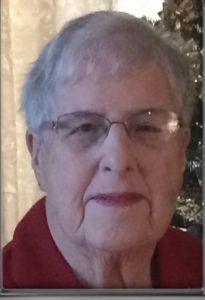 Everyone at The Bullvine sends their most sincere condolences and sympathies to the family and friends of Ontario dairy enthusiast and partner in the Master Breeder herd, Railhaven Holsteins, Berneta Turner, who passed away on February 9th.

 Deloitte joint and several administrator Glen Kanevsky said NDP had informed him a deed of company arrangement (DOCA) had been withdrawn, nor would there be a revised document.
 Melissa Greenbacker Dziurgot, of Durham, Conn., herd manager for Greenbacker Farm, has been named the 2017 Young Dairy Leaders Institute (YDLI) Distinguished Alumni Leader by the Holstein Foundation.Each year, the Holstein Foundation honors one YDLI alum who has made notable contributions and used the skills gained during their YDLI experience for the betterment of the dairy industry. Greenbacker Dziurgot was a graduate of YDLI Class 3.
 Reese’s aunt Laura posts the following update and request: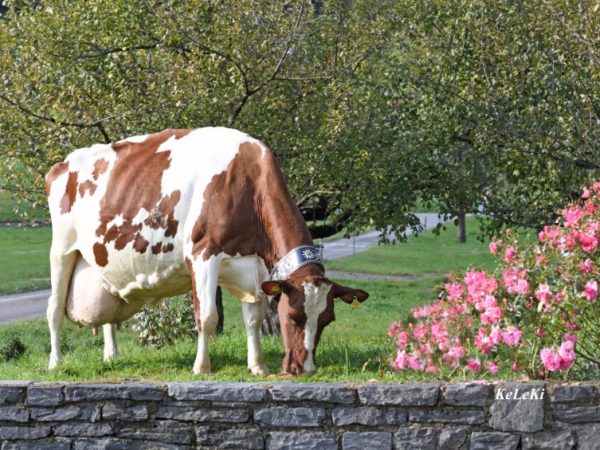
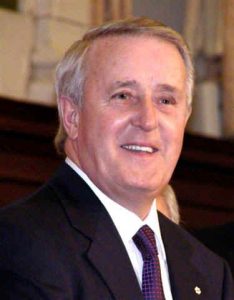 As Ottawa grapples with a pending NAFTA renegotiation, former prime minister Brian Mulroney is once again calling for the Canadian government to consider a “generous” phase-out of its supply management system for dairy and poultry.
 Its exciting new discovery promises to pack more protein into sports drinks and energy bars.
 The South Korean authority on Monday banned the movement of all livestock for 30 hours across the country as suspected cases of foot-and-mouth disease infection were reported.
 Holstein UK is delighted to announce that dairy farmer Brian Miller, will be casting his vote among leading Holstein cattle as he is confirmed as The National Holstein Show judge at UK Dairy Show 2017.
 Ontario Holsteins supports a membership that is passionate about the Holstein breed, grouped into 40 clubs throughout all farming regions in Ontario. Our mission is to assist and grow the membership of the Ontario Holstein Branch through youth activities, education and breed promotion, and to act as an advocate for the dairy industry. We do this through the support of a well-qualified team, ongoing member development, marketing and promotional activities, and advisory services. We offer a team-oriented workplace, positive Board relationships and the chance for you to play a key role in the future of our industry.
 The pitfalls and hazards of farming are so many and varied that the Occupational Safety and Health Administration calls it one of the most dangerous professions in the U.S.
  Five years ago, the Florida Department of Agriculture turned its regulatory power on a small third-generation dairy farm in the Panhandle’s Calhoun County, population 14,462.



