Archive for News – Page 124

Dairy company Lactalis orders global baby-milk recall over salmonella fears

Lactalis, one of the largest dairy groups in the world, said it has been warned by health authorities in France that 26 infants have become sick since Dec. 1. (Bob Edme / The Associated Press)

Lactalis said in a statement that the 26 cases of infection were linked to products called Picot SL, Pepti Junior 1, Milumel Bio 1 and Picot Riz

Baby milk maker Lactalis and French authorities have ordered a global recall of millions of products over fears of salmonella bacteria contamination.

The French company, one of the largest dairy groups in the world, said it has been warned by health authorities in France that 26 infants have become sick since Dec. 1.

According to a list published on the French health ministry’s website, the recall affects customers in countries around the world, including: Britain, Greece, Morocco, Sudan, Peru, Pakistan, Bangladesh and China.

Company spokesman Michel Nalet told The Associated Press on Monday that the “precautionary” recall both in France and abroad affects “several million” products made since mid-February.

Lactalis said in a statement that the 26 cases of infection were linked to products called Picot SL, Pepti Junior 1, Milumel Bio 1 and Picot Riz.

It said it is “sincerely sorry for the concern generated by the situation and expresses its compassion and support to the families whose children fell ill.”

The company said a possible source of the outbreak has been identified in a tower used to dry out the milk at a production site in May. Disinfection and cleaning measures have been put in place at the suspected site in western France.

The health scare started earlier this month when Lactalis was told that 20 infants under six months of age had been diagnosed with salmonella infection. The company ordered a first recall that has been extended to more products at the request of French authorities following new cases of infections.

Lactalis employs 75,000 people in 85 countries, with a turnover of $20 billion.

The symptoms of salmonella infection include abdominal cramps, diarrhea and fever. Most people recover without treatment.

Source: The Toronto Star

B.C. family under investigation after buying injured calves from dairy farm

Cici Life Farm Sanctuary is being scrutinized for transporting two injured bull calves.

When Patricia Smuga rescued two calves from a dairy farm last summer she thought it was an act of kindness. Instead, she’s being investigated for violating a federal law.

Smuga and her husband Ernest operate Cici Life Farm Sanctuary, a home for abused and neglected farm animals, near Winlaw, B.C. The pair purchased a pair of injured and sickly bull calves in August from a West Kootenay dairy farm.

But the Canadian Food Inspection Agency (CFIA) is now investigating the sanctuary for violating the Health of Animals Act, which says injured farm animals can’t be transported.

Dr. Andrew Mack, a Cranbrook-based inspector with the CFIA, visited the sanctuary on Nov. 30. When contacted by the Star, Mack’s office deferred to the CFIA’s media relations office.

In a statement sent to the Star, the CFIA said its investigation was prompted after being contacted about the sale by an unidentified person.

“The CFIA routinely conducts inspections based on these types of reports to gather additional information about the circumstances involved in the transport of potentially compromised animals,” reads the statement. “Inspections normally involve contacting the owners of the farm of origin, the destination premises and any transporters involved in the movement of the animals.”

The releases adds no decision has been made on the case.

Subsection 138 of the federal regulations, which pertains to sick, pregnant and unfit animals, says non-ambulatory animals cannot be loaded, unloaded or transported. An exemption exists for veterinary treatment, but only if agreed to by a vet prior to the transportation.

Read more: Surrey Now Leader

World Ag Expo Announces 2018 Top-10 New Products

Results are in for World Ag Expo’s Top-10 New Products Competition, sponsored by Bank of America. The winners will be showcased February 13-15, 2018, during the World Ag Expo in Tulare, California.

An impressive field of cutting-edge, cost-saving, and resource-managing products were submitted for the contest by exhibitors of the largest annual agricultural show of its kind. The contest judges were made up of farmers, ranchers and industry professionals. The Top-10 New Products competition is once again sponsored by Bank of America, which has an industry leading agribusiness group that delivers end-to-end banking and finance solutions to ag producers and related businesses.

The competition is conducted annually by the International Agri-Center in conjunction with World Ag Expo, which draws more than 1,400 exhibitors and an estimated annual average of 100,000 individuals from 70 countries. Exhibitors must nominate their products for judging by the October 31 deadline to be eligible. For more information on the contest and winners, including contacts, please email media@farmshow.org.

GUSS – GUSS (Global Unmanned Spray System)
Kingsburg, CA

GUSS (Global Unmanned Spray System) is the world’s first fully autonomous, driverless orchard sprayer. GUSS can be used to spray almond, pistachio, walnut, citrus, and stone fruit trees. It utilizes GPS, lasers, and other vehicle sensors to guide itself through orchard rows. GUSS helps alleviate the ever-growing labor challenges faced by the agricultural industry. A single operator in a control van can monitor four to eight GUSS sprayers at a time. GUSS is inherently more efficient than manned equipment being that it doesn’t get tired, need to stop for meal breaks, or call in sick. Precision is maximized by setting exact speeds and application rates into the machine that are maintained across the entire field. A data file depicting coverage, speed, products applied, and application rate is provided to the grower upon completion of the spray job. GUSS is a revolutionary new technology that will help usher in the future of agriculture! 

Exhibit Space: Ride & Drive 5
Website: www.gussag.com

ANDROS – MEGABINDER LRV
Paso Robles, CA

The ANDROS MegaBinder LRV is the fastest and most efficient Ag Film recycling system on the market. The MegaBinder retrieves and compacts Drip-tape and Mulch film into dense, uniform rolls for easy handling. Extremely efficient film retrieval results in less operator fatigue and lower operational costs. The MegaBinder is offered in 4 models, 3pt. tractor-powered, Pull-behind tractor powered, Pull behind w/self-contained power supply, and Goose-neck or bumper pull models w/self-contained power supply, and hydraulic multi-roll dumping platform. The MegaBinder is equipped with the “ANDROS PCG 3D” retrieval head that allows growers to add multiple lines of film or drip-tape on-the-fly. This feature allows the operator to feed new lines into the retrieval head without having to stop the retrieval process or tie ends together. The Dual Trapezoidal Discharge Spool, ensures smooth ejection of full rolls out of the MegaBinder for future transport or storage. The MegaBinder’s ergonomic platform includes operator safety features such as, a remote hydraulic dump control valve, torque and speed controls, and an emergency stop safety fence that quickly stops the retrieval process when activated by the operator

Exhibit Space: N46, N48, N50
Website: www.andros-engineering.com 

Metalcraft of Ga, Inc. – Metalcraft 2614 TILT
Louisville, GA 

Come to the World Ag Expo and experience the latest innovation in scraper controls on the new Metalcraft TILT scraper! The Metalcraft TILT scraper will save you time and money by utilizing tilt sensors and GPS controls to create precision slopes without the extra expense of bulldozers and motor graders. The in-cab touch screen operators have the ability to select from three modes of operation: Manual, Auto Slope, or Auto GPS. The Metalcraft system utilizes the tractors solenoid switches to operate all scraper functions and will work with any brand of GPS controller. This system comes installed on the 2614WT and 2814WT ejector scrapers when the TILT option is purchased. These scrapers with their walking beam axles and large capacities have proven to be reliable and increase production. Now with the new tilt feature, they are guaranteed to be the most efficient way to move the earth.

Exhibit Space: SS15, SS17
Website: www.metalcraftscrapers.com 

Lindsay Corporation – Pivot Control Lite
Omaha, NE

Pivot Control Lite from FieldNET® by Lindsay is a simple, cost-effective add-on option for remote monitoring and control of almost any brand of electric center pivot. Utilizing FieldNET® by Lindsay technology, this easy-to-use, low cost solution delivers many advanced irrigation management capabilities that previously were only available with more expensive and complex solutions. It is an especially great solution for growers who are operating multiple brands of pivots or pivots on leased land, where they have no ownership of the pivot but want the benefits of remote monitoring and control. Pivot Control Lite includes an integrated cellular modem and on-board GPS, giving growers the ability to precisely control the amount of water that is applied – avoiding over-watering and decreasing unnecessary pumping costs. Pivot Control Lite comes with an optional cable theft detection package, so even when the pivot is powered off, it is actively monitoring the span cable. It also is fully compatible with FieldNET Advisor™, the industry’s first, fully integrated irrigation management solution to help growers decide when, where and how much to irrigate.

Exhibit Space: L40
Website: www.myfieldnet.com

Cargill Animal Nutrition – Reveal® Analysis
Elk River, MN

Reveal® Analysis service from Cargill is the first to offer instant, lab quality forage analysis via a convenient handheld device and smartphone app. By combining Cargill’s global forage database with SCiO, the world’s first pocket-sized connected micro-spectrometer, dairy producers now have the power of our lab in the palm of their hands. Industry experts have identified improved dry matter management as a top area of opportunity for improving feed efficiency. Dairy producers can now quickly determine the dry matter of their forage to make ration adjustments in real-time. The service empowers users to analyze an unlimited number of forage samples. Forage can be analyzed by anyone on the farm, at any time. The app saves an electronic record of each analysis that can be conveniently labeled and shared via text or email. In addition, Reveal® will be showcasing an exciting new milk analysis capability at World Ag Expo, giving dairy producers the ability to also instantly analyze raw milk for fat, protein and total solids. Visit our World Ag Expo booth 6408 in the Farm Credit Dairy Center to see a live demonstration and experience the game changing power of a lab analysis in the palm of your hand! 

Exhibit Space: Farm Credit Dairy Center 6408
Website: www.cargill.com

Hydrox Technologies – Solar Shrink™ Mulch Film
Sumner Park, Queensland, Australia

Solar Shrink™ plastic mulch film, developed by Hydrox Technologies in Australia, is manufactured to have shrinking forces trapped into the plastic so that, after laying sunlight heats the plastic and causes it to shrink tightly to the growing bed, preventing the sheet from flapping in the wind. A tight sheet transmits more heat to the soil allowing for an earlier start to the season and prevents the sheet from billowing in the wind, which pumps out heat and moisture from beneath the sheet. The friction caused by a loosely laid, flapping sheet rubbing against the plant causes damage allowing disease to gain hold. In addition, Hydrox’s unique manufacturing process makes Solar Shrink™ up to 200% stronger, 35% thinner, and 25% more cost effective and environmentally friendlier compared to any other mulch film available. Being stronger and containing extra UV light protection, Solar Shrink™ can be easily picked up by machine at the end of the season, with minimal loose debris, saving time and money. A thinner film results in up to 35% more film on the roll, efficiently reducing the number of stoppages for roll changes and makes for less weight of plastic to dispose of to landfill – all of which reduce costs of labor, fuel and initial outlay and reduces the amount of plastic contamination in the environment.”

Exhibit Space: Pavilion B 2113
Website: www.hydroxtech.com

Sweco Products Inc. – Sweco Orchard Master
Sutter, CA

The Sweco Orchard Master is a brand new product from Sweco Products Inc. This implement is a 3 point mounted product that can be pulled behind a minimum 80+hp orchard tractor. The Orchard Master is designed to incorporate any weeds or harvesting debris into the soil using a newly designed ground driven incorporating roller. This ground driven incorporating roller follows a series of rippers that open the ground for it to break up the soil and incorporate the debris. Following the ground driven incorporating roller is our shaper bucket that levels the soil and leaves a nice flat surface for the rear roller drum to compact the soil. The Sweco Orchard Master leaves a final product that has been tilled, leveled and rolled. This machine is designed to eliminate the growers need to use a mower, disc, land plane and roller. With the Sweco Orchard Master you get a better final result with the need for only one machine. Current practices using all four implements that are typically pulled at around 2-4 mph takes more than four times the labor to perform, considering that the Sweco Orchard Master is designed to be pulled at a minimum of 6 mph. This allows the Grower to complete his work in as little as one quarter the time with only one machine.

Exhibit Space: Q38
Website: www.swecoproducts.com

Truck Claws – TruckClaws™ /TruckClawsII™ / TruckClaws™ Quick Connect
Harrisonburg, VA

TruckClaws™ are a patent-pending, all-season truck traction aid to help drivers get unstuck, saving them time and the expense of tow truck services. Simple to use and easy to install, TruckClaws™ feature a traction cleat that attaches to a drive tire on the rear of a vehicle with a customized reinforced strap and heavy-duty ratchet. It takes less than 60 seconds to install each claw. The devices can free a truck stuck in mud, snow, ice and sand and may be installed over tire chains but also work great without them. You can even add multiple TruckClaws™ to each tire for even more traction! Other traction aid products are made of plastic or rubber and often only good for one or two uses. TruckClaws™ commercial is made of high grade steel to move large trucks from big rigs to commercial farm equipment and more. TruckClaws II™ is made of aircraft grade aluminum to move lighter trucks, Pickups, SUVs and RVs. TruckClaws™ high quality rugged construction makes them one of the most effective and reusable traction aids on the market allowing you to get your truck unstuck and help others in need time and time again.

Exhibit Space: Pavilion A 1501
Website: www.truckclaws.com

Environmental Technologies Inc – Thymox Footbath 1p
Selah, WA

Thymox is a highly concentrated liquid footbath effective at controlling hairy heel warts (digital dermatitis). Hairy heel warts (Digital Dermatitis, a highly contagious infection) have been plaguing the life of dairy farmers for over 30 years, and the disease is now the second most costly infectious disease found in dairies, after mastitis. Unlike mastitis, hairy heel warts do not have an easy treatment. To control the disease multiple measures must be used, among which are footbaths. The conventional footbath treatments, Copper Sulfate and Formalin, are becoming more and more difficult to tolerate: Copper Sulfate is not biodegradable, and will slowly make crop land sterile and less productive, while Formalin is biodegradable, it is also carcinogenic, and presents a major health hazard when shipped and handled. Both chemicals are becoming scrutinized at the state level. Thymox Footbath 1P is a replacement solution for dairy farmers who want to protect their health and their land. Unlike Copper Sulfate and Formalin, Thymox Footbath 1P has the advantage of not burning the skin. It instead allows the wounds to heal naturally. Natural healing helps prevents future infection on the hoof, which in turn reduces the risk of infection of other cows. The active ingredient in Thymox, thymol, is found in thyme oil. It is a highly potent antimicrobial compound, yet is safe enough to put in food. The product has also been registered in Canada as the only drug to control Hairy Heel Warts.

Exhibit Space: DX40, DX41
Website: www.etidairy.com

Eno Scientific LLC – Well Watch 700
Hillsborough, NC

The Well Watch 700 is an intelligent water well management system for agricultural applications. The sensor monitors water levels using sound waves, providing real time level data down to 7000 ft. The controller allows for easy integration into any telemetry/SCADA system along with data logging, resource management and pump control capabilities. One of the many reasons this product is so groundbreaking is that it is all non-contact. The hardware is easy to install, external to the well and built to last. There is no risk of well contamination, no well decommissioning during installation and no equipment to risk being sucked into the pump. This product will provide the user with the knowledge to make intelligent water usage decisions. To know which fields to farm or which crops to plant you need to know you will have the water to do it. Smart irrigation is key, but the key to smart irrigation is the water supply. We have connected every farmer to that data with this sensor.

Exhibit Space: Pavilion B 2316
Website: www.enoscientific.com 

The 2018 Top-10 New Products Competition is sponsored by Bank of America.

The International Agri-Center is home to World Ag Expo, February 13-15, 2018, in Tulare, California. An estimated annual average of 100,000 individuals from 70 countries attends World Ag Expo each year. The largest annual agricultural show of its kind, World Ag Expo hosts 1,500 exhibitors displaying cutting-edge agricultural technology and equipment on 2.6 million square feet of exhibit space.

Event Details At-A-Glance:
2018 World Ag Expo, February 13-15
February 13: 9:00 a.m. – 5:00 p.m.
February 14: 9:00 a.m. – 5:00 p.m.
February 15: 9:00 a.m. – 4:00 p.m.

International Agri-Center
4500 S. Laspina St.
Tulare, CA 93274

$15 gate admission
$10 online ticket price with a discount code
Tickets: www.worldagexpo.org

 

New online tool to better safeguard animal genetic resources launched

Revamped global database includes new indicators to assess the risk of extinction of breeds

A new FAO database launched today will help countries to better monitor, survey and effectively manage their animal genetic resources, allowing for early warning of the threat of extinction.

The Domestic Animal Diversity Information System (DAD-IS) is the most complete source of global information on animal genetic diversity to date.

The biodiversity of around 40 animal species that have been domesticated for use in agriculture and food production is vital to food security and sustainable rural development. Many locally adapted breeds, some of which are threatened with extinction, have characteristics that make them resilient to climatic stress, diseases and parasites. Over the years, they have adapted to their environments characterized by harsh conditions.

The revamped version of DAD-IS includes new indicators to monitor the risk of extinction of breeds indicating those that are at risk and need urgent intervention.

The system boasts a new user-friendly interface, provides faster access to required information through a set of filters, and for the first time includes tools to monitor the progress towards achieving the relevant Sustainable Development Goals (SDGs).

The database is a result of three decades of collecting national data from 182 countries. Currently, it contains data on almost 9 000 breeds of livestock and poultry, including breed characteristics, information on distribution and demographics and more than 4 000 images.  

DAD-IS is an essential tool for planners, decision makers and scientists to analyze trends, make informed decisions and forecasts, support the development and implementation of international agreements including the Global Plan of Action for Animal Genetic Resources, as well as national policies and strategies for the management of animal genetic resources.  

Bridging the information gap

FAO estimates that more than 25 percent of the world’s local farm animal breeds are currently at risk of extinction. The examples include the Inyambo cattle in Rwanda, the H’mong pig in Vietnam, the Criollo Uruguayo sheep in Uruguay or the Limiá cattle in Spain.

“DAD-IS is a very powerful tool to inform policy-makers on potential risks, but a system is only as good as its content,” said Roswitha Baumung, FAO Animal Production Officer. “There is still a big data gap. For almost two thirds of the world’s livestock and avian breeds no information has been made available to monitor their extinction risk”.

“There are many reasons for this. Some countries may have not collected the relevant data, while others may have not nominated a National Coordinator for the management of animal genetic resources who is responsible for entering those data into DAD-IS. We would like to use this momentum to urge countries to provide information on farmed animals, using the new tool we are launching today. This data is crucial to safeguard livestock diversity and contributes to feeding the growing world’s population in the future,” she added.

New data for SDG-related indicators

With the adoption of the Sustainable Development Goals (SDGs) in 2015, the function of DAD-IS as a global data repository has expanded.

The system enables countries to store relevant data and easily calculate indicators under Sustainable Development Goal 2 on Zero Hunger related to the maintenance of genetic diversity of farmed and domesticated animals, including indicators 2.5.1 and 2.5.2.


Source: FAO

Starbucks loses claim against dairy firm logo

A Japan-based dairy firm can register a trademark for its line of milk coffees after an opposing claim made by coffee giant Starbucks was thrown out by the Intellectual Property Office of Singapore (Ipos).
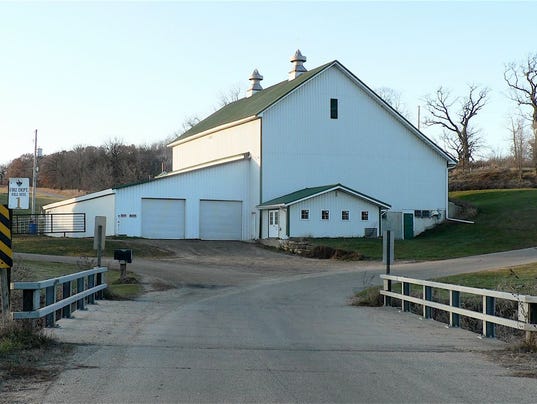
Morinaga Nyugyo Kabushiki Kaisha, better known as Morinaga Milk, filed a trademark registration for its Mt Rainier line of milk coffees and lattes for sale in Singapore in October 2013. The black-and-white circular logo, with the Mt Rainier branding over a silhouette of the mountain bearing the name in the US city of Seattle, came under contention.

Starbucks opposed the registration on the grounds that it looked too similar to its circular, green-and-white mermaid logo. It said the use of similar concentric circles was central to its brand recognition.

The Seattle-based coffee company also said Morinaga’s logo made a “direct reference” to Seattle, which is strongly associated with the coffee and cafe culture and is known as Starbucks’ birthplace, according to judgment documents.

Morinaga was represented by lawyer Lim Siau Wen, while Starbucks was represented by lawyers Melvin Pang and Nicholas Ong.

In judgment grounds released last week, Ipos intellectual property adjudicator Lorraine Tay found no similarities between the two logos.

The concentric circles are not distinctive identifiers of Starbucks, she said. “It is a very simple device which is reduced to being part of the background and cannot on any count be considered to be a dominant feature.” The “outstanding and dominant features” of Starbucks’ logo “are the word ‘Starbucks’ and the mermaid device”, which are more visually distinctive and associated with the company.

She also dismissed Starbucks’ arguments that Morinaga’s use of Mt Rainier was intended to deceive the public into thinking the company’s milk coffee came from Seattle.

The association of the mountain to Seattle is not a direct one, she said. Instead, she said the logo title served an informative function of naming the mountain on the logo, rather than to evoke an association with Seattle.

It is also unlikely that coffee drinkers here will make the connection so readily. “Even if Mt Rainier is an iconic symbol of Seattle, the evidence does not establish that the average Singaporean would make this link or connection with Mt Rainier,” she said.


Source: The Straits Times

Official Judges Selected for the 2018 World Dairy Expo

World Dairy Expo® is pleased to announce the eight individuals who will serve as official judges during the 2018 World Dairy Expo Dairy Cattle Show, October 2 through 6. The judges – who span across the United States and Canada – are responsible for the evaluation and placing of more than 2,300 cattle at the annual event with the help of their associate judge.

Nominated and selected by Expo’s dairy cattle exhibitors, the official judges for World Dairy Expo 2018 are as follows:

International Ayrshire Show: Callum McKinven, Canton de Hatley, Quebec

International Brown Swiss Show: Steve Wagner, Quarryville, Pa.

International Guernsey Show: Brian Schnebly, Hagerstown, Md.

International Holstein Show: Carl Phoenix, Sunderland, Ontario

International Junior Holstein Show: Chris Hill, Thurmont, Md.

International Jersey Show: Pat Conroy, Angola, Ind.

International Milking Shorthorn Show: Brian Behnke, Albany, Wis.

International Red & White Show: Blair Weeks, Pleasant Valley, Prince Edward Island

Serving as the meeting place of the global dairy industry, World Dairy Expo brings together the latest in dairy innovation and the best cattle in North America. Crowds of nearly 70,000 people, from 100 countries, will return to Madison, Wisconsin for the 52nd annual event, October 2-6, 2018, when the world’s largest dairy-focused trade show, dairy and forage seminars, a world-class dairy cattle show and more will be on display. Visit worlddairyexpo.com or follow us on Facebook, Twitter, Instagram, Snapchat or YouTube for more information. 

The story of an historic dairy farm

Silvan Blum is a cheesemaker at Deppler Cheese Factory near Monroe — he’s also a bit of a historian on the famed cheese industry in Green county. He was the one that guided me to the marker commemorating the site of the first commercial cheese factory established by Nic Gerber in 1868 just west of New Glarus.
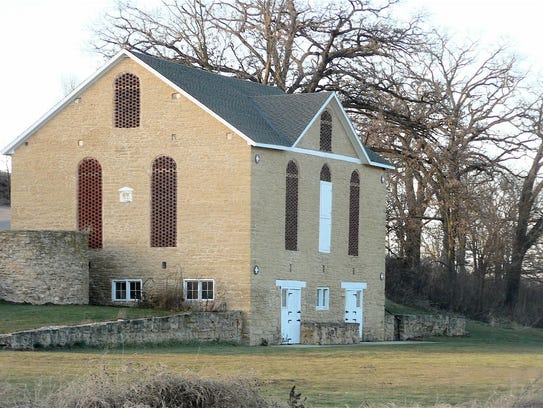
He also invited me to visit him again and see the stone barn on his farm that was built in 1861 and since restored. I never accepted his invitation to visit, primarily because I knew he began work at the cheese factory at 1 a.m. and I didn’t want to disturb him if he was sleeping during the day.

This past November 5th or so, I noted the obituary of Dr. Fred Blum, a well-known Madison ophthalmologist who died at the age of 90. The obituary went on to detail how Dr. Blum and his family moved from Madison to a farm west of Monticello that had been settled by his Swiss emigrant ancestors in 1848.

The farm had a long documented history: from its homesteaded beginning 1848 with only a log cabin on Hefty Creek to becoming one of the first farms in the area to switch from wheat to dairying, build a 44 cow stone barn and was considered one of the county’s most progressive operations.

The Blums began raising horses and later added beef cattle. During the 1960’s their beef bulls topped the UW-Plattevile bull testing station for rate of gain. It was in the 1970’s that a dairy herd was reestablished on the farm.

I also noted that one of Dr. Blum’s children was Silvan Blum, the cheesemaker, thus prompting me to call him and hear the history of what is now-known as Heft-Blum Homestead Farm.

It turned out to be a most opportune time to visit with Silvan as he had fallen on Thanksgiving day and torn ligaments in his right leg and was unable to work, thus had some time to tell me more about the farm.

80 acres

This farm was homesteaded in 1848 with 80 acres. However, by 1870, the farm had grown to 600 acres, Blum began. The owner, Fridolin Hefty planned to give each of his sons 160 acres. It turned out that only one son,Tom, wanted to farm and he was the one who built most of the farm buildings. His son, Fred Hefty, followed as the farmer.

A building boom

A granary was built in 1851. Interestingly, a part of that building remains today but has been incorporated into a more modern building. The stone barn was constructed in 1861 and built into a steep hill. The big white barn — a Swiss-design forebay bank barn — went up in 1880 and the house was built about the same time.
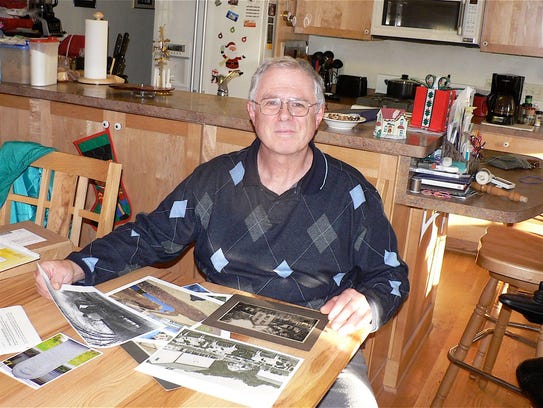
It wasn’t long before Adam Blumer, a cheesemaker from Switzerland moved to a farm next door and began making cheese in his house. “It’s possible that the milk from the Hefty farm went next door to the Blumer farm to be made into cheese,” Silvan says.

A cheese factory

He also points out that the 1860’s and 1870’s saw a building boom on the farm as the stone barn, carriage shed, white barn, house and cheese factory all went up. By 1881 there were three farms in the area milking cows with the Hefty farm being far the biggest with 75 cows. This swayed the decision to build a cheese factory near the most cows.

The factory was built just behind the big white barn and as was common, it was a two story wooden structure with living quarters on the top floor and cheesemaking area on the ground floor. It had one cheese vat, and a processing room and storage area.

Big processors came

As happened throughout Green county, as farms got bigger and produced more milk, larger trucks could move milk further distances in bigger amounts, hence bigger cheese factories were needed to handle the milk.

Blum points out that another factor in the demise of the small cheese factory was the arrival of the big milk processors. In 1910 the Helvetia Milk Condensing Company was being built near the railroad tracks in New Glarus. The company, later to become The Pet Milk Company, with plants in Monticello and Belleville needing large amounts of milk for their evaporated milk product. It followed that the small, very local operations closed, as did the Hefty factory in 1911.

The formerly active but now-empty building served as a storage building, all but forgotten for many years. Meanwhile, the Hefty Homestead farm remained in the family although over the years it had gone “downhill,” Silvan explains.

Dr. Blum buys the farm

“In 1960, my dad bought the farm from his mother (Olga Hefty Blum, Fred Hefty’s daughter) and brought the farm back to life. It was also during that time the Blums were much involved in land conservation, especially in stream bank improvement on Hefty Creek which runs close to the farm buildings.

“The trend in farming at the time was ‘get bigger or get out,” Silvan says. “We were milking about 89 cows and built two Harvestores with plans to build a 500 cow freestall barn. We ultimately decided not to go ahead with the expansion and I decided to become a cheesemaker.

Becoming a cheesemaker

Silvan said he worked as an apprentice at Chalet Cheese Co-op and after getting his license went to work at Deppeler Cheese at Monroe — where he remains although he’s now partially retired.

“You know that you are sitting in the middle of the old cheese factory?” he asked as we sat at his kitchen table. “Yes, I knew,” I replied but would not have known if he hadn’t told me a couple of years ago. “Tell me the story,” I prompted.

Becoming a home

“In 2005 we began cleaning out the long vacant building that was full of odds and ends and several kinds of rodents,” he began. “I hauled out 9 loads of metal junk and lots of other stuff. The building was stabilized and rebuilt. My dad was a preservationist who felt it was important to preserve old things.”

He and his, wife, Jane, moved in December of 2008, he recalls.

The living area is large and beautiful especially with the Christmas decoration already in place. Much of the basement (actually the first floor) has a large added bathroom and some equipment remaining from a cheese sales business Silvan ran for a number of years but is now closed.

“There’s where the vat was located.” he pointed out, “and the milk intake was over there. The factory made Swiss and Limburger cheeses.”

I’ll admit I could almost see the cheesemakers sweating over the vat and while lifting big wheels of Swiss. I didn’t ask if Silvan and his wife had ever heard strange sounds and noises in early morning hours but wouldn’t be surprised if the ghosts of the 120 year ago past might still return to make cheese once in awhile.

The Hefty-Blum Homestead Farm cropland is now leased out and the barns stand empty. The stone barn, white barn and carriage shed are all on the National Historic Register and still stored in the carriage shed are a cutter, a buggy and a wagon. “They’ve not been reconstructed, just knowing they are there is enough,” Silvan says..

How true, how true.

John Oncken is owner of Oncken Communications. He can be reached at 608-222-0624, or e-mail him at jfodairy2@gmail.com.

Source: Wisconsin State Farmer

France’s Lactalis to acquire Brazil dairy brand Itambé

Groupe Lactalis SA has agreed to acquire Brazilian dairy company Itambé Alimentos SA in the first half of 2018 in a deal that would also involve a long-term supply contract with the French group.

A joint statement announcing the deal on Tuesday by Lactalis and CCPR, a cooperative of milk producers based in the Brazilian state of Minas Gerais that controls Itambé, did not disclose its value.

The deal is conditional upon approval by antitrust agency Cade.

Lactalis already owns several dairy brands in Brazil, including Batavo, Elegê and Parmalat.

Itambé was once partially owned by Vigor Alimentos SA, which was sold by J&F Investimentos to Mexico’s Grupo Lala SAB de CV in October.

Vigor had a 50 percent stake in Itambé and CCPR owned the other 50 percent. In September, the cooperative exercised an option to acquire Vigor’s stake, and Lala concluded the acquisition of Vigor without the Itambé brand.


Source: Business Insider UK

More Than Just A Cow: A Tribute to Snickerdoodle

Old Mill E Snickerdoodle (1998-2017), the great champion Brown Swiss Cow, passed away quietly on October 3 in her retirement field in Manatee County, FL.

Snickerdoodle, who was just shy of her 19th birthday, may be gone, but she won’t be forgotten. Her genetic legacy lives on in many cows and bulls, along with considerable benefits and improvements to the pedigrees of Brown Swiss cattle worldwide.

Snickerdoodle
Snickerdoodle

Owner Allen Bessler posted on Facebook: “We laid the legend to rest today. We said goodbye to one of the most special cows we ever had a chance to work with. Thanks to God for giving us the opportunity to work with her. She leaves quite a legacy behind from all of her offspring worldwide in 11 different countries from embryos she produced. She walked the tanbark with style. It’s like when she got there it was game on buddy Bring It On… See you in heaven SNICK.”

It was a lucky day when someone gifted a Brown Swiss heifer calf to the Bassler family as a 4-H project. When Cookie was old enough, Allen decided to breed her along with his other cows to a very nice bull in Pennsylvania named Emory even though he had not previously sired any female offspring when bred to any of Allen’s stock. Those matings resulted in two heifers — one of them out of Cookie, born on October 14, 1998, was named Snickerdoodle by Allen’s wife Tammy and their three children.

Snickerdoodle
Snickerdoodle

Allen’s interest in Brown Swiss Cattle began during his own 4-H years, and he’s been making cheese for about 30 years. Brown Swiss is a North American breed, descended from the Alpine (Switzerland) Braunvieh: they are renowned around the world for milk production and for their milk’s excellent quality in cheese-making. Brown Swiss traits include sturdy health, gentle temperament, outstanding milk production, and longevity. Snickerdoodle produced 261,670 pounds of milk, earning sixth place on the Swiss Cow’s living lifetime production list.

“When I started breeding Brown Swiss cattle, I wanted to improve them, make them the best they could be,” Allen said. “I wanted bulls that corrected their udders without sacrificing stature, feet, and legs. It took generations to do that.”

His greatest success story is Snickerdoodle, winner of a record six World Dairy Expo Brown Swiss Grand Championships and the only cow of all breeds to win every milking class she entered. She also earned one Supreme Championship in 2003 and two reserves Supreme Championships in 2008 and 2009.

Snickerdoodle
Snickerdoodle

Recognized far and wide as one of the greatest cows in the dairy industry, Snickerdoodle has more than 150 daughters giving milk in 15 countries around the world, including many Excellent daughters, 21 of them right here in the U.S. One daughter living in the UK, Old Mill Starbuck Spottie-ET EX-94 2E, is enjoying a most successful show career. Plus, Snickerdoodle’s sons are stamping their progeny with her championship characteristics. It’s been win-win all the way.

“Snick started out as my son AJ’s 4-H project. He got to grow up with a cow that was amazing,” Allen said. “He took care of her and showed her and they won a lot. Then we realized that she was among the best of the best. We were concerned that if they won all the time in the 4-H show ring, AJ wouldn’t understand what it was like to work for it. So he showed her in Junior classes, but we got a professional handler for the Open classes.”

When Snickerdoodle was two, she embarked on what would be a stellar career by winning her very first World Dairy Expo breed championship. That accolade earned the young cow her very own stall and pasture back on Oak Spring Farm in Upperville where Allen milked 12 cows and made cheese. In 2003, competing against the other breed champions, Snickerdoodle won Supreme Championship, the equivalent of a super-charged Best In Show, at the World Dairy Expo, a prestigious annual event in Madison, Wisconsin.

Snickerdoodle
Snickerdoodle

Snickerdoodle won Brown Swiss Grand Championships at the World Dairy Expo in 2002, 2003, 2004, 2005, 2008, and 2009. However, because cows put so much of their vitality into milk production, they don’t always look pretty as they get older. Snickerdoodle proved to be the exception.

“It was pretty remarkable when Snickerdoodle came back again — she won the dry cow class in 2013 at the World Dairy Expo,” Allen said. “You have friends and enemies at show time, it’s very competitive. Dry cows have their place at the show but can’t be grand champion. People knew her and recognized her and gave her respect. She was 15 years old, looking as good as she ever looked. She didn’t have the udder full of milk, but no dry cow has that. She came out at 15 to a national show and it was really neat in that situation when they started clapping for Snickerdoodle.”

That standing ovation became even more significant and moving during the World Dairy Expo when Snickerdoodle’s son, Old Mill WDE Supreme-ET, was honored as the Premier Sire of the International Brown Swiss Show.   

After her “official” owner AJ went off on his own but didn’t have a place to keep his cow, Snickerdoodle stayed with Allen and Tammy at Oak Spring Farm until it was sold in 2015. Then the legendary cow moved to Florida where Allen makes cheese for the Dakin Dairy Farm.

Snickerdoodle will be remembered for her genetics, gentle giant temperament, and priceless contributions to the improvement of the Brown Swiss breed. She financed college for Allen and Tammy’s two daughters and their son’s tech school training in diesel engines. She brought great joy and recognition into the Bassler’s lives.

Snickerdoodle was much more than a great milk-producing champion cow. She will be missed, but not forgotten. Legends never really die.

Source: Middleburg Eccentric

Only in Japan: A new form of milk delivery?

Dairy products aren’t as popular in Asian countries as they are in the west, but Rakunoh Mothers wants to get more kids drinking milk. Or running screaming in terror, we’re not sure which after seeing this pair of udderly ridiculous ads. In the first CM, as a farmer lovingly tends to his cows, a UFO flies overhead and abducts one of his prize heifers. Apparently liking what they find, the aliens then use some kind of bizarre technology to suck the milk straight from the rest of the cows’ udders without disturbing their grazing time while the farmer looks on in confusion. As a follow up, a horde of milk-deprived children scamper up a hill and raise their empty glasses aloft. As if summoned, the UFO looms overhead, releases a single, jiggling teat and squirts milk perfectly into each glass. The kids drink happily, since their parents only told them not take candy from strangers; milk is apparently a-okay. …maybe we’ll just have toast for breakfast tomorrow.

California’s Holy-Cow Idea

“California Regulates Cow Farts,” is how a New York Post headline put it, implying it was a wacky move by Governor Jerry Brown. In fact, California’s methane law represents a serious attempt by America’s biggest dairy state to come to grips with a potent greenhouse gas.
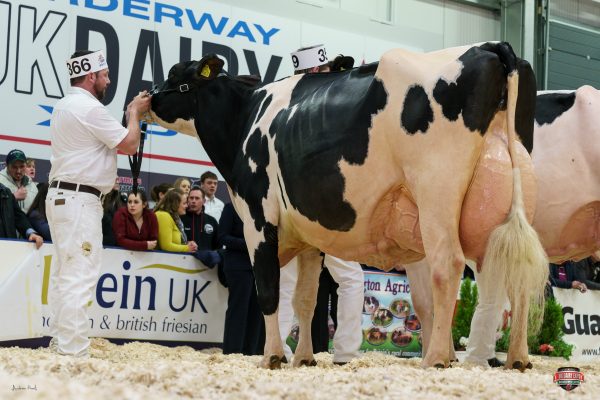
Methane is responsible for about a quarter of human-generated global warming. While it’s not nearly as prevalent as carbon dioxide, and it breaks down in the atmosphere faster, methane is many times more effective than CO2 at trapping heat. And avoiding a man-made climate catastrophe will require limiting emissions from farms as well as oil and gas pipelines, landfills, and other sources.

In California, most methane emissions are from cows — chiefly the state’s 1.7 million dairy cows, whose manure is typically washed into methane-spewing lagoons. This is why the state, which has pledged to reduce methane emissions by 40 percent by 2030, is looking to the big Central Valley dairy farms for substantial reductions.

Its law limiting methane emissions on dairy farms was passed last year but does not mandate any action before 2024. In the meantime, the state is trying to persuade hundreds of big dairy farms to install contraptions known as methane digesters.

These are basically heavy, lagoon-covering tarps that trap the gas. They can be expensive to install and maintain, but the state is offering grants to help defray the cost, funded with money from its cap-and-trade program. Farmers who use digesters are also allowed to sell carbon offsets or, if their methane is used in fuel, fuel credits.

California utilities are also planning pilot projects to install pipelines to transport methane from dairies and possibly turn it into truck fuel. The state is also encouraging some farmers to do more composting, and to keep manure on pastures and out of lagoons.

Of course, there is also the other end of the cow: They belch a lot of methane into the air. To reduce their output, the state is supporting research on efforts to adjust or supplement their feed — without changing the taste of the milk.

California is keeping an eye on other methane sources as well. The state has the country’s strictest regulation to monitor and repair leaks from oil and gas operations, and it is working to better measure and limit methane from landfills.

The dairy project stands out, however, for its potential to drive a widely applicable technological solution. Bovine gas will always be amusing to headline writers (and middle schoolers, for that matter). But how to reduce dairy methane emissions is a serious and neglected challenge (one that the Trump administration purposely ignores). As with its policies on forests and electric vehicles, California is showing other states how to build the necessary political will and financial commitment to make a difference in fighting climate change.

Source: Bloomberg

Harrison and Hetherington announce the date for Borderway UK Dairy Expo 2018

Harrison & Hetherington have announced the return of their national dairy showcase, Borderway UK Dairy Expo, which will take place at the Borderway Exhibition Centre, in Carlisle, on 10 March 2018. 

The Expo, which is now in its seventh year and sponsored by Holstein UK, CIS, Clydesdale Bank, Carrs Billington, Farmers Guardian and Norbrook, is now a firm fixture in the dairy industry calendar. It attracts some of the finest dairy cattle in the UK and high profile international judges, as well as leading industry exhibitors. Companies who are interested in attending can download the trade stand application forms on line from the Harrison and Hetherington web site.

The Expo has grown to be a major dairy sector event, offering the latest developments in dairy practices, breeding, genetics and equipment and technology.  As it takes place early March, when producers are considering management plans for the year ahead, many visitors attend from across the UK and Europe. 

It has also established itself as a significant showcase for British dairy genetics and highlights the quality of stock that the UK has to offer. Last year, the star of the show was the mature Holstein, Peak Goldwyn Rhapsody exhibited by Yasmin Bradbury of the Derbyshire based Peak herd, and crowned Champion of Champions. Her daughter Milliedale Dusk Rhapsody was also awarded third in the mature Holstein class; the first time that mother and daughter have been in the final three in any class at the event.  The Jersey breed also excelled at the event in 2017 with the Champion, Bluegrass Vindications Harp exhibited by the Fleming family, with CJ Henning and K Agnew receiving their 3rd Championship titles at Borderway UK Dairy Expo.  

Commenting on next year’s event, Event Organiser and Operations Director at Harrison & Hetherington, David Pritchard said: 

“With over 7000 visitors last year, the Dairy Expo has proved itself to be a leading UK event for all modern dairy farmers. It offers a tremendous opportunity to see the latest technical updates and developments and discuss relevant industry issues with industry specialists.  

 “With plans firmly underway for our seventh event in March 2018, we are looking forward to yet again announcing another fantastic line up of well renowned judges and exhibitors.

During the event, The John Dennison Lifetime Achievement Award, which recognises the dairy cattle breeder or exhibitor judged to be a high achiever and excellent role model within the dairy industry, will also be presented.  The award is in memory of the life time industry contribution made by Cumbrian dairy farmer and highly regarded breeder, John Dennison.  Former recipients have included Mike Miller of Shanael Holsteins, John Gribbon, Sammy McCormick, of the Hilltara Holsteins, Alister Laird of Blyth Bridge, Peebleshire.  The award was presented to Mark Nutsford owner of the Riverdane Holstein herd in 2017.  

“We are delighted that Borderway UK Dairy Expo has in such a short space of time become a such a tremendous showcase for the dairy industry; with world class dairy cattle, innovative products and highly professional and knowledgeable experts. I encourage everyone to attend to see what the sector has to offer,” concludes David.

The livestock schedule and entry forms will soon be available to download online or by contacting the Harrison & Hetherington Event Office on 01228 406 230.

A Minnesota town fights for its life against a factory farm

Economic development in eastern South Dakota can be explained in a word: udders.
The initiative to lure European dairy companies via cheap government loans started with former GOP Governor Mike Rounds. Since 2012, Governor Dennis Daugaard, also a Republican, has continued the practice, but with a twist. He’s been courting California milk producers, enticing them to relocate along the I-29 corridor with subsidies and user-friendly regulations. 

Numbers prove the strategy is working. South Dakota farmers sell almost $400 million worth of milk per year. But the stats also show it’s largely been factory dairies heeding the call. In 2005, the state’s average dairy farm had 250 cows. Today, it’s closer to 1,500 head.

In 2014, residents living near Lake Hendricks, a 1,600-acre body of water located about a three-and-a-half hour drive from the Twin Cities, heard rumors that a huge dairy was being planned. It was said the operation would be built on a hilltop about four miles west of the lake in Brookings County, South Dakota. Minnesota and South Dakota share the sickle-shaped Lake Hendricks that’s five miles long. 

The rumors traveled east over the border to the town of Hendricks, Minnesota (pop. 780). Residents wasted no time finding an answer.   

Michael Crinion proposed building a 4,000-head dairy. The Environmental Protection Agency says that many cows pump out as much excrement as 500,000 people per year. The project would include three manure pits, each holding 2.2 million cubic feet of excrement. Since the holding ponds wouldn’t be able to handle all the waste, Crinion said the dairy would ink agreements with farmers to the west, where manure would be pumped on fields as fertilizer. 

Crinion could not be reached for comment.

From there, the townspeople looked at the topography. From the high ground where the dairy would be, the terrain bends and slopes west. Locals call it “billy goat territory.” The land’s final descent occurs at Oak Lake, a sparsely populated body inside South Dakota.

People knew Oak Lake’s tributaries fed Lake Hendricks. That meant any breach of the manure pits would eventually end up in the lake.  

Jonathan Lengkeek, owner of a restaurant and a bakery in downtown Hendricks, says the lake’s import cannot be overstated. He points to the boaters, swimmers, and fishermen largely responsible for making a vital downtown. 

“All our storefronts are full,” he says. “Most little towns wouldn’t be able to support so many healthy businesses.”

Lengkeek is worried the dairy could wreak havoc on the lake’s water quality. But he’s more fearful of the stink of dung carried by a steady breeze. That could be a bigger quality-of-life violation, he says.

About 100 citizens formed the Lake Hendricks Improvement Association to fight the project. The group has already spent about $100,000 in legal fees. Its latest challenge might very well be the battle that decides the winner. 

Association President Brenda Boeve believes the laws of nature say a factory farm doesn’t belong atop a hill where spillage could turn what’s below into a death zone. In January, a South Dakota judge will hear the case. 

The Association’s case is based on water quality issues. The county’s approval of a conditional use permit that halved the dairy’s setback from a drinking water well was illegal, Boeve argues. Moreover, the county’s aquifer protection regulations prohibit the dairy being built at the proposed site. 

“We must fight,” says Boeve. “We have this beautiful lake, a great community with people who care. This is about doing what’s right.”


Source: City Pages

Dairy cattle spared from fire in P.E.I.

All the milk cows rescued from a dairy farm fire Sunday in Foxley River have already been temporarily dispersed to other herds across the province.

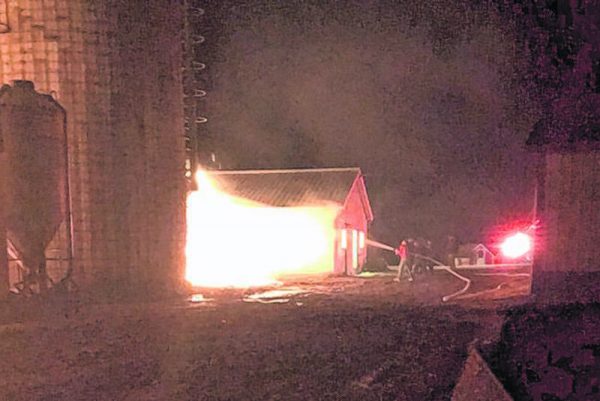
Will Blaauwendraat, who owns Riverview Dairy with his wife, Sarah, saw the glow from the fire when he awoke at 4:30 a.m. to start his workday. His wife was dialing 911 as he dashed for the barn.

Blaauwendraat met farmhand Nick Pettipas in the yard.

“He was about 10 yards in front of me,” Blaauwendraat said. “He ran around to let the back cows out of the main barn that burned. He opened the gate and out they went.”

The owner and farmhand then entered the tie-stall dairy barn as it was filling with smoke, unclipped the milk cows and drove them out. He acknowledged they are fortunate that the cattle are used to being shifted around.

All farm animals, over 70 in all, were rescued, but a large pole barn was destroyed.

Blaauwendraat praised the efforts of four responding fire departments for preventing the fire from spreading to the attached dairy barn.

“They were excellent,” he said.

He acknowledged, in particular, Jonathan Kelly, a neighbour, who is a member of the Tyne Valley Fire Department. “He was pretty awesome.”

Blaauwendraat said the side of the dairy barn, to which the pole barn was attached, will have to be replaced.
Tyne Valley fire Chief William Bishop said the mutual aid call was generated automatically, but he alerted the assisting departments while en route to let them know what they’d be facing.

“It was a mess,” he said, pointing out the pole barn was already fully engulfed.

Four trucks provided a water shuttle, staging it from a nearby bridge.

“We just hit it with everything we had,” Bishop described their attack. “We went in through the milking parlour and tried to push it back through the back.”

The wind blowing away from the milking parlour worked to their advantage, he added.

The Blaauwendraats have been receiving much encouragement since Sunday’s fire.

“I’ve got a lot of phone calls from people who don’t even really know me, and people that I do, for sure; I’ve got a lot of phone calls – companies, businesses: ‘anything we can do to help, let us know,’ ” he said in describing the support.

In addition to fighting the fire, firefighters kept watch over the farm animals.

“They tried to go back in. It was kind of a big job to keep them out. Their intention is to go back,” he said.

Blaauwendraat said by the time they got the cattle out of the barn, initially it was already unsafe for them to go back and close the gate.

He estimates the farm, which he and Sarah took ownership of in April 2014, will be out of production until well into 2018. The milk cows and quota has been transferred to other herds until they are back in production.

The rest of the farm’s herd, including dry cows and pregnant heifers, are being stabled in a neighbour’s barn. The heifers will go to other herds as they freshen but the young cattle will be kept until the farm is back in production.

“I hope to be milking by snowfall of next year,” he said.

“It sounds like a long time but, really, it’s not because there are a lot of steps involved.” He anticipates the rebuilding will start as soon as the weather clears in spring. Heat-damaged silos will have to be replaced as well as the farm’s feed supply and its feed-mixing system.

Source: The Guardian 

American Guernsey Association & Holstein Association USA Partner For A Multi-Breed Classification Program

The American Guernsey Association (AGA) is pleased to announce a partnership with Holstein Association USA (HAUSA) to appraise Guernsey cattle throughout the United States. The new Multi-Breed Classification program will be conducted by HAUSA trained appraisers and coordinated with HAUSA staff and AGA staff jointly to provide a widespread opportunity for more Guernsey breeders to classify cows on a regular schedule.
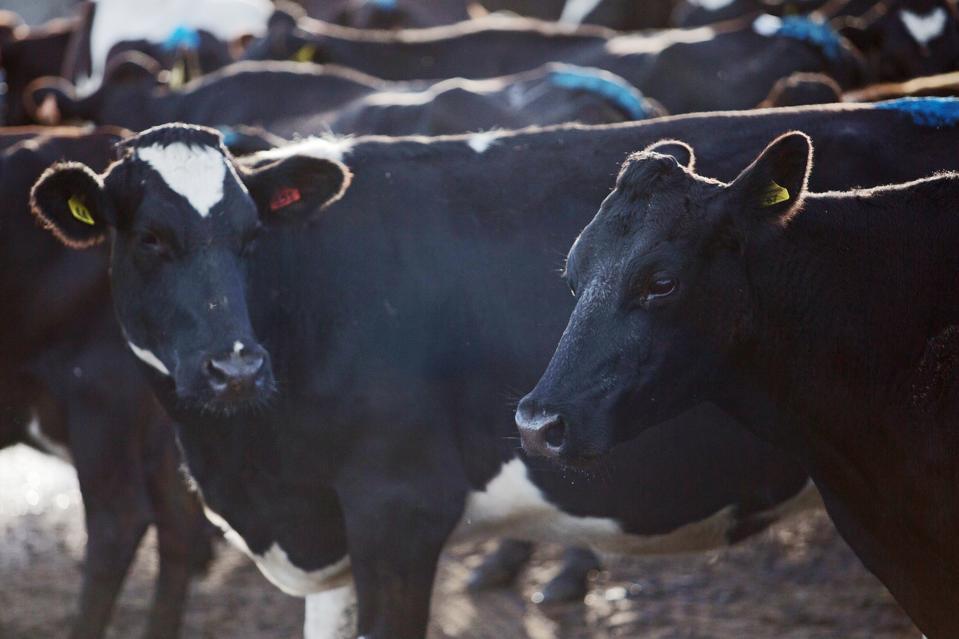
“The AGA is excited about this multi-breed classification program with Holstein USA. We have been exploring this program with Holstein since July following our National Convention meeting. This partnership leverages the capabilities of both our organizations in support of our members. It will go a long way in supporting the progress of our Guernsey Breed. The process has shown clearly to us that Holstein is committed to a multi-breed program which will value and ensure the integrity of the uniqueness of the Guernsey breed. This partnership will provide us access to a wide range of state of the art services as well as great reliable feedback to our members so that they can make informed breeding and management decisions. Their current program aligns nicely with our own breakdowns and offers in depth trait breakdowns and research traits that will provide more information for our breed and breeders. I would like to thank the Holstein Leadership, the Guernsey Board of Directors and the Guernsey Type committee for their support and contribution to the realization of the partnership,” said Doug Granitz, AGA CEO/Executive Secretary.

Training sessions will be scheduled this winter for HAUSA classifiers, under the direction of members of the Guernsey type committee. HAUSA classifiers will begin scoring in select Guernsey herds in February with the full schedule instituted in March. Additional training will be held at the HAUSA classifier conference this spring.

“We are pleased to have the opportunity to classify Guernsey cows for the American Guernsey Association. This joint effort will be a benefit for both American Guernsey Association and Holstein Association USA members,” said John M. Meyer, HAUSA CEO.

AGA President Dave Coon stated, “The AGA Board commends both the AGA staff and HAUSA Board and staff for presenting and building a program that we believe offers our members an enhanced tool for their farm management programs.”

A full multi-breed classification schedule, as well as a linear traits brochure is available on the usguernsey.com website. For more information contact the AGA or HAUSA.

The American Guernsey Association, www.usguernsey.com, is a non-profit organization dedicated to the enhancement of the Guernsey breed and its breeders.

Holstein Association USA, Inc., www.holsteinusa.com, provides products and services to dairy producers to enhance genetics and improve profitability-ranging from registry processing to identification programs to consulting services. The Association, headquartered in Brattleboro, Vt., maintains the records for Registered Holsteins® and represents members throughout the United States. The Association is also leading the initiative for national animal identification through the National FAIR program.

Three women inducted into Canadian Agricultural Hall of Fame for 2017

An historic event saw three accomplished and outstanding Canadian women inducted into the Canadian Agricultural Hall of Fame at a special awards banquet on November 30, 2017 in Calgary, Alberta. The 2017 inductees are Robynne Anderson, Patty Jones and Jean Szkotnicki.

“We are so proud as an organization to be recognizing these three extraordinary women for their contributions to the Canadian agriculture industry, and the contributions we know they will continue to make,” says Guy Charbonneau, President of the Canadian Agricultural Hall of Fame Association. “They are all trailblazers and focused their professional passion for our industry by leaving a lasting legacy in publishing and consulting, livestock photography and animal health.”

Robynne Anderson

Nominated by Canadian Seed Growers’ Association, Canadian Seed Trade Association, SeCan and Stokes Seeds

Robynne is a visionary leader and facilitator of change. She’s dedicated her professional career to supporting, promoting and advancing the Canadian seed industry on many fronts in Canada and internationally. She was raised on a family seed farm in Manitoba, and began her career in agricultural advocacy in the political arena, working on legislation impacting the Plant Breeders’ Rights Act.

She worked extensively with the Canadian Seed Trade Association after launching Issues Ink, an agricultural publishing and consulting company that created agricultural publications including Germination, Seed World, Spud Smart, Flavourful and CAAR Communicator. In 2010, Robynne started Emerging Ag, a consulting firm to the agricultural sector. Her contributions to Canadian agriculture are extensive and diverse – including the push for identity preservation through the food production chain and as a media commentator on the seed, biotech, crop protection and fertilizer sectors. Her issues management work reaches throughout the value chain working with farmers, food processors, scientists and government.

On the international stage, Robynne founded Farming First, an international coalition of farmers, industry, civil society and academia that has become the leading voice for global agricultural advocacy. She helped make the UN’s 2016 International Year of Pulses a reality, built the International Agri-Food Network and co-founded a non-profit organization that supports orphans to learn agricultural skills through schools in Zambia.

Patty Jones

Nominated by Semex

As photographer to the bovine stars, Patty Jones’ photographs have changed the way animals are marketed in Canada and around the world. Over the past 44 years, Patty has taken more than 65,000 photographs as the owner and operator of the largest livestock photography business in Canada – Canadian Livestock Photography Inc.

Patty’s photographs have made an immeasurable contribution to the Canadian dairy industry, bringing genetics to life to help breeders market cow families and breeding stock. The Canadian artificial insemination industry has used her bull and daughter pictures of proven sires as an effective marketing tool for the global frozen semen market. She’s created a priceless visual history of breed improvements in Canadian dairy cattle.

Patty’s style, skill and patience creates the perfect picture every time, and her signature on a photograph is synonymous with success. She’s photographed cattle around the world, captured champions of every dairy breed at the Royal Agricultural Winter Fair, and provided photography at national, provincial and regional 4-H shows.

Patty received the highest honour from Holstein Canada in 2012 with its Certificate of Superior Accomplishment for her outstanding business achievements, mentorship, leadership and promotion of the Holstein breed. She is a long time contributor to the Ontario Dairy Youth Trust Fund. Patty’s passion for the industry goes beyond photography – she is the owner of Silvercap Holsteins that buys, sells, shows and breeds Holstein and Jersey cattle.

Jean Szkotnicki

Nominated by Byron Beeler ­and Canadian Animal Health Institute

Jean’s unique brand of quiet determination has delivered tremendous leadership to the Canadian animal health industry. For more than 25 years, Jean has led the Canadian Animal Health Institute by skillfully balancing the responsibility of advocating for veterinary pharmaceutical companies with the needs of the veterinarians, livestock producers and public.

One of Jean’s major achievements for Canadian agriculture was closing abused legislative loopholes that permitted importation and use of veterinary pharmaceuticals through Own Use Import and use of Active Pharmaceutical Ingredients politics that allowed large quantities of non-Health Canada licensed medications to be imported and used in Canada. Her persistence over more than two decades ultimately brought together all stakeholders, including farmers, industry, veterinarians and regulators.

Jean is an international champion for antimicrobial resistance – an issue of major concern to agriculture that impacts the use of antibiotics in farm and companion animals. She’s been instrumental in ensuring antimicrobials are used properly as part of a One Health approach to human and animal antibiotic use in Canada.

Jean’s passion for public trust in Canadian agriculture guides her work on numerous industry boards including the Canadian Centre for Food Integrity and the Centre for the Study of Animal Welfare at the University of Guelph. An articulate problem solver, Jean has earned the trust and respect of government regulators in Canada, the U.S. and Europe.


AgTech StartUp Uses Lasers To Improve Artificial Insemination In Dairy Cows

An AgTech startup in New Zealand, Engender Technologies has created a new microfluidic and photonic technology to sort livestock sperm by sex to enrich X chromosome-bearing bull sperm cells.

The new technology uses lasers to orient sperm cells and look inside those sperm cells as well as separate them based on the presence of an X or a Y chromosome.  In contrast to the industry’s standard practice of using an electric charge and field in the artificial insemination process, Engender’s technology uses a wavelength of light to sort cells-on-a-chip. The company believes this will reduce the negative impact on the fertility rate of sperm cells sorted through its system and give dairy farmers great control over offspring.

Engender has raised a total of $6 Million in equity funding including $4.5 Million Series A in 2016. Investors include Pacific Channel, New Zealand Venture Investment Fund, and several angel investment groups. Engender has also received more than $10 million from the New Zealand government in grant funding. 

“New Zealand, with its strong farming traditions, is producing some world-leading agri-technology companies,” said Richard Dellabarca, CEO, New Zealand Venture Investment Fund. “Engender Technologies is a spin-off from the University of Auckland. It is commercializing microfluidic and photonic technology to improve sorting of sperm by sex for the trillion dollar livestock market, and is building its funding platform to accelerate its development.”

A reduction in fertility has a substantial impact where farmers don’t use hormones to prolong a cow’s milking, which is the majority of markets, as cows must calve each year to continue lactating. According to Engender, this is particular to pasture-based dairy systems because a pregnancy must occur within a narrow window for the calves to be born in the spring months. When a farmer wants to expand their herd, fertility reductions impact growth of the herd. 

“Engender has an opportunity to substantially reduce the cost of production regarding requiring less capital cost, offering increased fertility rates and the opportunity for artificial insemination companies to introduce competitive pricing into the industry,” added Dellabarca.

The company signed a $1 Million deal with Asia’s biggest animal genetics company in March 2017. In 2016, Engender won an AgFunder Innovation award and the Ag-Tech Sector of the World Cup Tech Challenge in Silicon Valley.


Source: Forbes

Toyota Is Building A Power Station In California That Converts Cow Manure Into Hydrogen Fuel

Toyota has long been committed to developing hydrogen-power stations across the U.S. to provide energy for its line of electric fuel-cell vehicles, such as its Class 8 drayage truck and its Mirai Sedan which emit only water vapor. It already has 31 retail hydrogen stations open in California.
On Thursday, Toyota took an exciting new step towards that commitment and announced plans to construct the world’s first 100% renewable energy-powered fuel-cell plant and hydrogen fueling station

The station, named Tri-Gen, will be operational by 2020 and will support all fuel cell vehicles working in Toyota’s facility in the Port of Long Beach. It will produce enough energy to power nearly 2,350 homes and 1,500 vehicles.

Tri-Gen will be fueled primarily by California’s agricultural waste, including dairy farm manure:

“In most states, you have a conventional natural gas pipeline network that provides heat for your stove or furnace. The majority of natural gas comes from drilling for well gases,” said Matt McClory, senior engineer with Toyota research and development. “We’re trying to green up this process. One way is to find renewable sources, like from gases emitted from landfills, wastewater treatment plants and farm animals.”

For this project, Toyota will source renewable methane from agricultural waste, primarily from dairy farm manure in California, said McClory, who graduated from high school in Lemoore, Calif., known for its dairy cattle operations.

Manufacturers continue to lead the way in advancing energy efficiency and sustainability efforts that positively impact manufacturing and the industry’s contributions to environmental protection. The announcement from Toyota is another step in the company’s own commitment to reduce the level of emissions from its commercial freight. From Bloomberg:

Tri-Gen marks an expansion in Toyota’s effort to harness hydrogen to help the state of California cut pollution from hauling of commercial freight, especially at major ports. The ports of Long Beach, Los Angeles and Oakland handle 40 percent of U.S. container traffic, with commercial shipments generating half of California’s toxic diesel-soot emissions and 45 percent of the nitrogen oxide that plagues L.A. with the nation’s worst smog.

Toyota operates 10 manufacturing plants in the U.S. and directly employs more than 36,000 U.S. workers. Read more about the news from Toyota here.
 
 
Source: NAM

Matt Lauer may lose ownership of his farm amid sexual misconduct allegations

After women came forward to accuse former NBC Today show host Matt Lauer of sexual misconduct, the backlash has been mighty and swift.

He lost his $20m position as anchor on the flagship morning show, his squeaky clean reputation, and now – perhaps – his farm.

Lauer could be forced to sell the 27,180-acre-sheep-and-cattle farm he and his wife purchased in New Zealand in February because of the country’s strict laws on foreign investors having good character.

According to Page Six, New Zealand’s overseas investment regulator is looking into the allegations made against Lauer, as part of a review of his purchase of a large South Island farm.

That’s because foreign investors need to be of “good character”, according to the country’s Overseas Investment Office, which confirmed it was seeking further information on Lauer.

Lisa Barrett, deputy chief executive of policy and overseas Investment, confirmed the “good character” investigation following Lauer’s removal from NBC News, saying: “A condition of the consent granted to Orange Lakes Ltd to purchase the lease for Hunter Valley Station is that the individuals with control of that company must continue to be of good character.”

The key word being continue.

Although the purchase was approved by the investment office in February, “the regulator has the power to enforce the sale of property if it determines that the ‘good character’ requirement is not met.”

This means that if Lauer’s recent behaviour does not meet the “good character” standards he will be required to sell his farm.

And his chances aren’t looking good – earlier this week, the New Zealand government announced tougher standards for sales of farmland to foreigners.

Associate finance minister David Parker, defending the tougher rules, said, “We believe it’s a privilege to own New Zealand land and that we shouldn’t just be selling it willy-nilly to overseas buyers.”

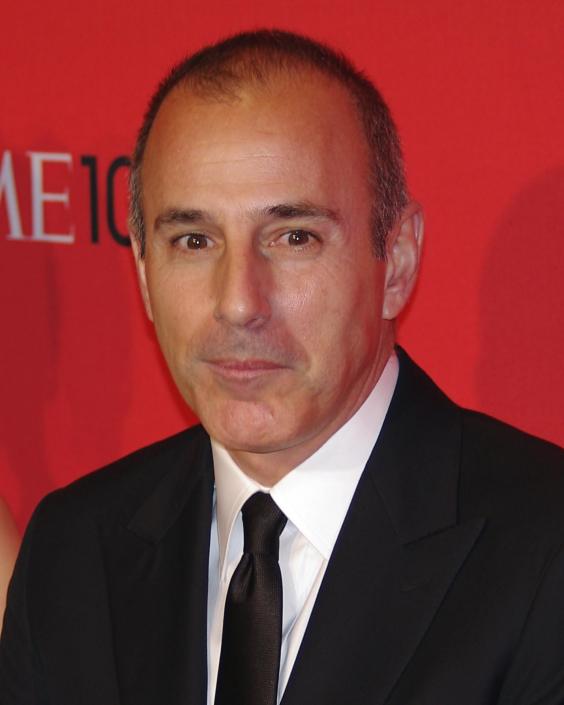
matt-lauer-2012-shankbone-2.jpg

Matt Lauer said there is “enough truth in these stories to make me feel embarrassed and ashamed”

Lauer, who issued an apology on Wednesday for his actions, said, “Some of what is being said about me is untrue or mischaracterised, but there is enough truth in these stories to make me feel embarrassed and ashamed.”

As for the damage he has caused, Lauer insists that although “repairing the damage will take a lot of time and soul-searching,” he is committed to the effort, and now views it as his “full-time job.”

Which, if he no longer owns a demanding farm on the other side of the world, he’ll have more free time to dedicate to his new gig – rectifying the damage he has caused.

Source: Independent

Reese Burdette doing really, really well’ since kidney transplant

Reese Burdette was deemed a “superstar” Wednesday in the ninth day since she underwent a kidney transplant.

Reese, 10, traveled with her mother to Johns Hopkins Hospital for follow-up bloodwork to assess her kidney function.

“She is doing really, really well. They were really happy with how it looked, and called her a superstar,” said her mother, Claire Burdette.


Family friend Alyssa Hussey donated a kidney to Reese on Nov. 20.

The Mercersburg girl, who was burned in a 2014 house fire, had been in renal failure since September 2016.

“To look at her (now), you would not know she had any surgery, let alone major surgery,” Claire Burdette said.

Reese spent nearly two years in the hospital after the fire, ending with a splashy homecoming in her hometown. She was discharged from the latest transplant-related stay Friday.

She now will spend 100 days in isolation on her family’s farm, but can learn alongside Mercersburg Elementary School classmates using a robot with videoconferencing capabilities.


Claire Burdette said Reese’s appetite is better, and she has more energy since undergoing the seven-hour surgery.

When her kidney function was diminished, Reese was limited in how much she could drink each day. Doctors now want her to consume three liters of fluids daily to flush the donated kidney.

“That’s a challenge we can do,” Claire Burdette said.

Source: Herald Media

‘Forgotten Farms’ screening puts spotlight on struggles of local dairy farmers

UConn Extension and Connecticut Farm Bureau Young Farmers hosted a showing of the documentary film “Forgotten Farms” on Wednesday in the Student Union Theater. The documentary shed light on the largely ignored dairy farmers of New England, while also examining the divide between the new food movement and traditional farming. Following the film was a panel discussion featuring local farmers.

The documentary, directed by Dave Simonds and produced by Sarah Gardner, gave the spotlight to several dairy farms across New England, including Chenail Bros. Dairy, Escobar Farm and Herrick Dairy Farm. All of the farms were family run, and it was extremely apparent that each farmer wouldn’t choose any other occupation, no matter how many struggles they faced.

Dairy farming is not easy work, and many farmers do not receive adequate salaries for all of the hard work they put in. This forces a lot of farms to have to shut down, which is extremely negative for New England’s agriculture.

“Most of New England’s agriculture is under threat,” Gardner explained in the film. New England has lost over 10,000 dairy farms in the past 50 years and fewer than 2,000 farms remain. They own about 1.2 million acres of farmland and produce almost all of the milk consumed in New England. About 100 years ago, New England dairy farmers owned over 16 million acres of farmland. With climate changes, New England may need to begin sustaining itself more and more, and this loss of land could be detrimental.

Throughout the film, the struggles that dairy farmers face were discussed. Despite dairy farms making up a large portion of New England’s agriculture, they are often largely ignored when agriculture in the United States is discussed. Often, much smaller-scale local farms are the ones being celebrated, and while this is not wrong, the much larger dairy farms are the ones who are producing the majority of the products we consume. They not only manage 75 percent of our farmland, but also are the ones sustaining our food supply and the farm economy. Therefore, they deserve larger recognition, and this documentary works towards helping remove their negative stigma.

“You gotta be out there every day… there’s no vacations,” one farmer said in the film.

Many other farmers also expressed the hard labor that goes into dairy farming.

“It doesn’t matter what the weather is like, or how you’re feeling, those animals need you,” another farmer said.

The film also explored the tensions between the new food movement and commercial farming. Despite initial skepticism against one another, it was clear that there was some still some basis of mutual understanding. No matter what, they are all still farmers and this gives them some common ground. A local food system that can actually effectively sustain everyone will need help from all farmers, not one or the other.

“Before coming, I knew nothing about farms… I think it’s important to know where your food comes from, so I wanted to learn more… it’s important to diversify your opinions,” Mara Tu, a first-semester environmental major, said. “The documentary really explained a lot about dairy farming.”

Following the film was a panel discussion, including Simonds, Bonnie Burr, who is the department head of UConn Extension, and two local farmers. They discussed the importance of New England agriculture, the importance of knowing where your milk is coming from and especially the development of sustainable farming.

“We are constantly evolving,” Burr said. “We are constantly researching for new information to create a really wholesome product… setting a high bar is important.”

Burr also touched on the financial struggles farmers face.

“If you take away a farmer’s profit, he’s going out of business and his land is becoming developed into houses,” Burr said.

In the film, many farmers discussed that due to high prices or grain and low selling prices of milk, it can be extremely difficult to break even. This is contributing to the rapid decrease of farms and farmland.

The event was open to the public, and learning more about the farmers opened some students’ eyes to how important dairy farming is.

“I decided to come because I’m an environmental science major and I wanted to see how farming impacts climate change, I have heard that it is a factor in energy consumption and I wanted to see the farmers’ side of it… I now know that farms are so demonized and it’s wrong,” said Natalie Roach, a first-semester environmental sciences and human rights major. “It’s so important to talk to the people who are directly involved.”

Source: The Daily Campus

Happiness is farming and family

I first met Kurt “Buzz” Flannery at a farm auction in May, 1997. He had just bought four rather high priced cows ($1600 – 1700 each) during a period of very low milk prices ($10.70 per hundred). “I came to buy high quality cows — these are milking well right now and will make me money down the road,” he said.

Flannery was milking 60 cows at the time — about the state herd average in 1997 — in a tie stall barn.

“How do you plan to stay in business in coming years, was my question? (Dairy herd expansions were running full speed ahead at the time and small dairies were trying to figure out their future, if any.)

“My brothers, Randy and Harlan, my cousin, Marco, and my mother, Marylyn, each own separate farms but we use one set of farm equipment,” Buzz explained. “That’s our key to running individual dairy farms, I’m optimistic about the future.”

Another visit

In February 2008, nearly 11 years later, I visited Flannery at his farm north of Argyle.The Flannery home was warm and cozy on a cool, dark, foggy February day as Buzz introduced his wife, Kimmy, and their four children Sloan, Hayden, Payton and Breann.

Buzz well remembers what he said so long ago but also notes the changes. “For one thing, I wasn’t married at the time,” he says with a laugh as his four youngsters crowd around his legs and his wife smiles.

Kim is a Blanchardville farm girl who attended Madison Business College and worked at an insurance company and a development company in Madison before working at a Brodhead factory. “I never liked to work indoors and was happy to move to the dairy farm and milk cows,” she says. “And it is a great place to raise our children.”

The Flannerys are milking 75 cows today, 15 more than that day at the auction 11 years ago.

“I never have had any interest in going big,” Buzz says. But Flannery admits he has gotten bigger on one way — he runs a custom hay and corn chopping business that covers about a 10-mile radius. This enterprise has picked up over the years. “More farmers are hiring custom operators instead of buying big machinery,” he says. “Oh, and we also raise a few Holstein steers on our farm.”

Kim, who says she enjoyed working with cows at home growing up, does most of the milking. “Buzz is really more of a machinery guy,” she says with a chuckle. “That’s OK.”

Some years ago they demolished a couple of concrete silos, went to plastic bags as silage storage, bought a bagger and went to a total mixed ration (TMR) feeding system. A mobile feed cart is used to distribute silage in the barn.

The Flannerys live on Buzz’s home farm. And, as he did 11 years ago, Buzz still shares farm equipment with his brother, Harlan, and cousin, Marco. His mother, Marilyn, lives nearby.

Buzz says his father, John Flannery Sr., was an old school farmer who helped his three sons and a cousin get started farming. “I bought the home farm on a land contract,” Buzz says. “We have four years to go to pay it off.”

“Each of the farms have milk cows and we farm about 2,000 acres all told,” Buzz says. “Just like we did back then.”

Buzz and Kim Flannery and their four children make a great farm family. They are proud of their farm and of their lifestyle, and they are optimistic in their farming future — just as Buzz was 11 years ago.

Agriculture has its ups and downs,” Buzz says. “But so does most every other business.”

10 years later

A couple of weeks ago while reviewing some columns written over the past 30 or so years, I ran into the one from February 2008 (above) featuring a visit with Kurt and Kim Flannery and got to thinking “I wonder if they are still farming?”

After a series of phone calls, I found out that, yes, they were farming at the same location. A call to Kurt’s cell phone brought forth the response “yes, I remember you and our previous conversations,” Kurt said. “We’re still here, come on out and we can talk again.”

So I did, last Wednesday.

One of the big changes in the Flannery family is that the four children have grown: daughter, Sloan, now 19, lives in Cuba City and works as a beautician in Darlington: son, Hayden, 17, is a senior at Argyle High; son Payton, 15, is a sophomore and daughter, Breann, 14, is in the eighth grade. Both sons are involved in basketball and cross country sports and in FFA.

Another noticeable change is the huge kitchen that was added on to the house in 2012. The long counters were full of food for the next days’ Thanksgiving dinner Kim was preparing for.

When we last talked, Kurt was growing a custom hay and corn chopping business that grew big — to two sets of equipment. “But, it got too big and I sold one chopper to an employee who continued that part of the business, so I’m a bit smaller than I was.”

Kim is still pretty much the cow milker (along with the kids) for the 75 cow herd The herd hasn’t grown in numbers, Kurt says. “That’s what the barn holds and that’s enough.”

Kurt remains the crop guy working with his brother, Harlan, and cousin, Marco, and mother who still owns a nearby farm. The farms — about 2,000 acres in total) are still individually owned and are adjoining or close by and they still share one set of equipment. “We each own some big farm equipment individually and a lot together and we get the work done,” Kurt says. “The secret is to be able to get along.”

Over the now many years I’ve known the Flannerys they have not changed their outlook on being farmers: “We both love farming and as a place to raise children,” Kim says. “And, there is something new every day of every year,” Kurt adds. Oh yes, and as planned, the land contract was paid off years ago.

And, during my couple hour visit, I heard not one complaint about farming or farm life. They are true, happy and successful farmers!

John Oncken is owner of Oncken Communications. He can be reached at 608-222-0624, or e-mail him at jfodairy2@gmail.com.

Source: Wisconsin State Farmer

Fonterra Seeks Trading Halt Pending Outcome of Arbitration with Danone

New Zealand’s Fonterra requested an immediate temporary trading halt on Friday to have time to consider the outcome of its arbitration with Danone SA regarding its 2013 whey protein concentrate precautionary recall.
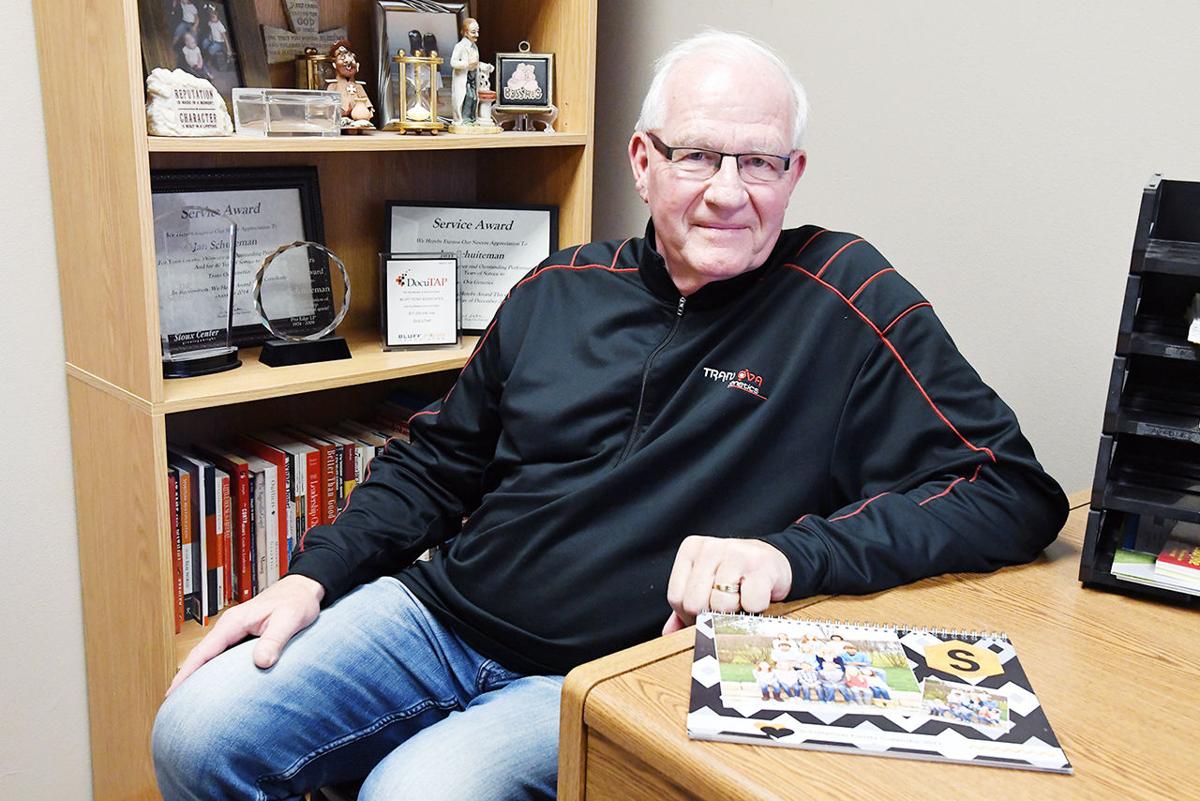
Fonterra, the world’s biggest dairy exporter, said it had been advised it would receive the arbitration tribunal’s decision later in the day.

“Fonterra remains in a strong financial position and any damages award will not affect our ability to operate,” said Theo Spierings, chief executive of Fonterra.

Source: Reuters

Jan Schuiteman co-founder of Trans Ova retires

Upon reaching retirement and looking at his past 43 years, Jan Schuiteman sums up that time in one sentence.
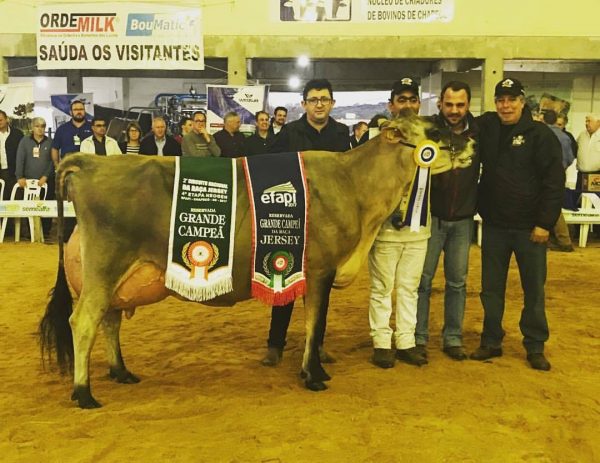
“It has been an interesting journey in a lot of different directions,” said the 69-year-old Sioux Center native and now Orange City resident.

While his retirement Nov. 3 was technically from Trans Ova Genetics, Schuiteman is co-founder of many agribusinesses in the county. Those businesses stem back to 1974 when he received his veterinarian degree from Iowa State’s College of Veterinary Medicine. Following the completion of his education, he was one of the founders of the Ireton Veterinary Clinic. With a team about 10 years later, Schuiteman established a technical agribusiness called Pro Edge LTD that had three operating companies:

  • NOBL Laboratories (now Boehringer Ingelheim), a swine biologics company which was a leading company serving the swine industry that has been bought out by Boehringer Ingelheim;
  • Trans Ova Genetics, which is a world leader in bovine embryo transfer, cloning and production of transgenic animals;  and the former Pro Pork, which was a swine management company.

Other entrepreneurial businesses that stemmed from those agribusinesses include Examplar Genetics, Vet Pharm Inc. and Sioux Biochemical Inc.

Agribusiness pioneer
All of the businesses have more than Schuiteman in common; they are all based in Sioux Center.

“I really don’t see myself as a pioneer; I think there are a lot more people that did a lot more pioneering than I have done,” Schuiteman said. “I suppose if you look at it all from the outside, you could say that’s what we did in starting these businesses. From our perspective, we just did what we thought was good for the community.”

Schuiteman said all of these businesses exist today because the group who started the Ireton vet clinic had an entrepreneurial spirit.

“When I graduated from vet school, I told my wife I wanted to practice for 10 years and then I wanted to build agribusinesses,” he said. “I practiced nine and a half years and then all these businesses evolved. We’ve been really blessed.”

The “we” Schuiteman refers to are five men he’s had the privilege in partnering with for more than three decades – Mike Daniels, Dave Faber, Daryl Funk, Dave Smidt and Paul Van Roekel.

“We felt there were opportunities in animal agriculture to build agribusinesses with the knowledge that we had gained in veterinary school,” Schuiteman said.

County support
The Sioux County native and oldest of eight children believed then as he does today that this area remains a great place to build ag-based business.

“There are so many great people here who have ag and farm backgrounds and the work ethic in this area can’t be beat,” Schuiteman said. “There are two great liberal arts colleges with Dordt and Northwestern; we’ve hired a lot of great people from those colleges. Also, there’s been so much support of the community and support of people at the bank who helped fund some crazy ideas. It’s a growing, vibrant community. You think it might be hard to attract good people to come here but in a lot of ways it’s not.”

Schuiteman credits the success of all the businesses to employees.

“I think the key was hiring people smarter than me and getting out of their way,” he said. “They are the ones who’ve helped these businesses grow.”

Schuiteman claims he didn’t “know enough to lead anything” so his role in the past four decades focused on encouraging and helping support “the great young leaders” who joined him at the vet clinic in their business endeavors.

“Because we had such good team members, we could work together and put our strengths together and build really good ag-related companies,” he said. “We have been blessed more than we should have been.”

Retirement
Three years ago, Schuiteman said he couldn’t have told you when he was going to retire.

“I guess when you get to be 69 years old, you’ve got to get out of the way,” he said. “I think God just tells you when it’s time.”

Schuiteman and his wife Bev have four children and 14 grandchildren. Schuiteman hopes to see a lot more of them in his free time and to continue supporting his children in their endeavors.

“Our family has a bad disease of starting businesses,” he said, with a laugh.

Sons Justin and Jay Schuiteman began Ground Effects in Sioux Center. Jay remains with the business whereas Justin moved on to help start a new business called I-29, which sells apparel material to colleges and high schools. Son John Schuiteman started up and owns Jonny’s Place in Orange City and his son-in-law Eric McDonald [married to daughter Julie] started DocuTAP, which is an electronic medical records system for urgent care.

“Other than that, I enjoy yard work and working with our church,” Schuiteman said. “We’ve been really blessed, and I think our job now is to continue to keep blessing people.”

ATLAS support
Some of the blessing will continue to be though ATLAS. Schuiteman is, after all, one of the founding members of ATLAS Group, a nonprofit organization that provides mentors or “Christian friends,” to address unmet needs of a community. ATLAS currently has offices in 12 communities, including Sioux Center.

Schuiteman said he and the founding ATLAS Group members saw a lot of support for infrastructure but thought there was a need to really invest and support the people.
“We were just a bunch of guys that thought, what could we do for Sioux Center?” he said. “The image we use at ATLAS is a group of people walking along a road and occasionally one falls into a ‘pothole.’ Sometimes we need people to give us a helping hand to get out of that pothole or to stay away from that pothole.

“Inside the walls of our churches we do a pretty good job of recognizing the needs of those who are hurting,” he continued. “Outside these walls, we are unaware and less effective. This is not a criticism of our churches, it is simply reality. If we don’t walk in the unchurched world, we don’t see it; if we don’t see it, we don’t understand it; and if we don’t understand it, we won’t minister effectively to it.”

He never dreamed this entity, too, would grow as all the other businesses he has been a part of grew.

“Blessed – that’s all I can say; that God really blessed all these things,” he said.

Source: Sioux Center News

It’s Udderly Ridiculous — Another Case Of Contaminated Raw Milk

Last spring we wrote about contamination of raw milk with the dangerous bacterium Listeria monocytogenes, and this fall about a different contamination of raw milk from a dairy in Texas with another bad actor — Brucella abortus (also known as RB51). It’s too bad the more people don’t listen. Now, a woman in New Jersey has become ill after drinking raw milk from the Udder Milk and Creamery, and the CDC is warning that anyone who has consumed this dairy’s raw product may be at risk of serious illnesses, not to mention miscarriage. The agency suggests that they are prescribed antibiotics prophylactically. The company supplies their ridiculous product to consumers in New Jersey, New York, Connecticut, and Rhode Island.

Ironically, the contamination with B. abortus likely occurred because of attempts to prevent illness in milk-producing cattle. A cow that is infected with this bug can abort any fetus she is carrying – something that the farmer obviously wants to avoid. So the cattle are given an effective vaccine against the infection. The problem arises from the fact that the vaccine contains a live attenuated (weakened) version of the microbe, and occasionally the vaccinated cattle shed some of this in their milk. This becomes irrelevant if the milk is pasteurized since that will kill the bugs. But of course raw milk is, by definition, not, so the bacteria stay alive to wreak their damage on unlucky consumers. It appears that health officials don’t yet know which farm or farms supplied the contaminated milk:

Because health officials have no direct way to let people know they may have drunk contaminated milk, everyone who consumed milk from Udder Milk in the past 6 months should receive antibiotics now to avoid having long-term health effects from the bacteria,” said William Bower, M.D., team lead for the CDC group that investigates brucellosis, the illness caused by RB51.

The CDC lists some other ailments that can be caused by B. abortus: arthritis; heart problems; enlargement of the spleen or liver. And the agency encourages folks who have consumed raw milk from this source to be alert for symptoms that might be associated with RB51, for example, fever, “muscle pain, lasting fatigue, arthritis, depression, and swelling of the testicles.”

That list of possible consequences of drinking RB51-contaminated milk makes us wonder why in the world anyone would take that risk, or expose their children to it? About the only valid reason we can see is that people simply prefer its taste — there is no other advantage to be found in raw milk, and obviously many potential downsides.

Source: American Council on Science and Health

Authorities Believe Suspects In Dairy Farm Abuse Case May Have Fled The Country

Authorities have hit a possible dead-end in the search for three people wanted for abusing cows at an Okeechobee County dairy farm.

“In two days we obtained warrants for four individuals,” said Sheriff Noel Stephen. “We have only been able to locate one of those individuals on misdemeanor charges of kicking one of the cows. The other three individuals have absconded more than likely out of the country, the way that it looks right now based on our investigation.”

Stephen was speaking Monday afternoon referring to the allegations of animal cruelty at Larson Dairy Farm.

Undercover video taken by the Animal Recovery Mission showed what appeared to be workers kicking and punching cows, among other things.

Another video exposed what appeared to be cruel practices at Burnham Dairy Farm.

The CEO of Florida’s largest dairy cooperative announced on Monday that changes will be coming.

“They need to have the proper protocols,” said Jim Sleeper, CEO of Southeast Milk. “The written procedures, whatever is in their heads that needs to be written down and not only written down, but transferred to those employees. Make sure that they have job descriptions. Make sure that they adhere to those particular aspects of how to milk cows, how to treat the cows fairly and so fourth.”

Both Larson and Burnham Dairy Farms are on probation with a milk producers group.

Publix has also suspended its business with those dairy farms, for now.

Source: CBS

SURENA GILLER TENFEN EX 93-2E named National Grand Champion Jersey in Brazil 2017

SURENA GILLER TENFEN EX 93-2E Sire : Shamrock Giller Dam: Sulina Legion Tenfen ( BW Legion) Owner: Nelson Eduardo Ziehlsdorff SRC FARMS – www.srcfarms.com.br

Surena born in 15th October 2010, now with 7 years old and in her 5th calf she was Grand Champion in Presidente Getulio Show in 2017 and Supreme, Grand Champion at Braço do Norte Show 2017, Grand Champion Itajai show 2017 and Supreme, and last Saturday was select as National Jersey Grand Champion.

Corrida elected Cow of the Year 2017 in France

The French Holstein Association has announced the winner of its 2017 Cow of the Year award: 10-year-old Corrida VG-89.  The 8th lactation Roumare-Manager daughter, who has produced over 100,000kg milk at an average cell score of 123.8.  She is owned by Gaec Bois Jean in the Orne. A title she won for the first time after participating in all editions. 

According to its owners Florent and Jean-Luc Leportier: “She is very complete and very pleasant in the herd. And despite her age, she had no trouble adapting to the passage to the robot and the cubicles. And she does not stop there, since she is still in shape, and inseminated to prepare a 9th lactation.

Here are his performances of Cow Cow of the Year:

Cane (Soca x Jelt) is the reserve of the Cow of the Year and the highest producer of the final, with 29.4 kg of milk per day of life. It belongs to the Grenouillet Gaec, Eure-et-Loire 
CAPJ Irana (Numero Uno x Goldwyn), the Gaec Cabon, Finistere, is on the third step of the podium.

To view the results of this 2017 edition, click HERE

Undercover videos spark change in Florida dairy industry

Two Okeechobee dairy farms facing accusations of animal cruelty have sparked new regulations within the industry.

Southeast Milk Incorporated addressed the issues head-on Monday, vowing to make sure cows are treated properly on all of their farms.

This comes after an animal rights group released undercover videos they claim were shot inside Larson and Burnham dairy farms in Okeechobee County.

Publix Supermarkets stopped buying milk from the two Okeechobee farms implicated in the video released by Animal Recovery Mission, an activist group based in South Florida.

Southeast Milk has suspended the two farms, Larson Dairy Farm and Burnham Dairy Farm. Several workers were reportedly fired by the farms and arrest warrants were issued for animal cruelty. 

“Any employees who witnessed animal abuse and failed to report it should be terminated. We pledge to cooperate with authorities looking in to all allegations,” Sleper continued. 

Sleper said farms will look into installing surveillance cameras in barns, and special training will be held for workers. 

He said what is seen on the videos does not represent the values of Florida dairy farmers, and they’ll do whatever they can to see that it doesn’t happen again. 

Buying infant milk powder is still a really scary thing in China

It’s been almost a decade since China’s infamous milk powder scandal came to light—when tainted formula killed six infants. The trauma left by that episode has been so strong that people in China still strongly prefer a foreign brand to a domestic one when it comes to infant formula.

In a 2017 China consumer report released today (Nov. 22), consulting firm McKinsey & Co. found that 53% of its survey group, which consisted of around 10,000 people from 44 Chinese cities, preferred or somewhat preferred a foreign brand for baby formula. That was the highest share for any consumer good category included in the report. The demand for infant formula is expected to grow with the easing of the one-child policy.

McKinsey looked at 17 consumer categories in total, which account for more than half of total retail sales in China. For nine of the categories, China showed a clear preference towards local brands, including fresh food and poultry, laundry detergent, and beer. After infant formula, wine was the only other category where more than half of respondents expressed a preference for foreign brands.

Daniel Zipser, head of McKinsey’s consumer packaged goods and retail practice for the Greater China region, told Quartz that the 2008 milk scandal was still “pretty top of mind for most people.”

The tainted milk sales also saw the country’s overall confidence in domestically produced food plunge—and worries about food safety remain high, according to survey data from Washington DC-based think tank Pew Research Center. China beefed up its safety rules in the wake of that food safety tragedy, passing a new law on food additives in 2009. In 2013 it set up the China Food and Drug Administration (CFDA) to monitor products. But new safety scares make it difficult to rebuild trust.

In April last year, Shanghai authorities arrested nine people involved in producing more than 17,000 tins of fake milk powder with counterfeit labels—so these products looked like those from American infant formula brand Similac, and Beingmate, one of China’s largest baby formula producers. Last year, Danone said it would no longer sell its Karicare formula in China after sales of the product were hit from a recall related to a botulism scare in 2013 that later turned out to be a false alarm.

At a press conference in February, the CFDA’s head, Bi Jingquan said that better regulation of milk powder is one of the most important concerns (link in Chinese) for the agency. The CFDA has brought in a new regulation that requires manufacturers to register their formulas and also limits the number of products a company can have. The rules, which go into effect from January, are expected to sharply cut the number of formulas available and, worryingly for parents, could particularly weed out smaller foreign brands that may not find it worthwhile to go through the process of registering.

Some 93 manufacturers (link in Chinese), including 70 domestic ones, had registered their nearly 600 baby formulas as of Nov. 14. The information, which is available on the CFDA’s website (link in Chinese), will be better shared among inspection bodies in the near future, according to a senior official (link in Chinese) at the agency’s special food registration department, which oversees baby formula quality in China.


Source: Quartz

Saputo Inc. Spills the Milk in its Latest Quarter: Time to Sell?

Saputo Inc. (TSX:SAP) shares are down ~6% over the past year following a lower than expected profit in an underwhelming second-quarter earnings report. With net income dropping 3.4% on a year-over-year basis, and diluted EPS missing the Street consensus and dropping by a penny year over year, does it still make sense to pay a boring defensive business with a hefty 23.1 price-to-earnings multiple?

The markets have been hot of late, but it’s never too early to start bolstering the defensive portion of your portfolio, especially since some believe 2018 could be a rockier road. There are few high-quality blue-chip defensive plays on the TSX, so it’s understandable that Saputo shares may have a premium valuation.

With a ~$17 billion market cap, Saputo is one of the world’s largest dairy companies, and, as you’d imagine, it can be quite difficult to remain competitive in a commoditized industry. Sure, Saputo has its own brands, including Armstrong, Cracker Barrel, Dairyland, Milk2Go, just to name a few, but let’s be frank.

When the average consumer goes grocery shopping, they’re probably not going to go out of their way for a specific brand, especially if there are cheaper brands that are on sale. Branding is important, but for a commoditized item like milk or cheese, there’s less power in the brand, and that means lower pricing power compared to other types of food brands.

Where will the growth come?

How do you grow in the dairy business? Saputo has been making a considerable number of acquisitions over the years, and going forward, more of the same is likely in the cards. To spark even more growth, Saputo has ventured into foreign markets such as Australia with its recent purchase of Murray Goulburn Co-Operative Co. Limited for $1.29 billion.

The deal makes a tonne of sense because it puts the company close to Asia — a promising market that may spark further growth.

Bottom line

There’s a great deal of competition in the dairy market, so there’s little room for anything short of operational excellence. The international growth prospects may sound promising, but I’m not convinced that shares are attractively valued today at 1.5 price-to-sales and 22.8 price-to-cash flow multiples, both higher than the company’s five-year historical average multiples of 1.3 and 18.1, respectively.

Shares are too expensive for my liking, but investors should keep the stock on their radar should a further pullback be in the cards. Saputo is a great defensive holding, but at these prices, there are far better value plays elsewhere on the TSX.

Stay hungry. Stay Foolish.


Source: The Motley Fool

Nordic dairy giant Arla launches an epic AR campaign – in which a ‘wannabe cow’ kitten jumps out of a milk carton

So far, we’ve mostly heard about AR being used for spatial experiences, whether that’s a conference visit, trying out Ikea furniture or construction projects.

In a new campaign aimed at Finnish milk drinkers, Nordic dairy giant Arla pioneers the narrative use of AR technology among consumers.

Advertisement:

Starting next week, milk drinkers in Finland can scan the side of an Arla milk carton with their mobile to see a kitten jump out of a barn. The AR-kitten, called ‘Aamu Cat’ (aamu is ‘morning’ in Finnish), will then move around the breakfast table and become your smartphone pet.

“What makes this AR campaign unique is the narrative arc, where the kitten develops into a cat over time,“ says Toni Marttila, the Sales Director of Arilyn, the Finnish AR startup behind the app.

Arla says it’s employed AR to “delight” kids and families in particular.

“We want to use new technology to extend the storytelling, and to do so, we’re using an great media space at home, the side of the milk carton,” says Tomi Sirén, Arla Finland’s Head of Digital.

This is how it goes down.

“We’re raising the bar in brand storytelling.”

Both Arla and Arilyn point to the experimental nature of the campaign – but believe that AR could have major ramifications for how consumer goods brands communicate with their customers.

Arla – well-established in Finland as is its “Aamu Kissa” character –considers itself the first major brand in the world to use AR in lifecycle marketing.

“We do see that we’re breaking ground, and raising the bar in brand storytelling,” Sirén says, specifically pointing to the narrative elements of Aamu Cat.

For instance, the kitten’s behavior will depend on the time of the day, and whether you keep playing with it.

“It wants to become part of the cows, which is why it looks a bit like cows and acts like them,” Mikko Rissanen, the Managing Director of Isobar Finland, the company that designed the ‘Aamu Cat’ concept.

“It’s hopefully the beginning of something big,” Sirén says, while floating the possibility of expanding Arla’s AR-compatible product categories or adding more gamification elements to the app.

“We start from Finland, and ideally we take this global.”

Arilyn’s Toni Marttila believes AR could usher in a new way for brands to create engagement and loyalty among consumers, especially in cases where the product – like milk – is fairly commoditized.

“Although grocery stores are fast becoming automated, the cartons aren’t going anywhere anytime soon. So why do you as a consumer choose a certain product?”

The answer may be an emotional bond.  The AR-enabled narrative and real-time elements of storytelling, Marttila predicts, “will make the customer want to return to your product again and again.”

If that really is the case, remains to be seen. The Aamu Cat cartons will officially launch on 27th of November through selected stores in Finland.


Source: Business Insider

Digesting dairy: What’s the difference between A2 and ordinary milk?

As lactose-free, soy and nut milks become more common household staples, there is another variety of milk that is becoming increasingly popular — A2 milk.

The milk is promoted and sold in supermarkets as an alternative for people who struggle to digest common varieties of cows’ milk.

At $4.80 for two litres, consumers are paying more for A2 milk in the hope it won’t upset their stomach — so what’s the difference between A2 and other milk?

What exactly is A2 milk?

Over the past decade The a2 Milk Company, commonly known as a2, has become a major milk player in Australia with about 10 per cent of the market.

The New Zealand-based company owns the patent to the method for identifying the A2 milk cows, meaning it’s the only brand that can sell milk with the A2 label.

A2 refers to the beta-casein proteins found in milk.

Depending on a cow’s genetic make-up, it can produce either completely A1 beta-casein, a combination of both, or completely A2 beta-casein.

The two proteins alleles are almost identical but there are small variations and, while there is no strong scientific research, there is anecdotal evidence to suggest milk containing just the A2 protein is easier for some people to digest.

Natasha Murray is an accredited practising dietitian for Dietitians Association of Australia and said there was some — but not much — evidence showing the A2 protein was easier for people to digest.

“I’ve had a number of clients [with troubles digesting milk] say the A2 milk works better for them,” she said.


Source: ABC News

Richard Jones has been removed as Holstein UK CEO

The Board of Trustees have today, 24 November, announced that Richard Jones CEO has been removed from the business due to irreconcilable differences with immediate effect.

In the interim Holstein UK will be run by the senior management team under the leadership of Sue Cope, MD of CIS.

Contact Details:

Zoe Hargrave       

T. 01923 695349

M. 07703 807687

E. zoehargrave@holstein-uk.org

Future dairy farmer gets an en-light-ening experience

For Uilleam Harper, giving back to the community is nothing new. But this 11-year-old Luther Burbank sixth-grader will be getting a bit of a reward this time. Uilleam will get to turn on the lights at Lancaster’s tree lighting ceremony, Friday, Dec. 1.

Uilleam has been showing dairy cows at the Bolton Fair for five years as part of 4-H. His family (his father is Steve Harper) used to own a dairy farm in Lancaster, he is said he enjoys continuing the family tradition. The prize money he earns, he always gives back.

“This is my hometown, you are supposed to support your hometown,” Uilleam said. Most years, he has given the money back to the Bolton Fair. This year, Uilleam decided to give to Oil for Seniors, in Lancaster, as did other 4-H members.

“The (donation jar) for senior oil was so higher, but we thought we could get it even higher,” he said.

“I am very proud of him,” said his mother, Colleen. “He’s made up his own mind each year who to give money to.”

Peggy Corbett leads Lancaster’s 4-H.

“Uilleam has the kindest heart of anyone I have ever met. If you ask him how long he has been in 4H, he will say I was born into it. He is always the first to jump up and say he will help as soon as I mention we have a service project to do, never minding what it will be or when,“Corbett said. “Most kids keep track of every thing they do and log in any moment they can to get it counted as community service, but not Uilleam. Time is never an issue. He will be the first to be there and go above and beyond what is expected … He always thinks of everyone else before himself.”

Corbett said Uilleam helped collect for seniors last year.

“He was so concerned about why some seniors couldn’t have heat if it was needed. For him it became, ‘how I can change this,’“Corbett said.

Uilleam is excited to be taking part in the tree lighting.

“It is pretty awesome, and not something everyone gets to do,” he said. “I always wanted to do it, but didn’t think I would get the chance.”

Uilleam invited others to join 4-H if they live in the area.

“It leads to good careers,” he said.

Source: Telegram

Kenyan dairy farmer calls it a day after 52 years

Bruce Nightingale has been a dairy farmer for all his adult life after inheriting the practice from his father, with the family having come to Kenya in 1906.
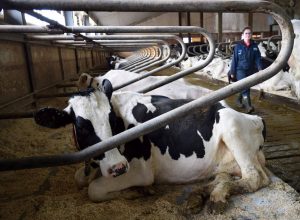
The family moved to Kenya from England and settled in Njambini, Kinangop, Nyandarua County

In 1963, soon after Kenya’s independence, they moved to an 800-acre farm some 25km from Nakuru town off Njoro-Elburgon Road.
The farm named Kenana has been his home since then, having taken over its management from his father in 1965.

Kenana Farm, with its 300 animals, has been one of the leading milk producers in the country, supplying the produce to top processors.
Last Saturday, however, Bruce now in his 80s decided to call it a day, and he did it in style.

Bruce held one of the biggest dairy cows’ auctions on his farm, disposing some of his best animals as he goes into retirement.
“I have been in the industry for about 52 years. I have done my bit as a farmer and I believe it is my time to rest,” he said.

Seeds of Gold was there to witness the event that attracted both upcoming farmers and who-is-who in the dairy sector.
“Welcome to Kenana Farm auction sale for Holstein Friesian cattle,” a signpost read at a junction leading to the dairy farm.
The farm’s two-acre parking yard resembled a motor vehicle showroom, with the space hosting mainly SUVs.

The sparkling clean Friesian cows, a majority with sagging udders dripping with milk stood inside paddocks.
Bruce’s records showed his animals produced an average of 20 to 60 litres of milk each day.
Standing on a raised platform with a gong in his right hand and calling out for bids was a man dressed in a cowboy hat, a blue shirt and a matching trouser.

“These animals were served with sexed semen from Germany, US, Netherlands and Canada and produce 40 litres a day each,” the auctioneer said, whetting buyers’ appetite.

‘‘The first animal to go was a seven-year-old in-calf cow served with semen from US and due on January 12, 2018. The auctioneer said it had calved four times and produced at least 40 litres a day. The animal was bought at Sh475,000.

Some 80 animals were sold during the auction, with a majority going for between Sh200,000 and Sh300,000.
The pedigree ones went for between Sh400,000 and Sh500,000. But the sale that scooped the toast for the day was that of three heifers worth Sh1.2 million in total that was won by farmer Mathew Koros from Narok at Sh1.2 million.
The bidding price for each of the animal started at Sh150,000 and from the onset, it was obvious bidders were interested in buying the three as a package.

The second offer rose to Sh170,000 but it was cancelled by another bid of Sh190,000 and hardly a minute it hit Sh220,000 as one bidder pulled out.

But the auction intensified as a bidder raised it to Sh270,000 beating three others. Not to be outwitted, one of the bidders raised the price to Sh300,000 but no sooner had his bid been announced than his competitor raised the bar to Sh350,000.

As the auctioneer roared to announce the offer, the crowd was shocked when Koros offered Sh400,000 for each of the animal to win.
“If you look at the auctioneer board, I’m only selling champions. It is these champions that attracted potential buyers,” said Bruce as he pointed at the sold animals.

The career farmer said it was not his wish to sell the award winning cows.

“I feel so sad that I’m saying goodbye to these cows and also to farming,” noted Bruce. “These animals had given me great joy over the years and it was not my wish to sell them.”
Bruce cited a number of challenges that he has been experiencing, some which informed his decision to dispose the cows so that he can have an easy time.
“We have been experiencing water shortage for quite some time now. A pipeline that was laid in 1935 is still serving the farm and with increased population, it has become impossible to get enough supply for the animals,” he observed.  
Fluctuating milk prices had also forced him to reduce the animals.
“We have animals that give between 50 and 60 litres each day, and these require good husbandry. If you sell a litre of milk at Sh35, then you are not getting the value for money,” said Bruce.

The farmer added that there are lots of poor animal feeds in the market compromising milk production.
“If you live in a country that imports grains, you cannot afford to feed your animals as you will be competing with human beings. This makes the price of dairy meals expensive.”

When he started farming, he was milking a herd of 250 which was producing between 5,000 and 7,000 litres of milk every day.

However, prior to his retirement, he has been milking 50 cows producing an average of 1,400 litres each day.

“I’m growing old and I have to put my house in order before it is too late. Reducing the number of animals would help whoever takes over plans and builds his herd,” said Bruce, who would be handing over the baton to his three sons who have shown keen interest in farming.
He had a piece of advice to those who bought his cows.

“Love your animals and spend money if you hope to get good returns because what you put in is what you get.”
Bruce has won many awards as a top dairy farmer in all local trade fairs he has attended. He said the farm plans to diversify to crop farming mainly wheat, maize and canola.

Peter, a farmer from Kiambu who bought one of the animals, said he went for it because of high milk production.
“I bought an animal from the farm some 10 years ago and the returns I got have transformed my life. It was producing 30 litres a day.”

Professor George Owuor, an agricultural Economist at Egerton University, said with the many challenges cropping up, dairy farmers both small or large must approach the venture strategically by investing heavily in water pans to collect run-off water which would be used as a backup during dry season.

Bernard Makuri, the National Social Security Fund (NSSF) Nakuru branch manager, asked farmers to plan for their retirement by saving with the organisation.
“Social security is important and Kenyans in informal sector should start early contribution because at one stage the body will reach a point where it will stop working and the money one saved will make the reminder of their lives comfortable.”
However, he noted that unfortunately most farmers do not contribute to NSSF. “But it is not late, they should start now and pay any amount at their own pace.”

Source: Daily Nation

Why is Canada letting dairy farmers imperil NAFTA? (Opinion)

The following is an opinion article by: Aaron Gairdner, Executive director of Affordable Milk Canada and previously served as chief of staff to Canada’s foreign minister, defence minister and agriculture minister.

Canada is an agricultural powerhouse. We are the world’s fifth-largest agricultural exporter, with more than 90 per cent of Canadian farmers competing around the world and winning. We export half of our beef, 75 per cent of our pork and 90 per cent of our canola.

Much of this trade is with the United States. They are the largest market for our agricultural products, with annual trade at an impressive $56-billion.

Our government is now renegotiating the North American free-trade agreement, our free-trade pact with the United States and Mexico. It is in our national interest to preserve the open access to the U.S. market that Canada’s progressive, export-oriented farmers depend on.

But negotiations are never easy. The Trump administration is demanding Canada end its isolation of milk and dairy products in a renewed NAFTA. Isolation? That sounds very un-Canadian. But it’s true.

Many decades ago, Canada erected a near 300-per-cent border tax on dairy, poultry and egg products in order to insulate 8 per cent of Canadian farmers from competition. This system – called supply management – also regressively fixes the price of these products at double the market rate. That’s right – this isolationist policy means we all pay double for basics, such as milk and cheese.

Not surprisingly, the World Trade Organization has essentially banned Canada from exporting these products. But we should be exporting more food, not less. The world’s population is expected to reach 9.7 billion by 2050. Canadian farmers are an essential part of ensuring the world, especially the world’s poorest, are fed.

Meanwhile, back in Ottawa, an army of dairy lobbyists have been using heavy protectionist rhetoric, such as the need for “food sovereignty,” in an effort to maintain our massive dairy tariffs.

They are anti-free trade. These isolationist dairy farmers would rather kill NAFTA than join the rest of the Canadian farmers who successfully sell their products around the world. Dig down into their rhetoric and you will find an alarming hostility toward foreign foods. The impression is left that they don’t want Canadians eating imported food – be it butter from New Zealand or chicken from New York.

Will our government choose maintaining dairy tariffs over signing a new NAFTA deal? We’ll soon find out. The U.S. administration has been very explicit with its threat to withdraw from NAFTA if we do not completely open up our dairy, poultry and egg markets.

And why shouldn’t the Americans make such a demand? After all, free trade is a two-way street. Canada and the United States already trade hundreds of farm products tariff-free. The Americans have a deepening $3.1-billion (U.S.) agrifood trade deficit with us. So why should they see milk differently than other products such as bacon, tofu or orange juice? Fair is fair.

As the NAFTA talks drag on, there is a growing anxiety amongst Canada’s progressive farmers whose outlook goes beyond Canada’s borders. These farmers only see downside in the sky-high dairy, poultry and egg tariffs. They view them as harming their global market access and now threatening their most important market, the United States.

Fortunately, Prime Minister Justin Trudeau and his ministers take a global view and generally support free trade. They care about things such as ensuring the world’s poorest are fed.

Their political support base is in urban and suburban Canada. Where voters care about unnecessarily high grocery bills. Where they value diversity on the grocery-store shelf – not some isolationist cocktail of sovereigntist economics and opposition to foreign foods.

Let’s all hope Mr. Trudeau has the courage to take the progressive path by tearing down the sky-high border tax on milk. He’ll be helping Canada’s poorest at the grocery store and making a transformative change in Canada’s approach to global food security.

Source: The Globe and Mail

A nationwide vegan diet would be a public health disaster, according to new science

Switching to the vegan dream would be a nutritional nightmare for Americans.

That’s according to new research published this week by the US National Academy of Sciences that poses big questions about how the US agricultural sector can be changed and improved in the future, to mitigate climate change without causing deleterious effects on the population’s overall health. The bottom line: going 100% vegan would be catastrophic.

Robin White, of Virginia Tech, and Mary Beth Hall, of the US Department of Agriculture’s Agricultural Research Service set out to better understand how changes in the structure of the food system might impact health and the environment. In doing so, they hope to start important conversations about the future of food.

Questioning nutrition

In models where animals were removed entirely, an interesting set of circumstances arose:

  1. The sheer amount of food we had available to eat increased by 23%. That’s because a lot of the grains that went toward feeding animals—such as corn and soybeans—would be shifted over to humans.
  2. That shift meant the supply of many important nutrients would skyrocket, and even exceed by a long shot the amount the US population would need. Those include carbohydrates, magnesium, copper, and cysteine.
  3. It also meant the supply of an important few nutrients associated with animals would decrease. Those include Calcium, vitamin A, vitamin D, B12, arachidonic, eicosapentaenoic, and docosahexaenoic fatty acids.

Some of these nutrients are linked to a reduced risk of heart disease, visual and cognitive development in infants, and visual acuity.

“Very simply, there are some nutrient requirements that we cannot get just consuming plant-derived foods,” says Hall, one of the authors of the study. “It rather speaks to us evolving as omnivores.”

This is not to say the researchers ignored calls from health experts who’ve recommended Americans eat more fruits and vegetables. They acknowledge as much in the study, as well as the fact that plant-based diets are often associated with many health benefits and long-term food system sustainability. (The research also only considered models in which people got their nutrients from food products, which health experts prefer over supplements.)

“It is entirely possible to meet the nutrient requirements of individual humans with carefully crafted, unsupplemented plant-based rations, but this can be a challenge to achieve for an entire population,” the study reads.

If the US were to go 100% vegan, Americans would be forced to more carefully consider their diets to ensure they did not become deficient in these important nutrients. Given the difficulties many face in eating healthy already—some of which are socioeconomic—this wouldn’t bode well for public health at large.

 I look forward to figuring out how we feed our nation and how we feed the world. 

One answer might be found in the nascent clean meat industry, where scientists are currently working in laboratories to produce meat by taking animal cells and growing them in bioreactors, without ever having to kill an animal. It might sound like science fiction, but already people in this space have created products—including burger patties—that they believe will soon make it to the market. San Francisco-based Hampton Creek has said it will be introducing its first clean meat product sometime in 2018.

The creators of these products will “bio-mimic” meat down to the smallest detail, says Bruce Friedrich, head of The Good Food Institute (GFI), which supports and lobbies on behalf of meat alternative interests. Friedrich added that “all of the positive nutritional aspects of meat, those will be replicated” in these products. In fact, there’s even “some discussion in the clean meat community about whether we want to improve on it,” he says. Still, clean meat is in its early stages, and not much is publicly known about its nutritional profile or scientists’ ability to tinker with it while preserving the tastes and textures people expect.

The environmental impact

One of the reasons the two researchers set out to complete this particular study is because of the increasing number of conversations about what removing animals from agriculture would mean for the broader effort to decrease greenhouse gas emissions.

Their study found that in an animal-free model, agricultural greenhouse-gas emissions dropped by 28%. That sounds significant, but accounts for just a 2.6% drop in total amount of greenhouse gas America emits. Of course, this is a single study and nailing down precise measurements for this sort of data has proven slippery. Already some scientists have questioned the figures presented.

The US Environmental Protection Agency has said that plant and animal agriculture together make up about 9% of America’s total greenhouse gas output. Most experts agree that agriculture is responsible for a large chunk of total emissions, but to what precise degree is still a matter of debate. The United Nations in 2006 published a report entitled “Livestock’s Long Shadow,” which became a lightning rod of conversation as it was one of the first major publications to attempt to quantify the issue. It attributed 18% of global greenhouse gas emissions to animal agriculture. In 2009, a report by the Worldwatch Institute estimated it was more like 51% (pdf).

Another complexity is that not all greenhouse-gas emissions impact the planet equally. For instance, carbon dioxide (much of which is emitted by cars and trucks) is less potent than the methane produced by livestock. The challenge is to find a way to measure emissions while taking those differences into account.

For that reason, Hall says she would like to see more life-cycle analyses of animal agriculture and its impact on the environment and nutrition. That is to say, we need more cradle-to-grave assessments that study products from inception through the processing, manufacturing, distribution, and disposal stages. Collecting that data is only going to become more important as the global population continues to grow on a planet with a changing climate that will likely impact how we produce and source our food.

“I look forward to figuring out how we feed our nation and how we feed the world,” Hall says. “Whatever route we take, we need to make sure that we meet people’s nutrient requirements. If we’re choosing to make a change in our food production system, we need to look at the array of things being affected.”

Source: Quartz Media

Journal of Dairy Science celebrates 100 years of progress

The Journal of Dairy Science® reflects on the past century of scientific advances as it begins a second century of publication

The first issue of the Journal of Dairy Science® (JDS) was published in 1917. Since that first issue, the journal has published almost 30,000 articles and 200,000 pages. In the process, the work published in the journal has made a broad and invaluable contribution to our scientific knowledge and to the production of a safe and affordable food supply.

The authors published in the first issue would recognize many current topics of research, but their work also laid the foundation for new fields of research they could not have foreseen. Topics unknown even 50 years ago are now standard areas for research and application. “As in all scientific fields, dairy science demonstrates the continuous loop between the initial question, the testing of the hypothesis (research), the defense and publication of the results, and the creation of new questions based on the original research. This constant cycle of scientific discovery fueled by the inborn curiosity of the human condition has led to a century of dairy science research and vast improvement in the production and processing of milk,” said Matt Lucy, JDS editor-in-chief.

To reflect on that century of research, the December issue of the journal’s 100th volume contains the ADSA Foundation Collection of 100-Year Reviews, a special 100th anniversary retrospective containing 30 focused reviews of progress in areas of research that are featured in JDS. The timelines in each review place major discoveries and events into historical context. “Students and researchers of the present need a solid foundation of what we know now so that we do not repeat the past instead of creating the future. We hope that the articles themselves and the timelines become valuable resources for this purpose,” said John McNamara, guest editor for the special issue. A stand-alone reprint of the ADSA Foundation Collection of 100-Year Reviews is available from Elsevier for $35.00 plus the cost of shipping here.

Although the special issue’s review of past progress shows that we cannot always predict the future dividends of current research, it seems clear that the future will hold further integration of disparate fields of research, new methods of investigation, and new areas of research, and the Journal of Dairy Science will continue to be part of that scientific endeavor. As the journal enters a new century of publication, it celebrates its past and looks toward a future shaped by the scientists who will continue its scientific legacy.


Source: Elsevier

Opinion: A dairy farmer gives thanks

It’s that time of year, when we all think about what we’re thankful for. As a New England dairy farmer, I certainly can appreciate my life and my calling, and I know many of my fellow dairy farmers feel the same.



So, as a dairy farmer, what am I thankful for?

Good neighbors. Our local communities support and appreciate dairy as a vital part of the landscape and the economy. Not only do dairy farms offer local employment, they add scenic beauty to the rural landscape and offer seasonal tourist dollars through corn mazes, holiday tree farms, farm-to-table dinners and other activities.

Partnerships with local businesses. From the brewers that supply grain for our cows, to local veterinarians who maintain herd health to distributors and processors that transport milk across New England, we all work together to provide quality dairy products for regional customers and beyond. These local businesses use our fresh, local milk and also turn it into products like cheese, ice cream, baked goods and other delicious products we love.

Technology that makes the job easier. Robotic milkers, self-driving tractors, drones, cow activity monitors (like a Fitbit!) and other farm technologies help dairy farmers feed more people and care for their cows in a responsible way. Some dairy farmers use apps for nitrogen monitoring in the soil and have methane digesters, which transforms waste into methane gas that can generate electricity!

Schools that support dairy farms. Connecting the next generation to agriculture is so important. Many New England states celebrate Dairy Harvest of the Month to encourage healthy food choices by exposing students to seasonal foods, and to support local farmers while building excitement about school meals. For example, Vermont’s Dairy in the Classroom program allows students to explore dairy farming and the role farmers play in their local food system.

Cooperative Extension Service. These are the men and women who share research and other critical information from our land-grant universities. Dairy farmers are always learning new ways of doing their work, and extension agents are the liaisons between farmers and university researchers. By sharing the latest technologies, cutting-edge research, and other information, extension folks are a critical life-line for many dairy farmers.

Our families, who continue long-held traditions, caring for their animals and the land they farm. Where would we be without the grandparents, parents and children who work hard and preserve our dairy heritage? On a personal note, as a dairy farmer and a mom, I am grateful to be able to raise my kids on the farm and be a working mom at the same time.

And finally, the New England landscape itself. Its timeless beauty, its many challenges, the never-ending wonder of living and working in a unique place. We value the work ethic that makes our home a place to cherish and protect. What would New England be without its dairy farms?

Heidi Dolloffk, of Springfield, is a dairy farmer and chairwoman of the New England Dairy & Food Council and New England Dairy Promotion Board.


Source: Burlington Free Press

Send this to a friend