Archive for News – Page 120

The future of small dairy farms

Milk has been at historically low prices for the last three years. This year isn’t looking any better and the financial stress it’s putting on dairy farmers may be playing a part in suicide rates. A study by the Center for Disease Control found people working in agriculture is higher than any other occupation. That has Agriculture Economic Specialist Marty Broccoli worried.

“You know as scary as it is the suicide rate is a concern. I mean these people have given their life blood building and working 7 days a week, and when it’s sinking its devastating to them.”

Over at Dodge Farms, Jordanna Larish is struggling to make ends meet. She’s left college to help keep the family dairy farm going. The dairy farm’s been in her family since 1801, but now they’re considering other options in farming.

“The prices being so low and our herd being so small, it’s getting less and less feasible to do it.”

The price of milk isn’t putting Rob Collins out of business. He’s keeping his profit levels even because of high volume, but if the milk prices don’t become profitable, he too may be looking for other options.

“We will outlast quite a few people because our cost of production is much lower than some others because of the volume, but I don’t want to do it long term and we won’t. We will find something else to do if we don’t see this turning around.”

Jordanna Larish thinks there’s options out there for everyone. It’s just a matter of finding what works for you.

“The best option for people right now is to kind of lay everything out and see what’s available for their particular farm. Every farm is different. That’s the main thing. They’re all different sizes. They’re all different families and people, so the solution is different for everyone.”

Getting out of the dairy industry doesn’t necessarily mean getting out of farming. There’s plenty of other ways to make a profit in agriculture, but Marty Broccoli says dairy is the backbone of the farming industry, and action needs to be taken to protect it.

“The squeaky wheel gets the grease and we got to really start squealing right now. We kept thinking it was going to change and change and change and go the other way and it’s not.”

Source: wktv.com

A2 Milks dairy boss Geoff Babidge milks it with $18m cash out before departure

While retail billionaire Gerry Harvey was crying over spilt milk at Harvey Norman’s soured dairy investment, Coomboona, A2 Milk’s departing boss Geoff Babidge was making out like a bandit after the dairy operators breathtaking run on the stockmarket.

He sold $18 million worth of shares last week as he prepares to depart the A2 milk sheds in July this year, handing the pails to former Qantas executive, and Tennis Australia president, Jayne Hrdlicka.

Babidge still owns 2.5 million shares currently worth $30 million.

“The share transactions are to maintain a balanced overall investment portfolio,” said A2 in Babidge’s change of director’s interest notice.

While the science of the A2 milk protein’s health benefits may still be regarded as dubious, no one – especially commodity milk producers – could doubt the success of its gamble on branding: The A2 Milk company is now worth around $9 billion.

Its shares were trading at 50c just three years ago and are now worth more than $12.

Babidge is not the only one rebalancing his investment portfolio after A2 Milk’s big run.

Fellow A2 Milk board member Peter Hinton sold $1.5 million worth of shares in what might be a sign that the stock is looking a bit frothy.

New Tricks

Former JB Hi-Fi boss Richard Uechtritz also has a pretty good track record on the investment front.

He sold $10 million worth of JB Hi-Fi shares before stepping down in 2010, when the stock was trading around the $20 mark, and sold his remaining 1 million shares before rejoining the JB Hi-Fi board in 2011.

It means he missed the big slump that saw the stock drop to as low as $8.70 in 2012.

Around the same time he stepped down as JB Hi-Fi’s chief, Uechtritz stepped on to the board of Kerry Stokes’ corporate mothership, Seven Group Holdings, and he used his cash from JB Hi-Fi to amass a sizeable stake in the conglomerate.

At one stage he had more than a million shares in Seven Group, more than any other director – other than Stokes of course.

Seven Group released a change of director’s interest notice from Uechtritz on Thursday reporting that he had sold more than 230,000 shares at about $19, netting him around $4.5 million.

It is a great return on the 200,000 shares he picked up in 2015 at less than $5 each.

BRIEF CV

It is no surprise that Finance Minister Kelly O’Dwyer reached into her rolodex of Liberal Party alumni to choose the first chairperson of Malcolm Turnbull’s schmick new mega financial complaints outfit. That’s what party friends are for.

But it is surprising to see how she shortchanged the new chairwoman of the Australian Financial Complaints Authority (AFCA) – Howard-era minister Helen Coonan – when it comes to her formidable CV.

Aside from her political service, Coonan’s considerable post political career was vaguely covered with mention of her board membership of Snowy Hydro Ltd, and little else.

So CBD thought we’d fill in some of the blanks.

Coonan is a veteran member of James Packer’s board at Crown Resorts which is facing a class action from investors over its handling of the China disaster that saw company employees arrested for illegally peddling gambling services in China.

A governance mess, yes, but nothing to do with the finance industry.

Coonan is also a member of the JP Morgan Advisory Council, so let’s hope it isn’t the subject of any complaints before AFCA.

She is also the chairwoman of boutique fundie Supervised Investments Australia Ltd, which does not sound ideal for the head of our new financial complaints bureau.

O’Dwyer’s staffers point out that this is a consumer, and small business, complaints service and unlikely to clash with Coonan’s other roles.

And as Coonan told the ABC on Thursday, she’s been around long enough to know how to manage a conflict of interest, in any case.

“I think we have to just be alert to the fact that you have declarations of interest when you are on any company board. You maintain these registers as a continuous disclosure. And if you become aware of any conflict: well, obviously you then deal with it by stepping aside from any decisions about that.” 


Source: The Sydney Morning Herald

How formula milk firms target mothers who can least afford it

Guardian/Save the Children investigation in deprived areas of Philippines finds companies flouting international code

Formula milk companies are continuing to use aggressive, clandestine and often illegal methods to target mothers in the poorest parts of the world to encourage them to choose powdered milk over breastfeeding, a new investigation shows.

A Guardian/Save the Children investigation in some of the most deprived areas of the Philippines found that Nestlé and three other companies were offering doctors, midwives and local health workers free trips to lavish conferences, meals, tickets to shows and the cinema and even gambling chips, earning their loyalty. This is a clear violation of Philippine law.

Representatives from Nestlé, Abbott, Mead Johnson and Wyeth (now owned by Nestlé) were described as a constant presence in hospitals in the Philippines, where only 34% of mothers exclusively breastfeed in the first six months. Here, they reportedly hand out “infant nutrition” pamphlets to mothers, which appear to be medical advice but in fact recommend specific formula brands and sometimes have money-off coupons.

Hospital staff were also found to be recommending specific formula brands in lists of “essential purchases” handed to new mothers. Targeted advertising on Facebook and partnerships with influential “mummy bloggers” means mothers are being exposed to more unregulated formula promotion than ever before.

At the same time, powerful lobby groups have been working to curtail government legislation regulating formula marketing and promotion, in the Philippines and across the world.

All companies have rejected the allegations and denied any wrongdoing.

‘Formula is expensive … I only gave her half bottles’

Mothers living in the ramshackle neighbourhoods of Metro Manila spoke of spending three-quarters of their income on formula milk, often forgoing food themselves.

TV advertising campaigns for follow-on milk by brands such as Bonna – which portray the “Bonna kid” as one who is smarter and succeeds in life – convinced them, they said, that bottle feeding is not only as good for the baby’s health as breast milk but will bolster their IQ and future prospects. Store displays of formula were splashed with claims such as “clinically proven to give the IQ + EQ advantage”. For mothers living in poverty, such aspirational marketing is particularly seductive.

Sitting in her neighbour’s kitchen in Malabon, one of the most deprived areas of Manila, Jessica Icawat, 24, wept as she recalled the sacrifices she had made to give Trista, her two-year-old daughter, Nestogen, a formula made by Nestlé. Breastfeeding had been hard and she turned to formula because the local community consensus was it is “fine, the same as breast milk”.

Stick thin, her cheek and collarbones sticking out, Icawat was visibly malnourished, as was Trista, whose swollen stomach stuck out beneath a faded pink Little Mermaid T-shirt. The average cost of Nestogen is 2,000 pesos (£28) a month but Icawat could afford to spend only 800 pesos.

“I didn’t eat just so I could feed the baby,” she said. “There were some days when I didn’t eat anything. And Nestogen is expensive so I could not always give it to my baby when she was hungry, I only gave her half bottles, four times a day.”

Icawat’s house – made of discarded plywood, corrugated iron and plastic sheets – sits on stilts above rubbish-infested waters. She does not have running water or electricity and admitted she found it difficult to sterilise bottles and make up the milk powder, which needs to be mixed with very hot water to be safe.

“My baby has been sick: she was admitted to the hospital three times with diarrhoea and asthma.”

The World Health Organisation’s international code explicitly prevents formula companies directly targeting mothers and healthcare professionals, and restricts advertising. Formula promotion is a particular issue in poorer countries because there is a higher risk of pneumonia and diarrhoea for babies, and with a lack of access to healthcare mothers are less informed about the benefits of breastfeeding.

Targeted tactics towards mothers and midwives directly violate the laws of the Philippines as well as the internationally recognised code. This was drawn up in 1981 after widespread protest against Nestlé’s marketing of formula as better than breastmilk, despite evidence that formula feeding was linked to babies falling ill or dying from poorly sterilised bottles.

Yet despite the industry’s claims it has cleaned up its act, the practices that were globally condemned four decades ago are still evident today across the developing world. The report by Save the Children says companies are systematically violating the milk code, with devastating consequences for infant health and mortality. Leading formula companies spend £36 on marketing for every baby born worldwide. East Asia, with its growing economies and high birth rate, is a key target.

‘A clandestine approach’

“The milk formula companies now take a clandestine approach,” said Dr Amado Parawan, who has spent 20 years working with Save the Children in the Philippines to champion breastfeeding.

“On the face of it they have improved. But really they are skirting around the milk code by doing visits and dinners for midwives and doctors outside of office hours, in the evenings.”

Julianne Bores, a GlaxoSmithKline representative who worked alongside formula representatives in hospitals since 2009, described a culture of financial dependency, where if doctors want to go to expensive medical conferences – held mostly in lavish hotels or abroad – they would always ask the milk companies for sponsorship, and were occasionally allowed to bring their spouses. Formula representatives would also pay for “rest and recreation activities” for doctors and their families, such as tickets to Cirque du Soleil, and meals at popular restaurants.

Bores was also an observer of the “parenting” and “nutrition” forums for parents held in the hospital canteens by the formula representatives, where samples or branded freebies like umbrellas and feeding bottles would be distributed. All these practices are a violation of Philippine law.

While formula can be necessary as not every woman chooses or is able to breastfeed, the barrage of marketing, advertising on TV and social media, and persuasive free gifts ensures that misinformation is rife.

’They would give us so many free samples’

At a health centre in Malabon, midwife Grace Shelo Almarez admits that before she was given training, she was among the many wined and dined by Nestlé, Mead Johnson and Wyeth and offered numerous trips to conferences. As recently as October Nestlé offered her a trip to Iloilo, which she declined.

“In return for that, if a patient decided to use formula milk, I’d recommend their product and tell them ‘Nestlé is good’ or ‘you should use Nestogen’ and so on. They are very persuasive, they make it sound like their products are very good for the mothers and the babies.”

The Save the Children report shows how global pro-formula campaigning is. In Mexico, where just 31% of infants are exclusively breastfed for the first six months, 50% of mothers said they had been recommended formula by their doctor, while in Chile, 75% of doctors, nurses and midwives in hospitals reported visits from formula representatives.

In statements to the Guardian, all companies denied any wrongdoing. However, both Nestlé and Mead Johnson defended funding conference trips for doctors, even though the Department of Health confirmed it was illegal in the Philippines.

Nestlé said it would “investigate all the reported actions” and “will take fast and decisive action if any wrongdoing is found”.

“This picture does not represent Nestlé’s culture and business practices,” the statement added. “The first and most fundamental expression of our respect for mothers and babies is support for breastfeeding and compliance with the law and our own strict procedures. Nestlé strongly rejects the allegation that it does not comply with its legal obligations and the WHO code as implemented in national law.”

Abbott told the Guardian it was “committed to the ethical marketing of our products in compliance with the laws and regulations of the countries in which we do business,” and added: “The behaviour you have described is not in line with our policies. We take all reports of non-compliance seriously.”

Mead Johnson said it had ”not received notification of the violations you mention. Any reports received by Mead Johnson are investigated according to the facts and information, per our rigorous compliance programme.

“We take great care to fully comply with all established laws and regulations that govern the manufacturing, distribution and marketing of all our products. Acting responsibly is core to our purpose.”

‘I don’t know if we are winning’

For those on the ground advocating for the benefits of breastfeeding, the pressures from above and below could make it seem like a Sisyphean task.

Asked if he thought they were winning the battle for breastmilk, Parawan laughed, though a little dejectedly. “I don’t know if we are winning,” he said. “But we are not going to stop fighting. I have to believe there is light at the end of the tunnel.”


Source: The Guardian

$58M dairy processing plant in mid-Michigan gets key state support

A Wisconsin dairy processor’s plan to build a $57.9 million processing plant in Greenville won the support of the Michigan Strategic Fund on Tuesday, Feb. 27.

Foremost Farms, a farmer-owned milk processing and marketing cooperative based in Baraboo, Wis., plans to build a 55,000 square-foot plant that will employ 33 workers to condense 3.2 million pounds of raw milk per day — roughly 386,000 gallons.

The final products will be used by Foremost co-op facilities and its partners around the Midwest to make dairy products such as cheese, butter and yogurt.  Future phases at the campus call for processing up to 6 million pounds daily.

The new facility is aimed at stabilizing an oversupply of milk produced by Michigan dairy farmers.

According to the state’s Department of Agriculture and Rural Development (MDARD), Michigan ranks fifth in the nation for total milk production, with dairy farmers contributing $15.7 billion to the state’s economy.

Michigan’s 1,747 dairy farms, with more than 427,000 cows, produce more than enough milk to supply the entire state. Currently, more than 24 percent of Michigan milk production, or 2.65 billion pounds, is shipped out of state per year.

In 2017, Michigan milk producers lost more than $164 million, according to MDARD, which plans to support the project with a $500,000 grant from its Food and Agriculture Investment Fund.

“It is an ideal location as a manufacturing base for Foremost Farms USA to unify our seven-state cooperative membership’s milk,” said Foremost Farms’ President and CEO Michael Doyle in a statement on Tuesday, Feb. 27.

“Our goal is to develop and grow this facility to continually meet the value-added needs of our customers,” Doyle said. “This, along with further developing our strategic alliance with Michigan Milk Producers Association that began at Constantine, Mich., will add value for our members and all producers in this market.”


On Tuesday, the Michigan Strategic Fund (MSF) board approved a “private activity bond inducement” valued at up to $12 million in support of the project. Approval of a final resolution authorizing the bond is expected at a future MSF meeting.

“Foremost Farms’ construction of its new milk processing plant in Greenville will elevate the profile and profitability of our state’s dairy industry, and we’re pleased to support this investment and the new jobs for area residents,” said Jeff Mason, CEO of Michigan Economic Development Corp (MEDC), which administers programs and performs due diligence on behalf of the MSF.

“Foremost Farms’ decision to further invest here demonstrates to other global companies Michigan’s standing as one of the great agriculture centers in the U.S. with a business climate that enables their success,” said Mason.

“Value-added processing developments like the one at Foremost Farms are the future of the food and agriculture industry,” said MDARD Director Jamie Clover Adams.

“In addition to creating more jobs for Greenville, it also will provide much-needed processing for dairy farmers in that region of Michigan. The impact of these investments on local, regional and statewide economies cannot be overstated.”

The city of Greenville also plans to support the project with a 12-year property tax abatement valued at $2.33 million.

“The city of Greenville appreciates the opportunity to develop a relationship and subsequent partnership with Foremost Farms that is mutually beneficial for both the company and the community,” Greenville City Manager George Bosanic said in a statement.

“Through the many evolutions this project has taken, there have been a number of quick responses needed from the many partners involved at all levels.  The City of Greenville has gone above and beyond with their participation,” said Kathy Jo VanderLaan, Business Development – Montcalm County, The Right Place.

The MEDC also is expected to provide funding for the project at a future date, according to a news release by the MEDC on Tuesday, Feb. 27. The company is also expected to receive a grant from West Michigan Works!.

Source: mlive.com

Oregon wants to shut down state’s newest mega-dairy

The state wants to shut down Oregon’s newest mega-dairy over allegations it has repeatedly endangered nearby drinking water. The Oregon Department of Agriculture sued Lost Valley Farm near Boardman last week citing a history of environmental violations by the facility, The Statesman Journal reported Wednesday. The lawsuit asks for a permanent injunction prohibiting the farm from producing more wastewater — a move that would effectively shut down operations. Dairy owner Greg te Velde said in court documents that an injunction would destroy his business, force him to euthanize his cows and leave 70 workers unemployed. “The department’s order would have significant ramifications to the local community where the dairy is located,” said te Velde, who is based in California. “Many of our employees are Latino and rely on the dairy to support their family.” The 7,000-acre (2,800-hectare) dairy’s wastewater permit allows up to 30,000 animals and 187 million gallons (708 million liters) of manure per year. It opened in April 2017 and provides milk to the Tillamook County Creamery Association, which makes Tillamook cheese. The association said in a statement it is in the process of canceling its contract with Lost Valley.  Regulators approved the dairy despite objections from about 4,000 people and a dozen state and national health and environment organizations raising concerns about air and water pollution, water use and health impacts on nearby communities. Since then the dairy has failed numerous inspections, has been cited four times and has been fined $10,640. Each citation included steps the dairy was required to take to remain in operation. Each time, the dairy failed to comply with most of those requirements, the Oregon Department of Agriculture said in court documents. As a result, manure and wastewater has repeatedly overflowed storage lagoons and seeped into soil. In court papers, te Velde and dairy manager Travis Love said state inspectors were being harder on Lost Valley Farm than on other dairies and were not giving the new farm enough time to get up to speed. On Monday, Rabobank, a multinational agricultural lender, filed a separate lawsuit in Morrow County seeking to foreclose the dairy in connection with the foreclosure of two dairies te Velde owns in California. As of Jan. 2, 2018, te Velde owed $37.4 million on those two loans.

Source: projects.registerguard.com

Milkman accused of sneaking drugs, phones into Ohio prison

A longtime milkman delivered more than what the labels on his packages promised, smuggling marijuana, tobacco and cellphones into an Ohio prison hidden inside milk cartons, a prosecutor said.

Ray Adams was in contact with an inmate at Lebanon Correctional Facility who facilitated the deliveries and set up payments, according to Warren County Prosecutor David Fornshell.

Adams, an employee of Martins Ferry-based United Dairy Inc., made thousands of dollars sneaking the items in over time, Fornshell said

On Jan. 8, authorities searched the nearly 30,000 half-pint milk cartons Adams was delivering that day and found contraband, including 12 cellphones, in 30 of them.

Adams, 50, has not yet entered a plea to charges of conveying drugs and cellphones and remains free on bond. His attorney hasn’t returned messages seeking comment.

The family-owned United Dairy would never tolerate such activity and Adams was fired immediately, said human resources director Doug Longenette.

“It’s just a sad situation all the way around,” he said Wednesday. “We hope our employees would think before they did something like that.”

Prisons spokeswoman JoEllen Smith declined to comment because of the pending criminal charges against Adams.

Ohio began relying on outside companies to deliver milk to prisons after selling off its dairy cows in 2016. Reducing contraband was one of several factors the prisons director cited at the time in support of the move.

“The department anticipates that phasing out prison farming operations will also minimize the opportunities for passing illegal contraband into our prisons,” according to an April 2016 fact sheet from the Department of Rehabilitation and Correction.

Adams has been a driver with United Dairy for 14 years and a prison milk deliveryman for the past two years, Fornshell said.

Investigators believe the contraband scheme was dreamed up last August.

Before making deliveries, Adams would meet a contact at a nearby highway gas station and receive substitute milk cartons containing the contraband before entering the prison, Fornshell said. An inmate took it from there.

“It’s not being brought in just to be randomly passed out to whoever — ‘Hey it’s your lucky day, you’re one of 30 winners today,”‘ Fornshell said.

“Somebody on the inside had to be looking for the milk cartons coming in, knowing how they were going to be marked, knowing what day they were coming in,” the prosecutor said.

Fornshell said the investigation was ongoing and there could be additional charges.

Source: The Associate Press

Services Planned for Dairy Pioneer John Pagel

Funeral services will be held this weekend in Kewaunee for John Pagel, and his son-in-law Steve Witcpalek, who were killed last Thursday in a plane crash in rural Indiana. The public is invited to attend a visitation on Friday evening for the two men at Kewaunee High School from 3:30 to 8:00 p.m. A funeral mass will be held the following afternoon at Holy Rosary Catholic Church in Kewaunee. 

Pagel, 58, and Witcpalek, 39, were traveling in their family’s Cessna when it went down in a farm field near Rossville on February 22. The pilot, Nathan Saari of Bellevue, also died in the crash.

John was the CEO of Pagel’s Ponderosa Dairy, which is Wisconsin’s largest single family-owned dairy operation, as well as the Cannery Public Market in downtown Green Bay and Ron’s Cheese in Luxemburg. He was also serving as the president of Edge Dairy Cooperative at the time of his passing. Witcpalek was also involved with the family businesses.

The National Transportation Safety Board is investigating the crash.

Obituary

John T. Pagel, 58, of Kewaunee, Wis., passed away unexpectedly on Thursday, February 22, 2018. He was born on February 28, 1959, to the late Carl and Garnet (Bunda) Pagel. He was a graduate of Kewaunee High School and Madison Farm Short Course.

John profoundly touched the lives of countless people personally and professionally through his friendship, his willingness to help and his public service. He loved farming side by side with his children and beamed with pride over them and his grandchildren. In them, he saw a bright and secure future and a lasting family legacy.

John was a devoted dairy farmer and a pioneer in the dairy industry. In 1978, he took over the family farm and spent the past 40 years building Pagel’s Ponderosa Dairy into the largest single family-owned dairy in Wisconsin. His vision and entrepreneurial spirit led to the creation of an on-farm cheese plant and farm-to-table restaurant, and he inspired others in the industry to try new approaches.

John was dedicated to the dairy community. He was a founder of the Dairy Business Association and Edge Dairy Farmer Cooperative, where he was serving as President. He was a member of the WI Cheese Makers Association, WI Farm Bureau Federation and was formerly on the WI Milk Marketing Board.

John also felt a deep sense of duty and commitment to his community. He served on the Kewaunee School Board and the Kewaunee County Board of Supervisors and was also a member of Peninsula Pride Farms through which he helped develop progressive conservation practices. He opened his farm to tours for schoolchildren, business groups and many others.

John’s motto was “Living the Dream” and that’s exactly what he did. He lived his dream with his family, friends and employees. He loved his employees and treated them just like family. He enjoyed hunting, Packer games and traveling with Julie. His smile and laugh were infectious.

John was approachable and had an everyman quality. He always spoke from the heart and was authentic. Despite his stature in the community and business world, John never stopped being the farm boy from Kewaunee County. Always remember, “Drink Milk, It Does a Body Good!”

John is survived by his soulmate, Julie Veldhuis; his children Jamie (Steve) Witcpalek, JJ (Chase) Pagel, Bryan (Ashley) Pagel and Dustin (special friend Stefani Ann Vandenelsen) Pagel; grandchildren Brooke, Braelyn and Brex Witcpalek; Kiley, Jaylyn, Jaxen and Jase Pagel; Peyton, Bryley and Brynn Pagel; Kadence Pagel and Stefani Ann’s son Aiden Scott Liss; and brothers and sisters Joe Pagel, Bill (Eileen) Pagel, Linda (Allen) Baumgartner, Marcia Hayes, Mona Pagel and Suzanne (Dave) Pagel-Tlachac. He is also survived by many nieces, nephews and friends. John was preceded in death by his parents, Carl and Garnet Pagel.

Visitation will be held from 3:30 to 8 p.m. on Friday, March 2, 2018, at Kewaunee High School with a prayer service at 8 p.m. led by Deacon Chuck Agnew. Visitation will continue at the high school from 8 a.m. to 12:00 p.m. on Saturday, March 3, 2018. A Mass of Christian Burial will take place at 1 p.m. at Holy Rosary Catholic Church in Kewaunee with Monsignor Jim Dillenburg, Fr. Milton Suess and Deacon Chuck Agnew officiating. Burial will follow at Holy Trinity Catholic Cemetery in Casco. Online condolences may be shared at www.wiesnermassart.com
In lieu of flowers, a college and future foundation fund has been established through Nicolet National Bank in Kewaunee for John’s grandchildren. The family would like to extend a special thank-you to their family, friends and staff for all the caring and support they have shown during this difficult time. 

Dairy Plastic Packaging Market Offers Great Growth Potential and Efficiency

The use of dairy products in day to day life is very high due its high nutritional value. But shelf life of these products is limited by environmental conditions. Therefore selection of right packaging method plays vital role in increasing the shelf life of dairy products. Advanced processing technologies, high quality packaging material and method can extend the shelf life of these products up to few weeks to months. 

Based on applications, the Dairy products can be classified as Liquid Milk, Milk Powders, Condensed Milk, Milk Ice Cream, Cheeses, yogurt, butter, ghee etc. Milk dominated the market and accounted for 34%. Materials used for packaging are Polyethylene, Polyethylene Terephthalate, Polypropylene. Plastic has the highest growth rate in all types of materials and it will remain stable during the forecast period. 

It is proved that, high-density polyethylene (PE-HD) bottles are better for storing pasteurised milk as compared to low-density polyethylene (PE-LD) pouch. Also Polyethylene terephthalate (PET) plastic material can be used for milk packaging. Pigmented PET improves versatility by protecting the milk from light. For packaging of fresh yogurt, thermoformed TiO2 pigmented high impact polystyrene (PS-HI) material with either an aluminium foil or plastic laminate or a paper or plastic laminate heat-seal lid or closure is used. 

For yogurt low water vapour transmission rate is required in order to prevent it from losing water. To prevent oxidation, O2 barrier packaging is used. Different types of cheeses demands different packaging. O2, CO2 barrier and water vapour transmission rates are some of the factors essential in determining the package atmosphere composition. Although, Cottage cheese has a shelf life of 21 to 28 days, there is considerable loss of quality during this period.

Source: globenewswire.com

As Milk Prices Decline, Worries About Dairy Farmer Suicides Rise

As the nation’s dairy farmers struggle through their fourth year of depressed milk prices, concerns are rising that many are becoming depressed themselves. The outlook for the next year is so bleak, it’s heightening worries — especially in the Northeast — about farmer suicides.

Agri-Mark Inc., a dairy cooperative with about 1,000 members, saw three farmers take their own lives in the past three years. The most recent was last month. It’s a very small sample, but very sharp and disturbing increase.

“It’s tough to keep your head up with all of what’s going on,” says 55-year-old Will Rogers, a ruddy-faced white-haired farmer who has 75 cows on his farm in Warren, Mass. Out in his barn milking cows at the crack of dawn, as he does every single day, Rogers says farming is his calling, just as it was for his father. It’s hard to reconcile such a wholesome way of life, he says, with farmers taking their own lives.

“What [we] do here, this is nature’s way, God’s way,” he says. “This is life, this sustains life.”

But it’s increasingly hard to make a living. Rogers says the price he’s getting for milk these days is what he made several decades ago. It’s about 75 percent of what he needs just to break even. And the stress is only mounting as milk prices continue to fall, due to a global oversupply of milk, and lower prices overseas.

“I don’t see any relief in sight,” Rogers says with a sigh.

Knowing farmers’ despair, Agri-Mark wanted to help. The Co-op pays its member farmers for their milk, which goes into its own brands of Cabot and McCadam cheeses, as well as others. When it came time to mail farmers their milk check this month, Agri-Mark also included a chart showing the dismal 2018 milk prices forecast, and a list of suicide prevention hotlines.

“I personally just felt my heart sank,” Rogers says. “It created a lot of distress.”

Especially since his own father committed suicide 30 years ago, during another down-cycle for farmers.

“It released a lot of emotion that took me years to deal with,” he adds. “When I opened that letter, everything came flooding back to me.”

While he believes the letter was well-intentioned, Rogers says it was so brusque and so grim – without even a shred of hope to hang on — he fears it could hurt more than it helps.

Rogers says dairy farming is “all I ever wanted to do,” but he doesn’t know how much longer he can keep his farm going. Milk prices have dropped so low, he’s getting paid only about 75 percent of his production costs. Tovia Smith/NPR


“It’s almost like a self-fulfilling prophesy,” he says. “It could throw [some farmers] over the edge. It was so ‘doom and gloom,’ [farmers] might think ‘I might as well just check out, there’s no point going on.'”

Rogers says the letter could have struck a more hopeful note, for example, by updating farmers on legislative efforts to get a more favorable 2018 Farm Bill passed by Congress. Or he says, it could have noted prospects of improving the “safety-net” insurance program for farmers, which as it turns out, was signed into law days later as part of the most recent federal budget deal. And Rogers says, instead of sending a cold letter, Agri-Mark could have sent a field rep in person, or could have checked in by phone.

Agri-Mark acknowledges its letter was blunt, but Blake Gendebien, a farmer and member of the Board of Directors, says, it was meant to get farmers’ attention, as quickly as possible.

“We knew there was no great way to do it,” Gendebien says. But “we decided a letter with the check would be best, because everyone opens a letter with their milk check.” He calls it “courageous” that Agri-Mark addressed the issue head on, and “ran away from the stigma that mental health is something that we should all hide in our closets.”

Daniel J. Reidenberg, managing director of the National Council for Suicide Prevention, agrees. As disturbing as it may be, he says, talking about suicide does help more than it hurts. And Riedenberg says Agri-Mark was right to reach out.

“I’m not saying that their approach was the best approach or was worded in exactly the right way,” Reidenberg says. “But the idea that they wanted to do the right thing and try to save people and literally save their lives was a remarkable effort. We need to do everything that we can before it’s too late.”

According to the Centers for Disease Control and Prevention, farmers, as a group, have a higher suicide rate than any other occupation, even twice as high as vets.

For Rogers, farming is a calling and a way of life. He says continuing financial pressure is threatening the survival of dairy farmers and the landscape of New England. Tovia Smith/NPR

Experts say farmers face a kind of “perfect storm” of financial pressure and a sense of powerlessness in an industry where prices are set by the government, combined with social isolation, and a self-reliant spirit that may make them loathe to seek help.

Farmers are taught to “cowboy up, tough it out, be a man,” says Robert Fetsch, who’s studied farmers and ranchers at Colorado State University. “Many are scripted to be afraid to reach out for help, and afraid to say ‘I’m hurting.'”

Gendebien says farmers also bear the weight of their family legacy.

“They’re feeling ‘my grandfather was able to be successful, my father was able to be successful, and look at me, I can’t do it,”” Gendebien says. “It’s too much to bear.”

On top of all that is what clinical psychologist and Iowa farmer Michael R. Rosmann calls the “agrarian imperative.”

Many farmers do what they do because of a “deep urge … a calling to produce the essentials for life that the human species need,” he says. While others might have considered career changes, he says farmers persevere in the face of overwhelming obstacles, and end up feeling hopeless.

But Rosmann says, in this unusually protracted down-cycle, he sees signs that farmers are more willing to reach out for help, as he’s been getting several calls a week from farmers seeking assistance. “There was a time when people wouldn’t reach out nearly as much as they do now,” he says. “It’s changing.”

Next month, Agri-Mark says it’ll start offering free counseling to farmers, and will continue their suicide awareness and prevention efforts.

It’s not just individual farmers lives at stake, but also New England’s landscape and character.

The 850 farms that dotted the state of Massachusetts 30 years ago, have now dwindled down to under a hundred, says Agri-Mark spokesman Douglas DiMento.

“I used to work for the biggest dairy farmer in the state in Georgetown, Massachusetts,” DiMento says. “That’s now the Georgetown Country Club. And you see that taking place throughout southern New England, where land values [and labor and energy costs] are high. Why milk cows if you can sell your land and make millions?”

For his part, farmer Will Rogers says he’s not sure how much longer he’ll be able to keep his farm going.

In order to stay afloat, he’s started to diversify, selling hay, firewood, cornstalks, pumpkins, sweetcorn, raw milk, and a little bit of beef, along with his milk.

“It takes all the berries to fill the basket,” he says. “But I’m still short a few berries. How much can one man do?”

But Rogers can’t fathom doing anything else.

“This isn’t a job. It’s a way of life, and what I was put on this planet to do,” he says. “Not many of us are doing this to be driving Cadillacs. This is our heart and soul.”

Rogers says his heart will continue to ache over the recent suicides, and he’s still rattled by the harsh letter he got. But, he concedes, the controversy did get farmers talking, and if it saves one farmer’s life, he says, it will have been worth it.

Source: npr.org

A tech startup is making convincing cow-free milk by genetically engineering yeast

A Silicon Valley food startup is looking to spill a lot of milk in grocery stores across America—by offering shoppers a replica of the real thing.

Perfect Day is just one of several promising young companies aiming to upend animal farming using science and high-tech engineering to create the same types of foods that farm animals have traditionally produced: milk, eggs, and meat. If these new food-industry players find success in the marketplace, it could help shrink the animal agriculture significant environmental footprint; the United Nations estimates the livestock industry is responsible for over 14% of total global greenhouse-gas emissions.

The supermarket dairy aisle has already been disrupted by an array of plant-based milks. According to recent data from Nielsen, plant-based milks currently account for 9.3% of total milk sales in the US. But Perfect Day hopes to offer something new. Its milk product is made by altering sections of the DNA sequence of food-grade yeast such that the microorganisms, once fed with certain nutrients, produce many of the proteins found in milk, including casein, lactoglobulin, and lactalbumin. Perfect Day describes the process as akin to brewing craft beer. And it gives Perfect Day’s product many of the same properties as milk from a cow, like the ability to work in an emulsion and to give foods a softened texture. That means it can be used in much the same way to make dairy-driven foods like mozzarella cheese, baked goods that require milk, yogurt, and milk shakes.

In theory, it’s a lactose-free, environmentally friendly form of dairy that’s nearly as good as the real thing. (People with casein or other milk protein allergies will have to wait for the hypoallergenic version, which Perfect Day’s founders have said is in the works). There aren’t any reviews of Perfect Day’s milk out yet, but Quartz has spoken with people who have tasted the product, and they reported it to be a convincing replica and were optimistic about its potential.

The dairy aisle is only the first battle in Perfect Day’s war on cow-based products. In a recent interview with Food Navigator, the company said it was fielding interest in its milk product from some of the world’s biggest food manufacturers. Those kind of potential deals could have huge implications for the future of food. It means food companies interested in incorporating nutrient-dense protein without turning to animals or plants will have an option.

“I honestly think that in five years I don’t know why anyone would use plant-based proteins in certain products anymore,” Perfect Day co-founder Ryan Pandya told Food Navigator. “Dairy proteins have the best amino acid profile and the best nutrition, so it’s a goldilocks product really.”

Source: qz.com

Checkoff’s Pizza Hut Partnership Leads to 25% More Cheese on Pan Pizzas

Pizza Hut – a dairy checkoff partner – has increased the amount of cheese on its pan pizzas by 25 percent, a move that will require an additional 150 million pounds of milk annually to meet the change.

The project was made possible thanks to dairy scientist Nitin Joshi, a Dairy Management Inc. (DMI) employee who works onsite at Pizza Hut’s headquarters in Plano, Texas. Pan pizza is the chain’s signature product offering and the new formulations are now available at more than 6,000 restaurants nationwide.

“Pizza Hut is known for its crave-able, iconic pizzas and its leadership believes that more cheese in more places is a way to make their pizzas even more delicious,” Joshi said. “This obviously is great news for our dairy farmers as more Pizza Hut consumers will get to enjoy more of the wholesome products that are made possible because of the hard work our farmers do each day on their farms.”

Joshi said the project began in 2016 but needed to clear several hurdles throughout 2017 before it became a reality. DMI first shared research and insights to help convince Pizza Hut that consumers want more cheese on pizza. This led to a discussion of how much cheese to add to the chain’s existing pan pizza recipe that would make a noticeable difference with consumers.

Then, there was the challenge of assuring the pizza would be cooked consistently across the country. Joshi said there are several different types of ovens used by Pizza Hut restaurants nationwide, so it was critical to create a pizza that would have uniform melt, stretch and color qualities. Joshi said the Pizza Hut team prepared about 8,500 pizzas before settling on a finished product. The team then conducted training sessions with franchise operators across the country.

“This is another great example of the power of a partner working with our checkoff team to give consumers a product they truly desire,” said Marilyn Hershey, Pennsylvania dairy farmer and chairman of DMI, which manages the national dairy checkoff. “It’s also a win for farmers as we continue to explore new and innovative avenues for our milk production through our partnerships.”


Holstein Plaza Teams up with the Minnesota Holstein Young Adult Committee

Holstein Plaza is excited to announce that it’s partnering with the Minnesota Holstein Young Adult Committee for its March 2 through 8, 2018 Online Embryo Auction. Each year the Minnesota Holstein Young Adult Committee hosts an annual embryo sale to raise funds for educational experiences and social events for the young dairy breeders and enthusiasts of Minnesota.

This year their sale will be hosted and held in conjunction with Holstein Plaza and featured as the first lots in the auction. Watch for special designation of the Minnesota Holstein Young Adult Committee embryo lots.

Click here for more information about this sale!

Farm Babe: Top 8 myths about GMOs debunked

GMOs are now planted in 28 countries and on 444 million acres around the world. But why?

Of course, there is a lot of misinformation on the Internet with many different topics in life. Thanks to many lobbyist groups, the topic of GMOs has become riddled with misinformation that stems vastly from people who’ve never farmed a day in their life. So why listen to the people who don’t have firsthand knowledge over actual farmers themselves? That would be like going to your auto mechanic to clean your teeth, or asking a medical doctor to fix the engine in your car! Everyone has a specialty in life, and it’s important to connect with those of us who devote our entire lives and careers to this. On our farm we grow several different types of crops, which do include GMO corn and soybeans. If 90 percent to 95 percent of certain crop farmers are choosing to grow GMOs, there must be a reason for it, which brings me to my first point:

Myth #1: Farmers are forced to grow GMOs.

No, we aren’t forced to. No, the government doesn’t pay us to. We grow them because we want to and they help us, you, and the planet. Since the inception of certain GMO crops, insecticide spray is down 85 percent, while overall pesticide spray is down 37 percent, crop yields are up on average 21 percent. If farmers can produce more crops on less land while using fewer inputs, less pesticides, fuel, etc we are going to jump on it. Please allow us to do our jobs.

Myth #2: They aren’t safe, and aren’t well tested.

BLATANTLY FALSE. GMOs are the most regulated and tested crops in plant breeding history and are proven safe by nearly every major food safety authority in the world. There is no peer-reviewed evidence that show GMOs are harmful, but there is peer reviewed evidence that they are safe, and this evidence can be found in the links here. These facts just cannot be denied.

Myth #3: They are drenched in toxic herbicides, and Roundup is the devil.

Not at all. As farmers, we are licensed and trained in proper application of any crop protectant products (also known as pesticides) and are well aware of safe application, toxicity, and handling. And let me just tell you: Compare Roundup to the products farmers had access to back in the 1960s and ’70s, and you’ll be singing praise to Roundup. This is part of the reason why it’s so popular. With an LD50 value of 5600 mg/kg, it is actually less toxic than table salt (available at your local Walmart!) and only affects an enzyme found in plants, not humans. At a rate of 22 ounces per acre with spray two days a year, a couple of soda cans’ worth misted over an area of land the size of a football field is hardly anything to fear. Organic and non-GMO crops often times use MORE pesticides than GMO crops do, many of which are actually more toxic than Roundup. Nothing is perfect, but they are all important tools and feeding 9 billion people will never be perfect. As with anything in life, the dose makes the poison.

Myth #4: They cause cancer.

Again, they are the most tested plant breeding method in history, and there is zero peer reviewed evidence of this. The World Health Organization (WHO) did at one point claim that Roundup was a possible carcinogen, but they measure hazards, not risk, and their methodology for coming to this conclusion was flawed. Also, according to the WHO, everything causes cancer except for maybe your toothbrush. I’m not kidding. According to them, going to Disneyland might give you cancer. So will playing cards, working the night shift, or being a hairdresser. Seriously, it’s pretty nuts. Look it up.

Myth #5: They cause farmers in India to commit suicide.

No. Debunked numerous times. Again, farmers have a choice. If a farmer doesn’t want to plant GMOs they don’t have to.

Myth #6: Monsanto is a greedy company that has control over farmers.

Look, Apple is a big company because people buy their products. They like iPhones. They want technology. Monsanto is a big company. Who buys their products? Farmers. Why? See myth No. 1. And if you actually study the history of Monsanto itself you’ll see that the Monsanto of today and the Monsanto of decades past are literally two completely different companies. It is also a myth that they’re lawsuit happy to farmers. Contrary to some beliefs, Monsanto has never sued a farmer for cross pollination. Oh, and before anyone asks, the answer is no… Monsanto doesn’t pay me to tell you they’re not that bad of a company. We pay them, that’s how this whole “farming” thing works. So clearly, Monsanto is just a shill for big Farm Babe. Or something. Because … conspiracy theory? (Haha.). Just once I would like someone to yell “Syngenta!” or something other than Monsanto, because they aren’t the only company that makes GMOs, nor are they the biggest. In fact, Mary-Dell Chilton of Syngenta was one of the first pioneers of GMO technology.

Myth #7: GMOs are patented, and farmers are not allowed to save seeds.

First off, many different crops hold patents including non-GMO and organic seeds. This is just like any type of business — if you spend years of research developing a product you want to protect it, just like clicking “I agree” on a software license. Farmers choose to sign contracts, and we don’t want to save seeds for many reasons. Seed saving hasn’t been popular in about eighty years. And remember, I’m talking farming and not gardening here. On our farm, we plant 35,000 seeds in one acre of corn, with 750 acres of corn. If you do the math, this is more than 27 million seeds. Do you really think we have the time to save seeds? It just isn’t feasible. Learn more about Monsanto GMO contracts and seed saving here.

Myth #8: GMOs don’t germinate the following year because of terminator technology.

It is true that the “terminator” gene was developed, but it has never been commercially available. Look up volunteer corn; it’s a thing. This is just another myth.

I could go on and on with this but you get the point. As farmers, we just really hope that people actually come to us and learn from us. If you ever find yourself reading something negative and scary about GMOs online, check the source and the author. Are they trying to sell you something? Who is the author and what is their background? Is the information peer-reviewed? If you have any other questions, seek out your favorite farmer. We are always here to help decipher fact from fiction.

Michelle Miller, the Farm Babe, is an Iowa-based farmer, public speaker and writer, who lives and works with her boyfriend on their farm which consists of row crops, beef cattle, and sheep. She believes education is key in bridging the gap between farmers and consumers.

Source: agdaily.com

Whole milk may be a healthier choice for kids than low-fat or skim

Study finds that kids who drink whole milk are three times less likely to be overweight and have higher vitamin D levels than kids who drink low-fat milk.

little girl drinks a glass of milk

Photo: iStockphoto

Young children who drink whole cow’s milk tend to be leaner and have higher vitamin D levels than those who consume low-fat or skim milk, researchers say.

In a study of more than 2,700 children aged one to six, Toronto researchers found that those who drank whole milk had a body mass index score almost a full unit lower than kids who drank one percent or two percent milk.

That’s comparable to the difference between having a healthy weight and being overweight, said Dr. Jonathon Maguire, a pediatrician at St. Michael’s Hospital who led the study.

Kids who consumed whole-fat milk were roughly three times less likely to be overweight or obese and two times less likely to have a vitamin D deficiency compared with children who were given one percent milk, he said.

Health Canada, the U.S. National Institutes of Health and the American Academy of Pediatrics recommend that children under two consume only whole milk, but parents are advised to switch to low-fat milk after a child turns two to reduce their risk of obesity. Yet children who drink lower-fat milk don’t necessarily have less body fat and they also don’t benefit from higher vitamin D levels they would get with whole milk, the study found.

“So it’s a double-negative with low-fat milk,” Maguire said.

While the study design doesn’t allow a direct cause-and-effect relationship between a child’s weight status and the type of milk consumed, Maguire speculated that children who down a glass of whole milk may feel more satiated, and therefore may end up eating less than kids who drink the same amount of milk with a lower fat content.

“If children aren’t receiving fat, for example from whole cow’s milk, they need to make up those calories in some other way,” he said Wednesday. “So they may be consuming foods that are higher in calories and are maybe not as good for them. And that may be why these children’s weight is a little higher.’”

Children who drank whole milk also had higher blood levels of vitamin D compared to kids given reduced-fat milk, the study found. All milk products in Canada are fortified with vitamin D to prevent the skeletal disease rickets and to promote strong, healthy bones and teeth.

“A child consuming whole milk had about the same vitamin D levels as another child consuming 2.9 cups of one per cent milk—which is actually a pretty big difference,” said Maguire.

Because vitamin D is fat-soluble, milk with a higher fat content may contain more vitamin D, so more of the so-called sunshine vitamin would be absorbed into the child’s bloodstream, he said.

To conduct the study, published Wednesday in the American Journal of Clinical Nutrition, researchers gathered data on 2,745 children who attended nine family medicine/pediatric clinics between September 2008 and August 2014. The clinics are associated with the research group TARGet Kids!, a collaboration between doctors and scientists at St. Michael’s Hospital and the Hospital for Sick Children.

Questionnaires filled out by parents showed 49 percent of the children drank whole milk; 35 percent consumed two per cent milk; 12 percent drank one percent; and four percent drank skim. Less than one per cent of children drank some combination of the four types of milk. Sixteen per cent of the children had BMIs that put them in the overweight category, while five percent were considered obese. However, the study didn’t examine whether kids were given milk with a particular fat content because of their weight profile.

Public health campaigns have long urged people of all ages to cut down on high-fat foods to prevent obesity, cardiovascular disease and several types of cancer. Yet even though consumption of whole-fat milk is about half what it was 30 years ago, childhood obesity has tripled over the same period, said Maguire, adding that recent research suggests fat may not be the health threat it was once thought to be.

“Almost all children in North America receive cow’s milk and parents make decisions every day about what kind of milk to provide their children,” he said. “And the reality is, we just don’t know what (is) the right kind of milk. So I think we need to look very carefully at the current guidelines and make sure that they are having the effect that we intended, because the question is really important to so many of us.”

Source: todaysparent.com

John Pagel, Pagel’s Ponderosa Dairy dies in plane crash


John Pagel, Kewaunee County’s most prominent agricultural businessman and an elected education and government leader, was killed in the crash of a private plane northwest of Indianapolis on Thursday night.

The crash of the Cessna 441 in a field in Carroll County, Indiana, claimed the lives of Pagel, his son-in-law and dairy maintenance manager Steve Witcpalek, and pilot Nathan Saari.

The National Transportation Safety Board was sending investigators to the scene.

Active in community

Pagel was the CEO of Pagel’s Ponderosa Dairy, the Cannery Public Market restaurant in Green Bay, and Ron’s Cheese of Luxemburg. He also was a partner with Don Niles in the Dairy Dreams farm north of Casco.

He served several terms on the Kewaunee School Board as well as representing parts of the towns of West Kewaunee, Casco and Luxemburg on the Kewaunee County Board.

A year ago Pagel was one of three finalists for the 2017 Top Producer of the Year Award presented by Top Producer magazine. He was re-elected president of the Edge Dairy Farmer Cooperative board last month. Pagel’s Ponderosa hosted the 2016 Kewaunee County Breakfast on the Farm event.

In 2009 he was named to the Kewaunee School District’s Wall of Fame honoring the district’s most distinguished alumni.

EARLIER STORY: Ponderosa Aviation plane crashes in Indiana

Pagel took over his father’s farm in 1980 and led the farm’s expansion into the largest concentrated animal feeding operation in the county. He often drew criticism from people concerned with groundwater contamination.

But he voted in favor of every groundwater protection measure the County Board has approved over the past four years and was a proponent of the idea that agricultural interests should be a leader in environmental protection.

In 2008, Pagel designed and built a new 3,000-cow dairy facility with a methane digester that is making enough electricity for 700 homes.

Pagel conceived of the Cannery as “a place where people would gather, socialize, and rediscover their connection to wholesome, local foods,” according to the restaurant’s website. The restaurant, located in the repurposed former Larsen Canning Co. factory in Green Bay, promotes and uses locally sourced food in its offerings.

Family statement

Steve Witcpalek

The families of John Pagel and Steve Witcpalek released this statement late Friday afternoon:

“The Pagel and Witcpalek families are heartbroken over this tragic loss. John and Steve were wonderful family men and dedicated dairymen who brought joy to the lives of so many people. They valued their community, loved their neighbors and lived life to the fullest.

“Although it’s unimaginable to think of a future without them, we know that their loving spirit will guide us. We sincerely thank the countless people who have showered us with love and support.

“We also grieve for the loved ones of the pilot who was lost, Nathan Saari, as they try to bear the terrible pain of this tragedy. We appreciate your respect for our privacy as we wait for additional information.”

Reaction

As word of the crash spread, friends and colleagues began to express their condolences on Facebook and other social media.

“Northeast Wisconsin is at a huge loss with the passing of John Pagel and his son-in-law Steve Witcpalek,” U.S. Rep. Mike Gallagher posted. “I was lucky enough to get to know John over the last couple years—he was a good and honest man who worked hard, and loved both his family and community deeply. Please keep their friends and family in your prayers.”

“John was a pillar of our community and a stalwart of the dairy industry in Wisconsin,” state Rep. Joel Kitchens said. “His contribution to Northeast Wisconsin through his numerous businesses, endeavors and public service is immeasurable. He will be greatly missed. My thoughts and prayers are with his family and all those affected by this heartbreaking tragedy.”

“Words cannot express the sadness we are feeling today for all of the Pagel family and Pagel’s Ponderosa Dairy LLC,” read a post from Bayland Buildings LLC. “John was an amazing man that had a deep passion for the agriculture community and made such an impact around the world. May God bless you in heaven John.”

Kewaunee County Board Chairman Robert Weidner and County Administrator Scott Feldt issued a joint statement expressing “our personal heartfelt sympathies to the Pagel and Witcpalek families, while the Kewaunee County Board and the Kewaunee County government join us in expressing our sincere condolences at this tragic moment. Our thoughts and prayers are with those family members and friends.

“Few men can claim to have had a greater impact on the county, the region and indeed the nation than John Pagel, who was an unparalleled leader in his industry. John’s legacy will be evident in what he has done for Kewaunee County and all of the people he has touched. We have much to learn from John’s achievements and will no doubt look to his legacy for inspiration for years to come.

“Kewaunee has lost a leader; the dairy industry has lost a strong advocate; and most importantly we have lost a father and a friend. There is simply no replacement for what Mr. Pagel represented and what he contributed to our county and to the dairy industry. We have a lot to be thankful for because of John. He is a loved and respected man, and he will be missed by many.

“We ask that the media please respect the family’s privacy during this time of mourning.”


China wants to lead the climate-change fight. It better solve its milk problem.

In its effort to lead the global push against climate change, the world’s second-largest economy has assigned soldiers to tree-planting duty, spent billions of dollars on cleaner energy (pdf), and has actively pushed some of its cities away from using coal.

Still, China has yet to figure out what to do about one of its biggest environmental hurdles—its demand for milk.

That’s because the world’s most populous country is expected to almost triple its consumption of dairy across the next 30 years, according to a study published this month in the journal, Global Change Biology. To figure out just how much the world would be impacted by China’s appetite for dairy by 2050, a team of researchers led by the Chinese Academy of Sciences set out to assess what factors in the country would drive milk consumption and measure the ultimate impact.

In short, the rising demand for for dairy in China will increase the amount of greenhouse-gas emissions coming from dairy herds by 35%, it’ll require 32% more land be dedicated to dairy, and it will boost nitrogen pollution from production by 48%, according to the study.

The bad news is there’s no way to avoid the increases. The possible good news is that by modernizing how farmers handle nitrogen-rich manure, changing dairy cow diets to reduce methane emissions, and improving land management, the increases could be more modest.

The world’s 270 million dairy cows live on farms that produce the manure, ammonia, methane, and nitrous oxide that are negatively impacting the climate. The agricultural sector accounts for about 14% of the world’s total greenhouse gas emissions, according to the United Nations.

“The consequences of sticking to a ‘business-as-usual’ scenario are unthinkable,” the lead author of the study, Zhaohai Bai, has said.

Between 1961 and 2016, milk consumption in China increased more than 25 times to 31 kg (68 lb) per capita each year. (Milk is measured by the weight of its milk-fat content.) It’s now the world’s largest importer of milk and per-capita consumption is expect to increase to 82 kg per year by 2050, according to the study.

It’s become a familiar narrative, one that’s been unfolding in the nation for some time. China is developing rapidly, creating a larger middle class with more purchasing power. With more money to spend, the more people are indulging in dairy and meat products.

“For a more sustainable dairy future globally, high milk demanding regions, such as China, must match the production efficiencies of the world’s leading producers,” Bai said.


Source: Quartz

Selling of calves under 10 days old banned in Ireland

Legislation will apply to marts and farm-to-farm sales of calves under 10 days

Selling calves under 10 days old will be banned under new animal welfare measures being prepared by the Department of Agriculture.

Mart managers have supported the move but insist it must be brought in for farm-to-farm movements to ensure a level playing field.

“We accepted it should be done from an animal welfare point of view but only when it is illegal for a farmer to do it as well,” said ICOS marts executive Ray Doyle.

The new measures were discussed at a meeting between mart managers and the Department of Agriculture over animal welfare rules and the Livestock Marts regulations.

Cashel Mart manager Alison De Vere Hunt said no one wants to see young weak calves in the mart and the “stronger they are, then the less chance of spreading disease.

“We find that with the younger calves, farmers would make more if they held on to them for a week or two longer.

“The shippers won’t buy them if they are too weak,” she said.

However, she also warned it must apply to farm-to-farm movements.

Mart managers were told the 10-days measure will take effect from April 1. The Farming Independent understands that the Department of Agriculture intends to apply the measure to farm-to-farm sales as well as marts.

Other measures will include a ban on using sticks on calves under six months of age.

Export sales

Meanwhile, calf exporters have been very active in southern marts for the last fortnight, with one manager claiming that he had between six and eight shipper buyers at recent sales.

Demand for calves from both farmers and shippers has been described as extremely strong, with live exporter confidence receiving a timely boost by the recent securing of a suitable vessel by Stena Line for the continental route.

The ship can take up to 12 trucks or over 3,000 calves, which will provide enough capacity to take the surge of calf exports over the next month.

The poor weather over the last fortnight has hit numbers in some marts, and managers also maintain that the real flush of calves is 10 days back on normal.

Shippers paid from €75 to €130/hd in Bandon, Skibbereen and Macroom for Friesian bull calves, buying the bulk of them for €100/hd to €120/hd. Farmer-type bull calves sold for €130 to €200/hd.

Lively farmer buying of Hereford and Angus bulls in Kilmallock saw the general run of prices range from €250 to €300/hd, with top quality lots making up to €390/hd.

Some exceptional prices have been paid for continental-type calves, with Belgian Blue bulls selling from €400 to €460/hd in Kilmallock.

The shippers were very active for calves at New Ross on Saturday where there were over 850 head on offer.

Auctioneer Jim Bushe said the top prices for non-shipping calves were paid for those that were three and four-weeks old.

Shipper-type Friesian bulls made €70 to €120/hd, with the stronger bulls selling for €135 to €265/hd. A range of €130 to €200 took out most.

Continental bulls were a cracking trade, with prices ranging from €240/hd to €500/hd. The bulk of the stock sold for €270 to €350/hd.

Continental heifers sold for €170 to €400/hd, with the majority making €200-300/hd.

There was plenty of farmer interest in Hereford and Angus bulls, with prices varying from €170 to €350/hd. The heifers sold from €160 to €325/hd.

Source: Farm Ireland

Scientists develop urine sensors on dairy cows to find ways to reduce nitrate leaching

Urine sensors are being connected to the rear of dairy cows in a world first environmental project by scientists to work out how much nitrogen is being excreted by them.

AgResearch scientists expect the project will provide insights into the best way to prevent nitrates from escaping into water from farm paddocks.

Measurements are taken every time a cow urinates via the sensors to gauge how much and how often urine is passed. The concentration of nitrogen is also measured in urine that can leach into soil and waterways and cause damage such as algal blooms.

AgResearch senior scientist Dr Brendon Welten said the sensors would provide a greater understanding of the behaviour of cows, which could help develop techniques to reduce nitrogen leaching from farms.

“Other sensors exist around the world to provide data from livestock, but these sensors we’ve developed are unique in their ability to record nitrogen concentrations each time the cow urinates during grazing,” said Welten. “We can learn, for example, how different species of pasture affect the amount of nitrogen excreted in urine.”

Lake and river pollution was found in a Colmar Brunton poll to be one of the top two concerns for New Zealanders.

AgResearch scientists have been working on the sensors since 2010.

They weigh about 1.5 kilograms and are attached to a cow by a harness connected to a lightweight cow cover. Sensors record data through temperature, pressure and refractive index instruments  and once stored it can be remotely accessed by a wireless network system.

The sensors have already been used in the United Kingdom and Australia.

“The operation of the sensors is complex, and at this stage we are working towards offering the sensors to other researchers around the world to allow them to use the technology to make similar gains,” Dr Welten said.

“AgResearch will have the expertise to support those researchers to use the technology and maximise the benefits from it.”

The sensors have played a part in valuable progress made in the Forages for Reduced Nitrate Leaching (FRNL) programme, involving DairyNZ, AgResearch, Plant & Food Research, Lincoln University, the Foundation for Arable Research and Landcare Research.

DairyNZ senior scientist Ina Pinxterhuis said the programme’s results confirmed variations appeared in the excretion of urinary nitrogen over a day, making it necessary to have repeated measurements. 

“It is also great to see that the options we examine to reduce nitrate leaching do result in lower daily urinary nitrogen excretion and lower nitrogen concentration – if not during the whole 24 hours of the day, at least for some parts. This information provides new options for management too.”


Source: Stuff

Kelsey DeBoer Joins SCR as Technology Implementation Specialist

He will provide technical and application support to help ensure customer long-term profitability.

SCR is pleased to announce today that Kelsey DeBoer has joined their team as a technology implementation specialist.

Based in Madison, Wisconsin, Kelsey will provide monitoring implementation and technical support for animal monitoring sales in North America.

“We are excited for Kelsey to join our team and look forward to him helping partners and customers improve profitability with their animal monitoring system,” says Jerry Slattery, technical support manager—monitoring. “SCR data-driven solutions are trusted by successful dairy farmers to deliver the insights and analytics needed to optimize the productivity of every cow while improving efficiency and driving growth.”

Kelsey graduated from the University of Wisconsin – Platteville where he earned a Bachelor of Science degree with a major in dairy science. In addition, he has been working as an assistant farm manager at a research facility. Kelsey has also worked as a relief breeder for an A.I. company.

“His knowledge and abilities will assist SCR animal monitoring sales in helping secure a prosperous future for our customers’ farms and families,” adds Slattery.

You can contact Kelsey at (608) 237-3170 or email Kelsey.deboer@scrdairy.com.


Recycling uncertainty fuels return to glass milk bottles in Australia

The memorable clink of glass milk bottles in the fridge is making a comeback as customer demand for reusable and sustainable food packaging grows.
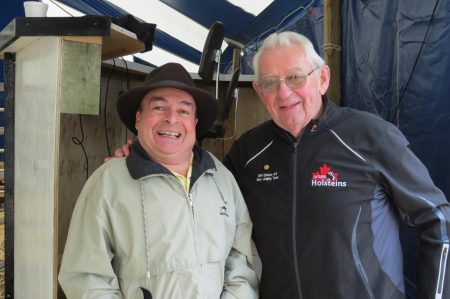
Organic dairy producer Simon Schulz began selling milk in reusable glass bottles last October amid calls from his regular “warrior” customers at weekend farmers’ markets.

While he originally envisioned only selling around 30 to 40 bottles a week, demand has outstripped supply and Mr Schulz now produces up to 400 bottles a week.

“Farmers’ markets are a testing ground for me,” Mr Schulz said.

“I think people are sick of seeing in the media and in the environment all this waste, so I think they’re moving towards more sustainable packaging.”

Mr Schulz said people were now lining up to buy the bottles from the family-run dairy based in Timboon, south-west Victoria.

Demand spurred by recycling crisis

Simon Schulz said he noticed a significant increase in interest for his range of glass milk bottles after China implemented a ban on 24 types of solid waste, disrupting the export of more than 600,000 tonnes of recycling material out of Australia each year.

Since then, recycling company Visy has stopped accepting kerbside recyclable waste from 22 regional councils, throwing Victoria’s waste management industry into uncertainty.

“We already do so much for the sustainability of the farm and the environment here on site but the one thing we weren’t tackling was the sustainability on the waste and packaging,” Mr Schulz said.

“Since the announcement we’ve had a huge influx of customers interested in our sustainable packaging, which is scary.”

Once they’ve finished with it, customers return the milk bottles to Mr Schulz at various farmers’ market stalls.

The bottles are cleaned, filled with milk and labelled by hand but Mr Schulz said he planned to automate the process and reach an even larger customer base.

“We’re gearing up to potentially do up to 10,000 bottles a week, which would save around 500 kilos of plastic a week.”

“There’s still huge demand from retailers now for wanting us to get the glass bottles to them and not just the farmers’ markets.”

One of Mr Schulz’s regular customers, Max, said the reusable glass milk bottles fostered a closer relationship between consumers and farmers.

“We used to buy the plastic and put it in the recycling like everybody should and there’s always that element of you never really know where it’s ending up. Is it being recycled properly?” Max said.

“Literally here I can see the glass bottles coming back, you know they’re going to the farm and being cleaned and refilled and bought back, so it really is closing that loop.

“It’s also that lovely kind of retro thing about opening the top and having the cream on top.”


Source: ABC

Farmer Suicide Rate Concerning; Solutions Are Available

American farmers may have a higher rate of suicide than veterans. While comparing these numbers from two separately conducted studies from two different entities isn’t conclusive, the trends that have emerged are alarming. According to the CDC, individuals in the farming, fishing and forestry occupational group are statistically more likely to commit suicide than any other. The farmers’ rate of suicide is 84.5 suicide deaths out of 100,000. The most vulnerable veteran demographic (18-29 year old males) has a rate of 85.64 suicide deaths per 100,000, while veterans as a whole have a rate of 35.3 per 100,000.

This is a problem. It’s widespread.  We can’t be silent about it.

It’s a rough time economically in agriculture. There’s no doubt about it, everyone is feeling it. Within the past three years, farm income levels have hit their lowest point since 1985. From 2014 to 2015, farm income dropped 95% and farm debt levels have increased by 25%. The price of wheat has also dropped an alarming 55% since 2013. Unfortunately for farmers, this means they’re still spending money on inputs, and not having much revenue in return.

If you’re a farmer and this hits close to home, you are NOT alone and there ARE resources out there for you.

Finances are at the forefront of every farmers’ mind. When you’re feeling the strain of what seems to be a mounting debt load that’s impossible to escape, talk to the experts at the Kansas Agricultural Mediation Services (KAMS.) They provide confidential financial counseling and legal assistance, as well as mediation services and farm and ranch succession planning. Agricultural credit mediations and USDA adverse decision mediation are two popular services that the organization provides that few farmers currently know about. These mediation sessions allow farmers and lenders to work together through these tough economic times and possibly find a compromise that’s agreeable for both parties. The K-State Research and Extension team has provided intensive one-on-one financial consultations to more than 1,000 farm families facing many of the same issues as you.

In addition, KAMS supports the Farm Analyst Program. Farm analysts, or trained extension agents, will travel directly to a producer’s home to provide private and confidential business advice. These farm analysts will use a financial planning and analysis software program designed to help producers understand their financial situation and make informed decisions. The analysists are trained to offer objective and thoughtful ideas specifically tailored to your farm to help you start seeing the light at the end of the tunnel. 

Farmers are passionate people.

In order to make it in this industry you have to be. To help an emerging seedling feel its first rays of sunshine. To pull a calf in the middle of the night and watch it take its first steps. Farmers cultivate light and life in the world, but many are personally overwhelmed by the dark and uncertain economic future. This, combined with limited access to mental health resources in rural areas and sky high health insurance costs, is a recipe for disaster for many farmers.

Dr. Mike Rosmann is a psychologist and a leading expert in agricultural behavioral health. The plight of the farmer is near and dear to his heart, simply because he is one. Dr. Rosmann points to his Agrarian Imperative theory, the strong urge that farmers feel to produce and supply the essentials for human life.

It’s a basic human instinct, but when factors interrupt a farmer’s natural instincts (like economic pressure), and they can’t fulfill this instinctual purpose, they fall into despair. The same drive that fuels your motivation and success is the same that intensifies perceived shortcomings and the emotions that come along with them.

Rosmann wrote that the agrarian imperative theory “is a plausible explanation of the motivations of farmers to be agricultural producers and to sometimes end their lives”.

No widow or child left behind feels the relief of insurance dollars in their pocket. Instead, they feel the weight of their loss and confusion over the sudden departure. Never forget that you are more valuable than the sum of your debts.

If anything we’ve talked about hits home for you, please visit the resources found throughout the article, as well as below. If you hear others talking about their despair or joking about “how insurance money is the only way out,” send them back to this article. An innocent joke may just be a self-depreciating cry for help. None of us can single-handedly increase the prices in the grain or cattle markets, but all of us have the ability to save a life with a listening ear and a well-placed suggestion.

Financial Resources

Kansas Agricultural Mediation Services – We can help! Kansas Agricultural Mediation Services provides agriculturists the resources they need to solve legal and financial issues. If you have any questions about how we can provide assistance, please give us a call. Calls are free and confidential.

Toll-free hotline: 

800-321-3276
kams@ksu.edu

KSU Farm Analyst Program – The Farm Analyst Program has a long history of responding to farm families encountering a variety of challenges. The program’s intensive one-on-one consultation, using farmers trained as K-State Research and Extension analysts, has provided assistance to more than 1,000 Kansas farm families. Analysts are active farmers and ranchers with extensive training in business analysis. Their farming experience provides a strong element of empathy to the families they assist. The role of a farm analyst is centered on the use of a computer software Program called FinPack™. 

Mental Health Resources

Association of Community Mental Health Centers of Kansas –  This organization has a list of local community mental health centers near you. Please reach out to these nearby professionals if you are experiencing depression or self-harming thoughts. 

National Suicide Prevention Lifeline – If you are experiencing a crisis, please call, text or chat with someone from the National Suicide Prevention Lifeline. While they may not know much about the rural and farm life, they are there to listen to you. Call 1-800-273-8255 | Chat online with someone here

How to Find an Agricultural Behavioral Health CounselorArticle by Dr. Mike Rosmann – The first and most important decision for overwhelmed farmers and their families is to seek counseling. It’s a difficult decision because it involves acknowledging that they need external advice rather than relying solely on themselves. 

Suicide by Farmers Continues to be an Unresolved ProblemArticle of Dr. Mike Rosmann – Why look at farmer suicide again?  This column has often focused on suicide by farmers, as have many radio and television broadcasts, print media articles, and online news sources. The best answer to “Why” is: The problem isn’t going away.  There is more to the problem that we (the agricultural producers, their families, healthcare-providers, researchers, and everyone else) don’t understand, than what we do understand. 

Farm Town Strong (Opioid Crisis Help) – The opioid crisis has struck farm and ranch families much harder than the rest of rural America. Farm towns will overcome this epidemic through strong farmer-to-farmer support and the resilience of our communities. The nation’s two largest farm organizations have teamed up to bring attention to the opioid epidemic in farm country and provide information and resources to help those struggling with opioid abuse.

Disability Resources

Kansas AgrAbility – The Kansas AgrAbility Project assists people with disabilities who work in agriculture.

The vision of AgrAbility is to enable a high quality lifestyle for farmers, ranchers, and other agricultural workers with disabilities. While the term “disability” often brings to mind conditions such as spinal cord injuries and amputations, AgrAbility addresses these and many other conditions, such as arthritis, chronic back pain, and behavioral health issues.

Through education and assistance, AgrAbility helps eliminate (or at least minimize) obstacles that inhibit success in production agriculture or agriculture-related occupations. National AgrAbility resources can be found here.

Resources to Help Others

There Are Indicators of Farmer Suicide All Should Be Aware Of –

Article by Dr. Mike Rosmann

– There are observable signs of severe financial and emotional distress among farmers–if we pay attention, chiefly these:

  • Verbalizations by farmers about hopelessness, such as “I feel like giving up because nothing I try works.”
  • Persistent loss of interest, laughter and pleasure in anything for days on end, and grim statements like, “Nothing is fun anymore.”
  • Threats, such as “I’ll get even, if it’s the last thing I do.”
  • Avoiding social and public events such as church, their children’s activities, and meetings.

Individual and Family Actions to Deal with Possible Farmer Suicide –  Article by Dr. Mike Rosmann – Sometimes farm family members and others able to intervene must undertake actions to prevent another person’s self-destruction despite resistance from this person.  Spouses, coworkers, and friends of a distressed farmer should ask the farmer about sleeplessness over recent nights, his/her worries, and especially those that entail perceptions about how others might view the farmer. —

How Government and Industry Can Help Prevent Farmer SuicideArticle by Dr. Mike Rosmann – Suicide by farmers isn’t going to go away without effective interventions. 

Tips to Help OthersKansas Agricultural Mediation Services – A shortened list to help you help your loved ones

Source: kswheat.com

USDA Secretary Wants Separate Immigration Program for Agriculture

U.S. Secretary of Agriculture Sonny Perdue speaks at an event to celebrate the re-introduction of American beef imports to China, in Beijing, China June 30, 2017.
( REUTERS/Mark Schiefelbein )

U.S. Secretary of Agriculture Sonny Perdue said on Thursday the government wants a separate immigration program for agricultural workers.

Speaking on the first day of the annual USDA Agricultural Outlook Forum, he said agriculture is caught in the crossfire of the immigration debate. “The people who come to America to work on farms and ranches are not taking jobs from Americans,” Perdue said. “They are not the ones putting a burden on criminal justice system or welfare system.”

22 students receive National DHIA scholarships

National DHIA announces scholarship recipients

The National Dairy Herd Information Association (DHIA) Scholarship Committee selected 22 high school seniors and college students as recipients of $1,000 scholarships. Judges evaluated applicants on scholastic achievements, leadership in school and community activities, and responses to DHI- and career-related questions. To be eligible for a National DHIA scholarship, applicants must be a family member or employee of a herd on DHI test, a family member of a DHI employee, or an employee of a DHI affiliate. The DHI affiliate for the herd or affiliate employee must be a National DHIA member.

This year’s National DHIA scholarship winners are: Katelyn Allen, Jefferson, Md.; Emily Benrud, Goodhue, Minn.; Connor Erbsen, Lanark, Ill.; Katherine, Gathje, Richmond, Minn.; Dillon Gratz, Atwater, Minn.; Emma Gwidt, Pulaski, Wis.; Marie Haase, Somerset, Wis.; Erica Helmer, Plymouth, Wis.; Jessica Kerfeld, Melrose, Minn.; Elizabeth Krienke, Lester Prairie, Minn.; Johannah Nielsen, Russell, Minn.; Sonora Palmer, Preston, Idaho; Chrissy Putman, Schuylerville, N.Y.; Mitchell Reitsma, Sauk Centre, Minn.; Anton Schilter, Chehalis, Wash.; Nicholas Seitzer, Saint Peter, Minn.; Margaret Socha, Corcoran, Minn.; Catherine Thompson, Plainview, Minn.; and Brooke Trustem, Evansville, Wis.

For the past decade, National DHIA has awarded scholarships in memory of Joe Drexler, who worked for NorthStar Cooperative DHI Services. Marcus Schroepfer, son of David and Jolynne Schroepfer, Birnamwood, Wis.; Tyler Swoboda, son of Allen and Karen Swoboda, Sheldon, Wis.; and Colin Wussow, son of Ron and Nicolle Wussow, Cecil, Wis.; are this year’s recipients. NorthStar members and employees, friends and family contributed nearly $10,000 to establish this scholarship fund.

Money generated from the annual National DHIA Scholarship Auction primarily funds the organization’s scholarship program. Investments and donations also help build the fund. To make a donation to the fund, contact Leslie Thoman at 608-848-6455 ext. 108 or lthoman@dhia.org.

On July 1, 2018, the 2019 National DHIA Scholarship application will be posted on the National DHIA website at: www.dhia.org/scholarship.asp. Applications are due Nov. 30, 2018.


Norm Nabholz Shares Memory of Great Friend – Bert Stewart

Dairy industry historian and the premier predigree man, Norm Nabholz, shares his thoughts about the recent passing of a great friend and fellow legend Bert Stewart.

“I had a lot of time this past week on planes to chat with fellow cow people and of course the stories flowed, but my buddy Bert was never far away from my thoughts and everyone else that knew him as well.

There are so many Bert stories that would encompass over the 40 years which I knew him. He took me touring many many times through snow, rain and sunshine. Spent many a night in his home and had the odd drink with him. He showed a lot of cows for us through the years. I can’t help but think of Bert every time I see a picture of Duncan Belle and one of the best stories involves the two of them.

Duncan Belle made a trip out east before landing in Iowa for a bit. While out east Bert saw her and fell head over heels in love with her which was good as he was Judging Madison that year. He made her Grand Champion and then asked Lorne Ella if he could show her for him later and of course “Rockie” said yes. They were a match made in heaven. After Madison, we took Belle to Louisville and she was starting to get a tad on the stale side and we (me) under bagged her by about 10 hours (It would not be the first or last time I would be called a “Milk Pussy”). Belle was 3rd that day, for better or worse.

I was judging the “Royal” that next week and because we had helped with the sale of “Belle” and we had her since before Madison, I thought it was best that her new owners not show her at the Royal. We loaded her on the truck for Toronto in Louisville in hopes that she would be ready for the next year. I guess there was a language problem and her owner miss-understood the phrase: “We won’t show her at the Royal”, or “please don’t show her at the Royal”. Judging the Royal was a big deal and very competitive. I think maybe a 3 way tie for Premier Breeder. (Mosser still brings up that had I not dropped his cow one placing he would have won it alone, etc.)

I remember the Sr. 3 Year old class like it was yesterday as they starting coming in and seemed to never stop. There were a bunch of cows that could have won. Finally they stopped coming in and I asked the ring man if that was all and he said, “no we still have one coming”. As I looked over to where the cows come in I saw Bert’s head. I could have and damn near did puke. “Belle” was the last one I looked at and by the time I got to her I had worked myself into a little bit of a rage. Obviously I didn’t need to ask when she calved, how many calves she had or how wet she liked her beet pulp. Bert led her like the pro he was and “Belle” never missed a beat. Her and I made eye contact and even in a great class, she had to win. I had made no secret all year since I first saw her that she was as good as it gets. “Belle” was not Grand (she would win the next two years) but she was best udder and got beat by a pretty good cow. Through the years that followed we replayed that day many times always with a lot of laughs. I’ll bet as soon as Bert got to heaven and kissed Hazel, he went and grabbed the halter of Duncan Belle.”

Visitation to be held at Graham A. Giddy Funeral Home, 280 St. David Street South, Fergus on Friday, February 23rd , 2018 from 1:00 – 4:00pm & 7:00 – 9:00pm & at St. Andrew’s Presbyterian Church, 325 St. George St. West, Fergus on Saturday, February 24th, 2018 from 10:00 to 10:45am. A Memorial Service will take place at the church beginning at 11:00 am.
In lieu of flowers, donations may be made to The Bertram & Hazel Stewart 4-H Dairy Education Award and Bursary c/o Ontario 4-H.
www.grahamgiddyfh.com

Zoetis Develops First Holstein Reference Genome

Game-changing genetic discovery to help target disease resistance, improve herd health and operational profitability

Zoetis has developed the first complete Holstein de novo reference genome, giving geneticists the ability to map regions of the genome influencing a range of health and disease outcomes. This significant development will promote advancement of the dairy industry through healthier, more productive animals. 

The genome was completed with several new technologies and three sequencing platforms to order the Holstein genome as accurately as possible. With this level of accuracy, scientists can more easily identify genes that advance herd health and productivity and, alternatively, those genes that impede the dairy industry’s progression.

“Sequencing a genome is the most important step toward fully understanding it,” said Sue DeNise, PhD, executive director, Zoetis Animal Genetics Global Research and Development. “In the future, discoveries made from the new Holstein reference genome will allow us to identify new targets for disease resistance and utilize natural selection processes to improve health and welfare of cattle,” DeNise said. “It’s like going from analog TV to high-definition TV. We’ll have even better insight into which genes reside to help animals resist and withstand diseases, such as pneumonia and mastitis.”

Until now, the dairy industry looked to the first reference genome assembled for cattle in 2009, which was derived from a beef cow named L1 Dominette 01449, a Hereford born in Montana. While Dominette’s genome assembly piloted the cattle genomics era, a single reference genome was not enough to demonstrate the full genetic differentiation of a species. Genetic makeup fundamentally differs from breed to breed due to genetic drift and selection due to  breed divergence. Comparing a Hereford genetically with other breeds of cattle — such as Holsteins — was only the beginning. 

Genome sequencing is often compared to decoding a software program. The process determines the order of DNA bases in a specific genome — the order of A’s, C’s, G’s and T’s that together make up an organism’s DNA. Cattle have 30 pairs of chromosomes and about three billion bases to put into order. To facilitate a highly accurate sequence, a single Holstein bull was utilized from straws of semen available commercially. These samples from a single animal contain the entire DNA blueprint for an animal, providing unique insights into the Holstein breed.

“By generating a complete Holstein reference genome, we can better understand the genetic basis of dairy cattle phenotypes,” said Mike Layfield, senior director, strategic marketing, Global Genetics at Zoetis. “Promoting the health and wellness of dairy cattle has long been a key aspect of the Zoetis portfolio. This development is a strong testament to the innovative spirit and industry dedication of those in Zoetis’ genetics business.”

This development comes at a time when dairy producers are focused on raising healthy cows to help maximize their productivity while improving efficiencies and sustainability. This new development could help optimize their investment in raising the right cattle for their operation. Producers can improve Dairy Wellness through genomic testing tools such as Clarifide® Plus, which offers producers detailed predictions for wellness traits and reliable assessments of genetic risk factors for diseases in Holstein cattle — including the two most costly diseases in dairy cattle, mastitis and lameness.1

Zoetis has a substantial portfolio devoted to the health and wellness of dairy cattle. This new genome sequence helps further Zoetis’ innovative products and services that are supported by industry-leading expertise and research, providing dairy producers the reliable, dependable information needed to achieve operational and herd goals. Learn more about the Zoetis commitment to the continuum of care of dairy cattle by visiting Dairy Wellness and ClarifidePlus.com.


Source: Zoetis

Atlantic Holstein Promotions Announces 2018 Show Format

Atlantic Holstein Promotions unveiled a new show format for the Atlantic 2018 show season on February 20th.

Following a series of discussions, exhibitors and the Board of Atlantic Holstein Promotions has decided to adopt the following class schedule for the Atlantic Spring Showcase in Fredericton on April 28th, 2018:

Intermediate calf – born December 1, 2017 to February 28, 2018

Senior Calf  – born September 1, 2017 to November 30, 2017

Summer Yearling – born June 1, 2017 to August 31, 2017

Junior Yearling  – born March 1, 2017 to May 31, 2017

Intermediate Yearling  – born December 1, 2016 to February 27, 2017

Senior Yearling – born September 1, 2016 to November 30, 2016

Bred Heifer 23 Months & Under – born May 1, 2016 to August 31, 2016

Junior Champion

First Lactation Heifer in Milk 26 Months & Under – born after February 1, 2016

First Lactation Heifer in Milk 26-29 Months – born October 1, 2015 to January 31, 2016

First Lactation Heifer in Milk 30 Months & Over – born prior to October 1, 2015

Second Lactation Cow under 39 Months of Age  – born after January 1, 2015

Intermediate Champion

3-Year-Olds – born September 1, 2014 to December 31, 2014

4-Year-Olds – born September 1, 2013 to August 31, 2014

5-Year-Olds – born September 1, 2012 to August 31, 2013

Mature Cow – born prior to September 1, 2012

Production Class – Lifetime Production over 60,000 kg milk

Grand Champion

It is believed this class structure, which offers additional class breakdown for intermediate cows over traditional classes, will better reflect the current industry standards for age at first calving and may see more young cows entering the showring.  The birth date range for each of the bred heifer, first lactation and second lactation classes will vary throughout the show season.

In addition, the Production Class will be a new feature for the Atlantic shows and provide recognition to those cows bringing longevity and productivity to their herds.

“We are in a unique position in Atlantic Canada,” notes Bruce Wood, the visionary behind this concept, “we are small enough to try out some new options and work through the challenges which may arise. Our shows need to remain relevant to the industry and this is a positive first step toward changes.”

The 2018 show season will be a trial for exhibitors to provide feedback on the new classes, and it is hoped this format may be implemented at the 2019 Convention Show in Charlottetown, P.E.I., to provide a national demonstration.

For more information about Atlantic Holstein Promotions and these events, please contact Angela Masters at atlanticholstein@gmail.com.

Dr. Jeffrey Bewley Appointed as Support Manager for BoviSync

Dr. David Cook, Managing Partner of BoviSync, announced today that Dr. Jeffrey Bewley has been named Support Manager. 

In this role, Bewley will be responsible for recruitment, training, and retention of quality support staff. He will identify product needs, implementation, and training. Bewley will also be responsible for managing support, conduct on-going staff training along with monitoring and managing BoviSync’s quality of service.  

Bewley is a graduate of the University of Kentucky where he earned a Bachelor of Science degree in Animal Sciences. He received his M.S. in Dairy Science from the University of Wisconsin-Madison and his PhD in Animal Science from Purdue University. He has been involved in the dairy industry throughout his life starting with work on his grandfather’s dairy farm.  Bewley’s transition into this new role comes after serving 9.5 years as an extension dairy specialist for the University of Kentucky. 

“Jeffrey has the extensive dairy background we need, plus a significant amount of experience within the industry from his time working in academia and industry,” said Cook. “Bringing a seasoned individual like Jeffrey into this role helps us on many levels and ensures we will be able to support the growing needs of this company.” 

A native of Kentucky, Bewley assumed his position January 2. 

Seventeen Dairy cows perish in barn fire

It was a horrific scene no farmer ever wants to see—a barn filled with animals being destroyed by a fire.

Early Friday morning, Richard and Sally Swartz watched their barn just east of Motley in northern Minnesota burn to the ground.

“It has not been a good day,” Richard Swartz said in a telephone interview. Swartz said his son, Richard Jr., checked the dairy and beef cows about 6 a.m. and then left the property, and his wife typically goes out to the dairy barn about 8:30 a.m. to work.

“It was just a little after 7 a.m. and she hollered at me as I was sitting on a chair in the living room and said the barn’s on fire,” Swartz said. “I called the fire department and the barn went down. We had Pillager and Motley (fire departments) here but that barn is 50 some years old and boy when she got going she went.”

Swartz said they lost all the animals in the barn, as the dairy cows were tied in their stalls.

“The smoke was so heavy in there, we couldn’t get in there,” Swartz said. “We were only able to get one calf out. My son and his wife came right away and the fire department came and we don’t have a barn anymore or any more dairy cows.”

The fire destroyed the barn, 22 chickens, 17 dairy cows and a calf. Some equipment also was destroyed, but family was able to retrieve the tractors in the barn.

Swartz said the family has 200 acres. His father purchased the property in 1955. Swartz took over the farm in the early 1960s.

“I’ve been milking cows for 50 some years,” Swartz said. “And now they are all gone.”

Swartz said the family house, the beef cattle and laying hens on the property were far enough away from the fire and were safe. Swartz said his two adult children and his wife do all the work on the farm, as he is not physically able to do the work anymore.

“At least no one was in the barn as they would have gotten burned to death. I hate to see those cows die. They were born here and they worked for me all their lives. … I have to get those dead cows out of there. They have to be buried.”

Swartz said he has no idea how the fire started.

Calls were made to Motley Fire Chief Todd Judd, but he could not be reached.

Pillager Fire Chief Greg Ringer, who was at the scene, said 16 firefighters were on scene and Pillager firefighters battled the east side of the barn, while Motley firefighters battled the west side. Ringer had no further details on the fire.


Source: Duluth News Tribune

Dairy farmers suffer ‘high rate of respiratory disease issues’

Warnings over risk of exposure to dust hazards

Irish dairy farmers have a high incidence of respiratory problems which may be due to continuing work-related dust exposure, a new study has revealed.

Research on 126 dairy farmers aged between 19 and 75 found a third had a cough.

Similar numbers complained of upper airway symptoms and others had eye problems, the study led by the School of Health Sciences in NUI Galway showed.

“The rate of respiratory symptoms did not relate to herd size or the method of feeding used by farmers,” the findings stated.

Although farming is an occupation with a healthy image, offering a job in the great outdoors, the reality is it has some occupational hazards. These include exposure to grain dust, pollen, animal dander, soil dust, welding fumes and diesel exhaust. All of these can lead to respiratory problems.

Although they are less toxic than some chemicals, dusts are suspended in the air and can easily enter the lungs and cause damage.

Long-term exposure to dust can be accompanied by congestion, coughing or wheezing, sensitivity to dust, and frequent respiratory infections such as colds, bronchitis and pneumonia.

Over time, exposure to dust can result in serious respiratory illnesses, such as farmer’s lung, asthma, emphysema, chronic bronchitis, and other ailments.

Mechanical feeding methods were used by 61pc of farmers, the study in the ‘Irish Medical Journal’ revealed.

Dust

The researchers, including Cavan and Monaghan Hospitals, as well as the School of Physics in NUI Galway, said the level of dust did not differ between automated or manual feeding methods.

The respiratory problems were also evident despite the rate of smoking among the group of farmers studied being just 6pc, which is lower than the national average of 19.5pc.

The study pointed out that “in recent years there has been a significant change in work practices and processes in the Irish farming community”.

It said that “dairy farming practice in Ireland still differs to that in other countries where enclosed or semi-enclosed animal houses are normal”.

In France, it has been suggested dairy farmers are exposed to dust that carries the same risk of developing chronic obstructive pulmonary disease (COPD) – a group of lung conditions that cause breathing difficulties – as cigarette smoking.

Other studies have found a high level of nasal polyps, soft growths that can lead to a blocked nose, among farmers in Germany. They also had evidence of rhinitis, which causes a person to have the symptoms of a cold.

Occupational health experts say there are various ways farmers can reduce the risk of inhaling dust, including ensuring hay and crops are adequately dried before storing, to avoid mold growth and mold dust.

A mask or respirator may also be worn to prevent dust inhalation. Farmers are advised to provide as much ventilation as possible when working in dusty, confined areas.

If possible, they should perform dusty work outside for increased ventilation. When opening a bale of hay keep a safe distance by breaking it with a tractor when possible. Use a fork rather than bending close.


Source: Independent

Lely North America announces new dairy award

Lely has become an innovation leader with 25 years of automation experience. The company was the first to the plate and has been hitting home runs with dairy farmers across the globe and right here in the U.S. and Canada. In fact, today there are more than 30,000 robot installations worldwide. The acceptance of dairy automation across all sizes of dairy herds has catapulted in recent years.

Now, Lely North America wants to find the best and brightest dairy farmer and present the farmer with The Way to Dairy Award.

This honor will be awarded to the dairy farmer who best demonstrates and lives by the standards of using sustainability and innovation, to create a profitable and enjoyable future in the agricultural sector, while being an animal care advocate and is involved in the dairy industry.

Interested participants can view the official rules and request an application online at www.thewaytodairyaward.com. Applications will be accepted until June 30, 2018 at 11:59:59 PM CDT. The grand prize winner will be chosen by a panel of judges and will receive their choice of either an Astronaut milking system or a Vector feeding system.

“Lely wants to give the best farmer the best automation on the market, supported by their local Lely Center. Lely Centers span the U.S. and Canada from Quebec to Kentucky across the plains to California and into western Canada to serve dairy farmers across North America,” states Chad Huyser, Vice President Lely North America.

We invite you to learn more about Lely dairy industry innovations on Lely’s website, www.lely.com. Also, follow us on Lely’s Facebook page(Facebook.com/LelyNorthAmerica) or Twitter(@DairyRobot). To watch videos featuring Lely’s products, visit http://www.youtube.com/lelydairylife.


About Lely

Lely, founded in 1948, directs all its efforts towards creating a sustainable, profitable and enjoyable future in farming. Circling the cow, the company develops premium robotics and data systems that increase animal welfare, flexibility and the production on the dairy farm. For more than 25 years, Lely has been leading in the sale and service of automated milking systems to successive generations of dairy farmers across the globe. Every day, Lely inspires her employees to offer customers innovative solutions and be a reliable partner for long-term advice and support. With her Head office in The Netherlands and a worldwide network of dedicated Lely Center locations for tailor-made sales and support, The Lely Group is active in more than 60 countries and employs around 1.200 people. More information: www.lely.com.

Data exposes trust gap between farmers, media

A 3.7 million gallon spill of human waste in the Wisconsin River appears to be a non-issue for media and environmental groups.(Photo: Patrick Durkin/For USA TODAY NET, Patrick Durkin/For USA TODAY NET)

Like the child of a strained marriage, I have watched with an increasingly heavy heart as two things that mean a great deal to me — journalism and agriculture — seem to be careening toward some kind of ugly divorce.

I care deeply about both: I spent more than two decades as a professional journalist. During that time, I worked for the largest newspaper publishing company in America (Gannett), and — more recently — as a freelance writer. More recently, I acquired and served as the publisher-editor for a small newspaper dedicated to covering farming issues throughout the Midwest. In that capacity, I gained a heartfelt appreciation for the farmers — small and large, and virtually all multi-generational family owned — that share an abiding passion for their fields and flocks.

However, a recent incident in the city of Wausau — or, more accurately, the mainstream media’s non-reaction to it — exposed a deep wound among Wisconsin’s farmers for the newspapers and broadcasters tasked with covering their industry.

On Jan. 23, Wausau municipal officials piped 3.7 million gallons of raw, untreated human feces and waste directly into the Wisconsin River (as one observer noted, that’s about as much water as 40,000 households use in a day). There was not a peep made about it for a week, and then a local TV channel offered a brief six-sentence story, describing this incident as merely a “leak.”

That’s when farmers and other media observers began asking a fair question: Years ago, when a Fond du Lac County farm accidentally released less than 50,000 gallons of cow poop near a stream, it was described in a now-unforgettable headline as “A Tsunami of Manure.” Headlines like these have been the norm for years. However, when 3.7 MILLION gallons of untreated human poop, other bodily waste, drug residues, etc. was dumped into the state’s namesake river, it was essentially treated as a “non-story.”

“How is that even remotely fair?” farmers began asking. The anger behind that question seemed justifed to me.

I decided to do a little fact checking of my own. A quick Freedom of Information (FOI) request to the Wisconsin Department of Natural Resources promptly brought back a detailed report of all the manure spills by farms of all sizes that occurred in Wisconsin in 2017. The report listed the 92 spills recorded, ranging in size from five gallons to 200,000 gallons.

  • The DNR’s estimate total volume release from these spills was 991,885 gallons, less than 25 percent of the single action by Wausau (which, we are informed, is not the first time Wausau has had its controlled leak and won’t be the last time.)
  • The DNR noted in 24 cases there was no estimate of the amount of manure released, but if you use the average of the 68 estimates the DNR does have recorded, that would bring the total to 1,322,514 gallons for 2017, less than 36 percent of the Wausau event.
  • The single largest agricultural spill, a 200,000 gallon release, was less than 5 percent of the Wausau sewage release.

Neither side in this disintegrating marriage is disputing the data, which makes the Orwellian nature of the dispute — 50,000 gallons is a “tsunami,” but 3.7 million gallons is a “leak” — more disturbing. No wonder more than half the voting population questions the news media.

So how did we get to this point? When did the disillusionment creep into the relationship between media and farmers?

The sad truth is — much like with many human divorces — a third party entered the picture years ago. Noticeably silent in the aftermath of the Wausau incident were Wisconsin’s leading “environmental” organizations — Sierra Club, Clean Water Alliance, Midwest Environmental Advocates, Saratoga Concerned, etc. Not a peep was heard from any of them. The Wausau event simply didn’t fit their longtime anti-ag narrative (short version: cow manure is bad, human waste is a non-issue).

Hard as it is to admit, the media climbed into bed with the “environmentalists” a long time ago. Any fidelity that many journalists felt toward objectivity went out the window and, in turn, much like a shunned spouse, farmers were left on the outside looking in, feeling helpless and resentful.

Source: Wisconsin State Farmer

The Ancient History of Producing Milk

8,000 Years of Drinking Milk: The Evidence and History of Dairying

Milk-producing mammals were an important part of early agriculture in the world. Goats were among our earliest domesticated animals, first adapted in western Asia from wild forms about 10,000 to 11,000 years ago. Cattle were domesticated in the eastern Sahara by no later than 9,000 years ago. We surmise that at least one primary reason for this process was to make a source of meat easier to get than by hunting.

But domestic animals also are good for milk and milk products like cheese and yogurt (part of what V.G. Childe and Andrew Sherratt once called the Secondary Products Revolution). So–when did dairying first start and how do we know that?

The earliest evidence to date for the processing of milk fats comes from the Early Neolithic of the seventh millennium BC in northwestern Anatolia; the sixth millennium BC in eastern Europe; the fifth millennium BC in Africa; and the fourth millennium BC in Britain and Northern Europe (Funnel Beaker culture).

Dairying Evidence

Evidence for dairying–that is to say, milking dairy herds and transforming them into dairy products such as butter, yogurt, and cheese–is only known because of the combined techniques of stable isotope analysis and lipid research. Until that process was identified in the early 21st century (by Richard P. Evershed and colleagues), ceramic strainers (perforated pottery vessels) were considered the only potential method of recognizing the processing of dairy products.

Lipid Analysis

Lipids are molecules which are insoluble in water, including fats, oils, and waxes: butter, vegetable oil and cholesterol are all lipids. They are present in dairy products (cheese, milk, yogurt) and archaeologists like them because, under the right circumstances, lipid molecules can be absorbed into ceramic pottery fabric and preserved for thousands of years.

Further, lipid molecules which are from milk fats from goats, horses, cattle and sheep can be easily distinguished from other adipose fats such as that produced by animal carcass processing or cooking.

Ancient lipid molecules have the best chance of surviving for hundreds or thousands of years if the vessel was used repeatedly for producing cheese, butter or yogurt; if the vessels are preserved near the production site and can be associated with the processing; and if the soils in the vicinity of the site where the sherds are found are relatively free-draining and acidic or neutral pH rather than alkaline.

Researchers extract lipids from the fabric of the pots using organic solvents, and then that material is analyzed using a combination of gas chromatography and mass spectrometry; stable isotope analysis provides the origin of the fats.

Dairying and Lactase Persistence

Of course, not every person on the earth can digest milk or milk products. A recent study (Leonardi et al 2012) described genetic data concerning the continuation of lactose tolerance in adulthood. The molecular analysis of genetic variants in modern people suggests that the adaptation and evolution of the ability of adults to consume fresh milk occurred rapidly in Europe during the transition to agriculturalist lifestyles, as a byproduct of the adaptation to dairying.

But the inability of adults to consume fresh milk may also have been a spur to inventing other methods for using milk proteins: cheese making, for example, reduces the amount of lactose acid in dairy.

Cheese-Making

Producing cheese from milk was clearly a useful invention: cheese may be stored for a longer period than raw milk, and it was definitely more digestible for the earliest farmers. While archaeologists have found perforated vessels on early Neolithic archaeological sites and interpreted them as cheese strainers, direct evidence of this use was first reported in 2012 (Salque et al).

Making cheese involves adding an enzyme (typically rennet) to milk to coagulate it and create curds. The remaining liquid, called whey, needs to drip away from the curds: modern cheese makers use a combination of a plastic sieve and a muslin cloth of some sort as a filter to perform this action.

The earliest perforated pottery sieves known to date are from Linearbandkeramik sites in interior central Europe, between 5200 and 4800 cal BC.

Salque and colleagues used gas chromatography and mass spectrometry to analyze organic residues from fifty sieve fragments found on a handful of LBK sites on the Vistula River in the Kuyavia region of Poland. Perforated pots tested positive for high concentrations of dairy residues when compared to cooking pots. Bowl-form vessels also included dairy fats and may have been used with the sieves to collect the whey.

Source: thoughtco.com

U.S. Senator Tammy Baldwin Secures Major Investment for Wisconsin Dairy Farmers

U.S. Senator Tammy Baldwin announced that the bipartisan Senate budget agreement will include major investments to support the dairy industry, including more than $1 billion for the Dairy Margin Protection Program (MPP).
The final legislation includes significant improvements to dairy programs that will give Wisconsin dairy farmers much-needed, immediate relief as they face difficult dairy market conditions.

“Wisconsin’s dairy industry is a key driver of our state’s agricultural economy and a core part of our rural communities, but our farmers are facing a very difficult year. Washington has been far too slow to recognize the challenges facing our agriculture economy,” said Senator Baldwin. “I worked to make sure this bipartisan budget agreement includes the tools we need to act quickly in the face of this crisis.  

I am proud we have secured much-needed relief for our dairy farmers. We are doing right by them and Wisconsin’s rural economy.”

In the face of difficult dairy market conditions in Wisconsin and across the country, Senator Baldwin sent a letter to Senate leadership in January urging them to protect the economic security of the nation’s dairy farmers and update and expand the Dairy MPP in advance of the Farm Bill to provide better risk management tools for family farmers.

Unfortunately, the program has not worked as intended due to last minute cuts from House Republicans and implementation problems at USDA.

Since 2014, prices have dropped by over a third and dairy farmers have faced these difficult market conditions without a reliable safety net.

This bipartisan plan would fix problems with the old MPP and provide a pathway to new, customizable insurance tools in the future.


Source: WAOW

Krieg Joins Holstein Foundation Board of Trustees

Holstein Foundation welcomes new trustee, Dieter Krieg, of Brownstown, Pa., to their board which oversees the direction of the Holstein Foundation’s youth and young adult educational and leadership development programs.

“Being invited to serve as a Holstein Foundation Trustee is an honor not to be taken lightly,” Krieg says. “I am hoping to perhaps make a small, positive difference in the lives of those who will inherit our beloved dairy industry. I’m thankful for the opportunity.”

For all of his 73 years, Dieter Krieg has been a farm boy at heart. Born in Germany, he came to the United States as a 10-year old boy and enjoyed life growing up with Registered Holsteins®. A Penn State graduate with a degree in dairy science, he always thought he would follow his father as a dairyman and Registered Holstein breeder.

But that changed in the Spring of 1974 when he pursued the dream of finding his own farm by way of becoming a farm editor. Strange as it sounds, the idea was to meet an older dairyman at a DHIA or Holstein club meeting who had a vacancy at his farm for a younger fellow.

Dieter started working as a farm editor in State College, Pa. He found the work so enjoyable that the original dream began to fade even on the first day. Fifteen months later, he was offered the position of editor at Lancaster Farming. During his four-years there, the paper grew from 64 pages to 200 pages.

In September of 1979 he started his own publication, Farmshine, which he continues to own, edit and publish to this day. The paper has a weekly circulation of just under 16,000, with subscribers in all 50 states.


National Farmers talk NAFTA and dairy at national convention

National Farmers President Paul Olson at expressed his worries about pulling out from NAFTA during his presidential address at the National Farmers National Convention recently in Mason, Ohio.

Olson, a Taylor, Wisconsin, farmer, emphasized his top priority lies with farmers, but the trade agreement needs to stay.

“I believe it helps the industry more than it helps the producers. But now, having had it so long, if we don’t have it, I think we’ll be worse off without it,” Olson said.

Olson pointed out that Mexico is the top importer of U.S. corn. USDA Foreign Ag Service numbers indicate in 2016, that amounted to $2.6 billion.

Olson said supply and demand struggles are paramount in the dairy industry and producers are facing worries about markets for their milk, Olson cited a guest column in Hoard’s Dairyman Dec. 27. A Massachusetts dairy producer asked where to start the conversation about control over the market and brought up the topic of supply management, which National Farmers has proposed and supported during the last several years.

“It’s time for a change,” he said. Olson again suggested a supply management system, because producing high-quality milk in great quantities, “produce to prosperity,” is not working, he said.

National Farmers Vice President Paul Riniker, Greeley, Iowa, agreed with Olson. In his address, he pointed out that he is a former dairy producer himself and he underscored the concern about milk transported from the Northeast to the Mideast and Midwest dairy regions, being processed at $6 per hundredweight to $8 per hundredweight below its value.

Riniker said National Farmers continues to work to find new milk markets.

“There is hope when producers work together,” he said.


Source: High Plains Journal


Mike Berry chosen to judge the 2018 National Jersey Show at the Royal Agricultural Winter Fair

Mike Berry of Albany, Oregon was recently voted in by exhibitors and selected as the Judge for the 2018 National Jersey Show at the Royal Agricultural Winter Fair. 

Nomination du juge de la Royale
Mike Berry, d’Albany, en Oregon, a récemment été élu par les exposants et a été choisi comme juge pour l’Exposition nationale Jersey de 2018 à la Royal Agricultural Winter Fair.

Youth of Distinction

Congratulations to Caleigh Van Kampen of Amaranth, Ontario – our 2018 Youth of Distinction! Caleigh will receive her award at the Jersey Canada AGM on March 17, 2018 and be recognized in the May issue of the Canadian Jersey Breeder magazine.

Jeune de distinction
Félicitations à Caleigh Van Kampen d’Amaranth, Ontario – notre Jeune de distinction 2018! Caleigh recevra son prix à l’AGA de Jersey Canada le 17 mars 2018 et sera présentée dans le numéro de mai du magazine l’Éleveur Jersey canadien.

Lactalis failed to report salmonella on a product -government official

French dairy group Lactalis, facing a growing scandal over salmonella-tainted baby milk, did not report the bacteria had been found on products in the same factory in 2011, a government official said on Tuesday.

FILE PHOTO: The logo of Lactalis Group is seen at the entrance of the French dairy group Lactalis headquarters in Laval, western France, January 12, 2018. REUTERS/Stephane Mahe/File Photo

Dozens of babies fell ill after drinking baby milk contaminated with so-called Salmonella Agona produced by Lactalis, one of the world’s largest dairy groups, prompting the recall of 12 million tins.

“There has been a lag between elements given to inspection services and the self-checks that we have been able to recover as part of the crisis,” the head of the French government’s food department, Patrick Dehaumont, told a Senate commission.

    “Salmonella Agona had been found in 2009, 2014, one on products in 2011 and other serotype in 2013 and 2014,” he added.

Lactalis Chief Executive Emmanuel Besnier said earlier this month in an interview that Salmonella Agona had been found in the environment between 2005 and 2017, so it could not be excluded that babies had consumed contaminated milk over that period.

The company had made no public reference to positive tests on products.

Lactalis spokesman Michel Nalet declined to comment.

Companies in France must report to the authorities tests that show salmonella in a product that has already reached the market. They are under no obligation to do so for tests on products that have not yet reached the market or for tests showing bacteria in the environment. But they must provide test results if asked to do so.

Asked to confirm that positive Lactalis self-checks had not been handed to the authorities, he replied: “That’s it”.

“What’s unfortunate, is that there was no questioning by the company about the fact that it was still amazing to find a Salmonella Agona several times over the years after it was found in 2005,” Dehaumont said.

More than 200 babies in France have been contaminated with Salmonella Agona since 2005, including 38 between mid-August and December last year, as well as 25 between 2006 and 2017 and 141 in 2005, said the Institut Pasteur, a French organization that monitors micro-organisms and diseases.

Source: reuters.com

14 worms pulled from Oregon woman’s eye after she walks through cattle field

Have you ever experienced “floaters” — those little strands that you can see in your eyes when looking at something close-up?


Now imagine floaters that wriggle. Like worms.

Yes, that is what an Oregon woman experienced in a case reported Monday in the American Journal of Tropical Medicine and Hygiene.

And it wasn’t just one — a total of 14 worms were pulled from Abby Beckley’s left eye during the 2016 episode, according to the report.

Beckley first discovered the infestation after a week of mild irritation. Looking into her eye, she could see a translucent creature wriggling around.

“I pulled that worm out and I just was shocked. I was absolutely shocked,” Beckley told the Associated Press. “I stared at it and it was alive.”

It lived for about five seconds, she told the Oregonian newspaper, and then it died.

Beckley, then 26, then sought medical help and another 13 worms were extracted. The local doctors, however, did not know what to make of the infection and passed the case on to the Centers for Disease Control and Prevention in Atlanta.

According to the Washington Post, scientists at a special laboratory that deals with parasitic diseases determined that she had been infected by a species of eye worm often found in cattle but rarely seen in humans.

“We never expected to see this particular species in a human,” medical parasitologist Richard Bradbury told the paper. “Until now, this type of worm, Thelazia gulosa, had only been found in cattle.”

And that’s when they put two and two together — it turned out that in the weeks before her infection, Beckley had been walking through cattle fields in southern Oregon. It was very possible, she told the Post, that a fly landed on her eye and infected her.

Bradbury then started digging back in medical records and found references to the Thelazia worm infecting humans.

“There’s only ever been in the history of the published literature 11 cases of in America, so it’s very rare and unusual,” Bradbury told CBS News.

Fortunately, the worms did not cause permanent harm. Rather than burrowing into the eye, they are mostly content to feed on tears and other secretions. However, they can cause inflammation if not discovered early.

“We were able to tell her this was very localized,” said Erin Bonura, an infectious disease specialist who treated her in Oregon. “She was worried they would crawl into her brain,” she told the Post.

Source: USA Today

Ad featuring Olympian shot at Quail Ridge Dairy

Mary Kraft, left, tells Olympic skeleton racer Katie Uhlaender about the small hotels that young calves live in at Quail Ridge Dairy until they are old enough to be in larger pens or pastures. Kraft was giving Uhlaender a tour of the dairy while they also were shooting a commercial promoting milk in November 2017. (MilkPEP / Courtesy photo)

Fort Morgan’s Quail Ridge Dairy has a connection to the 2018 Olympic Winter Games in PyeongChang, South Korea.

Skeleton racer Katie Uhlaender of Team USA visited the dairy last fall and now is featured in advertisements promoting the benefits of drinking milk.

Mary Kraft, co-owner of Quail Ridge Dairy, said she had been surprised to get the call last September asking her dairy to be involved in the “My Focus” ad campaign.

“We were pretty excited when they called and asked us if they could do it with us,” she said. “We’d never played with Olympics people before.”

This campaign was being put together by MilkPEP, which is one of the organizations that puts together educational advertising on behalf of milk producers.

Katie Uhlaender, a skeleton racer for Team USA, visits with Quail Ridge Dairy owner Mary Kraft, right, during a tour the Fort Morgan dairy in November

Katie Uhlaender, a skeleton racer for Team USA, visits with Quail Ridge Dairy owner Mary Kraft, right, during a tour the Fort Morgan dairy in November 2017. They are being filmed by a crew from MilkPEP for a video promoting the benefits of drinking milk for Olympic athletes like Uhlaender. (MilkPEP / Courtesy photo)

“They were looking for a dairy that’s well managed because the athletes are well managed,” Kraft said.

Such athletes depend on milk for the nutrition to drive them in their training and competition, she said.

Also, Kraft is an athlete herself, riding horses and competing in dressage.

Those were some of the criteria MilkPEP and Team USA used for picking out the locations for shooting such commercials for this campaign.

Another bonus was that they had a female Olympic athlete in mind, and Quail Ridge Dairy had a female running it.

Kraft was quick to give her husband, Chris Kraft, credit for being involved with running the dairy, too.

“Chris and I are exceptionally involved together in making things work,” she said.

Quail Ridge Dairy was also chosen as the location because so many Olympic athletes from Colorado were expected to go to South Korea to compete.

“Colorado has the most Olympic athletes going,” Mary Kraft said.

When Uhlaender travelled from Colorado Springs, where she trains, to the Fort Morgan dairy for the shoot, Mary Kraft encountered an athlete who was also excited about the science going on at the dairy.

That makes sense in light of Uhlaender having studied animal science and behavioral science at Colorado Mountain College.

But she also wanted to learn more about the process of producing milk and how dairies like Quail Ridge ensure it will be of high quality and be good for fueling athletes, Mary Kraft said.

“She was so enthusiastic and got more enthusiastic as the day went on,” the dairy owner recalled.

As they roamed the dairy, moving from spot to spot set up for shooting the video, Mary Kraft and Uhlaender spoke about how the science used for raising dairy cows meshed with the science of training athletes, since there were science-based concepts used for everything going on at the dairy.

Of course, they also spoke about what Uhlaender gets from drinking milk and how that helps her with her training.

“I feel like I go sledding for a living, so I don’t know if I really work,” she said. “But I definitely put a lot of work into prepping for that. Part of that is my nutrition.”

Because of its vitamins and protein, Uhlaender called milk a “nutrient powerhouse.

“Protein is huge for maintaining muscle mass and recovering from all of my workouts,” she said. “I train every day for Team USA, and so it is filling me with joy and pride to see all of this hard work and how much goes into feeding those cattle to produce what helps me become a great athlete.”

“We feel like it’s a whole team effort,” Mary Kraft replied to Uhlaender. “Our job is to make everything well-fueled.”

The video also shows Uhlaender even getting to attach the milking machine to a cow’s udders.

Thinking back to the day of shooting brought a happy note to Mary Kraft’s voice.

“We shot the whole thing in one day,” Mary Kraft said. “It was a pretty short day because Katie was training. We filmed between one and six in one afternoon. It was pretty grueling. They had shots lined up, but part of it was pretty fun – just a rolling conversation.”

Mary Kraft said she spoke with Uhlaender about how cows needed exercise, the right nutrition and enough sleep, just like Olympic athletes.

“It was interesting,” Mary Kraft said. “Cows spend some time doing their job and then recovering, matching up closely to what Katie was doing.”

The day of shooting felt “kind of like a reality TV show,” Mary Kraft said. “We just fed on each other’s energy, talking about things we love. Anytime you can find someone you mesh that well with, it’s a lovely day.”

Mary Kraft said she planned to follow closely how Uhlaender does at the 2018 Olympic Games.

The women’s skeleton event is set to begin the middle of this week, with training heats scheduled for Wednesday and Thursday and then competition heats set for Friday and Saturday.

“The interesting thing is with Katie, there was some controversy in the last Olympics,” Mary Kraft said, with the skeleton racer coming in fourth place and missing out on a bronze medal by only .04 seconds.

And thanks to a doping scandal that involved the 2014 Russian medal winner, for almost four years Uhlaender thought she then had gotten the bronze, even mentioning it in the video. But in early February, the Court of Arbitration for Sport overturned Olympic bans for the Russian athletes, which could mean reinstating the bronze medal to Uhlaender’s competitor. It could be years before that issue is finally settled.

But that could be strong motivation for the American skeleton racer in the 2018 Olympic Games, since she only would have needed a little bit more at the 2014 Olympic Games to have the medal be hers outright.

“A little more is always doable,” Mary Kraft said.

The Fort Morgan dairy owner also was excited to be able to showcase both her dairy and the importance of milk through the video and ads, which she and the dairy volunteered to do, not as a money-making endeavor.

“For everything we do, we’re interested in how the community moves forward,” she said. “If I could turn it into a revenue stream, I sure would, but I think the revenue stream is people drinking milk.”

And she is excited for people to watch the video or see the ads.

“There should be quite a number of things showing cows and how important milk is to fuel (the athletes’) bodies,” she said.

To view the video, visit https://www.facebook.com/TeamUSA/videos/10155330505342686/.

Source:fortmorgantimes.com

Oregon dairy fined $16,800 for manure spill that shut down Tillamook Bay

Tillamook Bay at Garibaldi.

An Oregon dairy has been fined $16,800 for a massive manure spill that shut down Tillamook Bay last spring.

About 190,000 gallons of liquid manure were released from an above-ground storage tank at Tony Silveira Dairy on April 12, the Oregon Department of Agriculture said.

The manure pooled in a field near the dairy barns, flowed across three other landowners’ properties, and ended up in a slough that connects to a drainage system that pumps water into the Tillamook River, which then enters the bay.

Health officials closed the bay to recreational and commercial shellfish harvesting for more than a week, affecting at least one commercial oyster grower.

Tony Silveira Dairy operates at 1445 Tone Road and 1245 Matejeck Road in Tillamook.

It supplies the Tillamook County Creamery Association, which makes Tillamook brand cheese. Officials there did not respond to a request for comment.

The dairy was cited for 12 violations. Dairy officials also did not respond to a request for comment.

The Oregon Department of Agriculture revoked the dairy’s wastewater permit in October after years of environmental violations. Wochit

Volbeda Farms, at 8105 Wallace Road NW, Salem, was fined $95,480 for repeatedly allowing manure to flow into Spring Valley Creek.

Volbeda Farms, at 8105 Wallace Road NW, Salem, was fined $95,480 for repeatedly allowing manure to flow into Spring Valley Creek. (Photo: Tracy Loew/Statesman Journal)

The dairy was among eight farms, ranches and feedlots the state agency fined for water quality violations during 2017. Four of those were in the Willamette Valley.

  • Volbeda Farms, at 8105 Wallace Road NW, Salem, was fined $95,480 for repeatedly allowing manure to flow into Spring Valley Creek. The agency also revoked the dairy’s wastewater permit, making it the first Oregon dairy to lose its permit. Volbeda Farms historically has supplied Willamette Valley Cheese Company with its milk.
  • White Buffalo Ranch, a swine and cattle facility at 6653 Shaw Highway in Aumsville, was fined $1,800 for repeatedly allowing liquid manure to flow off its property, threatening both groundwater and surface water.
  • Troost Dairy, at 41175 Cole School Road in Stayton, was fined $800 for an overflowing manure lagoon.
  • Cloud Cap Farms, at 30207 SE Kelso Road in Boring, was fined $3,120, for allowing liquid manure to enter a ditch that flows to Deep Creek.
  • Sunset Canyon Jerseys, at 26755 Blaine Road in Beaver, was fined $36,280, for allowing liquid manure to run off its property into the Nestucca River.
  • Geo Farms, at 4555 Alderbrook Road in Tillamook, was fined $4,816, for allowing liquid manure to flow into nearby sloughs.
  • Valley Oaks Dairy, at 17805 Highway 101 S. in Tillamook, was fined $680 for failing to report its annual report for 2016.

The ag department regulates manure discharges from the state’s approximately 509 confined animal feeding operations, such as dairies and feedlots.

Last year, agency staff members performed 880 inspections at those facilities, up from 763 in 2016.

In addition to the eight civil penalties, the state issued 50 notices of noncompliance/plans of correction, or citations without fines, in 2017.  

In 2016, the state fined three confined-animal operations a total of $7,060, and cited 27 more.

Send this to a friend