Happy Cow Milk Company founder Glen Herud hopes to raise money through crowd-funding in March.
In May last year, Happy Cow went into liquidation, which seemed to end Herud’s dream of re-inventing dairying, with ethical farmers supplying milk to local consumers.
The dream has been reborn, however, with Happy Cow having transformed from a milk company into a technology company with support from 779 people making regular donations through the online Patreon patronage service.
“Hopefully we will be on farm in February making sure the technology works, and we hope to do an equity crowd-funding campaign in March,” Herud said.
And he expected those who had supported him would be among those buying shares in the company.
Cantabrian Herud founded Happy Cow Milk Company in 2012 with the aim of creating a more ethical and sustainable dairy model than that of the large dairy companies.
At the centre of its appeal was the idea that there was a growing niche of consumers willing to pay more for their milk, if they were convinced of its local and ethical credentials, including that the cows were well-treated.
But, while Happy Cow’s original business model failed, Herud has been developing milking and pasteurising units that could be placed on existing dairy farms and lifestyle blocks.
The units would allow the creation of a network of smaller ethical farmers to supply pasteurised (but not homogenised) milk to be sold through dispensing machines in places as varied as supermarkets, cafes, and dairies, and maybe one day, even schools.
Buyers would refill their own bottles at the dispensers.
Cutting dairying’s plastic footprint was a big part of the sales appeal of Happy Cow to conscious consumers.
Herud said the technology, which would be remotely monitored and managed by Happy Cow, was in the process of being patented.
“The existing technology doesn’t really suit small-scale operations,” he said.
“The existing equipment is quite expensive, and it requires a lot of maintenance, and labour, to keep it running.”
Herud had followed the principles of Apple in creating the units, with the focus on creating technology that was easy to own, and easy to use.
The Happy Cow technology could be operated by a 16-year-old with some basic online training, he said.
Herud was thankful for the support that’s kept Happy Cow going, and said he had been striving not to repeat the mistakes that led to the liquidation in May.
This included recognising the need to bring in outside advisers and professionals to help him develop the technology, and take it to market.
“We are not trying to repackage the same old broken system,” he said.
“We are building an advisory board, and getting some professional people to make sure I don’t muck this up because you don’t get a third chance.”
He believed technology could find a global niche, as the units could work anywhere in the world.
GIVE IT A GO: There is a common misconception dairy milkers merely slap on some cups and watch their herd of cows circle the shed.
But the battle to find skilled employees is worsening and working in the dairy shed is no job for just any punter off the street.
To understand why the industry struggles to recruit young Kiwis, I went undercover on Murray Holdaway’s Tararua farm to experience a morning in the life of a dairy farmer.
Despite the mental courage it took to peel out of bed before the crack of dawn, I was in awe of the artistry involved with attaching milking cups to a cow’s udder.
For a seemingly uncomplicated process, it required such finesse.
But there’s more than that. Dairy farmers have an eye for subtle changes in their herd, such as a cow’s body condition and mating cycle. Out in the paddock, they are veterinarians, scientists and tradesmen.
They have an acute knowledge of the climate, economy and politics.
Dairy farming involves hard work, long hours and it’s a daily commitment. The bottom line: Most young Kiwis prefer an easier, less isolated and more socially flexible lifestyle.
The problem hasn’t improved since I last spoke to Holdaway in September, when he warned the labour shortage had prompted farmers to compromise their standards to get anybody interested.
Recruitment in the regions is still at an all-time low and farmers are forced to pick up the slack as they stave off burnout among existing staff.
The industry is also made to look unattractive as it struggles to dispel negative whispers, like exploiting immigrants, and concerns about animal welfare and the environment.
Holdaway says dairy farmers needed to tell their stories better, such as the $300,000 he had invested to improve his farm’s environmental footprint. To stop his 480 cows from contaminating waterways, he has fenced off streams and built bridges.
A few kilometres down the road, Blair Castles has injected plantain, a common weed, into his pastures to help reduce nitrogen leaching into the district’s waterways.
He and several Tararua farmers are working with DairyNZ to reduce their farms’ nitrate leaching by 60 per cent to meet targets in Horizons Regional Council’s One Plan.
Instead, people hear of the 1 per cent of irresponsible farmers who weren’t taking action or truckies who neglected calves. As Holdaway’s relief milker Troy says, among every orchard are a few rotten apples.
OPINION: On the cusp of the new year, I’ve been thinking about the year gone and what’s head of us.
Having been involved in the dairy sector my whole life, it’s clear that it’s changed significantly since I was a kid. And in the past year, there have been a number of key challenges, whether it’s the talk about nitrogen – both from effluent or the manufactured variety – to help our grass or vegetables grow, our impacts and work to improve water quality or the growing conversation around climate change. And let’s not forget the emergence of new threats, like Mycoplasma bovis.
Here’s the thing about farming. The fundamentals are still the same – looking after cows, grass and people. But when I think back to the challenges my parents faced, the big issues for them seemed to be getting their cows in-calf, fluctuating prices, managing debt and high interest rates.
Fast forward to today and dairy farmers have shown they’re committed to looking after the land and waterways through their work in the Sustainable Dairying: Water Accord. Ninety-seven per cent of farmers have fenced off their waterways, thousands have carried out riparian planting and many have protected or restored wetlands, invested in efficient irrigation systems and improved their fertiliser practices. And that’s just the start of the work.
As an industry good body, DairyNZ is supporting farmers in this journey through investing their levy into researching innovative ways they can reduce their environmental footprint, while at the same time remaining profitable.
Thanks to research, such as the Forages for Reduced Nitrogen Leaching (FRNL) programme, some farmers are already achieving this. Three of the five dairy monitor farms involved in the project have reduced nitrate leaching by 12 to 31 per cent in the first three years of the programme through reducing nitrogen fertiliser use and using plantain in pasture and crops such as fodder beet and oats. And others are following suit.
Many dairy farmers are adapting their farm systems to manage their fertiliser use and make the most of all nutrients in their pastures. A lot of farmers target fertiliser application to help manage seasonal pasture shortfalls. Fertiliser is important to keep pasture growing, just like it is for growing the vegetables we eat, but research and changes being made by farmers are managing its application.
Then there’s the work we’ve been doing to help improve cow genetics. We’re focused on helping farmers breed better, more productive cows. By improving the genetics of their herd, many farmers are producing more milk with fewer cows. We continue to build on this work to provide farmers with new solutions and help them continue to be the best and most sustainable in the world.
DairyNZ has a vision for the future, outlined in our shared sector strategy Dairy Tomorrow. The first of six commitments is protecting and nurturing the environment for future generations. In 2018/19, DairyNZ is investing many millions of dollars in this commitment alone.
And our vision is clear, we want all farmers to be doing their bit to look after waterways, and by doing so we start a movement in New Zealand to encourage all Kiwis to get on board and help look after their local waterway, too.
And we absolutely know that there is a significant place in New Zealand’s future for the dairy sector and the wholesome food we produce. For the passionate people that work with animals and the land every day and for those that are just starting their careers with dairy – just think what dairy will be like in 20-years.
We believe we have something special here in New Zealand. Something that every Kiwi can be proud of when they drink that glass of milk, or enjoy an ice cream on the beach.
I’m a firm believer in the saying that to understand where we’re going, you need to know where you’ve come from. When I look back, even to when I first joined DairyNZ in 2007, I’m proud of how far the sector has come in a relatively short time, and look forward to seeing what we achieve in the near future – and believe me, it’s going to be impressive.
Tim Mackle is the chief executive officer of DairyNZ
Governor Andrew M. Cuomo today announced the groundbreaking of Byrne Dairy’s Ultra Dairy plant $24 million expansion—the first phase of the company’s $125 million plan to expand and create nearly 250 jobs in Onondaga County. The initial phase will create 30 new jobs and includes a 42,000 square foot expansion that will allow the plant to increase its packaging capability as well as add additional processing capacity and storage space. Over the course of three phases supported by a $15 million State investment, the company is planning several additional projects at its other production and warehouse facilities.
“Dairy is a major part of our agricultural industry, and the expansion of operations at Byrne Dairy will help to further grow this critical sector of our economy,” Governor Cuomo said. “Byrne Dairy is a fourth generation, family owned New York business, and its expansion will create jobs, spur economic development, and help Central New York continue to rise.”
“Smart economic development is about creating jobs and expanding in areas where we excel, and New York State’s agricultural community is second to none,” said Lieutenant Governor Kathy Hochul, who made today’s announcement. “Byrne Dairy is a staple in Central New York and this investment will continue to grow the State’s thriving agricultural sector bringing jobs and opportunities to the region.”
In addition to the 30 new jobs, the Ultra Dairy expansion will result in the retention of almost 200 jobs at the facility. The company’s Ultra Dairy plant, located at 6750 W. Benedict Road, Dewitt, first opened in 2004. The facility uses an ultra-high-temperature pasteurization process to extend shelf life of up to 150 days. Ultra Dairy processes conventional and organic milks, creams, and other dairy products as well as a variety of non-dairy products. The expansion will allow Byrne Dairy to substantially increase output by adding processing capacity and increasing efficiencies in downstream equipment.
In addition to the Ultra Dairy expansion, Byrne Dairy has proposed several additional projects at its other production and warehouse facilities. The projects are being supported by $7.5 million CNY Rising Upstate Revitalization Initiative Grant, and another $7.5 million through the Excelsior Tax Credit Program in exchange for the job creation commitments. Additional projects include a further expansion of the Ultra Dairy facility, expansion of the company’s yogurt and cultured product facility in Cortlandville, and an expansion of its warehouse capabilities in Syracuse and Dewitt which will result in the creation of 248 new jobs.
Carl Byrne, President and CEO of Byrne Dairy, said, “We’re excited to begin this next chapter of Ultra Dairy’s growth. Our ability to expand to meet the growing demands of our customers is critical to the success of not only Byrne Dairy, but also family farms throughout Central New York. Under Governor Cuomo’s leadership, Empire State Development has been a strategic partner in ensuring Byrne Dairy’s continued growth,” Byrne said.
Originally founded in 1933, Byrne Dairy currently operates four production facilities in central New York. In addition to the extended shelf life facility, the company operates a fresh milk plant, an ice cream plant in downtown Syracuse, and a yogurt/cultured products facility in Cortlandville. The storied company also has wholesale distribution centers throughout New York State and in Massachusetts. The company also operates a chain of over 60 convenience stores throughout Upstate New York.
“Empire State Development President, CEO & Commissioner Howard Zemsky said, “New York State is committed to creating economic opportunities for our dairy farmers andthe Byrne Dairy expansion is an important tool to help support and grow the dairy industry in upstate New York and to drive the upstate economy.“
State Agriculture Commissioner Richard A. Ball said, “This expansion is excellent news for our dairy producers, who are facing many challenges in today’s marketplace, and for Byrne Dairy, an excellent long-standing New York State processor. Through its participation in the New York State Grown & Certified program, Byrne Dairy is assisting in the State’s efforts to promote local dairy that is produced with a focus on food safety and environmental sustainability. We thank Governor Cuomo and Empire State Development for investing in agriculture, which is helping to boost the industry at a time when it needs it most.”
Central New York Regional Economic Development Council Co-Chairs Dr. Danielle Laraque-Arena, President and Health System CEO, SUNY Upstate Medical University and Randy Wolken, President & CEO of the Manufacturers Association of Central New York said, “Byrne Dairy has been important to the Syracuse area for decades and has contributed greatly to the upstate economy. New York’s investment in this project is an integral part of the Central New York Rising Upstate Revitalization Initiative to generate opportunities for businesses and residents in Central New York well into the future.”
Assemblywoman Pamela J. Hunter said, “I’m pleased to see the growth of a staple in the Central New York business community. Byrne Dairy Ultra Dairy’s expansion is a testament of the commitment the company has to the region and their employees, and their continued long-term success.”
Onondaga County Executive J. Ryan McMahon, II said, “This expansion and continued success of Byrne Dairy is great news for Onondaga County. My administration has placed a laser like focus on re-engaging with our local businesses and reimagining our approach to economic development. I would like to thank Governor Cuomo for his partnership, supporting our area farmers and his commitment to agribusiness in upstate New York.”
Town of DeWitt Supervisor Ed Michalenko said, “Byrne Ultra Dairy is a powerful example of the synergistic partnership between government, residents, and business that’s tangibly ‘building community’ here in the Town of DeWitt. Vital, profitable, expanding businesses like Byrne strongly support the strength of our tax base, the value of our homes, our overall quality of life, the efficacy of our town services, and the sustainability of the central New York region. We’re pleased and proud Byrne calls DeWitt home; they are a valued member of our community, in fact, we’ve featured them in our upcoming town newsletter.”
Today’s announcement complements “Central NY Rising,” the region’s comprehensive blueprint to generate robust economic growth and community development. The State has already invested more than $5.6 billion in the region since 2012 to lay the groundwork for the plan – capitalizing on global market opportunities, strengthening entrepreneurship and creating an inclusive economy. Today, unemployment is down to the lowest levels since before the Great Recession; personal and corporate income taxes are down; and businesses are choosing places like Syracuse, Oswego and Auburn as a destination to grow and invest in.
Now, the region is accelerating Central NY Rising with a $500 million State investment through the Upstate Revitalization Initiative, announced by Governor Cuomo in December 2015. The State’s $500 million investment will incentivize private business to invest well over $2.5 billion – and the region’s plan, as submitted, projects up to 5,900 new jobs. More information is available here.
Australian dairy farmers are unlikely to be able to capitalise on forecast growth in the global dairy market over the next five years.
Declining Australian milk production means local farmers will miss out on big demand for dairy products anticipated from China and South-East Asia.
European food and drink research organisation Gira has forecast global dairy consumption to rise 126.7 billion litres milk equivalent within five years from today’s level of about 650 billion litres milk equivalent.
More than 75 per cent of that is in India and Pakistan, both of which are largely self-sufficient in production.
Excluding those two countries, Gira estimates consumption growth in the rest of the world over the next five years to be 31.5 billion litres milk equivalent, about three times Australia’s current production.
Gira consultant Earl Rattray said many dairy producing countries would be able to meet their own requirements but deficits would appear in others, particularly in China and South-East Asia.
Mr Rattray said South-East Asia and China would produce about 3.2 billion litres more milk by 2023, but still be left with a 6.3 billion litre shortfall.
He said the US and European Union were expected to produce 15 billion litres more milk by 2023 but 11 billion litres of that would be consumed domestically, leaving the rest for export markets.
Australia was unlikely to fill the gap in milk deficit countries on its doorstep.
“In milk deficit markets, drinking milk, and especially manufactured dairy products, are often made from imported ingredients because there isn’t enough local milk supply to make them,” Mr Rattray said.
“It is the supply of longer life dairy ingredients — milk powders, cream products, butter, anhydrous milk fat and ingredient cheese — into these milk deficit countries that is the issue.
“Australia’s dairy processors are making less of them and more of what they do manufacture is being consumed at home.”
Mr Rattray said Australia had made significant investment in fresh milk processing assets for both domestic and export markets.
“But exporting more fresh milk requires year-round milk supply, which doesn’t come without additional on-farm, supply chain and in-market cost,” he said.
Manitoba dairy producers who sat down with the Co-operator at the recent Manitoba Dairy Conference don’t look like bargaining chips — but lately that’s exactly what they’ve become.
In successive rounds of trade deals they’ve repeatedly lost market share to imports from other jurisdictions, most recently in the United States-Mexico-Canada Agreement (USMCA). While they weren’t alarmed for the immediate future, they do find the ongoing trends worrisome.
Why it matters: Manitoba milk producers aren’t in imminent danger, but they do worry the sector’s long-term picture is growing bleak.
Alain Philippot, from St. Claude, said there’s no denying the impact will eventually filter down to the farm level.
“It’s certainly going to affect us,” says Philippot. “Not next week, because there’s time to ratify it and there’s a phase-in period, so it won’t be all at once. But it certainly will affect us. It’s four per cent of our market that’s gone forever.”
The Canadian government puts the market share they have surrendered at 3.6 per cent, but the number crunchers at the Dairy Farmers of Canada, place it closer to four per cent.
Producers at the meeting all shared a strong attachment to the nation’s supply-managed marketing system for milk and worry about the effects that this and other trade deals are having. Carol Boonstoppel, from Grunthal, said the cumulative impact is becoming worrisome.
“It’s a continuation of a trend that has already started,” says Boonstoppel. “This four per cent now adds up to 20 per cent over the last number of deals and we still have a few trade deals on the table. You give away a little piece here and a little piece there and every country wants that one per cent more than the other.”
Dairy producers Matt Plett (left), Carol Boonstoppel (second right) and Alain Philippot (right) discuss dairy’s trade dilemma with Manitoba Co-operator contributor Don Norman (second left). photo: Manitoba Milk Producers
Philippot agreed the cumulative and ongoing nature of the concessions is worrisome, as each one seems small individually, but taken as a whole they’re becoming very significant.
“What happens when the U.K. comes now, after Brexit?” Philippot said. “They will want to make a trade deal with Canada. Do we have to give up more, and more? It becomes that ‘death by a thousand cuts.’”
The sting from those cuts is felt more sharply when placed against the backdrop of a heavily subsidized U.S. dairy industry. A 2018 report commissioned by the Dairy Farmers of Canada estimated that various types of U.S. government support for the dairy industry in 2015 was equivalent to 73 per cent of market returns. Matt Plett, of Blumenort, said the Canadian system is fairer all around and caused fewer ripples in the international marketplace, unlike the flood of public funds from other jurisdictions.
“The whole strength of the system is that it satisfies the domestic market. We’re not geared for export,” Plett said. “A lot of what export ends up being, is some country’s undisciplined production finding an outlet somewhere on the world market. They need a dumping ground because they don’t have production discipline. Canada has production discipline. We don’t want to get into the game of overproducing, destroying our margins, going to government for help and then looking for some export valve into another country. That’s not what built our industry.”
“Dairy production is planned so far ahead,” Philippot said. “It’s just going to keep coming no matter what and it only lasts on the shelf a week. So, we need to supply only what the market will consume at the right time. And that’s very tricky,” he explains, noting that Canada is very good at it. “We have it to within half a per cent. Why would you overproduce only to put on sale what people didn’t want more of?”
When asked if working in a closed system has put the Canadian dairy industry at a disadvantage in a world where international trade deals are the new normal, all three were quick to defend the system and the strength of the Canadian dairy farmer.
“It’s a myth that Canadian farmers can’t compete,” says Boonstoppel. “Yes, we can if it was a level playing field.” And while acknowledging that Wisconsin could destroy the industry by dumping its surplus on the Canadian market, she says, “if we were on a level playing field, with no government funding, Canadian farmers could very much compete with most American dairy farmers.”
This model dairy cow keeps a watchful eye over the Manitoba Dairy Conference last week in Winnipeg. photo: Don Norman
None of the farmers seem to feel that there was any threat to their immediate livelihoods as a result of the USMCA alone but they are concerned about where things are trending and how far things will go.
“We’ve given four per cent away forever,” Philippot said. “It won’t come back. Is that going to continue? Will the next government want to give more away to protect the auto industry, or softwood or something else?”
Boonstoppel brings the question closer to home.
“What do you tell your 16-year-old?” she asked. “Do we tell him to go find another job in another trade even though his dream is to be a dairy farmer? The uncertainty of the future is what really scares most of us.”
Not just market share, other USMCA provisions worrisome too
There are two other provisions in the USMCA that directly affect the dairy indus- try, over and above giving up market share.
The first is the scrapping of the “Class 7” designation. Class 7 was a new milk class Canada recently added to address the surplus of non-fat milk solids.
“We created Class 7 to create a market for waste, in a sense,” Alain Philippot, of St. Claude, said.
The other provision is the oversight clause, which forces Canada to run any changes to domestic policy by the U.S.
Matt Plett, of Blumenort, points out that these provisions are of equal or great- er concern to many producers than the market share.
“It’s a troubling aspect that one supposedly sovereign nation needs the over- sight of another sovereign nation to dictate its own internal policies,” Plett said.
The state’s first milk purchase program to benefit food-insecure families was announced Dec. 5 at the Blue Ridge Area Food Bank, located in the heart of dairy country.
“This is a great way to provide dairy products to local and regional food banks,” said Tony Banks, a commodity marketing specialist for the Virginia Farm Bureau Federation. “Food pantries have wanted to offer dairy products for many years now, and this program is a great way for them to provide nutritious milk products to their clients.”
At the event, Virginia Secretary of Agriculture and Forestry Bettina Ring and Dr. Jewel Bronaugh, commissioner of the Virginia Department of Agriculture and Consumer Services, announced the launch of the Milk for Good campaign. Milk for Good is an initiative of the Federation of Virginia Food Banks in partnership with The Dairy Alliance, the American Dairy Association North East and the Virginia Dairymen’s Association.
Beginning in January, each of the food bank federation’s seven regional food banks will receive 200 half-gallons of milk a week for a 24-week period. The program’s pilot phase is supported by a $50,000 grant from Colonial Farm Credit, Farm Credit of the Virginias and MidAtlantic Farm Credit.
“Food banks are on the front lines of the battle against hunger in Virginia,” Ring said. “Their efforts to secure more locally processed milk will not only strengthen access to quality nutrition for food-insecure families, but our agriculture economy will benefit as well. It’s a win-win.”
Banks said food banks previously have had difficulty providing clients with dairy products due to a lack of refrigeration facilities. As part of the Milk for Good campaign, The Dairy Alliance granted $49,000 in new refrigeration units to 18 food pantries across the state. Additionally, the American Dairy Association North East, which supports the dairy industry in five northern Virginia localities, donated $8,250 for new coolers at three Alexandria food pantries.
According to Feeding America’s “Map the Meal Gap” report, nearly 894,000 Virginians experience food insecurity, which means they struggle to afford enough food at any point throughout the year. Food banks, and the pantries with which they partner, are vital resources for those households.
A 2014 hunger study of food pantry clients in Virginia found that 43 percent wanted access to more dairy products in their local pantries.
“Dairy products, and fluid milk in particular, are among the most in-demand items at our 2,000 partner agencies,” said FVFB Executive Director Eddie Oliver. “This program will put fresh milk in the hands of families who need it most and will advance our efforts to increase the availability of nutritious products on our pantry shelves.”
An Amish worker empties milk from a steel can at K&K Cheese in Cashton. This cheese factory is one of a few dairy plants in the state that still accepts Amish milk in the 80-pound steel milk cans.
A group of Amish dairy farmers have lost their milk buyer, putting their livelihood and way of life at risk, as a crisis deepens in America’s dairyland.
Farmers across the nation are headed into their fifth straight year of low milk prices in a marketplace flooded with their commodity. About 700 Wisconsin dairy farms have gone out of business this year, an unprecedented rate of nearly two farms a day.
Now, a dozen or so Amish farmers in southern Wisconsin have been dropped by their milk buyer, Wisconsin Cheese Group, of Monroe, putting them in the tough spot that’s driven other farms out of business.
In a Nov. 28 letter to the Amish farmers, Wisconsin Cheese Group said that, effective Jan. 1, it has entered into a marketing agreement with Rolling Hills Dairy Producers Cooperative to purchase a milk supply for its Monticello plant.
Rolling Hills supplies milk to many dairy operations throughout southern Wisconsin.
“Unfortunately, the Cooperative does not accept Grade B or Amish dairy farm milk into their milk supply,” the letter said.
“You will need to secure a new market on or before” Jan. 1, said the letter, obtained by Pete Hardin, publisher of The Milkweed newsletter in Brooklyn, Wisconsin.
Wisconsin has hundreds of Amish dairy farms, including Old Order Amish who milk their small dairy herds by hand.
The Amish affected by Wisconsin Cheese Group’s decision could not immediately be reached to answer questions, but some close to the situation say it could be a dozen or more farms.
About six of them have formed a business venture to sell their milk to a cheese plant in Darlington, Hardin said Thursday, yet the fate of the others remains unknown.
“It’s hard to pin down the numbers … but come January 1st we will know the outcome,” he said.
A white knight for the Amish farmers is possible.
Walter Weber, cheese plant manager for Wisconsin Whey Protein, in Darlington, said Thursday the plant would take a load of the Amish milk to determine whether it meets the company’s quality standards.
If it does, he said, the company would become the farmers’ milk buyer, but he didn’t know for how many farms.
“Hopefully it will be a long-term solution for them,” he said.
By naming Amish, is it discrimination?
Wisconsin Cheese Group did not return a Milwaukee Journal Sentinel call asking about the letter sent to Amish farmers.
Elizabeth Rich, a Plymouth attorney and president of the Farm-to-Consumer Legal Defense Fund Foundation, said the letter raises a religious discrimination issue.
“I think it’s a legal mistake to identify the group from which they will not pick up milk as being Amish,” Rich said.
“The Civil Rights Act of 1964 prohibits discrimination on the basis of race, religion or national origin. One theory would be that the cooperative engages in interstate commerce and therefore cannot discriminate against a protected class of people, such as the Amish,” Rich said.
“I do not believe their actions are justifiable. … Discrimination against protected classes of people (race, religion, national origin) is simply not allowed,” she added.
Most milk is classified as “Grade A,” meaning it can be used as a beverage and for butter, cheese, yogurt and other dairy products. Grade B milk, not held to the same quality standards, can be used only for manufactured dairy products such as cheese.
Rolling Hills operations manager Mica Ends said there are several reasons why the cooperative didn’t want Grade B or Amish milk.
The lesser-quality product could contaminate the cooperative’s Grade A supply, according to Ends.
“It’s just a risk thing. We don’t want to risk losing markets or causing problems for our patrons,” he said.
The cooperative previously had quality problems with Amish milk, Ends said, and some of its customers refuse to accept it.
Also, for religious reasons, the Amish are reluctant to allow their milk to be picked up on Sundays, creating a logistics issue for the cooperative.
Rich says she has concerns about using that as a reason to exclude the Amish.
“This policy is potentially problematic, as many Christian groups refuse to transact business on Sundays,” she said.
Much of the nation’s milk supply comes from large dairies with thousands of cows. By contrast, many Amish farms have about 20 cows, milked in the way it was done a century ago. They have a strong presence in Wisconsin, Ohio, Pennsylvania and Indiana.
Of 40,000 dairy farms in the U.S., roughly 12,000 would be Amish, according to Hardin.
About 10 percent of Wisconsin’s dairy farmers, primarily Amish, still ship milk to plants in large metal cans — the way it was done by other farmers decades ago.
“These farms remind us of what life used to be like,” Hardin said.
‘It has to turn around sooner or later’
South of Cashton, home to one of Wisconsin’s largest Amish communities, K&K Cheese still processes milk produced by farms the old-fashioned way.
The cheesemaker supports about 300 Amish farms, most of them in Vernon and Monroe counties.
Amish own the building where K&K operates, but the plant is run by Kevin and Kim Everhart, who aren’t members of the religious sect.
“The Amish contract with us to make the cheese,” Kevin Everhart said, and it’s sold to the general public.
In a U.S. marketplace where there’s too much cheese, as well as milk, Amish farms are struggling like everybody else, according to Everhart.
“It has to turn around sooner or later, I hope,” he said.
Even if the Amish felt discriminated against by Rolling Hills or Wisconsin Cheese Group, they’re not likely to take legal action.
For religious reasons, they generally won’t sue someone.
“If wronged by another party, the remedy is prayer and meditation — not aggressive action,” Rich said.
The Amish trace their roots to hundreds of years ago in Europe. They are known for living simply, wearing distinctive old-fashioned clothing and shunning modern technology.
Although answering the question “Who are the Amish?” may seem easy, it’s wrought with complications, according to Joshua Brown, an associate professor of German at the University of Wisconsin-Eau Claire.
Some groups allow limited use of technology to earn a living. For example, they may use a portable generator to power a battery for an electric livestock fence, but they won’t hook up to the electric grid.
“One Amish group does not always fellowship or intermarry with another Amish group. One group may have yellow buggies, while another may insist on black. In Wisconsin, most of the Amish are Old Order Amish, though there are some differences,” Brown wrote on his website.
“The Old Order Amish in Fennimore and Platteville are more progressive than the Amish in Cashton. The Amish in Loyal and Neillsville are some of the most conservative Amish in the world, rejecting even orange slow-moving-vehicle signs on their buggies,” Brown said.
Yet even as the Amish have found other ways to earn a living, they’ve held strong to their farming traditions.
“They want to farm. It’s very important to them,” said Erik Wesner, publisher of Amish America, a website about Amish communities, culture and beliefs.
“They’re still carrying on the small-family-farm tradition. … They feel it’s a good place to raise a family,” Wesner said.
However the dairy crisis that’s engulfed farms of many sizes across the nation has left Amish farms vulnerable, since the farms are small, and for religious reasons can’t be modernized.
“In some areas, such as southeast Pennsylvania and Holmes County, Ohio, many young (Amish) men who’ve come of age cannot find a farming career because farmland is scarce and expensive. One wise gentleman of the Amish faith explained that the community’s faith suffers when young men find off-the-farm employment,” Hardin said.
State officials, through the Wisconsin Farm Center, say they’re keeping an eye on what happens to the Amish farmers if they’re left without a milk buyer after Jan. 1.
“We are aware of the situation and have been monitoring it closely. We have been in communication with the farmers that are impacted, and the companies involved, and are standing by to help the farmers find new markets,” said Bill Cosh, spokesman for the state Department of Agriculture, Trade and Consumer Protection.
Some of these farmers have a really tough decision to make, said Mark Kastel, founder of The Cornucopia Institute, a Wisconsin-based group that studies the dairy industry and food policy issues.
“They sure as heck can’t afford to feed their cows, do all of the work, and then dump their milk on the ground,” he said.
Optimism, disappointment and a few frustrations marked 2018 for the dairy industry.
It has been a year of highs and lows and a few frustrations for the dairy industry.
There was some optimism at the start of 2018, as the Australian dairy industry waited for the final ACCC report into the value chain. While not a complete surprise, it was disappointing that there was little difference between the Interim Report released in 2017 and the Final Report of April 2018. The only major difference between the two was the ACCC’s insistence on a Mandatory Code of Conduct between farmers and processors.
QDO and farmers are certainly disappointed that even after the first round of consultations held in November, the retailers been ‘let off’ their responsibilities to the dairy supply chain with the ACCC insisting that the voluntary Grocery Code of Conduct was enough.
Interestingly last week, the NSW Parliament released its own report into their state dairy industry. It was no surprise to QDO, nor to any dairy farmer experiencing current conditions that the findings state: “The Australian Competition and Consumer Commission found that this practice does not directly impact the price paid to dairy farmers for their milk supply. This committee has found, based on the evidence before it, what is intuitive to even the casual observer and abundantly clear to farmers themselves: that retailers selling milk for $1 per litre has removed considerable value from the dairy value chain.”
With the rising costs of feed caused by drought and unsustainable farm gate prices, QDO felt that something more had to be done to provide immediate relief to our farmers.
In recent years we have come to appreciate that political advocacy can only change things so far. The decision was made for QDO to push for 10 cent/litre Drought Levy imposed for all fresh milk in supermarkets and it caused a significant stir.
The campaign received significant media and consumer support and it was with a degree of optimism that we pushed forward. Unfortunately, the might of Coles’ and Woolworths’ proved too great as they used their considerable influence to bury the campaign by promoting what was little more than PR stunts by placing the levy on single size and private label brands only.
When some rainfall events occurred in the south east of the state, consumer and media support unfortunately waned, even though the rain did little to alleviate the conditions.
Ministerial calls for a Royal Commission into the predatory pricing of supermarkets have been a welcome renewal of interest in our industry. As one, we see that the commission needs to investigate this issue for all perishable goods since bullying by the supermarket giants is well known by many agricultural industries.
As we enter the final weeks of the year, national and state dairy bodies have come together to work on a national campaign and we hope that in the early months of 2019, we can work at a national level with ADF and the NFF to force the federal government to approve the commission.
QDO would like to thank everyone who through kind words, sharing stories or buying Queensland brands, has supported our dairy industry through a tough 2018. Here’s looking forward to 2019 with optimism.
Callaway dairy farmer Cline Brubaker’s process of gradually allowing his herd to shrink was completed this fall when he sold off the last of his milking cows.
The lifelong dairy farmer — he bought the Blackwater Valley Farm, which is on the state’s list of farms that have been in operation for at least 100 consecutive years, from his parents in 1967 — said he decided to leave the industry in part because of hard economic times and also because of his age. Brubaker will turn 75 in March and was ready to retire.
Earlier this year, The Roanoke Times reported that dairy farmers across the country and locally in Franklin County were struggling with a prolonged period of low milk prices. As 2018 comes to a close, little has changed.
“ Unfortunately 2018 has been a very challenging year for the industry from beginning to end,” said Eric Paulson, with the Virginia State Dairymen’s Association.
Virginia’s dairy losses over the course of 2018 amount to approximately one a week, Paulson said, which is about 10 percent of the dairies in the state. He noted the issue is not unique to Virginia.
Rumors are constantly swirling throughout the farm community about who will shut down their operation next, Brubaker said. They circulated about him before his remaining milk cows were sold.
Brubaker said his last day milking cows, something the farmer has done all his life, was Sept. 13. He’s begun to sell off some of his land as well, just recently finalizing a deal to sell 53 acres.
Though Brubaker had an emotional attachment to his cows and land, he said dairy farming is like any other job. Few people are willing to work without pay.
“ I do it for the money and if the money’s not there, why do it?” Brubaker said.
Farms like Brubaker’s are growing more rare. Data from the National Milk Producers Federation show that a significant portion of U.S. milk comes from farms with large herds.
In 2017, farms with herds of 500 or more cows made up 68 percent of U.S. milk production.
Brubaker’s farm had as many as 90 cows in the past, but earlier this year his herd was down to about 30. Farms of that size — herds between 30 and 49 cows — made up only 2.6 percent of U.S. milk production in 2017.
Brubaker said his dairy barn was built in 1938 and renovated in 1973. It was “fairly traumatic,” he said, when the machines that had run for so many years stopped for good.
“ They won’t be run again because it’s not economical for someone to come in here and purchase it and make a go of it on a small farm,” Brubaker said.
The longtime farmer said he’s adjusting to his new normal, but it’s strange. Every day of his life — cows are still milked on weekends and holidays or when it snows — he’d gotten up and cared for them. Now, there’s just a few heifers for him to check on.
“ Life is not always a big joyful thing,” he said. “You have your ups and you have your trials, too.”
Cynthia Martel, a cooperative extension agent who specializes in dairy, said Brubaker’s is just one of a handful of Franklin County farms that have shut down this year.
“ They’re struggling,” she said.
The uncertainty and instability can cause stress and depression for farmers, Martel said. She just recently participated in an all-day mental health workshop, and plans to do additional training to spot the signs and direct farmers to resources.
“ That’s not something you’d think as an extension agent you’d have to do,” Martel said. “But that’s what we’re going to have to start doing.”
In speaking with farmers, Martel said it’s easy to see the toll industry problems are taking both mentally and physically.
Paulson said there are some indicators that things could begin to improve in 2019. But the period of low milk prices has been so prolonged — four years at this point — that he said “it would really take a phenomenal year to make up for it.”
Dairy farmers are also waiting to see whether they’ll be positively affected by the new farm bill, signed by President Trump just last week. Paulson said there are still many unknowns and dairy farmers are “wary but hopeful.”
One bright spot for the industry is the launch of the Milk for Good campaign by the Federation of Virginia Food Banks, in partnership with dairy groups. The initiative will increase fluid milk donations to food banks around the state, Paulson said, providing the nutritious product to families in need and giving farmers a home for their milk.
Is the U.S. dairy industry declining? Dairy farmers, especially those with small, organic farms, have been grappling with low prices from tightened trade and decreasing domestic demand for dairy milk. The U.S. should expect its lowest year-on-year growth since 2013, according to Dairy Quarterly Q4 2018, a Rabobank report.
The 2018 farm bill, recently signed by President Trump, expands some subsidies for larger dairy farmers and offers lower premiums to participate in a federal program that provides compensation when milk prices drop below a certain level.
China is expected to increase dairy imports by double digits in 2019, according to the Rabobank report. But will it be enough to sustain the U.S. dairy industry?
“I believe we can regain our footing with fluid milk domestically. There are significant growth opportunities outside of the U.S. We have offices in several overseas countries, and we’re really focused outside our borders because as more people move into the middle class, we find they have a high demand for animal protein, and we’re a great source for that.”
Julia Hudyncia is a farmer and educator in Fort Plain, NY whose Hu-Hill Farm is part of dairy coop Organic Valley. After lobbying in Washington D.C. and hosting U.S. Representative John Faso at her farm, she is “very happy” about the gain for organic research.
“Larger institutions are always able to fund research, so it’s skewed and biased, just like a lot of things in our society,” Hudyncia said. “It will be nice to have some concrete evidence and research that might not have a bias side.”
It will be interesting to see the future of organic dairy in the U.S. as more research on organic practices emerges.
Dave Loewith is the co-owner of Joe Loewith & Sons conventional dairy in Jerseyville. – Lucas Oleniuk , Toronto Star file photo
Recent international trade agreements will have a greater impact on producers than consumers, according to Dave Loewith of Summitholm Holsteins.
Loewith, who operates a 71-year-old dairy farm with his brother Carl and Carl’s son, Ben, estimates Canadian dairy farmers could lose 10 per cent of the market following the full implementation of recent trade pacts. Those deals include the Comprehensive and Progressive Agreement for Trans-Pacific Partnership, the Canada-European Union Comprehensive Economic and Trade Agreement and the yet-to-be ratified United States-Mexico-Canada Agreement (USMCA).
While the trade deals may result in a lower price paid to producers, Loewith doesn’t foresee a major shift for consumers.
“The main impact will be maybe a bit of a shrinking marketplace for us,” said Loewith. “Some potential growth is maybe gone. But I really believe, at the consumer level, you will not see any difference. You’re not going to see a cheaper milk price or anything like that.”
For the last several years, the Loewith farm has opened its gates to the community during the holiday season, to give urban residents a taste of life on a working dairy farm. Summitholm is one of the largest dairy farms in the Hamilton area, with about 480 milking cows and 1,000 cattle in total, plus 800 crop acres. The farm produces about 19,000 litres of milk daily, or as Loewith put it, enough milk to last an average family 27 years.
Loewith said the annual tour clears up common misconceptions, like the belief the animals are poorly treated, or the assertion that store-bought milk contains antibiotics.
“If there’s any antibiotics in (the milk), the cultures can’t grow. You can’t make cheese; you can’t make yogurt,” Loewith said.
Loewith said the cows are well cared for, with automatic brushes in the barns, regular health checks and foot care once a month.
Canada’s Food Price Report, compiled by researchers at Dalhousie University and the University of Guelph, confirms that dairy prices are expected to remain relatively stable in 2019.
Prices are anticipated to rise between zero and two per cent.
“While we see much attention being paid to Canada’s dairy sector, all five supply-managed agricultural sectors will suffer setbacks due to the USMCA,” the report’s authors state.
According to the report, the annual food expenditure for the average Canadian family is expected to increase by $411 in 2019, to $12,157.
After four straight years of declining profits in New York’s dairy industry — one that’s already taken a beating from trade disputes and labor costs — 2019 is expected to bring only “marginal” improvements, professionals say.
But aside from those longstanding problems, shifting consumer tastes are now a “new cloud on the horizon that’s sort of troubling,” according to Andy Novakovic, a professor of agricultural economics at Cornell University.
Younger, millennial consumers are shunning the processed cheese and traditional plastic gallons of milk that earlier generations enjoyed. And while dairy products have been “relatively free from dietary criticism” over time, Novakovic said, the shift toward things like plant-based milk or artisanal cheeses could mean a loss in sales for some dairy farmers.
“The real dynamo for the dairy industry nationally has been cheese consumption,” Novakovic said. “It’s a huge, gigantic amount of milk.”
During the state’s Milk Marketing Advisory Council meeting earlier this week, industry experts pointed out the decline in popularity of processed cheeses as one of the biggest impediments to an increase in milk prices.
But other “wild cards” for the state’s dairy industry will be a continued labor shortage and barriers to trade.
While migrant farm workers often come to New York to harvest seasonal crops, the dairy industry’s year-round production requires a more robust guest-worker program to address the dearth of available workers, Novakovic said.
President Donald Trump’s imposition of tariffs on trade partners like Canada, Mexico and China has shrunken the market of buyers and forced farmers to cut sales prices, Novakovic added.
And as dairy farmers have sought to cut production costs, corn and soybean farmers who produce feed for dairy farms have taken a hit as a result, according to Colleen Klein, executive director of the New York Corn and Soybean Growers Association.
“A number of things have to change to give us a more rosy scenario for dairy,” Novakovic said. “I don’t see any of that really dramatically changing in the current environment.”
Despite some of the reasons for pessimism, however, a new Farm Bill passed through Congress last week, and is expected to be signed into law by Trump.
The bill revamps the Dairy Margin Protection Program, which “did not work effectively, and most farmers who bought into the program received no benefit,” according to New York Farm Bureau spokesman Steve Ammerman.
The new Dairy Margin Coverage Program will expand insurance coverage and flexibility for dairy farmers while reducing premiums. And to address losses farmers who paid into the MPP program had, the Farm Bill will allow participants to recoup losses by receiving cash back or refunding their payments to a new Dairy Rick Coverage program, according to Richard Ball, commissioner for the New York State Department of Agriculture and Markets.
The state also said Thursday it would provide $8.5 million in land conservation easements to ensure dairy farmland will not be converted to non-farm use — a key effort by the state to assist struggling dairy farmers who may otherwise be forced to sell their land to developers.
But Novakovic said the real key for New York’s dairy industry will be for dairy consumption to outpace dairy production, which will drive up prices and offset the recent oversupply of milk that’s been a result of enhanced dairy farm management and technology.
“What is giving a little sense that maybe 2019 will be better is a sense that the growth in consumption will be faster than the growth in production,” he said. “I think conditions will improve marginally into 2020. I don’t subscribe to some notion that were going to fall off a cliff again.”
The Agriculture Improvement Act of 2018, also known as the farm bill, was passed last week with bipartisan support in both chambers of Congress.
Estimated by the Congressional Budget Office at $867 billion, the bill will expand measures of protection for farmers against historically low commodity prices while also implementing a repayment system to address what lawmakers called the failures of a previous dairy protection program.
Dairy farmers who paid premiums into the Margin Protection Program (MPP) between 2014 and 2017 will be eligible for either a 50 percent refund or a 75 percent credit toward a new dairy insurance program, according to a media release from the office of Sen. Kirsten Gillibrand, D-N.Y., who secured the funding in an amendment to the bill.
Ninety-eight percent of Delaware County dairy farmers bought into the MPP when enrollment began in 2015, according to Mariane Kiraly, a senior resource educator with Cornell Cooperative Extension.
The farm bill established a new program called Dairy Margin Coverage (DMC), which Kiraly said will “help level the playing field” for smaller farms.
Farmers with multi-year policies will be eligible for discounts through the DMC, which will also reduce overall premium rates from the previous program. The program will also expand the insurable margin from the previous $8 maximum to $9.50.
The bill also establishes a number of safety net programs for dairy farmers previously left in the lurch by insufficient coverage, Kiraly said, including a Livestock Gross Margin program and a Dairy Revenue Protection program, both of which will be available to farmers already utilizing the DMC.
Kiraly attributed the failures of the MPP to the program’s inability to account for regional differences in grain prices, which are factored into the formula used to calculate margins between milk prices and feed costs.
Purchased feed is the largest expense for most dairy farmers in the Northeast, Kiraly said, and farmers lost out when margins fell outside the coverage range of the MPP.
According to the USDA’s Risk Management Agency, milk production covered under the Dairy Revenue Protection program will be indexed to the state or region where the dairy producer is located, resulting in a more-customized insurance policy.
The Supplemental Nutrition Assistance Program, which accounts for 75 percent of the bill’s spending, will not sustain cuts under the final version of the bill, nor will it establish work requirements for eligibility, as was initially proposed by House Republicans in an earlier draft.
An estimated 40 million low-income Americans currently receive food stamp benefits, according to the CBO. If the proposed work requirements were included, that number was estimated to drop by 1.5 million.
A new milk donation program will adjust the market value of donated milk, which is currently categorized as “other use,” according to Steve Ammerman, public affairs manager of the New York Farm Bureau.
The bill will allow for producers, processors and co-ops to jointly propose a plan to the USDA to compensate the difference between “other use” and fluid milk to eliminate the disincentive to donate to food banks and other feeding organizations.
The bill will maintain the existing structure of farm subsidies, which are disbursed when average revenue and crop prices fall below a certain level, and will expand the parameters of farmers’ family members who qualify for subsidies to include first cousins, nieces and nephews, even if they don’t physically live on a farm.
A study by the Government Accountability Office in May found that nearly 25 percent of subsidy recipients in 2015 did not provide personal labor on a farm.
Permanent funding has been established through the bill for programs Congress had previously funded on a temporary basis, including promotional funds for farmers markets, research funds for organic farming initiatives and $50 million for the Farming Opportunities and Outreach program, which supports veterans, women and people of color in the industry, as well as organizations training young farmers.
More than 80 English and Welsh milk producers left the sector in October and November, a greater number than in the whole of the preceding 12 months.
The number of producers registered with the Food Standards Agency fell by 83 to 9,203 between 1 October and 1 December. This is less than half those registered in August 2002.
November saw the largest reduction in numbers, with a fall of 46 herds to 1 December, of which 41 were in England and five in Wales.
Since mid-2016 there has been a steady slowing in the annual rate of exit from the industry, and for most of 2018 the annual rate had slowed even further, says AHDB Dairy.
The numbers for the most recent two months bring the rate back up to that seen in mid-2016.
However, it is too early to tell whether this spike is the start of a sustained trend or the result of two consecutive difficult years during which many were still trying to recover from the 2016 dairy downturn, say advisers.
Firm cull and in-milk cow prices would have helped many make the decision, alongside the prospect of managing and financing the rest of an expensive winter.
While herd numbers have fallen, cow numbers are steady, as is production.
On a UK basis, the most recent figures are for the 2017 calendar year and show a rate of exit at just over 2%, compared with about 2.5% in each of 2014, 2015 and 2016.
Figures for Scottish dairy herd numbers are due out early in 2019. The most recent of these, released in July 2018, showed herd numbers down to 902, a drop of 16 compared with January 2018.
However, cow numbers were up by about 1,000 head on a year earlier and average herd size rose to 199 cows. This compares with about 150 head for England and Wales.
At Kite Consulting, Scotland-based senior consultant David Keiley said year-on-year costs of milk production were up by 2.8-3p/litre.
“We had an exceptionally wet year in 2017 followed by a dry 2018. Livestock producers have had to find the cash for more than 250,000t of additional feed in the year to September compared with the year to September 2016 and that has had a real impact on profit and loss and cash flow.”
Wherever herds are based, the loss of a good team member can be the final element in a decision to exit milk production, say advisers.
Scottish Dairy Hub manager Stuart Martin said there was huge difficulty in finding new staff. “I have six good farms advertising for staff on the hub and finding it difficult to recruit.”
Second rise in a row for GDT
The latest GDT online wholesale milk auction saw a rise for the second consecutive sale after a long series of reductions. The New Zealand-based auction saw its index rise by 1.7% to $2,844/t (£2,239/t), with butter, skimmed milk powder and cheddar showing the largest increases in price.
Dairy exit – what to consider
Where is your business in cost of production terms and what are the realistic opportunities for improving this? Include total costs of production (ie drawings and reinvestment, not just direct costs)
What’s the likely demand for your land – to rent or buy? Seasonal land lets in some areas provide a good income
How much pressure is the bank exerting – is it setting performance targets and can you meet them?
How much capital investment is needed to make the unit fit for a future in milk production?
Do you have a succession plan? This could involve not only family but share farming with a new entrant or contract farming, for example, becoming a youngstock grower for an expanding dairy unit
Check your milk contract and seek advice on legal obligations
Timing and tax – whether selling or renting out, timing and structure can have big tax implications which need to be examined
Most kids grow up playing in their backyard or at the park. But for dairy farm kids, the whole farm is their playground! About 97 percent of U.S. farms are family-owned, and farm families are raising the next generation to pass along the farming way of life. Growing up on a dairy farm has its perks, and these adorable kiddos show us how it’s done.
Picking the perfect spot to do homework is a little easier on the dairy. These helpers are also a plus!
Who needs a playpen when you have Fox Dairy to keep you occupied?
Need a ride? Being raised on a dairy gives you access to some of the sweetest rides in the neighborhood.
Just like everyone else, dairy farm kids like the Wehrenbergs have chores…
…but the perks sure do make up for it!
Not many people can say they had a baby calf for a pet.
Del Rio Dairy is raising the next generation of dairy farmers, one plastic combine at a time!
You can’t beat growing up on a dairy farm and ending each day with this view.
Want to learn more about life on the farm for these future dairy farmers and their families?
More than 170 Ohio dairy farms have stopped milking cows since October 2017. More will follow.
Since June 25, 66 more Ohio dairy farms have ceased milking cows. In three months, 3 percent of Ohio’s dairy herds are gone.
Since October 2017 — when there were 2,312 operating, licensed dairy farms in Ohio — 172 farms have quit milking, a decline of 7.4 percent of dairy farms in one year.
On Sept. 25, 2018, Ohio had 1,745 Grade A farms and 395 Grade M (Manufacturing Grade) farms, totaling 2,140 operating dairy farms.
Sadly, these numbers will continue to rise, as too many years of poor milk prices and unpredictable markets for milk, cull cows, breeding stock, and feed take their toll.
Never easy decision
As the industry faced a third year of poor prices, it is not surprising that more and more farms wisely chose to preserve hard-earned equity after cash reserves ran out.
That may seem a logical and straightforward decision when described in black and white text on a page. However, it does not begin to describe the challenge and heartache involved in making that decision by 172 farm families in the last year.
Many more farm families will consider the same decision over the next 12 months.
These families have invested lifetimes and dollars developing breeding stock and facilities to raise and care for their animals and crops. Lives have been centered around caring for cows, calves, and heifers. Life schedules were built around the needs of cows, calves and crops.
These lives are now dominated by questions:
Will prices turn around?
When will prices turn around? Surely, they can’t stay this low for much longer?
What more can we cut?
Why is this happening, not only in Ohio, but across the country?
Too much milk
I usually love numbers, but these numbers break my heart.
We simply have too many cows. The USDA/NASS August Milk Production Report showed there were still around 9.4 million dairy cows in the United States. Just like nothing good happens when teenagers are out after midnight, nothing good happens when there are more than 9 million cows making a reasonable amount of milk.
Backing up those cow numbers is a large replacement heifer herd.
The dairy industry has done a fabulous job exporting dairy products, and exports are critical in supporting the price received by US farmers. The current trade war and re-negotiation of NAFTA and other trade agreements have added even more uncertainty to volatile markets and dampened any hope for Class III milk prices much above $16 per hundredweight in the foreseeable future, if we even hit $16.
Through August, the 2018 Class III milk price averaged $14.44. Class III averaged $16.17 in 2017, following a poor $14.90 in 2016.
Compounding the ongoing uncertainty is the loss of most quality premiums offered by processors to attract and retain quality milk supplies. Add to that the unprecedented and increasing incidents of processors pink-slipping farms across the country.
Families are having difficult discussions and making wrenching decisions. Their decisions do not affect just themselves.
For every milk pump that is shut down after the last milking, there are employees that have to find another job, there is one less customer for a veterinary practice, a nutritionist, a feed mill, a custom harvester, a dairy supply business, a fuel supplier, a local elevator, a builder, an equipment company.
Each farm lost impacts a community.
Complicating the decision about when to sell a herd is the value of breeding stock today. The current market value of quality breeding animals is easily half of what it was a year ago. That alone is bleeding equity from balance sheets.
While it should improve over time, it makes finding a decent market for non-cull cows difficult, if not impossible, for exiting farms.
What’s best
Families have to make the best decision for the family. They can milk cows until there is nothing left and someone else makes the decision for them. The smart families take a hard look at the whole picture and make decisions while they still have choices.
It can be very hard to see what life will be after the lights are turned out in the milk house for the last time, but farmers tend to underestimate the variety of skills and abilities that they have to offer to an employer or apply to the next venture.
More than 172 Ohio farms have pushed the numbers and decided to stop milking cows. It is not over.
Milk prices were a record high in 2014 with Class III averaging $22.34 and Class IV averaging $22.09. For the past four years milk prices have averaged well below this record. This year, despite a lower growth in milk production, up just 0.7% in October and 0.6% in November, the Class III price has fallen each month since the peak of $16.09 in September. December Class III is estimated to be around $13.85 making the average for the year around $14.60, the lowest average of the past four years. This will make the average over the past four years of only about $15.35. Class IV started the year well below $14.00 but improved since ending the year near $15 and averaging about $14.20 for the year, the second lowest average for the past four years with 2016 being the lowest at $13.17. Over the past four years Class IV will average about $14.25.
This decline in milk prices towards the end of the year was not expected. Strong holiday sales of butter and cheese normally push prices higher. Sales this year appear to be up but only modestly. Fluid (beverage) milk sales continued to decline being 2.2% lower January through October of this year. December CME butter and cheese prices will average lower than November. Butter currently at $2.18 per pound could average about $0.04 lower. Barrel cheese currently at $1.3150 per pound could average about two cents lower and 40 pound blocks currently at $1.41 per pound could average about four cents lower. But, the price of nonfat dry milk currently at $0.9350 per pound and dry whey currently at $0.4725 per pound could average could average two cents and one cent respectively higher than November.
U.S. dairy exports which have been running above year ago levels all year were virtually flat in October, undermined by a continued loss of sales to China since implementation of retaliatory tariffs. According to the U.S. Dairy Export Council combined shipments of milk powder, whey, lactose, cheese and butterfat to China were down 47% in October from a year ago. Exports elsewhere were up 14% with large gains to Southeast Asia and Mexico. October exports of nonfat dry milk/skim milk powder (NDM/SMP) were up 37% to Mexico and 39% to Southeast Asia making total NDM/SMP exports 19% higher than a year ago. U.S. exported 82% of its October NDM/SMP production, the main factor for strengthening NDM prices. October whey exports were down 19% from a year ago due mostly to China, the largest market being down 51%. The loss of whey exports is a major factor in reducing the price of dry whey from $0.575 per pound mid-October to an average of around $0.43 for November and December and reducing the Class III price nearly $0.90. Despite the retaliatory tariffs placed by Mexico on U.S. cheese October exports of cheese to Mexico were 31% higher than a year ago offsetting losses to China, Japan and Australia keeping total cheese exports the same as a year ago. October butterfat exports remained strong being 75% higher than a year ago. In total October exports were equivalent to 15.3% of U.S. milk production on a total milk solids basis making year-to-date equal to 16.3% of milk production.
Relatively high stock levels are also responsible for lower dairy product prices and milk prices. October 31st butter stocks were 5.9% higher than a year ago, but just 1.1% higher than two years ago. American cheese stocks were 9.9% higher than a year ago and 10.6% higher than two years ago. Total cheese stocks were 8.2% higher than a year ago and 12.3% higher than two years ago. While dry whey stocks were 21.1% lower than a year ago they were 21.7% higher than two years ago. Nonfat dry milk stocks were also 20.2% lower than a year ago, but 12.2% higher than two years ago.
Milk prices for 2019 hinge heavily upon the level of milk production and dairy exports.
Forecasted milk production, domestic sales and dairy exports point to improved milk prices in 2019, but how much improvement? The current slowdown in milk production is encouraging. Milk cows have been declining since June with November numbers down 38,000 head from last year. Cow numbers are likely to continue to decline into 2019. The increase in milk per cow has slowed to 1.0%. Milk production continues relatively strong in some Western states with November production compared to a year ago up 2.9% in California, 4.0% in Idaho, 5.2% in Texas, 7.1% in Colorado, and 5.2% in Kansas, But, in the Northeast milk production was down 0.3% in New York, 4.1% in Pennsylvania and 1.1% in Michigan. The story was the same in the Midwest with Iowa up just 0.2%, Minnesota down 0.3% and Wisconsin up just 0.1%. There were declines of 1.5% in Arizona, 2.9% in New Mexico and 4.8% in Florida. Milk production continues to run relatively strong in South Dakota being up 5.2%.
USDA’s December forecast has milk production for 2019 increasing 1.3% from 20,000 fewer milk cows producing 1.5% more milk per cow. This level of increased milk production normally would be positive for milk prices. But, milk production could even turn out lower. Milk cow numbers could fall by more than this. A wet spring and fall reduced silage/forage quality particularly in the Northeast and Midwest which could reduce the increase in milk per cow. It looks like growth in the economy may slow some in 2019, but still be conducive to increased butter and cheese sale. But, dairy exports is a major factor that will determine how much milk prices will improve. An anticipated slower growth in world milk production is positive for exports. But, unless the trade dispute with China and Mexico ends dairy exports will likely fall below 2018 and dampen the improvement in milk prices. Some are forecasting a Class III below $15 first quarter of the year, in the low $15’s second quarter, the mid-$15’s second quarter and low $16’s fourth quarter for average of no more than $1 higher than the forecasted $14.60 average for 2018. But, it is not without the possibility that prices could better than this with Class reaching the high $16’s or low $17’s by fourth quarter. Let’s hope so because dairy producers need more than just a $1 improvement.
In its December Agricultural Commodities report, the Australian Bureau of Agricultural and Resource Economics and Sciences has forecast Australia’s dairy cow herd to fall by 3 per cent to 1.48 million head and milk production by 4 per cent to 8.91 billion litres.
“If realised, this would be the lowest level of production in over 20 years,” ABARES said.
The last time milk production fell below 8.9 billion litres was 1995-96.
The forecast fall in milk production during 2018-19 was largely attributed to the nation’s dairy cow herd decreasing by 81,000 cattle from an estimated 1.56 million on June 30 this year.
Milk yields have been forecast to rise 1.2 per cent from 5951 litres a cow in 2017-18 to 6020 litres this season.
ABARES said the national farmgate milk price was expected to rise slightly from 46 cents a litre to 46.6 cents/litre.
That was still well above the 40.9 cents a litre paid in 2016-17.
“An assumed fall in the Australian dollar and strong competition among processors for milk supply are expected to support milk prices (in 2018-19),” the report said.
Globally, higher milk production in New Zealand and the US should result in lower world prices for cheese, whole milk powder and butter.
ABARES has forecast butter prices to fall 18 per cent this season to end at $US4820 a tonne in June. Whole milk powder prices were tipped to fall 6.5 per cent to $US2922 a tonne, while cheese was expected to decrease 4.4 per cent to $US3860 a tonne.
Skim milk powder prices were the only bright spot, with ABARES tipping them to rise 1.7 per cent to $US1970 a tonne by the end of June next year.
The SMP stockpile in the European Union still weighed over the industry but had halved from January’s level of about 370,000 tonnes.
“Sales are now occurring twice monthly, but it is likely to take at least another 12 months to eliminate the stockpile,” ABARES said.
“A faster than expected reduction in the stockpile would place greater short-term downward pressure on skim milk powder prices.”
The grim outlook comes as National Australia Bank released its December commodity wrap this week.
NAB agribusiness economist Phin Ziebell said November dairy prices were 5.5 per cent lower than the previous month.
“The December Global Dairy Trade Auction saw the best result in months, although it continues to disappoint and it’s difficult to see any major improvements in the short term,” Mr Ziebell said.
Wisconsin lost 638 dairy farms in 2018, according to the latest data from the state Department of Agriculture, Trade and Consumer Protection. That’s a 7.25 percent decline in the number of registered dairy herds — the biggest drop since records started in 2004.
Bob Cropp, professor emeritus of agricultural and applied economics at the University of Wisconsin-Madison, said Wisconsin’s dairy farmers have had it tough.
“We’ve gone through four years of very disturbing low milk prices for dairy farmers and it’s finally taken a hold,” Cropp said. “It’s not only occurring in Wisconsin. We’’e getting reports from some other states like Iowa and others that are telling the same thing.”
Cropp said 2018 will likely have the lowest average milk price since the market fell in 2015.
Shelly Mayer, executive director of Professional Dairy Producers of Wisconsin, said the decline in farms has an impact on more than just the agriculture industry.
“That has an impact on the whole community around you,” Mayer said. “Your local feed mill, your accountant, the people you buy gas from and where you’re spending your dollar in your community, there are fewer dollars so other businesses feel the impact as well.”
Mayer said part of the decline is likely from natural retirements and consolidation within the industry.
“As a state, the citizens have benefited from having … a raw commodity that’s made here, manufactured here, sold from here and all the dollars come back. And other states want that, so there’s competition for our dairy families, our dairy infrastructure and our dairy processing.” Mayer said.
While the Midwest and the Northeast have seen slight declines in the number of dairy cows this year, states likes Texas, Colorado and Kansas have seen increased cow numbers.
Cropp said prices could improve in 2019 if milk production continues to slow and trade improves. But he said most dairy experts expect the number of dairy herds to continue to decline.
Dairy farmers have a stronger safety net against low milk prices and high feed costs under the new federal farm bill, and more federal dollars will be spent to spur international trade of American agricultural products.
Both changes could help farmers at a time when revenues from selling milk, corn and soybeans have dipped and markets have shrunk.
Under the new farm bill, dairy farmers will pay lower premiums for a federal program that provides them payments when the margin between milk prices and feed costs dips below a certain level set by the government. The top level of coverage was raised from $8 to $9.50 per hundred pounds of milk, which will increase payments to dairy farmers.
“This is not a trivial change,” said Carl Zulauf, an agricultural economist and professor emeritus with the College of Food, Agricultural, and Environmental Sciences (CFAES) at The Ohio State University.
“It could mean a lot to dairy farmers.”
Ohio’s dairy farmers have recently been leaving the business at a higher than usual rate as a result of a drop in the price they’ve gotten for their milk for several years. Many of Ohio’s 2,130 dairy farmers have struggled with reduced revenue because the supply of dairy products has outstripped the demand.
The new federal farm bill that’s awaiting President Donald Trump’s signature is expected to cost $867 billion over the next decade. It is a massive piece of legislation that funds a host of programs from crop insurance to food assistance. The House of Representatives and the Senate each passed separate versions of the bill in June. Last week, both legislative bodies passed a bill with overwhelming majorities.
“Given the large voting margins, I think there was something in this bill that appealed to everybody, whether you’re living in a rural area or an urban area,” said Ben Brown, manager of the farm management program in CFAES.
Missing from the final bill is a controversial provision to increase work requirements for those receiving foods stamps, also known as Supplemental Nutrition Assistance Program (SNAP).
The farm bill’s allocation of additional money to open up new foreign markets for agricultural products amounts to an additional $235 million over the next five years. This comes at a time when the U.S. share of world markets for many of its agricultural exports is continuing to decline, as it has for decades, Zulauf said.
Soybeans are Ohio’s top agricultural export, but sizeable international tariffs imposed this year on U.S. soybeans as well as on corn and other commodities have driven down the international demand for those crops.
“Farmers want someone to help market their products, which leads to higher demand,” Brown said.
The debate has been over whether the government should partner with farm organizations to help pay for marketing agricultural goods, he said.
Since March, when the Trump Administration announced a 25 percent tariff on foreign steel and 10 percent on foreign aluminum bought in the United States, countries including China, the world’s top soybean consumer, have countered with tariffs on U.S. products, including soybeans, corn, pork and other agricultural products.
Even before the recent tariff war, the United States had been claiming a smaller share in the world export market of many agricultural goods, Zulauf said.
“This is Congress’s reaction to that,” he said.
Other changes in the new farm bill include:
Farmers who participate in the Conservation Reserve Program, by agreeing not to plant crops on a portion of their land, could receive less compensation per acre compared to what they received under the previous farm bill. Even so, farmers will have the option of enrolling more acres in that program.
Starting with the crop harvested in 2021, farmers, including corn and soybean farmers, will be able to choose annually between one of two commodity subsidy programs: Agricultural Risk Coverage (ARC) and Price Loss Coverage (PLC). Previously, farmers could choose only once and had to stick with that choice through the end of whatever farm bill was in place, typically a five-year period. Which program is more profitable for a farmer can change from year to year.
More relatives associated with a farm, specifically first cousins, nieces and nephews, could now be eligible to receive federal payments made to farms when commodity prices or a farm’s revenues from the sale of those commodities go below a certain level. The relatives have to meet certain criteria to qualify for the payments.
Cline Brubaker bought his dad’s dairy farm in 1967, but he has no plans to entice his own children into the family business. He shut down his farm in October after more than 50 years of milking cows and plans to begin selling off his land.
“I haven’t made money since 2009,” he says via phone from his home in Franklin County, where he serves as chairman of the Board of Supervisors. “I don’t want my family to farm.”
Brubaker is far from the only dairy farmer in Virginia who struggled to make the business work amid falling milk prices, oversupply and growing trade pressure. In the first half of this year, dairy farms in the state closed at a rate of more than one a week.
The industry has been struggling for years, but the past two years have been particularly bad, with the total number of licensed farms dropping 15 percent since 2016, leaving 552 as of June.
“It has continued to escalate,” said Elaine Lidholm, a spokeswoman for the Virginia Department of Agriculture and Consumer Services.
A ripple effect in the local economy
When the farms close, the economic impact ripples through the community. A 2015 study by UVA’s Weldon Cooper Center found that just under 8,000 people were directly employed in the dairy industry, which supported another 4,000 indirect jobs.
“People see the farms and they’re kind of in the background, but these are real drivers of the economy,” says Eric Paulson, the executive director of the Virginia Dairymen’s Association, noting the farms support feed companies, service companies, veterinarians and other small businesses.
When they close, farmers typically sell their land, which more or less functions as their retirement savings in an industry without pensions or much in the way of profit.
“Some might transition to another crop like beef, but the closer they are to population centers, that land’s going to be divided into subdivisions,” Paulson says.
Milk prices keep dropping
Medium-sized dairies like Brubaker’s, which had about 80 cows at its peak, have been especially hard hit. Lidholm says small dairies are better able to weather the tightening labor market because they tend to be family businesses without outside employees, who are commanding higher wages as the economy has improved.
Small farms also often grow secondary crops, which cushions against the unpredictability of milk prices.
Meanwhile larger dairies benefit from economies of scale like robotic milking and feeding and often buy cows from the dairies that are going out of business.
Experts say there are a number of factors at play, but they all come down to milk prices, which just keep going down.
American farmers struggle to compete in the international market with countries like New Zealand, which are able to produce milk much cheaper.
Canadian milk loomed large in NAFTA negotiations earlier this year, but the general consensus in Virginia is that the final agreement didn’t do much to improve the situation.
Meanwhile, domestic consumption of fluid milk continues to drop, contributing to oversupply issues within the industry.
There is a bright spot: demand and prices for processed dairy products like cheese, yogurt and butter is increasing.
But Virginia farmers have limited access to that market because there are no large scale processors in the state.
“Virginia’s dairy economy is based on fluid milk, and that has hurt Virginia in particular,” says Jeremy Daubert, one of two Virginia Cooperative Extension Agents in the state who work with dairy farmers.
The state has commissioned a study to determine the impact and feasibility of luring a large-scale processor to Virginia, a possibility the industry is watching closely.
“Cheese and butter are both at decade highs,” Paulson says. “People are eating more of it, but unfortunately, here in Virginia, that’s not what we’re set up for.”
In the near-term, some struggling farmers have seen success launching onsite dairy processing facilities. Homestead Creamery in Franklin County is often cited as a success story. The farm now distributes its milk, ice cream and butter around the state.
The local operations can then be leveraged into an agricultural tourism business with attractions like farm stands and cafes.
“Selling directly brings in more cash than selling wholesale,” Lidholm says.
Processing requires skill, equipment
But it’s not for everyone: Turning milk into cheese, butter or ice cream requires skill and expensive equipment that most farmers don’t have. And even if they do, they need marketing acumen to get it into stores and convince people to purchase it.
Also, turning a farm into a tourism destination requires the farm to be at least somewhat close to where tourists already are.
Even in the right spot, there are still pitfalls.
“Some people are very good at working with animals and not very good at working people, and if you’re not good at working with people, it’s hard to build a business centered around working people,” Daubert said. “It’s a common problem.”
Brubaker, 74, said he’s just glad he’s old enough to retire from the business. And he doesn’t encourage young people to pursue his former line of work.
“There are some areas of the country where there are suicide hotline numbers and they’re passing them out to farmers,” Brubaker says. “I have told some young people that want to come talk to me about the business, I tell them, you don’t want to. My eternal optimism is at the bottom of the bucket.”
The brainchild of Cleveland-based Adrian Bota, the Origin brand – launched in early 2016 – sources 100% certified a2 milk from Guernsey cows that produce milk containing only the a2 beta casein protein (most milk from the far more ubiquitous Holstein breed of cow also contains a1 beta casein, which a2 milk fans believe may cause digestive discomfort in some people).
But Origin does not make any hard claims about a2 milk on pack, and instead focuses on the fact that its Guernsey milk is locally sourced, tastes incredible, and has a distinct nutritional profile, Bota told FoodNavigator-USA.
“It’s the best taste, the best nutrition, with more fat [c.5% milk fat], protein [c.12% more], calcium [c.15% more], and vitamins A and D than regular milk, and it’s rich and creamy. Oh, and if you have digestive discomfort when you drink regular milk you might want to try it for that reason, but we have a lot more going for us that just that.”
A network of local farmers and processors
It’s still early days, but the plan is to build a network of farms and milk processors around the country to supply and process 100% certified a2 milk from Guernsey cows into Origin branded dairy products, which are already gaining a loyal following in Ohio, and are now expanding into other markets including New York City, Philadelphia, and Washington D.C. in chains including MOM’s Organic Market and The West Side Market, as well as high-end coffee shops and some schools.
Bota told FoodNavigator-USA: “Right now there are only around 9,000 Guernsey milking cows in the country vs something like ten million Holstein cows, and Guernsey cows only produce about 3-4 gallons of milk per cow per day whereas Holsteins produce 8-18 gallons, but we expect the numbers to increase as more farmers breed them.
“Conventional milk sales are going down the drain and a lot of dairy farmers are really struggling. We are offering to buy Guernsey milk at a significant price premium. The products sell at around a 15-25% premium over organic milk in stores, so we’re anything from $5.49 on the low end in some stores in Ohio to $6.99 on the high end in Manhattan for half a gallon.”
Origin’s Guernsey a2 milk “is non-homogenized, low-heat vat pasteurized, with cream on top, and the cows are free-grazing and grass pastured,” claims founder and CEO Adrian Bota, who is also looking to extend the Origin brand into heavy cream, half-and-half, artisan butter, yogurt, kefir, and high protein drinks. “And our farmers do not use growth hormones, antibiotics or GMO feed.”
Vintage label
Asked about the branding, he said: “We didn’t invent A2 Guernsey milk, it’s something we want to bring back, to make it more widely available.
“Initially, all cow’s milk contained only the A2 protein. But over time, because of natural changes and human intervention, milk’s genetic makeup changed. The difference appeared in the amino acids that make up the beta-casein protein chain and nearly all of our milk became A1.
“So in a way, we’re harkening back to the way milk used to be. For me, I’m originally from Romania and when I first tasted Guernsey milk here it reminded me of milk like it was back home, really creamy and rich in flavor.”
Milk from Guernsey cows naturally contains only a2 beta casein protein, says Adrian Bota, although some a1 can creep in with cross breeding, so all the Guernsey milk used in Origin products is tested and certified 100% a2
Free-grazing and grass pastured
Asked about the branding, he said: “We want to connect with the consumer in a kind of vintage way with a modern twist. Our #1 consumers are 30-something, 40-something Moms who have grown up with the local, natural and organic food movement and care about high quality local food for themselves and their families.
“But our #2 consumers are people over 50 or 60 that remember what milk used to taste like. When we demo this product in stores, people say I just love this milk and it takes me back.”
Origin’s Guernsey a2 milk has a distinct golden hue
Central Wisconsin dairy farmer Patty Edelburg and her husband, Gary, knew they wanted to operate a dairy farm when they graduated from college, but to realize that dream they would have to start from scratch.
Patty, who is currently serving the National Farmers Union as vice president, shared their story as first-generation dairy farmers. She offered her lessons learned to aspiring farmers during her Dec. 5 presentation at the National Farmers Union Beginning Farmer and Rancher Virtual Conference.
“I am actually not a first-generation dairy farmer. I grew up on a dairy farm. My dad was a farmer and my grandpa farmed, but each generation started their own dairy farm,” Edelburg said. “My dad sold our farm when I was a sophomore in college. It was a huge decision for my dad to sell the farm. We knew it was something we wanted to do, but we had to start looking somewhere else.”
After college, Edelburg and her husband both took jobs off the farm while they worked to find a dairy of their own.
“We knew what we wanted. We wanted to milk about 100 cows, we wanted to have registered Holsteins and we wanted to be able to run the business as a business, but run it by ourselves. We wanted to be big enough that we could have employees, that we could get involved in the things our kids are involved in, but manage it without employees,” she said.
While working on an area farm, the couple began building up their own herd, making an agreement with the farmer that allowed them to keep the cows on his farm.
“We signed an agreement with the farmer we were working with where we paid for the cows, the semen and any embryo transfer work we were doing,” Edelburg said. “We were able to get the bull calves and the heifer calves, selling the bull calves as wet calves and raising the heifers. The farmer paid for the feed and got the milk. It was an excellent way for them to get extra cows and extra milk and we were able to start gaining equity and cows.
They bought their farm, Front Page Holsteins, in the spring of 2008, which included a 120-stall free-stall barn, 38 acres and a small parlor they are still using today. They also bought out the farm’s registered Holsteins and used a land contract to allow them to secure land for feed.
Today they have about 122 cows, 160 heifers and youngstock and run about 400 acres of corn and alfalfa, 320 of which are rented.
Edelburg said one of the biggest challenges they faced getting started was financing. At the time they bought the farm, their equity was about 7 percent. She said most commercial lenders wouldn’t look at providing a loan for equity less than 40 percent, although she said it varies depending on the institution. They turned to the Farm Service Agency.
“The Farm Service Agency is the easiest one for beginning farmers because it is easier to get approved. You don’t necessarily need credit scores or equity levels. You have to make sure that you can cash flow; that is what they want to know,” she said.
FSA also has funding set aside for beginning farmers and socially disadvantaged farmers. Edelburg said although FSA may be easier to get approved, the paperwork is a lot more intensive and the process takes a lot longer than traditional lending. She said over the years they have used both, but are happy to not have a traditional loan right now, especially with how tight lending has gotten in the current farming environment.
“Finances are probably the No. 1 thing that drives people out of farming. When you first get into it, you need to have a very effective business plan,” she said, adding writing and following a budget is crucial for getting from month to month.
“(A budget) is something that we follow monthly and strangely enough, it stays fairly consistent from month to month,” Edelburg said, noting they also create a profit and loss statement at the end of each year to see where they are.
Finances may be tight, but Edelburg said they have had to get creative in meeting obligations. They used to use an annual operating loan to pay down existing debts, but in recent years they have turned to using their vendors to help get through, paying them off over time instead of right away.
“Some vendors are much more willing to do this than others. The down side is that they are going to charge you 18 percent interest, but when you don’t have a bank to help you get the loan to cover the finances, you make it work. It is not the best way to run a business by any means,” she said.
Edelburg said it is important to be honest with vendors if you are unable to pay them right away so that they don’t take you to collections.
Another challenge Edelburg said they faced getting started is the learning curve to starting a farm with nothing.
“Maybe you didn’t grow up on a farm, you don’t have years of parents, uncles and so on coming back to you and telling you how to fix things,” she said. “The first winter was one of the coldest winters on record and absolutely everything froze. It was a horrendous learning experience, but we pulled through.”
She said they had to learn the hard way about securing access to land and the hierarchy of custom work. They also learned that it takes time to establish relationships with all the moving pieces of farm operation and that a new farmer can not expect everyone to automatically trust them.
In the end though, Edelburg said being her own boss has been an amazing experience and not having past generations telling them how things need to be done has allowed them to make decisions and changes on the farm as they needed to.
“If we wanted to take off at 2 p.m. and go to town or hire someone to milk cows so we could go watch a sporting event, we did and we weren’t getting criticized,” she said.
Edelburg said there are a lot of opportunities out there for new farmers including grants and training programs, but there will definitely be challenges along the way. She said her biggest advice is to get involved in things outside of the farm because it allows you to take a break from the stress of the farm, learn and share your opinion.
“They will help you grow professionally and personally, you will notice that you don’t all agree, but it helps you stay informed,” she said. “Collaboratively we have a much louder voice.”
Facing labor shortages and stagnant milk prices, dairy farmers in Pennsylvania are turning to robots to milk their cows. The robots, however, come at a steep cost.
Measure improves dairy price insurance and funds food stamps, school lunches
With more than 1,200 cows being milked on his West Charlton farm, David Wood knows the years-long struggles of dairy farming with low prices and other problems.
So for him, the new $867 billion Farm Bill is important, but it’s too soon to know exactly how individual farms may be affected.
“The one place I’ve heard is that Margin Protection Program [a form of dairy price insurance] will be available to more farmers,” Wood, who operates 203-year-old Eildon Tweed Farm, said on Friday. “Whether I can use it next time, I don’t know. Before, I was too big.”
Wood, who has been a Cooperative Extension agent or farmer in Saratoga County since the 1960s, noted that 80 percent of the money in the bill goes to non-farm programs.
The Farm Bill that passed both houses of Congress this week offers something for everyone.
All Capital Region representatives voted for the $867 billion bill. Each claimed it offered significant wins for their constituents, whether it be improved dairy price insurance, funding for rural broadband, or continued funding for food stamp recipients and low-income children’s access to free- and reduce-price lunches in schools.
“This bill strikes the right balance, giving certainty to our farmers while protecting our most vulnerable by rejecting harsh food assistance cuts in the original House Republican bill,” said U.S. Rep. Paul D.Tonko, D-Amsterdam, who was on the conference committee that settled the differences between the House and Senate farm bills.
The compromise bill passed the Senate 83-17 on Tuesday, and the House by 369-47 on Wednesday. The bill still requires President Donald Trump’s signature, though there’s no indication he will hold the bill up from becoming law.
His secretary of agriculture, Sonny Perdue, called the bill’s passage good news, though he lamented “missed opportunities” for “improving work requirements for [food stamps] recipients.” “I comment Congress for bringing the Farm Bill across the finish line, and am encouraging President Trump to sign it,” he said in a released statement.
The Farm Bill — last updated in 2014 — is critically important for the policies and funding priorities it sets for agriculture, which remains a top industry across New York state and across the nation. In 2012, there were 35,000 farms in New York state encompassing 7.2 million acres, and the industry’s value at the time exceeded $5.4 billion annually.
For farmers, it’s the single most important bill the federal government passes, said David Holck, executive director of the USDA Farm Service Agency office for Saratoga, Rensselaer, Washington and Warren counties.
“Conceptually, it appears not to be a full-blown overhaul of programs, but there’s tweaking and trying to improve,” Holck said, adding that many details won’t be known until after the USDA has done in-depth review of the legislation.
Holck noted that most people don’t realize the Farm Bill also includes the federal policies for the Supplemental Nutrition Assistance Program — food stamps — and school lunches.
While Tonko, who strongly defended food stamps during negotiations, represents the Capital Region’s core cities, the region’s two other representatives — John Faso, R-Kinderhook, and Elise Stefanik, R-Schuylerville, mostly represent the kinds of rural communities in which farm feed silos are probably the tallest structures in town.
“This bill is the result of thousands of hours of farm visits, discussions with producers, and negotiations among members of the (House Agriculture Committee) and the Senate,” said Faso, who represents the Hudson Valley and Catskills and is the only upstate member of that committee. “I am proud of the bill we produced and the bipartisan manner in which we came to this agreement.”
Among the bill’s provisions:
— For dairy farmers, who have struggled for the last four years with low milk prices, the bill will create a new Dairy Margin Coverage Program, with new coverage levels and discounts for farmers who participated in the previous price insurance program, widely considered a failure.
“Farmers needed stronger risk management tools in place moving into next year where there are signs that the economic stress will continue for the farm community,” said David Fisher, president of the New York Farm Bureau. “In particular, the new Farm Bill enhances the dairy safety net for farms of every size, including increasing the margin that qualifies for federal insurance programs.”
— A farm stress assistance program, meanwhile, provides $10 million per year to help farmers cope with depression and other stress brought on by low prices and other aspects of rural life.
“As a population, farmers face some of the biggest challenges to accessing quality mental health care, including cultural barriers to asking for help, availability and accessibility of care, health insurance coverage and more,” said Jennifer Fahy, communications director for Farm Aid, the non-profit farm support organization.
— For farmers and other rural residents, there are grants and loans to expand internet coverage. Stefanik noted there is also $82 million for addressing the heroin and opioid abuse epidemic by increasing access to telemedicine.
“Reliable, high-speed internet access isn’t a luxury anymore, it is a necessity and one of the most important tools that communities need in order to thrive,” said U.S. Sen. Kirsten Gillibrand, D-N.Y. “Our schools, hospitals and businesses rely on the internet in order to conduct their daily work, and it’s unacceptable that some of our rural communities still don’t have access to this essential technology.”
— There are specific provisions to aid farms or landowners who lease to farmers to grow specialty crops, from maple syrup to barley, which is in growing demand from the state’s burgeoning craft brewing community. It also removed industrial hemp from the federal government’s list of controlled substances.
Stefanik, who represents New York’s North Country, said that provisions she advocated will require a comprehensive study of dairy feed costs, and allots $200 million per year for market access programs intended to promote dairy exports. “Our farmers succeed when markets are open and our nation’s trade policies promote exports,” Stefanik said.
New York dairy farmers have been hurt economically since Canada imposed new limits on U.S. milk imports in 2017, though the recently negotiated U.S.-Mexico-Canada Agreement could loosen those restrictions, if the Senate approves it.
The Farm Bill isn’t going to change the basic market forces depressing the dairy industry nationwide.
“It’s going to remain a struggle because we have an over-production in the dairy area, and also in the grain area,” said Wood, the West Charlton farmer. “It’s not been a very nice year. We’re all trying to figure what we can to improve ourselves as farmers.”
China will see significant growth potential in the consumption of organic milk, yogurt and cheese products, fueled by increasing demand for premium products from quality-conscious consumers, according to a new report.
In the next five years, sales of cheese will see a compound annual growth rate of over 20 percent. In 2023, per capita consumption of cheese will reach 0.23 kg per year, and the continuing growth of solid milk products such as powder will be a future trend, according to the New Horizon 2023 report released by Sino-Dutch Dairy Development Center on Wednesday.
“Consumers in China are very demanding, and the generation gap of consumers is becoming smaller. More people are willing to pay for premium, ultra-premium and innovative dairy products,” said Rahul Colaco, president of Dutch dairy producer FrieslandCampina China and chairman of the SDDDC supervisory board.
“There is a big trend in the consumption of cheese in China, driven by the popularity of milk tea with cheese cap and Western-style pizzas and hamburgers,” he said.
“Meanwhile, Chinese consumers are seeking more personalized nutrition. The elderly population, or those who have medical needs and do sports are seeking more specialized products and functional food. Besides, lower-tier Chinese cities are expected to experience big growth. For the infant nutrition market, about 50 percent of growth will come from smaller cities,” he said.
In the next five years, the total consumption volume of dairy products in China will grow by 15 percent to 20 percent, and the per capita consumption of raw milk will reach 40 kilograms. Currently in China, the figure is around 36 kilograms a year, while it is 50 kilograms in Japan and South Korea.
During the five-year period, sales revenue of dairy products will grow by over 3 percent every year. The low-temperature milk market will see sales growth of 8 percent every year, and sales of yogurt and organic milk are expected to grow by over 10 percent annually, the report found.
“Leading Chinese dairy firms Yili Group and Mengniu Dairy Co are expected to increase their sales each by 30 billion yuan ($4.35 billion) to 50 billion yuan in the next five years, and they are hopeful of joining the top five global dairy producers,” said Li Shengli, a professor at China Agricultural University.
The dairy sector report was released by the SDDDC, co-founded by China Agricultural University, Wageningen University and Royal FrieslandCampina in 2013. The center aims to improve dairy production, safety and quality levels in the dairy chain in China with the help of Dutch dairy production expertise.
As we move toward the end of yet another financially challenging year in the dairy industry, it’s important to look forward to how we can best address the many challenges before us.
Congress is slowly moving toward adopting a farm bill that will fix many of the problems with the current dairy safety net — the Margin Protection Program. As I write this, the bill is almost done, and I am cautiously optimistic that the final obstacles will get worked out so Congress can pass it and send it to the president before the holidays.
When enacted, this bill will provide critically important support for farms of all sizes through improved MPP support for small and medium-sized farms and more risk management options for larger farms.
2019 could be a pivotal year in the dairy community’s longstanding effort to address the proliferation of fake dairy products stealing the reputation and image of real dairy foods by use of terms like milk, cheese, yogurt and butter on products that, in fact, contain no dairy. The National Milk Producers Federation’s aggressive campaign on this issue has pushed it to the fore at the U.S. Food and Drug Administration. Everyone in dairy has a major stake in this battle, and everyone must engage in it by contacting the agency. Our website has instructions and more information on this topic.
On these and many other issues facing the dairy community, it is our collective duty to work together to tackle challenges and improve our lot. At NMPF, our members have a long and proud history of working to marshal forces to move our industry forward. Nowhere is that legacy clearer than in the Cooperatives Working Together self-help export program.
CWT is a way for dairy farmers to help one another by giving support that boosts milk prices for everyone. And with the entire sector struggling with trade and economic challenges, this self-help effort is more important than ever.
In the 15 years since it came into existence, CWT’s Export Assistance Program has allowed U.S. dairy farmers to bypass government red tape and pool resources to bolster overseas sales through their own efforts. Since 2010, CWT export assistance has moved more than 600 million pounds of American-type cheese, 230 million pounds of (unsalted, 82 percent milkfat) butter and 57 million pounds of whole milk powder to more than 250 customers in 58 different countries. These exports represent more than 11 billion pounds of total milk equivalent.
So far this year, CWT has helped member cooperatives capture contracts to sell nearly 1.3 billion pounds of milk equivalent. It all adds up to an improved balance of supply and demand — enough to improve the milk prices received by all U.S. dairy farmers by as much as 50 cents per hundredweight, according to both external and internal estimates. The additional revenue — a price boost that ends up being a multiple of the 4 cents per hundredweight contributed by participating co-ops and individual producers — is welcomed by farmers in a year when dairy has been rocked to the tune of more than $1 billion in lost farm income due to retaliatory tariffs and market uncertainty.
Tariffs against dairy have become an unfortunate feature of this year’s trade war — and while it would be nice if global markets remained stable while trade tensions resolve, the dairy marketplace is dynamic. Large dairy companies in Northern Europe are joining suppliers in New Zealand and Australia as formidable competitors. European dairy producers who are experiencing slow domestic growth following the end of production quotas and the loss of Russian exports are increasingly trying to take U.S. market share.
Foreign producers envy CWT’s role in helping U.S. producers win business deals worldwide — there’s nothing else quite like the low-bureaucracy, high-return model of American dairy producers working together to market dairy products the world demands and doing so at competitive prices. But that doesn’t mean our competitors stop working to benefit their own interests. And in the current surplus environment, they too can drive hard bargains against U.S. products.
CWT’s value was forcefully endorsed earlier this year, when NMPF’s board voted to extend the program through 2021, seeing it as a complement to the farm-level risk-management tools in the current farm bill. Next year, CWT will implement recommendations from this year’s strategic review, which sought to increase innovation, address the challenges of the current market and boost collaboration with related dairy-producer export efforts. CWT will only become more important in the years to come, with exports becoming an increasingly important source of dairy demand even as the current trade environment may make some markets more difficult to reach.
When milk prices are low and domestic markets aren’t growing as fast as our dairy farmers can increase output, we must increasingly look toward exports to boost sales and demand. But that view has become clouded in 2018 due to trade policy disruptions and may remain so for the foreseeable future.
CWT helps make the vision of expanded trade a reality, providing genuine self-help assistance through trade while laying the groundwork for better times ahead. It’s something to celebrate as the year comes to an end, and because of the support for the program from both cooperatives and individual producers, it is a gift that keeps on giving — not only to the CWT membership but for the entire U.S. dairy industry and consumers worldwide who benefit from our products.
Jim Mulhern is president and CEO of the National Milk Producers Federation.
AUSTRALIA’S dairy farmers, processors and manufacturers will start work next autumn on a co-ordinated national plan that will map out a future direction for the troubled industry.
Industry leaders have settled on a consultation program with dairying communities as a first step to establishing an industry plan for the next five years and beyond, as a course of action at a recent working breakfast in Melbourne, Victoria.
Participants included Australian Dairy Farmers president and Australian Dairy Industry Council chairman Terry Richardson, Dairy Australia chairman Jeff Odgers, Gardiner Foundation chairman Dr Bruce Kefford and Australian Dairy Products Federation ADPF) president Grant Crothers.
The Gardner Foundation was created in 2000 with $62 million in funding from the sale of assets, including milk brands, as part of the deregulation of the dairy industry.
It chooses to promote competitiveness of the industry generally and the Victorian section in particular by funding a range of projects.
The ADPF is the peak policy body for commercial and non-farm members of the industry.
Its members include Harvey Fresh owner Parmalat Australia, the former National Foods division of Lion Dairy and Drinks, Fonterra Australia, Murray Goulburn owner Saputo Dairy Australia, Norco Foods, Bega Cheese, Nestlé Group, Bulla Dairy Foods and A2 dairy Products Australia.
Mr Richardson said the industry faced multiple challenges and opportunities and needed to prioritise its focus, hence the plan for a plan.
“There is no doubt that we have been challenged with rising costs of production, retail price stagnation, tough seasons and changing global markets,” Mr Richardson said.
“A plan that sets the agenda on a national scale is needed to provide direction and focus.
“A strong dairy industry needs farmers and processors to be successful, as well as the businesses and communities that play an integral role.
“A confident dairy industry can navigate the current challenges and be more self-assured when looking to the future.
“It is also critical that we are more united, working together on a national scale and dealing with uncertainty with a show of strength,” he said.
Mr Odgers said Dairy Australia fully supported a whole-of-industry plan.
“Consultation with farmers and people connected with the industry, contributing to a national plan will be key to identifying priorities and defining the future of the Australian dairy,” Mr Odgers said.
“We encourage everyone to participate in consultation that will be held across Australia, starting in autumn next year.”
Dr Kefford said the Gardiner Foundation had a track record of uniting industry participants to stimulate discussion.
“We agree it is now time for broad participation in setting the future direction, and we see enormous value in a single industry plan that provides guidance for all,” Dr Kefford said.
Mr Crothers said a core strength of the industry was an ability for the whole supply chain to work together.
“(The ADPF) supports this initiative and encourages opportunities for farmers and processors to speak with one voice,” Mr Crothers said.
The spokesmen said further information on the dairy plan and consultation process, would be made available later this month.
More consultation from milk processors on likely markets and volumes required so suppliers can better target their production was one of the concerns WA dairy farmers put to the Australian Competition and Consumer Commission inquiry into the industry last year.
An industry-wide plan may address that.
The past three seasons have been unsettling for WA dairy farmers with two of the three processors dropping suppliers who had no say in the decisions and continued downward pressure on farmgate milk prices, with the 2017-18 average below what farmers were paid in 2014-15 despite a sharp rise in feed costs.
Farm Weekly understands the WA dairy industry has continued to shrink with as many as eight farmers either retiring or quitting the industry in the past 12 months, taking the State’s dairy farmer numbers from about 160 in 2015 to about 140 or less now.
Price step downs, one of the biggest processors in Murray Goulburn failing and being sold, global market uncertainty and the impacts of drought have plagued the dairy industry in Eastern States in the last three seasons.
Wisconsin’s declining dairy industry can be saved.
That’s according to the members of the Dairy Task Force, which gathered Thursday at University of Wisconsin-Oshkosh for its second meeting.
Gov. Scott Walker’s Department of Agriculture, Trade and Consumer Protection formed the group earlier this year and dubbed it the 2.0 task force; it comes 33 years after the state’s first task force developed a plan to combat declining dairy production in the 1980s.
Now, the group is trying to figure out how to save dairy farmers, cheese producers and more amid hundreds of farm closures, stagnating prices and an overabundance of milk.
Nine subcommittees presented their findings at the meeting, and two brought forward proposals to boost farmers and stimulate innovation in the industry. On a vote, both proposals passed.
The first proposal would create a new loan guarantee program to ensure farmers and dairy producers can take out loans without fear of financial ruin. The program would draw on existing agricultural loan programs that guarantee set dollar amounts or percentages through the Wisconsin Housing and Economic Development, or WHEDA.
Some proposed changes include bumping the percentage WHEDA and the lending institutions guarantee from 50 to 90 percent and increasing the pool of money available in case a dairy producer defaults on loans (proponents say the rate of default on guaranteed loans is low).
A farmer in the audience raised concerns that the loans would further promote mega-dairies’ growth and hurt smaller family farms. Some on the task force also worried that farmers who received the guaranteed loans, full of extra confidence and cash, would buy more cows and ramp up production — further exacerbating the oversupply of milk.
Canada’s dairy sector is vital to the economy, adding over $20 billion in 2017 and directly creating over 40,000 jobs and supporting hundreds of thousands of jobs indirectly, particularly in rural Canadian communities. Canadian dairy farmers know the importance of ensuring their operations remain modern and competitive so they can continue to get their high-quality products to kitchen tables across Canada. The Government of Canada is supporting dairy farmers as they find new ways to improve productivity and efficiency in their operations.
Today, the Minister of Agriculture and Agri-Food, Lawrence MacAulay, announced that starting January 7, 2019, requests for funding will be accepted under the second and final phase of the $250-million Dairy Farm Investment Program. Dairy farmers will have until February 8, 2019, to apply for Phase II funding, valued at $98 million. The program will now have a two-stage application process involving a pre-selection step, which, if an applicant is selected, will be followed by the submission of a full application. This new process will give all applicants an equal opportunity of being selected for funding. Projects will be eligible for a contribution of up to $100,000. Between 1,000 – 1,500 projects are expected to be funded in Phase II. A number of changes to Phase II of the Dairy Farm Investment Program were developed following consultations with industry and feedback from farmers.
The Dairy Farm Investment Program, originally launched in August 2017, aims to help Canadian cow’s milk producers improve productivity through upgrades to their barn technology and equipment. Of the 11,000 dairy farms in Canada, over 2,500 applied to the program under Phase I. Over 1,900 projects were funded, with an average of over $68,000 per project. Approximately 75% of applicants were approved for funding. Projects received funding for upgrades such as automatic feeding systems, robotic milking systems, and herd management equipment.
The Government has also announced the formation of new working groups to develop mitigation strategies to fully and fairly support farmers and processors to help them adjust to the Canada-United States-Mexico Agreement (CUSMA) and the Comprehensive and Progressive Agreement for Trans-Pacific Partnership (CPTPP).
Uruguay’s exports of dairy products between January and November were worth 636 million US dollars, which represents a 17% increase compared to the same period last year, the National Milk Institute (INALE) announced Monday.
Milk powder and butter were the products behind such a significant improvement, according to the INALE.
The INALE report, based on records from the National Customs Directorate, showed that the main destinations for Uruguayan dairy this year were Algeria, (31%), Brazil (22%), Russia (11%) and Mexico and China (7% each).
The products that increased their turnover were lard, with 38%, and whole milk powder, with 27%, while the exported
volumes of skimmed milk powder derivatives and cheeses shrank.
On a less positive note was an INALE report which showed that over 100 small milk producers ceased to be in business in the past six months due to high operating costs that make it unprofitable.
INALE President Ricardo De Izaguirre finds this “scary.” But agronomist Enrique Colzada, a technician in the Paysandu region of Uruguay’s top dairy company Conaprole, explained there are still margins to look for some improvement that contributes to profitability.
Children’s Hospital of Wisconsin has launched the Dairy Cares of Wisconsin Simulation Lab, a state-of-the-art training facility that will allow medical professionals to learn and sharpen their skills.
The Milwaukee-based, 2,000-square-foot lab marks a milestone for Dairy Cares, a non-profit organization that has raised more than $1 million for Children’s in the eight years since its inception.
“The Dairy Cares of Wisconsin Simulation Laboratory helps educate and train our providers as they practice life-saving skills, so they are prepared to perform at the highest level in the worst-case scenario,” said Dr. Mike Meyer, medical director of Children’s Pediatric Intensive Care Unit. “Provider education and training allows us to give kids the best care possible, and our simulation laboratory is light-years ahead of other simulation labs because of Dairy Cares of Wisconsin’s generous support.”
Members of the Dairy Cares organizing committee recently had an opportunity to tour the facility, where computer-controlled automatons — ranging from a prematurely born baby to a full-grown adult male — are used to recreate a broad array of medical crises. By practicing on non-human subjects, doctors, nurses and other health care professionals can diagnose and treat serious symptoms in a controlled, safe setting.
“The opportunity to see this facility really opened my eyes to the difference the Dairy Cares organization is making for Children’s Hospital of Wisconsin,” said Jim Ostrom, dairyman and co-founder of the non-profit organization. “It is such a privilege to have the lab named after our organization and, more importantly, for our dairy community to play a part in saving and bettering the lives of children.”
The visit comes after Meg Brzyski Nelson, president of Children’s Hospital of Wisconsin Foundation, announced this summer that the simulation lab would be named after the organization that has cumulatively raised more than $1 million for Children’s.
“We are incredibly grateful for the ongoing support we have received from Dairy Cares. It will help us teach tomorrow’s pediatric doctors, nurses and other care providers,” said Peggy Troy, president and CEO of Children’s Hospital of Wisconsin. “Behind every program Children’s delivers is the support we rely on from our donors and partners in the community, and the Dairy Cares of Wisconsin Simulation Laboratory is a great example of this.”
Individuals or organizations interested in supporting Dairy Cares of Wisconsin’s fundraising efforts benefiting Children’s Hospital of Wisconsin can learn more at chw.org/dairycares. For more information on becoming a Dairy Cares sponsor, visit dairycaresofwisconsin.org.
ABOUT CHILDREN’S HOSPITAL OF WISCONSIN
Children’s Hospital of Wisconsin is the region’s only independent health care system dedicated solely to the health and well-being of children. The hospital, with locations in Milwaukee and Neenah, Wisconsin, is recognized as one of the leading pediatric health care centers in the United States. It is ranked in eight specialty areas in U.S. News & World Report’s 2018-19 Best Children’s Hospitals report. Children’s provides primary care, specialty care, urgent care, emergency care, community health services, foster and adoption services, child and family counseling, child advocacy services and family resource centers. In 2017, Children’s invested nearly $103 million in the community to improve the health status of children through medical care, advocacy, education and pediatric medical research. Children’s achieves its mission in part through donations from individuals, corporations and foundations and is proud to be a member of Children’s Miracle Network Hospitals. For more information, visit the website at chw.org.
For more information: Contact Avi Stern at astern@milksource.net or (920)759-4673
With the release of a farm bill that Congress will vote on in the coming days, the National Milk Producers Federation (NMPF) joined its member cooperatives and state dairy associations in urging Congress to pass the new law, which includes several measures crucial to dairy during tough economic times.
“Dairy farmers and the cooperatives they own are enduring a period of prolonged economic distress,” NMPF writes in a letter to the chairs and ranking members of each congressional agriculture committee – Reps. Mike Conaway (R-TX) and Collin Peterson (D-MN), and Sens. Pat Roberts (R-KS) and Debbie Stabenow (D-MI). “Timely reauthorization of the Farm Bill will provide effective, needed risk management tools to dairy producers across the country as we enter yet another year of uncertainty.”
The Farm Bill features several important policy reforms for dairy, including:
Affordable higher coverage levels in the Dairy Margin Coverage program (DMC) (renamed from the Margin Protection Program) will permit all dairy producers to insure margins above $8.00 on their Tier 1 (first five million pounds) production history.
The bill will reduce the cost of $5.00 margin coverage by roughly 88 percent. This aids larger producers and is critically important in states where margins fall more quickly.
Greater flexibility to allow producers of all sizes to access Tier 1 premium rates.
Expanded access to additional risk management tools, allowing producers to participate in both the DMC and the Livestock Gross Margin insurance program.
An option that will allow producers to receive a 25 percent discount on their premiums if they agree to lock in their coverage level for the entirety of the bill.
In addition to strong dairy-producer support, NMPF worked closely with the International Dairy Foods Association (IDFA) to forge an unprecedented industry consensus. The final bill includes an agreement reached between the two organizations on risk management that will help producers, cooperatives and processors to better hedge price risk.
Holstein Canada, Brantford, Ont., recently announced the finalists for its 2018 “Cow of the Year” award.
The four finalists are: Boulet Goldwyn Chalou (Ex-96-3E-16*), a “Goldwyn” daughter bred by Ferme Boulet Inc., Saint-Francois-de-la-Riviere-du-Sud, Que., and owned with Ferme Vilmer Inc., Saint-Francois-de-la-Riviere-du-Sud, Que.; Hendercroft Lheros Gumball (Ex-96-6E-24*), a “Lheros” daughter bred and owned by Herbert Henderson, Ashton, Ont.; Suntor Lightning Jelica (Ex-93-5E-12*), a “Lightning” daughter bred and owned by Suntor Holsteins, Ormstown, Que.; and Willswikk Outside Della (Ex-95-5E-15*), an “Outside” daughter bred by J. William Wikkkerink Farms Ltd., Cobble Hill, B.C., and owned by Cindy Wikkerink of Wikkshaven Holsteins, Cobble Hill, B.C.
Since 1995, Holstein Canada’s annual Cow of the Year competition aims to recognize elite Canadian cows that have had an impact both domestically and internationally and have been enjoyed by Canadian producers.
Holstein Canada members have until March 1st to cast their vote for the winner. The 2018 “Cow of the Year” will be announced during Holstein Canada’s Annual Meeting in Charlottetown, P.E.I., on April 27th.
Fonterra said it planned to help farmers take some of the guesswork out of their finances by introducing a fixed milk price.
The co-op said the scheme, to be introduced next year, would help farmers with their budgeting, planning and on-farm profitability.
Similar arrangements are available to farmers in the European Union and in the United States.
Farm Source and global operations chief operating officer Robert Spurway said Fonterra wanted to offer farmers flexibility.
“This season reminds us of the volatility in the global marketplace and the impact it can have on the milk price,” he said in a statement.
“While the co-op manages this volatility as best it can when selling our products, we recognise that it’s farmers who feel the brunt of it,” he said.
“In addition to providing farmers with the opportunity to get more price certainty, the fixed milk price will also provide the co-operative with certainty on the margins it can achieve on a portion of milk supplied,” Spurway said.
It’s not the first time Fonterra has tried to introduce more certainty for farmers.
In 2014, the co-op offered a guaranteed milk price, which was enthusiastically supported by some.
But the scheme was scrapped in 2016 when farmers felt it did not properly reflect the co-operative ethos.
Spurway said Fonterra incorporated feedback from farmers on previous pricing tools and ensured that fixed milk price is more transparent, flexible and accessible.
All Fonterra farmers will have the opportunity to participate on a monthly basis – excluding January and February.
The fixed milk price will be referenced to the NZX milk futures market, minus a service fee of no more than 10c/kgMS initially.
Over the course of a season, farmers will be able to fix up to 50 per cent of their estimated milk production per farm.
Fonterra will make at least 1 million kg of milk solids available at every event and up to a total of 5 per cent of New Zealand milk supply available in a given season.
Earlier this month, Fonterra cut its farmgate milk price forecast for 2018/19 to $6.00 to 6.30 kg of milk solids from a previous range of $6.25 to $6.50/kg, and confirmed
that its Tip Top ice cream business is up for sale.
Chairman John Monaghan said then that the revision in the milk price was due to the global milk supply remaining stronger relative to demand, which has driven a downward trend on the GlobalDairyTrade index since May.
Fonterra also outlined its plans to reward farmers who go beyond expectations on animal welfare and environmental protection in the 2019/20 season.
Spurway said the co-op would bring together existing milk quality, animal welfare and environmental activities into a single, simpler framework.
“While the focus will be on recognising farmers for doing a great job on farm, the small minority of farmers who do not meet minimum standards will still be subject to demerits and other measures,” Spurway said.
They get up early each day to tend to their animals and never stop working until the end of the day. For generations, hard work and common sense were about all that was needed to ensure dairy farmers could provide for their family.
But for the past few years, that formula has been failing, with literally several dairy farms shutting down in Indiana each week and about the same or even more in other dairy producing states, according to Doug Leman, executive director of the Indiana Dairy Producers.
In 2013, Indiana had about 1,425 licensed herds producing Grade A milk, but by the end of this year there will be fewer than 900 remaining, Leman said.
The Farmer’s Exchange, a New Paris-based publication aimed at the region’s agricultural community, has been chronicling the struggles of the industry and its inside pages have been filled with auction ads for farmers who have been giving up their herds, their equipment and sometimes their land.
“This has been going on for a few years now,” said Jerry Goshert, editor of the newspaper. “It’s moving into the crisis stage.”
In most cases, those who are still hanging on have long exhausted their savings and are tapping into the equity of the land around them for loans to weather the storm, said Brian Houin, an owner of Plymouth-based Homestead Dairy and other nearby dairy operations.
Most haven’t been making money for a few years, and Houin has the advantages of scale because he has about 4,800 milking cows and previously spent considerable money building the largest robotic milking operation in the United States to reduce labor costs and also ensure the animals had maximum freedom to choose when they wanted to be milked.
Just a few years prior, Homestead also built a methane digester that converts manure and other offal into enough electricity to power the farm and about 900 homes in the area. When the market finally turns around, he might even build a second unit.
But until then, some of the manure produced by the animals is squeezed until it is nearly dry and then heated and sanitized so it can be used as animal bedding that retains only a slight musty odor. The liquid portion is used to fertilize the 4,500 acres that are used to produce feed for the animals.
Nothing goes to waste.
In fact, Houin often attends conferences looking for new ideas and practices that might help the farm improve revenue or cut costs, and he said he improved his margins earlier this year when he started selling to a new Walmart processing plant that opened in Fort Wayne.
Besides efficiency, other key factors include how much debt a dairy operator brought into the downturn or how much equity they have to tap into for loans, said Leman, adding that some farmers have taken side jobs in an attempt to preserve the business or at least the land.
Problems
The U.S. dairy industry is struggling because demand for milk has been declining because more consumers are opting to drink what dairymen call juices but grocery stores label as “nut milks,” which might be made from almonds, soy beans or even coconuts.
Tariffs also haven’t helped, and there are additional factors at play.
But at the end of the day, dairymen have simply become too good at what they do, managing to produce ever increasing amounts of milk even as the number of cows is starting to decline, according to experts.
That’s largely the result of years of careful monitoring to ensure only the best milk producers are bred for dairy purposes while cows might be selected to produce beef cattle.
According to the USDA, the U.S. dairy herd dropped slightly to 9.36 million in October, but the thinning has to continue to get supply in better balance with demand.
“There still are too many cows and too much milk,” said Robert Kelly, Purdue extension director for Elkhart County. Beyond thinning the number of animals, the dairy industry also has to do a better jobs fighting back against the negative perceptions of the product, improve marketing and even develop new products.
“We have to do a better job encouraging the consumption of dairy products,” he said. “We have to get people to understand that milk is good for you.”
Houin and Kelly agreed very little has been done to change the marketing of dairy products for several decades, but that there are some positive examples, including the introduction of Greek-style yogurt and new milk products that are higher in protein or lactose-free.
The human factor
Though Houin is hoping for a turnaround in the industry by the end of next year, the region will have lost a considerable number of dairy farms, many of which have been in the same families for generations.
“When farmers are losing money and the farm is at risk, they have to deal with difficult emotions and decisions,” said Goshert, the editor of Farmer’s Exchange. “There can be a lot of guilt associated with decisions, especially since it’s a generational business.”
Leman fell victim to the last big downturn in the dairy business in 2009 and eventually had to sell off the business he was planning to turn over to his children someday.
“Farmers are not typically the type of people who are willing to ask for help; it’s a very difficult thing to do,” he said.
Leman understands the anxiety and stress of losing money every day while working long hours can take a toll on your mind and body.
“There definitely was a time that I would not walk into the doctor’s office, thinking that if something bad happened, my family would be better off without me,” he said.
So instead, he opted to walk away and eventually found a position with the state dairy group while his sons found good jobs outside the family farm.
“There were many dark days during the worst of it,” Leman said. “But by God’s grace I got through and the good Lord has provided for me.”
Exports flat in October, with sales down in China but up 14 percent elsewhere, including large gains in SE Asia and Mexico.
U.S. dairy exports are on track for a record year despite flat sales on both a volume and value basis in October due to a loss of sales to China since implementation of retaliatory tariffs.
Shipments of milk powder, whey, lactose, cheese and butterfat to China were down 47 percent in October, while U.S. exports elsewhere were up 14 percent, with large gains in sales to Southeast Asia and Mexico.
On a total milk solids basis, U.S. exports were equivalent to 15.3 percent of U.S. milk production in October, bringing the year-to-date percentage to 16.3 percent. The calendar year record is 15.4 percent in 2013.
In the four months since China put additional tariffs in place, U.S. whey exports to China were down 36 percent (-6,909 tons/month) compared with a year ago. SMP sales were down 54 percent (-1,333 tons/month), WMP sales were down 97 percent (-1,288 tons/month) and cheese exports were down 56 percent (-752 tons/month). On a value basis, total dairy exports to China were down 36% in the July-October period.
Meanwhile, exports to Mexico and Southeast Asia were up 25 percent and 29 percent, respectively, in October (on a value basis) – mostly on the strength of improved sales of nonfat dry milk/skim milk powder (NDM/SMP).
U.S. exports of NDM/SMP totaled 60,672 tons in October, a 19 percent increase vs. a year ago. The 2018 total through 10 months – 617,096 tons – has already established a new annual high, with two months to go. Shipments to Mexico (32,734 tons, +37 percent) remained heavy in October, while sales to Southeast Asia (a six-month high of 20,401 tons, mostly Indonesia, Philippines and Malaysia) were up 39 percent. In contrast, sales to China, Peru, Pakistan, Japan and the Middle East/North Africa (MENA) region were negligible, down more than 5,800 tons between them compared with a year ago.
U.S. suppliers also moved greater volumes of whole milk powder (WMP) to Southeast Asia. Total September exports were 4,227 tons (+124 percent) and nearly half went to Vietnam. In contrast, sales to China were just 38 tons, a fraction of what was shipped last year. U.S. WMP exports have doubled this year.
(USDEC has adjusted official U.S. Bureau of Census trade data for NDM/SMP and WMP since June 2016 to account for shipments we believe are misclassified.)
Whey exports in October were just 40,765 tons, down 19 percent from a year ago. All the sub-categories of whey were markedly lower. Exports to China in October were just 10,167 tons (-51 percent), the worst month since November 2015. For the third straight month most of the decline came from lower sales of modified whey (permeate). Once again, suppliers diverted whey sales to Southeast Asia, where volumes were up 19 percent, including record sales of modified whey (permeate). Sales to Japan and South Korea also were higher.
Cheese exports (26,931 tons) were on par with a year ago in October. Cheese shipments to Mexico improved despite retaliatory tariffs, up 31 percent against a weak comparable. U.S. suppliers also saw slower sales to China (-59 percent), Japan (-26 percent) and Australia (-25 percent). The most notable gains were posted in sales to the MENA region (+36 percent) and Southeast Asia (+28 percent).
Lactose exports totaled 29,070 tons in October, the lowest figure in 17 months (daily-average basis). Shipments to China were off 9 percent, following implementation of new tariffs in late September, while sales to Southeast Asia were down 18 percent and exports to New Zealand were an eight-year low. Sales to Japan, in contrast, were up 39 percent.
Butterfat exports totaled 5,603 tons (+75 percent), the most in more than four years. Gains were led by record sales to Mexico (3,156 tons).
Exports of MPC continued to track higher in October. Shipments of 3,362 tons were more than double year-ago levels. Sales to Mexico were the most in nearly a decade, and volumes to Canada and the MENA region were higher as well.
Shipments of fluid milk and cream were up 18 percent. Sales to Canada and Mexico were the highest of the year.
Exports of food preps (blends) continue to lag year-ago levels. September shipments were 6,318 tons, the highest figure of the year, but still down 19 percent from a year ago.
Suppliers shipped 176,948 tons of milk powders, cheese, butterfat, whey products, and lactose in October, up 2% from October 2017. Total U.S. exports were worth $459.8 million, 1 percent below a year ago. In the first 10 months of 2018, dairy exports totaled $4.71 billion, 4 percent more than the same period in 2017, while overall volume was up 15 percent.
On a total milk solids basis, U.S. exports were equivalent to 15.3 percent of U.S. milk production in October, bringing the year-to-date percentage to 16.3 percent.
Al Levitt is vice president of communications and market analysis and Marc Beck is executive vice president and business unit director, Middle East/North Africa, at the U.S. Dairy Export Council.
Selling U.S. dairy products is more than just convincing buyers in Southeast Asia or Nigeria to drink more milk.
“We’re not just marketing a dairy product or a block of cheese,” Tom Vilsack told Idaho dairy producers. “We’re selling a way of life, a way of doing business. It’s the American brand.”
With so much conflict in the world today, it’s important for the U.S. dairy industry to send a positive message, the president and CEO of the U.S. Dairy Export Council said. Vilsack used to think that once the Cold War was over democracy had won. But China has come up with an alternative story to democracy that some countries are taking to heart.
That troubles Vilsack, who served as the U.S. Agriculture Secretary under President Barack Obama and was governor of Iowa before that. He believes that telling the story of how U.S. dairy farmers care for their cows, produce milk and provide jobs in rural areas is critical for marketing dairy to overseas customers and building relationships in those countries. He spoke during the DairyWest annual convention last month.
According to the U.S. Dairy Export Council, exports were equivalent to 16.6 percent of U.S. milk production on a total milk solids basis during the first eight months of 2018. Five years ago, exports accounted for around 14.3 percent of total production.
“We must have exports to stabilize and increase prices,” Vilsack said.
But tariffs imposed by China are eating into that export growth. Lost sales in China are predicted to cost U.S. dairy farmers $12.2 billion by 2023 if retaliatory tariffs remain in place. In the short term, losses in 2018 due to lower exports to China are expected to tally $1.1 billion and could grow to $2.2 billion in 2019.
Vilsack assured producers that markets lost due to the tariffs will come back, but it will take time to rebuild damaged relations.
While USDEC waits for the tariffs to be lifted, the Council is moving forward with plans for a Dairy Center of Excellence in southern Asia, possibly Singapore. The Center will focus on showing the story of U.S. dairy to potential customers rather than merely telling it. Building relationships is critical because competitors have no problem coming to the U.S. and developing partnerships with domestic companies, Vilsack said.
He was questioned about the wisdom of putting so much emphasis in Southeast Asia given its reputation for lactose intolerance. But as income rise, adjustments to diets are gradually including more dairy. Plus not all Asians are the same. There were chuckles when he pointed out that many Americans confuse Iowa and Idaho, and then added that there are many differences between Vietnamese, Thai and Laotians.
One area the Center will work on is developing relationships with food service, food retail and food processing companies to increase use of dairy products. For example, if a customer goes to KFC, eats a biscuit dripping with butter and enjoys it; making sure there is butter in the grocery store so the experience can be replicated at home is critical. The next step is to brand the butter so that the customer chooses American butter.
Half of all new exports are headed to Africa, but shipping products other than cheese and powder has been difficult. The industry is exploring technology already used by orange juice processors to ship fluid milk to Africa, the Middle East and even Central America.
While dairy producers are sometimes skeptical of the logic behind building consumption in other countries, Vilsack said higher dairy consumption provides business for producers in the importing country as well as the U.S. That already happened in Mexico where production has increased 60-some percent in the last 10 years but all of that has been consumed and then some.
“As that business expands, some of our competitors will be constrained by resources — like the environment — that creates opportunities for us,” he said. “They can increase production but they can’t keep up with consumption.”
U.S. farm milk prices continue to fall. The proverbial light at the end of the tunnel was seen in the Dec. 4 Global Dairy Trade auction. The weighted average of products offered jumped 2.2 percent following a 3.5 percent drop on Nov. 20 and a 2 percent decline Nov. 6, ending seven consecutive sessions of decline. Sellers brought 80.4 million pounds to market, down from 94.7 million in the last event.
Gains were led by buttermilk powder, up 16.9 percent, followed by anhydrous milkfat up 3.9 percent after plunging 9.4 percent on Nov. 20. Butter was up 2.7 percent after leading the declines last time with a 9.6 percent drop, and whole milk powder was up 2.5 percent after dropping 1.8 percent last time. Skim milk powder inched up 0.3 percent after it saw a 1.6 percent decline last time.
The only loss was Cheddar, down 2.2 percent after it inched 0.2 percent higher.
FC Stone equates the GDT 80 percent butterfat butter price to $1.6573 per pound U.S., up 4.8 cents from the last session but is 36.7 cents below where it was a year ago. CME butter closed Dec. 7 at $2.2075. GDT Cheddar cheese equated to $1.4443 per pound, down 3.1 cents from the last event, 23.2 cents below a year ago and compared to the Dec. 7 CME block Cheddar at $1.35. GDT skim milk powder averaged 89.35 cents per pound, up from 89.13 cents last time, and whole milk powder averaged $1.2095, up from $1.1789. CME Grade A nonfat dry milk closed Dec. 7 at 88.5 cents per pound.
The Daily Dairy Report credited the higher prices to New Zealand-based Fonterra reducing volumes in this auction, and “given that context and higher NZX futures prices in recent weeks, today’s GDT results were disappointing.”
October U.S. dairy exports were mostly higher than year-ago volumes, according to the DDR, but continue to lag volumes in the first half of the year, before China and Mexico levied higher tariffs on U.S. dairy products. U.S. cheese prices have been low enough to make up for the tariffs at least for now.
When asked about low milk prices in the U.S., Jerry Dryer, analyst and editor of the Dairy and Food Market Analyst newsletter, stated in the Dec. 10 Dairy Radio Now broadcast that the U.S. has been playing in a worldwide market the past several years.
Milk output in New Zealand is expected to be up 3 percent to 4 percent in the current market year, he said, but it’s expected to be flat or down in Europe and flat or down in the U.S. by some time in the first quarter of 2019.
He admits demand is strong right now in the U.S. because of the holidays “but not as strong as it could be and production is even stronger (than demand).”
The supply of milk is and will be impacted, according to Dryer, from weather issues in Europe and weather and economic issues in the U.S., so he expects higher milk prices ahead, “but they’re still a few months away.”
Dryer gave a small preview of his December forecast, stating, “Given some feed quality issues, etc., we’re going to see that milk production number get trimmed pretty significantly, the growth in it could turn negative before the end of the first quarter” (in the U.S.), and in response to a comment on how low Class III futures are right now, he said, “the futures aren’t always a good forecaster of the future.”
He believes we will see some $17 milk by the end of the year and, if his hunch on milk supply becomes reality, “we could see $20 milk by the end of next year.”
Cash prices headed lower the first week of December. Cheddar blocks closed at $1.35 per pound, down a penny on the week and 12.5 cents below a year ago when they fell almost 9 cents. Barrels finished at $1.2225, down 9.25 cents on the week, 44.75 cents below a year ago and with the spread at an unsustainable 12.75 cents. Three cars of block sold on the week and eight of barrel.
Midwest contacts tell Dairy Market News that cheese volumes are “plentiful on the whole, but some buyers are holding off, awaiting the potentiality of further market bears.” Demand is mixed. Some relay average, or just below average sales for this time of the year, while others suggest orders are fairly robust and last-minute holiday orders are keeping production active. Milk availability was a bit more mixed last week. Some plants were still taking milk at a discount while others find regional milk is a little tighter. Spot milk prices ranged $1 over to $3 under Class III. “Cheese markets remain stagnant, with many contacts pointing to export declines and cheese inventories as market agitators,” says DMN.
Western contacts report that export demand “ebbs and flows with the rise and fall of prices. With U.S. cheese prices lower than a few months ago, there has been renewed interest from international buyers, but some foreign cheese prices have declined along with U.S. prices, creating stiff competition in a few markets.” Domestic demand has been steady, according to DMN, but there is pressure from the heavy stocks at all levels. Contacts say there is plenty of cheese in warehouses, so “buyers have no sense of urgency to make immediate purchases. Instead, they would rather focus their energy on 2019 contracts.” Cheese output is heavy and related to plentiful milk intakes with many plants at or near capacity.
Cash butter closed at $2.2075 per pound, down 3.5 cents on the week and 1.25 cents below a year ago, with 10 cars sold on the week. Butter markets are maintaining steadfastness, says DMN, but there are reports and concern that New Zealand butter will make way into the U.S. in 2019.
October cheese output totaled 1.12 billion pounds, according to the latest Dairy Products report, up 6.1 percent from September and 3 percent above October 2017. Year-to-date output hit 10.7 billion pounds, up 2.5 percent from a year ago. October was the 67th consecutive month output exceeded that of a year ago.
Wisconsin vats contributed 290.2 million pounds, up 4.1 percent from September and 1.1 percent above a year ago. California produced 214.7 million pounds, up 4.5 from September and 1.2 percent above a year ago. Minnesota, with 58.3 million pounds, was down 2.5 percent from September and 1.5 percent below a year ago.
To provide the best experiences, we use technologies like cookies to store and/or access device information. Consenting to these technologies will allow us to process data such as browsing behavior or unique IDs on this site. Not consenting or withdrawing consent, may adversely affect certain features and functions.
Functional
Always active
The technical storage or access is strictly necessary for the legitimate purpose of enabling the use of a specific service explicitly requested by the subscriber or user, or for the sole purpose of carrying out the transmission of a communication over an electronic communications network.
Preferences
The technical storage or access is necessary for the legitimate purpose of storing preferences that are not requested by the subscriber or user.
Statistics
The technical storage or access that is used exclusively for statistical purposes.The technical storage or access that is used exclusively for anonymous statistical purposes. Without a subpoena, voluntary compliance on the part of your Internet Service Provider, or additional records from a third party, information stored or retrieved for this purpose alone cannot usually be used to identify you.
Marketing
The technical storage or access is required to create user profiles to send advertising, or to track the user on a website or across several websites for similar marketing purposes.
To provide the best experiences, we and our partners use technologies like cookies to store and/or access device information. Consenting to these technologies will allow us and our partners to process personal data such as browsing behavior or unique IDs on this site and show (non-) personalized ads. Not consenting or withdrawing consent, may adversely affect certain features and functions.
Click below to consent to the above or make granular choices. Your choices will be applied to this site only. You can change your settings at any time, including withdrawing your consent, by using the toggles on the Cookie Policy, or by clicking on the manage consent button at the bottom of the screen.
Functional
Always active
The technical storage or access is strictly necessary for the legitimate purpose of enabling the use of a specific service explicitly requested by the subscriber or user, or for the sole purpose of carrying out the transmission of a communication over an electronic communications network.
Preferences
The technical storage or access is necessary for the legitimate purpose of storing preferences that are not requested by the subscriber or user.
Statistics
The technical storage or access that is used exclusively for statistical purposes.The technical storage or access that is used exclusively for anonymous statistical purposes. Without a subpoena, voluntary compliance on the part of your Internet Service Provider, or additional records from a third party, information stored or retrieved for this purpose alone cannot usually be used to identify you.
Marketing
The technical storage or access is required to create user profiles to send advertising, or to track the user on a website or across several websites for similar marketing purposes.









 Happy Cow Milk Company founder Glen Herud hopes to raise money through crowd-funding in March.
 GIVE IT A GO: There is a common misconception dairy milkers merely slap on some cups and watch their herd of cows circle the shed.
  Having been involved in the dairy sector my whole life, it’s clear that it’s changed significantly since I was a kid. And in the past year, there have been a number of key challenges, whether it’s the talk about nitrogen – both from effluent or the manufactured variety – to help our grass or vegetables grow, our impacts and work to improve water quality or the growing conversation around climate change. And let’s not forget the emergence of new threats, like Mycoplasma bovis.
 Governor Andrew M. Cuomo today announced the groundbreaking of Byrne Dairy’s Ultra Dairy plant $24 million expansion—the first phase of the company’s $125 million plan to expand and create nearly 250 jobs in Onondaga County. The initial phase will create 30 new jobs and includes a 42,000 square foot expansion that will allow the plant to increase its packaging capability as well as add additional processing capacity and storage space. Over the course of three phases supported by a $15 million State investment, the company is planning several additional projects at its other production and warehouse facilities.
 Australian dairy farmers are unlikely to be able to capitalise on forecast growth in the global dairy market over the next five years.

 The state’s first milk purchase program to benefit food-insecure families was announced Dec. 5 at the Blue Ridge Area Food Bank, located in the heart of dairy country.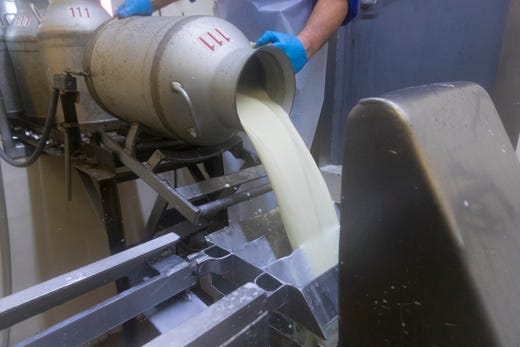
 Optimism, disappointment and a few frustrations marked 2018 for the dairy industry.
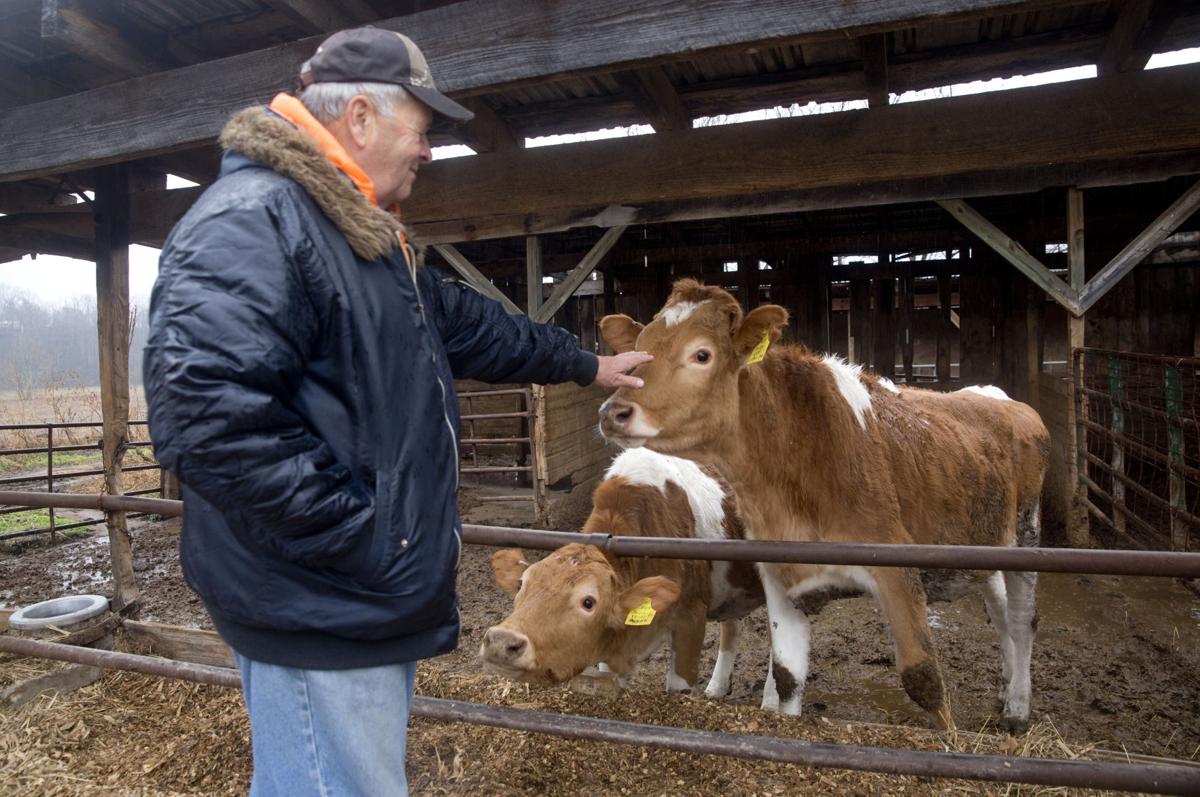 Callaway dairy farmer Cline Brubaker’s process of gradually allowing his herd to shrink was completed this fall when he sold off the last of his milking cows.

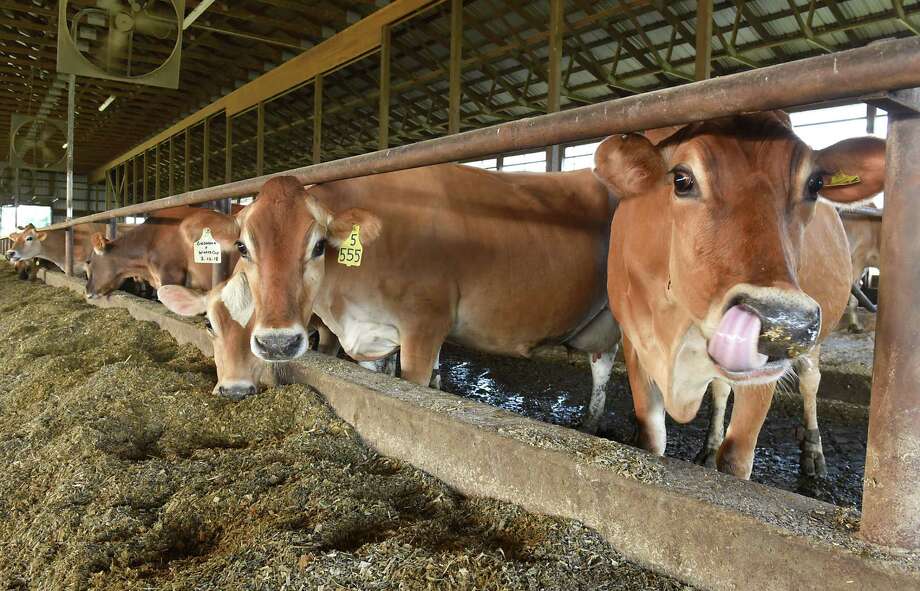 After four straight years of declining profits in New York’s dairy industry — one that’s already taken a beating from trade disputes and labor costs — 2019 is expected to bring only “marginal” improvements, professionals say.
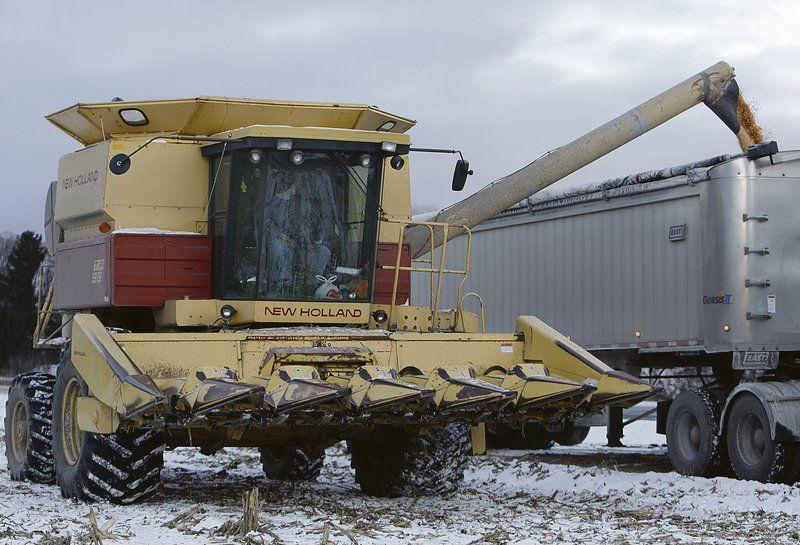 The Agriculture Improvement Act of 2018, also known as the farm bill, was passed last week with bipartisan support in both chambers of Congress.
 More than 80 English and Welsh milk producers left the sector in October and November, a greater number than in the whole of the preceding 12 months.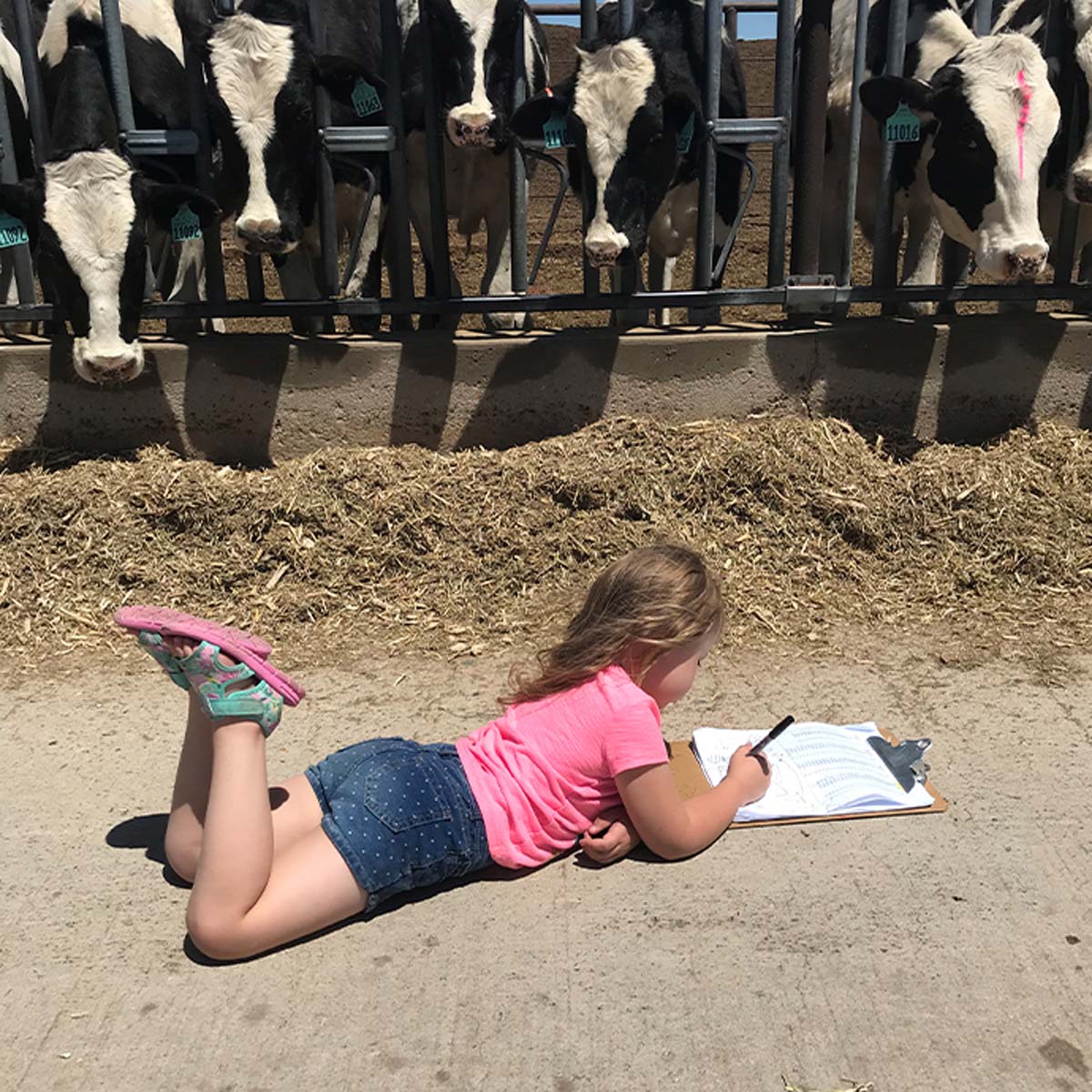
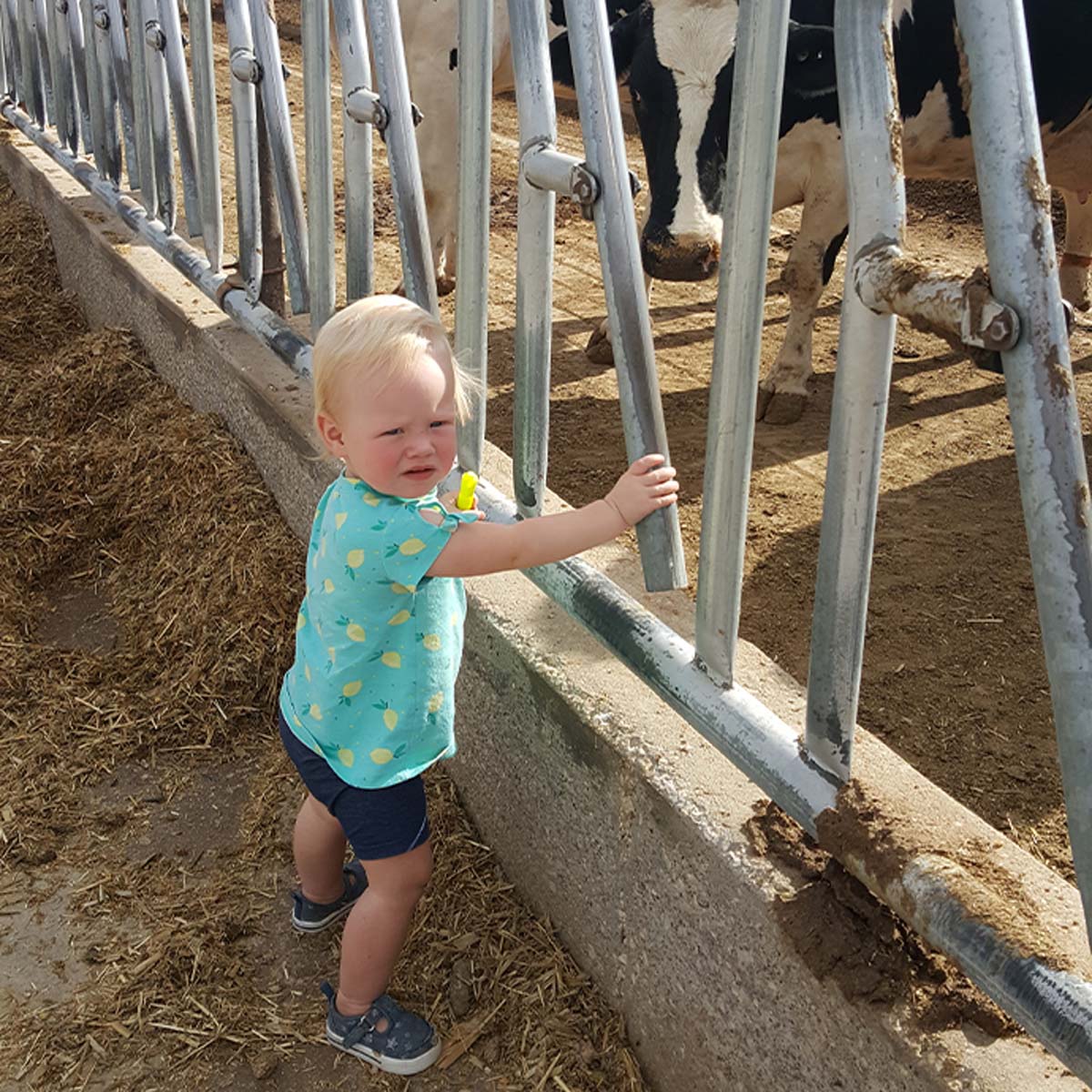
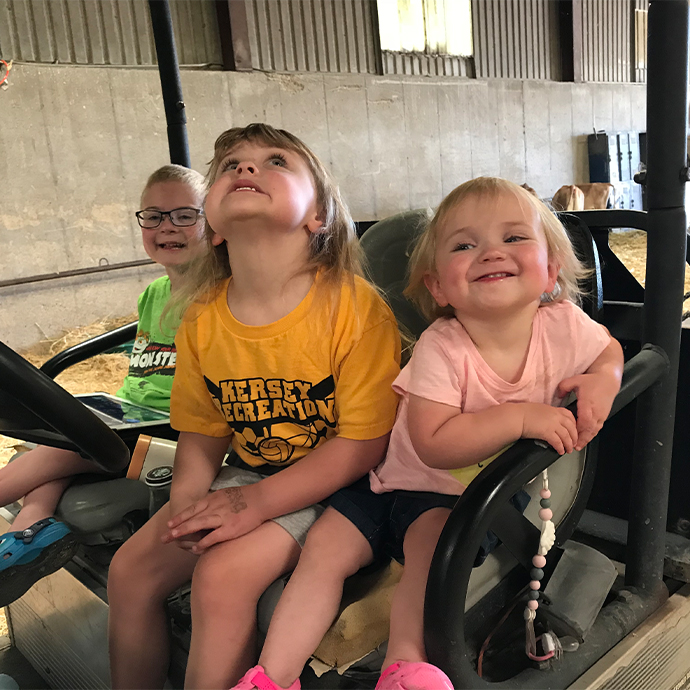
.jpg)
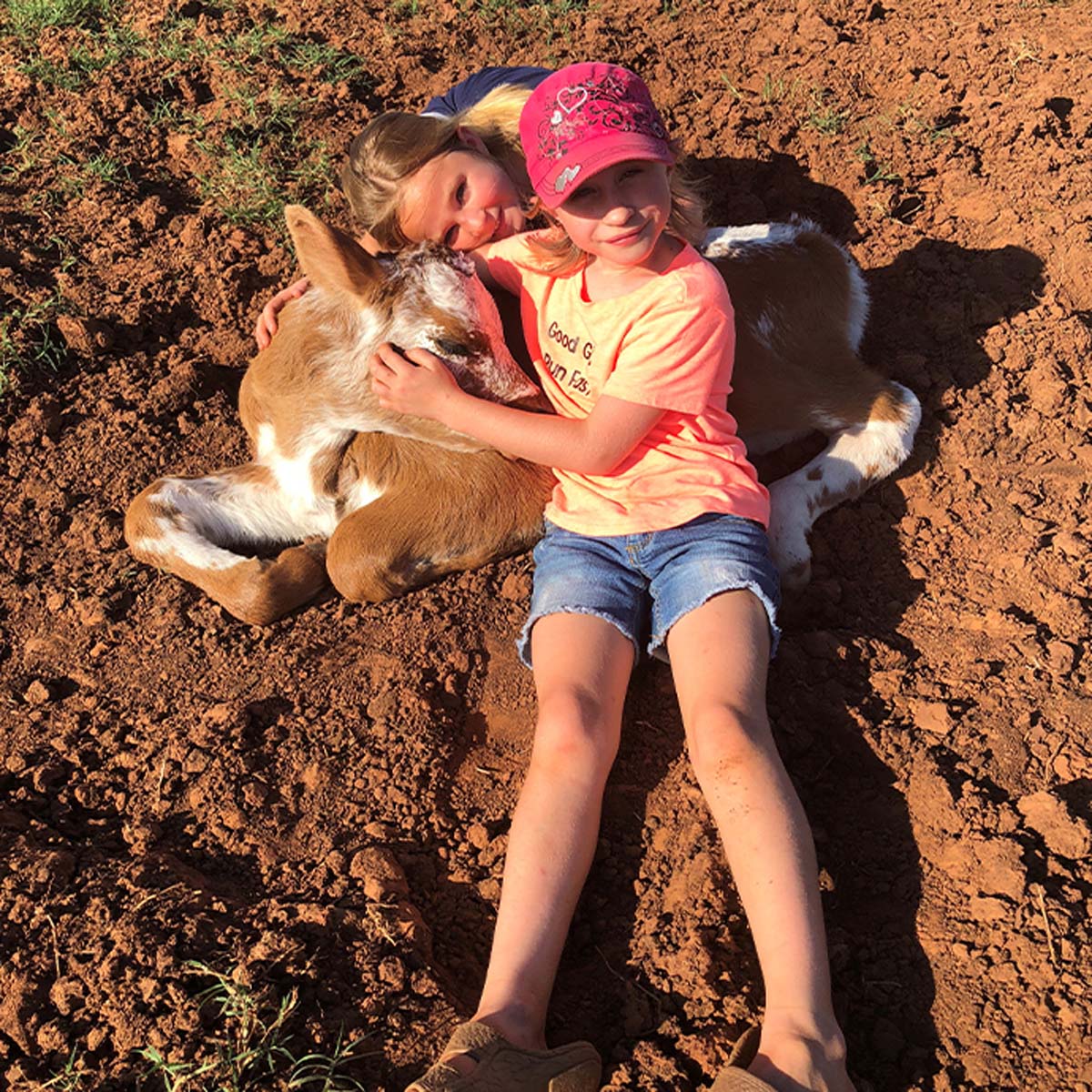
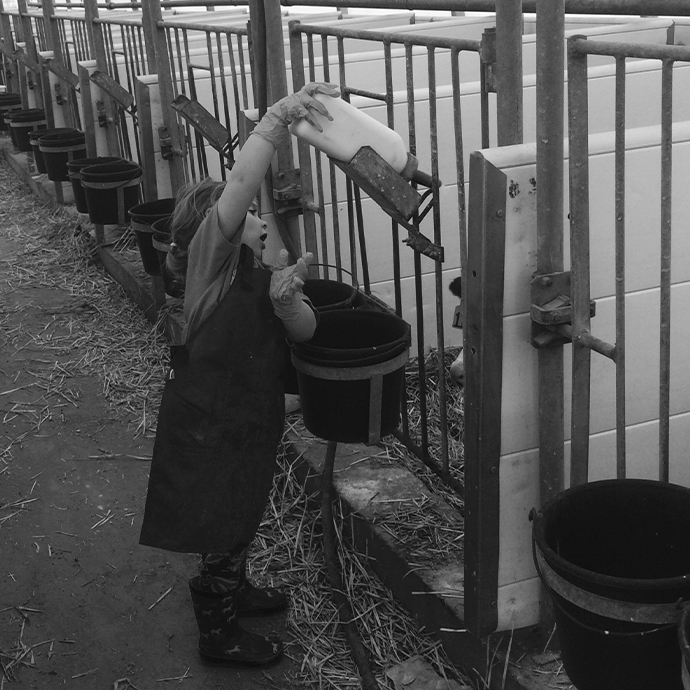
.jpg)
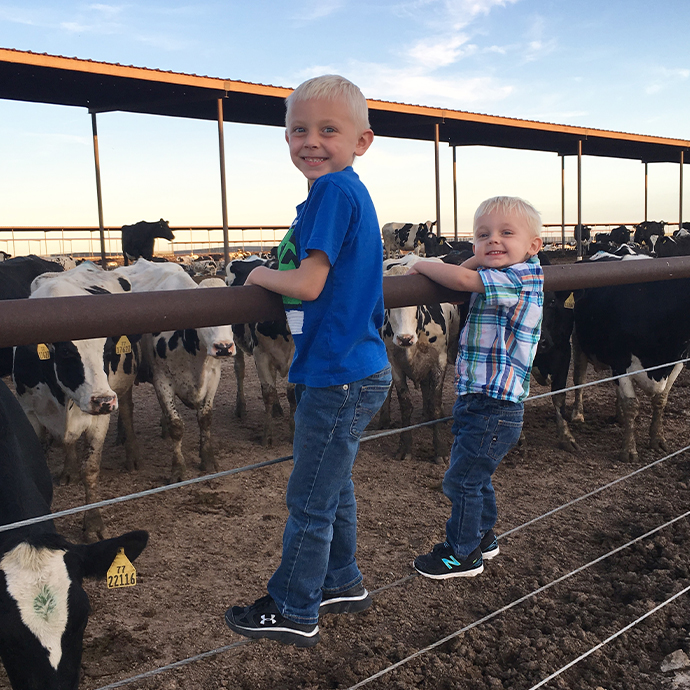

 Milk prices were a record high in 2014 with Class III averaging $22.34 and Class IV averaging $22.09. For the past four years milk prices have averaged well below this record. This year, despite a lower growth in milk production, up just 0.7% in October and 0.6% in November, the Class III price has fallen each month since the peak of $16.09 in September. December Class III is estimated to be around $13.85 making the average for the year around $14.60, the lowest average of the past four years. This will make the average over the past four years of only about $15.35. Class IV started the year well below $14.00 but improved since ending the year near $15 and averaging about $14.20 for the year, the second lowest average for the past four years with 2016 being the lowest at $13.17. Over the past four years Class IV will average about $14.25.
 Dairy farmers have a stronger safety net against low milk prices and high feed costs under the new federal farm bill, and more federal dollars will be spent to spur international trade of American agricultural products.
 Cline Brubaker bought his dad’s dairy farm in 1967, but he has no plans to entice his own children into the family business. He shut down his farm in October after more than 50 years of milking cows and plans to begin selling off his land.


 With more than 1,200 cows being milked on his West Charlton farm, David Wood knows the years-long struggles of dairy farming with low prices and other problems.
 China will see significant growth potential in the consumption of organic milk, yogurt and cheese products, fueled by increasing demand for premium products from quality-conscious consumers, according to a new report.
 As we move toward the end of yet another financially challenging year in the dairy industry, it’s important to look forward to how we can best address the many challenges before us.
 AUSTRALIA’S dairy farmers, processors and manufacturers will start work next autumn on a co-ordinated national plan that will map out a future direction for the troubled industry.
 Wisconsin’s declining dairy industry can be saved.
 Uruguay’s exports of dairy products between January and November were worth 636 million US dollars, which represents a 17% increase compared to the same period last year, the National Milk Institute (INALE) announced Monday.
 Children’s Hospital of Wisconsin has launched the Dairy Cares of Wisconsin Simulation Lab, a state-of-the-art training facility that will allow medical professionals to learn and sharpen their skills.
 Holstein Canada, Brantford, Ont., recently announced the finalists for its 2018 “Cow of the Year” award.
/arc-anglerfish-syd-prod-nzme.s3.amazonaws.com/public/6VGPJHGBCFG5LDEVWHYGAKCBJM.jpg) Fonterra said it planned to help farmers take some of the guesswork out of their finances by introducing a fixed milk price.
Fonterra said it planned to help farmers take some of the guesswork out of their finances by introducing a fixed milk price. Dairy farmers are a hardy lot.
-2.jpg?width=749&name=al%20chart4%20(2)-2.jpg)
-1.png?width=749&name=al%20chart2%20(2)-1.png)
-1.png?width=745&name=al%20chart3%20(2)-1.png)
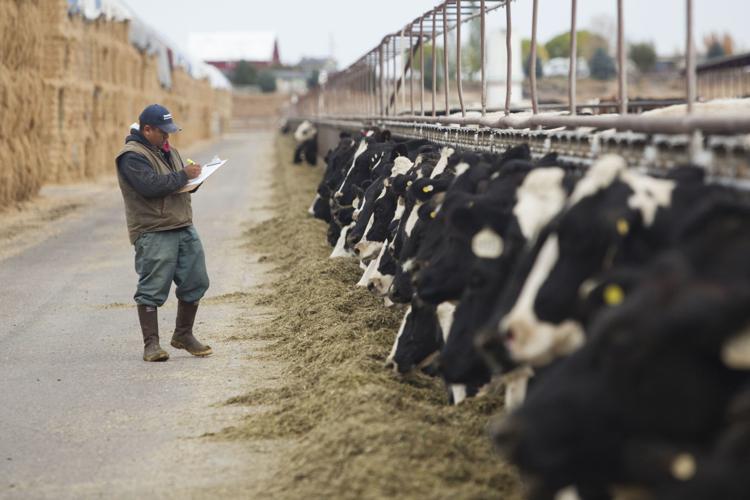 Selling U.S. dairy products is more than just convincing buyers in Southeast Asia or Nigeria to drink more milk.



