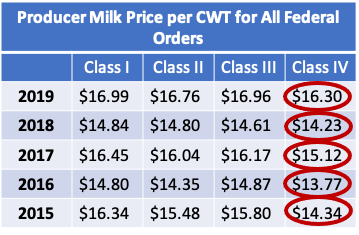
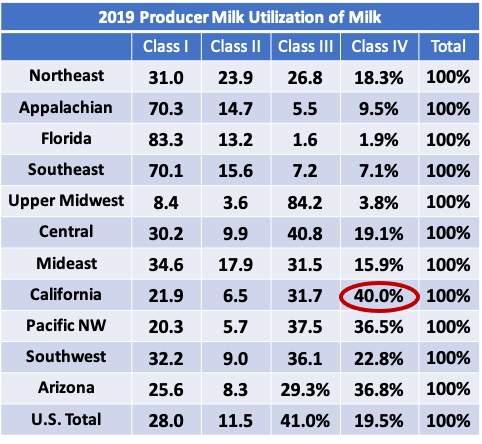
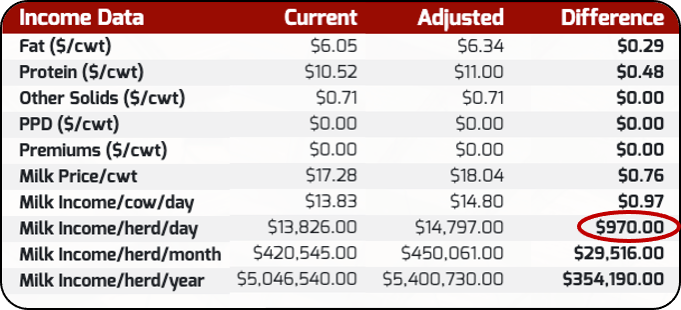
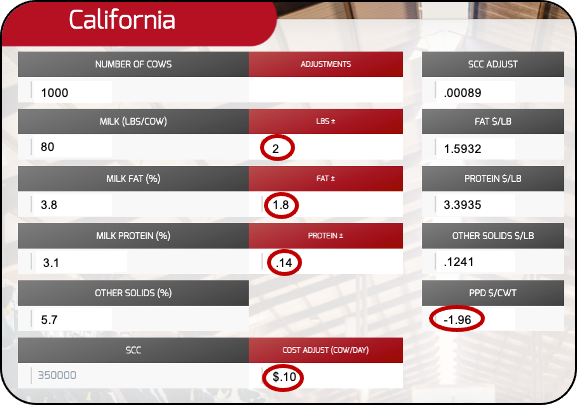
The signup deadline for the Dairy Margin Coverage Program is coming up on December 11th, and the American Farm Bureau says the number of dairy operations signed up is lower than expected.
So far, 7,846 operations have enrolled in the program, covering about 64 billion pounds of milk. Those numbers account for just under one-third of the total number of U.S. operations and the total volume of milk. Approximately 68 percent of the country’s licensed operations with established production histories have not signed up for the program.
Next year’s 7,846 operations enrolled is more than 23,000 fewer operations than signed up in 2019, when 13,468 dairy farms enrolled in the program. The drop in 2020’s dairy enrollments was due in part to somewhat positive expectations for the dairy industry going into 2020. The low level of signups just days before the deadline is surprising, given the benefits of enrolling for 2021. A rally in commodity prices may be helpful to many farmers, but it does make feed costs higher for dairy producers.
The rising price of feed will squeeze the margins of dairy farmers, and that should make programs like the DMC more attractive to producers. Coverage is available from as low as $4 per hundredweight to as much as $9.50 per hundredweight.
The S&P/NZX 50 Index fell 35.74 points, or 0.3 percent, to 12,732.78. Within the index, 23 stocks rose, 23 fell and four were unchanged. Turnover was $186.9 million.
A2 Milk Company declined 3.6 percent to $14.21 today, after a late surge in the NZX trading session yesterday saw the stock close higher in New Zealand than across the Tasman.
Australia’s tense relationship with China, which has imposed a number of barriers and tariffs on exports, is also weighing on investor sentiment as the company is heavily exposed to China.
The dual-listed stock fell sharply today as it caught up with its foreign exempt listing on the ASX, said Grant Williamson, director at Hamilton Hindin Greene.
“On the match yesterday, it did get bought up a wee bit, so it actually closed at quite a difference,” he said. “In Australia it is down 1.2 percent today, so it is really just playing catch up to that price today.”
Sky Network Television shares took a tumble after chief executive Martin Stewart said he was leaving the company to return to Europe after just 21 months in the role.
His departure leaves the pay-TV operator in the early stages of its turnaround plan as the ailing company adapts to the digital environment. Investors sold the stock, pushing the price down 3.6 percent to 16.2 cents.
“The market doesn’t like this uncertainty of having to go out and find a new CEO, and you do often see a little bit of selling as some investors think there could be reasons behind the resignation,” Williamson said.
On the other side of the board, Pushpay shares jumped 6.2 percent to $1.88 after completing its four-for-one share split. In absence of other news, it appears the artificially low sticker price prompted the sudden surge.
Williamson said a lower price can create temporary buying interest, although ultimately the price will settle on fundamentals.
“A share split shouldn’t change the value of a company, but in the eyes of some investors it is more attractive to be buying a lower price stock,” he said.
Some property stocks saw gains after a string of successful October/November earnings results. Kiwi Property Group rose 2.1 percent to $1.205, Argosy Property climbed 1.7 percent to $1.515, and Fletcher Building was up 2.5 percent at $6.15.
Vista Group International’s executive chair Kirk Senior will step down at the end of the year, replaced by independent board member Susan Peterson. Shares were unchanged at $1.75.
The kiwi dollar continued its steady march upwards, trading at 70.34 US cents at 5pm in Wellington, up from 70.13 cents yesterday.
Weaker economic data released in America overnight supported the greenback, pulling the kiwi back from a recent high of 70.50 US cents at one point during trading.
ASB economist Mike Jones noted a technical indicator was showing the currency had been overbought and it may fall from these highs.
The trade-weighted index was at 74.19 at 5pm, from 73.94 yesterday. The kiwi traded at 95.48 Australian cents from 95.16 cents, 73.45 yen from 72.89 yen, 58.81 euro cents from 58.81 cents, 52.65 British pence from 52.45 pence, and 4.6265 Chinese yuan from 4.6135 yuan.
The IFCN Top 20 Milk Processors List provides validated, comparable data to better understand the largest dairy processors worldwide. In 2020, IFCN has extended its research about these processors and has created the world’s first dairy processor report: a fact book that makes dairy processing companies comparable. Analysing a wider set of sources and data, it illustrates the contributions of milk processors with a focus on people, planet and profits.
The Top 20 dairy companies in 2019
Milk volume and market share: The Top 20 milk processors represent 25% of the milk produced globally by collecting 211 mill t milk. Their milk intake has increased annually by around 2.4% during the 2014-2019 period, which is broadly in line with global milk production growth.
The top 20 dairy companies: The majority of the Top 20 dairy processors is located in Europe, with
ten of them having their global headquarters based there. Six of them are located in North-America,
three in Asia, and one in Oceania. The top 3 dairy companies by milk intake are: 1) DFA (Dairy
Farmers of America), 2) Fonterra and 3) Lactalis. By turnover, IFCN data show Lactalis as ranked first, followed by Nestlé and Danone in second and third place.
Changes in the ranking by milk intake: In line with the last ranking published in 2018, Dairy Farmers of America continues to top the list in 2020. The top seven processors – DFA, Fonterra, Lactalis, Arla, Nestlé, FrieslandCampina and Saputo – maintained their positions compared with the previous ranking in 2018. The top 10 ranking is completed by Amul, Yili and Mengniu, three Asian dairies, which also showed the biggest increase in the ranking. Land O’Lakes and Leprino are the
“newcomers” in the 2020 ranking.
People, planet and profit of the Top 20 dairy companies in 2019
People: By collecting and processing 211 billion litres of milk, the Top 20 dairy processors not only
serve the dairy needs of over one billion people, they also contribute over USD 100 billion dollar
annually to society. Of these, USD 71 billion go for example to dairy farmers and USD 21 billion are paid to 460,000 employees.
Planet: In terms of sustainability goals, 20 out of the 20 Top 20 dairy processors report on climate
and sustainability monitoring and 10 out of the 20 declared to become carbon neutral by 2050.
Profit: The EBITDA margin for all processors over the years 2014 – 2019 was on average around 8%, even though the range between companies is much wider between 1% to 20%.
IFCN Top 20 Dairy Processors list by milk intake in 2019
When Melissa Johnson first suggested the idea of selling raw milk in bottles from a vending machine, her husband thought it was a “stupid idea for hippies”.
Just over three years and two vending machines later, the Southland partners in life and business are delivering hundreds of bottles to thousands of customers across the South every week.
Following a decision to downsize and do their own thing, the former large-scale contract milkers started their milk business, Farm Fresh South, in Woodlands, with 35 calves in 2017.
Mrs Johnson spotted a raw milk vending machine when holidaying near Nelson and liked the business concept.
She then persuaded her husband, Logan.
“People love it, they say it tastes better [than heavily pasteurised milk], there’s a lot of people who like the idea of it being in glass bottles because it takes them back to old times, and there’s also the environmental element,” she said.
The original plan was to solely run the vending machine at their Woodlands milking shed and enjoy a quiet life.
However, slowing down was not on the cards for the Johnsons.
As well as the on-site vending machine, the pair, with the help of two drivers and an “all-rounder”, delivered hundreds of bottles of raw and pasteurised milk each week, and also supplied shops, cafes and local supermarkets from Wanaka to Rakiura/Stewart Island.
They then added vegetables, meat, eggs, nuts and other goods from Southland and Otago producers to their delivery run.
“We haven’t had a day off since … we have a lot of area covered when it comes to deliveries.”
Last month, they launched their second vending machine with pasteurised milk at Bliss Cafe in Windsor, Invercargill.
Mr Johnson said he was waiting in the car outside the cafe when the idea popped into his head.
“I saw how much foot traffic there was with the supermarket right there.
“I ended up pulling the car over on the way home to ring up the owner and ask them [if we could put a machine there].”
Bringing another vending machine down from Northland, the movers had not tethered properly and it fell apart.
It took a few weeks to get it fixed.
Now up-and-running in the Invercargill suburb with a busy customer base, they had not ruled-out establishing more vending machines around the region and expanding the business further.
“The goal is to make sure everyone has a chance to try milk how it should be.”
The FAO Dairy Price Index averaged 105.3 points in November, up 0.9 points (0.9 percent) month-on-month, continuing the upward trend registered in recent months and nearing an 18-month record high. The latest rise was largely driven by firmer butter and cheese prices, reflecting steady increases in global import demand and a surge in retail sales in Europe coinciding with the region’s milk production reaching seasonal lows. By contrast, following six months of consecutive increases, skim milk powder prices dropped due to a slower pace of purchases in Asia, especially China, coupled with increased global export availabilities, including India’s powder surpluses. Despite a rise in demand for spot supplies from the Middle East and North Africa, especially Algeria, smaller purchases by China weighed on whole milk powder price quotations.
Vermont Creamery expanded in 2019 in part to make new products, like boxed cultured butter. Photo by Mike Dougherty/VTDigger
2020 has been a tough year for Vermont dairy producers. The pandemic has spurred heavy losses across the industry. Prices have been so low, there’s even been milk dumping. Some dairy farmers have shut their barn doors for good.
But with more people staying home since March, butter makers say Vermonters are buying their product for home use in greater quantities than in years past. The sales uptick is a bright spot in what’s otherwise been a brutal stretch for Vermont’s banner industry.
Early in the pandemic, butter makers faced the same obstacles as other dairy producers: Sales to schools, hospitals, and — most importantly — restaurants dropped sharply as those establishments shut their doors or filled fewer wholesale orders.
Restaurant and institutional sales are still down, state agriculture officials said, but a renewed interest in home cooking and locally sourced products has helped butter rebound.
“Butter has been an interesting story this year because people have done a lot of comfort baking and started making a lot more food at home,” said Laura Ginsburg, agricultural development section chief for Vermont’s Agency of Agriculture. “For butter makers in Vermont, their markets have come back and have come back well.”
Butter makes up a small chunk of Vermont’s dairy industry. There are seven licensed butter-makers in the state, according to E.B Flory, dairy section chief of the Vermont Agency of Agriculture. Four of those producers use their own milk. The remaining three obtain milk from Vermont-based farms.
They range in size from dairy giant Cabot, which sources from hundreds of farms across New England, to tiny artisanal producers with just a few cows.
Stina Kutzer owns Gammelgården Creamery, a five-cow dairy farm in Pownal that makes cultured butter and buttermilk along with a popular low-fat Scandinavian yogurt. Before the pandemic, the creamery sold much of its product to Williams College. That changed when the college went all-remote in March.
Gammelgården shifted to distributing mainly to co-ops in Southern Vermont and began shipping orders for the first time. The creamery doesn’t produce anywhere near the quantity of butter made by large-scale manufacturers like Cabot, but Gammelgården’s butter is flying off shelves, Kutzer said.
VTDigger is underwritten by:
“We sell out of butter and buttermilk every week,” Kutzer said of business this fall. “We have been pretty busy when I thought we’d be sunk.”
The creamery has more than doubled butter output since last year, Kutzer said, when she used to hand-produce about 5 pounds of butter per week. That number is up to 12 pounds each week this fall, she estimated.
Kutzer believes the increased demand can be attributed not only to people cooking and baking more at home, but also to an appreciation for local ingredients.
“Cultured butter is really tasty, and I think if you’re baking, you appreciate that more than you would if you’re eating out,” she said.
Attitudes change about butter
In addition to artisan farms like Gammelgården, large producers like Cabot reported upticks in retail butter sales this fall, despite restaurant and other institutional sales remaining down.
“Butter has certainly had a resurgence,” said Amber Sheridan, corporate communications director for Agrimark Family Dairy Farms, which owns the Cabot brand.
Dips in Cabot’s wholesale numbers to restaurants haven’t been fully canceled out by higher retail demand, Sheridan said. Still, “retail sales of grocery butter are certainly really strong,” she said. “We’ve seen a nice increase over previous years in that area.”
Butter is booming not just in Vermont, but nationwide. Butter production is up more than 5% this fall compared to last year, according to the U.S. Department of Agriculture. Beyond people cooking and baking more at home, that increase may also be attributable to several years of changing health attitudes about whole-fat dairy products, according to Ginsburg.
“Butter’s notoriety as being bad for you has changed over the past couple of years,” she said. “The pendulum has started to swing back towards real cow butter, or butter made from milk, as being the better choice over margarine or other substitutes.”
Vermont dairy farms that don’t make butter themselves, but supply cream to small producers that do, also reported spikes in demand for the heavy cream that gets churned into butter.
Monument Farms in Weybridge, which provides heavy cream to Waitsfield butter maker Ploughgate Creamery, has hardly been able to keep up with demand for that cream, according to plant manager Jon Rooney.
“A lot of our cream had gone to restaurants in the past, and those sales are certainly off,” Rooney said. “But we somehow still seem to be tight on cream, so I shudder to think what it’ll be like when restaurants do kick back into full gear.”
Ginsburg said that a concern heading into the new year remains helping producers market and sell butter, and other dairy products, in a constantly changing market like the one Kutzer experienced in March — one where restaurant and other institutional sales are likely to keep shifting, depending on state Covid orders and wholesale buyers’ needs.
For now, Kutzer said she has been pleasantly surprised by the demand for her small-batch butter after several tough years for her farm.
“We’ve been in business for a little over 10 years, and at the beginning local foods really seemed to take off,” Kutzer said. “Then a few years ago, it seemed to really plateau. Now it seems like there’s a resurgence of appreciation for local foods and small producer foods, which I think the pandemic has created.”
Recipients of Illinois Milk Producers Association 2020 recognition awards have been announced. The Dairy Industry Service Award and the Sustainability Award showcase leadership, stewardship and excellence in the Illinois dairy industry.
Leanne Casner of Christian County is the recipient of the 2020 Dairy Industry Service Award. This award recognizes an Illinois individual who has shown exemplary service and benefit to the state’s dairy industry.
Casner grew up on the family dairy farm and later returned after college and three years of service in the U.S. Army. She has worked full time on the farm since 2009, overseeing new hires, breeding decisions and heifer reproduction.
Casner also runs a Facebook page, Daily Dose of Dairy, to clarify myths and present facts behind the dairy industry and milk. She often welcomes visitors to the farm for tours and agriculture education opportunities.
The 2020 Dairy Sustainability Award recognizes an Illinois dairy farm or dairy farmer who has made outstanding contributions toward innovative technologies and best management practices to improve environmental stewardship and economic viability. This year’s award recognizes the Kilgus Farmstead in Livingston County.
The Kilguses — Paul, Matt, Justin and Trent — and their families run a second-generation family dairy farm in Fairbury. The dairy was started by Paul’s parents in 1958.
Over the years, the Kilguses have devised solutions to diversify the farm business and include more family members. One of these decisions was the construction of an on-farm creamery. In 2009, Kilgus Dairy began bottling and distributing their own milk and Kilgus Farmstead was born.
Environmental sustainability is achieved on the Kilgus dairy farm through practices such as reducing soil loss with pasture rotational grazing, using crop rotation to minimize weed-insect-disease pressure, improving soil fertility with manure management, and using compost bedded cow housing which increases cow comfort and longevity.
Kilgus Farmstead products — including fresh pasteurized milk, Jersey beef, Berkshire pork and Boer goat meat — can be found in a wide variety of restaurant and retail locations throughout central Illinois and the Chicagoland area, in addition to their own Kilgus Farmstead Country Store located at the farm.
Understanding farmgate milk pricing just became a lot easier, with the launch of the online Milk Value Portal.
The new interactive tool, which is designed demystify and provide a deeper understanding of what farmgate milk price is and the key drivers, was launched on Thursday.
For the first time, dairy farmers and industry observers will be able to gain a comprehensive understanding of average Australian farmgate milk pricing and the value of raw milk, at a specific time of the year by region and key production parameters.
In addition to providing an answer to the question, “what is the milk price?” the Milk Value Portal addresses what drives the milk price, providing relevant intelligence and insights into dairy markets and supply chain influences on the farmgate milk price.
At the core of the Milk Value Portal is the Farmgate Milk Value Tool that enables an interactive experience on farmgate milk value, based on current and verified processor data.
The Farmgate Milk Value Tool uses raw milk pricing data from dairy processors and aggregates it in an easy to understand format that all visitors can easily interpret and use to gain a deeper understanding of the value of raw milk, that may then contribute to better business decisions.
This data is volume weighted so that value averages and ranges can be presented clearly, making market knowledge more familiar and accessible.
Farmonline: Introducing the Milk Value Portal
Visitors to the Milk Value Portal can select parameters to suit their needs, such as region, farm size, milk components (fat and protein content) and seasonal supply curve and discover the weighted average value of raw milk in cents per litre or dollars per kilogram of milk solids, for a particular time of the year.
The Australian Dairy Products Federation president Grant Crothers believes the new tool marks a turning point in farmgate milk pricing transparency.
“Key events have changed the dairy industry over the last five years, contributing to an erosion of trust,’ Mr Crothers said.
“Farmgate milk price is more complex than we would like, and many industry participants aren’t aware of the different factors that make up the market for milk at farmgate, resulting in business planning challenges.
“Through the Australian Dairy Products Federation, processors are providing uniquely insightful data that delivers a deeper understanding of farmgate milk prices so that dairy farming enterprises can make better business decisions.”
As well as having key data available, visitors to the portal will see insights to help them understand the average farmgate milk price and value of raw milk at any particular time of the year, featuring local and global market data, and “what-if” scenarios showing the impacts of changes in dairy commodity prices and exchange rates.
“There is no other jurisdiction that has anything like this comprehensive portal, and it has been developed and paid for by processors based on the seriousness they place on farmgate milk price transparency and establishing the right frameworks to make better business decisions,” Mr Crothers said.
“It’s all about having a credible, single source of information on farmgate milk pricing for each milk production region in the country.”
Mr Crothers also said that initiatives like the Milk Value Portal are helping create a more united dairy industry.
“Post COVID, we are in a localisation phase and with a strong farmgate milk price and good seasonal conditions, profitability driving growth and profitability in dairy farming, it is a great time to shine a light on what we’re good at – and in Australia we are the ‘world’s best’ at dairy,” he said.
Harrisville dairy farmer Paul Roderick hailed the Milk Value Portal as a victory for facts over hearsay.
“Over the years at meetings, we talk about what processors pay – but we never actually know,” Mr Roderick said.
“The Milk Value Portal lifts the curtain.
“We can finally see what different regions get paid.
“Goodbye hearsay. Hello facts.”
The dairy industry has become way more complex. The Milk Value Portal gives me more confidence on what is happening by showing me how the Australian dollar and world markets influence the milk price. – Daryl Hoey, Gippsland dairy farmer
Gippsland dairy farmer Daryl Hoey also praised the portal, saying it would help farmers understand how global markets influence farmgate milk prices.
“The dairy industry has become way more complex,” Mr Hoey said.
The Milk Value Portal gives me more confidence on what is happening by showing me how the Australian dollar and world markets influence the milk price.”
The Australian Dairy Products and dairy processors have joined together to create the Milk Value Portal.
ADPF executive director Janine Waller said the portal had the ability to strengthen relationships between dairy farmers and processors.
“Dairy processors continue to work tirelessly to deliver on a key ADPF strategic objective of rebuilding trusted farmer and processors partnerships, along with commitment five of the Australian Dairy Plan that calls to restore trust and transparency between farmers and processors to strengthen industry confidence,” Ms Waller said.
The Milk Value Portal has been made possible by the expertise of Freshagenda, and the support of dairy processors and Dairy Australia.
These companies include 24 industrial licenses; while 93% of them are commercial and 4% are related to Industry.
Dubai Economy said the numbers reflect its efforts to deliver value-added services to the public in Dubai to facilitate doing business. The report also supports the Dubai Industrial Strategy 2030, which aims to make Dubai a global hub for business and industries based on knowledge, innovation and sustainability.
The top ten areas where the companies engaged in dairy production and industry are based are: Burj Khalifa; Bur Dubai; Al Ras; Ras Al Khor Industrial Area 3; Trade Centre 1; Port Said; Oud Metha; Hor Al Anz East; Al Karama; and Al Garhoud.
Limited Liability companies accounted for 83% of the total, followed by Sole Establishments 11%, and One-Person Limited Liability Companies at 2%. The rest of the legal forms included; Civil Works companies; Branches of companies based in other Emirates; Branches of Free Zone Companies; Branches of Foreign Companies; Branches of Gulf Companies; General Partnership Companies; and Public Shareholding Companies.
“Dairy and food derivatives industry is an essential component of the local industry and contributes to achieving food security and self-reliance. Local companies have many opportunities to support their development, as the future growth of the population in the UAE leads to an increase in consumption. The geographical proximity of production and the speed of supply assure high quality products for customers,” said Walid Abdel Malik, director of the BRL Business Registration Division.
Saeed Juma Bin Subaih, general manager of the Emirates Industry for Camel Milk & Products Camelicious, said, “We are proud to be among the local companies that contribute to achieving the food security of the UAE by producing more than four million liters of camel milk annually, which are distributed through 65 different products. We also export them to more than 16 countries, such as China, Russia, USA, and Japan, as well as the European Union.”
Camelicious is the largest facility in the world for the production of camel milk in terms of quantity and product range. The company has 9,000 camels with the goal of reaching 20,000 within the next five years.
The announcement today by the Honourable Marie-Claude Bibeau, Minister of Agriculture and Agri-Food, of the second year of promised compensation for concessions made to domestic dairy production as part of the Comprehensive Economic and Trade Agreement (CETA) and the Comprehensive and Progressive Agreement for Trans-Pacific Partnership (CPTPP) as well as the schedule of payments for the remaining balance provides more certainty for dairy farmers, according to Dairy Farmers of Canada (DFC).
“Dairy farmers want to invest in their farms to innovate and increase efficiencies. Our objective is to be better prepared to face the intensification of competition from imported dairy products made from milk produced elsewhere, as a result of CETA, CPTPP and more recently the Canada-US-Mexico Agreement (CUSMA). These important investments on the farm can only come with a level of certainty as it relates to the promised compensation. Reducing the timelines for the scheduled payments is recognition by the government of the importance of the foreign competition we face, this is why today’s announcement is so significant,” said Pierre Lampron, President of DFC.
In 2020, DFC had three items to achieve on its workplan with government:
Obtaining the payment for year two of the government’s eight-year compensation package for CETA and CPTPP;
Developing a schedule of payments for the remaining years; and
Developing a plan for full and fair compensation for CUSMA.
“I want to thank Prime Minister Trudeau for following up on his commitment. We now turn our attention to the last item on the workplan, compensation for CUSMA, and we look forward to engaging with Deputy Prime Minister Freeland and Minister Bibeau,” Mr. Lampron added.
The House of Commons adopted unanimously last Thursday a motion in support of compensation for the supply managed sectors, including dairy. “I want to thank all MPs in the House of Commons who supported it, and I want to acknowledge their support on this file,” said Mr. Lampron.
The Canadian dairy farming sector is an important driver of the Canadian economy but its ability to succeed has been jeopardized by the signing of these three trade agreements. By 2024, 18% of our domestic dairy production will have been outsourced to foreign producers who will supply milk for imported dairy products that wind up on Canadian store shelves.
A healthy and vibrant dairy sector will also play an essential role in ensuring Canada’s post-pandemic recovery, and in providing greater food security for Canadians. The dairy sector supports over 221,000 full-time jobs, contributes $19.9 billion annually to Canada’s GDP, and generates $3.8 billion in tax revenue every year.
ABOUT DAIRY FARMERS OF CANADA Dairy Farmers of Canada is the national policy, lobbying and promotional organization representing Canadian dairy producers. DFC strives to create stable conditions for the dairy sector in our country. It also seeks to maintain policies that promote the sustainability of Canadian dairy production and promote dairy products and their health benefits.
As dairy farmers cop the longest delay on a spring price step-up in two decades, their frustration is boiling over — and curdling into outrage. This is what they and their leaders say needs to happen now.
With summer just days away, dairy farmers nationwide are venting their frustration with Australia’s major processors as hopes of a springtime price step-up evaporate.
Today marks the 21st week since the start of the 2020-21 season with no farmgate step-up in sight — the longest price impasse in two decades, aside from the fallout following the 2016 clawback by Fonterra and Murray Goulburn.
Fonterra is yet to move from its average farmgate price of $6.40/kg of milk solids offered prior to the July 1 opening.
The Auckland-based processor kicked off its average farmgate price on June 1 at a dismal $6.06/kg of milk solids — prompting a backlash from suppliers forcing Fonterra to bump it up to $6.40/kg, where it remains today.
Saputo also opened at $6.40/kg while Bega split its average figure down regional lines — $6.40 offered to southern Victoria suppliers and $6.55/kg of milk solids to northern Victoria.
Bega pricing status remains the big unknown, with the processor placed in a trading halt this week ahead of an expected multimillion-dollar purchase of Lion Dairy and Drinks from Japanese conglomerate Kirin.
United Dairyfarmers of Victoria president Paul Mumford said processors needed to recognise the industry was tracking well and pass on at least an incremental increase to farmers.
“It’s hard to put a figure on (an average farmgate price rise) but obviously the more the better,” Mr Mumford said.
“Even a 10c step-up in the average shows confidence in the sector. To put farmers in a price holding pattern isn’t fair on the people that produce the raw product — the people that make dairy what it is. There’s a growing view from farmers that a step up is not only the fair thing to do, it’s necessary.”
Farmer Power chief executive Garry Kerr said the denial of a spring step-up from processors would force more primary producers to consider their future.
“How many farmers does it take to leave the dairy industry before the processors start paying a fair price? Every year, the number of dairy farmers declines across Australia and it’s no wonder — they’re not being paid a fair price,” Mr Kerr said.
“Fonterra isn’t worried about Australian dairy farmers in their New Zealand head office; Saputo isn’t worried about Australian farmers in their Canadian head office. That’s what it comes down to — farmers are out of sight, out of mind to these companies.”
Dairy Connect president Graham Forbes said his NSW farmers group was concerned the static farmgate price in Victoria would have a flow-on effect nationally.
“When you have reasonable international prices at the moment, it’s only fair that gets passed on at the farmgate,” he said.
“The fact there’s been no spring step-up in Victoria has that ripple effect here in NSW. It must be remembered that it’s not just the processors that are accountable when it comes to pricing, so are the supermarkets. One of the challenges we face as a sector is that we’ve gone as an industry dominated by co-operatives, run by farmers for farmers, to prices determined overseas, and that’s happened in a very short time frame.”
Management at Bega, Fonterra and Saputo as well as NSW-based co-operative Norco were contacted by The Weekly Times over the status of their respective farmgate prices but did not respond in time for deadline.
Concerns have been raised by Victorian farmers that the mandatory dairy code of conduct — introduced by the Federal Government in January — had distorted the usual farmgate pricing rhythms.
The Federal Government, in consultation with the Australian Competition and Consumer Commission, is set to undertake a review of the code early in the new year.
Southwest Victorian farmer Bernie Free said the ACCC needed to ensure its review was conducted in a timely manner to ensure processors did not use the code as a stalling tactic.
“There are concerns that the mandatory code is being used as an excuse not to raise farmgate prices,” Mr Free said.
“When a review takes place, that needs to be front of mind. The processors are keen to show that they still have the upper hand.”
An ACCC spokesman said the first review of the code must commence “on or after 1 January 2021. There has been no specific date set for the commencement of the review.”
“As mandated by the code, the review will include consultation with a range of dairy industry stakeholders, including farmers,” the spokesman said.
“The code review will be led by the Australian Government. The ACCC, as the agency that enforces the code, expects to be consulted as part of the review.”
Industry Growth Insights (IGI) has published a research report on the Camel Dairy market. The report covers comprehensive data on emerging trends, market drivers, growth opportunities, and restraints that can change the market dynamics of the report. It provides an in-depth analysis of the market segments which include products, applications, and end-user applications.
This report also includes a complete analysis of industry players that cover their latest developments, product portfolio, pricing, mergers, acquisitions, and collaborations. Moreover, it provides crucial strategies that are helping them to expand their market share. The Global Camel Dairy Market research report is prepared by implying robust research methodology and including Porter’s Five Forces analysis to provide the complex matrix of the market.
The Camel Dairy market report covers the comprehensive analysis from the period of 2020-2026. It also provides the historic data of the market that has impacted positively or negatively to the market growth.
Regulatory policies and investment scenarios of the market are curated in a concise manner.
Top-winning market strategies and vital product offerings from the industry players.
A neutral perspective on the Camel Dairy market.
The broad analysis of the emerging trends in the market that helps to identify new market avenues and lucrative opportunities. Moreover, it aids in identifying product segments to maximize revenue and expand the market share.
This report highlights the market propellants, challenges, and threats in the market.
The coronavirus pandemic has had a major impact on Hokkaidō’s dairy farmers, who continue to struggle as demand plummets from school meal providers and the food and beverage industry.
One glimmer of light is the jump in production of matured cheeses by Hokkaidō’s cheesemakers, generating rising demand for milk. This may be the key to saving Hokkaidō’s dairy farmers.
Boosting Cheese Production to Help Dairy Farmers
Fattoria Bio Hokkaidō in Sapporo’s Shiroishi Ward is dedicated to making and selling quality cheeses rivaling those of Italy. Since March 2020, the shop has been working to produce a high-quality cheese named Grana di Ezo that will be matured for eight months before sale.
Takahashi Hiroyuki, president of Fattoria Bio Hokkaidō, explains how the decision to produce a matured cheese came out of the pandemic.
“The coronavirus pandemic has caused dairy farmers to lose a lot of their business with school lunch providers and the food and beverage industry. We have also been affected. We can no longer offer cheese tastings at our shop in the Chitose Airport, orders from restaurants have dwindled significantly, and department stores have had to cancel their Hokkaidō specialty fairs. We really need a product that will not only improve things for us but for dairy farmers as well.”
Fattoria Bio Hokkaidō is best known for its offerings of fresh cheeses like mozzarella, ricotta, and burrata. “Fresh cheese is like tofu,” notes Takahashi. “It tastes best when it’s just been made.”
Unfortunately, the coronavirus has made it impossible to directly sell these kinds of fresh cheeses. If cheese production stops, then orders for fresh milk plummet, a devastating situation for dairy farmers.
A Big Gamble
Takahashi has decided on putting everything his company has into full production of matured cheese at a time when demand is down.
“We were already producing small lots of matured cheese, but it was always a rare item reserved for only those in the know. We’ve changed that policy to make matured cheese our primary product. With this change we will be able to continue buying milk even after the spring and operating at full capacity.”
Takahashi is betting the company will come out on top by undertaking this challenge.
“Grana di Ezo is very much like Grana Padano, a popular matured cheese in Italy. It is, of course, delicious on its own, but can also be grated over salads and pasta, and adds great flavor to soups and stews. This is a wonderful everyday cheese that can be used as a mainstay in any Japanese kitchen, just like miso and soup stock.”
Grana di Ezo is mild without having a milky taste, but it gradually fills your mouth with a rich, full-bodied flavor. This flavor is enhanced when the cheese is used as an ingredient in cooking and is well-suited to the Japanese palate.
Cheese Shops a Boon to Dairy Farmers
Milk production has been declining for some time on a nationwide basis. Hokkaidō, however, which accounts for over 54% of Japan’s milk production, produced 3.92 million tons in fiscal 2017, a slight increase over the preceding year. This figure continued to rise as dairy farmers expanded their facilities and implemented strict quality control measures.
Processed milk products, particularly cheese, have been doing well. There were just 106 cheesemakers in Japan in fiscal 2016; today the number has increased to 319, and nearly 40% are located in Hokkaidō.
The majority of these cheesemakers are directly operated by dairy farms and have been hit hard by the curtailed tourism and economic crunch caused by the coronavirus pandemic. Not a few of these cheesemakers lament that the pandemic has set them back just when business was looking good.
Cheesemaking has been touted as a symbol of a growing “sixth industry” of agricultural production, but while dairy farmers have been able to expand their milk production to include cheesemaking, they have come in for some warranted criticism with respect to their poor efforts in the areas of sales and publicity.
The situation is a little different for Fattoria Bio Hokkaidō, however. “My career has actually been in branding and marketing,” says Takahashi. “I never dreamed I would get involved in cheesemaking until we established the company in 2013.”
From Marketing to Cheesemaking
One of Takahashi’s marketing achievements was a collaborative project with the Sapporo Maruyama Zoo in Sapporo to promote the Polar Bear brand of “Ripe ’n’ dry Salt Ramen.” The product has been selling at a rate of 600,000 packages a month.
“It was Elio Ermanno Orsara, my business partner, who got me involved in cheese,” says Takahashi.
Elio Orsara is the owner-chef of Elio Locanda Italiana, a restaurant in Tokyo’s Kōjimachi district that Takahashi was in the habit of visiting on his trips to the city. One day, Elio approached Takahashi with a proposal: “Japan doesn’t have the kind of delicious cheese I ate as a child in Italy. Maybe we can work together to produce a cheese in Japan that can stand up to its Italian rivals.” Apparently, Elio already had high confidence in Takahashi’s abilituy to pull off such a project.
Italian Craftsmanship and Top-Quality Raw Milk
“We started with a search for raw milk with quality just as high as any that might be found in Italy. It took us nearly five years, but we finally found what we wanted in my homeland of Hokkaidō,” says Takahashi.
Elio says, “Hokkaidō milk is among the best in the world. We knew with this milk we could make cheese just as good as any in Italy.” No time was lost in recruiting experienced Italian cheese master Giovanni Graziano to work in Japan. Graziano also saw great potential in the quality of Hokkaidō’s dairy output.
Graziano left his family behind in Italy to join the project in Japan. The cheese master says, “Our naturally made cheeses condense all the flavor of the best Hokkaidō milk. I want everyone in Japan to enjoy the great taste of our cheeses. We use no fungicides and we do not coat our products with chemicals. All our cheeses are carefully nurtured with tender loving care.”
Graziano’s made-in-Japan cheeses were very quickly awarded medals for their high quality in domestic contests. Today they enjoy the strong support of Japanese cheese aficionados. When the company decided to produce a mature cheese, it was Graziano who suggested it be named “Ezo,” the old name of Hokkaidō, as a mark of appreciation to the region.
Grana di Ezo was made possible with crowdfunding. The project, says Takahashi with pride, “reflects the generosity of people throughout Japan who want to save the Hokkaidō cheesemakers, and particularly the dairy farmers, from the economic impact of the coronavirus pandemic.”
The crowdfunding drive exceeded its original goal of ¥500,000 by nearly five times, bringing in a total of ¥2.34 million. Contributors are now looking forward to their shipments of the cheese that has been maturing over the past eight months. There is also a steady increase in online sales. Still, Takahashi hopes for more.
“We are getting a lot of support from luxury grocery stores with eat-in sections and from supermarkets specializing in the delivery of organic foods and natural foods without additives. I am hoping we can continue to expand our sales routes in this way.”
Will Takahashi succeed with matured cheese as he did with the marketing of an instant ramen brand? Everyone, especially Hokkaidō’s dairy farmers, are watching with eager anticipation
When Canadian trade negotiators begin talks with the United Kingdom next year on a permanent bilateral trade deal, their hands could be tied when it comes to offering any future dairy, egg or poultry concessions — if Parliament passes a new private member’s bill that saw its first hour of debate on Tuesday.
A dairy cow cleans her newly born calf in Saint-Valerien-de-Milton, Que. Canada protects its agriculture supply management system for dairy products, eggs and poultry by carefully controlling access to its domestic market. (Christinne Muschi/Reuters)
When Canadian trade negotiators begin talks with the United Kingdom next year on a permanent bilateral trade deal, their hands could be tied when it comes to offering any future dairy, egg or poultry concessions — if Parliament passes a new private member’s bill that saw its first hour of debate on Tuesday.
Bloc Québécois MP Louis Plamondon’s legislation, Bill C-216, would amend the Department of Foreign Affairs, Trade and Development Act to state that the minister “must not make any commitment … by future trade treaty or agreement” that would increase the tariff rate quota (TRQ) applicable to dairy products, poultry or eggs, or reduce the tariff applicable to those goods when they are imported in excess of that quota.
Canada protects its agriculture supply management system for these commodities by carefully controlling access to its domestic market. Only small quantities of imports are allowed under strict international quotas — TRQs — with high tariffs keeping any extra imports above and beyond these quotas from being cost-competitive.
But the three major trade deals implemented by the Liberal government over the last four years — the Comprehensive Economic and Trade Agreement (CETA) with the European Union, the Comprehensive and Progressive Trans-Pacific Partnership (CPTPP) with 10 other Pacific Rim markets and, most recently, the revised North American Free Trade Agreement (the new NAFTA) — all offered new access to Canada’s domestic market, among other concessions required to land these deals.
“Something very important for milk and egg and poultry production is given away as a token and nothing comes back for those producers, so we say in the law that this should not happen anymore,” Bloc Leader Yves-François Blanchet told CBC News last week.
“[The Liberal government says,] ‘Oh, we will will compensate you. And you know what? They don’t.”
No word on NAFTA compensation
A few weeks before the 2019 general election, Agriculture and Agri-Food Minister Marie-Claude Bibeau announced compensation for dairy farmers to cover their anticipated losses from CETA and CPTPP, which were already both in effect at the time. That financial assistance rolled out last winter.
Help has also been pledged to compensate for the even larger concessions in the new NAFTA but nothing further has been announced. American farmers got access to a greater share of Canada’s starting July 1 — and the new NAFTA also dictates how dairy ingredients can be priced and slapped strict export limits on sensitive global commodities like skim milk powder and baby formula.
If Bloc Quebecois MP Louis Plamondon’s legislation garners enough support to pass in this parliamentary session before the next election, the first trade negotiation it could affect is talks between Canada and the United Kingdom. (Sean Kilpatrick/Canadian Press)
Blanchet slammed Finance Minister Chrystia Freeland for taking so long to present her fall economic update and said her spending plan must include the NAFTA compensation farmers anxiously anticipate.
“This money is owed, is expected [and] is terribly late,” he said.
If Plamondon’s legislation garners enough support to pass in this Parliament before the next election, the first trade negotiation it could affect is talks between Canada and the United Kingdom to reach a permanent, comprehensive deal to liberalize their bilateral trade post-Brexit.
On Saturday, prime ministers and trade ministers from both sides announced they’d reached agreement on a transitional deal to offer continuity for businesses by continuing most of the terms of the CETA past Jan.1, when it was otherwise set to expire because the U.K. is no longer an EU member.
The government won’t release details of exactly what’s in that transitional agreement until the legal text is ready, which usually takes another two to four weeks. But Doug Forsyth, Canada’s lead negotiator in the talks, confirmed previouslythat the British were seeking additional tariff-free access to Canada’s cheese market.
“I want to be very clear that there is no new market access for cheese here in this transition agreement,” International Trade Minister Mary Ng told CBC News at Saturday’s announcement.
But yesterday at the Commons trade committee, Ng’s parliamentary secretary, Rachel Bendayan, said that language in the transitional deal commits both sides to returning to the table to reach what Prime Minister Justin Trudeau has called a “bespoke” bilateral deal by 2024.
That means the British could make another play to get more U.K. cheeses into Canada.
“By 2024, Canada will have transferred 18 per cent of its domestic dairy production to dairy farmers in other countries … that will displace our domestic products on the grocery shelves,” said Pierre Lampron, the president of the Dairy Farmers of Canada, in a statement sent to CBC News last weekend. “Another concession as part of a trade agreement with the U.K. would have been dramatic for the industry.
“Officials had told us there would be no further concessions, and they followed through, but we must remain vigilant as this is a provisional agreement.”
Future vote result unclear
Based on remarks made during Tuesday’s first hour of debate, it appears Conservative MPs may not support this bill, although a party spokesperson has yet to comment on it or confirm how the Official Opposition will vote.
“If this bill passes, we can be sure that potential trade partners will target supply management right off the bat and counter with their own protectionist measures,” Conservative MP Luc Berthold said in French during the debate. “This is like drawing the other side’s attention to a specific negotiation issue that could well force Canada to agree to new concessions…”
“We do not believe that Bill C-216 is a good bill to protect supply management and Canadian producers,” Berthold said.
In an email to CBC News, party spokesperson Melanie Richer said New Democrats agree with the Bloc that compensation has been slow to roll out, adding that “the Liberals added insult to injury by bringing CUSMA into effect several weeks earlier than promised, robbing Canadian dairy farmers of a full year to prepare for the change in their local markets.”
“New Democrats have consistently decried the damage done to Canada’s dairy sector in successive trade deals and we have said we would not do the same,” Richer said. “This bill would add legal force to that position.”
Youmy Han, a spokesperson for Trade Minister Ng, said the government is still studying the bill and would not say how Liberal MPs might vote.
“We have been clear: our government will not grant any further market access in our supply-managed sectors in any future trade negotiation,” Han said.
MPs will vote on the bill at second reading after its second hour of debate, expected later this winter.
An investment of more than $78 million over the past decade by LIC into genomic science and genome sequencing technology is generating markedly increased productivity and health traits for dairy cows and better returns for dairy farmers.
LIC’s Board Chair, Murray King, says the cooperative should be proud that it has built such significant genetic wealth for the New Zealand dairy industry.
“Significant investment has been made to ensure LIC leads the world in pastoral genomic science, the board is pleased to see this paying off, with all shareholders able to share in the productivity and profitability improvements”.
LIC’s General Manager NZ Markets, Malcolm Ellis, says when it comes to breeding, LIC is investing in the long game on behalf of its shareholders, with the big prize to benefit farmers.
“Farmers appreciate the time lag of genetic gain between putting quality genetics into their herd and seeing the resulting benefits. But through sustained farmer shareholder investment and a wealth of genomics data we are delivering an increased rate of genetic gain within the bulls that arrive on farm each year,” says Ellis.
“Coupling this with good cows and a good herd presents a real opportunity to further sharpen up the New Zealand dairy herd’s efficiency – and its ability to deliver significant, sustainable productive and financial gains for farmers and our country overall.”
The use of Genomic Sires has grown significantly since 2017, where just under 400,000 inseminations were completed. This year LIC is expecting to complete 1.4 million genomic inseminations throughout the country, a growth of over 1 million inseminations in just three seasons.
Ellis says LIC is continuing to invest on behalf of its farmer shareholders into R&D including genomics.
“As we invest more into the space, it is pleasing to see more and more farmers utilising genomic sires, creating on-farm value out of an investment that started with innovative foresight nearly 30 years ago.”
LIC’s chief scientist, Richard Spelman, says LIC has been on a genomics journey since the 1990s with the focus being increasing the rate of genetic improvement in New Zealand dairy animals. The cooperative is achieving this by shortening the five-year generation interval by genomically selecting marketable sires up to three years earlier than conventional progeny testing.
“Our journey began in 1994 which was when our gene discovery programme of work commenced,” says Spelman.
“The foresight shown by LIC’s board and shareholders at that time was quite remarkable and it’s what enabled us to develop our platform and build the current genetic wealth our dairy farmers currently share.”
“This science investment has included genotyping over 150 thousand animals, genomically sequencing over one thousand animals and employing smart people to undertake detailed statistical research. This investment has resulted in our work now delivering improved rates of genetic improvement for today’s dairy farmers.”
Spelman also says the journey continues and in February this year LIC released its Single Step Animal Model (SSAM) which uses animal genomic information in a more efficient way; combining ancestry, phenotypic and genomic information all in one step.
“Not only does the SSAM improve the efficiency of our breeding scheme, it also delivers farmers with clearer information on the most profitable and efficient cows on farm for better breeding and culling decisions.”
“We evaluate all information simultaneously compared to previously combined daughter proven data with DNA marker information. By combining all data at once – calculating breeding values for all animals in the population in a single-step, the evaluation is significantly improved.”
Validation of the 2011 to 2014 code cohorts of LIC’s Sire Proving Scheme – animals which now have milking daughters with herd testing data, shows the use of the new SSAM has resulted in an 8% increase in genomic prediction accuracy (i.e. comparing genomic predictions to actual daughter proofs).
Spelman says LIC has added confidence in the model, its results and the new young bulls the cooperative is selecting for breeding.
“We also know that genomic evaluation continues to add value for the lifetime of our bulls. For bulls used over multiple years and in multiple teams, genomics can be adding value a decade after the bull was bred.”
In July 2019, LIC had its 2016 Sire Proving bulls ranked based on SSAM genomic information and they were followed through for the next season as their daughters had their first lactation. The degree of re-ranking with the addition of daughter information was minor with most bulls staying within the quartile they were originally selected.
As well as the 2016 Sire Proving bulls LIC now has information on its 2017 and 2018 Forward Pack teams, the BW they were marketed at, and where they are now compared to daughter proven teams. Again this information shows that while individually animals will re-rank, team BW has been delivered and in many cases, exceeded expectations.
“We are now seeing regular and consistent performance from our genomically selected sires, and our validation is showing that it is likely that a team of bulls will deliver on their genomically predicted BW.”
Japan’s Kirin has found a new Australian buyer for its Lion Dairy business after an earlier A$600m ($442m) sale to a Chinese group was scuttled by rising diplomatic and trade tensions between Beijing and Canberra.
In a statement on Thursday, the Japanese brewer said it has agreed to sell Lion Dairy & Drinks, Australia’s second-biggest milk processor and known for brands such as Pura Milk, Dairy Farmers and Yoplait, for A$560m to Bega Cheese, a local dairy group established in 1899.
The sale at a A$40m discount came after Josh Frydenberg, Australia’s treasurer, told state-owned China Mengniu in August that the takeover of some of the nation’s biggest milk brands should not proceed. Just a few days earlier, China had initiated an anti-dumping inquiry into Australian wine.
Mr Frydenberg’s opposition to the takeover by China Mengniu surprised many analysts, as the dairy assets were already in foreign hands and Australia’s Foreign Investment Review Board had indicated no security concerns over the deal.
Hans Hendrischke, professor of Chinese business at the University of Sydney Business School, said there was a risk the intervention by Canberra would be seen as a tit for tat response to rising trade tensions with Beijing.
“This case certainly adds to the insecurity that Chinese and other foreign investors might currently feel as every single foreign investment deal comes under FIRB screening and new investment regulations are being drafted,” he said.
Sandy Mak, a lawyer at Corrs Chambers Westgarth said the price reduction reflected the fact that the available pool of buyers — and competition — for Lion Dairy shrank after China Mengniu exited the process.
Bega fought off rival bids from Canadian dairy company Saputo and Tanarra Capital, an Australian private equity group.
Kirin said it expected the latest deal to close by the end of March, noting that the Australian Competition & Consumer Commission will not be conducting any public review process after pre-assessing the proposed sale.
For the Japanese group, the sale ends an expensive decades-long foray into the Australian dairy market, which began with the acquisition of National Foods — later renamed Lion — for A$2.8bn in 2007 and the A$884m purchase of Dairy Farmers the following year.
Kirin executives had initially hoped those deals could be used as a springboard to expand into south-east Asia, but analysts said the businesses proved too domestic-focused to fulfil the group’s overseas ambitions.
The brewer’s expansion outside its shrinking home market was also hit by other ill-fated deals in its core beer business, led by a disastrous 2011 foray into Brazil with a $3.9bn acquisition of family-owned Schincariol.
More recently, the Japanese group has sought to diversify from its beer business by strengthening its biotechnology, pharmaceuticals and cosmetics divisions.
Government dairy donation purchases, along with the differing dynamics of retail vs. food-service sales, continue to be the main movers of domestic demand and prices for dairy products as the end of 2020 draws near. Cheese prices rose again in October, capping the second major cheese price run-up of the pandemic, as a second round of government purchases stoked demand. This ended at the beginning of November, when daily cash market prices of both blocks and barrels dropped sharply for more than a week as markets anticipated federal purchases winding down.
Bright spots for dairy in the year’s first three quarters of data include increases in total sales of fluid milk, yogurt and butter, which have been buttressed by strong retail demand. Cheese, meanwhile, has seen mixed progress in commercial use year-to-date, with use that’s been higher for American-type cheese but slightly lower for other types. Export growth has also been strong for dry skim milk, whey products and other than American-type cheese, which has offset the drop in its domestic use. The DMC margin dipped a toe below $9.50 per cwt in September, due to strengthening corn and soybean meal prices that followed modest, but steady declines for the year to that point.
The Washington State Supreme Court ruled the overtime exemption for dairy workers was unconstitutional Nov. 5. Since then, it has been a scramble for dairy farmers and their employees to figure out what to do in the aftermath of a decision that could cost dairy farms up to $120 million for following what was the law at the time.
As previously discussed, the negative effects of this court decision will be felt most sharply by dairy workers themselves as their employers grapple with the potential costs of overtime pay moving forward, including layoffs and a reduction of hours.
The intervenors in the case, the Washington State Dairy Federation and the Washington Farm Bureau, have indicated they are petitioning the court for a reconsideration of their 5-4 ruling. The reconsideration puts the judgment on hold until that request is settled by the court.
However, dairy farmers are being advised to begin paying their employees overtime pay immediately.
Dairy farmers have been in an economic downturn for at least five years. This year was supposed to be a bright spot in an otherwise bleak market. However, with the onset of COVID restrictions and restaurant and school closures, milk prices have remained poor.
Now, dairy farmers must weigh one of three options: restrict all shifts to 40 hours or less, let some of their employees go, or cut the pay of their employees to offset the cost of paying time-and-a-half when their schedules eclipse 40 hours a week.
Dairy farmers have been advised by agriculture groups the fairest approach is to allow their employees to work their full schedule – approximately 55 hours a week on average – at an adjusted base rate. By maintaining the full work schedule, adjusting base hourly wages down (but not below the state minimum wage), and paying overtime at time-and-a-half, dairy employees will end up making slightly more money over the long-term.
The larger question mark for both dairy farmers, and the larger agricultural community, is the potential for retroactive compensation for dairy employees. Retroactive compensation opens dairy farmers up to be required to issue backpay to their employees for up to three years.
The key point of the retroactive compensation question is that it would punish dairy farmers for following the state’s constitution. The new figures for what retroactive compensation would look like in dollars is approximately $120 million, if assessed for three years, according to the Washington Dairy Federation. You can hear more from the Washington Dairy Federation here.
The bottom line is dairy workers and dairy farmers are put at risk by this lawsuit. Dairy farmers are being asked to make late-in-the-year budget shifts to cover the cost of overtime pay and, as a result, some dairy employees may find themselves looking for work as the holidays begin.
Milk production in Argentina has been in constant growth during this year, ranking as the country that increased it the most in its inter-annual comparison among the main producers worldwide, even with the impact of the pandemic and an economic crisis that worsened in the last months.
However, the drier climate that promises to last for a few months and the freezing of the price paid to the producer in a context of sharp rise in costs suggest that in 2021 there will be a drop in production.
According to a report by the Observatory of the Argentine Dairy Chain (OCLA), Argentine milk production grew 7.8% between January and September of this year, reaching 7,991 million liters compared to the same period last year and promises to close 2020 in 10,950 million liters, which would mean an increase of 5.9% year-on-year.
This growth is above 5.8% in Uruguay and 6.3% in Chile, to name a few countries in the region, and exceeds the 0.9% increase in New Zealand, 4.2% in Australia and 1 , 9% of the United States, the largest milk producers in the world.
The Executive Director of OCLA, Jorge Giraudoexplained to . that this improvement in production occurred because “Last year it was very low and that raised the price of milk to the producer. We got to have more than USD 0.30 per liter. This generated profitability and incentivized him (the producer) to produce more. With a higher income, he was able to improve the feed bought abroad and, in turn, climatically it was much better for pastures and reserves and all this contributed to the cows we have expressing their production potential ”.
On the other hand, Giraudo commented that at present he does not see the same panorama, with a drier climate, frozen prices that are paid to the producer and a context of constantly growing costs. “At this precise moment we are in a process in reverse, with a severe drought and a terrible relationship between the price of milk and grains: milk does not go up to the producer, but the price of corn and soybeans rose dramatically, which are the basic supplies in the dairy ”.
For this reason, “the great claim of the primary sector is to improve the price” paid by the industry, said Giraudo. According to the specialist, the growth in production occurred in a scenario where the producer could buy more than two kilos of corn with the equivalent of one liter of milk. Today, that parity stands at 1.3 kilos of cereal per liter. “It is no longer business to buy concentrate to increase production because it does not return it,” he argued.
In this sense, “the industries answer that they have two very serious problems” to increase what is paid to the producer, which according to the Integrated Management System of the Argentine Dairy (SIGLEA) in October was $ 19.59 per liter. “This is because internal prices cannot be modified by the Maximum Prices and Care programs, and when we export, which will be almost a record this year with an increase of 50%, it is done with withholdings.”
“Much of the improvement in the price may come from the fact that the industry can export without export duties and could encourage a sector that needs to improve prices, because everything that is more today, you have less this year that is coming, ”he explained.
Under this panorama he sentenced: “With a dry already installed and when they want to buy food they can buy almost half of what they bought last year, adding that now we are going to the seasonal cycle of minimum, production will drop very strongly if there is no improvement in the condition of price”.
More complaints from producers
The productive sector has been complaining about this situation for a long time and emphasizing two central issues: the price paid in the dairy and the increase in costs. This time it was the turn of producers from the Buenos Aires district of Trenque Lauquen, who released the numbers that afflict them and requested the removal of withholdings on dairy exports that would generate a rise in values, remarking that the domestic supply “is assured” .
The vice president of the Rural Society of the aforementioned city, Ignacio Kovarsky, assured . what the sector had “a great loss of purchasing power in the dairy, with the increase in costs. 70% of our expenses are dollarized, from the rents of the fields, to food and machinery. With the successive devaluations that have been taking place every month, plus the rise in soybeans and corn, we have had a great impact on purchasing power ”.
According to own calculations, the price paid to the producer in pesos rose 12% in the interannual comparison (October 2019-October 2020), but if it is measured in dollars, the value fell 15%. In that period, the official dollar rose 32%, corn 76%, soybeans 137%, balanced food 61% and rents 137%.
To repair this situation, Kovarsky indicated that an urgent action is the removal of withholdings on exports, which “will allow us a greater capture of prices”, as well as stated that “in the long term, a competitive and transparent market can be built let it tilt the field a bit, because today everything is on the side of the industry and the supermarkets ”.
“We are in a very difficult situation. We always say that this is one of the productions that produces the most roots, that it provides labor and year after year we have been losing dairy farms in a desperate way. They have to take the leg out of our heads, take out the withholdings and see what kind of tax help can be given to the dairy farm because it falls apart. The situation is untenable ”, he concluded.
I kept reading:
Tandil: there is uncertainty among producers due to the judicial prohibition of using phytosanitary products
Record soybeans: hit highest price in 6 years, but field warns dollar and withholdings will complicate earnings
Adriana Chiaverano revealed the ordeal she has lived since March 15, when her youngest daughter, Pilar Riesco, who was 21 years old, fell from the balcony of her boyfriend’s apartment – the main suspect according to her – in Nueva Pompeya. “I do not believe in this Justice,” he said forcefully in an interview with .
Adriana Chiaverano revealed the ordeal she has lived since March 15, when her youngest daughter, Pilar Riesco, who was 21 years old, fell from the balcony of her boyfriend’s apartment – the main suspect according to her – in Nueva Pompeya. “I do not believe in this Justice,” he said forcefully in an interview with .
COVID-19 lockdowns and movement restrictions are placing increased pressure on Poland, the EU’s fourth-largest dairy producer.
According to reporting in the Warsaw Business Journal, Poland’s beef and dairy industry is experiencing setbacks due to COVID-19 restrictions. Coronavirus movement restrictions have made orders from restaurants and hoteliers evaporate, while price fluctuations in commodity markets add to the strain.
The Polish Federation of Cattle Breeders and Milk Producers is encouraging Polish residents to consume more beef and dairy products to keep businesses afloat.
“We want to encourage greater consumption of milk in Poland, but we also want to show consumers that behind the milk they buy in the store is a specific breeder and his work,” the Polish Federation of Cattle Breeders and Milk Producers said.
“The coronavirus pandemic has caused very large disturbances in the dairy industry. The slowdown in foreign trade caused the product prices and, at the same time, the prices of the raw material to drop significantly. Prices in the European Union have been on an upward trend since the middle of this year.
“In September, the average price of milk in Poland was PLN 1.38 per litre. We anticipate that these prices will go up at the end of this year, while the pandemic makes the market unpredictable and we do not know what consequences the second wave will bring to our industry,” Dorota Śmigielska, milk market analyst at the Polish Federation of Cattle Breeders and Milk Producers, vice-president of the Milk and Dairy Products Working Group at Copa-Cogeca, said.
The group stresses that the pandemic and subsequent market turbulence are not the only problems that Polish farmers contend with. The industry has also faced severe droughts over the last two years, which increased production costs while negatively affecting milk quality. Milk prices have also remained artificially low – meaning that farmers have been operating at a loss.
I received a text message from my daughter, who lives about an hour north of me.
She wanted to know if milk from one of our family-owned Pennsylvania dairies is good milk because it costs $0.68 more per gallon than the chain-store brand where she usually shops.
She said she is willing to pay the extra costs to support Pennsylvania dairy farmers, although we suspect the extra money is kept at the retail level in most cases.
This marketing practice is fairly typical across the state and there is certainly not anything wrong with it as long as the retail outlet is selling its own brand at minimum retail prices established by the Pennsylvania Milk Marketing Board.
We have no authority to tell stores what to charge for milk as long as they do not sell below minimum prices, and I want to emphasize again that there is nothing wrong or illegal with a store selling its own milk at a lower price than milk purchased from an outside processor.
The question for us, as well as anyone else involved in the production and processing of fluid milk beverages, is, “How do we convince our family, neighbors and friends that it is OK and there are good reasons to pay more for milk that comes from Pennsylvania cows and is processed in a location not too far from where they live?”
From the time the farmer milks a cow, it takes about two days to see the packaged milk on a store shelf at a minimum. It could take more, especially if the milk is being brought to a retail outlet from another state.
One of the special things about the Pennsylvania dairy industry is that we have over 30 fluid milk processing plants located in various regions of the state, and they supply milk products to their local and regional sales outlets.
Our dairy processors maintain a clean, controlled environment for milk from the time it is picked up at the farm until it arrives on the store shelves.
All Pennsylvania milk containers are stamped with a “sell by” date that is currently 17 days from the date of processing. Legislation has been introduced and passed in the state Senate that would change the wording to “best by” instead, as milk can be consumed after the sell by date, a fact not understood by many consumers.
On a side note, legend has it that the infamous mobster Al Capone had a role in the implementation of sell-by dates on many packaged foods sold in the U.S.
According to Smithsonian magazine, a park ranger at Alcatraz said that one of Capone’s relatives got sick after drinking some milk, and he (Capone) lobbied for expiration dates in his home city of Chicago. However, his grandniece reports that Capone had stamping machines under his control and was simply looking for a business to fund his lifestyle after Prohibition ended. We will probably never know the truth.
Back to business. Am I saying that out-of-state milk is not good or fresh? Absolutely not. What I am saying is that we do have assurance that our Pennsylvania milk is fresh, and there are also economic benefits to our rural communities and the state in supporting the Pennsylvania dairy industry by purchasing local, in-state products.
Pennsylvania dairy processors provide thousands of jobs while providing their local areas with fresh, wholesome dairy products.
We are living in some tough times, but when you go to the grocery store, consider picking up that locally and Pennsylvania-produced dairy product. Remember, you can look for the “42” plant code stamped on the container, and the PA Preferred check mark, and you can also check for the manufacturer’s location. Ask your grocery store manager to add signage to shelves to indicate local products. That extra $0.68 you may pay provides a lot of benefit.
PMMB supports Pennsylvania dairy farmers and processors. We are always available to respond to questions and concerns. I can be reached at 717-210-8244 or by email at chardbarge@pa.gov
Carol A. Hardbarger is the secretary of the Pennsylvania Milk Marketing Board.
For the past several years, dairy farmers, especially those in the Badger State, have been struggling. The ebb and flow of supply and demand, milk prices, and trade agreements have left many struggling. So, throwing a global pandemic into the mix suggests things will only get worse, right?
Actually, there is hope on the horizon for Wisconsin’s dairy industry.
Steve Strey, with the Eau Claire chapter of the Wisconsin Farm Bureau, said farmers are actually seeing positive changes, and noted the pandemic really hasn’t hurt local farmers too much due to so many other factors impacting the industry.
“I don’t think that COVID has affected the positive rise in the dairy markets,” Strey said. “The demand for dairy products is steady and the price is going up. Now, we’re back to a profitable level so the guys are trying to pay off the debt that they had to leverage against their farm the last five years just to stay alive.”
Strey continued by saying that one of the main reasons for the increase in profits is that exports are steady, given other countries have not been hit as hard by COVID-19 as they have in the U.S.
Strey added that two years ago, four herds of dairy cattle were being sold each week; now it’s just down to one to two herds a week. Strey also said the mass exit out of the industry, as a whole, is slowing.
Advocating at the federal level for dairy farmers will be crucial with new lawmakers set to join Congress and potentially a new president heading to the White House, Michael Torrey, a longtime expert on farm legislation, said this week.
“There are going to be a lot of new faces, there is going to be new philosophy (and) going to be new leadership. So, it is important to be engaged in Washington, D.C.,” Torrey told members of Edge Dairy Farmer Cooperative on Nov. 11 during a video conference.
Torrey, the principal and founder of Michael Torrey Associates, is a veteran of Capitol Hill who, among other roles, served as an adviser to former presidential candidate Bob Dole and as deputy chief of staff at the U.S. Department of Agriculture. Torrey works with Edge, which advocates on federal policy for its Midwest dairy farmers and processors.
His presentation, a week after one of the most contentious U.S. presidential elections, reviewed key congressional changes and how a potential Joe Biden administration might affect farmers.
The challenge of making sure lawmakers understand the complexities of dairy issues is growing, Torrey said. He pointed to the defeat of Rep. Collin Peterson, D-Minn., a longtime member and current chairman of the House Agriculture Committee who, Torrey said, understands dairy policy more than most in either political party.
Torrey touched on the potential impact of the election on Edge’s top priorities:
Environment and changing climate: Despite the talk of a sweeping New Green Deal, Torrey doesn’t see major climate legislation coming if Republicans retain control of the Senate, which appears probable. President-elect Biden has promised to rejoin the Paris multi-country climate accord. President Trump withdrew the U.S. from that agreement.Edge’s general position is that environment- and climate-focused policies affecting farmers should be guided by farmers, grounded in science, financially viable, and flexible to allow farmers to innovate.
Immigration and workforce: Biden could use executive orders for things like protecting Deferred Action for Childhood Arrivals (DACA), but major legislation is unlikely in the next two years, Torrey predicted. However, he said the focus on the economy, which is hampered by a lack of available labor, does provide reason to keep pushing for ag workforce improvements.Edge, which advocates for a new year-round visa that will be practical for livestock farms, wants a way for farmers to protect their existing workforce while also having consistent opportunities to hire new foreign-born workers.
International trade: Whereas Trump has been willing to have the U.S. go it alone on trade by using tariffs, Biden has indicated that he would pursue a multi-lateral approach, including with China, Torrey said.Edge sees robust trade as key to long-term success for the dairy community. The co-op supports developing new agreements that would give dairy farmers and processors better access to new foreign markets as the demand for protein grows along with the global population.
Dairy labeling: It’s highly unlikely that a Biden administration would move the needle in dairy’s favor, Torrey said.Edge has fought against mislabeling of plant-based beverages and other products that use terms like milk and cheese. The cooperative sees these labels as unfair to customers and to farmers. Edge co-commissioned a study that showed that customers are being misled about ingredients and nutritional quality.
Domestic policy: Billions of dollars have gone to farmers because of the COVID-19 pandemic and retaliatory trade tariffs, but Torrey said there are unknowns about how agriculture would fare under a new administration.Edge has expressed appreciation for the government’s recognition of the essential role of dairy farmers. At the same time, the co-op is eager to move longstanding priorities forward.
A key part of Edge’s mission is to get members engaged in advocacy, Tim Trotter, Edge’s executive director, said.
Trotter said providing insights from Torrey is one way to do that.
He also noted several other opportunities for members: one-on-one conversations with lawmakers on Capitol Hill as part of Edge’s “Dairy Speaks in D.C.” trips, participation on Edge’s policy committee, tools like VoterVoice that make it easy to speak out on specific proposals, and farm visits by top officials. Edge hosted Agriculture Secretary Sonny Perdue for a member town hall in October at Edge President Brody Stapel’s farm.
“The voices of Edge’s dairy farmers and processors matter to decision-makers in Washington, so providing our members with those opportunities is a top priority,” Trotter said. “The more we all speak up and convey who we are and what matters most on the farms and in the processing plants, the more of a positive impact we will have for the dairy community.”
While you might think of milk and milk related products as just a small part of your life, they are actually part of an integral and huge industry in the world, which in a few years is expected to be worth over $587 billion. Yes, the dairy industry alone is worth more than half a trillion dollars. You’re looking at the milk in your fridge in a different manner now aren’t you?
Milk alone is said to be one of the most produced and valuable agricultural commodities across the globe. Milk has resulted in an addition to the global value of livestock by 27% and an increase in value to agriculture by 10%. The best thing about milk is, it isn’t unique to a geographical location or culture; it is produced and consumed across the world, and is enjoyed by everyone, from little children to adults. In fact, in most countries, it ranks among the top five agricultural commodities, showcasing the importance and acceptance of milk across the world. While many animals are capable of producing milk, nearly 90% of the entire milk supply comes from cows, followed by buffaloes, goats, sheep and camels. At a global agricultural level, milk alone accounts for 14% of the total agricultural trade. Because of their value, dairy animals are present in at least 25% of the nearly 600 million farms across the world, and in industrialized economies, large herds of the same are kept, such as in the UK or the US. To take a look at the countries where the most dairy products are consumed, head on over to the 12 countries with highest dairy consumption and low osteoporosis rates.
JM Travel Photography/Shutterstock.com
Despite the importance of the dairy industry, prices of dairy products fell significantly over the second half of 2019, though they rebounded back in 2019, with skim milk powder pricing recording the highest increase. This is as more and more people across the world become health conscious and are very careful about what they put in their body. This may also be the reason why butter prices declined in 2019 as well, even though cheese prices increased. Global milk production also increased, with Asian countries leading the charge, though this was slightly offset by Oceanian countries.
Overall, dairy exports also increased in 2019, though by only 1% when compared with 2018, as exports were increased to 76.7 million tonnes. While you may think that the dairy industry is one of the least controversial industries in the world (after all, how bad could the guys producing milk be), but you would be completely wrong. The dairy industry has their own lobby in the National Dairy Council, which in the US represents tens of thousands of dairy farmers. Now you might have heard about lactose intolerance but if you’re white you may not know that it is not a one off, but around 75% of African Americans and 90% of Asian Americans are affected by the same. This means that the vast majority of non white people cannot even consume milk and yet we have laws in the US which mandate that a school lunch needs to include milk. While there is no doubt that milk is beneficial for you, for those who are lactose intolerant, that simply isn’t an option and there are much better substitutes as well. However, since 8% of the sales are made in this manner, the dairy industry keeps on lobbying the government to ensure that the rules do not change. While you might find this hard to believe, considering we’ve all grown up on charts with show milk as one of the most important part of our daily means, this is simply to ensure that the dairy industry does not lose out on sales.
The Covid-19 pandemic, which has resulted in the loss of over a million lives and infected over 50 million people across the world, saw billions going into lockdowns and businesses suspended. The dairy industry has also faced the same issue, especially as travel bans decimated the global supply chain. However, it it a very integral industry and even in such times, has to operate. After all, the dairy industry provides around 10% of the world’s protein, and there are estimated to be a billion livelihoods linked to the dairy industry, which also has one of the highest percentage of women in any industry across the world, especially in rural areas. Further since many end consumers of the dairy industry, such as schools and restaurants have been closed for months, there is little demand for dairy product, which could spell doom for many dairy farmers. However, there is a positive aspect to this as experts believe that the dairy industry will become more efficient and improved after Covid-19; however, there is no certainty when the pandemic will end and normal operations resume.
The USA, India, China, Pakistan and Brazil are the biggest dairy producers in the world, with India being the largest producer. India alone is responsible for 22% of the global output. South Asia has become one of the leading producers of milk, with production consistently increasing year on year, while as mentioned earlier, Oceania has seen a drop in the production. To rank the largest dairy companies in the world, we considered their dairy related revenues in both 2019 and 2018, assigning 70% weightage to the revenue earned in 2019 since it is the latest and most important benchmark to continue. So let’s take a look at the companies which have ensured the steady supply of one of the most important agricultural products in the world, starting with number 15:
15. Savencia
Total sales in 2019 (in billions of dollars) 5.6
There are a lot of European countries in this list, so it makes sense that we start of in France with Savencia, which has nearly 20,000 employees and is a listed company. The company is famous for producing cheese, and hence shows that specializing well in anything can earn you billions of dollars if you do it right. It was initially known as Bongrain, before being renamed to Savencia in 2015.
Pixabay / Public Domain
14. Sodiaal
Total sales in 2019 (in billions of dollars) 5.7
Another French company makes out list with Sodiaal, which out earns even Savencia. Sodiaal has many brands which are quite famous across the world, including Candia, Regilait, Entremont and Yoplait. The raw material for these brands is provided by 17,000 different producers in France. The company was founded in 1964 and according to its website, was created to cater to the changing tastes of the consumers in France at the time.
Meiji Dairies Corporation is a Japanese company, and one of the biggest confectionary and dairy companies in the world and sells various dairy items such as ice cream, cheese and milk. It also sells items other than dairy such as drinks and pizza.
Unilever is one of the most famous and most recognized companies in the world, with over 400 globally recognized and beloved brands in a variety of industries. Unilever operates in over 190 countries and has more than 300,000 employees across the world, and has a really strong presence in the dairy industry as well. Of a total revenue exceeding $50 billion, $6.4 billion are derived from the dairy industry, a big part of which comes from its acquisition of TINE Danish Dairy Unit.
Unilever plc (ADR)
Pixabay/Public Domain
11. DMK Group
Total sales in 2019 (in billions of dollars) 6.5
DMK Group has over 7,700 employees across 20 locations in Germany and is involved in various dairy products such as ice cream, cheese and fresh dairy products. The company was formed in 2011 when two of Germany’s major dairy companies merged, and the company has not looked back since.
Pixabay/Public Domain
10. Saputo (TSX:SAP)
Total sales in 2019 (in billions of dollars) 11.3
The biggest dairy companies in the world are spread across various countries, and we now move on to Canada for Saputo, and now has over $11 billion in annual sales. The company also has nearly 17,000 employees and operates in Canada, UK, US, Argentina and Australia.
12 Countries with Highest Dairy Consumption and Low Osteoporosis Rates
Pixabay/Public Domain
9. Arla Foods
Total sales in 2019 (in billions of dollars) 11.8
Arla Foods takes us back to Europe, and Denmark in particular, where it is headquartered in Viby. A common theme you may have noticed is companies merging to become giant and the same is true for Arla Foods, which was formed in 2000 after Arla and MD Foods merged together.
12 Countries with Highest Dairy Consumption and Low Osteoporosis Rates
Pixabay/Public Domain
8. Mengniu (SEHK:2319)
Total sales in 2019 (in billions of dollars) 11.9
We now have a Chinese company amount the largest dairy companies in the world, where the largest shareholder is the state. The company was founded in 1995, 25 years ago. The company primarily sells ice cream and other dairy products.
Pixabay/Public Domain
7. Friesland Campina
Total sales in 2019 (in billions of dollars) 12.6
Friesland Campina is a Dutch company with branches in 33 companies and nearly 22,000 employees. The company itself was founded recently in 2008 after the merger of Friesland Foods and Campina. It purchased a 51% stake in Engro Foods Pakistan for $450 million in 2016, thus growing siginificantly.
Pixabay/Public Domain
6. Fonterra (NZX:FCG)
Total sales in 2019 (in billions of dollars) 13.2
We told you that the largest dairy companies belong to various countries across the world and Fonterra is located in New Zealand, and is unique in the fact that it is actually owned by 10,500 farmers. The company was established in 2001 after, and you probably know what’s coming, the two biggest dairy companies in the country merged together. It is actually New Zealand’s largest company.
5. Yili (SSE:600887)
Total sales in 2019 (in billions of dollars) 13.4
Canadian Casino Fires CEO After Making Thousands Rich By Mistake
If you live in Canada and want to earn some extra money easily, then this may be the most exciting article you’ll ever read.
todayposts.com
Yili is the largest dairy company in China, and engages in the processing and manufacturing of milk, as well as ice cream, milk tea powder, fresh milk and sterilized milk, and has its head office located in Hohhot. The company was founded in 1993 and was an official sponsor of the 2008 Beijing Olympics.
Anna-Mari West/Shutterstock.com
4. Danone (Euronext Paris: BN)
Total sales in 2019 (in billions of dollars) 18.2
Danone is also one of the largest beverage companies in the world, and features in this list as well. This European multinational company is headquartered in Paris and and currently sells its products in over 120 countries across the world.
3. Dairy Farmers of America
Total sales in 2019 (in billions of dollars) 20.1
The Dairy Farmers of America is a cooperative founded in 1998 and was the main architect behind the earlier story of milk being mandated in school lunches, and seems to have done really well for itself, with over $20 billion in Revenue.
2. Lactalis
Total sales in 2019 (in billions of dollars) 21
France has had the most entries in this list and Lactalis is the biggest dairy company in the country, and was formerly known as Besnier.
1. Nestle
Total sales in 2019 (in billions of dollars) 22.1
Topping the list of the 5 largest dairy companies in the world is of course, Nestle. Nestle is one of the biggest companies in the world and this Swiss giant seems to have a hand in a lot of our favorite brands and is said to be one of the 11 companies that have a hand in almost all of the brands which are famous globally.
While Nestle seems to be among the most famous companies in the world, it is also by far one of the most controversial. There are dozens of allegations and lawsuits against the company, alleging the worst crimes you can think of, and while these may just be accusations, it does seem that they’re quite convincing. While the company operates in 189 countries across the world and has nearly 300,000 employees, it also attracts criticism in almost all of these countries thanks to its unethical activities such as controversial marketing in developing countries which would discourage mothers from breastfeeding their children and rely on Nestle formula instead, slavery and child labor accusations in Africa, anti-union in Colombia, controversial water bottling operations in Oregon, Michigan and California, price fixing of chocolates and demanding Ethiopia repay a debt of $6 million while it was undergoing a severe famine. Nestle may be one of the biggest companies in the world but it has to do a lot more to not be categorized as one of the most unethical companies in the world.
Dairy exporters have hit record milk powder sales to China this year, but are about to face a doubling in tariffs under the China Australia Free Trade Agreement (ChAFTA).
Key points:
Australia has sold record volumes of whole milk powder to China in 2020
Under trade rules, China can now double tariffs on Australian milk powder
Several Australian exporters in other industries have lost trade to China this year
New government figures show Australia sold a record amount of whole milk powder to China this year, enough to trigger a 10 per cent tariff on exports for the remainder of 2020.
It comes as Victorian timber exports to China have been stopped and winemakers prepare for the possibility an interim tariff could be placed on Australian wine, while China investigates dumping and countervailing claims.
Australian dairy exports to China have grown to be worth more than $1 billion a year, and so far the industry remains unaffected by souring trade tensions between the two nations.
Now, a change to trading conditions for whole milk powder is expected by the Department of Agriculture Water and Environment in accordance with trade rules.
Under ChAFTA, preferential tariffs can be withdrawn once a Special Agricultural Safeguard (SSG) is triggered.
Australia has sold record volumes of milk powder to China in 2020.(ABC Rural: Kath Sullivan)
The department has told the ABC it expects the safeguard will be triggered this month, leading to a doubling of tariffs on whole milk powder, but could not say when.
It would be the first time the safeguard has been triggered since ChAFTA was signed in 2015.
A department spokesman said triggering the safeguard was an indication of China’s strong demand for milk powder, which is often used in food manufacturing.
“The tariff volume for Australian milk powder in 2020 is 22,335 tonnes and exports to the end of September were 19,726 tonnes. Based on 2019 exports, we would see the volume likely reached in late October or early November.”
Despite reaching the quota in late December 2019, the safeguard has never been triggered on Australian milk powder under ChAFTA.
Last year, sales of whole milk powder to China were worth about $156 million.
Under the ChAFTA, preferential tariffs would be reinstated at the end of the calendar year.
Milk production across the main producing nations is forecast to be 1.5% higher in 2020 than a year earlier. This is an increase on the volumes predicted earlier this year, due to better than expected production in both the US and Europe[1].
Earlier in the year, forecasts suggested lower growth, at just under 1%. This assumed the widespread closures of the hospitality industry would result in a significant drop in demand. As the lockdowns coincided with the spring flush in the northern hemisphere, this was expected to push down milk prices and squeeze farm margins.
However, government support programmes in the EU and US helped to maintain consumer spending on dairy, and limited the pressure on farmgate milk prices. Overall, dairy consumption was held up by higher retail sales, offsetting much of the lost out of home demand. In the US, this was further supported by the government food box programmes.
At a global level, we have seen a reduction in total dairy import demand (Jan-Aug 20 v Jan- Aug 19). Over the same period, production of storable products, such as cheese and butter, has increased in line with higher deliveries in both the EU and the US. In the absence of any demand growth in the coming year, prices may come under pressure as stocks build.
[1] excluding the UK, where 2020 milk production is forecast to be flat year-on-year
The National Milk Producers Federation (NMPF) for example, has already congratulated Joe Biden, and said bipartisan solutions are the best solutions, arguing a widely-accepted policy is less likely to be tossed out the moment a different political party takes power.
Michael Torrey, a longtime expert on farm legislation, this week said advocating at the federal level for dairy farmers will be crucial with new lawmakers set to join Congress and potentially a new president heading to the White House.
“There are going to be a lot of new faces, there is going to be new philosophy (and) going to be new leadership. So, it is important to be engaged in Washington, D.C.,” Torrey told members of Edge Dairy Farmer Cooperative on November 11 during a video conference.
Torrey, principal and founder of Michael Torrey Associates, is a veteran of Capitol Hill who, among other roles, served as an adviser to former presidential candidate Bob Dole and as deputy chief of staff at the U.S. Department of Agriculture. Torrey works with Edge, which advocates on federal policy for its Midwest dairy farmers and processors.
His presentation, a week after one of the most contentious US presidential elections, reviewed key congressional changes and how a potential Biden administration might affect farmers.
The challenge of making sure lawmakers understand the complexities of dairy issues is growing, Torrey said. He pointed to the defeat of Rep. Collin Peterson, D-Minn., a longtime member and current chairman of the House Agriculture Committee who, Torrey said, understands dairy policy more than most on either side of the political fence.
On the environment and climate change, Torrey said despite the talk of a sweeping New Green Deal, there doesn’t see major climate legislation coming if Republicans retain control of the Senate, which appears probable. President-elect Biden has promised to rejoin the Paris multi-country climate accord. President Trump withdrew the US from that agreement.
Edge said its general position is that environment- and climate-focused policies affecting farmers should be guided by farmers, grounded in science, financially viable, and flexible to allow farmers to innovate.
On immigration and the workforce, he said Biden could use executive orders for things like protecting Deferred Action for Childhood Arrivals (DACA), but Torrey believes major legislation is unlikely in the next two years. However, he said the focus on the economy, which is hampered by a lack of available labor, does provide reason to keep pushing for ag workforce improvements.
Edge, which advocates for a new year-round visa that will be practical for livestock farms, said it wants a way for farmers to protect their existing workforce while also having consistent opportunities to hire new foreign-born workers.
There are differences, too, on international trade, Torrey said. Whereas Trump has been willing to have the US go it alone on trade by using tariffs, Biden has indicated he will pursue a multi-lateral approach, including with China.
Edge sees robust trade as key to long-term success for the dairy community. The coop said it supports developing new agreements that would give dairy farmers and processors better access to new foreign markets as the demand for protein grows along with the global population.
Torrey said it is highly unlikely a Biden administration would move the needle in dairy’s favor on labeling.
A key part of Edge’s mission is to get members engaged in advocacy, Tim Trotter, Edge’s executive director, said.
Trotter said providing insights from Torrey is one way to do that.
He also noted other opportunities for members: one-on-one conversations with lawmakers on Capitol Hill as part of Edge’s “Dairy Speaks in D.C.” trips, participation on Edge’s policy committee, tools like VoterVoice that make it easy to speak out on specific proposals, and farm visits by top officials.
“The voices of Edge’s dairy farmers and processors matter to decision-makers in Washington, so providing our members with those opportunities is a top priority,” Trotter said.
“The more we all speak up and convey who we are and what matters most on the farms and in the processing plants, the more of a positive impact we will have for the dairy community.”
NMPF weighs in
The NMPF also struck a conciliatory, center-ground position, and congratulated Biden.
“Congratulations to President-elect Biden and the incoming members of the 117th Congress, who will have a lot of work to do in this country, from legislating to building common ground,” said NMPF president and CEO Jim Mulhern.
“Dairy is ready to do its part and work with the administration and Congress to face difficult problems successfully, in the bipartisan spirit we have always practiced and believed in.”
It said dairy has its own interests, just like everyone else, but the emphasis dairy places on bipartisanship isn’t just lip service. The NMPF said this is rooted in specific circumstances that have produced a distinct emphasis among dairy farmers to seek political common ground.
The ability to talk to, and work with, both sides has given dairy a unique sensitivity, and ability to address, concerns from across the political and consumer spectrum, the NMPF argued.
“Dairy fights against regulations that needlessly undermine their ability to effectively feed the world; it’s also highly sensitive toward public concerns, proactively addressing issues such as animal welfare and workplace safety through its FARM Program and supporting initiatives such as the Dairy Environmental Sustainability Goals and dairy’s Net-Zero Initiative to achieve a carbon-neutral sector by 2050,” it said.
It said dairy producers know successfully serving common goals is possible, because they achieve it every day.
It concluded by saying, “There’s a lot of work to do in this country in the next few months and years, from legislating to healing. Dairy is ready to do its part – and much more, if that’s what the nation needs.”
Trade barriers crucial
Given the national and strategic importance of US dairy exports, the NMPF and the U.S. Dairy Export Council (USDEC) also released an executive summary of its recent analysis of the global trade barriers hampering overseas dairy sales, to better inform and guide the work of the incoming administration and other policymakers.
The submission to the United States Trade Representative’s (USTR) office was created as part of the USTR’s annual call for input to inform its National Trade Estimate Report on Foreign Trade Barriers. It outlined nearly 40 pages of challenges and opportunities facing US dairy exports in more than 30 foreign markets.
“Exports are essential to the economic survival of our industry, and it is important US trade negotiators fully understand all of the trade-distorting tricks used to keep high-quality US dairy products out of global markets,” said Tom Vilsack, president and CEO of USDEC.
“The USTR has worked hard to address many of these barriers, and USDEC members have benefited from our broad approach to handling issues ranging from trade policy to regulatory hurdles. We stand ready to continue our work alongside USTR and USDA to address these and future trade barriers.”
More than $6bn of dairy products were exported in 2019, accounting for 15% of all US milk production, with more potential to serve consumers overseas and create dairy jobs at home.
“Our comments to the USTR provide a road map for dozens of opportunities to create a more level and consistent global playing field for the US dairy sector,” Mulhern said.
“The best avenue to stamp out many of these trade tactics that disadvantage American-made dairy products is to strongly convey the message that foreign restrictions on U.S. agriculture must end and that new trade agreements that dismantle trade barriers and put America’s dairy industry on a level playing field are necessary.”
The industry’s submission dedicated the most attention to markets where trade barriers are limiting US market access, including China and Europe. It said foreign countries use policies including high tariffs, retaliatory duties, geographic indications, import licensing, and unscientific health requirements to keep US goods at bay. The submission also focused on the importance of enforcing hard-won gains under existing free-trade agreements, particularly the United States-Mexico-Canada Agreement (USMCA).
NMPF and USDEC said the US should prioritize trade deals most likely to yield net positive benefits for dairy and agriculture, such as with the UK and key Asian markets, including in Southeast Asia.
After his first job on a dairy farm at the age of 16, Jason Checketts swore he would never milk a cow again.
Nearly two decades and a handful of primary industry jobs later, he has well and truly proved himself wrong.
Now living and working on a Mossburn dairy farm with 1000 cows and managing four to five staff, the husband and father of two has taken quite a journey to get where he is now.
Originally from Invercargill, he moved to Tussock Creek when he was about 6 and embraced the rural way of life — learning from other farm kids in the area and eventually his mother, who took on a job as a share-milker several years later.
‘‘I made a decision at an earlyish age farming was where I wanted to head.
‘‘I enjoyed animals and machinery, being outside and all the rest of it . . .It seemed like the life for me.’’
At the end of secondary school, he took on a full-time job dairy farming at a local property.
‘‘I did a year there and I hated it — it was the worst.
‘‘I was only like 16; you only had every second weekend off. .. I swore I’d never milk cows again after that.’’
Through mutual contacts, he was offered a job doing whatever was needed on a sheep and beef farm in Manapouri.
‘‘It was just me and a manager up there . . .It was a pretty big place and there was quite a lot happening, so I really enjoyed my time up there.’’
While learning the ropes involved ‘‘a fair bit of trial and error’’ — often on his own with very little guidance — looking back, he was grateful for getting thrown in at the deep end.
‘‘Whether it would be crutching lambs or whatever, it was sort of like, ‘righto, we’ll see you at the end of the week’.’’
About three and a-half years later, an opportunity came up to work in a similar role in Avondale.
While he was doing many the same jobs as before, it was much more machinery-based.
‘‘There was a fair bit of variation and no day was the same —which was nice coming from dairy farming, where you do the same thing every day.’’
With two farms on the property, he was offered the chance to manage one of them not long after he started.
Already knowing what was required of the labour jobs, it became about making bigger decisions, rather than ‘‘doing the donkey work’’.
At 22, once again, the drive to grow kicked in.
‘‘Farm ownership had been a goal for me from the beginning.
‘‘Not having any family backing [financially], I knew I had to do it on my own.’’
A move to a farm in Dipton, where he worked as a dairy runoff manager for a property with nearly 2000 cows, brought new challenges, including managing about 20 staff.
When the farm was sold to an overseas outlet only a year and a-half later, he was given two options — stay for six months and oversee the conversion of the run-off to a dairy shed or start milking cows again.
‘‘I was thinking, ‘right, well that sounds like a pretty s… deal.’’ However, after ‘‘a lot of umming and ahhing’’, he decided to take on a senior role at a dairy farm in Dipton with more stock and more staff than he had managed before, he said.
From there, he worked in two more managerial roles for dairy farms in Otautau and then Waimea Valley over a period of about five years, and continued to expand his skill set.
Still wanting to progress, he moved to a dairy farm in Mossburn about four seasons ago ‘‘and the rest is history’’.
Wearing ‘‘a few different hats at one time’’, his day-today routine now involved tackling a range of jobs from physical work to managing staff, as well as getting involved with the community.
One of those community roles included founding AG Proud NZ last year, a group for people who want to promote mental wellness in the agricultural sector and good farming practices and educate urban folk on the realities farmers face in the industry.
‘‘Being able to give back has been one of the biggest things for me.’’
As for what was next, equity or a 50:50 farm ownership split was the ‘‘next natural progression’’ for his career.
‘‘I’m just going to keep doing what I need to to get where I need to be.’’
United States Dairy Market is expected to reach UK 52 Billion Pound by the end of the year 2026.
The per capita consumption of fluid milk is decreasing in the United States because people prefer a non-dairy product like soya milk, almond milk and other organic products. The many segments of dairy like flavoured milk, cottage cheese, low-fat ice-cream and fresh yoghurt are rising, and it will continue to grow during the forecast period. The dairy farmer of the United States continues to struggle to meet market demand.
Oversupply is one of the biggest issues of the United States dairy market because it creates price fluctuation and margin challenges. The dairy farm of the United States is not able to identify the exact demand for domestic consumption and export supply. Besides many dairy farms of the United States are closing since the last couple of year due to low profitability and government regulation.
The number of cows in the United States is also declining. The average number of cows was declining to reach 9.336 million in 2019 from 9.406 million cows in 2017. Rising milk productivity per cow is one of the core key factors of the United States dairy market. Since the last couple of years, US dairy faces demand and supply gap of milk and dairy product.
Therefore actual forecasting of the dairy product will help out the US dairy market in terms of stability of price fluctuation and margin challenges etc. The consumption of whole milk has slightly declined, but on the other hand, flavoured whole milk is rising due to preference among children and adults during the exercise. The retail sales of fresh frozen yoghurt are rising.
The milk is produced in almost all the 50 states of the US, western and northern holds large market share. In the United States, the dairy farm is a family-owned business, and they are a member of producer co-operative society. In this report, the market is divided into two parts; fluid milk and soft dairy product which includes ice-cream, yoghurt, cheese, sour cream etc.
Americans are moving towards dairy alternative product due to health benefits, and large populations of the United States have lactose intolerance. Organic milk and dairy product are one of better substitute of conventional dairy product that will hinder the US dairy market in forecast year. The demand for sour cream was rising in the US because it is the core ingredient of many recipes.
Whole Milk will hold the largest market share in the forecast period. The conventional fluid milk consumption of the United States is declining because other nutritional and functional substitutes are available in the market. As flavoured whole milk demand is rising and it will continue this trend in future.
Western Victoria is the second largest dairy region in Australia, accounting for 22.1 per cent of all milk produced in 2019/20.
During the year, farmers in the region produced 1.9 billion litres of year, down 3.6 per cent from the year prior.
Much of this decline occurred during the first half of the season, whilst favourable weather, easing input costs and a second year with a relatively high farmgate milk price supported a production response in 2020.
In the first three months of 2020/21 milk production in the region has grown 2.8 per cent, compared to the same time last year.
Dairy Australia’s October Dairy Situation and Outlook report discusses how improved conditions at the farmgate, in both western Victoria and many other regions, bode well for the season and have contributed to growing optimism for the industry.
At the same time, the COVID-19 pandemic continues to create market challenges by depressing global economic growth and disrupting demand for dairy in overseas markets and in Australia.
With most countries now in a recession, global demand for dairy may come under pressure, especially in price-sensitive markets.
With favourable weather forecasts for the balance of the year, milk production is expected to continue to recover in South West Victoria.
This is happening at a time when global supply is growing, which poses risks for the dairy market balance for the months ahead.
While seasonal conditions are excellent, many farmers are aware of these more distant threats, in addition to facing continued challenges such as labour availability.
Given already-announced 2019/20 minimum milk prices, the shift in market fundamentals is not expected to undermine farmer returns in the current season, but it may cap further upside potential.
With favourable weather forecasts for the balance of the year, milk production is expected to continue to recover in South West Victoria.
However, despite strong business profit expectations, a number of farm exits and lower herd sizes in the region continue to pose constraints for the season ahead.
Growth expectations have become more muted in recent months, and will be explored in more detail in the upcoming Dairy Situation and Outlook report.
This will be available to download from Dairy Australia’s website from December 9. 2020.
U.S. milk solids exports through three quarters of 2020 up 15.8% over the previous year.
U.S. dairy export volume in milk solids equivalent (MSE) rose 5% in September, marking the 13th straight month of year-over-year increases. Through the first three quarters of 2020, the aggregate volume of major products (milk powder, whey, cheese, butter and lactose) grew 14% to 1.7 million metric tons (MT). That puts exports on pace to exceed 2018’s record year when the U.S. exported 2.2 million MT. Overall, the United States exported 16.2% of milk solids produced over the first nine months.
Driving September’s export expansion was strong year-over-year growth in whey products, primarily destined for China, and better than expected cheese exports to Asia-Pacific markets, despite domestic cheddar prices being above world market levels since May. Lower exports of NFDM/SMP in September were primarily a result of reduced purchases from Mexico as exports to Southeast Asia, Latin America, and China all grew.
U.S. September Exports by Product and Year
Looking at the data for September, three trends stand out:
1. U.S. export volumes are recovering to China.
With the Phase I agreement in place, growing Chinese demand and resurgent demand for whey, U.S. dairy export volumes to China are recovering to pre-retaliatory tariffs, pre-African Swine Fever levels.
This recovery has been primarily driven by whey products, where 2020 exports through September nearly doubled compared 2019 levels (+93%) to reach 149,094 MT. September was no different with whey export volume to China up 134%. While a large portion of this growth can be attributed to a recovering pig herd and extended tariff exemptions for whey permeate, the growth is not limited to whey destined for feed.
Volumes of whey proteins have expanded rapidly since Phase I was implemented. Volumes of WPC80+ are up 69% over 2019 and show few signs of slowing down. Expansion in China is crucial to growing U.S. whey exports overall as China has accounted for 35% of total whey traded internationally in 2020.
The recovery of U.S. market presence in China following Phase I is not limited to the whey stream. Through September, exports of SMP/NFDM went from negligible in 2019, just 3,721 MT, to 18,911 MT. While volumes and market share in China remain small relative to the U.S. presence in Southeast Asia and Mexico, inroads are clearly being made. A smoother and more secure trading environment for U.S. dairy in China, through measures such as extending retaliatory tariff exemptions for SMP and cheese, would help ensure this growth in exports is sustained and even expanded.
2. Southeast Asia’s continued emergence as the largest destination for U.S. milk.
Southeast Asia posted another strong month in September, extending a year-long growth streak. Through September, 28% of total U.S. exports in 2020 on a milk solids basis went to Southeast Asia. That is the equivalent of 4.5 percent of total U.S. milk production. Southeast Asia’s emergence as the largest destination for U.S. dairy has been primarily driven by U.S. SMP shipments to Southeast Asia’s six main markets (Indonesia, Malaysia, the Philippines, Singapore, Thailand, and Vietnam), which rose again in September, up 23%—a gain of 4,887 MT. Year-to-date, U.S. SMP shipments to the region were 259,311 MT, an increase of 106,037 MT.
The Philippines led buyers in September, with U.S. SMP up 219%. U.S. sales to Malaysia (+77%) and Thailand (+160%) were also strong. Together, they made up for a disappointing month in Vietnam that saw sales fall 69% to 1,901 MT, its smallest monthly import total for more than a year.
Although September whey shipments to Southeast Asia declined 6%, cheese sales for the month jumped 76%. to 2,432 MT. Particularly encouraging were shipments to Indonesia, the second-largest cheese buyer in the region.
U.S. cheese volume to Indonesia—traditionally a market dominated by New Zealand—more than doubled to over 1,000 MT in September, compared to the previous year. While only a single month of data, the increase may be a sign of increased U.S. supplier focus on winning share in a promising growth market as well as Indonesia’s ongoing effort to diversify its dairy sourcing—both of which bode well for the future.
3. Exports to Mexico lagged behind.
U.S. dairy shipments to Mexico lagged in September, particularly in the key categories of NFDM/SMP and cheese. Ongoing economic troubles, accentuated by the COVID-19 pandemic, have reduced demand from the U.S.’s largest market and southern neighbor.
NFDM/SMP shipments to Mexico fell 33% in September to 22,789 MT, while cheese sales declined 21% to 6,125 MT. Both products were facing strong months of comparison, so the declines are not as drastic as they sound. However, a return to growth—or even flat year-over-year purchasing—remains uncertain. For NFDM, reports of a tight budget for LICONSA (Mexico’s social program that supports milk powder purchasing) and the federal government’s effort to use more domestic milk in its feeding programs will add to the uncertainty. Moreover, a tight U.S. cheddar market makes U.S. cheese expensive for importers and Mexican consumers, especially when converted into pesos.
More positively though, Mexico’s economy rose sharply (+12%) in the third quarter as businesses began reopening after COVID-19 shutdowns. While year-to-date economic growth is still lagging, if the country can continue to rebound from the first half—and barring additional pandemic lockdowns—an improved economic situation could help reinvigorate demand moving forward.
More information, data and charts on specific products and markets can be found here.
If a solution isn’t reached soon in civil aircraft, the European Union (EU) will slap tariffs on U.S. exports for Boeing subsidies. The EU “hit list” identifies U.S. exports that could face up to 100 percent tariffs. Most of the goods on this list make sense, like almonds, which has hefty political influence in the U.S. House of Representatives. But one good looks out of place: cheddar cheese.
When a country retaliates with the approval of the World Trade Organization (WTO), as Europe will be doing, it generally targets exports that have electoral clout. In past cases, the EU has gone after goods made in “swing” states, for example, or the products of industries that are big employers. The logic is that these industries are more likely to be heard when they lobby for the U.S. to comply with a WTO ruling, looking to end the retaliatory tariffs.
In this regard, cheddar makes little sense at first blush. Sure, U.S. cheddar is largely from Wisconsin, a swing state, but almost none of it is exported to Europe. This means the EU is not threatening to hit any real trade. So why list cheddar?
It’s actually very provocative. Europe is drawing attention to the word cheddar. The U.S. produces three billion pounds of cheddar annually, but Europe argues that cheddar is part of a geographical indication (GI) called “West Country Farmhouse Cheddar,” a name the United Kingdom claims is its intellectual property.
Cheddar cheese dates back to at least the 15th century. The story is that the cheese was stored in caves in the cheddar region of England, hence the name. The UK definition of cheddar speaks to a specific process of cheesemaking, but the milk “predominantly” comes from Dorset, Somerset, Devon and Cornwall, and also from Gloucestershire and Wiltshire when the supply of milk falls short. That’s why the EU, both inside Europe and in third markets through many of its trade deals, lists “West Country Farmhouse Cheddar” as the UK’s geographical indication (GI), a type of intellectual property.
Wisconsin cheddar is some of the best, and it isn’t labeled as “West Country Farmhouse Cheddar.” But the issue is whether cheddar is a “common food name,” detached from a region in the UK, or whether the word itself means “West Country Farmhouse Cheddar.”
The plot thickens. Cheddar is a small part of a much bigger fight over names such as feta and parmesan. Countless other food names are in play. Tom Vilsack, CEO of the US Dairy Export Council, explains that “Europe has disadvantaged the US dairy industry for too long by abusing geographical indications (GI) policies.”
So, what’s at stake?
Well, not the EU market itself. Europe doesn’t really import cheese. When it does, 87 percent of its imports come from Switzerland. Add in New Zealand and Norway, and you’ve got 94 percent of the cheese that Europe buys from the rest of the world.
This means the fight over cheddar is really about third markets. Europe has 44 trade deals in force, and it protects many cheese names in most of these, not the least of which is “West Country Farmhouse Cheddar.” In the EU-Canada Comprehensive Economic and Trade Agreement, for example, Europe lays claim to no fewer than 168 GIs, 57 of which are cheese names. The EU-Japan bilateral has 72 GIs, including 25 cheese names, one of which is “West Country Farmhouse Cheddar.”
No one in Wisconsin is exporting something called “West Country Farmhouse Cheddar.” The issue is whether it’s fair game for the U.S. to export something called Wisconsin cheddar. In turn, this depends on whether anyone knows that cheddar is a region, or whether cheddar is now just a common food name. The same goes for parmesan, feta, gruyere, gorgonzola and asiago.
The US recently won a legal fight against gruyere cheese. Swiss producers claimed that gruyere was theirs and asked that any U.S. producers use the name “Alpine cheese.” One thing that tripped up Switzerland’s case is that France is a big producer of gruyere, undermining Swiss claims that the quality of the cheese owes to the region. Feta? Actually, Denmark makes more of it than Greece. Gorgonzola and asiago? Both names are embroiled in trademark litigation.
In July, 61 senators asked U.S. Trade Representative Robert Lighthizer and Secretary of Agriculture Sonny Perdue to negotiate “concrete market access assurances regarding specific common food names … including those of importance to cheese….” The letter was written in reference to the United States-Mexico-Canada Agreement, but Europe is the real target, not least because it has trade deals with both Canada and Mexico.
Think about that. The U.S.-EU civil aircraft dispute may soon trigger tariffs on a cheese that Europe doesn’t import from the U.S., but believes American producers unfairly exploit as one of many food names that it protects as its intellectual property across much of the world. It’s U.S. cheddar cheese in Europe’s trade mousetrap.
Milk and dairy products have had their ups and downs over the years. From waning milk consumption to stockpiles of cheese and a recent turnaround in dairy sales, the industry has proven resilient. The ongoing pandemic has also had an effect on the industry both in terms of sales and trends toward dairy alternatives.
Early on in the pandemic, consumers stocked up on milk and dairy products, Dairy Farmers of America’s Monica Massey told Dairy Foods. School milk and foodservice have unsurprisingly taken hits this year, Massey explained, but more Americans cooking at home have contributed to retail milk sales that are currently “fairly steady.”
With dairy and plant-based alternatives taking center stage during the pandemic, which trends in the industry are coming to the forefront?
Snacking takes center stage
A consumer desire for convenient, ready-to-eat foods has left the snacking category ripe for innovation and the dairy industry has grabbed hold. Unique snacks that move beyond the traditional cheese stick or yogurt cup have been cropping up in spades. BelGioioso Cheese, for example, has introduced several snacks recently, including the Artigiano line, which consists of individually wrapped gourmet cheeses.
Snack innovation is also the name of the game with this year’s Real California Milk Snackcelerator program. Participants run the gamut from sweet to savory, with wunder Cheesecake Bites, chocolate desserts from Petit Pot, Saga Ventures Crispy Cheese Bars and WheyUp Probiotic Kefir Krisps among the companies and products in the running for $800,000 in awards.
A yogurt boom
Innovation in the yogurt market ranging from indulgence to dietary needs is expected to spur a compound annual growth rate of more than 5%, according to market research firm Technavio. Products including Silk Almondmilk Yogurt Alternative Mix-ins and lower-sugar and dairy-free Activia from Danone are all contributing to this year’s yogurt boom.
Interest in plant-based milk continues to ramp up, with the segment expected to reach $21 billion by 2026, according to research from Global Market Insights. The company points to changing lifestyles and an increased interest in veganism as reasons for the ongoing shift. Companies are taking notice, with players both large and small rolling out new and interesting plant-based and dairy-free milks.
Nestle released its oat- and pea-based NesQuik GoodNes beverage in the US earlier this year, while Take Two Foods this summer launched a first-of-its-kind Barleymilk product into cafes, restaurants and grocery stores in the Pacific Northwest and California. Dairy Farmers of America, meanwhile, has rolled out a range of Dairy+ milk blends under its Live Real Farms banner that feature a 50/50 mix of lactose-free dairy milk and plant-based oat milk or almond milk.
Chilean company NotCo, which is backed by Bezos Expeditions, recently launched its milk alternative in Whole Foods Market stores across the US. NotMilk Whole and NotMilk 2% Reduced Fat were developed using machine learning algorithms and artificial intelligence and are formulated with pea protein, coconut oil, chicory root fiber, sunflower oil, pineapple juice and cabbage juice.
Value-added products get a boost
Dairy products with a little something extra have gained in popularity thanks to a continuing consumer interest in better-for-you food options. Dairy Farmers of America’s Kemps division, for example, is launching siips, a line of shelf-stable, protein-rich canned milk. The brand features eight grams of protein per serving and three flavors.
Danone, too, is focusing on value-added products, including its Horizon Organic Growing Years milk that includes DHA Omega-3, choline and prebiotics specially formulated for children ages 1 to 5. Even smaller companies are pivoting, with New Hampshire’s Stonewall Farm moving to produce value-added cheese, butter, cream and milk for consumers.
Big brand innovations
Large companies both in and out of the dairy industry are working to bring innovative products to the forefront. Nestle, for example, has expanded its R&D Accelerator with the opening of its largest dairy and plant-based dairy startup accelerator program in Konolfingen, Switzerland. The company aims to bring products from idea to commercialization in as little as six months.
Additionally, Impossible Foods has introduced an alternative milk prototype that the company says mimics the taste, texture and solubility of traditional dairy milk. Impossible is also doubling its research and development team in an effort to reverse global warming and stop biodiversity loss.
Canadian dairy major Saputo has confirmed its interest in making further acquisitions.
Speaking to analysts after the release of its second-quarter results, the company’s CEO, Lino Saputo Jr., said: «I’m so excited about the potential that we have from an M&A front.»
Despite much of the group’s recent M&A activity being in Australia, Mr Saputo said the US is a key market for the company when looking for acquisition targets. He said it is looking at a number of opportunities there.
«I would say that we do have some very, very live files going on right now. So the areas (sic) that are of interest to us, of course, is the United States. And in the US there is still potential for consolidation.»
But Mr Saputo said the company is taking a disciplined approach when it comes to acquisition targets.
«You may have seen some deals materialise and we were not the winning bidders on some of those deals. And that’s okay because we’re always going to approach our business with lots of discipline, discipline when we go to market with our strategies and also discipline when we make acquisitions. But when one door closes, I think there are three windows that open up, and I’m delighted about the windows that are open for us right now,» he said.
«[The} United States [is] a very, very important platform for us – a hotbed of potential opportunities that could come somewhere down the road.»
In August, Saputo merged its two US operations to create a more «agile platform».
Mr Saputo said the company is also keen to build its presence in Australia through further acquisitions.
Saputo confirmed last month it is mulling a move to buy Australia-based Lion Dairy & Drinks from Japan’s Kirin Holdings.
It bought Lion’s speciality cheese business in 2019 and Australian dairy major Murray Goulburn the year before.
Mr Saputo said: «[In] Australia, there are still pockets of areas where we think there might be opportunity for us to further enhance our platforms that we have there.»
He added: «I’m so proud of our team in Australia, and I think they need to be rewarded by more acquisition.»
Saputo, meanwhile, is also looking at Europe, where its last purchase was the UK’s Dairy Crest last year, the company’s CEO said.
«The EU 27, the largest milk pool in the world, is an area that we think we could be further consolidating in,» he said.
In the three months to 30 September, Saputo recorded revenues of CAD3.70bn (US$2.84bn), 1% up on the equivalent period in 2019. However, adjusted EBITDA was down 6.1% at CAD370.5m. Saputo’s second-quarter net earnings were CAD170.8m, compared to CAD174.9m in the corresponding period a year ago.
TD Securities analyst Michael van Aelst pointed to a mixed performance from Saputo across its domestic, US, European and international – which includes Australia – operations.
«Saputo is executing well within the context of a challenging market created by the Covid-19 pandemic and extremely volatile commodity prices, but that is not enough to prevent earnings from falling year-on-year. On a consolidated basis, the results were roughly in line with our estimates, with segment outperformance in Canada and USA (modest) offsetting underperformance in International and Europe.»
Over the first six months of the year, Saputo generated revenues of CAD7.09bn, versus CAD7.33bn a year earlier. The company’s first-half adjusted EBITDA was CAD737m – versus CAD752.4m a year ago – and its net earnings reached CAD312.7m, against CAD296.5m.
Without changes, Canada’s dairy farms will shrink in number over the next 10 years, according to a report
A report co-authored by a Canadian expert on food suggests fundamental changes to supply management are needed to save the dairy industry.
“If supply management is not fundamentally changed Canada could see half of our current dairy farms disappear by 2030,” says the report by Sylvain Charlebois of Dalhousie University and Simon Somogyi of the University of Guelph.
Without the changes, Canada’s nearly 11,000 dairy farms will shrink to 5,500 in 10 years, argues the report.
Charlebois, who specializes in the food industry, says COVID-19 showed that the current supply management can’t avoid waste of raw milk.
Besides the industry is adjusting to fragmented demand. Saputo has closed two cheese processing plants and Starbucks is reducing the amount of dairy it serves as part of the corporate sustainability plan.
Worldwide sales of milk have been declining by one per cent a year.
Surveys indicate consumers, especially younger generations, have mixed feelings about whether the dairy industry is good for the environment.
The plan suggests four steps to adapt the industry and make it more competitive.
Government needs to create a voluntary program for dairy farmers to leave the industry.
The Canadian Dairy Commission, which manages dairy supply, needs fundamental changes.
Interprovincial trade barriers need to be removed
And a 20-year program is needed to reduce tariffs, develop an exporting strategy, develop a Canadian brand and act as an incentive for innovation.
Charlebois believes the dairy sector is doing too much by getting $1.8 billon subsidies over eight years, maintaining the quota production system but not doing enough for processing and restaurant sectors.
California is different in many ways. Today’s post will deal with the issue of negative Producer Price Differentials (PPD) and component payments and how they do and do not impact California producer milk payments. California became a Federal Milk Marketing Order in November of 2018. With that came many changes. With the change to a Federal Order came a new pricing system that paid for milk protein specifically. It also brought a change allowing de-pooling for all milk except beverage milk.
The de-pooling began immediately after California became a Federal Order. A Producer Price Differential (PPD) levels the value of all Classes of milk to a Uniform or average price for all. When the Uniform price is less than the first payment based on Class III prices, the PPD will become negative. De-pooling brought the opportunity to avoid a negative PPD when it is advantageous.
The interactions of the pricing formulas and processes are complicated. However, understanding the elements of payment is very important in order to develop a program that will maximize revenue and cash flow for a producer. Some of the elements in maximizing revenue are directly related to the actions of the producer. Other elements result from items not under the control of the producer.
When a producer delivers milk through his “handler,” the milk is analyzed for component levels and quality. This quantity of the components is directly under the control of the individual producer. The producer is paid nothing for the water in his milk. He is paid only for the three components in the milk; butterfat, milk protein, and “other solids”. The milk that is delivered is tested for component levels and paid at the announced monthly prices at the end of the month. The check is based on pounds of milk protein, pounds of butterfat, and pounds of “other solids.” The prices paid are based on the Federal Orders prices for all producers in the U.S. that are in a Federal Order.
The revenue paid for components is based on the pounds delivered for each individual producer. The standardized Class III price is based on three percent protein, 3.5 percent butterfat, and 5.7 percent “other solids.” The Class III price is an index and is not what the producer is paid! He is paid based on his actual levels of components in his milk. This is true for all producers paid on the Class and Component pricing in the U.S.
What makes California different from other Federal Orders is the calculation of the Uniform price and the PPD. As mentioned above, the Uniform price is the weighted average of all milk that is pooled. The weighted average Uniform price is different in each Federal Order because of the mix of the four Classes of milk is different in each Federal Order. Class IV milk is typically the lowest paid milk (Table I) and California makes a lot of it (Table II). (The Class I price in Table I is based on the base Class I price. The Federal Orders pay an additional amount to encourage Class I availability. As an example, in the month of September 2020, the Class I differential brought the California Class I price to $20.54 per cwt. while the base price was $18.44 per cwt.)
Table I – Five Years of Milk Class Prices
As shown in Table II, in California, 40 percent of the milk included in the Federal Order is Class IV milk, the lowest paid Class. That is double the overall average of all FMMOs which is 19.5%. Class I milk, the highest paid, at 21.9 percent is near the bottom of all Federal Orders. This mix of milk Classes with a lot of the lowest paid milk makes it easy to generate a negative PPD.
Table II – Milk Class Utilization by FMMO
Class IV skim is priced based on the price of Nonfat Dry Milk (NDM). NDM is mostly exported and California is geographically positioned to be a low-cost provider to Mexico and other destinations touching the Pacific Ocean. The price of NDM is dependent on the international supply and demand.
The Class I formula was changed on May 2019, seven months after California became an FMMO. NDM prices are now consistently part of the basis for Class I skim milk prices. Based on the mix in Table II, 62% of the California milk is now priced based at least partially on the value of NDM. For more details on the formula change, see the October 11, 2020 post to this blog.
Below are scenarios showing the impact of amino acid balancing which increases components. In the first scenario, the PPD is set at zero. In the second example, the September California PPD of a negative $1.96 per cwt. was included. In both examples below the FMMO prices for September 2020 are used.
The scenarios below were based on a herd of 1000 cows producing 80 pounds of milk per cow per day with butterfat levels of 3.8 percent and milk protein of 3.1 percent. The impact of amino acid balancing was based on an increase of two pounds of milk per cow per day, an increase in butterfat content of 1.8 percent, and an increase in milk protein of 1.4 percent. A 10 cent per cow per day increase in feed cost to balance for amino acids was used. Based on individual situations the costs and increases in productivity will be different.
Both scenarios were evaluated using the website milkpay.com. The functionality is available in apps for iPads, iPhones, and Android devices as well as the web format.
SCENARIO A
Chart I shows the parameters used for Scenario A. The PPD is set at zero and the increases for amino acid balancing are as defined above.
Chart I – Parameters for Scenario A
The results for Scenario A are shown below in Chart II. For this case, amino acid balancing will increase revenue by $354,190 annually for this herd.
Chart II – Financial Impact of Amino Acid Balancing
SCENARIO B
In Scenario B, the same cost and production increases used in Scenario A were used and the California PPD for September 2020 was added. It was a negative $1.96 per cwt.
Chart III – Parameters for Scenario B
The results changed as shown in Chart IV. The negative PPD has a significant impact on the pay per cwt., but the increased revenue from amino acid balancing was only slightly impacted, reducing the increased revenue in Scenario A from $354,190 annually to $339, 882 annually in Scenario B.
Chart IV – Financial Impact of Amino Acid Balancing
with a negative PPD
WHAT DOES ALL THIS MEAN?
May things have changed in the milk payment methods for California over the last 2 years. Although not mentioned above, the quota payment system which is unique to California is also a significant element of milk payment.
One of the most major changes for California as a FMMO was the specific payment for milk protein. The numbers in the above scenarios are based on component prices for September 2020. Milk protein in September was valued at $3.39 per pound. October numbers were just announced and milk protein for October is $5.01 per pound.
While each producer’s calculations must be specific to his own operation, there is very little doubt that balancing for amino acids is a way to increase revenue and cash flow. While the calculations and the payment system are complex, the milkpay app can simplify the evaluation process. Running a business by precise numbers is the routine business process. Running a dairy operation is no different.
A deeply divided Washington Supreme Court on Thursday ruled 5-4 in favor of farm laborers, saying dairy workers in the state should have received overtime pay as part of the Washington Minimum Wage Act.
While the decision came from a case brought by dairy workers, it appears the ruling will require all farmers to pay overtime. However, it’s not yet known whether those farmers will have to pay overtime retroactive to the suit’s filing , said Jay Gordon, policy director for the Washington State Dairy Federation.
“We are incredibly disappointed and are considering our options because this will be devastating,” Gordon said. “This puts Washington farmers at a massive disadvantage. This is the first court-ordered mandatory overtime for agriculture in the United States.”
In a 2016 class-action suit brought by Jose Martinez-Cuevas and Patricia Aguilar, the dairy workers alleged that they were not compensated for time worked in excess of 40 hours while working in dangerous conditions at the Deruyter Brothers Dairy, in Outlook, Washington, which is between Yakima and the Tri-Cities.
According to court records, the dairy milks about 3,000 cows per shift. There are three shifts a day operating seven days a week.
The suit was joined by 300 other workers from the Deruyter Brothers Dairy. The employees alleged that the dairy failed to pay minimum wage, did not provide adequate rest and meal breaks, and failed to compensate workers for duties before and after their shifts and overtime for work exceeding 40 hours.
In February 2018, the trial court allowed the Washington State Dairy Federation and Washington Farm Bureau to join the case as defendants. The parties eventually reached a class settlement resolving everything except the the overtime pay issue.
After oral arguments, a judge in Yakima ruled in favor of the dairy workers. The judge noted, according to court records, that the right to work “treats a class of workers in a significantly different fashion than other wage earners engaged in the business of selling their labor.”
The judge did not rule on the question of whether the Legislature had a reasonable ground for providing a privilege or immunity to the agriculture industry by allowing it not to pay overtime to farmworkers. That argument, and whether the state’s minimum wage act was constitutional, was sent to the state Supreme Court for review.
Writing for the majority, Justice Barbara Madsen said ”no reasonable ground exists” for the state to give an exemption to the agriculture industry to avoid paying farmworkers overtime and that the exemption violates the state constitution.
Joining Madsen were justices Steven Gonzalez, Sheryl Gordon McCloud, Mary Yu and Charles Wiggins.
Writing the dissenting opinion, Chief Justice Debra Stephens said the majority ruled the exemption as unconstitutional “despite the fact that entitlement to overtime pay is not a fundamental right implicating our state privileges and immunities clause.”
Stephens also wrote that the “legislative policy decision to exempt agriculture workers … from overtime protections” does not constitute evidence of discrimination as it relates to the equal protection clause.
Stephens was joined in the dissent by justices Susan Owens, Charles Johnson and Mary Fairhurst.
Justice Charles Johnson also wrote a separate dissenting opinion, noting the decision by the majority upends a law that farmers had relied on for more than 60 years.
He wrote that farmers “should not be punished for that reliance” and that the ruling should only apply going forward and not require farmers to pay overtime for past work.
“The cost of paying overtime for hours worked in the past could have a devastating impact on farm employers broadly,” Johnson wrote. “The far reaching impact of retroactive application inflicts more injustice than is necessary.”
Martinez, one of dairy workers who filed the original suit, praised the high court’s decision.
“I’ve had to work lots of overtime hours under very dangerous conditions,” he said in a news release. “We deserve to be treated like other workers in dangerous industries and be paid fairly for our work.”
The FAO Dairy Price Index averaged 104.4 points in October, up 2.2 points (2.2 percent) from September, marking the fifth consecutive monthly increase and lifting the index 3.6 points (3.5 percent) above its value in the corresponding month last year. In October, price quotations for all dairy products represented in the index rose, with cheese rising the most, followed by skim milk powder, whole milk powder and butter. Price increases in October reflected some degree of market tightening for near-term deliveries, underpinned by robust import demand from Asian and Middle Eastern markets amidst expectations for less export availabilities from Oceania later this year when production will be declining seasonally. In addition, increases in internal demand for future deliveries in Europe, where production is nearing its seasonal low, also contributed to spot market tightening and price strengthening.
Dairy farmers were told by UK Farming Minister Victoria Prentis the future farming policy will deliver a better deal for them going forward.
Speaking at RABDF’s Virtual Business and Policy Conference on 4 Nov, Ms Prentis said the Common Agriculture Policy had been a comfort blanket for farmers in this country, with the largest farms receiving about 50 percent of the money.
She said: “Any future farming policy will be a better deal for farmers. There has been a lot of press about trade standards, but most of the Agriculture Bill is about setting up a structure to pay farmers with public money for public goods.”
She also assured delegates she was committed to making sure standards were not lowered in any future trade agreements.
She added: “We are making a Government amendment this afternoon, which will put more parliamentary scrutiny on the trade piece.
“We are committed to making sure standards are not lowered in any future trade agreements including through regulations, which will mean we will not be having any chlorine-washed chicken. We have reached a compromise where most parties are now happy,” she said.
Ms Prentis said there would be a lot more focus on labelling. She added: “We will be launching a consultation into labelling and robust labelling at the end of this year.
“We import almost 45 percent of our food at the moment and some of what we import is not at the same level of where we are. However, they do meet our safety standards. What is clear though, is people do care about what they eat.”
The final Business and Policy Conference session will take place on Friday 6 November at 10:30 and will debate the issues, challenges and opportunities for today’s dairy producers. Click here to register.
To provide the best experiences, we use technologies like cookies to store and/or access device information. Consenting to these technologies will allow us to process data such as browsing behavior or unique IDs on this site. Not consenting or withdrawing consent, may adversely affect certain features and functions.
Functional
Always active
The technical storage or access is strictly necessary for the legitimate purpose of enabling the use of a specific service explicitly requested by the subscriber or user, or for the sole purpose of carrying out the transmission of a communication over an electronic communications network.
Preferences
The technical storage or access is necessary for the legitimate purpose of storing preferences that are not requested by the subscriber or user.
Statistics
The technical storage or access that is used exclusively for statistical purposes.The technical storage or access that is used exclusively for anonymous statistical purposes. Without a subpoena, voluntary compliance on the part of your Internet Service Provider, or additional records from a third party, information stored or retrieved for this purpose alone cannot usually be used to identify you.
Marketing
The technical storage or access is required to create user profiles to send advertising, or to track the user on a website or across several websites for similar marketing purposes.
To provide the best experiences, we and our partners use technologies like cookies to store and/or access device information. Consenting to these technologies will allow us and our partners to process personal data such as browsing behavior or unique IDs on this site and show (non-) personalized ads. Not consenting or withdrawing consent, may adversely affect certain features and functions.
Click below to consent to the above or make granular choices. Your choices will be applied to this site only. You can change your settings at any time, including withdrawing your consent, by using the toggles on the Cookie Policy, or by clicking on the manage consent button at the bottom of the screen.
Functional
Always active
The technical storage or access is strictly necessary for the legitimate purpose of enabling the use of a specific service explicitly requested by the subscriber or user, or for the sole purpose of carrying out the transmission of a communication over an electronic communications network.
Preferences
The technical storage or access is necessary for the legitimate purpose of storing preferences that are not requested by the subscriber or user.
Statistics
The technical storage or access that is used exclusively for statistical purposes.The technical storage or access that is used exclusively for anonymous statistical purposes. Without a subpoena, voluntary compliance on the part of your Internet Service Provider, or additional records from a third party, information stored or retrieved for this purpose alone cannot usually be used to identify you.
Marketing
The technical storage or access is required to create user profiles to send advertising, or to track the user on a website or across several websites for similar marketing purposes.









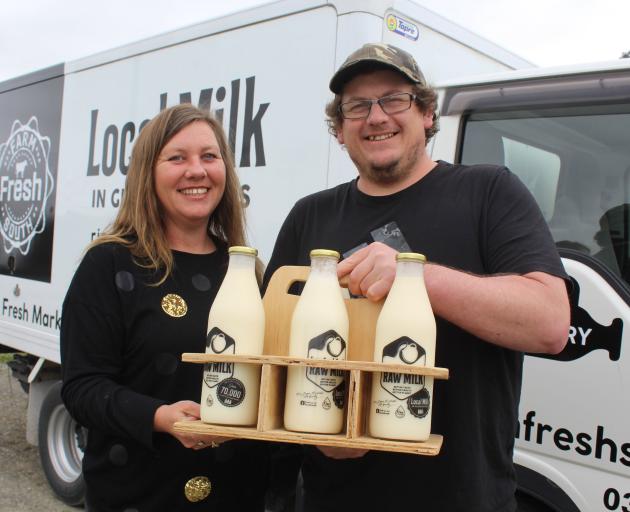


 These companies include 24 industrial licenses; while 93% of them are commercial and 4% are related to Industry.
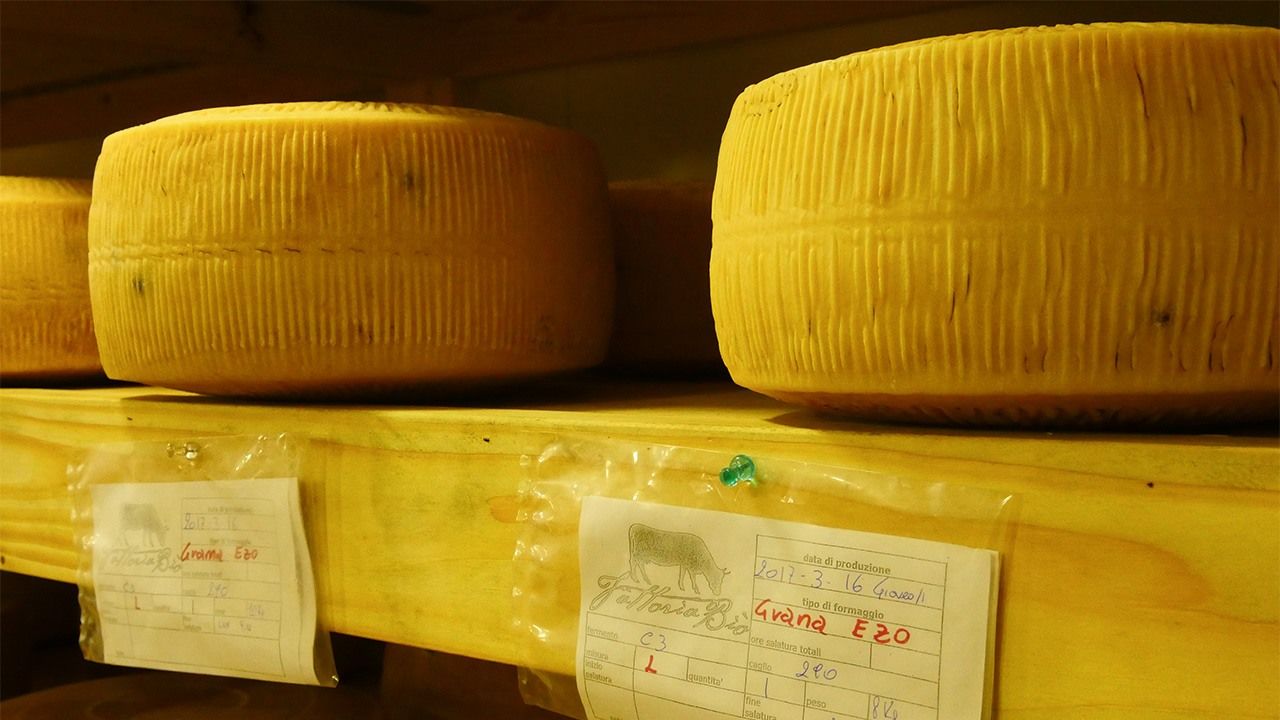 The coronavirus pandemic has had a major impact on Hokkaidō’s dairy farmers, who continue to struggle as demand plummets from school meal providers and the food and beverage industry.


:quality(85)//cloudfront-us-east-1.images.arcpublishing.com/infobae/W2LOQF222FBUFLLHE77YWBCOAE.jpg)


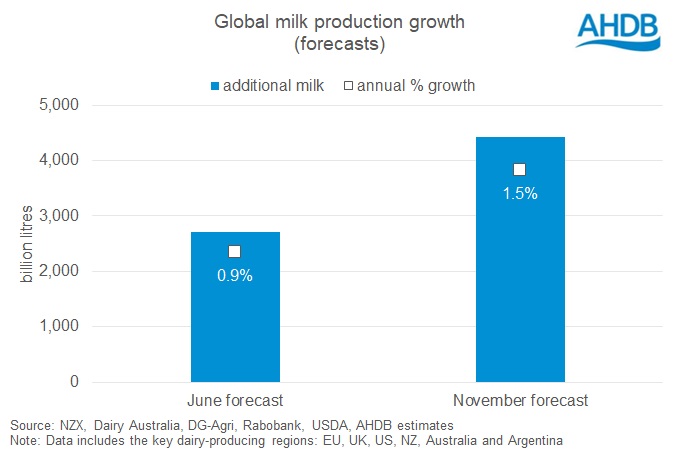
.jpg?width=554&name=Trade%20stats5%20(2).jpg)
.jpg?width=554&name=Trade%20stats6%20(4).jpg)
.jpg?width=554&name=Trade%20stats7%20(2).jpg)
.jpg?width=554&name=Trade%20stats8%20(2).jpg)