Archive for News – Page 64

DairyTrace Now Set for Fall Implementation

Lactanet Canada and Dairy Farmers of Canada (DFC) today announced that DairyTrace, the much-anticipated national dairy cattle traceability program will become a reality in the fall of 2020, providing a single, common framework for dairy farmers to track animal identity and movements. The announcement follows a separate, related communication from the Canadian Food Inspection Agency (CFIA) last week, recognizing Lactanet Canada as the national administrator responsible for dairy bovine animals under Part XV of the Health of Animals Regulations.

“Providing protection and peace of mind to consumers is vital, and when it is fully implemented, DairyTrace will provide a high-quality, national dairy cattle traceability system that takes our industry’s efforts to the next level,” says Gert Schrijver, dairy producer and Chairman of Lactanet’s DairyTrace Advisory Committee.  “The launch of DairyTrace will be a pivotal milestone for dairy producers, as it will provide the data management infrastructure needed to provide – for the first time – a true, pan-Canadian picture of the movements of dairy cattle.”

DairyTrace takes advantage of existing structures, systems and solutions within the Canadian dairy cattle sector, which has the significant benefits of efficiency, cost effectiveness and timely implementation towards the targeted timeline as defined with proAction®.

Under federal regulations and/or proAction® requirements, everyone who owns or has the possession, care or control of dairy cattle must report animal identity, movement, location, and custodianship information. Lactanet and DFC have been working collaboratively since 2016 towards the common vision of a national dairy cattle traceability program. By harmonizing data under a common, national framework, DairyTrace will promote information sharing and potentially add value to research and genetics initiatives, all while aligning with the traceability module of DFC’s proAction® program.

DairyTrace will be managed by Lactanet’s Board of Directors, with input and collaboration from DFC. DairyTrace takes advantage of existing structures, systems and solutions within the Canadian dairy cattle sector, including partnerships with Agri-Traçabilité Québec (ATQ) and Holstein Canada, which provides benefits in terms of efficiency, cost effectiveness and timely implementation:

  • ATQ has expertly led the livestock traceability program in Québec for over 18 years. ATQ will be hosting, supporting, and transferring data to the DairyTrace system and will continue to provide its well-established services to Québec producers via SimpliTRACE.
  • Outside Québec, dairy producers will continue to purchase dairy bovine tags via the National Livestock Identification for Dairy (NLID) program, which will now be dovetailed alongside DairyTrace customer services. Both will be offered from Holstein Canada.

Lactanet and DFC acknowledge and express appreciation to CFIA, as well as for the financial support provided by Agriculture and Agri‐Food Canada through its Canadian Agricultural Partnership (CAP) program.

About Lactanet Canada   www.lactanet.ca

Lactanet is the leading dairy herd improvement organization responsible for milk recording, genetic evaluations and knowledge transfer. As a farmer-run organization serving nearly 10,000 Canadian dairy producers, Lactanet provides the dairy industry with products and services to help manage their dairy operation for maximum efficiency and profitability.

About Dairy Farmers of Canada   www.dairyfarmersofcanada.ca

Dairy Farmers of Canada is the national policy, lobbying and promotional organization representing Canadian dairy producers. DFC strives to create stable conditions for the dairy sector in our country. It also seeks to maintain policies that promote the sustainability of Canadian dairy production and promote dairy products and their health benefits.

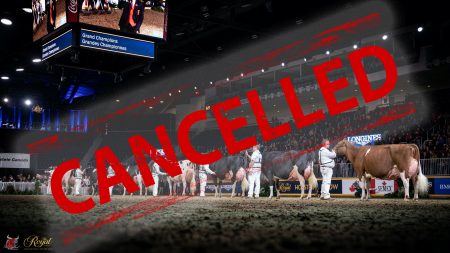
Cancellation of the 2020 Royal Agricultural Winter Fair

Due to our ongoing concern regarding the COVID-19 pandemic, the excitement of The Royal will have to wait for another year. The Royal’s Board of Directors today made the heart-wrenching but unanimous decision to cancel the 2020 Royal Agricultural Winter Fair, originally scheduled for November 6th to 15th at Exhibition Place, Toronto. This treasured annual tradition will return better than ever in 2021.

“Over the past several months, we’ve all experienced an unprecedented disruption to our daily lives and are redefining how we live, work and play. Ultimately, our decision is grounded in our commitment to help ensure the health and well-being of our community at large,” stated Charlie Johnstone, Chief Executive Officer at The Royal. “Our primary responsibility remains rooted in serving our community and protecting the integrity and welfare of all. We understand and appreciate the time, effort and financial commitment required to compete and exhibit at The Royal and did not make this decision without very careful consideration.”

The Royal Agricultural Winter Fair is the largest combined indoor agricultural fair and international equestrian competition in the world. Each fall, The Royal brings together hundreds of competitors, thousands of animals and hundreds of thousands of guests to celebrate the best in agriculture, local food, and equestrian competition. During its storied history, The Royal has been cancelled on only one other occasion, during World War II. At that time, the stalls within the historic Royal Horse Palace were transformed into Army Barracks to house soldiers preparing to be deployed to join our Canadian and Allied troops fighting in Europe. Today, The Royal once again stands in support of its community, first and foremost.

“During these uncertain times, we’re heartened by the resilience of farmers, the ingenuity of entrepreneurs, and the abundance of care shown towards family, friends and animals,” concluded Johnstone. “As we lead up to our 100th Anniversary celebrations in 2022, we take comfort knowing that the 2021 Royal Agricultural Winter Fair will be, as always, an outstanding experience for all those who compete, exhibit and attend.”

In additional to The Royal’s Agricultural Food Competitions, which will still take place in 2020, virtual programming designed to engage, educate and motivate is currently being explored for this Fall. More details regarding this exciting initiative will be released soon. In the meantime, all Canadians are encouraged to continue supporting Canadian farmers, producers and local retailers. 

Together we will get through this, and “Bring the Country to the City” next November 5th to 14th, 2021.

Friends come together to buy farmer’s first tractor back from sale

Nick Sievers drives his John Deere 4520 after friends bought it back for him (courtesy Jed Olbertson)

A farmer who’s fallen on hard times was surprised, when friends banded together to buy back his first tractor that he’d put up for sale.

Nick Sievers of Beresford, South Dakota was holding a dispersal sale this week.

As his friend Jed Olbertson said on Facebook, ” He was a good operator.. a good manager… he just caught a good run of bad luck.”

Sievers said on Facebook that he bought the tractor before he got married and started his farming adventure with it, calling it a faithful member of the farm.

As he watched the auction, he said one bidder couldn’t be beat, bringing in more money for the tractor than it should have.

Little did he know, Olbertson couldn’t bear the thought of his friend selling his first tractor, a John Deere 4520. In 24 hours, he came up with enough people who chipped in to buy Sievers’ tractor back.

Sievers said neighbors, friends, even strangers pitched in.

“I have no words. I am truly humbled. I’m going to do my best to thank each and every one of you all personally, but if I cannot, I assure you I will pass this good will forward. People are good. I have proof. It’s in the form of an old dirty John Deere that this teary eyed man is relieved that he didn’t have to say goodbye to. This isn’t a tractor anymore, it’s a treasure. I love you all so much,” he wrote.

Source: nebraska.tv

Julia Nunes Selected as Wisconsin’s 73rd Alice in Dairyland

A Chippewa County woman has been crowned as Wisconsin’s 73rd Alice in Dairyland. Julia Nunes, 23, from Tilden was selected for the title Saturday night during a Facebook Live event from Walworth County.

“I will strive to be the role model that Alice in Dairyland was for me growing up,” Nunes said after being chosen. “As Alice, I will explore Wisconsin’s agriculture and share my discoveries and knowledge gained with consumers and producers throughout the state.”

Nunes grew up on her family’s registered Holstein dairy farm, where she was involved in the Junior Holstein Association and 4-H. She is a graduate of the University of Minnesota-Twin Cities, where she earned a bachelor’s degrees in Agricultural Communication & Marketing, and Animal Science, with minors in Agricultural & Food Business Management, and Horticulture. For the past year, Julia has been employed at Kinni Hemp Company in River Falls.

Other finalists in the running during the competition were Rachel Gerbitz, Milton; Erica Helmer, Plymouth; Stephanie Hoff, Thorp; Kaitlin Konder, Glenwood City; and Grace Schroeder, Cashton.

Serving as judges this year were Beth Schaefer, Dairy Farmers of Wisconsin; Jackie Fett, Ginseng Board of Wisconsin; and Mark Rhoda-Reis, Wisconsin Department of Agriculture. Walworth County Fair Board President Bill Thompson served as the master of ceremonies.

Meanwhile, this year’s Alice, Abigail Martin, said the COVID-19 pandemic may have changed the way she did her job during the latter part of her year, but it didn’t change her objective.

“March 18th… when this date arrived, I arrived in a new territory–the Alice working from home territory,” Martin said in her retiring address. “I had to transition from life on the road to life at the kitchen table, but the importance of telling agriculture’s story was greater than ever.”

And before giving up her title, Abigail presented the 2020 Friend of Alice Award to Nodji Van Wychen of Wetherby Cranberry Company in Warrens.

Julia officially begins her duties as Alice on July 6. Until then, Martin will continue to handle the program’s responsibilities as her successor goes through a brief training process.

Alice in Dairyland is a full-time public relations professional employed by the state’s division of agricultural development. Each year, she travels more than 40,000 miles throughout the state, promoting Wisconsin products to audiences of all ages and types.

Next year, the Alice in Dairyland finals returns to Walworth County for traditional in-person activities in May 2021. Dane County will hold the 75th annual competition in the Madison area a year later. And Dunn County is already in line as the 2023 host.

Source: wisconsinagconnection.com

64th Annual Keystone International Livestock Exposition cancelled

The 2020 Keystone International Livestock Exposition  (KILE) has been canceled to mitigate the risk of COVID-19. KILE was originally scheduled to run September 25 – October 4, 2020 at the Pennsylvania Farm Show Complex and Expo Center.

“Although this news comes with a great disappointment, this is the right thing to do for the health and safety of our agriculture community,” said Agriculture Secretary Russell Redding. “We care about the exhibitors that work hard year-round while looking forward to the show. Nothing can come in comparison to the health and wellbeing of our youth and the public at large.”

The KILE Executive Board understands the responsibility to ensure the health and safety of all exhibitors, spectators and volunteers, while also adhering to the standards of the Pennsylvania Department of Health.

“For the past 64 years, KILE has become one of the premier shows on the East Coast. We take pride in the experience that we offer to exhibitors,” said Pennsylvania Farm Show Competitive Events Manager Harrison Frantz. “The decision to cancel KILE this year was not taken lightly, and our hearts are heavy.”

The KILE Executive Board is looking to the future and planning for next year’s Keystone International Livestock Exposition set to be held on October 1 – October 10, 2021.

For questions or concerns please contact the KILE Office at kile@pa.gov. More information on KILE can be found at keystoneinternational.pa.gov/Show.

–Shannon Powers, Pennsylvania Department of Agriculture

Ontario introduces bill that would protect farmers from animal rights activists, raise trespassing fines

New legislation introduced Monday in Ontario would create so-called “animal protection zones” with increased fines for trespassing — a move applauded by farmers but roundly criticized by the animal rights activists who say it targets them.

Agriculture Minister Ernie Hardeman said the bill — dubbed the Security from Trespass and Animal Safety Act — would hike fines for trespassing on farms and food-processing facilities and make it illegal to obstruct trucks carrying farm animals.

Outlaw Biker Clubs in Canada

The legislation comes after livestock producers pressed the government to take action to prosecute those who trespass on their properties and demonstrate at processing plants.

Ontariofarmers and agriculture workers deserve to be able to carry out the important work they do without fear for their safety,” Hardeman said. “These are the people who produce the food we eat every day, and I’ve reflected on their experiences and concerns when drafting this proposed bill.”

This advertisement has not loaded yet, but your article continues below.

Under the legislation, fines for trespassing would be set at a maximum of $15,000 for a first offence and up to $25,000 for subsequent offences, compared to current maximum trespassing fines of $10,000.

The bill would also allow a court to order restitution for any injury, loss or damage caused as a result of an offence.

The proposed law would also increase protection for farmers against civil liability from people who are hurt while trespassing on their property.

Hardeman said the proposed law would help ensure the biosecurity of the province’s food supply while also striking a balance which ensures the right to protest.

This advertisement has not loaded yet, but your article continues below.

“People have a right to participate in legal protests, but this does not include trespassing on farms and agriculture businesses or interfering with livestock in transport,” he said.

Ontario Federation of Agriculture spokesman Keith Currie said the farming community has been dealing with aggressive protests for years, and action was needed.

“As farmers, we respect the right of people to protest, however, when it encroaches on private property, endangering the safety of families, (and) farmers, … something needs to be done,” he said.

The executive director of animal protection group Animal Justice, however, said the legislation is “utterly chilling” and would restrict free speech if it becomes law.

This advertisement has not loaded yet, but your article continues below.

Camille Labchuk said the bill would also make it illegal to gain access to a farm or processing plant under “false pretenses.” That would mean animal rights groups could not expose cases of abuse by using whistleblowers.

“For someone who gets a job and doesn’t disclose membership in an animal rights group, that could be an offence potentially punishable by huge fines,” she said.

Anita Krajnc, founder of the vegan advocacy group Toronto Pig Save, said part of the new bill seems targeted at just a few animal rights groups, including hers.

In 2015, Krajnc gained notoriety after being charged for giving water to pigs on their way to slaughter. She fought the mischief charges all the way to trial, where she was found not guilty because a judge found she didn’t harm the animals or prevent them from being slaughtered.

This advertisement has not loaded yet, but your article continues below.

The new bill proposes to prohibit “interfering or interacting with farm animals being transported by a motor vehicle without explicit prior consent,” the government said.

Krajnc, who has been “bearing witness” to animals in transport trucks on their way to slaughter since 2011, said she’s not about to stop now.

“Bearing witness is about interacting and not looking away and looking into the faces of pigs, cows and chickens that are about to go to slaughter,” Krajnc said.

“We’ll continue to bear witness, stop trucks and give water to thirsty pigs, caress them and tell their story.”

Last week, Alberta introduced similar legislation, proposing to increase trespassing fines and send repeat offenders to jail for up to six months.

Alberta Premier Jason Kenney has said free speech must be protected, but when protesters trespass, create mischief and pose potential biohazards the government must act.

“When you harass people who are simply going about their jobs legally, none of that constitutes a legal and legitimate protest,” Kenney said. “All of that constitutes trespass and harassment.”

Source: National Post

Australian dairy farmers miss out as supermarkets relish record sales during lockdown

WA dairy farmers are “just about extinct”, with little hope on the horizon after fresh contracts drawn up in June barely altered prices to deliver more sustainable returns, despite a boost in supermarket sales nationally during the lockdown.

In late March, shoppers watched as shelves all but emptied, leading to fewer choices, purchasing limits and a preparedness by customers to pay more per litre.

“WA is a very isolated and finite industry; there isn’t much alternative other than keeping a healthy WA dairy industry and we need to start recognising that and achieving that,” WAFarmers dairy council president Michael Partridge said.

Nearly a decade of house-brand milk fixed pricing at $1-a-litre by the supermarket giants Coles and Woolworths, with only a slight increase of 10-20 cents over the past 12 months, has continued to mislead consumers about the true cost of production and put the squeeze on the suppliers who pay producers.

Mr Partridge, who is a fourth-generation Brunswick Junction farmer, said COVID-19 sales did not put more in farmers’ pockets.

“The supermarkets need to look after the farmers and the processors because without farmers and processors the supermarkets are simply empty shelves,” he said.

During the lockdown's shopping bonanza, when milk was limited to four litres a customer at most supermarkets, none of the sales translated to WA farmers, according to dairy representatives.
During the lockdown’s shopping bonanza, when milk was limited to four litres a customer at most supermarkets, none of the sales translated to WA farmers, according to dairy representatives.Credit:AAP/James Gourley

Panic-buying drove national supermarket sales up by 4.8 per cent in the four weeks to March 22, but across the 12 weeks to April 19, sales averaged out to an increase of 3.8 per cent, Nielsen data shows.

But despite the grocery sales jump, which extended to 27.3 per cent in everyday cheese, 9.3 per cent in yoghurt in March, and 31.8 per cent in butter until April, the pandemic may have hurt local farmers because it reduced processors’ more profitable wholesale trade to food businesses such as cafes.

“There was increased demand,” Mr Partridge said. “The evidence does show that the supermarkets did well during COVID-19, but because all the delis were closed down there was less higher-valued milk sold through the route trade, as in through service stations, cafes … and there was more of the commodity-type milk sold at the supermarket, so overall demand didn’t change a lot for long.”

Panic-buying of milk during the pandemic lockdown graphic as supplied by Dairy Australia’s June Situation and Outlook report for 2020.
Panic-buying of milk during the pandemic lockdown graphic as supplied by Dairy Australia’s June Situation and Outlook report for 2020.Credit:ADF

Overall revenue for all of Woolworths’ divisions in the three months to the end of March came in at $16.4 billion, up 10.7 per cent compared to the same quarter last year, and significantly higher than the 6 per cent sales increase reported at its half-year result. Coles’ third-quarter result showed a 13.8 per cent jump to $8.2 billion in revenue for its supermarket division.

For second-generation Harvey dairy farmer Michael Angi, who is $2.7 million in debt and not able to draw a wage from his Wokalup farm, frustration is an understatement.

“Farms have gone broke, farmers have killed themselves, no one is listening until there is no milk on the shelf … [it’s] getting to that point now that we’re down to 5000 [dairy farmers] Australia-wide,” he said.

“We’re the only farmers to get a little bit because we’re just about extinct.”

The federal government’s deregulation of the dairy industry 20 years ago, which allowed supermarkets to enter the space in 2010, led to a mass exodus of WA milk producers, dropping from 419 in 2000 to 165 in 2010, with farmers halving nationally and still declining to this day.

“Every farmer around here is in some sort of a depression,” Mr Angi said. “No one is happy doing what they’re doing for nothing.

“Back when I was growing up there was a sense of pride in the industry – we don’t even get together to talk anymore because we’re sick of just talking about doom and gloom; about getting robbed for our milk.

“Most parents that I know on farms won’t even let their kids come to the dairy; they’re pushing them in a different direction because they don’t see a future for them to carry on.

“So once they’re gone I can’t see how, without some sort of investment or backing, a new person could start farming; you need $2 million-plus to start a dairy farm just to milk an average herd of about 100 cows.”

A June report into the national dairy outlook released last week found business confidence was lowest in WA, with the western dairy region the only area where farmers did not expect higher profits in 2020 than achieved on average over the past five years.

“We made all processors well aware that the cost of production had gone up about 10 cents a litre over the past five years, mainly due to higher feed costs, and tried to get some relief at the farmgate price, which hasn’t transpired unfortunately,” Mr Partridge said.

“New contracts have been out since the first of June and there has been no forward price.

“Milk production has continued to drop in the state, so despite having a reasonable start to this season [from] Capel south, there’s not a huge amount of positivity in the industry.”

However, the state’s largest and oldest processor, Brownes Dairy, announced a small improvement to its farmgate price with its contracts due to go out in July.

‘As good as mining if treated right’

Only 60 per cent of 150 farmers in the western region expect to return a profit this year, down from 65 per cent last year. Delivering $188 million worth of dairy, 10 per cent of farmers in the region are winding down production and just 3 per cent are expanding.

“It’s as good as the mining industry if it's treated right, but for 20 years we’ve been pushed aside." - Michael Angi.
“It’s as good as the mining industry if it’s treated right, but for 20 years we’ve been pushed aside.” – Michael Angi.

Mr Partridge said while there was a range in profitability of farmers in the state, “the average data shows the cost of production is around 50 cents a litre and the average price is 50 cents a litre so, on average, dairy’s been subsidised by the beef sales within a dairy business”.

For Mr Angi it has meant running the farm with just his 17-year-old son, servicing 500 cows, 180 of those milking, which is half of what he could produce if running at full capacity.

“I can have another three people here working for me, but I just can’t afford it,” he said.

“There are plenty of properties around here that, with a bit of money spent on them, can be made into a very profitable business that can give jobs to the economy.

“It’s as good as the mining industry if it’s treated right, but for 20 years we’ve been pushed aside.”

Supermarkets’ ‘unfair’ power

Coles is in the process of going direct to its WA dairy farmers to negotiate contracts and then set a toll price for processors to bottle their products, while Woolworths is planning to continue a 10-cent levy introduced before COVID-19 which goes directly to the 450 farmers nationally who service its homebrand label.

But Mr Partridge warned only a few WA farmers would benefit from the Coles deal, which would cut out WA’s three major processors Brownes, Lion Dairy (Masters) and Lactalis Australia (Harvey Fresh) which support the majority of local dairy farmers.

“The power in the marketplace belongs to the supermarkets,” he said.

“They own the shelf space so therefore they own the consumer and I know there’s a big imbalance of that power between the processor and the retailer.

“And what the code [of conduct, which came into being in January and meant all processors had to reveal their pricing at the same time] was attempting to do was to address the power between the farmer and the processor, and there’s not much being done at the top end.

“When you own the shelf space you have a lot of bargaining position and if you own the shelf space should you be a competitor in the processing sector?

“Is that essentially an unfair advantage?”

Solution needs to be national

Australian Dairy Farmers went before a Commonwealth inquiry into their performance and profitability last Friday calling for a 50 per cent increase to milk prices in supermarkets.

They have lobbied for retailers to temporarily increase the price of house brand milk to $1.50 per litre and pass the 50 cents back to farmers via their processors.

They do not support a minimum farmgate milk price, “due to its market distorting impacts”, which was being investigated by WA Agriculture Minister Alannah MacTiernan before COVID-19 hit.

Farmers and processors agree a pricing solution has to be at a national level.

Mr Angi says they’re not being greedy, “just trying to make a living”.

“If the milk was put at the normal price, you wouldn’t hear boo from people; they would just accept it,” he said.

“That’s why I can’t understand why they don’t just put some sort of base price on the milk.

“Something has to be done at a government level because Coles and Woolworths ain’t going to do it and the suppliers are stuck in the middle.

“That’s our only hope that I can see.”

Source: watoday.com.au

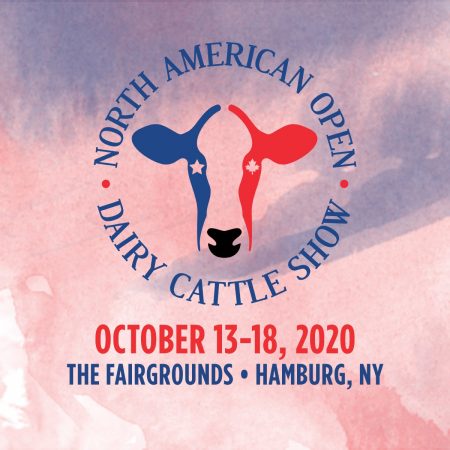
North American Open Dairy Cattle Show Announced

The Erie County Agricultural Society is proud to announce the newly established North American Open Dairy Cattle Show this October on the Fairgrounds in Hamburg, NY. The event will begin on October 13th and run through October 18th , with scheduled show dates running from October 16-18. It will be open to exhibitors from both the United States and Canada.

Jessica Underberg, the CEO of the Erie County Agricultural Society said, “shows such as this are very important to the dairy industry.” According to Ms. Underberg, “Cattle show rings across the country have gone dark over the last few months as a result of COVID-19. With a deep-rooted commitment to agriculture and recognizing the fact that dairy is New York’s #1 agriculture commodity, we are optimistically planning the North American Open Dairy Cattle Show.” She added, “this show directly aligns with our Mission Statement and is a natural fit for the staff that come from backgrounds in the dairy and livestock industries.”

Alicia Lamb of Oakfield Corners Dairy stated, “The cancellation of multiple national level shows in 2020 has eroded the market value of our elite show type cattle, and the ability to exhibit at the North American Open Dairy Cattle Show will help to increase that value as we move into 2021 and beyond.” She also said, “creating an outlet for marketing and exhibiting provides cattle exhibitors a ray of optimism in a year that has been riddled with so much negativity. As breeders and exhibitors, we enjoy showing and competing against the highest quality cattle in the world, and this show opens that door.”

The necessary health guidelines outlined at the time of the event by New York State, Erie County and the Center for Disease Control will be followed.

Breed shows offered will be Red & Whites, Milking Shorthorns, Guernsey, Brown Swiss, Ayrshire, Jersey and Holstein. Entries will be accepted beginning August 1, 2020. For more information visit www.the-fairgrounds.com/NorthAmericanOpenDairyCattleShow or follow North American Open Dairy Cattle Show on Facebook. Call 716-649-3900 for more information.


Stay tuned to the Bullvine with more details on this event as they develop. 

It’s the Dairy Show with Jon Stewart: Comedian sets new film in Wisconsin

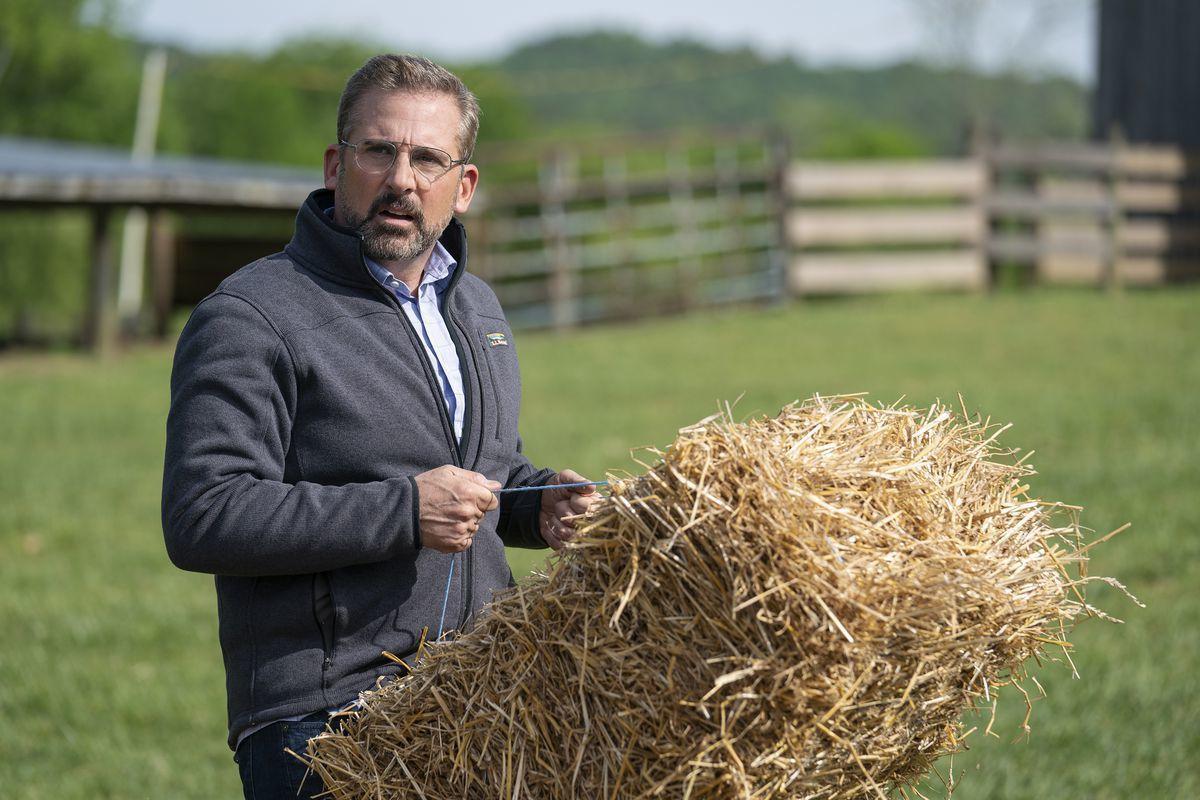
Steve Carell plays a Democratic political consultant who takes over a mayoral campaign in “Irresistible,” written and directed by Jon Stewart.

In 2017, Jon Stewart came to Wisconsin. The former “Daily Show” host was working on the screenplay for a movie set in the fraught political climate of the Badger State. To get a feel for the place he toured Grafton and several other small towns with UW professor Kathy Cramer, author of “The Politics of Resentment.”

Two-and-a-half years later, Stewart’s Wisconsin-set political comedy “Irresistible” will arrive Friday on video-on-demand. Even though the film was actually shot in tax-friendly Georgia, the movie abounds with Wisconsin references, from a debate over the deliciousness of cheese curds to cameos by WISC-TV/ Ch. 3 anchors Eric Franke and Charlotte Deleste.

When the film’s main character, a ruthless Democratic political consultant named Gary Zimmer (Steve Carell), is asked by a couple of rural fellas if he’s ever been to Wisconsin before, he says that he “spent a fair amount of time in Madison.”

“That’s a no,” the rural guys chortle to each other. (The Madison reference may be an inside joke, as Carell made a bit of a splash on social media in 2018 when he was spotted touring the University of Wisconsin-Madison campus.)

Despite those regional shout-outs, “Irresistible” is a fairly universal comedy about American politics. And it may not shock you to learn that Stewart is not a huge fan of how politics is currently practiced.

In “Irresistible,” Stewart couches some pointed barbs on political partisanship, and the entrenched interests in both parties that profit off it, inside a relatively genial political comedy in the vein of “Dave.” The mix of sweet and sour laughs doesn’t always blend well, but this is a more sly film than it first lets on.

The movie opens in 2017 with Gary, who worked on the Hillary Clinton campaign, still nursing a Trump hangover. Desperate to make inroads with rural voters, he seizes on a viral video an aide shows him in which a Wisconsin farmer named Jack Hastings (Chris Cooper) rails against the city council of (fictional) Deerlaken about an anti-immigration measure.

A pro-immigrant swing-state farmer who quotes Patton AND the Bible? It’s almost too good to be true; “he’s a cross between (General Douglas) MacArthur and elk jerky!” Gary enthuses.

Gary heads to Deerlaken to convince Jack to run against the incumbent mayor, using the local election to road-test slogans and tactics that he wants to use to appeal to moderates in 2018 and 2020. It’s a cynical ploy, and soon Gary is bringing the best and worst of national politics to little Deerlaken, including big-money donors and attack ads from shadowy third-party groups with names like Wisconsinites for Religious-based Compassion and Empathy. The fair-minded Jack reluctantly goes along for the ride despite his misgivings, as does his daughter (Mackenzie Davis), who Gary takes a shine to.

The race brings a lot of national media attention, and it also brings Faith Brewster (Rose Byrne), a ruthless Republican strategist and Gary’s arch-nemesis. Faith goes to work running the incumbent mayor’s campaign, and things escalate from there, turning sweet little Deerlaken into the epicenter of scorched-earth politics.

Stewart gets a looser, funnier performance out of his old “Daily Show” correspondent Carell than many directors have done lately, as Gary gets more and more desperate trying to turn his cheerful small-town volunteers into political killers. He’s like the “Music Man,” if the music was Rachel Platten’s “Fight Song.” And Byrne has perfected the blasé amorality of a cable news pundit who lies almost without thinking. Gary can only look on in horrified admiration.

Stewart’s screenplay settles for small chuckles rather than the big laughs of something like “Long Shot.” And by depicting the politicos as cartoonishly devious figures, but the Deerlaken residents as honorable, salt-of-the-earth types, there’s a whiff of condescension toward the Heartland that’s not too far removed from one of those political ads that Stewart hates.

But the film reaches a moment, just before the third act, where we assume that Gary will suddenly have a crisis of conscience, infected by the sheer decency of Deerlaken, and renounce dirty politics. That’s what’s supposed to happen in these political comedies, right?

It doesn’t happen. Instead, Gary becomes even more of an amoral jerk than before, and it dawned on me that “Irresistible” might have more up its sleeve than I expected. It’s not a perfect movie by any means. But like a good candidate, it finds its legs in the homestretch, and gets a cautious endorsement for that.

Source: madison.com

Holstein Association USA Names Distinguished Junior Member Semifinalists

Holstein Association USA is pleased to announce the 12 semifinalists for the 2020 Distinguished Junior Member (DJM) award. Established in 1922, the Distinguished Junior Member recognition is the longest running Holstein youth program. This award is the highest honor given to members of the National Junior Holstein Association, ages 17 to 21, in recognition of a commitment to the Holstein breed and involvement in a variety of agriculture related activities.

The 2020 DJM semifinalists are: Todd Allen, Jefferson, Md.; Matthew Boop, Millmont, Pa.; Kristen Burkhardt, Fowlerville, Mich.; Connor Erbsen, Lanark, Ill.; Morgan Hungerford, East Meredith, N.Y.; Mason Jauquet, Pulaski, Wis.; Yvonne Longenecker, Williamsburg, Pa.; Rachel McCullough, Juda, Wis.; Emily Mikel, Stafford, N.Y.; Hannah Nelson, Ellsworth, Wis.; Bailie Shultz, Seattle, Wash.; and Colin Uecker, Watertown, Wis.

Applicants complete two judging phases. Phase one is the Junior’s entry book, worth 60 percent of the final score. The book highlights the Junior’s Holstein work, activities and projects, breeding program and personal views. Phase two consists of the twelve semifinalists being interviewed by a committee of judges and accounts for 40 percent of the final score. The six individuals with the highest combined score are recognized as Distinguished Junior Members and receive annually renewed membership to Holstein Association USA.

This year, the 2020 DJM Finalists will be announced during a Facebook Live Event on the Holstein Association USA Facebook page, Wednesday, July 1, 2020 at 12 noon Eastern time.

The National Junior Holstein Association is a dynamic organization for youth under the age of 21, with over 8,000 active members in 48 states. For more information about the DJM contest or other Holstein youth programs, visit www.holsteinusa.com/juniors, or contact Kelli Dunklee at 800.952.5200, ext. 4124 or by email.

New Zealand’s sheep milking industry is expanding

The company said the addition of new farms is an important tipping point as this year the milking flock maintained by external suppliers will exceed that of Spring Sheep’s own farms. These additional milking ewes will help grow the company’s product lines into new markets.

Spring Sheep Milk Co. said growing consumer awareness and clinical evidence of sheep milk’s nutritional and digestibility benefits means demand is rising and the company is looking to partner with additional suppliers for the 2021 dairy season.

It said there has been interest from farmers looking to diversify or convert their existing farms. Interest is driven by multi-year fixed price milk contracts, a low environmental land use, greater utilization of existing assets and succession opportunities for the next generation.

The new suppliers for this season are all in the Waikato and are using Spring Sheep’s bovine to ovine conversion model to convert existing cow infrastructure and repurposing the farm to suit sheep. This will see more than 250 hectares of land transfer from traditional cow dairy to sheep dairy.

“Over the past several years we have been developing and growing the Spring Sheep milk pool through producing leading sheep dairy genetics matched to proven farming models,”​ said Thomas Macdonald, Spring Sheep general manager – milk supply.

“Refining how to milk sheep in New Zealand using our unique farm system advantages has been a key focus. The combination of Spring Sheep’s leading yields and established farming systems means the timing is right for expansion with supplier farmers looking for high value land uses with a low environmental impact.”

Typically, flocks are delivered in June ahead of the milking season to assist farmers by allowing a focus on the conversion process before receiving the ewes.

“Our use of a combination of leading European dairy breeds that were selected and adapted for New Zealand conditions through an extensive genetic development program has resulted in a high performance flock of milking sheep which continue to increase in yield and milkability traits season after season. Milk production is rapidly climbing through a longer peak milk period and greater days in milk, now over 240 days,”​ Macdonald said.

The top ewes at Spring Sheep’s pilot farms produced more than 500 liters this season, which the company said shows top global yields are achievable in a New Zealand farming system. Macdonald said supplier farmers can expect to produce 250 liters per ewe as a starting yield given the nature of learning a new farming system and adapting to sheep dairy farming. Long run yields of 350 to 400 liters per ewe on average are expected in the coming seasons.

In the 2019/20 dairy season new studies and trials on farm have led to efficiencies in lamb rearing, animal health, grazing techniques and increased production per ewe with an overall drop in the cost of production.

“Seeing these farm systems gains combined with new generations of elite milking sheep has been exciting for Spring Sheep’s current suppliers and a great network of knowledge and support is now available for new farmers joining the industry,”​ Macdonald said.

The launch of Sheep Milk Full Cream Powder Pouches and infant formula product lines have absorbed every liter of production from the growing farmer group.

“Sheep milk is a fast growing dairy market segment, particularly in Asia, given its digestive and nutritional benefits compared to other dairy products,”​ Scottie Chapman, Spring Sheep CEO said.

“The alternative milk category has been experiencing very strong growth for many years – with sheep milk we’re looking to create an industry that is sustainably matched to this demand as well as producing a product that is more easily digestible and better for our consumers.

“We’ve also seen further growth with the demand for our products rising considerably through the COVID-19 outbreak, especially with many governments backing the consumption of dairy for immune health.”

Spring Sheep markets its sheep milk nutritional products in Malaysia, Vietnam, Taiwan, and New Zealand. On the horizon is a launch into the China market, followed by Australia and select Asian markets next year.

To prepare for the upcoming growth, Spring Sheep has secured long term access to a new drying plant with Melody Dairy at Rurakura, a new 1.2t per hour spray dryer suited to fresh milk and manufacturing of Spring Sheep’s product lines. The new dryer is currently in commissioning and will be ready to take the increase in milk this dairy season.

Source: dairyreporter.com

New Zealand’s Fonterra promises to pay premiums for sustainable dairy

Fonterra Co-Operative Group Ltd says it will pay farmers extra for sustainable dairy in a bid to incentivise production.

According to Reuters, Fonterra, the world’s largest dairy exporter, made the announcement on 23 June.

Sustainable dairy products have limited harmful impact on the environment and animals. Sustainable products have gained traction among consumers as people become more conscious about how food is sourced.

Fonterra said it would pay up to 10 cents per kilogram of milk solids (kgMS) from the June 2021 dairy season to farms that meet its sustainability and value targets.

“We’ve always paid our farmers based on the value that milk provides to the co-operative,” Chief Executive Miles Hurrell said in a statement.

“The reality is that the drivers of value are changing, and we need to reflect that. Our customers want to know that the products they are buying are not only safe, but also produced sustainably.”

According to the World Wildlife Fund, greenhouse gas emissions from dairy cows and their manure, water pollution and unregulated farming and feed production are some of the risks associated with unsustainable dairy farming.

Global consumer conglomerates including Nestle and Unilever already follow frameworks to source sustainably produced goods including dairy, vegetables and oils.

Fonterra said the payment would be funded from the total Farmgate Milk Price, or the price the company pays farmers for milk for the upcoming season.

The precise payment structure would be confirmed in the coming months.

Read more about this story here.

Organic Farmers say USDA “Let Down” Organic Dairies

The Organic Farmers Association is asking members of Congress to ensure that USDA’s National Organic Program complies with the law and finalizes the Origin of Livestock rule as quickly as possible. 

A recent deadline for the National Organic Program to finalize the long-awaited Origin of Livestock rule has passed by. 

The Association says the rule is necessary to close a loophole in organic dairy standards that has supported rapid growth in larger organic dairies and consequently put family organic dairy farmers out of business across the country. 

As many as 70 organic farm organizations from around the nation sent a letter to members of Congress, including the House and Senate Ag Committees, asking them to pressure the USDA to make sure the NOP complies with a congressional mandate and finalizes the origin of organic livestock rule as soon as possible. 

“The organic community is united in the immediate need for this rule,” says Kate Mendenhall, Director of the Organic Farmers Association. “We are disappointed this long-awaited deadline passed without any action from the NOP.” 

The groups that signed onto the letter agree that continued delays in implementing the rule will prolong the dire economic consequences facing organic dairy farmers, as well as jeopardize consumer trust in the organic label.

Story Courtesy of the NAFB News Service

A2 Milk confirms talks of potential dairy acquisition

The a2 Milk Company (A2MC) has fuelled speculation that it is in the running to buy the $NZ400m (A$375m) Mataura Valley Milk company in New Zealand, with the release of a statement on Monday saying it is in “discussions with a number of parties”.
While the dairy giant said it’s policy is to not respond to media speculation, the company confirmed that “it has had, and continues to have, various discussions with a number of parties in relation to potential strategic options relating to participation in manufacturing capacity and capability.”

The Australian reported on Sunday that the dairy giant is believed to be one of a handful of parties in contention for Mataura Valley Milk, which is based on New Zealand’s South Island.

The company is majority owned by China Animal Husbandry Group and New Zealand-based Bodco Dairy.

Chief executive of a2 Milk Geoffrey Babidge had signalled at the half year results in February that the company was looking to invest in manufacturing partnerships.

The dairy giant said on Monday that it is in compliance with the Listing Rules and “will continue to keep the market informed in accordance with its disclosure obligations”, if and when discussions reach a conclusion.

Source: insidefmcg.com.au

The Pennsylvania Holstein Association announces their Regional 2020 show schedule

The 2020 Pennsylvania Holstein Association Championship Show program will soon begin. There are changes to the schedule and updates concerning shows because of the COVID-19 pandemic. Regional Show, and how they currently meet the PA Holstein Association guidelines for the 2020 Show season are listed below. There are currently three (3) shows that meet the qualifications and are scheduled. PA Holstein can add additional shows if those show locations meet the guidelines.

Guidelines to participate in the 2020 PA Holstein Regional Championship Show program include these additional rules:

  • the host location for the show is in the state color code of Green at the time of the show
  • show exhibitors, participants, show string workers, spectators and guests must follow the current CDC and PA Health regulations for COVID-19 guidance.

You can find show entry information listed below. All Pennsylvania Holstein Association or Junior Holstein Association members can participate in a Regional Championship Show, fill out the entry information and return it to the appropriate show that you wish to participate.

The Western and Northeast Championship Shows also will be hosting Regional Red & White shows, check their show rules and bring your red & whites to participate as well.

Please note the entry deadline and entry fee and forward the proper information to the appropriate person for the show you wish to attend before their deadline date.

Entry forms, rules and show schedules can also be found on the website or by calling the PA Holstein office at 814-234-0364.

The Regional Show Program is an important part of the Pennsylvania Holstein Association Show Program, all members are invited to join us to show at the show of your choice.

SHOW SCHEDULED TO BE HELD AS OF JUNE 15, 2020
Western PA Championship Show (Please note the Location Change!)
Date: July 18, 2020
Time: 9:00 AM
Place: Crawford County Fairgrounds, Meadville, PA
Entry Fee: $10.00
Entry Deadline: July 1, 2020
Late Entry Fee: $20.00
Judge: Justin Burdette
Chairman: Tom Uber (814) 777-3777
Check In Deadline: July 17, 2020 3:00p.m.
Send Entries To: Tom Uber
3321 Rocky Glen Road
Adamsville PA 16110

SHOW SCHEDULED TO BE HELD AS OF JUNE 15, 2020
Northeast PA Championship Show
Date: August 4, 2020
Time: 9:00 AM
Place: Alparon Fairgrounds, Troy,PA
Entry Fee: $10.00
Late Entry Fee: $20.00
Entry Deadline: July 13, 2020
Judge: Jack Lomeo, Jr.
Chairperson: Pam Morse (570) 297-1023
Check In Deadline: August 3, 2020 4:00p.m.
Send Entries To: Elizabeth Cashell
3029 Covered Bridge Road
Towanda, PA 18848

SHOW SCHEDULED TO BE HELD AS OF JUNE 15, 2020
South-Central PA Championship Show
Date: August 6, 2020
Time: 9:30a.m
Place: South Mountain Fairgrounds, Arendtsville, PA
Entry Fee: $10.00
Entry Deadline: July 25, 2020
Late Entry Fee: $20.00
Judge: Michael Heath
Chairman: Joy Widerman 717-752-5871
Check In Deadline: August 5, 2020 4:00p.m.
Send Entries To: Lisa Cornman
828 Baltimore Pike
Gardners PA 17324

SHOW ON HOLD AS OF JUNE 15, 2020 – CHECK BACK FOR UPDATES
Northern Tier PA Championship Show
Date: July 30, 2020
Time: 9:30 AM
Place: Harford Fairgrounds, New Milford,PA
Entry Fee: $10.00
Late Entry Fee: $15.00
Entry Deadline: July 15, 2020
Judge: Jason Lloyd
Chairman: Lloyd Pease (570) 955-8170
Check In Deadline: July 29, 2020 4:00 PM
Send Entries To: Dana Empet
269 Deer Trail Road
Kingsley PA 18826

SHOW ON HOLD AS OF JUNE 15, 2020 – CHECK BACK FOR UPDATES
Central PA Championship Show
Date: August 15, 2020
Time: 6:00 PM
Place: Huntingdon Fairgrounds, Huntingdon, PA
Entry Fee: $7.00
Late Entry Fee: $15.00
Entry Deadline: August 1, 2020
Judge: Michael Creek
Chairman: John Foster, Jr. (814) 667-3567
Check In Deadline: August 14, 2020 6:00 PM
Send Entries To: Kim Grove
6794 Groves Road
Petersburg, PA 16669

SHOW ON HOLD AS OF JUNE 15, 2020 – CHECK BACK FOR UPDATES
Southeast PA Championship Show
Date: August 18, 2020
Time: 9:30 AM
Place: Lebanon Fairgrounds and Expo Center, Lebanon, PA
Entry Fee: $12.00
Late Entry Fee: $20.00
Entry Deadline: August 4, 2020
Judge: Justin Kaufman
Chairman: Bradley Hoover 717-507-7976
Check In Deadline: August 17, 2020 5:00 PM
Send Entries To: Bryant Hlavaty
141 Reifsnyder Road
Lititz PA 17543

Holstein Association USA Research Grant Program Seeking Applications

Holstein Association USA’s mission is to provide leadership, information, and services to help members and dairy producers worldwide be successful. To further that mission, Holstein Association USA invites research proposals with expected outcomes to benefit the profitability from Holstein cattle. Research may involve traditional production disciplines of genetics, nutrition, or reproduction as well as dairy foods or economics. Principal investigators at United States universities or non-profit organizations are eligible to apply for grant funds. The deadline to submit proposals is August 15, 2020.

Supporting research is a top priority for Holstein Association USA, the world’s largest dairy breed association. Dr. Roger Shanks, dairy genetics consultant, explains. “I’m excited about the research program that Holstein Association USA has ongoing,” Shanks says. “We are getting into our fourth request for proposals this year. The overall objective of the whole program is really to try to increase the amount of research that’s done on Holstein cows, so we can then help Holstein members be able to implement and take advantage of those research results as they come along.”

Holstein Association USA is particularly interested in research that advances the profitability and health of Holstein cattle through genetics, but proposals researching other areas of improvement are also invited. Research on the economic benefits of Holstein cows or their products are welcome as well.  Research funded with HAUSA grants are expected to be innovative, exploratory and based on sound science. Research proposals of all sizes will be considered, but Holstein grants are expected to be funded within the range of $10,000 to $80,000 per year. Grant durations are expected to be one to three years.

Holstein Association USA has funded three projects to date. One at North Carolina State University looking at how genomic information can be used to manage inbreeding; a second project at the University of California-Davis exploring the opportunity to breed Holstein cows for heat tolerance using the slick hair gene. The third project is being completed at University of Wisconsin-Madison, researching genetic and physiological aspects of double ovulation and twinning in Holstein lactating cows. These research projects hold great potential for future progress with U.S. Registered Holsteins.

More details about the grant guidelines and process can be found on the Holstein Association USA website, www.holsteinusa.com/programs_services/research_grant.html. With questions or for more information, contact Holstein Association USA dairy genetics consultant Dr. Roger Shanks, at rshanks@holstein.com.

###

Holstein Association USA, Inc., www.holsteinusa.com, provides programs, products and services to dairy producers to enhance genetics and improve profitability — including animal identification and ear tags, genomic testing, mating programs, dairy records processing, classification, communication, and consulting services.

The Association, headquartered in Brattleboro, Vt., maintains the records for Registered Holsteins® and represents approximately 25,000 members throughout the United States.

Top Dairy Industry News Stories from June 13th till 19th 2020

Feature Article:

Top News Stories:

Expo Winners Score Big at Budjon – Blexy Goes 97


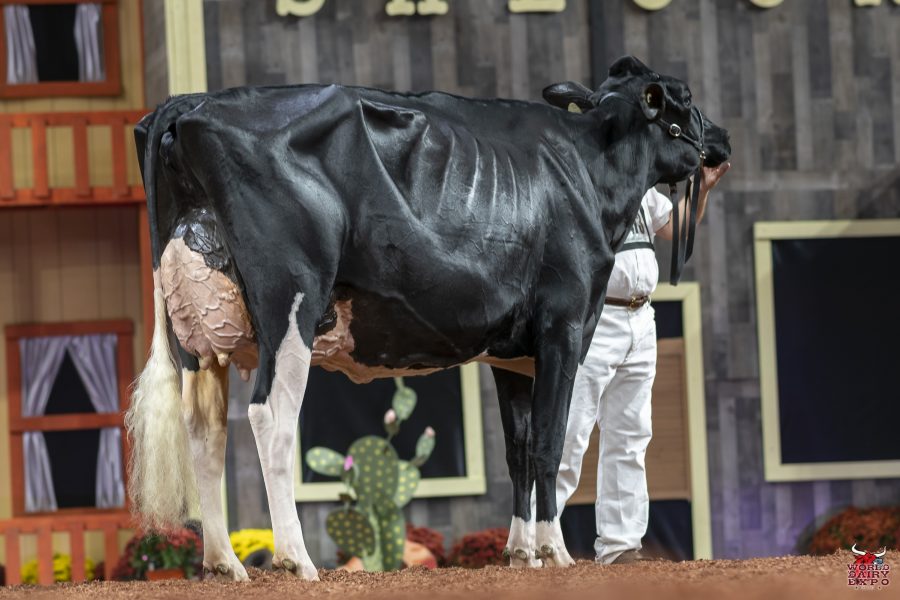
Budjon Farms in Lomira, Wisconsin has a very exciting day as 2017 World Dairy Expo Champion Rosiers Blexy Goldwyn gained another point and was named the next EX-97 point cow in the Holstein breed. She is the 41st North American Female to do so and the 3rd daughter of Goldwyn. She is sired by Braedale Goldwyn and out of ROSIERS BEYONCE DUNDEE EX x ROSIERS BURKA TRIUMPHANT EX.  She is owned by Budjon, Vail, Abbott, Van Exel and Woodmansee.


And if that weren’t enough, Unique Dempsey Cheers passed the committee’s view and is now EX-95 also housed at Budjon and owned by Budjon, Abbott, Vail, Woodmansee and Ferme Blondin.

Congratulations to all of the owners!

[fbvideo link=”https://www.facebook.com/BudjonFarms/videos/290293898955557/?__xts__[0]

Human trials expected to start next month for Covid-19 treatment derived from cows’ blood

A South Dakota company expects to start human trials next month for a Covid-19 antibody treatment derived from the plasma of cows.
But these aren’t just any cows. Scientists genetically engineered the animals to give them an immune system that’s part human. That way, the animals produce disease-fighting human antibodies to Covid-19, which are then turned into a drug to attack the virus.

“These animals are producing neutralizing antibodies that kill [the novel coronavirus] in the laboratory,” Eddie Sullivan, CEO of SAB Biotherapeutics said in a statement to CNN. “We are eager to advance to the clinic as we move forward in the regulatory process with the hopes of bringing this potential COVID-19 therapeutic to patients in need of a solution.”

The company did not say how many people would be studied in the clinical trials or how long they would take.

How llamas could hold the key to combatting Covid-19 03:09

To make its drug, SAB took skin cells from a cow and knocked out the genes that are responsible for creating cow antibodies, and instead inserted an engineered artificial human chromosome that produces human antibodies.

They put the DNA from those cells into a cow egg and turned it into an embryo. They then implanted that embryo into a cow to start a pregnancy, and over the past two decades, have produced several hundred genetically identical cows, all of them with partly human immune systems.

 The scientists then injected some of the cows with a non-infectious part of the virus that causes Covid-19. The cows are now producing human antibodies to the coronavirus. Those antibodies naturally fight off the virus.

SAB has manufactured hundreds of doses of the medicine, called SAB-185, to use in its clinical trials. The company has not yet announced whether it will study the drug as prevention or treatment for Covid-19, or both.

The principle behind the drug is quite old. For more than a century, doctors have given patients suffering from infectious diseases the blood products from patients who’ve already recovered and produced disease-fighting antibodies. The treatment, called convalescent plasma, is still being used today to treat Covid.

 The cows have several advantages over human plasma donors. One, SAB says, is cows naturally have a more robust immune response than humans, and repeated injections with the coronavirus make that response even stronger. Two, cows are large and have more plasma to give. Three, they can give plasma three times a month, instead of once a month, like humans.

Last week, another company, Regeneron Pharmaceuticals, announced it had started human trials with a drug derived from mice.

“We literally genetically humanized mice,” said Dr. George Yancopoulos, president of Regeneron. “We put in the genes for the human immune system into mice so that these mice have pretty much exactly a human immune system.”

Get CNN Health’s weekly newsletter
Regeneron is studying whether the drug will either prevent or treat coronavirus.

“We would hope that by the end of the summer, we might be able to be providing hundreds of thousands of doses to patients in need both for prevention and also for treatment,” Yancopoulos told CNN in May.

The genetically engineered mice obviously aren’t large. Scientists extract the most powerful human antibodies from the mice and then clone them, theoretically in unlimited amounts.

The company is also working with antibodies from human survivors of Covid-19.

“We pull fully-human antibodies from these ‘magic mice,’ as well as from human survivors, to maximize our pool and ensure we select the very best therapeutic antibodies for our Covid-19 drug,” said company spokesperson Alexandra Bowie.

Source: CNN

All-American Dairy Show Cancelled

The 2020 All-American Dairy Show has been cancelled to mitigate the risk of COVID-19. The show was originally scheduled to run September 12-16, 2020 at the Pennsylvania Farm Show Complex and Expo Center.

“Agriculture and youth are the foundation of the All-American Dairy Show,” said Agriculture Secretary Russell Redding. “These exhibitors are our top priority. We want to see them succeed, with good health and safety, as the future of agriculture relies on them. It’s the right thing to do for our agriculture community.”

The All-American Dairy Association Executive Board understands the responsibility to ensure the health and safety of all exhibitors, spectators and volunteers, while also adhering to the standards of the Pennsylvania Department of Health.

The All-American Dairy Show features nearly 2,000 of the top dairy cattle shown by over 1,000 of the best exhibitors in the U.S. and Canada. With 23 dairy shows in five days, including four days dedicated to youth shows, contests and programs, the All-American Dairy Show is the premier stop on the tanbark trail.

“We have spent months working through options that would have allowed us to host the show, but ultimately the All-American Board had to make the difficult decision to cancel,” said Pennsylvania Farm Show Complex Competitive Events Manager J. Harrison Frantz. “We look forward to being back at full strength in 2021.”

The All-American Dairy Association Executive Board is looking to the future and planning for next year’s All-American Dairy Show set to be held on September 18-22, 2021.

For questions or concerns please contact the All-American Dairy Show Office at aads@pa.gov. More information on All-American can be found at allamerican.pa.gov/.

‘It’s a game-changer.’ Expansion planned for self-service Dairy Stops in Vermont

“It’s always been talked about, but to have it become reality is phenomenal,” said Blake, owner of Blake Farm.

It’s a reality because of the Dairy Stop stand that sits on the edge of his property, which is another dream realized.

“I’ve been (working) two-and-a-half years on this project and I truly feel it’s a game-changer,” said Paul Godin, owner, operator and creator of the Dairy Stop concept.

Godin got his start in the dairy industry while working on his uncle’s farm growing up.

He then began selling Lely robotic computerized milking systems to farmers, like Blake, throughout the state of Vermont.

Now, with the Dairy Stop concept, Godin isn’t only changing the way Vermonters buy Vermont dairy.

He’s changing the status-quo by starting his own milk processing plant on his property in Enosburg, which falls under the Dairy Stop brand.

Godin has partnered with Blake to buy his milk, which he pays close to double the federal milk price for, to produce Dairy Stop milk.

He produces a cream line milk, which is whole milk pasteurized at a low temperature to kill bacteria while preserving the natural enzymes. There are two varieties of Dairy Stop milk: whole white milk and whole chocolate milk.

“(Blake is) getting paid what (he) should (for his milk product),” said Godin.

“It works for both of us. You’re cutting out the middle man and you’re keeping it small town local,” said Blake.

Milk isn’t all you can buy at the 24-7 self-service mini markets, which are monitored by surveillance cameras.

Puddings, cheese, eggs, butter, maple syrup, pancake mix and fresh cuts of beef all from local farms are also available.

“What we’re trying to do is partner with the highest quality products we can find and bring them to consumers at the best value,” said Godin.

“The chocolate milk is a huge hit,” said Cody Boissoneault, owner of Boissoneault Farms in Saint Albans.

So far, having a Dairy Stop stand at Boissoneault Farm has worked out.

The farm has its beef stocked in the Dairy Stop’s freezers.

“(For) vendors, it’s a great place for them to grow their business and then for the farms themselves, where the Dairy Stop is, they do receive a monthly commission which really helps,” said Boissoneault.

The Dairy Stops are a new concept and have only been open at the three locations for about a month. Already, Godin said they’re generating quadruple the projected monthly profit.

Customers seem to love the Dairy Stop concept.

“This was my first time. It was very easy,” said Michael Perkins, who picked up eggs, cheese and milk from the Dairy Stop stand in Fairfax.

“I think (the concept is) definitely a game-changer and it makes me real proud,” said Godin.

He said this is just the beginning.

“We are certainly looking for locations to add more Dairy Stops. Our intention is to have 40 to 50 dairy stops throughout the entire state of Vermont,” he said.

Godin is expecting to open two more Dairy Stops in Ferrisburgh and the Cambridge area in the near future.

If anyone is interested in having a Dairy Stop on their property, Godin is looking forward to hearing from them. The property owner gets a monthly commission, but has to maintain the building and help with re-stocking products.

Godin and Blake are excited knowing their dream is just getting started.

Dairy Stops are located at 10933 Route 105 in Enosburg, 218 Highbridge Road in Fairfax and 549 Lake Road in Saint Albans.

Source: mynbc5.com

NZ butter booming in the US

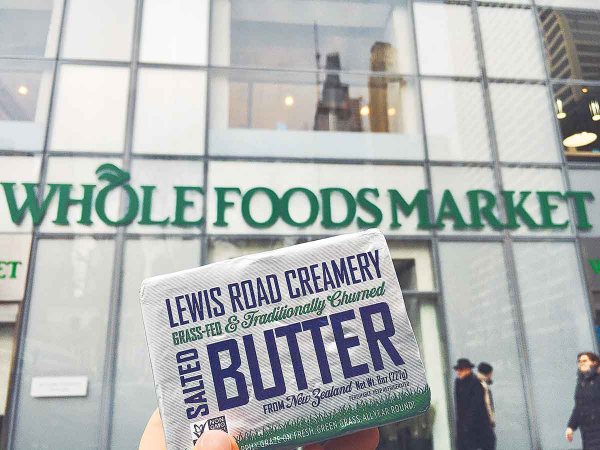
Boutique dairy, Lewis Road Creamery, says sales of its premium butter in the US have skyrocketed during the COVID-19 pandemic.

Lewis Road Creamery founder Peter Cullinane says with most Americans in some form of lockdown there has been an explosion in home cooking and butter sales have benefitted.

The company got its butter stock into the US market before the lockdown took effect there.

“At this stage the distribution in the US is still working and while there have been some disruptions, the food distribution system hasn’t fallen apart,” Cullinane told Dairy News.

“I don’t believe that we will have trouble getting more butter up to the US and our prediction is that demand for our product will continue to increase significantly,” he says.i

Lewis Road Creamery has products in 700 stores across the US, forging a special relationship with supermarket chain WholeFoods, which specialises in selling organic and ‘natural’ products. WholeFoods is owned by Amazon and Cullinane says they are a perfect match for the products produced by his company.

“We are approved to sell in all WholeFoods stores, although at this stage we are not in all of them. We initially started off selling in California and Texas, but now we have coverage right across the US and with WholeFoods we have coverage right up in the north east of the US,” he says.

Back in NZ, Cullinane says their sales have not decreased as a result of Covid-19. 

Its Jersey Milk remains one of the standout products. He says when it was announced that NZ was going into lockdown, his board has a special meeting to see how they might deal with the situation.

“When the lockdown was announced we took advantage of the Government’s wage subsidy because we thought sales were going to be 30% below normal. But this was not the case and we had great pleasure in returning that subsidy in full,” he says.

Source: ruralnewsgroup.co.nz

Bankrupt Borden Dairy to be acquired by private equity firms

US dairy processor and distributor, Borden Dairy will be bought out of bankruptcy by two investment firms, Capitol Peak Partners and KKR & Co. 

According to documents filed in the US Bankruptcy Court for the District of Delaware, New Dairy Opco LLC was the highest bidder during the auction. New Dairy Opco’s portfolio includes Capitol Peak Partners and KKR & Co. 

Capitol Peak Partners is led by former chairman and CEO of Dean Foods, Gregg Engles. Borden tried unsuccessfully to merge with Dean Foods – which has also declared bankruptcy – earlier this year. The majority of Dean’s assets were purchased by Dairy Farmers of America at the beginning of April 2020. 

Meanwhile, KKR & Co is a previous owner of Borden, having bought and privatised the company for $2 billion in 1995

The news comes shortly after Borden filed for Chapter 11 bankruptcy back in January, citing market challenges facing the dairy industry and the rising cost of raw milk as contributing factors. 

Borden’s debts at the time were allegedly somewhere between $100 million to £500 million. 

While the sale of Borden seems imminent, bankruptcy court approval is still required. These details and the purchasing price will be finalised during a hearing on Thursday 18 June. 

Source: foodbev.com

Minnesota Dairy Farmers Experience Unexpected Turnaround As Demand Increases

In March, COVID-19’s impact on commodities was hard to ignore. Prices across the board took a hit, but some have since rebounded.

That includes milk prices where Minnesota dairy farmers are experiencing a somewhat unexpected turnaround, as demand at grocery stores has been steady.

“For it to all of the sudden come back like this is surprising,” said Andrew Patnode. “Spirits are getting a lot better for everybody I think.”

Patnode is a 6th generation dairy farmer in western Hennepin County. His family has seen a lot over the years, including watching milk prices sour in April. But two months later the market has returned and with it, cautious optimism.

“June milk is looking really good because demand is coming back right now and it’s coming back really fast,” said Patnode.

The turnaround can be attributed to a number of factors, from restaurants re-opening to school food programs.

“A few things happened, it all added together to make a perfect storm in a positive way,” said Lucas Sjostrom.

Sjostrom is the executive director of the Minnesota Milk Producers Association. He said schools typically don’t buy milk in the summer but with COVID, many districts are supplying food and milk to students all summer long. A restaurant resurgence has also helped.

“When you see restaurants re-opening, not just in Minnesota and Wisconsin but across southern states as they have been, that really does affect us here. Even if we aren’t selling directly to those restaurants in the southern part of the U.S., it’s helping our price,” said Sjostrom.

Cutting back on production when the virus first hit lessened the supply but raised prices. And Sjostrom said the USDA and others have stepped up to help with the turnaround.

“I would say, on average, June was a great month and the rest of the year looks like something where farmers can break even or something a little better,” said Sjostrom.

Source: minnesota.cbslocal.com

Supply management program assists US dairy farmers and food pantries

Dairy farmers are partnering with local food pantries as they look to help each other out through a supply management program created as a result of the pandemic.
After reaching out to the USDA for a $500,000 purchase of the product backlog at the food processing companies, farmers and Midwest Dairy were approved for the grant waiver.

The Executive Director of the Nebraska State Dairy Association said Midwest Dairy then began distributing food to pantries but quickly learned most do not have refrigeration.

This led to the Alliance for the Future of Agriculture in Nebraska to create a grant opportunity for food pantries to purchase their own refrigerators or freezers.

“So, there’s definitely a need out there for us to help out our food pantries and it really was exacerbated in this time frame where the farmers were trying to find a home for their product and common sense would be to give it to people who need it,” said Executive Director of the Nebraska State Dairy Association Kris Bousquet.

The Hastings Food Pantry was one of 40 out of a total of 110 requests who received a $4,000 grant as a part of the supply management program after receiving a call from AFAN.

“At the same time, we had been looking for a way to replace them because everything we had was things that had been in somebody’s basement or garage and then donated to us and we were repairing a lot of our stuff. So when this call came in it was just at the right time,” said Hastings Food Pantry Board President Don Gronemeyer.

Gronemeyer said their new equipment is more efficient and allows them to store more food to give out to clients.

Source: nebraska.tv

Fonterra class action heads to court

A class action seeking compensation for dairy farmers affected by Fonterra Australia’s milk price “clawback” in 2016 has been filed in the Supreme Court of Victoria.

The case was filed on Wednesday and will represent dairy farmers who supplied milk to Fonterra in 2015-2016 and be run by law firms Adley Burstyner and Harwood Andrews.

Geoffrey and Lynden Iddles, Strathmerton, are the lead plaintiffs in the case, who lawyer David Burstyner said were third generation farmers who had supplied Fonterra and its predecessors for 45 years.

The defendants are three Australian companies that are part of the global dairy conglomerate headed by Fonterra Co-Operative Group Limited, whose performance can be invested in via the Fonterra Shareholders Fund (ASX:FSF).

The former Bonlac Supply Company will not be included in the class action.

Mr Burstyner, who is responsible for the case, said this was the first time a court would be asked to evaluate Fonterra’s conduct and deliver compensation.

“I’ve looked at the contracts and I’ve listened to farmers and seen 10 months of Fonterra statements saying, with very limited exception, that the $5.60 price will be paid,” Mr Burstyner said.

“The only answer I can come up with as to why the company clawed back is that they didn’t ask themselves, ‘Is it legal?’, they asked themselves, ‘Can I get away with it?’.

“And it wasn’t even as if it was a question of survival, with the Fonterra Group posting $834 million net profit after tax for the year ending 31 July 2016, up 65 per cent.”

The Supreme Court Statement of Claim asks the Court to declare that:

  1. Fonterra engaged in Misleading and Deceptive Conduct and Unconscionable Conduct, as defined in the Australian Consumer Law; and
  2. Fonterra breached its supply contract, and its obligation to match the farmgate milk price of Murray Goulburn.

Court proceedings were the ultimate test of conduct and precedent setting, and the case could be an important test of Unconscionable Conduct laws and protections for small business such as agricultural enterprises from conduct of global corporations, Mr Burstyner said.

“I have seen first-hand a great number of farmers distressed, wanting redress from Fonterra,” he said.

Farmers will not have to pay any costs of this case out of their own pockets because the case is funded by Litigation Lending Services.

Although all the approximately 1400 farmers who supplied Fonterra in 2015-16 were automatically included in the class action, around 200 had registered with the law firms running the case.

Mr Burstyner said it was important that “a lot more” registered before the case went to court in a few weeks’ time to show the funder that “farmers really want” the class action.

Mr Burstyner said registration did not commit farmers to anything, and did not mean they had to pay anything.

He also said the names of farmers who registered would not be made public or shared with Fonterra, unless that was required at some point in the court proceedings and, even then, it would only be after farmers had granted permission.

Registration simply ensures that farmers are kept in the loop about the case and about the opportunity to receive any money recovered,” he said.

Hearings will now be scheduled in the class action, likely starting late July or August 2020.

A Fonterra Australia spokesperson said, “The ACCC investigated the 2016 milk price reduction thoroughly and in 2017 it decided not to take action against Fonterra.”

“We’ve done a lot of work with our farmers since 2016 to rebuild trust and transparency.

“Fonterra takes its legal and regulatory obligations seriously and is committed to fully complying with them.

“We will address these claims comprehensively at the appropriate time.”

Have you signed up to Stock & Land’s daily newsletter and breaking news emails? Register below to make sure you are up to date with everything that’s important to Victorian agriculture.

The story Fonterra class action heads to court first appeared on Stock & Land.

Dairy Cares Launches First-Ever ‘Virtual’ Campaign

Dairy Cares of Wisconsin is going virtual for its 10th anniversary campaign.

For nine years, the non-profit organization’s signature event was a summer Garden Party that raised funds on behalf of Children’s Wisconsin (formerly Children’s Hospital of Wisconsin). However, in 2020, during a period of appropriate social distancing, the campaign is shifting to multi-media platforms.

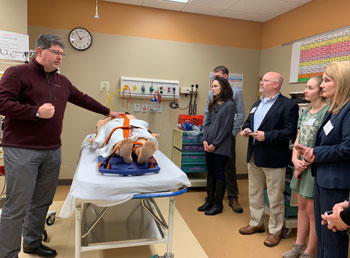
Simulation lab at Children’s Wisconsin

Last year, Dairy Cares brought its lifetime fundraising to $1.3 million, all of which directly benefits children and families facing medical or extraordinary crises. In 2018, Children’s Wisconsin christened the new, state-of-the art “Dairy Cares of Wisconsin Simulation Lab,” which gives medical professionals a safe venue to learn and sharpen their skills.

“We appreciate that these are extraordinary times. The demands on all medical and health care providers are unprecedented,” said Jim Ostrom, Dairy Cares co-founder and a member of the Children’s Wisconsin Foundation Board. “We are asking donors to help in any way they can. Considering our country’s economic turbulence, we are particularly respectful of any decision they make in determining the amount of their donation. Every gift matters.”

Two ways to participate in 2020:

  1. Donate directly. Between now and July 25, make online donations at www.dairycaresofwisconsin.org, or send sponsorships and gifts to Dairy Cares of Wisconsin, Inc., N3569 Vanden Bosch Road, Kaukauna, WI, 54130
  2. Auction by text. Simply text the word “DAIRY” to 71760, to receive “live” updates as new experiences and gift packages are put on a virtual auction block.

All proceeds will directly benefit the health system, which is headquartered in Milwaukee and offers 40 different care locations through the state.

The “auction by text” technology will allow donors to see specific ways their financial gifts can be put to use during the COVID-19 pandemic, such as the acquisition of cloth masks, hand sewn gowns, sanitizer and face shields.

Other Ways to Support Dairy Cares

As in the past, Dairy Cares welcomes new sponsors to contribute to the cause. Contact Laurie Fischer (laurie@lauriefischergroup.com; 920-366-1880) or Jim Ostrom (jostrom@milksource.net; 920-759-4674) for more information.

About Children’s Hospital of Wisconsin

Headquartered in Milwaukee, the Children’s Hospital of Wisconsin provides statewide care through 40 different locations. These various sites provide a range of specialized services, from dealing with childhood terminal illness and cancer to psychological disorders. Experts in premature birth, the neonatal intensive care unit is ranked top in the nation. For more information, visit the website at chw.org.

‘Hidden gem’ dairy farmer wins rare green diamond

Whanganui dairy farmer Chris Davison has more of a sparkle in his step, after being awarded a rare green diamond ring from DairyNZ.

And Davison knew exactly what to do with his prize once he received it. He placed the ring on wife Rachel’s finger to thank her for all her love and support.

“It’s right at home on Rachel’s finger, a nice reward for the demanding role of being a mother and a farmer’s wife. She’s the true gem of this outfit”.

Davison, who sharemilks 1,000 cows on the family dairy farm near Kai Iwi Beach, won the prize after being nominated by his mother Jeanette and twin brother Blake for being a “hidden gem” in a competition run by DairyNZ.

Competition for the prized diamond was hot, with more than 400 nominations received in the promotion, DairyNZ Acting GM Farm Performance Sharon Morrell said.

In his nomination, Blake, a milk tanker driver, said his brother was an all-round good guy.

“He’s an outstanding dairy farmer, employer, husband and father. I love him and nominating him to win this diamond is my ‘bro-mantic’ way of showing it.”

Meanwhile, in her nomination, Davison’s mother Jeanette said:

“Christopher is an absolute gem. He’s made a fantastic job of sharemilking on our family partnership farm … including the health, care and reproduction of the animals, managing the feed requirements, managing staff and all of the other aspects of running his own business”.

It was a nice surprise to hear he had won the diamond for being a great farmer, Davison said.

The diamond – a rare green one which may be the only one in New Zealand – was gifted by Auckland jeweller Mark Beckett and his wife Pamela to show their admiration and appreciation for New Zealand dairy farmers.

Davison said he was extremely encouraged to see such a kind gesture extended to dairy farmers from the heart of Auckland.

“This act of generosity is a good reminder that, by and large, most Kiwis appreciate and value what we farmers do. I’m sure many other farmers would feel the same way.”

Although the past 40-plus years of their lives had revolved around precious gems, both Mark and Pamela Beckett hail from dairy farming families.

“Even back then, our farming families had a long-term view of environmental stewardship – everything my father did on the farm was to care for the land and his animals,” Mark said.

“We saw the opportunity to give away this appropriately green coloured diamond to thank the good farmers for their hard work, both as stewards of the land and for bringing us milk.”

Source: nzherald.co.nz

Return Of The Milkman: Dairy Delivery Service Making Comeback Due To Coronavirus Pandemic

A delivery service that harkens back to the good ol’ days — fresh, cold milk brought right to your door. The milkman is making a comeback because of the coronavirus pandemic.

Getting things you need delivered right to your door feels like the new thing to do, but what’s interesting is recently the pandemic has made something old, something new again — getting your dairy delivered.

And that is giving the milkman a major comeback.

Daryl Mast is the owner of Doorstep Dairy, a company that brings fresh and local dairy, produce, and baked goods from Lancaster, Chester, and Berks Counties to your doorstep every week.

During the pandemic, Mast says while subscription boxes and produce boxes became even more popular, so did their dairy deliveries.

“For years, we spent money on marketing,” Mast said. “Some things work, some things don’t. You try new things. The last three months, we spent zero dollars on marketing and we were overwhelmed with work. It’s been a blessing in that sense, and sometimes if I sit down and think about it, I’ll cry about it.

Mast believes a lot of people are surprised dairy delivery is still around. He says for home delivery customers, 2% and whole milk are their best sellers. Butter has also been a top seller.

“Butter was ridiculous. That was one of those things right up there with toilet paper,” Mast said.

While many were happy to see the dairy on their doorstep, many times they were even happier to see that familiar face once again.

“Back in the ’50s and ’60s it was typical for people to get milk delivered, maybe every other day,” Mast said. “I think it goes back to that nostalgia, some people remember their milkman as a kid. I think some people, they don’t have contact with people, we’re that person who’s there every week, so drink your whole milk.”

Source: philadelphia.cbslocal.com

Pennsylvania dairy farmer loses over 50 cows as fire torches barn

This was the scene on Porter Road in Troy on Thursday night of last week. Fire crews responded to a large barn fire in Bradford County. It took crews around two hours to put out the flames.

“The trouble with barns is they are so open and most of them are old and there is hay and everything else,” said Troy Fire Chief Roy Vargson. “Once they go it doesn’t take long before its gone.”

“I was hoping I could push it out the door, but it was clear in the back so I went down and around, the call to the fire department had already been made and I was just hoping it would stay upstairs,” said Kris Wright.

The barn belonged to dairy farmer Kris Wright. He says its been a rough few days for his family.

The large fire killed 48 mature cows and 11 young stock and according to Kris Wright, losing those cows was like losing family.

“I lost, to me, the connection to my cows, the barn can be replaced and everything, but those cows had sentimental value,” said Wright.

Wright says he may give up dairy farming because of the damage done to his barn and livestock.

“We’ve been focusing on the cleanup, trying to take a minute and not make any quick decisions and think things through and what happens next is going to depend on a lot of things,” said Wright.

Wright has been farming since high school and this is one of the toughest challenges he has faced yet as a farmer. However, he says the support from his local community has been overwhelming.

“I was on that end of the barn most of the time and I heard that my neighbors loading heifers on the other end and I knew nothing about it and even our local feed company had gates here to help load,” said Wright.

The cause of the fire is still under investigation.

Source: WJAC

Family farm closes dairy operation after 145 Years

A Wisconsin family that’s run a farm for generations is having to make sacrifices in wake of a struggling agriculture industry.

[fbvideo link=”https://www.facebook.com/wqownews18/videos/254880065604370/” width=”900″ height=”600″ onlyvideo=”1″]

On The Sweet Pine Farm in Fall Creek, there are a lot of memories.

“Always behind dad, behind your brother, chasing chickens…There was a lot of cleaning up poop, that’s for sure,” Wade Anderson, a member of the family that owns the farm, said. “There was never a dull moment, never a dull moment on the dairy farm.”

After nearly single-handedly running the 145-year-old family farm, Norman Anderson and his wife decided to sell their herd of cattle.

A story that, in the Badger State, has become far too common.

“There’s no way to really do it without being bankrupt,” Wade said. “We’re rich in our different ways, you know. We don’t have a lot of money, but the connections and the hard work that went into this farm is something that can’t be explained.”

As for Norman, he’s looking forward to some more free time.

“It’s probably harder on them than me, because it hasn’t really, really sunk in yet,” Norman said.

The Andersons will continue to grow crops and raise chickens on the farm.
Wade said he hopes to one day be able to buy the farm from his father and keep it afloat.

Source: wxow.com

Mexico will stop sending workers to Canadian farms amid COVID-19 outbreaks

Mexico will stop sending temporary workers to Canadian farms that have registered coronavirus cases and that do not have appropriate worker protections.

According to Reuters, Mexico’s labour ministry made the announcement on Tuesday 16 June, however, it did not completely suspend the temporary work programme.

The decision came after a coronavirus outbreak in Ontario hit at least 17 farms, killing two Mexican workers aged 24 and 31, and prompting the testing of about 8,000 migrant farm workers.

Canadian farmers rely on 60,000 short-term foreign workers, predominantly from Latin America and the Caribbean, to plant and harvest crops.

This year, Mexico’s Temporary Agricultural Workers Programme (PTAT) has sent more than 16,000 people on short-term contracts to Canada, including 10,600 people since the pandemic began, the labour ministry said.

The programme was halted only from 19 March to 9 April, restarting after Canadian authorities said there were proper health conditions.

Workers planning to travel to farms that have had coronavirus outbreaks or do “not have a strategy of prevention and care for workers” will be reassigned, the labour ministry said in a statement.

Ken Forth, president of Canada’s Foreign Agricultural Resource Management Services (FARMS), said Mexico is looking for assurances that workers will be safe.

“No additional workers will go to the farms where there’s an outbreak until they can demonstrate to the Mexican government that they’ve done all the protocol for the new workers to come,” Forth said.

CNN and Canadian media earlier reported that Mexico had put the programme on hold while it reviewed Canadian health policies and procedures, citing Mexican embassy officials in Ottawa.

Canadian Prime Minister Justin Trudeau said he expressed condolences to President Andres Manuel Lopez Obrador in a recent call.

“We are going to make sure that we’re following up,” Trudeau said, citing living conditions and labour standards as areas that must be considered.

Read more about this story here.

STgenetics® supporting Youth

STgenetics® has always been proud to support our dairy youth and this year is no different. In the month of June, STgenetics® has donated $1 for every unit of semen sold to each dairy breed’s junior associations.


To continue this celebration of our dairy industry and our dairy youth we have also spotlighted 7 youth members from each breed. These juniors are what STgenetics® believes embodies the spirit of the dairy industry, many of these youth members are involved in their communities, other agricultural organizations and all have a deep passion for the dairy industry.

These youth members may be from different breed associations and states, however the one thing they all have in common is their dedication to the dairy industry. To learn more about these outstanding dairy youth, visit the link below.

Click here.

Beef embryos provide diversified breeding strategy and maximized ROI to dairy producers

SimVitro® HerdFlex™ beef calves offer a consistent and superior genetic package

Select Sires and the J. R. Simplot Company’s Animal Sciences division have teamed up to bring a new strategic breeding concept to commercial dairy farms. Select Sires is the first and only provider of Simplot’s SimVitro® HerdFlex™-branded beef embryos. Dairy farmers now have the opportunity to sell 100% beef calves born from pregnancies not needed for replacements while advancing elite genetics within their dairy herd and appropriately managing heifer inventories.

“Beef genetics in the dairy industry have been widely adopted, and the supply of dairy-beef crossbred calves has greatly increased,” says Chris Sigurdson, general manager of Minnesota/Select Sires. “By offering Simplot’s HerdFlex™ beef embryos, a new market opportunity opens for dairy farmers.”

Beef calves with superior genetics have the potential to earn a more desirable return on investment compared to dairy-beef crossbred calves or straight dairy calves. Resulting calves from HerdFlex™ beef embryos offer additional benefits related to feeding and finishing, including:

  • A consistent, superior genetic package
  • Cost per gain advantage
  • High carcass merit and marbling
  • Availability year-round, delivering a consistent supply to the beef cattle market

HerdFlex™ beef embryos are grade 1, high-quality and commercially produced specifically for placement in dairy cows. Each mating is to a proven Select Sires beef sire to maximize the resulting embryo’s genetic potential and value for key traits such as calving ease, $Beef and ribeye area. The $Beef value index includes weaning and yearling weight, dry matter intake, as well as carcass weight, marbling, ribeye area and fat.

HerdFlex™ beef embryos are produced by Simplot, the largest beef cattle producer in the western U.S. with extensive farm and ranch holdings, including feedlots. Simplot has invested decades of research and improvement to make commercial application of IVF embryos feasible for customers.

“Our team’s deep knowledge of IVF technology paired with a history of innovation in commercial agriculture is a great fit for this partnership,” said Brady Hicks, manager of Simplot Animal Sciences. “Together with the local Select Sires team, we’ll help dairy farms expand opportunities for their businesses and livelihoods.”

Select Sires cooperatives offering HerdFlex™ beef embryos include CentralStar, COBA/Select Sires, Minnesota/Select Sires, Premier Select Sires and Select Sires MidAmerica. Talk with your local Select Sires team member about how HerdFlex™ beef embryos fit into your breeding program.

Select Sires Inc. (www.selectsires.com) is the largest global A.I. cooperative and is comprised of six farmer-owned and -controlled local organizations in the United States. As the industry leader, it provides highly fertile semen, as well as excellence in service and programs to supply dairy and beef producers with the world’s best genetics.

SimVitro® HerdFlex™ embryos are backed by the trusted Simplot brand. The J.R. Simplot Company, a privately held agribusiness firm headquartered in Boise, Idaho, has an integrated portfolio that includes phosphate mining, fertilizer manufacturing, farming, ranching and cattle production, food processing, food brands, and other enterprises related to agriculture. Simplot’s major operations are located in the U.S., Canada, Mexico, Australia, South America and China, with products marketed in more than 60 countries worldwide. For more information, visit simplot.com.

National Dairy Shrine to Cancel 2020 Awards Banquet

The Board of Directors of the National Dairy Shrine announced the cancellation of the 2020 National Dairy Shrine Awards Banquet. The awards program has been held annually in conjunction with World Dairy Expo, and the cancelation of the 2020 World Dairy Expo facilitated the decision.

“Our board reviewed several different options and came to the decision that, with regard to the COVID-19 situation and the health and safety of everyone who may gather for the event, to cancel this year’s awards banquet,” says Nate Janssen, president of National Dairy Shrine. “We look forward to hosting the event again in 2021.”

The honorees who would have been recognized at the 2020 banquet will be honored in 2021. That includes the Guest of Honor, Distinguished Dairy Cattle Breeder and Pioneer award winners. Students who received scholarships in 2020 will also be formally recognized next year, however the monetary value of the scholarships will be provided this year. National Dairy Shrine will select award and student scholarship winners again in 2021, and those recipients will be recognized at the 2021 banquet as well.

“With this format, the adult award winners as well as the student scholarship winners will receive the accolades due to them,” says Janssen. “The National Dairy Shrine is centered on recognizing dignitaries who have made significant contributions to the dairy industry and the youth who are the industry’s future. Recognizing this year’s winners in a formal fashion fits that mission.”

The annual meeting of the National Dairy Shrine, normally held just prior to the awards banquet, has been moved to a virtual format. The 2020 meeting will be held at noon CDT on October 1, 2020.  Additional meeting details will be provided at a later date.

The 2021 National Dairy Shrine awards banquet will be held Thursday, September 30, 2021.

For more information about National Dairy Shrine, the banquet, or the students and dairy industry leaders being recognized this year, contact National Dairy Shrine’s office at info@dairyshrine.org or visit www.dairyshrine.org.

Dairy farmers India Dump Around 5,000 litres of Milk on Road

Union blames it on Aavin for refusing to procure milk.

Milk producers’ unions in the district have expressed their concern and disappointment over the lackadaisical attitude of some of the officials at the Aavin here.

To show their protest, some of the milk producers destroyed the milk on the by-pass road. “At least 5,000 litres of milk were poured on the road that motorists were shocked to see,” a policeman at the intersection said. This is the second day, the milk producers indulged in the demonstration, he added.

Members at the union here told The Hindu that after the TN government announced certain relaxation in the COVID-19 lockdown, they started supplying milk to the Aavin without any difficulty.

Every day, the Aavin, procured around 1 lakh litres. On some days, the levels crossed the one lakh mark. With COVID-19 pandemic, many milk producers suffered multiple losses. Under such circumstances, the refusal to procure milk from the registered unions had caused pain, the members said and added that hence, to draw the attention of the officials and the public, the milk was destroyed.

The members also said that the Aavin had reduced the price of procurement from ₹31 to ₹27 per litre citing COVID-19 pandemic and claimed that the milk quality was not up to the mark. The milk producers maintained that it was yet another move to discourage them. They also alleged that the Aavin management here gave false reason that the milk was unfit for consumption so that it could return it.

They said that the agitation would be intensified from next week.

Aavin clarifies

However, when contacted, an official in the Aavin, requesting anonymity, said that they had a capacity to procure up to 1.20 lakh litres daily from the milk producers. Two days ago, there was some fault in the chilling plant and the milk producers were fully aware of the issue. Under such circumstances, the Aavin had procured 1.32 lakh litres. Hence, they returned the excess milk of about 7,000 litres. The milk producers were also informed that the Aavin would compensate for the loss and there was no need for apprehension.

The official said that apart from procurement for them, they also supplied 90,000 litres of milk to Madurai Aavin and another 45,000 litres of milk to Kancheepuram and Thiruvannamalai districts as well. It took three days for the tankers to return. Any delay in this routine might complicate the cycle as the chilling facility had to be enhanced at the plant here, he clarified.

The official said that the consumers in the district had commended the Aavin management for its excellent coordination and network in delivering the milk packets during the COVID-19 curfew.

AMMK charge

A functionary of the Amma Makkal Munnetra Kazhagam (AMMK) alleged that a prominent politician in the district and his family members who had a role in the functioning of the Aavin here, were aware of the issues, but not keen to solve them. “They were more interested in encouraging private players in the milk industry,” he claimed.

Source: The Hindu

Beston sells dairy farms for $40.4m

Under the terms of the proposed transaction, Beston will receive all milk from the farms, currently around 17m liters per annum, over a ten-year period. Aurora is expected to continue to grow production from these farms in the future.
The sale process for the farms was conducted through an international open tender process that commenced in January 2020 with final bids received on March 5, 2020.

The timing of final bids coincided with the introduction of travel and other restrictions due to the COVID-19 pandemic. This impacted on the due diligence processes for a number of bidders and slowed negotiations.

Beston said it has been able to manage its way through these issues as a result of the goodwill and understanding demonstrated by the short-listed bidders and has negotiated a binding sale agreement.

The transaction is not predicated on a leaseback arrangement as Beston had offered to the market but provides Beston with milk supply security from these farms for a period of 10 years, with an option to extend.

Staff currently employed by Beston Farms will be offered employment with Aurora, subject to normal recruitment screening processes.

The transaction achieves Beston’s strategic objectives of releasing capital for re-investment in higher returning dairy factory assets, whilst securing long-term milk supply from the farms.

The proceeds will allow the investment program at the dairy factories to continue and allow Beston to fast-track the delivery of increased margins and sustainable free cash flow, while positioning the company to drive other actions consistent with its five strategic imperatives announced at the 2019 AGM. The sale price of the dairy farms is above book value.

Read more: dairyreporter.com

National Farmers Union condemns ‘police brutality,’ calls for effort on racism

In a news release Friday, National Farmers Union President Rob Larew said, “The killing of George Floyd was an abuse of power and a horrifying act of violence — but what is even more horrifying is that this is not a rare or isolated incident.”

“People of color are far more likely to be killed by police than their white counterparts; black Americans account for just 13% of the overall population, but 26% of fatal police shootings. But police brutality doesn’t occur in a vacuum. It’s just one of many examples of racism in our country — in criminal justice, financial services, health care, voting, education, and elsewhere.

“If we stand idly by while our friends and neighbors suffer — as too many of us have done for too long — we are complicit in their suffering. Now is the time to step up, to heal these wounds, to build a just and equal society.

“This will not be a quick or easy task – to overcome the terrible legacy of racism in this country, we all must reflect on our own privileges and prejudices, rethink our institutions, and demand structural change. The road ahead of us may be long and uncomfortable, but it is our moral obligation to traverse it.”

NFU also noted that the organization has been “an early supporter of the women’s suffrage and civil rights movements” and fought for freedom and equal opportunity for people of all races, genders, ethnicities, ages, and sexual orientations since its establishment in 1902. Though significant progress has been made in the last 118 years, it is clear that racism is still a pervasive a force in American society.”

Source: The Fence Post

Michigan Dairy Farmers Partner with Domino’s to Support Flood Victims

Michigan’s dairy farmers again stepped up to the plate to help neighbors in need. After devastating floods destroyed homes and businesses in mid-Michigan last month, the United Dairy Industry of Michigan (UDIM), United Way and checkoff partner Domino’s Pizza distributed pizza to shelters serving Midland, Gladwin and Saginaw counties. Pizza was also delivered to frontline construction and flood protection workers in the tri-county area.


“Michigan dairy farmers understand the importance of community and a good meal that includes nutritious dairy foods,” says Sharon Toth, UDIM CEO. “We were honored to be a part of this donation, providing a hot meal to those affected by the floods and the neighborhood organizations that protect our local infrastructure.”

In May, days of heavy rain and failures of the Edenville and Sanford dams sent more water rushing down the Tittabawassee and Saginaw rivers than their banks could handle. The floodwaters destroyed homes and businesses in mid-Michigan, displacing at least 10,000 people. Families have been displaced for weeks, and it will still be some time before those affected by the floodwaters will be able to return home.

“We are proud to partner with Michigan dairy farmers to provide nutritious food for people affected by the floods. Nothing like a hot cheesy pizza to make people feel just a little happiness when they have lost their home and are still trying to social distance,” says Chris Scholemann, Domino’s Pizza franchisee in Midland, Michigan. “Together with United Way, helped by a grant from the United Dairy Industry of Michigan, we provided food when the need was the greatest.”

To learn more about the dairy checkoff, visitmilkmeansmore.org.

About the United Dairy Industry of Michigan

The United Dairy Industry of Michigan (UDIM) is dedicated to serving Michigan
‘s hard-working dairy farm families and promoting Michigan’s locally produced dairy products. UDIM is the umbrella organization for the American Dairy Association and Dairy Council of Michigan. These non-profit organizations provide dairy product promotion and nutrition education services on behalf of their funding members.

RWDCA Welcomes New Board Members

Welcome New Board Members.

Welcome to Nick Randle, and Graisson Schmidt. With these new board members joining, we thank Bonnie Van Dyk, and Jason Miley for their six-year commitment to the breed and the RWDCA members.

Nick Randle

Sterling, Massachusetts

Nick is a Red and White breeder from central Indiana now residing in Massachusetts with his wife, Ashley. Growing up on a dairy farm in Indiana is where he established his passion for Holstein genetics. Nick and his family own and operate Starlight Genetics (Prefix: STAR-GEN). They exhibit their cattle Nationally and are fortunate to have achieved success in their breeding stock and in the show ring. Nick is a graduate of Cornell University and works for Zoetis as their Marketing Manager of Dairy Genetics in the US. When not attending cattle events, Nick and Ashley enjoy traveling the country and abroad.

Graisson Schmidt

Riverdale, California

Graisson is from Riverdale, Calif., where he lives with his wife Mandy. They own and operate Grai-Rose Cattle Co. where they have bred, owned, or sold numerous All-American and All-Canadian Holstein and Red and White Holstein Nominees. Graisson manages the show cattle and boarding business for RuAnn Genetics. He is a big part of their genetic marketing team and works very closely with donors and individual matings in the RuAnn Genetics herd.

Prior to being employed at RuAnn Genetics, Graisson worked as a professional cattle fitter for ten years. As a fitter, Graisson traveled throughout North America preparing some of the top cattle in the industry. He was honored at the 2019 Western Spring National Holstein Show as the recipient of the Al Hay Memorial Award. Graisson grew up on his family’s 50 cow Registered Holstein farm, Indies-View Holsteins, in Melrose, Wis. Indies-View exhibited their cattle at the county, state, and national level; which helped Graisson develop his passion for the Holstein Industry.

Send this to a friend