

Archive for World Dairy Expo 2025

World Dairy Expo 2025 Award Winners: The 13-Year Valley Nobody Talks About

His neighbors called it a gamble. World Dairy Expo just called him the 2025 Producer of the Year. What happened in the 13 years between? That’s the story nobody tells.

EXECUTIVE SUMMARY: When World Dairy Expo announced its 2025 award winners, the industry celebrated innovation that was finally recognized. But behind every honor lies a story the press releases don’t tell: the validation gap—those brutal years between building something new and anyone noticing it matters. The McCartys spent 13 years operating a processing plant that they had no experience running. Juan Moreno pioneered sexed semen technology when 88% of farmers wouldn’t touch it. Jim Mulhern showed up to policy meetings for 45 years before anyone called him Industry Person of the Year. This isn’t a story about awards. It’s about what happens in the silence of year six—and why the producers who survive that silence change the permission structure for everyone who comes after.

The cows still needed milking on the morning the award was announced. That’s the thing nobody tells you about recognition—it doesn’t change the work. It changes who believes the work was worth doing.

There’s an image from the McCarty story I can’t shake.

It was April 2012. Ken McCarty was standing in a building he had absolutely no idea how to operate.

The hum of refrigeration units filled the empty processing plant. Stainless steel gleamed under fluorescent lights—everything new, everything untested. The smell of industrial cleanser and fresh concrete hung in the air. Somewhere, a compressor cycled on—that mechanical heartbeat of a facility that represented everything his family had risked. And there stood Ken, in the middle of McCarty Family Farms in Rexford, Kansas, wondering if he’d just made the worst decision of his life.

The facility was designed to handle half a million pounds of milk daily. Thirty-one specialized employees had been recruited from outside the dairy world—people who knew processing but had never set foot on a working dairy. The whole thing was built through a partnership with Danone that seemed either visionary or completely insane, depending on who you asked.

What moves me most is Ken’s honesty about that moment. He didn’t pretend to have it figured out. He later admitted something that takes real courage to say out loud: “We had no experience running a milk processing plant before 2012. We depended heavily on the Danone teams to help us develop our skill set.”

I keep coming back to that sentence. Here’s a dairy farmer whose family has been milking cows for generations. And he’s standing in a facility that represents millions in investment, that his neighbors think is a gamble, that his banker barely understands—and he’s telling the world he had zero experience operating it.

That takes a kind of courage that doesn’t photograph well. There’s no triumphant moment to capture. Just a man in a humming building, hoping he hasn’t bet everything on a dream that won’t work.

That was Day One.

Day 4,745 would arrive on a March evening in 2025, when World Dairy Expo announced the McCarty Family as Dairy Producers of the Year—the industry’s highest recognition for farming excellence.

What happened in between those two days? That’s the story nobody tells about agricultural innovation. And honestly, it’s the part that matters most.

The McCarty Family: Four generations of dairy farming excellence stands proudly in one of their innovative free-stall barns. From left to right, brothers Mike, Clay, Tom (father), Dave, and Ken McCarty have transformed a 15-cow Pennsylvania dairy into a sustainability-focused operation spanning multiple states, earning them World Dairy Expo's prestigious 2025 Dairy Producer of the Year award.

The McCarty Family: Generations of dairy farming excellence stands proudly in one of their innovative free-stall barns. From left to right, brothers Mike, Clay, Tom (father), Dave, and Ken McCarty have transformed a 15-cow Pennsylvania dairy into a sustainability-focused operation spanning multiple states, earning them World Dairy Expo’s prestigious 2025 Dairy Producer of the Year award.

The Valley Nobody Warns You About

Every innovation story we love to celebrate follows the same arc: Someone has a vision. They build something new. The industry recognizes their genius.

What gets edited out is the decade in between steps two and three.

Agricultural researchers have a clinical term for this brutal middle period: the “Valley of Death.” It’s where emerging tools and approaches remain stuck, unable to advance from proof of concept to widespread adoption. The funding gap hits. The adoption gap hits. And most pioneers? They don’t survive the crossing.

For the McCartys, the valley looked like years of learning to operate a processing plant while simultaneously managing dairy expansion. Technical problems for which no solutions had been documented. Equipment designed for average milk composition that couldn’t handle their herd’s exceptional genetics.

Here’s the part that still gets me: Their cows kept getting better. Through careful breeding, their herd was producing 4.5-4.6% butterfat—well above the industry average of 3.7-3.8%. Sounds like a triumph, right?

Except their processing plant separators weren’t designed for milk that rich. Ken explained it with characteristic plainness: “We have to run our plant slower.”

Think about what that actually means. Your breeding program succeeds beyond your wildest expectations—and it creates a whole new problem. Your genetics outpace your equipment. Most dairy farmers never face this challenge because, as Ken put it, their “connection to that separator ends at the back of a milk tanker.” The McCartys saw it all the way through—every improvement revealing new bottlenecks nobody else had ever needed to solve.

That’s what the validation gap actually looks like. Not a dramatic failure that makes for good storytelling. Just constant, grinding problem-solving with zero external validation that you’re even on the right path.

The Weight of the Unseen Years

In every innovator’s journey, there are moments of doubt that never make the official story.

The McCartys have spoken openly about the technical challenges of those valley years—equipment struggles, the complexity of managing what no one in their region had ever attempted before. The processing team they’d recruited? Ken shared something remarkable about them: “Most of those team members are still with us 13 years later.”

That kind of loyalty doesn’t happen by accident. It happens when people believe they’re building something worth staying for, even when the world hasn’t noticed yet. I think about those employees sometimes—the ones who showed up in 2012 to work for a dairy family with no processing experience, and decided to stay anyway. What did they see that others missed?

I think about what those years must have felt like. Not the dramatic crises, but the quieter weight. The mornings when you walk into that plant knowing you’re solving problems nobody else has faced—and the equipment manual on your desk is one you’re writing as you go.

“We enjoyed creating things,” Dave McCarty would later explain about why they left Pennsylvania for Kansas. “My dad and mom just allowed us to make it ours.”

What strikes me about that quote is what it doesn’t say. It doesn’t say they always believed it would work. It doesn’t say the doubt went away. Creating things means making something that didn’t exist before, which means you can’t know in advance whether it should exist. The McCartys built anyway. But I suspect there were mornings when “enjoying” wasn’t quite the right word. Mornings when it was just stubbornness. Just being too far in to turn back.

But they kept going. Not because they knew it would work—they couldn’t have known that. Because stopping felt worse than continuing.

Read more: The McCarty Magic: How a Family Farm Became the Dairy Industry’s Brightest Star

The Silence That Tests Everything

There’s a moment in every innovator’s journey—usually around year five or six—when the hardest question arrives.

It’s not “Is this working?” By year five, you have data. You know if the economics function.

The hard question is this: “Is this worth it when nobody else seems to care?”

Your neighbors are milking cows, shipping milk, and going home. Their operations look simpler. Less stressful. More manageable. They’re not dealing with food safety inspections, processing plant employees, or equipment that wasn’t designed for what you’re trying to do.

Meanwhile, you’re solving problems nobody else has. You’re operating at the edge of industry knowledge. And when you look around for validation—for someone to say “Yes, this matters, keep going”—the silence is deafening.

Juan Moreno knows this silence intimately.

When Moreno was pioneering gender-sorted semen technology, the industry wasn’t celebrating his vision. They were skeptical. In 2012, only about 12% of U.S. dairy operations used sexed semen. Nearly half of the dairy farmers surveyed had never even tried it. The technology worked, but most farmers weren’t buying it—literally.

Moreno’s response? He kept building anyway.
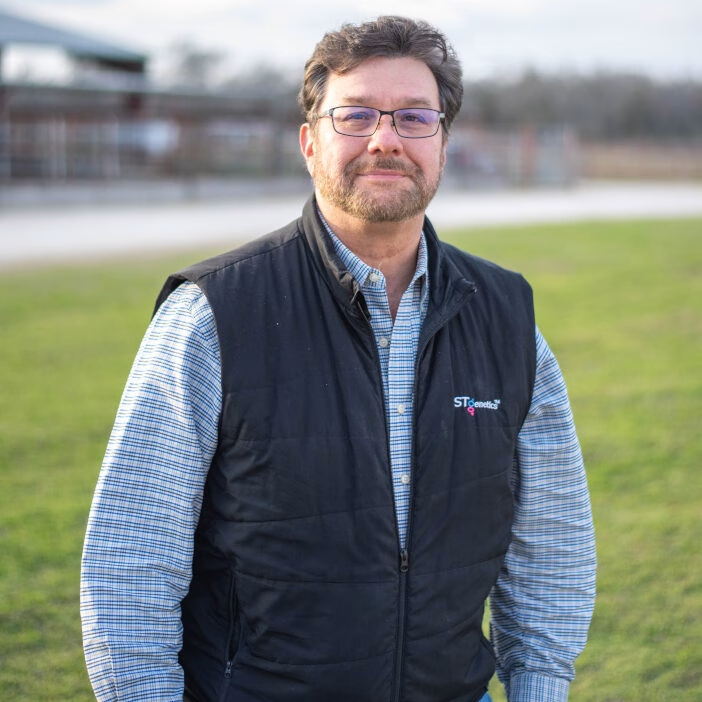
Juan Moreno, CEO of STgenetics, stands at the forefront of his company’s facilities where revolutionary genetic technologies are developed. Under his visionary leadership, Moreno has transformed the dairy breeding industry through innovations in sexed semen technology and genomic testing that have fundamentally changed how farmers approach herd genetics worldwide.

Juan Moreno, CEO of STgenetics, stands at the forefront of his company’s facilities where revolutionary genetic technologies are developed. Under his visionary leadership, Moreno has transformed the dairy breeding industry through innovations in sexed semen technology and genomic testing that have fundamentally changed how farmers approach herd genetics worldwide.

“It all started on my family’s cattle operation, where an early fondness for animal husbandry took root,” he explained after receiving the 2025 International Person of the Year award. “Those early experiences shaped my understanding of the daily practical challenges farmers face.”

He wasn’t building sexed semen technology to revolutionize the industry. He was solving a problem nobody else thought was worth solving yet—the frustration of unwanted bull calves, the slow pace of genetic progress, the coin-flip uncertainty of every breeding decision.

By 2024, adoption had reached 84% in Great Britain—the world’s highest rate. Moreno’s decades of work finally looked like genius. But in 2005? In 2010? In all those years, when most farmers considered the technology too expensive and unreliable?

He was just a man in a lab, wondering if anyone would ever see what he saw.

Read more: Bull in a China Shop: How Juan Moreno Turned the Dairy World Upside Down

The Invisible Giant

Not all validation gaps end with visible, dramatic operations like on-farm processing plants.

Some end with policy infrastructure that touches every dairy farmer in America—without most of them ever knowing the name of the person who built it.

Jim Mulhern spent 45 years doing work that most dairy farmers never saw. Congressional testimony. USDA comment periods. Coalition-building with farm organizations. Endless meetings with staffers whose names would never appear in industry publications.

I find myself wondering what sustains someone through that kind of invisible work. Forty-five years. Think about that. Forty-five years of showing up to meetings where your name never appears in the headline. Forty-five years of watching legislators change, programs rise and fall, knowing that the farmers who benefit from your work will never know you built the infrastructure that saved their milk check.

How do you keep going when the work is that invisible?

When Mulhern received the 2025 Industry Person of the Year award, his colleagues’ description revealed the answer: “His work has made lasting impacts on dairy and ag policy, and his colleagues routinely say his kindness, hard work, and collaborative nature are unmatched in policy circles.”

Kindness.

In 45 years of policy work—the meetings, the testimony, the endless negotiations—that’s what people remembered most. Not the wins. Not the programs. The way he treated people during the long, unglamorous middle.
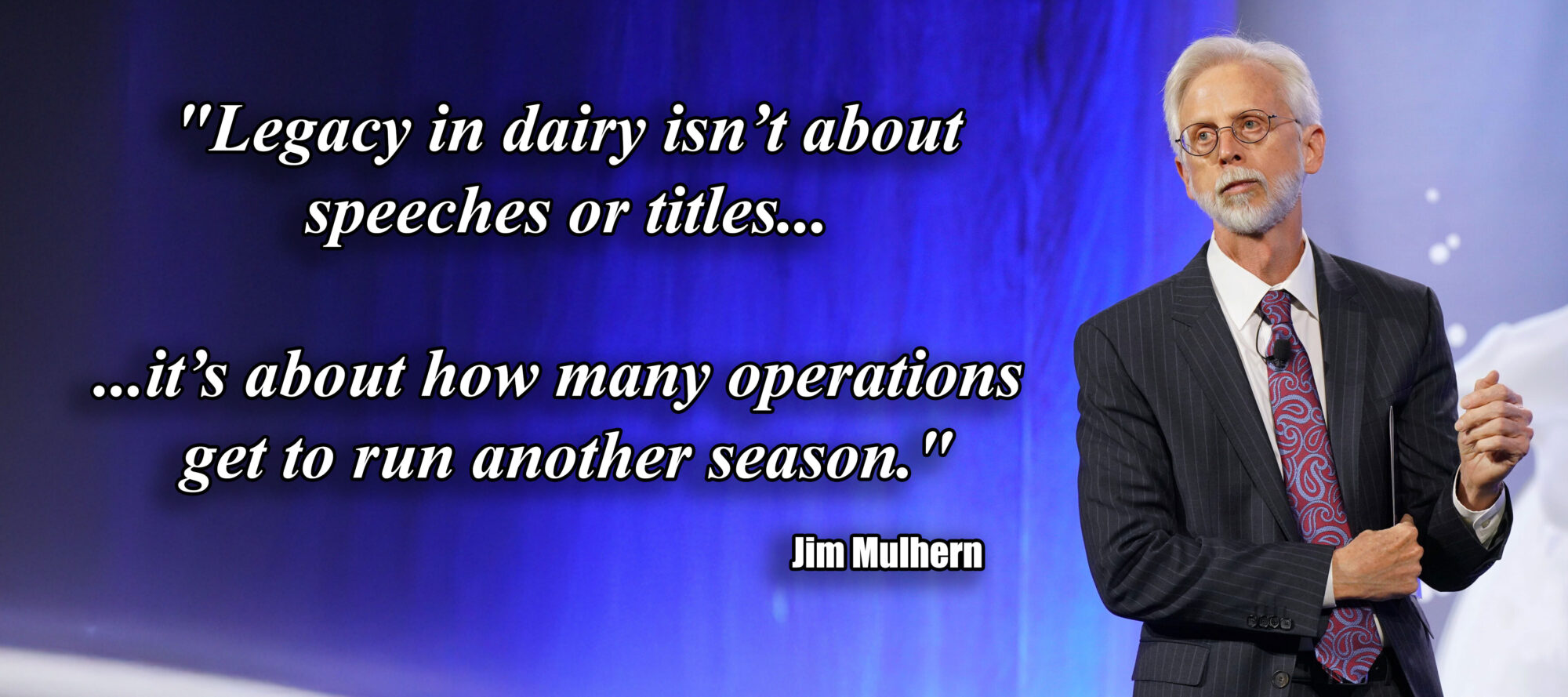
The Dairy Margin Coverage program—which distributed $1.27 billion to 17,059 operations in 2023 alone—exists in part because of Mulhern’s decades of policy architecture. Federal order reforms that affect every milk check in America bear his fingerprints.

But here’s what strikes me most: Mulhern didn’t separate survival from legacy.

He didn’t spend 20 years doing policy work and then 25 years building something meaningful. His survival strategy WAS building policy infrastructure that protected all dairy farmers—including himself. Every hour spent in committee meetings was simultaneously about keeping the industry viable and creating something that would outlast him.

Legacy isn’t what you build after you survive. Legacy is what you build while surviving.

Or it’s not built at all.

Read more: More Than Policy: For Jim Mulhern, Legacy is Measured One More Season at a Time

The Fear That Wears a Different Name

That kind of invisible courage—showing up for decades without recognition—requires the same thing the McCartys needed: the willingness to be vulnerable to failure without anyone watching.

But most producers I talk to face the opposite challenge. Their fear isn’t invisibility. It’s visibility.

You’ve probably said this yourself. In hundreds of conversations with mid-size dairy producers, I’ve heard the same refrain: “That’s for the big guys. I’m too small to matter to Land O’Lakes or Danone or any of these programs.”

I’ve come to believe something uncomfortable about that sentence. In most cases, it’s not a size problem at all. It’s a fear problem wearing a scale costume.

The McCartys had advantages, yes. Scale, Kansas State University support, and a Danone partnership. But Randy Kortus won Dairy Producer of the Year in 2023 with approximately 90 cows across three breeds—Holsteins, Jerseys, and Ayrshires. Ninety cows. That’s not mega-scale. That’s the kind of operation thousands of producers run while telling themselves they’re “too small to matter.”

The difference wasn’t Kortus’s cow count. It was his willingness to be seen. To share operational data with universities for benchmarking. To host farm tours and engage with industry visitors. To present at conferences about what worked and what didn’t. To document his practices in ways that helped other producers learn.

“Too small” protects us from vulnerability. It’s easier to say “Programs like that aren’t for farms my size” than to make the call, share the data, and risk rejection.

But here’s what I’ve learned: Land O’Lakes TruTerra accepts operations of ALL sizes. They paid $5.1 million to farmers in 2022 for carbon sequestration—distributed among thousands of participants, most of whom were mid-size operations.

USDA EQIP programs often score smaller operations HIGHER because they can demonstrate greater per-acre environmental impact.

Regional processors actively seek mid-size operations for premium programs because they want authentic “family farm” stories for their marketing.

The question isn’t whether you’re big enough to matter. The question is whether you’re brave enough to become visible.

And I get it—visibility is terrifying. When you’re visible, people see your failures as well as your successes. Your neighbors know when you’re struggling. Industry colleagues witness your challenges.

But here’s what I’ve noticed about every producer who eventually earned recognition: They were all terrified, too. They didn’t conquer the fear. They just got tired of letting it make decisions for them.

What Separated the Stayers from the Leavers

Looking at the producers who emerged from the valley faster, I started noticing patterns. Three habits kept showing up—and none of them were what I expected.

Most producers do the opposite of all three. They compete instead of connect. Hoard instead of share. Protect instead of expose.

They became connectors instead of competitors. When you consistently highlight other farmers doing innovative work—profiling their approaches, sharing their data, celebrating their successes—something shifts. You become indispensable without ever asking to be. Within a year, people start asking you, “Who should I talk to about X?” You’ve built influence without ever self-promoting, because the person who knows who’s doing innovative work IS the expert.

The 2024 Industry Persons of the Year, GPS Dairy Consulting, won not by promoting their own expertise but by consistently highlighting their clients’ achievements. “Inspiring change and growing leaders in the dairy industry is the hallmark of success for GPS Dairy Consulting.” They spent years making other people look good—and in the process became indispensable.

They built tools others could use. Not just case studies about their own success, but actual decision-making frameworks. Spreadsheets calculating carbon program ROI. Checklists assessing direct-marketing feasibility. Templates that other farmers could adapt to their own situations.

The McCartys built a 7,500-square-foot Learning Center featuring VR experiences that show how dairy foods are made. That’s not altruism—that’s infrastructure that makes their approach replicable. Every visitor becomes a potential advocate. Every tour validates the model for someone who might have otherwise dismissed it.

They answered the questions everyone was afraid to ask. Every producer community has uncomfortable questions for which nobody has real data. “Do carbon credits actually generate meaningful income?” “Can direct marketing work at 500-cow scale?” The producers willing to answer those questions—with real numbers, including what didn’t work—become the authorities. Not because they claimed expertise, but because they provided the transparency everyone else was withholding.

The common thread? All three approaches are about serving rather than promoting. You never say “Look at me.” You say, “Look at this problem I’m helping solve.”

Dairy culture has a long memory for people who show up to help. Recognition eventually finds them—often years after they’ve stopped expecting it.

What Actually Changes When Recognition Arrives

Here’s where something remarkable reveals itself.

When World Dairy Expo announced the McCartys as Dairy Producers of the Year, nothing changed about their operation. The cows still needed milking. The processing plant—now handling 2.2 million pounds daily, up from that original 500,000—still ran the same equipment. The economics were identical to what they’d been the day before.

But something profound shifted in the broader industry.

Within months, the media amplification cascade began. K-State Magazine, Brownfield Ag News, High Plains Journal, and Dairy Herd Management—publication after publication profiled the operation. A YouTube documentary that had been quietly accumulating views suddenly surged past 92,000.

But here’s what matters most: the institutional permission structure transformed.

Before recognition: “On-farm processing? That’s too risky for our lending portfolio.”

After recognition: “On-farm processing? The World Dairy Expo Producers of the Year operate one. Let’s look at the model.”

Before recognition: “Cost-plus pricing partnerships with major processors? That’s not how dairy works.”

After recognition: “Danone publicly documented their partnership model with the McCartys. Maybe we should explore similar arrangements.”

The award didn’t make the McCartys’ approach work. It gave everyone else permission to believe it could work for them.

And in an industry where 2,800 operations closed their barn doors in 2024—most of them mid-size dairies that ran out of options before they ran out of determination—that permission to believe matters more than any number can capture.

That’s the real legacy of surviving the validation gap. You don’t just prove your model works. You compress the timeline for everyone who comes after. The next producer exploring vertical integration won’t face thirteen years of isolation. Maybe five to seven years instead—because now there’s a proof of concept. A name to cite when their banker raises objections.

The Question That Matters

I should be honest about something: For every McCarty family that survives thirteen years in the valley, others did similar things and didn’t make it. Not because they lacked courage or vision, but because timing, circumstances, or just plain bad luck worked against them. This isn’t a story about guaranteed outcomes. It’s a story about what becomes possible when you stay long enough to find out.

If you’re a mid-size producer reading this, fighting to survive the next milk check while wondering whether any of this applies to you, here’s the question that determines everything:

“Is the survival work I’m doing today solving a problem worth documenting for others?”

If yes: Document it. Share it. Stay committed. Whether or not awards ever arrive, you’ll have built something meaningful.

If no: There’s honor in survival itself. Not every farm needs to be a case study. Some just need to keep milking cows and supporting families, and that’s enough. That’s always been enough.

But whatever you do, don’t fall into the trap of thinking you’ll survive first, then build a legacy later.

The McCartys didn’t wait until year thirteen to start documenting their model. They were sharing, teaching, and opening their operation to visitors throughout the valley—building that Learning Center, hosting tours, answering questions from producers who wondered if such a thing was even possible.

Moreno didn’t wait until 84% adoption to advocate for sexed semen technology. He was presenting, publishing, and partnering while skeptics still dominated the conversation.

Legacy is what you build while surviving. Or it’s not built at all.

What This Means for All of Us

As nominations open for the 2026 World Dairy Expo awards, thousands of producers will read the criteria and think: “That’s not for someone like me.”

Some of them are right. The survival challenges they face don’t translate into industry-wide impact, and that’s okay.

But some of them are wrong. They’re in year five of something meaningful. Year eight of building infrastructure that could help thousands. Year three of solving a problem publicly that others are desperate to understand.

To those producers: The validation gap is real. The silence of year six is brutal. The temptation to quit and return to simpler operations is constant.

But so is what waits on the other side.

I think about Ken McCarty standing in that processing plant in 2012. Stainless steel and fluorescent lights. The smell of concrete, possibility, and fear, all mixed together.

And I think about him standing in that same building in 2025, knowing exactly how every system works, having solved problems nobody else had documented, watching the industry finally catch up to what his family had been building for thirteen years.

The cows still needed milking that morning. They always do.

But something had changed. Not in the plant. Not in the economics. In everyone else’s permission to believe that what the McCartys built was possible for them, too.

The 2,800 farms that closed in 2024? They faced the same choices the McCartys faced in 2012. The same uncertainty. The same skeptical neighbors and confused bankers, and years of wondering if the risk was worth it.

The difference was refusing to stop—answering questions when nobody seemed to be listening, documenting when it felt pointless, staying visible when hiding felt safer.

The industry always catches up eventually. The only question is whether you’ll still be there when it does.

World Dairy Expo award nominations are open now. Visit worlddairyexpo.com for current deadlines and nomination forms. Whether you nominate your neighbor, or simply take inspiration from those who’ve walked this path before—the work you’re building today is the legacy that matters.

KEY TAKEAWAYS 

  • All three WDE 2025 winners survived the same invisible battle: The McCartys (Dairy Producer of the Year), Juan Moreno (International Person of the Year), and Jim Mulhern (Industry Person of the Year) endured 13-45 years of building before recognition arrived
  • The validation gap kills more innovations than failure does: Those brutal middle years—when the work is real but nobody’s watching—is where most pioneers quit. The McCartys survived 4,745 days of it.
  • “Too small” is fear wearing a scale costume: Randy Kortus won 2023 Producer of the Year with 90 cows. Land O’Lakes TruTerra paid $5.1M to mid-size farms in 2022. The barrier isn’t size—it’s visibility.
  • Awards change permission, not profit: The McCartys’ honor didn’t improve their margins. It transformed “on-farm processing” from a banker red flag to a validated model.
  • Legacy is built while surviving, not after: Document now. Share now. Answer the hard questions now. That’s what separated the 2025 winners from the 2,800 farms that closed last year.

Join the Revolution!

Join over 30,000 successful dairy professionals who rely on Bullvine Weekly for their competitive edge. Delivered directly to your inbox each week, our exclusive industry insights help you make smarter decisions while saving precious hours every week. Never miss critical updates on milk production trends, breakthrough technologies, and profit-boosting strategies that top producers are already implementing. Subscribe now to transform your dairy operation’s efficiency and profitability—your future success is just one click away.
NewsSubscribe
First
Last
Consent

Don’t Send That Kid Back”: Three Dairy Careers That Nearly Died on Day One

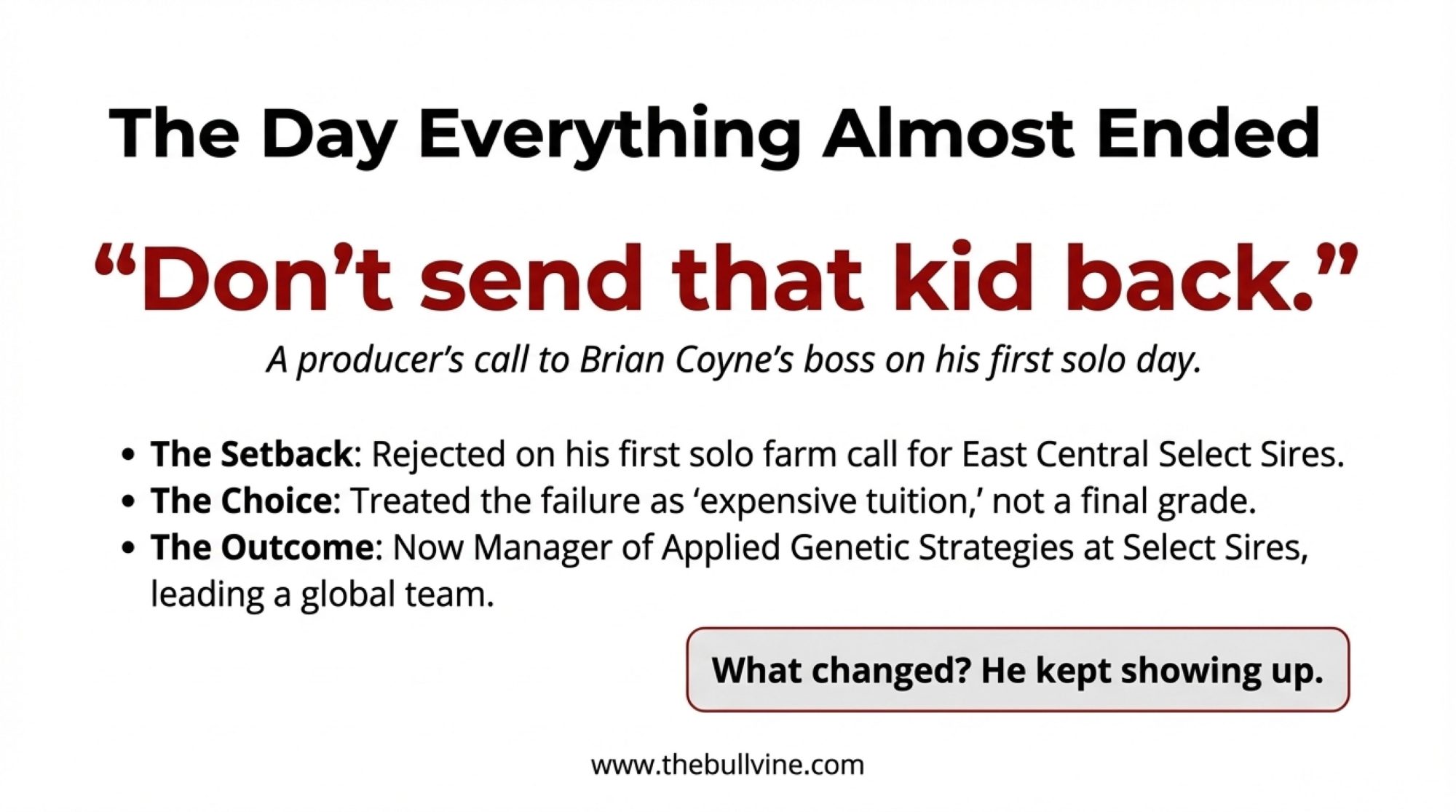
Don’t send that kid back.” One phone call nearly killed Brian Coyne’s career before it started. He’s now Manager of Applied Genetic Strategies at Select Sires.

Executive Summary: Don’t send that kid back.” One phone call nearly ended Brian Coyne’s dairy career before it started. Today, he leads genetic strategy at Select Sires. Kylene Anderson took a temp job nobody wanted—it became her runway to managing editor at Hoard’s Dairyman. Amanda Lichtensteiger lost count of the “we chose someone more experienced” emails in 2009; now she runs dairy strategy at Diamond V. At World Dairy Expo 2025, these three revealed what actually builds careers: character that can’t be taught, sponsors who fight for you in rooms you’re not in, and the guts to choose the right barn over the right title. Your five-year plan might be in shreds. These stories suggest that’s exactly where the best careers begin.

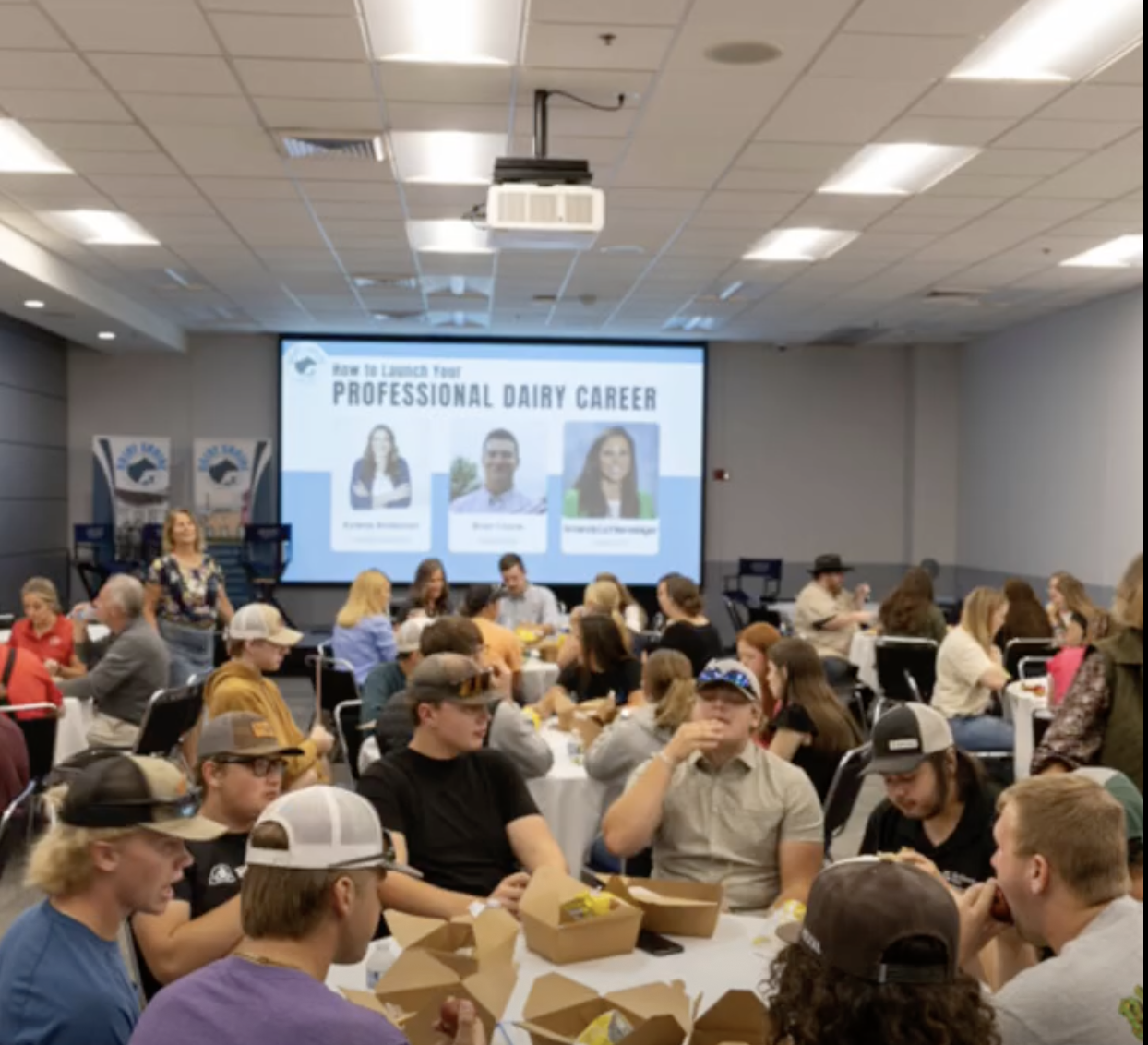
The big screen at the 2025 National Dairy Shrine luncheon promised a guide on “launching your career.” What the packed room heard instead was the honest truth about the failures, detours, and grit that actually built them.

In that moment, the room went quiet.

It was the Uplevel Dairy Podcast‘s live panel from the National Dairy Shrine Young Professionals luncheon at World Dairy Expo 2025, and a young genetic strategist named Brian Coyne was describing something most people in agriculture don’t talk about—the day everything almost ended before it began. His first solo day running farm calls in southeast Wisconsin. A visit that didn’t go well. And then the call from his boss with news that still stings when he tells it: the producer had phoned the office and made it clear—don’t send that kid back.

Even through the recording, something landed. Maybe it was the pause before he continued. Maybe it was recognizing my own version of that truck-seat moment—the gut punch, the silence afterward, wondering if maybe you’re just not cut out for this after all. Either way, the story cut through.

What moved me most wasn’t that Brian shared the rejection. It’s what he did with it. He decided that one bad visit, one angry call, one awful knot-in-the-stomach moment wasn’t going to rewrite who he was or why he came to this industry in the first place.

Alongside Brian on that panel were Kylene Anderson, who stepped into the managing editor role at Hoard’s Dairymanin January 2025, and Amanda Lichtensteiger, who now leads strategic marketing for Diamond V within Cargill’s animal nutrition business. Each of them opened up about the moments when their carefully drawn five-year plans cracked—or completely fell apart—and how the detours, not the straight lines, shaped the work they do for farmers today.

Listening to the full conversation, what struck me wasn’t that this was a motivational talk. It was three grounded dairy people pulling back the curtain on failure, “wrong” jobs, sponsorship, and the kind of character that matters far more than a perfect résumé. Their stories are worth sitting with—especially if your own plan isn’t going the way you thought it would.

The Day the Plan Dies

The way Brian described it to the panel, everything about that first solo farm call felt slightly off. An unfamiliar layout. Small talk that didn’t quite land. That creeping sense, as he walked back to his vehicle, that the producer wasn’t buying what he was saying.

And then the confirmation came—not from the farmer, but from his own office. The answer was in. And it was no.

This was supposed to be the beginning of everything. After working as a herd manager on three different dairies for about two and a half years and a short breeding stint, he’d landed a position at what was then East Central Select Sires—now Central Star Cooperative—running matings for roughly 300 herds across southeast Wisconsin, helping plan tens of thousands of breedings a year. He’d worked for this. He’d pictured it. In any standard five-year plan, that first day was meant to be a milestone, not a gut punch.

He didn’t frame it as a learning experience immediately—probably nobody does. But somewhere between that farm lane and the next call on his schedule, he made a choice. Instead of treating that rejection as a verdict on his worth, he started treating it like very expensive tuition. He asked himself what went wrong, what he’d missed, what he needed to learn before the next farm call.

And then, quietly, he made a decision that would set the tone for his entire career: he was going to keep showing up.

I’m not sure how you find that kind of resolve when you’re twenty-something and the first real test of your career has just blown up in your face. Something inside him refused to quit. Maybe it was stubbornness. Maybe it was that bone-deep conviction that he was meant to help farmers breed better cows. Whatever it was, it held.

Within a few years, Brian wasn’t the rookie getting turned away from a farm; he was the one training others how to handle tough calls and overseeing mating programs for thousands of cows. In 2019, Select Sires hired him to relocate to their headquarters in Plain City, Ohio—where North America’s largest A.I. organization is based—to help design their bull search and genetic consulting tools. By April 2024, he’d been promoted to Manager of Applied Genetic Strategies, leading a team that supports producers around the world and managing global genomic testing partnerships with Zoetis and the French company Lavoena.

Since then, on more than one farm visit, he’s watched those tools help producers tighten up calving intervals, improve daughter fertility, and sort through genomic data that used to feel overwhelming. One producer told him their replacement heifer program finally started making sense after years of guesswork—the kind of feedback that reminds you why the early stumbles were worth pushing through. The very experience that once made him question if he belonged in this work now informs the way he builds systems that make farmers’ lives a little easier.

During the panel, he and the other speakers discussed something that’s stayed with me: the idea of reframing setbacks not as permanent failures but as part of the process—stumbling, adjusting, getting back up. It’s the kind of thing kids do dozens of times a day without keeping a tally. They just try again.

What’s remarkable is how closely that lived experience lines up with what researchers are finding. A major study from Northwestern University, published in Nature Communications, followed early-career scientists and discovered something counterintuitive: those who experienced significant early setbacks—but stayed in the game—often went on to outperform those who enjoyed easy early wins. The “near-miss” group showed a 6.1% higher likelihood of publishing top-cited papers over the following decade. Failure didn’t magically make them better. What made the difference was how they responded—by reflecting deeply, adjusting course, and building the kind of grit you can’t buy.

That morning in the farm lane was not a feel-good moment. It still isn’t, when Brian talks about it. But somehow, it became a turning point. It was the day he chose to let failure serve as tuition rather than a final grade.

The Job Nobody Wanted—And Why She Took It Anyway

Listening to the panel recording, I could hear Kylene Anderson laugh gently as she described the job that sparked her whole career shift. It wasn’t glamorous. It wasn’t permanent. And it definitely wasn’t what most people would have posted about on LinkedIn.

After graduating from the University of Wisconsin–Madison with degrees in dairy science and agricultural journalism, Kylene pursued her love of international agriculture in Mexico, working with UW’s international egg programs. When she came home, she needed a paycheck and still carried a deep pull toward the dairy genetics world.

ABS Global had always been on her radar. It was one of those “if I could just get in the door there…” companies. When they offered her a temporary role covering maternity leave—a support position outside the flagship genetics division—she knew exactly where it sat in the company hierarchy.

“Nobody thinks of ABS and immediately thinks of that product line,” she admitted. It got a laugh from the crowd, but you could hear the honesty beneath it.

On paper, it looked like a step down from what her five-year plan might have promised—temporary, not in the core business, and not clearly leading anywhere beyond a few months.

Was it a risk? Of course. There was no guarantee the role would lead anywhere. She could have held out for something that looked better on paper, something that matched what she’d told people she was looking for.

But Kylene wasn’t optimizing for appearances. She saw a building full of people shaping global breeding decisions. She saw sales teams, marketers, geneticists, and field staff she could learn from. Most of all, she saw a chance to move from the outside to the inside of a company she deeply respected.

So she took the job that almost everyone else would have filtered out.

Day to day, that meant answering calls about products that weren’t the company’s headline offerings, traveling to meetings that weren’t always in the limelight, and learning the rhythms of ABS from a vantage point few envied. But behind the scenes, something far more strategic was happening. Sales colleagues learned she could be counted on. Marketing saw that she wasn’t just pushing product; she was connecting it to real herd needs.

She still remembers the first time a senior leader pulled her into a planning conversation that had nothing to do with her job description—not because she’d asked, but because someone had noticed how she approached her work. Small moments like that add up. Leaders started to recognize her name and her work ethic.

Over time, that temporary role grew into a decade of positions spanning ABS and the livestock marketing agency Filament Marketing in Madison, Wisconsin, then back to ABS in higher-level global dairy and beef genetics marketing work. In January 2025, she stepped into the managing editor role at Hoard’s Dairyman—the publication founded in 1885, now marking its 140th year—essentially circling back to the journalism roots of her college days, this time carrying a decade of field and industry experience.

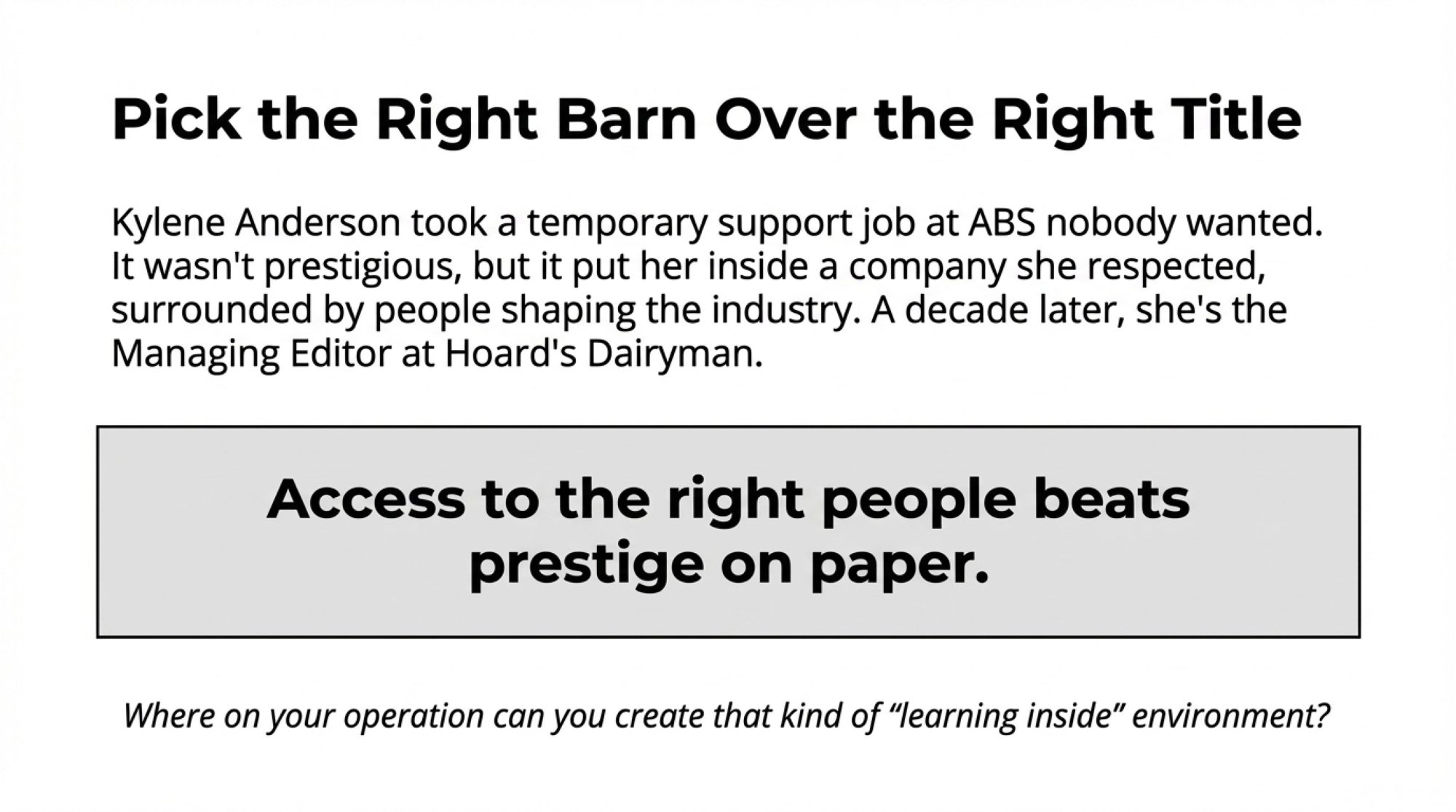
What struck me, hearing her tell it, was how clearly she now sees that early choice. It wasn’t a demotion. It was a decision to prioritize access over prestige, building over label.

Her career has rippled back out to farms, too. Today, as an editor, she gives space to the stories of young producers, women in dairy, and small family herds whose voices might otherwise be drowned out—stories that, in turn, give other farmers ideas and courage in their own operations.

That lens matters more than ever. Today’s agriculture and food employers say they’re leaning hard into internal mobility and development because hanging onto people who deeply understand farming has become critical in a tight labor market. For a young person, that means the job that looks “less than” might actually be the smartest move—if it puts you shoulder-to-shoulder with the right people in the right culture.

The entry-level job nobody wanted became Kylene’s runway.

When the Job Market Says “No” Again and Again

Nobody listening to that panel needed to be told 2009 was a rough year to launch a career. But hearing Amanda Lichtensteiger walk through it was still sobering.

She grew up on a dairy farm in Monroe, Wisconsin—learning early what it meant to get up before dawn, to see cows as individuals, and to watch her parents ride out good and bad years the way only farm families do. Maybe those early mornings taught her something about showing up even when you don’t feel like it. Maybe watching her family push through tough seasons planted something she wouldn’t fully understand until later.

She crossed the border to the University of Minnesota, did everything people tell you to do—internships, networking, solid grades—and set her sights on agricultural communications.

What she walked into after graduation was a job market still reeling from recession, flooded with applicants who had decades more experience. Time after time, she made it to the final round, only to hear a polite variation of, “We loved you, but we chose someone more experienced.”

From the outside, that just sounds like bad timing. From the inside, it can feel like erosion—one “almost” at a time.

What nobody tells you is how personal it starts to feel, even when you know it isn’t. You start second-guessing cover letters you were proud of. You wonder if there’s something in your interview presence that people can see and you can’t. Amanda didn’t say all of this explicitly, but you could hear it in the way she paused before describing what came next.

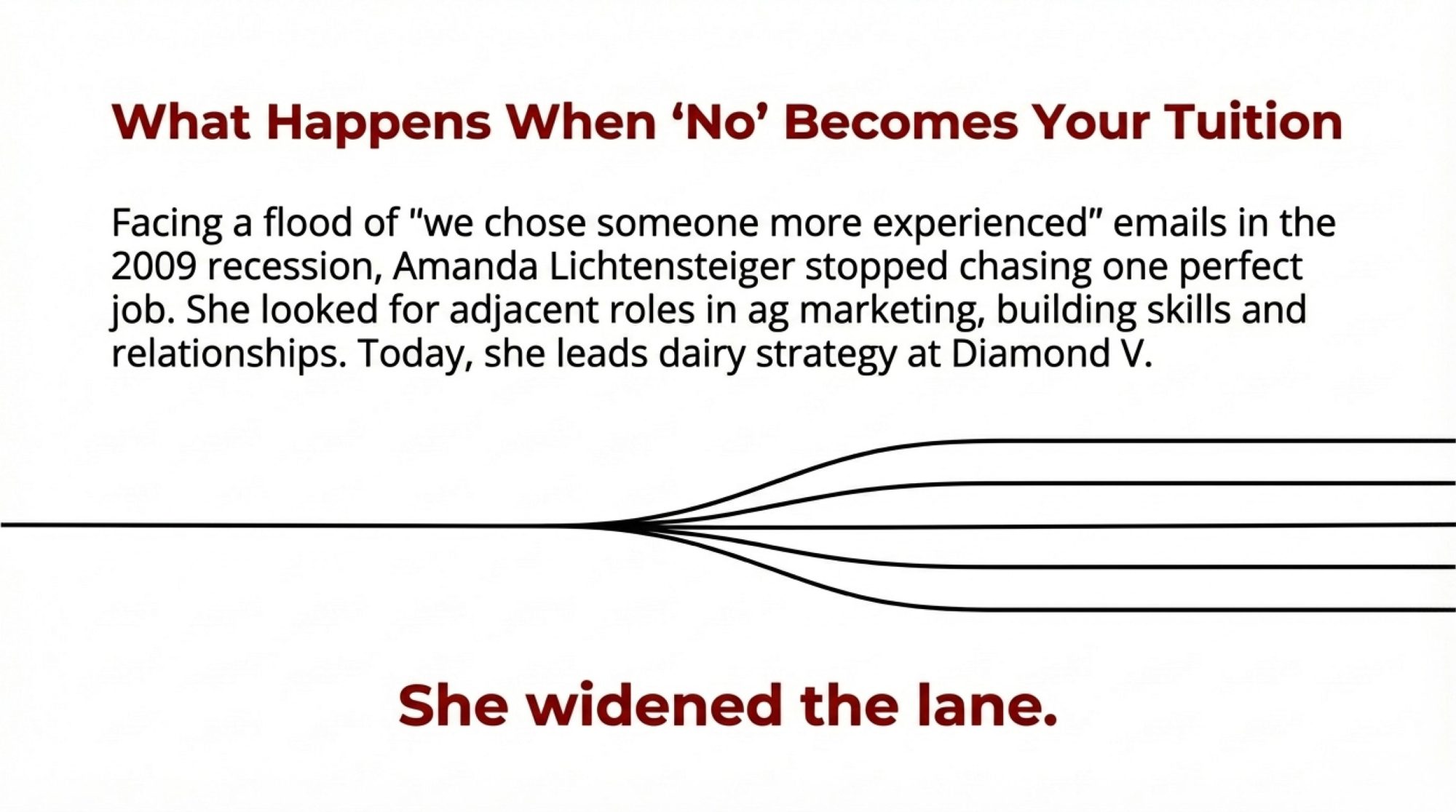
What changed everything for Amanda wasn’t a single big break; it was a decision, somewhere in that difficult season, to stop insisting that the job market fit her script. Instead, she began exploring roles adjacent to what she thought she wanted. In September 2009, she stepped into an account coordinator role at Charleston|Orwig in Milwaukee—she still remembers that Mike Opperman was the first person to hire her out of school. From there, she moved to Bader Rutter & Associates, supporting animal health and dairy accounts for multiple clients, and later moved into corporate roles in ruminant additives at Lallemand before joining Cargill in May 2020. By August 2024, she’d been named Strategic Marketing Lead for Dairy at Diamond V.

Along the way, she picked up something you can’t learn in a classroom: how products actually move through the value chain, how global markets shift, and how different teams—from R&D to on-farm sales—have to pull together to make a difference for producers. She also built relationships that would echo later, including with a leader who eventually became a key sponsor, hiring her into new opportunities more than once.

On the farm side, the programs she now helps shape for gut health and immune support have been adopted by dairies seeking to reduce health events and improve herd consistency. The ripple effect of those early, painful “no’s” now shows up in healthier cows and more resilient operations.

What impressed me most, listening to her tell it, was that she didn’t spin that early season into a hero story. She described it honestly as frustrating and stretching. But she also recognized, looking back, that it taught her to widen the lane—to look beyond the one role she’d imagined and ask, “Where else could my skills serve this industry I love?”

Today, when she sits on the hiring side of the table, she carries that memory with her. She knows what it feels like to be one of many in a stack of résumés. She also knows firsthand that some of the best long-term fits come from candidates who were willing to step into roles that didn’t match their original five-year plans—but that did match their values and curiosity.

When Character Beats the Résumé

What happened next in the discussion surprised me with how practical it felt. They’d been talking about failures and detours. Then the conversation turned to a blunt question: what actually gets someone hired or promoted now?

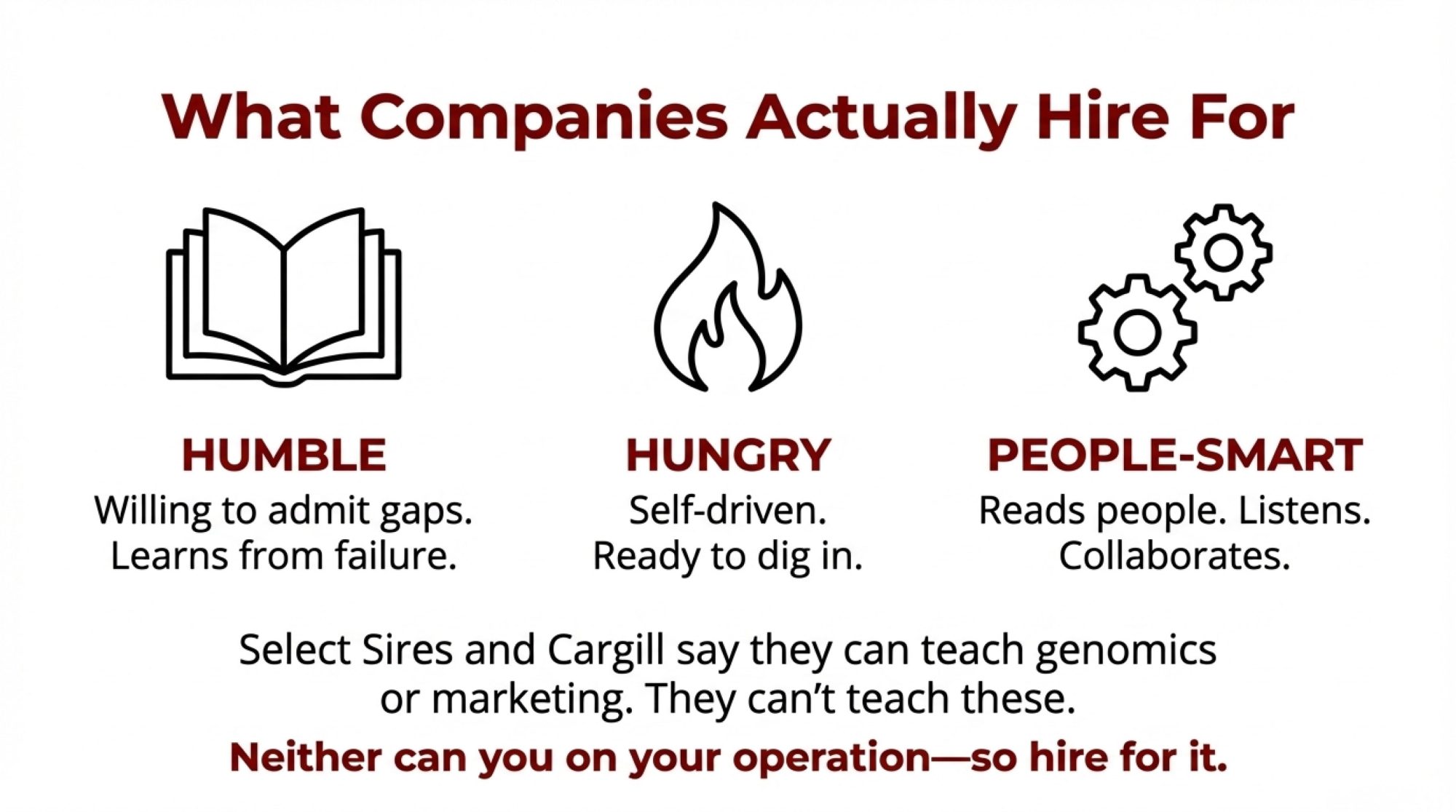
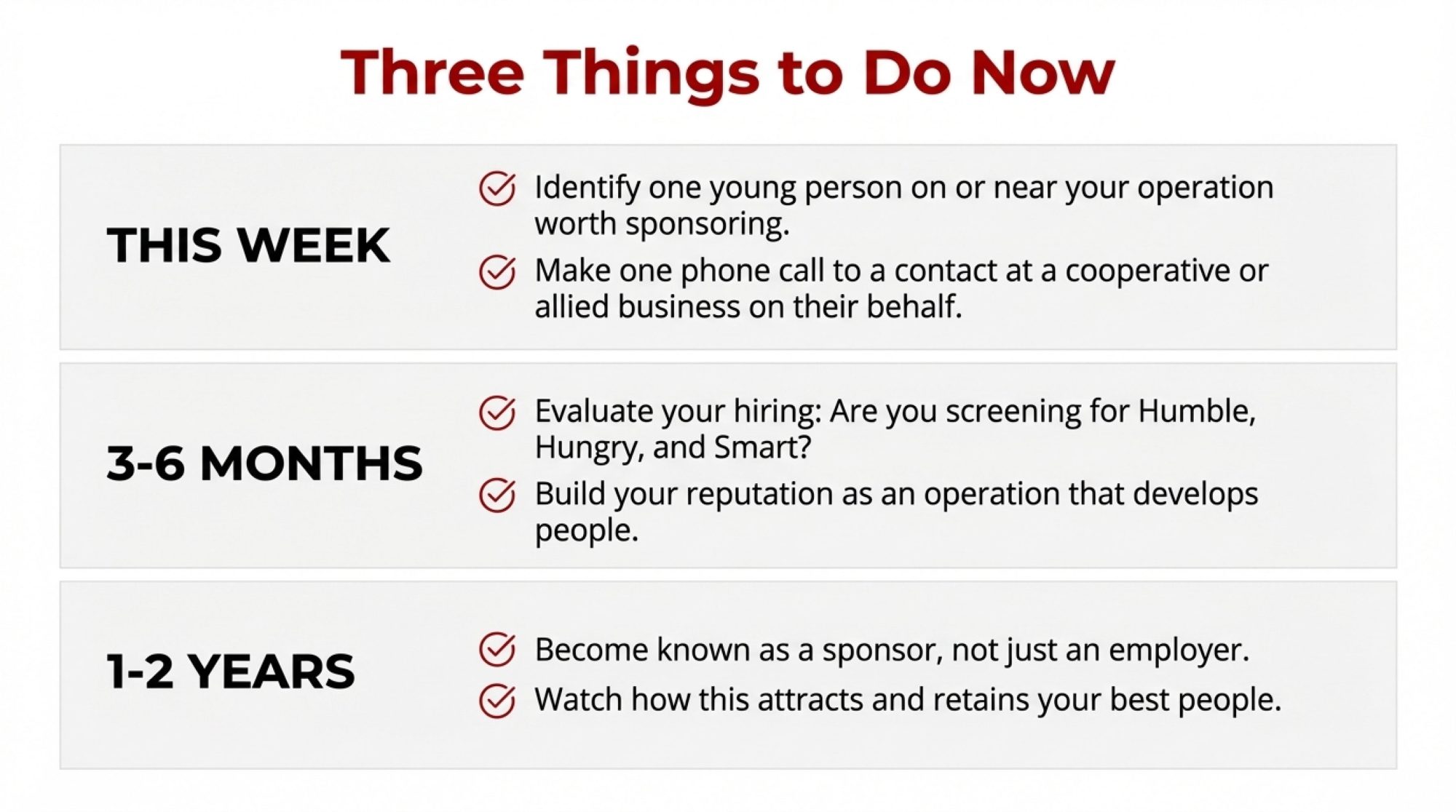
Amanda shared that at Cargill and Diamond V, they lean heavily on a framework called the “ideal team player” when evaluating candidates: humble, hungry, and people-smart. Humble, as in willing to admit gaps and learn from them. Hungry, as in self-driven and ready to dig in. Smart, not just intellectually, but in reading people, listening, and collaborating.

Brian described something similar at Select Sires. They can teach a new hire to run a genomic report or navigate a mating program. They can’t teach them to tell the truth when it’s hard, genuinely care about the producer’s reality, or own up to a mistake and fix it. Those traits only show up over time: in how someone dresses and prepares for an interview, whether they follow through on small tasks, and how they talk about the farmers and teammates in their stories.

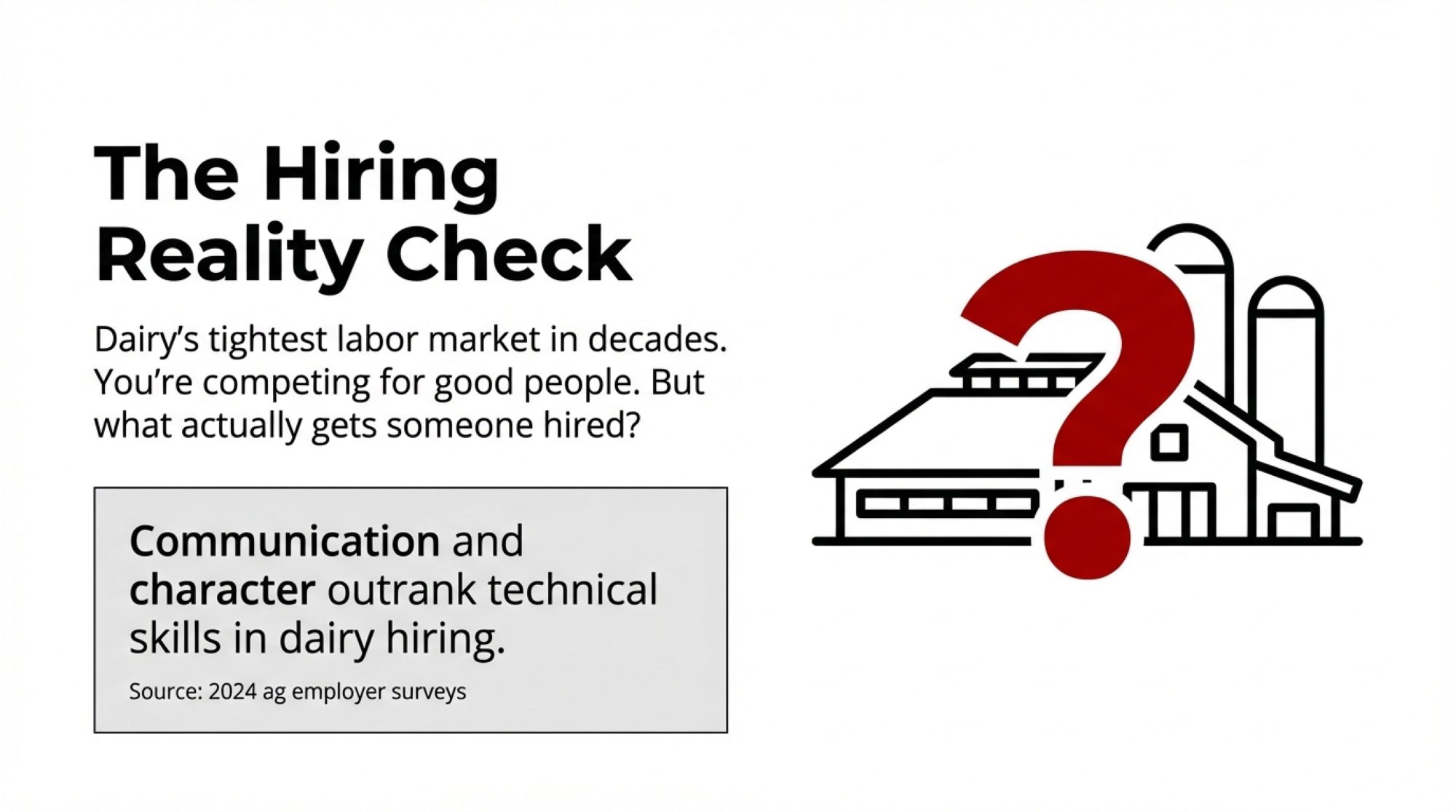
Across agriculture, this isn’t just a hunch. Surveys of employers in the ag and food sectors consistently show that communication, problem-solving, and teamwork outrank narrow technical skills as top hiring priorities, especially for early-career roles. At the same time, dairy employers say retention and culture have become central survival strategies—they want people who strengthen their teams, not just fill slots.

One quiet but powerful takeaway for farm owners: when you’re hiring or promoting on your own operation, don’t just ask, “Can this person feed cows or run the parlor?” Ask, “Is this the kind of person I want representing our family name? Will they tell me the truth? Will they keep learning?”

Those are character questions. And in 2025’s dairy world, they’re career questions too.

The Quiet Power of Mentors and Sponsors

The moment that really shifted the conversation came when Amanda drew a line most young professionals never see clearly: the line between mentors and sponsors.

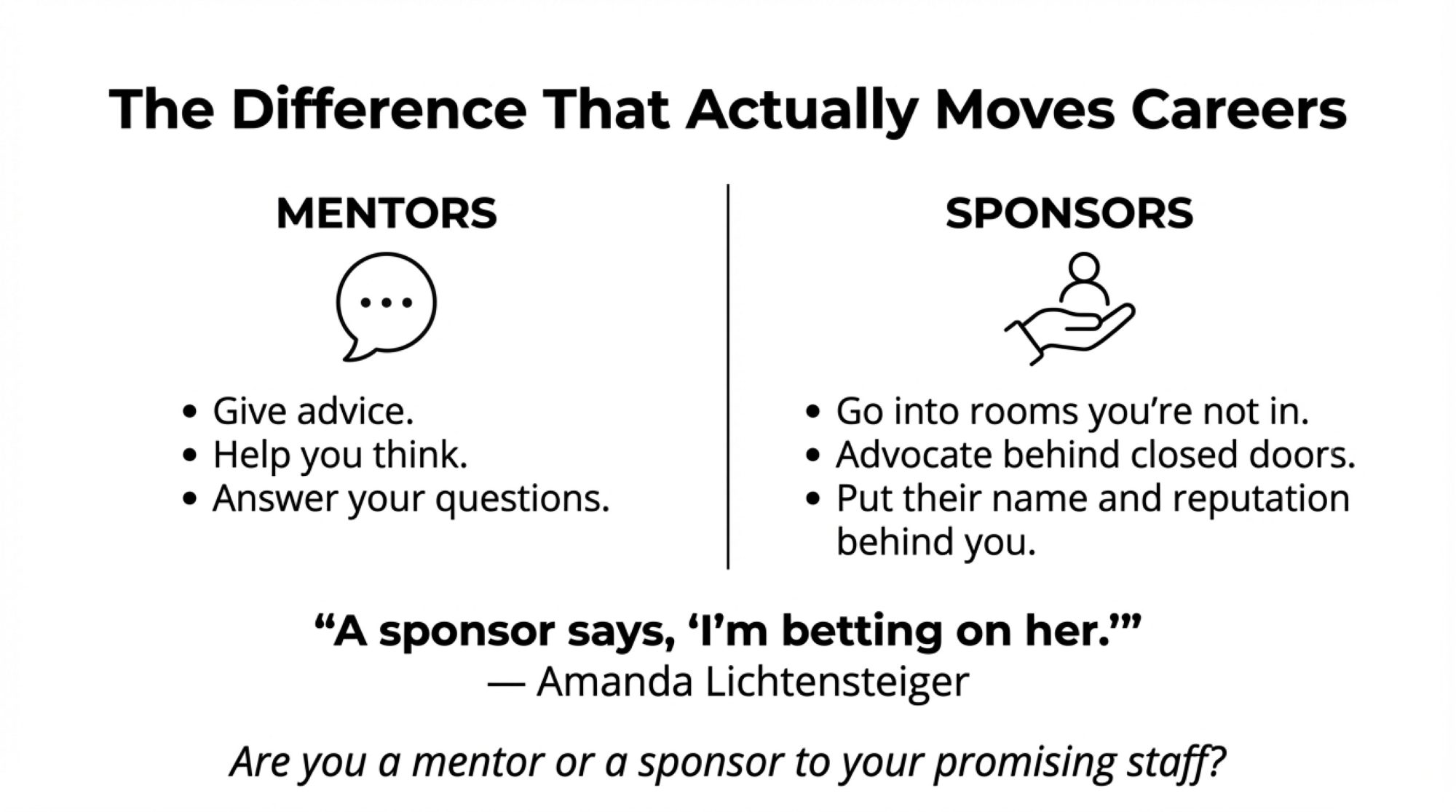
A mentor, she explained, is someone who helps you see yourself and your options more clearly. They answer your questions, help you think through your decisions, and offer advice based on their own experience.

A sponsor is something different—and rarer.

“A sponsor is a more senior person who goes into meetings you’re not in and brings your name up when it matters. They advocate for you. They say, ‘I think she can do this. I’m willing to put my reputation behind her.'”

— Amanda Lichtensteiger, Strategic Marketing Lead for Dairy, Diamond V

In Amanda’s own journey, one leader who first knew her in agency work later hired her again into a corporate role. He didn’t just encourage her; he actively created opportunities based on years of watching her work and integrity.

Research from workplace studies backs this up: employees who can name both mentors and sponsors report higher engagement and are more likely to advance than those who have mentors alone. Sponsorship, in particular, appears to be a key ingredient in helping capable people move into roles they might never access through applications alone.

What I found extraordinary, listening to the panelists, was how they framed this for the students in the audience. None of them suggested that you march up to someone and ask, “Will you sponsor me?” Instead, they stressed that sponsorship is earned, not requested. It grows out of doing consistently good work, building trust over time, and staying connected so that when a leader thinks, “Who’s ready for this next challenge?” your name naturally comes to mind.

For dairy farm owners, there was another angle worth considering: sometimes the most powerful thing you can do is become a sponsor yourself. Not just coaching a promising herdsman or calf manager, but quietly calling a contact at a cooperative, genetics company, or allied business and saying, “I’ve got someone here who’s ready for more. You should talk to her.” That’s how this next generation moves.

Confident Humility: Getting Noticed for the Right Reasons

Later in the conversation, Brian shared a line that landed hard: he’s seen many times that confidence without context quickly turns into cockiness.

We live in a moment where young professionals are told to “stand out” and “sell themselves.” But in a parlor, at a kitchen table, or across a hiring interview, there’s a thin line between confidence and arrogance—and producers, frankly, can smell the difference before you’ve finished your first sentence.

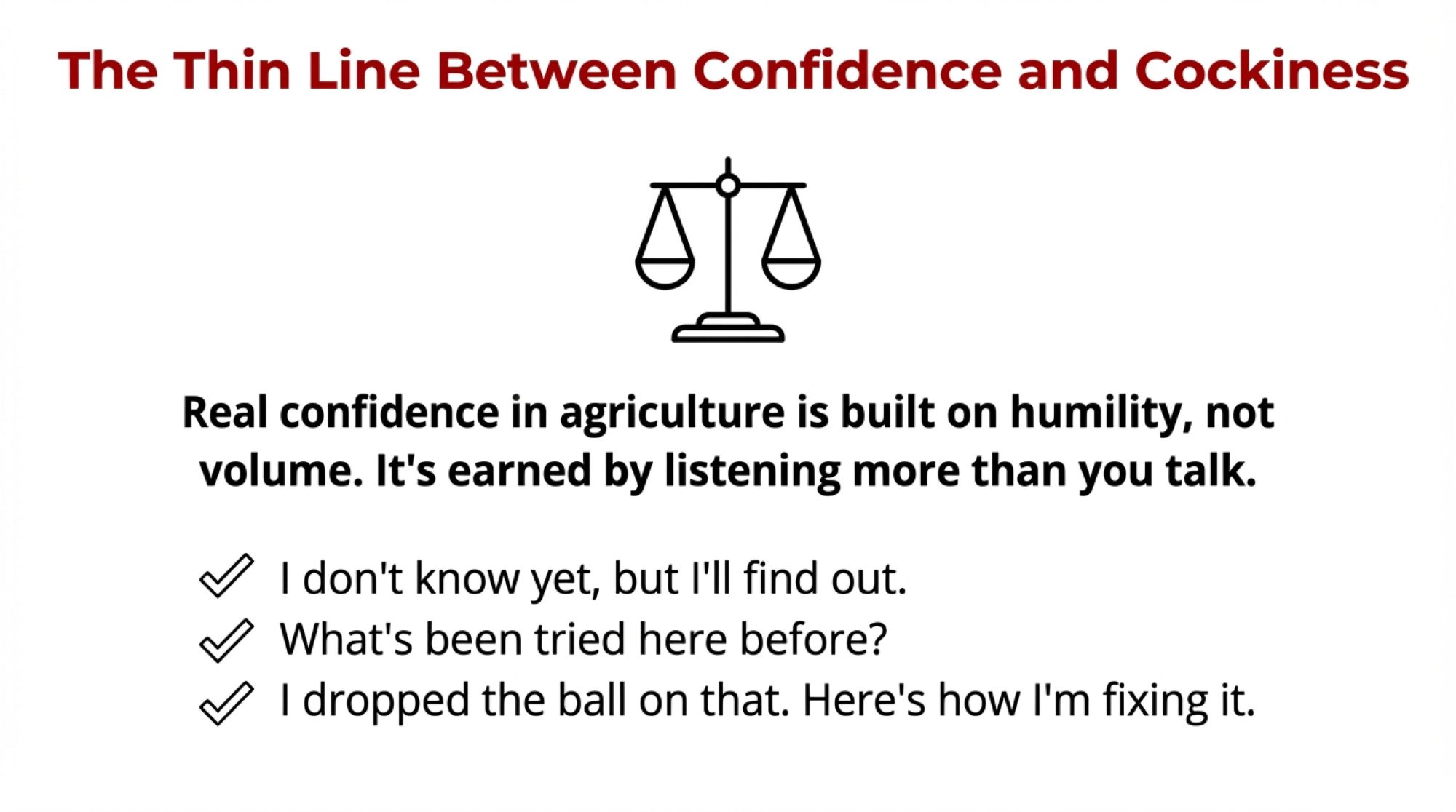
What changed everything for Brian, and what Amanda echoed, was understanding that real confidence in agriculture is built on humility, not volume. Amanda said her own confidence comes from being willing to be humbled—failing, seeking feedback, and doing the slow work of improving—rather than from having all the answers on day one.

Brian encouraged the students to think of their first three to seven years not as a rush to management titles, but as a dedicated learning season. To walk into barns and meeting rooms less focused on proving they belong and more focused on understanding the cows, the numbers, the families, and the systems in front of them.

In practice, that looks like:

  • Saying, “I don’t know yet, but I’d like to find out,” and then actually coming back with a thoughtful answer.
  • Asking, “What’s been tried already?” before suggesting a fix.
  • Owning it when you drop the ball—and then fixing it.

Studies on agricultural workplaces highlight that employees who can accept feedback, adapt, and stay composed under pressure are exactly the ones organizations fight to keep. That blend of quiet strength and teachability is what sponsors look for when deciding who to back, and what producers look for when deciding who to trust.

What moved me most here was how freeing this is. You don’t have to pretend you’ve got it all together. You do have to care enough to keep learning.

Field-Tested Truths to Carry Home

By the time the Q&A wrapped up, you could hear in the recording that something had shifted. Nobody handed out a worksheet at the end. But if you’d been taking notes—and I was—certain threads kept surfacing. Not as slogans, but as the kind of hard-won wisdom you only get from people who’ve actually been through it.

Treat failure like tuition, not a final grade.
Brian’s worst first day wasn’t a verdict; it was expensive tuition for a lesson he still lives by. The Northwestern study on early-career setbacks suggests that for those who persist and adjust, stumbling early can actually lead to stronger long-term outcomes than easy early wins. The difference is whether you walk away or lean in and learn.

Choose the right barn over the right title.
Kylene’s temporary role at ABS looked like a step down to some, but it put her in the building she wanted to learn from—and close to the people who later opened bigger doors. In an industry where internal retention and development are now strategic priorities, being in a culture that fits you matters more than starting with an impressive label.

Let your work make you visible; let your humility make you trustworthy.
The people who got sponsored in these stories weren’t the loudest; they were the ones who did excellent work and paired it with grounded humility. Employers repeatedly rank soft skills—reliability, communication, problem-solving—above narrow technical abilities for entry roles, precisely because those traits make someone safe to trust with more.

Build relationships before you need them.
Amanda’s sponsor didn’t appear out of nowhere when she needed a job. He knew her from earlier collaborations, saw her consistency, and remembered her when opportunities surfaced. The time you spend getting to know people at World Dairy Expo, in committees, or through internships isn’t extra—it’s the fabric your next steps can hang from.

Accept that non-linear paths are normal—and often stronger.
The panel’s careers didn’t climb neatly; they zigzagged. In dairy, where markets, technology, and regulations can all shift in a season, flexibility is not a flaw; it’s a survival trait.

What This Means for All of Us

What stayed with me long after the recording ended wasn’t that Brian ended up at Select Sires’ headquarters in Ohio, or that Kylene now holds the editor’s chair at Hoard’s Dairyman, or that Amanda leads strategy for one of the most recognized names in animal nutrition. It was that each of them got there by living through seasons that, at the time, looked a lot like failure.

Brian, replaying a disastrous farm call and wondering if he was cut out for this.
Kylene, staring at a job description for an entry-level support role and choosing it anyway because of where it might lead.
Amanda, opening yet another email that politely said “not this time,” and deciding she would look sideways rather than give up.

Their stories aren’t fairy tales. They’re proof that in dairy—as on a farm—what looks like a wrecked year can, with patience and a willingness to adjust, become the season you later point to and say, “That’s where everything shifted.”

Many of the people listening to that panel grew up the same way they did: watching parents and grandparents ride out low milk checks, equipment breakdowns, droughts, or processor cuts with the same stubborn rhythm—get up, feed cows, fix what you can, and try again tomorrow. That same spirit runs through these careers. It’s just wearing different clothes.

For farm owners, there’s a challenge here too. Somewhere on your team or in your local 4-H or collegiate club is a young person who has just had their own version of Brian’s difficult first day, or Kylene’s “lesser” job offer, or Amanda’s stack of polite rejections. You might be the one who helps them see it as a toll booth, not a stop sign. You might be the mentor who listens, or the sponsor who makes a quiet call and says, “You should give this kid a look.”

And if you’re that young person—if you’re reading this after a bad day in the parlor, an interview that went nowhere, or a shift into a role that feels “less than” what you pictured—hear this clearly: you are not behind. You are standing exactly where a lot of us started.

Your five-year plan might be in shreds. That doesn’t mean your story is. It might mean your story is just getting honest.

I don’t know what your version of Brian’s farm call or Kylene’s temp role, or Amanda’s stack of rejection emails looks like. But if you’re in the middle of one right now, here’s what I keep coming back to: the people on that panel didn’t sound like they’d figured everything out. They sounded like people who’d figured out how to keep going—and who were still learning.

That’s not a small thing. That might be the whole thing.

Now I’m curious: Who is the young person in your operation, your community, or your 4-H club who needs someone to believe in them right now? And what’s stopping you from making that call today?

Key Takeaways 

  • Treat failure like tuition, not a verdict. Brian Coyne got rejected on his first farm call. Today, he leads genetic strategy at Select Sires. He didn’t get lucky—he refused to stop showing up.
  • Pick the right barn over the right title. Kylene Anderson took a temp job nobody wanted. It put her inside ABS when it mattered. A decade later: managing editor at Hoard’s Dairyman.
  • Sponsors beat mentors—find one, become one. Mentors give advice. Sponsors walk into rooms you’ll never see and say, “I’m betting on her.” That’s the difference that moves careers.
  • Character can’t be trained. Companies teach genomics and marketing. They can’t teach honesty, follow-through, or the guts to own your mistakes. Lead with those.
  • Your five-year plan is supposed to break. Every career on that Expo panel zigzagged. In dairy, that’s not failure—that’s how the strongest ones are built.

Complete references and supporting documentation are available upon request by contacting the editorial team at editor@thebullvine.com.

Learn More:

Join the Revolution!

Join over 30,000 successful dairy professionals who rely on Bullvine Weekly for their competitive edge. Delivered directly to your inbox each week, our exclusive industry insights help you make smarter decisions while saving precious hours every week. Never miss critical updates on milk production trends, breakthrough technologies, and profit-boosting strategies that top producers are already implementing. Subscribe now to transform your dairy operation’s efficiency and profitability—your future success is just one click away.

NewsSubscribe
First
Last
Consent

Dairy’s Ultimate Power Play: Your Insider’s Guide to Conquering World Dairy Expo 2025

Unlock dairy’s future at World Dairy Expo 2025: elite genetics, cutting-edge tech & global networking in Madison. Plan smart, reap rewards!

The Alliant Energy Center in Madison, Wisconsin, transforms into the global hub of dairy innovation during World Dairy Expo

For seven high-impact days this autumn, the global dairy industry converges on Madison, Wisconsin, transforming the Alliant Energy Center into the epicenter of dairy innovation and excellence. With over 650 companies showcasing tomorrow’s solutions, more than 1,600 head of elite dairy cattle competing for supreme honors, and targeted educational programming addressing the industry’s most pressing challenges, World Dairy Expo 2025 isn’t just another farm show – it’s your operation’s strategic advantage waiting to be seized.

But let’s be honest – showing up without a plan is like managing your herd without DHI records. You’ll miss crucial opportunities and waste valuable time navigating the vast Expo grounds. That’s why I’ve compiled this insider’s guide to help you approach WDE 2025 like a seasoned pro, maximizing every minute and dollar you invest.

Map of the Alliant Energy Center grounds, highlighting key venues like the Coliseum and Trade Show areas.

Essential Planning: Dates, Tickets, and Logistics That Matter

Mark your calendars now: World Dairy Expo 2025 runs Tuesday, September 30, through Friday, October 3, at the Alliant Energy Center in Madison, Wisconsin. Pre-event activities, including youth competitions and early breed shows, begin Saturday, September 27.

The smartest operations are already securing tickets and accommodations. Here’s your competitive edge:

Admission Strategy: Purchase tickets early to capture significant savings. Daily admission (ages 12+) is $15 if purchased through September 29, jumping to $20 at the gate. The season pass offers superior value for multi-day attendance at $40 pre-purchase or $50 onsite. Children under 12 enter free, making this an exceptional educational opportunity for your farm’s next generation.

Digital tickets, available through WDE’s online platform, can be printed at home, scanned from your mobile device, or shared with team members via text or email. They are perfect for operations, sending different staff on different days.

Travel Logistics: The Alliant Energy Center offers straightforward access from several major airports:

  • Dane County Regional Airport (MSN): 20 minutes
  • Milwaukee’s Mitchell International (MKE): 1.5 hours
  • Chicago’s O’Hare (ORD): 3 hours
  • Chicago’s Midway (MDW): 3.5 hours

Accommodation Strategy: This is where planning becomes critical. Like securing contracts for premium alfalfa before winter price spikes, booking your hotel early means better selection and rates. With over 55,000 attendees flooding Madison, hotel rooms near the venue become scarce months in advance. Consider these strategic options:

  • Onsite/Walking Distance: The Clarion Suites connect directly to the Exhibition Hall via a climate-controlled walkway, which is the ultimate convenience, but books are extremely early. Home2 Suites, Sheraton Madison, and Holiday Inn Express sit within a half mile.
  • Downtown Madison: Numerous quality options sit just a short drive away, including Madison Concourse, Hilton Madison, and DoubleTree-all, offering more upscale accommodations and access to Madison’s vibrant downtown scene.
  • Budget-Conscious: Properties like Super 8, Americas Best Value Inn, and Baymont Inn sit 1-2 miles away and typically offer more competitive rates.

For operations sending multiple staff members or those bringing cattle, on-site camping at Willow Island provides an economical alternative with electrical/water hookups and 24-hour restrooms and showers.

The Strategic Attendee’s Day-by-Day Game Plan

World Dairy Expo isn’t a one-size-fits-all experience. Different days offer distinct opportunities aligned with specific operational needs, much like how your feeding program adjusts through different lactation stages:

Pre-Expo Days (Saturday-Monday, Sept. 27-29): These admission-free days focus primarily on youth contests and early breed shows. Saturday features the Youth Fitting Contest and Youth Showmanship Contest, ideal for operations prioritizing next-generation development. Sunday introduces the National 4-H and Intercollegiate Dairy Cattle Judging Contests Alongside International Junior Holstein, and Guernsey Heifer shows. Monday continues with early breed shows and the valuable Career Connections event, perfect for operations seeking interns or new talent.

Tuesday, September 30 (First Official Day): The full Expo experience launches with the Trade Show opening (9 AM – 5 PM) alongside the continuation of breed shows (Ayrshire Cows/Groups, Jersey Cows/Groups, Brown Swiss Heifers). Educational programming begins with Knowledge Nook sessions, Virtual Farm Tours, and Expo en Español. Networking opportunities include the Attendee Appreciation Event (3-5 PM) and Happy Hour at The Tanbark (4-6 PM). The evening features the Top of the World Jersey Sale.

Wednesday, October 1: Trade Show continues with Milking Shorthorn Heifers, Brown Swiss Cows/Groups, and Red & White Heifers in the showring. The day’s educational lineup expands to include Dairy Forage Seminars. Evening highlights include the World Premier Brown Swiss Sale and the prestigious Recognition Awards Reception & Banquet.

Thursday, October 2: Often considered the peak networking day, Thursday continues the Trade Show alongside Milking Shorthorn Cows/Groups, Red & White Cows/Groups, and the highly anticipated International Holstein Heifers show. The exclusive International Reception creates valuable global networking opportunities, while the World Classic ’25 Holstein Sale attracts elite genetics enthusiasts. The day culminates with the Supreme Champion Heifer selections.

Friday, October 3: The final day features shortened Trade Show hours (9 AM – 4 PM) but delivers the marquee International Holstein Cows/Groups show, followed by the prestigious Parade of Champions – the dramatic conclusion showcasing the breed champions and supreme winners.

Strategic Scheduling Tip: Progressive operations often send different team members on different days to maximize coverage, much like you’d rotate parlor shifts for peak efficiency. Financial decision-makers might prioritize Tuesday-Wednesday trade show exploration while breeding managers focus on Thursday-Friday for Holstein competitions. Youth development leaders find tremendous value in the pre-Expo weekend activities.

Trade Show Intelligence: Beyond the Sales Pitch

The Expo's trade show features 650+ exhibitors showcasing cutting-edge dairy technologies and services
The Expo’s trade show features 650+ exhibitors showcasing cutting-edge dairy technologies and services

With over 650 companies spanning the Exhibition Hall, Trade Center, and Outdoor Trade Mall, the World Dairy Expo’s trade show represents dairy’s most comprehensive marketplace of innovations and solutions. But there’s an art to extracting maximum value from this experience.

Know Before You Go: The interactive exhibitor directory on the WDE website allows you to search by company name, product category, or specific solutions, enabling you to map a targeted route through the show floor. Progressive operations typically identify 15-20 “must-visit” companies addressing their current challenges or expansion plans, then add another 10-15 to explore emerging technologies.

Innovation Unveiled: This dedicated showcase highlights new products and research submitted by exhibiting companies that have entered the market since the previous Expo. Much like analyzing genomic data before making breeding decisions, this section helps you identify potential game-changers without wandering the show floor. These innovations are also featured in Knowledge Nook sessions, providing a deeper understanding of their applications and potential ROI.

Beyond Equipment: While machinery and technology naturally draw attention, don’t overlook exhibitors offering financial services, sustainability solutions, workforce development, and export opportunities. The most successful operations leverage the World Dairy Expo to address challenges across their entire business model, not just production, like how a comprehensive herd health program addresses more than just mastitis.

Engage Strategically: When visiting booths, move beyond the standard sales conversation with targeted questions like:

  • “What’s your typical implementation timeline for an operation our size?”
  • “Can you connect me with current users in my region?”
  • “How are you addressing [specific challenge] that many operations like mine face?”
  • “What do your most successful customers do differently with your product/service?”

These questions elicit insights far more valuable than brochure information, often leading to introductions with technical specialists rather than sales representatives.

Genetics Showcase: Strategic Viewing for Breeding Programs

Elite dairy cattle compete for top honors on the iconic colored shavings of the Coliseum

The colored shavings of World Dairy Expo’s Coliseum have launched countless breeding programs and reshaped genetic priorities across the global dairy industry. The 2025 cattle show features a new two-breed rotation schedule designed to enhance viewing experience and logistics, showcasing over 1,600 head representing the pinnacle of dairy genetics.

Strategic Viewing Schedule:

  • Sunday (September 28): International Junior Holstein Show, International Guernsey Show (Heifers)
  • Monday (September 29): International Jersey Show (Heifers), International Ayrshire Show (Heifers), International Guernsey Show (Cows/Groups)
  • Tuesday (September 30): International Ayrshire Show (Cows/Groups), International Jersey Show (Cows/Groups), International Brown Swiss Show (Heifers)
  • Wednesday (October 1): International Milking Shorthorn Show (Heifers), International Brown Swiss Show (Cows/Groups), International Red & White Show (Heifers)
  • Thursday (October 2): International Milking Shorthorn Show (Cows/Groups), International Red & White Show (Cows/Groups), International Holstein Show (Heifers)
  • Friday (October 3): International Holstein Show (Cows/Groups), Parade of Champions

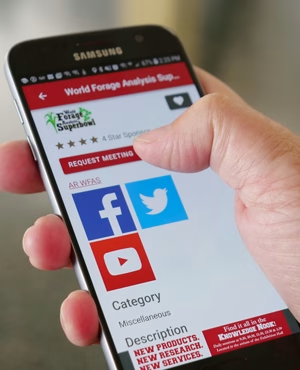
Beyond the Showring: While the competitions capture attention, the true value for commercial producers often lies in the accompanying data and conversations. For those wanting a closer look than the show ring allows you to see the cattle in their exhibits. The New Holland Pavilions and Cattle Tent allow close-up evaluation of animals, while the WDE Mobile App helps locate specific animals or exhibitors.

Connect Results to Reality: The most successful breeding programs look beyond ribbons to understand how show-winning genetics translate to commercial performance. Conversations with exhibitors about component strengths, feed efficiency, and daughter fertility behind their show string often reveal insights not obvious from the showring alone.

Elite Genetics Access: The week features multiple elite cattle sales, including the Top of the World Jersey Sale (Tuesday), World Premier Brown Swiss Sale (Wednesday), and World Classic ’25 Holstein Sale (Thursday). These auctions provide access to genetics that might otherwise never enter the commercial market-similar to getting early access to high-ranking genomic young sires before they’re widely marketed.

Educational ROI: Knowledge That Pays Dividends

The WDE mobile app helps attendees build personalized schedules and navigate the expansive grounds

World Dairy Expo’s educational programming transcends theoretical discussions to deliver practical, implementable strategies addressing the industry’s most pressing challenges. Just as precision feeding maximizes your milk components, strategic session selection maximizes your knowledge ROI. The 2025 lineup features multiple formats tailored to different learning preferences:

Knowledge Nook Sessions: These concise 45-minute presentations in the Exhibition Hall atrium spotlight innovations introduced since the previous Expo. The format’s brevity forces presenters to focus on practical applications rather than technical specifications. Sessions run throughout each day, allowing you to integrate them between trade show exploration or cattle viewing.

Virtual Farm Tours: Consistently rated among attendees’ favorite educational offerings, these daily presentations showcase outstanding dairy operations, followed by direct Q&A with the farm owners or managers. They provide real-world implementation examples of new technologies and management practices, including honest discussion of challenges and adjustments-similar to how elite producers learn more from benchmarking against successful peers than from textbooks.

Dairy Forage Seminars: With feed representing 50-70% of production costs, these specialized sessions on the Dairy Forage Seminar Stage deliver immediately applicable strategies for improving forage quality, reducing shrink, and optimizing nutrient density-often with documented cost-saving potential. Like fine-tuning your TMR formulation, these sessions offer small adjustments that yield significant marginal returns.

Expo en Español: These dedicated Spanish-language sessions address topics relevant to Latino dairy professionals, recognizing their growing importance in workforce and management roles.

Strategic Learning Tip: Before arriving, identify 2-3 specific operational challenges you currently face, then select educational sessions specifically addressing these issues. The WDE Mobile App allows you to build a personalized schedule, ensuring you don’t miss critical presentations while maximizing your time across the vast Expo grounds.

Networking That Delivers Measurable Results

appy Hour at The Tanbark offers prime networking opportunities with industry leaders
Happy Hour at The Tanbark offers prime networking opportunities with industry leaders

World Dairy Expo’s true differentiator isn’t found in any single component but rather in the unparalleled concentration of industry leaders, innovators, and decision-makers gathered in one location. During these four days, strategic networking can yield connections worth thousands of dollars in future opportunities.

Targeted Networking Venues:

  • Attendee Appreciation Events: Held Tuesday through Thursday (3-5 PM) throughout the Exhibition Hall, Trade Center, and Coliseum, these events offer complimentary refreshments in a relaxed atmosphere conducive to candid industry discussions.
  • Happy Hour at The Tanbark: This popular gathering spot (Tuesday-Thursday, 4-6 PM) offers free refreshments and typically attracts a diverse mix of producers, allied industry representatives, and international visitors.
  • International Reception: Exclusively for registered international attendees and commercial exhibitors (Thursday, 5-7 PM), this event provides exceptional opportunities for exploring export possibilities or global partnerships.
  • Career Connections: For operations seeking talent, this Monday event connects job and internship seekers with increasingly valuable potential as labor challenges persist industry wide.

Beyond Small Talk: Effective networking transcends business card exchanges. As you wouldn’t select a bull based solely on his pedigree without examining his proof, don’t waste time on superficial conversations. Prepare thoughtful questions addressing industry challenges, regional differences, or future trends. Rather than generic conversations, position yourself as a thought leader by sharing specific insights from your operation that might benefit others.

Follow Through Matters: The most successful networkers maintain connections beyond the event. Note key discussion points on business cards collected, then follow up within two weeks with specific reference to your conversation. This small step dramatically increases the long-term value of connections made, like how consistent heat detection protocol leads to better conception rates than sporadic observation.

The International Advantage: Global Perspective for Local Success

World Dairy Expo attracts attendees from nearly 100 countries, creating unparalleled opportunities to gain a global perspective on industry challenges and innovations. This international dimension offers value for forward-thinking operations.

For Domestic Attendees: International participants offer fresh perspectives on common challenges, often sharing solutions developed under different regulatory or market conditions. As new genetic lines can strengthen your herd, incorporating global management strategies can revitalize stagnant operational practices.

For International Visitors: WDE provides comprehensive support services, including:

  • VISA Letters of Invitation (request early via the WDE website)
  • Dedicated International Registration Desk in the Exhibition Hall
  • International Lounge for networking and business discussions
  • Interpreters fluent in multiple languages (Chinese, French, German, Indonesian, Japanese, Portuguese, Russian, Spanish)
  • Organized local farm tours showcasing diverse Wisconsin operations

New for International Attendees: International visitors, particularly Canadians planning extended stays, should note new U.S. registration requirements for visits exceeding 30 days. Specifically, Canadians entering by land who don’t receive an I-94 or passport stamp should request one if planning a stay of 30+ days or register online via USCIS Form G-325R.

Biosecurity Note: International visitors who have had contact with livestock before traveling to the U.S. must strictly follow APHIS guidelines, including laundering clothing, cleaning footwear, and declaring livestock contact to U.S. Customs officials. These protocols are as critical to industry health as your on-farm mastitis prevention program is to your bulk tank SCC.

Beyond the Expo: Maximizing Your Madison Experience

While the World Dairy Expo commands the primary focus, Madison offers exceptional opportunities for those extending their stay or seeking evening activities after the show.

Culinary Adventures: Madison’s restaurant scene rivals much larger cities, offering everything from traditional Wisconsin supper clubs to innovative farm-to-table experiences. The Destination Madison visitor guide explicitly created for Expo attendees highlights local favorites and hidden gems worth exploring.

Local Attractions: The city’s unique position between two lakes (Mendota and Monona) creates a picturesque setting for exploration. Consider visiting the University of Wisconsin-Madison campus, the iconic State Capitol building, or the vibrant State Street shopping and dining district.

Regional Excursions: Operations sending teams earlier or extending beyond Expo might consider side trips to nearby attractions like the New Glarus Brewery (famous for Spotted Cow beer), the National Historic Cheesemaking Center in Monroe, or even the vibrant Milwaukee brewing scene just 90 minutes east. Just as rotational grazing provides variety for your herd, these side trips offer refreshing diversions that prevent trade show fatigue.

The Bottom Line: Maximizing Your World Dairy Expo Investment

The Parade of Champions crowns the week’s top cattle, a must-see finale for all attendees.

World Dairy Expo 2025 represents a significant investment of time and resources, one that consistently delivers exceptional returns for operations that approach it strategically. Like investing in genetic advancement or facility modernization, your Expo experience requires upfront planning to capture optimal returns. These key actions will ensure you maximize your ROI:

  1. Book Early: Secure accommodations and purchase tickets now for significant savings and preferred options.
  2. Plan Strategically: Use the official website and mobile app to create a targeted schedule aligned with your operation’s needs and challenges.
  3. Divide and Conquer: If sending multiple team members, assign specific focus areas to ensure comprehensive coverage of this vast event, like dividing herd management responsibilities among specialists.
  4. Set Specific Objectives: Identify 3-5 concrete goals for your Expo experience, whether evaluating specific technologies, exploring genetic lines, or connecting with potential partners. Without clear objectives, you’ll wander like a dry cow on unlimited pasture content but unproductive.
  5. Follow Through: The true value of the World Dairy Expo manifests in the weeks and months following as you implement insights gained and leverage connections made. Just as your nutrition program’s value isn’t measured by what’s in the TMR mixer but by what shows up in the bulk tank, your Expo ROI depends on post-event implementation.

In today’s challenging dairy economy, where component premiums, feed efficiency, and genetic advancement separate profitable operations from struggling ones, no producer can afford to miss the competitive advantages that World Dairy Expo provides. From robotic milking systems to precision feeding technologies, genomic selection tools, and labor management strategies, this singular event delivers unmatched returns for progressive dairy producers committed to long-term success.

Will I see you on the colored shavings this fall?

Key Takeaways:

  • Plan early: Book hotels/tickets by July 2025 for discounts and prime lodging near the Alliant Energy Center.
  • Prioritize strategically: Target breed shows, trade show innovations, and seminars like Virtual Farm Tours for ROI.
  • Network smarter: Leverage Attendee Appreciation Events, Career Connections, and the International Reception.
  • Use tech tools: The WDE mobile app is essential for real-time schedules, maps, and exhibitor searches.
  • Prepare for variables: Pack layers for Madison’s unpredictable fall weather and review biosecurity rules for cattle interactions.

Executive Summary:

World Dairy Expo 2025 (Sept 30–Oct 3 in Madison, WI) is the dairy industry’s premier event, blending a massive trade show (650+ exhibitors), world-class cattle competitions, and actionable educational sessions. Strategic planning is critical: secure discounted tickets early, book nearby hotels months in advance, and use the WDE mobile app to navigate breed shows, seminars, and networking hotspots like Happy Hour at The Tanbark. Key highlights include Innovation Unveiled tech showcases, Dairy Forage Seminars, and the Parade of Champions. Tailored logistics for international attendees and a focus on ROI-driven networking make this a must-attend for dairy professionals, farmers, and innovators aiming to stay competitive.

Learn more:

Join the Revolution!

Join over 30,000 successful dairy professionals who rely on Bullvine Weekly for their competitive edge. Delivered directly to your inbox each week, our exclusive industry insights help you make smarter decisions while saving precious hours every week. Never miss critical updates on milk production trends, breakthrough technologies, and profit-boosting strategies that top producers are already implementing. Subscribe now to transform your dairy operation’s efficiency and profitability—your future success is just one click away.
NewsSubscribe
First
Last
Consent

Send this to a friend