






Why pinkeye vaccines disappoint: The surprising truth about why we can’t vaccinate our way out of the most common eye infection.
EXECUTIVE SUMMARY: There is no universal “pinkeye vaccine” because conjunctivitis stems from diverse causes including viruses, bacteria, allergies, and irritants – many of which cannot be prevented through vaccination. Existing vaccines that target some conjunctivitis-causing pathogens (like adenovirus, H. influenzae, and S. pneumoniae) were primarily designed to prevent severe systemic diseases, not mild eye infections, and they cover only a fraction of the strains responsible for conjunctivitis. Even if perfectly targeted vaccines existed, biological limitations including primary vaccine failure, waning immunity, host factors like age and immune status, and pathogen evolution would inevitably result in incomplete protection. This multi-layered challenge explains why vaccination alone cannot solve the pinkeye problem, making hygiene and non-pharmaceutical interventions crucial for prevention.
KEY TAKEAWAYS
- Conjunctivitis has multiple causes (viral, bacterial, allergic, irritant), making a single “pinkeye vaccine” impossible – approximately 80% of adult cases are viral, while bacterial causes are more common in children.
- Existing vaccines that target some pinkeye-causing pathogens have significant limitations: the adenovirus vaccine is restricted to military personnel, the Hib vaccine doesn’t protect against common non-typeable strains, and pneumococcal vaccines cover only some of the responsible serotypes.
- Even ideal vaccines would face biological challenges including primary vaccine failure (2-10% of recipients never develop immunity) and secondary vaccine failure (protection waning over time), especially in vulnerable populations like infants and the elderly.
- Hygiene practices remain the cornerstone of pinkeye prevention: handwashing, avoiding eye-touching, not sharing personal items, proper contact lens care, and isolating when infected are essential strategies that work across all infectious causes.
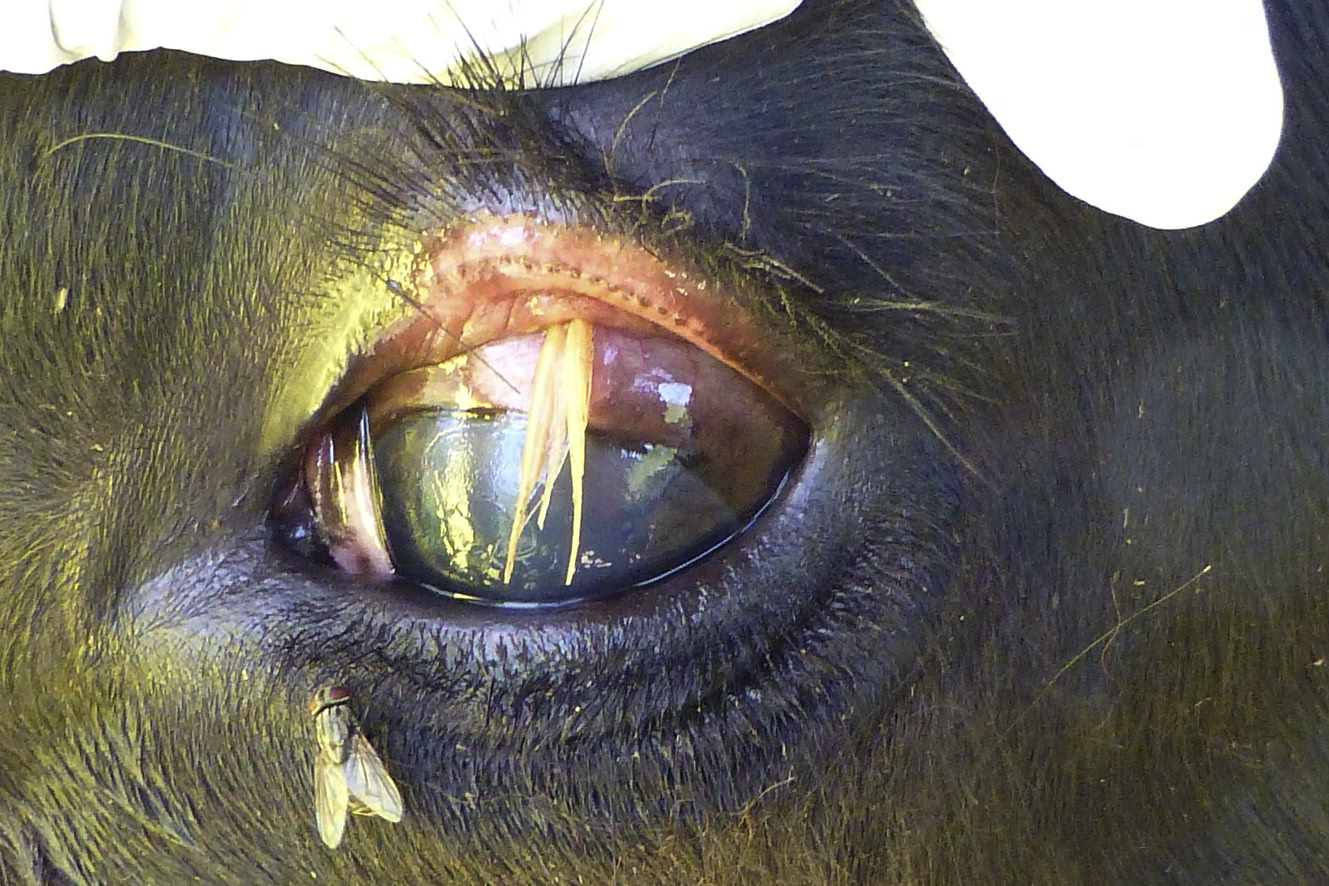
Are you still throwing money at pinkeye vaccines that don’t deliver? It’s time to face facts: traditional vaccination approaches are falling short, and your herd is paying the price. The solution isn’t another shot – it’s rethinking your entire prevention strategy.
In the dairy industry, we love quick fixes. When a problem emerges, we reach for a product and expect results. But when it comes to Infectious Bovine Keratoconjunctivitis (IBK), this mindset costs money, time, and animal welfare.
The truth? Your pinkeye prevention program is likely falling short not because vaccines don’t work but because you’re relying on them to do a job they were never designed to do alone.
The Multi-Pathogen Reality Most Vets Won’t Tell You
Let’s cut through the marketing hype. When vaccinating against pinkeye, you typically target only a fraction of the problem. The inconvenient truth is that pinkeye isn’t a single-pathogen disease – it’s a complex condition involving at least three major players:
- Moraxella bovis (the traditional target)
- Moraxella bovoculi (included in newer vaccines)
- Mycoplasma bovoculi (rarely addressed in commercial products)
Why aren’t more veterinarians talking about this three-pathogen reality? Perhaps acknowledging it means admitting that the commercial vaccines they’ve been recommending may be fundamentally incomplete.
Would you try to win a championship with only one-third of your team on the field? Of course not. So why accept pinkeye protection that targets only part of the problem?
What the Vaccine Companies Don’t Want You to Know
Here’s the uncomfortable truth most vaccine manufacturers won’t emphasize in their glossy brochures: no pinkeye vaccine on the market offers complete protection against all clinical cases.
The fundamental goal of vaccination isn’t elimination- it’s reduction in severity and frequency. Even vaccinated animals can develop pinkeye, but they are typically:
- Respond better to treatment
- Experience shorter duration of symptoms
- Require fewer retreatments
- Develop less permanent corneal scarring
This is valuable and like how somatic cell count management doesn’t eliminate every case of mastitis but reduces clinical severity and bulk tank SCC. But if you’re expecting complete prevention, you’ll inevitably be disappointed.
Is your disappointment with pinkeye vaccines stemming from unrealistic expectations? If you’re judging success by complete elimination rather than reduced severity, you’re setting yourself up for perceived failure.
The Corneal Connection Your Nutritionist Isn’t Discussing
Why aren’t your nutritionists talking about pinkeye prevention? They should be. The health of your herd’s corneas is the most critical factor in pinkeye susceptibility – and it’s directly influenced by nutrition.
“Bacteria cannot attach and replicate on a normal, healthy cornea due to its tight structure with limited sites for attachment,” the research explains. But when that corneal barrier is compromised by irritation or injury, you’ve essentially rolled out the welcome mat for pathogens.
Common corneal compromise factors in modern dairy operations include:
- Ammonia irritation from poorly managed bedding in calf facilities (How often are you cleaning those hutches?)
- Dust particles in dry lots during summer months (Are your sprinklers maintaining moisture levels consistently?)
- UV radiation exposure in free stall barns without adequate shade (Have you measured UV levels in your facility during peak summer hours?)
- Physical irritants from neighboring stalls and poor ventilation design (When was the last time you got down at cow-eye level to see what they’re experiencing?)
Research from Australia confirms the environmental impact, finding that “farm location, farm grazing area, farmer-reported dust levels, fly levels, rain levels, animal zebu content, and cattle age were significantly associated with pinkeye prevalence.”
If your vaccination program isn’t addressing these environmental factors, you’re essentially vaccinating animals while simultaneously creating perfect conditions for infection. It’s like meticulously pre-dipping teats while housing cows in wet, manure-laden bedding – you’re undermining your efforts.
The Timing Mistakes Costing You Thousands
Here’s a billion-dollar question: When should you vaccinate for pinkeye? If you answered “annually” or “each spring,” you’re making a costly mistake that countless dairy producers continue to make.
The hard truth: Pinkeye vaccine immunity typically lasts only four to five months – not the full year many producers assume. This limited protection window means spring vaccination may leave your herd vulnerable precisely when pinkeye risk peaks in late summer.
For year-round confinement operations, the timing becomes even more critical. Are you still administering vaccines on the same calendar-based schedule despite experiencing pinkeye issues year-round? If so, you’re practically guaranteeing protection gaps.
Think about it: Would you apply teat dip only during morning milking and expect protection through the evening? Of course not. Yet many operations continue to use the annual vaccination model for pinkeye prevention despite clear evidence it leaves animals unprotected for significant periods.
The Custom Vaccine Advantage Big Pharma Doesn’t Promote
Why aren’t more veterinarians recommending custom pinkeye vaccines? Perhaps because the pharmaceutical representatives visiting their clinics don’t sell them.
Custom (autogenous) vaccines developed from your farm’s specific bacterial isolates may provide the edge you need for operations battling persistent pinkeye despite commercial vaccination. This approach:
- Targets the exact pathogen strains circulating in your operation
- Can include all three major pathogens in a single formulation
- It may provide significantly better protection than off-the-shelf alternatives
Real Results: Deer Creek Feeding Case Study
Deer Creek Feeding, an 85,000-head dairy calf ranch in Texas, provides a compelling case study. Owner and manager Justin Ball said, “As the pinkeye landscape started changing, our ranch began having issues with some bugs that are not typically in a commercial vaccine.”
After switching to a custom-made vaccine that protected against Moraxella bovis, Moraxella bovoculi, and Mycoplasma bovis, their veterinarian, Dr. Sarah Giebel, reported, “Our incidence rates dropped by over 35 percent.”
Perhaps most surprising was their experience when moving to a one-dose custom vaccine formulation: “It’s been working even better than the two-dose vaccine, which came as a surprise to us,” said Ball. “We no longer have to handle our cattle twice. This is huge because it reduces the potential of losing gains and compromising vaccine efficacy.”
This approach parallels the development of autogenous mastitis bacterins for herds battling persistent Staph—aureus or Streptococcus uberis infections unresponsive to commercial vaccines. When commercial products repeatedly disappoint, it’s time to question whether you use the right tool for the job.
Before exploring custom solutions, how many more lost production days and treatment costs will you endure?
When Commercial Vaccines Make Sense
To be fair, there are situations where commercial vaccines can be effective. Standard commercial options may provide adequate protection when the strains in your herd closely match those in the vaccine formulation or when dealing primarily with Moraxella bovis infections rather than multiple pathogens.
Commercial vaccines typically cost less per dose than custom formulations, making them more economical for initial prevention programs in low-risk herds. Some veterinarians argue that starting with commercial options and only moving to custom vaccines when needed represents a prudent, stepwise approach.
As one dairy veterinarian notes, “Commercial vaccines have their place in a comprehensive prevention program, especially when combined with aggressive environmental and fly control. When pinkeye persists despite these measures, custom vaccines become the logical next step.”
The Prevention Program Most Operations Are Missing
Let’s be brutally honest: if you rely solely on vaccines for pinpoint prevention, you’re setting yourself up for failure. A comprehensive prevention program must address multiple risk factors simultaneously:
- Strategic vaccination timed for your specific risk periods, not arbitrary calendar dates
- Environmental management to reduce corneal irritation factors
- Aggressive fly control through integrated pest management approaches
- Trace mineral optimization – particularly zinc (40-60 ppm), copper (10-15 ppm), and selenium (0.3 ppm)
- Stress reduction protocols during high-risk periods
Are you still treating these as separate issues managed by different farm advisors? That fragmented approach is likely why your prevention efforts continue to disappoint.
What Your Vaccine Protocol Should Look Like
Forget the generic annual vaccination approach. Depending on your operation type, your protocol should be strategically designed:
For operations with pastured animals:
- Initial immunization with two doses 2-4 weeks apart in spring
- Strategic boosters’ mid-summer (July/August) as immunity wanes
- Aggressive fly control through insecticide ear tags, pour-ons, or environmental treatments
- Pasture management to prevent seed head development
For confinement operations:
- Age-based vaccination at 2-3 months with a two-dose protocol
- Booster vaccination 4-5 months later
- Ongoing boosters at 4–5-month intervals for continuous protection
- Enhanced ventilation protocols (40-60 CFM for calves)
- Bedding management targeting less than 10^6 CFU/g
The question isn’t whether you’re vaccinating – it’s whether your entire management system supports ocular health. Are you integrating these approaches or still treating vaccination as a standalone solution?
The Economic Reality You Can’t Ignore
Let’s talk dollars and cents. Merck Animal Health research states, “In dairy cattle, milk lost due to antibiotic use can cost $352 per head.” Pinkeye becomes a significant economic drain that far exceeds vaccine costs when you factor in treatment time, decreased production, and potential long-term damage.
Custom vaccines typically cost 1.5-2 times more per dose than commercial options. However, when you factor in labor savings from one-dose protocols, reduced treatment costs, and higher prevention rates, the ROI often favors the custom approach for herds with persistent pinkeye issues.
Are you still basing prevention decisions solely on up-front vaccine cost rather than total economic impact? This shortsighted approach is costing your operation far more than you realize.
The Bottom Line: Stop Accepting Pinkeye Failures
The dairy industry has accepted pinkeye as an inevitable seasonal challenge for too long. It’s time to stop blaming vaccines and start implementing truly comprehensive prevention.
When pinkeye vaccines appear to fall short, the issue typically isn’t with the product itself but with:
- Unrealistic expectations about what vaccines can achieve alone
- Environmental factors create perfect conditions for infection
- Strain mismatch between vaccine formulations and your herd’s pathogens
- Improper timing creates protection gaps during high-risk periods
- Ignoring the multi-pathogen nature of the disease
The most successful producers don’t just vaccinate – they create systems where pathogens struggle to establish infection in the first place. Work with your herd veterinarian to develop a custom prevention program addressing your operation’s risk factors.
It’s time to ask yourself: Am I willing to keep throwing money at incomplete solutions or ready to implement a comprehensive prevention program?
Take action today: Schedule a focused pinkeye prevention consultation with your veterinarian, specifically asking to evaluate your operation for corneal irritants, reviewing your vaccination timing, and discussing whether a custom vaccine approach might benefit your herd. Challenge the conventional approach that’s failing your animals and your bottom line.
Remember that even with the best prevention program, some pinkeye cases may still occur – but they should be exceptions, not expectations. By addressing all aspects of pinkeye prevention rather than focusing exclusively on vaccination, you’ll see dramatically better outcomes, healthier animals, and a stronger bottom line.
Learn more:
- Managing Veterinary Medicine Shortages: Essential Tips for Dairy Cattle Producers – Learn strategies for handling medication limitations that may affect your pinkeye treatment options.
- Managing Disease Outbreaks on Dairy Farms: Save from Economic Losses Improve Livestock Health – Discover comprehensive approaches to disease prevention that complement vaccination strategies.
- Idaho at the Epicenter: The Evolving H5N1 Outbreak in U.S. Dairy Cattle – Examine how farms are implementing biosecurity measures during a major disease outbreak, with principles applicable to pinkeye management.
 Join the Revolution!
 Join the Revolution!
Join over 30,000 successful dairy professionals who rely on Bullvine Weekly for their competitive edge. Delivered directly to your inbox each week, our exclusive industry insights help you make smarter decisions while saving precious hours every week. Never miss critical updates on milk production trends, breakthrough technologies, and profit-boosting strategies that top producers are already implementing. Subscribe now to transform your dairy operation’s efficiency and profitability—your future success is just one click away.




