







Mexico imports 8K Aussie Holsteins to supercharge dairy! Heat stress hurdles & global trade shifts ahead.
EXECUTIVE SUMMARY: Mexico’s 2025 import of 8,014 Australian Holstein heifers marks a strategic push to boost milk production and genetics, driven by U.S. supply shortages and China’s reduced demand. The deal, Mexico’s first major dairy cattle purchase from Australia since 2010, prioritizes high-yield genetics (10,220 kg/year) but faces heat stress risks in arid states like Durango. Rigorous biosecurity protocols and 24-day sea voyages underscore the operational complexity, while larger farms gain most from elite cows. The trade highlights shifting global dairy alliances but faces uncertainty from climate adaptation challenges and volatile markets.
KEY TAKEAWAYS:
- Genetic Gamble: Elite Holsteins could boost Mexico’s milk output by 15% by 2030 but require costly heat-stress management.
- Trade Realignment: Australia fills gaps left by China’s demand drop and U.S. herd shortages, leveraging CPTPP trade terms.
- Farmer Divide: Tech-equipped large farms benefit most; smallholders risk being priced out without subsidized breeding programs.
- Welfare Tightrope: 24-day sea voyages test Australia’s live-export reputation amid global scrutiny of animal transport ethics.
- Climate Wildcard: THI levels above 80 in key states threaten to erase production gains without innovative cooling strategies.
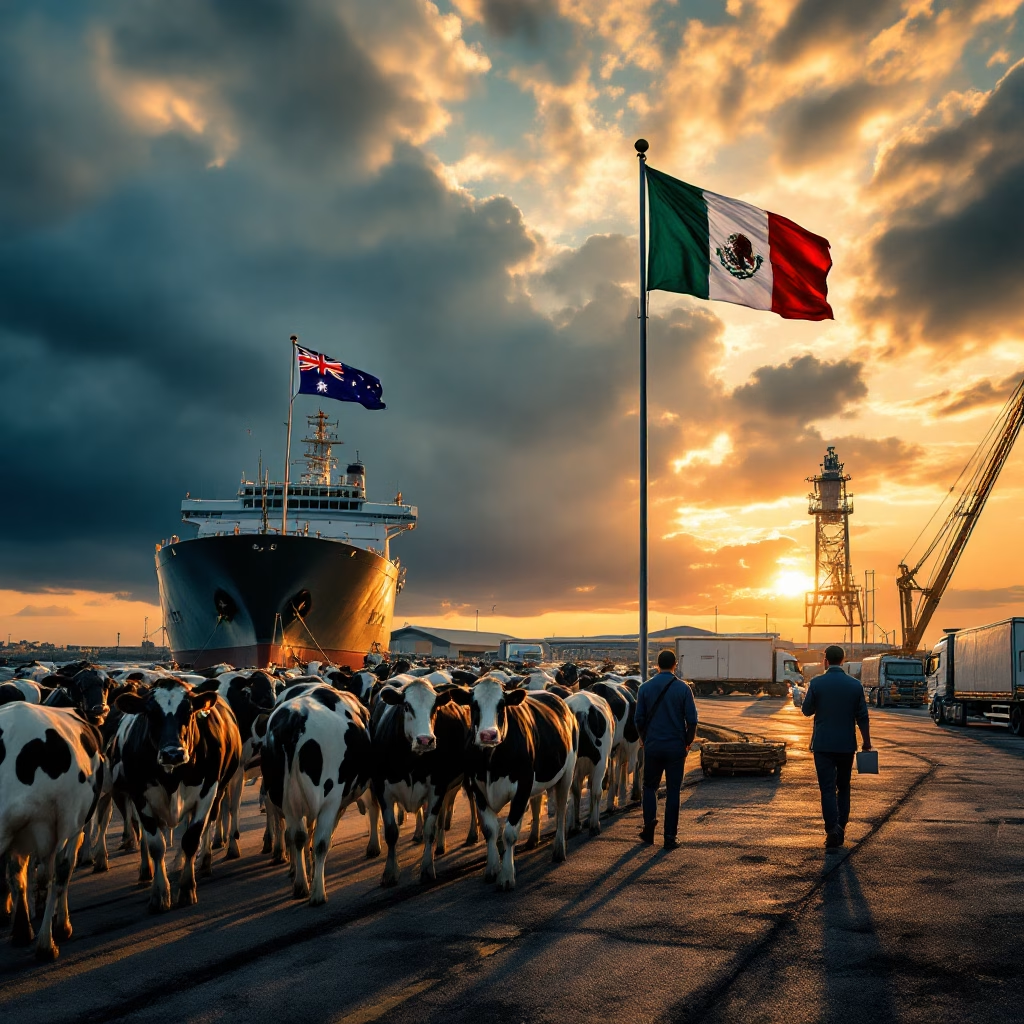
Mexican dairy farmers are betting big on Australian genetics to boost the country’s milk production, with over 8,000 high-producing Holstein heifers arriving at Mazatlán port so far this year. In what dairy experts are calling “the deal of the decade,” Mexico has accepted two massive shipments in March and April, with two more planned for 2025. This bold move marks the first Australian dairy cattle imports to Mexico since 2010, creating a win-win for both nations: Mexico gets the elite genetics it desperately needs, while Australian breeders find a new home for cattle originally destined for China.
The timing couldn’t be better for Mexico’s dairy sector. With the US herd at a 70-year low and prices through the roof, Mexican producers needed alternatives. Meanwhile, these imported Holsteins – capable of pumping out a whopping 10,220 kg of milk annually per cow – are now settling into farms across five key dairy states: Jalisco, Durango, Chihuahua, Guanajuato, and Aguascalientes.
“Somebody up there must like dairy farmers,” says Juan Hernández, who manages a 500-cow operation near Lagos de Moreno, Jalisco. “These Aussie girls drink more water than my teenagers, but their udders are worth every peso we spend keeping them cool!”
KEEPING COOL WHEN THE HEAT IS ON
The biggest challenge facing these imported Holsteins isn’t the journey – it’s the Mexican summer. High-producing dairy cows generate massive body heat, making them walking furnaces when temperatures climb.
During hot months, all five destination states see conditions that would make even the toughest Holstein sweat bullets. Durango hits the danger zone hardest, with June temperatures around 92°F and a temperature-humidity index (THI) of 83 – well into the danger zone for milk production losses.
“When that THI pushes past 72, you’re losing money with every degree,” explains Hernández. “We’ve installed misters throughout the barn and added fans over the feed bunks. Without cooling, these high-producers would drop 12% of their milk overnight.”
Research from the University of Melbourne confirms what Mexican farmers are seeing firsthand. Despite having modern cooling systems like shade, sprinklers and misting fans, researchers observed cows suffering from heat stress during Australian summers – suggesting current strategies may not be enough during the most brutal heat waves.
BATTLE-TESTED COOLING STRATEGIES
Smart farmers aren’t leaving comfort to chance. University of Queensland researchers found that extending cooling into nighttime hours significantly improves both milk production and cow health during heat waves.
The most effective setup combines:
- Overhead sprinklers with large droplets (not fine mist) in holding yards
- Powerful fans strategically placed at the feedpad and loafing areas
- Through-wetting “shower arrays” when cows exit the parlor
- Ducted fan-forced air blowing onto cows at night
Nutrition plays a crucial role too. During heat stress, cows need diet adjustments to maintain production without overheating their internal “engine.”
“I’ve cranked up the sodium bicarbonate in our ration to 0.8% of dry matter,” notes Hernández. “It’s like giving them natural Tums for their rumens. We also feed 6-7 smaller meals throughout the day instead of 2-3 large ones. Keeps their body temperature more stable.”
At minimum, experts recommend 0.75% sodium bicarbonate in the diet (about 0.15 kg daily for a cow eating 20 kg of dry matter).
WHAT THIS MEANS FOR YOUR OPERATION
The Australia-Mexico cattle pipeline represents more than just a short-term fix – it’s reshaping global dairy genetics flows. With two more shipments confirmed for 2025, Mexican dairy genetics are getting a significant upgrade.
For large operations with advanced cooling systems, these elite genetics could be game-changers. The math makes sense: each Holstein potentially produces over 30,000 kg of milk during her productive life, plus valuable offspring carrying those same high-production genes.
For smaller producers, the true test will be heat management. Try our interactive Heat Stress Calculator: plug in your farm’s location, THI values, and current cooling setup to see if your operation can handle these high-octane Holsteins.
Research from a Sonoran dairy shows that properly managed cooling systems can maintain production during brutal summer conditions. In their study, Holstein cows with enhanced cooling maintained milk production while producing an additional 3.1 liters daily – translating to 23.25 Mexican pesos more income per cow.
THE BOTTOM LINE: MAKING THE AUSSIE CONNECTION WORK
Mexico’s Holstein haul speaks volumes about where global dairy is headed – but success hinges on management, not just genetics.
For progressive operations ready to invest in serious cooling infrastructure, the Australian genetics represent a fast track to production gains. The 24-day ocean journey from Victoria to Mazatlán may seem extreme, but with US prices sky-high and supplies tight, geography matters less than genetics and cost.
“The Australian cows have been worth every headache,” Hernández says. “Provide enough shade, water and cooling, and these girls will make you money. Skimp on the cooling, and you’ll be watching your investment literally sweat away dollar by dollar.”
What cooling strategies have worked best on your farm? Are you considering upgrading your herd with imported genetics, or focusing on heat tolerance instead? The choice between maximum production and environmental adaptability remains the dairy farmer‘s eternal dilemma.
Learn more:
- April 2025 Global Holstein Evaluations: New Leaders Emerge as Genetic Progress Accelerates Worldwide
Explores the latest genetic rankings and base changes impacting Holstein breeding programs worldwide, critical context for Mexico’s focus on elite Australian genetics. - Three Bull Lines Dominate 33% of Elite Holstein Genomics
Analyzes risks of genetic concentration in Holstein populations – a cautionary perspective for Mexico’s reliance on imported genetics for herd improvement. - Elite Holstein Genetics Shine in 2024 BAA Rankings
Highlights top-performing Holstein herds and breeding strategies, offering benchmarks for evaluating the long-term potential of Australia’s exported cattle in Mexican operations.
 The Sunday Read Dairy Professionals Don’t Skip.
 The Sunday Read Dairy Professionals Don’t Skip.
Every week, thousands of producers, breeders, and industry insiders open Bullvine Weekly for genetics insights, market shifts, and profit strategies they won’t find anywhere else. One email. Five minutes. Smarter decisions all week.




