







Heat stress costs dairy farms $1.5B annually, but elite operations turn summer into profit. Your 68°F threshold could be bankrupting you.
EXECUTIVE SUMMARY: The dairy industry loses $1.5 billion annually to heat stress, yet most farmers still operate under outdated assumptions that are costing them thousands per cow each summer. Modern high-producing genetics hit their thermal breaking point at just 68 THI – not the traditional 80°F threshold – meaning your best cows are suffering while you’re still comfortable. Elite operations have discovered that precision cooling infrastructure delivers a 3-to-1 ROI through strategic fan placement, timed sprinkler cycles, and comprehensive thermal management protocols. The economic impact extends beyond immediate milk losses to generational damage, with heat-stressed cows producing daughters that yield 8-10 pounds less milk daily for their entire productive lives. Forward-thinking dairies are weaponizing heat stress management into competitive advantage through genomics, smart technology, and systematic protocols that protect both cow productivity and worker safety. Climate modeling predicts 100-300 annual heat stress days in many regions by 2050, making thermal resilience essential for long-term profitability rather than seasonal comfort.
KEY TAKEAWAYS
- Heat stress threshold is 68 THI, not 80°F – Your top producers are already suffering at temperatures that feel comfortable to humans, costing $4.16-$14.42 per cow daily in lost production
- Precision beats brute force in cooling – Strategic 36-inch fan placement every 30 feet delivering 200 FPM airspeed, combined with 1-3 minute sprinkler cycles, outperforms random fan installation by 24%
- Generational wealth destruction is real – Heat-stressed dry cows produce daughters with permanently reduced milk production (8-10 lbs/day less), creating multi-generational economic losses
- Cooling infrastructure delivers 3:1 ROI – Every dollar invested in comprehensive heat stress management returns $3.20 in avoided production, reproductive, and health losses
- Worker safety directly impacts milk quality – Heat-stressed employees make 40% more errors in protocols, potentially costing more in dumped milk than monthly cooling bills
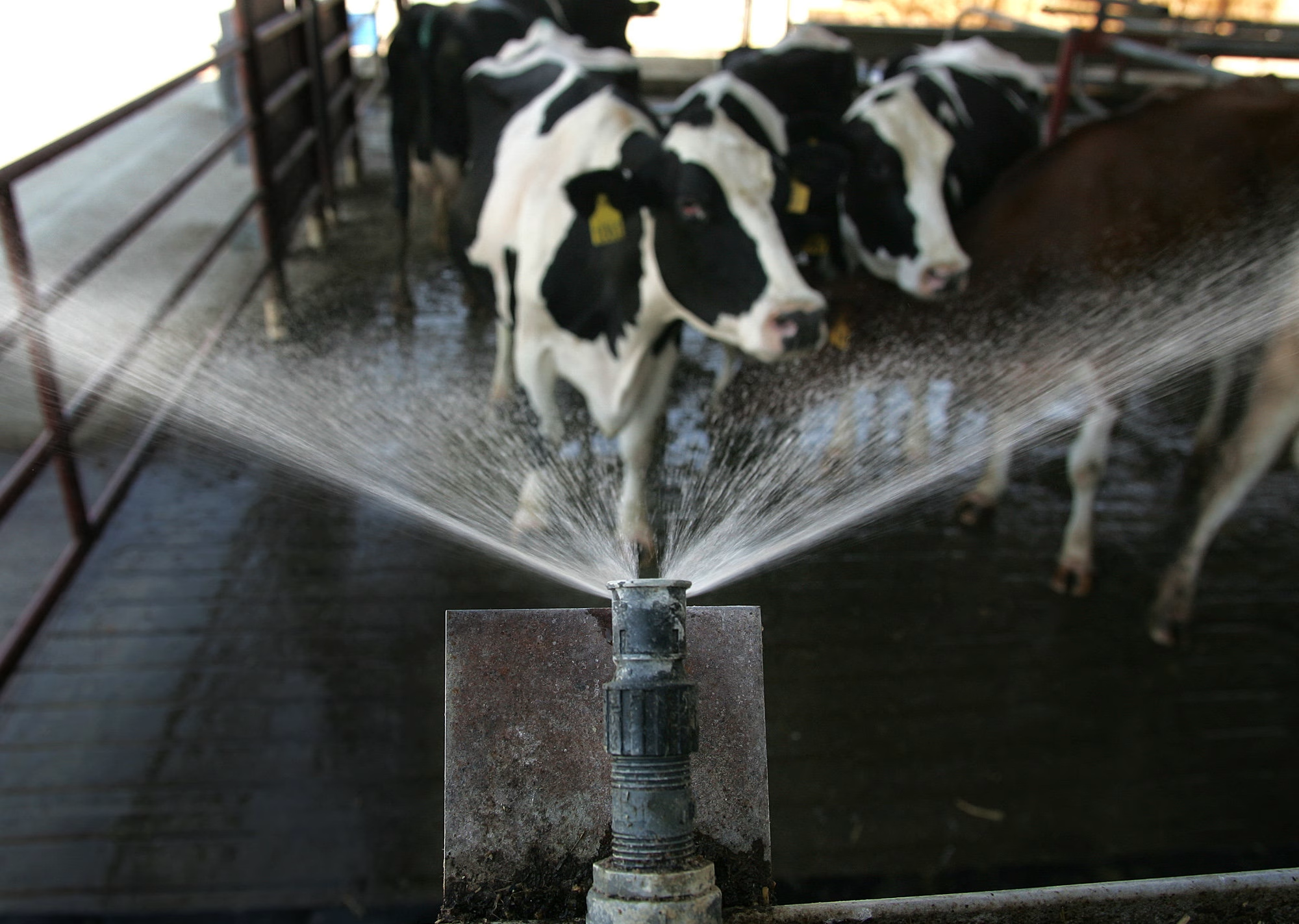
Summer heat doesn’t ask permission to crash your party – it kicks down the barn door and starts stealing milk straight from your tank. While you’re debating whether 75°F “feels hot,” your top producers are already gasping like fresh heifers in their first lactation. The game-changing dairies aren’t just surviving heat waves anymore – they’re turning thermal chaos into a competitive advantage.
The THI Reality Check: Why Your Grandfather’s Heat Rules Are Bankrupting You
Here’s a question that should keep you awake at night: What if everything you “know” about heat stress thresholds costs you thousands of dollars every summer?
That dusty old “wait until 80°F” mentality? Toss it faster than week-old silage. Research completed at the University of Arizona in 2009 recognized that developments in genetics, nutrition, and other improvements in milk production had lowered the heat stress threshold to 68 THI. Think about it: these metabolic blast furnaces generate heat like a TMR mixer running full throttle. They’re not your grandfather’s 60-pound Holsteins that could tough out anything.
Here’s the math that should terrify every dairy owner: In the US, heat stress creates a substantial economic challenge for the dairy industry, costing around $1 to $2.5 billion annually. The cost of unmitigated heat stress to the global dairy industry could reach $30 billion (USD) by 2050. Multiply that across your milking string during a week-long heat wave, and you’re looking at losses that could fund a brand-new parlor upgrade.
But here’s where conventional wisdom becomes financial suicide: Heat damage sticks around like mycotoxins in bad corn. Recent research has confirmed that heat stress compromises gastrointestinal barrier function, allowing harmful bacterial products such as endotoxin to translocate into the bloodstream. Documented evidence shows that milk production of heat-stressed daughters averaged 4.9 lb/d lower than that of cooled daughters during 35 weeks in milk, and the peak milk production was 8.6 pounds lower.
And that dry cow panting under the shade cloth? Her genetic potential is getting torched for the next generation. This deficit continued into the second lactation, resulting in a 5.1 lb/d reduction for the heat stressed group. That’s like breeding backward for three decades. How’s that for a generational wealth transfer you didn’t plan for?
Infrastructure Secrets the Top 5% Won’t Tell You
Fan Placement That Actually Moves Money, Not Just Air
Here’s what separates the winners from the wannabes: They stopped believing the “more fans equals better cooling” fairy tale decades ago.
Smart operators know it’s about precision, not brute force. According to industry standards, 36-inch fans should be spaced no greater than 30 feet apart, and 48-inch fans should be spaced within 40 feet. Fans should be installed above the stalls (7.5 to 8 feet) to keep the cows out of reach and angled so that the air from one fan reaches the location of the next fan to create a continuum of airflow.
The dirty secret nobody talks about? Dirt accumulation on fans can reduce the effectiveness of their ability to move air by 24%. That’s like running your milking system with a quarter of your vacuum pump offline. University of Wisconsin research shows farms that calibrated fans to deliver at least 200 feet per minute of air speed in every freestall saw fans reduce cows’ signs of heat stress by keeping their respiration rates and body temperatures in the normal range.
Pro move from the thermal management playbook: Test your airspeed at cow level with a $25 anemometer. You need 200 feet per minute hitting their skin, not 50 FPM swirling around the rafters where you can feel it standing in the alley. How many of you are actually measuring this? Be honest.
Sprinkler Science That Separates Winners from Whiners
Stop drowning your cows and start cooling them strategically. The magic isn’t in more water – it’s in smarter cycles.
Low pressure coarse droplet sprinklers (1.8-2.8l per minute, 1.25l per cow) are preferred, as the less the air moves, the more times the cow needs to be soaked. An 11.6% improvement in milk yield was obtained when cows were sprayed for 1.5 minutes every 15 minutes. Here’s where most operations screw up: They treat sprinklers like insurance – install them and forget them.
Smart farms understand that sprinklers should be operated in cycles, for example, 1 to 3 minutes on, followed by a 10 to 15-minute off-period to allow the cows’ skin to dry with the aid of fans. This cycling prevents excessive water use and minimizes issues with wet bedding or muddy conditions.
The holding pen game-changer: Time your sprinkler cycles to peak rumination periods. Research shows effective evaporative cooling when water application syncs with natural cow behavior patterns. Your cows are already telling you when they need cooling most – are you listening or just assuming you know better?
Shade Strategy That Actually Works Year-Round
Question: If conventional shade strategies were effective, why are elite operations investing in dynamic systems that cost significantly more?
Answer: Because traditional approaches don’t deliver maximum ROI when you factor in year-round benefits.
Elite operations understand that artificial shade structures should be designed to maximize protection from direct sunlight while allowing for optimal airflow. The effectiveness of shade can reduce heat load by as much as 30% or more. But here’s the kicker – height matters more than area. Shaded areas should be designed and managed to prevent the accumulation of mud and manure, which can create unhygienic conditions and attract flies.
Strategic insight: Shades over resting spaces should run north to south to allow the cows to follow the sun and maintain shade protection. The feeding area shades should run east to west to allow for maximum coverage over the bunk space. When you’re penciling out shade costs, remember you’re not just buying comfort – you’re purchasing production insurance.
The Multi-Billion Dollar Wake-Up Call That Changes Everything
Let’s have an uncomfortable conversation about money. The dairy industry faces staggering economic losses from heat stress. According to industry data, heat stress results in total economic losses of approximately $1.5 billion annually, driven by production and reproductive losses and increased morbidity and mortality of lactating cows.
But here’s what should really make you lose sleep – the impact of heat stress on lactation can result in an average reduction of 10 lb/d. Recent modeling indicates that dairy cows are at risk of heat stress annually for 40 to 85 days in New Zealand and 100 to 300 days in Australia. By 2050, these numbers will only increase.
Here’s the plot twist that’ll change how you budget: Cooling infrastructure isn’t your expense line – it’s your profit center. Research proves that investing in comprehensive heat stress infrastructure delivers positive returns through sustained production and improved animal welfare. Your fans aren’t operating costs; they’re profit-generating equipment that happens to move air.
Think about it like feed efficiency: A cow that maintains production through heat stress converts your cooling investment into milk at a measurable ratio. Show me another farm investment with those returns. I’ll wait.
Worker Safety: The Liability Time Bomb Nobody’s Discussing
Here’s a question that should make your insurance agent nervous: What happens when your heat-stressed employee messes up antibiotic protocols or withdrawal times because they can’t think straight?
According to the Center for Disease Control, more than 700 people die from heat-related causes in the United States each year. Most of these deaths could have been prevented with better awareness and precautions. Your crew’s heat exhaustion isn’t just human suffering – it’s a workers’ compensation claim wearing steel-toed boots.
The new standard of care:
- Acclimatization protocols for new employees or those unaccustomed to working in hot conditions, involving gradually increasing their workload and exposure to heat over several days
- Mandatory cooling stations – designated areas such as air-conditioned rooms or well-shaded areas equipped with fans where workers can take breaks
- Heat illness recognition training covering symptoms of heat exhaustion (dizziness, heavy sweating, weakness, nausea) and heat stroke (confusion, fainting, seizures, high body temperature)
Remember: A dehydrated worker who messes up antibiotic dosing or withdrawal times can cost you more than a month’s cooling bills in dumped milk. This isn’t charity; risk management protects your Grade A permit.
Genetic Heat Tolerance: Breeding Tomorrow’s Thermal Champions
The genomic revolution is meeting climate reality head-on. Recent research focuses on heritable traits that affect heat tolerance, including sweat gland density, respiration rate stability under thermal load, and nighttime recovery speed after heat exposure.
This isn’t theoretical breeding – it’s practical profit protection. Sires with high heat tolerance ratings produce daughters that maintain production better during heat stress events. When you’re choosing bulls, you’re not just selecting for milk, fat, and protein anymore – you’re buying heat resilience that pays dividends every summer.
The game-changer: Some AI companies now offer genetic packages, including heat tolerance and traditional genetic indexes. Early adopters report maintaining production levels during heat waves that devastate neighbors who are still breeding with outdated genetic priorities.
Question for progressive breeders: If you’re not factoring heat tolerance into your mating decisions, are you breeding for profitability or nostalgia?
Smart Technology That Thinks Faster Than Heat Waves
Modern monitoring technology now predicts heat stress 2-4 hours before visible symptoms appear. These systems learn specific barn thermal patterns and auto-adjust cooling systems before stress accumulates.
Recent research shows that the utilization of advanced technologies may assist dairy farmers in effectively monitoring and controlling heat stress in cows. When lying time drops and respiration rates climb, automated systems kick into high gear without waiting for human intervention. It’s like having a heat stress specialist working 24/7 for the cost of a decent replacement heifer.
The game-changer: Automated curtain and fan systems that respond to real-time THI plus cow behavior data. One farm reported significant improvements in summer somatic cell count using predictive cooling algorithms that learned their specific environmental conditions.
Nutritional Heat Shields: Feeding for the Fight
Heat stress fundamentally changes how cows process feed. There is notably a decrease in feed intake, which is crucial as cows attempt to minimize metabolic heat production. This reduction in feed intake affects their energy levels and has implications for overall milk production, reproduction, and health.
The physiological challenge: Reduced saliva production from panting cuts natural rumen buffering, while increased respiration creates respiratory alkalosis that predisposes cows to acidosis. Water intake can increase by 50% or even more during periods of heat stress.
Strategic feeding management:
- Increase energy density to help compensate for reduced overall intake, potentially incorporating supplemental fats that are energy-dense and produce less heat increment during digestion
- Shift feeding times to cooler parts of the day when cows’ core body temperature is lower and comfort level higher
- Ensure fresh feed availability with more frequent delivery to prevent spoilage that further depresses intake
Critical insight: you can’t just dump more minerals into the same ration. Heat stress changes mineral absorption rates, water intake patterns, and rumen fermentation. Your nutritionist must reformulate from scratch, not just add supplements to your cool-weather recipe.
The Thermostat Wars: When Conventional Wisdom Becomes Costly Stupidity
Here’s where most operations fumble the finish line: shutting down cooling when humans feel comfortable. Your cows in that naturally ventilated barn might still be battling dangerous THI levels while you’re enjoying a pleasant evening breeze.
The elite operator mindset: Keep systems running until overnight lows allow complete thermal recovery. Research confirms that when the temperature is comfortable for humans, that does not mean the THI is comfortable for the cows in a building. The return on your investment of electricity will be returned in cow recovery.
Multiple university studies confirm: Every hour of insufficient nighttime recovery extends the next day’s stress period. Those electricity costs? They’re cheaper than the compounding production losses from chronically heat-stressed cows.
Challenge conventional thinking: What if your “energy conservation” is actually the conservation of losses instead of profits?
Emergency Protocols: When Prevention Meets Reality
Even the best-prepared operations face extreme events that push systems beyond capacity. What is the difference between survivors and casualties? Written emergency protocols that everybody knows by heart.
Critical emergency thresholds based on industry research:
- Respiration rates greater than 80 breaths per minute indicate heat stress requiring immediate action
- Rectal temperatures of 80% of cows in a group above 102°F signal severe stress conditions
- Multiple cow collapse requires full emergency response, including veterinary consultation
Smart operations maintain emergency cooling supplies: portable fans, extra sprinkler lines, and backup water sources. When your main system fails during a 100°F day, you need Plan B ready to deploy, not scrambling to find equipment while cows suffer.
The Bottom Line: Heat Resilience as a Competitive Strategy
Climate change isn’t coming – it’s punching your operation in the profit margin right now. Modeling predicts dairy operations globally will face increasing heat stress days annually, with some regions experiencing 100-300 days by 2050. The farms thriving won’t be those that simply survive summer – they’ll be operations that weaponize thermal management into year-round competitive advantage.
Your choice crystallizes into two paths: Invest proactively in comprehensive heat stress infrastructure or pay reactive crisis management costs that compound annually. The technology exists. The knowledge is proven. The ROI calculations are undeniable.
The winning operations aren’t just adding more fans to old barns – they’re engineering thermal resilience into every management decision. From genomic selection and ration formulation to facility design and worker protocols, heat management becomes the foundation that supports every other profit center on your dairy.
Your cows are already voting with their production records. The question isn’t whether summer heat affects your operation – it’s whether you’ll control that impact or let it control your profitability.
What This Means for Your Operation
Take an honest inventory: When did you last measure airspeed at cow level using proper instrumentation? Do you know your farm-specific THI thresholds? Are your emergency protocols written down or just “understood”? Can your workers recite your heat stress action plan, or are they winging it when stress hits?
Based on comprehensive research from leading dairy institutions, the farms writing tomorrow’s success stories are treating heat stress management like the profit protection system it truly is. Stop thinking about cooling costs and start calculating cooling ROI. Your future self – and your cows – will thank you when the next heat wave hits, and you’ll be making money while competitors are making excuses.
The choice is yours: Lead the thermal revolution or pay the heat tax. Which side of history will your dairy be on?
Sources: This article incorporates verified research from Dan Illg, Director of Nutrition and Technical Services at Standard Dairy Consultants, comprehensive heat preparedness guidelines from agricultural research institutions, industry economic data from major dairy publications, University of Arizona THI research, international dairy management studies, University of Wisconsin fan effectiveness research, worker safety data from the CDC and Iowa State University Extension, and climate modeling research published in peer-reviewed journals.
Learn more:
- Heat Stress in Dairy Cattle: Understanding the Long-term Consequences – Explore the generational impacts of heat stress, including how in-utero exposure affects calf performance and lifetime milk production, with research showing up to 25% production losses and permanent immune system compromises.
- Are Your Calves Quietly Overheating? Southeast Heat Management Strategies That Work – Discover why calves face heat stress at lower THI levels than mature cows and learn targeted cooling strategies that protect your genetic investment, including reflective hutch covers and optimized feeding schedules.
- The Crucial Role of Cooling Dry Cows to Combat Heat Stress: Maximizing Dairy Profits – Learn how heat stress during the dry period creates permanent mammary gland damage and reduces next lactation milk production by 8-10 pounds per day, plus proven cooling strategies that deliver $3-5 ROI for every dollar invested.
 The Sunday Read Dairy Professionals Don’t Skip.
 The Sunday Read Dairy Professionals Don’t Skip.
Every week, thousands of producers, breeders, and industry insiders open Bullvine Weekly for genetics insights, market shifts, and profit strategies they won’t find anywhere else. One email. Five minutes. Smarter decisions all week.




