







Nigeria’s got 20.9M cattle but imports $1.5B in dairy annually. Here’s why your genomic testing program might not protect you from this fate.
EXECUTIVE SUMMARY: Look, I just spent weeks digging into what’s happening to dairy farmers in Nigeria, and honestly… it’s got me losing sleep. The real eye-opener isn’t their 700,000 metric ton production gap – it’s how EU subsidies are systematically destroying local dairy sectors worldwide. We’re talking about Ireland dumping N686 billion worth of fake milk powder (that’s right, vegetable oil mixed with skim milk) into Nigerian markets between 2020-2023. Meanwhile, Nigerian producers with 20.9 million head of cattle can’t compete because European farmers get taxpayer backing that makes their feed costs artificially low. Kenya figured this out and slapped a 10% import levy on dairy products – within a decade they went from net importer to exporter with 300% yield improvements through systematic crossbreeding programs. The kicker? If subsidized dairy can undercut Nigerian farmers with their low labor costs, what happens when those same trade policies target your market? You need to read this analysis and start thinking about how vulnerable your operation really is.
KEY TAKEAWAYS
- Trade protection creates breathing room for genetic improvements – Kenya’s modest 10% tariffs gave local producers space to invest in AI programs that boosted yields 300% over 10 years. Start advocating for fair trade policies in your region now, because 2025’s global surplus is heading somewhere.
- Infrastructure gaps kill productivity faster than poor genetics – Nigerian operations lose billions due to unreliable electricity and poor cold storage, dropping their competitiveness below subsidized imports. Audit your own infrastructure vulnerabilities today – backup power, storage capacity, and processing access could determine survival.
- Systematic breed improvement beats single-fix solutions – Rwanda’s Girinka program combined genetics, nutrition, and market access to transform their dairy sector. Stop looking for silver bullets in your genomic testing program and start building comprehensive improvement systems that address feeds, facilities, and breeding together.
- Feed cost advantages from subsidies create unfair global competition – EU operations can pay above-market grain prices because of CAP support, driving up commodity costs for everyone else. Track your feed efficiency metrics more aggressively and consider alternative protein sources to reduce vulnerability to global price manipulation.
- Financial systems need dairy-specific lending models – Traditional banks don’t understand our seasonal cash flows and long payback periods, limiting expansion opportunities. Work with your lender now to develop dairy-specific financing that accounts for genetic improvement timelines and infrastructure needs.
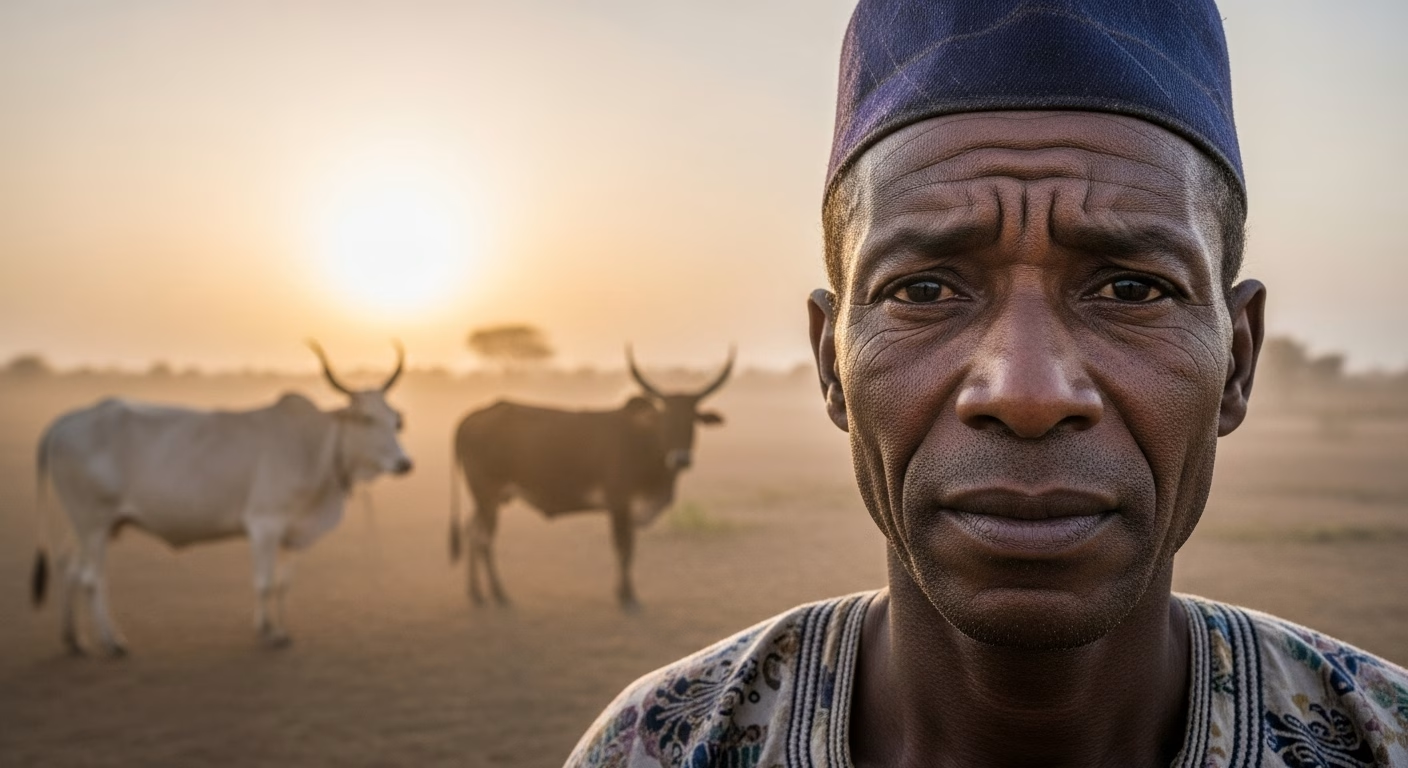
You know what’s been eating at me lately? I keep hearing from colleagues about what’s happening to dairy producers in Nigeria, and honestly… it’s got me thinking about vulnerabilities in our own operations that most of us probably haven’t even considered.
The Thing About Global Markets… They’re More Connected Than We Think
Look, I’ve been bouncing around dairy regions for the better part of two decades now – from the rolling hills of Vermont to the massive operations in the Central Valley – and what I’m seeing unfold in Nigeria is basically a masterclass in how global trade can absolutely demolish local dairy production. We’re talking about a country that’s hemorrhaging $1.5 billion annually on dairy imports while their own producers are getting steamrolled by competition they can’t even begin to match.
The numbers are brutal when you really break them down. According to recent government data, Nigeria’s pushing out about 700,000 metric tons of milk yearly – and get this, they’ve got over 20.9 million head of cattle. That’s more stock than Wisconsin and California combined. But their consumers are demanding closer to 1.6 million metric tons annually, which means they’re not even hitting 45% of domestic demand with local production.
What really gets under my skin is hearing from producers like Daniyan Abimbola down in Osun State. This guy’s been running a commercial operation for five years – reminds me of some of the newer operations I’ve visited in Texas – and he’s already eyeing the exit door. The economics just don’t work anymore when you’re competing against artificially cheap imports backed by European taxpayers.
And here’s what strikes me about this whole situation… if it can happen there, with their low labor costs and minimal infrastructure overhead, what’s to stop it from happening anywhere else? I mean, we’re seeing similar pressures creeping into markets closer to home.
Here’s Where the EU Subsidies Really Hit Home
The thing about trade policy that most producers don’t fully grasp is how it’s never really about one country. What’s happening in Nigeria right now is basically a preview of what can happen when subsidized dairy floods any market. Recent work published in the Journal of Dairy Science has been documenting how international dairy trade patterns are increasingly dominated by subsidized exports from developed countries.
The EU’s Common Agricultural Policy continues to funnel massive subsidies to European farmers – we’re talking about support levels that would make any North American producer’s head spin. Agricultural economists tracking this stuff for years have shown it creates artificial price advantages that no unsubsidized operation can match, regardless of how efficient they are.
What’s particularly fascinating is how the situation really intensified after the EU killed their milk production quotas back in 2015. Irish production capacity exploded initially, though recent industry reports show it’s been more of a roller coaster – production actually declined in 2023 before recovering marginally to 8.43 billion liters in 2024. Still, we’re talking about massive surplus volumes that have to go somewhere.
And where does that surplus end up? Markets like Nigeria, packaged as Fat-Filled Milk Powder (FFMP). Now, those of us in the industry know this stuff isn’t really milk by international standards – it’s skim milk mixed with vegetable oils to cut production costs. But that’s exactly what’s flooding African markets at prices no unsubsidized operation can compete with. Between 2020 and 2023, Ireland alone exported about N686 billion worth of this stuff to Nigeria.
Here’s the thing though – when I talk to producers in Wisconsin or New Zealand, they’re starting to see similar patterns creeping into their own markets. Maybe not as dramatic, but the same underlying dynamics. It’s like watching a slow-motion train wreck that could theoretically happen anywhere.
What Strikes Me About Infrastructure Challenges
Here’s something that really resonates with me as someone who’s visited operations from the Green Mountains to the Canterbury Plains… the infrastructure challenges Nigerian producers face aren’t that different from what we see in remote dairy regions everywhere. You simply can’t run modern operations without reliable electricity, decent roads, and cold storage facilities.
Take the Bobi Grazing Reserve situation in Niger State back in 2022. When armed groups hit that operation, they didn’t just scatter some cattle – they shut down billions of naira worth of dairy infrastructure that companies had been building for years. It’s the kind of thing that makes you think about how vulnerable our own operations can be to external shocks, whether that’s extreme weather in the Midwest, supply chain disruptions during COVID, or… well, subsidized dumping.
I remember visiting a operation outside of Bakersfield a few years back where the producer was dealing with similar financing challenges. The seasonal cash flows, the long payback periods, the infrastructure requirements – these aren’t unique to developing countries. Even here in North America, getting bankers to understand dairy economics remains a real challenge.
What’s particularly interesting is how this financing gap creates a vicious cycle. Without access to capital, producers can’t invest in productivity improvements. Without productivity gains, they can’t compete with subsidized imports. Without competitive operations, banks won’t lend. Round and round it goes.
For context, I’ve seen similar dynamics play out in parts of rural Montana where producers are trying to expand but can’t access the capital they need. The difference is, they’re not competing against subsidized imports… yet.
What’s Particularly Fascinating About the Success Stories
Here’s where things get interesting though. Other countries have figured this out, and the lessons are pretty transferable to operations everywhere. Kenya’s been quietly building one of Africa’s most successful dairy sectors, and their approach offers some real insights for producers globally.
Recent analysis from the International Dairy Federation shows Kenya implemented a modest but effective trade protection strategy – a 10% import levy on dairy products combined with 16% VAT on milk imports from East African Community countries. What’s brilliant about their approach is they didn’t just slap tariffs on imports and call it a day.
They invested heavily in artificial insemination programs, bringing in quality genetics from Europe and North America. Their crossbreeding initiatives increased average daily milk yields from indigenous breeds by 300% over a decade. Now that’s the kind of genetic improvement program that gets my attention – reminds me of what we saw in the Northeast when producers started really focusing on genomic selection.
For those of us working with Holstein genetics, seeing how these programs work in challenging environments really drives home the importance of systematic breed improvement. It’s not just about importing genetics – it’s about creating the whole support system around them. The AI programs, the nutritional support, the veterinary infrastructure… all of it has to work together.
Rwanda’s doing something equally impressive with their Girinka program. Since 2006, they’ve distributed cows to over 341,000 families, but here’s the key – they coupled it with training, veterinary support, and market development. It’s not just throwing animals at people and hoping for the best.
What these success stories tell me is that productivity improvements need to be systematic. You can’t just focus on genetics without addressing nutrition, management, and market access. It’s exactly what we preach here in North America, but seeing it work in challenging environments really drives the point home.
The Production Reality Check That Keeps Me Honest
What really gets my attention about the Nigerian situation is how the productivity gap isn’t really about genetics… it’s about systems. Nigerian indigenous breeds are pushing maybe 0.5 to 1.5 liters per day – compare that to our Holstein-Friesian crosses in similar climates that can hit 15-20 liters with proper management.
Here’s what’s really noteworthy about the production structure – about 90% of Nigeria’s milk comes from pastoralist systems, with only around 5% from commercial operations. That’s not inherently bad – some of the best dairy operations I’ve visited in New Zealand and Ireland started as extensive grazing systems. But without access to modern breeding programs, consistent feed quality, or veterinary support, these operations can’t compete with subsidized imports.
For context, the average Nigerian dairy cow produces about 500-600 liters annually. Compare that to the 8,000-10,000 liters we’re seeing from well-managed Holsteins in temperate climates… but even getting to 2,000-3,000 liters annually through crossbreeding and improved management would completely transform the economics.
This trend suggests to me that there’s massive untapped potential in developing dairy markets worldwide, if they can get the support systems right. And honestly, it makes me wonder what we’re missing in our own operations when we get comfortable with “good enough” performance.
Recent research from Progressive Dairy has shown that even in established dairy regions, there’s often a 20-30% productivity gap between top-performing and average operations. If that’s true in places like Wisconsin and California, imagine what’s possible in regions where the baseline is much lower.
What’s Happening in Feed Markets Should Worry All of Us
Look, what’s happening in Nigeria doesn’t stay in Nigeria. The EU’s Common Agricultural Policy creates systematic market distortions that affect dairy producers everywhere. When wealthy countries can use taxpayer money to systematically undercut local production in developing markets, it creates precedents that eventually affect all of us.
The implications go way beyond Africa. When wealthy countries can use taxpayer money to systematically undercut local production in developing markets, it creates precedents that eventually affect all of us. It’s basically economic dumping disguised as free trade.
What’s particularly troubling is how this plays out in feed markets too. European dairy operations benefit from subsidized grain prices through the CAP, which means they can afford to maintain production levels that would be economically impossible under true market conditions. That puts upward pressure on global feed prices that eventually hits everyone’s bottom line.
I’ve been tracking corn and soy prices for years now – used to do it religiously when I was helping producers in Ohio figure out their ration costs – and the artificial support for European livestock operations definitely impacts global commodity markets. When European operations can afford to pay above-market prices for feed because of subsidies, it drives up costs for everyone else.
Current trends suggest this is only going to get worse as global feed demand continues to outpace supply growth. It’s one of those interconnected challenges that makes managing feed costs increasingly complex for all of us. I mean, we’re already seeing corn prices that would have been unthinkable five years ago.
The Bottom Line for Every Dairy Producer
Here’s what really bothers me about this whole situation… it’s not just about Nigerian farmers losing their livelihoods. It’s about a global trade system that allows subsidized production to systematically destroy local dairy capacity wherever it’s deployed.
Think about it this way – if subsidized European dairy can undercut Nigerian producers with their lower labor costs and minimal infrastructure requirements, what happens when that same system targets other markets? What happens when trade policies shift and suddenly your local market is flooded with artificially cheap imports?
From industry observations over the past few years, I’ve identified some practical takeaways that apply to operations everywhere:
Trade protection matters more than we often admit. Kenya’s modest tariffs created enough breathing room for their dairy sector to develop genuine competitive advantages. That’s something worth advocating for in our own markets – not protectionism for its own sake, but fair competition that doesn’t penalize efficiency.
For producers in regions like the Northeast or Pacific Northwest, this might mean getting involved in policy discussions about trade agreements. I know it’s not the most exciting part of dairy farming, but it’s becoming increasingly important.
Productivity improvements need to be systematic. You can’t just focus on genetics without addressing nutrition, management, and market access. Everything has to work together. I’ve seen too many operations try to solve productivity problems with a single silver bullet – better bulls, new feeds, fancy equipment – when what they really need is a comprehensive approach.
Take a operation I visited in Pennsylvania last year. They’d invested heavily in genomic testing but hadn’t addressed their nutrition program or facility design. Their genetic potential was there, but they weren’t seeing the production gains they expected. It’s exactly what we’re seeing in Nigeria, just at a different scale.
Infrastructure investment in dairy regions needs to be a priority everywhere. Whether it’s cold storage in Nigeria, broadband connectivity in rural Iowa, or processing facilities in remote Australia, the basic infrastructure requirements are remarkably similar. Without it, even the most efficient producers can’t compete effectively.
I’ve seen firsthand how infrastructure limitations can kill productivity. There’s a operation in upstate New York that has incredible genetics and management but struggles with inconsistent power supply. Sound familiar? It’s not that different from what Nigerian producers are dealing with.
Financial systems need to understand dairy operations. The seasonal cash flows, the long payback periods, the infrastructure requirements – these aren’t unique to developing countries. Even here in North America, getting bankers to understand dairy economics remains a challenge.
What’s particularly noteworthy is how successful dairy development always seems to combine trade policy with technical assistance. You can’t just protect a market and expect miracles, but you also can’t expect producers to compete against subsidized imports without some level of support.
For those of us in more developed dairy markets, the lesson is pretty stark. The same trade policies that are crushing Nigerian dairy producers could theoretically be applied anywhere. The only real protection is building dairy sectors that are genuinely competitive, not just subsidized differently.
And honestly? That’s a challenge we should all be taking seriously. Because the alternative – a world where taxpayer-funded subsidies determine who wins and loses in global dairy markets – isn’t sustainable for any of us.
This isn’t just about fairness or development economics. It’s about the long-term viability of dairy production in a world where trade policies can systematically destroy local capacity. That should concern every dairy producer, everywhere.
What keeps me optimistic though is seeing how countries like Kenya and Rwanda have found ways to build competitive dairy sectors even in challenging environments. The fundamentals – good genetics, proper nutrition, sound management, and fair market access – work everywhere. The question is whether we’re willing to invest in them consistently over the long term.
The evidence from operations I’ve visited across North America suggests we often take these fundamentals for granted. Maybe that’s the real lesson from Nigeria – that competitiveness isn’t something you achieve once and forget about. It’s something you have to work at every single day.
Complete references and supporting documentation are available upon request by contacting the editorial team at editor@thebullvine.com.
Learn More:
- Boost Your Dairy Farm’s Efficiency: Easy Protocol Tweaks for Big Results – Reveals practical protocol adjustments that deliver immediate productivity gains and cost reductions, giving dairy farmers actionable tools to strengthen competitive positioning against subsidized imports through operational excellence.
- Boosting Dairy Farm Profits: 7 Effective Strategies to Enhance Cash Flow – Demonstrates proven financial strategies for maximizing profitability through feed optimization, milking parlor efficiency, and revenue diversification—essential survival tactics when facing artificially cheap competition in global markets.
- 5 Technologies That Will Make or Break Your Dairy Farm in 2025 – Explores cutting-edge innovations like AI analytics, robotic milking, and precision feeding systems that can boost productivity by 20-40%, offering technological solutions to compete effectively against subsidized operations worldwide.
 Join the Revolution!
 Join the Revolution!
Join over 30,000 successful dairy professionals who rely on Bullvine Weekly for their competitive edge. Delivered directly to your inbox each week, our exclusive industry insights help you make smarter decisions while saving precious hours every week. Never miss critical updates on milk production trends, breakthrough technologies, and profit-boosting strategies that top producers are already implementing. Subscribe now to transform your dairy operation’s efficiency and profitability—your future success is just one click away.




