







Charlie Will helped build the dairy industry’s greatest genetic empire. All because Select Sires told him no.
Listen, I’ve been in this industry long enough to know that rejection letters rarely lead to revolutions. But Charlie Will’s story… this one hits different.
Spring of ’74—Nixon’s still in office, gas is 55 cents a gallon—and Charlie’s sitting there with his fresh University of Illinois dairy science degree. Select Sires, the largest AI company in the industry, tells him, “Thanks, but no thanks.” No openings in their Sire Department.
Here’s what gets me, though. Most of us would’ve taken that rejection and gone into feed sales, maybe found a nice co-op job. Not Charlie.
Fast forward to this week—the National Association of Animal Breeders just announced Charlie as their 2025 Pioneer Award winner. After nearly 40 years with Select Sires (yeah, the same company that wouldn’t hire him), his bulls have sold millions of units worldwide. We’re talking about genetics that influence basically every Holstein pedigree you’ll pull up today.
Learning Cattle the Old-School Way
Southern Illinois dairy country in the 1960s wasn’t exactly genetic headquarters, but it’s where Charlie learned cattle. Growing up on the family’s commercial Holstein farm, working those twice-daily milkings. You know that barn smell—silage, sawdust, and that sweet-sour mix of fresh milk and manure—that’s where Charlie’s education started.
The neighbors at Walkway Farms—Foster Walkway ran that place—had cattle worth the drive from Chicago. Charlie spent a considerable amount of time studying those genetics.
At the University of Illinois, Charlie made the dairy judging team. While everybody else was doing… well, whatever college kids did in the early ’70s, he was evaluating cattle across the Midwest.
Spring ’74 comes around. Charlie sends resumes to every AI stud in North America. Every single one says no.
The Wisconsin Detour That Changed Everything
So Charlie’s reading the classifieds in Hoard’s when he spots this tiny ad. MABC—that’s a Select Sires member cooperative—needed a sales rep for Western Indiana.
Not glamorous. Not what he wanted. But here’s the thing—MABC was connected to Select Sires.
Two years later, they asked him to move to Wisconsin. Green Bay area. Open new territory as both a sales rep and SMS evaluator. Northern Wisconsin winters aren’t exactly Miami Beach, but this was real dairy country where farmers knew their genetics.
Four years, Charlie worked those territories, building relationships farm by farm. Word started getting back to Select Sires headquarters in Plain City, Ohio—that massive complex off US Highway 42 with bull barns stretching across the landscape.
When a sire analyst position finally opened in 1978, Dick Chitester took what he called “a risk” and hired Charlie. The guy they’d rejected was finally inside.
Learning From the Veterans
Charlie’s first bull selection was Walkway Chief MARK from back home. The bull worked—good daughters, exceptional brood cows.
But the real education came from the veterans. Ron Long, who Charlie called “one of the greatest cowmen to this day that I have ever met”. George Miller, the marketing director.

According to company records and those who worked with him, Miller’s philosophy was simple: genetics isn’t about what looks good in catalogs—it’s about solving problems for farmers.
The BLACKSTAR Breakthrough
Spring 1988. Picture the scene—Select Sires’ genetics department, everyone crowded around those old dot-matrix printers that sounded like typewriters on steroids. The proofs are coming out for a bull Charlie had acquired called To-Mar BLACKSTAR.
BLACKSTAR didn’t just prove good—he topped both domestic and international rankings. This wasn’t just any Holstein bull with the typical black and white patches. We’re talking about a bull built like a freight train—wide chest, strong legs, the kind of frame that screams power. Within days, every AI stud on the planet wanted BLACKSTAR sons.

At the next proof meeting, Dick Chitester stands up with a letter signed by the entire sire team. The message: Charlie was officially off probation.

Ten years. He’d been at Select Sires for ten years, and management had been watching, evaluating whether this guy who’d come in through the back door could really deliver. They’d been waiting for him to prove he belonged.
Finding Diamonds in the Rough
After BLACKSTAR, Charlie could’ve played it safe. Instead, he looked for bulls others had passed on.
Take ELTON—7H2236 Emprise Bell ELTON. His dam scored Good Plus with a Good udder. Today, that wouldn’t even get you past the first sort. But Charlie drove to Minnesota in February to see ELTON’s daughters himself.
Walking into that barn—you know how it is, that warm, humid air hits you after the bitter cold outside, steam rising off the cows’ backs, the rhythmic sound of milkers running. What he found—exceptional udders with that deep cleft you want to see, rear attachments high and wide like someone had engineered them, feet and legs built for longevity.

ELTON became the sire of DURHAM, who produced 5,039 Excellent daughters. Also became maternal grandsire of OMAN.
Speaking of OMAN—O-Bee MANfred Justice—he delivered what the industry was crying for in the early 2000s. Better calving ease, improved health traits, and increased production.
The impact of his selections is staggering when you look at the unit sales :
- OMAN: Over 1,000,000 units sold
- MATHIE: 1,000,000+ units
- MILLION: 1,000,000+ units
- INTEGRITY: 1,500,000+ units
- BLITZ: Over 1.52 million units—still the Select Sires record

The Teacher Who Packed Barns from Tokyo to Turin
By the late ’90s, Charlie wasn’t just selecting bulls—he was the industry’s educator. Presented in 49 states and 18 countries.
I remember hearing about one of his seminars in Wisconsin—standing in front of 200 dairy farmers, Charlie pulls out a chart and says, “Forget everything you think you know about linear traits for a minute”. Then he’d walk them through how a bull scoring +2.0 for udder depth actually translates to daughters that milk two lactations longer. Made it real, you know? Not just numbers on paper.
Scott Ruby from World Wide Sires captured it perfectly: “He had an incredible gift for taking complex genetic concepts and making them understandable to every dairy farmer”.
When Genomics Changed the Game
The thing about 2008 and genomics—it completely upended how we’d done business for decades.
The old-timers were skeptical. Charlie, approaching 60, could’ve resisted. Instead, he embraced it.
As he explained, before genomics, parent averages gave you maybe a 50-50 shot. Genomic markers? Way better odds.
But here’s what Charlie also recognized—everyone chasing the same high genomic bulls was narrowing the genetic base. Take a look at what’s happening now… Recent studies indicate that Holstein inbreeding levels are approaching a critical threshold in elite lines. “We need to be stewards of the breed,” Charlie argued.
Under his guidance, Select Sires deliberately used bulls with lower indexes but diverse pedigrees. Cost them money, but as Charlie said, “If we don’t maintain genetic diversity, who will?”.
The results? Between 2008 and 2019, genomics added $50 per cow per year in genetic value, totaling $4 billion. We now run over a million genomic tests annually.
What This Means Right Now
October 2025, and the industry Charlie helped build faces some real challenges.
Milk’s at $17.19/cwt according to CME—not exactly lighting anyone’s world on fire. The government shutdown’s affecting USDA services, making things harder for everyone. Nestlé has recently withdrawn from a global methane reduction initiative, sparking widespread discussion.
But here’s what’s interesting—despite everything, about 75% of farmers expect to be profitable this year. We’ve got $8 billion in new dairy processing coming online. Beef-on-dairy is absolutely booming.
And look at the genetics we’re working with now. The April 2025 base change was the largest in Holstein history—45 pounds of rollback on butterfat and 30 on protein. That means our cows are improving at a faster rate than ever. The average Holstein today? She’s more moderate in stature—not those skyscraper cows from 20 years ago—but producing more efficiently than ever.
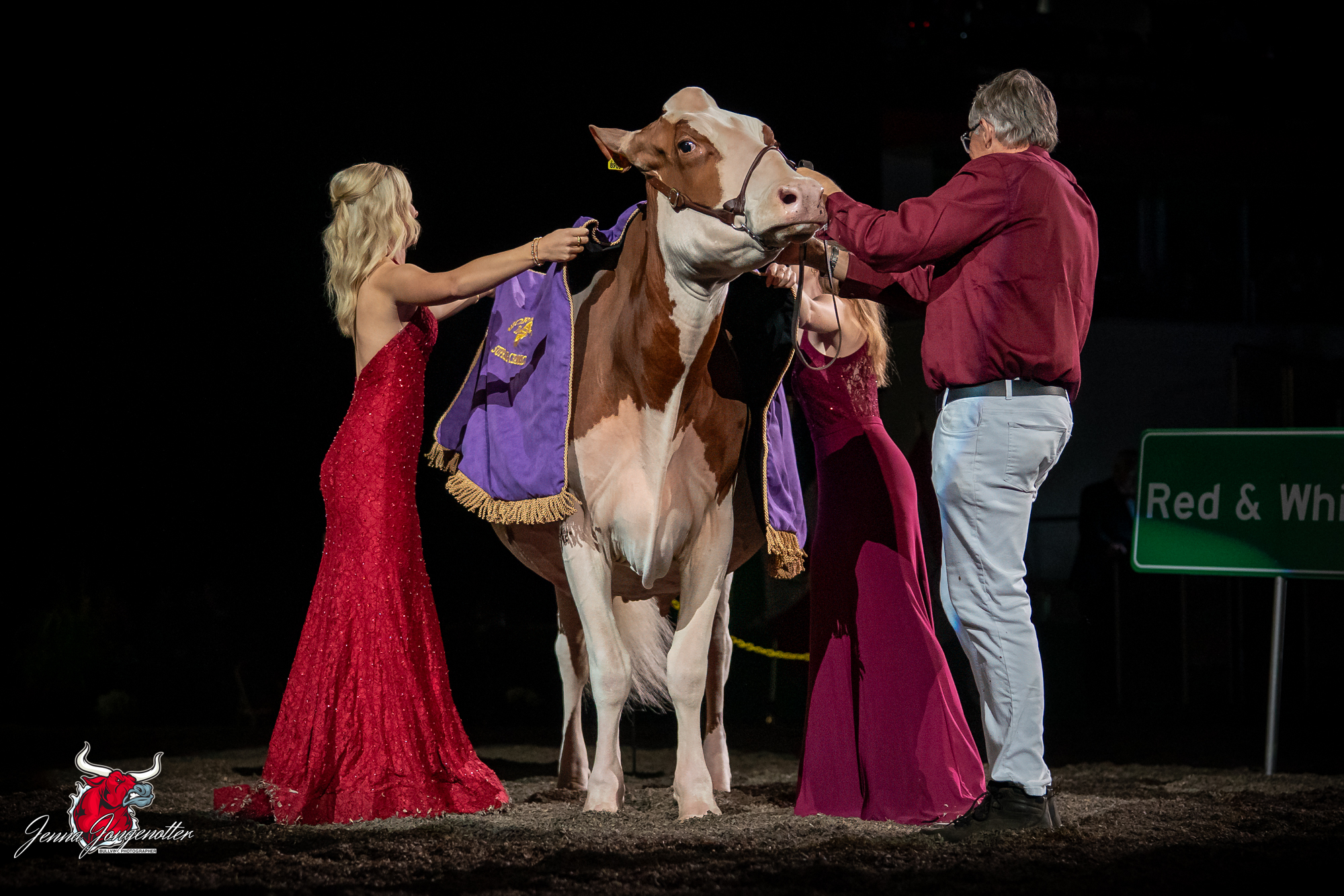
At World Dairy Expo last week, Golden-Oaks Temptres-Red-ET took Supreme Champion. First Red & White in 20 years. You look at genetics like that, and you’re seeing the influence of bulls Charlie championed decades ago.
The Philosophy That Built Success
Young people always ask Charlie what his secret is. His answer never changes.
“It’s the people,” he says. The mentorship from Dick Chitester, Ron Long, and George Miller.
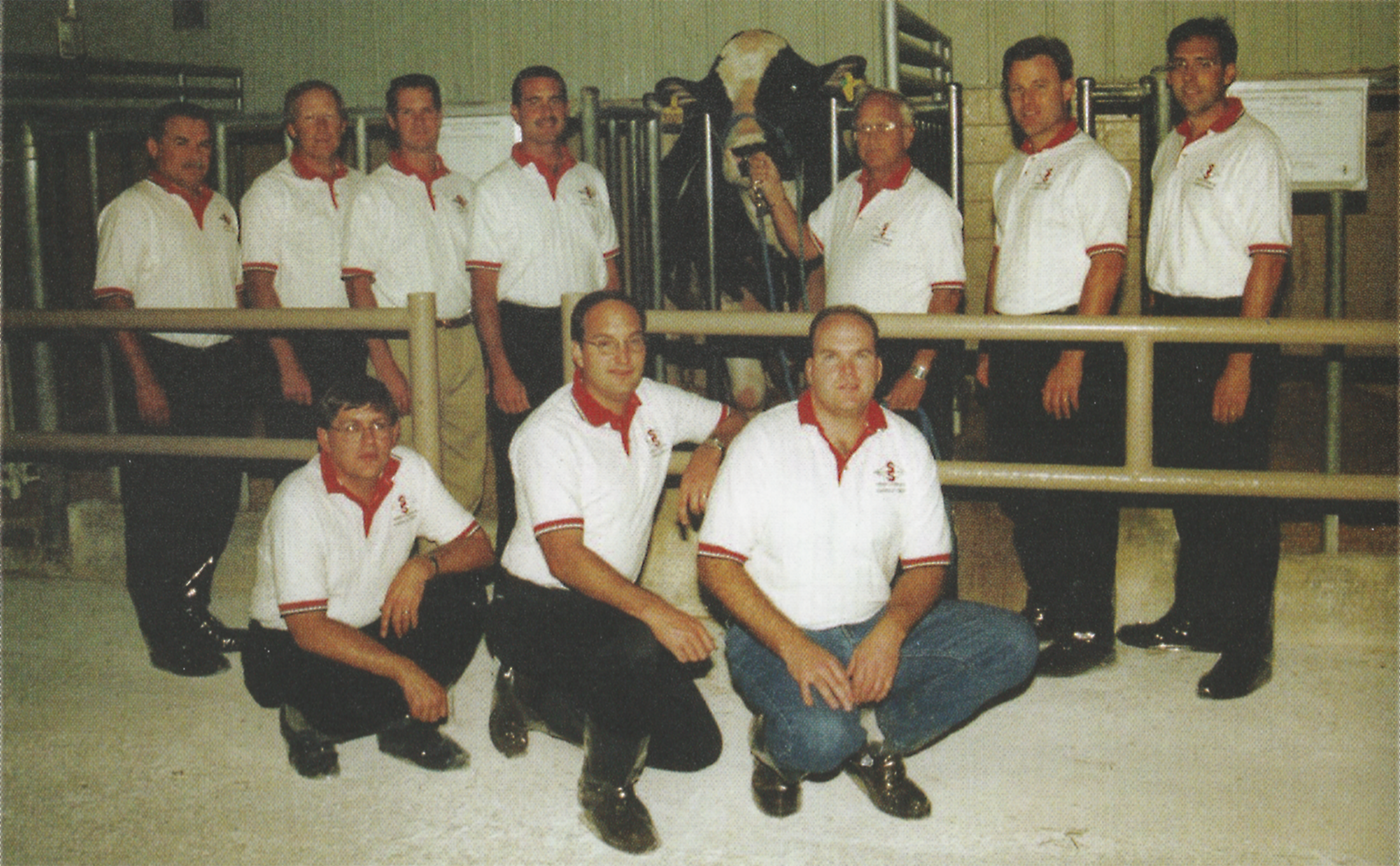
But also three principles :
- Find the right people—not just smart ones, but people who understand genetics is about improving farms.
- Work as a team—Select Sires is farmer-owned, every decision affects someone’s livelihood.
- Embrace new tools—genomics, IVF, sexed semen, whatever comes next.
But the real secret? Customer focus. Charlie didn’t select bulls for catalogs. He selected for what worked in barns.
The Bottom Line for Today’s Industry

Charlie Will’s story teaches us something crucial right now.
That rejection letter from Select Sires could’ve ended everything. But Charlie found another way through MABC. Spent four years in Wisconsin proving himself. Waited ten years for Select Sires to acknowledge he belonged. Then, they spent the next thirty years changing how the world breeds dairy cattle.
For young people trying to break in—and I know it’s tough with the current job market—Charlie’s message is clear : Your first job won’t be your dream job. Use it as education. Build your reputation. When the right opportunity comes, you’ll be ready.
Look, we’re facing real challenges. Milk prices aren’t great, input costs are still high, and now we’ve got this government shutdown complicating everything. But we’ve been through worse. And the genetics Charlie helped develop? They’re part of why we’ll get through this, too.
The 2025 NAAB Pioneer Award recognizes Charlie Will’s massive contribution. But walk through any dairy barn today—breathe in that familiar mix of silage and sawdust, look at those moderate-framed Holsteins producing like champions—and you’re seeing his real legacy.
The farm kid from Southern Illinois who couldn’t get hired didn’t just prove Select Sires wrong.
He revolutionized the way the world breeds dairy cattle.
One bull at a time.
Key Takeaways:
- The backdoor strategy works: Charlie’s path from rejection → MABC sales → Wisconsin territory → Select Sires pioneer proves alternative routes beat giving up
- Challenge conventional wisdom: ELTON’s “Good Plus” dam produced genetics that created 5,039 Excellent daughters—look beyond the obvious
- Embrace disruption at any age: At 60, Charlie championed genomics while peers resisted. Result? $4 billion industry impact
- Solve real problems, not catalog dreams: OMAN’s million+ units came from fixing calving ease, not chasing show ring extremes
- Today’s application: With $17/cwt milk and margins tight, Charlie’s “customer-first” genetics philosophy is your survival guide
Executive Summary:
Charlie Will got rejected by Select Sires in 1974. Today, his bulls influence virtually every Holstein pedigree on the planet. After sneaking in through a Wisconsin sales territory nobody wanted, Charlie spent 40 years finding genetic diamonds others dismissed—like ELTON, whose “Good Plus” dam produced 5,039 Excellent granddaughters through DURHAM. His selections shattered records: BLACKSTAR topped global rankings in ’88, OMAN solved the calving crisis with over a million units sold, and BLITZ became Select Sires’ all-time bestseller. When genomics disrupted everything in 2008, 60-year-old Charlie embraced what his younger peers fought, contributing to today’s $4 billion industry transformation. With current milk at $17/cwt and margins tighter than ever, Charlie’s philosophy—pick bulls that solve real problems, not catalog dreams—is your blueprint for survival. This week’s NAAB Pioneer Award just confirms what the pedigrees already prove: the farm kid nobody would hire revolutionized how the world breeds dairy cattle.
Learn More:
- The Practical Application of the Genetic Tools We Have Today – This tactical article reveals methods for leveraging modern selection indexes (like NM$ and TPI) to prioritize the functional, profitable traits—health, fertility, and longevity—that Charlie Will championed throughout his career. It demonstrates how to align complex genetic numbers with real-world barn profitability.
- Beef on Dairy is Still the Best Way to Use Low Genetic Females – Expanding on the booming Beef-on-Dairy trend mentioned in the article, this strategic analysis provides producers with actionable steps to maximize revenue from the bottom end of their herd. It offers a clear framework for optimizing inventory and genetics to boost overall farm gate returns in a $17/cwt market.
- Is Holstein Inbreeding Level A Bigger Concern Than You Think? – This innovative piece explores the modern data behind Charlie Will’s foresight on genetic diversity, offering a deep-dive analysis into the specific risks and economic costs associated with rising inbreeding levels. It provides strategic context on why his deliberate use of diverse pedigrees continues to be essential for breed stewardship.
 The Sunday Read Dairy Professionals Don’t Skip.
 The Sunday Read Dairy Professionals Don’t Skip.
Every week, thousands of producers, breeders, and industry insiders open Bullvine Weekly for genetics insights, market shifts, and profit strategies they won’t find anywhere else. One email. Five minutes. Smarter decisions all week.




