





Holstein breeders just achieved a 40% dystocia reduction so dramatic it broke CDCB’s math—while Brown Swiss rates climb. Are you on the right side?
EXECUTIVE SUMMARY: While most dairy producers focus on incremental genetic gains, Holstein breeders have quietly engineered a breeding revolution so successful it literally broke the industry’s statistical models. The Council on Dairy Cattle Breeding had to delay their routine April base change because dystocia rates plummeted from 2.29% to just 1.36% between bulls born in 2015 versus 2020—a staggering 40% improvement that forced geneticists to recalibrate their entire evaluation system. This isn’t just genetic progress; it’s proof that when genomic selection converges with strategic sexed semen deployment and precision management, the impossible becomes routine—saving operations $1,350-2,700 annually in veterinary costs alone. Yet while Holsteins celebrate this breakthrough, Brown Swiss face the uncomfortable reality of increasing dystocia rates, revealing a tale of two breeds heading in opposite directions. The August 2025 base change means 84% of historical Holstein bulls now rank worse than today’s genetic baseline, fundamentally reshuffling breeding hierarchies. But here’s the provocative question: when genetic success approaches biological limits and PTA variability shrinks, are we breeding ourselves into a corner where selection pressure has nowhere left to go? Every dairy operation needs to evaluate whether their breeding strategy aligns with this genetic revolution or risks being left behind in an industry where yesterday’s elite genetics are tomorrow’s genetic liabilities.
KEY TAKEAWAYS
- Economic Impact Acceleration: Operations using 2020-birth-year Holstein bulls can expect 76% fewer dystocia cases compared to 2015 genetics, translating to $4,000-8,000 annual savings in emergency veterinary costs for a 500-cow operation—proving genetic selection delivers immediate ROI.
- Breed-Specific Risk Assessment: While Holstein producers celebrate success, Brown Swiss operations face 0.6% increasing dystocia rates, demanding immediate breeding strategy pivots—highlighting how genetic trends can diverge dramatically between breeds in the same market conditions.
- Statistical Constraint Management: As Holstein dystocia rates approach biological limits, standard deviation dropped from 0.61% to 0.45%, meaning genetic differences between bulls are shrinking—requiring more sophisticated selection criteria to maintain competitive advantages.
- Global Competitive Positioning: With 47% of active AI bulls now falling below the new phenotypic base, operations using outdated genetics are statistically disadvantaged in a market where genetic progress has accelerated beyond traditional expectations, demanding immediate sire selection audits.
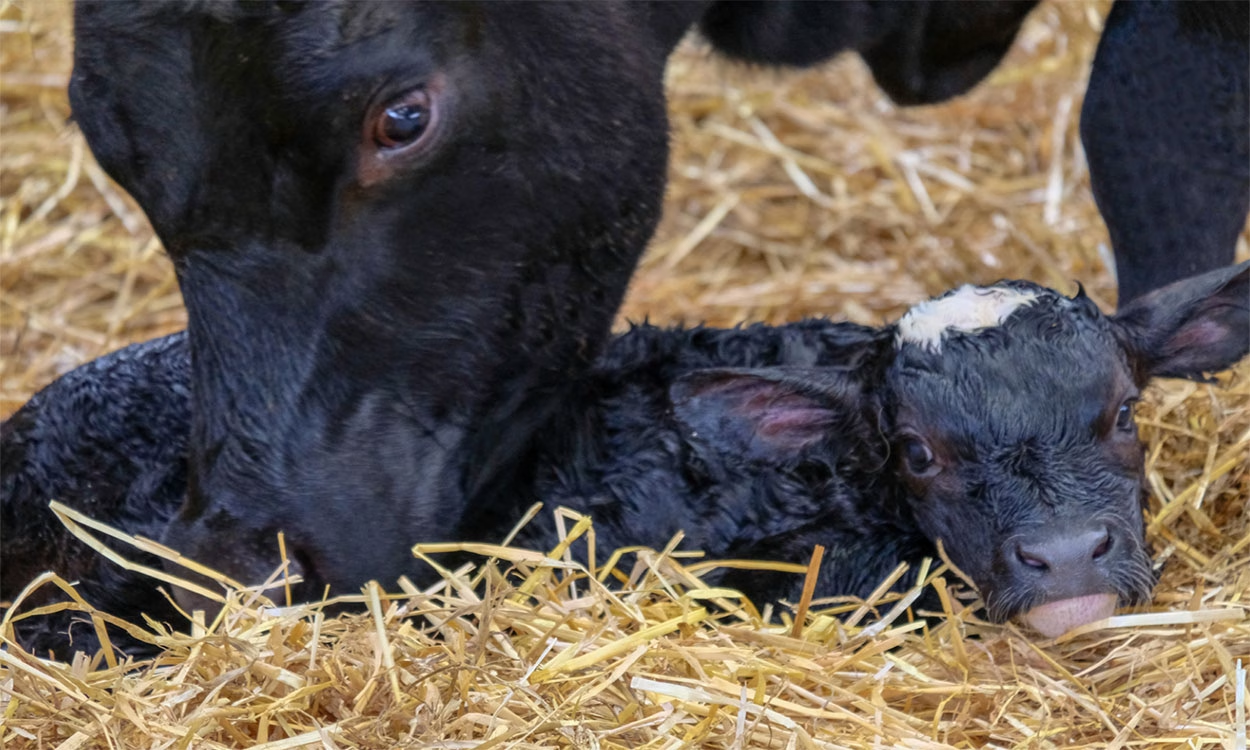
Here’s what the Council on Dairy Cattle Breeding didn’t expect when they tried to update calving trait bases in August 2025: Holstein dystocia rates have plummeted so dramatically, from 2.29% to just 1.36% between bulls born in 2015 versus 2020 – that it literally broke their statistical models. We’re talking about a 40% reduction in difficult calvings that’s so successful it’s creating mathematical headaches for geneticists.
Let’s be honest here. When was the last time you heard about a genetic improvement so dramatic that it forced the industry’s top statisticians to go back to the drawing board? The CDCB had to delay their routine April base change because the results were so unexpected that they thought something was wrong.
Turns out, everything was right. Maybe too right.
The Numbers That Made Geneticists Do a Double-Take
Think about this: Holstein bulls born in 2020 produce calves with only 1.36% dystocia rates on first-parity cows. Compare that to bulls born just five years earlier at 2.29%, and you’re looking at nearly a 40% improvement in half a decade.
But here’s where it gets interesting – and a little concerning. As dystocia rates approach zero, the math starts getting weird. You can’t have negative dystocia rates, so as success rates climb, the statistical models that evaluate genetic merit start hitting biological ceiling effects.
What This Means for Your Operation: If you’re still using bulls from the 2015 birth year cohort, you’re selecting genetics statistically worse than 84% of the historical population under the new base. That’s not just genetic progress – that’s a genetic revolution.
Brown Swiss: The Inconvenient Truth Nobody’s Talking About
While Holstein breeders are celebrating, there’s an uncomfortable reality brewing in Brown Swiss herds. Their dystocia rates are actually increasing, with Sire Calving Ease PTAs reflecting a 0.6% rise in difficult calvings.
Why isn’t anyone talking about this? Celebrating Holstein’s success is easier than confronting Brown Swiss’ struggles. But if you’re breeding Brown Swiss, this base change just became your wake-up call. The genetic trend is flat, the population is small, and the math works against you.
Are we witnessing the beginning of a breed-specific crisis? Or is this just statistical noise in a smaller population?
The Sexed Semen Revolution You Didn’t Notice
Here’s the part that challenges everything you think you know about genetic improvement. This isn’t just about better genetics but strategic technology deployment. The increased use of sexed semen has fundamentally changed the game by reducing the proportion of larger male calves.
The Statistical Constraints That Should Worry You
Standard deviation for Holstein Sire Calving Ease dropped from 0.61% to 0.45%. Translation? The genetic differences between bulls are shrinking because we’re approaching biological limits.
What happens when an entire breed gets so good at something that the evaluation system can barely detect differences anymore? We’re finding out in real-time. The CDCB had to recalibrate their threshold models completely because success broke their mathematics.
This raises uncomfortable questions: Are we breeding ourselves into a genetic corner? What happens when everyone is equally good at calving ease? How do you maintain selection pressure when the trait is essentially solved?
Global Implications Nobody’s Discussing
While U.S. Holstein breeders pat themselves on the back, what’s happening to genetic diversity in the global Holstein population? Research from Europe shows similar improvements in calving ease, suggesting this isn’t just a U.S. phenomenon.
But here’s the provocative question: Are we homogenizing the global Holstein gene pool so effectively that we’re creating systemic vulnerabilities? When entire breeds converge on the same genetic solutions, what happens when environmental challenges change?
The economic implications are staggering. Veterinary intervention costs for dystocia average $150-300 per case, meaning a 1,000-cow operation could save $1,350-2,700 annually. Multiply that across the global Holstein population, and we’re talking about hundreds of millions in economic impact.
The Uncomfortable Reality About Genetic Progress
Historical context reveals something remarkable: In 2005, the phenotypic base for Holstein calving ease stood at approximately 8%. By 2024, it had dropped to 2.29%. Now it’s 1.36%.
This isn’t gradual improvement – it’s exponential progress that’s accelerating. The genetic trend was flat before 2005 and took off like a rocket. What changed? Genomic selection, strategic breeding decisions, and technology deployment converged to create compound benefits.
But here’s what should keep you awake at night: If genetic progress can accelerate this dramatically in one direction, what happens when selection pressure shifts to other traits? Are we creating genetic opportunity costs we don’t fully understand?
The August Reckoning
The August 12, 2025, implementation affects both Holstein and Brown Swiss evaluations simultaneously. Holstein operations will see PTAs drop by an average of 0.76% for Sire Calving Ease, while Brown Swiss producers face the opposite challenge.
For active AI bulls, approximately 47% now fall below the new phenotypic base for Holsteins. This isn’t just a statistical adjustment – it’s a fundamental reshuffling of genetic rankings that will influence breeding decisions for the next five years.
Why This Changes Everything
Recording and reporting calving ease scores remain “vitally important” despite the dramatic improvements. The reduced PTA variability makes accurate data collection even more critical for identifying genetic differences.
But let’s be honest about what this really means: The industry just proved that systematic genetic improvement can exceed everyone’s wildest projections. When multiple selection pressures align with practical management advances, genetic change can happen faster than anyone thought possible.
The Bottom Line
The August base change validates something revolutionary: Holstein breeders have achieved a 40% reduction in dystocia rates within five years, proving that targeted breeding programs can solve real problems faster than industry experts predicted. Brown Swiss producers face the opposite challenge, requiring immediate strategic adjustments.
This represents a fundamental shift in how we think about genetic improvement for progressive operations. The validation of these dramatic improvements signals that genetic progress in dairy cattle can accelerate beyond traditional expectations when science-based selection meets practical innovation.
But here’s the uncomfortable truth: While celebrating this success, we need to ask whether we’re creating new problems we don’t fully understand. The mathematical constraints, breed-specific divergences, and potential genetic homogenization effects deserve serious consideration.
The real question isn’t whether you can improve your calving ease genetics – it’s whether you’re prepared for the unintended consequences of success. When an entire breed achieves near-optimal performance in one trait, the selection pressure has to go somewhere. Where it goes next might surprise everyone.
Are you ready for the genetic revolution that’s already here?
Complete references and supporting documentation are available upon request by contacting the editorial team at editor@thebullvine.com.
Learn More:
- How Calving Ease and Age at First Calving Drive Milk Production – Reveals practical strategies for optimizing calving ease scores to maximize milk production peaks, demonstrating how Holstein operations can capture an additional 8-12% lactation performance through targeted management of calving difficulty factors.
- How Beef-on-Dairy Crossbreeding Delivers 200% ROI – Demonstrates how strategic beef sire selection can transform your bottom-quartile Holstein genetics into premium revenue streams, with crossbred calves commanding $350-700 premiums while reducing dystocia risks through smaller calf birth weights.
- Genomics Meets Artificial Intelligence: Transforming Dairy Cattle Breeding Strategies – Explores cutting-edge genomic technologies that accelerated the Holstein calving ease revolution, revealing methods for leveraging AI-powered genetic evaluations to predict and optimize breeding outcomes before they happen.
 The Sunday Read Dairy Professionals Don’t Skip.
 The Sunday Read Dairy Professionals Don’t Skip.
Every week, thousands of producers, breeders, and industry insiders open Bullvine Weekly for genetics insights, market shifts, and profit strategies they won’t find anywhere else. One email. Five minutes. Smarter decisions all week.




