Archive for dairy trade dispute

The Global Cheese Wars: How Geographic Indications Are Reshaping Dairy Markets Worldwide

EU’s cheese name monopoly vs. US dairy: A $3B trade war over Parmesan & Feta. Who owns your cheddar’s identity?

dairy trade dispute, geographical indications, cheese name restrictions, US-EU dairy exports, common food names

Are you letting bureaucrats in Brussels, Washington, or Geneva decide what you can call the products your farm produces? Geographic Indication restrictions aren’t just some academic policy dispute- they’re a calculated trade strategy reshaping dairy markets on every continent, potentially stealing value directly from your bulk tank.

A Global Battle Over Your Cheese Names

If you think the fight over cheese names is meaningless regulatory nonsense, think again. The global dairy trade map is being redrawn through fierce battles over what producers can call their products. The stakes? Global dairy trade is worth over $87 billion annually, where market access increasingly depends on what you’re allowed to name your cheese, butter, or yogurt.

This isn’t just an American-European squabble- it affects dairy producers from New Zealand to Colombia, Canada to South Africa. For instance, New Zealand exports more than 95% of its dairy production, making naming restrictions potentially catastrophic for Kiwi farmers. Meanwhile, Brazilian and Argentine cheesemakers are caught between satisfying the EU’s demands in valuable trade agreements while maintaining the traditional production of “parmesan” and other common-named cheeses established by their European immigrant ancestors’ generations ago.

What’s truly infuriating isn’t just trade imbalances but the systematic campaign to monopolize common food names undermining dairy producers’ market access worldwide. Like a neighboring farm suddenly claiming they own the water rights to the creek that’s watered your herd for generations, authorities in major importing regions are effectively building impenetrable barriers around valuable market segments.

What’s Happening Here?

Let’s cut through the diplomatic niceties and call this what it is: a sophisticated protectionist scheme dressed up as intellectual property protection – about as transparent as claiming your 62-pound Jersey cow “just had a bad test day” when she scores a 3.2% butterfat.

The European Union operates a comprehensive Geographical Indication system granting exclusive rights to producers in specific regions for names like ‘Parmigiano Reggiano.’ Meanwhile, dairy producers in Australia, New Zealand, the United States, Argentina, and Uruguay have used terms like ‘parmesan’ for generations, building markets and consumer recognition.

The EU system includes three central protection schemes:

  1. Protected Designation of Origin (PDO): The strictest protection level, requiring all production stages to occur in the designated region – like saying you can only call it “Cheddar” if it’s made in Somerset, England
  2. Protected Geographical Indication (PGI): Slightly less strict, requiring at least one production stage in the region – comparable to claiming only facilities in specific Japanese regions can produce “Wagyu beef.”
  3. Traditional Speciality Guaranteed (TSG): Protecting traditional methods rather than geographic origin – like saying only farms following specific processes could label products as “traditionally produced.”

Meanwhile, producers in countries like the US, New Zealand, Australia, and many developing nations don’t restrict terms once they’ve become generic in the market – just as we wouldn’t limit the term “Holstein” only to cows from Holstein, Germany.

“Europe’s misuse of geographical indications is nothing more than a trade barrier dressed up as intellectual property protection,” says Krysta Harden, president and CEO of the US Dairy Export Council. “It not only unfairly strips producers of the right to use common, widely understood terms, but significantly handcuffs commercial export opportunities worldwide.”

Why Should Dairy Farmers Globally Care?

You might think: “I’m focused on mastitis prevention and component premiums, not diplomatic disputes in Geneva, so why should I care?” Here’s why: The EU is aggressively working to export its GI system worldwide through trade agreements with countries that are likely buying your milk components or representing growth markets for your co-op or processor.

When did you last check where your milk goes after it leaves the farm? In New Zealand, 95% is exported as common-named cheeses. In Australia, dairy exports represent roughly 35% of production. Even for less export-dependent producers in Canada, Colombia, or South Africa, the rising tide of naming restrictions threatens future market options for your milk.

Consider the farmer in Uruguay whose milk goes into locally produced “parmesan” cheese. When Uruguay negotiates trade deals with the EU, the European bloc insists that only Italian-made products can use that name. Suddenly, the processor who buys your milk loses market access, passing that pain back to you in reduced farmgate prices.

The real-world consequences cut right into dairy operations worldwide:

  • Lost export opportunities: Being shut out of markets means lower overall demand for your milk components, directly impacting your farmgate price
  • Rebranding costs: If processors are forced to abandon familiar names, they face significant costs comparable to having to rebrand your entire registered herd
  • Restricted international market development: Even if your milk doesn’t currently go to export markets, these restrictions limit your cooperative’s or processor’s ability to develop new markets
  • Increased price volatility: With more restricted markets, remaining outlet channels become more congested, amplifying price swings when supply or demand shifts

Isn’t it time dairy producers worldwide treated these trade barriers with the same urgency as a mycoplasma outbreak in the milking string?

The Cheese Terms That Affect Global Dairy

Let’s get specific about which cheese names are under threat. This isn’t just about a few obscure European specialties – it’s about mainstream products that form the backbone of the international dairy trade:

Cheese NameEU StatusGlobal Production RealityWhat’s at Stake for Your Milk
ParmesanProtected as “Parmigiano Reggiano PDO”Widely produced in Argentina, the US, AustraliaHard, aged cheese represents significant milk utilization globally
FetaProtected as “Feta PDO” (Greece)Major production in Australia, NZ, US, CanadaWhite brined cheese – growing market segment utilizing protein-rich milk
GorgonzolaProtected as “Gorgonzola PDO” (Italy)Produced commercially in the US, AustraliaBlue-veined cheese with significant value-added potential
AsiagoProtected as “Asiago PDO” (Italy)Produced in the US, Canada, AustraliaSemi-hard cheese absorbs substantial butterfat and protein
HavartiNow protected in the EU despite Danish objectionsGlobal production in multiple countriesVersatile semi-soft cheese produced worldwide
GruyèreProtected in the EU but with different definitions in SwitzerlandSignificant production in the US, non-EU European countriesPremium cheese demanding high-quality milk components

Think about the market impact if these names were suddenly off-limits. For New Zealand dairy farmers supplying Fonterra, restrictions on feta production directly impact their payout. For Canadian producers whose milk goes into local Asiago, EU restrictions in third markets limit growth opportunities that ultimately reflect their quota values.

And for what? To protect terms that consumers worldwide understand as types of cheese, not geographic locations.

The Conventional Industry Thinking Is Wrong

Here’s where the conventional dairy industry thinking falls short: many producer organizations treat this as just another policy issue to handle through normal diplomatic channels. But make no mistake – this is an economic war with high stakes, and most global dairy organizations are bringing memos to a knife fight.

The conventional approach of polite objections through agricultural ministries and occasional trade agreement side letters isn’t enough. While we’re playing by diplomatic rulebooks, market access for dairy products worldwide is disappearing, one trade agreement at a time.

This conventional passivity isn’t limited to North America. Despite being almost entirely export-dependent, New Zealand’s dairy industry has struggled to mount an effective coordinated response. Australian producers face similar challenges. Developing dairy nations in Latin America and Asia often lack the political capital to resist EU demands in trade negotiations.

Have we forgotten what made modern dairy great in the first place? It wasn’t by asking permission to compete – it was through innovation, efficiency, and boldly entering markets with high-quality products. The global expansion of Geographic Indication restrictions directly threatens these fundamental strengths.

Strategic Fightback: What Dairy Producers Worldwide Need

Despite the challenges, dairy producers globally aren’t taking this lying down – we’re not investing in genomics, nutrition science, and sustainability improvements just to surrender our markets to restrictive naming regimes. But our current approach needs a major overhaul:

1. Form Global Producer Alliances

Instead of country-by-country responses, dairy producers need transnational alliances like the Consortium for Common Food Names but with broader international representation. Australian, New Zealand, American, Canadian, Brazilian, Argentine, and other producers face common threats and need coordinated responses that match the EU’s unified approach.

2. Move from Defense to Offense

Dairy groups need comprehensive counterstrategies instead of just reacting to each new trade agreement. This means proactively identifying key growth markets and securing explicit protections for common names before restrictive agreements arrive. Why are we continuously playing catch-up rather than setting the agenda?

3. Leverage Consumer Education Across Markets

The EU’s entire strategy depends on the fiction that geography determines quality. But global dairy producers know better – it’s about the quality of inputs, precision of process, and commitment to excellence. We need aggressive consumer education campaigns highlighting the quality and value of dairy products regardless of their geographic origin.

4. Develop Market-Specific Naming Strategies

Rather than fighting the same naming battle everywhere, develop adaptive naming approaches tailored to specific export destinations. In markets with existing restrictions, create new premium designations backed by quality standards that equal or exceed EU equivalents.

The Bottom Line: Global Action Required

The battle over common food names versus geographical indications represents more than semantic disagreements. It’s a clash between two systems of intellectual property protection affecting dairy producers in virtually every major milk-producing region.

For dairy producers worldwide, the stakes are enormous. The EU’s GI policies affect market access for billions of dollars’ worth of dairy products. They impact the livelihoods of farmers and food manufacturers across six continents and create unnecessary barriers in the global marketplace – affecting everything from your bulk tank to your bank account.

Europe’s GI schemes create a two-tiered system favoring specific regional producers and suppressing global competition. With billions invested in dairy processing infrastructure worldwide, our industry has demonstrated significant potential for growth if these trade barriers can be addressed.

So, what are you going to do about it? As a dairy producer or processor, you can:

  1. Demand your industry organizations take aggressive action on common food names
  2. Reach out to your elected representatives to highlight how GI restrictions impact your operation
  3. Support processors and exporters fighting to maintain rights to common names
  4. Connect with dairy producers in other countries to build international solidarity on this issue

The question isn’t whether we can fight this battle – it’s whether the global dairy community can afford not to. As you wouldn’t surrender your high-performing genetics to a competitor, we can’t surrender our right to use common food names representing generations of dairy expertise developed worldwide.

Are you ready to stand up for your right to compete globally, or will you watch silently as bureaucrats in distant capitals reshape the market for your milk? The global dairy trade‘s choice and future are in your hands.

Key Takeaways:

  • EU’s GI system blocks US dairy exports using common names like Feta, costing $3B/year in trade deficits.
  • Consumer confusion vs. cultural preservation: EU claims terroir-driven quality; US argues terms became generic through global use.
  • Trade war tactics: EU embeds GI restrictions in global deals; US counters with trademark defenses and WTO challenges.
  • Digital battleground: New EU rules target online sales and domain names, escalating enforcement risks.
  • No quick fix: Deep philosophical divides ensure this clash will shape global dairy markets for decades.

Executive Summary:
The US and EU are locked in a bitter trade battle over common food names like Parmesan and Feta, with the EU using geographical indication (GI) laws to restrict usage to specific regions. The US argues these terms are generic, citing a $3B annual dairy trade deficit and lost export markets. Key players like the CCFN and USDEC condemn EU policies as protectionist, while the EU defends GIs as cultural heritage safeguards. The conflict extends globally through trade deals, impacting third-country markets and fueling WTO disputes. With no resolution in sight, dairy producers face rebranding costs, restricted competition, and uncertain futures.

Learn more:

Join the Revolution!

Join over 30,000 successful dairy professionals who rely on Bullvine Weekly for their competitive edge. Delivered directly to your inbox each week, our exclusive industry insights help you make smarter decisions while saving precious hours every week. Never miss critical updates on milk production trends, breakthrough technologies, and profit-boosting strategies that top producers are already implementing. Subscribe now to transform your dairy operation’s efficiency and profitability—your future success is just one click away.

NewsSubscribe
First
Last
Consent

Trump’s Dairy Tariff War: How U.S. Farmers Could Benefit from Canada’s Trade Barriers

Trump’s bold move to impose reciprocal tariffs on Canadian dairy could reshape the global trade. What does this mean for U.S., Canadian, and global farmers?

Executive Summary

President Donald Trump has announced plans to impose reciprocal tariffs on Canadian dairy products, targeting Canada’s protectionist supply management system, which imposes steep over-quota tariffs of up to 241% on U.S. imports. This bold strategy aims to level the playing field for American farmers while pressuring Canada to reform its restrictive trade practices. U.S. dairy farmers, who export 18% of their milk production globally, could benefit from reduced competition and improved market access, though retaliatory measures from Canada may create short-term disruptions. Canadian farmers face potential price pressures as their insulated domestic market is challenged, while global producers in Europe and Oceania may seize opportunities in disrupted markets. This move builds on Trump’s first-term USMCA reforms but escalates efforts to address unresolved trade imbalances. The outcome of this tariff war could redefine North American dairy markets and have ripple effects worldwide.

Key Takeaways

  • Reciprocal Tariffs: Trump’s plan targets Canada’s 241% over-quota tariffs on U.S. dairy imports, aiming to create a fairer trade balance.
  • U.S. Dairy Impact: American farmers could see reduced competition domestically and better access to Canadian markets but face short-term volatility.
  • Canadian Farmers at Risk: Canada’s supply management system may face reform, exposing farmers to increased competition and price pressures.
  • Global Opportunities: European and Oceania producers could gain market share if U.S.-Canada tensions disrupt traditional trade flows.
  • Strategic Escalation: Building on USMCA reforms, Trump’s aggressive stance signals a shift from diplomacy to direct economic leverage in trade disputes.
Trump dairy tariffs, Canadian supply management, USMCA dairy provisions, dairy trade dispute, U.S. dairy exports

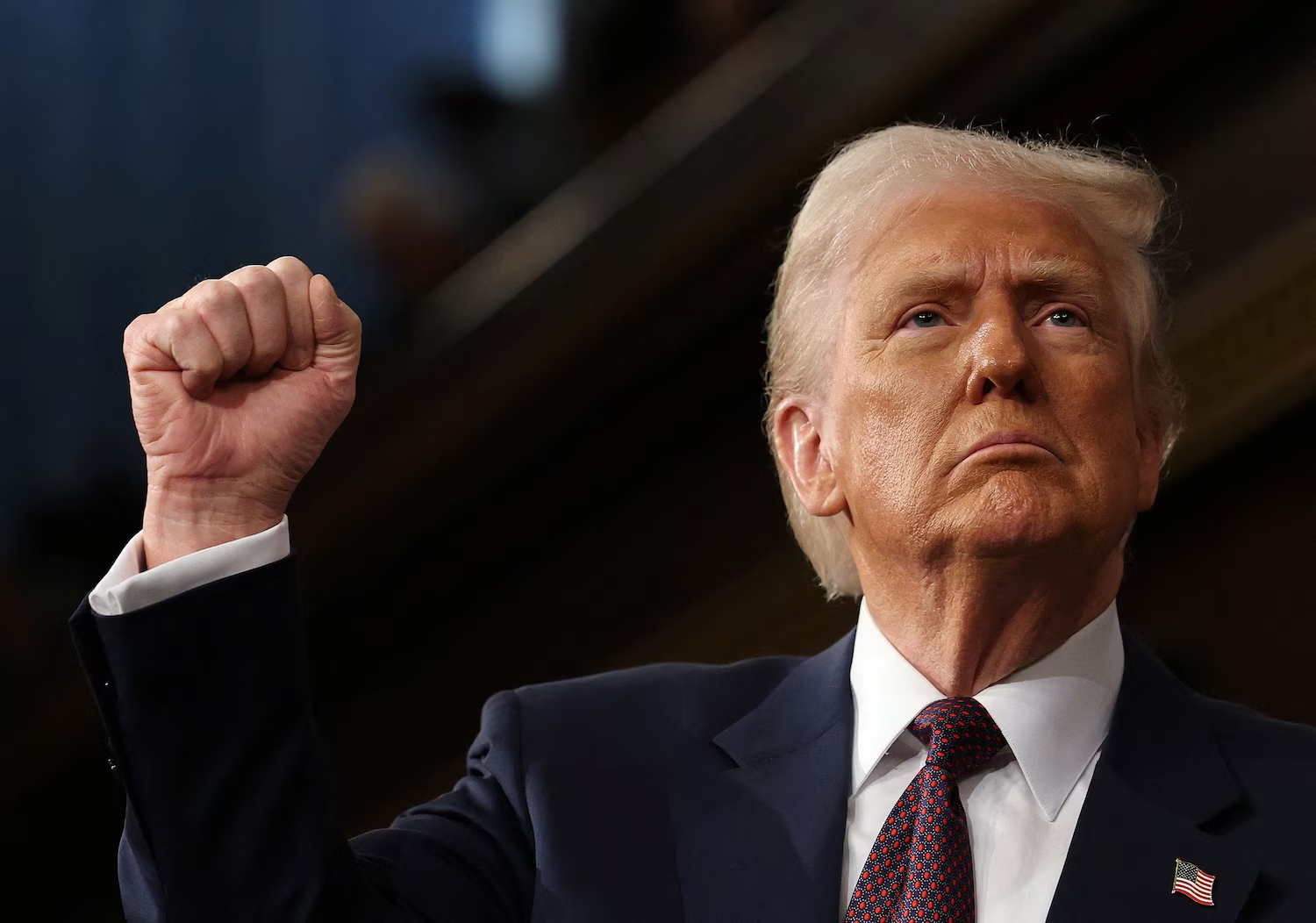
President Donald Trump has announced plans to implement reciprocal tariffs on Canadian dairy products, potentially as soon as today (March 7, 2025), in a decisive move to address longstanding imbalances in North American dairy trade. Speaking from the Oval Office on Friday, Trump emphasized his determination to confront what he characterized as Canada’s unfair tariff system that has disadvantaged American dairy producers for decades. For most U.S. dairy farmers, this aggressive stance represents the decisive action they’ve been seeking to level the competitive playing field.

“Ripping Us Off for Years” – Trump Takes Aim at Canadian Dairy Barriers

President Trump didn’t mince words during his Oval Office address, directly challenging Canada’s complex dairy tariff structure that has effectively limited American access to their market. “Canada has been ripping us off for years on tariffs for lumber and dairy products,” Trump stated, signaling his immediate intent to implement reciprocal measures.

This announcement’s timing is particularly significant, as it comes just days after his Joint Session address, in which he emphasized his “America First” trade philosophy.

While many mainstream media outlets have oversimplified Canada’s dairy tariff system, the reality is more nuanced and even more problematic for American producers. Canada operates a quota-based system where initial imports face relatively low tariffs, but punitive tariffs kick in once these quotas are exceeded. The official Canadian tariff schedule reveals the true magnitude of these barriers:

Dairy ProductWithin Access CommitmentOver Access Commitment
Milk7.5%241% but not less than $34.50/hl
Cream6.5%295.5% but not less than $4.29/kg
Condensed Milk2.84¢/kg259% but not less than 78.9¢/kg

Trump’s approach is characteristically direct: “They’ll be met with the same tariff unless they drop it. That’s what reciprocal means. And we may do it as early as today, or we’ll wait until Monday or Tuesday.”

This declaration clearly shows that the administration is prepared to use America’s economic leverage to secure better terms for dairy farmers, who have long felt disadvantaged by international trade agreements that failed to deliver promised benefits.

Beyond the Tariffs: Canada’s Supply Management System Explained

To truly appreciate why Trump’s move resonates so strongly with American dairy farmers, it’s essential to understand Canada’s supply management system. This protectionist framework controls dairy production and imports to maintain high domestic prices.

This system operates through three key mechanisms:

First, Canada strictly limits domestic milk production through quotas assigned to individual farmers. Second, it establishes minimum pricing for dairy products that ensures Canadian producers receive above-market returns. Third, and most problematically for U.S. producers, it implements those steep tariffs on imports that exceed carefully limited Tariff Rate Quotas (TRQs).

Under the USMCA agreement negotiated during Trump’s first term, Canada agreed to eliminate tariffs on dairy imports up to a set volume covering approximately 3.6% of the Canadian market. However, implementation has been contentious, with Canada allocating 85-100% of these quotas to processors rather than distributors and providing no TRQ access to retailers.

According to official USMCA documentation, Canada maintains TRQs on 14 different categories of dairy products. Four of these TRQs (Milk, Cream, Butter and Cream Powder, and Industrial Cheeses) include end-use restrictions requiring specific percentages to be used for processing into ingredients for further food processing, not retail sales. These technical restrictions further limit the practical market access for American dairy exporters.

“The supply management system isn’t just about tariffs –a comprehensive protectionist framework designed to keep American dairy products out of Canadian refrigerators,” explains dairy economist Thomas Reynolds. “Trump’s approach targets the most visible aspect of this system, but signals a willingness to challenge the framework that disadvantages American producers.”

American Dairy Exports: Growing Despite the Barriers

Trump’s confrontational stance on Canadian dairy tariffs comes against the backdrop of record performance for American dairy exports. According to USDA data, U.S. dairy exports reached an impressive $8.22 billion in 2024, marking the second-highest value ever recorded. This success demonstrates the growing global competitiveness of American dairy products despite persistent trade barriers.

U.S. Dairy Export Metrics (2024)Value/Volume
Total Export Value$8.22 billion
Total Export Volume2.65 Million Metric Tons
3-Year Average$8.59 billion
Growth Rate (2015-2024)4.6% compound annual growth

Canada has become an increasingly important market for American dairy, with exports to our northern neighbor reaching a record $1.14 billion in 2024. Along with Mexico ($2.47 billion), Canada now represents more than 40% of all U.S. dairy exports. These figures underscore both the opportunity and the challenge. While American dairy has made inroads into the Canadian market, the restrictive tariff system continues to limit the full potential of this trading relationship.

The dairy export achievements of 2024 included several notable milestones. For the first time, U.S. cheese exports exceeded 500,000 metric tons in a single year, with a remarkable 17% improvement year-over-year. This cheese export success stands in contrast to the challenges that milk powder exports (NFDM/SMP) faced, which declined by 8% in 2024. These mixed results highlight the complex market dynamics that American dairy farmers navigate and explain why many view Trump’s decisive action on trade barriers as essential to their future prosperity.

How Canada Limits U.S. Dairy Access: The USMCA Implementation Challenge

Under USMCA, Canada committed to providing Tariff Rate Quotas for various dairy products, but the implementation details reveal why American producers remain frustrated despite these commitments. Canada’s TRQ allocation system is designed to minimize disruption to their domestic market while technically meeting USMCA obligations.

TRQ Administration FeatureCanadian ImplementationImpact on U.S. Exporters
Allocation Distribution85-100% of quota to processorsProcessors have little incentive to import competing products
End-Use RestrictionsRequirements for processing use on multiple TRQsRestricts product marketing flexibility
Retail AccessNo TRQ access provided to retailersLimits direct consumer market access
Eligible ApplicantsNarrow definition excludes many potential importersReduces competition for quota allocation

A 2021 dispute settlement panel confirmed U.S. complaints about Canada’s TRQ allocation measures. The panel found, “The current Canadian system, which sets aside significant TRQ volumes only for processors, does not pass muster under the Treaty.” However, in a subsequent panel decision in late 2023, two of three panelists found that Canada’s revised measures did not breach USMCA commitments, while one panelist agreed with the U.S. regarding Canada’s narrow definition of eligible applicants.

Both sides claimed victory in these disputes. Canadian Trade Minister Mary Ng stated, “The panel expressly recognizes the legitimacy of Canada’s supply management system.” At the same time, then-USTR Katherine Tai declared it “a historic win” that would “help eliminate unjustified trade restrictions on American dairy products.”

This contradictory interpretation illustrates why many dairy farmers have grown frustrated with traditional diplomatic approaches to addressing trade barriers. Trump’s reciprocal tariff approach represents a significant escalation beyond these diplomatic efforts, reflecting frustration with Canada’s continued resistance to meaningful market opening despite USMCA commitments.

What Tariff Wars Mean for Your Milk Check

Implementing reciprocal tariffs on Canadian dairy would create significant market dynamics that American dairy farmers should consider carefully. Industry experts offer varying assessments of the potential impacts:

Michael Dykes, President and CEO of the International Dairy Foods Association (IDFA), has expressed optimism about America’s dairy export potential, noting that “consumers around the world continue to demand more U.S. dairy because we provide an assortment of delicious, nutritious and affordable dairy products.” While not directly addressing Trump’s tariff proposal, Dykes has emphasized that “with new trade agreements that remove obstacles and increase market access, we wouldn’t just break records – we would redefine the global dairy landscape for decades to come.”

For dairy farmers already navigating complex market dynamics, the prospect of more balanced trade relations offers hope for improved stability and profitability. While there may be short-term adjustments as markets respond to new tariff structures, many in the industry believe the long-term benefits of addressing unfair trade practices outweigh temporary disruptions.

Global Impact: How Trump’s Tariff Strategy Affects Dairy Farmers Worldwide

Trump’s reciprocal tariff approach could fundamentally reshape dairy trade dynamics across North America and beyond. Looking beyond individual farm operations, the tariff strategy has distinct implications for producers in different regions of the global dairy marketplace.

US Dairy Farmers

For American dairy producers, Trump’s confrontational stance represents potential short-term market disruption and long-term strategic advantage. The US dairy industry, which supports 3.2 million jobs and contributes nearly $800 billion to the economy, has invested over $8 billion in new processing capacity that depends on continued export growth.

The immediate benefit for US farmers could be reduced competitive pressure from Canadian imports in specific product categories, potentially strengthening domestic prices. Trump’s focus on achieving fair trade could finally address the frustrating imbalance that has hindered American access to Canadian markets while Canadian products faced fewer barriers entering the United States.

With approximately 18% of US milk production currently exported, any policy that increases domestic market protection while simultaneously working to secure better international market access represents a significant opportunity. The challenge will be managing any retaliatory actions from trading partners during what Trump has acknowledged will be an “adjustment period.” US producers should prepare for potential short-term price volatility while positioning for improved market conditions once trade negotiations conclude.

Canadian Dairy Farmers

Canadian dairy producers face the most direct impact from Trump’s tariff strategy. Canada’s supply management system has protected domestic producers through quotas and steep over-quota tariffs (241% for milk, not the sometimes claimed 270%) for decades. This system has effectively insulated Canadian dairy farmers from international competition while ensuring stable, often higher-than-market prices.

Trump’s reciprocal tariff approach directly challenges this protected status quo. Canadian dairy farmers may soon confront market conditions they’ve long avoided through their government’s protectionist policies. If negotiations result in meaningful reform of Canada’s supply management system, Canadian producers could face increased competition and potential price pressures as market forces play a more significant role in determining dairy values.

The Canadian government’s swift retaliatory measures, including announced tariffs on $30 billion worth of American products and threats of an additional $125 billion in tariffs, demonstrate its concern about disruption to its carefully managed dairy sector. These defensive actions reflect the significant stakes for Canadian dairy producers, who have benefited from decades of protection from international competition.

Global Dairy Producers

Beyond North America, dairy farmers worldwide watch this trade confrontation for opportunities and warning signs. European and Oceania dairy exporters, particularly those from Ireland, France, the Netherlands, New Zealand, and Australia, may find new opportunities to gain market share if US-Canada trade tensions persist.

Chinese markets, which have imported between $500-800 million worth of US dairy products annually in recent years, could become battlegrounds for international competition if US products face barriers in traditional markets. European producers, already significant players in the global dairy trade, are well-positioned to fill any gaps created by disrupted North American trade flows.

The situation creates a complex calculus for dairy farmers outside North America. While potential market openings may emerge in the short term, the long-term restructuring of global dairy trade patterns could create new competitive pressures. As Trump’s tariff strategy progresses, global producers must carefully monitor the direct US-Canada negotiations and the secondary effects on international market access, pricing dynamics, and regulatory frameworks.

From NAFTA to USMCA to Tariff Wars: The Evolution of Dairy Trade Policy

Trump’s current position on Canadian dairy tariffs builds upon his first-term accomplishments in renegotiating the North American trade relationship. The United States-Mexico-Canada Agreement (USMCA), implemented in July 2020, made incremental improvements in dairy market access compared to NAFTA, securing the elimination of Canada’s Class 7 milk pricing program and establishing those limited TRQs for American dairy products.

Yet implementation challenges have prevented American producers from realizing the full benefits promised. The dispute settlement process has yielded mixed results, with panel decisions that both sides have interpreted differently. This diplomatic approach has made incremental progress but has failed to reform Canada’s supply management system fundamentally.

Trump’s more confrontational strategy represents a calculated escalation to force more meaningful reform. By directly targeting Canada’s tariff imbalances with reciprocal measures, the administration signals that American patience with gradual diplomatic progress has run out.

A Watershed Moment for American Dairy

President Trump’s announcement of reciprocal tariffs on Canadian dairy products represents a potentially watershed moment for American dairy farmers who have long struggled against Canada’s protectionist policies.

By directly challenging the tariff imbalance, the administration is signaling its determination to secure meaningful market access rather than accepting incremental diplomatic victories that leave the core barriers in place.

For US dairy farmers, this decisive action aligns with their preference for government policies that directly prioritize American interests and confront unfair trade practices.

As these developments unfold in the coming days and weeks, The Bullvine will continue providing the detailed analysis and expert perspective that dairy producers need to navigate these complex trade dynamics. What’s clear is that Trump’s bold stance on Canadian dairy tariffs has fundamentally changed the conversation about North American dairy trade, potentially opening the door to more substantial reforms than previous approaches achieved.

Learn more

Join the Revolution!

Join over 30,000 successful dairy professionals who rely on Bullvine Daily for their competitive edge. Delivered directly to your inbox each week, our exclusive industry insights help you make smarter decisions while saving precious hours every week. Never miss critical updates on milk production trends, breakthrough technologies, and profit-boosting strategies that top producers are already implementing. Subscribe now to transform your dairy operation’s efficiency and profitability—your future success is just one click away.

NewsSubscribe
First
Last
Consent
Send this to a friend