83.5% of dairy farms vanish by the third generation. Is yours next? Discover the hidden math, family dynamics, and strategic fixes to secure your legacy.
Your dairy legacy has a staggering 83.5% chance of disappearing by the third generation. While you obsess over milk prices and feed costs, the real threat to your operation isn’t in the barn—it’s at your kitchen table. The uncomfortable truth is that most dairy operations aren’t destroyed by market forces but implode from within: siblings who can’t cooperate, next-generation farmers who lack drive, and assets that fail to grow with family needs. The most dangerous assumption in dairying today isn’t about production methods or genetics—it’s the delusion that your family farm will somehow magically survive without intentional succession planning. According to the USDA, 97% of all U.S. farms are family-owned, making succession planning a critical issue for most American farmers, yet recent surveys show only about 20% of farmers are confident their succession plan will achieve their goals.
“I’m sure you have heard the adage that the third generation loses the farm. This is not unique to America, and this saying has existed in almost all cultures over hundreds of years.”
The Ticking Time-Bomb Under Your Dairy Operation

That old adage about the third generation losing the farm isn’t just farmers’ gossip—it’s a statistical reality confirmed across cultures and centuries. According to the Small Business Administration, family businesses have less than a 33% chance of surviving from first to second generation, and only 16.5% of family-owned businesses successfully survive to the third generation. For dairy operations specifically, this risk is amplified by the 24/7 nature of milk production, specialized equipment investments, and complex regulatory requirements that make transitions even more challenging.
While “sustainability” gets tossed around regarding environmental practices, the most fundamental sustainability question remains unanswered on most dairy operations: Will your farm exist in thirty years? A recent survey found 80% of surveyed farmers plan to transfer control of their operation to the next generation. Still, only 20% of them were confident their succession plan would achieve that goal. Another study conducted by Iowa State University showed that 50% of farmers did not have an estate plan and 71% of retiring farmers had not identified a successor.
Is Your Operation Next on the Chopping Block?
When surveying farm operators about succession concerns, many fixate on estate taxes as their primary worry. While tax planning matters, this myopic focus misses the true killers of family legacies. Look around your community at once-thriving dairy operations that failed to transition successfully. Was it really a tax bill that destroyed them? More likely, these farms collapsed because they couldn’t scale fast enough to remain competitive, family members couldn’t navigate inevitable conflicts, or the next generation simply lacked the management capacity and drive to maintain what previous generations built.
Dairy’s Unique Succession Challenges
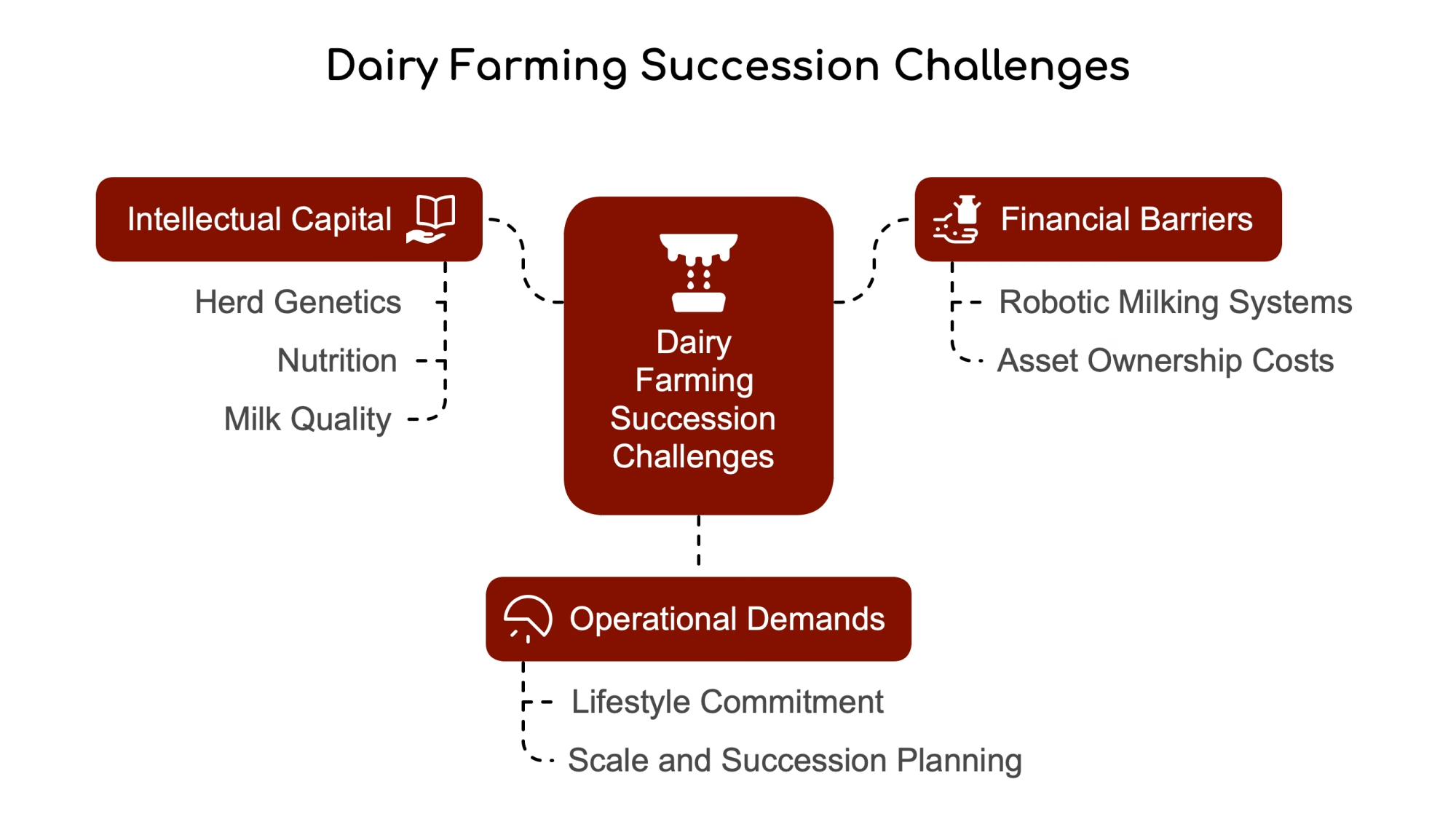
Dairy farming presents distinctive succession hurdles that compound the already difficult transition process. The capital-intensive nature of modern dairy operations—with robotic milking systems often costing upwards of 0,000 per unit—creates financial barriers for the next generation. According to a 2024 report from Compeer Financial, “given the escalating costs of asset ownership and the increasing scale of operations today, expecting the next generation to buy out other successors while maintaining the business is unrealistic”.
The 24/7 operational demands mean successors must commit to a lifestyle, not just a business. Recent research published in 2023 from Paraná State, Brazil found a significant positive correlation between farm size and number of lactating cows with the intention to adopt succession planning, indicating that large-scale dairy farmers have a higher probability of practicing succession planning. This confirms the reality that scale often determines whether succession planning is even attempted.
Additionally, specialized knowledge of herd genetics, reproduction, nutrition, and milk quality represents intellectual capital that must be transferred alongside physical assets. A 2023 study in the Journal of Agribusiness and Rural Development Research identified two primary succession patterns for dairy operations: farm transfer and farm handover, with both approaches requiring early successor participation to ensure sustainability.
Why Are You Setting Your Children Up for Failure?
The harsh reality is that without intentional intervention, your dairy operation is on a natural trajectory toward failure. Three critical elements determine whether your farm survives or joins the statistical majority that collapse during transition: unity, talent and drive, and asset growth. None of these elements develop organically—each requires deliberate cultivation and refuses to be left to chance.
Unity: The Illusion of Family Harmony
Think your family is different? That your children will naturally work together in harmony after you’re gone simply because they grew up together? Sandin Law, specialists in farm succession planning, identifies one of the most common challenges as having “one or more children who are involved in the farming operation, as well as one or more children who are not”. This scenario creates tensions around how to “divide and distribute the assets in a way that benefits all of the children fairly” while ensuring the operation’s continuity.
Table 1: What Unity Is and Isn’t in Family Farm Operations
| Unity IS NOT | Unity IS |
| Everyone always agreeing on every topic | Asking for everyone’s perspective – even uncomfortable ones |
| Full consensus on all decisions | Using conflict to debate topics and produce better results |
| Family members being best friends | Getting on board with decisions once they’re made |
| Equal pay, ownership and responsibilities | Having clear expectations for roles and compensation |
| Setting expectations for how family members treat each other | |
| Agreeing in advance on entry paths for next generation | |
| Agreeing in advance on exit strategies for senior generation |
“Intentional unity over generations might be the number one reason why family businesses are sustainable. They talk about it, work up agreements, carve out time to stay connected and sometimes argue. But they never assume unity.”
According to Darrell Wade, founder of Farm Life Financial Planning Group, “We understand the fears families have about having these difficult conversations but not having them leads to many larger and greater problems in the future”. The most successful dairy operations establish regular family business meetings separate from operational discussions, creating time and space to address succession issues proactively.
Talent and Drive: Are Your Children Really Prepared?
The skills that built your dairy operation won’t sustain it into the future. Your parents or grandparents likely founded the farm through extraordinary sacrifice, working brutal hours with minimal comforts. Each subsequent generation typically experiences diminishing drive as comforts increase—a natural progression that must be countered intentionally.
“Sustainable family farms can’t exist long with low-drive owners or owners who don’t bring high levels of value to the business.”
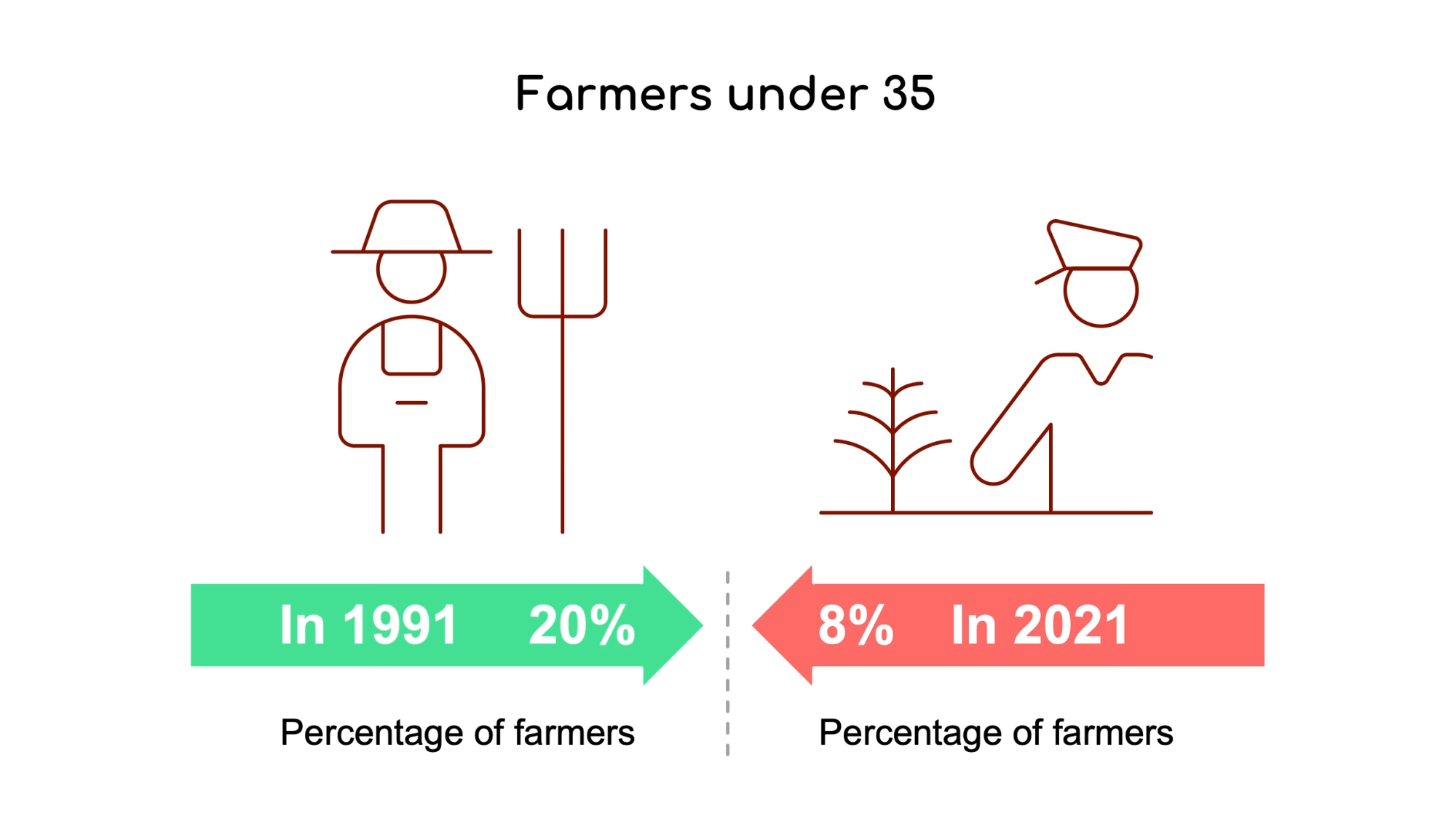
According to the Canadian Bar Association, farming is “increasingly capital intensive, and success depends on technology and advanced management skills”. The percentage of farmers under 35 has decreased from 20% in 1991 to 8% in 2021, indicating fewer young people see agriculture as an attractive career path. For dairy operations specifically, this demographic trend creates a critical talent pipeline problem.
A 2024 article from Compeer Financial highlights this reality: “It is disheartening to witness the next generation of producers, often responsible for a significant portion of daily labor and management tasks, lacking a clear vision of the operation’s future. While they may assume an opportunity for ownership and involvement in executive management will arise, there is often no guarantee”.
Technology Transfer: The Hidden Succession Challenge
Modern dairy farming requires expertise in advanced technologies—from robotics to genetic selection software to data analytics platforms. The next generation needs not only traditional farming skills but also technological aptitude to manage these systems effectively.
Dairy Foods Magazine recently highlighted a case study showing the consequences of failing to plan for succession: “Ohio ice cream shop Loveland Dairy Whip announced its closure after 31 years because ‘the next Morgan generation is not interested in carrying on the ice cream tradition.’ The family-owned business that supported two generations must now be sold, potentially ending a half-century legacy”. This example demonstrates what happens when technological and operational knowledge isn’t successfully transferred to interested successors.
Asset Growth: The Mathematical Reality You’re Ignoring
Dairy farming demands enormous capital investment, making financial planning essential for succession. Yet many operators ignore the uncomfortable math: each returning child represents an additional household requiring financial support from the operation. Without sufficient growth in both assets and profitability, the economic equation becomes unsustainable.
“Let’s think about this a bit. If three kids come back to the farm, that’s three more households the farm must support. How much bottom-line net profit must be generated just to maintain household income for everyone?”
The 2024 research from Brazil confirms that “large-scale dairy farms have a higher probability of adopting succession strategies,” but importantly notes that “production scale is not the only determining factor”. This underscores that while economic scale matters, equally important are the communication and planning processes that accompany that scale.
Your Succession Action Plan: Five Steps to Defuse the Time Bomb
1. Assess Your Current Succession Readiness
Ask yourself these uncomfortable questions:
- Do you have a written succession plan that ALL stakeholders have reviewed and agreed to?
- Have you identified specific successors and aligned their training with future operational needs?
- Have you calculated the precise financial requirements for each returning family member?
- Does your current growth trajectory support those requirements?
If you answered “no” to any of these questions, your operation is already in the danger zone. According to succession planning experts, your plan should include “a three-year, and five-year business plan; a unanimous shareholder agreement; copies of lease or rental agreements; annual financial statements; and grooming plans, training, and knowledge transfer”.
2. Develop Financial Structures That Support Transition
The Canadian Bar Association highlights how strategic business structures can assist in navigating succession challenges: “One case study addressed the challenge of raising sufficient capital by splitting the farm into two different corporations. The first company continued to be owned by the incumbent farmer. It held the farm’s primary assets, like the farmland and machinery. The majority of the second company was sold to the successor. It operated the farm and leased assets from the holding company”.
This structure benefitted the successor because they only needed to raise sufficient capital to purchase the operating company rather than the whole farm. The incumbent benefitted by retiring from the day-to-day farm operations while receiving a steady stream of retirement income from the leased assets.
“Sustainable farms encourage each generation to learn skills that will be needed in the future, not just those that were necessary in the past.”
3. Start Meaningful Family Conversations Now
A 2023 study from Penn State Extension emphasizes that “the most challenging part of this process is the communication between parties. To achieve a successful farm transition, all involved parties should actively communicate with one another.” The research further notes that transitions in complex farming operations “can take 5 to 10 years even when done correctly and when everyone takes an active role”. This timeline underscores the urgency of starting conversations immediately, not years down the road.
The Bullvine’s article “Ensuring the Future: Strategic Succession Plans for Dairy Farmers” (February 2024) recommends that you “begin the succession planning process well in advance. Open and honest communication among family members is key. Discuss individual goals, aspirations, and expectations to ensure everyone is on the same page. Starting early allows for a smooth transition and minimizes conflicts”.
4. Develop Your Successors Intentionally
A 2024 article in Compeer Financial notes that “when evaluating credit requests, lenders inquire about the presence of a next generation in the business and the plans for their integration. A long-term investment may not be deemed viable if the business lacks a sound transition plan or is perceived as terminal”. This reality means that failing to plan for succession actively damages your operation’s ability to access capital today, not just in the future.
An effective succession plan requires systematic skill development—with or without formal education. A 2023 study published in Agraris Journal found that encouraging the participation of potential successors in family business early is critical “to ensure the sustainability of family dairy farming”.
5. Get Expert Help to Test Your Plan
A 2024 Compeer Financial article advises that “seeking guidance from experienced professionals, including attorneys, tax preparers, business consultants and perhaps lenders is vital. Each operation is unique, necessitating tailored plans to meet individual and business needs efficiently”.
Baker Tilly Canada notes that “family business succession planning involves many components, including family dynamics, leadership training, financial planning, management transition, legal agreements and – you guessed it – taxes”. This multifaceted approach requires coordinated expertise from various specialists.
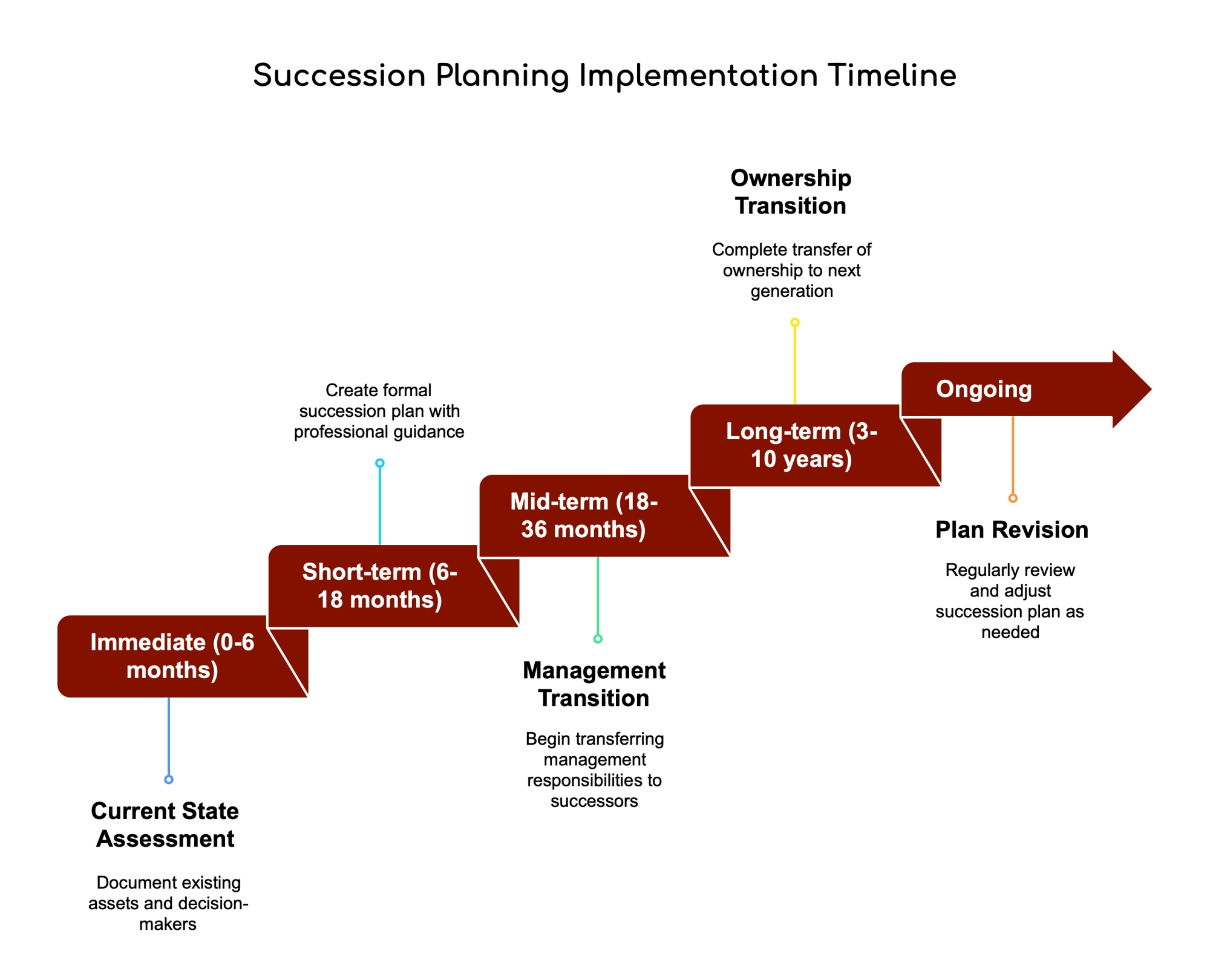
Table 2: Succession Planning Implementation Timeline
| Timeline Stage | Key Actions | Critical Questions |
| Immediate (0-6 months) | Document current state of operation | What assets exist? Who currently makes decisions? |
| Short-term (6-18 months) | Develop written succession plan with professional help | Who will own what? How will management transition? |
| Mid-term (18-36 months) | Begin management transition | Are successors developing necessary skills? Are senior members ready to let go? |
| Long-term (3-10 years) | Complete ownership transition | Is ownership structure supporting both generations? |
| Ongoing | Regular revision of plans | What has changed? What needs adjusting? |
Alternative Succession Approaches
Not every dairy farm will transition to children. A 2024 case study from Dairy Foods Magazine highlights the Loveland Dairy Whip example where “the next Morgan generation is not interested in carrying on the ice cream tradition,” forcing the business to be put up for sale. The owners remained hopeful “a family will be interested in starting their new family tradition by purchasing the Dairy Whip,” illustrating an alternative approach to succession—transitioning to an unrelated family committed to continuing the dairy tradition.
Another alternative approach is worker cooperatives or employee ownership transitions. These models can preserve operations when traditional family succession isn’t viable. A 2023 report from the Ontario Ministry of Agriculture outlines how the farm succession planning process can accommodate various transition scenarios, not just traditional parent-to-child transfers.
Succession Self-Assessment: How Ready Are You Really?
Rate your readiness in each area on a scale of 1-5:
- Written Planning: Do you have comprehensive written plans that all stakeholders understand and accept?
- Financial Preparation: Does your current financial trajectory support your succession timeline?
- Communication Systems: Have you established formal processes for addressing succession challenges?
- Talent Development: Are your successors demonstrably prepared for their future roles?
- Contingency Planning: Do you have plans addressing unexpected events like health issues or market disruptions?
A score below 20 indicates significant work needed before your succession plan has a reasonable chance of success.
“One of our clients recently told us that his goal was to not become terminal. He said he looked around and saw his friends and neighbors who have great farms today, but they aren’t sustainable past the current generation. He didn’t want this to be his farm.”
The Cost of Inaction: What’s Really at Stake
The statistics paint a sobering picture: according to the Small Business Administration, only about 33% of family businesses successfully transition to the second generation, and a mere 16.5% make it to the third generation. The 2024 Compeer Financial article states plainly: “It’s natural to assume ample time to address these matters, yet unforeseen events can significantly impact business longevity”.
While the financial implications are obvious, the emotional and psychological costs often prove even more devastating. Failed transitions frequently destroy family relationships along with business assets. Siblings who once played together become embroiled in bitter legal disputes. The legacy you hoped to build evaporates in acrimony and regret.
Are You Building a Legacy or a Liability?
Census data shows that “about 70% of the farm land in the U.S. will change hands within the next two decades”. This massive transfer of agricultural assets represents both unprecedented risk and opportunity for the dairy sector.
Penn State Extension (2023) frames succession planning not merely as asset transfer but as answering a vital question: “What would happen if the owners/operators of a farm were to suddenly become unable to complete the tasks the farm needs to operate?” They note that “farm businesses are now more complex and gone are the days of just dealing with it once someone passes”.
“Several farmers have confided that passing on a sustainable farm was the hardest thing they ever did, but it is also their proudest achievement. What do these farmers all have in common? None of them left farm sustainability to chance.”
The clock is ticking on your family dairy time bomb. The choice to defuse it—or let it detonate—rests entirely with you.
Key Takeaways
- 83.5% of dairy farms fail by the third generation due to poor succession planning, family discord, and inadequate financial scaling.
- Unity isn’t harmony—it’s structured conflict: Successful farms use formal agreements, family councils, and third-party mediation to align goals.
- Talent development requires intentional effort: Next-gen farmers must prove commitment through skill-building and leadership roles, not just inheritance.
- Asset growth is non-negotiable: Multi-generational farms need profit growth to support multiple households, often requiring creative financial structures (e.g., splitting asset/operating companies).
- Dairy’s unique hurdles demand tailored strategies: 24/7 operations and high-tech investments (robotic milking) necessitate specialized succession planning beyond general farming advice.
Executive Summary
The dairy industry faces a critical succession crisis, with 83.5% of family farms disappearing by the third generation. Despite being capital-intensive and demanding specialized knowledge, only 8.4% of operations have written succession plans. The article identifies three pillars for sustainability: unity (structured conflict resolution), talent/drive (developing capable successors), and asset growth (financial scalability). Dairy-specific challenges like 24/7 operations and robotic milking equipment costs amplify these issues without planning—family meetings, economic restructuring, and skill development—operations risk collapse. The next decade’s $53 billion land transfer underscores the urgency for actionable strategies to avoid becoming part of the grim statistics.
Learn More:
- 8 Steps to a Smooth Dairy Farm Succession Plan
- Creating a Lasting Dairy Farm Legacy: 5 Essential Steps You Need to Know
- Ensuring the Future: Strategic Succession Plans for Dairy Farmers
 Join the Revolution!
 Join the Revolution!
Join over 30,000 successful dairy professionals who rely on Bullvine Daily for their competitive edge. Delivered directly to your inbox each week, our exclusive industry insights help you make smarter decisions while saving precious hours every week. Never miss critical updates on milk production trends, breakthrough technologies, and profit-boosting strategies that top producers are already implementing. Subscribe now to transform your dairy operation’s efficiency and profitability—your future success is just one click away.