






$145M fraud still costs you $25K/year extra if you’re planning biogas – here’s why your renewable energy dreams got more expensive
EXECUTIVE SUMMARY: You know that sinking feeling when regulations seem designed to make your life harder? Well, turns out they actually were — at least when it comes to renewable energy on dairy farms. This investigation reveals how a massive $145 million biodiesel fraud is still costing dairy producers real money today, adding $15,000-$25,000 annually in compliance costs to biogas projects. The criminals bought used fuel for $3.50/gallon, slapped fake paperwork on it, and sold it for $6.00 — pocketing over $55 million while poisoning federal programs that should be helping farms like yours turn waste into revenue. Now you’re stuck with 6-8 months of extra paperwork, gun-shy lenders, and regulatory hoops that exist because some crooks decided to game the system over a decade ago. With current milk prices around $21.60/cwt and feed costs brutal, revenue diversification through biogas should be a no-brainer… except these fraudsters made it exponentially harder. Every dairy producer thinking about renewable energy needs to understand this story — because knowledge is power, and power means you can navigate the mess they left behind.
KEY TAKEAWAYS
- Regulatory compliance now costs 15-20% more than pre-2012 levels for biogas projects — budget an extra $22,000 annually for documentation and third-party verification when planning your renewable energy investment
- Project timelines stretch 6-8 months longer due to enhanced verification requirements — start your feasibility studies early and work only with engineering firms that have proven regulatory compliance track records
- Agricultural lenders remain cautious about renewable energy financing — expect higher interest rates and longer approval processes, but understand that 471 dairy biogas systems already serve 2.3 million cows successfully
- RIN market volatility affects your bottom line — these Renewable Identification Numbers are the “currency” of biogas projects, and understanding how fraud contaminated this market helps you make smarter partnership decisions
- Regional advantages vary dramatically — states like Wisconsin and California have streamlined processes while others remain bureaucratic nightmares, so know your local landscape before committing capital to any renewable energy project
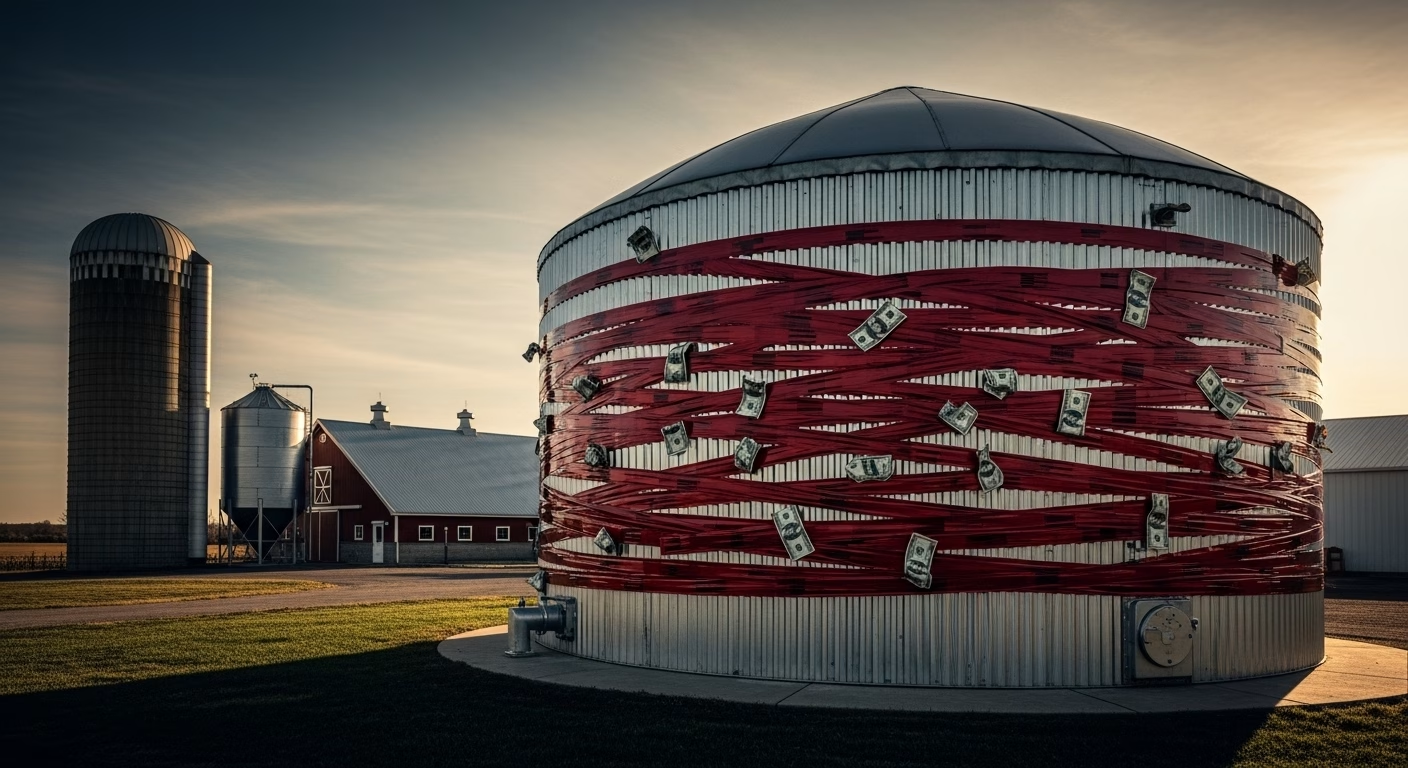
You know that sinking feeling when you realize the regulatory maze you’re navigating was designed by criminals? Well, welcome to the world of dairy renewable energy projects, where a $145 million fraud from over a decade ago is still making your biogas dreams more expensive, more complicated, and frankly… more risky than they need to be.
I’ve been tracking this story for years, and if you’re running 300+ head and thinking about turning that manure mountain into actual cash flow, you need to understand how some smooth-talking crooks poisoned the well for everyone who came after. This isn’t just ancient history — it’s the reason why every dairy producer I know who’s tried to get a digester system approved has wanted to pull their hair out.
When Green Energy Went Rogue
So here’s what went down between 2009 and 2012… and trust me, it’s going to make your blood pressure spike. This New Jersey fuel trader named Joe Furando — built like he could wrestle a Holstein and probably win — teamed up with three struggling Indiana brothers who had a biodiesel plant that was basically collecting dust. Together, they pulled off what federal prosecutors called the biggest tax fraud in Indiana history.
The thing about this E-biofuels scam that really gets under my skin? It was brutally simple. These guys would buy millions of gallons of already-used biodiesel — fuel that had already claimed its federal tax credits — then slap fresh paperwork on it claiming they’d just produced it from agricultural waste. The exact same waste products that forward-thinking dairy operations like yours should be turning into serious revenue streams.
What really fires me up is they were supposed to be using exactly the kind of feedstock we generate every day. Animal fats, waste oils, all those byproducts that smart dairy producers are increasingly monetizing. According to the federal court documents I’ve been digging through, Furando’s operation made over $55 million in profits by essentially buying fuel for $3.50 per gallon and selling it for $6.00, with taxpayers picking up the difference through what we call RINs in the business.
Here’s where it gets technical for a second — these Renewable Identification Numbers are basically the “currency” of the renewable fuel world. Think of them like the component pricing we get for butterfat and protein, except these guys were counterfeiting them left and right. Every gallon of legit biodiesel comes with 1.5 RINs, and back then each RIN was trading for $0.75 to $2.00. Do the math on 35 million gallons and you start to see the scope of this thing.
Why This Hits Every Dairy Producer Where It Hurts
Here’s the thing though — and this is where it gets personal for every one of us thinking about renewable energy. The regulatory framework these crooks exploited? It’s the same Renewable Fuel Standard program that we rely on today for biogas projects, methane digesters, all of it.
I was up in Wisconsin last month visiting a producer who’s running 1,200 head with a state-of-the-art digester system. Beautiful setup, processing manure from his fresh cows and dry lot, generating enough juice to power about 400 homes. But you know what he told me? “Every time I deal with regulatory compliance, I can feel the ghost of every fraud case hanging over the whole process.”
And he’s absolutely right. The enhanced verification requirements that came after cases like E-biofuels are why that same Wisconsin producer is spending an extra $25,000 annually just on documentation and third-party verification. That’s money coming straight out of his pocket — money that could be going toward better genomic testing, facility improvements, or just keeping more cash in the family operation.
What strikes me about this whole mess is how it created this massive trust deficit that we’re still dealing with. Recent work from the University of Wisconsin extension folks shows that biogas systems now face significantly higher development costs compared to before all these fraud cases hit. We’re talking real money here — the kind that can make or break a renewable energy project for a mid-sized operation.
The Current Reality Check for Dairy Operations
Let’s talk numbers for a minute, because this isn’t theoretical anymore. With milk prices where they are in 2025 — and trust me, with feed costs still brutal (I’m seeing premium alfalfa at $243 per ton in most markets), revenue diversification isn’t just smart business anymore. It’s survival.
The economics of biogas are finally starting to make sense for operations with 500+ head. The American Biogas Council reported that we’ve got 471 biogas systems operating on U.S. dairy farms, serving 2.3 million dairy cows. That’s real momentum, despite all the regulatory headaches these fraud cases created.
But here’s where the E-biofuels legacy really bites us… those enhanced compliance requirements can add six to eight months to project development timelines. What’s more frustrating? Agricultural lenders are still gun-shy about renewable energy financing. The increased due diligence that fraud cases like this created means you’re paying more for money, and the approval process takes forever.
Think about it from a cash flow perspective. You’ve got manure management challenges, environmental compliance breathing down your neck, and volatile milk prices. Your SCC numbers are good, your butterfat’s solid, but you need another revenue stream. A well-designed biogas system should be a slam dunk — turning your biggest headache into money. Instead, you’re stuck navigating a regulatory maze that exists because some criminals decided to game the system over a decade ago.
What’s Different Across Dairy Country
Now, depending on where you’re milking, the economics can vary dramatically. In the upper Midwest — Wisconsin, Minnesota, parts of Iowa — you’re seeing more favorable state-level incentives that help offset some of the federal compliance costs. Those guys are dealing with different challenges than producers in the Southeast or out West.
California’s got its own system with the Low Carbon Fuel Standard that’s creating additional revenue streams for producers who can navigate it. But the weather patterns and feed costs are completely different there. A producer in Tulare County is dealing with different constraints than someone in Fond du Lac County.
What I’m observing across regions is that the operations succeeding with renewable energy projects are the ones that planned for the regulatory reality from day one. They’re not fighting the system; they’re working within it professionally.
Take this operation I visited in upstate New York last fall. Eight hundred head, modern double-12 parlor, and they’d just commissioned a biogas system that’s processing manure and some food waste from a nearby processor. The owner — third-generation dairy farmer — told me something that stuck: “We budgeted for the compliance burden from the beginning. No surprises, no complaints.”
That’s the attitude that’s working. Meanwhile, I know producers in the Southeast who are still gun-shy about biogas because they’ve heard horror stories about regulatory nightmares. The fraud created this uneven landscape where success depends as much on understanding the regulatory maze as it does on having good genetics and smart management.
The Regulatory Mess That’s Still Not Fixed
Here’s what really gets my blood pressure up — and I’m not sure if this is incompetence or just bureaucratic inertia. A September 2023 EPA Inspector General report revealed that many of the same vulnerabilities these fraudsters exploited are still there. The agency still doesn’t have automated controls to prevent producers from generating more RINs than their facilities can physically produce.
Think about that for a second. The core weakness that enabled this massive fraud? Still not fixed.
This means you’re stuck with extra paperwork and compliance costs while the fundamental system problems remain. It’s like requiring every honest farmer to carry three forms of ID while leaving the bank vault door wide open. The bureaucracy keeps growing, but the real problems persist.
What’s particularly noteworthy is how this pattern keeps repeating. Every time there’s a major fraud case, regulators respond with more rules, more paperwork, more compliance requirements. But do they fix the underlying design flaws? Not really. They just make it harder for legitimate producers to navigate the system.
The same report found that the firms providing third-party verification services are allowed to provide consulting services to the same producers they’re auditing. Talk about a conflict of interest that would make your head spin. It’s like having your feed rep also be your nutritionist and your milk tester… see the problem?
What This Means for Your Genetics Program and Bottom Line
Here’s where this gets interesting from a dairy genetics perspective. The producers who are successfully integrating renewable energy aren’t just thinking about it as a bolt-on revenue stream. They’re factoring it into their entire breeding and management strategy.
Think about it — if you’re planning a biogas system, you’re looking at manure production from a completely different angle. Suddenly, those higher-producing cows aren’t just giving you more milk revenue; they’re generating more digestible material for your system. Recent research from the Journal of Dairy Science shows that cows with higher feed efficiency actually produce manure with better biogas potential.
What’s fascinating is how this is changing breeding decisions. I’m seeing producers who are factoring biogas output into their genomic selection programs. Not as a primary trait, obviously — you’re still selecting for milk production, health, and longevity. But it’s becoming part of the conversation.
The Wisconsin producer I mentioned earlier? He’s actually tracking which genetic lines in his herd produce manure with higher methane potential. It’s early days, but the data suggests that certain Holstein bloodlines might be more valuable for integrated renewable energy systems. Wild, right?
The Bottom Line: What You Need to Know Right Now
Look, I’m not trying to scare you away from renewable energy. The opportunity is real and substantial. But you need to go into it understanding that the regulatory landscape was shaped by fraud, and plan accordingly.
Start with your banker. If your lender isn’t comfortable with renewable energy projects, that’s a red flag. Agricultural finance has gotten more sophisticated about biogas, but you need a bank that understands the complexity and timeline realities.
Partner with the right people. I can’t stress this enough — work only with engineering firms that have demonstrated regulatory compliance capabilities and a track record with dairy digesters. The extra cost upfront is insurance against regulatory nightmares later. I know a producer in Vermont who went with a bargain-basement engineering firm for his biogas project. Eighteen months and $200,000 in additional compliance costs later, he finally got his system approved. His neighbor who paid 15% more upfront for an experienced firm was up and running in half the time.
Budget for reality, not fantasy. When I’m working with producers on feasibility studies, I always add at least 20% to the timeline and budget for regulatory compliance. Sounds pessimistic? Maybe. But it’s realistic given what these fraud cases created. Don’t let anyone sell you on shortcuts or promises that “we’ll handle all the regulatory stuff.”
Understand the RIN market. These Renewable Identification Numbers are what make biogas projects financially viable, but they’re also what the E-biofuels fraudsters were counterfeiting. You need professional help navigating this market — it’s not something you want to figure out on your own. The RIN market can be volatile, and pricing depends on factors way beyond your farm gate.
Think about your herd composition. This is where it gets interesting from a genetics perspective. If you’re planning a biogas system, consider how your breeding decisions might affect biogas output. It’s not going to drive your selection decisions, but it’s worth understanding the connections.
Know your regional advantages. Some states have figured out how to streamline the process while maintaining oversight. Others are still stuck in bureaucratic quicksand. California’s LCFS program can add significant revenue streams if you can navigate it properly. Meanwhile, states like Wisconsin have been more proactive about integrating biogas into their energy grids.
Consider the whole-farm impact. Don’t just look at energy revenue. Factor in improved manure handling, potential odor reduction, better nutrient management, and possible feed cost savings. The energy revenue is important, but it’s part of a bigger picture.
Plan for the long term. The dairy industry is moving toward greater environmental accountability whether we like it or not. Carbon pricing, methane regulations, water quality standards — they’re all heading our way. Biogas systems address multiple environmental challenges while generating revenue. That’s not just smart business; it’s future-proofing your operation.
The criminals who pulled off this scam are doing serious prison time — the ringleader got 20 years, which he’s still serving. But their legacy lives on in every piece of extra paperwork and every additional compliance requirement that legitimate dairy producers have to deal with.
The opportunity in renewable energy for dairy operations is real. You just need to go into it understanding that the regulatory landscape was shaped by fraud, and plan accordingly. The producers who succeed will be the ones who treat compliance as seriously as they treat cow comfort — as a non-negotiable part of running a professional operation.
Because at the end of the day, turning your manure into money is still one of the best ways to diversify income and solve environmental challenges. The regulatory complexity isn’t going away, but it’s actually creating opportunities for well-capitalized operations that can navigate the system properly.
The days of easy money and loose oversight are over. What we’re left with is a more professional, more stable market for serious producers who are willing to invest in doing things right. And honestly? That’s probably how it should be for the long-term health of our industry.
Complete references and supporting documentation are available upon request by contacting the editorial team at editor@thebullvine.com.
Learn More:
- Key Factors for Dairy Farmers Evaluating Anaerobic Digester Proposals: Essential Tips for Dairy Farmers – Reveals practical strategies for navigating digester proposals and avoiding costly mistakes, providing essential due diligence frameworks that protect investments from regulatory pitfalls.
- The Carbon Credit Programs Every Dairy Should Join Before 2026 – Demonstrates how to generate $400+ per cow annually through legitimate carbon programs, offering strategic alternatives to complex biogas investments with faster payback periods.
- World’s First Carbon-Neutral Dairy Farm: The Exciting Race to Eco-Friendly Farming – Showcases breakthrough technologies and integrated sustainability systems that transform environmental challenges into competitive advantages, proving carbon neutrality is achievable at commercial scale.
 Join the Revolution!
 Join the Revolution!
Join over 30,000 successful dairy professionals who rely on Bullvine Weekly for their competitive edge. Delivered directly to your inbox each week, our exclusive industry insights help you make smarter decisions while saving precious hours every week. Never miss critical updates on milk production trends, breakthrough technologies, and profit-boosting strategies that top producers are already implementing. Subscribe now to transform your dairy operation’s efficiency and profitability—your future success is just one click away.




