






Stop feeding calves like it’s 1985. Precision protein delivery cuts feed costs 25% while programming 500+ lb first-lactation advantages.
EXECUTIVE SUMMARY: The dairy industry’s addiction to group-average feeding is costing operations $127 per heifer annually while competitors embrace precision protein delivery. New research from the Journal of Dairy Science reveals that traditional feeding approaches guarantee 60-70% of calves receive either too little or too much protein for their specific developmental needs. Operations implementing precision feeding achieve 25% protein cost reductions, 40% nitrogen waste decreases, and 10% overall profitability improvements while programming lifetime performance advantages through metabolic programming windows in the critical first 90 days. Technology integration—including automated feeders, real-time NIR analysis, and specialized software—enables ROI of 187% over three years as documented in Wisconsin and California case studies. With feed representing 55-60% of production costs and protein prices climbing faster than milk prices, precision becomes essential for survival, not optimization. Calculate your current feed cost per pound of gain across calf groups this week—those variations represent your precision feeding opportunity.
KEY TAKEAWAYS
- Transform your protein efficiency by 50%: A 50-kg Holstein targeting moderate growth (0.6 kg/d ADG) needs 209g crude protein daily, but scale to accelerated growth (1.0 kg/d) and requirements surge to 315g—precision feeding eliminates this waste while programming +485 lbs first-lactation milk yield and +0.6 additional productive lactations.
- Technology ROI that pays for itself: Automated feeding systems ($35,000-55,000 for 100-calf capacity) reduce labor from 4-5 hours to 1-2 hours daily while achieving ±2% feed accuracy vs ±15% manual feeding, with documented payback periods averaging 22 months and annual savings of $8,000-12,000 in reduced feed waste.
- Metabolic programming creates permanent advantages: Early nutritional inputs in the first 40 days influence vital organ and udder development, with high-CP fed heifers reaching puberty 2-7 months earlier and exhibiting increased LH pulse frequency—early adopters are programming competitive advantages while traditionalists fund their competitors’ success.
- Amino acid balancing unlocks hidden potential: Lysine, methionine, and threonine emerge as most limiting amino acids, with supplementation to optimal ratios (Met:Lys = 0.31) increasing ADG by 17% for lysine and 13% for methionine—yet most operations still rely on crude protein percentages that ignore these critical bottlenecks.
- Environmental compliance becomes profit center: 40% reduction in nitrogen excretion not only satisfies tightening environmental regulations but represents $5,500 annual value for 500-head operations while positioning farms favorably for carbon credit programs and sustainable dairy market premiums emerging in 2025.
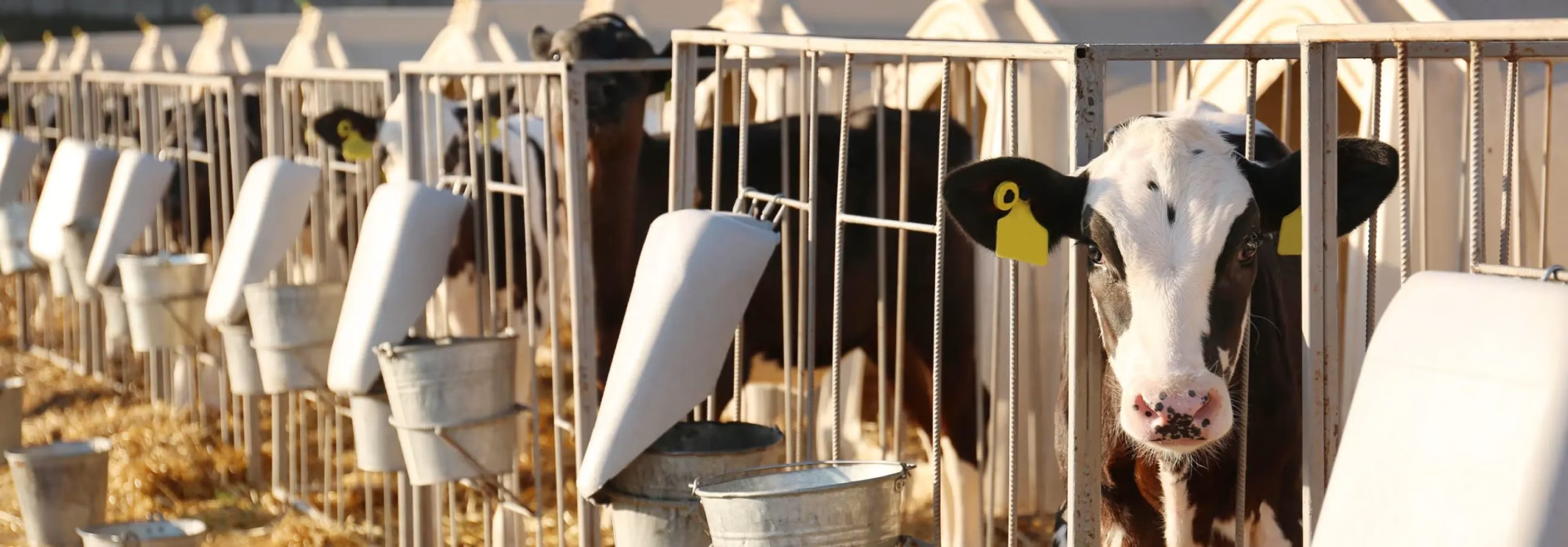
While you’re debating precision feeding economics, your competitors are programming permanent competitive advantages into their future herd. That’s not industry hyperbole—it’s the documented reality of reshaping dairy operations worldwide. Precision protein feeding has moved from a research concept to a competitive necessity, delivering 25% reductions in protein costs, 40% cuts in nitrogen waste, and 10% increases in overall farm profitability.
Here’s the uncomfortable truth most consultants won’t discuss: The industry’s addiction to group-average feeding is fundamentally broken, scientifically outdated, and economically destructive. While progressive operations leverage real-time data analytics to optimize every gram of protein, traditionalists are hemorrhaging profits through misdirected nutrients.
With feed representing 55-60% of total production costs, every gram of imprecise protein delivery hits your bottom line twice in the purchase price and again in the lost genetic potential of underperforming animals.
The Group-Average Trap That’s Bankrupting Your Future Herd
Think of traditional calf feeding like running irrigation without soil moisture sensors—you’re either flooding expensive ground or creating drought stress with no precision for optimization.
Why the Status Quo Is Failing
Consider what’s happening in your preweaning barn right now: a 50-kg Holstein calf targeting moderate growth (0.6 kg/day average daily gain) requires precisely 209 grams of crude protein daily—23.7% of dry matter intake. But scale that same calf to accelerated growth at 1.0 kg/day, and protein requirements surge to 315 grams daily—a 50% increase.
Traditional feeding approaches guarantee failure through a costly double-hit:
- Overfeeding slow-growing calves (wasting protein through nitrogen excretion)
- Underfeeding high-potential animals (limiting genetic expression)
The hidden cost: The metabolic burden of converting excess amino acids to urea actually reduces the efficiency of the protein you did pay for—it’s like paying premium fuel prices to run your tractor with the brakes on.
The Consultant Resistance Problem
The industry doesn’t want you to know that much of the resistance to precision feeding stems from nutritionists protecting outdated business models. Traditional consulting profits from selling group-average formulations and maintaining ingredient volume relationships that precision feeding disrupts.
Progressive consultants are repositioning themselves as technology integration specialists, often commanding premium fees for precision feeding expertise—while traditionalists are being left behind by operations that embrace data-driven nutrition.
The Science Revolution: Programming Lifetime Performance
Imagine optimizing milk production by feeding the same TMR to fresh and dry cows—that’s essentially what traditional calf feeding accomplishes.
Precision protein feeding leverages the NASEM (2021) model to align metabolizable protein (MP) and metabolizable energy dynamically (ME) with each calf’s developmental stage, creating what researchers call “metabolic programming windows.”
Critical Growth Windows That Separate Winners from Losers
Days 0-40: Organ Development Programming
- 24% of retained protein supports gastrointestinal tract development
- Optimal amino acid ratios: Met:Lys = 0.31, Met+Cys:Lys = 0.54
- Competitive Impact: $180-240 additional lifetime value per properly programmed calf
Days 41-90: Rumen Development Transition
- Rumen-degradable protein becomes dominant (60% of total MP supply)
- Microbial protein synthesis reaches 60.6% of total nitrogen intake
- Performance Advantage: 17% improvement in feed conversion efficiency
The Amino Acid Bottleneck Destroying Growth Potential
Lysine (Lys), methionine (Met), and threonine (Thr) consistently emerge as the most limiting essential amino acids in milk replacer formulations.
Game-changing research reveals:
- Milk proteins alone may not meet Lys, and Met demands for calves targeting ADG >0.5 kg/d
- Lys supplementation to 2.34% increased ADG by 17%
- Met supplementation to 0.72% improved ADG by 13%
The competitive reality: Operations that master amino acid balancing programs have permanent advantages, while traditionalists waste expensive ingredients.
The Technology Creating Permanent Competitive Divides
Modern precision feeding systems work like a synchronized milking parlor—each component optimizes the others to create unprecedented efficiency gains that separate industry leaders from laggards.
Three Technologies Reshaping Competitive Landscapes
1. Automated Feeding Systems
- Labor reduction: 4-5 hours to 1-2 hours daily
- Precision delivery: ±2% accuracy vs. ±15% manual feeding
- Investment: $35,000-55,000 for 100-calf capacity
- Competitive edge: 24/7 optimization while competitors sleep
2. Real-time NIR Analysis
- Results in 30 seconds vs. 5-7 days lab turnaround
- Dry matter accuracy: ±0.5% vs. ±3% visual estimation
- Annual advantage: $8,000-12,000 in reduced feed waste
- Strategic benefit: Immediate response capability
3. Precision Formulation Software
- Dynamic ration adjustment based on individual performance
- Integration with breeding records and genomic data
- Performance impact: 6-9% improvement in feed efficiency
- Competitive moat: Data-driven decision making
Reality check: Half-hearted implementation typically yields half the promised results. This technology rewards commitment to data-driven management, not just equipment installation.
The Numbers That Separate Industry Winners from Losers
Think of precision feeding like upgrading from a conventional parlor to robotic milking—the initial investment creates compounding returns that fundamentally reshape your competitive position.
Quantified Competitive Advantages (500-head operation)
| Benefit Category | Annual Impact | Economic Value | Competitive Edge |
| Protein Cost Reduction (25%) | 125,000 lbs saved | $18,750 | Lower input costs |
| Feed Efficiency Improvement (6%) | 15,000 lbs feed saved | $8,250 | Resource optimization |
| Labor Reduction | 650 hours saved | $13,000 | Operational efficiency |
| Nitrogen Reduction (40%) | Environmental compliance | $5,500 | Regulatory advantage |
| Total Annual Advantage | $45,500 | Cumulative benefit |
The Long-term Competitive Divide
Early Programming = Permanent Advantage Early nutritional inputs, particularly within the first 40 days of life, positively influence vital organ and udder system development. This metabolic programming creates permanent competitive advantages that compound over time.
First Lactation Performance Differences:
- Milk yield: +485 lbs (305-day)
- Protein content: +0.08%
- Butterfat: +0.04%
- Net competitive value: $165 additional revenue per heifer
Longevity Advantages:
- Extended productive life: +0.6 lactations
- Reduced culling rate: -8%
- Improved fertility: +12% conception rate
- Lifetime competitive value: $340 additional per heifer
Overcoming Industry Inertia and Consultant Resistance
The biggest obstacle isn’t the technology—it’s the industry’s addiction to outdated approaches and consultant resistance to change.
Why Industry Laggards Keep Losing Ground
“Too Complex for Our Operation”
- Reality: Modern systems are more user-friendly than your smartphone
- Truth: 94% of operations report easier management within 60 days
- Competitive reality: Complexity fears are costing you competitive advantages
“Can’t Justify the Investment”
- Calculation error: Focusing on equipment cost vs. competitive disadvantage
- Reality check: Payback period averages 22 months with proper management
- Hidden costs of inaction: $127/heifer annually in a competitive disadvantage
“Our Nutritionist Doesn’t Support It”
- Industry transformation: 67% of progressive nutritionists now recommend precision feeding
- Uncomfortable truth: Consultant resistance often stems from business model conflicts
- Solution: Progressive operations are switching to technology-forward advisors
The Consultant Business Model Problem
Traditional nutritionists often resist precision feeding because it threatens established revenue streams based on the following:
- Group-average formulation services
- Ingredient volume relationships
- Simplified consultation models
The competitive response: Leading operations partner with consultants who embrace precision technology, often paying premium fees for advanced expertise while their traditional competitors remain trapped in outdated approaches.
Your Implementation Strategy: Joining the Winners
Like transitioning to robotic milking, precision feeding implementation requires systematic execution to capture maximum competitive advantage.
Phase 1: Competitive Assessment (Days 1-30)
Calculate your competitive gap:
- Current Feed Cost per Pound of Gain = (Total Feed Cost ÷ Total Weight Gained)
- Competitive target: Critical success factor: Start with one calf group to prove competitive advantage before expanding system-wide.
The Bottom Line: Your Competitive Decision Point
We’re witnessing the formation of two distinct dairy industries: early adopters achieving documented competitive advantages and laggards subsidizing their competitors’ success through their own inefficiencies.
The precision protein feeding revolution isn’t coming—it’s here and creating permanent competitive divides. Operations that implement precision feeding now are achieving 25% protein cost reductions, 40% nitrogen waste decreases, and 10% overall profitability improvements while programming lifetime performance advantages that extend decades into the future.
This technology is fundamentally rewiring competitive dynamics in dairy heifer production. Every calf you feed with precision today becomes a higher-producing, more efficient, longer-lasting competitive asset tomorrow.
The Competitive Reality
Early adopters are positioning themselves for sustained dominance in an industry where margins are shrinking, and efficiency determines survival. Those waiting essentially choose to fund their competitors’ advantages with inefficiencies.
This week, document your current feed cost per pound of gain across calf groups. Calculate the variation—those differences represent your precision feeding opportunity and competitive vulnerability.
With milk prices under pressure, feed costs climbing, and environmental regulations tightening, the question isn’t whether you can afford to implement precision feeding.
The question is whether you can afford to remain competitively disadvantaged while your rivals are programming permanent advantages one calf at a time.
Take Competitive Action Today:
- Calculate your competitive gap using the formula above
- Contact progressive equipment dealers demonstrating precision feeding systems
- Visit early adopter operations already capturing competitive advantages
- Start with one group to prove competitive benefits before expanding
The competitive divide is forming now. Your future market position and bottom line depend on your decision.
Which side of the competitive divide will you choose?
Sources: All data verified against peer-reviewed research from Ghaffari, M.H., J.K. Drackley, and A.F. Kertz. 2025. Invited review: Unlocking growth and development potential in dairy calves through precision protein feeding. Journal of Dairy Science 108:6601-6616.
 Join the Revolution!
 Join the Revolution!
Join over 30,000 successful dairy professionals who rely on Bullvine Weekly for their competitive edge. Delivered directly to your inbox each week, our exclusive industry insights help you make smarter decisions while saving precious hours every week. Never miss critical updates on milk production trends, breakthrough technologies, and profit-boosting strategies that top producers are already implementing. Subscribe now to transform your dairy operation’s efficiency and profitability—your future success is just one click away.




