






Stop believing your biosecurity is bulletproof. South Africa’s $2.9B market collapse proves 80% milk yield losses happen faster than you think.
EXECUTIVE SUMMARY: South Africa’s foot-and-mouth disaster just destroyed the world’s largest feedlot and $2.9 billion in Chinese trade overnight, exposing fatal biosecurity flaws that should terrify every dairy producer banking on export markets. When 167 active outbreaks can shut down a country that maintained disease-free status for 24 years, it’s time to ask whether your operation is really prepared for the next pandemic. The quarantine of Karan Beef’s 2,000-cattle-per-day facility and immediate trade bans from China, Namibia, and Zimbabwe reveal how quickly market access evaporates when disease control fails. With foot-and-mouth causing up to 80% reduction in milk yields and forcing complete herd culling, South Africa’s crisis offers brutal lessons about the speed at which biosecurity failures cascade into economic devastation. The government’s emergency order for 900,000 vaccine doses at R100 each highlights the true cost of reactive rather than proactive disease management. Progressive dairy operations worldwide must evaluate whether their biosecurity protocols can withstand the kind of systematic breakdown that turned a regional outbreak into a national catastrophe. This isn’t just about South Africa – it’s a preview of how animal health emergencies destroy international trade relationships in our interconnected global market.
KEY TAKEAWAYS
- Market Access Fragility: China’s immediate suspension of $2.9 billion in annual trade demonstrates how 24 years of disease-free status can evaporate overnight, forcing dairy operations to diversify export relationships and build redundancy into market strategies rather than depending on single trading partners.
- Production Impact Reality: Foot-and-mouth disease causes up to 80% reduction in milk yields, weight loss, lameness, and abortions across infected herds, with the virus surviving 26-200 days in soil and up to 14 weeks on footwear – making every farm visitor and equipment transfer a potential biosecurity threat requiring strict disinfection protocols.
- Silent Spreader Risk: Infected animals shed foot-and-mouth virus for up to 14 days before showing clinical signs, rendering visual inspections useless and necessitating mandatory 28-day quarantine periods for all new animals regardless of health certificates – a practice many operations currently ignore.
- Economic Devastation Scale: Individual livestock movement assessments cost over $21,000 in South Africa, while small-scale farmers face complete financial ruin from movement restrictions, highlighting the need for sufficient operating capital to survive extended market isolation periods.
- Technology Investment Imperative: South Africa’s lack of robust animal tracking systems enabled illegal movements that spread disease across provinces, proving that modern digital traceability isn’t just operational efficiency – it’s insurance against market access disruption when trading partners demand complete supply chain transparency.
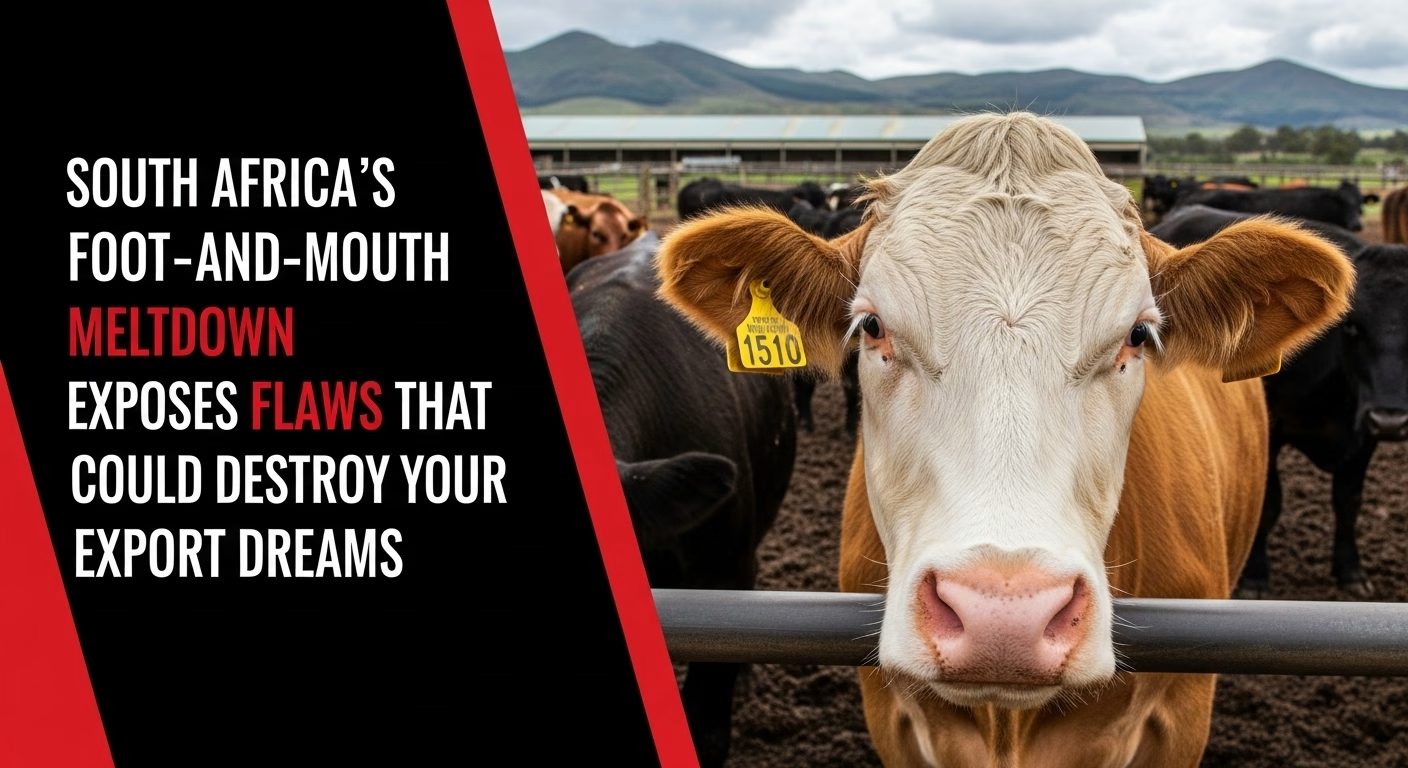
South Africa’s escalating foot-and-mouth disease crisis has quarantined the world’s largest feedlot, triggered trade bans from China worth $2.9 billion annually, and revealed catastrophic biosecurity failures that should terrify every dairy producer banking on international markets. When a disease that cuts milk yields by 80% can shut down global trade overnight, it’s time to ask: Is your operation prepared for the next pandemic?
The numbers tell a brutal story. KwaZulu-Natal alone is battling 167 foot-and-mouth disease outbreaks, with 149 still raging as of April 2025. That’s not containment – that’s a complete system collapse. And here’s what should keep you awake at night: this isn’t happening in some remote region with poor infrastructure. This is South Africa, a country that maintained World Organisation for Animal Health (WOAH) FMD-free status for 24 years until 2019.
When the World’s Biggest Feedlot Goes Dark
Let’s talk about what happens when disease control fails spectacularly. Karan Beef’s Heidelberg facility – processing 2,000 cattle daily and recognized as one of the world’s largest feedlots – went under quarantine this week. That’s not just another outbreak statistic. That’s a $2 billion operation grinding to a halt because someone, somewhere, failed to follow basic biosecurity protocols.
The ripple effects? Immediate. China slammed the door on South African beef imports, cutting off access to a market worth $2.9 billion in 2024. When you add Namibia and Zimbabwe to the growing list of countries banning South African livestock products, you’re looking at market access carnage that makes previous trade disputes look like minor inconveniences.
But here’s the kicker that dairy farmers need to understand: foot-and-mouth disease doesn’t discriminate between beef and dairy cattle. The virus causes up to 80% reduction in milk yields, weight loss, lameness, and abortions across all infected herds. This represents a triple threat for dairy operations – immediate production losses, potential culling requirements, and complete market isolation.
The Auction House Vector Nobody Wants to Discuss
Want to know how a regional problem becomes a national crisis? Look no further than South Africa’s livestock auction system. The outbreaks in Mpumalanga and Gauteng have been directly traced back to auctions in KwaZulu-Natal. That’s right – infected animals were sold, transported across provincial boundaries, and integrated into new herds before anyone realized they were walking biological weapons.
This isn’t just poor oversight – it’s a fundamental breakdown in the systems that supposedly protect livestock industries worldwide. What is the legally required 28-day isolation period for newly introduced animals? Apparently ignored. Health certifications? Meaningless when enforcement doesn’t exist.
Ask yourself this: How confident are you that the animals entering your operation have been properly screened and isolated?
The Silent Spreader Problem
Here’s what makes foot-and-mouth disease particularly terrifying for dairy operators: infected animals can shed the virus for up to 14 days before showing any clinical signs. That means those healthy-looking heifers you just purchased could be silently spreading disease throughout your entire herd while you’re congratulating yourself on finding a good deal.
The virus isn’t just transmitted through direct animal contact. It survives for 26-200 days in soil, approximately 15 weeks on wood or straw, and up to 14 weeks on footwear and clothing. Every visitor to your farm, every piece of equipment, every vehicle becomes a potential vector.
Economic Devastation: When Markets Slam Shut
The 2019 foot-and-mouth outbreak in South Africa resulted in a $90 million loss in live cattle and red meat exports. The current crisis? We’re looking at losses that dwarf that figure. China alone accounted for 14% of South Africa’s frozen beef exports in 2024, importing 45,782 tons worth $2.9 billion. When those markets disappear overnight, the financial carnage extends far beyond individual farms.
Small-scale farmers are being crushed. A single livestock movement assessment costs over $21,000 – a devastating expense for operations already struggling with reduced production and restricted market access.
The reality check: How long could your dairy operation survive complete export market isolation?
Government Response: Playing Catch-Up with a Virus
South Africa’s government response reveals the classic reactive rather than proactive disease management pattern. Agriculture Minister John Steenhuisen has announced massive vaccination campaigns, with over 900,000 vaccine doses ordered at a cost of R1.2 billion for the 2025/2026 financial year. Each dose costs R100, and the government is scrambling to build “permanent infrastructure to manage future risks.”
But here’s the problem: they’re consistently playing catch-up with viral spread. The Disease Management Area in KwaZulu-Natal was actually enlarged on March 17, 2025, reflecting continued viral activity rather than containment success. You’re not winning the war when your control measures are expanding rather than contracting.
The government has allocated significant resources, but enforcement remains the Achilles’ heel. Despite legal requirements for animal isolation and movement permits, illegal livestock movements continue unabated, particularly from communal herds. South Africa lacks a robust national animal track-and-trace system, making it nearly impossible to monitor livestock movement effectively.
The Buffalo in the Room
The inconvenient truth complicates every control strategy: foot-and-mouth disease is endemic in African buffalo populations within Kruger National Park and surrounding game reserves. These wild herds serve as permanent viral reservoirs, making complete eradication virtually impossible.
When veterinary cordon fences fail – often due to floods or human negligence – you get spillover events that can spark new outbreaks hundreds of kilometers away. This creates a unique challenge that most other livestock-producing regions don’t face: a natural reservoir that continuously threatens domestic animal health.
What This Means for Your Operation
South Africa’s foot-and-mouth crisis offers critical lessons for dairy operations worldwide. The speed at which a seemingly manageable regional outbreak escalated into a national crisis demonstrates how quickly animal diseases can overwhelm even established control systems.
The most sobering lesson? Market access fragility. Countries that spent decades building trading relationships saw them severed overnight based on disease status. This highlights the strategic importance of diversifying markets and building redundancy into export strategies rather than depending on a handful of key relationships.
For individual dairy operations, the crisis underscores several actionable steps:
Enhance Biosecurity Protocols: Implement strict 28-day quarantine periods for all new animals, regardless of health certificates. Establish vehicle and visitor disinfection stations. Create clear protocols for equipment movement between farms.
Invest in Traceability Technology: Modern digital tracking systems aren’t just operational tools but insurance against market access disruption. When disease outbreaks occur, operations with robust tracking can demonstrate clean status while others face blanket restrictions.
Diversify Market Relationships: Don’t put all your export eggs in one basket. South Africa’s over-reliance on specific markets amplified the impact of the crisis. Build relationships with multiple trading partners to reduce vulnerability.
Build Financial Resilience: Ensure sufficient operating capital to survive extended market isolation. The speed of trade disruption leaves no time for emergency fundraising.
The Bottom Line
South Africa’s foot-and-mouth disaster isn’t just a regional problem – it’s a preview of how quickly animal health emergencies can cascade into trade disasters in our interconnected global market. The quarantine of the world’s largest feedlot and the rapid closure of major export markets should serve as a wake-up call for dairy farmers everywhere.
Here’s what you need to do right now: Evaluate your biosecurity protocols with fresh eyes. Can you honestly say every animal entering your operation has been properly isolated and tested? Do you have traceability systems that can demonstrate clean status during emergencies? Have you diversified your market relationships to reduce dependence on any single trading partner?
The South African situation also highlights the critical importance of government-industry collaboration in animal health management. When enforcement systems fail, and traceability gaps persist, even the most well-intentioned individual farm biosecurity measures can be undermined by systemic weaknesses.
The hard truth: In a world where trading partners can cut access overnight based on disease status, the operations that survive and thrive will be those that invest in prevention rather than reaction. South Africa’s crisis won’t be the last animal health emergency to disrupt global markets. The question isn’t whether your operation will face the next challenge – it’s whether you’ll be ready for it.
Learn More:
- Biosecurity Battlefront: How Foot-And-Mouth Disease Outbreaks Are Reshaping Dairy Farm Protocols – Reveals practical FARM Program strategies for implementing enhanced biosecurity protocols that prevent 35% milk yield losses, with step-by-step implementation guides for access control and visitor management systems.
- Hungary Deploys Military as Foot-and-Mouth Disease Spreads – Demonstrates how military-grade containment strategies successfully control airborne FMD transmission, offering crisis response blueprints and vaccination approaches that reduce catastrophic losses by up to 30%.
- FMD at The Doorstep: Why Poland’s Dairy Industry Is Holding Its Breath – Exposes critical preparedness gaps in European dairy operations and provides actionable frameworks for treating biosecurity like “mastitis prevention on steroids” with zero-tolerance protocols for smaller farms.
 The Sunday Read Dairy Professionals Don’t Skip.
 The Sunday Read Dairy Professionals Don’t Skip.
Every week, thousands of producers, breeders, and industry insiders open Bullvine Weekly for genetics insights, market shifts, and profit strategies they won’t find anywhere else. One email. Five minutes. Smarter decisions all week.




