







When Rupert was 10, his parents gave him a calf named Mailand. Last month, his 60-cow herd won European Breeder of the Year. Some gifts change everything.
The glacier-covered Kitzsteinhorn was fading to purple in the evening light when the message came through. The whole Wenger family had gathered after a long day—Rupert Sr. and Angelika at the worn kitchen table, their son Rupert at the counter still smelling faintly of show shampoo, daughter Steffi bouncing a grandchild on her knee. Someone’s phone buzzed. Then another. Then the room went quiet.
Schönhof Holsteins had just been named European Breeder of the Year 2025.
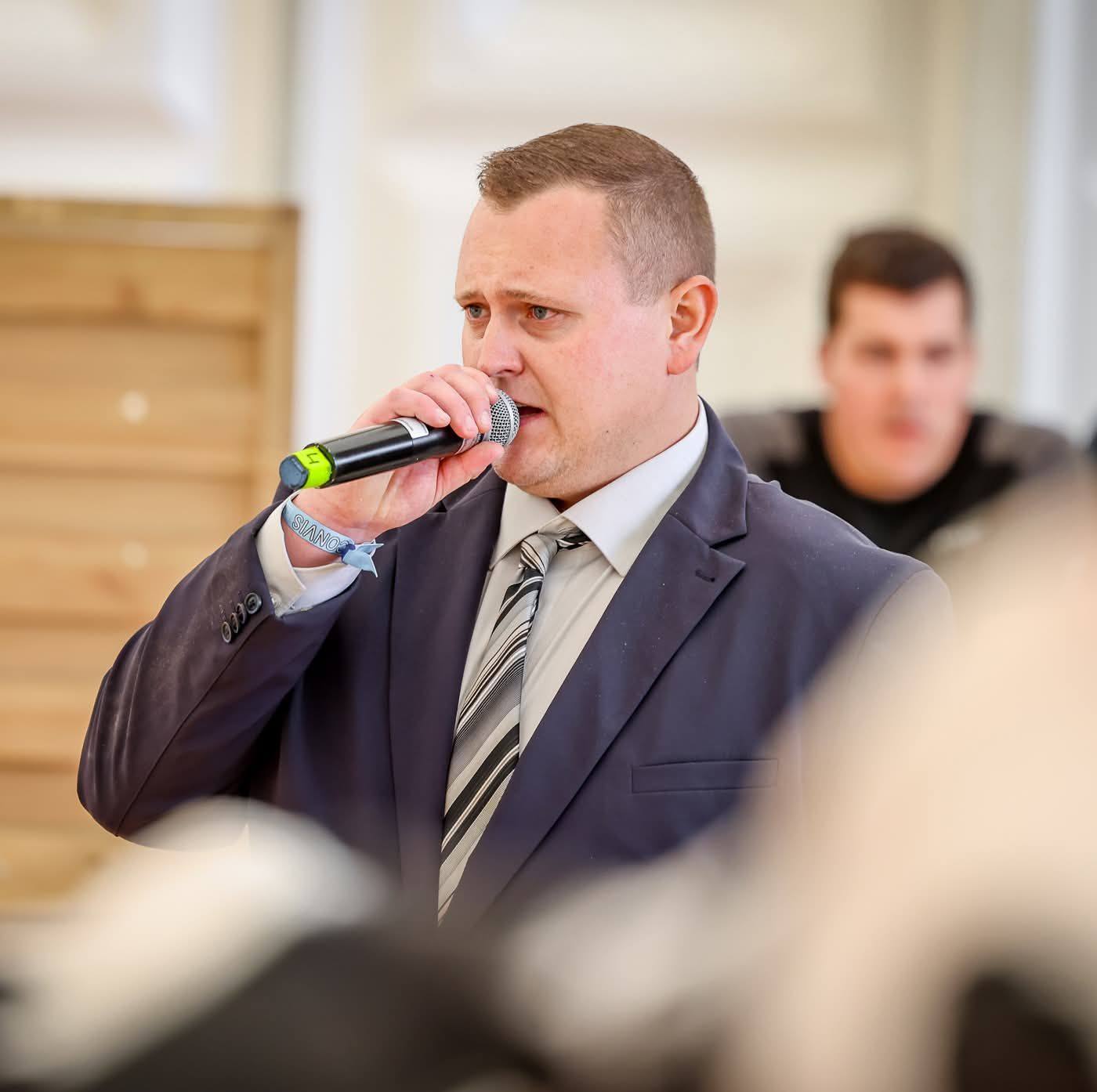
“For me, it was a truly exceptionally good feeling,” Rupert tells me. “When I found out that our farm had been nominated, it already made me very proud. The highlight came a few days later: the whole family was together, talking about the day we learned we had won this award. We could hardly believe it—it was a unique feeling to prevail against the top breeders in Europe.”
Not by a razor-thin margin. Not through some political quirk of the voting system. They’d taken 28.2% of the continental vote—crushing Sabbiona Holsteins from Italy, beating Loh-An’s massive German operation, outpacing Cristella despite their #1 GTPI female in Europe.
Here’s the thing that makes this story worth telling: Schönhof milks sixty cows. Sixty. In an era when we’re watching 2,800 American farms close their doors this year, and everyone’s convinced you need a thousand head to matter, this Austrian family just proved that conventional wisdom is dead wrong.
The Farm That Almost Wasn’t
I’ve been following European breeding programs for years, and Schönhof breaks every rule in the playbook.
Their farm sits in Maishofen, Austria—smack in the middle of the Pinzgau region, where the smart money has always been on Fleckvieh. And honestly, that makes sense. The dual-purpose Simmental derivative was engineered for exactly this terrain: thick muscle for beef revenue when you cull, strong legs for climbing alpine gradients that would wreck a standard Holstein, metabolic resilience that doesn’t demand expensive concentrates. For generations, the economic logic was simple—milk was half your income, beef calves were the other half.
What most people don’t know is that the Wengers almost walked away from this place entirely.
“That was quite a few years ago,” Rupert admits. “Looking back, I think I was still too young at the time to understand it truly. However, I am certain that there was consideration of taking that step: selling everything here and starting a new farm elsewhere, where farming might have been easier.”
The historic property sits in prime Zell am See, one of Austria’s hottest destinations for international visitors. Investors would have paid handsomely for the land.
“Even so, I am grateful that my parents decided to stay and develop the farm into what it is today.”
Switching to purebred Holsteins in the mountains? That’s the kind of decision that makes your neighbors think you’ve lost your mind. But Rupert Sr. and Angelika Wenger aren’t the type to follow the safe path.
“I still remember our old tie-stall, where we milked about 20 Fleckvieh cows,” Rupert recalls. “My parents always set themselves the goal of milking cows with outstanding performance and perfect conformation. For that reason, in 2000, they decided to convert the barn to a free-stall system and start with the Holstein breed.”
The validation came faster than anyone expected. In 2004, they brought two cows to the Austrian National Show for the first time. Starleader Fortuna—an animal that would go on to produce over 130,000 kg lifetime and eventually score EX-92—walked away with the Junior Champion title.
“That was probably the moment that changed everything,” Rupert says, “and my family realized we were heading in the right direction.”
Fortuna wasn’t just a show cow. She was a statement.
“Fortuna was a very special cow. She was our first successful show cow and inspired the family to continue on the path we had started. She produced many offspring, who are still outstanding performers in the barn today.”
The Cow That Made a Boy Into a Breeder
Every serious breeder I’ve ever talked to has that one animal. The cow that got under their skin before they even understood what was happening. For some guys, it’s a purchase that worked out. For others, it’s a cow they lost too soon.
For Rupert, it started with a gift.
“When I was 10 years old, my parents gave me a calf named Bonatus Mailand. She would later become the foundation cow behind Sid Mailand and Dempsey Melinda. At that time, of course, I didn’t yet know that this cow would later have such a positive impact on our herd. Looking back, it was likely this cow that had the greatest influence on my thinking about breeding and my passion for showing cattle.”
I asked him whether he felt pressure growing up, given that his father served as chairman of the Salzburger Holstein Association.
“I wouldn’t say that I was under pressure,” he reflects. “Of course, my parents tried to encourage me at a young age to follow the same path. That influenced me as well, and I think that’s a good thing.”
Mailand became the foundation behind Sid Mailand and Dempsey Melinda—names that now anchor the Schönhof catalog. But here’s the part of the story that really gets me.
When I asked Rupert about the cow that still haunts him—the one that got away—he didn’t hesitate for even a second.
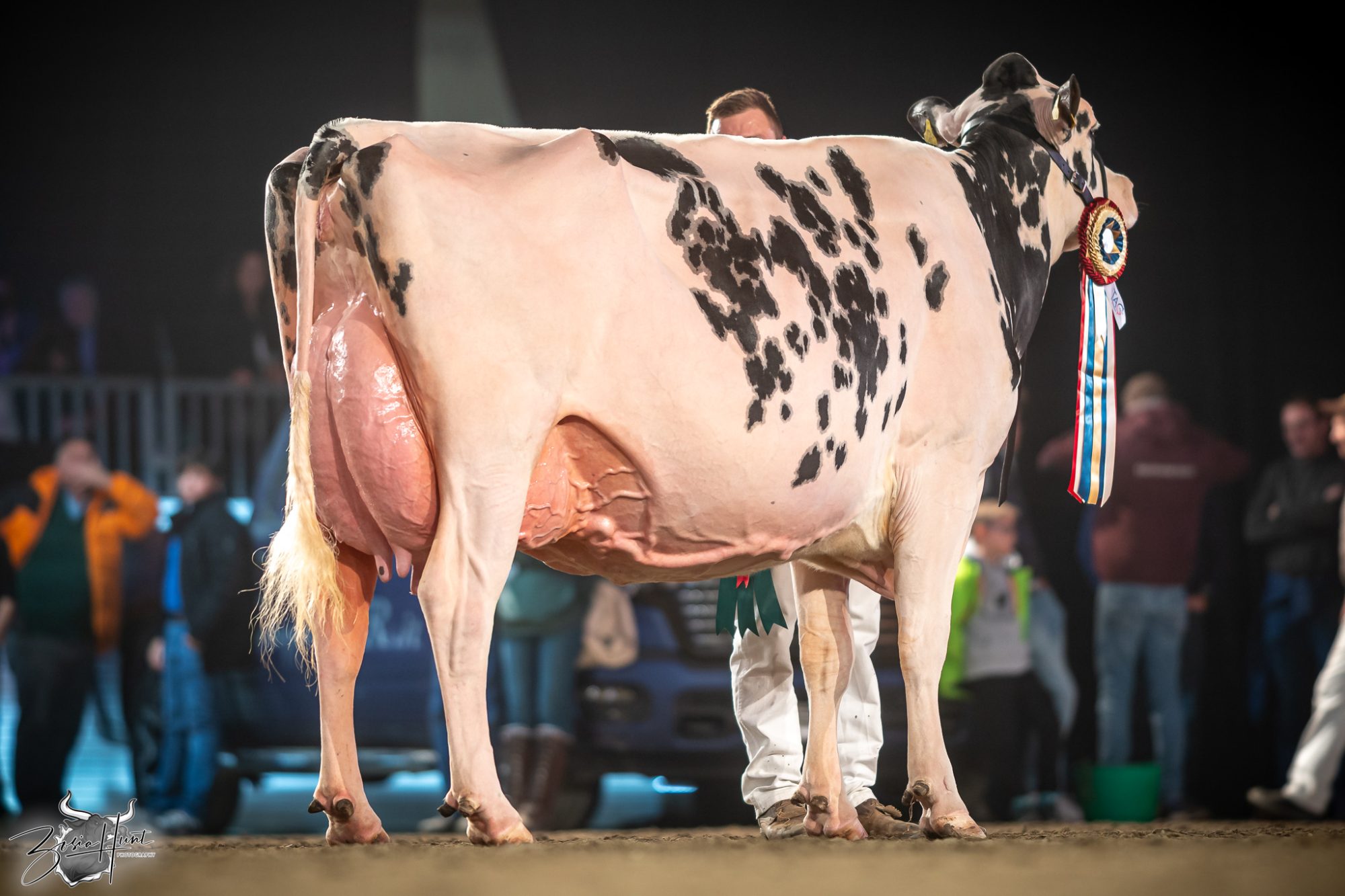
“I don’t have to think long about it: a cow whose loss still hurts me today is certainly Schönhof’s Sid Mailand EX 94.”
The daughter of his childhood gift. He remembers everything about her.
“I can still remember exactly when she calved as a two-year-old in 2014. She had a beautiful udder and was the perfect young cow in my eyes.”
He took her to the Thuringia Holstein Open. Seventh place in her class.
“She placed 7th in her class because she hadn’t yet developed enough to keep up with the others. But I kept hope in her because I love cows that still show development potential at a young age.”
His instinct was right.
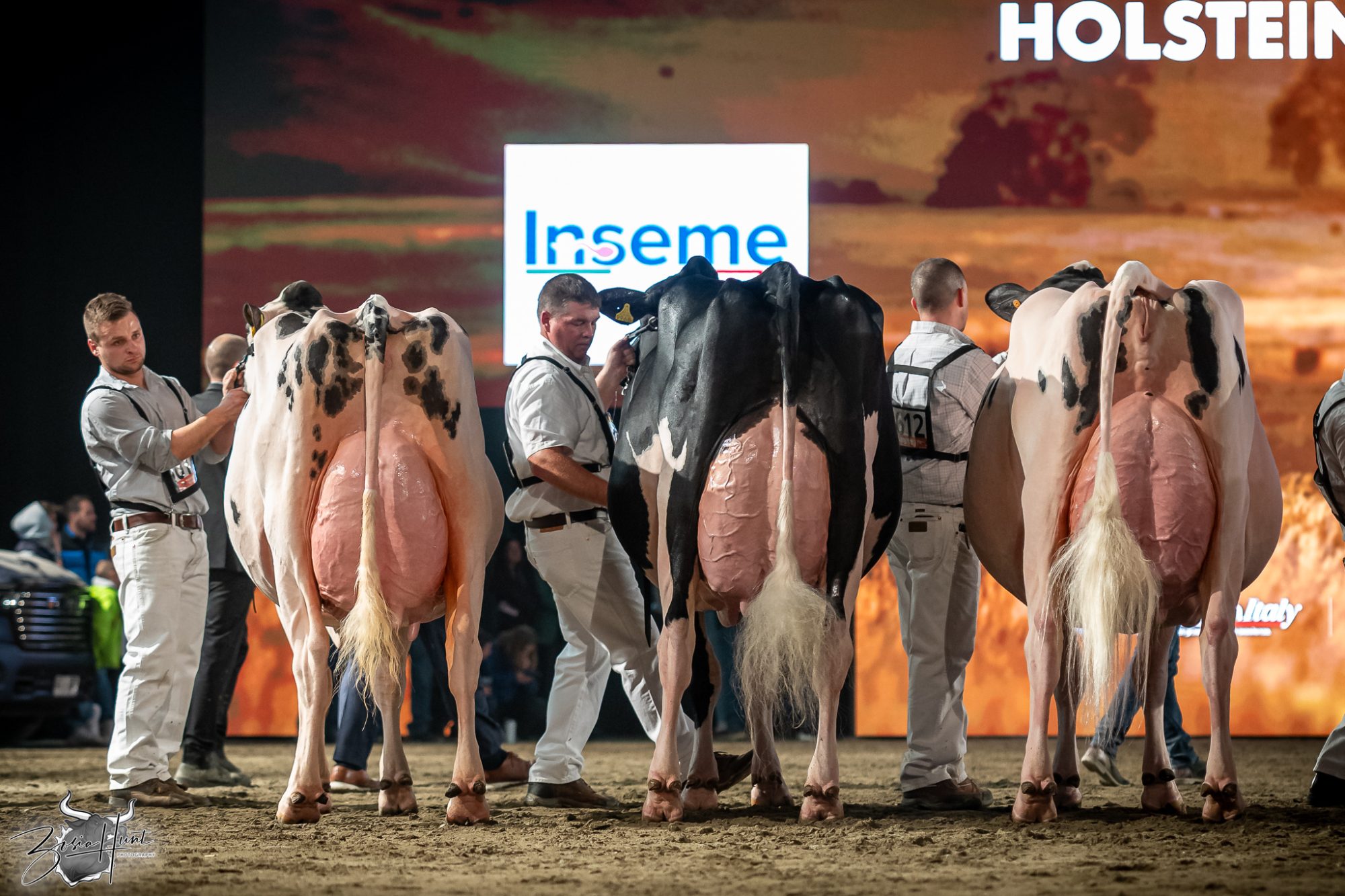
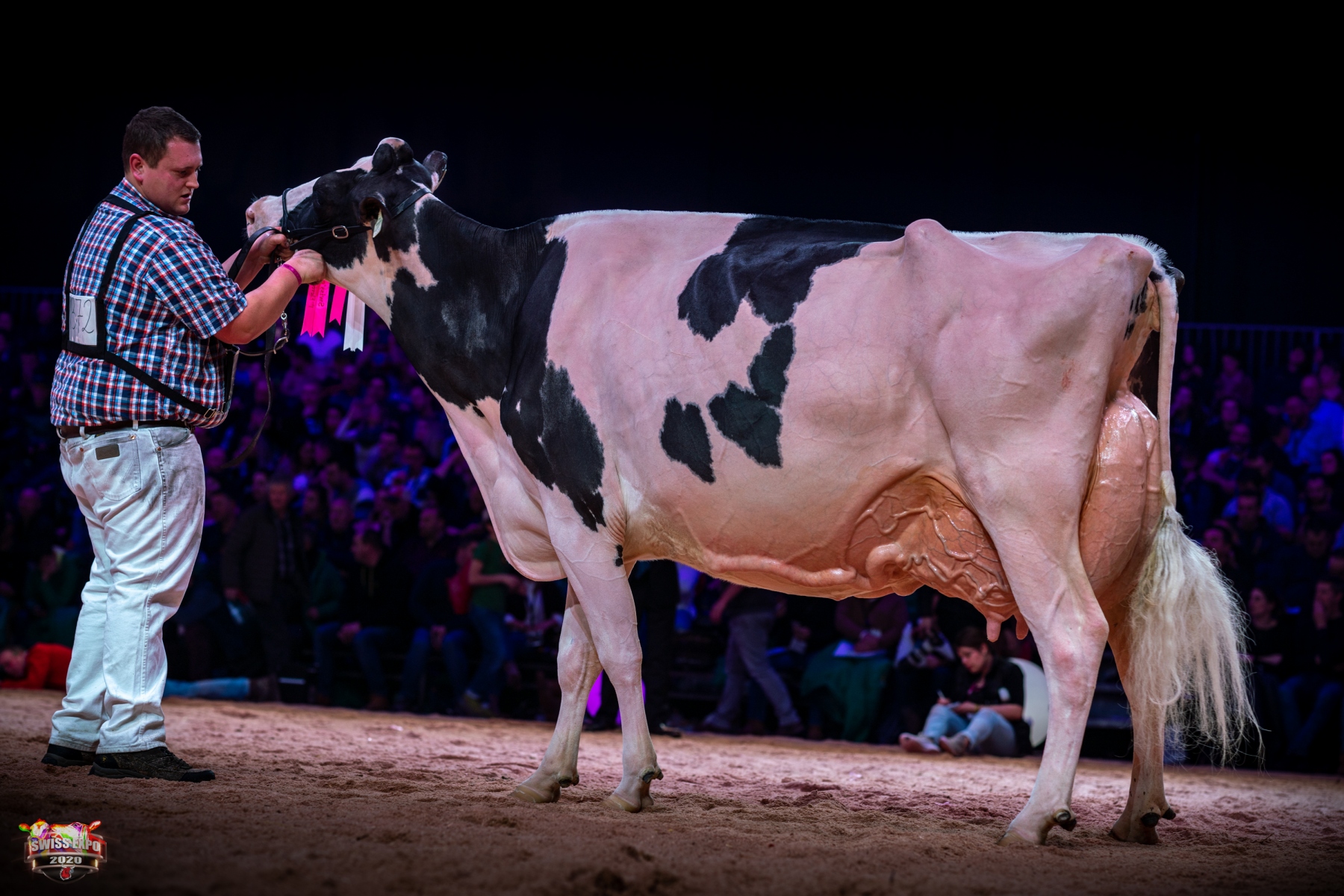
“And it turned out exactly as I hoped. Mailand got better year by year. As a six-year-old, she won the Austrian National Show, had success at the Swiss Expo, and was classified with EX 94.”
And then she was gone.
That’s the brutal math of this business, isn’t it? The cows that make you fall in love are the same ones that break your heart.
The Genetic Boutique Model
Alright, let’s talk economics—because that’s really what makes Schönhof remarkable in the current climate.
With operations like Lactalis cutting 270 farms from their supply chain and industry projections showing dairy numbers dropping from 26,000 to 20,000 farms by 2028, everyone’s asking the same question: can small farms survive?
The Wengers found an answer, but it’s not the one most people expect.
They stopped trying to compete on volume. Completely. Instead, they built what industry analysts are calling a “genetic boutique”—a high-margin operation where every animal is an individual asset rather than a production unit.
“With a smaller herd, you can give each cow individual attention—study her strengths, understand her weaknesses, and make breeding decisions that truly maximize her potential,” Rupert explains. “Bigger operations sometimes spread themselves too thin, trying to manage too many animals at once, and they can lose sight of the details that make the difference at the top level. Success isn’t just about size; it’s about knowing your cows inside out and committing to excellence in every decision.”
Think about what that means in practice. With sixty milking cows, Rupert knows every animal by name, by temperament, by the specific weaknesses in her pedigree that need correcting. Each mating decision is customized. High-potential heifers get show-quality care from birth—daily washing, halter training, coat conditioning.
The revenue model flips the traditional dairy equation on its head. While a commercial Fleckvieh heifer in Austria might sell for €2,000 to €3,000, Schönhof moves elite Holstein show heifers at €25,000 to €45,000 through international auctions—sometimes higher for exceptional animals with the right pedigree and phenotype. Their annual “Show Style Sale” draws buyers from across Europe bidding through a mobile app, while others walk the pens at the farm, examining dams and granddams in person.
They sell approximately 35 breeding cows per year from a 60-cow herd. Do that math, and you’ll see why two families can now live off an operation that their grandparents would have considered undersized.
What Rupert Looks for in a Newborn Calf
I asked Rupert what tells him he’s looking at something special when a calf hits the ground. His answer was immediate—and honest.
“The first thing I will do is for sure check is that it’s a heifer calf!” he laughs. “I love calves with a really long and wide head and a big muzzle. A very long body structure combined with excellent bone quality. For me, these are the best signs to development into a great dairy cow.”
That eye for identifying potential early has been refined over decades. But even more important is what happens after the initial assessment.
The Alpine Advantage Nobody Can Copy
I’ve seen plenty of breeders try to build competitive advantages through genetics alone. Superior bloodlines, genomic testing, careful mating programs—all important, all achievable by anyone with enough capital and connections.
What Schönhof has is something different. Call it a biological moat—a competitive advantage that’s nearly impossible to replicate because it’s built into the landscape itself.
Every heifer at Schönhof spends her summers grazing on alpine pastures, sometimes above 2,000 meters in elevation. Not for romantic reasons. Not because it looks good in marketing photos (though it does—the backdrop of the Steinernes Meer with its 2,600-meter peaks is genuinely stunning). They do it because mountain grazing produces cattle that lowland operations simply cannot.
“Breeding cattle in a rugged Alpine environment naturally creates a different kind of cow,” Rupert says. “Our animals must be functional, strong, and efficient every day. I believe this makes a difference. All of our heifers spend the summer grazing on the mountains, which naturally builds strength, durability, and soundness from a young age.”
The science backs this up. Grazing at altitude forces cardiovascular development—superior lung and heart capacity that translates to better metabolic performance during peak lactation. The rocky, uneven terrain naturally trims and hardens hooves in ways that concrete floors never will. Schönhof cows rarely suffer from the laminitis or soft soles that plague confinement herds. And the alpine forage—rich in diverse grasses and wild herbs—has been shown to improve fatty acid profiles and bump protein percentages.
The Wengers identified a gap in the global market that’s been hiding in plain sight: buyers want “trouble-free” Holsteins. Animals that possess the extreme dairy character of North American show winners but can actually stay sound and healthy through multiple lactations. By importing embryos from elite cow families like Roxy, Apple, and Lila Z, then raising the offspring in Maishofen’s demanding environment, they created exactly that hybrid.
These cattle retain the genetic potential for 15,000 kg lactations. But they also develop the lung capacity, bone density, and hoof integrity that only mountain rearing can build.
Learning From Matings That Failed
One of the things I appreciate about talking to Rupert is that he doesn’t pretend every decision worked out perfectly. And honestly, those failures might be the most valuable lessons for anyone reading this.
“I wouldn’t say there was a real low point,” he tells me when I ask about setbacks. “Of course, there were partnerships, especially at the beginning of our journey, that didn’t work out—but at this point, these are mistakes you need to learn from.”
Take the Atwood daughter from one of their high Type Index families. Beautiful cow, strong pedigree, exactly the kind of animal you’d expect to produce winners with almost any top sire.
“We had a beautiful Atwood daughter from a high Type Index cow family. For this family, we used several different sires, including McCutchen, Durbin, Army, Tattoo, and others, all of which performed well in our herd. However, unfortunately, all of them disappointed us on this family.”
Every single mating failed to meet expectations.
“This experience taught us to place more trust in our own eye and breeding instinct rather than in what the numbers promise.”
When they finally trusted their gut and used Stantons Alligator on that same cow family, they got Dakota.
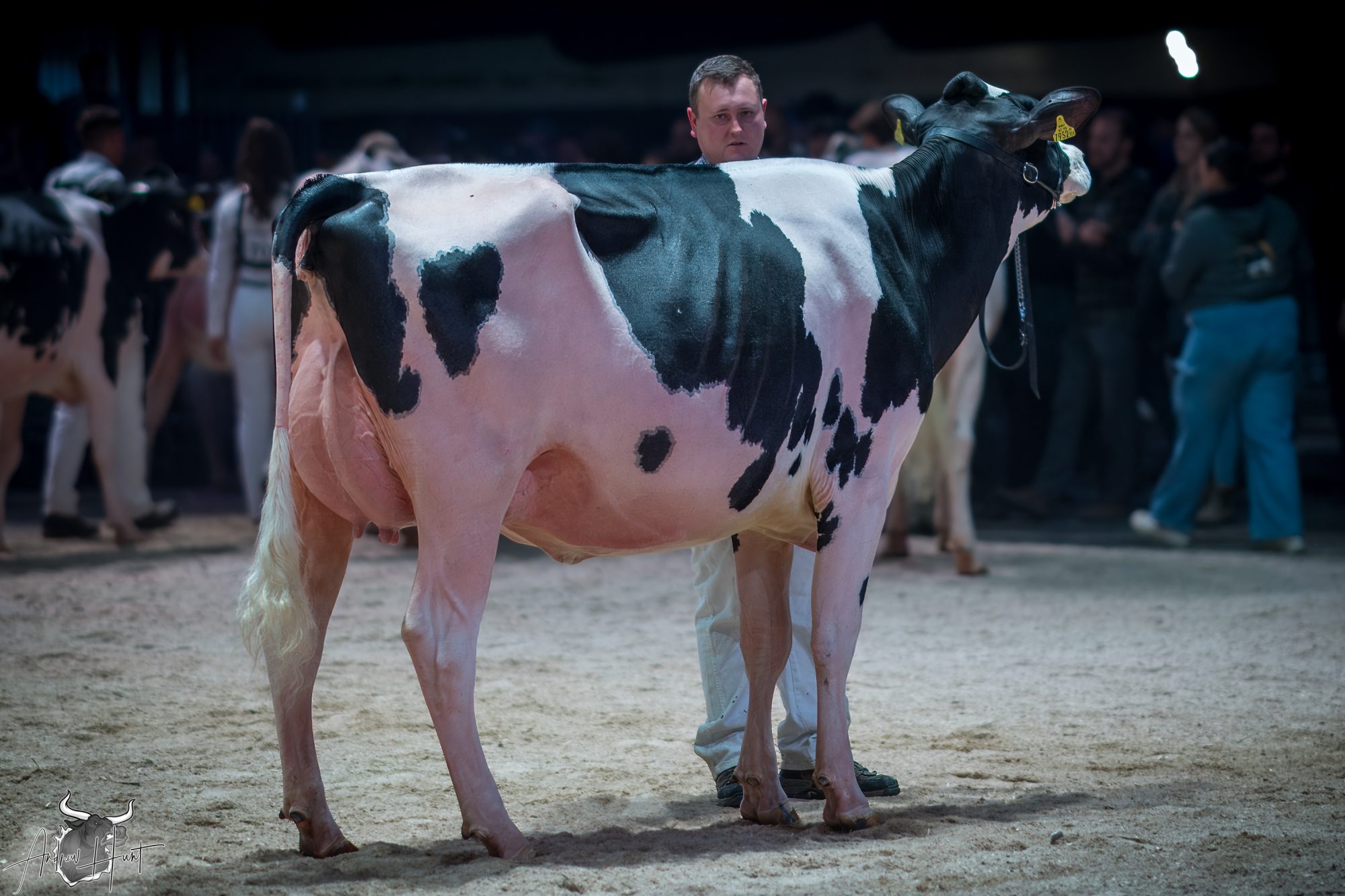
“One of the most successful matings of the last few years was, of course, using Alligator on Dakota’s dam.”
An animal so exceptional that selling her became the hardest decision Rupert has ever made.
The Morning After Dakota Left
“I’m sure the hardest sale was Dakota,” Rupert admits without hesitation. “After we left the ring at the Swiss Expo with her as the class winner, there were many people interested in buying her.”
She was the kind of cow that stops traffic—her topline running true as a level, dairy character etched into every rib, that rear udder attached so high and wide you’d swear someone painted it on. Buyers lined up immediately. Phone numbers exchanged, prices floated, everyone wanting a piece of this cow.
“I set a price that I had never asked for any cow before because I truly believed in her great future. Talking to the buyers was tough.”
The deal went to Mattenhof Holsteins in Switzerland.
“In the end, I did the deal with Mattenhof, and I’m convinced it was the right decision. She is in very good hands there and has grown into an exceptional cow.”
A few months later, Rupert found himself at Expo Bulle 2025, holding Dakota’s halter in the ring. Watching a cow he’d bred take Reserve Grand Champion for someone else.
“That was one of my biggest moments last year—with me on the halter. A cow that we bred, which achieves such a huge success for the new owner, is certainly the best advertisement for us.”
He’s right about that. When Schönhof genetics win for other breeders, it proves the quality is real—not an artifact of Wenger management, not a trick of fitting or timing. The genetic foundation holds up regardless of who’s caring for the animal.
But I wonder about the morning after Dakota’s trailer pulled out of the driveway. The quiet in the barn. The empty spot in the row.
“For me, it is always easier to let a cow go when I know she will be in good hands and will be very well managed.”
That’s the answer he gives, and I believe him. But I also know that some losses don’t get easier, no matter how many times you do this.
The Fitter’s Dilemma
There’s another dimension to Rupert’s work that most people don’t know about. He works as a fitter for other elite herds across Europe—preparing and presenting cattle for some of Schönhof’s direct competitors.
I asked him what goes through his mind when he’s fitting a cow that’s competing against his own.
“Sure, it might have happened before, but it doesn’t make a difference to me,” he says. “Of course, I’m especially happy when one of my own cows has a big success, but in the end, what matters most to me is that the best cow wins, no matter who the owner is.”
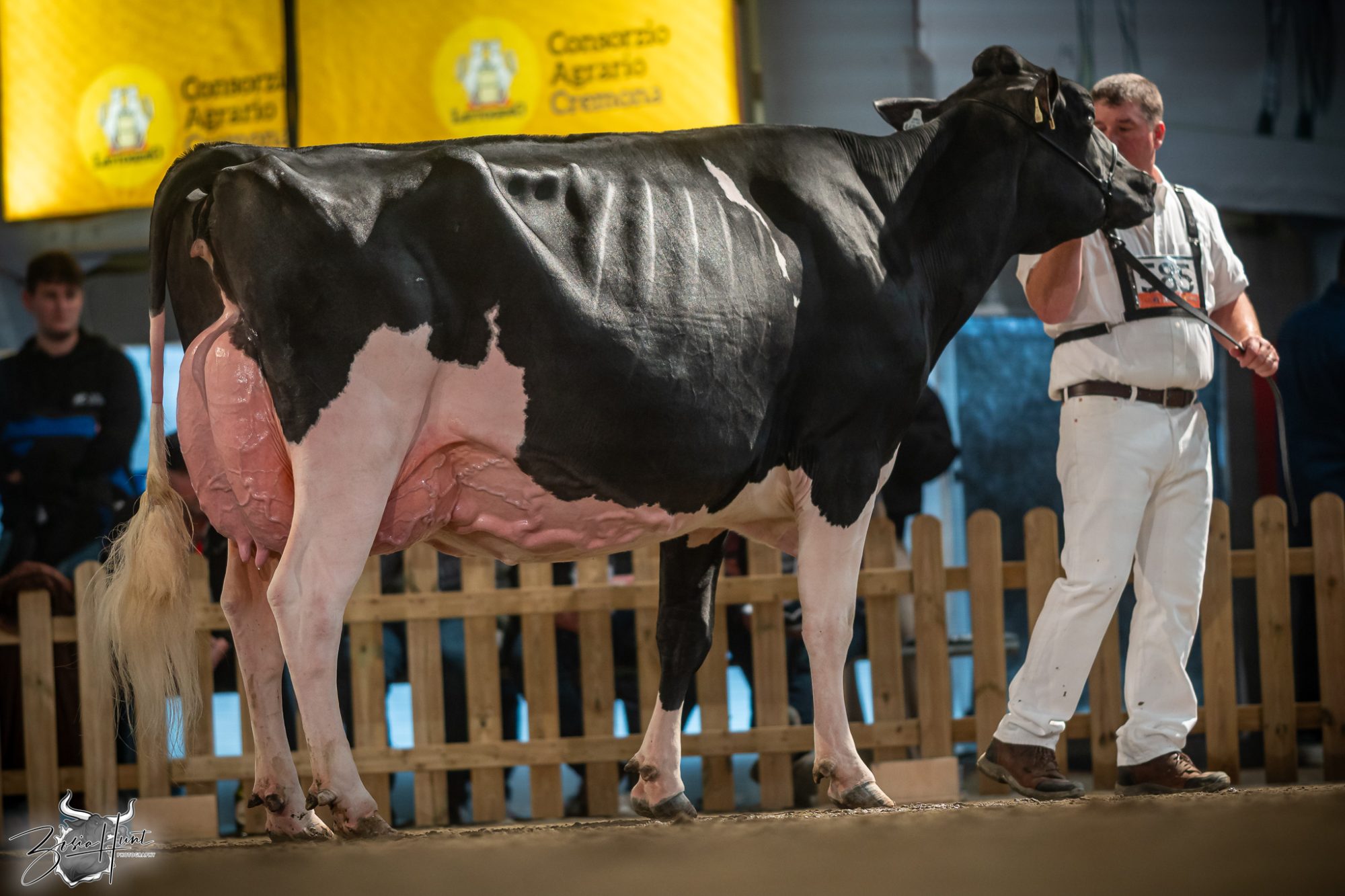
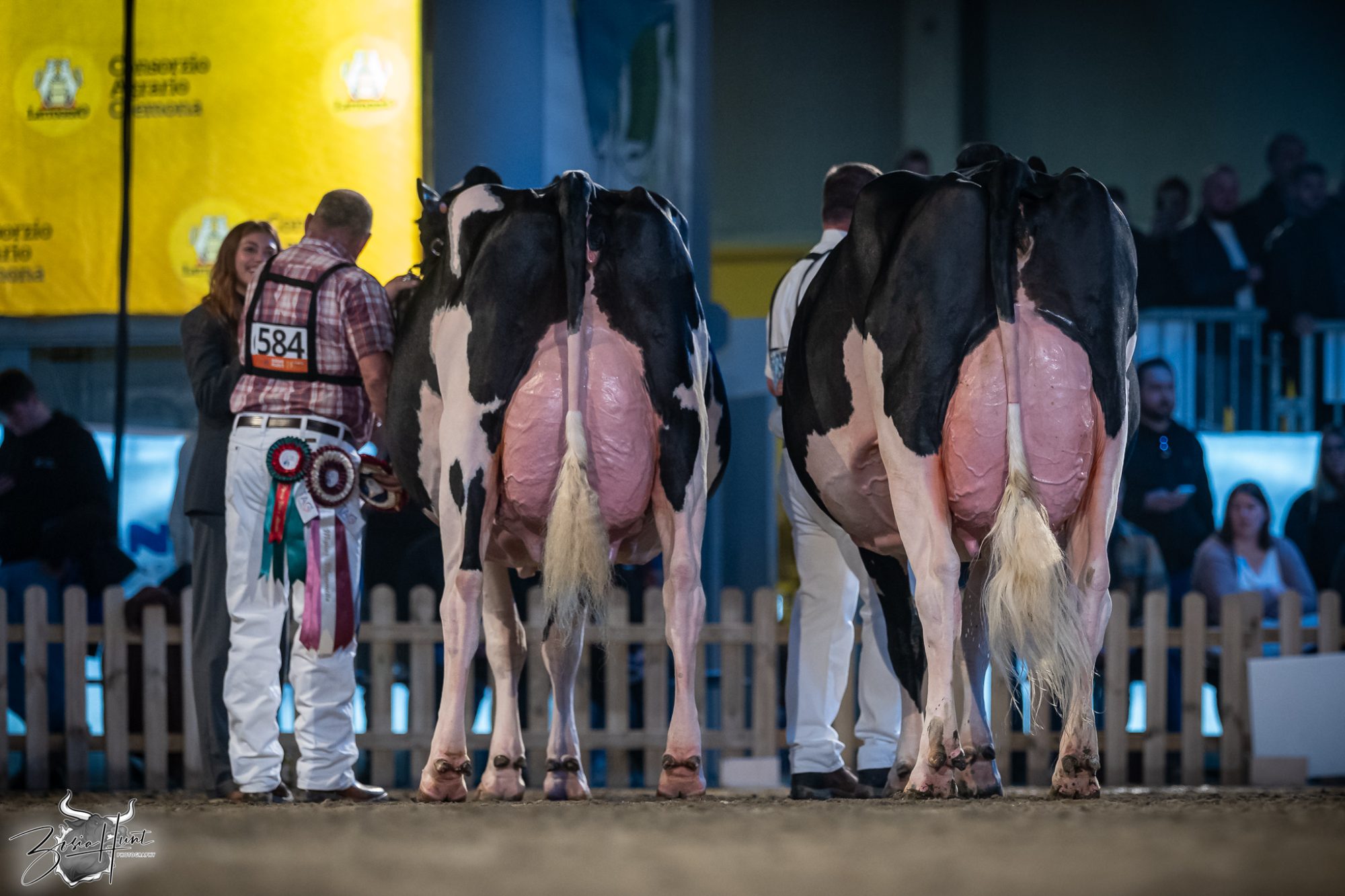
That fitting work has also built relationships that turned into partnerships. Take Martin Rübesam of Wiesenfeld Holsteins in Germany, who co-owned Regale with the Wengers.
“I have worked for Wiesenfeld many times as a fitter, and every time I was there, Martin would spend a lot of time talking with me about breeding and the different cow families. I would say I’ve learned a lot from him and have been inspired by his knowledge and passion. Over time, these conversations made our relationship more than just business—we developed a genuine friendship built on mutual respect and shared interest in the work.”
The Matriarchs Behind the Movement
If you’re going to understand Schönhof’s rise, you need to understand their cow families. These aren’t random accumulations of good animals—they’re carefully curated maternal lines that transmit excellence across generations.
Wiesenfeld Artes Regale EX-90-AT is probably the most significant matriarch in recent Schönhof history. She traces directly back to Glenridge Citation Roxy EX-97—the “Queen of the Breed” that every serious Holstein person knows by name. The Roxy family is legendary for transmitting exceptional udders and structural correctness decade after decade.
Regale was the 2017 Austrian National Champion, co-owned with Rübesam. What makes Regale special isn’t just the show ring success. In her second lactation, she produced 10,719 kg with 3.4% fat and 3.2% protein, then climbed to 12,331 kg in her third. Functional type, proven production. That’s the combination everyone wants.
In Red & White Holsteins, Schönhof Carmano Zamara EX-92-AT anchors everything. Sired by Carmano out of a Talent dam going back to Rubens—basically a who’s who of Red Holstein legends. She won the Junior Champion title at the 2012 Dairy Grand Prix and became a foundation brood cow, whose daughters now headline sales.
The catalog for the Show Style Sale describes her family as “guaranteeing the best udders.” That’s the kind of reputation that takes decades to build.
The Jersey Play
But the Wengers weren’t content to dominate just one breed.
Here’s where Schönhof’s strategic thinking really shows. While everyone in the Type world focuses exclusively on Holsteins, they quietly built a Jersey program that’s become a significant business driver.
“With the Jerseys, it all started as a hobby,” Rupert admits. “But over the years, it has developed very successfully. We have had great national as well as international successes with our Jerseys.”
The results speak for themselves. Schönhof Tequila Jasmine won Junior Champion at the Jersey Show in Lausanne (Swiss Expo) in 2018. SCH Salome captured the Junior Champion at the International Show Cremona 2023. Three class winners at the Swiss Expo overall.
“We sold Schönhof’s Tequila Hailey to HiHu Holsteins. She was a multiple National Champion and also had great success in Switzerland. Among our greatest achievements with the Jersey breed are three class winners at the Swiss Expo, Junior Champion at the Swiss Expo, and Junior Champion at Cremona. This is why we built a large business selling Jersey heifers and cows in the last few years.”
This diversification does two things. First, it hedges against market risk—if Holstein demand softens, Jersey demand often moves in the opposite direction. Second, it opens up an entirely different customer base: breeders focused on components and boutique cheese production rather than volume.
Smart farms find multiple revenue streams. Schönhof found one that also happens to work perfectly with their geography.
The Night They Swept Cremona
The International Dairy Show in Cremona, Italy, serves as the de facto European Championship most years. French, Italian, Swiss, German, Austrian—everyone brings their best, and the competition is brutal.
In 2025, Schönhof achieved what almost no non-Italian herd ever manages: Premier Breeder and Premier Exhibitor in both Red & White and All Breeds categories.
But here’s the moment that captured it for me.
Rupert was in the back pens, still getting cows clipped and ready for the Grand Champion finals. The sharp smell of show foam in the air, the constant hum of blowers, and animals shuffling nervously.
“We were just very busy getting the cows ready for the Grand Champion finals when I was called to come ringside,” he recalls. “I could hardly believe it when I was called into the ring and received the trophies. It was a special feeling to celebrate such great successes at Europe’s most important show.”
What makes Premier Breeder so significant—more than Premier Exhibitor—is what it proves about the source of quality. Winning Premier Breeder means you bred the most winners, not just showed them. It means the Schönhof prefix produces excellence, not just purchases it.
Dempsey Melinda took first in the mature cow class. Moovin Rock It placed second in the four-year-olds. Animals from cow families the Wengers have been building for two decades.
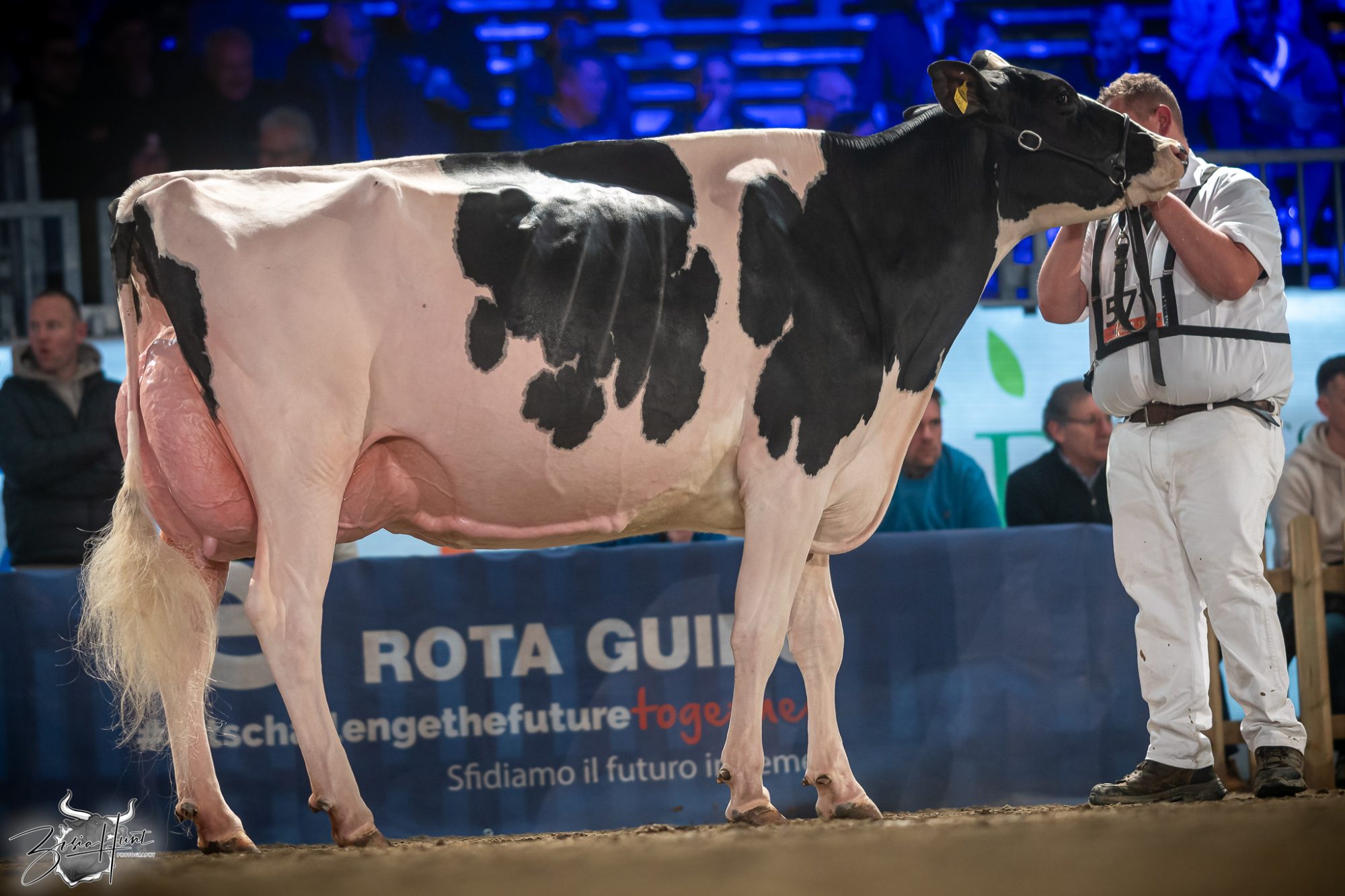
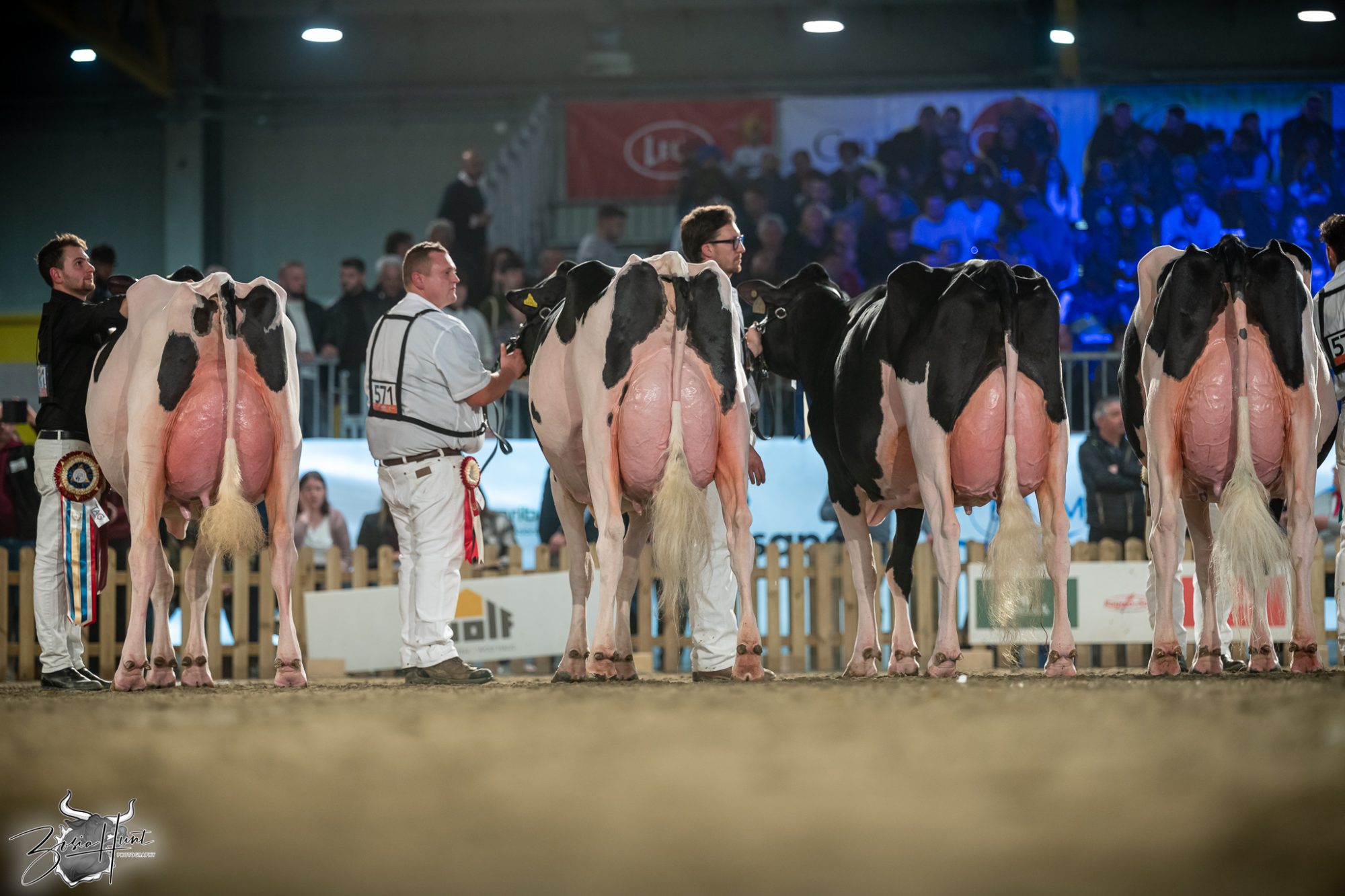
And then, a few weeks later, the European Breeder of the Year vote confirmed what Cremona had suggested. The small Austrian farm had beaten the giants.
What They Don’t See From the Road
Tourists drive through Maishofen every summer on their way to Zell am See. They see the picturesque farm, the historic architecture typical of the Salzburg region, and the glacier views that look like postcards.
They don’t see what the European Breeder of the Year actually costs.
“Tourists driving through Maishofen might see a picturesque Alpine farm, but they would never guess the pressure behind the scenes,” Rupert says. “The long days and constant attention to every detail are what it really takes to reach a level like European Breeder of the Year. It’s not just about beautiful cows—it’s about careful breeding, managing, planning for shows, and making decisions that affect the future of the herd. Behind every success, there’s a lot of hard work, dedication, and sometimes tough choices that most people never see.”
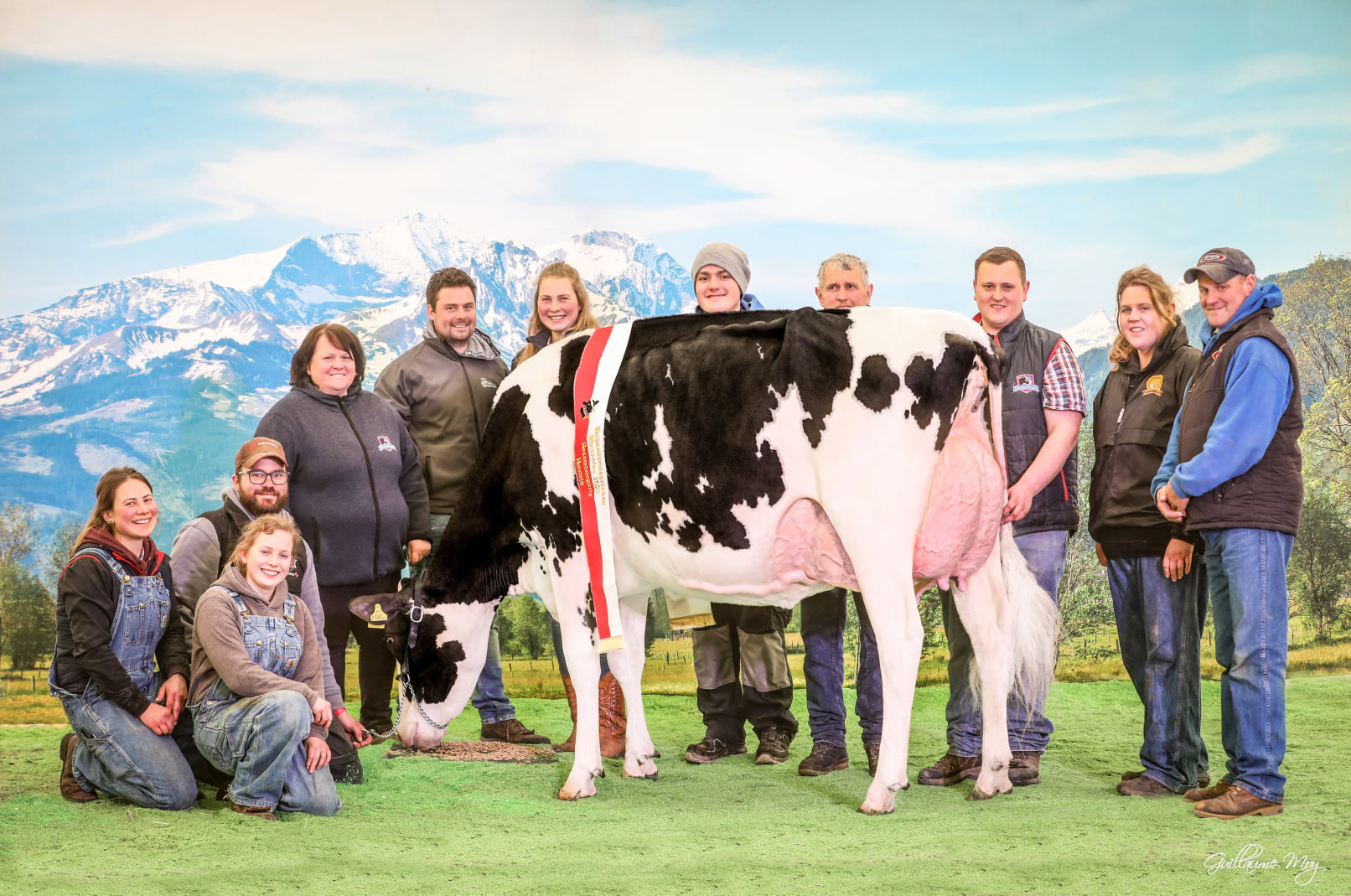
A Family Machine
The family operation runs on carefully orchestrated chaos—the kind that looks effortless from outside but requires constant coordination. I asked Rupert to walk me through who does what.
“My sister Steffie mainly takes care of the calves and manages the two milking robots,” he explains. “My father is responsible for feeding the cows and runs the farm together with my mother. Steffie’s husband, Thomas, handles the inseminations, working professionally as an independent insemination technician. My responsibilities are feeding and preparing the show cows. In addition, I handle the marketing and selling for our farm. Every year, we organize an elite auction on our farm, featuring around 80 lots called Show Style Sale.”
His father still serves as chairman of the Salzburger Holstein Association—shaping breeding policy for a region that’s historically favored Fleckvieh.
And his mother? The one who’s less visible in the headlines?
“My Mum is very important to us,” Rupert says, and you can hear the genuine appreciation in his voice. “She works hard at the office, managing payments and overseeing the finances. She is organized, responsible, and always makes sure everything runs smoothly. We are very grateful for everything she does, both at work and at home, and we truly appreciate her dedication and care.”
It’s a family machine, each person essential.
What’s Next in the Maishofen Barn
Even at the peak of European breeding, Rupert’s attention is already on what’s coming.
“There’s just a fresh milking yearling, Harris—she calved two days ago,” he tells me, and the energy in his voice shifts immediately. “She’s my kind of cow: very balanced, with a very promising udder. If she stays healthy, I believe she has a very bright future ahead.”
And then there’s the Moovin daughter from Dakota, due in April.
“She looks a lot like her dam did as a heifer, and I can’t wait for her to calve. This could be a perfect mating.”
The farm is also positioning for the industry shifts coming, whether we’re ready or not. They’re using polled bulls like Solitair Red Pp—betting that animal welfare pressure will drive demand for genetically hornless cattle. The gap between “show type” and “genomic index” breeding keeps widening, and Schönhof will need to find sires that bridge both worlds.
Some industry observers have speculated about North American ambitions—whether we might ever see a Schönhof-bred animal on the colored shavings at World Dairy Expo. With their Eurogenes connections and current trajectory, it’s certainly within the realm of possibility.
For a farm that was milking twenty Fleckvieh in tie-stalls just twenty-five years ago, I wouldn’t bet against them.
What This Means for the Rest of Us
If you’ve read this far, you’re probably wondering what actually applies to your operation. Here’s what I’d pull from the Schönhof story.
Individualized management beats protocol at the top level. This isn’t news to anyone who’s bred show cattle, but it’s worth remembering when the industry keeps pushing toward standardization. Sixty cows, given intense individual attention, outcompeted herds ten times their size. There’s a lesson there about knowing your animals—really knowing them, not just their tag numbers.
Geography can be a strategy. The Wengers didn’t fight against their mountain location—they turned it into a competitive advantage. Whatever your unique circumstances are—climate, land base, local market, family expertise—there might be ways to leverage them rather than apologize for them. Every farm has something that makes it different. The question is whether you’re using it.
And patience compounds. When I asked Rupert what advice he’d give a young breeder with twenty cows dreaming of competing at this level, he didn’t hesitate:
“Focus on patience and careful selection. Don’t rush decisions just because something looks good in the moment. Take your time to understand each cow’s strengths and weaknesses, plan your breeding carefully, and always think about the long-term development of your herd. Success doesn’t come overnight—it comes from consistent, hard work.”
Twenty-five years from Fleckvieh tie-stalls to European Breeder of the Year. That’s what patience looks like when it’s backed by vision.
The Real Point
Look, I could have told this story as a simple underdog narrative. Small farm beats the giants, feel-good ending, everyone goes home inspired.
But that’s not really what happened here.
What happened is that a family made a decision that seemed crazy at the time—Holsteins in the mountains, really?—and then executed with relentless discipline for a quarter century. They culled profitable cows that didn’t meet the Type standard. They walked heifers daily when nobody was watching. They traveled thousands of kilometers to compete against the best and learned from every seventh-place finish along the way.
When Rupert talks about what Schönhof represents, he doesn’t lead with the trophies.
“It’s that our work is built on passion, dedication, and care for every single cow,” he says. “Success is not just about winning shows; it’s about building a herd with strong genetics, healthy animals, and a team that treats each cow like part of the family. That attention to detail and love for what we do is what truly sets Schönhof Holsteins apart.”
At the end of a long show day—after the banners are won and the crowds have gone home—what makes all of it worth it?
“Seeing all the hard work over the past weeks finally pay off,” Rupert answers. “And for sure, hanging out with people, making friends, having a few drinks, and just enjoying a good time.”
That’s the dairy industry at its best, isn’t it? The combination of intense competition and genuine community. The sleepless nights and the celebrations that follow. The cows you lose and the ones you can’t wait to see calve.
Sixty cows. Three thousand meters. And a title that nobody saw coming—except maybe a ten-year-old boy who got a calf named Mailand and never looked back.
KEY TAKEAWAYS
- The boutique math: 35 cows sold annually × €25,000-€45,000 each = two families thriving on 60 cows. Size isn’t the strategy—value per animal is.
- When the numbers lie, trust your eye: Elite sires McCutchen, Durbin, Army, and Tattoo all failed on one cow family. Schönhof ignored the genomics, used Alligator on instinct, and got Dakota—Reserve Grand Champion at Expo Bulle 2025.
- Your “disadvantage” might be your moat: Alpine grazing above 2,000 meters builds lung capacity and hoof hardness that lowland genetics can’t replicate. The Wengers turned geography into a competitive advantage.
- Patience compounds—there are no shortcuts: 20 Fleckvieh in tie-stalls → European Breeder of the Year took 25 years of better decisions stacked on better decisions.
- Hobbies become hedges: The Jersey program started for fun. Now it’s delivering Junior Champions at the Swiss Expo and Cremona, and opened an entirely new customer base.
Continue the Story
- Quality Over Quantity: The Story of Petitclerc Holsteins – Much like Rupert’s journey above the clouds, this family walked a similar path of transformation. They prove that a relentless focus on elite type can turn a modest herd into a global powerhouse, echoing the Wenger philosophy that excellence isn’t measured in head count.
- The Boutique Breeder: Is This the Only Way for Small Farms to Survive? – To truly grasp the world Rupert is navigating, you have to understand the economic shift toward high-margin genetics. This deep dive examines the market forces that make the Wengers’ “genetic boutique” model a vital blueprint for the future of the family farm.
- Youth in the Ring: Why the Future of Breeding Rests on the Next Generation’s Shoulders – Rupert’s story began with a childhood gift, and this piece carries that legacy forward. It explores how the next generation is being mentored to trust their eye, ensuring the passion for the great ones remains the heartbeat of the industry.
 Join the Revolution!
 Join the Revolution!
Join over 30,000 successful dairy professionals who rely on Bullvine Weekly for their competitive edge. Delivered directly to your inbox each week, our exclusive industry insights help you make smarter decisions while saving precious hours every week. Never miss critical updates on milk production trends, breakthrough technologies, and profit-boosting strategies that top producers are already implementing. Subscribe now to transform your dairy operation’s efficiency and profitability—your future success is just one click away.




