73% of dairy farms can’t find workers, but smart producers are hitting 35% pregnancy rates with one simple tech upgrade
EXECUTIVE SUMMARY: Look, I’ve been watching this sort gate revolution unfold across the country, and honestly? Most producers are still sleeping on the biggest efficiency play of 2025. While everyone’s arguing about feed costs and milk prices, the smart operators are quietly banking $45-75 per cow annually just by automating their breeding management. These aren’t pie-in-the-sky numbers either—we’re talking about real operations hitting 34-35% pregnancy rates consistently, cutting labor from hours of daily lockups down to 15 minutes of actual work.The labor shortage isn’t getting better (73% of dairies can’t find qualified workers), but sort gates are solving two problems at once… better reproduction and less dependence on finding good help. Global trends are pushing toward precision agriculture anyway, and the processors are starting to demand the welfare documentation these systems provide. If you’re still manually sorting cows every day, you’re basically handing your competitors a 20% efficiency advantage.
KEY TAKEAWAYS
- Cut reproductive labor by 85% while boosting pregnancy rates to 35%+ — Start by evaluating your current cow flow design and sort pen capacity, because facility bottlenecks kill ROI faster than anything else
- Bank $45-75 per cow annually through reduced days open and lower sync costs — Pair sort gates with activity monitors to breed 85% of cows off natural heat, cutting synchronization drug expenses by $12 per head
- Future-proof against 2025 labor shortages with 18-24 month payback periods — Focus on labor savings over reproductive gains if you’re under 1,000 head, but target both benefits for mid-size operations where the economics really shine
- Meet processor sustainability demands while building operational resilience — The data infrastructure these systems provide is becoming table stakes for major dairy contracts, not just a nice-to-have feature
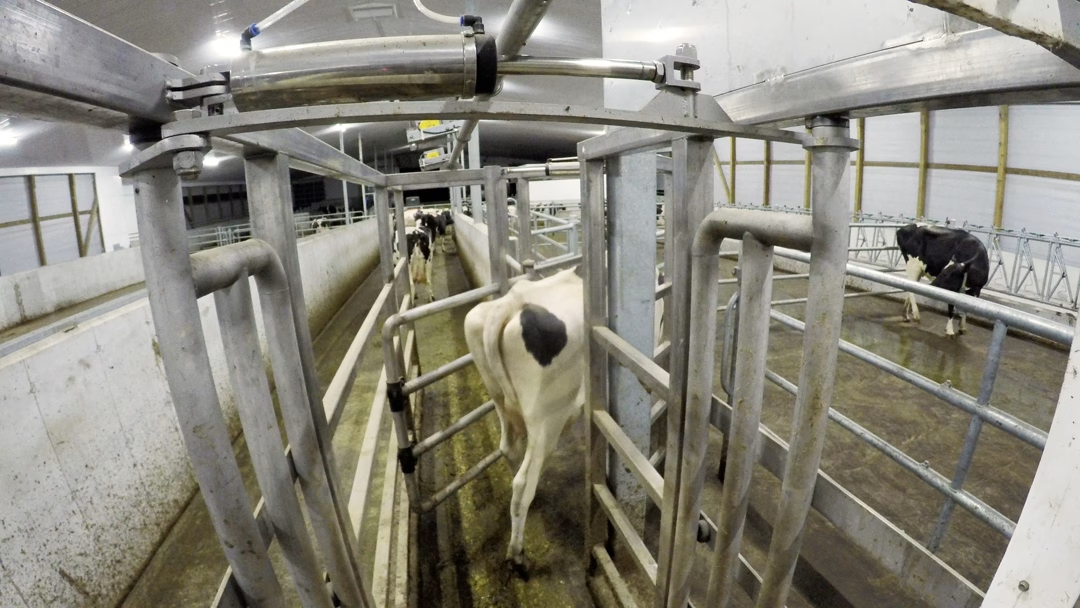
You know what’s been eating at me lately? It’s not the usual suspects—milk prices doing their roller coaster thing or Washington’s latest regulatory circus.
No, it’s watching some operations quietly build these massive competitive advantages while others are still handling reproduction like we did when Clinton was in office. I’ve been tracking the progress of automated sort gates across different regions, and honestly, the performance gap between early adopters and traditional operations is widening every single month.
With everything shifting in 2025—labor markets tightening, processor demands increasing, regulatory pressures mounting—the operations that have figured out how to make reproduction management work with their constraints instead of against them? They’re building advantages that’ll be tough as hell to catch up to.
And here’s what’s really got my attention… they’re doing it with sort gates. Yeah, I know what you’re thinking—another piece of equipment promising to solve all our problems. But stick with me here, because what I’m seeing is pretty compelling.
The Performance Numbers That Made Me Look Twice
So I’ve been digging into what’s actually happening out there, and what strikes me immediately is the consistency. From Wisconsin’s traditional dairy heartland to California’s mega-operations, producers who have embraced automated sorting are consistently achieving pregnancy rates that would make most of us do a double-take.
Now, if you’ve been milking cows for any length of time, you know that reproductive performance is where the rubber meets the road. According to recent work published in the Journal of Dairy Science, the industry has seen significant improvements in reproductive efficiency over the past decade, with top-performing herds consistently achieving pregnancy rates of 30% or higher.
But here’s where it gets interesting… operations using sort gates are pushing these numbers even higher. The key point about reproduction metrics is that they’ve become the best predictor of overall farm profitability. What’s particularly fascinating is how this technology is changing the game entirely.
A producer I know in the upper Midwest—he’s running about 2,800 head through a double-24 parlor—told me his automated system has transformed his operation. But what really stuck with me was when he said, “We realized we couldn’t keep locking up cows every day. That approach wasn’t sustainable anymore, not with our labor situation.”
Think about that for a second. Nearly three thousand cows, and they’ve basically eliminated the daily sorting circus that most of us just accept as part of the job. How many operations are still doing things that way because… well, because that’s how we’ve always done it?
The Labor Reality That Should Scare Us All
Here’s where this gets really interesting—and honestly, where I think most people are missing the boat completely. The labor efficiency gains aren’t just about saving a few minutes here and there. They’re about fundamentally rethinking how we approach reproduction management in what’s becoming a new reality.
What’s happening across the industry… and this is where it gets concerning… we’re dealing with workforce challenges that aren’t going away. Research from the National Milk Producers Federation indicates that 73% of dairy operations report difficulty in finding qualified workers, with some regions experiencing even higher percentages.
Here’s what’s particularly noteworthy about sort gate installations: they’re changing the labor equation entirely. Studies from the University of Wisconsin Extension show that operations using automated systems can reduce labor requirements by 0.15 to 0.30 hours per cow per week when properly implemented.
Instead of having your best people spend hours doing routine sorting, you’re reallocating them to higher-value activities. One operation I visited cut their daily sorting time from over two hours to about 15 minutes of actual hands-on work.
A producer running 1,800 head out in the Pacific Northwest shared something that really opened my eyes: “The cows spend maybe 15 minutes getting sorted through the system, then they’re back doing what cows do best. Plus, we’re seeing better foot health because they’re not locked up for hours at a time.”
But here’s what really gets me fired up about this… and this is where I think we need to be brutally honest with ourselves. Are we truly prepared for what’s to come regarding labor availability? The trends I’m seeing suggest that this is only going to get tougher.
What’s Really Happening Behind the Scenes
The smartest operations—and this is where experience really shows—aren’t just dropping these systems into their existing routines. They’re completely reimagining their approach to reproduction management.
What strikes me about some of these installations is the systems thinking involved. One operation I visited integrated hormone delivery directly into their rotary parlor system. No more separate handling, no more bottlenecks, and no more compliance headaches. That’s the kind of integration that separates leaders from everyone else.
The thing about modern reproduction protocols is they’re getting more precise, not simpler. Research from Cornell University’s dairy program shows that when you combine synchronization programs with precision technology, you’re looking at cutting time to pregnancy by 16 days while dropping your open cow percentage by seven percentage points.
What’s particularly fascinating is how different regions are adapting this technology. In the upper Midwest, where you’re dealing with older barn designs that don’t have 1-to-1 headlock ratios, these systems are solving problems that would be nearly impossible to handle efficiently with traditional methods. Meanwhile, in California’s sprawling operations, they utilize multiple sorting points to handle massive throughput without creating stress points.
And here’s something that caught my attention recently… the seasonal considerations are more complex than I initially thought. In regions with harsh winters, the technology needs different specifications. Some operations in the north are switching to electric actuators for improved cold-weather reliability. Small details, but they make or break a significant investment.
Let’s Talk Real Money—Because That’s What Matters
With feed costs finally giving us some breathing room this year and milk prices showing some stability, there’s actually a window here to reallocate capital toward efficiency technology instead of just throwing more money at expensive inputs.
Here’s where the economics get interesting. University of Wisconsin dairy economics research indicates that every day a cow remains open incurs a loss of roughly $3.50 to $5.50 in revenue at current milk prices. When you improve pregnancy rates from industry average levels to what we’re seeing with sort gate installations, you’re looking at recovering substantial days open over a lactation cycle.
The real value comes from multiple factors working together. Pairing these gates with activity monitors (which is becoming more common) allows operations to breed most of their cows off observed heat rather than relying entirely on timed AI protocols. According to research published in the Journal of Dairy Science, farms using precision reproduction technologies can achieve conception rates 8-12% higher than those relying solely on visual heat detection.
One operation I know personally is breeding about 85% of their cows based on observed heat, which cuts their synchronization drug expenses by roughly $12 per head annually. That adds up fast when you’re talking about larger operations.
The investment runs what you’d expect for farm automation—significant enough to require careful consideration, but manageable for operations ready to leap. Industry analysis from Progressive Dairy suggests most producers are looking at payback periods in the 18-24 month range, which works even with current financing costs.
But here’s where it gets interesting for different operation sizes… and this is something most equipment dealers won’t tell you upfront. With fewer than 1,000 head, you’re essentially looking at this as a labor-saving investment rather than a reproductive improvement tool. The economics change significantly based on scale.
What’s your operation’s sweet spot? Are you thinking about this the right way?
The Technical Reality Check (And Where Things Go Wrong)
Now here’s where I need to be completely straight with you… these systems aren’t plug-and-play solutions. The facility design piece is absolutely critical, and it’s where I see most failures happen.
Poor cow flow design is the number one reason installations underperform. You can have the best technology in the world, but if your exit lanes are undersized or your sort pens create backups, you’ll undermine the entire efficiency advantage. Research from the University of Wisconsin dairy facilities team shows that successful installations require holding areas that are 20-30% larger than what most producers initially plan for.
I was just talking to a producer in northern Minnesota who learned this the hard way—their air-powered components kept experiencing issues during cold snaps because they hadn’t undergone proper winterization. A small detail, but it shut down their entire sorting operation for three days during the breeding season. That’s the kind of oversight that can make or break your reproductive program.
Electronic ID systems also require regular attention. Tag failures, even at relatively low rates, compound quickly when you’re missing heats. Work from the Journal of Dairy Science on RFID reliability shows that successful operations maintain tag read rates above 98% through consistent monitoring and replacement protocols.
What I find fascinating is how climate and regional factors affect these installations. In the Southeast, humidity presents different challenges than those found in the Pacific Northwest. In the upper Midwest, winter conditions require completely different specifications. Are you planning for your specific regional challenges?
What’s Actually Working in Practice
The precision we’re seeing with modern heat detection technology is genuinely impressive. Recent studies published in the Journal of Dairy Science have shown that current automated monitoring systems are achieving heat detection rates of 87-95% with specificity rates exceeding 95%. That’s the kind of accuracy that changes the game, especially when you’re dealing with high-producing cows where timing is everything.
What’s particularly noteworthy is how this technology is handling the more intensive protocols that are becoming standard practice. High-producing cows—those weighing 80 pounds or more—are showing particularly good results with these integrated approaches.
But here’s the thing… and this is where I think many producers miss the mark. The technology is only as good as your protocols. If you’re still using outdated synchronization programs or inconsistent timing, the sort gates won’t magically fix your reproductive performance. It’s like putting racing tires on a car with a blown engine—the fundamentals still matter.
The dealer relationship piece is absolutely critical. When the gates go down, your whole breeding program stalls. That’s not just an inconvenience—it’s lost income. The support structure needs to be bulletproof, especially during those first few months when you’re still learning the system.
Regional Variations and What They Mean
What’s interesting is how these systems perform differently across different regions and operational types. In the Pacific Northwest, where you’re dealing with larger pen sizes and different facility constraints, the approach is completely different than what you’d see in traditional dairy regions like Wisconsin or New York.
The seasonal considerations are more complex than most people realize. In regions with harsh winters, different specifications are required for the air-powered components. Some operations in the north are switching to electric actuators for improved cold-weather reliability. Meanwhile, in hot climates, electronic components require more effective cooling systems to maintain reliability.
Here’s something that recently caught my attention… California operations are finding that sort gates help them comply with heat stress regulations by reducing the time cows spend in holding areas during hot weather. It’s an unintended benefit that’s becoming increasingly valuable as regulatory pressure increases.
The regulatory landscape is shifting in ways that favor these technologies. Animal welfare considerations are pushing operations toward systems that minimize stress and handling time. Sort gates aren’t just efficiency tools—they’re welfare improvements that happen to boost productivity. That’s a trend I expect to accelerate.
The Hidden Challenges Nobody Talks About
Here’s the reality check that needs to be said… these systems require a fundamental mindset shift. You’re moving from hands-on, daily cow contact to algorithm-driven management. That’s not just a technology change—it’s a cultural transformation that affects everyone on the farm.
Staff training becomes absolutely critical. The technology is only as smart as the protocols you feed it, and if your team isn’t bought into the system, you’ll struggle with adoption. I’ve seen operations where resistance from long-time employees created months of implementation challenges and suboptimal performance.
The data management aspect is also significant. These systems generate enormous amounts of information, and if you’re not set up to analyze and act on it, you’re wasting the investment. You need someone on staff who can interpret the data patterns and make management decisions based on what the system is telling you.
And here’s something that might surprise you… the most successful installations I’ve seen had dedicated staff time allocated to system management. Not just maintenance, but actual data analysis and protocol adjustment. That’s a hidden cost that many operations don’t factor into their ROI calculations.
Is your operation ready for this kind of technological and cultural shift?
Where the Industry is Heading (And Why 2025 Matters)
What’s really driving adoption is the convergence of several trends hitting simultaneously. Labor constraints, welfare expectations, consumer demands for transparency, and the push for precision agriculture are all pointing toward solutions like automated sort gates.
What are the sustainability reporting requirements that major processors are implementing? These systems provide the data infrastructure to document welfare improvements and operational efficiency gains that buyers are increasingly demanding. This development is particularly noteworthy because it’s creating market incentives for technology adoption beyond just internal efficiency gains.
What strikes me is how this technology is becoming a table stake rather than a competitive advantage. Early adopters are seeing benefits now, but as the technology becomes more widespread, it will be a requirement for staying competitive rather than a differentiator.
And here’s something that should concern us all: the operations that don’t adapt will find themselves at a significant disadvantage. Not only in terms of efficiency, but also in meeting the evolving expectations of processors and consumers. The 2025 market is increasingly rewarding precision and consistency over just volume.
Your Strategic Decision Framework
After spending months talking to producers across different regions who’ve made this leap, here’s my take on what this means for your operation. The economics and implementation strategies are dramatically different depending on your scale…
For operations with fewer than 1,000 heads, your focus should be on labor efficiency gains rather than reproductive improvements. Economics work best when dealing with chronic labor shortages or high turnover. Consider shared arrangements with neighboring operations or explore options that make the investment more manageable.
But here’s the thing—if you’re hemorrhaging labor or can’t find reliable help, the ROI calculation changes dramatically. One 800-cow operation I know cut their daily sorting time from 2.5 hours to 20 minutes. That’s not just efficiency—that’s the difference between having a herdsman or not.
For mid-size operations (1,000-3,000 head): This is where sort gates really shine. You’ve got enough scale to justify the investment without the complexity of massive facilities. Integration with existing systems and facility design optimization becomes a critical success factor.
Don’t try to retrofit inadequate facilities—invest in proper cow flow design from the start. The most successful installations I’ve seen at this scale integrated sort gates with existing herd management software and activity monitoring systems. Plan for 12-18 months of optimization after installation.
For larger operations (3,000+ head): You can justify sophisticated systems with multiple sort points and advanced analytics. However, don’t underestimate the complexity of implementation. The scale creates opportunities but also challenges in staff training and data management.
One 8,000-cow operation I visited has three separate sort points integrated with their management system. They’re achieving impressive reproductive performance, but they also have two full-time employees dedicated to system management and data analysis. That’s the level of commitment required for success at this scale.
The Bottom Line
The combination of improved reproductive performance, reduced labor requirements, and better animal welfare is creating a value proposition that’s hard to ignore. But here’s what I keep coming back to… the operations that are seeing the best results aren’t just installing equipment. They’re rethinking their entire approach to reproduction management.
They’re building systems that can adapt to changing labor markets, regulatory requirements, and consumer expectations. That’s not just about buying equipment—it’s about building operational resilience for the challenges ahead.
The question isn’t really whether this technology works—the evidence is clear that it does. The question is whether your operation can afford to stay with traditional management approaches while competitors are gaining efficiency advantages through precision technology.
In a business where margins are tight and competition is increasing, that efficiency advantage might be the difference between thriving and just surviving. From what I’m seeing across different regions and operation types, the early adopters are building sustainable competitive advantages that’ll be difficult for traditional operations to match.
The window for gaining early-adopter advantages is closing fast. 2025 isn’t just another year—it’s becoming the pivotal point where these technologies transition from a competitive advantage to a basic requirement for staying in the game.
The transformation is already happening, and it’s accelerating. The question is whether you’re going to be part of it or left wondering what happened when everyone else has moved on.
That’s not hype talking—that’s just the reality of how technology is reshaping dairy reproduction. The early adopters are building advantages that’ll define the next decade of dairy production. Are you ready to be one of them?
Complete references and supporting documentation are available upon request by contacting the editorial team at editor@thebullvine.com.
Learn More:
- “Five Simple Tweaks That Added 4% to Our Pregnancy Rate” – Practical strategies for tightening heat-detection, shot timing and semen handling; ideal for herds installing sort gates and wanting quick wins on conception-rate lift and protocol compliance.
- “Where Repro Profits Are Headed in 2025: Economics, Milk Price and the Hidden Cost of Open Cows” – Breaks down the 2025 margin outlook, cost-per-day-open math and capital-budget benchmarks, helping owners decide when sort-gate investments beat alternative cash-flow plays.
- “From Tags to Algorithms: How A.I.-Driven Cow Flow Is Reshaping Large U.S. Dairies” – Explores emerging sensor platforms and predictive software that layer onto sort gates; shows how two 5,000-cow farms are using machine-learning alerts to future-proof breeding programs and labor planning.
 The Sunday Read Dairy Professionals Don’t Skip.
 The Sunday Read Dairy Professionals Don’t Skip.
Every week, thousands of producers, breeders, and industry insiders open Bullvine Weekly for genetics insights, market shifts, and profit strategies they won’t find anywhere else. One email. Five minutes. Smarter decisions all week.