







Industry’s calf feeding gospel costs you $200K annually. RFI selection + early-life programming = $251/cow savings + 1,113kg milk gains.
EXECUTIVE SUMMARY: The dairy industry’s sacred practice of restricting calf milk intake to encourage early starter consumption is systematically destroying your future profitability—costing progressive operations up to $200,000 annually in lost lifetime production. Cornell University’s breakthrough research tracking 1,868 heifers demolishes conventional wisdom, proving that every kilogram of pre-weaning average daily gain translates to 850-1,113 kg of additional first-lactation milk through metabolic programming effects. Meanwhile, genomic evaluations of 2,538 Holstein cows reveal that residual feed intake (RFI) selection delivers $251 in annual feed savings per cow while reducing greenhouse gas emissions by 422 kg of CO₂ per animal lifetime. With Class III milk prices at $18.82/cwt in June 2025 and feed costs consuming 55-65% of production expenses, European producers are already capitalizing on these efficiency strategies through precision nutrition and automated milking systems, while North American operations lag behind. For a 100-cow herd, implementing integrated genetic selection, early-life programming, and precision nutrition strategies generates $100,000-140,000 in additional annual margins—regardless of volatile milk prices. The question isn’t whether you can afford to implement these research-backed strategies, but whether you can afford to keep subsidizing inefficiency while your competitors pull ahead.
KEY TAKEAWAYS
- Early-Life Programming ROI: Intensive colostrum management (4L within 2 hours) and aggressive pre-weaning nutrition programs targeting 1.0 kg daily gain generate $1,101-1,441 additional first-lactation revenue per heifer—transforming calf-rearing from a cost center into your most profitable investment with 25,500-33,390 kg additional lifetime milk production per animal.
- Genomic Selection Efficiency Gains: RFI-focused breeding programs deliver immediate $251 annual feed savings per cow while genomic testing reduces generation intervals from 10.4 to 2.5 years—enabling operations to capture genetic improvements that compound annually, with heritability estimates of 0.43 ± 0.08 proving feed efficiency is a viable selection target for sustainable profitability.
- Precision Nutrition Multiplication: Strategic fatty acid supplementation increases milk yield by 1.05 kg per cow daily while often decreasing dry matter intake, and metabolizable protein optimization at 100-115% of requirements maximizes component yields—creating immediate 5-8% feed efficiency improvements within 60 days that translate to $4,500-6,000 additional annual margins for 100-cow herds.
- Technology Integration Advantage: Automated milking systems and precision monitoring technologies deliver 7-10 year ROI while reducing days open from 150 to 120 days—improving annual milk production by 8-12% per cow and positioning operations to capture the efficiency gains that European producers are already leveraging through 50% AMS adoption rates projected for 2025.
- Market Positioning Strategy: With US milk production forecast at 226.2 billion pounds (down 700 million from previous projections) and tightening supply-demand dynamics, operations implementing integrated efficiency strategies capture premium margins—while competitors using traditional approaches continue writing unnecessary checks to feed suppliers in an industry where efficiency determines survival.
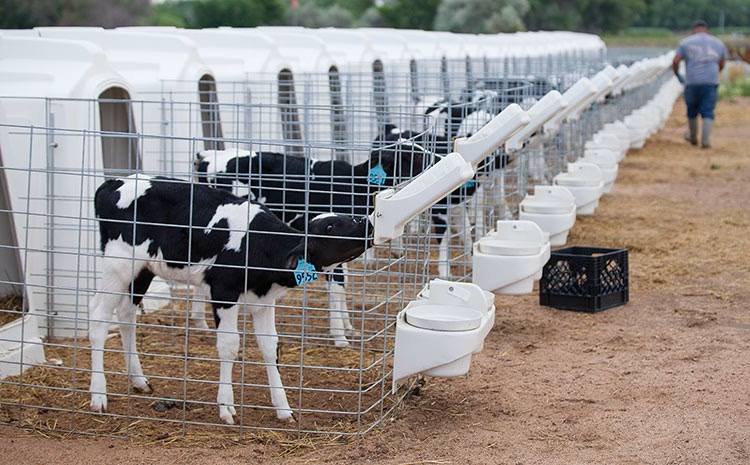
What if the industry’s most sacred calf-rearing practice, restricting milk to encourage early starter consumption, is actually costing you $200,000 annually in lost lifetime production? With US Class III milk prices at $18.82 per hundredweight in June 2025 and feed costs consuming 55-65% of total production expenses, the pressure to maximize efficiency has never been more intense. Yet, while producers obsess over volatile milk markets, a quiet revolution is brewing in dairy genetics and nutrition science that challenges everything we thought we knew about building profitable herds.
Here’s the uncomfortable truth: conventional wisdom about “efficient” calf rearing —that minimal milk feeding builds hardy, cost-effective replacements —has been systematically demolished by recent peer-reviewed research. The Cornell University studies that tracked lifetime performance reveal that every kilogram of pre-weaning average daily gain translates to 850-1,113 kg of additional milk in first lactation alone. For a 100-cow operation raising 30 replacements annually, this programming effect represents $85,000 to $ 111,300 in additional lifetime revenue that most producers are leaving on the table.
However, this is just the tip of the iceberg in terms of efficiency. Recent genomic evaluations of 2,538 Holstein cows have identified feed efficiency heritability as 0.43 ± 0.08, indicating that genetic selection for residual feed intake (RFI) can yield $251 in annual feed savings per cow while simultaneously reducing greenhouse gas emissions by 422 kg of CO₂ per animal’s lifetime.
The stakes couldn’t be higher. While you’re focused on milk prices and market volatility, your competitors, who have adopted an integrated approach to lifetime efficiency, are pulling further ahead every day. In an industry where margins determine survival, can you afford to ignore the science?
Why the Industry’s “Efficient” Calf Feeding Gospel Is Bankrupting Your Future
Let’s start by dismantling one of the dairy industry’s most entrenched and costly myths. For decades, conventional wisdom has held that restricting liquid feeding to encourage early starter consumption builds “efficient” and hardy calves. This approach, rooted in 1970s research focused on minimizing immediate costs rather than maximizing lifetime returns, has become so ingrained that questioning it feels like heresy.
The Flawed Logic of Restriction-Based Feeding
Traditional calf management programs typically limit milk replacer to 4-6 liters daily, based on the theory that hunger will drive earlier solid feed consumption and rumen development. The economic rationale seems logical: milk replacer costs more per unit of energy than starter feed, so accelerating the transition saves money upfront.
But here’s where conventional wisdom collides with modern science. Research published in Animals demonstrates that calves fed higher volumes of milk (8L vs 4L daily) achieve superior growth rates with enhanced immune competence and metabolic characteristics. As leading researchers note, “Results from this experiment are indicative of a positive influence of accelerated preweaning nutrition on growth, immune response, and metabolic characteristics”. The restriction-based approach not only limits immediate growth but also permanently programs reduced lifetime productivity through epigenetic mechanisms that alter mammary gland development and metabolic function.
The Cornell Revelation: Early Growth Programs Lifetime Performance
The most comprehensive challenge to conventional feeding practices comes from Cornell University’s landmark research, which tracked 1,244 heifers from the Cornell herd and 624 from a commercial operation across multiple lactations. The results are unambiguous: for every 1 kg of pre-weaning average daily gain, heifers produced 850 kg (Cornell herd) to 1,113 kg (commercial herd) more milk during first lactation.
Even more striking, this programming effect persists throughout productive life. Among cows completing three lactations, every 1 kg of extra pre-weaning gain resulted in 2,280 kg additional cumulative milk production. This isn’t about better genetics or superior lactation nutrition; this is metabolic programming that occurs during the first 60 days of life, permanently altering the animal’s productive capacity.
Recent research from the University of Prince Edward Island confirms this shift in paradigm. “Feeding colostrum at 1-2 hours of life resulted in improved milk and protein yields of 626 kg and 18.2 kg, respectively, compared to earlier or later feeding times,” according to research tracking long-term outcomes of early-life management.
The Economics of Programming vs. Restriction
Consider the mathematical reality for a 100-cow operation raising 30 replacement heifers annually. Under traditional restricted feeding (targeting 0.5 kg daily gain), calves might achieve 30 kg of total pre-weaning gain. An intensive program targeting a 1.0 kg daily gain doubles this to 60 kg, resulting in a 30 kg difference per calf.
Based on the Cornell data, this additional 30 kg of pre-weaning growth programs an extra 25,500-33,390 kg of first-lactation milk per heifer. At current Class III prices of $18.82/cwt, this represents $1,101-1,441 in additional first-lactation revenue per animal. Multiplied across 30 annual replacements, we’re discussing $33,030-43,230 in additional annual income, and this calculation ignores the compounding effects across multiple lactations.
The Hidden Costs of “Efficiency”
Why hasn’t this research transformed industry practices? The answer lies in accounting psychology. Traditional cost-benefit analyses focus on immediate, visible expenses (such as milk replacer costs) while ignoring delayed, invisible returns (such as programming effects). A restricted feeding program may save $50-$75 per calf in milk replacer costs, creating the illusion of efficiency while sacrificing $1,000 or more in lifetime productivity.
This mirrors a broader industry obsession with gross feed efficiency, which maximizes milk production per unit of feed consumed, without considering the metabolic costs. Research confirms that selecting solely for gross feed efficiency creates genetic antagonisms with energy balance, ranging from -0.73 to -0.99. You’re essentially breeding cows that burn through body reserves unsustainably, leading to metabolic disorders, reproductive failures, and shorter productive lives.
The Genetic Revolution: How Modern Breeding Rewrites Efficiency Rules
Are you still making breeding decisions based on parent averages while your competitors harness genomic tools that predict feed efficiency with significant reliability before animals even enter the milking herd?
The genetic landscape of dairy efficiency has been fundamentally transformed by genomic selection; yet, many operations continue to use outdated approaches, leaving massive genetic gains unrealized. Genomic selection has significantly reduced generation intervals, effectively doubling genetic gain rates for complex traits such as feed efficiency.
RFI: The Efficiency Metric That Changes Everything
While the industry has historically focused on gross feed efficiency (more milk per unit of feed), residual feed intake (RFI) represents a paradigm shift toward measuring inherent metabolic efficiency. Recent comprehensive genomic evaluations of 2,538 first- and second-lactation Holstein cows reveal RFI heritability estimates of 0.43 ± 0.08, significantly higher than previous estimates due to improved data quality and larger reference populations.
Here’s why RFI matters: unlike gross efficiency measures that correlate strongly with production level, RFI identifies animals that are inherently more efficient, independent of their milk yield. It’s like discovering which cars have better “metabolic engines” regardless of how fast they’re driven.
The Lifetime Efficiency Challenge
However, here’s where the science becomes complex, and conventional breeding programs often struggle. Recent research confirms that genetic correlations between heifer RFI and cow RFI are moderate, indicating that the most efficient heifer doesn’t necessarily become the most efficient cow. This finding has profound implications because the biological demands are fundamentally different.
Think about it: a growing heifer converts feed primarily into structural tissues (bone and muscle), while a lactating cow performs the metabolically intensive task of synthesizing 40+ kg of milk daily while managing pregnancy and body condition. The genes controlling efficiency in these two physiological states are related but distinct, requiring lifetime efficiency models rather than single-point measurements.
Seasonal Implementation Considerations for Genetic Programs
Genetic selection strategies must account for seasonal variations in North American dairy systems. Spring-calving herds benefit from implementing genomic testing during the winter months, when labor availability is higher, allowing time for informed breeding decisions before the busy spring season. Fall genomic testing aligns with natural breeding seasons, providing optimal timing for utilizing fresh semen from newly proven bulls.
Regional variations also matter significantly. Midwest operations should prioritize heat-tolerant genetics during the summer months, while Northeast producers can focus year-round on production traits due to their more moderate climates. Western operations must balance water-use efficiency traits with production, particularly during drought-prone summer months.
Genomic Accuracy: The Reality Check
Meta-analysis research indicates that RFI in dairy cows has moderate heritability estimates, ranging from 0.15 to 0.24 across multiple studies. In contrast, recent single-population studies report higher estimates of 0.43 ± 0.08. This variation reflects differences in population structure, measurement protocols, and statistical models, but consistently demonstrates that feed efficiency is a viable target for genetic selection.
The key insight: genomic selection doesn’t just improve accuracy; it democratizes genetic progress by allowing elite genetic improvements developed in nucleus herds to disseminate rapidly throughout commercial populations.
Challenging Conventional Wisdom: The Heat Tolerance Paradox
What if selecting for “cooler” cows to combat climate change is actually undermining decades of genetic progress in production?
As climate patterns shift and heat stress becomes an increasing concern, there’s growing industry pressure to select for improved heat tolerance. The logic seems straightforward: breed animals that maintain lower body temperatures under heat stress. But research reveals a troubling genetic antagonism that challenges this conventional approach.
Studies demonstrate that lower rectal temperature, an indicator of better heat tolerance, can be genetically correlated with reduced production traits. Simply selecting for heat tolerance in isolation could reverse decades of genetic progress in production, creating a classic example of unintended consequences in genetic selection.
Regional Heat Management Strategies
Southwest operations face the greatest heat stress challenges, requiring year-round cooling infrastructure and genetics selected for resilient production rather than heat tolerance alone. Midwest producers should focus on summer heat abatement while maintaining production genetics, as their moderate winter conditions offset summer stress. Northeast operations can prioritize production traits with minimal emphasis on heat tolerance, given their relatively mild summer conditions.
The Solution: Resilient Production Models
Progressive breeding programs are moving beyond single-trait heat tolerance toward reaction norm models that evaluate resilient production, the ability to maintain high performance under environmental stress. This sophisticated approach uses genomic tools to identify animals whose production is less affected by increasing heat load, effectively selecting for both productivity and climate adaptation.
This represents a fundamental shift from asking “which cows stay cooler?” to “which cows maintain production despite heat stress?” It’s the difference between defensive and offensive strategies in genetic selection.
Nutrition Precision: Unlocking Genetic Potential Through Science
While genetics sets the ceiling for productivity, precision nutrition determines whether you actually reach it. Recent research reveals that fatty acid supplementation increases milk yield by approximately 1.05 kg per cow per day, while often decreasing dry matter intake —a clear demonstration of improved feed efficiency that can be measured within weeks of implementation.
The Metabolizable Protein Sweet Spot
Forget everything you think you know about protein feeding. Supplying metabolizable protein at 100-115% of requirements maximizes milk and component yields while maintaining nitrogen efficiency. Beyond this threshold, you’re literally paying for expensive protein that gets converted to urea and excreted, a double cost of metabolic energy waste and environmental pollution.
With current feed costs, overfeeding protein by just 0.5 percentage points can cost $15-$ 25 per cow per month, with no production benefit. Monitoring Milk Urea Nitrogen (MUN) levels provides real-time feedback, with target ranges of 10-14 mg/dL indicating optimal protein-energy balance.
Seasonal Nutrition Optimization
Spring nutrition programs should prioritize fresh pasture transition management, gradually increasing grazing time to prevent digestive upset while maximizing intake of high-quality forage. Summer feeding requires heat stress mitigation through increased fat supplementation and feeding during cooler hours to maintain dry matter intake.
Fall nutrition focuses on body condition recovery and breeding preparation, requiring strategic protein and energy supplementation as forage quality declines. Winter feeding emphasizes energy density and vitamin supplementation, particularly in northern regions where forage storage quality impacts performance.
Short-Stature Corn: The Agronomic Revolution
Here’s an innovation that most producers are completely overlooking: short-stature corn hybrids carrying genetic modifications that reduce plant height. Research indicates that silage made from these hybrids can have incrementally increased starch content and improved digestibility.
The mechanism involves altered plant architecture, which may result in higher grain-to-stover ratios. Initial trials suggest significant improvements in dairy cow performance, with reports of milk yield increases when fed short-stature corn silage compared to conventional tall corn.
Think of this as agricultural insurance that pays dividends; you protect against weather-related yield losses while simultaneously improving nutritional value. With corn silage representing 40-60% of most dairy rations, this improvement compounds across your entire feeding program.
Technology Integration: Precision Agriculture Meets Dairy Science
Modern precision dairy systems are creating unprecedented opportunities for efficiency optimization through data-driven management approaches.
Automated Milking Systems: Implementation Roadmap
Leading technology providers, such as DeLaval, Lely, and GEA, offer comprehensive AMS solutions with distinct strengths. DeLaval’s VMS systems excel in milk quality monitoring, Lely’s Astronaut robots prioritize cow traffic management, while GEA’s DairyRobot focuses on integration with existing parlor infrastructure.
Implementation requires 18-24 months of planning, including site preparation, staff training, and a gradual adaptation process for the cows. The expected ROI ranges from 7 to 10 years, depending on labor costs and herd size, with break-even typically occurring around 150-200 cows per robot.
Precision Monitoring Technology Selection
Activity monitoring leaders include SCR by Allflex (rumination and activity), Nedap (CowManager ear sensors), and SenseHub (comprehensive health monitoring). Each system offers different strengths: SCR excels in heat detection accuracy, Nedap provides superior battery life, while SenseHub offers the most comprehensive health analytics.
Implementation costs range from $50 to $150 per cow, depending on system complexity, with ROI typically achieved within 18-30 months through improved reproductive efficiency and early disease detection.
Beyond Labor Savings: Data-Driven Decisions
Modern automated systems integrate multiple data streams to create actionable insights. Activity monitoring using accelerometers and rumination sensors detects estrus events with high accuracy, reducing the number of days open and improving reproductive efficiency. Reducing the days open from 150 to 120 days improves annual milk production by 8-12% per cow, while also reducing breeding costs.
Expected payback periods vary by technology: activity monitoring (18-24 months), automated milking systems (7-10 years), robotic feeding (5-7 years). However, progressive producers often achieve faster payback through the intensive utilization of data and precision management.
The Early-Life Programming Revolution: Rewriting Calf Management
This is where the industry’s biggest opportunities are left on the table, and where conventional wisdom has been most thoroughly debunked by modern research.
The relationship between pre-weaning nutrition and lifetime productivity represents one of the most significant paradigm shifts in dairy science. The Cornell University research provides unambiguous evidence that enhanced early-life nutrition permanently alters productive capacity through metabolic programming.
The Programming Mechanism
Enhanced early-life nutrition during the first 60 days sends signals that permanently alter the development of key metabolic and organ systems, including the mammary gland. This isn’t about providing better genetics or superior lactation nutrition; this is about programming the animal’s lifetime capacity for milk synthesis at the cellular level.
The Cornell study demonstrates that preweaning average daily gain ranged from 0.10 to 1.58 kg and was significantly correlated with first-lactation yield. The programming effects extend to multiple lactations, fundamentally challenging the industry’s cost-focused approach to calf rearing.
Seasonal Calf Management Strategies
Spring-born calves benefit from natural vitamin D synthesis and moderate temperatures, allowing focus on aggressive liquid feeding without climate stress. Summer calves require enhanced heat abatement and electrolyte management, with feeding schedules adjusted to cooler morning and evening hours.
Fall-calving cows require transitional housing that accommodates their growing space needs throughout the winter months. Winter-born calves require heated environments and vitamin supplementation, but benefit from reduced disease pressure and optimal staff attention during slower farm periods.
Regional Calf Management Considerations
Northern regions (Minnesota, Wisconsin, Northeast) should prioritize barn heating systems and vitamin D supplementation during winter months. Southern operations (Texas, Florida, California) must emphasize cooling systems and heat stress prevention year-round. Midwest operations can optimize natural temperature advantages while preparing for seasonal extremes.
Colostrum: Beyond Immunity to Investment
Research confirms that colostrum management extends far beyond the transfer of passive immunity. The University of Prince Edward Island study demonstrates that “feeding colostrum at 1-2 hours of life resulted in improved milk and protein yields of 626 kg and 18.2 kg, respectively, compared to earlier or later feeding times”.
Colostrum contains bioactive compounds, including insulin, prolactin, and IGF-1 at concentrations many times higher than whole milk, which stimulate gastrointestinal development and enhance nutrient absorption throughout life.
The economics are compelling: quality colostrum costs approximately $1-2 per feeding, but the programming effects can add $600-800 in lifetime milk value per calf.
Economic Reality: The 2025 Market Context
Let’s ground these efficiency strategies in current market realities that make precision management more critical than ever.
With Class III milk prices at $18.82 per hundredweight in June 2025, reflecting continued margin pressure, efficiency improvements have a direct impact on bottom-line profitability. Current feed costs represent 55-65% of total production costs for most operations.
Every 1% improvement in feed efficiency, achieved through integrated genetic, nutritional, and management strategies, directly improves margins. For a 100-cow herd producing at national averages, a 5% efficiency improvement translates to significant additional annual margins, regardless of milk price volatility.
Market Outlook and Strategic Positioning
USDA’s latest outlook projects US milk production of 226.2 billion pounds for 2025, down 700 million pounds from previous forecasts. This production decline, combined with efficiency improvements, positions well-managed operations to capture premium margins as supply tightens.
The all-milk price forecast for 2025 is $21.60 per cwt, reflecting market adjustments to supply-demand dynamics. Producers implementing integrated efficiency strategies will be better positioned to maintain profitability regardless of price volatility.
The Compound Effect of Multiple Improvements
Consider a 200-cow operation implementing:
- RFI genetic selection: $251 savings per cow annually
- Precision nutrition: $50-75 additional margin per cow
- Enhanced early-life programming: $200-300 additional lifetime value per replacement
Total annual benefit: $100,000-140,000, with effects compounding as genetic improvements accumulate and management precision increases.
The Bottom Line: Your Efficiency Action Plan
Remember that uncomfortable truth about restrictive calf feeding, which costs you $200,000 annually? Here’s what happens when you stop accepting industry orthodoxy as inevitable and start implementing research-backed strategies.
The numbers don’t lie: $251 in feed savings per cow through genetic selection, plus 850-1,113 kg additional milk from optimized early-life programming, combined with immediate efficiency gains from precision nutrition. For a 100-cow herd, we’re discussing $25,100 in annual feed savings, plus 85,000-111,300 kg of additional milk, which is substantial and translates to a real difference in operations, moving from survival to thriving.
The cost of inaction isn’t just missed opportunities. While you debate implementation costs, your competitors who embrace this integrated approach are building sustainable competitive advantages through genetic improvement, precision management, and programmed lifetime productivity that compounds annually.
Your Seasonal Implementation Strategy
Success requires matching implementation timing to operational realities and seasonal advantages:
Spring Implementation (March-May):
- Begin intensive colostrum management protocols for spring calves
- Implement genomic testing programs for fall-born heifer calves
- Optimize pasture transition nutrition strategies
- Install or upgrade heat abatement systems before summer stress
Summer Implementation (June-August):
- Focus on heat stress mitigation and cooling system optimization
- Implement precision feeding programs for maintaining intake during hot weather
- Begin planning fall breeding programs using genomic selection data
- Evaluate and select short-stature corn hybrids for next season
Fall Implementation (September-November):
- Execute strategic breeding programs using genomic selection tools
- Implement enhanced pre-weaning nutrition programs for fall calves
- Begin technology installations during lower-activity periods
- Plan winter facility improvements and nutritional adjustments
Winter Implementation (December-February):
- Conduct comprehensive herd genetic evaluations and breeding decisions
- Implement intensive heifer development programsInstall or upgrade precision monitoring systems
- Plan and budget for spring technology implementations
Your 30-Day Challenge by Region
- Midwest Operations: Calculate current feed costs per cow and implement MUN monitoring to optimize protein levels. Begin genomic testing of replacement heifers while planning spring heat abatement upgrades.
- Northeast Operations: Focus on intensive colostrum management implementation and precision nutrition protocols. Evaluate AMS systems during the winter planning period for spring installation.
- Western Operations: Prioritize water-efficient feeding systems and drought-resistant genetics. Implement heat stress mitigation protocols and evaluate short-stature corn options for irrigation efficiency.
- Southern Operations: Emphasize year-round cooling systems and heat-resilient production genetics. Focus on maintaining intake during heat stress while implementing early-life programming protocols.
Week 1: Calculate your current feed costs per cow and pre-weaning growth rates using verified industry benchmarking data.
Week 2: Implement either intensive colostrum management (4L within 2 hours of birth) or begin genomic testing of replacement heifers for feed efficiency traits.
Week 3: Monitor and measure the immediate impacts using validated metrics (MUN levels for nutrition, growth rates for calf programming, genomic reliability scores for genetic selection).
Week 4: Project the annual financial impact using the verified research data and plan your expanded implementation strategy.
The choice is yours: Continue writing unnecessary checks to feed suppliers while your genetic progress stagnates, or join the operations that understand efficiency isn’t about working harder, it’s about working with biology instead of against it.
Track your results, measure the impact, and ask yourself: What would your operation look like if you applied this same scientific rigor to every aspect of your herd management? With feed efficiency heritability at 0.43 and early-life programming effects lasting multiple lactations, the most successful producers will be those who recognize that sustainable profitability comes from lifetime optimization, not short-term cost minimization.
The science is proven. The economics are compelling. The only question is whether you’ll be the operation that captures these efficiency gains or the one that continues to subsidize inefficiency while competitors pull ahead.
Complete references and supporting documentation are available upon request by contacting the editorial team at editor@thebullvine.com.
Learn More:
- Everything Dairy Farmers Need to Know About Residual Feed Intake – Reveals practical strategies for implementing RFI measurement and optimization on commercial farms, demonstrating how to improve feed efficiency without expensive research equipment through strategic ration adjustments and monitoring protocols.
- US Dairy Market in 2025: Butterfat Boom & Price Volatility – Provides strategic market insights for capitalizing on record-high component levels and volatile pricing, showing how to position operations for premium returns through component-focused breeding and nutrition strategies.
- Revolutionizing Dairy Farming: How AI, Robotics, and Blockchain Are Shaping the Future of Agriculture in 2025 – Demonstrates how cutting-edge technologies can slash labor costs by 70% while boosting yields by 15%, offering actionable implementation roadmaps for automated systems that complement genetic and nutritional efficiency strategies.
 The Sunday Read Dairy Professionals Don’t Skip.
 The Sunday Read Dairy Professionals Don’t Skip.
Every week, thousands of producers, breeders, and industry insiders open Bullvine Weekly for genetics insights, market shifts, and profit strategies they won’t find anywhere else. One email. Five minutes. Smarter decisions all week.




