







200+ Irish farmers stormed their own co-op HQ over 5c/L price cuts— is your co-op’s next?
EXECUTIVE SUMMARY: Here’s what we discovered: When 200+ Irish farmers stormed their own Dairygold cooperative headquarters on September 18th, they exposed the biggest lie in modern agriculture—that farmer-owned cooperatives actually serve farmers. The math is brutal: Dairygold farmers lose €2,290 monthly compared to Carbery suppliers getting 50c/L versus their 45c/L rate, while management operates four inefficient processing sites against competitors’ single streamlined facilities. This isn’t isolated to Ireland—the 1922 Capper-Volstead Act grants antitrust immunity to cooperatives regardless of performance, creating legal frameworks that protect management from farmer accountability while enabling systematic value extraction. Dairygold’s own 2024 annual report shows that 1.38 billion liters were processed (down 2.1%) across its scattered facilities, proving that operational incompetence costs farmers serious money monthly. The concerned shareholders demanding “one man, one vote” representation aren’t radicals—they’re the last line of defense against corporate-style exploitation wearing cooperative clothes. Every dairy farmer needs to calculate exactly what their cooperative’s underperformance costs them monthly, because this revolution is spreading fast.
KEY TAKEAWAYS
- Calculate your monthly losses now: Compare your co-op’s milk price with every regional processor, multiply by your volume—Irish farmers discovered they were losing €2,290 monthly to competitors paying 5c/L more
- Document everything that doesn’t add up: Board decisions celebrating corporate metrics while farmers lose money, strategic initiatives benefiting the organization while hammering member returns, and emergency concerns getting shuffled to “strategic reviews” weeks later
- Build relationships outside official channels: Coffee shop conversations and social media groups where you can share real competitive data—management counts on farmers staying isolated and accepting whatever explanations they’re given
- Demand transparent competitive benchmarking: Monthly price comparisons with every regional alternative, processing costs broken down by facility, and management compensation tied to farmer-relevant metrics—not corporate-speak about “commercial sensitivity”
- Start exploring alternative marketing options: Even if you can’t switch immediately, having real options changes the entire power dynamic with cooperative management who depend on farmer loyalty and switching costs to avoid accountability
Look, I don’t usually get fired up about stuff happening across the Atlantic, but this story just grabbed me and wouldn’t let go.
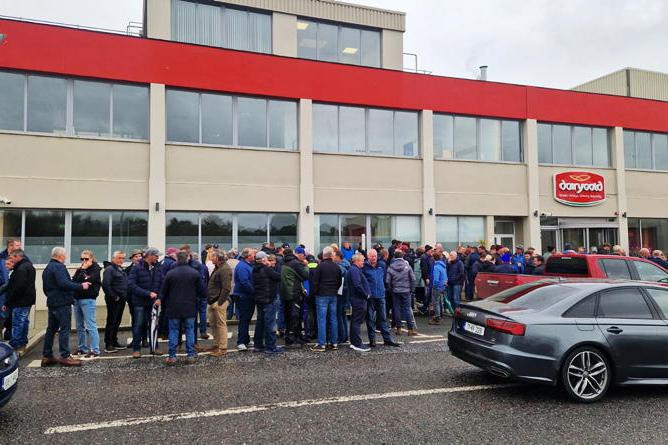
September 18th. Over 200 Irish farmers literally stormed their own cooperative’s headquarters in Mitchelstown. Not some faceless corporation screwing them over. Their own damn co-op. The organization they supposedly “owned.”
And when I started digging deeper into what pushed these farmers to that breaking point… well, hell, I couldn’t sleep right for days.
Because what happened at Dairygold? It’s basically a masterclass in how cooperatives can systematically rob farmers while claiming to protect them.
These farmers were getting hammered on milk price every month, while their board knew full well that competitors were paying way more. And management’s brilliant response to 200+ pissed-off farmers showing up at their door?
Schedule a meeting. Five weeks later.
The Math That’ll Make Your Stomach Turn
| Farm Volume (Liters/Year) | Monthly Volume | Loss per Liter | Monthly Loss (€) | Annual Loss (€) |
|---|---|---|---|---|
| 300,000 | 25,000 | €0.05 | €1,250 | €15,000 |
| 550,000 | 45,833 | €0.05 | €2,292 | €27,500 |
| 800,000 | 66,667 | €0.05 | €3,333 | €40,000 |
| 1,200,000 | 100,000 | €0.05 | €5,000 | €60,000 |
Okay, so I’ve been looking at dairy financials for… what, twenty-something years now? And these numbers just floored me.
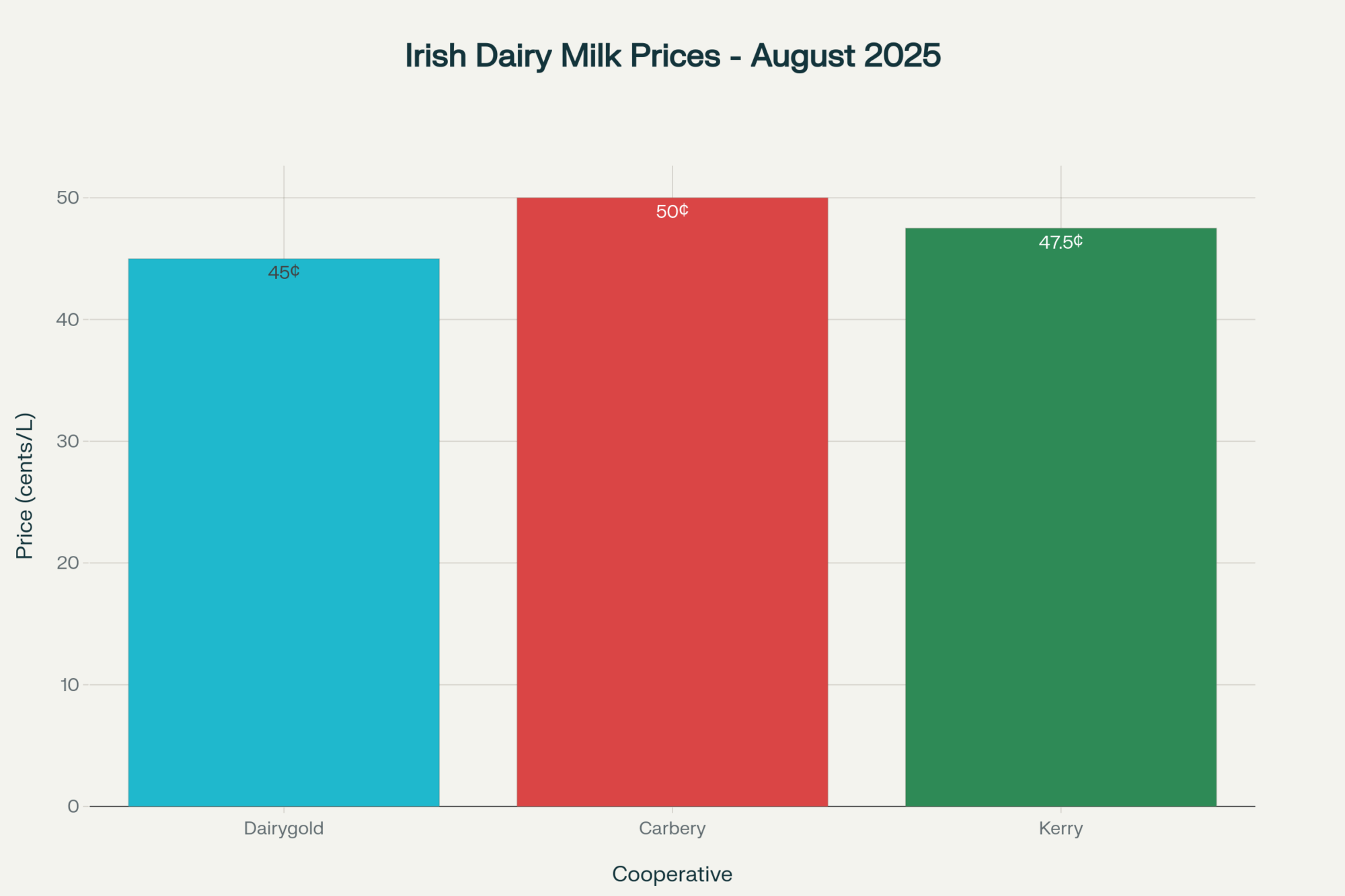
Dairygold dropped their August milk price to 45 cents per liter after a brutal 3-cent cut. Meanwhile, Carbery’s paying 50 cents per liter. Kerry’s at 47.5.
That’s a 5-cent difference between Dairygold and Carbery. Five cents!
Now, I won’t pretend to have exact Irish farm census data sitting in front of me, but any producer knows what a 5-cent differential does to your bottom line when you’re moving serious volume. Think about it—that’s the difference between making your loan payment or calling the banker for an extension. Between fixing that TMR mixer that’s been acting up since spring or nursing it through another season.
For what? For being a loyal member of your own cooperative.
The Efficiency Disaster That Explains Everything
Here’s where it gets really maddening, and honestly, this quote from Nigel Sweetnam—one of the farmers leading this whole revolt—it just says everything about what’s wrong with Dairygold’s operation.
During those September protests, he laid it out crystal clear: “Carbery have four co-ops supplying milk to one site, whereas we have one co-op supplying milk to four sites—think of all the duplication of resources and inefficiencies.”
Think about that for a second. Four processing sites. Dairygold’s runs milk through Mitchelstown, Mallow, Mogeely, plus their other facilities, while their competitor takes milk from four different cooperatives and runs it all through one streamlined operation.
And what does Dairygold management call this operational nightmare? “Professional oversight.” “Strategic diversification.”
Their own 2024 annual report shows they’re processing 1.38 billion liters annually—down 2.1% from the previous year. So, the volume’s declining, costs are scattered across all these different sites, and farmers are getting hammered on price… but at least the organizational chart looks impressive.
You know what strikes me about this whole thing? It’s like watching a train wreck in slow motion, except the passengers are the ones paying for the tickets.
The 1922 Legal Framework That Enables This Whole Scam
Now this is where most people’s eyes start glazing over because who wants to hear about century-old federal law? But stick with me, because this is the key to understanding how cooperatives can get away with this.
The Capper-Volstead Act from 1922 basically gives agricultural cooperatives a get-out-of-jail-free card on antitrust laws. They can coordinate pricing, control regional markets, eliminate competition—stuff that would land any other business in federal court.
Back then, the idea made sense. Help small farmers compete against the big corporate processors. But here’s the thing nobody talks about: those antitrust exemptions apply whether the cooperative actually serves farmers or not.
No performance benchmarks. No accountability requirements. Nothing.
So you end up with situations like Dairygold paying farmers 5 cents less per liter while maintaining regional market control. And farmers? They’re stuck because switching processors means new equipment, renegotiating contracts, changing your whole operation…
It’s like if your bank could charge whatever interest rate they wanted because they called themselves “member-owned” and you couldn’t practically switch without moving to another state.
The Board Game Where Management Always Wins
You know what really gets me about this mess? The governance theater.
These Irish farmers demanding “one man, one vote” representation… that shouldn’t be revolutionary. That should be basic democracy. But Dairygold’s got these committee structures and membership requirements that basically lock most farmers out of any real say.
The concerned shareholders who organized this initiative have been documenting problems for months, and they’ve shown exactly how management presents boards with these so-called “strategic options” that are, in reality, just different flavors of the same corporate thinking.
When you’ve got farmers losing serious money and the board’s response is to schedule a meeting five weeks out… well, that tells you everything about who’s actually running the show.
And you know what happens when farmers bring up operational problems? Fresh cow issues become “market volatility.” Butterfat’s tanking? “Global supply dynamics.” Dry lot turns into a swamp because management didn’t maintain the drainage properly? Act of God, nothing they could’ve done about it.
Makes you wonder—when did we start accepting explanations that would get a farm manager fired?
Warning Signs Every Producer Should Watch For
The red flags are pretty obvious once you know what to look for.
Management constantly explaining away competitive disadvantage with vague market talk? When your co-op’s consistently paying less than what other processors offer and board meetings are all about “global market dynamics” instead of fixing operational problems… that’s trouble brewing.
Emergency concerns getting shuffled off to committees and “strategic reviews”? When you’re bleeding money and management’s response is scheduling discussions for weeks later—that’s damage control, not governance.
Can you actually get real competitive data from your co-op? Not cherry-picked statistics that make management look good, but honest comparisons with every other processor in your area. Cost breakdowns by facility. Management compensation tied to metrics that actually matter to your bottom line.
If your cooperative starts throwing around phrases like “commercial sensitivity” when you ask for transparency… well, that’s basically management telling you they don’t work for you anymore.
And here’s something I’ve noticed—cooperatives that are really serving farmers don’t mind talking about their competitive position. It’s the ones getting their asses kicked that suddenly get all secretive about “proprietary information.”
What You Can Actually Do About It
This whole situation is depressing as hell, but those Irish farmers proved something important—when farmers organize and apply real pressure, even the most insulated management has to pay attention.
First thing? Figure out exactly what your cooperative’s underperformance is costing you. Get real numbers. Compare your milk price with every other processor in your area, factor in your actual volume, and calculate what management decisions are costing your operation every month.
Then start talking to other members outside the official cooperative channels. Coffee shop conversations, social media groups, whatever works in your area. Management counts on farmers staying isolated and just accepting whatever explanation they’re given.
Document everything. Board decisions that don’t make financial sense. Annual reports that celebrate corporate metrics while farmers lose money. Strategic initiatives that somehow benefit the organization while hammering member returns.
And honestly? Start building relationships with alternative marketing options. Even if you can’t switch right away, having real options changes the whole power dynamic.
Don’t just take my word for it—look at what these Irish farmers accomplished. They went from being ignored by their own board to having management scrambling to schedule emergency meetings. That’s the power of organized farmer pressure.
The Revolution’s Already Started
Those 200+ Irish farmers who showed up at Dairygold’s headquarters figured out what every dairy producer needs to understand eventually.
Cooperative management depends on farmer loyalty, switching costs, and legal complexity to avoid accountability. They’ll use all the right language about farmer solidarity while systematically extracting value from the very farmers they claim to serve.
But here’s the thing about information… it spreads now. Social media, direct price comparisons, organized farmer pressure—the information monopoly that made this whole system possible is breaking down fast.
The only question is whether you’ll figure it out before your monthly milk check starts getting hammered by people who claim they’re protecting your interests.
Because if Irish farmers can organize 200+ people to storm their own headquarters over pricing that doesn’t make sense… what’s stopping you from demanding real accountability from your own cooperative?
And look, I’ll be honest with you—this trend makes me wonder how many other cooperatives are running the same scam, just more quietly. How many farmers are getting systematically underpaid while their boards celebrate “operational excellence” and “strategic positioning”?
We’ll keep digging into these cooperative governance issues because somebody’s got to tell farmers the truth when their own organizations won’t.
Complete references and supporting documentation are available upon request by contacting the editorial team at editor@thebullvine.com.
Learn More:
- Price-Fixing Payout: What DFA & Select Milk’s $34.4 Million Settlement Really Means for Dairy | The Bullvine – This article provides a tactical view of how co-ops can manipulate milk prices, demonstrating the real-world impact of legal frameworks like the Capper-Volstead Act. It reveals how farmers can use data and new technology to track component premiums and protect their interests.
- Will Your Dairy Farm Survive the Next Decade? The Brutal Math of Consolidation | The Bullvine – This strategic piece complements the main article by showing the market-wide forces that drive co-op consolidation and the resulting pressure on farmers. It reveals the long-term economic trends that require producers to either scale up or specialize to survive.
- The $400-Per-Cow Advantage: How AI Is Redefining Dairy Profitability | The Bullvine – This article offers an innovative, future-oriented perspective, demonstrating how technology and data analytics can empower farmers to gain a competitive edge. It shows how targeted tech investments can boost profitability and help producers demand accountability from their co-ops.
 The Sunday Read Dairy Professionals Don’t Skip.
 The Sunday Read Dairy Professionals Don’t Skip.
Every week, thousands of producers, breeders, and industry insiders open Bullvine Weekly for genetics insights, market shifts, and profit strategies they won’t find anywhere else. One email. Five minutes. Smarter decisions all week.




