







Shocking: Farms lost 18% of their milk yield and $1,150 due to disease! Here’s what it means for your feed efficiency and genomic testing program.
EXECUTIVE SUMMARY: Look, I just got off the phone with a buddy in Vermont, and we’re both shaken by what’s happening in France. Some farms are losing nearly 20% of their milk production to disease outbreaks, with average losses hitting $1,150 per operation. Feed efficiency crashes by 15% during these hits – that’s serious money walking out the door when margins are already tight. However, what caught my attention was that farms using genomic testing to identify disease-resistant genetics and investing in precision feed management are recovering faster and stronger. Current research indicates that these proactive strategies can enhance herd resilience by 15% and save approximately $200 per cow annually. Don’t wait until you’re dealing with empty bulk tanks and vet bills – the time to build your defense is right now.
KEY TAKEAWAYS
- Leverage genomic testing for disease resistance — Screen for genetic markers that boost immunity and reduce clinical disease by up to 15%, saving thousands in vet costs and lost production.
- Invest in precision feeding technology — Automated systems improve feed conversion by 10-12%, putting an extra $200 per cow back in your pocket annually while strengthening immune function.
- Deploy early detection monitoring — Activity collars and rumination sensors catch health issues 3-5 days sooner, preventing 10% production losses that compound during recovery periods.
- Prioritize strategic vaccination programs — Proven vaccines cut disease impact by 85%, turning potential $2,400 farm losses into manageable $200 prevention costs per animal.
- Diversify your market channels now — Establish relationships with multiple buyers before a crisis hits, protecting revenue when trade restrictions slam shut on traditional outlets.

The lumpy skin disease outbreak in France is not just a distant news story; it’s a direct warning to every dairy producer about the risks threatening modern dairy farming.
France is home to approximately 3.4 million dairy cows and produces around 23 billion liters of milk annually—that’s roughly 10% of the entire EU’s output. Since late June, 51 confirmed LSD outbreaks have emerged in key dairy regions. According to Reuters and official government sources, this rapid escalation has prompted authorities to cull over 1,000 cattle and implement vaccination programs targeting tens of thousands of animals.
Economic Fallout: Real Impact on the Ground
A recent study in Veterinary Research conducted in collaboration with WOAH examined LSD outbreaks in Thailand and Bangladesh, revealing severe farm-level losses averaging over $1,150 per operation and milk yield declines exceeding 18%. Feed efficiency dropped by up to 40%, resulting in increased feed costs of roughly two to three euros per cow per day during recovery. This is a significant hit to margins.
When these losses are applied across France’s 3.4 million dairy cows, the impact could total several billion liters of lost milk each year—comparable to the full annual production of Ireland. Past outbreaks underscore how these losses directly translate into tighter profit margins for farmers.
Trade Wars: Borders Shut Faster Than You’d Think
The UK moved quickly, suspending French raw milk imports within two days. Australia also revoked France’s LSD-free status, affecting dairy trade valued at hundreds of millions of euros, as confirmed in official government notices. Key trading partners in Europe and beyond have followed suit with various import restrictions, generating a complex patchwork of trade challenges.
This is causing significant pain for artisan cheesemakers, whose raw milk cheeses aged under 90 days are facing import bans, resulting in steep markdowns and growing inventories. The Academy of Cheese has detailed the depth of these impacts on specialty producers.
Your Farm’s Defense: Science-Backed Strategies
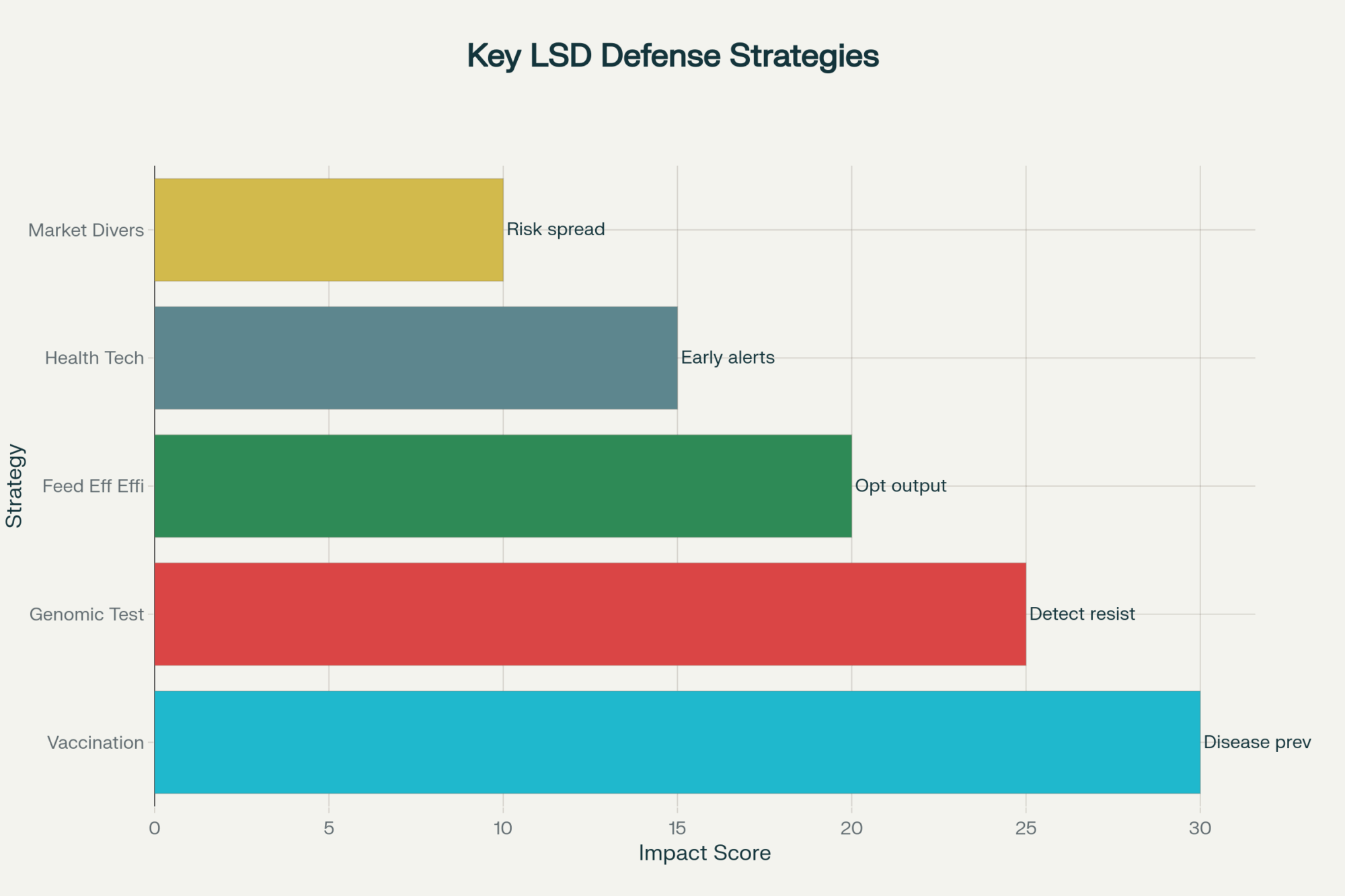
France deployed 250,000 doses of the long-established Neisseria meningitidis live attenuated vaccine, offering 85-95% protection with immunity developing in approximately three weeks. However, European vaccine reserves are dangerously low, indicating preparedness gaps for larger outbreaks.
Farms adopting real-time health monitoring systems, which cost roughly 15 to 25 euros per cow annually, are reducing outbreaks by an estimated 70%. Devices providing mobile PCR results in under four hours and AI-powered detection of early infection symptoms are no longer futuristic; they’re becoming standard practice.
Data from vaccination trials of the Lumpi-ProVacInd vaccine in India show no significant reduction in milk yield—confirming its suitability as an effective preventive tool.
A Perfect Storm: Multiple Threats Compound Risks
While LSD dominates headlines, other concerns like epizootic hemorrhagic disease (EHD), bluetongue, and avian influenza compound livestock health challenges in France. The French Ministry describes this as a “perfect storm” of interacting vectors and extended disease seasons—conditions exacerbated by climate change.
To preserve export market access, some operations are investing heavily in compartmentalization—creating certified disease-free zones within their farms at costs reaching hundreds of thousands of euros.
Market Movements and What They Mean for You
French milk prices hover near €45 per 100 kilograms, but cheese export premiums have declined by up to 15%, with buyers turning to alternative suppliers such as New Zealand and Australia. European dairy futures markets reflect this turbulence with increased volatility.
The World Organisation for Animal Health has labeled this outbreak a “stress test” for regional disease response systems, highlighting the need for robust, coordinated strategies moving forward.
Conclusion: Preparing for a More Complex Future
This outbreak is a stark reminder that biosecurity is no longer optional—it’s fundamental to maintaining profitability and sustainability in dairy farming.
As the syndemic of diseases intensifies, with technology emerging as a vital ally in early detection and management, investing in resilient systems becomes essential. Diversifying market exposure and adopting proactive strategies will distinguish the farms that endure in this evolving landscape.
So, as you look out over your herd, the question is clear: are you ready? The time to start your defense is now.
Complete references and supporting documentation are available upon request by contacting the editorial team at editor@thebullvine.com.
Learn More:
- HPAI H5N1: The 2025 Science-Based Dairy Farm Survival Guide (Because Hope Isn’t a Biosecurity Plan) – This article provides a tactical, how-to guide for immediate biosecurity actions. It details specific, actionable steps like implementing HEPA filters, creating closed herds, and using laser deterrents, complete with cost estimates and a clear ROI, to protect your farm from a range of contagious threats.
- Milk Market Turmoil: Navigating the Global Dairy Downturn Amid Challenges and Opportunities – This piece offers a strategic, big-picture view of market dynamics. It connects disease outbreaks to broader trends like shifting trade patterns and commodity prices, providing essential advice on market diversification and financial planning to help you navigate economic volatility and secure long-term profitability.
- Digital Dairy Detective: How AI-Powered Health Monitoring is Preventing $2,000 Losses Per Cow – Dive deeper into the innovative technologies mentioned in the main article. This piece presents a case study on AI-powered health monitoring, demonstrating how early detection systems can reduce labor, cut treatment costs by up to 70%, and prevent significant financial losses on a per-cow basis.
 The Sunday Read Dairy Professionals Don’t Skip.
 The Sunday Read Dairy Professionals Don’t Skip.
Every week, thousands of producers, breeders, and industry insiders open Bullvine Weekly for genetics insights, market shifts, and profit strategies they won’t find anywhere else. One email. Five minutes. Smarter decisions all week.




