







Milk yield up, lifespan down? The latest Québec data says the average cow’s earning power jumps $240—but she only lasts 3.25 years.
EXECUTIVE SUMMARY: Alright, here’s what blew my mind—and might shake up your calf program too. Turns out, you can’t max out milk per cow and keep cows around forever. Québec researchers compared 1,600+ farms: old-school bucket calves on whole milk lasted 3.41 years, while “modern” pens with powder and auto-feeders only hung in 3.25 years. But hang on—those modern herds banked an extra 340kg of ECM and over $240 more per cow. That’s before you factor in 2025’s feed prices and the global push for feed efficiency and higher genomic merit. Bottom line? If you want more milk money (and you can handle faster turnover), it’s time to scrutinize how you raise those calves. Trust me, even a couple tweaks could fatten your milk check this season.
KEY TAKEAWAYS
- Modern early-life systems = higher cash flow. Farms using group calf management and automated milk feeding made $8,008 per cow—up $240 compared to traditional setups.
Try switching even part of your calf barn to automated feeders or group pens to see immediate productivity gains. - Less longevity, more liters. “Tech-forward” herds saw cows leave 0.16 years sooner—but pumped out 341kg more ECM per animal.
Don’t cling to old culling targets—track your herd replacement rate alongside yield and make data-driven decisions. - Colostrum wins—no matter your system. Herds nailing fast, high-volume colostrum feeding lifted lifetime cow profits, regardless of milk source.
Check your colostrum timing and quantity against current USDA and university extension benchmarks—tighten up if you’re lagging. - Calf feeding changes move the needle—fast. Early concentrate feeding and good group hygiene boost feed efficiency and milk value, right off the bat.
Revisit your starter grain protocols and group-housing cleaning schedule this month—don’t let market volatility catch you napping. - Don’t follow “what’s always worked”—follow the ROI. Today’s industry winners blend genomic testing, herd-level economics, and hands-on management—don’t get left behind.
Set aside an afternoon soon: review your DHI data and challenge just one thing about how calves are raised on your operation.
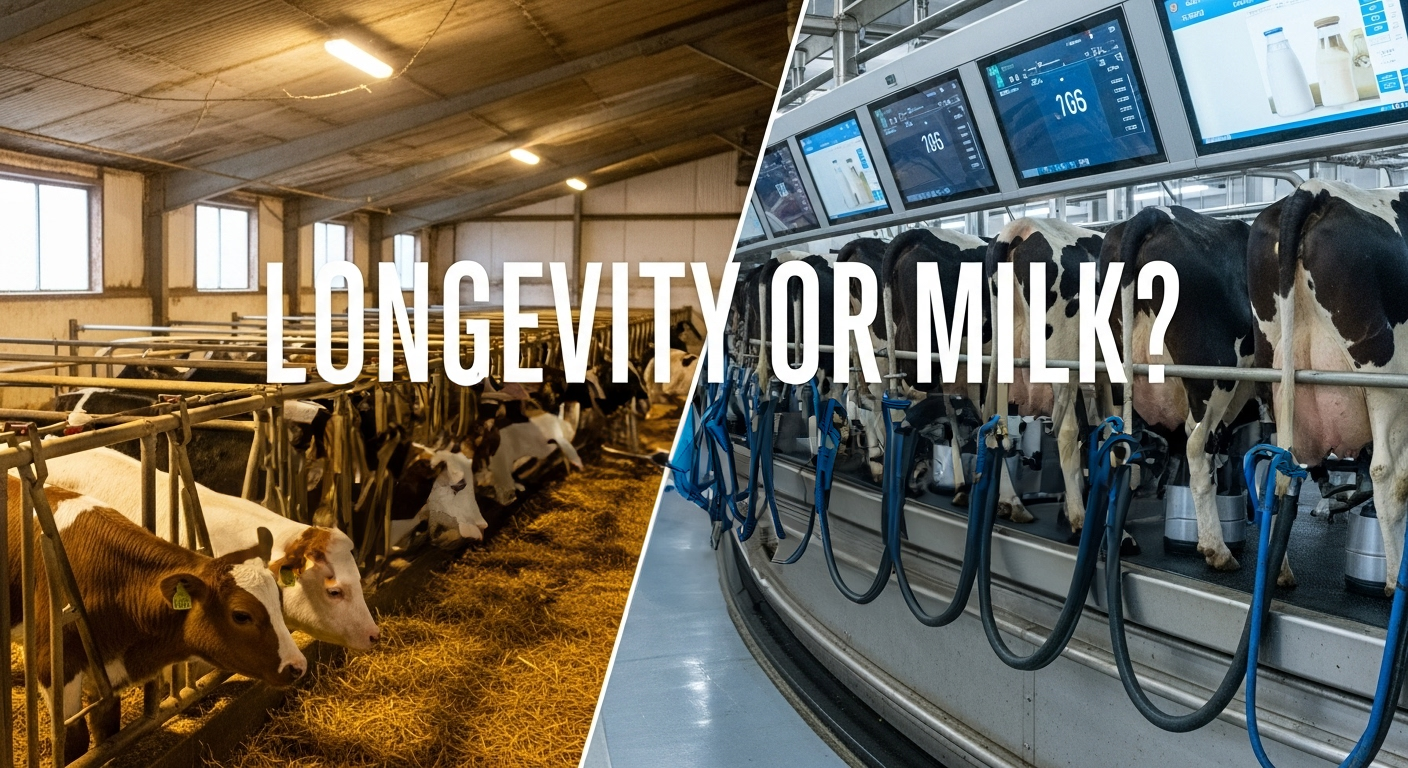
Here’s the thing about raising dairy calves today: every decision you make in the hutch or group pen sets the pace for future profit. And as new research from Québec shows, those decisions don’t just impact first lactation—they create a fundamental trade-off between a cow’s lifetime production and her longevity in the herd.
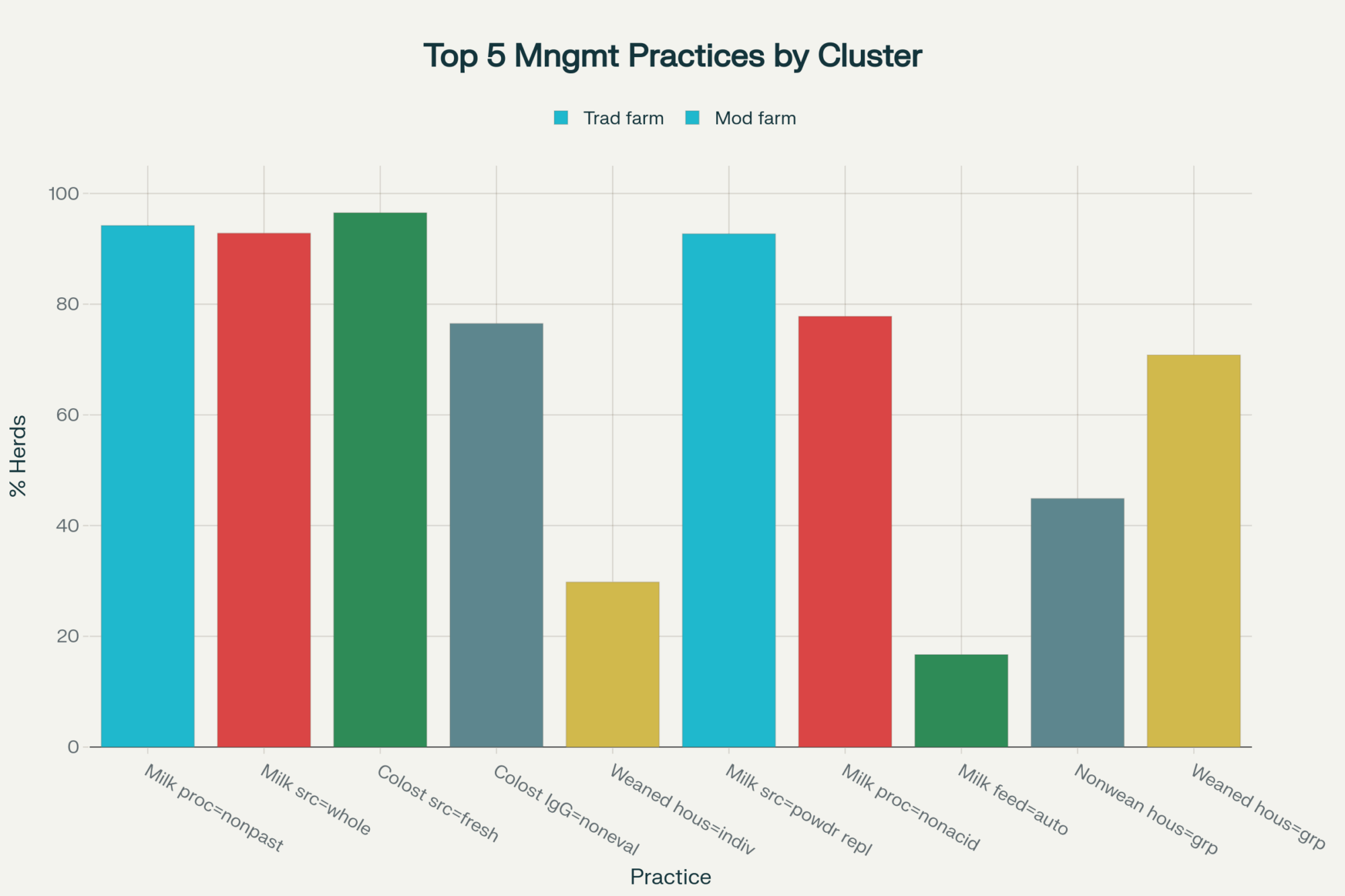
A deep-dive study out of Québec, surveying 1,658 herds, didn’t just ask about best intentions—it dug into what’s actually happening on real farms and then lined up those practices against hardcore numbers: years in production, kilograms in the tank, and dollars in the milk check. In this study, “traditional” meant calves raised individually, getting whole or waste milk by hand. “Modern” was defined as group housing with automated milk replacer feeders and all the labor-saving gadgets that are moving into more and more barns. The chart below illustrates the key management practices that defined these two distinct groups..
The Trade-Off By the Numbers
| Metric | Traditional (n=600) | Modern (n=1,058) |
| Productive Lifespan | 3.41 ± 0.03 yrs | 3.25 ± 0.02 yrs |
| Lifetime ECM | 11,090 ± 64 kg | 11,431 ± 48 kg |
| Lifetime Milk Value (CA$) | 7,769 ± 48 | 8,008 ± 36 |
| % 3+ Lactations | 41.5 ± 0.3 | 41.6 ± 0.2 |
What strikes me most is that “traditional” setups—buckets, whole milk, solo pens—get you cows that last a bit longer. But those automation-heavy barns, with group housing and powdered replacer, are squeezing extra kilograms (and dollars) from each animal before they head down the lane. That might not seem earth-shattering—until you multiply by every cow that goes through your milking line this year, especially with input costs where they are now.
From Québec to Your Laneway: What This Means on the Farm
Let’s bring the numbers home. On one hand, you’ve got producers sticking with the tried-and-true—more hands-on, more hutches, more routine—and they do see cows round third or even fourth lactations more often. On the other? The neighbor who invested in automation, group pens, and instant milk powder… now he swears by the rapid gains in his heifers, but he’s trading off some longevity. Suddenly, average cull age is dropping by over six months.
This isn’t just a story about Québec, either. Out east, the tradition might stick around longer because labor is reliable. Out west, bigger herds and labor headaches push folks toward tech—and more risk if hygiene slips. The same patterns hold in the Midwest and upstate New York: regional differences matter, but the milk check ultimately tells the story.
What’s particularly noteworthy is that, as feed costs bounce and staff get scarcer, the appeal of automation is only growing. But the dollars and days lived by each cow still don’t move in the same direction.
Under the Hood: What Actually Moves the Needle?
Diving into the details, the “traditional” approach—whole or waste milk, buckets, solo housing—delivers on longevity. More mature cows, more productive lactations. But there’s a catch. According to Dallago and colleagues, the “modern” barn, with technology-driven group management and ample feed, yields higher lifetime milk and profit per animal. That’s what you see when you’re flipping through updated DHI reports.
Here’s something else the data made clear (and most vets or seasoned managers will back up): best-in-class colostrum management—meaning fast, clean, high-volume feedings—amplifies your chances regardless of the other system you’re running. There’s no one-size-fits-all solution, and not all “modern” is gold. Make a mess of hygiene in a big group pen, and you might be worse off than if you stuck with singles.
And let’s not overlook this next part: Disease and reproductive setbacks remain the wild cards. Even the best-managed, highest-yielding cows can crash out faster if transition or fresh-cow care gets sloppy. Barns with sharp protocols and strong staff? They consistently get closer to that sweet spot between yield and years.
Actionable Takeaways
- Don’t just chase years or liters—balance your systems and track your outcomes. If you’re considering switching your milk feeding or housing approach, consider whether you have the necessary labor and management structure to maintain consistency. The shift to group housing or auto-feeders is only as effective as your vigilance in maintaining calf health and cleanliness.
- Nail your colostrum protocol. Every credible study (and every older producer worth listening to) agrees: it’s about speed, cleanliness, and volume—not gadgets or flavorings.
- For group/automated systems: Don’t skimp on daily monitoring and hygiene. Coughing up labor savings only to lose it in vet bills or higher youngstock losses is a rookie mistake—even seasoned teams get surprised by group challenges.
- Culling for “maximum longevity” sounds great, but in some markets or barn set-ups, you may need to lean into yield. Either way, know your costs and margins, and revisit them regularly—especially if you’re shifting protocols or market prices fluctuate.
What’s Next for Progressive Producers?
Here’s my honest take: The data shows no perfect playbook. Some years, that extra $240 per cow could cover your feed cost spike, or help float you through a dry spell. Other times, extra months of production mean fewer replacement heifer dollars leaving your account. At the end of the day, you’ve got to keep your head up, work your plan (not just your neighbor’s), and get everyone on your team pulling in the same direction.
So, what have you seen in your own herd? Are you staying the course, or are you eyeing a shake-up in the calf barn? I’ll leave with this: The best operators blend the latest science with a heavy dose of barn-floor wisdom, testing, tweaking, and finding what really fits their herd and crew. And isn’t that what makes this industry so damn compelling right now?
Source: Based on the study “Early-life management practices and their association with dairy herd longevity, productivity, and profitability” by Dallago et al., Journal of Dairy Science, 2025.
Learn More:
- The Ultimate Guide to Colostrum Management: From Birth to Brilliance – This guide provides the tactical steps for perfecting your colostrum program, from testing IgG quality to ensuring optimal intake. It reveals practical methods to build the resilient immune foundation that maximizes the potential of every calf, regardless of your system.
- Dairy Profitability: Are you a Price Taker or a Profit Maker? – This article provides a strategic framework for analyzing costs and margins to improve your bottom line. It challenges you to decide whether the short-term milk value or long-term productive life discussed in the main article is the right economic choice.
- Precision Technologies for Calves and Heifers: The Unseen Revolution – Looking beyond current automation, this piece explores the next wave of innovation in youngstock management. It demonstrates how new sensors and data analytics can enable early disease detection and optimize growth, showcasing the future of proactive, data-driven calf care.
 Join the Revolution!
 Join the Revolution!
Join over 30,000 successful dairy professionals who rely on Bullvine Weekly for their competitive edge. Delivered directly to your inbox each week, our exclusive industry insights help you make smarter decisions while saving precious hours every week. Never miss critical updates on milk production trends, breakthrough technologies, and profit-boosting strategies that top producers are already implementing. Subscribe now to transform your dairy operation’s efficiency and profitability—your future success is just one click away.




