



Archive for Mating Recommendations – Page 2

The Top 12 Holstein Genomic Young Sires To Use for Maximum Genetic Gain

Confused on what group of genomic young sires to use for your breeding program?  Not sure which sires are the real deals and which ones are just smoke and mirrors (read The Hot House Effect on Sire Sampling)?  We decided to take a closer look at the top 100 genomic young sires from around the world to determine just which ones are worth using and which ones you are better forgetting.

Based on our analysis of the early genomic sires that  received indexes, we first removed all sires from our list that didn’t have DGV’s available or higher than their parent average for the traits we judge as important (read 7 Reasons Why You Shouldn’t Use Genomic Sires With DGV’s Lower Than Their Parent Averages).  Then instead of just giving you the highest list based on their GPA TPI or GPA LPI we decided to look for sires that fit certain needs.  They are overall performers, production, durability, health and fertility and conformation.  The following are the results.

Overall Performance Improvement
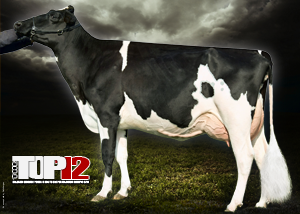
AMMON-PEACHEY SHAUNA VG-87-2YR-USA dam of SEAGULL-BAY SUPERSIRE

AMMON-PEACHEY SHAUNA VG-87-2YR-USA dam of SEAGULL-BAY SUPERSIRE

While bulls like Amighetti Numero Uno may top the GPA TPI list, we are looking for a more needs approach.  The following are the sires we would recommend when looking for a genomic young sire to provide overall performance improvement.

  • SEAGULL-BAY SUPERSIRE
    This Robust son from 2012 Golden Dam Finalist AMMON-PEACHEY SHAUNA VG-87-2YR-USA, really is a genomic wonder.  Not only does he have the highest genomic values in the breed for production but he also has great functional type and health traits to go with it.  Here you have a sire that is over 2500 lbs. for milk, with positive component deviations, 2.50 for type, and over 7 for productive life.  He really is the complete package.
  • VELTHUIS LET IT SNOW
    From the LYLEHAVEN LILA Z EX-94-CAN 14* (also a 2012 Golden Dam Finalist) family comes, the CDN GPA LPI topper VELTHUIS LET IT SNOW.  While possessing 500 lbs. less production and half the productive life of that of Supersire, this Snowman son has outstanding type composites and the genomic test to make up the difference for those of you that do not want to sacrifice overall type.  I would protect Let It Snow on the health and fertility side a little.
  • ROSYLANE-LLC ALTALEO
    I am always looking for sires whose genomic tests blow out their expected values, and ROSYLANE-LLC ALTALEO does that by almost 19%.  AltaLeo does not top any  GPA TPI or GPA LPI lists, but he does seem to far exceed the values you would expect from an AltaMeteor from a not very well known Nifty (Bombay x Zebo) daughter.  For those of you who like to take flyers on bulls who just seem to be extreme, AltaLeo is the sire for you.  While he does need to be protected on rump and dairy strength, for those that are willing to take the risk, they may find the reward is well worth it.

Production Improvement
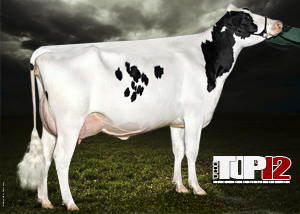
MS CHARTROISE LORELEI VG-87-2YR-CAN dam of BOLDI V LIGHTSNOW

MS CHARTROISE LORELEI VG-87-2YR-CAN dam of BOLDI V LIGHTSNOW

For those of you that are more commercially focused or maybe those of you who have not focused enough on production and the milk check is showing it, here are our recommendations other than Supersire for genomic young sires to use to gain the greatest production increase:

  • DE-SU PHOENIX 588
    PHOENIX is a Planet from DE-SU 7902 GP-81-2YR-USA DOM, whose dam De-Su Oman 6121 VG-86-2YR-USA DOM GMD has over 20 daughters on the locator list and is the dam of De-Su Observer, one of the early top genomic sires.  Phoenix combines outstanding production and components with strong conformation.  Though a Planet x Bolton cross may raise some concerns about rumps, Phoenix should inherit his maternal line’s rumps and be okay.  The area of strong concern that he does need protected on is his health and fertility traits, specifically his daughter fertility and milking speed.
  • BOLDI V LIGHTSNOW
    Lightsnow also from the LYLEHAVEN LILA Z EX-94-CAN 14* family is a Snowman from the well-known Planet daughter MS CHARTROISE LORELEI VG-87-2YR-CAN.  Lightsnow offers 160 lbs. of combined fat and protein, offering breeders a quick punch of components while not having to sacrifice production.  While needing to be protected a little on some of the health and fertility traits, Lightsnow offers outstanding production improvement with a very balanced type offering.

Longevity Improvement
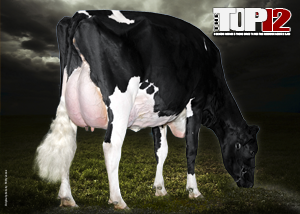
MS CHASSITY GOLDWYN CASH VG-87-2YR-CAN dam of FARNEAR-TBR-BH CASHMONEY

MS CHASSITY GOLDWYN CASH VG-87-2YR-CAN dam of FARNEAR-TBR-BH CASHMONEY

For those of you that are looking to breed cattle that last lactation after lactation or maybe you have having problems with your 2 year olds not coming back for a 2nd lactation we recommend the genomic young sires:

  • BLUE-HORIZON ALTASUPLEX
    As the #2 sire for productive life (NO-FLA AltaSecure is #1) BLUE-HORIZON ALTASUPLEX offers significant longevity improvement.  Unlike AltaSecure this Super son combines that high productive life with over 1400lbs of milk, and 3.00 points on type.  While he does need to be protected %F, dairy strength and rumps, AltaSuplex offers extreme functional conformation improvement that you would expect from a great grandson of BUDJON-JK ENCORE ELECTRA EX-95-2E-USA DOM GMD 3*.
  • VAL-BISSON DOORMAN
    Following closely behind AltaSuplex for #2 on the top genomic longevity list is Doorman, a Bookem from a Shottle that completes 8 generations of VG+ with 31*.  Doorman offers a more complete package with not needing protected on much as he is over 1300 kgs of Milk, plus on both his component deviations, and double digits for all major type traits.  In fact his DGV for conformation and mammary system are among the very best in the breed at +22.  While the family may not be a household name yet,  Doorman could be the sire that changes that as he even converts well onto the US system with a GTPI of +2465, PTAT +4.72 and almost a 1000 lbs of Milk and over 100 lbs of combined fat and protein.
  • FARNEAR-TBR-BH CASHMONEY
    There hasn’t been a  better  brood cow for type and longevity recently  than 2012 Golden Dam Finalist REGANCREST-PR BARBIE EX-92-7YR-USA DOM GMD 3*.  Now this trend continues with her grand daughter, and fellow 2012 Golden Dam Finalist REGANCREST S CHASSITY EX-92-4YR-USA DOM, and also Chassity’s Goldwyn daughter, and Cashmoney’s dam MS CHASSITY GOLDWYN CASH VG-87-2YR-CAN.  Not only does Cashmoney have an extremely well known female side to his pedigree, his sire stack is nothing to laugh at either.  He combines OBSERVER x GOLDWYN x SHOTTLE x CHAMPION x DURHAM, and from a longevity standpoint he’s the best there is on the list.  Cashmoney really is the real deal though I would protect him on strength and rumps.

Health and Fertility Improvement

One area that is not getting enough attention by most breeders is health and fertility. While there is no question that every breeder knows that more pregnancies equals more profits many of the top ranking sires actually have negative values for health and fertility.  The following are a couple of specialist sires that should help you change that:

  • S-S-I DOMAIN LITHIUM
    Possessing no Planet, Shottle or Goldwyn in his pedigree S-S-I DOMAIN LITHIUM has some of the highest DGV’s for health and fertility.  Lithium is from one of the top genomic cows in the breed, GLEN-TOCTIN BOLT LUCILLE VG-87-DOM.  Combining high herd life, low Somatic Cell counts and high daughter fertility with over 1600 lbs of milk, 110 of fat and protein and 2.5 points on type makes Lithium a great choice when looking for improvement.  It is interesting to note that his DGV’s for health and fertility are almost 8% higher than the next highest sire (BRANDT-VIEW ALTAOTIS) and 50% higher than his own official index, indicating that he really is the sire to use when wanting to address this area that has flown under the radar far too long.
  • HAMMER-CREEK FRED KRUNCH
    With his low Somatic Cell Score (2.72), strong udders (2.54 Udder comp.), quick milking speed (106), and high daughter fertility (110 CDN 2 US) Krunch is a breed leader when it comes to health and fertility. Tracing back to WA-DEL RC BLCKSTR MARTHA EX-93-2E-USA GMD DOM 2* combines his strong female lineage with outstanding health and fertility sire stack Freddie x Goldwyn x Zade x Mtoto x Formation x Blackstar.  Though he very much needs to be protected for strength and rumps.

Type Improvement

REGANCREST MAC BIKASA VG-87-2YR-USA  dam of  MR ATWOOD BROKAW

REGANCREST MAC BIKASA VG-87-2YR-USA dam of MR ATWOOD BROKAW

There is no question that some of us put too much emphasis on type improvement when it comes to selecting bulls, especially when many type traits have such low heritability (read Is Your Breeding Strategy A “Field of Dreams”?).  The following sires in addition to Let It Snow and Doorman, will offer you the potential to breed a great show animal.

  • MR ATWOOD BROKAW
    Tied with Doorman for some of the highest type genomics in the breed is MR ATWOOD BROKAW.  Which should come as no surprise as in Brokaw you combine the two greatest type families in the breed today.  On the paternal  side you have Atwood and his dam MD-DELIGHT DURHAM ATLEE EX-92-4YR-USA DOM GMD 2*, 2012 Golden Dam finalist and reserve Int. Champion at Madison in 2005 followed by her grand dam being MS Kingstead Chief Adeen EX-94.  On the maternal side you have REGANCREST MAC BIKASA VG-87-2YR-USA who is the daughter of REGANCREST-PR BARBIE EX-92-7YR-USA DOM GMD 3*, also a 2012 Golden Dam Finalist.  Watch for Brokaw to sire extreme udders and dairy strength, but will need to be protected on rumps from time to time.
  • REGANCREST-GV S BRADNICK
    Also from the of REGANCREST-PR BARBIE EX-92-7YR-USA DOM GMD 3* family, but this time from a VG-88-3YR-USA DOM   1* Shottle daughter REGANCREST BREYA, and sired by GEN-MARK STMATIC SANCHEZ EX-94-6YR-USA ST’12 comes Bradnick.  Breya is the former #3 PTAT Cow in the breed and continues the strong legacy that Barbie started.  In Bradnick you get a sire who is over 3 points on all composites except dairy comp. where he is at 2.92.  In every major type trait Bradnick’s DGV’s are higher than expected and offers more balance than Brokaw who does need to be protected on Rumps.

The Bullvine Bottom Line

Anyone can just pick a sire from a top of the GPA TPI or GPA LPI list and call themselves breeders.  But there is more to it than that. Breeding great cattle is part art form part science and you need to have both parts in balance.  It takes careful consideration generation after generation of corrective mating to breed great cow families.  That is why instead of just giving you a list of the top 10 we tried to provide you the insight into which sires will provide you the maximum gain in each specific area.

The Dairy Breeders No BS Guide to Genomics


Not sure what all this hype about genomics is all about?

Want to learn what it is and what it means to your breeding program?

Download this free guide.


[related-posts-thumbnails]

Twenty Things Every Dairy Breeder Should Know About Inbreeding

When it works it’s called line breeding, when it doesn’t it could be a disaster. Here are 20 things every dairy breeder should know about inbreeding.

How does it happen?

1. Inbreeding results from the mating of related individuals.

2. Relationships between dairy animals are increasing over time because of selection toward similar breeding objectives.

Five possible reasons you can tell yourself not to be concerned about inbreeding

3. Outstanding bulls should be used if the benefits of genetic improvement exceed losses from any possible inbreeding depression

4. Inbreeding has played a role in development and improvement of specialized strains of livestock.

5. The positive aspect of inbreeding is that the genotypes of sperm or egg cells from inbred individuals are more predictable than for outbreds.

6. If the inbred animal were superior and transmitted its superiority with regularity, the advantages would be obvious.

7. Inbreeding can also be used to “purge” a line of cattle of undesirable recessive genes.

Ten realistic reasons to be concerned about inbreeding

8. Inbreeding is expensive. For cows that survive to freshen the first time, each 1% increase in inbreeding reduces lifetime net income by $22 to $24.

9. There is no magic level of inbreeding that is acceptable. Effects of inbreeding on performance of commercial dairy cattle are almost entirely negative.

10. Inbreeding decreases performance. Inbreeding decreases cow survival, single lactation production and reproductive performance.

11. Inbreeding increases negative factors. Inbreeding increases calf mortality, increases age at puberty through retarded growth, and increases rate of disposal or loss of replacement heifers prior to first calving.

12. Inbreeding should be managed in herd breeding programs rather than avoided.

13. Inbreeding in offspring differs for each sire-dam combination, making mate assignments important if inbreeding is to be managed properly.

14. Blanket recommendations of a bull as an “outcross” to groups of cows may not be effective in reducing the impact of inbreeding.

15. The development of large, specialized dairies in North America in recent years has been accompanied by decreased emphasis on individual animal identification.

16. Many large herd managers have questioned the benefits of individual cow ID to their operation. Avoidance of inbreeding losses is one such benefit.

17. When undesirable recessive genes appear in the homozygous state (bb), the condition is often fatal.

Two Thoughts to Take Away

18. Optimum methods to control inbreeding will choose the sire with highest genetic merit adjusted for inbreeding in a specific mating rather than avoiding some maximum level in inbreeding.

19. Complete, accurate pedigree data for cows to be mated and sires used as mates will be a necessary part of such mating decisions.

 THE BULLVINE BOTTOM LINE

20. Losses due to inbreeding can be minimized through careful attention to accurate records. If we can’t estimate inbreeding in a mating because of limited pedigree data, we cannot avoid inbreeding or estimate its costs.

For more information check out The Bullvine Bull Book or our Genetic Evaluation Resource Center.

[related-posts-thumbnails]


Is Your Breeding Strategy A “Field of Dreams”?

I can tell you the number of times I have seen top breeders spend hours upon hours deciding who to mate their top cattle.  While I understand the importance of this decision, often times I find that the final decision is based on traits that are so low in heritability the chance of actually improving the cow for that trait is extremely low.  As a result, the mating they were hoping to give them that next great one, turns out to be a field of dreams.

What is Heritability?

Heritability is a measure of the degree (0 to 100%) to which offspring resemble their parents for a specific trait. This definition can be extended to all genetic relationships such as half sisters sired by the same bull. Heritability measures the strength of the relationship between performance (phenotype) and breeding value (genotype) of an individual animal. Recall that “heritability” applies to a specific trait measured in a specific population of animals at a specific point in time. If the same trait is measured in a slightly different way in some other group of animals, the estimate of heritability can be expected to be different.

Why Should You Care About Heritability?

Heritability tells you the breeder how much confidence to place in the phenotypic performance of an animal when choosing parents of the next generation. For highly heritable traits where heritability exceeds 0.35, the animal’s phenotype is a good indicator of genetic merit or breeding value. For lowly heritable traits, where heritability is below 0.15, an animal’s performance is much less useful in identifying the individuals with the best genes for the trait.

This is where the problem lies.  The following is a breakdown of High vs Low heritability traits.

High Medium Low
Milk Yield (0.43) Fat Yield (0.34) Herd Life (0.10)
Protein Yield (40) Somatic Cell Score (0.27) Calving Ability (0.6)
Fat Percentage (est. 0.50) Milking Speed (0.21) Daughter Calving Ability (0.6)
Protein Percentage (est. 0.50) Conformation (0.26) Milking Temperament (0.13)
Lactation Persistency (0.40) Rump (0.23) Daughter Fertility (0.7)
Dairy Strength (0.36) Mammary System (0.25) Feet & Legs (0.15)

What Should You Do About Traits With Low Heritabilities?

Heritability can tell us how closely genetic merit follows phenotypic performance, but it tells us nothing about the economic value of better performance. Some traits with low heritabilities, such as the survival and fitness have low heritabilities but high economic value. Other traits, like stature, are moderately to highly heritable, but have insufficient economic value to be given much emphasis in selection programs. Low heritable traits of substantial economic value should always be targeted for improvement through better environmental conditions. This often has the most direct impact and often can be done much quicker than through breeding programs.

The dairy industry is increasingly interested in genetic improvement of health, fitness, survival, and reproductive traits. Milk production is more heritable than these traits, and genetic gains in milk production for the last 30 years have been substantial. Perhaps part of the reason for increased emphasis on equally valuable traits of lower heritability has been the genetic progress made in milk production. Many farmers feel that their cows have more genetic ability to produce than can be utilized efficiently on many dairy farms. The relative economic value of the fitness traits and milk production appears to have changed and selection objectives will change as well.

What is the Heritability of Type Traits?

As the follow table shows.  Trying to improve feet and legs is often better served through management than breeding, while stature and body depth would show a more rapid genetic gain.

Stature 0.42
Strength 0.31
Body Depth 0.37
Dairy Form 0.29
Rump Angle 0.33
Thurl Width 0.26
Rear Legs Side View 0.11
Foot Angle 0.15
Feet and Leg Score 0.17
Fore Udder Attachment 0.29
Rear Udder Height 0.28
Udder Cleft 0.24
Udder Depth 0.28
Front Teat Placement 0.26
Teat Length 0.26
Final Score 0.29

The Bullvine Bottom Line

Heritability is one of the most important concepts when it comes to your breeding program.  There are several working definitions, as heritability is used to help plan breeding programs, determine management strategies, estimate breeding values of individual animals, and predict response to selection. In general, traits related to fertility, fitness, health and survival have low heritabilities of less than 0.15. Production traits like milk or protein yield are moderately heritable, with values from 0.15 to about 0.40. So if you are looking to see significant gains from your breeding programs it’s best to focus on highly heritable traits, otherwise your breeding program is more of a field of dreams.


The Dairy Breeders No BS Guide to Genomics Not sure what all this hype about genomics is all about?

Want to learn what it is and what it means to your breeding program?

Download this free guide.

[related-posts-thumbnails]

Why Breeding Recommendations are like Butts

It’s all depends on the genes.  Still determining what sire to mate your cattle to can be very challenging.  Your local A.I. representative will probably tell you to mate the cow to their highest ranked sire or whatever bull seems to be the flavor of the month.  Your neighbor will tell you to mate your cow to whatever sire worked well in their herd. In addition, the local feed salesmen or cattle dealer are no different they all have an opinion.  So what is a breeder supposed to do?

Do you mate for production, do you mate for index or maybe it’s the next great show calf?  No matter what your goals are, you need to have  clear ones.   Due to heritability of traits, t can take many generations to improve certain traits significantly.    That’s why you can often infuse production into a pedigree in 1 or 2 generations, but it can take 3-6 generations to have a significant effect on calving ease, feet and legs and other less heritable traits.

You will often find that the A.I. studs will contract top cattle to the extreme sires, leaving the breeders with the risk of getting the duds.  That’s not because they want to screw up your breeding programs.  It’s because they are looking for the extremes.  They are typically working with the donor population that has proven to excel in both type and production, and are looking to produce that extreme sire.  They are willing to sample 2-3 sons out of cow to get that one that hits the mark.  For their profitability and breeding program that is a measured risk that they are willing to accept.

On  the other hand, as the cattle breeder who wants to gain maximum genetic gain as well as marketability can you afford to use these extreme cases?  The answer is most likely,  “No!” From a genetic standpoint by having, “dud” females hit your donor’s proof you end up hurting her index.   From a marketing standpoint having “less than attractive” daughters of your top cattle can be a sales killer.

This  is why you always need to protect the matings on your top donors.  While it would be worthwhile to do one or two matings for the extremes to produce the next generation of bull dams or donor cattle you really need to mate to the balanced approach as well.

With that in mind, we have prepared balanced mating recommendations for 50 of the top in demand sires in the world.

[related-posts-thumbnails]

Send this to a friend




