In a year that has seen online nominations and judging over Zoom, Holstein UK is delighted to announce the three Holstein Young Breeders (HYB) finalists selected by the judging panel for the 2020 President’s Medal, sponsored by Semex.
Judging the nominations this year were Holstein UK President Rob Clare, Andrew Axford representing Semex and independent dairy industry judge, Ann Taylor.
The finalists are Heather Martin (Northern Ireland Club), Steven Harris (Cornwall Club) and Rob Higgins, (Shropshire Club). Their submission of an essay was titled “In light of the changes facing the UK dairy industry what steps should be taken at farm level to adapt to these changes and boldly go forward?”
Rob Clare, Holstein UK President led the judges’ comments by saying, “What a hard decision to have to make this year in selecting the finalists. I feel the standard of essays and the positivity of all nominations made by HYB clubs was incredible. Heather Martin, Steven Harris and Rob Higgins are three worthy finalists for the Presidents Medal 2020, congratulations”.
Commenting on the essays, Andrew Axford said, “I thought we received some well-crafted and thought provoking essays which were a credit to all of the finalists. Our three finalists showed that the dairy industry is in good hands. They showed great written work, wrapped up by confident and assured interviews. Well done”.
This year the essays written by the three finalists will be published on the Holstein UK website and they will each receive a ticket to attend the 2022 Semex Conference. The winner will be announced on Friday 27th November, and will have their essay featured in Holstein UK’s membership magazine, The Journal, published in February.
On behalf of the dairy industry, independent Judge Ann Taylor concludes, “We were very impressed by the six candidates that were interviewed, but we found three that were really quite outstanding. They were very forward-thinking, focused on the dairy industry and their passion for the industry shone through”.
The finalists for the 2020 President’s Medal (from l-r): Heather Martin, Steven Harris and Rob Higgins
A new undesirable genetic factor, known as Jersey Neuropathy with Splayed Forelimbs (JNS), has been identified in the Jersey breed. The American Jersey Cattle Association (AJCA) board of directors were made aware and discussed the results of the investigation at the November board meetings in Louisville, Ky.
Calves affected with JNS are unable to stand on splayed forelimbs that exhibit significant extensor rigidity and/or excessive lateral abduction at birth. Affected calves are generally bright at birth but exhibit neurologic symptoms including spasticity of head and neck and convulsive behavior. Other symptoms reported include dislocated shoulders, congenital craniofacial anomalies and degenerative myelopathy. JNS is attributable to a specific haplotype on Bos taurus autosome 6 (BTA6) of genotyped Jerseys.
Less than 6% of the genotyped Jersey population are carriers of the haplotype, meaning 94% of the genotyped population is Free of the JNS haplotype.
The official JNS haplotype status is reported to AJCA by the Council on Dairy Cattle Breeding (CDCB). The CDCB will incorporate the JNS haplotype status into their standard data formats that are provided to industry cooperators after January 1, 2021.
On November 20, the AJCA updated the animal database with the carriers identified by CDCB through genotyping. As required by AJCA policy, breeders, owners and lessees will receive notification of designated carriers of JNS. AJCA staff has started the process of contacting individuals impacted by the animals identified with the JNS haplotype. A complete list of carrier bulls, with corresponding NAAB codes, will be included in the Green Book as soon as feasible.
Carriers of Jersey Neuropathy with Splayed Forelimbs (JNS) will be identified as JNSC and tested Free individuals will be identified as JNSF on the Official Performance Pedigree and Performance and Progeny Report.
In addition to identifying the new haplotype, the board voted to amend the Policy Regarding Undesirable Genetic Factors to include the Statement of Designation Procedures for Jersey Neuropathy with Splayed Forelimbs (JNS). The Description of Condition (above), Determination of JNS Status and marketing statement follow .
Determination of JNS Status
The Board of Directors will not designate an animal either a carrier or free of JNS haplotype if the Board considers that there is a reasonable doubt that the animal is a carrier. The determination as to reasonable doubt depends upon the quality and amount of available evidence which will vary in each case.
Official JNS status is obtained (1) by direct observation of the UCLH1 missense variant on BTA6 in the genotype of an animal, or (2) by direct observation of the haplotype including the UCLH1 missense variant on BTA6 in the genotype of an animal, or (3) by use of genomic test results of the individual and family members to determine through imputation if the variant is contained in the JNS haplotype of other genotyped animals, and reassessed as additional information is obtained from genomic analyses.
With respect to all sales sponsored by the Association, a bull shall not be accepted unless designated Free of Jersey Neuropathy with Splayed Forelimbs (JNS).
Information to identify the undesirable genetic factor was determined from a study of 11 affected calves reported by Jersey breeders across the country. The AJCA worked with the breeders, their veterinarians, and scientists of USDA-ARS-AGIL to document the new factor.
CLICK HERE FOR MORE INFORMATION ON USJERSEY WEBSITE.
The Importance of Reporting
There are three important factors involved in controlling genetic abnormalities: reporting abnormal animals; labeling the carriers; and making this information available to people making breeding decisions.
Whether or not the AJCA’s abnormality reporting program is effective depends almost entirely upon complete reporting. The question often arises, “What do you report?” The answer is, “If it’s out of the ordinary in your experience, report it to the Association.” Report forms are available upon request from the Executive Secretary or from USJersey.
The American Jersey Cattle Association, organized in 1868, compiles and maintains animal identification and performance data on Jersey cattle and provides services that support genetic improvement and greater profitability through increasing the value of and demand for Registered Jersey™ cattle and genetics, and Jersey milk and milk products. For more information on USJersey program and services, call 614/863-3636 or visit the website.
Eighteen Jersey youth between the ages of nine (9) and 20 from 11 states have been recognized by the American Jersey Cattle Association as the owners of the Junior All American winners for 2020.
The winners in each class division are:
Milking Yearling
Four-Hills Irwin Glimmer-ET, Sarah Hill, Bristol, Vt., Junior All American winner
Kilgus Colton Ginger-ET, Carla Kilgus, Fairbury, Ill., Reserve Junior All American winner
Junior Two-Year-Old Cow
Stoney Point Fireman Etsy, Avery Starr, Tulare, Calif., Junior All American winner,
Reserve Intermediate Champion
Lawtons Game Changer Hype, Ryan Lawton, Newark Valley, N.Y., Reserve Junior All
American winner
Senior Two-Year-Old Cow
Smokin Hot Joel LePage, Rick Heslinga, Norwalk, Wis., Junior All American winner,
Intermediate Champion
SVHeaths Tequila Collette-ET, Phillip Airoso, Tipton, Calif., Reserve Junior All American
winner
Junior Three-Year-Old Cow
Meadowridge Vitality Strawberry, Alleah Anderson, Cumberland, Wis., Junior All
American winner
Kilgus Vic Grand, Carla Kilgus, Fairbury, Ill., Reserve Junior All American winner
Senior Three-Year-Old Cow
Kilgus Blaze Mona, Carla Kilgus, Fairbury, Ill., Junior All American winner
OBJ Applejack Julep, Jayme Ozburn, Lewisburg, Tenn., Reserve Junior All American
winner
Four-Year-Old Cow
LC Success Abilene, Erin Leach, Linwood, Kan., Junior All American winner, Senior and
Grand Champion
Triple-T-Heath Getaway to Cancun-ET, Natalie Berry, Sherwood, Ore., Reserve Junior
All American winner, Reserve Senior and Reserve Grand Champion
Five-Year-Old Cow
Meadowridge Kasanova Sara, Alleah Anderson, Cumberland, Wis., Junior All American
winner
Aged Cow
Spatz Premier Felecia, Lauren Starr, Tulare, Calif., Junior All American winner
Kilgus Rocketman Lea, Carla Kilgus, Fairbury, Ill., Reserve Junior All American winner
Junior Heifer Calf
Heart & Soul Fizz Fine Wine-ET, Matthew Boop, Millmont, Pa., Junior All American winner
Stars Venetian Sassy, Reese Burdette, Mercersburg, Pa., Reserve Junior All American
winner
Intermediate Heifer Calf
Meadowridge Andreas Huckleberry, Alleah Anderson, Cumberland, Wis., Junior All
American winner
SSF Colton Lorelia, Lauren Starr, Tulare, Calif., Reserve Junior All American winner
Senior Heifer Calf
Bambi-KCCK Joey Susan, Cole Kruse, Dyersville, Iowa, Junior All American winner
Meadowridge Spock Petunia, Alleah Anderson, Cumberland, Wis., Reserve Junior All
American winner
Summer Junior Yearling
Dayspring Velo Espresso, Matthew Boop, Millmont, Pa., Junior All American winner
Flat Rock G Intense, Grace Stroud, East Bethany, N.Y. Reserve Junior All American
winner
Junior Yearling Heifer
LC Barnabas Annie, Sophie Leach, Linwood, Kan., Junior All American winner, Reserve
Junior Champion
Big Guns Andreas Velvet-ET, Sara Kronberg, Milton, Wis. Reserve Junior All American
winner
Winter Yearling Heifer
Schulte Bros Colton Fame-ET, Cole Kruse, Dyersville, Iowa, Junior All American winner,
Junior Champion
Big Guns Andreas Vienna-ET, Lillian Finke, London, Ohio, Reserve Junior All American
winner
Results from The 68th All American Junior Jersey Show are posted on the USJersey website at http://bit.do/All-Am-Jr-Jersey-Show, with complete show coverage published in the January, 2021 issue of the Jersey Journal.
The All American Junior Jersey Show is an annual production of the American Jersey Cattle Association. For information on sponsorship opportunities or to make a contribution to the Maurice E. Core Jersey Youth Fund in support of Jersey junior exhibitors, contact the AJCA Communications Department at 614/322-4451.
World Dairy Expo® is excited to announce the launch of its new podcast, The Dairy Show. Available on Apple Podcasts, Google Podcasts, Spotify and online at worlddairyexpo.com, new episodes of The Dairy Show are added on the second and fourth Tuesday of each month. Expo’s podcast features a new guest during every episode discussing topics related to the dairy industry.
“Without the global dairy industry gathering in Madison, Wisconsin for World Dairy Expo 2020, we wanted to give people a place to still gather, just digitally,” shares Katie Schmitt, WDE Communications Manager and host of The Dairy Show. “The Dairy Show is focused on discussing topics ranging from cows to the colored shavings to cutting-edge technology while introducing a new guest during each episode to provide unique perspectives.”
To date, The Dairy Show has published four episodes discussing the founding of World Dairy Expo, understanding milk markets, the connection between commercial dairying and the Showring, and how one young dairy producer has diversified her operation using cheese. Future episodes will continue to explore more facets of the dairy industry year-round.
Serving as the meeting place of the global dairy industry, World Dairy Expo brings together the latest in dairy innovation and the best cattle in North America. Crowds of more than 62,000 people, from nearly 100 countries, will return to Madison, Wis. for the 54th event, September 28 through October 2, 2021, when the world’s largest dairy-focused trade show, dairy and forage seminars, a world-class dairy cattle show and more will be on display. Download the World Dairy Expo mobile event app, visit worlddairyexpo.com or follow WDE on Facebook, Twitter, Instagram or YouTube for more information.
We are hearing from dairy farmers about a ruling in Washington state that gives dairy workers overtime pay.
The state’s Supreme Court ruling could ultimately pave the way for all farm workers to get OT.
The Washington State Dairy Federation says that it will result in big changes in the industry.
“Their options are to eliminate jobs, to cut people back to 40 hours instead of say a 55 hour week that people are working in order to earn more money, to reduce their hourly rate, or just close their business, or put in robotics. You know, robotic milkers, robotic feed movers, etc., or even move out of state,” according to Dan Wood with the federation.
He says that the ruling has shocked the dairy community and the only option left is to file a motion for reconsideration.
Natalie Berry, Sherwood, Ore., has been crowned the 63rd National Jersey Queen.
Natalie was presented the Charlene Nardone Crown by 2019 National Jersey Queen Gracie Krahn on November 8, 2020, at the start of the National Jersey Jug Futurity.
She will represent Jersey breeders for the next year with her participation in events such as the 153rd Annual Meeting of the American Jersey Cattle Association, World Dairy Expo and The 69th All American Jersey Shows & Sales.
The National Jersey Queen contest lasted three days with 11 outstanding young women from across the country competing for the coveted crown.
Natalie is a sophomore at Washington State University studying nursing and minoring in psychology. Her goal is to become a pediatric nurse where she can advocate for the dairy industry to children and their families about the importance of having dairy in their diets. This plays into her platform of “choosing Jersey milk products and other milk products to have a well-balanced diet.”
“Being a college student, I now understand the importance of having a well-balanced nutritional diet while not trying to spend all of my money on groceries. Jersey milk and other milk products have seven (7) naturally occurring nutrients that help to maintain a healthy body. College is a time of discovering yourself and where you would like your life to lead. Students tend to be influenced by those around them and this gives me a large audience to teach the importance that Jersey and dairy products can have on someone’s everyday life.”
Natalie is currently serving as the 2020 Western National Queen and the Western National Youth Achievement Award recipient. She was a member of Class VI of Jersey Youth Academy.
During the All American Junior Jersey Show on November 7, Natalie exhibited the Reserve Grand Champion – Triple-T-Heath Getaway to Cancun. On Monday, November 9, “Cancun” was named National Grand Champion of the 2020 All American Jersey Show for Berry and her sister, Mia. She finished out her 2020 show season being named Reserve Supreme Champion of the North American International Livestock Exposition.
Kylie Konyn Escondido, Calif., was named first alternate in the contest. She is a senior at Saint Joseph Academy and is also taking college courses through Modesto Junior College and Palomar Community College. Kylie has been active with local, state and national Jersey programs. Her platform as National Jersey Queen was, “The AJCA, providing for the Farmers of Today and Tomorrow.”
Her herd, Aspire Jerseys, is enrolled on REAP and utilize many programs provided by the AJCA. Kylie is active in 4-H and has held nearly every office available. She is currently serving as president of the California Junior Jersey Cattle Association. She was the 2019 Western National Jersey Queen and California Jersey Queen.
Caroline Arrowsmith, Peach Bottom, Pa., was the second alternate. She is a freshman at Penn State University majoring in animal science with a focus on dairy. Caroline’s platform is, “Jerseys Do More for Less.” Caroline states, “Not only can you earn more with Jerseys, but you can also pay less as Jerseys are more feed efficient and do many things better, helping the bottom line.”
She is a member of the Pennsylvania Jersey Cattle Association and the Penn State Dairy Science Club. She has held many leadership positions through the Lancaster County dairy 4-H program. She enjoys showing her registered Jerseys at the local, state and national levels. Caroline was a member of Class VI of Jersey Youth Academy.
The Queen and her court presented awards for the National Jersey Jug Futurity and The 68th All American Jersey Show, plus assisted with the clerking of The All American Jersey Sale.
The Charlene Nardone National Jersey Queen Fund provided scholarships of $500, $300 and $200 to the Queen and two alternates.
For more information, follow the National Jersey Queen program on Facebook @USJerseyQueen.
The American Jersey Cattle Association, organized in 1868, compiles and maintains animal identification and performance data on Jersey cattle and provides services that support genetic improvement and greater profitability through increasing the value of and demand for Registered Jersey™ cattle and genetics, and Jersey milk and milk products. For more information on the association’s complete line of services for dairy business owners, visit the website at www.USJersey.com or connect at Facebook.com/USJersey.
Last week, the Washington Supreme Court ruled farmworkers must receive overtime pay, thus eliminating an exemption from the state’s minimum wage law the Ag industry has used for decades. The ruling will have a deep and direct impact on the Washington dairy industry. And according to Scott Dilley Communication Director for the state dairy federation, between the pandemic, market instability, and low prices, 2020 has not been kind to Washington dairy families.
“We’re talking about huge increases for input costs such as labor. This has been a very challenging year and this is another challenge our farmers are having to go through and overcome.”
Dilley said the overtime ruling means effective immediately, dairy farmers need to pay their employees time and a half for any time above a 40 hour workweek. He noted the ruling came a shock.
“The effect of the ruling is swift and immediate. Our farmers have been doing the right thing for all these years and for somebody to come in and say ‘no you haven’t been doing it right’, is almost a slap in the face,” added Dilley.
The MOU, which formalizes a relationship that began in 2012, was announced during the fall meeting of the Dairy Sustainability Alliance. The MOU allows the EPA to participate as a member of the Alliance, which consists of more than 130 companies and organizations that collaborate on issues affecting the US dairy industry, accelerate progress toward shared sustainability goals and contribute to the industry’s long-term viability.
“This MOU is significant as it indicates a recognition of US dairy’s leadership in environmental stewardship and brings greater support for creating a sustainable future that is economically viable for U.S. dairy farmers and the dairy community,” Innovation Center for U.S. Dairy president Barbara O’Brien said.
“The MOU will explore mutually beneficial opportunities for dairy farms of all sizes, geographies and practices to gain benefits from EPA resources, including research grants, educational training materials and data.”
The Alliance meeting, with more than 400 registrants across the dairy value chain, featured updates on ongoing initiatives to inform and share progress toward the industry’s collective 2050 environmental stewardship goals.
This included a panel featuring representatives from The Nature Conservancy and Unilever, which explored how dairy farms can find economically viable ways to increase habitat and support ecosystem health.
There was also a discussion led by Dr Frank Mitloehner, professor and air quality specialist and director of CLEAR Center at University of California, Davis, who addressed a modified metric for quantifying the global warming potential of short-lived emissions, such as methane, more accurately.
Representatives from Land O’Lakes, Great Lakes Cheese and Schreiber Foods also shared insights and lessons learned from efforts to address packaging waste and identify future sustainable innovations.
Another session focused on how COVID-19 has impacted the workplace. Kevin Wulf, who works at Riverview, LLP’s facility in Arizona, said the implementation of safety protocols, such as wearing masks, social distancing, checking temperatures and access to hand sanitizers, were effective in the company not having COVID-19-related illnesses.
“We did not see the usual spike in other illnesses because of the protocols, which was a positive in a time of negativity,” Wulf said.
“They are probably here to stay even after COVID leaves.”
Beth Mielke, a plant manager with Kraft Heinz’s cream cheese facility in Wisconsin, said while her team faced some illnesses, she also saw a spirit of camaraderie take over.
“Because we had an increase in absenteeism, our folks have been more willing to cross train and fill the gaps,” she said.
“People understand they want to keep things moving, they know this is their livelihood.”
Wulf said because dairy and agriculture in general were deemed essential, it “sends a strong message that we are a vital piece of our economy and our society.”
But he also looks forward to a time when life returns to normal.
“We would like to get back to in-person meetings as quickly as possible so we can keep our culture and keep the connection we have between each other,” he said. “We feel relationships are best built person to person. Even if you’re at a social distance, you can feel more connection than when you’re screen to screen.”
DMI CEO Tom Gallagher concluded the meeting with a look to the future amid a constantly changing landscape, saying “unprecedented change means unprecedented opportunity.”
He spoke of the checkoff-led “Dairy 2030” plan that has engaged teams of futurists, academia and leaders from within and outside the dairy industry to take a holistic look at how people will consume food and information 10 years from now, and the steps dairy can take today to ensure relevance and success.
He said consumers, especially younger generations, have increased expectations related to a company’s or industry’s commitment to sustainability, and that has been heightened by COVID-19.
“I think sustainability for Gen Z will be the same level of entry fee that taste, price and accessibility are,” he said.
“It is real, and Gen Z will punish companies that they don’t believe are sustainable and will reward those that are. I see nothing but opportunity arising from sustainability as long as we’re proactive and take the actions needed to tell our story and make sure sustainability is profitable for farmers and others in the value chain.”
Gallagher acknowledged the work already being done by the collective industry and efforts led by the Innovation Center for U.S. Dairy to align the industry around these efforts.
“We’re not starting from scratch with the work we have done,” he said.
“We still have a long way to go to get to carbon neutral and for sustainability to become profitable for every farmer in this country, but we are so far down the road.
“This is about doing the right thing – something that farmers and the industry have always done – and builds the pathway that enables further and widespread progress.”
Daniel Diederich was watching the news on election night like many people, until a car drove up his driveway, blasting its horn.
The Diederich Farm in Hobart (courtesy: WLUK)
“I just sprinted out the door, I didn’t change or anything, I was in my pajamas, I didn’t have shoes on,” Daniel said. “It was terrifying, but I was more scared for them than anything.”
He’ll never forget what he saw next.
“The fire was over 50 feet tall, there was I think 10 [to] 12 departments that showed up, multiple engines.” Daniel said.
Neighbors and strangers poured in too, helping rescue animals trapped in burning barns.
A young calf on the Diederich Farm in Hobart (courtesy: WLUK)
“They got right in the manure and covered in manure like me and anyone else that was there,” Daniel said. “We were able to save all the animals in this facility and that one. There was about 90.”
But 91 more young calves died.. and 30 chickens.
“The lives that were lost.. they weren’t just animals, they were our friends and they brought us so much happiness,” Sarah Diederich told FOX 11. “We wanted to help them, but the fire was so big.”
“You don’t go out to work in the morning expecting to come out and see everything that you were working with the day before charred and gone,” Daniel added.
What is left after a fire at the Diederich Farm in Hobart (courtesy: WLUK)
At one point during the fire, Dan hadn’t been seen for minutes, and he says everyone outside thought he died inside.
“[I thought] I lost him, just that he was gone forever, and everything else mattered but that mattered the most,” Sarah said.
The Diederichs says the fire was so destructive investigators can’t find a cause. But the family is trying to move forward.
“We have insurance, but, insurance doesn’t make you whole ever in these kinds of scenarios,” Daniel explained. “So, it’s going to be a struggle for the next several years.”
FOX 11 asked Daniel what he did the day after the fire.
“Cried,” Daniel replied. “The next day was really hard… getting up in the morning, or getting out of my bed… I didn’t really sleep that night I guess. Getting out of bed I still had to go to work the next morning, I still had to take care of the animals.”
Two buildings burnt to nothing… and two more considered a total loss. They’ll be demolished in the next two months. Thankfully, no people were seriously hurt.
The COVID-19 pandemic has led to unprecedented worldwide societal and economic instability. We’re facing an astonishing loss of human life and unprecedented challenges to public health, economies at every level, food systems, employment, and education. And global extreme poverty is rising for the first time in more than 20 years.
While nations everywhere struggle to prevent the further spread of the virus, developing a Covid-19 vaccine has, apparently, become the number one priority in the world right now. Several candidate vaccines are in development, including a few that are currently in phase 3 trials in the US. The first two were halted briefly after safety incidents, but the FDA has since allowed them to continue. The results are promising.
So, with the race to produce an approved vaccine now in full swing, I thought I’d take a quick look back at how the very first vaccine was discovered. And the essential part that dairy cows and a milkmaid played in that discovery.
What is a vaccine?
Vaccines have been protecting people from specific diseases for decades (e.g. measles, polio, smallpox). They’re designed to direct the immune system (the body’s natural defense against contagion) to fight off certain identifiable germs and, in doing so, build immunity against infectious diseases.
They’re generally made up of dead or weakened forms of disease-causing germs (bacteria or virus), but in some cases, antigens (inactivated toxins) produced by the germ may be used (e.g. tetanus, diphtheria).Once the vaccine is introduced to the immune system, it will respond quickly to create the antibodies and memory cells that offer protection against encounters with the actual disease-causing microorganisms. On average, that ‘immune response’ will take from one to three weeks to be fully realized.
Spread of Infectious Diseases
Throughout history, the spread of infectious diseases has been linked to international trade and global travel. Accounts have been reported over more than seven centuries on 6 continents.
In the 1330s, bubonic plague spread from central Asia to China, India, and the Middle East. In 1347, Italian merchants from Genoa and Venice spread plague across the Mediterranean.
European explorers and colonists brought diphtheria, hookworm, influenza, malaria, measles, mumps, scarlet fever, smallpox, typhoid, typhus, and yellow fever to the New World. The impact was devastating. By all accounts, the indigenous American population was reduced by 50- to 90-percent. And many believe that introduced-infectious-diseases may have been responsible for wiping out both the Aztec and the Incan empires.
Measles killed 20-percent of Hawaii’s indigenous people during the 1850s and Fiji’s indigenous population in the 1870s. A combination of flu, measles, smallpox, and whooping cough reduced the Maoris population of New Zealand from about 100,000 in 1840 to 40,000 in 1860.
The 1918 influenza pandemic, commonly referred to as the Spanish flu, affected 500-million people around the world; roughly 1/3 of the global population. By most accounts, 50 million people died. But the true death toll is believed by many, to be much greater. 675,000 American lives were lost; 195,000 in October of 1918 alone; the deadliest month in American history.
The First Vaccine
Smallpox was, perhaps, the most contagious disease in history. On average, 3 out of every 10 people who fell victim to it died. Those who survived were usually left severely pockmarked for life and/or blind.
For centuries, treatment involved a process called variolation (named after the virus that causes smallpox; variola); transferring smallpox from a sick patient into a healthy one by blowing powdered smallpox scabs up a healthy person’s nose or taking pus from someone suffering with smallpox and inserting it into the skin of a healthy individual. It wasn’t a cure. Variola-treated-patients became infected. But a lower death rate was achieved.
In 1796, however, an accomplished English doctor, Edward Jenner, decided to try an experiment. He’d seen how cows often developed abscesses that looked similar to smallpox sores, but didn’t kill or even appear to hurt them. He’d observed too, how milkmaids developed similar pustules on their hands, but that the eruptions left little or no scarring.
Legend has it that when approached by Dr. Jenner, a young milkmaid named Sarah Nelms, who had fresh cowpox lesions on her hands and arms, told him that because she had cowpox, she would “never have smallpox; never have an ugly pockmarked face.” Nelms then agreed to allow the good doctor to gather pus from the cowpox lesions on her hands.
On May 14, 1796, Jenner introduced the harvested secretions into a cut he made in the arm of his gardener’s son; 8-year-old James Phipps. The boy briefly developed mild fever, discomfort and, days later, chills and loss of appetite. But he recovered.
In July 1796, and on 20 other separate occasions, Jenner attempted to inoculate Phipps with human smallpox. But no disease developed.
Since the Latin word for cow is vacca, and cowpox is vaccinia; Jenner called his new procedure vaccination.
Hope
Jenner hoped that vaccination would eliminate smallpox from the face of the earth. And on May 8, 1980, the 33rd World Health Assembly officially declared the world free of the disease. Eradication of smallpox is considered history’s greatest achievement in international public health.
As we pursue a vaccine for the novel coronavirus, that gives me hope.
An hour before dawn, Kang Hye-jeong was already out cruising on her battery-run mobile refrigerator, briskly moving through alleys in Cheongdam-dong, a district of southern Seoul.
She parked her refrigerator and darted among apartments and office buildings, door to door and desk to desk, punching in building entry codes with ease as if she were another family member or colleague.
But to her loyal customers, Ms. Kang is simply known as a “yakult ajumma.”
Dressed in beige uniforms and quick with smiles and greetings, yakult ajummas have been fixtures in South Korea for decades. They sell yakult — a sweet, drinkable yogurt invented in Japan in the 1930s — from refrigerated carts. In many Korean communities, they have evolved from door-to-door saleswomen to surrogate mothers, daughters and aunts.
Ajumma is a Korean word often used affectionately to describe middle-aged women with children.
“I deliver yogurt but also cheerfulness and energy,” said Ms. Kang, 47, a yakult ajumma since 2012, who knows her customers’ orders by heart. “People, especially the elderly, feel good to see a cheerful and hardworking woman, and some of them eventually start buying from me.”
Image
Image
Ms. Kang was flagged down by a neighbor who bought yogurt but also gave her some of his rice cake. An old janitor greeted her warmly and gave her a cup of coffee in the chilly morning.
“She is always on time, with her smile and greeting,” said Lee Hae-sook, a wine-shop owner. “I buy yogurt from her and she helps me start my morning feeling good. It’s a win-win deal for both of us.”
Yakult ajummas have a long history in Korea.
In the early 1970s, the government provided farm subsidies to promote the country’s livestock industry. The growing cow business created a milk surplus because Koreans at the time had little appetite for dairy products. So Korea Yakult, in a joint venture with Yakult Honsha of Japan, introduced a sweet probiotic drink made from fermented milk, advertising the health benefits of “yusangyun,” or lactic acid bacteria, long before probiotic drinks became a part of the health food vernacular.
Yakult Honsha had already been using a network of women for home delivery in Japan, and the company’s Korean counterpart took to the idea. In 1971, a few dozen women looking for jobs to supplement their household income became the nation’s first yakult ajummas.
The work was hard. Lacking cold storage for fresh drinks, the women had to pull carts filled with ice to sell the yakult.
And buyers didn’t come readily. At first, the women were accused of selling “germs.”
Video
Women selling dairy products from motorized vehicles are a fixture throughout the country.CreditCredit…By Woohae Cho
The company launched an aggressive “good-for-gut health” ad campaign. Now there are customers in hillside shantytowns and gleaming apartment buildings, factories and Parliament.
There are roughly 11,000 yakult ajummas in South Korea, the nation’s largest female-only, home-delivery sales network. Half of them can be seen cruising around Seoul, riding their sleek mobile refrigerators called CoCos, short for “cold and cool.”
Yakult ajummas have been credited with helping to establish South Korea’s taste for dairy, and are so ubiquitous they have become minor pop culture celebrities. Their image has given rise to a song, and K-pop stars have even tried to do the job for a day.
Jeon Deuk-soon, 49, started working in Bongcheon-dong, a district in southwestern Seoul, as a yakult ajumma 17 years ago. The hilly neighborhood dotted with car-repair shops and sewing factories has been her beat ever since.
Ms. Jeon first carried her yakult in a push-and-pull trolley packed with blocks of ice to keep her drinks cool. When an alley got too narrow or steep, or when she faced steps, she switched to an insulated cooler bag slung over her shoulder.
“Imagine how I felt when I faced a three-block stretch of uphill climb,” Ms. Jeon said. “But I have always been constant, walking my streets whether it sweltered, snowed or rained.”
Image
Image
In 2015, as the proliferation of refrigerated trucks and convenience stores brought stiff competition to the market, Korea Yakult introduced the CoCo. The vehicle, which looks like a cross between a Segway and a golf cart, has helped rejuvenate sales by allowing the women to zoom up to five miles an hour on busy streets. Its 220-liter fridge carries cheese, cold-brew, fresh eggs and meat and even meal kits.
The yakult ajummas are part of the wave of women who joined the work force in large numbers in the 1970s. Often these women were driven by a fierce desire to finance their children’s education to elevate their family’s status.
They found work as street vendors, restaurant workers or whatever job was available outside their homes. In doing so, they were sometimes stereotyped as aggressive — willing, for example, to shove their way through crowds to find seats on the bus or subway after an exhausting day of work.
Ajummas were flouting traditional gender roles that expected women to be shy and focusing mainly on household work. And so they came to be nicknamed “a third sex.”
Today’s yakult ajummas are mostly in their 40s. They tend to work in the same neighborhood for their entire career, staying in the job for an average of 12.5 years. The job remains popular among women raising children who are attracted to the flexible hours and commission-based pay.
“When I started my gig, I had my grade-school daughter tag along on my round on Saturdays when she didn’t go to school,” Ms. Kang said.
Ms. Jeon, in Bongcheon-dong, said that she started the job after her husband’s bottled-water business failed, and that she has never taken more than a week off at a time. She said her income made selling yakult helped her raise two sons.
Image
Image
Over time, most yakult ajummas become cherished for more than their tiny grocery store on wheels.
Neighborhood women running late have called on them for help with child care and school bus pickups. They have been known to run errands and watch pets. And they are especially appreciated by their older customers.
“Old clients stop me to share all kinds of personal stories when I visit them,” Ms. Kang said. “I get impatient because I still have my route to cover. But I remember my own mom and listen to them, sometimes crying with them. In this modern world, they lack someone to talk to.”
Adult children living in distant cities will sometimes arrange for yakult ajummas to check on their aging parents and report back after making their delivery. In community programs coordinated with local governments, yakult ajummas bring free milk and yogurt and check on 30,000 seniors who live alone, often in semi-underground urban homes.
Such intimacy is part of what has kept the profession thriving in South Korea for half a century.
“I have raised six stepchildren and I don’t even know where they live now,” said Yang Hae-in, 91, who is one of Ms. Jeon’s customers. Ms. Jeon comes to see her every day, Ms. Yang said. The two held hands during a recent visit.
Starting this month, fairlife is bringing Canadians the great-tasting, nutritious milk they know and love, now made with 100% Canadian dairy.
The premium, ultrafiltered milk – which has 50% less sugar and 50% more protein than regular milk – is proudly made by a local team in Peterborough, Ontario, and fully supplied by Canadian dairy farmers.
“We are very proud to announce that fairlife is now made in Canada with 100% Canadian milk,” said Darlene Nicosia, President, Coca-Cola Ltd. “We brought fairlife to Canada because we believe its superior taste and nutritional benefits are the perfect fit for Canadian families who are seeking greater balance in their everyday lives.”
Now rolling out on store shelves nationwide, Canadians can find 1.5L bottles of fairlife 2% White, 2% Chocolate, Whole and Skim featuring the Canadian Maple Leaf and the Dairy Farmers of Canada “blue cow” logo to honour the brand’s new Canadian roots. fairlife will also begin showcasing its new, Canadian-made credentials in national advertising this month.
fairlife was founded in 2012 with the belief that milk and its natural health benefits can create great-tasting, nutritious products that fit people’s modern lifestyles. Through a patented cold-filtration process, fairlife milk flows through multiple filters to concentrate its goodness like protein, while filtering out much of the natural sugars. The result is lactose-free, nutrient rich milk with less sugar and more protein than regular milk – without sacrificing great taste.
The brand’s journey to become 100% Canadian began in 2018 with an $85 million investment for a new, state-of-art dairy facility in Peterborough, Ontario. The facility is now fully operational and has created over 30 local jobs to support the production of fairlife milk in Canada.
fairlife’s Canadian journey has also been supported by a strong collaboration between the brand, the Canadian dairy industry and the Ontario farming community.
“This has been a great collaboration between Dairy Farmers of Ontario (DFO) and fairlife,” said Murray Sherk, DFO Chair. “We are excited to work together with fairlife and further support the Canadian dairy industry.”
about fairlife, LLC
fairlife, LLC was founded in 2012 to produce nourishing and great-tasting milk and milk-based products made using a patented cold-filtration process that removes some natural sugars while concentrating the protein naturally found in real cows’ milk. In Canada, the fairlife portfolio of delicious, lactose-free products includes fairlife ultra-filtered milk (2% White, 2% Chocolate, Skim, Whole) and Core Power high protein shakes. To learn more, please visit fairlifecanada.ca and follow our Canadian Facebook, Instagram, YouTube and Twitter channels.
The UK’s transformative Agriculture Bill has become law and vows to reward environmentally-conscious farmers and land managers who produce “public goods”.
The Government’s landmark Agriculture Bill was introduced to Parliament in January this year, providing a boost to industry after years of inefficient and overly bureaucratic policy dictated to farmers by the EU. The Bill will empower our farmers and land managers, and make sure that we can reward them properly for the good work that they do. The Bill will help farmers stay competitive, increase productivity, invest in new technology and seek a fairer return from the marketplace.
Beginning in 2021, farmers will have a seven year transition period to adapt to a new agricultural system. Further details will be announced in late November.
The Agriculture Bill sets out how farmers and land managers in England will be rewarded in the future with public money for “public goods” – such as better air and water quality, thriving wildlife, soil health, or measures to reduce flooding and tackle the effects of climate change, under the Environmental Land Management scheme. These incentives will provide a powerful vehicle for achieving the goals of the government’s 25 Year Environment Plan and our commitment to reach net zero emissions by 2050.
This new system will replace the poorly targeted Basic Payment Scheme subsidy system, which largely pays farmers for the total amount of land farmed and has skewed payments towards the largest landowners, rather than rewarding farmers for any specific public benefits.
At the same time, the Bill includes measures designed to support our farmers and land managers to boost their productivity, and ultimately maximise the potential of our land to produce high quality food in a more sustainable way.
Environment Secretary George Eustice said:
“Our landmark Agriculture Act will transform the way we support farmers.
“The funds released as a result of the phasing out of the legacy Basic Payment Scheme (BPS) will be re-invested into a roll out of our future farming policy, which will be centred around support aimed at incentivising sustainable farming practices, creating habitats for nature recovery and supporting the establishment of new woodland and other ecosystem services to help tackle challenges like climate change.
“We will support farmers in reducing their costs and improving their profitability, to help those who want to retire or leave the industry to do so with dignity, and to create new opportunities and support for new entrants coming in to the industry.”
The government will now be able to further champion food production by improving the transparency and fairness in the supply chain from farm to fork, as well as keeping our world-famous food producers competitive and innovative by investing in the latest technology and research.
The government will also report on UK food security to Parliament every three years. The first report will be published at the end of next year, and will include analysis of the impacts on food supply of the coronavirus pandemic, as well as a wide range of themes including global availability of food, food safety and consumer confidence.
In order to spend more of the annual budget for agriculture on boosting productivity and environmental benefits, Direct Payments will be phased out over an agricultural transition period, starting with the 2021 Basic Payment Scheme year and running until the end of 2027. This annual budget for farming support will be maintained for every year of this Parliament, providing certainty and stability ahead of transitioning to the new system.
This will allow farmers and land managers the time they need to adapt to the new approach and consider which component of the new Environmental Land Management scheme will work best for their farm.
Farmers and land managers will also be able to apply for alternative support during this time, with productivity grants on offer next year and with Countryside Stewardship schemes remaining open to new applications in the first few years of the agricultural transition period, which will help farmers to springboard into the upcoming Environmental Land Management scheme.
Further details on plans to support our farmers and land managers over the agricultural transition period are due to be published later this month.
Join the STyle World Dairy Championship, an all breeds online global dairy show to showcase your genetics to an international crowd!
The STyle World Dairy Championship is excited to announce all seven of our official judges, you can read about their experiences below!
Marc-Henri Guillaume – Brown Swiss
We are pleased to introduce our Brown Swiss Judge for the Style World Dairy Championship, Marc-Henri Guillaume! Marc-Henri resides in Switzerland with his wife Cindy. Professionally, Guillaume is a Sire Analyst at Swissgenetics and is responsible for the purchase of bulls for the Holstein breeding program as well as the selection of genetics in North America and Italy. His judging career started in 2012, he has been the official judge of numerous dairy shows across Switzerland and Europe. Prior to starting his judging career, Guillaume traveled across Switzerland, Europe, and Canada preparing and showing dairy cattle at many levels of competition, this experience allowed him to learn what the ideal presentation of a dairy cow should be. Guillaume has also been successful in the show ring himself, his own cow, Baccala Violetta won the division of the Red & White Holsteins in both the Junior Expo Bulle as well as the Swiss Expo in 2010.
As for his judging experience, Guillaume he says that the Emerald Show in Ireland, the Dairy Grand Prix in Austria, the “Kuhfeuerwerk” in Germany, the Night Grand Prix in Dornbirn (Brown Swiss), and the Grand Prix in Sargans (Brown Swiss) are some of his highlights! On top of that, judging the Swiss Expo in 2017 and 2019 were two unforgettable moments for him. For these two years at Swiss Expo, Guillaume judged the Jersey and Red & White Holstein shows. The most recent shows Guillaume judged was the Bécancour show in Quebec in 2019 and the 47th “Schau der Besten” in Verden in 2020.
Help us welcome Marc-Henri Guillaume as our Brown Swiss Judge of the STyle World Dairy Championship!
Horacio Larrea – Jersey
We are pleased to introduce the judge of the Jersey Show of the STyle World Dairy Championship, Horacio Larrea! Horacio resides in Argentina where he used to breed elite Jerseys until his family’s farm had their dispersal in 1991. After his family’s dispersal, he started working as a private consultant in Argentina, Uruguay, and Brazil specializing in genetics and the Jersey breed. Larrea is currently the Director of International Sales and Business Development in Latin America for Semex.
Larrea has judged numerous levels of dairy cattle exhibition throughout Argentina, Brazil, Uruguay, Peru, Bolivia, Colombia, Mexico, Costa Rica, Chile, Ecuador, South Africa, Australia, and Canada. His thorough experience in both the Jersey breed as well as in the show ring makes him a great fit for his official judging duties for our virtual show, the STyle World Dairy Championship! Help us welcome Horacio Larrea to our ring!
Roger Turner – Holsteins
Since 2012 and re-locating to Sun Prairie, Wisconsin, Roger Turner has been the Global Sales and Genetic Manager for Jetstream Genetics Inc. Previously, he was employed by Alta Genetics Inc. as a Regional Sire Analyst and also an International Sales Manager for just over 18 years.
Roger was raised at Railhaven Holsteins, a registered Holstein farm in Ontario, Canada. Turner was a self-employed, professional dairy cattle fitter for 12 years before joining the AI industry. This work took him across North America and to many foreign countries where he prepared, showed, and owned numerous All-Canadians, All-Americans, and grand champions.
Turner’s judging career has included assignments to more than 21 countries, and over 20 US states, and numerous Canadian provinces. Roger has judged at The Royal Winter Fair in Canada; Swiss Expo in Lausanne, Switzerland; European Holstein Show in Verona, Italy; International Dairy Week in Australia; UK Dairy Expo, Carisle, England; as well as four occasions at World Dairy Expo, Madison, WI, including his most recent assignment in 2016 where he served as the official Judge for the International Junior Holstein Show.
Additionally, he has served as a member of both the All-American & All-Canadian selection committees for various breeds and has officiated at numerous US National Shows. Roger in the past has held positions on the Holstein Canada Type & Classification Advisory Board, Holstein USA & Holstein Canada Judges Conference, and Past President of the Canadian Livestock Genetics Association.
Roger was recently awarded a 20-year service award from NAAB for outstanding service and commitment to the improvement of the livestock industry.
A proud supporter of youth programs, Roger is also a volunteer at the USA Inter-collegiate Judging Competition at WDE, as well as a Canadian Classic volunteer at the Royal Winter Fair in Toronto. Alongside his schedule, Roger is also a First Responder & Fire Fighter with the Sun Prairie Fire & Rescue Department in Sun Prairie, WI.
Help us welcome Roger Turner to our online show ring as the official judge of the Holstein Show for the STyle World Dairy Championship!
Joël Lepage – Red & White Holsteins
Welcome our judge for the Red & White Holstein show of the STyle World Dairy Championship, Joël Lepage from Amqui, Quebec.
Joël and his wife Mireille Lavoie farm in the beautiful Matapedia region of Quebec with their three children, Rosalie, Philippe, and Alice. In 2012, they did a non-family farm transfer and started milking cows under the prefix JM Valley. The herd is composed of 60 milking Holsteins.
Joël has been an official Holstein Canada judge for several years and was the Associate Judge for the 2014 Royal Agricultural Winter Fair (RAWF). Lepage was also the judge for the Red & White Holstein Show at the 2019 RAWF and is up for to be the Holstein judge of the Holstein Show for the 2020 Swiss Expo. He has had the honor of judging several shows across Canada, the U.S., and is a very popular judge internationally.
Lepage started his career with show animals at an early age. He quickly became a renowned fitter and traveled all over the world, preparing animals for shows. During this time, due to his keen eye for quality animals, he bought and sold many animals with his partners. Several of these show animals excelled at all levels winning many All-Canadian and All-American titles.
His experience as a renowned fitter and as an international judge makes him an excellent fit for the online STyle World Dairy Championship, please welcome Joël Lepage to our virtual show ring!
Glyn Lucas – Guernseys
We are pleased to introduce our Guernsey judge for the STyle World Dairy Championship, Glyn Lucas of Scotland. Glyn and his wife Hazel along with their two children Isaac & Julia live in Scotland near the border town of Gretna.
Since 2004 Lucas has been managing the dairy sales business at Harrison & Hetherington Ltd. based in Northern England, conducting dairy sales across the UK and Europe. Glyn was raised at Lukevale Holsteins, a registered Holstein farm in Co Antrim, Northern Ireland. Prior to his career in livestock sales, Glyn was a self-employed, professional dairy cattle fitter, traveling the globe preparing dairy animals. He has prepared many National Champions, All Americans & All Canadian working for well-known herds such as Greenlea, Cherown, Browndale & Castleverde.
Glyn is the founder of the UK’s largest dairy show, UK Dairy Expo, now in its tenth year. His judging career has included assignments to numerous shows in the UK, Ireland, Belgium, and Switzerland. He was Associate judge at Swiss Expo in 2018 and judged the UK National Brown Swiss Show in 2017. Other shows include the Celtic Spring Show 2019, Royal Suffolk Show 2017, and the National British Friesian Calf Show in 2019. His experience preparing cattle as well as a vast portfolio of shows to judge has prepared him immensely for the role of the Guernsey judge of the STyle World Dairy Championship, welcome Glyn!
Alan Timbrell – Ayrshires
Our Ayrshire Judge for the STyle World Dairy Championship is Alan Timbrell. Alan resides with his wife Sue and Mother Mary in the Cotswolds of Gloucestershire, England, and has grown up around Ayrshire dairy cattle all his life. Timbrell is currently the Ayrshire Cattle Society of Great Britain and Irelands, Breed Manager a post he has held since September 2019. Before this, he was Northern Area sales manager for Alta Genetics where he worked for 18 years.
Alan’s interest in Ayrshires was formed by working with his late father Gordon in breeding Ayrshires under the Millford prefix and attending many shows over the years with much success. One of the recent wins for the Millford Prefix was Millford Maple Lark with co-owner Millie Tomlinson winning the class for 6-12 months of age in the World Ayrshire Photographic competition in 2018.
Alan has judged many shows throughout the United Kingdom including Agriscot All Breeds, Royal Highland, Balmoral, and the National Ayrshire show in 2010. At present Timbrell sits on the Ayrshire, Jersey, and Holstein judging panels and has been fortunate to judge overseas as well in Finland in 2012 and New Zealand in 2016. This year he has had to delay judging the North American International Livestock Exposition in Louisville KY due to Covid 19 restrictions but hopefully, he will be there in 2021!
With his wide experience within the Ayrshire breed, we are thrilled to have Alan Timbrell on our panel of judges for the STyle World Dairy Championship!
Carla Stetzer – Milking Shorthorns
We are pleased to welcome our Milking Shorthorn Judge, Carla Stetzer to the STyle World Dairy Championship! Carla Stetzer resides in west-central Wisconsin with her husband Dan and their three sons Jay, Drew, and Sean. Stetzer grew up with registered Milking Shorthorns and am still involved with the RoVin Acres herd.
She has been working in the AI business for nearly 20 years and is currently a Programs Specialist with CentralStar Cooperative. Carla has been a member of both the Milking Shorthorn and Holstein breed associations and has served on the type committee for the Milking Shorthorn breed. I have enjoyed opportunities to judge at every level and love working with youth in the dairy project.
Stetzer has served as the official Milking Shorthorn judge at the Iowa State Fair and the Minnesota State Fair, as well as judging multiple shows at the largest junior show in the US, the Wisconsin State Fair junior dairy show. In 2017 she traveled to Australia to officiate the Guernsey show at International Dairy Week and in 2018 she was the Associate Judge for the Milking Shorthorn Show at World Dairy Expo.
Please help us welcome Carla to the online show ring!
Enter the online ring through the STyle App on your phone, start showing your cattle, right from the palm of your hand!
Go to Google Play or the App Store on your smart phone
Search for “STyle World Dairy” and download the STyle App!
Open your STyle App and “Sign Up” with your email, name and password
You will be prompted to agree to our “Terms & Conditions” before you can participate
Decide which animals you want to enter and collect their Registration Papers
Click “Make your Entry” and fill out the needed information
You can now “Enter the Ring!”
a. Be sure to prepare your animals like they were entering any other show ring!
b. Try to find a nice day with good sunlight and an open and flat spot on your farm to showcase your entries at their best!
Now take your photos and videos! Your entry will need to fit within the frame on your phone, once you have taken each required photo and video that you are pleased with, you are “Ready to Go!” and make your entry final!
If you have another entry, go through all the steps again!
Chilliwack-Hope MP Strahl was again pressing the federal Liberals on behalf of the agri-food industry.
On Friday he was one of five MPs applying pressure in the virtual House of Common to find out exactly when dairy farmers can expect the compensation owed to them.
“Our dairy farmers produce the highest quality milk in the world, but recent trade deals have given away more of Canada’s dairy market to foreign farmers,” Strahl said.
The dairy sector was promised a multi-year compensation package for granting market access in the latest trade deal, but they haven’t made it crystal clear when payments for the second year of the deal will be forthcoming.
The Liberal Minister of Agriculture, Marie-Claude Bibeau has been quoted saying that payments for Year 2 (of 8) for CETA and CPTPP compensation to under the Canada-European Union trade agreement (CETA) and the Trans-Pacific Partnership (CPTPP) will be paid “before the end of the year.”
Strahl argued that phrasing made it unclear if the minister meant December 31, 2020 or the end of government fiscal year, March 31, 2021.
“The farmers in my riding don’t need the Parliamentary Secretary to read them a story and give them the same answer he’s just given four times in Question Period,” the MP said with a hint exasperation in his voice.
“On what date will compensation be paid to farmers across this country?”
“Again, our government recognizes the crucial role supply management plays in keeping our rural communities vibrant,” said Neil Ellis, parliamentary secretary, Agriculture and Agri-Food replying to the MP. “We’ll always be there to defend it. That is why during the recent NAFTA negotiations we protected supply management from American effort to dismantle it.”
The Liberals pledged to make $1.75 billion available over eight years, in “full, fair compensation” and that promise is “firm,” Ellis stated.
“A promise made is a debt unpaid and it’s time the Liberals keep their promises to Canadian dairy farmers,” concluded MP Strahl. “Liberals should keep their word and tell Canadian dairy farmers exactly when they will receive the compensation that they have been promised.”
To watch the video of the exchange in Question Period, visit MP Strahl’s Facebook page.
The Washington Supreme Court ruled in favor of the state’s dairy workers, invalidating the exemption to Washington’s Minimum Wage Act for such workers from overtime pay. Before this ruling, Washington law, like federal law, had exempted agricultural workers from vertime pay. In a 5-4 ruling, the court concluded that the exemption is preempted by the state constitution, which grants workers in dangerous industries a fundamental right to health and safety protections, including overtime. While this ruling was narrowly construed to dairy industry workers, the same reasoning could easily extend to additional agricultural farmworkers.
In Martinez-Cuevas v. DeRuyter Brothers Dairy, dairy workers for DeRuyter Brothers Dairy filed a class action lawsuit claiming that DeRuyter failed to pay them minimum wage, did not provide the required rest and meal breaks, failed to compensate pre- and post-shift duties, and failed to pay overtime. The parties settled, resolving all but the overtime pay claims.
Plaintiffs alleged that the class members generally worked over 40 hours per week without receiving overtime pay and labored in dangerous conditions. In addition, the workers argued that the agricultural exemption to the overtime requirement violates article I, section 12 of the Washington State Constitution, because it grants a privilege or immunity to the agricultural industry under a law implicating a fundamental right of state citizenship – the right of all workers in dangerous industries to receive workplace health and safety protections.
The court agreed that the exemption violates article I, section 12 and implicates a fundamental right to the health and safety protections in the Minimum Wage Act, a law necessary to safeguard the general welfare of Washington citizens. Reasoning that article II, section 35 of the state constitution expressly protects workers from dangerous conditions, the court noted that the legislature must enact statutory protections for such dangerous work, and the legislature met this duty by passing the Minimum Wage Act.
Defendants argued that the seasonal nature of farming justified the agricultural exemption from the Minimum Wage Act. The Court distinguished other types of farm seasonal farm working for piece-rate workers. Compare, Lopez Demetrio v. Sakuma Bros. Farms, 183 Wn.2d 649, 653, 355 P.3d 258 (2015) (describing seasonal workers harvesting berry crops each year). For dairy employees, the Court pointed to the year-round nature and hazards of dairy work – exposure to diseases from animals, physical strain, dangerous chemicals – and concluded that the legislature had no reasonable basis for excluding agricultural workers from the Minimum Wage Act protections.
This ruling will mean increased labor costs for dairy employers. Because dairy is a commodity product, Washington agricultural producers cannot simply pass higher costs on to their customers or consumers. Further, this case opens the door to challenge to other exemptions if the nature of the work could be hazardous.
In response to the European Union’s (EU) imposition of retaliatory tariffs on U.S. agriculture exports, which escalates the dispute over World Trade Organization (WTO)-incompliant aircraft subsidies, National Milk Producers Federation President and CEO Jim Mulhern issued the following statement:
“Europe has long wielded restrictive and unjustified trade tactics to limit fair competition from U.S. agriculture, including dairy exports. While Europe may be authorized to retaliate, the U.S. has already taken deliberate action to address the WTO decision. Meanwhile, Europe has failed to come into compliance with their WTO obligations.
“As the U.S. works to hold Europe accountable to its WTO obligations, U.S. retaliatory tariffs against EU dairy products continue to play a key role in bringing Europe to the negotiating table and compelling them to fulfill their trade commitments. The EU’s restrictive trade policies that have resulted in a one-way flow of agriculture trade, and in particular dairy trade, to Europe is something that both the current and future Administrations need to keep in mind. In fact, the trade deficit between the EU and U.S. continues to widen as the EU uses unjustified trade tactics to erode U.S. market access and limit fair competition.
“One of the most egregious of these tactics is the EU’s misuse of geographical indications (GIs) to ban the U.S. from selling cheeses with common names, such as asiago, feta or parmesan. We commend USTR’s continued maintenance of GI cheeses on the WTO-authorized list of tariff retaliation as these tariffs help to temporarily level the playing field for U.S. producers.
“It’s time for Europe to not only comply with its WTO obligations, but also make a fundamental change to retire its discriminatory agricultural trade policies once and for all.”
Organizers of the Wisconsin Junior Holstein Association’s annual convention announced they will postpone the event as the coronavirus pandemic continues to be a safety concern.
The organization’s Junior Activities Committee and county junior leaders say the conference, which was slated for December 28-30, will now tentatively be held in the spring of 2021.
“With increasing COVID cases statewide, we need to put safety first,” the group said in a statement. “The JAC is adamant about having the opportunity for a wonderful convention experience for all members. Therefore, we plan to reschedule the Junior Convention sometime in March or April 2021. Details will be announced once a date and location is secured.”
Meanwhile, the Wisconsin Holstein Association’s adult convention is still scheduled for February 21-23 in Fort Atkinson.
Land O’Lakes, a US agri-food business with a focus on dairy, has said it is «disappointed» with a court case brought by French heavyweight Danone over an alleged licensing infringement for cream products.
Danone has issued a complaint against Land O’Lakes in the District Court of Colorado via its North American division, claiming the US company infringed on an agreement formed in 2013 with what was then WhiteWave Foods, a plant-based business the French dairy giant acquired in 2016 from the now bankrupt and dissolved dairy company Dean Foods.
WhiteWave Foods is operating under the designation WWF Operating Company.
Danone said in a statement provided to just-food: «This matter relates to a contractual dispute regarding our trademark license agreement, which is currently in force. It is Danone’s position that Land O’Lakes does not have the right to license the trademarks to any other parties pursuant to the terms of the agreement with WWF Operating Company, LLC.»
Media reports have suggested while the licensing agreement is still in force across the US, a concurrent agreement with Dean Foods in 2002 permitted that company to sell the same products in eight states until May this year.
But when Dean Foods went bankrupt last year, Danone alleges Land O’Lakes then proceeded to license the cream products to subsidiaries of Dairy Farmers of America and Prairies Farms Dairy. Both of those companies acquired assets from Dean Foods following the bankruptcy proceedings.
Land O’Lakes responded to the allegations with its own statement: «We disagree with the allegations made against us yesterday by WhiteWave Foods/Danone North America. We have had a long standing and mutually-beneficial relationship with WhiteWave/Danone and were surprised and disappointed to learn of the filing. We will respond to the allegations in due course.»
The viability of on-farm creameries for dairies in Tennessee, Kentucky and North Carolina will be among the value-added elements studied in a new effort from the University of Tennessee Institute of Agriculture. Image of UT students working and learning at the creamery run by Sweetwater Valley Farm, Loudon, Tennessee, by T. Salvador, courtesy UTIA.
Tennessee, Kentucky and North Carolina Dairies to Benefit
KNOXVILLE, Tenn. — The University of Tennessee Center for Profitable Agriculture and Department of Animal Science are combining their expertise with experts from Kentucky and North Carolina to enhance the success of regional dairy businesses. The team, led by Liz Eckelkamp, the UT Extension dairy specialist, and Hal Pepper, a CPA financial specialist, has been awarded a $6 million grant from USDA Agricultural Marketing Service as part of the agency’s Diversifying Income and Adding Value by Manufacturing Dairy Products-Phase 2 efforts. Eckelkamp and Pepper were selected in October 2019 to lead the USDA-sponsored Tennessee Dairy Innovation effort to help Tennessee producers develop innovative dairy products, and this award is an extension of that work.
The new project will provide educational opportunities to help participants manage financial risk by evaluating opportunities to develop and market value-added products. Producers wanting to start or expand a dairy business in Tennessee, Kentucky, or North Carolina are the intended audience for services that include enterprise assessments, direct marketing workshops, business feasibility studies and more.
“The region’s dairy industry has really struggled in recent years, and the pandemic has led more consumers to look to local producers for food and dairy products. These producers want to better understand their costs so they will know whether developing creative products and fresh marketing ideas will improve their viability,” says Pepper. Eckelkamp, who works closely with Tennessee’s dairy farmers, adds, “The goal of this project is to help our dairy farmers understand the costs and potential benefits of starting a farmstead creamery. Through this subaward grant, we can also help relieve some of the financial burden that goes along with starting a new business.”
The three-year effort is expected to help regional producers evaluate their potential for value-added enterprises through these measured efforts:
• A benchmarking project to collect data from 60 southeastern dairy farms to establish average costs and efficiency measures and workshops to teach producers how to interpret and use the benchmark measures.
• Value-added enterprise assessments that will describe the current state of value-added dairy processors and serve as a baseline for future farm support efforts.
• Providing an annual value-added dairy conference for the duration of the project.
• Conducting a survey of Southeastern U.S. farmstead creameries.
The project is also expected to produce a number of educational materials including:
• A MarketReady curriculum developed by University of Kentucky for value-added dairy producers who want to wholesale dairy products and numerous workshops on topics such as direct marketing, business management, processing and production.
• State-specific education modules for Tennessee, Kentucky and North Carolina on regulatory, permitting and retail and wholesale marketing to be added to an existing course developed by Pennsylvania State University Extension, Introduction to Value-Added Dairy.
• Fact sheets and publications to aid dairy producers in making decisions about whether to add or expand a value-added dairy business.
Eckelkamp says producers may find the establishment of a regional value-added dairy processing web page and discussion group among the most valuable outcomes. “The web page and discussion group will be a community of practice for people and organizations helping small dairy processors thrive by access to a shared wealth of information and innovation. In our new virtual world, our web page can help dairy farmers across the country by connecting them with resources, potential costs, and access to the results from our creamery surveys.” She also says half the budget from this grant is earmarked to support local dairy businesses directly through competitive subawards. These subawards can be used for feasibility studies, marketing studies, processing trainings and to purchase dairy processing equipment.
Eckelkamp and Pepper will partner with Tim Woods and Jerry Pierce of the University of Kentucky, H. H. Barlow with the Kentucky Development Council, and Stephanie Ward with North Carolina State University, as well as other dairy industry supporters.
Rob Holland, director of the UT Center for Profitable Agriculture who is also currently serving as interim assistant dean of UT Extension, says the UT Institute of Agriculture is pleased to take the lead on this regional effort. “UT is well suited to lead this effort. For several years the Center for Profitable Agriculture has been working with Tennessee and regional producers to establish value-added businesses and products as a means to enhance farm income. Applying that expertise to the dairy industry is a win-win for everyone.”
“The UT Department of Animal Science is committed to helping producers enhance the profitability of their operations,” says Neal Schrick, professor and department head. “Dr. Eckelkamp’s knowledge of the dairy industry and of producer practices should help this effort provide much needed support as producers explore the value of adding an on-farm creamery to their business models.”
Through its land-grant mission of research, teaching and extension, the University of Tennessee Institute of Agriculture touches lives and provides Real. Life. Solutions. utia.tennessee.edu.
With the December 1, 2020, triannual evaluation, CDCB will launch two new traits: Feed Saved (FSAV) in Holsteins and Heifer Livability (HLIV) in Holsteins and Jerseys.
Genomic evaluations on 6 conformation traits
Six type traits that previously had only traditional PTAs will receive a genomic PTA effective in December. The breed-trait combinations and reasons are:
Rear Udder Width (RUW) – Now published for all breeds using data available since 1976.
Body Depth (BDE) – Traditionally only reported in Holstein, now published on Ayrshire and Guernsey also using data available since 1985.
Feet / Leg Score (FLS) – Traditionally only reported in Holstein. The Brown Swiss definition of this trait (Mobility) will be reported under this naming convention in the genomic files, using data available since 2012.
Milking Speed (MSP) -New trait, reported only for Brown Swiss using data collected since 2006.
Rear Teat Placement (RTP) – Traditionally only reported in Holstein. The Jersey definition (Rear Teat Placement Rear View) will be reported under this naming convention in the genomic files, using data collected since 2008.
Rear Teat Placement Side View (RTS) – New trait, reported only for Jersey using data since 2008.
In conjunction to the new publication of these genomic traits, the genomic processing was reorganized to share a common list of 21 type traits for all breeds, which has simplified management of type evaluations.
Additional December modifications
Other updates detailed in the link include:Reports posting on release day timing update
Updates in the inbreeding calculation procedure
Breed code update for EFI and heterosis purposes in monthly genomic runs
Update to blend weights in multi-breed evaluations for animals with phenotypic information
BBR stability update
Updates in the genetic correlations used in evaluations
After lengthy discussions with our Junior Activities Committee and county junior leaders, the Wisconsin Holstein Association board of directors have made the difficult decision to postpone the 2021 WHA Junior Convention scheduled for December 28-30.
With increasing COVID cases statewide, we need to put safety first. The JAC is adamant about having the opportunity for a wonderful convention experience for all members. Therefore, we plan to reschedule the Junior Convention sometime in March or April 2021. Details will be announced once a date and location is secured.
The largest ever international dairy data partnership was launched in October 2020. It brings together milk recording organizations and national databases across 13 countries. The International Dairy Data Exchange (iDDEN) represents approximately 200,000 dairy herds, 20 million dairy cows. The new organization is aimed at streamlining data exchange among dairy herds, milk recording organizations and dairy equipment manufacturers as well as other dairy related organizations.
iDDEN was established to operate as a non-profit organization by seven groups providing dairy data services in Australia, Austria, Belgium, Canada, Denmark, Germany, Iceland, Finland, Norway, Sweden, The Netherlands and the United States.
The Managing Director of iDDEN, Reinhard Reents of vit (Germany), is enthusiastic about the opportunities iDDEN brings to simplifying data flow and enabling improved data-driven decision-making.
“iDDEN will deliver data exchange services that seamlessly integrate on-farm dairy equipment and devices plus software with national dairy information systems and databases. iDDEN is founded on strong principles of data governance and autonomy and consent for data sharing.”
Reents said two-way flow of data between farm management software and milk recording organization databases is key, particularly as the volume of data available on-farm increases and systems move to cloud-based solutions.
“This will provide industry databases with access to a range of data currently not captured. iDDEN has the potential to reduce the costs of data integration by having one solution to connect multiple individual on-farm systems and dairy equipment data sources.”
iDDEN purchased the Nordic Cattle Data eXchange (NCDX) platform and is investing to enhance the functionality of the software including integration with cloud-based systems. iDDEN will integrate the International Committee for Animal Recording Animal Data Exchange (ICAR ADE) guidelines and standards where possible.
Kevin Hasse, National DHIA Vice-President, said the launch of iDDEN is a great example of international industry collaboration among milk recording organizations and equipment and software organizations.
Jay Mattison, National DHIA CEO, adds the establishment and operation of iDDEN provides an exciting platform for future innovation, technology and service development. “iDDEN has brought together dairy industry organizations and major equipment manufacturers across Europe, North America and Australia to focus on solving data integration challenges”.
“Ultimately iDDEN is about supporting data exchange for data-driven decisions and innovative industry services that benefit dairy herd managers and their industry organizations.”
iDDEN is headquartered in Germany and the seven founding organizations are:
North American Intercollegiate Dairy Challenge® (NAIDC)
recently elected new leadership, including one new board member, reelected three more and are announcing a new Executive Committee.
As described in the NAIDC mission statement, the board focus is to “Develop tomorrow’s dairy leaders and enhance the progress of the dairy industry, by providing education, communication and networking among students, producers, and agribusiness and university personnel.”
Dairy Challenge Board of Directors has provided leadership as the program has expanded significantly and evolved to meet ever-changing dairy dynamics. Dairy Challenge began in 2002 with 56 students from 13 colleges in one national event. Now, more than 600 dairy students have opportunities to participate each year through the national competition, the Dairy Challenge Academy and four regional events. Representing the countless volunteers and supporters of these events, the Board of Directors includes a mix of university professionals, dairy producers, and industry sponsors.
Newly elected to the 15-person volunteer NAIDC Board of Directors is:
Cornell Kasbergen, Tulare, California – Cornell’s journey in the dairy industry began at a young age growing up on his family’s dairy farm in Southern California. Together with his wife Teri, son and daughter-in-law Case and Allison they own and operate Rancho Teresita Dairy, in Tulare, CA, aka Kash-In Holsteins and Jerseys. Rancho Teresita Dairy consists of 1,800 acres of farmland, 3,600 Jerseys and 1,400 Holsteins.
In addition to a lifetime in the dairy industry, Kasbergen brings industry experience, having served on a variety of boards: Southern Counties DHIA, Valley Milk Producers, CDFA Milk Producer Review, Tulare DHIA, Ag Council of California Dairy Committee, Cares-California Environmental Justice Fund, Tulare County Environmental Committee, Land O’ Lakes and the National Milk Producers Federation. Currently he is chair of Milk Producers Council.
Cornell has hosted a regional Dairy Challenge event and served as a judge for regional and national contests.
The NAIDC Executive Committee for 2020-2021 includes:
Chair: Wanda Emerich, William H. Miner Agricultural Research Institute
Vice Chair: David Whitlock, Cooperative Milk Producers Association
M.E. Dal Dandy (Long-P-Braxton), owned by Joe Schweigen of Luxembourg, was Intermediate Champion at the 2019 European Championship, claimed Supreme Champion honours at the Agrimax in Metz, France. She went through a very tough time with broken vertebrae and some other challenges over the past year. Watch the video below or click here to learn more
A footage shared on social media has stirred public anger after a man working at a dairy plant in the Central Anatolian province of Konya recorded himself taking a bath with milk prepared for sale in a cauldron.
The footage, which went viral on the video-sharing app TikTok, shows a worker dipping himself in a cauldron full of milk with music in the background.
Authorities announced that the dairy plant was issued a fine and was shut down for risking human health.
Emre Sayar, the man seen in the video taking the milk bath, and Uğur Turgut, who shared the footage on his TikTok account, have been arrested.
The officials from the company running the dairy company said that Turgut, whose contract with the company was terminated after the incident, did not take a dip in “milk” but rather a mix of water and cleaning material.
They had claimed that the video aimed to “defame” the company.
Ali Ergin, the head of the Directorate of Agriculture and Forestry in Konya, said they launched an investigation and decided to shut down the facility.
He said that they also filed a complaint with the Konya Chief Prosecutor’s Office against the company and that they were preparing to destroy all milk and milk-based products at the dairy plant.
Welcome to Champions Showdown, the large livestock feature of the 2020 Royal Agricultural Virtual Experience. Champions Showdown puts the Grand Champions from the past 8 years of competition (2012-2019) in a head-to-head battle to see who will be crowned the Ultimate Royal Supreme Champions.
Featuring the Grand Champions from Open Beef, Masterfeeds National Junior Beef Heifer Show – Conformation, Open Dairy and the TD Canadian 4-H Dairy Classic – Conformation, this bracket-style competition is open to all exhibitors to vote for their top contender.
Step 1
Mark your calendars! There are 3 rounds of voting to crown the Grand Champions and a final Lightning Round for the Supremes:
Round 1: Monday, October 19th 8:00am – Sunday, October 25th 11:59pm
Round 2: Monday, October 26th 8:00am – Sunday, November 1st 11:59pm
Round 3: Monday, November 2nd 8:00am – Sunday, November 8th 11:59pm
Lightning Round: Tuesday, November 10th 8:00am – Wednesday, November 11th 11:59pm
Step 2
Choose the competition(s) you want to vote in. Each beef breed has a Grand Champion Bull, and Grand Champion Female competition. Each dairy breed has a Grand Champion and Junior Champion competition. The youth competitions are conformation only.
Step 3
To view each entry in more detail, click on the “participants” tab and select an entry. Note that some entries have received an automatic ‘bye’ in the first round due to their multiple Champion years.
Step 4
Time to vote! Click the “Vote For My Champion” button. You will be required to register with a name and email before you are able to vote. Please provide a full name and valid email address, this is how we will choose and contact winners for our voter prizes! You can vote in each competition once per round, so be sure to come back each week for the new round of voting!
Prize Summary
Dairy Bracket Prizes Presented by Semex
Semex Windbreaker Jacket to the 9 Dairy Grand Champions
Voters Win Big Too!
All voters are automatically entered in a draw to win prizes from our generous sponsors valued at over $5000!
Twenty (20) $100 BMO prepaid Mastercards
Ten (10) Masterfeeds Farm On sweatshirts
Twenty (20) Semex bluetooth earpods + charger case
$100 gift certificate from Ella Wright Photography
$100 gift certificate from ShowChampions
Show and farm supplies from Brussels AgriServices Ltd.
Thirteen (13) $50 gift certificates from RK Animal Supplies Ltd.
T-shirt and gift card from the Ontario Shorthorn Association
Two (2) Genex Semen & swag gift packages
Six (6) Genex laptop bags
Gift Bag from the Ontario Hereford Association
Four (4) branded cheese boards from Holstein Canada
Land O’Lakes is selling record amounts of butter to consumers, with sales expected to reach 275 million to 300 million pounds in 2020, an increase of more than 20% from a normal year, reported Bloomberg (Oct. 30).
The booming demand for one of the company’s core milk-based products has bucked trends in the struggling dairy sector. It was just one year ago in November 2019 that Dean Foods, America’s largest milk producer, filed for bankruptcy and cited America’s decreasing consumption of milk from cows.
Land O’Lakes’ butter sales are helping to boost the company’s profits, even as the pandemic disrupts global commodity markets. Lockdowns across the country cut demand from restaurants, but consumers are looking to cook and bake more from home. Minnesota-based Land O’Lakes, the largest dairy cooperative in the U.S., reports that consumer sales of butter have more than offset a decline in demand from foodservice, which usually accounts for 15% to 20% of its business.
“Oftentimes, even for the retail business, what you do is you make a lot of butter because it’s peak milk production time, and you store it for the key season,” Land O’ Lakes CEO Beth Ford said. “But the buying was so strong that we didn’t do that, because we were selling right off the line.”
COVID-19 hit at the worst possible time for the dairy industry, during the “spring flush,” when cows are at the height of their milk production, reported Fortune (Nov. 2). Schools and restaurants shut down just as cows reached their most productive time. Consumers were left with contradictory images—empty store shelves as shoppers stockpiled goods like butter, as farmers destroyed product they were unable to sell.
Land O’Lakes was able to spare farmers from having to dump milk, which Heather Anfang, senior Vice President of U.S. Dairy Foods, calls “emotionally and financially devastating.” The co-operative was able to find a home for its more than 1,700 members’ milk, despite the fact that before the COVID-19 outbreak, about 40% of the company’s business came from items it sold to the foodservice industry, such as giant bags of shredded cheese. That business disappeared once the pandemic hit.
“We had to really step back and look,” said Anfang. “It’s a bit of a puzzle—where’s the milk, where’s it going, and what are the products that are now most relevant.”
Land O’Lakes returned to the basics by scaling back on the number of items it produces, so the co-op could produce more volume. It also focused on its core goods, so it could run bigger items, like butter, for longer on its production lines. The company also took items it normally supplies to foodservice, like a one-pound block of butter, and instead sold them to grocers who were desperate to keep up with consumer demand.
Anfang expects Land O’Lakes will sell significant butter this year and much more than the company would have anticipated, but warns that the “swings have been dramatic.” For instance, retail butter sales will continue to do well, but it will remain difficult to sell a 50-pound bag of mac and cheese.
On October 30th, WestGen announced the launch of Canada’s first Advanced Reproduction Centre. This new innovative company is focused on advanced reproductive solutions to enhance profitability for dairy producers in Western Canada. Leveraging WestGen’s partnerships with Boviteq, a world leader in reproduction technologies and Bow Valley Genetics, a leader in reproductive solutions, allows the ARC to offer exclusive access to the latest and most advanced technologies in the world.
This Western Canadian farmer owned company will operate initially from three sites and will offer easier access for dairy producers across all four Western provinces.
The ARC changes the conversation and bridges the gap between a Genetic plan and realizing the full genetic potential within a herd. It is well known to producers that multiplication of elite genetics is proven to be a safe commercially viable strategy to enhance profitability.
The ARC will provide solutions to enable producers to increase the return on the elite genetics in their herds through traditional and new advanced technologies, as they become available. The combination of decades of experience, strategic planning and technology advancement will deliver the most comprehensive solutions for dairy producers.
Contact us at The ARC at: info@thearcservices.ca or 1.800.657.5613
The American Jersey Cattle Association is excited to announce the release of the Jersey Learning Center. It is a comprehensive website designed to make managing your Registered Jersey herd more efficient through the use of infoJersey.com. Click here to visit the Jersey Learning Center, and be sure to bookmark the page for easy access.
Based on programs and services available on infoJersey, the tutorials walk customers through processes or programs on the website such as registration, running a mating on JerseyMateTM, using BullsEye for bull selection, plus more. The step-by-step guides are available in multiple forms (printable PDF, online step-by-step and video) that should suite any learning style or technology experience. There are also clear pictures that show the steps and how each section should appear during that particular time.
These tutorials have been evaluated by USJersey staff members to ensure the most asked questions by our customers are covered in the guides. In the future, more tutorials will be added to aid in the use of infoJersey programs and services.
National Dairy Shrine is excited to announce its new board members that were elected at this year’s annual meeting earlier this month, and this week we are highlighting board member Dr. Sheila McGuirk.
Dr. McGuirk grew up on her family farm in Bel Air, Maryland along with her 14 siblings. Since 1983, her home has been in Wisconsin, where her and her husband Paul Manley raised their 3 adult children in Madison before recently moving to Dodgeville in 2015.
Many know Dr. McGuirk as a veterinarian and faculty member at the University of Wisconsin School of Veterinary Medicine, where she started in 1983. Dr. McGuirk’s career choice has allowed for her to have an immense impact on the dairy industry.
“My passion in veterinary medicine was to serve the dairy industry, to teach prospective veterinarians and be a resource for practicing veterinarians. In my specialty of veterinary internal medicine, I aimed to be innovative in treatments of sick animals but, more importantly, to be at the forefront of discovery and application of tools for early detection of problems that affected the health, welfare or productivity of cattle. I have been involved with World Dairy Expo in many capacities since 1983. That connection has availed me of so many opportunities to work amongst the best dairy cattle, their owners, exhibitors, veterinarians, students and industry professionals, many of whom are part of National Dairy Shrine.”
As a National Dairy Shrine Board member, Dr. McGuirk is looking forward to establishing relationships with leaders in the dairy industry, celebrating the accomplishments and contributions of the dairy industry to the health and welfare of our world and continuing to connect with the future leaders in the dairy industry. She believes the National Dairy Shrine is important for many reasons, amongst which are education, mentorship and celebration of future, current and past dairy industry leaders. We wish you all the best in your year of service, Dr. McGuirk!
Last October, 147 years after his family started their dairy farm in Wisconsin, Paul Adams looked Pres. Trump’s agriculture secretary in the eye and asked him for help.
Adams didn’t share the farm’s history at the time, but back in 1872, Charles Adams, a Civil War veteran from Pennsylvania, had purchased the first parcel of land for $500. It had taken Charles years to find exactly what he wanted: An idyllic spot, crossed by a creek, with a knoll at its heart on which to build his home.
Over the decades, the farm yielded a variety of crops, hops first and later oats and timothy hay, as well as livestock like sheep, chickens, and cows. Mattresses were stuffed with feathers and corn husks. Since 1919 the farm has had both electricity and the same bathtub it has today.
Paul Adams bought the farm outright from his parents and, in 2002, started shipping organic milk after learning about keeping the soil healthy. Organic dairy cows have to get at least 30 percent of their food from grazing. And that means grass pastures.
“I can change the soil to be healthier, without chemicals,” Paul thought at the time. “And the organic market was already there [so] that I could reap a benefit. And for a while it made it possible to modify the soil to grow things healthier for the cows.” Nearing retirement, Paul and his wife planned to hand the farm down to their daughter.
The rise of organic dairy had thrown a lifeline to America’s family dairy farms. Industrial dairies that had squeezed out the little guy couldn’t meet organic requirements like including lots of grass in their cows’ diets.
You can get a lot more milk out of your cows when you keep them in the barn eating grain, which just happens to increase milk production. But just try moving 10,000 of them two or three times a day from pasture to milking machines and back again.
Requirements like that made large-scale organic dairy farming look impossible. The little guys thought they were safe. But then, under both Presidents Bush and Obama, the big boys of industrial dairy began showing up in the organic markets. Somehow.
Paul told TYT that he had once had a contract with a bottler out east, but “all of a sudden [the bottler] could buy all the milk anybody wanted for $25 per hundredweight because of this milk coming on from large dairies that decided they could go organic. So they just flooded the market.”
With the plunge of organic milk prices, the bottler went broke in 2016, and Paul lost his customer.
So, last October, Paul went to the World Dairy Expo in Madison, where Agriculture Secretary Sonny Perdue took questions from farmers. Paul was first up.
In video posted by the Expo, Paul is heard telling Perdue about “large, out-of-state, mega, quote ‘organic’ dairies that seem to not have to apply the same requirements that I have to comply with.” Paul asks Perdue, “Why is the USDA allowing this?”
THE FARMER IN CHIEF
Sonny Perdue joined Trump’s cabinet with a biography that included both politics and farming. An avuncular figure with a penchant for brash speech, his pastimes range from flying to ethical skating.
Perdue’s nomination raised immediate concerns that he would favor big agriculture over small farmers. And although Perdue is no relation to the Perdue chicken dynasty, big agriculture has treated him like family.
We don’t know who backed Perdue’s first forays into politics. Their identities have been lost to posterity. In response to requests for Perdue’s earliest campaign-finance disclosures, Georgia’s secretary of state referred TYT to the state’s Government Transparency and Campaign Finance Commission, which referred TYT to Georgia’s secretary of state. The two agencies ultimately responded to TYT’s public-records request, saying neither has Perdue’s filings from his multiple campaigns for state legislature.
When he ran for governor in 2002, opposing incumbent Democrat Roy Barnes, Perdue wasn’t a massive magnet for big money. After Perdue’s historic upset, however, his now-ended campaign began to get big checks from the same big business interests who had backed Barnes just weeks before.
According to the Atlanta Journal-Constitution, Perdue took in more than a million dollars from Barnes supporters in the two months after he won.
W.C. Bradley CEO Stephen Butler, for instance, gave Barnes $8000 during the 2002 campaign. Butler’s predecessor at W.C. Bradley, William B. Turner, gave Barnes $5000.
Then, on Dec. 19, 2002, more than a month after the votes had been counted, Butler, Turner, and a third W.C. Bradley executive wrote $6000 in checks to Governor-elect Perdue’s campaign. The next day, Turner kicked in another $5000 to help Perdue retire his campaign debt.
Although W.C. Bradley is best known today for its consumer goods, it has a storied history in Georgia. In 1917, Bradley’s daughter married D.A. Turner, whose family still runs the company.
Two years later, W.C. Bradley himself led an investor group to purchase Coca-Cola, and sat on the board for almost three decades, two of them as chairman. The company, and the Turners, remain tightly tied to Coca-Cola even today. Bradley and Turner were also behind the launch of a local bank known today as Synovus, a major shareholder of Coke.
Another Perdue donor, one full year after his victory, was Pres. Reagan’s former assistant secretary of state, William Ball, who donated $1000. Ball at the time was president of the National Soft Drink Association.
Today, Ball has his own lobbying firm, and lobbied on Coke’s behalf from 2010 through 2018, including lobbying the USDA after Perdue took over. Coke’s lobbying disclosure forms, including Ball’s, don’t specify whether the company has lobbied Perdue about organic issues, but the beverage giant’s lobbying has included dairy and labeling regulations.
W.C. Bradley, too, has kept its toe in farming. W.C. Bradley Farms reportedly operates one of Georgia’s largest certified organic farms, producing eggs, produce, and dairy products.
Perdue’s early donors include some of the nation’s leading organic brands. But if there’s no evidence that Perdue’s USDA has shown his backers any special lenience, there’s also no evidence that they need it.
According to the Cornucopia Institute, Perdue has virtually ignored the recommendations of the National Organic Standards Board, which lost power under Obama. Small farms are struggling, including producers of both organic and conventional milk. (One conventional dairy farmer, Randy Messelt, told TYT he would have considered going organic, but the conversion costs were just too high; his farm went under in 2018).
The “mega-organic” dairies that Paul Adams worried about, however, are doing fine, including the one whose name he couldn’t remember when speaking with Perdue. It was Natural Prairie Dairy Farms (NPDF), out of Texas.
NATURAL PRAIRIE
The article where Paul encountered Natural Prairie Dairy describes owners Donald and Cherie De Jong as a husband-and-wife team who moved from California to become dairy farmers with help from Donald’s dad and brother. After purchasing a 1000-cow dairy in 1989, the De Jongs built it into three dairies with 400 employees, and 21,000 cows; 14,000 of them organic.
Natural Prairie Dairy today touts itself as “one of the nation’s largest family-owned and operated organic dairies.”
What the article didn’t say, was that Donald had help from two of his brothers, who were also dairy farmers. In fact, the De Jong boys were third-generation dairy farmers, their father having started his own after immigrating from Holland.
(Another family of Dutch De Jongs founded the Hollandia Dairy in California back in 1950. Texas disclosure forms show that one of them donated $768.50 in 2002 to the political action committee formed by Donald’s dairy cooperative, Select Milk, but an NPDF spokesperson told TYT the two De Jong families are unrelated.)
But the issue Paul Adams had wasn’t the size of the Dutch family behind the desk, but the size of the herd out in the pasture — or not out in the pasture.
The USDA doesn’t say anywhere that big dairy farms can’t meet organic requirements. Because it’s so difficult to do, however, any big operation that succeeds can have trouble convincing skeptical small farmers that they’re innovative rather than dishonest.
Ironically, neither honest big farms nor skeptical little guys are helped by the certification system as it stands. Regulation has been seen as lax under presidents of both parties. And the inspectors that big farms rely on to vouch for them are often themselves compromised by suspicions of regulatory capture or conflicts of interest.
So much of the verification process is outsourced to the industry itself — or to political figures whose jobs depend on donations — that it’s difficult to identify genuinely independent third parties that don’t have entanglements with the farms they inspect. In the absence of independent, broadly trusted, third-party inspections, organic and animal-rights advocacy groups have filled the gap, targeting big organic farms.
In 2009, one of the suppliers of organic cattle for Natural Prairie was suspended for four years in 2009 from engaging in organic commerce, after allegations by Cornucopia that the supplier “laundered” non-organic cattle. Last year, the Kroger supermarket chain suspended Natural Prairie Dairy as a supplier in response to undercover videos alleging animal abuse.
The videos were released by the Animal Recovery Mission (ARM). And although it’s a common mistake to assume that organic certification means the animals frolic on bucolic fields under fluffy clouds, there are some overlaps between organic qualifications and animal quality of life.
In addition to allegations of abuse and cruelty, ARM’s report on Natural Prairie Dairy said that organic dairy cows “only [grazed] for about an hour a day.” The cows spend the rest of their days in “squalid…illegally overcrowded feces-ridden barns.”
In response to ARM’s report, the Puget Consumer Co-Op said it has been pushing the USDA to strengthen organic standards. In a statement last year, the De Jongs called the video “highly edited” and cited USDA findings that “herd health was good to excellent.”
The USDA ultimately cleared Natural Prairie, saying that two years of investigations “did not substantiate the complaints…that NPDF failed to comply with the USDA organic regulations for livestock living conditions, livestock healthcare, or pasture practice standards.”
When Cornucopia sought internal USDA records about Perdue’s oversight of Natural Prairie, however, the documents were massively redacted after the agency asked Natural Prairie which passages to treat as confidential business information.
Although the USDA redacted the name of the inspector who certified Natural Prairie Dairy’s organic status, we do know the institution they worked for. It was the Texas Dept. of Agriculture.
THE TEXAS DEPARTMENT OF AGRICULTURE
The mission of the Texas Dept. of Agriculture explicitly includes helping state agricultural businesses compete with farms in other states. In fact, that’s its stated reason for providing organic-certification services.
Natural Prairie Dairy was first certified organic by the Texas Dept. of Agriculture in 2005, under then-Commissioner Susan Combs.
Like her successors in the position, which is an elected office, Combs had the support of the Texas Association of Dairymen (TAD). State records show that the industry group wrote checks to the three most recent commissioners.
TAD’s leadership over the years has included top officials from De Jong’s dairy cooperative, Select Milk. The current TAD board includes Select Milk’s chairman and second vice-chairman, De Jong’s brother.
Combs was Donald De Jong’s first political donation of record in Texas, getting $500 from Donald in early 2000, over a year after she won the commissioner’s job.
Current Agriculture Commissioner Sid Miller began getting donations from TAD and the De Jongs almost 20 years ago, when he was still a state legislator. In 2005, he teamed up with another De Jong brother to pass a bill supported by the Texas Dairymen. All told, TAD has given Miller $52,500 in campaign contributions.
Donald and Cheri De Jong first wrote Miller a $500 check in 2002. Since then, the two have given Miller $18,250 more.
In a statement provided by the NPDF spokesman, the De Jongs said, “Like many Americans, we are active in politics and donate to political candidates who we think will do the best job…for everyone. We have never asked for any political favors and never expected to receive special treatment from any politician, either personally or for our business.”
In April 2016, a little over a year in office, Miller appointed Donald De Jong as the only dairy producer on the agency’s Organic Agricultural Industry Advisory Board. The board’s mission includes helping Texas organic producers compete with other states.
One way the agency helps them compete is with organic certification. “By offering Texas farmers this service,” the agency says, “those farmers can capture a larger share of the premium organic food market.”
Last year, however, even Perdue’s USDA claimed that Miller’s agency violated organic rules, barring the state agriculture department from certifying new livestock clients. Miller’s agency disputed the claims and agreed to a settlement that specified only “non-compliance.”
Mark Loeffler, a spokesperson for Miller, declined to comment on the De Jong donations. Asked about the USDA’s allegations, Loeffler said the state and federal agencies have worked “together to improve the program.” He also said he “would point out that to my knowledge it has no direct connection to any specific inspections of the De Jong facility or any other livestock operation inspected by TDA.”
The USDA’s exoneration of Natural Prairie Dairy relied on other inspections in addition to those by the Texas Dept. of Agriculture. One of them was conducted by the National Milk Producers Federation.
However, Donald De Jong is a past board member of the Federation. And its current board includes three members from the Select Milk dairy cooperative where De Jong is vice chairman and has served as treasurer for its political action committee.
(The assistant treasurer for Select Milk’s PAC has since lobbied for the group on issues such as repealing the Waters of the U.S. rule. Select Milk is one of the country’s largest dairy cooperatives, and partnered with Coca-Cola on a dairy venturecalled fairlife.)
NO RESPONSE
It turns out that Paul Adams, the Wisconsin farmer, got his question wrong. Natural Prairie Dairy didn’t get an exception from the USDA at all. As the De Jongs told TYT in their statment, “we consistently meet or exceed the organic standards established by federal, state and local law.”
Although they will not release some details of how they master the challenges of large-scale organic dairy, the De Jongs said, “[W]e do not use any herbicides, pesticides, or synthetic chemicals, and our cows roam freely, feeding on our lush organic grasses a minimum of 120 days a year.”
They also tout their innovations. One new system, created as part of a joint venture, tackles the problem of excess manure by converting it to water, ammonia, and fertilizer.
Paul Adams, meanwhile, is featured in new videos shot by the Biden campaign, endorsing Biden for president. Family farms like the Adams Dairy weren’t helped much by Trump farm subsidies, the vast majority of which went to big agricultural companies.
Paul says the Biden campaign didn’t discuss policy with him, and there’s no indication that a Biden administration would dramatically reform America’s organic regulations, either for consumers or to preserve the shrinking safe haven organic farmers have. (The campaign didn’t respond to TYT’s request for comment. A spokesperson for Obama Agriculture Secretary Tom Vilsack, now a Biden surrogate on agriculture issues, said he was not immediately available for an interview.)
As for Trump, his agriculture secretary made some news at last year’s Expo. When asked whether family farms could survive, Perdue gave a pithy but honest assessment of the state of the industry: “In America, the big get bigger,” he said. “And the small go out.”
Before Perdue left the Expo, he encountered Paul Adams close up. Paul had used his phone to look up the name of the dairy he couldn’t remember.
“I…wrote it down and physically handed it to Perdue and said, ‘Here’s the name of the diary that you asked about at the meeting,’” Paul said. “He said nothing and I heard nothing. He took it, I put it in his hand…I had the information to contact me and the name of that dairy which I felt was out of compliance.”
The USDA did not respond to a series of questions from TYT, but emailed a statement pointing to reforms now under way under Perdue. One, the Strengthening Organic Enforcement rule, “strengthens oversight and enforcement of the production, handling, and sale of organic agricultural products.”
The statement also said the USDA is “working on completing” the Origin of Livestock rule, which “closes a loop hole in the organic dairy industry with regard to transitioning cattle.”
The USDA’s statement did not address Perdue’s past political donors, or last year’s exchange with Paul Adams. Neither man knew it when they met, but a family history written by Paul’s mother reveals that they share a historic connection.
Paul’s great-grandfather wasn’t just a Civil War veteran, he had enlisted in Company K, 25th Infantry, serving under Maj. Gen. William Tecumseh Sherman during his March to the Sea. One-hundred and 55 years after Georgia’s decimation during Sherman’s March, that state’s former governor heard a plea for help from the descendant of one of the Union Army soldiers responsible.
Perdue never responded to Paul Adams. But Perdue’s words have proved prophetic: The big got bigger and the small are getting out.
Natural Prairie Dairy is now expanding in Indiana, where it successfully fought off a lawsuit claiming it violated the Clean Water Act.
But Perdue’s reforms will come too late for Paul Adams. Four months after meeting Perdue, Paul sold off the first of his cows. The last one was gone by March 7.
The checks for the cattle went to a creditor. Facing bills for feed, seed, livestock bedding, and utilities, the Adams Dairy went into receivership. Paul sold off the farm equipment and filed for bankruptcy on Oct. 7.
Instead of taking over the farm, Paul’s daughter is now looking for work as a bookkeeper. Paul and his wife, he says, “will be fine, unless Trump destroys Social Security and retirement savings.”
Under the farm’s new owners, Paul says, he’s “pretty sure it will not be farmed organic.” The closing date for the sale of the farm is Nov. 10, one week after Election Day.
Movie films have the Oscars, Sustainability now has the Hallbars! Hallbars means Sustainable in Swedish. The first Hallbars Sustainability Reports Awards were announced on October 21 at Alfred Nobel House Björkborn in Karlskoga, Sweden. In the Dairy category, the top 3 Best in the World were:
FINLAND – Valio, Together we make life better, Sustainability Report 2019, 96 pages
NEW ZEALAND – Fonterra, Sustainability Report 2019, 98 pages
Hallbars is an international research institute focusing on annual sustainability reports, with headquarters in Sweden, and an international team based in France, Spain and China. The event was presided by Governor Maria Larsson, Chair of Alfred Nobel Björkborn Foundation. Björkborn is the manor of Alfred Nobel, in the birch tree path, translation of its name in Swedish. The results were posted on Hallbars on October 21, including the Fishery category B03 and CEO Letter category F06 .
Hallbars is already planning for a big event for 2021, when hopefully the world will recover from the pandemic. The 2021 Hallbars Awards will take place on October 21, 2021 in the Blue Room of Stockholm TownHall, where the Nobel Prize banquet takes place on December 10, the date of Alfred Nobel death . October 21 is the date of Alfred Nobel birthday.
Fonterra has entered a five-year partnership with Land O’ Lakes with the possibility of that being expanded.
Trustworthy, accurate and reliable news stories are more important now than ever. Support our newsrooms by making a contribution.
Fonterra has entered a distribution deal with Fortune 500 company Land O’ Lakes to sell its dairy products to hospitality businesses and major fast food chains throughout the United States.
Headquartered in the upper midwest state of Minnesota, Land O’ Lakes, like Fonterra, is a farmer-owned agriculture co-operative that has been operating for nearly 100 years.
Fonterra global director of food service Paul Harvey said the US was the largest and most competitive dairy food service market in the world.
Land O’ Lakes is one of the biggest producers of butter and cheese in the US and had a profit of US$207 million (NZ$309m) on US$14b revenue in 2019.
Under the agreement, which begins on November 1, Land O’ Lakes will sell Fonterra cream cheese and UHT cooking cream to its food service customers.
Harvey said it was hoped the range of Fonterra products Land O’ Lakes sold would expand over time.
The initial agreement is set down for five years with the possibility to expand it beyond that, he said.
Fonterra had been in the US food service market for a number of years but had not been able to achieve scale in the number of businesses it sold to.
“By working with Land O’ Lakes, we will have access to a strong, well-established distribution network and their large customer base,” Harvey said.
Fonterra had previously been using a “traditional distribution model” in the US where it approached large food distributors such as Cisco and US Foods to sell its products to customers.
“We would then get them excited because we were a bit different but then we were struggling to convert all the way through that value chain because you need the power of people on the street.”
Land O’ Lakes had the ability to sell products to major US chains and regional chains which Fonterra “can only dream of accessing” on its own, he said.
“It would have been easy to give up on the US.
“This enables us to have a new model to create value for our shareholders going forward without some of those challenges and complexities that we have been dealing with in the past six or seven years.”
He would not give names or numbers of the types of businesses Land O’ Lakes would sell to.
The Fonterra products Land O’ Lakes would sell would complement the US co-op’s existing portfolio rather than compete with it, he said.
The cream cheese would be exported from New Zealand in 1 kilogram containers and the cooking cream would be made in the US using US farmers’ milk combined with a closely guarded secret dry ingredient formula Fonterra calls “the black box”.
Fonterra had invested significant research and development into the black box product and had intellectual property protections in place around it, he said.
“The black box is the magic.”
The special formula allows chefs to reduce cream in a few minutes, whereas normal cream could take up to 10 minutes.
It was also less likely to curdle when cooking or split when reheated from cold or frozen and had a unique formulation which allowed customers to use less.
Fonterra would be able to export products to the US using tariffs and quotas that were already available to it which it had historically not used, he said.
Harvey said it was difficult to determine what benefit the partnership would bring to Fonterra’s financial performance in 12 months’ time.
There would not be any job losses when the agreement began, he said.
Land O’ Lakes dairy foods vice president sales Greg Somerville said Fonterra’s “high performance” products allowed it to provide an expanded range to existing and new customers.
Study finds eliminating dairy products decreases emissions, but also results in nutritional deficits
Eliminating the entire herd of U.S. dairy cows would have a minimal impact on greenhouse gas emissions, but it would result in a significant reduction of nutrients in the human diet, according to new research from Virginia Tech and the U.S. Department of Agriculture.
The study, published in the Journal of Dairy Science, attempted to model real-world outcomes in the event regulatory action or change in consumer behavior resulted in the elimination of U.S. dairy farming. It concludes that the removal of dairy cattle from agricultural systems would likely reduce national greenhouse gas emissions by just .7%, while significantly reducing the availability of key nutrients.
According to the study, dairy products provide more than half the vitamin B12 available for human consumption in the U.S., as well as substantial percentages of the protein, calcium, and vitamins A and D consumed by Americans.
The study was the continuation of work that began in 2017, according to Robin White, one of the authors on the paper and an associate professor of animal and poultry sciences at Virginia Tech. While previous work had tried to estimate the environmental footprint of livestock, White’s team wanted to focus on the systemwide impact of radical changes in the U.S. diet. To do that, they narrowed the scope of their study to focus specifically on dairy, which previous research suggested was more efficient in terms of environmental impact, and the source of significant nutrition for many Americans.
Researchers examined three primary scenarios. In one scenario, researchers assumed something like a federal mandate resulted in the mass slaughter of all U.S. dairy cattle. In another, dairy production ended in its entirety, but the cattle were allowed to depopulate naturally while retiring to pastureland. In a final scenario, the consumption of dairy products ended in the U.S., but dairy farms continued to operate, selling products for non-human consumption and for international export.
Although the retirement scenario resulted in the greatest reduction of emissions, none of the scenarios resulted in more than a single percentage decline in U.S. greenhouse gas emissions, according to The elimination of dairy products from U.S. diets also resulted in deficiency of key nutrients.
The only scenario which did not result in nutritional deficits required that the U.S. convert all cropland currently dedicated to producing cattle feed to fruit and vegetable production, White said. However, this scenario also resulted in an increase in greenhouse gas emissions, mostly due to the increased need for fertilization. White also questioned whether this scenario were feasible, given most land dedicated to feed production is not suitable to growing vegetables.
“Fruits and vegetables tend to be high-value crops,” she said. “If we had more land to produce them, we probably already would have converted it.”
White said the results suggest that reduced environmental impact and the production of more nutritional diets for humans are competing objectives that agricultural systems must carefully balance.
“We seem to be in a fairly good steady state between those objectives in our current system,” White said.
Further improvements to both sides of the equation, White said, are more likely to result from ongoing improvements in dairy industry efficiencies, and possibly in better communication with consumers about agricultural practices that can reduce environmental harm.
Jordan Hansen, 39, has become an integral part of the family-owned Hansen’s Dairy in Hudson. And if she looks right at home there, it’s for good reason. Hansen herself grew up on a dairy farm in Decorah.
“I never imagined I’d be on a dairy farm again, but I am proud of where I grew up” she said. “When I told my dad I was marrying a dairy farmer, he was glad I was going to continue the dairy legacy.
“It’s a different experience,” Hansen said of life on her childhood farm. “It’s a private lifestyle.”
Contrast that with Hansen’s modern-day experience, which includes public tours, marketing events and a continued passion to promote agriculture, feed her community and sustain the farm’s way of life
Beyond the many responsibilities she handles at the farm – she is the bookkeeping, human resources, public relations and marketing person – Hansen is heavily involved in volunteer work on many levels.
Hansen has been a Black Hawk County Extension Council member for two years. The council helps support agriculture and economic activities through the Youth Fair, 4-H, health sciences and more, Hansen said.
“Just helping people live a better life,” she said.
Hansen also is active with the Cedar Valley Regional Food and Farm Network coalition.
“We are tasked with finding local foods in the community, such as community gardens, and gaining access to local food. It’s a holistic way of looking at food in the community.
“We support the farmers,” she said, “but it can be a struggle. There are barriers, like money. But there are a lot of people with a lot of passion.”
She also sits on the Partnership Panel for Silos and Smokestacks National Heritage Area Partner Site Designation Program.
“We visit sites in the area,” Hansen said. “We’ve worked with Hartman Reserve, the Dyersville tractor museum, county museums and historical sites, the Carrie Chapman Catt home, Fossil Park, Living History Farms.
“We can help them implement social media, online reservations, online advertising. We can help them achieve their goals by helping them tell their story to the public. And then different sites can network and learn from each other, support each other.
“Some you don’t automatically think of as agriculture sites, but they have ties to agriculture. And a lot of times they are run by volunteers.”
Hansen Dairy also donates to local events and gives nearly 600 gallons of skim milk to the Northeast Iowa Foodbank weekly.
Hansen also is active in her church, the Community Church of Hudson, with the youth board, teaching, outside activities, singing with the praise team and decorating the youth space.
Hansen was named one of six 2019 “Women Impacting Agriculture” by the Iowa Stare University Extension and Outreach Women in Ag program. The women were recognized for “making positive changes and creating a more sustainable Iowa by improving economic resiliency and stability; conserving natural resources; and being influential agricultural leaders, family members and community volunteers.”
“It was nice to be acknowledged, and I’m in really good company,” Hansen said. “I’m not one of those women working outside, but my dad told me what I do is just as important.”
Hansen attended North Winn High School and graduated from Wartburg College with a degree in journalism and graphic design. She then worked at the Waterloo-Cedar Falls Courier on the copy desk and did page layout. She married Blake Hansen, one of four brothers who now own Hansen’s Dairy, in 2005. The farm has been in the family since 1864. When the couple had their first child, a daughter Reese, in 2009, Hansen decided to stay home.
“I could do marketing, advertising, branding (for the farm) as a stay-at-home mom,” she said.
Now that the kids are in school (Jordan and Blake also have a son, Beckett, now 8) Jordan is involved in tourism at the farm.
“Our season is April through October,” she said. “We have school groups, families, bus tours, adult tours and virtual tours.
“It is a walk-along tour. You can see the live process. People love it. It is educational and entertaining.
“For some people, it’s the first time they’ve milked a cow, or fed a calf or pet a kangaroo. (The farm has six kangaroos.) There’s something romantic about it. Kids see how milk gets from the cow to the table.”
Hansen’s opened a store front in Waterloo in 2006, followed by a Cedar Falls store in 2007, which is undergoing an expansion and remodel.
“We will offer grab and go food, and ice cream parlor, snack and deli items utilizing local food,” Hansen said. “We’re hoping to be done (with the remodel) by the end of the year.”
The Hansens also were able to tend to their community during the COVID-19 pandemic.
“We offered home delivery and curbside service.”
The dairy also sold items off a truck in smaller communities such as Wellsburg and Jesup.
“We thought we would take our products to them,” Hansen said. “We had a very good response. People appreciated us coming, and we appreciated the support.”
Jordan Hansen sees her mother-in-law, Jean Hansen, as a role model.
“She’s as passionate, or more so, as I am about agriculture. She would drop everything to take care of someone.
“(We) feel very proud (we) feed the community,” she said. “We’re still out there, changing, growing and adapting.”
“We support the farmers. But it can be a struggle. There are barriers, like money. But there are a lot of people with a lot of passion.” – Jordan Hansen
“We support the farmers. But it can be a struggle. There are barriers, like money. But there are a lot of people with a lot of passion.”
To provide the best experiences, we use technologies like cookies to store and/or access device information. Consenting to these technologies will allow us to process data such as browsing behavior or unique IDs on this site. Not consenting or withdrawing consent, may adversely affect certain features and functions.
Functional
Always active
The technical storage or access is strictly necessary for the legitimate purpose of enabling the use of a specific service explicitly requested by the subscriber or user, or for the sole purpose of carrying out the transmission of a communication over an electronic communications network.
Preferences
The technical storage or access is necessary for the legitimate purpose of storing preferences that are not requested by the subscriber or user.
Statistics
The technical storage or access that is used exclusively for statistical purposes.The technical storage or access that is used exclusively for anonymous statistical purposes. Without a subpoena, voluntary compliance on the part of your Internet Service Provider, or additional records from a third party, information stored or retrieved for this purpose alone cannot usually be used to identify you.
Marketing
The technical storage or access is required to create user profiles to send advertising, or to track the user on a website or across several websites for similar marketing purposes.
To provide the best experiences, we and our partners use technologies like cookies to store and/or access device information. Consenting to these technologies will allow us and our partners to process personal data such as browsing behavior or unique IDs on this site and show (non-) personalized ads. Not consenting or withdrawing consent, may adversely affect certain features and functions.
Click below to consent to the above or make granular choices. Your choices will be applied to this site only. You can change your settings at any time, including withdrawing your consent, by using the toggles on the Cookie Policy, or by clicking on the manage consent button at the bottom of the screen.
Functional
Always active
The technical storage or access is strictly necessary for the legitimate purpose of enabling the use of a specific service explicitly requested by the subscriber or user, or for the sole purpose of carrying out the transmission of a communication over an electronic communications network.
Preferences
The technical storage or access is necessary for the legitimate purpose of storing preferences that are not requested by the subscriber or user.
Statistics
The technical storage or access that is used exclusively for statistical purposes.The technical storage or access that is used exclusively for anonymous statistical purposes. Without a subpoena, voluntary compliance on the part of your Internet Service Provider, or additional records from a third party, information stored or retrieved for this purpose alone cannot usually be used to identify you.
Marketing
The technical storage or access is required to create user profiles to send advertising, or to track the user on a website or across several websites for similar marketing purposes.








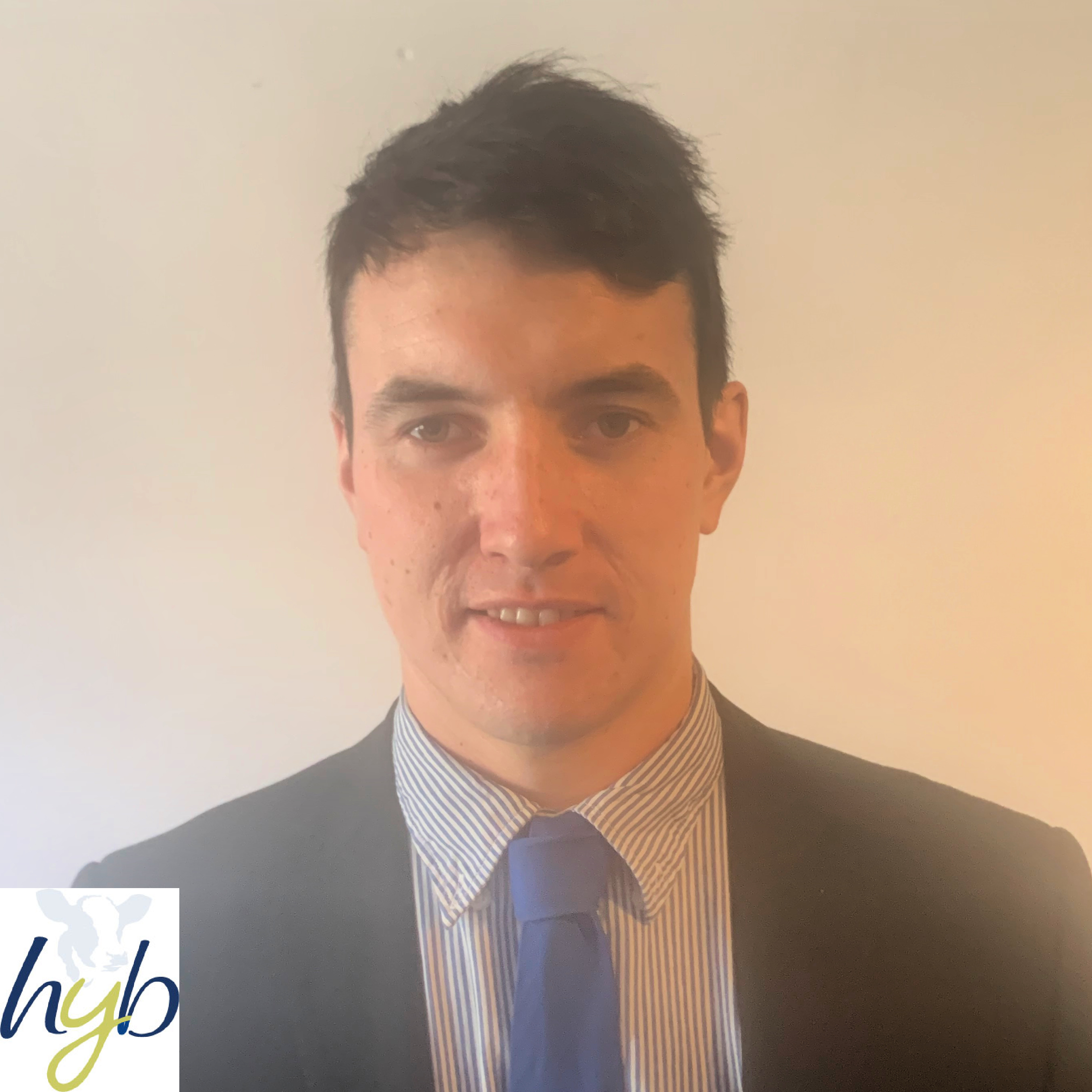
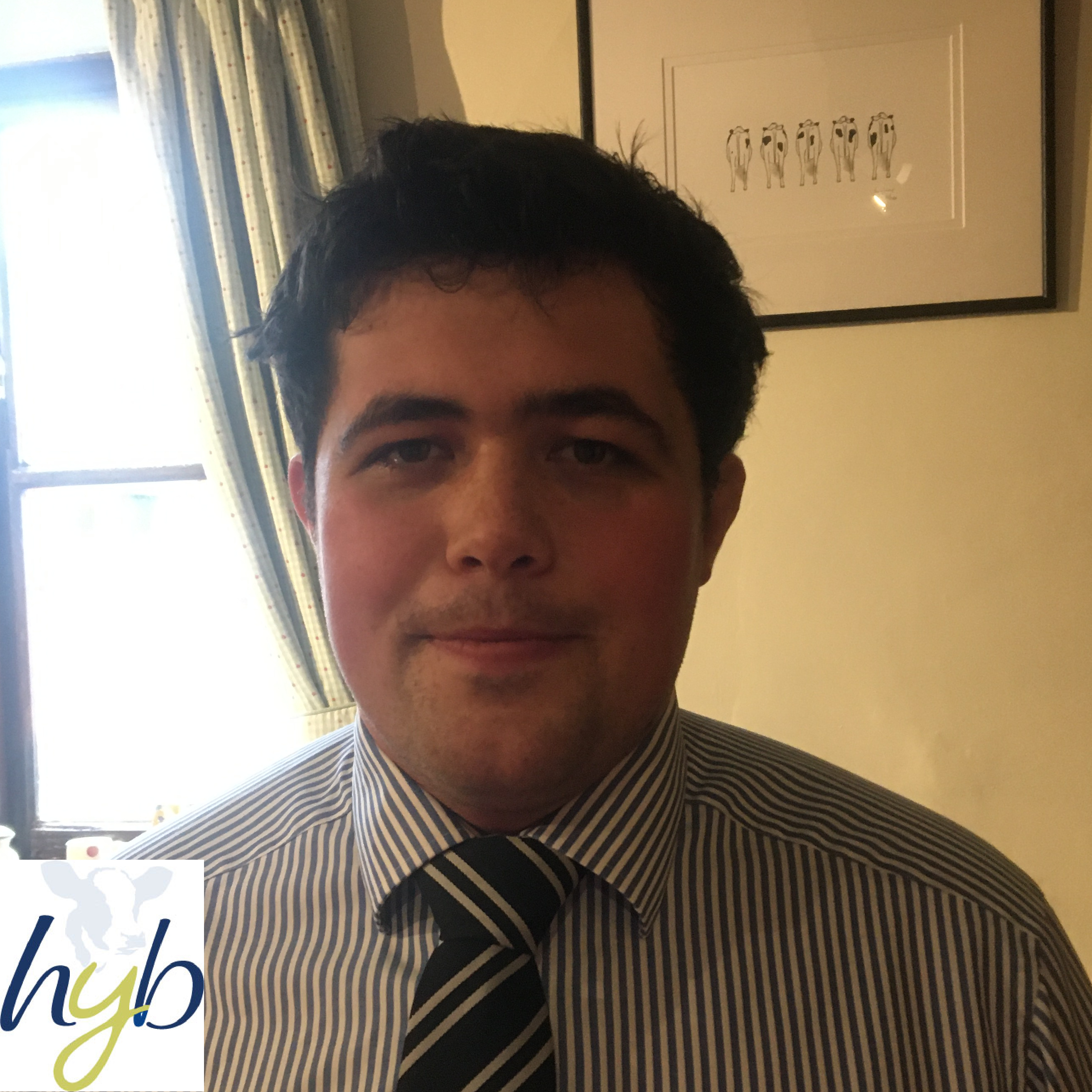


 The COVID-19 pandemic has led to unprecedented worldwide societal and economic instability. We’re facing an astonishing loss of human life and unprecedented challenges to public health, economies at every level, food systems, employment, and education. And global extreme poverty is rising for the first time in more than 20 years.
 Spread of Infectious Diseases
 The First Vaccine


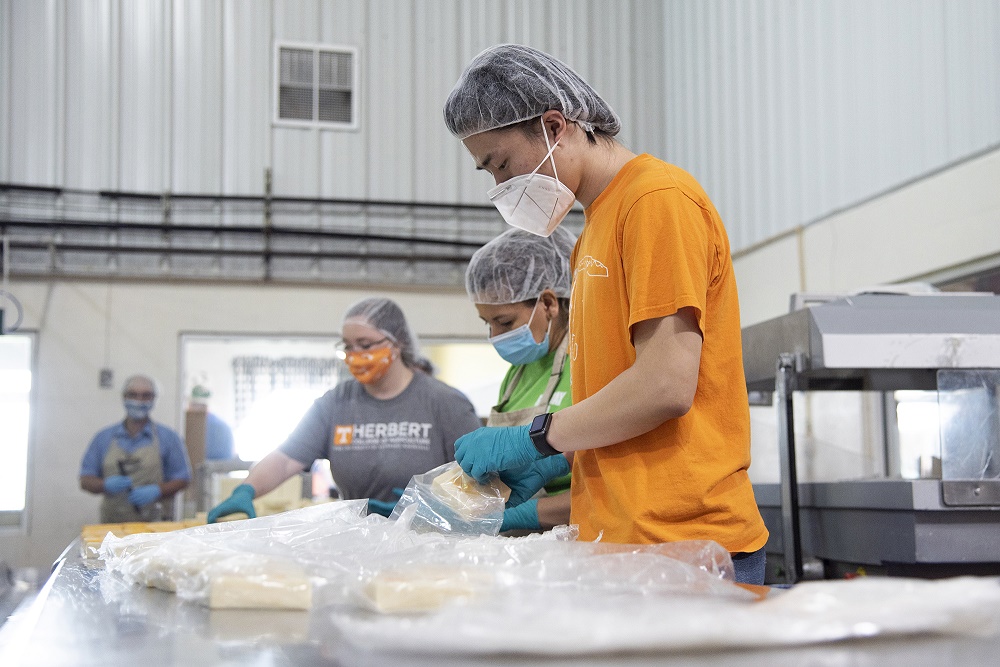
 iDDEN was established to operate as a non-profit organization by seven groups providing dairy data services in Australia, Austria, Belgium, Canada, Denmark, Germany, Iceland, Finland, Norway, Sweden, The Netherlands and the United States.


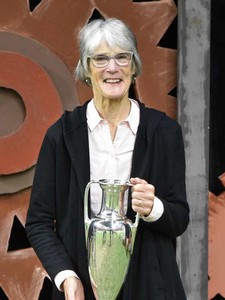 National Dairy Shrine is excited to announce its new board members that were elected at this year’s annual meeting earlier this month, and this week we are highlighting board member Dr. Sheila McGuirk.
 Last October, 147 years after his family started their dairy farm in Wisconsin, Paul Adams looked Pres. Trump’s agriculture secretary in the eye and asked him for help.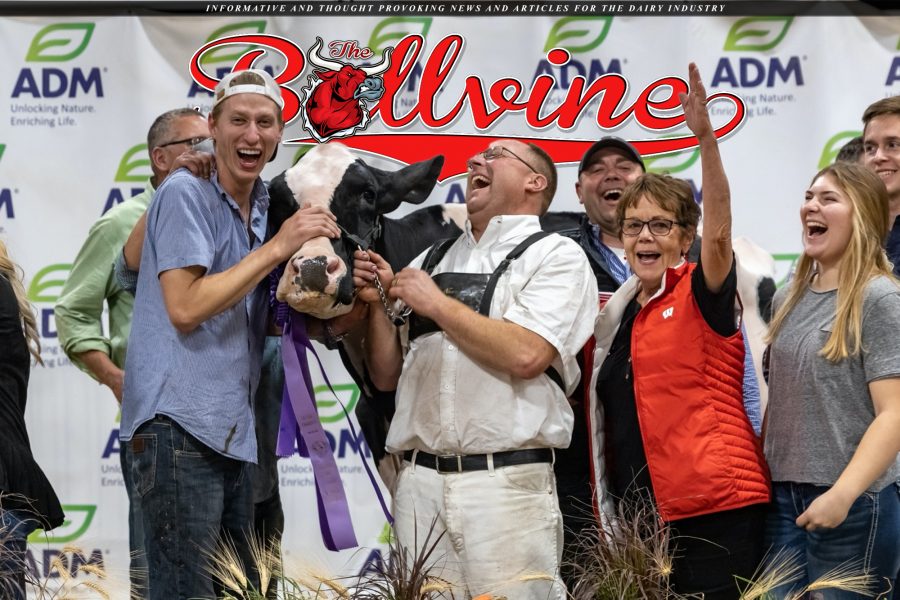
 Jordan Hansen, 39, has become an integral part of the family-owned Hansen’s Dairy in Hudson. And if she looks right at home there, it’s for good reason. Hansen herself grew up on a dairy farm in Decorah.



