Each day, dairy farmers across America rise to the challenge of feeding a growing world. Consumers today have more choices than ever before when it comes to high quality milk, delicious cheese, and other dairy products. None of this would be possible without U.S. Registered Holsteins®, and the people who raise them.
Holstein Association USA shares stories of the nation’s dairy producers through its documentary series Holstein America. Now in the program’s fourth year, the next episode broadcasts at 7 p.m. CST Monday, Feb. 8 on RFD-TV. Mark the calendar or set the DVR to record this exciting television broadcast celebrating the dairy community.
“Holstein America is our tribute to dairy farmers and families who are committed to producing the best milk and dairy products possible for consumers,” says John Meyer, CEO of Holstein Association USA. “We know you’ll enjoy the remarkable stories of the people behind the cows.”
In the upcoming episode, Holstein America explores the versatility of milk and U.S. Registered Holsteins.
On farms from Colorado to Massachusetts, individuals, and families from all walks of life share their passion for Registered Holsteins — and providing an abundance of dairy products, sustainably. South Dakota State University students showcase their first-hand experience with dairy production and manufacturing. In Wisconsin, Widmer’s Cheese Cellars gives a behind-the-scenes look at how artisan cheeses are handled and made with care.
The hour-long program, sponsored by Merck Animal Health, will also explore the programs and services offered by Holstein Association USA. Members explain the value of registration, classification, and new technology offered by the world’s largest dairy breed organization.
Join us for Holstein America at 7 p.m. CST, Monday, Feb. 8 on RFD-TV.
RFD-TV is a leading independent cable channel available on DISH Network, DIRECTV®, AT&T U-Verse, Charter Spectrum, Cox, Comcast, Mediacom, Suddenlink and many other rural cable systems. Reference local listings for more information.
After the show, visit HolsteinUSA to find a complete collection of the Holstein America series. Also stay tuned to Holstein Association USA on Facebook and Instagram for more information.
Holstein Association USA, Inc., provides programs, products and services to dairy producers to enhance genetics and improve profitability — including animal identification and ear tags, genomic testing, mating programs, dairy records processing, classification, communication, consulting services, and Holstein semen.
The Association, headquartered in Brattleboro, VT., represents approximately 25,000 members throughout the United States. To learn more about Registered Holsteins® and the other exciting programs offered by the Holstein Association, visit www.holsteinusa.com, and follow us on Instagram, Facebook, and Twitter.
The announcement of the Master Breeder recipients has become an annual tradition at Holstein Canada. This tradition is now in its 91st year, and we are pleased to announce the 2020 Master Breeders.
Seven winning herds hail from Ontario; seven from Quebec; two from P.E.I.; and Alberta, B.C., Manitoba, and Nova Scotia all had one. Two of the herds achieved an incredible fourth Shield: ALTONA LEA and RONBETH.
Congratulations to the Master Breeders who joined the ranks of the most elite breeders across Canada!
Since its beginning in 1929, the Master Breeder program has become the most coveted Holstein Canada award. Including this year’s winners, more than 1100 Master Breeder shields have been handed out since 1930 (for the year 1929). For the first time ever, Holstein Canada revealed the winners live to the entire Holstein community in an online event. This livestream was seen by more than 1200 viewers from all over the world.
We recognize these breeders for having mastered the art of breeding balanced cattle – high production and outstanding conformation with great reproduction, health and longevity. We will be celebrating this year’s recipients at the National Holstein Convention Master Breeder Gala in Ottawa, Ontario on Saturday, July 10, 2021. We will also be honoring the 2019 Master Breeders at a special Gala Thursday, July 8, 2021.
Annonce des lauréats du 91e titre de Maître-éleveur
ts viennent de l’Ontario, sept (7) du Québec, deux (2) de l’Î.-P.-É. et un (1) pour chacune des provinces suivantes : Alberta, C.-B., Manitoba et Nouvelle-Écosse. Parmi eux, deux (2) troupeaux décrochent une exceptionnelle quatrième plaque : ALTONA LEA et RONBETH.
Félicitations à ces Maîtres-éleveurs qui rejoignent les rangs des éleveurs d’élite du Canada!
Vous retrouverez les coordonnées des producteurs lauréats sur le site Web de Holstein Canada.
Depuis sa création en 1929, le programme des Maîtres-éleveurs est devenu la reconnaissance la plus convoitée de Holstein Canada. En incluant les lauréats de cette année, nous avons décerné plus de 1100 plaques de Maîtres-éleveurs depuis 1930 (lauréats de l’année 1929). Pour la toute première fois, Holstein Canada a dévoilé le nom des récipiendaires du titre en direct à l’ensemble de la communauté Holstein lors d’un événement en ligne. Cette retransmission en direct a réuni plus de 1200 téléspectateurs et téléspectatrices du monde entier.
Nous honorons ces éleveurs pour être passés maîtres dans de l’élevage de vaches équilibrées : une production élevée et une conformation exceptionnelle associées à de grandes qualités en reproduction, en santé et en longévité. Les récipiendaires de cette année recevront les honneurs au Gala des Maîtres-éleveurs du Congrès national Holstein 2021 qui aura lieu le samedi 10 juillet prochain à Ottawa en Ontario. Nous mettrons également à l’honneur les Maîtres-éleveurs 2019 lors d’un Gala spécial le jeudi 8 juillet 2021.
Improved human, animal and environmental health is the goal of a $12-million, University of Guelph-led international genomics project expected to revolutionize breeding in Canada’s multibillion-dollar dairy farming industry.
The four-year project will be the first large-scale project integrating novel genetic traits for fertility, health and feed efficiency into a national database to help farmers and breeders, said University of Guelph animal biosciences professor Christine Baes, who is leading the project.
Genome Canada will provide $4 million toward the project, and $3 million will come from regional genome centres: Ontario Genomics (including the Ontario Research Fund), Genome Alberta, Genome Quebec and Genome British Columbia.
“Ontario Genomics is grateful for the Ontario government’s support for this important genomics dairy farming project,” said Bettina Hamelin, president and CEO of Ontario Genomics. “Genomics tools and technologies are revolutionizing how we breed healthier and more resilient livestock, which is great news both for farmers and consumers. By investing in Ontario’s prominent and leading genomics research and innovation, we are making certain that Ontario’s agriculture and agri-food sectors thrive while contributing to a healthier planet and healthier people.”
Mike Harris, MPP for Kitchener-Conestoga, said this provincial investment will lead to a sustainable, more competitive Canadian dairy industry.
“This innovative project will help build a stronger agricultural sector and food system in our province.”
The project will also receive funding support from Lactanet Canada – a partnership launched in 2019 by Quebec-based Valacta along with CanWest DHI and the Canadian Dairy Network, both based in Guelph – as well as companies and organizations in dairy genetics and production, including Growsafe, Allflex, Afimilk, NEDAP and Illumina. The project also involves collaborators in the United States, Europe, Brazil and Australia.
The project builds upon the world-class platform created for dairy research at University of Guelph through its partnership with the Ontario Ministry of Agriculture, Food and Rural Affairs (OMAFRA), the Ontario Agri-Food Innovation Alliance, said Malcolm Campbell, vice-president (research).
“The generous support from government and industry partners across Canada will enable U of G researchers to collaborate nationally and globally on projects that will benefit dairy farmers and dairy consumers alike, with phenomenal environmental and economic benefits,” he said.
“This initiative is yet another example of how University of Guelph researchers connect many disciplines to find solutions that promote healthy populations, healthy ecosystems and a healthy economy that collectively improve life.”
Project members aim to identify novel genetic traits for a new selection index for dairy cattle resilience. Baes said the group will develop traits that help animals adapt to changing environmental conditions while maintaining milk productivity, dairy herd health and cow fertility – all in a way that feeds people and protects the environment.
The results will directly benefit farmers and cattle breeders, helping them to identify superior livestock for breeding, said Baes. She said the system will ultimately help farmers save some $200 million in costs associated with poor cow fertility and disease, as well as animal feed that makes up the largest expense in milk production.
The new project is intended to satisfy growing consumer demands and ensure the competitiveness of Canada’s dairy industry. It’s also meant to help address increasing concerns about human health, animal health and welfare, and the environmental impacts of greenhouse-warming methane emissions as well as water, energy and land use.
“This project can address key challenges that the industry is facing, enhance sustainability of dairying and provide a long-term competitive advantage for Canada’s dairy industry,” said Baes, who holds the Canada Research Chair in Livestock Genomics.
Baes leads the initiative along with co-principal investigators at the University of British Columbia, the University of Alberta and Université Laval. Other Canadian partners include researchers at the University of Prince Edward Island and at companies and industry organizations across the country.
About 40 University of Guelph researchers, including eight faculty members and numerous staff and student researchers from the Ontario Agricultural College and the Ontario Veterinary College, will take part.
University of Guelph researchers include population medicine professor David Kelton, holder of the Dairy Farmers of Ontario Chair in Dairy Cattle Health, and Prof. Flavio Schenkel, director of the Centre for the Genetic Improvement of Livestock in the Department of Animal Biosciences.
The research team will also work with cattle at more than a dozen area farms to gather health and feed efficiency data for the national project.
Project partners will use that information along with fertility data from other members and centres across Canada and partner countries to develop and refine a national evaluation system for individual animals. The system will be run by Lactanet Canada.
“Building on previous work, this is the first time that traits for calf health, fertility and feed efficiency will be collectively implemented into a genetic evaluation program for dairy cattle,” said Baes. “This will definitely improve how we breed cattle in Canada.”
That information will be shared with evaluation centres around the world, she added.
Besides improving animal health, the project is intended to make milk production more environmentally sustainable.
Researchers will study genetic traits for feed efficiency, or how efficiently a cow turns feed into milk or weight gain. By improving feed efficiency, Baes said farmers can help limit livestock emissions of methane, a more potent greenhouse gas than carbon dioxide. She said this research may also help reduce the environmental impact of dairy farming by limiting the amount of cropland needed to produce cattle feed.
As one of Canada’s most important agri-food sectors, the dairy industry contributes nearly $20 billion a year to the country’s gross domestic product. Canadian dairy genetics exports are worth another $150 million a year.
Baes said University of Guelph is a natural base for the project. She points to the University’s long-standing agri-food and dairy expertise and its proximity to genetics and dairy organizations in southern Ontario, from Guelph-based livestock genetics company Semex to DFO in Mississauga.
“We have a lot of expertise in quantitative genetics, and we have excellent ties with the industry here in Guelph,” she said. “The University of Guelph holds a very strong position in dairy research not only in Canada but also globally. We’re working closely with partners across Canada and around the world. There’s no better place to run this research than in Guelph.”
Referring to the project’s country-wide academic and industry partners, Baes said, “This collaboration among researchers in very different fields will be a great opportunity to tie in all those different avenues of research and get the most out of the research dollars being spent. This project will help ensure that Canada has a safe, affordable and ethically sustainable food system.”
President Joe Biden has signed an executive order (EO) that increases food assistance for families missing meals due to school closures and gives additional funding for SNAP.
The executive orders are designed to address a dramatic rise in hunger across the United States. IN addition to making up for missed meals from schools, the EO boosts the Supplemental Nutrition Assistance Program benefits for the lowest-income households.
Though SNAP and other food assistance programs have provided a crucial safety net for millions of Americans, it hasn’t been enough to offset the surge of job losses and resulting financial stress. Even after the most recent stimulus package boosted SNAP benefits by 15 percent, the average recipient is still approximately $100 short of covering the costs of a month of low-cost groceries.
Because the effects of hunger are immediate and long-lasting, these statistics are alarming, to say the least. As such, NFU is relieved that the Biden administration has prioritised food security in its first days, as the organization’s president Rob Larew noted in a statement:
“One of the most worrying side effects of the pandemic has been a dramatic rise in hunger. For months, National Farmers Union has been urging lawmakers to address this crisis – and we are extremely encouraged by and supportive of President Biden’s prompt action. By both increasing SNAP benefits for the lowest-income recipients as well as offering additional support to families who ordinarily depend on free school meals, this executive order will offer hungry Americans greater certainty about where their next meal will come from during these trying times.
“In doing so, it will not only improve physical health outcomes and mental wellbeing, but it will stimulate much-needed economic growth: every dollar spent on SNAP adds $1.70 to the economy, and every billion dollars spent on the program creates 13,500 new jobs. While we recover from the pandemic, this is really the kind of smart, efficient, and compassionate policy making we need.
“However, as the administration itself noted, this is only part of the solution; moving forward, we ask that legislative and executive branches expand on the order to negotiate additional aid for unemployed Americans, struggling businesses, and rural communities.”
The Wisconsin Holstein Association and the Junior Activities Committee has made the difficult decision to cancel the Wisconsin Junior Holstein Convention that had been re-scheduled for March 27-28, 2021. Due to the ongoing pandemic, the group believed it was in the best interest of our membership to no longer host this event that traditionally has a large attendance of youth from across Wisconsin.
To find ways to keep juniors involved and recognize their accomplishments, the Junior Activities Committee and the WHA staff are working on a series of smaller, regional events for junior members later in the spring. Event details will be shared on the WHA Facebook page as well as at www.wisholsteins.com once finalized.
For more information, contact Laura Wackershauser at 800-223-4269 ext. 1 or lauraw@wisholsteins.com.
In recent years, dairy alternatives have been popping up seemingly everywhere. These dairy wannabees typically do not come close, however, to matching dairy’s unique nutritional profile and taste.
That reality could change drastically with the influx of new lab-created, animal-free “dairy” proteins. Making the loudest noise here is Berkeley, Calif.-based startup Perfect Day, which uses fermentation to create proprietary “flora-made” “dairy” protein. The company says its protein can be used across a range of products — from “ice cream” and “milk” to “cheese” and “butter” — “to deliver the same taste and texture of dairy without the environmental, animal welfare or food safety concerns.” Foods made with Perfect Day protein may be labeled as vegan and lactose-free.
This past summer, Perfect Day’s founders joined with a product developer in the dairy industry to create a new consumer food company called The Urgent Co. The Urgent Co. unveiled its first product — Brave Robot “ice cream” — made with Perfect Day’s protein. Since then, at least one other ice cream manufacturer has launched products formulated with the protein.
Perfect Day is not the only company dipping its toes in the animal-free “dairy” waters. For example, Remilk, an Israel-based startup, also is producing “dairy” proteins through microbial fermentation. It recently announced the completion of its $11.3 million funding round.
Definition, please
Although both of these companies refer to their products as “animal-free dairy,” we take issue with that phrase. After all, FDA defines dairy differently. For example, the agency states that, “Milk is the lacteal secretion, practically free from colostrum, obtained by the complete milking of one or more healthy cows.” (FDA also recognizes goat’s milk and sheep’s milk as dairy.)
Joseph Scimeca, Ph.D., senior vice president of regulatory and scientific affairs for the International Dairy Foods Association, points out that companies are making investments in these and other dairy alternatives to meet consumer demand.
“What’s unfortunate in this case is how the pace of technology and innovation is moving much faster than the regulatory environment,” he tells Dairy Foods. “Regulators, in our view, need to be more outspoken about whether these product claims adhere to longstanding FDA food labeling policy that label claims must be truthful and not misleading. The continued silence by regulators creates more questions in the marketplace because unlike traditional dairy products, most alternatives lack federal or state standards that define the naming of food.”
“All that glitters is not gold,” an old proverb proclaims. Well, all that replicates dairy is not dairy, we say. Despite the regulatory silence, Dairy Foods will continue to adhere to FDA’s definitions when it comes to dairy products.
Jonathan Merriam, President of the American Jersey Cattle Association (AJCA), today announced the class for the seventh Jersey Youth Academy, July 11 to 16 in Columbus, Ohio.
“The 31 young people from 15 states selected for this class exemplify the many talented, interested Jersey youth across the United States that our organization wants to encourage to pursue careers in the Jersey dairy business,” Merriam said.
“Continuing the impact of the national Jersey youth programs offered by the association,” he continued, “the Jersey Youth Academy is an intensive educational program focused specifically on the Jersey cow and the many elements of the Jersey dairy business. Academy challenges participants to understand the long history and current growth of the Jersey breed in this country and shows them the opportunities and challenges of the dairy business in the future.”
Participants in the seventh Jersey Youth Academy, with their current academic institutions, are:
California: Kylie Konyn, Escondido (Saint Joseph Academy); Aspen Silva, Modesto (Modesto Junior College); Hartley Silva, Modesto (Modesto High School).
Indiana: Jacqueline Mudd, Berne (Adams Central High School).
Maryland: Morgan Osborn-Wotthlie, Union Bridge (Francis Scott Key High School).
Massachusetts: Evan Cooper, New Braintree (Quabbin Regional High School); Barry Nadon, West Brookfield (home farm), Katelyn Poitras, Brimfield (Tantasqua Regional High School); Jack Zina, Hadley (Hopkins Academy).
Minnesota: Summer Schepper, Princeton (Princeton High School).
New York: Elizabeth Hyman, Adams (Belleville Henderson Central School); Grace Stroud, Caneadea (SUNY-Morrisville).
Ohio: Rachel Anderson, New Philadelphia (Southern Illinois University); Von Herron, Salem (United Local High School); Emily Rook, Fredericktown (Fredericktown High School).
Oklahoma: Ali Bowman, Glencoe (Oklahoma State University).
Oregon: Mia Berry, Sherwood (Sherwood High School); Jessica Hewitt, Molalla (Molalla High School); Gracie Krahn, Albany (Linn Benton Community College); Tyler Seals, Tillamook (Tillamook Bay Community College).
Pennsylvania: Nicole Arrowsmith, Peach Bottom (Solanco High School); Laura Caruso, Acme (Connellsville High School); Madelynn Hoffman, Manheim (Manheim Central High School); Gabriella Rockwell, Scenery Hill (Virginia Tech).
Tennessee: Alison Graves, Talbott (Berean Christian Homeschool).
Vermont: Keenan Thygesen, Tunbridge (Kimball Union Academy).
Wisconsin: Sophie Larson, Reedsburg (Reedsburg Area High School); Maleah Sickinger, River Falls, Wis., (University of Wisconsin-River Falls); Emma Vos, Maribel (Manitowoc Lutheran High School).
Applications were evaluated by a committee appointed by Merriam and chaired by AJCA Director Tyler Boyd. Selection was based on merit, motivation and preparation for the program as reflected in the written application and goal statement.
Presenters will include representatives of key support agencies and allied industry. The group will also meet and interact with leaders from the Jersey community to gain their unique insights about the future of the dairy business with a specific focus on the Jersey cow.
All program costs, including round-trip transportation for participants, are paid by the Academy.
The Jersey Youth Academy is a 501(c)(3) educational foundation administered by the American Jersey Cattle Association. Contributors represent a broad spectrum of Jersey breeder and dairy industry support.
Leading oat milk brand Oatly and the owner of Flora margarine are spearheading a campaign to overturn new proposed EU rules that could have dire consequences for vegan food companies.
A ruling by the European Court of Justice in 2017 has already banned Vegan food producers trading in the EU from using terms such as “oat milk” and “soya yoghurt” on packaging. But if new rules known as Amendment 171 are approved, producers will not be able to use terms or imagery on packaging which refer to or evoke dairy products.
If interpreted broadly, the amendment could prevent them from including claims or denominations such as “dairy”, “creamy”, “yoghurt-style dessert” or “does not contain milk”. They would also be unable to use packaging designs that call to mind dairy products, such as yoghurt pots or milk cartons. Even simply showing climate impact by comparing the carbon footprint of their products with dairy equivalents could become illegal.
So how did it come to this – and does the vegan industry have any chance of preventing these new rules from going ahead?
A tale of two lobbies
The dairy industry, which lobbied for Amendment 171, argues that the ban on the use of dairy-related terms is necessary to protect consumers and make sure they are not misled. The industry can point to similar existing EU laws around products, for example in relation to health claims or the region where an item comes from.
Vegan food companies are concerned that if these “protections” under the amendment are put in place, they will need to rebrand, rename and rethink marketing strategies – with serious additional costs. In other words, this is a face-off between a sector that is long-established but still growing and an up-and-coming rival.
The plant milk market alone accounted for US$12 billion (£9 billion) in global sales in 2019 and is set to grow by 11% per year between 2020 and 2026 to reach US$21 billion. But this is tiny compared to the dairy industry – which is expected to grow from US$718 billion in 2019 to slightly over US$1 trillion in 2024.
Amendment 171 achieved a majority vote in the European parliament in October. It now needs approval from the EU Council of Ministers, which will consider the proposal at the trilogue meetings with the parliament and European Commission on January 27-28. If it’s agreed by the council and the commission, it will become law. Oatly, Flora owner Upfield and the NGO ProVeg International have launched a petition in an attempt to persuade the EU to drop the new restrictions.
Lobbying for reality
At stake are not simply words, of course. As the British philosopher JL Austin famously put it, sometimes we are actually doing things with words – in this case, using them to try and maximise sales. Notable contested uses of terms such asChampagne, Parmigiano, or Tocaj have all demonstrated that language and the reality of competition coincide when it comes to food.
When it comes to Amendment 171, arguments for and against tend to look at the consequences. Most commonly, it is argued that since dairy farming can be seen as both bad for the environment and animal welfare, presenting vegan products as alternatives will help offset these effects. The welfare issues around dairy farming are even arguably worsethan with meat, for instance.
Constantly pregnant and having your teats squeezed by robots… it’s a cow’s life.Vladimir Mulder
There is more room for debate around the health comparisons between dairy and vegan alternatives. The relative benefits of the vegan alternatives are affected by a variety of factors such as consumers’ age, gender, race and lifestyle.
As for the dairy lobby’s arguments about confusing consumers, they are in danger of looking out of date, given the tremendous changes in eating habits that have taken place in recent years. The proportion of vegans in the EU has doubled in the past four years according to this survey. And although it’s only 3% of all consumers, as many as a third consider themselves “flexitarians” rather than meat eaters, and a sizeable proportion plan to go vegetarian or vegan in future.
This touches on one of other argument from the dairy lobby, which is around etymology: they say that “milk” and “dairy” have been essentially linked to the rich liquid fluid produced from glands of mammals – unlike “meat”, which doesn’t need to have anything to do with animals. This, they argue, is why it did not create a precedent in October when the European parliament voted against a proposal that would have banned terms such as “veggie burger” and “vegan steak”. Needless to say, vegan dairy producers take the opposite view.
It’s difficult to foresee how EU institutions will now proceed. Will they value the “pro-health” points made by the vegan sector? Or will they be persuaded by the “consumer confusion” argument pushed by the dairy industry? Amendment 171 was passed in the European parliament with a narrow majority (54%), which feeds hopes within the vegan industry that enough doubt has been cast on the issue for the new rule to be blocked.
The UK dimension
The debate is also relevant in the UK, where 3.5 million people – around 5% of the population – now see themselves as vegan and choose not to consume or use animal byproducts. Like many other countries, UK law provides that food information should be accurate, clear and easy to understand for consumers, making sure that they can rely on correct information and make informed choices based on their diet, allergies and taste. Also, commercial practices which mislead consumers can be punished under criminal law and advertising rules.
But there are no rules as strict as Amendment 171. Should such a regime be finally adopted by the EU, we would have a scenario where marketing rules for plant-based food are tighter in the EU than in Britain. Yet Amendment 171 would still apply to UK producers who want to export to the EU. And, as the EU is the main market for export, British producers of vegan dairy food may eventually decide to voluntarily follow the new EU rules in their domestic market, to exploit economies of scale.
In one of his first acts in office, President Joe Biden requested federal agencies to extend eviction and foreclosure moratoriums for millions of Americans. In response, the U.S. Department of Agriculture announced an extension of eviction and foreclosure moratoriums on USDA Single Family Housing Direct and Guaranteed loans (SFHDLP and SFHGLP) through March 31, 2021. The actions announced today will bring relief to residents in rural America who have housing loans through USDA.
USDA recognizes that the COVID-19 pandemic has triggered an almost unprecedented housing affordability crisis in the United States. Today, 1 in 10 homeowners with a mortgage are behind on payments. In addition to the actions taken, the Biden Administration looks forward to working with Congress to take more robust and aggressive actions to bring additional relief to American families and individuals impacted by the pandemic.
Visit www.rd.usda.gov/coronavirus for additional information on USDA’s Rural Development COVID-19 relief efforts application deadline extensions and more. USDA Rural Development will keep our customers, partners and stakeholders continuously updated as additional actions are taken to bring relief and development to rural America.
Foreclosure Moratorium Extension:
The actions announced today make it possible for the foreclosure and eviction moratorium announced by USDA, Single Family Housing Direct Loan Program (SFHGLP) and the Single Family Housing Guaranteed Loan Program (SFHGLP) on August 28, 2020, to be extended until March 31, 2021. The moratorium does not apply in cases where USDA or the servicing lender has documented the property is vacant or abandoned.
Forbearance Requirements:
Lenders should continue to provide impacted borrowers relief in accordance with the CARES Act by offering forbearance of the borrower guaranteed loan payment for up to 180 days. In addition, the initial forbearance period may be extended up to an additional 180 days at the borrower’s request. Lenders should outline potential solutions that may be available at the end of the forbearance payment and explain to borrowers that a lump sum payment of the arrearage will not be required.
During the forbearance options outlined above, no accrual of fees, penalties or interest may be charged to the borrower beyond the amounts calculated as if the borrower had made all contractual payments in a timely fashion.
Lenders may approve the initial 180-day COVID-19 Forbearance no later than the earlier of the termination date of the national emergency declared by the President on March 13, 2020 or March 31, 2021.
Post Forbearance Options:
Upon completion of the forbearance, the lender shall work with the borrower to determine if they can resume making regular payments and, if so, either offer an affordable repayment plan or term extension to defer any missed payments to the end of the loan. If the borrower is unable to resume making regular payments, the lender should evaluate the borrower for all available loss mitigation options outlined in HB-1-3555. The special relief measured that are outlined in Chapter 18 Section 5 “Assistance in Natural Disasters” will apply. These options include Term Extensions, Capitalization and Term Extensions, and a Mortgage Recovery Advance.
Questions regarding program policy and this announcement may be directed to the National Office Division at sfhglpServicing@usda.gov or (202) 720-1452.
USDA Rural Development provides loans and grants to help expand economic opportunities and create jobs in rural areas. This assistance supports infrastructure improvements; business development; housing; community facilities such as schools, public safety and health care; and high-speed internet access in rural areas. For more information, visit www.rd.usda.gov.
Another New Zealand company has had success exporting dairy technology to China.
Waikato Milking Systems is mid-way through another major project installing four 80-bail Orbit Concrete Rotary parlours for New Hope Animal Husbandry, which has its head office in Chengdu, central China.
The four milking plants will be installed across three farms and collectively they can milk up to 48,000 cows a day.
Each plant has been designed to the same specifications and capable of operating up to 21 hours per day, if required, seven days a week.
Waikato Milking Systems China Manager David Morris says three plants had been installed in 2020, the first was commissioned in July 2020 and the second and third will be commissioned in March 2021.
The fourth will be installed and commissioned late in 2021.
All four plants were designed and made at the Waikato Milking Systems manufacturing plant in Horotiu, north of Hamilton, and exported to China for installation during 2020.
Data compiled by global business data platform Statista show China will have about 6.23 million dairy cows by 2024. It is the fifth largest producer of cow milk in the world, New Zealand is seventh.
Morris says there is high demand for reliable, high performing milking technology as China continued to ramp up its herd sizes and milk production.
All of the plants Waikato Milking Systems exported to China featured heavy duty bail work for handling large numbers of bigger animals, for durability and longevity.
Two of the rotary systems will work side-by-side at New Hope Animal Husbandry’s farm in Ningxia, Northwest of Xian, 1000 kilometres north of Chengdu.
“The farm at Ningxia has about 10,000 animals including dry cows and replacements,” Morris says.
“The farm has two milking herds, each with a maximum of 3000 cows.
“Each of the rotary systems will have throughput of 520 cows/hour, and milking will be three times per day, increasing to four times later on.
“We’re looking at 16 or 21 hours milking time per day.”
The other two Obit rotary plants will be milking cows at New Hope Animal Husbandry’s farms near Jinchang, in the Gansu province, bordering Inner Mongolia to the north of China.
They will operate under a similar programme to the rotary plants at Ningxia, each milking about 520 cows per hour, three times a day moving up to four times a day later on.
“We expect these systems to be operating 16 or 21 hours per day also, depending on how many cows the operator wants to put through.”
Morris says installing the four milking plants had been a challenge because of the extra precautions prompted by Covid-19.
But installation teams in China worked hard and long days to build each of the plants and assemble the components in about three weeks.
“Since 2012 Waikato Milking Systems has installed over 40 cow rotary parlours in China, including 15 which were 80-bail systems and most are now milking four times per day,” David said.
“The market in China is aware of the quality of New Zealand-made dairy products, they know we can make superior milking systems that stand the test of time.”
Days after a tornado ripped through their dairy farm, tearing the tops off four grain silos and nearly destroying six buildings, the Nigon family gathered at the kitchen table.
Marty and Kathy Nigon, along with their six adult children, had to make some hard decisions on that last Sunday in September 2019.
The family meeting lasted nearly three hours. Tears were shed as raw emotion from the devastation converged with a lifetime of good memories on the Clark County dairy farm.
“Everybody got to express their opinion,” Marty Nigon recalled. “And we all agreed we should build everything back.”
It was a testament to the resilience of dairy farmers slammed by natural disasters, years of low milk prices, runaway expenses and the pandemic.
“There are two things that will keep you farming,” Marty Nigon said his father told him when he was a boy. “One, you’ve got to really like it. And, two, you’ve always got to think next year will be better.”
Thousands of family farms like Nigon View Dairy are weighing their future, questioning whether they should keep going when the next round of hard times, which never seems far away, could force them out of business.
The collapse of small farms has been changing the landscape of Wisconsin — literally and figuratively — for years. Many have been losing money or are barely hanging on. Since 2011, the number of dairy farms in the state has fallen more than 43%, a reminder of the harm that low milk prices, intense competition and an oversupplied marketplace can inflict on farm families. In 2020, the state lost about 360 dairy farms, and for the first time, now has fewer than 7,000 of them.
No one wants to be the generation that loses the farm, says Chris Rueth, whose family has a 250-cow dairy operation in the Town of Loyal in Clark County.
“It’s in our blood,” he says.
Robots milk and feed the cows
How farmers plan for the years ahead varies widely, depending on their circumstances and whether the next generation even wants to someday take over the family business.
When the Rueths consider a major upgrade costing hundreds of thousands of dollars, it’s for 10 years, not two.
They’re also mindful of not getting too far ahead of themselves in a business where sinking milk prices, poor weather for crops, even a trade war with China, wipe out profits.
Long-term planning has to be tempered with the current reality.
“Basically, you make it through fall harvest,” Rueth said. “Then you look back on what you did that year and see what you need to improve on.”
One thing seems certain. The small dairy farm from 10 years ago won’t be around in another decade if it doesn’t keep evolving. Many farms milking between 50 and 100 cows are at risk of shutting down because they don’t benefit from economies of scale or they can’t find hired help.
“When you look at the dairy industry, I don’t think small farmers have a lot of hope,” said Max Malm, whose family has a 120-cow operation in Loyal.
The big farms “just keep getting bigger and bigger,” he says.
Still, technology and innovation may help keep small and midsize operations afloat, even when other trends are against them.
Malm’s Rolling Acres has invested in robots that milk the cows whenever they feel like being milked, 24 hours a day, reducing labor costs and freeing up family members for other tasks.
One at a time, the cows stroll up to the milking station, nudge open the gate and step inside. A robotic arm swings down, sanitizes each teat and then attaches laser-guided suction cups to extract the milk. The cow munches on a snack dispensed by the machine as an incentive to cooperate.
If something goes wrong, Malm gets an alert on his smartphone that identifies the problem. Then he can decide whether it’s worth dropping what he’s doing and heading to the barn.
The barn has a robot that cruises down the feed lane, dispensing rations with laser-guided precision. The robot’s sensors communicate with a set of doors that open and allow it to enter a “kitchen” where a computer system measures and mixes the meals.
All this technology comes at a steep price, easily costing a million dollars for the milking robots and the barn that houses the system.
“You have to believe in it and want to do this the rest of your life,” Malm said. “I think I’m lucky my dad and my grandpa embrace it as well.”
Small farms can survive, futurist says
Towns like Loyal and Greenwood are spokes in a wheel where agriculture is the hub. In fact, Clark County has more dairy farms than any other county in Wisconsin. It has 67,000 dairy cows, nearly twice as many cows as people.
There are 16 processing plants in the area that make cheese, butter and other dairy products sold around the world. Hundreds of millions of dollars pour into the local economy from more than 700 dairy farms.
“I think if all the small farms go away, our rural communities will go away as well,” Malm said.
That doesn’t have to happen, says Jack Uldrich, a futurist from Minneapolis who says some of the changes occurring in agriculture, including a locally produced food movement, favor small farms.
“This is a huge opportunity for dairy farmers because consumers want to know where their food is coming from. They want to know how you’re treating your animals, how you’re a steward of the land, how you’re supporting local communities,” Uldrich said while on a visit to Clark County.
“Everyone thinks technology is taking over, but what they’re missing is that people are craving human connections, and they want to support small farmers,” Uldrich said.
He urges folks to embrace a childlike curiosity about the world and notions that may seem crazy to seasoned adults.
Crunchy cheese? Solid milk? “A lot of traditional farmers would say that’s ridiculous. But I think kids would say, ‘Hey, tell me more about it,’” Uldrich said.
Not long ago, some farmers probably dismissed “Greek yogurt” as barely a blip in yogurt sales. Now it represents about 50% of that business. In the brewing industry, some predicted a takeover by huge corporate interests. Then came an explosion in growth of craft and microbreweries.
“Keep an open mind, stay curious, keep asking questions. And if you can’t do it, ask your kids to do it,” Uldrich said. “If you want to survive in the future, you need to have a beginner’s mind.”
Small dairies will probably survive if their operating costs are low enough or they have a unique product that fetches a higher price. They’ll likely boost their income with alternative crops, like hazelnuts, and will use the sun and the wind to generate electricity.
Driverless tractors, drones and satellites looking down on every field are going to be routine on farms of the future.
Some may even create a future out of thin air with industrial-scale photosynthesis that captures carbon dioxide from the atmosphere and with sunlight converts it into ethanol for fuel and ethylene used to make plastics.
Trade wars and diminished natural resources could favor farming on a local scale.
“We are going to return to small and medium-size farms that are distributed throughout the world,” Uldrich said.
In July 2022, Roehl Acres, a Clark County dairy farm run by Dennis and Suzie Roehl, will host Farm Technology Days, one of the largest agricultural shows in the nation.
“I’ve always wanted to do this,” Dennis Roehl says, adding that he first went to the show with his father, Lowell, in 1983.
The Roehls have considered installing robots on their farm that has a century-old barn.
“Everything’s always evolving,” Dennis says. “As long as we embrace the technology and bend with the times, I think there’s a future here.”
After earning a bachelor’s degree in engineering, in 1991 he chose to return to the farm started by his parents rather than pursue a job in the city.
“I love everything about it,” he says. “I love the smell of fresh-tilled dirt. If you’ve never smelled it, come out in the spring and you’ll know what I mean. And then you watch the plants popping out of the ground. It’s a big feeling of accomplishment.”
Marty Nigon and his daughter Kristyn on the family’s farm in Greenwood. (Mark Hoffman / Milwaukee Journal Sentinel)
The tornado that galvanized a community
Tuesday, Sept. 24, 2019, was unusually hot and muggy. Marty and Kathy Nigon were driving home from La Crosse that evening when they got the call that left them shaken.
Their son, Luke, lives in Greenwood. He had heard that a tornado hit the farm, so he rushed out there to survey the damage.
It was really bad. The tops of the concrete grain silos, not just the metal domes, were torn off. Six buildings were heavily damaged.
Luke called his parents and tried to prepare them for what they’d soon see that night. “He was emotionally devastated, and when we got there, I understood why,” Marty said.
“As we were coming over the hill to the farm, it was dark, so we couldn’t see anything. But I said to my wife, ‘Are you ready for this?’ Our farm is not going to look the same.”
It was Kathy’s 55th birthday.
One of the silos had collapsed on the barn, killing three cows. Four heifers were injured in a shed that was torn in half. Every building was damaged, trees were uprooted and powerlines were down.
Then, neighbors and other farmers started showing up to help. They used trailers to move the livestock to another farm a mile down the road.
“We got the cows out of this barn around midnight,” Marty said. It was the first time in 41 years his animals had to be housed on someone else’s property.
The next four days galvanized the community where the Nigons are well known in the Future Farmers of America chapter, the schools and by folks who buy pumpkins, sweet corn, maple syrup and mulch from them.
“I think we had close to seven Mennonite churches here to help,” Marty said, as 40 to 50 people a day converged on the farm to assist in the cleanup.
Someone the Nigons didn’t know, from the southern part of the state, sent the family a check for $150. Their farm had been hit by a tornado a year earlier.
The Nigons thanked as many people as they could, in person, but it wasn’t easy to reach everyone.
“Whether you helped physically — picking up debris, building structures — or emotionally with kind words and acts of kindness such as monetary gifts or dropping off food, we thank you all from the bottom of our hearts. … We are proud to be a part of this community of friends, family and neighbors,” the family said on their Facebook page.
Marty has been milking cows since he was 15 and is now 61. His hips and knees are still in good shape, which is amazing considering the toll that working around livestock takes on a farmer’s body.
“As long as I have my health, which I do, I’m OK,” he says. “I still have the drive to keep doing this.”
He and Kathy have no intention of ever selling the farm.
“If one of our kids doesn’t want it, somehow I’d like to keep it in our family for the grandchildren,” Marty says. “Once these farms are sold, you can’t afford to get them back. They’re way too expensive.”
Their daughter Kristyn, who graduated from the University of Wisconsin-River Falls last year with a bachelor’s degree in dairy science, may take over the farm someday, but right now she’s working for an equipment company in Durand.
Kristyn enjoys the cows, working outdoors and living in the country, but she’s not ready to take on the full responsibility of the family business.
“Especially with the cows, they tie you down every weekend. They’re like kids, but you can’t take them with you,” she said.
Still, she loves the farm and cherishes the memories of growing up there. Even during the years when milk prices sank or the crops were poor, she didn’t feel the strain her parents must have been feeling.
“Through the hard times, my mom and dad never showed it,” she said. “I mean, they stayed strong.”
Youth looking for support to purchase their first Brown Swiss should consider applying for the Nelson McCammon Youth Heifer Program offered by the Wisconsin Brown Swiss Association. The organization is accepting applications between now and February 10, 2021.
“The Nelson McCammon Youth Heifer Program helps youth interested in working with dairy cattle gain hands-on experience with high-quality Registered Brown Swiss, explains Wisconsin Brown Swiss President Josh Hushon. “By working with Brown Swiss through this program, our hope is that they will learn to appreciate the many outstanding qualities the Brown Swiss breed offers as the well as the camaraderie of those who own them.”
Award recipients will receive a grant for 50% (up to a $1,000 total) towards the purchase price of a Registered Brown Swiss female of any age. The program is intended to run for two years with the applicants being between the ages of 9 and 18 for cows and 9 to19 for heifers as of January 1, 2021. Applicants must be residents of Wisconsin and become members of the Wisconsin Junior and the National Junior Brown Swiss Associations.
Since the project started in 2013, 23 youth have purchased Registered Brown Swiss heifers thanks to the generosity of long-time Brown Swiss breeder and youth supporter Nelson McCammon, who generously donated the funding for the program via his estate when he passed. Mr. McCammon was a mentor to many, and a past winner of the Klussendorf Trophy.
Winners will be presented at the Wisconsin Brown Swiss Annual Meeting, March 6, 2021, at the Cranberry Country Lodge, Tomah, Wi.
Applications and more information about this and other programs can be found at the Wisconsin Brown Swiss Association website at www.wibrownswiss.com or by contacting Josh Hushon at josh2632@yahoo.com or 920-342-0611.
The new Holstein master breeders are EDISONS, JUNGO, MAC, MOLLANGES and MONTY. These breeders will receive the highest award that is given annually by the Holstein Switzerland cooperative. The master breeder title is awarded to breeding herds that show exceptional results over a long period of time. The breeders were selected on the basis of the herd accomplishments. During a 16-year period (from January 1, 2002 to December 31, 2017) they had to register at least 80 female animals and at least three female calves per year in the herd book. The points are only awarded to animals that bear the herd name and show high performance for production and conformation as well as a very good service life. The master breeder title rewards excellent results that have been achieved with the best possible longevity, which fully corresponds to the current breeding goals and is the culmination of an entire breeding career. The five new Holstein master breeders are:
Reto Büsser in 9203 Niederwil (SG), with the herd name EDISONS;
Alain and Severin Jungo in 1734 Tentlingen (FR), with the herd name JUNGO;
Patrick Marchand in 2905 Courtedoux (JU), with the herd name MAC;
Pascal Henchoz and Yves Collet in 1417 Essertines-sur-Yverdon (VD), with the herd name MOLLANGES;
Pierre Brodard in 1733 Treyvaux (FR), with the herd name MONTY.
Holstein Switzerland warmly congratulates the five new master breeders. They planned suitable matings and preferred outstanding cow families and are therefore ideal ambassadors for the Holstein breed. The five master breeders in 2021 will be presented in a souvenir brochure and will be duly honored at the next Holstein Awards on July 3, 2021 in Estavannens (FR).
Central Victoria hay cropper Dave Cossar says Aussie farmers are celebrating a boomer year, thanks to generous and timely rainfall.
A year after devastating bushfires roared through rural Australia, the worst hit regions are reporting a complete turnaround in fortunes.
Last year’s fires seared through 18.6 million hectares over a six-month period with no state untouched, killing 100,000 sheep and 25,000 cattle, and also wiping out 1250 beehives and 3500ha of vineyards.
The final tally of losses was lower than initially anticipated, with early estimates by analysts putting stock losses as high as 450,000 head.
The other silver lining was the fires marked the end of a protracted drought period and the Australian pastoral sector is surging in response to unexpectedly high rainfall events and cooler than usual temperatures so far this summer.
Central Victorian hay cropper Dave Cossar says he is in the fifth year of an exceptional run for his district, which was one untouched by last year’s fires.
His hay business surged on the back of the feed shortage resulting from the drought and the fires, but he says this year all regions are benefitting from moisture with exceptional feed levels depressing demand for his hay supplies.
Last year he donated significantly to help farmers hit by the devastating fires (see Farmers Weekly February 25, 2020).
His region, which only receives about 400mm of rain a year, got 120mm of that last April alone and rainfall continued with generous spring downfalls kicking crops along well into this summer.
“And December has been one of the coolest on record for Victoria – even in January we have not had any real heat yet,” Cossar said.
A new baler he purchased this year, partly aided by a generous government covid allowance of $150,000 per farm business, has already worked through 44,000 bales.
Australian Fodder Industry Association chief executive Paula Fitzgerald says the biggest issue facing farmers was finding space to store fodder surpluses this year, with demand for hay being low for several months and not expected to increase.
All of southern Australia is reporting some of the highest yielding crops seen in years and for some areas harvesting has been limited due to exceptionally wet weather.
Australian farmers are presently in the process of restocking post-drought, and agents are reporting demand for stock is also intensified by the “grass fever” market driven by good crop and grass growth and a capital livestock shortage.
Cossar says all livestock classes have experienced surges in values.
“For example, 12-month weaner steers that were selling at $1100 a head last year are $1800 this year, and that is right up the eastern seaboard and in New South Wales,” he said.
There were expectations that in-calf cows could be worth up to $4000 each amid stock shortages and even four-day bull calves had sold for $300 a head.
Southern Victoria farmer and BlazeAid charity manager Kevin Blake said he had just sold 2500 store lambs for $146 a head in what has proven to be a “fabulous” summer to date.
“I think that if you cannot make money this year there is something wrong with you,” Blake said.
He says some buyers with deep pockets are paying up to $400 a head for ewes this year.
Cossar says the renewed optimism within rural Victoria after a tough few years for some districts is now feeding into land prices throughout the state, as well as livestock prices.
“Good potato country that sold for $7000 an acre four years ago sold last year for $11,000. Broadacre cropping country southwest of Ballarat has sold for $7500 an acre, that does not seem sustainable,” Cossar said.
Thomas Elder Markets analyst Matt Dalgleish has highlighted the stock building process happening in Australia.
He reports lamb throughput at yards along the east coast being 16% up on average, and as high as 33% up in Victoria.
Meanwhile, lamb slaughter rates are well down at 22% below seasonal averages and beef cattle slaughter numbers are a third lower than the five-year average, and 43% behind that seen a year ago.
The dairy industry supplies dietary requirements to a majority of the population. It also contributes about 1.58 percent of the country’s total greenhouse-gas emissions. Some people suggest reducing or eliminating the industry in favor of plant production. But removal of dairy cows from the United States would reduce greenhouse-gas emissions by only 0.7 percent. Moreover it would significantly reduce the supply of essential nutrients for humans, according to a team of researchers at Virginia Polytechnic Institute and State University.
“The dairy industry does have an environmental impact, but if you look at it in the context of the entire U.S. enterprise, it’s fairly minimal,” said Robin White, an associate professor in the department of animal and poultry sciences at Virginia Tech, and a member of the research team. “Associated with that minimal impact is a substantial provision of high quality, digestible and well-balanced nutrients for human consumption.”
White was part of a team that included scientists from the U.S. Department of Agriculture’s U.S. Dairy Forage Research Center. The researchers examined different scenarios for dairy cattle, taking into account current management practices as well as cow retirement and depopulation. They evaluated both the environmental and nutritional impact of three different scenarios.
Greenhouse-gas emissions were unchanged in the herd-management scenario, in which dairy products become an export-only industry and the supply of available nutrients decrease. In that scenario the industry is similar to how it is now, but people in the United States would no longer benefit from the nutrients that dairy cows provide.
The scenario where cows lived the remainder of their lives in pastures resulted in a 12-percent reduction in emissions. But 39 nutrients declined.
The scenario where cows were depopulated resulted in a 7-percent reduction in emissions. Thirty of 39 nutrients increased for the depopulation scenario. But several essential nutrients declined.
A major factor in all of the scenarios is that land use would need to be managed after removal of cows. The impact on the industry downstream must be factored into the scenario results. A pasture that formerly was used for cattle would no longer be used for that resource. Areas used for grain and fertilizer also would change functionality.
“Land use was a focus in the animal-removal scenarios because the assumptions surrounding how to use land after removing dairy cattle greatly influenced results of the simulations,” White said. “If dairy cattle are no longer present we must consider downstream effects, such as handling of pasture and grain land previously used for producing dairy feed, disposition of byproduct feeds and sourcing fertilizer.”
Plants have been thought of as a more renewable method to obtain nutrients essential for humans. But that requires farming of the land, which also produces emissions.
A significant reason why the impact of dairy cows on the environment is minimal is because of advancements in the industry in the past 50 years, White said. For example just 21 percent of the animals, 23 percent of the foodstuffs, 35 percent of the water and 10 percent of the land were required to produce 1 billion kilograms of milk in 2007 compared to 1944.
This was an extension of previous research conducted in 2017 on the reduction of animals in U.S. agriculture and the associated impacts on nutrition and greenhouse gasses. The study was supported by Dairy Management Inc. Visit vtnews.vt.edu for more information.
Max Esterhuizen is the assistant director of communications and marketing at the Virginia Polytechnic Institute and State University-College of Agriculture and Life Sciences.
Just a few years ago, Nestlé found itself under fire from Loeb’s hedge fund Third Point, which pushed it to “become sharper in articulating its strategy, bolder in re‐shaping its portfolio, and faster in overhauling its organization.” Since then, Nestlé has jettisoned segments of its business like its U.S. candy and ice cream operations while expanding its reach into better-for-you brands and products that focus more on personalized health.
Now, Danone is facing its own battle with an investor who is looking for change at the maker of Activia yogurt, Horizon organic milk and plant-based options like So Delicious and Silk.
“The underperformance of Danone’s share price has been driven, in our view, by a combination of poor operational track record and questionable capital allocation choices,” Bluebell wrote in the letter cited by MarketWatch. The letter went on to note how since Faber took over in 2014, Danone has delivered total shareholder returns of 21% compared with 56% for the Stoxx Europe 600 Food & Beverage, 97% for Nestlé and 101% for Unilever. Bluebell said this “fails to reflect the quality of the group assets.”
Danone is a multibillion dollar food giant with a deep bench of yogurt and milk options. It also has a huge presence in plant-based offerings, which it doubled down on with its $12.5 billion purchase of WhiteWave in 2017.
While Danone has a dominant position in these segments, competition is growing from General Mills’ Yoplait, Greek yogurt maker Chobani, Lactalis’ Siggi’s and Stonyfield lines, as well as countless startups. Danone also has a large presence in water, but it’s an ultra-competitive category with scores of big-name and private-label brands. After a prolonged period of underperformance, Nestlé announced last summer it was considering the sale of the majority of the North American Nestlé Waters business unit.
To be sure, Danone has an enviable roster of brands that populate large swaths of the dairy aisle. But its stagnant stock price has attracted the attention of an activist intent on putting it on a pathway to faster growth. Past involvement by activists have proven fruitful for the targeted companies. Nestlé‘s stock price has surged since Loeb first got involved. Campbell Soup, which also was a target of Loeb in 2018, and Hain Celestial have sold off parts of their businesses and seen their shares rise since the activist came on the scene.
In a statement sent to Food Dive, Danone said it doesn’t comment on rumors but noted that it values “constructive dialogue with all our shareholders.” The statement noted a series of steps the company has undertaken recently to reshape the business while noting that between 2014 and 2019 Danone posted organic growth averaging 3.1%. “The leadership team of Danone is highly focused on delivering long-term sustainable value for our shareholders,” the French company said.
Danone has shown in recent months that it is aware of its challenges. In November, for example, it announced it was cutting as many as 2,000 jobs and planned to return the company to profitable growth in less than 12 months. The dairy giant said it aimed to generate about €1 billion ($1.2 billion) in savings by 2023 that will be partly reinvested in supporting growth and improving margins. Danone also is conducting a strategic review of its portfolio of brands, SKUs and assets to allow it to achieve its 3% to 5% revenue growth target.
But so far these and other executive moves don’t appear to be quick enough for Bluebell, putting the pressure on Danone to act fast or face even more unwanted pressure by outside investors.
The National Milk Producers Federation congratulates President Joe Biden and Vice President Kamala Harris on becoming the 46th president and 49th vice-president of the United States, as well as the members of the 117th Congress as they embark on their work serving the American people.
Inaugurations represent new beginnings and new opportunities. This is especially important today, as we begin this journey at a time of turmoil that has intensified in recent months and weeks. We in dairy offer our own commitment to work on a bipartisan basis for progress on issues important to dairy farmers, their cooperatives and the greater good. We also look forward to engaging with the broader agricultural community to meet our common challenges and build a thriving rural America that lifts the entire nation.
A raft of new technologies are being tested at the Ellinbank research facility in Gippsland.
A Gippsland research facility is on track to become the world’s first carbon-neutral dairy farm, setting a gold standard for Victoria’s dairy sector.
The 231-hectare, 500-cow farm is Australia’s leading dairy innovation facility, Ellinbank SmartFarm, which is fast-tracking innovative technologies in a research environment and showing them in a way that is accessible to the dairy industry.
Research projects being conducted are focusing on a range of improvements including optimising homegrown feed to improve farm operating profit, better health and welfare of cows by reducing the negative impacts of extreme heat events, increased production performance of cows while reducing costs, and sustainably increasing annual milk production through a better understanding of herd nutrition and pasture management.
The SmartFarm is also becoming carbon-neutral by reducing methane emissions, improving fertiliser and manure management, and generating electricity through several options including solar, wind, hydro and bio-digestion.
The farm will also soon be home to the Agriculture Energy Demonstration and Education program, which is being supported through the Agriculture Energy Investment Plan — a $30 million Victorian Government investment that helps farmers reduce their energy costs and be more energy efficient.
Technologies that will be trialled and demonstrated at the farm include roof-mounted solar panels and battery storage, wind turbines, pumped hydro, temperature management in the dairy and the use of waste for energy.
The Ellinbank SmartFarm is also backed through the government’s $115 million Agriculture Strategy, which aims to position Victoria as a leader in low-emissions agriculture and increasing the adoption of new, effective and fit-for-purpose technology.
Agriculture Victoria is working to open the farm to visitors later this year so farmers can see the technology in action.
Victorian Agriculture Minister Mary-Anne Thomas said the smart farm was a perfect example of innovative next-generation farming.
“It’s really exciting to see the work being done here to make Victorian farming stronger,” she said.
“An important part of the work being done here is making it accessible to industry, so that knowledge can immediately be put to use on-farm — this will mean instant effects on efficiency, productivity and costs.”
The three-month trial project spearheaded by dairy cooperative Arla Foodsdemonstrates how smaller dairy farms can work collaboratively to manage their manure, generate renewable energy and reduce their carbon emissions.
“Horse power is yesterday, cow power is the future,” jokes Graham Wilkinson, Arla Foods’ Global Senior Director, in an interview with the Daily Churn.
To implement the poo-powered truck concept, the farmers are collecting manure slurry from two neighboring dairy farms in Buckinghamshire, a county northwest of London.
The farms then truck that manure to a nearby anaerobic waste digester that captures the methane produced from manure (and other locally-derived waste products) and converts it into climate-friendly renewable gas.
Arla Foods — a U.K. and European-based dairy cooperative with more than 9,000 dairy farm members — then invested in two biogas-converted milk delivery trucks that collect milk from the participating farms. The trucks are powered by biogas derived, in part, from manure produced by the same cows that gave the milk.
The milk trucks are powered by manure from some of the same cows producing the milk. Photo credit: James Robinson | Arla Foods
Renewable natural gas
Wilkinson says their “poo” powered milk truck project, a trial involving two dairy farmers and 500 cows, is expected to reduce the participating farm’s carbon impact by 80 tons and generate about 60,000 lbs of renewable natural gas (RNG).
RNG, or biogas, is produced by capturing methane emissions in anaerobic digesters from the decomposition of organic waste, including food, sewage and manure.
Arla Foods has invested in their RNG project as part of their pledge to reduce the cooperative’s total carbon emissions by 30 percent between 2015 and 2030, reaching carbon net-zero by 2050.
Globally, according to Our World In Data, livestock production adds 5.8% of the annual greenhouse gas emissions contributing to climate change.
Beef and dairy cattle contribute the lion’s share (65%) of global livestock’s emissions, according to the Food and Agriculture Organization of the United Nations, primarily through production of methane, a potent greenhouse gas, via their burps and manure.
But renewable energy proponents say there is a growing commitment from the transportation sector — which contributes 11.0 percent of the 50 billion tons of greenhouse gases emitted each year, according to Our World in Data — to reduce their carbon impact by replacing greenhouse-emitting, carbon-based fuels with manure-based renewable energy, according to renewable energy proponents.
The poo-powered milk truck pilot project aims to optimize use of what is otherwise considered a waste product — while improving their environmental impact. Photo credit: James Robinson | Arla Foods
New income stream for dairy farmers
This growing interest from transportation companies has created a win-win opportunity for dairy farms and other livestock sectors to pursue biomethane digesters as an affordable and eco-friendly way to manage their manure, says Daniel Bresette, Executive Director of EESI, a D.C.-based bipartisan group of Congressional members working to advance science-based solutions for climate change, energy and environmental challenges.
Most of the interest to date in the U.S.-based biomethane digesters has been focused on larger farm operations, Bresette says, making the Arla Foods example using small farms an interesting model.
One of the participating farms is only milking 150 cows, according to Wilkinson, and on average Arla Foods’ farm members are small, milking between 96 and 250 cows.
In the U.S., around 248 farms are currently running anaerobic digesters, according to the EPA AgSTAR program (a joint collaboration between the EPA and USDA).
That project is expected to convert 150,000 gallons of daily dairy manure into about 160,000 million Btu’s of RNG for vehicles — the equivalent of about 1.4 million gallons of gasoline a year.
And there’s evidence we’ll see more of these. The EPA estimates that biogas recovery systems are technically feasible at an additional 8,000 large-scale dairy and hog operations across the country.
Back in the U.K., Wilkinson says Arla Foods’ farmers are eager to try out new ideas that improve their sustainability and business models.
“When we say, ‘We’ve got this crazy idea, would you mind helping us?’, he says “(the farms) are more than happy to help us out.”
Though the three-month trial is preliminary, and the biogas-converted milk trucks were, admittedly, expensive, Arla Foods is hopeful the model can be expanded.
Renewable natural gas (RNG) made from manure is considered a less harmful alternative to diesel and other transportation fuels. Photo credit: James Robinson | Arla Foods
Helping smaller dairy producers
They are banking on the relatively close proximity of many of their member dairy farms to a growing network of U.K.-based anaerobic waste digesters, according to Wilkinson, as well as public and private partnerships to expand the opportunity to more of their members.
“The opportunity to scale up is definitely there,” he says, noting they have 2400 dairy members in the U.K. “We’ve got farms from Scotland all the way down to Cornwall.”
Geography provides more of a challenge for implementing a similar-style operation in the U.S., Bresette says, but if more digesters are built there could be regional opportunities similar to what Arla Foods is experimenting with—a potential boon for small dairy farms and regional economies.
“Economics for small dairy operations are really difficult to pencil out,” he says. “If there was a biogas economy providing another source of revenue, maybe it can help (small dairy farms) operate more sustainably.”
EESI also sees a biogas economy as a potential way to add U.S.-based jobs, especially in rural communities where large-scale, biomethane anaerobic digesters linked into natural gas pipelines would be likely to be built.
An expanded investment in up to 13,500 U.S.-based biogas facilities could be a boost for rural economies, according to an EESI release. This would add $40 billion in capital investment, 335,000 short-term construction jobs and 23,000 permanent jobs.
The incoming Biden administration — which has pledged to invest $400 billion in clean energy and innovation — offers a chance for a “fresh start with some of these (renewable energy) policy proposals,” says Bressette, who hopes that will include investments in biogas facilities.
As for Arla Foods farmers, the manure-fueled truck project not only reduces their environmental impact, but also offers a fun way to communicate their commitment to planet-friendly dairy farming.
Each truck is wrapped with bold proclamations. On the side, a black and white Holstein cow is featured next to the words, “A Cow Poo Powered Milk Tank. Not To Be Sniffed At.” And drivers following the tankers are warned, “This tanker is powered by cow poo – KEEP YOUR DISTANCE.”
“It’s a little bit quirky, ‘trucks powered by poo,’” Wilkinson admits, “but you capture the imagination of consumers in the right way and you can present farming and farmers in a very positive light.”
The Saputo Inc. plant opened back in 1931 as Baxter’s Dairy Company and was purchased by Saputo in 2001. (Google Maps)
A major Saint John employer is set to shut down this month, when Saputo Inc. wraps up milk processing at its north end plant, affecting 60 jobs.
The former Baxter’s Dairy plant opened in 1931 and was purchased by Saputo in 2001.
Saputo offers products under a multitude of brands, including Baxter, Cracker Barrel and Scotsburn.
Almost a year ago, the company announced its intention to close.
John MacKenzie, a Saint John city councillor whose ward includes the plant, says the imminent closure will be difficult for the neighbourhood.
“It’s been around for 90 years,” said MacKenzie.
“A lot of people have gained employment through that facility. A lot of history … it’s really heartbreaking, devastating, for families when a business closes its doors.”
Dairy farmers hurt too
The closure will not only affect the employees at the plant but also local dairy farmers, who had milk processed at the plants.
Milk prices will be going up in the province after the New Brunswick Farm Products Commission approved a minimum increase of six cents a litre for white milk starting on Feb.1. The commission said the increase was needed because of higher production costs, including feed, machinery, fuel and labour costs.
But Paul Gaunce, chair of Dairy Farmers of New Brunswick, said there won’t be any changes to the price of milk because of the Saputo closure.
He said New Brunswick producers will now have to send milk to Nova Scotia or Quebec for processing at their own expense.
Paul Gaunce, chair of Dairy Farmers of New Brunswick, said farmers will now have to send milk to Nova Scotia or Quebec for processing at their own expense. (Ed Hunter/CBC)
Gaunce is not happy to see the Saint John plant shuttered.
“I’m very, you know, disappointed because you need processing to keep your industry supported,” he said.
“When we lose processing, it just hurts everybody.”
Saputo earnings fell
When the Saputo closure was announced last year Saputo said the move was made in an effort to “right size” operations after net earnings for the company dropped by 42 per cent.
The company said employees not offered relocation would be given severance packages.
MacKenzie said he’s confident laid-off workers will find work in the city.
John MacKenzie, a Saint John city councilor whose ward includes the plant, says the imminent closure will be difficult for the neighbourhood. (CBC)
“I was looking online this week and I noticed that there were over 290 jobs available,” said MacKenzie.
“There’s opportunities there.”
MacKenzie said he hasn’t heard about any plans for the soon-to-be unoccupied plant, the property is prime for development.
“If they sold the property it would make a great spot for some affordable housing with the school right next door and a park behind them and grocery stores within a block,” said MacKenzie.
Pennsylvania’s largest farms claimed the lion’s share of agricultural product sales and net farm income between 2012 and 2017, but the state’s many small farms made significant contributions beyond their economic impact, according to researchers in Penn State’s College of Agricultural Sciences.
Recognizing the diversity of Pennsylvania agriculture is crucial to understanding its value to the state, noted agricultural economists in the college’s Center for Economic and Community Development. Their new report, “Understanding Pennsylvania Agriculture,” is synthesized largely from data contained in the U.S. Department of Agriculture’s 2017 Census of Agriculture. The ag census is compiled every five years, and the 2017 census was released in spring 2019.
Using maps and figures, “Understanding Pennsylvania Agriculture” provides a visual update on the number of farms, land in farms, agricultural product sales, farm incomes and information on farm operators by county as of 2017.
“The bottom line is that the larger farms have the most sales and produce the most net cash income,” said Theodore Alter, professor of agricultural, environmental and regional economics, who is co-director of the Center for Economic and Community Development. “Those large operations are located primarily in the southeast quadrant of the state. But Pennsylvania agriculture is very diverse in terms of the types of enterprises and the size, the distribution and the nature of farms across the state.”
In 2017, Pennsylvania had 53,157 farms — defined as operations producing or selling $1,000 or more in agricultural products in a year. Lancaster County was home to the most farms with 5,108, followed by neighboring York County with 2,067. Cameron County, with 37, and Forest County, with 36, had the fewest number of farms.
Half of the state’s farms generated less than $10,000 per year in sales, the report indicates, and about 7% of Pennsylvania’s total agricultural product sales were generated by farms with less than $100,000 in annual sales. Meanwhile, 67% of the total market value of agricultural products sold came from the roughly 6% of farms that had annual sales of $500,000 and above.
Counties with the highest total sales were Lancaster with $1.5 billion and Chester with $712.5 million. The counties with the lowest values were Cameron, at $523,000, and Philadelphia, at $327,000.
In terms of net cash farm income — defined as total income minus expenses — the approximately 3,100 farms with sales above $500,000 had total net cash income of nearly $1.7 billion, making up 75% of the total net cash income for all farms in Pennsylvania. On the other hand, the more than 26,000 farms with agricultural product sales between $0 and $9,999 were collectively in the red, incurring a total loss in net cash farm income of $229.2 million.
“The tremendous number of smaller farms in the state suggests that there are many people involved in Pennsylvania agriculture for whom farming is not their main source of income,” said Timothy Kelsey, co-director of the Center for Economic and Community Development. In fact, the report shows that in more than half of the state’s counties, at least one-third of producers annually work 200 days or more off the farm.
“For many of them, farming is a lifestyle choice, a hobby or a way to supplement income earned off the farm,” Kelsey, a professor of agricultural economics, said. “These smaller farms are important for enhancing the richness of agriculture in the state.”
The report also provides a brief overview of a few demographic aspects of Pennsylvania agriculture. For example, a map of the state reveals that female producers made up between 30% and 40% of producers in most counties at the time of the census. Philadelphia County had the highest percentage of female producers, with more than 76%, and neighboring Delaware County had nearly 54%. In addition, nearly half of producers in Pike County were female.
Although the ag census suggests that the U.S. producers who are female grew from 31% to 36% between 2012 and 2017, changes to data collection after 2012 make identifying trends difficult, explained report co-author Siena Baker, undergraduate research associate in the Center for Economic and Community Development.
“The definition of agricultural producers expanded, counting up to four people who were making decisions on the farm, when previously it was three,” Baker said. “I think that indicates that women probably have been in these decision-making roles for a long time but now were included in the census to a greater degree.”
Cameron, McKean and Luzerne counties had the highest average age of producers in 2017 at 60.6 years old. Counties with the youngest producers, on average, were Philadelphia (42.5 years) and Lancaster (46.6 years).
Overall, Pennsylvania agriculture holds its own nationally, the researchers said, ranking 14th among states in the number of farms, 14th in the number of producers (90,461) and 19th in the market value of agricultural product sales (nearly $7.8 billion). By these measures, Pennsylvania is the top agricultural state in the Northeast and Middle Atlantic regions.
“I think you could argue that that’s a very strong position, given the diversity and nature of agriculture in the state and its proximity to major East Coast markets,” Alter said.
Center for Economic and Community Development personnel who also contributed to the report were Max Bryla, research assistant, Theodore Fuller, development economist, and Alyssa Gurklis, program and project coordinator. This and other center publications can be found online at https://aese.psu.edu/research/centers/cecd/publications.
“Understanding Pennsylvania Agriculture” is part of a series of upcoming reports from the Center for Economic and Community Development analyzing Pennsylvania data from the 2017 U.S. Census of Agriculture. Other publications in the series will include “Male and Female Farm Producers in 2017: A Comparison Across Pennsylvania,” “Where the Soybeans Grow: An Exploration of Agricultural Land Use in Pennsylvania, 2017” and “Old and Young MacDonald Both Have Farms: Farm Producers by Age in Pennsylvania, 2017.”
Penn State Extension and the U.S. Department of Agriculture’s National Institute of Food and Agriculture partially supported this work.
It was Wednesday, Dec. 21, 2016. David Fischer had just arrived for work at his dairy farm in Rio, Wisconsin. A slight breeze punctuated the freezing, grey morning.
His drive to work is just 2 minutes. From where he parked his pickup truck on the farm’s gravel driveway, he could see his house on the top of a hill.
Fischer, who owns the roughly 350-cow dairy farm with his wife, Amy, was ready for another day of work alongside his twin sons, 33-year-old Kevin and Brian, and a handful of other employees.
Like most days, the lifelong dairy farmer had plenty to do. He didn’t expect anything different from his usual 12- or 13-hour work day on his farm about 50 minutes north of Madison.
Fischer set off toward the north end of the dairy farm. He walked past the dozen-or-so buildings to chop wood that would heat water in the milking barn and warm Kevin’s house on the property.
Fischer soon realized that Brian hadn’t shown up for work. He couldn’t shake a feeling that something was wrong.
Was Brian sick? He would have called or texted. Did he take off unannounced to go snowmobiling? That wasn’t like Brian either.
Around midday, while taking a short break for lunch, Fischer and his son Kevin set off to Brian’s house to drop off a feed wagon and check on him. What they found confirmed Fischer’s nagging fears: Brian’s body. He had died by suicide.
Brian’s death blindsided the Fischers. And four years later, they still ask themselves the same question over and over again: “Why?”
“I had someone ask me the other day, ‘Does it get any easier?’ ” Amy said, tears forming in her eyes. “I said, ‘It gets easier to cover it.’ ”
“It don’t go away,” Fischer said about the heartache he feels. “He should be here.”
Financial pressures, long hours, labor shortages, harsh weather — these are all conditions that farmers and their advocates say are escalating stress and depression among Wisconsin’s dairy farmers. And nationally, people who run farms are much more likely to take their own lives than in many other professions. In response, the state of Wisconsin and farmers themselves have launched a series of programs to help them cope.
Stress, alcohol, overwork piled up
The events leading to Brian’s death were complicated. The Fischers said Brian had a drinking problem and had just gone through a bitter breakup that ended a decade-long relationship.
The family had also invested heavily in expanding the farm, aiming to make it financially viable for the two brothers in the future. As Fischer describes it: “You have to grow. If you don’t grow, you’re getting behind,” echoing a common expression among dairy farmers in recent years.
David and Amy Fischer stand together in the milking barn on their 350-cow dairy farm, Darian Acres, in Rio, Wis., on Dec. 18, 2020. Their son, Brian, died by suicide in 2016. “It don’t go away,” David Fischer said about the heartache he feels. “He should be here.”
With the expansion in mind, Amy said Brian was giving farming “100%.” Said Amy: “He (Brian) could be in the tractor for 60 hours straight.”
The stress from work, the drinking problem and serious relationship woes frustrated Brian, the couple said. Brian had a “short fuse” before his death, Fischer said, but the couple never imagined he would take his own life.
“Nobody saw it,” the couple agreed. “Nobody saw it.”
Survey: 1 in 10 farmers struggling
Conversations with 10 current and former family dairy farmers in Wisconsin revealed that work days, which often start before the sun rises and end well after it sets, are jam packed with stressors that make coping difficult.
Stress “absolutely” winds into every aspect of life on a dairy farm, said Linda Ceylor, a 66-year-old organic dairy farmer in Catawba.
The stressors are almost too many to count, ranging from often grueling daily chores to equipment breakdowns, sick animals, uncooperative weather, unreliable staff and, perhaps the heaviest stressor of them all: low and fluctuating milk prices.
Dairy farmers statewide share these concerns, according to the Wisconsin Department of Agriculture, Trade and Consumer Protection’s 2020 dairy producer survey.
Among the 2,871 dairy farmers the agency surveyed, extreme weather was the top challenge. Other major concerns were managing day-to-day expenses, regulations, aging facilities, managing long-term debt and difficulty finding labor.
Amy and David Fischer are seen on their 350-cow dairy farm, Darian Acres, in Rio, Wis., on Dec. 18, 2020. Their son, Brian, died by suicide at the age of 33 on Dec. 21, 2016. Farmers are more likely to take their own lives than workers in many other professions, federal data show.
The COVID-19 pandemic has further stressed farmers. A new national survey from the American Farm Bureau Federation found 65% of farmers report the pandemic has impacted their mental health a lot or some.
Daily concerns, coupled with a half-decade of serious financial woes, leave Wisconsin dairy farmers in the middle of a mental health crisis, according to the farmers and dairy experts.
In the DATCP survey, 9% of respondents said they felt a need to access mental health services in the past year due to farming challenges, with 6% of respondents actually seeking out help. That suggests that hundreds, if not thousands, of Wisconsin farmers are feeling the crisis.
Data from the Wisconsin Farm Center — which is a part of DATCP and provides social and business-related resources to farm families — indicates the crisis is worsening. The center runs a 24-hour hotline (888-901-2558) for farmers struggling with suicidal thoughts, depression or anxiety.
Funding for help available
In recent years, Wisconsin state government and private organizations have funneled more money into farmers’ mental health. In his first budget, Gov. Tony Evers included $200,000 for farmer mental health initiatives. The Wisconsin Farm Center used that money to expand its voucher program and develop other initiatives aimed at alleviating farmer stress.
The voucher program covers counseling costs with select providers for dairy farmers seeking mental health care services. Up to three vouchers, good for one hour of counseling each, can be used to purchase services from licensed counselors. Additional vouchers are available upon request.
The state has issued more than 1,500 vouchers to Wisconsin farmers since 2005.
Kevin Fischer is seen on his family’s 350-cow dairy farm, Darian Acres, in Rio, Wis., on Dec. 18, 2020.
The center issued 252 vouchers in 2020. That’s a 38.5% increase compared to 2019 — and a seven-fold increase compared to 2016, when only 31 vouchers were issued. During the 2020 fiscal year — from July 1, 2019 to June 30, 2020 — the voucher program cost $7,700, according to Farm Center estimates. That number is expected to tick up to $10,200 for 2021.
These figures only represent one, state-funded avenue to counseling sessions. They do not account for counseling that dairy farmers may have sought out and paid for using their private insurance or paid for out of pocket. Oftentimes, at least one member of a farm family works off the farm to bring employer-backed health insurance back to their family.
Other organizations have also started offering Question, Persuade and Refer training. QPR training teaches people to identify the warning signs of suicide and refer someone to help.
The Farmer Angel Network, for example, has partnered with the Sauk County Health Department to train farmers and other dairy industry members how to identify and help people experiencing a mental health crisis.
Suicides up statewide
Wisconsin is seeing more suicides statewide, according to the most recent data from the state Department of Health Services. Between 2010 and 2017, an average of 815 Wisconsinites died by suicide each year, with the numbers trending up since 2015.
In 2016, the year Brian died, 862 people in Wisconsin died by suicide. And while DHS does not track the occupations of people who have died — medical examiners and coroners in Wisconsin are not required to list the occupation of people who die — one dairy farmer interviewed for this story said he “knows many (farmers) who have actually (died by) suicide.”
Suicide deaths are rising nationwide, according to data from the Centers for Disease Control and Prevention. In 2017, nearly 38,000 working age Americans died by suicide, a suicide rate increase of almost 40% compared to the year 2000.
Brian Fischer, left, is seen with his twin brother, Kevin, in family photos that are part of a photo collage, on Dec 20, 2020. Brian died by suicide in 2016. The Fischers attribute his death to a combination of stress from work, a drinking problem and depression from a recent break-up.
The suicide rate among male farmers is 43.2 per 100,000, the data show — 58% higher than the national rate among men of 27.4 per 100,000.
Several dairy farmers interviewed for this story said they are seeing the crisis in their own rural communities.
Ceylor said farmers are proud people who often won’t reach out for help, so she watches for subtle behavioral changes in her fellow farmers to see when someone is struggling.
She knows of three farmers who halted their operations last year for financial reasons, and all of them struggled for months to adjust to life after farming. Ceylor would sometimes ask them to work on her own farm so they could maintain a “farming connection.”
Randy Roecker, a 56-year-old dairy farmer and mental health advocate, has also encountered numerous Wisconsin farmers struggling with their mental health.
Roecker, who experienced a deep, financially driven depression sparked by the 2008 financial crisis, founded the Farmer Angel Network, a peer-to-peer support group aimed at getting farmers through tough times.
The farmer from Loganville, Wisconsin — located roughly 50 miles northwest of Madison — said “farmers don’t know where to turn” when they’re struggling with their mental health, and the group’s monthly meetings provided a space for people to get together and talk.
“We had farmers that were driving two or three hours to come up (the meetings) because … they’re embarrassed because they don’t want their neighbors to see them,” Roecker said.
But since the COVID-19 pandemic set in, the group, many of them regular attendees, hasn’t met. And online meetings sometimes aren’t feasible because many farmers lack access to adequate internet. For those who do have online access, the Farm Center has launched a new series of virtual counseling sessions starting in February for farmers and farm couples.
Amy Fischer visits with one of her 350 cows on her family’s 350-cow dairy farm, Darian Acres, in Rio, Wis., on Dec. 18, 2020.
Financial hardships fuel crisis
Thirteen of the people interviewed for this story said the financial devastation many farmers have faced in recent years is fueling the mental health crisis.
Small Wisconsin dairy farms face a particularly dire outlook. Since 2004, the state has lost more than half of its registered dairy herds, according to data from DATCP. That’s nearly 9,000 fewer herds, with 15,904 registered herds at the start of 2004 dropping to just 6,949 as of December 2020.
For the thousands of small dairy farms that continue to operate, the stressful fight for survival continues.
Financial struggles are “almost always” the underpinnings of mental health struggles for dairy farmers, said Florence Becot, an associate research scientist at the National Farm Medicine Center in Marshfield, Wisconsin.
“I think it’s hard to now talk about farm stress and depression without talking about the economy,” Becot said. “When you talk about (farm) stress and depression, so much of it … is connected to the way that farming is structured. You might not be losing money, but you might be afraid of losing money.”
Jayne Krull, director of the Wisconsin Farm Center, pointed to the volatility of milk prices — and the short- and long-term uncertainty rooted in that volatility — as a weight carried by the state’s dairy farmers.
Amy Fischer shows a tattoo that she got after her son Brian, 33, died by suicide in 2016. “I had someone ask me the other day, ‘Does it get any easier?’” Amy said about her grieving, tears forming in her eyes. “I said, ‘It gets easier to cover it.’” Fischer is seen on the family’s 350-cow dairy farm in Rio, Wis., on Dec. 18, 2020.
“It’s really hard to make a plan for your farm when you don’t know what you’re going to be getting paid,” Krull said. “Add to that you’ve got the high feed prices, and it’s hard to make ends meet.”
The last five years have crushed family dairy farmers in America’s Dairyland. The price for milk, a commodity, has varied widely on a month-to-month or even day-to-day basis, leaving dairy farmers financially unstable. In 2020 alone the average price farmers in Wisconsin received per 100 pounds of milk varied from a low of $13.60 in May to a high of $22.30 in July, U.S. Department of Agriculture data show.
The drop in prices paves a difficult path forward for small family dairy farms, current and former dairy farmers said. As Roecker describes it: “Our investment keeps going up and up and up, and our return goes down and down and down, and there’s just no profit in it.”
Hard work but little gain
Mark Stephenson, director of the University of Wisconsin-Madison’s Center for Dairy Profitability, attributes milk’s wavering price to the fact that it is bought and sold as a commodity.
Stephenson said the dairy industry today consists of 30,000 individual dairy farmers, and when the price farmers are getting for milk is high, they often respond by producing more milk.
Accordingly, Stephenson said, when they all produce more milk, they can overshoot the actual demand for their product, causing the price of milk to drop dramatically.
Unlike other products, the milk has a short shelf-life and can’t be stored for long periods of the time when there is a surplus, forcing farmers to take whatever price they can get for it before it goes bad, Stephenson said.
Like many of his peers, Jerry Volenec, a dairy farmer in Grant County, has seen the financial burden of dairy farming only worsen throughout his career.
After he finished college, Volenec started dairy farming full time, initially milking 70 cows. He grew his herd over time, following — but not enjoying — the mantra of “get bigger to survive,” and today milks 300 cows three times per day.
A sign in a memorial garden for Brian Fischer is seen at his parents’ house in Rio, Wis., on Dec. 18, 2020. Fischer died by suicide at the age of 33 on Dec. 21, 2016. Nationwide, farmers face a higher rate of suicide than the national average and above many other professions.
Even still, he’s struggling to get by. Volenec said he has never been “terribly comfortable” financially and only breaks even through “great personal sacrifice.”
“Right now I’m running with the fewest number of people that I’ve ever run, and I’m running the most land and the most cattle that I’ve ever run,” he continued. “Do the math on that.”
As Volenec has scaled up his operation, something that was supposed to lead to greater financial stability, he’s pinching pennies and taking on more of the day-to-day work — and stress — himself. He said the increased workload has harmed his family life and his marriage, but he’s not sure what else he can do.
“The happiness and joy has been sucked out of me,” Volenec said. “I don’t want to be this guy.”
The Holstein Breed Age Average (BAA%) value provides a way to compare the score of an animal (and herd average) to the average of the breed, taking into account age of the animal and stage of lactation. All animals receive an individual BAA value on your herd classification report, and herds participating in the Classic or Standard options of the Holstein Classification program receive an overall BAA for the herd. To learn more about how BAA is calculated, visit the Classification page and click on the BAA tab.
For the purposes of these lists, if a herd classified twice in a year (between 1/1/2020 and 12/31/2020) and received an official herd BAA for both classifications, only the most recent BAA was used. To appear on these lists, a herd must have at least 10 cows included in the BAA calculation.
In 2020, 947 herds had a BAA value eligible for inclusion in these lists. The average number of cows included in the BAA calculation for the entire group was 68, and the average BAA% was 107.2.
The following lists were created to recognize members of all herd sizes and all areas of the country:
A new study published in JDS Communications found that households with children reported purchasing larger quantities and higher-fat dairy products compared to households without children. Credit: JDS Communications
American dairy consumers are often influenced by a variety of factors that can affect their buying habits. These factors include taste, preference, government information, cultural background, social media, and the news. In an article appearing in JDS Communications, researchers found that households that frequently bought food for children are interested in dairy as part of their diet and purchased larger quantities of fluid milk and more fluid milk with a higher fat content.
To assess the purchasing habits of households that purchase food for children versus those that do not, researchers from Purdue University and Oklahoma State University collected data through an online survey tool, Qualtrics. Respondents, required to be 18 years of age or older, were asked a variety of questions to collect demographic information and dairy product purchasing behavior from US residents. Kantar, an online panel database, was used to obtain participants through their opt-in panel database. “The sample was targeted to be representative of the US population in terms of sex, age, income, education, and geographical region of residence as defined by the US Census Bureau (2016),” said author Mario Ortez, Ph.D. student at Purdue University in West Lafayette, IN, USA.
The survey received a total of 1,440 responses to be assessed. Per the results, 511 respondents indicated they frequently purchased food specifically for children, whereas 929 indicated they did not. Of the 1,440 respondents, 521 indicated that they had at least one child in the household, and 912 indicated they did not have children in their household. The study found that households that frequently purchased food for children generally purchased larger quantities of fluid milk, along with their chosen fluid milk having a higher fat content. Households with children also bought yogurt more frequently than other households.
Other findings from the survey indicated that cheese and milk are most often purchased for part of a meal, and yogurt is bought most frequently as a snack. The survey also found that households largely reported reviewing product attributes of price, expiration date, and nutritional information (in that order) on egg, milk, and meat labels.
“This study demonstrates the continued belief among American consumers that dairy products are an important part of a healthy diet fed to children. The popularity of whole milk, cheese, and yogurt within these households suggests that children enjoy the taste of dairy products and are happy to have them served during regular meals and at snack time,” said Matthew Lucy, Ph.D., Editor-in-Chief of JDS Communications, University of Missouri, Columbia, MO, USA. These findings can influence product marketing efforts and stakeholder decisions in the dairy industry.
“Future studies can build on this work by evaluating whether there is a spillover effect from purchasing specifically for children and the general dairy and protein product purchasing habits of those households,” said Dr. Courtney Bir, Ph.D., coauthor of the study and assistant professor, Oklahoma State University, Stillwater, OK, USA.
Policy makers and companies can use this information to help inform product labeling and better target necessary segments to increase product awareness and better the dairy industry as a whole.
Farmers’ unions claim 70 farmers have died at the protest sites.
Meanwhile, the ninth round of centre-farmer talks ended yesterday with no progress towards ending the stalemate.
The protesting farmers believe that the new laws have been drafted to facilitate ease of doing business for large corporations including Adani Group, eliminating safeguards for farmers and leaving them vulnerable.
The new laws allow market forces to venture freely into the farm sector in India, which is heavily regulated by the government.
Next round of talks on January 19, the day the Supreme Court-appointed panel was likely to start consulting stakeholders over the three contentious farm laws.
To increase pressure on the government, the farmer unions have decided to go ahead and intensify their stir with a tractor rally on January 26.
Congress leaders Rahul Gandhi and Priyanka Gandhi Vadra today protested outside Delhi Lieutenant Governor Anil Baijal’s official residence yesterday, in solidarity with those farmers who have been protesting against the central government’s recently introduced agricultural laws.
Indian farmers have been protesting against these laws for over 50 days.
The recently enacted COVID-19 resource and relief package included a number of agriculture-related provisions, such as a $1.5 billion extension of the Farmers to Families Food Box program, as well as additional support for crop, specialty crop, livestock, poultry and dairy farmers, among others, i.e., What’s In the New COVID-19 Relief Package for Agriculture? The bill also includes several improvements to a second round of the Paycheck Protection Program. Today’s article highlights the PPP improvements that will benefit farmers and ranchers, including new qualifying expenses, using gross farm income to determine loan amounts and reducing the level of required losses to qualify.
What is the Paycheck Protection Program?
The Paycheck Protection Program is basically designed to help small businesses remain in operation and keep their employees paid through this turbulent time. The program provides forgivable loans to small businesses to pay employees and keep them on the payroll. The program will provide to eligible businesses loans of up to $10 million to cover 2.5 times the average monthly payroll costs, measured over the 12 months preceding the loan origination date, plus an additional 25% for non-payroll costs. Payroll costs include salaries, commissions and tips; employee benefits (including health insurance premiums and retirement benefits); state and local taxes; and compensation to sole proprietors or independent contractors. Non-payroll costs include interest on mortgage obligations, rent and utilities. These loans have an interest rate of 1%, but the portion that covers eligible expenses is forgivable as long as the company maintains staff and payroll.
The Small Business Administration’s data on the program only covers loan disbursement through August 8, the deadline for the first iteration of the program. Under the first round of the program, 5.2 million loans were granted, resulting in $525 billion paid out. As Figure 1 shows, approximately 1.5% of these loans were paid to the sector (NAICS) that comprises agriculture, forestry, fishing and hunting. Approximately $8.1 billion was paid to this sector through almost 150,000 loans. The average PPP loan size across all sectors was approximately $101,000 dollars. At only $54,000 per loan, the agriculture sector’s average loan size was the third lowest.
What is Included in the Relief Package?
The legislation provides $284 billion in funding for a second round of PPP loans and several improvements AFBF advocated for. Among them is a clarification that allowable expenses that had been paid for with forgiven PPP loans may be taken as a business deduction for income tax purposes without limitation. This is an important distinction for farmers because the Treasury Department’s 2020 regulations denied PPP participants the ability to deduct these expenses, going against the intent of Congress. The bill also cut in half the qualifying reduction in gross revenue – dropping it from 50% to 25% — between comparable quarters in 2019 and 2020. This much-needed change for producers who suffered multiple years of losses expands the number of farm and ranch families that can qualify to participate.
The changes to the expenses that the loans can be spent on and still be forgivable are also important. As mentioned above, previously the only approved expenses were payroll, mortgage interest, rent and utilities. Now, worker personal protective equipment and adaptive costs are approved expenses for loan forgiveness. The bill’s switch to gross income from net farm income for the loan requirement calculation for farmers and ranchers who file as sole proprietors will allow many more producers to participate. The previous net-farm-income-based method for establishing loans left many self-employed farmers ineligible because they had reported losses Additionally, producers applying for loan forgiveness under the program for loans under $150,000 will enjoy a new streamlined process.
What’s Next?
Last week, SBA announced that PPP lending would start on January 11 for borrowers new to the program; repeat borrowers can apply beginning January 13. The loan application deadline for the second round of PPP loans is March 31 or until funds are exhausted. Businesses with no more than 300 employees that received loans last year are eligible for this second round of PPP loans, but at a reduced loan cap of $2 million. Interested producers can visit the SBA website to begin preparing their application.
U.S. Secretary of Agriculture Sonny Perdue today issued a statement applauding the Department of Labor’s final rule modernizing the H-2A visa program:
“This final rule streamlining and modernizing the H-2A visa process will go a long way in ensuring American farmers have access to a stable and skilled workforce, all while removing unnecessary bureaucratic processes. USDA’s goal is to help farmers navigate the complex H-2A program that is administered by Department of Labor, Department of Homeland Security, and the State Department so hiring a farm worker is an easier process,” said Secretary Perdue. “These modernizations make the Federal government more responsive to our customers, ensuring American agriculture continues to lead the world for years to come.”
Background:
The final rule will streamline the H-2A application process by mandating electronic filing of job orders and applications. These elements are designed to bring the H-2A application process into the digital era, by harnessing the power of the FLAG electronic filing system to share information with other federal agencies like the Department of Homeland Security while also sharing information with the State Workforce systems and domestic farmworkers.
Additionally, the final rule will provide additional flexibilities to cut down on unnecessary burdens on the agricultural employers that use the program. These flexibilities include the ability to stagger the entry of workers into the country over a 120-day period and allowing agricultural employers the flexibility to file a single application for different dates of need instead of multiple applications.
Lactanet Canada’s Ontario Region Annual General Meeting (AGM), held on January 13, 2021, was both impactful and encouraging to the future of a vibrant dairy industry. Lactanet Director, Korb Whale facilitated the virtual event in conjunction with the Dairy Farmers of Ontario (DFO) AGM.
The fortitude of leadership and vision over four decades has laid the foundation for the dairy industry today. “This meeting marks not only the completion of our first full year as Lactanet, but 2021 also celebrates the 40th anniversary of Ontario DHI, following the privatization of milking recording from the provincial government in 1981 which was led by the Ontario Milk Marketing Board,” mentioned Barbara Paquet, Lactanet Board Chair.
Paquet also highlighted three initiatives currently underway: a new National Resolutions Process, a collaborative Animal Improvement Initiative, and the addition of a second external Lactanet Director for enhanced board governance. “I am proud of what we have accomplished in our first 19 months together and look forward to creating a broader vision of our future together with industry partners.” Closing comments from the Board Chair expressed appreciation to dairy producers and employees for their support and patience as Lactanet modifies protocols to continue service and minimize risk to staff, customers, and their families during Covid.
Lactanet’s Chief Executive Officer, Neil Petreny, highlighted 2020 accomplishments, such as the launch of eDHI, a Bulk Tank Fatty Acid Profile service in Quebec, and the introduction of a new Selective Dry Cow Therapy tool to support the reduced use of antibiotics. Other significant achievements include the official launch of DairyTrace and a record for DairyComp, reaching 50% of DHI cows in Ontario and Western Canada that are now managed by this on-farm herd management software.
Looking ahead, Petreny noted that a new partnership known as the International Dairy Data Exchange Network (iDDEN) was also formalized with six other international milk recording partners. The goal of this collaboration is to develop and standardize a more efficient data exchange process with equipment manufacturers.
In closing, the release of the new Feed Efficiency Evaluation, coming up with the April proof run, was announced. “While this genetic trait will be available for all sires as usual, results will only be provided for female animals to herds using milk recording services,” stated Petreny, “herds not using milk recording services will have to wait until December 2021 to access female evaluation results – and there will be a fee attached.” This new approach is intended to recognize the contribution of individuals who participate in industry programs and introduce a fee-for-service to those who do not – an issue that has been discussed in the industry for many years.
For additional details, view the Ontario AGM report and video:
Lactanet is a farmer-run organization serving more than 8,000 Canadian dairy producers from coast-to-coast. Lactanet provides products and services to help dairy farmers manage their herd for maximum efficiency and profitability. This includes, but is not limited to, management tools, milk recording, genetic evaluations, software and apps, health and disease lab diagnostics, traceability, and education.
For more information contact:
Neil Petreny, Chief Executive Officer, Lactanet Canada
Ice cream has been found to have been contaminated with COVID-19 in China after three samples tested positive for the virus.
Anti-epidemic authorities in north China‘s Tianjin Municipality are tracing people who may have been in contact with the batches, which were produced by Tianjin Daqiaodao Food Company.
All of the products produced by the firm have been sealed and contained after the samples it sent to the municipal centre for disease control this week tested positive for coronavirus.
Initial epidemiological investigations indicate the company produced the batch of ice cream using raw materials, including milk powder imported from New Zealand and whey powder imported from Ukraine.
Dr Stephen Griffin, a virologist based at the University of Leeds, told Sky News the development was unlikely to be a cause for “panic”.
“It’s likely this has come from a person, and without knowing the details, I think this is probably a one-off,” he said.
“Of course, any level of contamination is not acceptable and always a cause for concern, but the chances are that this is the result of an issue with the production plant and potentially down to hygiene at the factory.”
He explained that the cold temperature that ice cream was stored at, and the fact it contains fat, could explain why the virus had survived on the samples taken – but suggested the news should not prompt major alarm.
“We probably don’t need to panic that every bit of ice cream is suddenly going to be contaminated with coronavirus,” he said.
Please use Chrome browser for a more accessible video player
Sky team stopped from investigating COVID origins
The company’s 1,662 employees have been placed under quarantine and underwent nucleic acid testing on Thursday following guidance from the Tianjin Center for Disease Control.
Authorities said the company produced 4,836 boxes of COVID-contaminated ice cream, 2,089 of which had been sealed away in storage.
A total of 935 boxes of the ice cream, out of 2,747 boxes that entered the market, were in Tianjin and only 65 were sold to markets.
Authorities said residents who may have bought the product should report their health and physical movements to those in their communities.
The city has also informed the market regulation authorities in other provinces where the ice cream was sent so it can be traced.
The co-founder of Microsoft and his wife make an auspicious debut on the 2020 LAND REPORT 100, as America’s largest private farmland owners.
Call it a hunch, but THE STORY DID not jibe. I scanned the headline for the umpteenth time and then read and reread the pertinent details. Something was missing. Either that or I had a screw loose.
According to the Tri-City Herald, a 14,500-acre swath of choice Eastern Washington farmland in the Horse Heaven Hills of Benton County had just traded hands for almost $171 million. That’s a ginormous deal, one that pencils out to almost $12,000 per acre for a whole lot of acres. Pretty pricey dirt, right? That’s exactly what I thought. Especially when it comes to row crops like sweet corn and wheat, which were grown in rotation with potatoes on 100 Circles, which is the name of the property that changed hands.
Then again, farmers and investors in the Mid-Columbia River market expect to pay $10,000 to $15,000 for good ground. Anyone who has ever studied the Columbia River Basin knows that the tillable acreage there is coveted ground, a geologic wonder. The soil profile and underlying silty loess are in a league of their own.
I had gained this smidgen of geologic proficiency while researching our 2018 Farmland Deal of the Year, Weidert Farm, in neighboring Walla Walla County. One of the most telling moments in the field that summer came when a soil scientist by the name of Alan Busacca grabbed a shovel and stepped into a 10-foot trench that had been ripped open on the farm by a Caterpillar 336. Dusky layers of silt and sand towered over the 6-foot-tall retired Washington State professor. There wasn’t a rock, let alone a pebble, or even a root to be seen in the soil. Busacca was in his element: It was some of the richest farmland in the Lower 48. And from an agricultural perspective, the region surrounding Walla Walla and the Horse Heaven Hills has evolved into a commercial hub, complete with controlled atmosphere (CA) storage, state-of-the-art transportation infrastructure, and ready access to low-cost hydropower.
These are a few of the reasons why savvy investors have been plowing millions of dollars into farmland on both the Oregon and the Washington sides of the Columbia River Gorge. At current valuations, it’s one of the nation’s best farmland opportunities. In 2018, when 100 Circles sold, it was even better. More often than not, farmland sales involve hundreds of acres. Thousand-acre transactions — such as the sale of 6,000- acre Weidert Farm to Farmland L.P. two years ago and the 6,175-acre Broetje Orchards acquisition by the Ontario Teachers’ Pension Plan last year — are blue-moon events.
Tens of thousands of acres? Only sovereign wealth funds and institutional investors can stroke a check for tracts in that league, which is exactly what occurred on the sell side of the 100 Circles transaction: The seller was John Hancock Life Insurance, a multibillion-dollar asset manager with key holdings in all the major U.S. markets as well as Canada and Australia.
The story went dark on the buy side, however. The Tri-City Herald reported that the purchaser was a “Louisiana investor,” a limited liability company associated with Angelina Agriculture of Monterey, Louisiana. Sorry, but that didn’t pass the sniff test.
The Land Report tracks numerous Louisiana landowners; Angelina Agriculture is not one of them. Let’s call that strike one. The burgeoning metropolis of Monterey, population 462, rang a bell, but despite my best efforts, I couldn’t connect the dots to anyone whom we had profiled in The Land Report or, for that matter, anyone who was on our watch list. So I took a look at Dun & Bradstreet. At its listed headquarters — 8318 Highway 565 — Angelina Agriculture boasted two employees and reported annual revenues just north of $300,000. Given the size and cost of 100 Circles, both of those figures made no sense at all. Strike two. How about Google Maps? An aerial image of the Highway 565 address revealed a small metal-sided building off by itself in the woods. Strike three, right?
One of my favorite Clint Eastwood movies is the 1999 mystery/thriller True Crime. In it, the four-time Academy Award winner plays an over-the-hill journalist who has “a nose” for a story. I am quite confident that Eastwood’s character, Steve Everett, would have picked up the stench from this setup a mile off: a $171 million acquisition by an LLC with two employees in a metal-sided building down a dirt road off the Bayou Teche?
I forwarded the lead to our Land Report 100 Research Team. Minutes later, a terse response arrived:
“Ever hear of Bill Gates?”
The Paper Trail
Actually, when it comes to the extensive farmland portfolio of Bill and Melinda Gates, the question should be, “Ever hear of Michael Larson?” For the last 25 years, the Claremont McKenna College alum has managed the Gateses’ personal portfolio as well as the considerable holdings of the Bill & Melinda Gates Foundation. (Although our researchers identified dozens of different entities that own the Gateses’ assets, Larson himself operates primarily through an entity called Cascade Investment LLC.)
In 1994, the Gateses hired the former Putnam Investments bond-fund manager to diversify the couple’s portfolio away from the Microsoft co-founder’s 45 percent stake in the technology giant while maintaining comparable or better returns. According to a 2014 profile of Larson in the Wall Street Journal, these investments include a substantial stake in AutoNation, hospitality interests such as the Charles Hotel in Cambridge and the Four Seasons in San Francisco, and “at least 100,000 acres of farmland in California, Illinois, Iowa, Louisiana, and other states … .” According to the Land Report 100 Research Team, that figure is currently more than twice that amount, which means Bill Gates, co-founder of Microsoft, has an alter ego: Farmer Bill, the guy who owns more farmland than anyone else in America.
The Gateses’ largest single block of dirt was acquired in 2017: a group of farmland assets owned by the Canada Pension Plan Investment Board. Based in Toronto, the Canada Pension Plan Investment Board began assembling an agricultural portfolio in 2013, when it acquired AgCoA, aka, Agricultural Company of America. This private U.S. farmland REIT was a joint venture between Duquesne Capital Management and Goldman Sachs that launched in 2007. Over the next five years, AgCoA acquired more than 100,000 acres in nine states. By the time it was sold to the Canada Pension Plan Investment Board in 2013, AgCoA ranked as one of the leading institutional owners of row-crop farmland in the US.
After AgCoA, the Canada Pension Plan Investment Board acquired a second tranche of farmland assets when it paid $2.5 billion for a 40 percent stake in Glencore Agricultural Products in 2016. The very next year, however, the Canada Pension Plan Investment Board began shedding these very same farmland assets as quickly as it had acquired them.
And it did this so quietly one might even say it was done in secret.
There was no public announcement, and no notice in the business press. Instead, the Canada Pension Plan Investment Board revealed in the fine print of a quarterly statement that it had sold $520 million in U.S. farmland assets held by Agriculture Company of America. Credit Chris Janiec at Agri Investor for this eagle-eyed investigating. The Americas Editor at Agri Investor, Janiec reported that the assets had been offered as a single block and “that Microsoft founder Bill Gates is thought to be the buyer of CPPIB’s farmland.” Janiec stayed on the story, and the following year, he confirmed the parameters of sale when he reported the addition of 61 properties valued at approximately $500 million to the National Council of Real Estate Investment Fiduciaries’ (NCREIF) U.S. Farmland Index. This half-billion-dollar figure corroborated the AgCoA acquisition, and the paper trail led directly to Cascade Investment LLC.
All told, the 2017 acquisition of AgCoA and the 2018 acquisition of the 100 Circles tract in the Horse Heaven Hills of Eastern Washington total an investment in farmland assets of more than $690 million. Janiec’s sources said some of the AgCoA assets were quickly sold off, but according to the Land Report 100 Research Team, an estimated 242,000 acres of farmland remained.
Yet farmland assets aren’t the sole component of the Gateses’ landholdings. In 2017, Cascade Investment bought a “significant stake” in 24,800 acres of transitional land on the western edge of Phoenix, the most populous city in Arizona and the 10th largest metropolitan area in the country. The acreage sits off Interstate 10, and it is poised to be accessible by Interstate 11, a proposed highway that would traverse 5 miles of the 40-square-mile holding. At buildout, the Belmont development will create a brand-new metropolis, one similar in size to the Phoenix suburb of Tempe, home to Arizona State University and almost 200,000 residents. According to The Arizona Republic, Belmont is projected to include up to 80,000 homes; 3,800 acres of industrial, office, and retail space; 3,400 acres of open space; and 470 acres for public schools.
Cascade Investment doubled down on Phoenix transitional land two years later when it made a second major investment by acquiring more than 2,800 acres known as Spurlock Ranch in Buckeye for $25 million.
Sustainable investing
A spokesman for Cascade Investment declined to comment on any of the details associated with these transactions or the Gateses’ holdings, other than to say that Cascade is very supportive of sustainable farming.
Much like the Bill & Melinda Gates Foundation uses science and technology to achieve a number of worthy goals — including transitioning millions of people out of poverty, improving people’s health and well-being, and ensuring that all people have access to opportunities necessary to succeed in school and in life — Cascade’s farmland holdings also aim to further laudable objectives.
In January 2020, The Land Report announced the launch of a sustainability standard that was developed by U.S. farmland owners and operators. Called Leading Harvest, the organization’s goal is to create a sustainability standard that can be implemented across the greatest swath of agricultural acreage. Currently, more than 2 million acres in 22 states and an additional 2 million acres in seven countries are represented. Among the participants in the 13-member Sustainable Agriculture Working Group are Ceres Partners, Hancock Natural Resources Group, The Rohaytn Group, and UBS Farmland Investors.
Not surprisingly, one of Leading Harvest’s other inaugural members is a Cascade entity called Cottonwood Ag Management. Committing the resources to launch this all-important standard validates the assertion that Cascade supports sustainable strategies that advance resiliency and efficiency, retain talent, and reduce regulatory burdens.
Although the Bill & Melinda Gates Foundation has no ties whatsoever to Cascade or its investments, it also has a farmland initiative: Gates Ag One, which has established its headquarters in the Greater St. Louis area. According to the St. Louis Business Journal, Gates Ag One will focus on research that helps “small-holder farmers adapt to climate change and make food production in low- and middle-income countries more productive, resilient, and sustainable.”
Remember that metal-sided building down near the Bayou Teche? Turns out that very same property had caught my eye way back when The Land Report was preparing to launch in 2006. Does the name Bernie Ebbers ring a bell? Once upon a time, the business press dubbed the colorful entrepreneur “the telecom cowboy.” That was before the Edmonton native was put on trial for his role in what was, at the time, the largest corporate bankruptcy filing in U.S. history.
In 2005, the former WorldCom CEO was convicted of securities fraud, conspiracy, and filing false reports that were instrumental in WorldCom’s $11 billion dollar accounting fraud. After losing his appeal in 2006, Ebbers spent most of the rest of his life in a federal prison before being granted compassionate release by a federal judge earlier this year. He died on February 2 surrounded by his family.
Ebbers was many things — a dreamer, a liar, a swindler — and he loved land. In 1998, when he was the toast of Wall Street, the telecom cowboy paid British Columbia’s Woodward family the astronomical sum of $73 million for Canada’s largest ranch: 500,000-acre Douglas Lake, a 22,000-head cattle operation. Ebbers subsequently pledged Douglas Lake as collateral for $400 million he ended up borrowing from WorldCom, and in 2003, WorldCom sold Douglas Lake to Kroenke Ranches. The $68.5 million that Kroenke Ranches paid was applied to Ebbers’s IOU. He also owned a 26,236-acre Louisiana farm. It, too, was sold, on September 25, 2006, the day before Ebbers began serving his sentence at the Oakdale Federal Correctional Institution. It was his last deal as a free man.
When Ebbers owned this Louisiana farm, it was known as Angelina Plantation. And its headquarters was in — you guessed it — Monterey, Louisiana. That was the missing piece of the puzzle I had been searching for as I read the Tri-City Herald story. In a former life, Angelina, the purchaser that paid $171 million for 100 Circles in 2018, was, in fact, Bernie Ebbers’s Angelina Plantation.
The day before he went to prison, Ebbers sold Angelina for $32 million. The farm was subsequently sold to AgCoA, which was acquired by the Canada Pension Plan Investment Board. In 2017, Angelina Plantation changed hands one more time and became one of the principal farmland assets in the Gateses’ Cascade Investment’s portfolio.
It took a dozen years, but the ownership of that Louisiana farmland went from Bernie Ebbers to Bill Gates with a couple of stops in between. I readily admit forgetting where and when I first caught wind of it, but the moment I read that Tri-City Herald story, I knew the ending definitely needed a rewrite.
Today’s consumer is on the hunt for solutions that go beyond traditional capsules and pills and with research showing a connection snacking and stress, this is a great opportunity for producers to tap into a consumer need and create snacks with a difference.
Fonterra is rolling out its range of NZMP Milk Phospholipids onto the US active lifestyle market.
Naturally present in milk, these complex lipids are clinically proven to help manage the effects of stress, to allow consumers to stay focused and positive under stress.
Made from non-GMO, rBST-free, grass-fed New Zealand cow’s milk, the clean-tasting ingredients are suitable for delivering multi-functional benefits to a range of food and beverages, being high in whey protein – which supports muscle build and recovery – and low in both lactose and sugar content.
“The launch of our Milk Phospholipids is an exciting moment for NZMP and the dairy industry as a whole,” said Charlotte Ortiz, global marketing and communications manager at Fonterra.
“By extending our portfolio into the mental wellness space, we’re helping food brands tap into new consumers’ needs, such as mood-enhancement and cognitive performance under stress – issues that have recently amplified due to the pandemic. We know this innovation will be a big hit for the market and our initial industry feedback has been very positive.”
After 18 months of research and development, the Fonterra team has developed several applications for the Milk Phospholipids, including nutritional bars, ready-to-mix powders and supplement sachets. The Milk Phospholipids are compatible with many of the brand’s other health and wellness ingredients, to help offer functionality that goes beyond stress management.
“Dairy ingredients are new to the mental wellbeing space, so we are excited to work with brands to deliver new solutions for this health segment to consumers around the world,” added Ortiz.
NZMP is the business to business dairy ingredients brand of Fonterra, sold in more than 100 countries. Backed by Fonterra’s farming heritage and expertise, world-class processing and quality standards, NZMP ingredients can help producers deliver real market advantage.
Edge Dairy Farmer Cooperative said today it will push in the next congressional session for a new farmworker visa, expanded free trade agreements and a leading role for farmers in developing environmentally focused policies, among other top priorities.
The Midwest-based cooperative, one of the largest dairy co-ops in the country, laid out five key legislative focus areas during its annual meeting with members: 1) a reliable workforce, 2) better access to global markets, 3) farm policy that works for dairy farmers, 4) farmer-led environmental innovation and 5) accurate representation of dairy products. The priorities came with a detailed set of objectives.
“Edge’s priorities and objectives reflect a broad range of tangible changes that would boost critical support for our dairy farmers,” Edge President Brody Stapel said. “This is a critical time for the dairy community. Ongoing issues, like the worker shortage, have only grown more challenging and call for bold action. And, we need the tools to meet emerging challenges as well.
“Edge is bringing solutions to the table along with a commitment to work together with Congress to get things done. It is important that our elected leaders understand what it’s going to take to ensure that America’s dairy farmers have the ability to meet the growing need for nutritious food while also supporting rural economies throughout the country.”
Summary of key priorities:
Reliable workforce — Dairy farmers need access to a practical agricultural workforce visa to address critical workforce shortages. Unfortunately, there currently isn’t a way for farmers to protect their existing workforce or any practical process to hire new foreign workers who are legally authorized to work.
Better access to global markets —U.S. dairy farmers are the most efficient in the world in providing safe and wholesome dairy products to the meet the growing nutritional demands around the globe. And, increasing dairy exports to existing and emerging markets ensures higher and more stable prices for our farmers.
Farm policy that works for dairy farmers —Federal dairy programs can greatly affect farmers’ ability to earn a living. Dairy risk management programs need to be effective and be feasible for all types of farmers.
Farmer-led environmental innovation — Dairy farmers have always been leaders in caring for the environment and they continue to lead in addressing changing climate conditions. We believe environmentally focused policies affecting agriculture should be guided by farmers, grounded in science, driven by the market and sufficiently flexible to allow for innovation at the farm level.
Accurate representation of dairy products — Dairy products are safe, wholesome and nutritious and should be accurately represented to customers as such. While there is room for a variety of products in the marketplace, it is wrong to mislead customers. Some non-dairy imitations violate existing labeling laws.
About Edge:
Edge Dairy Farmer Cooperative provides dairy farmers throughout the Midwest with a powerful voice — the voice of milk — in Congress, with customers and within their communities. Edge, based in Green Bay, Wis., is one of the top cooperatives in the country based on milk volume. More information: www.voiceofmilk.com.
Bill Gates, the fourth richest person in the world and a self-described nerd who is known for his early programming skills rather than his love of the outdoors, has been quietly snatching up 242,000 acres of farmland across the U.S. — enough to make him the top private farmland owner in America.
After years of reports that he was purchasing agricultural land in places like Florida and Washington, The Land Reportrevealed that Gates, who has a net worth of nearly $121 billion according to Forbes, has built up a massive farmland portfolio spanning 18 states. His largest holdings are in Louisiana (69,071 acres), Arkansas (47,927 acres) and Nebraska (20,588 acres). Additionally, he has a stake in 25,750 acres of transitional land on the west side of Phoenix, Arizona, which is being developed as a new suburb.
According to The Land Report’s research, the land is held directly and through third-party entities by Cascade Investments, Gates’ personal investment vehicle. Cascade’s other investments include food-safety company Ecolab, used-car retailer Vroom and Canadian National Railway.
While it may be surprising that a tech billionaire would also be the biggest farmland owner in the country, this is not Gates’ only foray into agriculture. In 2008, the Bill and Melinda Gates Foundation announced $306 million in grants to promote high-yield, sustainable agriculture among smallholder farmers in sub-Saharan Africa and South Asia. The foundation has further invested in the development and proliferation of “super crops” resistant to climate change and higher-yield dairy cows. Last year, the organization announced Gates Ag One, a nonprofit to advance those efforts.
It is not entirely clear how Gates’ farmland is being used, or whether any of the land is being set aside for conservation. (Cascade did not return Forbes’ request for comment.) However, there is some indication that the land could be used in a way that aligns with the foundation’s values. Cottonwood Ag Management, a subsidiary of Cascade, is a member of Leading Harvest, a nonprofit that promotes sustainable agriculture standards that prioritize protections of crops, soil and water resources.
Gates is not the only billionaire on The Land Report’s list of top private farmland owners. Wonderful Company cofounders Stewart and Lynda Resnick (net worth: $7.1 billion) ranked number three with 190,000 acres. Their farmland produces the goods for their brands including POM Wonderful, Wonderful Pistachios and Wonderful Halos mandarins.
While Gates may be the country’s biggest farmland owner, he by no means is the largest individual landowner. In its list of 100 top American landowners, The Land Report gives the top spot to Liberty Media Chair John Malone, who owns 2.2 million acres of ranches and forests. CNN founder Ted Turner ranked number three with 2 million acres of ranch land across eight states. Even Amazon CEO Jeff Bezos is investing in land on a large scale, landing the 25th spot with his ownership of 420,000 acres, mainly in west Texas.
Wisconsin Cheese officially declares cheese as the universal love language of 2021. With a stinky 2020 that had us feeling bleu, there’s no cheddar way to celebrate a gouda Valentine’s Day than by sending a complimentary heart-shaped box of delicious Wisconsin Cheese! Beginning today, through January 31st, you can nominate and surprise a cheese obsessed friend, sibling, significant other, coworker – you name it, to receive one of 500 limited edition gift boxes from Wisconsin, The State of Cheese®, just in time for Valentine’s Day. Full nomination rules and details are available at WisconsinCheese.com/ForTheLoveOfCheese.
They say money can’t buy love, and it can’t buy this box either! 500 lucky recipients will receive a keepsake heart shaped box complete five Wisconsin specialty cheeses and a custom cheese-themed greeting.
Nominate and surprise a cheese obsessed friend, sibling, significant other, coworker – you name it, to receive one of 500 limited edition gift boxes from Wisconsin, The State of Cheese! Arriving just in time for Valentine’s Day, it is the perfect gift to show you care.
Each limited edition box features a selection of five specialty Wisconsin cheeses, crafted by multi-generation cheesemakers including Master Cheesemakers, and sponsored by the experts at Dairy Farmers of Wisconsin. To personalize the gift, nominators can add the lucky recipient’s name to a cheesy greeting – with a friendly light-hearted option for colleagues and neighbors, a sweet note for friends and family or a sexy fromage-filled poem for the most daring and romantic cheese lovers. In addition, the boxes’ cover art is designed by nationally recognized illustrator, Libby VanderPloeg, making it a keepsake.
“It’s the season of love, and this year we’re thinking beyond traditional symbols of romance for a more inclusive holiday that everyone can enjoy. From now until Valentine’s Day, we’re taking the pressure for receiving a rose off the table and celebrating our love for all things cheese,” says Suzanne Fanning, Chief Marketing Officer for Wisconsin Cheese and Senior Vice President for Dairy Farmers of Wisconsin. “In Wisconsin, cheese is our love language, and we know many of our fans across the country feel the same way, so this is a “grate” way to celebrate with cheese lovers nationwide.”
From the dedication of the cheesemakers to the innovation and mastery behind their products, loving cheese takes on a new meaning in Wisconsin. Cheese makes the world a better, happier place and gifting it is the greatest way to show somebody how much you care. Is your child’s nanny obsessed with making cheese boards in their free time? Say thank you by nominating them to receive the gift that steps up any homemade spread. Is the match that you’ve been on three Zoom dates with originally from Wisconsin? Unlock the key to this Midwesterner’s heart by treating them to a taste of home!
Wisconsin specialty cheeses featured in the heart-shaped gift box include:
Crave Brothers Chocolate Mascarpone – Sweet cream kissed with chocolate, this velvety ambrosia adds a touch of luxury to desserts and can be enjoyed as a dip for fresh strawberries as your meal’s pièce de résistance.
Cedar Grove Butterkäse – Short for “buttery cheese” because of its soft and silky, buttery texture, this decadently creamy cheese will make anyone who tastes it instantly swoon.
Wood River Creamery Black Truffle Cheddar Gruyere – The aromatic truffle married to this aged cheddar and gruyere blend creates a complex and sophisticated flavor that your date will surely want to linger over.
Roth Buttermilk Blue – Stop the world and melt your loved one’s heart with this award-winning luscious and creamy blue cheese. Simply drizzle with honey to soften any mood.
Henning’s Maple Bourbon Cheddar – Perfect for anyone with sophisticated taste, this full-bodied white cheddar charms with mouthwatering hints of maple, caramel and molasses, and surprises as a delightful pair with chocolate truffles.
About Dairy Farmers of Wisconsin: Funded by Wisconsin dairy farmers, Dairy Farmers of Wisconsin is a non-profit organization that focuses on marketing and promoting Wisconsin’s world-class dairy products. For more information, visit our website at WisconsinDairy.org.
About Wisconsin Cheese: The tradition of cheesemaking excellence began more than 150 years ago, before Wisconsinwas recognized as a state. Wisconsin’s 1,200 cheesemakers, many of whom are third- and fourth-generation, continue to pass on old-world traditions while adopting modern innovations in cheesemaking craftsmanship. For more information, visit WisconsinCheese.com or connect on Facebook.
Applications are now available for national Holstein Association members who want to apply for various awards for the coming year. The organization says forms for the Distinguished Young Holstein Breeder, Elite Breeder and Distinguished Leadership Award are due at the end of January 2021.
The Distinguished Young Holstein Breeder Award recognizes significant accomplishments of young Registered Holstein Breeders, ages 21 to 40. Applicants may nominate themselves or be nominated, and may apply as individuals, a couple, or business partners. The winning applicant will receive travel and lodging expenses for two to the National Holstein Convention and a $2,000 cash award.
The Elite Breeder Award honors a living Holstein Association USA member, family, partnership, or corporation who has bred outstanding animals and thereby made a notable contribution to the advancement of U.S. Registered Holsteins. The applicant must have been a member of Holstein Association USA for at least five years. Applications will be considered for three years.
The Distinguished Leadership Award is given to an individual who has provided outstanding and unselfish leadership that has contributed to the improvement of the Holstein Association and/or dairy industry. This is a unique award, as the recipient does not necessarily have to be a member of Holstein Association USA. Applications for this award will also be considered for three years.
Additionally, a scholarship is available to students interested in agriculture who plan to pursue their master’s degree in business administration. The Robert H. Rumler MBA Scholarship awards $3,000 to a qualified individual pursuing their MBA at an accredited university. Applications for this scholarship are due to the Holstein office by April 2021.
For more information on any of the awards, call 800-952-5200.
National Dairy Shrine is seeking nominations for the dairy industry’s most prestigious recognition awards: Guest of Honor, Pioneer, and Distinguished Dairy Cattle Breeder.
The Guest of Honor is given to an active contemporary dairy leader for outstanding accomplishments and contributions to the dairy industry. It has been awarded every year since 1949 when Dean H. Kildee was named the first Guest of Honor.
Also each year, several living or deceased dairy leaders are honored as Pioneers by National Dairy Shrine for their service and leadership in the dairy industry.
Additionally, the Distinguished Dairy Cattle Breeder recognizes active, progressive dairy producers who, through their expertise in managing a dairy herd based upon sound genetics and business principles, serve as a model of success for fellow dairy producers throughout the country.
Portraits and accomplishments of all award honorees are on permanent display in the National Dairy Hall of Fame at the National Dairy Shrine Museum in Fort Atkinson, Wisconsin.
Nominations or applications must be submitted on official forms by March 15. If you know someone who should be nominated for these awards, please visit the NDS website at www.dairyshrine.org and click on “Awards” and then “Adult Applications” to view a complete listing of each award form. Then you can download the application for the respective award desired.
The annual National Dairy Shrine awards banquet is scheduled for September 30, 2021 in Madison, Wisconsin. For more information please contact the National Dairy Shrine Office at info@dairyshrine.org. National Dairy Shrine membership information is also available online at www.dairyshrine.org. Dairy enthusiasts are encouraged to become a part of this important dairy organization to help honor our dairy heritage, inspire future leaders and promote the dairy industry.
The 2021 edition of SwissExpo is cancelled. The dairy cattle show will not take place despite of its digital new format and its postponement to February. The Organization Committee, in collaboration with its sponsors and partners, tried everything possible to maintain this event. It will not finally take place due to the health situation and the extension of the anti covid federal measures till the end of February.
As early as October 2020, the organisers have devised a dairy cattle show in a digital format that would enable SwissExpo to take place at the end of February 2021. In view of the current health situation, SwissExpo cannot be held in 2021, all measures taken this year though have strengthened the ties with sponsors and long-standing partners and the experience gained from the development of the digital platform will add to the offer of future editions of SwissExpo.
“The very large number of animals registered in the SwissExpo competition despite the pandemic confirms the enthusiasm of breeders for this event, which is now being held at Palexpo in Geneva. The Organising Committee would like to thank the breeders, exhibitors, partners and sponsors warmly for their solidarity and the trust they have shown. “Jacques Rey, President of SwissExpo.
See you in 2022 for the 25th anniversary of SwissExpo
The next edition of SwissExpo coincides with its 25th anniversary and will take place from Wednesday 12 to Saturday 15 January 2022 at Palexpo. The organisers are looking forward to celebrating this event with the public in complete safety.
Well over half the dairy farms in the U.S. enrolled in the Dairy Margin Coverage program for 2021.
DMC is the U.S. Department of Agriculture’s voluntary risk management program that offers protection to dairy producers when the difference between the all-milk price and the average feed price (the margin) falls below a certain dollar amount selected by the producer. More than 23,000 operations enrolled in DMC in 2019, and more than 13,000 in 2020, according to USDA data.
“This year has been a market roller coaster for the dairy industry, and the Dairy Margin Coverage program is a valuable tool dairy producers can use to manage risk,” said Bill Northey, USDA’s under secretary for farm production and conservation.
Despite USDA officials raising some concerns in November that not enough dairy producers were enrolled, 68% of the country’s dairy farms signed up for DMC coverage for 2021 before the Dec. 11 deadline. That’s compared to just over 50% enrollment in 2020.
“That is a good number,” Marin Bozic said.
Bozic, who conducts research at the University of Minnesota on dairy risk management and dairy policy and teaches courses on agribusiness finance and risk management is an expert on the Dairy Margin Coverage program. He said the DMC program has now paid out generously in 2019 and 2020.
“We have a little bit of a real history to rely on, not just the simulations.” he said. “And I think producers are reacting to that.”
Bozic and Mark Stephenson at University of Wisconsin-Madison partnered with the USDA to upgrade the tool in recent months, to help producers choose a level of coverage that fits their unique risk management needs. With the tool, producers can see how different coverage levels correspond to milk price floors given the projected feed costs.
He said in previous years they noticed that producers used the tool to try to get a sense of whether the program would pay out more than they pay in for premiums.
“The problem with that approach is that nobody sees a black swan, which by definition is something that is unexpected and escaping all forecasts,” Bozic said.
He said they worked with state ag departments and FSA offices to reimagine the tool to include historical analysis that shows what DMC payments might have been had the program existed over the last two decades.
Concerns from the dairy industry start with the obvious, said Bozic, which is that we don’t know how long and how bad the pandemic is going to be. Things are expected to start turning back to normal in the summer and food service industries should make a return. But that’s still six months away.
Bozic also has concerns about the ramifications that may come from the help that has reached dairy throughout the pandemic, directly through the Coronavirus Food Assistance Programs and indirectly through other aid programs. Those forms of assistance have “moved the needle on the pace of growth” of milk supply, he said.
“We have now hit a few months in a row where milk supply is growing over 2%, with the latest month at 3%,” Bozic said. “That’s a huge growth in milk production, and should that continue, we are going to have oversupply issues in 2021.”
While past and future COVID-related assistance for dairy producers is seen as the ethical response from the federal government, Bozic said it “mutes market signals,” which exist to “tell you what the profitable thing to do is.”
“When government help is manifested as a form of generous direct payments, that is going to have an effect on the number of milking cows in the country and peoples’ desire to expand,” he said.
Bozic said between large expansions in cheese processing capacity in Michigan as well as some in Minnesota, and strong growth in milk supply in multiple states, there’s worry for the latter part of 2021.
“We are either going to be an export superpower of cheese in 2021, or we are going to see some cheese prices we won’t necessarily like,” he said.
The DMC will help counter that, said Bozic, especially when it’s complimented with other risk management tools like Livestock Gross Margin for Dairy Cattle and Dairy Revenue Protection.
“Not doing anything is not something I would recommend, giving the projected fundamentals for 2021,” he said.
The dairy research centre plans to use solar, wind, hydro and even manure as a bio-gas to produce power as part of plans to become carbon neutral. Picture: Victorian Government.
Victoria aims to claim bragging rights as home to the world’s first carbon-neutral dairy farm.
Victoria aims to claim bragging rights as home to the world’s first carbon-neutral dairy farm.
It does happen to be a government research farm funded by taxpayers but the Ellinbank “Smartfarm” in Victoria’s Gippsland was built to show the way.
Being carbon neutral is a fast growing environmental trend globally.
Meat & Livestock Australia says the red meat industry has set a goal to become carbon neutral by 2030 “to meet consumer and community expectations”.
The 231-ha, 500-cow farm at Ellinbank is already reputed to be Australia’s leading dairy innovation facility, fast-tracking innovative technologies in a research environment and showing them in a way that is accessible to the dairy industry.
Victoria’s new Agriculture Minister, Mary-Anne Thomas, visited the facility this week to spur on plans to become carbon neutral.
The Ellinbank SmartFarmhas been funded through the a range of government programs including the Smarter, Safer Farms initiative.
The dairy aims to become carbon-neutral by reducing methane emissions, improving fertiliser and manure management, and generate electricity through several options including solar, wind, hydro and bio-digestion.
Bio-digestion aims to use manure, and other dairy shed effluent, to generate power.
Research projects being conducted are focusing on a range of improvements including optimising homegrown feed to improve farm operating profit, better health and welfare of cows by reducing the negative impacts of extreme heat events, increased production performance of cows while reducing costs, and sustainably increasing annual milk production through a better understanding of herd nutrition and pasture management.
The farm will also soon be home to the Agriculture Energy Demonstration and Education program which is being supported through the Agriculture Energy Investment Plan – a $30 million government program which aims to help farmers reduce energy costs and be more energy efficient.
Technologies to be trialled and demonstrated at the farm include roof-mounted solar panels and battery storage, wind turbines, pumped hydro, temperature management in the dairy and the use of waste for energy.
The Ellinbank SmartFarm is also backed through the Government’s $115 million Agriculture Strategy, which aims to position Victoria as a leader in low-emissions agriculture and increasing the adoption of new, effective and fit for purpose technology.
The government plans to open the farm to visitors later this year so farmers can see the technology in action.
“The Ellinbank SmartFarm is a perfect example of the innovative next-generation farming that our Agriculture Strategy is supporting – it’s really exciting to see the work being done here to make Victorian farming stronger,” Ms Thomas said.
“An important part of the work being done here is making it accessible to industry, so that knowledge can immediately be put to use on-farm – this will mean instant effects on efficiency, productivity and costs.”
To provide the best experiences, we use technologies like cookies to store and/or access device information. Consenting to these technologies will allow us to process data such as browsing behavior or unique IDs on this site. Not consenting or withdrawing consent, may adversely affect certain features and functions.
Functional
Always active
The technical storage or access is strictly necessary for the legitimate purpose of enabling the use of a specific service explicitly requested by the subscriber or user, or for the sole purpose of carrying out the transmission of a communication over an electronic communications network.
Preferences
The technical storage or access is necessary for the legitimate purpose of storing preferences that are not requested by the subscriber or user.
Statistics
The technical storage or access that is used exclusively for statistical purposes.The technical storage or access that is used exclusively for anonymous statistical purposes. Without a subpoena, voluntary compliance on the part of your Internet Service Provider, or additional records from a third party, information stored or retrieved for this purpose alone cannot usually be used to identify you.
Marketing
The technical storage or access is required to create user profiles to send advertising, or to track the user on a website or across several websites for similar marketing purposes.
To provide the best experiences, we and our partners use technologies like cookies to store and/or access device information. Consenting to these technologies will allow us and our partners to process personal data such as browsing behavior or unique IDs on this site and show (non-) personalized ads. Not consenting or withdrawing consent, may adversely affect certain features and functions.
Click below to consent to the above or make granular choices. Your choices will be applied to this site only. You can change your settings at any time, including withdrawing your consent, by using the toggles on the Cookie Policy, or by clicking on the manage consent button at the bottom of the screen.
Functional
Always active
The technical storage or access is strictly necessary for the legitimate purpose of enabling the use of a specific service explicitly requested by the subscriber or user, or for the sole purpose of carrying out the transmission of a communication over an electronic communications network.
Preferences
The technical storage or access is necessary for the legitimate purpose of storing preferences that are not requested by the subscriber or user.
Statistics
The technical storage or access that is used exclusively for statistical purposes.The technical storage or access that is used exclusively for anonymous statistical purposes. Without a subpoena, voluntary compliance on the part of your Internet Service Provider, or additional records from a third party, information stored or retrieved for this purpose alone cannot usually be used to identify you.
Marketing
The technical storage or access is required to create user profiles to send advertising, or to track the user on a website or across several websites for similar marketing purposes.











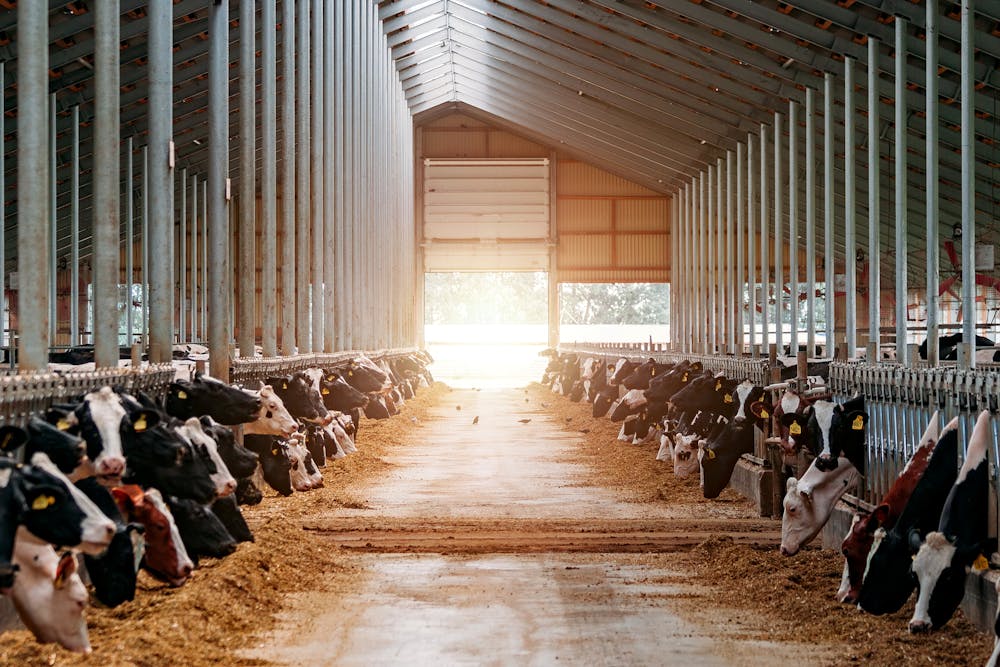
 Days after a tornado ripped through their dairy farm, tearing the tops off four grain silos and nearly destroying six buildings, the Nigon family gathered at the kitchen table.
 The new Holstein master breeders are EDISONS, JUNGO, MAC, MOLLANGES and MONTY. These breeders will receive the highest award that is given annually by the Holstein Switzerland cooperative. The master breeder title is awarded to breeding herds that show exceptional results over a long period of time. The breeders were selected on the basis of the herd accomplishments. During a 16-year period (from January 1, 2002 to December 31, 2017) they had to register at least 80 female animals and at least three female calves per year in the herd book. The points are only awarded to animals that bear the herd name and show high performance for production and conformation as well as a very good service life. The master breeder title rewards excellent results that have been achieved with the best possible longevity, which fully corresponds to the current breeding goals and is the culmination of an entire breeding career. The five new Holstein master breeders are:
 The dairy industry supplies dietary requirements to a majority of the population. It also contributes about 1.58 percent of the country’s total greenhouse-gas emissions. Some people suggest reducing or eliminating the industry in favor of plant production. But removal of dairy cows from the United States would reduce greenhouse-gas emissions by only 0.7 percent. Moreover it would significantly reduce the supply of essential nutrients for humans, according to a team of researchers at Virginia Polytechnic Institute and State University.
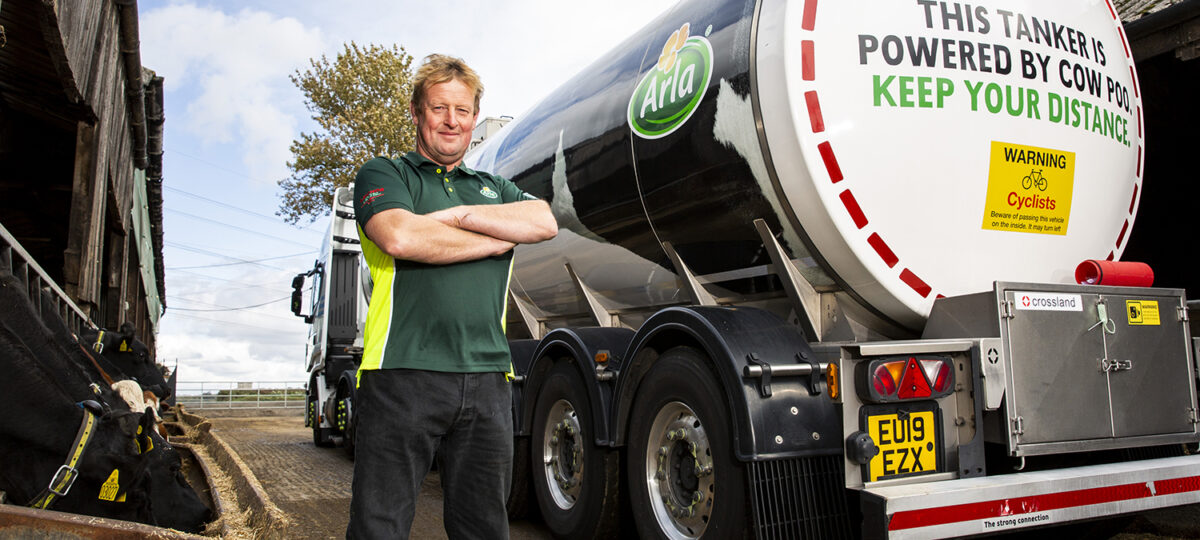 The three-month trial project spearheaded by dairy cooperative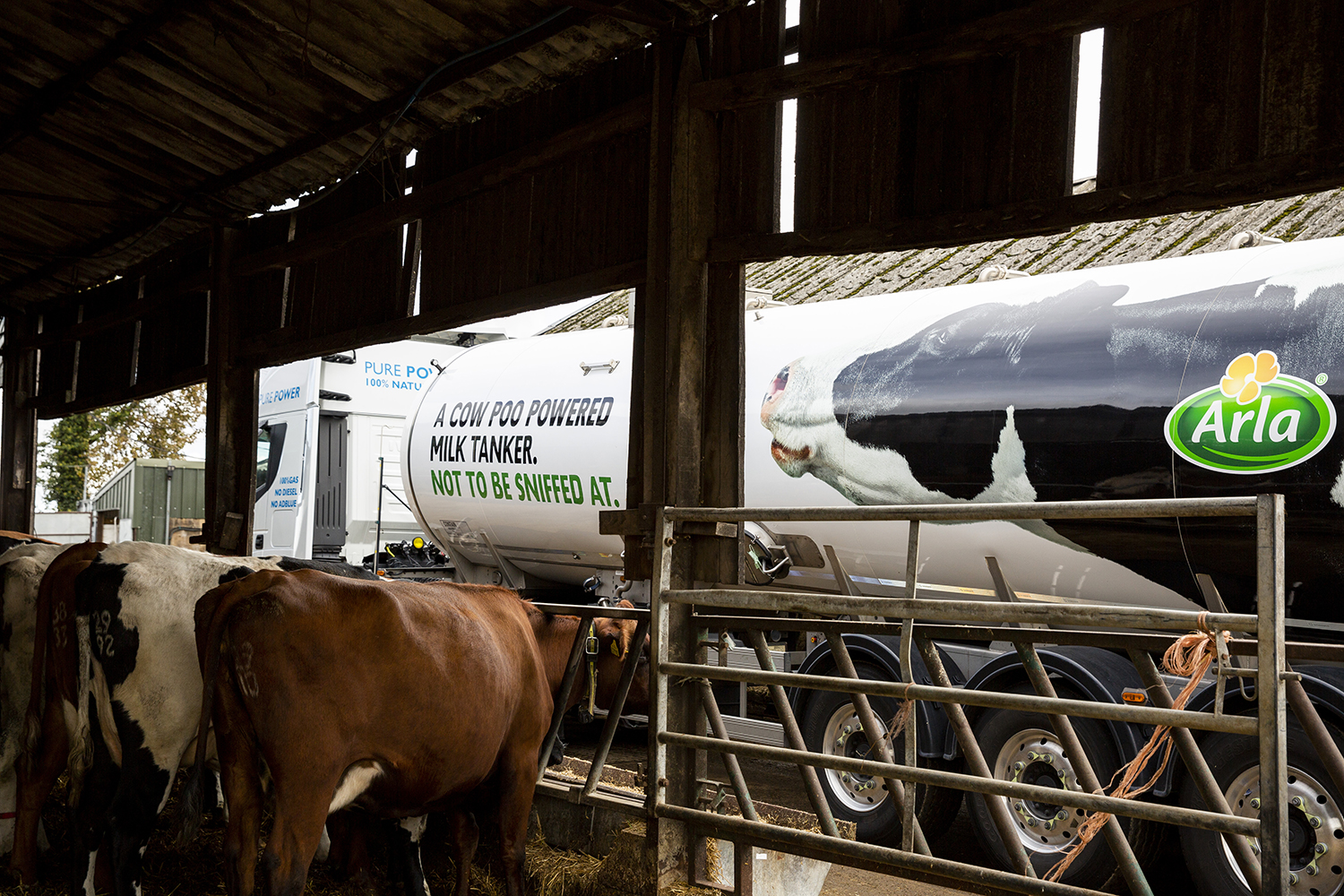
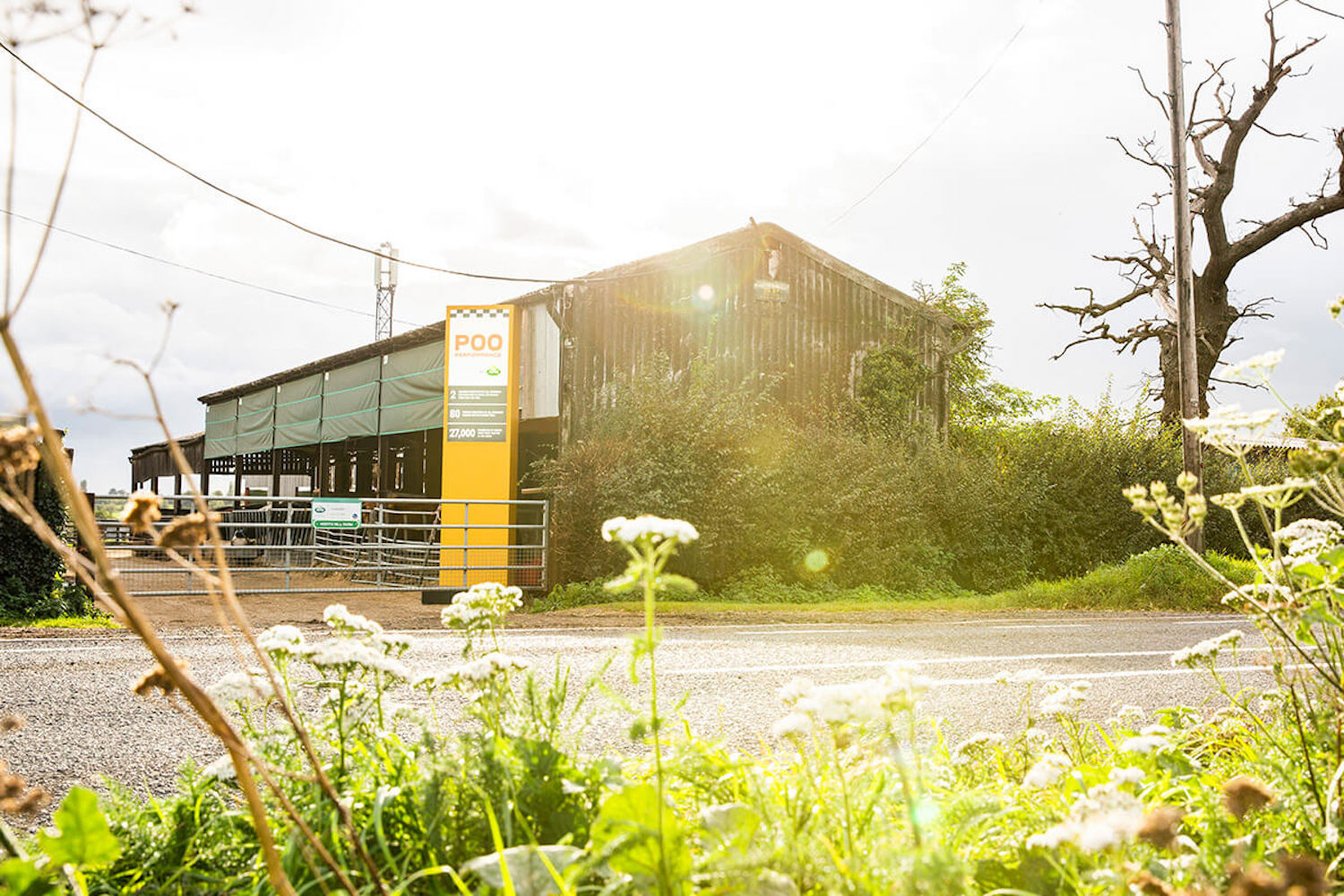
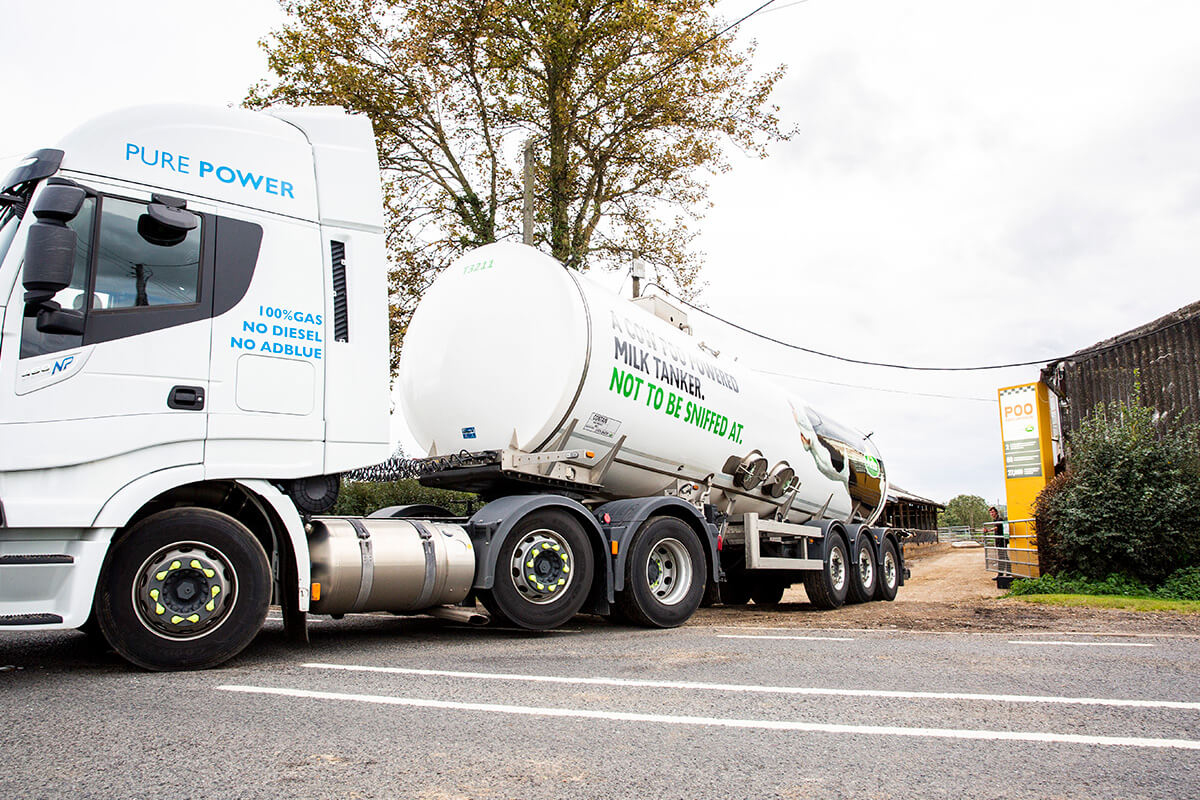




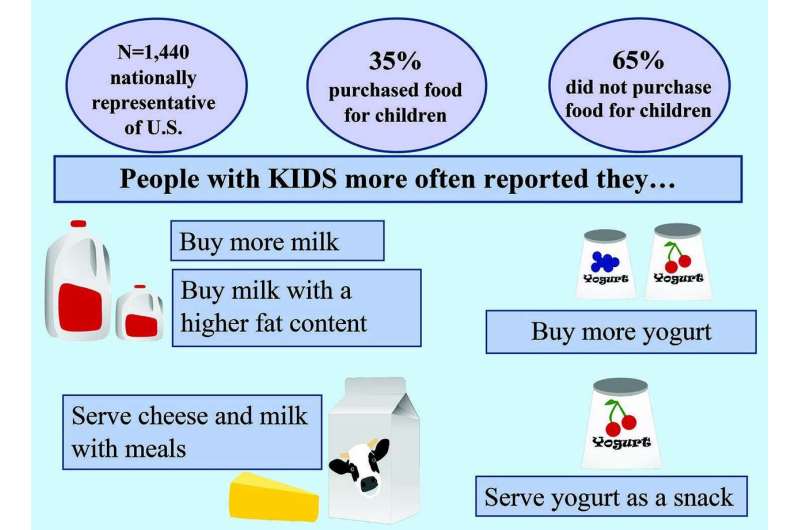
 Farmers’ unions claim 70 farmers have died at the protest sites.
 Lactanet Canada’s Ontario Region Annual General Meeting (AGM), held on January 13, 2021, was both impactful and encouraging to the future of a vibrant dairy industry. Lactanet Director, Korb Whale facilitated the virtual event in conjunction with the Dairy Farmers of Ontario (DFO) AGM.
 Ice cream has been found to have been contaminated with COVID-19 in China after three samples tested positive for the virus.

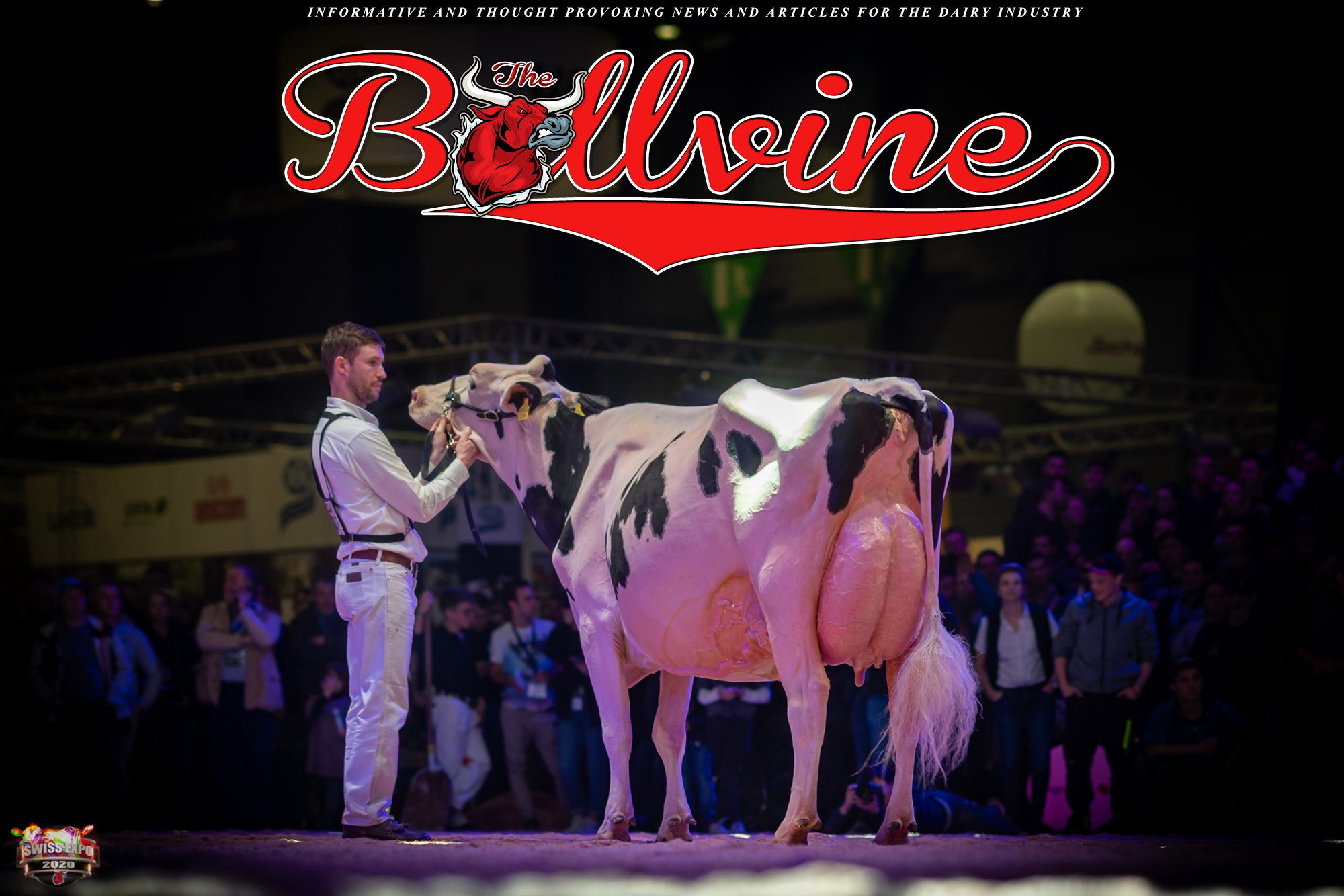
 Bill Gates, the fourth richest person in the world and a self-described nerd who is known for his early programming skills rather than his love of the outdoors, has been quietly snatching up 242,000 acres of farmland across the U.S. — enough to make him the top private farmland owner in America.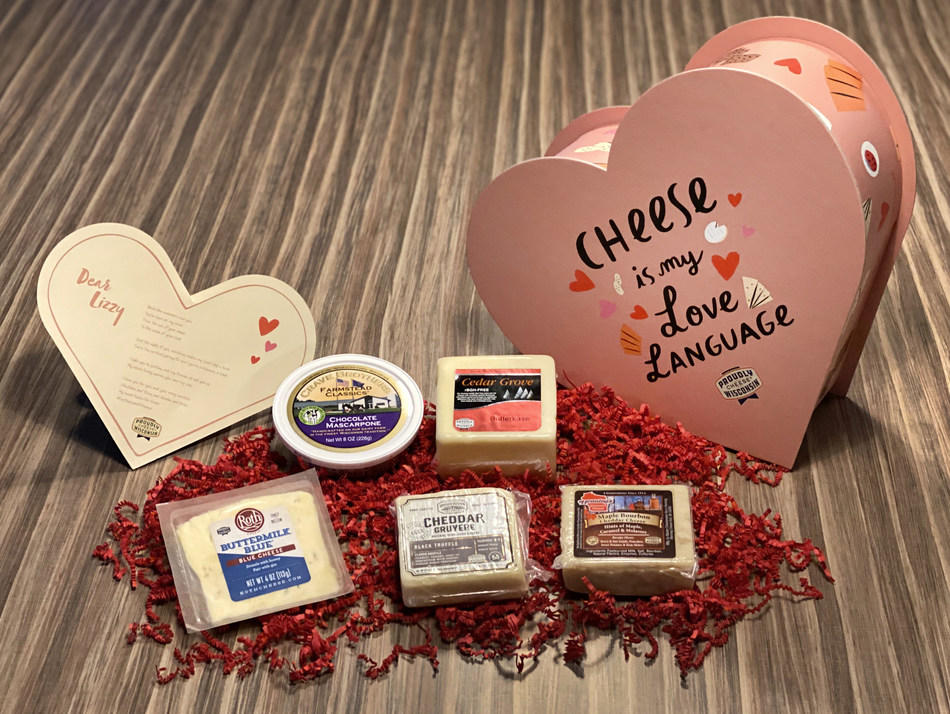


 The 2021 edition of SwissExpo is cancelled. The dairy cattle show will not take place despite of its digital new format and its postponement to February. The Organization Committee, in collaboration with its sponsors and partners, tried everything possible to maintain this event. It will not finally take place due to the health situation and the extension of the anti covid federal measures till the end of February.




