Labour shortage and transportation disruptions cited as the cause
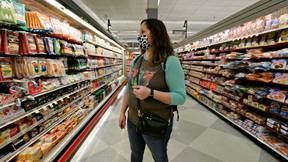
High demand for groceries combined with soaring freight costs and Omicron-related labour shortages are creating a new round of backlogs at processed food and fresh produce companies, leading to empty supermarket shelves at major retailers across the United States.
Growers of perishable produce across the West Coast are paying nearly triple pre-pandemic trucking rates to ship things like lettuce and berries before they spoil, reported Reuters.
Shay Myers, CEO of Owyhee Produce, which grows onions, watermelons and asparagus along the border of Idaho and Oregon, said he has been holding off shipping onions to retail distributors until freight costs go down.
Myers said transportation disruptions in the last three weeks, caused by a lack of truck drivers and recent highway-blocking storms, have led to a doubling of freight costs for fruit and vegetable producers, on top of already-elevated pandemic prices. “We typically will ship, East Coast to West Coast – we used to do it for about $7,000,” he said. “Today it’s somewhere between $18,000 and $22,000.”
Birds Eye frozen vegetables maker Conagra Brands’ CEO Sean Connolly told investors last week that supplies from its US plants could be constrained for at least the next month due to Omicron-related absences.
Earlier this week, Albertsons CEO Vivek Sankaran said he expects the supermarket chain to confront more supply chain challenges over the next four to six weeks as Omicron has put a dent in its efforts to plug supply chain gaps.
Shoppers on social media complained of empty pasta and meat aisles at some Walmart stores; a Meijer store in Indianapolis was swept bare of chicken; a Publix in Palm Beach, Florida was out of bath tissue and home hygiene products while Costco reinstated purchase limits on toilet paper at some stores in Washington state.
The situation is not expected to abate for at least a few more weeks, Katie Denis, vice president of communications and research at the Consumer Brands Association said, blaming the shortages on a scarcity of labour.
The consumer-packaged goods industry is missing around 120,000 workers out of which only 1,500 jobs were added last month, she said, while the National Grocer’s Association said that many of its grocery store members were operating with less than 50% of their workforce capacity.
US retailers are now facing roughly 12% out of stock levels on food, beverages, household cleaning and personal hygiene products compared to 7-10% in regular times.
The problem is more acute with food products where out of stock levels are running at 15%, the Consumer Brands Association said.
SpartanNash, a US grocery distributor, last week said it has become harder to get supplies from food manufacturers, especially processed items like cereal and soup.
Consumers have continued to stock up on groceries as they hunker down at home to curb the spread of the Omicron-variant. Denis said demand over the last five months has been as high or higher than it had been in March 2020 at the beginning of the pandemic.
Similar issues are being seen in other parts of the world.
In Australia, grocery chain operator Woolworths Group , said last week that more than 20% of employees at its distribution centers are off work because of COVID-19. In the stores, the virus has put at least 10% of staff out of action.
The company, on Thursday, reinstated a limit of two packs per customer across toilet paper and painkillers nationwide both in-store and online to deal with the staffing shortage.
In the US, recent snow and ice storms that snared traffic for hours along the East Coast also hampered food deliveries bound for grocery stores and distribution hubs. Those delays rippled across the country, delaying shipment on fruit and vegetables with a limited shelf life.
While growers with perishable produce are forced to pay inflated shipping rates to attract limited trucking supplies, producers like Myers are choosing to wait for backlogs to ease.
“The canned goods, the sodas, the chips – those things sat, because they weren’t willing to pay double, triple the freight, and their stuff doesn’t go bad in four days,” he said.
It’s not just humans dealing with these sub-zero wind chills. It’s just as tough on the farm.
“There’s a lot tinier margin of error when it gets cold,” said Heather Jauquet who runs Synergy Family Dairy.
She knows all too well first-hand about brutally cold weather.
“The biggest thing we can do is to keep them warm with coats, and also bed straw that we change out daily,” said Jauquet while showing off newborn calves on the farm.
A native Wisconsite, she helps keep the dairy farm moving.
“It doesn’t take much for an animal to go backwards if they get a little bit sick in this weather,” she said. “We just try to be really hyper-vigilant, extra checks on everybody.”
She wakes up daily at 4 a.m to get her day started. And talk about a lot of animals to look after. There are more than 650 dairy cows on the farm.
“Especially in the maternity area, it’s much nicer here in the barn inside. But still, for a calf that’s born wet, it’s too cold for them to have exposure very long.”
That’s why newborns have their own room nearby complete with a heated floor. And, while this cold snap is a short one, there’s an unfortunate side effect when winter hangs on.
“It really affects our manure systems,” said Jauquet. “We scrape all the manure in the barns to a center channel, and that channel goes directly to the manure pit. But if we have prolonged cold, we can actually get where that starts freezing.”
More than a dozen people work on the farm. Their tips are the same for the animals — layer up.
“A lot of them are not so acclimated to the weather as we are, so we have to check in with them and make sure they’re OK, too,” she added.
A dairy farmer who told police he went 199kmh because he was late for work now says he was going so fast because he needed to dump milk he accidentally spoiled before it was picked up.
Christopher John Clarke-Allen, 29, pleaded guilty in the Palmerston North District Court on Tuesday to dangerous driving.
Clarke-Allen was pulled over in Manawatū in November after police spotted him speeding.
Clarke-Allen, who was clocked doing 199kmh at one point, told police he was late for work.
Clarke-Allen initially wanted to represent himself, telling Judge Stephanie Edwards he was keen to “plead guilty and get it sorted”.
Later, duty lawyer Mark Alderdice said Clarke-Allen knew the speed was excessive.
He had already left work before realising he used an acid wash on the milk tanks before milk was put in them.
He was unable to contact anyone on the farm – he said in court his boss was on holiday – so he tried to get back to the farm before the tanker arrived to collect the milk.
“The dangers that would have eventuated if the milk left the property was a consideration with the risk he took.”
The judge wondered why Clarke-Allen could not have used his cellphone to contact someone.
She described the situation as “frightening”.
“It creates a significant public safety risk, as well as risking your own life.
“If you had been going off the road at that speed, you probably wouldn’t be standing here today.”
The offending was more serious because Clarke-Allen was on his learner licence, the judge said.
Clarke-Allen was fined $800 and disqualified from driving for six months.
The U.S. District Court in eastern Virginia issued ruling that “gruyere” is a generic style of cheese that can come from anywhere.
The decision says all cheesemakers, not just those in France and Switzerland, can continue to create and market cheese under that common name.
The Consortium for Common Food Names, the U.S. Dairy Export Council, the National Milk Producers Federation, and a coalition of dairy stakeholders prevailed in their battle to use the generic name.
“This is a landmark victory for American dairy farmers and cheesemakers, and it sets a vital precedent in the much larger, ongoing battle over food names in the United States,” says Jaime Castaneda, Executive Director of the CCFN.
The court says in its ruling that the arguments of the French and Swiss were insufficient, and that CCFN presented overwhelming evidence that cheese buyers in the U.S. understand gruyere to be a generic term with no correlation to where it’s produced.
The second annual ‘Farm Transition Appreciation Day’ is on Jan. 11 and Canadian farmers are being called to action to identify next steps in their businesses.
Farming officials report, over the next ten years, seventy-five per cent of Canadian farms will change hands, yet, according to the Agricultural Census, only eight per cent of farmers have a written transition plan.
The Haasen family in Timmins has run a dairy farm since 1958 and succession planning is not a new topic.
But knowing who’s going to take over the business is not something every farming family knows.
“Certainly you got to know it’s what you want to do. If you’re not sure, go experience something else and see for yourself. Don’t just do it cause Dad said that’s what you should do…not that I was told that,” said Eddy Haasen, a third generation dairy farmer.”
“Talk to your lawyer, talk to your accountant, all these things are critical in making sure that a succession to another generation or to somebody outside the family for that matter goes successfully and as smoothly as possible,” said Eddy’s father, Frank Haasen.
The Timmins Economic Development Corporation said it can offer some assistance to families in getting the transition going, but said to be prepared for it to take time.
“It is a process and it’s a long one and families need to start that conversation early on to decide what they want to do and where they want to go,” said Noella Rinaldo, director of community economic development.
Last year, Frank and Eddy started discussions about adding their grandson and nephew to the family business and said this may happen in 2025.
Rinaldo said it’s good they’re talking as other economic opportunities might be more tempting.
“And this will affect the fact that if someone is in a farming family that they may not want to be the successor, they may want to go in those high paying jobs of mining so that always has been an affect of how our farms have been sustainable,” she said.
Frank Haasen agreed there are other economic opportunities, but he said, “quite frankly, you know, we’re interested in people that want to farm as a life.”
And, he said it must be a good life as his father came to do work on the farm right into his 90s.
Nominations are open for the 2022 World Dairy Expo Recognition Awards. Producers, organizations, academic staff and others involved in the dairy industry are encouraged to nominate individuals for their outstanding work and dedication to the dairy industry. The 2022 nomination form and all supporting materials must be submitted by February 1, 2022 and can be found here along with complete nomination guidelines.
2022 Expo Recognition Awards will be presented in the following categories:
Dairy Producer(s) of the Year: Presented to a dairy producer whose primary source of income is derived from his or her dairy farm. This producer excels in efficient production and the breeding of quality dairy animals while incorporating progressive management practices. Award recipient’s community, government, marketing and World Dairy Expo involvement will also be considered.
Industry Person of the Year: This award is presented in recognition of an individual’s excellence in research, development, education, marketing, manufacturing or other fields, which are a part of an industry or institution that provides goods or services to the dairy industry. A resident of the United States, this award recipient may be an active dairy producer whose primary achievements are industry focused.
International Person of the Year: Living primarily outside of the United States, the individual who receives this award will be recognized for his or her contribution to international research, development, education, marketing, manufacturing or other fields, which are a part of an industry or institution that provides goods or services to the international dairy industry.
For questions, please contact Cassi Miller at cmiller@wdexpo.com or (608) 224-6455.
As U.S. President Joe Biden’s administration seeks to revive its ambitious social spending and climate plan in Congress, environmental groups and the farm industry are at odds over proposed subsidies aimed at offsetting agriculture’s substantial contribution to global warming.
Tax credits and grants proposed in the administration’s sweeping “Build Back Better” bill(BBB) would bolster the small but fast-growing market for manure-based methane gas by supporting construction of machines that trap the gas from open manure pits on dairy farms and other livestock operations. Farmers could then sell the trapped methane for use in generating electricity or vehicle fuel in the form of compressed natural gas. The proposed incentives have been hailed by dairy farmers and investors as a “game changer” that could pad farm incomes while combating climate change by providing a less-polluting alternative to fossil fuels. The industry that produces gas from organic waste says subsidies would boost the development of the machinery.
But some environmental groups and Democratic lawmakers have lined up against the subsidies, saying they could backfire because if capturing and selling methane from cows becomes profitable, it could incentivize large farms to grow, increasing greenhouse gas emissions. They warn that supporting a market for biomethane fuel would delay a transition to an all-electric future.
“If you start making money off of pollution, you’re not going to stop polluting,” said Rebecca Wolf, policy analyst at environmental group Food & Water Watch.
The debate, which has intensified as use of the technology has expanded, reflects the difficulties of reducing emissions from dairies due to growing cow herds and a lack of commercially available technologies to reduce methane, which is produced both by manure and animal digestion.
Methane, a potent greenhouse gas that has a higher heat-trapping potential than carbon dioxide (CO2), is the second-biggest cause of climate change behind CO2.
Senate Democrats’ full support is needed to pass the BBB spending package, which has garnered no backing from Senate Republicans. Democrats were unable to pass the bill last month but say they hope to do so in some form this year.
Some Democrats are critical of these methane-trapping machines, known as anaerobic digesters. Sen. Cory Booker, a New Jersey Democrat, told Reuters that money in the plan should instead be “targeted to family farmers for soil health and regenerative agriculture practices,” such as planting cover crops and employing no-till farming.
West Virginia Senator Joe Manchin, a Democrat whose opposition to the spending plan led to its failure to pass the Senate in December, this month expressed support for clean-energy tax credits, bolstering the industry’s optimism that the plan could still be enacted.
Livestock methane pollution accounts for more than a third of U.S methane emissions, according to the U.S. Environmental Protection Agency (EPA). Digesters are mainly found at dairies because milking cows produce more manure than beef cattle.
The spending plan would make digester owners eligible for a 30% tax credit and put billions of dollars into U.S Department of Agriculture (USDA) programs that could help digester companies offset their costs. Digester developers and investors say the criticism from green groups is a distraction from efforts to combat climate change.
“What’s the alternative?” said Bob Powell, chief executive of San Francisco-based digester developer Brightmark LLC. “More methane into the air.”
MISSED GOALS
A previous deal between the administration of former President Barack Obama and the dairy industry to promote digesters failed badly in reducing emissions, according to a Reuters review of government documents and data.
In 2009, the Obama administration and an industry group, the Innovation Center for U.S. Dairy, pledged to reduce the industry’s greenhouse gas emissions by 25% by 2020 over levels in 2007, in part by expanding federal support for new digesters.
Instead, methane emissions in the sector have risen more than 15%, in part driven by growth in herd size, according to EPA data reviewed by Reuters. The number of dairy cows nationwide has grown 3.3% since 2009, according to USDA data, to 9.39 million cows.
The dairy industry has since pledged to become greenhouse gas neutral by 2050, and the USDA will continue to work with the industry to meet that goal, according to an agency official. Current agriculture secretary Tom Vilsack was also secretary under Obama.
The industry missed the 2020 goal in part because digesters were so expensive and there was no market then for the gas they captured, according to the Innovation Center’s Karen Scanlon, executive vice president of environmental stewardship, and Jim Wallace, senior vice president of environmental research.
Digesters are pricey, typically costing between $4 million and $7 million each, and often require dedicated staff to run them. Digesters also don’t capture the 27% of U.S. methane emissions that come from livestock enteric fermentation, or cow burps, for which there is no commercial-scale solution.
But the landscape has changed, industry officials said, because since 2017 digesters have been able to generate lucrative credits for the biogas industry under a California policy called the Low Carbon Fuel Standard. Even out-of-state producers can claim the credits if the gas they produce is piped to fuel the state’s’ trucks and buses.
The value of those credits has roughly doubled since dairy methane was included in the program, to around $200, and the policy has helped to “super-charge the industry,” Wallace said.
In a sign of the controversy around digesters, however, environmental groups in October petitioned the California Air Resources Board (CARB) to make them ineligible for credits, arguing that their presumed role in combating climate change was inflated and that the credits encourage making more manure. California is the top dairy state and the industry is responsible for more than half of the state’s methane emissions.
CARB said it is evaluating the petition.
Meanwhile the state is doubling down on the technology, and CARB has said it may need to spend between $700 million and $3.9 billion to build 200 additional digesters to help meet a goal it set in 2016 to reduce dairy methane emissions by 40% below 2013 levels by 2030. The cost depends on whether the digesters would be paired with polluting internal combustion engines or cleaner but far more expensive fuel cells.
The state is currently on track to meet only half its emissions-reduction goal, after spending nearly $200 million on digesters since 2015.
“We think we can realize the rest of the reductions that we’re hoping to see through additional digesters, as well as some other reduction processes,” said Ryan Schauland, acting chief of the project assessment branch of CARB.
Investment in U.S. biogas projects has already tripled since 2017 to more than $1.6 billion, according to data from research firm AcuComm, including from players like oil companies Chevron and BP, as well as car maker BMW, which are seeking to cash in on the biogas market and its subsidies.
There are currently 317 operational manure digesters nationally, up from 141 in 2009, according to EPA data.
At the moment, digesters favor large farms. One 2018 study of the potential for dairy biogas in Idaho found that a farm needed at least 3,000 cows for an “economically viable” digester operation. Just 714 of the U.S. roughly 40,000 dairy farms have 2,500 cows or more, according to the most recent USDA census.
But the proposed incentives in BBB could benefit some smaller farms, said Jed Davis, head of sustainability at Cabot Creamery in Vermont. He said six of Cabot’s farms have digesters and more are in development.
“I’m not imagining a future where every farm uses anaerobic digestion,” Davis said. “But I’m bullish on the fact that there is more opportunity than is currently available.”
The number of head declined for each livestock population
According to recently released figures on the European food chain livestock populations across the EU dropped in the last two decades. Between 2001 and 2020, the EU’s total livestock count for pigs, bovine animals, sheep and goats fell by an estimated 8.9%.
According to the figures, the number of head declined for each livestock population during the period under consideration. The largest overall decline was recorded for the number of sheep. The reduction in pig numbers was relatively modest.
The EU has a sizeable livestock population. In 2020, there were 146 million head of pigs, 76 million head of bovine animals (cattle or buffalo), and an estimated 75 million head of sheep and goats on EU farms.
Looking in more detail at developments between 2019 and 2020, the population of pigs in the EU increased by 2.2%. There was small reduction (down 0.5%) in the number of sheep in 2020, while there was a 0.9% fall in the number of bovine animals.
During the period 2015-2020, EU output price developments were relatively stable for most animals, with the price of pigs being the main exception. Having risen at a rapid pace between 2016 and 2017, output prices for pigs then fell back in 2018 before rebounding in 2019, and fell again at a somewhat slower pace in 2020.
The output price of cattle was relatively unchanged, although price developments followed a downward path in both 2019 and 2020.
Throughout the period from 2016-2019, output prices for sheep and goats remained below their average level for 2015, but then grew at a rapid pace in 2020 (up 7.8%).
Having fallen at a relatively rapid pace in 2016, output prices for poultry remained relatively stable during the remainder of the period under consideration.
A majority of the EU’s livestock is held in just a few of the EU Member States. Between one fifth and one quarter (23.3%) of the EU’s bovine population was found in France and similar shares of the EU’s pig (22.4%) and sheep (24.8%) populations were in Spain. Greece (28.8%) and Spain (21.4%) together accounted for more than half of all the EU’s goats.
Some of the EU Member States are relatively specialised in terms of livestock farming. For example, Ireland accounted for 8.5% of the EU’s bovine animals in 2020 (almost the same level as recorded in Spain), while Denmark accounted for 9.2% of the EU’s pig population (almost the same level as in France).
After Spain, the second and third largest sheep populations in the EU were in Romania and Greece, with 16.8% and 13.3% shares respectively.
The livestock density index is calculated as the stock of animals (measured in livestock units) per hectare of utilised agricultural area. Based on this measure, the highest livestock densities in 2016 among EU Member States were recorded in the Netherlands (3.8 livestock units per hectare of utilised agricultural area), Malta (2.9) and Belgium (2.8). By contrast, livestock farming was relatively extensive in the Baltic Member States and Bulgaria, with fewer than 0.30 livestock units per hectare of utilised agricultural area.
An alternative measure of livestock density can be defined as the number of livestock units per livestock farm. Based on this indicator, the average sizes of livestock farms in Denmark (200 livestock units per holding), the Netherlands (185) and Belgium (148) were particularly high. At the other end of the range, there were fewer than 10 livestock units per livestock farm in Hungary, Slovenia, Lithuania, Greece, Croatia, Bulgaria and Romania where semi-subsistence livestock farming in relatively small farms tends to predominate.
The Purdue University/CME Group Ag Economy Barometer rose for only the second time since May, up 9 points to a reading of 125 in December.
The Index of Current Conditions and the Index of Future Expectations also rose this month with a stronger current conditions index primarily responsible for the barometer’s rise.
The December’s Index of Current Conditions rose 18 points to a reading of 146, while the Index of Future Expectations rose 4 points to a reading of 114.
The Ag Economy Barometer is calculated each month from 400 US agricultural producers’ responses to a telephone survey. This month’s survey was conducted 8-14 December.
December marked the second month in a row that farmers reported a stronger financial performance for their farms. The Farm Financial Performance Index rose 7 points to 113 in December which is the index’s highest reading since May and is 21% higher than readings obtained just before the pandemic’s onset.
“Excellent crop yields this fall, combined with strong crop prices, provided many producers with their most positive cash flow in recent years. That combination helps explain the year-end rise in the financial index as well as the barometer overall,” said James Mintert, the barometer’s principal investigator and director of Purdue University’s Center for Commercial Agriculture.
Even as supply chain issues continue to hamper producers’ capital investment plans, the Farm Capital Investment Index rose in December, up 10 points to a reading of 49. This marks the most positive value for the investment index since August, but remains 47% lower than in December.
The investment index’s improvement was primarily the result of fewer producers in December saying they planned to reduce their machinery purchases in the upcoming year, responding instead that they plan to hold their investments steady with the prior year. This month, 45% of survey participants said that low farm machinery inventory levels impacted their farm machinery purchase plans.
Farmers expressed concern about rising production costs and the availability of production inputs. When asked what their biggest concerns are for their farming operation in the upcoming year, 47% of respondents selected higher input cost from a list that included lower crop and/or livestock prices, environmental policy, farm policy, climate policy and COVID’s impact. Over half (57%) of producers said they expect farm input prices in the upcoming year to rise by more than 20% compared with a year earlier, and nearly four out of 10 respondents said they expect input prices to rise by more than 30%.
This month’s survey also asked crop producers if they have had any difficulty purchasing crop inputs from their suppliers for the 2022 crop season. Nearly four out of 10 (39%) of respondents said they’ve experienced some difficulties. In a follow-up question, producers who indicated that they were experiencing difficulties in making purchases were asked which crop inputs they’ve had trouble purchasing. Responses were varied, which could be an indication of problems across the supply chain and included difficulties in purchasing fertilizer (31%), herbicides (28%), farm machinery parts (24%) and insecticides (17%).
Both the short-term and long-term farmland value indices declined slightly in December. The Short-Term Farmland Value Expectation Index declined 4 points to 153, while the long-term index declined 6 points to 152. Although both indices declined in December, they remain near their all-time highs. Producers who indicated they expect farmland values to rise over the next five years were asked a follow-up question asking them about the main reason they expect farmland values to rise. Producers indicated non-farm investor demand (61%), low interest rates (13%), and strong farm cash flows (11%) were their primary reasons for expecting values to rise.
More than 350 Holstein members, chaperones, volunteers were in attendance
The annual Wisconsin Junior Holstein Convention was hosted by the Waupaca and Waushara County juniors in Appleton, Wis., on December 28-30, 2021. More than 350 Holstein members, chaperones, and volunteers were in attendance to help make the event a success.
Throughout the convention, junior members participated in numerous contests including speaking, arts and crafts, photography, Dairy Jeopardy and Dairy Bowl. The largest competition of the weekend was Dairy Bowl, in which 28 junior, 15 senior, and six rookie teams competed.
More than 40 volunteers helped coordinate Dairy Bowl matches, Dairy Jeopardy contests, and the speaking contest. The Sheboygan County team took first place in the senior Dairy Bowl contest with Shawano County coming in second place. The winner of the junior division was Brown County with Shawano County taking second also. Team members on the senior Sheboygan County team include Jared Abraham, Elise and Brady Bleck and Zoe Ertel. The Brown County junior team consisted of Madison Wiese, Tristen Ostrom, Emily Ossmann and Evan Brey. Sheboygan and Brown Counties will represent Wisconsin at the National Holstein Convention in Sioux Falls, South Dakota in June 2022.
Rounding out the top five for the junior division were Fond du Lac County Team 2, Sheboygan County and Rock County, respectively. Finishing in third through fifth place in the senior division were Fond du Lac County, Door County and Iowa County.
All juniors at the convention had the chance to compete in the Dairy Jeopardy competition. The top competitor in each of three age brackets has the opportunity to compete at the national level. Winning the junior division was Cameron Ryan of Fond du Lac County, second was earned by Alison Gartman of Sheboygan County and third went to Grace Hensel, Wood County. In the intermediate division, Brianna Meyer of Manitowoc/Calumet County topped the group with Elizabeth Gunst, Dodge County, and Jacob Harbaugh, Shawano County, placing second and third, respectively. Marissa Vosberg of Green County was the winning contestant in the senior division, with Jared Abraham of Sheboygan County placing second and Emma Dorshorst of Wood County taking home third place.
In the speaking contest, Wisconsin can send up to three delegates in each division to compete at the National Convention. To compete, youth must prepare a speech on a topic related to the dairy industry at a length assigned to their specific age division. Heading to the National Convention this year in the junior division are Vivian Lichty of Dodge County, Alison Gartman of Sheboygan County, and Claire Dorshorst of Wood County. In the intermediate division, Madison Wiese of Brown County, took home top honors. Maddie Hensel of Wood County placed second and Elena Jarvey of Shawano County placed third.
On Wednesday evening, the annual banquet was held to honor outstanding juniors in the association. Brian “Mac” McCullough of Green County and Hannah Hockerman of the District 5 Junior Holstein group claimed the most prestigious honor, being named Outstanding Holstein Boy and Girl, respectively. These individuals have excelled in their Holstein projects and have been an asset to the association and dairy industry as a whole. Also receiving honors were seven other Distinguished Junior Members (DJM), 12 Young Distinguished Junior Member winners (YDJM), and 12 Twelve & Under Recognition winners, all of which excelled in their Wisconsin Holstein activities in 2021.
In addition to McCullough and Hockerman, 2021 Distinguished Junior Members included Elise Bleck, Sheboygan County; Ashley Brandel, Jefferson County; Matthew Gunst, Dodge County; Kaianne Hodorff, Fond du Lac County; Ainsley Noble, Grant County; Emily Stumpf, Fond du Lac County; and Marissa Vosberg, Green County.
The Young Distinguished Junior Holstein Members included: Katie Brandel, Jefferson County; Alison Gartman, Sheboygan County; Cathryn Gunst, Waupaca-Waushara Counties; Christopher Gunst, Waupaca-Waushara Counties; Elizabeth Gunst, Dodge County; Logan Harbaugh, Shawano County; Ellie Larson, Rock County; Laney Neuser, Manitowoc/Calumet Counties; Ella Raatz, Clark County; Dylan Ryan, Fond du Lac County; Paige Sweatt, District 5; and Madison Wiese, Brown County.
Lastly, Twelve & Under Member Recognition was awarded to Royce Booth, Sheboygan County; Justin Brandel, Jefferson County; Evan Brey, Door County; Kayla Buttles, Grant County; Makenna Gilbertson, Iowa County; Madison Harbaugh, Shawano County; Vivian Lichty, Dodge County; Miles Rickert, Fond du Lac County; Cameron Ryan, Fond du Lac County; Braelyn Sarbacker, Dane County; Madison Sarbacker, Rock County; and Payton Sarbacker, Dane County.
Of the exceptional youth recognized, four representatives in the DJM and the YDJM categories were selected to submit award forms to the national level with hopes of being honored at the National Convention. Hannah Hockerman, Mac McCullough, Elise Bleck and Marissa Vosberg were all chosen to represent Wisconsin as DJMs. The YDJM delegates include Logan Harbaugh, Elizabeth Gunst and Cathryn and Christopher Gunst.
The 2022 Wisconsin Holstein Princess and Attendant were also crowned at the banquet on Wednesday evening. This year, Madeline Hensel of Wood County will serve as the WHA Princess, and Elena Jarvey of Shawano County will join her as the WHA Princess Attendant.
The WHY Leadership Merit award recognizes youth who excel in leadership at a local level. They are nominated by an advisor or fellow junior member by means of an application on their behalf. This year’s award recipients include Kaylee Mess and Emily Stumpf, both of Fond du Lac County.
Wisconsin Holstein awarded more than $17,000 in scholarships this year, and an auction was held to raise funds for future awards. Donated items auctioned included:
P’ri CBD product bundle, donated by Peggy Coffeen
Krista Ann Photo & Film Photography Session, donated by Krista Styer
A stay at Dr. Daluge’s Ski House in Montreal, Wis., donated by Rick and Peggy Daluge
Green Bay Packers mini helmet signed by Mason Crosby, donated by Green Bay Packers
2 Club seats for a 2022 game, donated by the Milwaukee Brewers
Framed & matted “Seven Wonders of Wisconsin” print
Funds from these items are put into the WHA scholarship fund, and $3,100 was added this year. High school seniors, short course, and two and four-year college students that are members of WHA are all eligible for these scholarships.
Throughout the convention, youth were recognized for other outstanding achievements, including Junior Progressive Breeder and Long Range Production. Those receiving Junior Progressive Breeder Awards include:
Colton, Ashley, Katie and Justin Brandel, Jefferson County
Reagan and Garrison Klinkner, Vernon County
Payton, Braelyn and Reagan Sarbacker, Dane County
Brooke Hammann, Barron County
Dylan and Cameron Ryan, Fond du Lac County
Gracin and Chesney Speich, Rock County
Jared and Macie Abraham, Sheboygan County
Matthew, Elizabeth, Cathryn and Christopher Gunst, Dodge and Waupaca/Waushara Counties
Cathryn and Christopher Gunst, Waupaca/Waushara County
Christopher Gunst, Waupaca/Waushara County
Emily Stumpf, Fond du Lac County
Jacob, Logan and Madison Harbaugh and Adella and Ainsley Loehr, Shawano and Fond du Lac Counties
John and Katie Wackershauser, Grant County
Long Range Production recognizes owners of cows that have produced over 100,000 pounds in their lifetime. In the over 100,000 pounds category:
Jared and Macie Abraham, Sheboygan County
Colton, Ashley, Katie and Justin Brandel, Jefferson County
Gracin and Chesney Speich, Rock County
Reagan and Garrison Klinkner, Vernon County
In the over 150,000-pound category are:
Brooke Hammann, Barron County
Jared and Macie Abraham, Sheboygan County
Shyanne Hammann, Barron County
Tessa and Stella Schmocker, Jefferson County
Dylan and Cameron Ryan, Fond du Lac
The Junior Farm Trip is awarded to youth interested in learning more about the Wisconsin Holstein industry and spending time touring farms and agri-businesses on a two-day tour in the spring. This year’s trip recipients include: Lauren Breunig, Dane County; Courtney Glenna, Polk County; Matthew Gunst, Dodge County; Summer Hammann, Barron County; Hannah Hensel, Wood County; Hannah Hockerman, District 5; Mac McCullough, Green County; Sam Mess, Fond du Lac County; Ainsley Noble, Grant County; Tyler Schroepfer, Langlade County; Emily Stumpf, Fond du Lac County; and Clarissa Ulness, Manitowoc County.
The convention concluded Thursday morning with an awards breakfast and the annual business meeting, where four new Junior Activities Committee (JAC) members were elected. The JAC group is responsible for coordinating and overseeing all junior events within the Wisconsin Holstein Association. Elected to two-year terms for the southwest district was Evan Hathaway of Iowa County, Emma Bangart of Wood County for the northwest district, Lauren Breunig of Dane County for the southeast, and Brianna Meyer of Manitowoc/Calumet County for the northeast district. Elizabeth Gunst of Dodge County was also elected to serve a one-year term for the southeast district. These members join second-year members Clarissa Ulness of Manitowoc/Calumet County, Ainsley Noble of Grant County and Hannah Hensel of Wood County.
The contest room is an excellent way to show off projects completed by junior members throughout the year. Members participate in photography, drawing and painting, crafts, and folding display contests. Results are as follows:
Photography Contest Junior Animal
First: Jacob Raatz, Clark County
Second and People’s Choice: Ella Raatz, Clark County
Third: Cathryn Gunst, Waupaca/Waushara County
Junior People
First: Ella Raatz, Clark County
Second: Cathryn Gunst, Waupaca/Waushara County
Third: Cathryn Gunst, Waupaca/Waushara County
People’s Choice: Payton Sarbacker, Dane County
Junior Farm Scene
First and People’s Choice: Kendra Strebel, Shawano County
Second: Jacob Raatz, Clark County
Third: Ella Raatz, Clark County
Senior Animal
First: Matthew Gunst, Dodge County
Second and People’s Choice: Brianna Meyer, Manitowoc/Calumet County
Third: Emma Bangart, Wood County
Senior People
First and People’s Choice: Matthew Gunst, Dodge County
Second: Elizabeth Gunst, Dodge County
Advertising Contest Amateur
First and People’s Choice: Elise Bleck, Sheboygan County
Second: Ella Raatz, Clark County
Third: Madison Sarbacker, Rock County
Professionally Assisted
First and People’s Choice: Jacob, Logan and Madison Harbaugh, Shawano County
Folding Display Contest Intermediate
First: Ella Raatz, Clark County
Second (tie) and People’s Choice: Alex Hackmann, Manitowoc/Calumet County
Second (tie): Cathryn Gunst, Waupaca-Waushara County
Arts & Crafts Contest Junior
First: Cathryn Gunst, Waupaca-Waushara County
Second and People’s Choice: Grace Hensel, Wood County
Third: Harlee Harbaugh, Vernon County
Senior
First: Brianna Meyer, Calumet County
Second: Elena Jarvey, Shawano County
Third and People’s Choice: Elizabeth Gunst, Dodge County
The annual essay contest encourages members to write about assigned topics relating to today’s dairy industry. In this year’s junior division, taking top honors was Christopher Gunst, Waupaca-Waushara County; Makayla Weyer, St. Croix County, was second; and Cathryn Gunst, Waupaca-Waushara County, was third.
One of the most coveted awards among juniors, based on participation throughout the year and enthusiasm, is the Premier County award, which was won by Shawano County. Shawano County also won the Bell-R-Ring contest.
Tristen Ostrom of Kaukauna was this year’s winner of the calf raffle. Thank you to Grass-Ridge Farm, the Lippert Family of Pittsville, for donating the Registered Holstein heifer for this year’s raffle. We would also like to thank the following businesses for their donations of additional prizes: Foremost Farms, Badger Dairy Club, UW-Platteville Pioneer Dairy Club, Cattle Connection, ST Genetics, Genovations, Sartori, United Cooperative, Southwest Wisconsin Technical College, Genex, Zoetis, World Dairy Expo, Hoard’s Dairyman, Premier Cooperative, Origin Reproduction, and Boehringer Ingelheim.
The Wisconsin Holstein Association would like to commend the Waupaca-Waushara County Junior Holstein Association members and chaperones, and extend a special thank you to all volunteers that helped make the weekend a success! The 2023 Wisconsin Junior Holstein Convention will be hosted by Manitowoc/Calumet County.
For more information visit the WHA website at www.wisholsteins.com or call the office at 1-800-223-4269.
The John Dennison Achievement Award recognizes the dairy cattle breeder or exhibitor judged to be a high achiever and exemplary role model. The special prize, in memory of the lifelong long industry contribution made by Cumbrian dairy farmer John Dennison, will be given to the nominee judged to have the perfect combination of ability, sportsmanship, integrity and character.
John Dennison, who farmed at Scales Farm in Ulverston, was highly regarded in the industry as the breeder of the Denmire Holstein Herd on the 1000 acre family farm in Cumbria. Following his sad death in 2012 the Dennison family have annually presented this prestigious award as a mark of their deep respect for the lifelong contribution that John made to dairy farming, pedigree breeding, judging, showing as well as his promotion of the Holstein breed and his encouragement of the younger generation of Holstein breeders.
Nominations for this award close on Friday, February 4th and will be judged by a panel of leading figures involved in pedigree dairy cattle breeding and its associated organizations. The winner will be announced and presented with their award at the Borderway UK Dairy Expo on March 12th.
Anyone wishing to forward a nomination should send a brief resumé on the nominee by February 4th, 2022 to the John Dennison Achievement Award, c/o Glyn Lucas, Harrison & Hetherington Ltd., Borderway Mart, Rosehill, Carlisle CA1 2RS
An old-fashioned dairy farmer that still milks all her cows by hand says she wouldn’t trade her lifestyle in for anything.
Dairy farmer Rosie Johnson in her barn in Nome, North Dakota.
Ryan Longnecker / WDAY News
NOME, N.D. — There was a time when small, family dairy farms could be found all across our North Dakota and Minnesota townships.
Now, some farms in the region are milking more than a thousand cows. One family near Nome, North Dakota, is one of the few hanging on, milking every day, the old fashioned way.
“Stand still,” Rosie Johnson said as she talked to one of her cows about to be milked.
“Everybody says, ‘Oh, they’re such sweet, gentle, little cows,'” Johnson said. “No, they are not, they have attitudes.”
Right now, the Johnson’s are milking just nine cows; soon, 17.
“We milk three at a time; nights, we milk four, which goes really fast,” she said.
Rosie and her husband, Roger, have been milking for decades.
For Johnson, this has been a way of life since her childhood in Wisconsin. “When I was 10 years old, I got my first one for 4-H,” Rosie said.
They have seen the ups and downs as modern milking passed them by.
“You got to live, and right now milk is at a decent price,” Johnson said.
There’s no pipeline system or fancy milking parlor here, and the Johnson’s say there are so few farmers milking now that it is hard to find anyone to fill in.
“You (would be able to) get someone to come in, someone’s kid, so you could take a day off if there was a family emergency or something, but here, nobody knows how,” Johnson said.
Johnson still bucket milks which means putting surge milkers on the cows she knows by name.
“Wonton, Belle and Sparkles are the three Jerseys (…) over there,” Rosie said.
There are days she milks by hand, if a cow is injured or the power goes out.
“We were only out for two milkings,” Johnson said. “We milked 40 cows by hand, turned them out (to) let them have water and started all over again,” Rosie said.
The Johnson’s primitive milking is practiced by so few, it is now hard to get parts for their milkers, but Johnson says they’ll get by. Milking twice a day, 365 days a year; holidays and weekends.
Farmer Rosie Johnson works to attach milking equipment to one of their cows. The type of equipment they use has become less common, leading to replacement parts hard to find.
Ryan Longnecker / WDAY News
“We’ve always done it, I don’t know anything else, when my kids were both home, they would milk one weekend and we would go to Medora for our anniversary,” Johnson said.
It is hard for dairy farmers to call it quits, it’s emotional. This is such a way of life for them, even though it is hard.
“I’ve had both knees replaced and one shoulder fixed so far,” Johnson said.
Where else can you come to work surrounded by cats, dogs and a horse? Johnson says it would be to tough to leave.
Congratulations to Lareleve Holsteins from Quebec, Canada on their exciting news to kick-off 2022. Not only did they have a great classification round, they also were ecstatic to announce that in just 3 lactations, Lareleve Supersire 597 has achieved 100,000kg in milk. A trouble-free, dream of a cow, she has never had mastitis and only required 5 breeding’s for 4 pregnancies with the use of sexed semen. ‘Supersire 597’ marks the 9th cow to reach 100,000kg for Lareleve Holsteins in 2021.
Holstein UK are delighted to present the prestigious 2021 President’s Medal Award to a member of the Cornwall HYB Club for the second consecutive year. Cari Thomas has claimed the title for her outstanding contribution to the Holstein breed, HYB and her Club and she has won an engraved medal and a trip to the Royal Winter Fair in Toronto, kindly funded by HYB’s Principal Sponsor, Semex. Holstein UK also congratulate the two runners up John Mclean from the Northern Ireland Club and Rachel Williamson from the Border & Lakeland Club.
Sponsored by Semex, the Holstein UK President’s Medal recognises and rewards young talent and highlights individuals who are the dairy farmers of the future. The winner of the Award, which is usually presented at the Semex International Conference, was announced virtually on Monday 10th January due to the Conference being cancelled due to the current Covid-19 restrictions.
The entry process began with each Club nominating one young breeder aged between 18 and 26 years of age. To be considered for the award, entrants were asked to write and submit an essay titled “The Time is Now to address climate change. As the future of the industry, share your vision of what a sustainable dairy operation should look like.” Six young breeders were then shortlisted for online interviews with the panel of judges consisting of Holstein UK President John Jamieson, Semex representative Rodger Mather and 2017 President’s Medal winner Helen Eastham who was representing Holstein UK. Following the interviews, the final three young members were selected ahead of the winner being officially announced.
Holstein UK President, John Jamieson, commented, “Semex have supported and sponsored the President’s Medal since its inception and the conference was a great platform for the presentations to be made whilst also being a great opportunity for the finalists to meet the delegates. We really appreciate everything Semex do to support Holstein Young Breeders and it is unfortunate not to be able to announce the results in person. We had a quality entry of nine nominees and myself and the other Judges were all very impressed with the young breeders who were nominated. The three finalists are an excellent example of the calibre of the people who have been put forward for the President’s Medal this year. To be a winner or a finalist has proven on many occasions in the past to be a stepping stone to greater things and is one of the most sought after awards within HYB. With Scotland hosting COP26, the essay title was very appropriate and stimulated a great response from all of the nominees. The final three young members were equally as motivated in what they do and matched the criteria that was required to be a contender. Our three finalists are all enthusiastic individuals with a great knowledge of pedigree breeding and they are all heavily involved with HYB. All three have progressed to be a great support for their respective clubs and they are a credit to themselves, their families and Holstein UK. On behalf of the Judges, we would like to congratulate Cari Thomas on being a very deserving winner, and to both Rachel and John as very worthy runners up.”
A Fresno County dairy that produces more raw milk than any other in California lost its creamery and products in a fire in the early morning hours of Saturday, according to an Instagram post.
The fire started around 3 a.m. in the creamery of Raw Farm southeast of Kerman, and all packaging, inventory and products were burned, according to the Instagram post from Organic Pastures, the owners of the farm.
“We are heartbroken to announce that there was a fire this morning at our creamery,” the post said. “It was a total loss.”
No injuries have been reported at the dairy on Jameson Avenue north of Manning Avenue, according to the farm owners.
Calfire assisted the North Central Fire Department with the blaze, according to a Calfire spokesperson.
The farm owners said they are working on a plan to keep products on the shelves and move forward. “We are obviously deeply devastated, but we will move forward,” the post said. “The support of our customers will help us during this difficult time.”
The farm that typically allows customers on site will be closed temporarily as fire crews are on scene, according to the Instagram post.
A screengrab of an Instagram post from outside the creamery of Raw Farm southeast of Kerman, where all packaging, inventory and products were burned Saturday, Jan. 8, 2022, according to the Instagram post from Organic Pastures, the owners of the farm. Screengrab
The farm is working to find another creamery to partner with to continue to move product, the post said. Products can be found in stores, and the owners recommend using its website to find one.
The festive season is a time for many Aussies to take a break, but spare a thought for those who have helped put ham or haloumi on the Christmas table.
Most farmers haven’t and won’t get time off this holiday period, according to the National Farmers Federation.
“Sadly there is no such thing as annual leave for farmers and people who own their own businesses,” general manager Charlie Thomas said.
An ongoing labour shortage is making the prospect of a break even more bleak, he told AAP.
“There’s really no down time in the production cycle for most farms, there’s always work to be done … it’s more challenging this year given the crisis that’s unfolded in farm labour with farmers unable to access traditional overseas labour sources due to COVID.”
South Australian dairy farmer Rick Gladigau hasn’t had more than 10 successive days off since he bought his farm 27 years ago.
He milks up to 100 cows twice a day. Add the administrative and other farm work and it makes for an average 13-hour day, six days a week.
“I don’t expect my staff to milk at Christmas … they should be able to have time off with their family. Only once I’ve not milked Christmas Day night, same with New Years (Eve),” he said.
The Adelaide Hills farmer is also president of Australian Dairy Farmers and spoke to AAP during an interrupted week of annual leave at Aldinga, south of the capital.
“I do think about the people who have four weeks’ holiday a year or have every weekend off and go ‘gosh, I wonder what that is like?’,” Mr Gladigau said
The 56 -year-old said it’s increasingly challenging to get reliable workers, which in turn makes it harder to get away.
“Like anyone who has a business, to go away and just bring anybody in to look after it .. is not that easy,” he said.
“You don’t want any Tom, Dick or Harry coming in and milking your cows, if they get it wrong it takes alot to fix it up again.”
The relentless workload is common for farmers according to Conjoint Professor of Rural Health Research at the University of Newcastle, David Perkins.
For the past seven years he’s headed up the Centre for Rural and Remote Mental Health, researching the impacts on wellbeing in rural populations.
“We know that you need to have a break in order to be able to reset and to physically have a rest, and to be in a better place mentally,” Prof Perkins said.
While COVID-19 has produced plenty of problems for many Australians, farmers have done it particularly tough.
“Imagine adding drought, fire, flood and mice to the challenge,” Prof Perkins said.
“Farmers are not people with a whole load of staff that you can just tell … to go off and do things, very often there are one or two people on the farm and then there are a series of contractors.”
NSW Farmers CEO Pete Arkle said rain had prolonged harvesting for NSW grain farmers this season.
“The interruption that we have seen from extreme weather means many farmers won’t have much of a summer holiday in 21/22.”
Taking a break is vital, Grant Blashki from Australia’s mental health organisation Beyond Blue said.
“It’s very important when people have highly responsible jobs that they try and take a break … it’s not easy for people who have a very strong work ethic.”
His suggestion for those struggling to switch off? Get absorbed in a hobby, activity or a book that provides an ‘escape’.
“There are some wonderful benefits of rural life but there are also stresses like long irregular hours, financial insecurity and natural disasters,” Dr Blashki said.
For Mr Gladigau, he’s happy to just “stop” on his short break.
“We might do a bit local shopping and go for a drive, and lay on a beach for a bit.”
Four days into his week-long annual holiday, the dairy farmer was heading back to the farm to milk the cows, to give his co-worker a break.
If prices for some basic consumer necessities — from milk to bread to a gallon of gas — rose as much as popular prescription drugs, many Americans wouldn’t be able to put food on their table and would face the same dire choices that millions of older adults facing high prescription drug costs do every day.
The average retail price for 143 widely used brand-name drugs has increased more than 300 percent over the past 15 years, while general inflation rose by 32 percent during that same period, according to a 2021 AARP report that analyzed the retail prices of those medications.
Separately, a new report from 46Brooklyn, a nonprofit group that monitors drug prices, found that pharmaceutical companies raised the prices on hundreds of medications on Jan. 1, 2022, with most increases averaging between 5 and 6 percent.
Here’s a look at what some basic consumer necessities cost, on average, in 2006 and what they would have cost in 2020 if their prices had risen as fast over those 15 years as the cost of AARP’s basket of brand-name prescriptions drugs.
Gallon of milk: 2006, $3.23; 2020, $13
Loaf of white bread (per pound): 2006, $1.05; 2020, $4.21
Field grown tomatoes (per pound): 2006, $2.16; 2020: $8.70
“These kinds of price increases on other consumer goods would rightfully demand swift action, but seniors have been waiting decades for relief from out-of-control drug prices,” Nancy LeaMond, AARP executive vice president and chief advocacy and engagement officer, says in a letter AARP sent to U.S. senators on Jan. 4. LeaMond sent the letter jointly with David Mitchell, founder and president of Patients for Affordable Drugs Now. A similar letter was sent to members of the House of Representatives late in 2021.
Pending bill would help cut Rx prices
AARP has been fighting for years to convince federal and state lawmakers to pass legislation that would curb runaway drug prices. “For years, prescription drug prices have risen at rates that dwarf even the highest rates of general inflation,” the letter says. “Patients and seniors cannot wait any longer and are demanding immediate action. Americans of all ages, regardless of political party, are counting on you to finally make good on the promise of lower drug prices and deliver the landmark reforms already negotiated with both houses of Congress.”
The framework of the proposed Build Back Better Act, now before the Senate, includes an annual $2,000 cap on out-of-pocket expenses for enrollees in Medicare Part D drug plans and a $35 copay cap on some insulins, and it gives Medicare the power to begin negotiating the price of some prescription drugs.
The chores never end for a farmer. Even a pregnant farmer has to milk the cows every day. So Trisha Boyce and her husband Jarred put on their boots and get to it at Chapel’s Country Creamery. It is a 45-acre farm and is one of four dairy farms left in Talbot County.
Milk literally flows directly into the artisanal cheese making operation.
Their clients include Whole Foods and The Inn at Perry Cabin and Piazza, and big-time distributors like Sysco, Metropolitan and Saville Foods.
“My husband and I moved down here in 2017. We are third-generation dairy farmers from Pennsylvania. We are fairly new to cheesemaking. We had a professional consultant help teach us and guide us and get us started,” Trisha Boyce said.
Trisha and her husband run the farm together, and taking care of their 40 milking cows along with a creamery and an artisanal cheese making operation adds up to a lot of hard work.
“Cheesemaking is not for the faint of heart,” she said. “It’s a lot of heavy lifting, cleaning, scrubbing. But it is easier to find someone who wants to work inside all day than it is to find someone to help you outside, hard work outside with big animals. If it is monsooning out there you are still working. It is really making sure that they are taken care of to the fullest.”
“We are milking 40 cows now and we have probably 100 head total,” she said.
They even have a calf that was born yesterday that has a warm jacket on and gets bottle fed his mother’s milk. They are all named and registered, with names including Coco, Ozark, Mini and Spider, who was born on Halloween. The cows are milked for five minutes, twice a day.
The farmers try to manage their crops so that almost all of the cow’s feed comes from the farm. This is where Jarred comes in.
“[Jarred] is the best of the best at crop rotation and being efficient with our land. He is our feed man, our crop man and I do most of the raising,” Trisha said.
“Essentially I am their mother. So they know when it is me coming. It drives Jarred nuts because they are all ungodly friendly,” she said.
Some of their cows are raised for meat that are sold to restaurants and retail shops.
“I am not a fan of raising for meat, but we eat meat and everything goes full circle. I would much rather at least know where the meat is coming from. I focus on giving them a good life,” she said.
Trisha said the pandemic has grown the demand for their meat. The pandemic has also made their cheese business very unpredictable and it still has not found stability. When the pandemic settles down, they are poised to invest more in the cheese side of their business.
“We started reaching out to places we sell cheese to. ‘Do you want some ground beef? Do you want some steaks?’ The stores were out of stock so we started going that route, but the ladies are our ultimate priority,” Trisha said, referring to the milking cows.
They pump the ladies’ milk directly to the creamery where they make a variety of different cheeses.
The creamery is like a super-humid science lab. There are giant 40-gallon vats of bubbling fresh milk with industrial stirring arms constantly turning.
Although the cheeses take time to age, the milk that comes in fresh will be pasteurized for five minutes and then it will take the form of a cake soon after.
Chapel’s Country Creamery make everything from cheddar (their best seller) to brie to blue. They even make beer cheddar and their Trace of Crab is speckled with Old Bay. They make between 50,000 and 60,000 pounds a year.
“I like making cheese, I do,” Jarred said. “It is like chemistry and biology. I like the whole full circle of you farm the ground, you harvest the crops, you milk the cow, and you are using your product to make the cheese. Then you package it and you go sell it. It is all full circle.”
“We do a cream cheese which has become popular because Philadelphia Cream Cheese is having stocking issues. We do paneer and queso fresco. Cheesemaking is definitely not a cheap process because most of it has to sit around before it is sold,” Trisha said.
After the cheese is in the cake mold all kinds of things can happen to alter it’s texture and taste. Each batch of cheese is numbered by date so they can keep track of the aging process. Humidity is used like a chef’s tool. Each cheese wants a different humidity profile.
They have a cheese that is washed in pale ale.
“If we vacuum seal that one it will stink up your whole house. It is really, really funky. Funkier than Limburger. It has started to sell really well, but it is not for the faint of heart,” Jarred said.
Before COVID, they hardly did any retail sales, just 20 pound blocks to the big guys. But COVID forced the creamery to get more aggressive with their website and their retail operation for holidays like Mother’s Day, Valentine’s Day and Christmas. They started making gift boxes.
“I would like to cut back and find our niche. Maybe do three cheeses,” Jarred said. “Keep it simple and focus on being really good at them. We make ten different types of cheese and it is a lot. Cheddar is here to stay. Rise Up with their Mad Eggs goes through a couple hundred pounds a week. We self-distribute to all the Rise Ups like in Arnold, Annapolis, Rehoboth, Edgewater and Ocean City.”
They are going to team up with Laurie Forester the wine coach to do a Spring pairing virtual class.
Jennifer Hayes is the first woman to fill the role
Canada’s minister of agriculture Marie-Claude Bibeau announced last week the appointment of Jennifer Hayes to chairperson of the Canadian Dairy Commission. The four-year term began 23 December 2021.
Hayes was first appointed to the Canadian Dairy Commission in January 2017. She served as Commissioner, a role she held for four years.
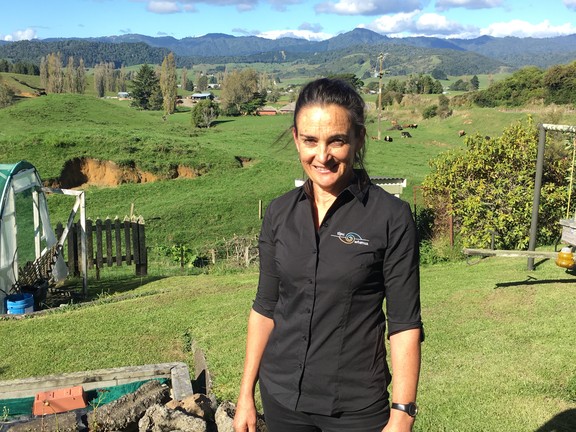
A dairy and beef farmer on Quebec’s Gaspé Peninsula, Hayes is the third generation to farm at PineCrest Farms in Shigawake. She co-owns the farm with her father and uncle.
A government-issued press release, outlined Hayes’ extensive governance experience, which the release said she obtained through her active participation with the L’Union des Producteurs Agricoles (UPA) where she defended regional interests in dairy, beef and agricultural development.
“I am pleased to announce the appointment of Jennifer Hayes as Chairperson of the Canadian Dairy Commission and proud that she will be the first woman to hold this position,” said Bibeau. “A dairy farmer and leader in her Gaspé community, she has extensive governance experience, including as a commissioner of the organization. I am confident that she will continue to be an asset to the Commission and help the industry remain competitive, productive and innovative.”
The meat industry received the lowest diversity score
Bare shelves this holiday season highlight shortages and show how vulnerable the supply chain can be to disruptions. Purdue University developed an interactive dashboard that characterises the vulnerability of input purchases for each food industry within each US state.
“We call the exposure to labor and upstream industries the Achilles’ heel of the supply chain,” said Jayson Lusk, an internationally recognised food and agricultural economist and distinguished professor and department head of agricultural economics at Purdue University.
“If a key link is weakened, it impacts the strength of the entire chain. Our research identified the most vulnerable points and it also highlights the importance of diversifying,” Lusk said in an interview with Purdue Agricultural Communications. “If multiple suppliers of needed inputs are used, it is like doubling up links at critical points in the chain.”
Lusk, who leads Purdue’s Center for Food Demand Analysis and Sustainability, and Ahmad Zia Wahdat, a postdoctoral research associate at the centre, developed an interactive dashboard to share their findings. A working paper posted on SSRN details their work.
The dashboard teases out the inputs needed for different food industries, provides the share of total cost of upstream inputs and labour, and evaluates the risk of an industry based on a diversity score. The score ranges from a value of zero to one, with higher scores indicating less vulnerability.
“The meat industry had the lowest diversity score,” Wahdat said. “Around $163 billion worth of input purchases are exposed to upstream industries and labour. Of this, animal production, or farms, and labour across production and transportation are the dominant sources of vulnerability. So, events like a pandemic, natural disaster or animal illness can jeopardize the output of the meat industry, as we have seen.”
For example, if 10% of input supply for this industry were lost, it would lose an average of $203 million of its output for each state across the nation. And if 10% of production labour within the industry was lost, $28 million in output for each state would be lost, Wahdat said.
“Four major meat processing companies process 85% of cattle in the US,” Lusk said. “If these processing plants are hit with a disaster, there will be shortages of beef in grocery stores.”
The dashboard provides information for the entire US as well as state by state.
“We see this information being used by policymakers and industry executives,” Lusk said. “By seeing where there are potential vulnerabilities, they can work to protect input supplies by diversifying their input purchases across multiple suppliers or developing contingency plans.”
“A grocery store buyer may compare the diversity scores of the states from which they buy a product, or perhaps those within a given industry would look to states with high scores and choose to adopt some of their practices,” he added.
The dashboards are part of a portfolio of public dashboards created through Purdue’s Center for Food Demand Analysis and Sustainability, which is part of Purdue’s Next Moves in agriculture and food systems.
Holstein Association USA recently released the lists of top Holstein Breed Age Average (BAA%) herds for 2021 classifications. Members utilizing the Classic or Standard options of the Holstein Classification program receive an overall BAA for their herd. The BAA value provides a way to compare the score of a herd average to the average of the breed, taking into account the age of the animal and stage of lactation. The calculation puts cows of all ages on the same playing field.
“We were thrilled to see our Holstein classification program have a strong participation year in 2021,” said Lindsey Worden, Executive Director, Holstein Genetic Services. “The member herds appearing on any of these recognition lists should be commended for their work in breeding durable and functional Holstein cows.”
A total of 982 herds had a BAA value eligible for inclusion on these lists, and their herd BAAs averaged 107.5. The average number of cows included in the BAA calculation for those herds was 68, and herds must have a minimum of 10 cows included in the calculation to be eligible for the list.
Triple-T Holsteins of Ohio earns the honor of having the highest BAA in the U.S. last year, with a BAA of 116.0 on 20 cows. Completing the top five spots on the overall list are Matthew T. Mitchell, Tennessee; Conant Acres Inc., Maine; Eaton Holsteins, New York; and Prestige Genetics, Illinois.
Lists are broken down in several different ways to recognize members across the country with herds of all sizes. Lists of the Overall Top 200 BAA Herds, Top 25 BAA Herds by Region, Top 25 BAA Herds by Herd Size, and Top 15 BAA Herds for Colleges & Universities can be viewed at www.holsteinusa.com. Find the page under the Popular List section on the homepage or directly at www.holsteinusa.com/programs_services/baa_lists_2021.html. Congratulations to all herds on these lists!
More information about BAA and how it can be used to help benchmark your herd and breeding program can be found in the Fall 2021 issue of Holstein Association USA’s publication, The Pulse. The article can be viewed directly at www.holsteinusa.com/pdf/pulse/pulse_2021_fall.pdf.
Holstein Association USA, Inc., provides programs, products and services to dairy producers to enhance genetics and improve profitability — including animal identification and ear tags, genomic testing, mating programs, dairy records processing, classification, communication, consulting services, and Holstein semen.
The Association, headquartered in Brattleboro, VT., represents approximately 25,000 members throughout the United States. To learn more about Registered Holsteins® and the other exciting programs offered by the Holstein Association, visit www.holsteinusa.com, and follow us on Instagram, Facebook, and Twitter.
Ethical concerns on livestock are harder to address
Britain’s farming and environment minister George Eustice said on Thursday that government legislation to ease the regulatory regime for gene editing after breaking away from EU rules would initially focus on crops, not farm animals.
The minister announced last year that regulations related to gene editing in agricultural research would be eased following a public consultation but more widespread use of the technology would require primary legislation, reported Reuters.
“We will start in the first instance with crops since I think the ethical concerns on livestock are harder, do need a little bit more thought and we don’t have to do everything in one go,” Eustice told the annual Oxford Farming Conference.
Gene editing is subject to the same rules as genetic modification in the EU but differs in that it does not result in the introduction of DNA from other species.
“If we want to reduce our reliance on synthetic chemical pesticides in order to improve the environment, if we want to be able to breed crops that are more drought resilient and can help us deal with the effects of climate change, we need to have some of these tools in the box,” Eustice said, without setting out a timetable for the legislation.
Proponents of gene editing argue it can be seen as equivalent to conventional breeding but many times faster.
Opponents, however, believe the technology will be used to further corporate interests rather than tackling the underlying problems faced by agriculture which include a lack of crop diversity and the decline of beneficial insects.
In a report issued last month on gene editing and farmed animals, Nuffield Council of Bioethics said safeguards would be needed to ensure animals were not bred to better endure conditions of poor welfare or in ways that reduce their capacity to live a good life.
Proposed changes only relate to England as agriculture is devolved within the United Kingdom. Scotland and Wales set their own rules while Northern Ireland will retain the European Union’s regulatory regime due to a protocol agreed as part of Britain’s withdrawal from the trading bloc.
The “got milk?” campaign from the Washington, D.C.-based Milk Processor Education Program (MilkPEP) is giving football fans the chance to win limited-edition non-fungible tokens (NFTs) featuring Team Milk athletes JuJu Smith-Schuster, Terry McLaurin and Justin Herbert. Now through the end of February, shoppers at grocery stores across the country will have the chance to win instantly or be one of three grand prize winners, MilkPEP said.
The “got milk?” campaign created 15 NFTs varying in rarity, from base cards (3,097 available) and uncommon cards (1,549 available) to rare cards (529 available), super-rare cards (269 available) and one-of-a-kind cards (three available). There are 5,444 chances to win instantly by completing the scratch and win found on participating milk labels, MilkPEP said. Winners will receive a base, uncommon, rare or super-rare NFT to store in their virtual wallets.
All shoppers may enter for a chance to win the grand prize in the sweepstakes by showing proof of purchase of any 32-ounce dairy milk participating in the promotion, MilkPEP said. Three grand prize winners will receive a one-of-a-kind NFT featuring Smith-Schuster, McLaurin or Team Milk.
Shoppers can find the promotion on participating brand labels at Alberstons-Safeway, Acme, BJ’s Club, Stop & Shop, Harris Teeter and other retailers. Brands participating include Borden Regular, Hiland Dairy, Hollandia Dairy, Lucerne Dairy Farms, Wellsley Farms Milk and more. For a full list of participating brands and stores, visit makethetrade.gonnaneedmilk.com.
Shoppers may scan the QR code found on participating milk labels or text ‘MILK’ to the number provided on the label to register for the promotion at makethetrade.gonnaneedmilk.com. Upon registering, shoppers may complete a scratch and win to see if they are an instant winner, MilkPEP said. All shoppers are eligible to enter for their chance to win the grand prize in the sweepstakes by uploading their receipt showing purchase of any 32-ounce dairy milk participating in the promotion.
Instant-win milk labels can be found in stores now. Shoppers may register for a chance to win the grand prize from Jan. 6, 2021, through Feb. 28, 2021.
World food prices jumped 28% in 2021 to their highest level in a decade and hopes for a return to more stable market conditions this year are slim, the UN’s food agency said on Thursday.
The Food and Agriculture Organization’s (FAO) food price index, which tracks the most globally traded food commodities, averaged 125.7 points in 2021, the highest since 131.9 in 2011, reported Reuters.
The monthly index eased slightly in December but had climbed for the previous four months in a row, reflecting harvest setbacks and strong demand over the past year.
Higher food prices have contributed to a broader surge in inflation as economies recover from the coronavirus crisis and the FAO has warned that the higher costs are putting poorer populations at risk in countries reliant on imports.
In its latest update, the food agency was cautious about whether price pressures might abate this year.
“While normally high prices are expected to give way to increased production, the high cost of inputs, ongoing global pandemic and ever more uncertain climatic conditions leave little room for optimism about a return to more stable market conditions even in 2022,” FAO senior economist Abdolreza Abbassian said in a statement.
A surge in the price of fertilisers, linked in turn to spiralling energy prices, has ramped up the cost of so-called inputs used by farmers to produce crops, raising doubts over yield prospects for next year’s harvests.
In December, prices for all categories in the food price index bar dairy products fell, with vegetable oils and sugar falling significantly, the agency said in its monthly update.
It cited a lull in demand during the month, concerns about the impact of the Omicron coronavirus variant, and supplies from southern hemisphere wheat harvests for the declines.
However, all categories in the index showed sharp increases during 2021 as a whole and the FAO’s vegetable oil price index hit a record high.
Crop futures have seen volatile trading at the start of 2022, with oilseed markets stirred by drought in South America and floods in Malaysia.
Dairy prices maintained their recent strength in December, helped by lower milk production in Western Europe and Oceania, the FAO said.
Europe’s beef and dairy herds are expected to decline over the next 10 years due to sustainability goals and changing consumer trends, a new EU Commission report has warned.
hile world meat consumption is projected to grow by 1.4pc per year, largely driven by demand in developing countries, EU beef production and consumption is expected to fall.
On the dairy side, the EU Agricultural Outlook for Markets, Income and Environment 2021-2031 – which excludes the impact of the recently agreed CAP reform because the policy is not yet implemented – says achieving the EU’s sustainability objectives could translate into “a slowdown” in annual growth of 0.5pc per year; with a decline of 1.5 million dairy cows forecast.
It states: “Following the decline in the EU cattle herd, production of beef is expected to fall. EU beef consumption is due to decline by 0.9kg per capita following a long-term trend.
“Meat export opportunities may improve in the medium term but will be offset by a decline of live animal exports due to the lower demand in Turkey and animal welfare concerns over long-distance transport.
“EU beef imports could rise slowly but stay below the 2019 level because of high global demand.”
Under dairy the report adds: “Alternatives to conventional systems will gain a greater market share, resulting in a lower annual yield (1.2pc compared to 1.9pc in 2011-2021) and offsetting stronger dairy herd reduction (-1.5 million cows by 2031).
“Organic milk production is expected to reach 8pc in 2031 (3.5pc in 2019), providing economic value, environmental benefits and satisfying societal demands for example animal welfare.”
Despite the slowdown, it’s expected the EU will remain the largest dairy supplier in the world market (30pc of global dairy trade in 2031), ahead of New Zealand and the US.
It says demand for feed from arable crops is also expected to decrease due to the decline in the EU’s beef, dairy and pig herds.
However, it says EU sheep meat production is expected to increase slightly by 3.5pc per year over the next decade underpinned by “tight world supply and improving prices for producers”.
The outlook covers the period from 2021 to 2031 and reflects agricultural and trade policies in place in November 2021. Global projections are based on the OECD-FAO Agricultural
Outlook 2021-2030 updated with the most recent macroeconomic and market data.
The American Milking Shorthorn Society have released the names of their 2021 All-American and All-American Junior nominees! You can watch the unveiling video on their Facebook page here! Congratulations on a great contest!
When Rusty Bittermann first thought of bringing a couple new cows to his farm in Shamrock, P.E.I., five years ago, he didn’t think he’d play a key role in the effort to conserve an entire breed of cattle.
Rusty Bittermann began his search for Kerry cattle about five years ago and quickly realized how hard they were to find because there are so few of them left. Now he’s part of an effort to protect the breed and make sure they don’t disappear entirely. (Brittany Spencer/CBC)
When Rusty Bittermann first thought of bringing a couple new cows to his farm in Shamrock, P.E.I., five years ago, he had no idea what a journey it would become.
Bittermann runs Rustaret Farm with his wife Margaret McCallum and together, they’ve created a home for a number of heritage breeds of livestock including sheep and cows.
He said they were in search of a dairy cow to produce milk for their farm and after doing some research, had their sights set on Kerry cattle.
“A breed that had been bred across centuries, indeed millennia in Ireland to be small, to be able to provide milk for a household,” he said
“All the things we were looking for in a cow seemed to be in the Kerry.”
But when it came to actually finding one, Bittermann said it seemed they were out of luck.
He contacted farmers in Nova Scotia, Ontario, Alberta and Saskatchewan, but none had any Kerries for sale.
‘It’s gone from looking for a cow to serve our needs to realizing that we probably should step up and play a role in doing something bigger,’ says farmer Rusty Bittermann. (Brittany Spencer/CBC)
Kerry cattle are a rare breed of dairy cows originally found in Ireland and one of the oldest breeds of European cattle surviving today. But the population of Kerry cattle around the world is dwindling and Bittermann said the breed is at risk of disappearing.
He said there are less than 100 breeding females in all of North America and only about 300 in Ireland.
“This began as a search for a good family cow for ourselves and it’s become a bigger project,” Bitterman said.
“As we became involved in that search we came to realize that if people didn’t act to protect the breed it wasn’t going to be there.”
Now, he’s playing a key role in the effort to protect them.
‘They’re home safe’
Kerry cattle are a bit shorter than your average dairy cow, like a Holstein. They’re known for their black hair and horns.
They can also thrive on small pastures, producing milk that’s high in butterfat and good for cheeses and yogurts.
Bittermann said his luck changed when a farm in Alberta offered to send Kerries to P.E.I. and his herd started to grow from there.
“It’s gone from looking for a cow to serve our needs to realizing that we probably should step up and play a role in doing something bigger,” he said.
The most recent additions to the farm are cows Alice and Abbey. They arrived in late November after Bittermann got a call saying they were on a farm in Saskatchewan and needed an immediate home because of drought conditions in Western Canada.
Officials with Heritage Livestock Canada say there are only four farmers across the country who are keeping or breeding Kerry cattle. (Brittany Spencer/CBC)
“So we said yes, of course and it’s history from there,” Bitterman said.
He said P.E.I. offers an ideal place for this breed of cattle to thrive because climate conditions can be similar to those in Ireland and the U.K.
“They’ll be here for life, they’re home safe,” he said.
Breed almost disappeared in Canada
Rebecca Lange, chair of Heritage Livestock Canada, said Kerry cattle are one of the oldest breeds of dairy cows in the world, but they don’t produce as much milk as more contemporary dairy cows like Holsteins. Over time, their numbers started to dwindle.
“Kerries are critical in status on our conservation list,” Lange said, adding there are only about 20 of the cows in Canada.
She said Kerry cattle can survive on less food, can thrive in more diverse climates and leave a lower carbon footprint than other cattle breeds. Which is why protecting heritage breeds like Kerries is important to pass along some of those traits to future generations, she said.
Jody Jess is a Kerry cattle breeder in the U.S. who has been trying to increase population numbers there for years. She says small-scale farms like Bittermann’s are key to securing a future for the breed in Canada. (Submitted by Jody Jess )
“They offer genetic diversity to what we’ve got at the moment,” she said. “They certainly offer traits that have almost disappeared in some other breeds so I think they’re important for that too,” she said.
Lange said there are only four farmers across the country who are keeping or breeding Kerry cattle right now.
“If it hadn’t been for this little concentration of breeders that there are at the moment, they would disappear. So who’s got them now, they’re extremely important to their survival here.”
‘We need these small mom and pop farms’
Bittermann’s herd has now grown to eight mature Kerry females and three Kerry bulls, along with a few calves born on the farm over the past few years.
One of the people helping Bittermann along the way has been breeder and secretary of the American Kerry Cattle Association, Jody Jess.
She breeds Kerry cattle in Massachusetts and is in the process of starting her own small dairy operation with her Kerries. She said she connected with Bittermann through Heritage Livestock Canada and in 2015, sent one of her Kerry bulls to P.E.I. to help him grow the population here.
She said if it wasn’t for farmers like the Bittermanns, the future of the breed in Canada would be in jeopardy.
Kerry cattle are a rare breed of dairy cows originally found in Ireland and one of the oldest breeds of European cattle surviving today. But, the population of Kerry cattle around the world is dwindling. (Brittany Spencer/CBC)
“It helps the breed because if there’s no numbers they’re going to go extinct,” she said. “We need these small mom and pop farms … that’s what’s going to save the heritage breeds.”
Jess said she’s also seen an increase in the number of people keeping hobby farms or homesteading in the U.S., and she hopes demand for Kerry cattle follows as a result.
“They’re small but mighty,” she said.
“I would love to see every dairy put a few Kerries in,” she said.
Calls for Kerries already coming in
Bittermann said in addition to the Kerries there are two other heritage breeds at Rusaret Farm — Belted Galloways and American Milking Devons. He said his focus on preserving heritage breeds is also an effort to preserve historical farming practices, including those that can be achieved on a small scale.
He said he’s already getting inquiries from other small farms interested in buying Kerry cattle as well. One of his dreams is to help young farmers get their start and he thinks the Kerries could be a good way to do that.
“One of my dreams with this farm and what we’re doing is that we can perhaps help facilitate young people to get the type of stock they need to get started on a small farm,” he said.
He said moving forward he will continue working with Heritage Livestock Canada and explore things like embryo transplants from his Kerry cows to help boost population numbers in other parts of the country.
“If these die out that’s it,” he said
“It’s the heritage of not just centuries but millennia that would be gone forever and it just seems to us unconscionable to let that happen on our watch,” Bittermann said.
For now though, he’s going to let his cows enjoy their time here on their new pasture happy to know he’s doing his part to secure a future for Kerries on P.E.I. — and around the world.
Richard Bosma’s cows had been home for less than a week after an evacuation due to flooding in Abbotsford, B.C., before temperatures plummeted on his farm.
Bosma, who credits his faith with helping him remain resilient in a year that has seen record-breaking heat, flooding and now freezing temperatures, said a friend’s comment resonated with him.
“So which chapter of Revelations are we doing today?” he said, referring to the book of the Bible dedicated to apocalyptic prophecy.
Like many farmers in B.C., Bosma has faced a year unlike any other when it comes to extreme climate events.
With temperatures dipping to nearly -16 C in the normally temperate Fraser Valley last month, Bosma was not alone in dealing with frozen pipes and manure removal systems, snapping equipment and challenges getting workers to the site. One milk truck driver told Bosma it took 12 hours to get the milk lines on the vehicle thawed before he could start navigating icy roads to do his pickups.
But Bosma is wary of being perceived as a complainer, noting farmers aren’t alone in dealing with the cold that’s affected everyone from truckers to firefighters.
“It’s a bit of white-knuckling to make sure we get through the basics every day,” he said.
Farmers also have a habit of supporting one another through difficult times, he added.
“My neighbour got hit just as hard with the flood. He’s out there plowing our driveway now,” he said.
Environment Canada warned of extreme cold in southern B.C. beginning in mid-December and continuing through this weekend, with another winter storm watch in effect.
Premier John Horgan acknowledged the “exceptionally challenging” year in a statement on New Year’s Eve.
“For many, this will be remembered as the year that climate change arrived on our doorsteps. Here in B.C., we faced record-setting droughts, heat waves and forest fires, floods and mudslides,” he said.
Stan Vander Waal, president of the B.C. Agriculture Council, said the recent cold snap has affected each farm differently depending on insulation and whether livestock was in a barn or outdoors. The cold tends to increase costs across the board, however, whether it means greater demand for more heating or additional feed for livestock that burn energy to stay warm.
Facilities damaged on the Sumas Prairie of Abbotsford in the floods may see worse effects from the freeze because of moisture in the structures, he said.
Given the number of extreme weather events this year, Vander Waal said he believes many farmers may consider increasing climate protections on their farms.
“When we look at the year in review, we’ve seen many extremes that we haven’t seen or many of us can remember,” Vander Waal said.
“Once you experience them one or two times, you start developing a strategy.”
Vander Waal owns Rainbow Greenhouses in Chilliwack, B.C. In his case, a strategy for coping with icy temperatures means ensuring thermal curtains are up to date, any leaks are sealed and construction is as energy efficient as possible.
Gagan Khakh, a third-generation vegetable and berry farmer at KBM Farms, said the family’s main property in Abbotsford remains seriously damaged after the floods. The basement of the housing for workers filled with 1.5 to 1.8 metres of water. The farm market, grading and packing equipment, and Khakh’s main residence were also all soaked.
The family considered itself lucky to have additional fields in Chilliwack, where they continued to harvest brussels sprouts until they started to freeze.
“With these recent cold temperatures we’ve had to stop completely,” he said.
“It sucks because it’s kind of like a double-whammy.” Khakh said the main way consumers can support B.C. farmers is to buy agricultural products from the region when possible.
He said he hopes 2022 brings some calmer conditions.
“We’re hoping that we just have a year that’s somewhat normal, that we get those timely rains, that it won’t get too cold, too early,” he said.
Gary Baars, another dairy farmer on Abbotsford’s Sumas Prairie, said the cold has hampered recovery efforts on his property, where the workers’ quarters are still “ripped apart.”
Baars said as challenging as it has been, it feels good to be back on his own farm. All 200 or so of his cows were affected by the evacuation during flooding and divided between five host farms until Dec. 22.
“The worst was not being in the barn,” he said. “It’s good to be back home.”
This report by The Canadian Press was first published Jan. 2, 2022.
Madison Weaver of Ephrata, Pennsylvania, is the 2021 recipient of Holstein Association USA’s National Judi Collinsworth Outstanding Junior Exhibitor Award. The Collinsworth Award is presented annually in honor of the Association’s former Executive Director of Member and Industry Services, Judi Collinsworth.
The award recognizes youths’ work and involvement with Holstein cattle and dairy activities. Recipients are selected based on sportsmanship, herdsmanship, participation in Holstein and other agricultural activities, as well as an essay describing what they have learned while exhibiting Registered Holstein® cattle. The winners at each of the National Junior Holstein Shows receive a $250 cash prize and the overall winner receives an additional $500 scholarship.
Weaver, 19, is a junior at The Pennsylvania State University studying animal science alongside agriculture communications and agribusiness management. She is active in the dairy science club, Alpha Zeta Fraternity, and is a member of the Livestock Judging team. Weaver has also served as an algebra tutor at the Penn State Berks Study Center.
“After many hours in the show barn, I have developed a strong love for raising show heifers and learned that if you find joy and dedication in your work, you will always find satisfaction. ” Weaver said. “Being a Junior Holstein member has taught me to take part in something bigger than myself. Holstein Association USA opens doors, but you must walk through the door for the opportunities.”
Weaver has participated widely in her state and county Holstein organizations. As a member of the Pennsylvania Junior Holstein Association, she was a 2021 Distinguished Junior Member semifinalist and has participated in Dairy Bowl on local, state, and national levels, as well as Dairy Jeopardy and Public Speaking. After college she plans to pursue a career in animal nutrition while returning to the family farm. She hopes to continue to be a leader and coach for youth in the Junior Holstein Association.
One Judi Collinsworth Award recipient is selected at each of the four National Junior Holstein Shows. Weaver won the award at Premier National Junior Holstein Show. Other winners from 2021 National Junior Holstein Shows are Elizabeth Stoltzfus, Pennsylvania, Grand National Junior Holstein Show; Briley Lenkaitis, Illinois, Southern Spring National Junior Holstein Show; and Payton Erbsen, Illinois, International Junior Holstein Show.
For more information on Holstein youth programs visit www.holsteinusa.com/juniors or contact Kelli Dunklee at 800.952.5200, ext. 4124 or by email.
Holstein Association USA, Inc., provides programs, products and services to dairy producers to enhance genetics and improve profitability — including animal identification and ear tags, genomic testing, mating programs, dairy records processing, classification, communication, consulting services, and Holstein semen.
The Association, headquartered in Brattleboro, VT., represents approximately 25,000 members throughout the United States. To learn more about Registered Holsteins® and the other exciting programs offered by the Holstein Association, visit www.holsteinusa.com, and follow us on Instagram, Facebook, and Twitter.
Outstanding leaders from across the international dairy industry are being sought for World Dairy Expo’s annual recognition awards. Nominations will be accepted through February 1, 2022 for the Dairy Producer(s) of the Year, Industry Person of the Year, and International Person of the Year awards.
Dairy Producer(s) of the Year goes to a producer whose primary source of income is derived from his or her dairy farm. This person excels in efficient production and the breeding of quality dairy animals while incorporating progressive management practices.
The Industry Person of the Year award is presented to an individual in recognition of excellence in research, development, education, marketing or other fields that are part of the dairy industry.
And the International Person of the Year will be recognized for significantly contributing to international relations, business development, trade or cooperation in the dairy industry.
Individuals will be honored at the Dinner With the Stars year during World Dairy Expo in Madison next fall. For more information, call 608-224-6455.
The Brown Swiss Cattle Breeders’ Association of the USA is excited to announce their 2021 All-American nominees! You can find the lists on their Facebook page! Congratulations to everyone on this incredible achievement!
Fonterra cleared the cows from 16 farms and is using the land to dispose of wastewater, which could be leaching a colourless, tasteless and odourless pollutant into private drinking water supplies.
It was on his runs that Neville Ross first noticed cows were slowly disappearing from local farms. In 2017 most of the stock vanished from two farms. A year later they disappeared from a third Cambridge farm.
“Some places you realise there’s no animals – at all – for like a year.”
Neville’s not a farmer, he’s a cop and has been part of Waikato’s police force for 42 years. Despite being a detective sergeant, when the working dairy farms became ghost farms, it didn’t weigh on his mind. All three were owned by Fonterra. If it was a case of cattle-rustling or alien abduction, the multi-national dairy giant would have sounded the alarm.
He didn’t know stock was vanishing from other Fonterra farms around New Zealand, or that one day he and his wife Denise may have lingering doubts over his health and whether it was connected to what goes on at the empty properties.
You wouldn’t know it to look at him, but Neville’s on sick leave at the moment.
Neville’s always been fit, Denise says. He’s competed in triathlons, half Ironmans and he used to bike the 26km between the Cambridge lifestyle block they bought nine years ago and his Hamilton job. He’s never smoked and isn’t a drinker. His healthy lifestyle and current condition seem at odds. “He’s always been incredibly healthy … we’re always wondering why.”
With a grin, Neville says he’s not sick, but that his brain doesn’t turn on sometimes. Occasionally, while discussing the empty farm down the road, words slither away from him and Denise fills in the gaps.
Neville Ross has brain cancer. His wife, Denise, says she can’t help wondering if there is any link to their bore water. Photo: RNZ / Claire Eastham-Farrelly
The farm is Buxton Farm and aside from a lack of stock and a smart-looking Fonterra “Dairy is life” sign at the gate which, among other things, warns of wandering stock, it looks like any other farm in the area.
There’s plenty of lush looking grass, fences and farm buildings. But it’s not really a farm any more, it’s a tip. Since 1994, Fonterra has been piping wastewater from the nearby Hautapu milk processing plant and dumping it here.
During peak production periods the Hautapu plant processes about 150 tanker loads of milk and uses between 6000 and 8000 cubic metres of fresh water daily. Some of the water remains fairly clean and is pumped into waterways but the water used to clean the factory’s tanks and pipes contains cleaning products.
This water has to go somewhere. In 1968 it was irrigated on just one Fonterra-owned farm, but as milk production grew, and more water was used, more and more properties were irrigated, including Buxton Farm.
According to Fonterra, when managed well, wastewater can help grow grass which is used to feed cows and “provides us with a good circular model for nutrient management”.
But the reason cows have vanished from the farms is that their urine contains nitrogen. Factory wastewater also contains nitrogen from cleaning products, such as nitric acid used to clean the vats and pipes. Add the nitrogen from the wastewater to the nitrogen from cows’ urine and you get a higher load. What isn’t used by grass can start a slow seeping journey into ground water. Underfoot, and invisibly, this polluted water can move beyond a farm’s fences. Removing cows from the equation means more wastewater can be spread on the land.
These sorts of farms, where stock is removed and the grass is cut and carted elsewhere as feed, are referred to as ‘cut and carry’ farms. Fonterra says 16 farms it has consents to spread wastewater on are predominately cow-free, cut and carry farms – or as it puts it – farms whose primary use is “nutrient management”.
Photo: RNZ / Claire Eastham-Farrelly
For a long time, neither Neville or Denise knew Buxton Farm was used to soak up wastewater from the local dairy plant. After all, it looks just like any other farm. It wasn’t until last year they finally discovered what Fonterra was doing at Buxton Farm, after the community fought Fonterra’s proposal to build a wastewater treatment plant on the property.
The prospect of an industrial plant with huge ponds in the rural setting didn’t go down well with the locals, who felt it might be better located in industrial-zoned land closer to the Hautapu factory. Fonterra has since withdrawn the proposal and is investigating other locations for the plant, but before the U-turn, locals organised community testing of bores close to the farm to see what condition their water was in. That was the first Neville and Denise realised there could be problems with their water.
When they first moved onto the property in 2010 while Neville was building their house, they both drank bore water. When construction was complete, Denise switched to drinking rainwater but Neville didn’t; he thought the bore water tasted better.
Fonterra had been testing the bore water of some locals, although there had been an 18-month wait to have results sent to them. The company never offered to test Denise and Neville’s water because Fonterra thought the flow of ground water from Buxton Farm went north and the Ross’s farm lay to the west.
So, it was 10 years before the couple got their first test results. “We got our tests back at that stage at 11.9, which was really high. I still had no idea about what that meant.”
Nitrate in drinking water
You can’t see the nitrate-nitrogen. It’s colourless, odourless and tasteless and it can’t be boiled away – in fact boiling will only concentrate the levels.
The amount allowed in drinking water in New Zealand is 11.3 milligrams per litre (mg/L). It’s a level suggested by the World Health Organisation to avoid ‘blue baby syndrome’, a fatal condition caused by consuming too much nitrate during pregnancy, or via bottle feeding.
The nitrate reduces the ability of red blood cells to release oxygen to tissues. Putting it simply, it can suffocate a baby, turning them blue.
There’s only been one fatal instance recorded in New Zealand but it’s a health concern taken seriously in parts of Canterbury. Midwives there advise people living in areas known to have high levels of nitrates to get their bore water tested and to use bottled water during pregnancy and for bottle feeding if results show a high level.
However, another potential health risk has emerged. Some studies have shown a significant association between nitrates (at levels as low as 0.87mg/L) in drinking water and colorectal cancer.
Other evidence, although not as strong, shows a possible association between nitrate in drinking water with bladder and breast cancer, thyroid disease and birth defects.
Denise’s shock
Denise was in the local community hall, packed with neighbours concerned about Fonterra’s wastewater treatment plant proposal, when she first found out about nitrates and the association with cancer.
“I was in shock … Neville – two years ago – was diagnosed with brain tumour cancer, which is terminal.”
At 11.9 mg/L, their results were above New Zealand’s standard and well above the levels associated with colorectal cancer.
“Just the thought that could be part of the reason why Neville’s sick, it really upset me.”
He has glioblastoma multiforme, an aggressive brain cancer and has been through chemotherapy and radiotherapy. Neville’s doing ok at the moment – he’s in remission – but earlier this year Denise described his condition as “pretty crook”.
Unlike colorectal cancer, brain cancer hasn’t been linked with nitrates in drinking water, but that’s not enough to put Denise’s mind at rest.
“If it’s not [the cause], well, that’s life and it happens. If it is that, that’s bad and we need to do something about it,” she says.
While Denise switched to rain water, Neville continued drinking bore water for years. Photo: RNZ / Claire Eastham-Farrelly
Neville and Denise aren’t anti-dairy or anti-Fonterra. They both see the company as being an important part of New Zealand’s economy and say the company has been helpful since the problem with their water quality was discovered. However, after looking into what’s in the wastewater being dumped next door, Neville’s concluded it “is a bit untidy in regards to human beings” and wonders if there’s a better solution.
Denise says there’s been deaths in the area due to cancer in recent times, and while there’s no suggestion they are due to the ghost farms, she can’t help but wonder. Neville worries about the rest of the neighbourhood too.
“There are a number of young families which live in and around this area.”
Fonterra has given Neville and Denise a filtration system to remove the nitrate from their water. In total, the company has supplied 38 water filter systems to properties near the Hautapu factory because of groundwater contamination.
Fonterra had a new option for dealing with the factory’s wastewater, which didn’t involve spreading it on local farms, but it pulled the plug on it in October. The project would have seen its Hautapu wastewater managed by the municipal system. Minutes from a Waikato District Council meeting throw some light on the reason Fonterra bailed out. “Factors (including cost impact to Fonterra and uncertainty of cost, commercial arrangements and delivery timelines) led to Fonterra deciding to withdraw from the project…”
Fonterra gave timelines as the reason.
“We want to have a solution in place as soon as we’re able to and are targeting completion of our wastewater treatment plant by 2025, whereas the council plan had longer time frames.”
Photo: RNZ / Claire Eastham-Farrelly
The bigger picture
It’s not just Cambridge’s picturesque lifestyle blocks which have Fonterra-supplied water filters because of wastewater spreading. People in the dairy-intensive Canterbury have been given new filters too. But are there some who, like Denise and Neville, have no idea they’re living near a ghost farm where dairy processing companies such as Fonterra (the smaller dairy companies do the same) disposes of wastewater.
Often, these farms are irrigated with wastewater for decades and hold resource consents to irrigate for decades more. Consents may have been publicly notified when they were first granted, but over the years new neighbours may have moved into the area.
There’s something else worth noting about some of these consents. The amount of nitrogen that can be spread in the wastewater is often far higher than the new freshwater rules will allow farmers to spread on grazed land as fertiliser (190kg per hectare per year of synthetic nitrogen). Unless the wastewater is more than 5 percent nitrogen it’s not considered fertiliser. Because the wastewater farms hold resource consents for disposal of waste products, they will be able to sidestep the new rule which comes into play in July and continue to spread as much as their consent permits.
When asked if it planned to reduce the amount of wastewater spread to the 190kg of nitrogen per hectare per year farmers will be limited to using, Fonterra’s response was it would react to rule changes as required:
“In all our operations we work within the guidelines set by the councils. When changes are made, we adapt our operations to fit.”
But the company does say it has major spending planned over the next decade, with $400 million earmarked for upgrades to wastewater plants at their Edgecumbe, Whareroa, Maungaturoto, Te Awamutu, Longburn, Reporoa, Kapuni, Clandeboye and Hautapu factories.
Fonterra also says it already aims to reduce the amount of nitrogen in the water before it reaches farms by limiting the amount of milk residue in it and using dissolved air filtration or biological treatment plants to clean the wastewater.
In some cases the differences between the new synthetic nitrogen cap for fertiliser and the amount of nitrogen the dairy companies are allowed to spread in wastewater are eye-watering. The current highest consented amount is in Canterbury. Fonterra’s Clandeboye plant is allowed to spread up to 600kg of nitrogen per hectare per year. It’s currently not spreading this much, but Environment Canterbury’s 2020 nitrate risk map links past wastewater irrigation with high levels of nitrate-nitrogen in the area. One survey describes a “contamination plume” and notes 53 wells, mostly near the Clandeboye dairy factory and Seadown fertiliser storage facility, exceed drinking water standards for nitrate-nitrogen. Fonterra has supplied two Canterbury homes with water systems because of nitrate in the ground water, and another house with a UV filter.
In the Waikato, Fonterra’s Hautapu plant has a resource consent to spread up to 500kg per hectare per year on Bruntwood farm and 400kg on Buxton and Bardowie farms. Maximum results from monitored bores show a reading of 17.80mg/L for Bruntwood farm, 18mg/L for Buxton farm and 26.8mg/L for a bore on Bardowie farm.
In Reporoa, wastewater has been spread for decades and at one point up to 800kg of nitrate-nitrogen was allowed, this has dropped to 420kg. The highest average reading from the 2017/18 fiscal year from a bore in the area is 18.7mg/L.
RNZ’s efforts to gather resource consents and monitoring results from wastewater farms nationwide found some consents don’t require monitoring. For those that do, most show levels of concern in some, but not all the bores monitored for many of the farms where water is spread.
Even if monitoring is a condition of resource consents, most don’t require a reduction in the amount of wastewater spread if the ground water is affected.
Beyond the farm gate
Alison Dewes knows a bit about cows, dairy farming and water. She’s the fourth generation of her family to dairy farm, worked as a vet for several years and is an ecologist and staunch advocate for water quality. Currently she consults on sustainable farming practises.
Alison Dewes says councils should be monitoring ground water quality and sharing the results publicly. Photo: RNZ / Alexa Cook
She thinks regional councils have shown a “cumulative regulatory failure”.
“Although councils might argue they’re not necessarily responsible for public health, they are because of the duties under the RMA [Resource Management Act] to protect life support capacity of the natural resources for future generations.”
Dewes’ has been following the decline in New Zealand’s water quality.
In a pristine New Zealand environment, before cows, fertiliser and wastewater, the nitrate-nitrogen level in ground water would have been around 0.25mg/L, according to a paper published in 2012.
Farming, an increasing population and industry quickly changed that. Stats NZ and the Ministry for the Environment’s most recent ground water quality report shows over a five-year period the median result from 75 percent of monitored sites exceeded 0.25mg/L across rural and urban landscapes.
The practice of spreading dairy factory wastewater on farms has been around for as long as she remembers. It was the impact on animal health which first raised concerns for her.
“As a veterinarian I would see it firsthand, where there has been continued application of the wastewater because the cows always had common metabolic problems. This included milk fever prior to calving, so you would often be on those farms around calving time and early lactation.”
She’s also seen the impact of nitrogen in ecosystems and drinking water and even though wastewater farms are only one part of what’s increasing nitrate-nitrogen levels in ground water, Dewes feels it’s important to raise the issue.
The message – what happens on a wastewater farm doesn’t stay on a wastewater farm – is something she’s eager for the public to understand.
“Activity inside a farm gate connects to shallow aquifers, into receiving headwaters, spring fed streams and rivers, and effect the common ground, which is our rivers, and our shared amenity, and also our drinking water sources. Until people can join those dots in their head, we’re not going to get change.”
As well as not allowing wastewater to be spread on the type of soil she describes as “leaky”, there are three main areas where she thinks improvements could be made.
Firstly, most of the monitoring of ground water quality, which is done as conditions of resource consents, is done by companies themselves – it should be done by the council. Secondly, sometimes the monitoring sites are chosen by companies and may not be in the best locations. Finally, there’s a lack of transparency. Monitoring results are usually supplied to the council, but not always readily available to the public unless specifically requested. People may not know the farm down the road from them has a ground water problem.
Environment Canterbury is open about the fact land use has impacted the quality of ground water and because nitrogen can take years to move through water problems won’t be disappearing anytime soon. The council’s website says in some cases “we can expect the situation to get worse before it gets better”.
Community water supplies are regularly tested, but the responsibility for private bores lies with owners.
When it comes to monitoring the effect of wastewater spreading on farms, it says its job is to monitor that monitoring is being done by the consent holder not do it itself.
Environment Canterbury’s Director of Science Dr Tim Davie says this ensures the cost of monitoring is covered by the consent holder, not ratepayers.
Waikato Regional Council holds the same stance. Its job is to monitor monitoring.
“Waikato Regional Council undertakes site inspections, audits compliance with conditions to ensure the data is reliable, and where necessary holds consent holders to account,” says Waikato Regional Council resource use acting director Brent Sinclair.
Both councils publish data about nitrate-nitrogen concentrations through regional ground water quality monitoring programmes. This data does not necessarily include the results of consent monitoring.
“The data Fonterra collects is to assess the impact of its operation and is available on request to anyone who is interested,” Sinclair says.
The new limit of 190kg per hectare of synthetic nitrogen is something which will “no doubt” be taken into consideration by independent commissioners when the currently expired resource consent for Bruntwood and Bardowie Farms is renewed, he says. Documentation lodged by Fonterra as part of the process suggests a new strategy will see a reduction of nitrate-nitrogen levels from 11mg/L to between 5 and 8mg/L.
Both councils are aware of the studies linking nitrate in drinking water with colorectal cancer and are supportive of further research but say they operate with guidelines which have been sent at a national level.
When asked if it was concerned about cancer and nitrate, Fonterra says that the health and wellbeing of the New Zealand public is important to it.
“We keep an eye on the science as it develops. We rely on experts in this field to set legislative limits that are best for the public and the environment and we work within these.”
But Denise wants Fonterra to “do it right” when it comes to wastewater.
“I understand business and that it has to be viable, but sometimes putting in that extra bit – and it may be a lot of extra bits – is actually a better idea when you’re in the neighbourhood. Just look after us. We do think Fonterra is incredibly important. We are a farming country. We do want them to stay and not to go, but just do it tastefully, and do it properly.”
From the viral TikTok feta pasta to declaring cheese the official love language, 2021 was a big year for cheese lovers, and if you still haven’t had enough – that is good news for you because 2022 is about to get even cheesier. With cheese consumption at record highs and the growth of Wisconsin specialty cheese outpacing the entire category, there is a lot to look forward to in the new year.
Here are the trends you should look for in 2022:
2022 is set to be a big year for cheese lovers. With new emerging flavors, classic dishes getting an upgrade with specialty cheese and so much more – these are the trends to watch for in the coming year.
Classic Dishes Get an Upgrade. Millennial and Gen Z foodies are looking to recreate classic comfort dishes with a new upgraded twist. Adding specialty cheese is one of the easiest ways to level up mom’s best dishes and create restaurant quality food at home. Get inspired with entertaining tips and recipes such as Pepperoni Pizza Monkey Bread, Monte Cristo Swiss Strata, Italian Pasta Salad, Maple Cheddar Dutch Baby and The Ultimate Queso Dip – which all top the list for the hottest recipes of the year – on WisconsinCheese.com.
Upcycling Leftovers in Your Own Kitchen. Food waste is estimated at between 30-40 percent of the U.S. food supply, according to the USDA. While consumers look to reduce food waste in their own homes, they’re looking for new ways to use leftovers. Consider upcycling Parmesan rinds from your cheese board for broths, sauces, and risotto for a rich, savory flavor, or make a delicious, infused olive oil. Any cheese that goes untouched from a cheese board or at-home recipe can be used to make Fromage Fort the next day.
Discovering Global Flavors at Home. While wanderlust travelers stayed grounded during the pandemic, they quickly learned they don’t have to leave home to taste and experience the world’s best food. Many top-rated cheese shops carry a variety of Wisconsin cheeses with German, Swiss, Italian, Dutch, and Hispanic roots for consumers who want to explore something new and expand their taste buds.
“If you want great cheese, you don’t have to travel to Europe these days,” says Ken Monteleone of Fromagination cheese shop. “For people who love cheese and are interested in exploring the intersection of food and travel, there is no better place to start than in Wisconsin because it is a world of cheese in just one state. Our cheese shop along with a handful of others offer shipping nationwide so that you can enjoy a little wedge of Wisconsin no matter where you are.”
Some Like It Hot. In addition to crafting award-winning cheeses that were born abroad, like alpine-style or juustoleipa, Wisconsin cheesemakers are constantly developing new, delicious cheeses including some with serious heat that consumers crave. In 2021, buffalo flavored cheese sales grew 145.2% and ghost pepper infused cheese increased 45.8%.
Cheese Will Bring People Together. Whether gathering with friends in small groups or meeting online for virtual events, coming together over a cheese board is a trend that is here to stay. The Cheeselandia community has over 4,000 members who stay connected on social media and join monthly virtual events to get a behind the scenes look at creameries, meet Master Cheesemakers, cook with top rated chefs, learn from cheesemongers and more. Cheeselandia was named the Influencer Marketing Campaign of the Year by AdWeek Performance Marketing Awards.
“Cheeselandia offers people a way to meet new friends and discover new destinations without ever having to leave home, giving members a sense of community and belonging while bonding over a shared love of cheese,” says Suzanne Fanning, Senior Vice President for Dairy Farmers of Wisconsin and Chief Marketing Officer for Wisconsin Cheese. “We have exciting things planned for the year ahead and we’re excited to see cheese continue to bring people together.”
With over 600 different types, styles and varieties of cheese to choose from, there is a Wisconsin Cheese for everyone on your shopping list – just look for the Proudly Wisconsin Cheese® badge at your local retailer.
About Dairy Farmers of Wisconsin: Funded by Wisconsin dairy farmers, Dairy Farmers of Wisconsin is a non-profit organization that focuses on marketing and promoting Wisconsin’s world-class dairy products. For more information, visit our website at WisconsinDairy.org.
About Wisconsin Cheese: The tradition of cheesemaking excellence began 180 years ago, before Wisconsin was recognized as a state. Wisconsin’s 1,200 cheesemakers, many of whom are third- and fourth-generation, continue to pass on old-world traditions while adopting modern innovations in cheesemaking craftsmanship. For more information, visit WisconsinCheese.com or connect on Facebook. For serious cheese fanatics who want to celebrate Wisconsin Cheese all year long, consider joining Cheeselandia, Wisconsin’s online cheese community.
Nearly every region in the country has a cow breed native to it, with each one having special and unique characteristics. According to the Department of Animal Husbandry and Dairying, there are 50 native breeds of cows in India. And, while some of them have increased in numbers, some others are in the danger of disappearing altogether.
The 20th Livestock Census Report in 2019 revealed that the top three breeds in terms of number were the Gir with more than 6,857,784 cows, Lakhimi with 6,829,484 cows and 5,949,674 cows from the Sahiwal breed.
Bringing up the bottom three of the native cow breeds are the Belahi breed with only 5,264 cows, Panikulam with 13,934 cows and Punganur with 13,275 cows.
The Livestock Census also found that there were 192.49 million bovines in the country, of which female cows numbered 145.12 million.
Last week, on December 21, Minister of Fisheries, Animal Husbandry and Dairying, Parshottam Rupala, in an answer to a question in the Lok Sabha said that the central government had several ongoing schemes to safeguard the interests of native cattle. According to him, the Gokul Mission was begun in 2014 with the aim to develop and conserve indigenous bovine breeds. Semen from quality bulls have been used to artificially inseminate cows to propagate a breed.
So far, 23.7 million cattle have been covered under the Gokul Mission. Another 28.7 million crore cows have already been inseminated and the scheme has benefitted 15 million dairy farmers.
According to the Ministry of Fisheries, Animal Husbandry and Dairying, Gir, Sahiwal, Tharparkar, Kankrej, Haryana, and Rathi breeds of cows; and Murra, Mehsana, Jafarabadi, Pandharpuri and Neer Ravi among other buffalos are being inseminated by high pedigree bulls to conserve and propagate the breeds.
With mechanisation, farmers are less dependent on cattle. Stray cattle has become a big problem for the farmers and the governments in several states such as Uttar Pradesh, Madhya Pradesh, Haryana and Bihar.
The Sex-Sorted Semen Scheme is also introduced that will enable dairy farmers to select the sex of the calves they want their cows to bear. This has proved to be 90 per cent accurate, the minister said.
According to the Department of Animal Husbandry, in order to conserve and propagate native breeds, it has established two national Kamdhenu breeding centres – Hoshangabad in Madhya Pradesh and Chintaladevi in Andhra Pradesh – and is working on setting up 16 Gokul Gram that will promote indigenous cattle rearing and their conservation in a scientific manner.
The Indian Council of Agricultural Research has also established a cattle research centre at Meerut, Uttar Pradesh, where studies on genetic improvement of the native breeds are underway.
With mechanisation, farmers are less dependent on cattle. In fact stray cattle has become a big problem for the farmers and the governments in several states such as Uttar Pradesh, Madhya Pradesh, Haryana and Bihar.
In a survey undertaken in 2019 by Gaon Connection in 19 states of the country, 20.5 per cent of the 18,267 respondents had said that stray cattle were a serious menace. While several schemes were launched, farmers say nothing much has improved on ground. It could become one of the issues that could be taken up in the upcoming Uttar Pradesh elections.
Four New York dairy farmers – Elizabeth Maslyn of Hemdale Farms in Seneca Castle, N.Y.; Johanna Bossard of Barbland Dairy in Fabius, N.Y.; Val Lavigne of UNC Brock Farm in Schaghticoke, N.Y; and Cody Williams of Wil-Roc Farm in Kinderhook, N.Y – joined American Dairy Association North East for a “Milk to Metro” trip to New York City to observe how the milk they produce on the farm is used by urban consumers.
The Milk to Metro campaign was designed to give the dairy farmers the opportunity to interact with urban consumers and promote New York dairy products.
“It was so interesting to finally see the endpoint of the product we work so hard to produce – consumers using those final products,” said Williams.
The campaign also allowed them to see how ADA North East works in an urban setting to sell more dairy through our school, health professional, sports marketing and retail programs.
When stopping in a corner grocery store, Lavigne said, “I was surprised at just how many dairy products were in there. There were so many options, and the aisles were very clean and organized. I just wish I could tell everyone that went down that isle how much we care for our cows, the land, and our families to produce those products.”
The dairy farmers visited the Anna M. Short School PS 146 in Manhattan to meet with fourth grade students. The school was selected for the visit because of its participation in ADA North East school nutrition programs, including Breakfast After the Bell, Fuel Up to Play 60, and the New York Thursdays program that features locally sourced milk and other food products on school menus.
“It was so eye opening to hear how interested the kids were in where their food comes from, and so great to hear them say, ‘I love yogurt’ or ‘I love cheese,’” said Maslyn. “They were excited to find out that some of my cows are the animals that produce the dairy products that they eat for breakfast, lunch and dinner.”
The group also visited Armory Track in Washington Heights, the home of one of the “fastest tracks in the world,” that promotes dairy checkoff’s “Refuel with Chocolate Milk” campaign during more than 100 track and field competitions, where more than 220,000 student athletes train and 300,000 visitors tour.
“Coming to New York City showed me that consumers are just like us – they’re picking up their kids, heading to work out, or going to work – and we can all connect to one thing: food and knowing where it comes from,” observed Bossard. “I think it’s important to all generations, and certainly Gen Z, and I hope that through projects like this they can all see their milk comes from a good place.”
Photo caption: Dairy farmer Val Lavigne from Schaghticoke, N.Y., checks out the dairy aisle in a New York City corner grocery store while on the “Milk to Metro” tour with American Dairy Association North East.
About American Dairy Association North East
American Dairy Association North East (ADA North East) is the dairy farmer-funded organization funded by participating dairy farmer’s checkoff investment to build demand and sales for milk and dairy foods throughout the local region. Representing nearly 10,000 dairy farm families in Delaware, Maryland, New Jersey, New York, Pennsylvania and northern Virginia, ADA North East develops and implements local programs to drive milk and dairy sales at retail outlets and in schools. The organization also conducts consumer education about dairy through events, traditional and social media, and in collaboration with health professionals through National Dairy Council®. ADA North East works closely with Dairy Management Inc.™, the national dairy checkoff organization, to support nutrition research, national partnerships and developing export markets for dairy to bring a fully integrated promotion program to the region. For more information, visit www.AmericanDairy.com, or call 315.472.9143.
Due to concerns regarding the recent surge in Covid and possible restrictions following the holidays, the 2022 California State Holstein Convention is being rescheduled.
The chairpeople’s goal is to host a fun event that everyone feels comfortable attending. The health and safety of our members and friends is of the utmost importance.
At this time, alternate dates in March are being considered. Update will be sent just as soon as possible.
SYRACUSE, N.Y. — Dairy farmer Neil Peck of Welcome Stock Farm in Schuylerville, N.Y., joined American Dairy Association North East to support his hometown football team at the New York State Public High School Athletic Association (NYSPHSAA) Class C Championship game at the Carrier Dome in Syracuse, N.Y., on December 3.
Peck, whose nephew and cousin played on the Schuylerville team, was joined by several county dairy promoters to hand out chocolate milk, the perfect workout recovery drink for student-athletes to consume after a hard-fought game.
From left to right are Herkimer County Dairy Princess Natalie Fredricks; Delaware County A group of women standing next to a sign Description automatically generated with low confidenceDairy Princess Jillian Hungerford; and Monroe County Dairy Princess Abby Rouland who helped hand out chocolate milk, gave public service announcements about dairy, and provided Refuel with Chocolate Milk prizes to the audience during the NYSPHSAA football championships. (Courtesy Photo)
“As a dairy farmer, I’m proud of the nutritious, wholesome milk our cows produce,” said Peck. “It’s especially meaningful to me to help distribute chocolate milk after the game because I have nephews and a cousin on the Schuylerville team.”
“Refuel With Chocolate Milk,” a campaign funded by dairy farmers through American Dairy Association North East, is the presenting sponsor of the NYSPHSAA State football championships and the official beverage of the association’s athletes.
ADA North East’s sponsorship provides funding for signage at NYSPHSAA championships, chocolate milk for athletes after each event, and nutrition tips for more than 15,000 coaches through monthly newsletters.
“We support all the state athletic associations in the ADA North East region because athletes – particularly Gen Z students – are the target audience for the ‘Refuel with Chocolate Milk’ campaign, so it’s a win for everyone,” said ADA North East CEO Rick Naczi. “When dairy farmers like the Pecks have family members on a team, we can really drive home positive dairy messages that help consumers make the connection to who produces milk and to further build their trust.”
Several county dairy promoters participated in the state championship Refuel with Chocolate Milk efforts. They assisted Peck in handing out chocolate milk, gave public service announcements during the games, and provided the audience with Refuel prizes.
Compared to water and most sports drinks, chocolate milk has double the carbohydrate and protein content needed to replenish tired muscles, and its high-water content replaces fluids lost and prevents dehydration.
Robert Chesler, CEO of the United Dairymen of Arizona, emphasized the importance of securing new market access opportunities through bilateral or multilateral Free Trade Agreements during a virtual town hall organized today by Farmers for Free Trade (FFT). For American dairy farmers to remain competitive in the international market, the United States must unlock new export markets, Chesler said.
As FFT members, the National Milk Producers Federation (NMPF) and the U.S. Dairy Export Council (USDEC) have a leading role in carrying out its mission of informing the public about the benefits of free trade and supporting the pursuit of beneficial trade agreements that expand export opportunities for American farms.
During today’s virtual event, Chesler spoke of the challenges that American dairy exporters face as the United States’ trade competitors continue to secure greater dairy market access in key export markets. He noted that countries such as New Zealand, Australia, and the EU are aggressively pursuing new trade deals, which then harms the competitiveness of U.S. dairy products at a time when international demand is growing. In his remarks, Chesler said that policy actions focused on increased competition and removing burdensome market barriers are key to sustaining our existing export markets and opening additional opportunities for U.S. dairy producers.
“We urge the Administration to seek Trade Promotion Authority renewal to go after new trade agreements,” Chesler noted in his comments. “This is critical to realizing fully the potential of dairy markets in places like Vietnam, Indonesia, the United Kingdom and other major dairy purchasers. In the meantime, the U.S. should be using all types of trade tools to expand access and reduce barriers to U.S. exports with major agricultural importing markets.”
An NMPF and USDEC member based in Tempe, the United Dairymen of Arizona is a full-service milk marketing cooperative founded in 1960. Its farmer-owned manufacturing facility produces milk powder, cream, butter, and a variety of other dairy ingredients, many of which are exported around the world.
“We thank Robert for representing the industry and outlining provisions that could improve our export market,” said Jim Mulhern, NMPF president and CEO. “American dairy farmers support thousands of jobs in rural communities. Unfortunately, the lack of a trade agenda that focuses on opening markets limits our ability to grow. We need the administration to aggressively pursue greater market access opportunities to ensure American dairy exporters can effectively compete with other dairy exporting nations that continue to ink new agreements.”
“We applaud Robert’s remarks today about the competitive disadvantage that U.S. dairy producers are facing and encourage this administration to address the issue by engaging in negotiations with our trading partners,” said Krysta Harden, USDEC president and CEO. “What we are seeing today are unfavorable tariff rates when compared to our competitors and regulatory barriers that are hampering our exporters’ ability to access their full market potential. USDEC strongly supports UDA’s call to action for the administration to use its trading tools to pursue new opportunities.”
Barometer shows farmers are 30% less optimistic than last year
The Purdue University/CME Group Ag Economy Barometer slipped five points in November to a reading to 116, marking continued pessimism among producers.
A nationwide measure of the health of the US agricultural economy, the Purdue University/CME Group Ag Economy Barometer is based on survey of 400 agricultural producers. Its aim is to provide a sense of the agricultural economy’s health with an index value.
The results of the most recent survey, conducted 15-19 November, revealed producers are concerned about mounting costs. The report shows that the Index of Current Conditions declined 7 points in November to a reading of 128, and the Index of Future Expectations fell 4 points to 110.
November marked the lowest reading of 2021 for all three measures of producer sentiment and comparing year-over-year, the barometer is 30% lower than in November of 2020.
“Farmers are facing sharp rises in production costs coinciding with fluctuating crop and livestock prices, the prospect of changing environmental and tax policy, uncertainty over COVID-19, as well as a host of other issues, all of which are negatively impacting farmer sentiment,” said James Mintert, the barometer’s principal investigator and director of Purdue University’s Center for Commercial Agriculture.
Farmers expressed concerns about the rising cost of production, particularly for fertiliser, farm machinery, seed and fuel. According to November’s survey, 43% of respondents expected input costs to rise by more than 16% in the upcoming year. This compares with the actual average rate of farm input price inflation over the past decade of less than 2%.
The Farm Capital Investment Index declined 7 points to 39, a decline that analysts attributed to supply chain problems. It’s the lowest reading since April of 2020.
In November, 44% of respondents said their plans to purchase machinery were impacted by low inventories.
Nearly half of respondents (47%) chose rising input costs as their biggest concern for the upcoming year.
The Farm Financial Performance Index rose 2 points to 106 in November. That’s 10% higher than the reading in June 2021. Mintert attributed this to good crop yields and and strength in wheat prices.
The index also shows that producers are very optimistic about farmland values.
Respondents showed concern over government policies and regulations as well. In the November survey, 82% of producers who responded said they expect restrictive environmental regulations to increase, 74% export higher estate taxes, and 77% expect higher income taxes in the near future.
Michigan did not send a 4-H team to this judging contest for several reasons. Participation in national contests this year was limited to those youth who had previously competed in the 4-H Youth Dairy Days state judging contest in 2018 or 2019. The 4-H Youth Dairy Days and the state judging contest were not held in 2020 or 2021 due to the COVID-19 pandemic. Additionally, only youth who would be aging out of 4-H or not be eligible in future years, taking a dairy cattle evaluation class as an example, were contacted about practices held in August to be on team in September.
Because of this, the number of youths to form teams or participate as individual was limited and those eligible youths competed at contests earlier in the year. The Michigan 4-H dairy cattle judging program expects to return in full in 2022 with the state contest during 4-H Youth Dairy Days in July. Additional information will be shared in the coming months.
The MSU IAT team participated in their third contest of the season, earning their highest awards and honors of the year. The team, consisting of Rachael Bosse, Drew Neyer, and Abby VanDyk, placed first in the Ayrshire cattle class, second in Brown Swiss, third in Guernsey, fifth in oral reasons, and fifth overall. There were 30 students on eight teams participating in the contest. Bosse earned the highest placing in the Ayrshire class, fourth in Brown Swiss, seventh in Guernsey, third in Holstein, second in oral reasons, and fourth place overall as an individual. Neyer placed fifth in Ayrshire, eighth in Brown Swiss, 10th in Guernsey, and seventh in oral reasons.
The two individuals competing in the senior college division representing MSU were Kristin Burkhardt and Kelsey Pasch. These two competed with 58 individuals in the contest. Pasch won first place in the Jersey class.
The two individuals competing in the senior college contest were (from left) Kelsey Pasch and Kristen Burkhardt. Photos courtesy of Allison Schafer.
“For not knowing if we would have a dairy cattle judging season earlier this summer, I’m so proud and impressed by what the MSU students and 4-H’ers accomplished this year,” said coach Joe Domecq. “The ribbons and awards are great, but what makes all of these young people winners is their dedication to showing up in a difficult time that had a lot of uncertainty. They supported each other through all the practices and contests, with the wins and losses. That is what dairy judging is about, not the cows or reasons, the community and support that comes from working toward a common goal with passion and caring about the team.”
MSU students and 4-H members competed in two contests earlier in the year, the All-American Dairy Show and World Dairy Expo, both in September.
To learn about the current program and history of dairy judging at MSU, visit the Dairy Judging website.
To provide the best experiences, we use technologies like cookies to store and/or access device information. Consenting to these technologies will allow us to process data such as browsing behavior or unique IDs on this site. Not consenting or withdrawing consent, may adversely affect certain features and functions.
Functional
Always active
The technical storage or access is strictly necessary for the legitimate purpose of enabling the use of a specific service explicitly requested by the subscriber or user, or for the sole purpose of carrying out the transmission of a communication over an electronic communications network.
Preferences
The technical storage or access is necessary for the legitimate purpose of storing preferences that are not requested by the subscriber or user.
Statistics
The technical storage or access that is used exclusively for statistical purposes.The technical storage or access that is used exclusively for anonymous statistical purposes. Without a subpoena, voluntary compliance on the part of your Internet Service Provider, or additional records from a third party, information stored or retrieved for this purpose alone cannot usually be used to identify you.
Marketing
The technical storage or access is required to create user profiles to send advertising, or to track the user on a website or across several websites for similar marketing purposes.
To provide the best experiences, we and our partners use technologies like cookies to store and/or access device information. Consenting to these technologies will allow us and our partners to process personal data such as browsing behavior or unique IDs on this site and show (non-) personalized ads. Not consenting or withdrawing consent, may adversely affect certain features and functions.
Click below to consent to the above or make granular choices. Your choices will be applied to this site only. You can change your settings at any time, including withdrawing your consent, by using the toggles on the Cookie Policy, or by clicking on the manage consent button at the bottom of the screen.
Functional
Always active
The technical storage or access is strictly necessary for the legitimate purpose of enabling the use of a specific service explicitly requested by the subscriber or user, or for the sole purpose of carrying out the transmission of a communication over an electronic communications network.
Preferences
The technical storage or access is necessary for the legitimate purpose of storing preferences that are not requested by the subscriber or user.
Statistics
The technical storage or access that is used exclusively for statistical purposes.The technical storage or access that is used exclusively for anonymous statistical purposes. Without a subpoena, voluntary compliance on the part of your Internet Service Provider, or additional records from a third party, information stored or retrieved for this purpose alone cannot usually be used to identify you.
Marketing
The technical storage or access is required to create user profiles to send advertising, or to track the user on a website or across several websites for similar marketing purposes.








 A dairy farmer who told police he went 199kmh because he was late for work now says he was going so fast because he needed to dump milk he accidentally spoiled before it was picked up.
.jpg)
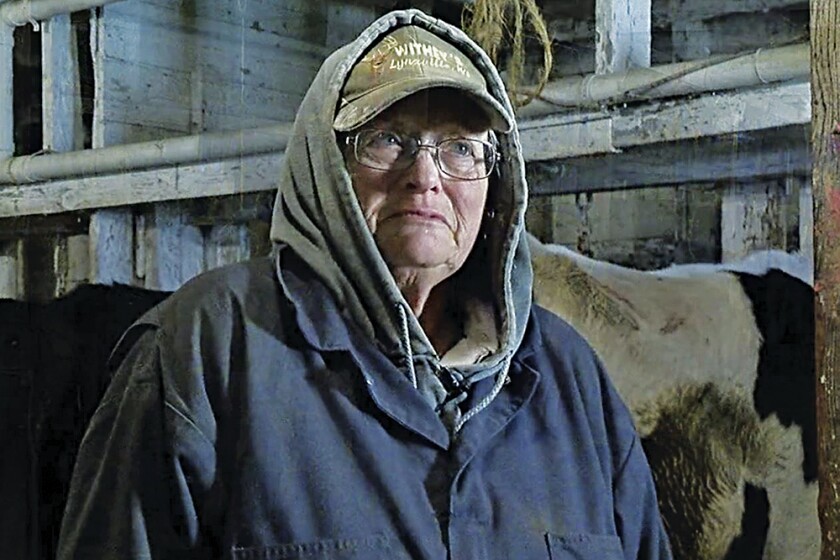
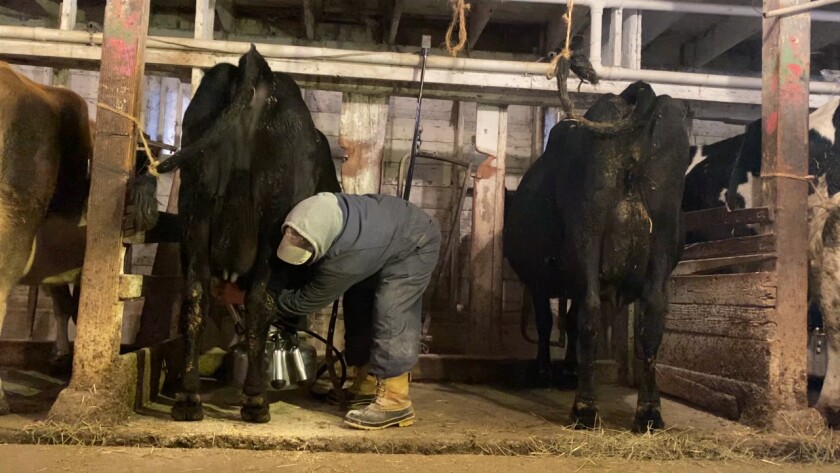
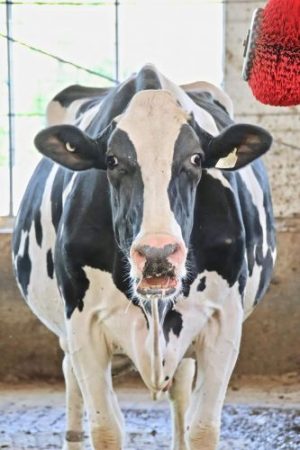 Congratulations to Lareleve Holsteins from Quebec, Canada on their exciting news to kick-off 2022. Not only did they have a great classification round, they also were ecstatic to announce that in just 3 lactations, Lareleve Supersire 597 has achieved 100,000kg in milk. A trouble-free, dream of a cow, she has never had mastitis and only required 5 breeding’s for 4 pregnancies with the use of sexed semen. ‘Supersire 597’ marks the 9th cow to reach 100,000kg for Lareleve Holsteins in 2021.
 Holstein UK are delighted to present the prestigious 2021 President’s Medal Award to a member of the Cornwall HYB Club for the second consecutive year. Cari Thomas has claimed the title for her outstanding contribution to the Holstein breed, HYB and her Club and she has won an engraved medal and a trip to the Royal Winter Fair in Toronto, kindly funded by HYB’s Principal Sponsor, Semex. Holstein UK also congratulate the two runners up John Mclean from the Northern Ireland Club and Rachel Williamson from the Border & Lakeland Club.
 A Fresno County dairy that produces more raw milk than any other in California lost its creamery and products in a fire in the early morning hours of Saturday, according to an Instagram post.
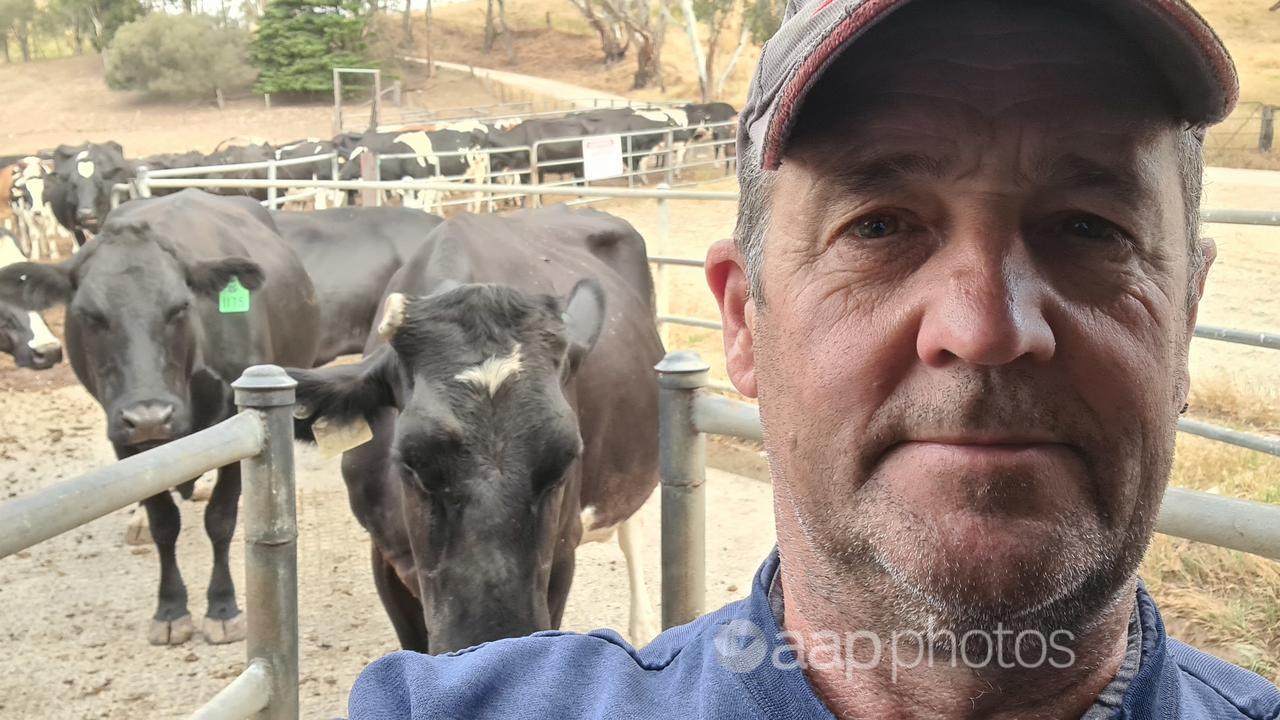 The festive season is a time for many Aussies to take a break, but spare a thought for those who have helped put ham or haloumi on the Christmas table.
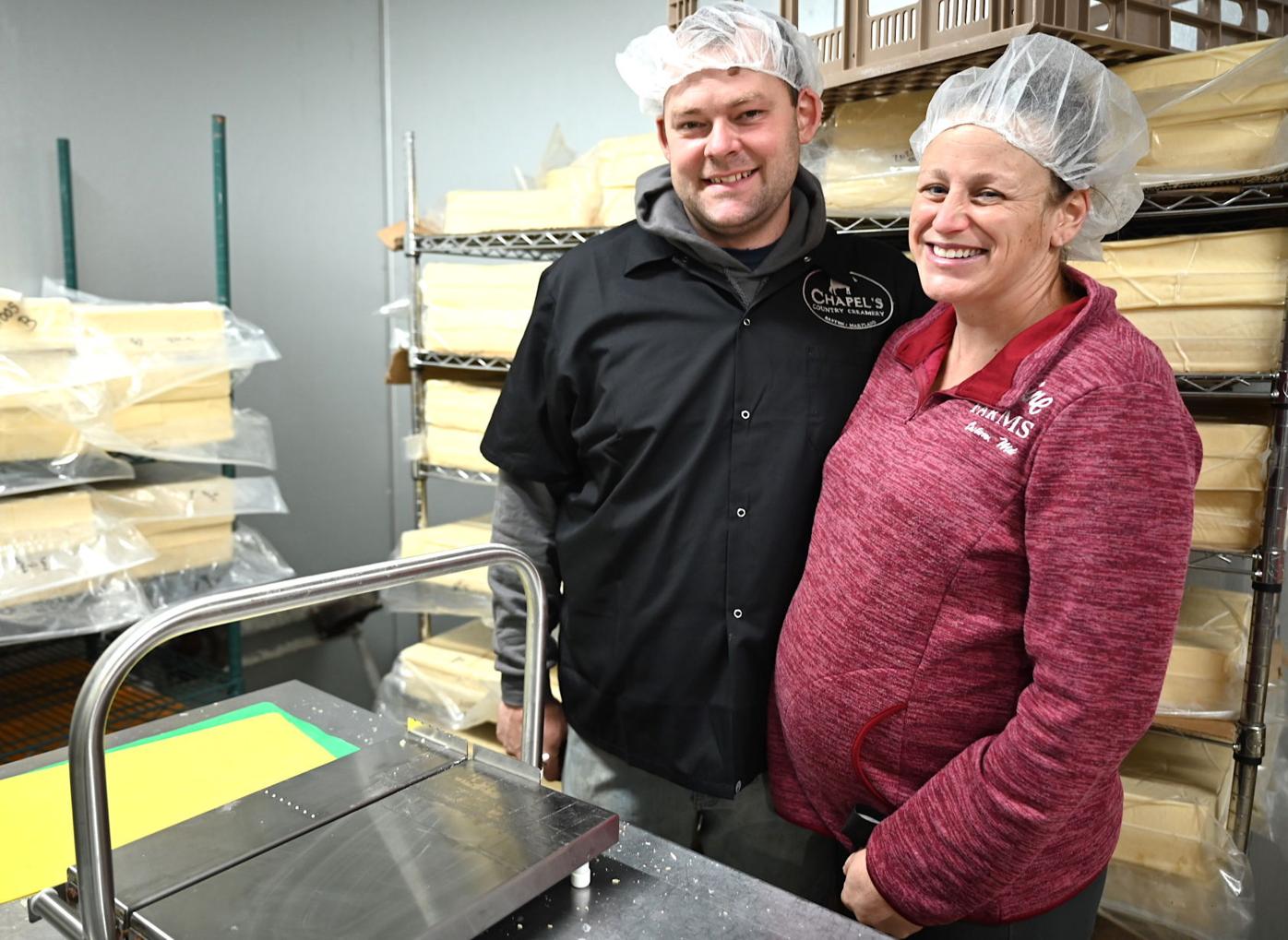 The chores never end for a farmer. Even a pregnant farmer has to milk the cows every day. So Trisha Boyce and her husband Jarred put on their boots and get to it at Chapel’s Country Creamery. It is a 45-acre farm and is one of four dairy farms left in Talbot County.

 The “got milk?” campaign from the Washington, D.C.-based Milk Processor Education Program (MilkPEP) is giving football fans the chance to win limited-edition non-fungible tokens (NFTs) featuring Team Milk athletes JuJu Smith-Schuster, Terry McLaurin and Justin Herbert. Now through the end of February, shoppers at grocery stores across the country will have the chance to win instantly or be one of three grand prize winners, MilkPEP said.


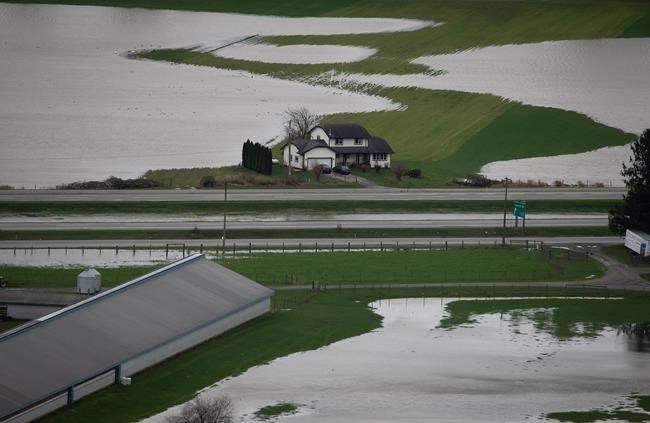 Richard Bosma’s cows had been home for less than a week after an evacuation due to flooding in Abbotsford, B.C., before temperatures plummeted on his farm.
  Madison Weaver of Ephrata, Pennsylvania, is the 2021 recipient of Holstein Association USA’s National Judi Collinsworth Outstanding Junior Exhibitor Award. The Collinsworth Award is presented annually in honor of the Association’s former Executive Director of Member and Industry Services, Judi Collinsworth.