The Low Sizergh Barn Farm in Cumbria sold ‘ready-to-drink’, untreated milk
SIXTY-FIVE people have fallen ill in one of Britain’s worst food poisoning cases — blamed on the trend of drinking “raw” unpasteurised milk.
Customers at Low Sizergh Barn Farm, which sells award-winning fresh-from-the-udder milk, were infected with campylobacter bacteria.
But now South Lakeland District Council (SLDC) has confirmed that last month alone 12 customers fell ill with campylobacter bacteria, with another 53 suspected cases recorded also in December – taking the total to 65 people laid low by the contaminated batch of raw milk.
A spokesman for SLDC said the farm would not be allowed to sell any more raw milk until tests showed no further traces of the bacteria.
Richard Park, who owns the farm in Kendal, Cumbria, said he was “shocked” and co-operating with a Food Standards Agency investigation.
None of the victims, aged from a baby of one to 86, needed hospital treatment.
Campylobacter is the most common cause of food poisoning and in adults can lead to abdominal pain, severe diarrhoea and vomiting.
The bacteria are usually found on raw or undercooked meat – particularly poultry – unpasteurised milk, and untreated water.
The incubation period – the time between eating contaminated food and the start of symptoms – for campylobacter poisoning is usually between two and five days, but can be up to 10 days.
The symptoms usually last less than a week.milk
But the food poisoning outbreak comes after experts repeatedly warned against the rising trend in drinking unpasteurised, and potentially bacteria-laden milk.
It follows a US study which claimed raw milk makes people 100 times more likely to get ill than the pasteurised version.
The FSA warned of the dangers of milk that has not been treated. Source: TheSun
Holstein Canada is pleased to announce that both a Certificate of Superior Accomplishment and a Certificate of Recognition will be presented at the Annual General Meeting in Richmond Hill, Ont. on April 8, 2017. Albert Cormier of Cormdale Genetics Inc. in Orton, Ont. will receive the Certificate of Superior Accomplishment, while Steve Dolson of Legacy Holsteins in Atwood, Ont. will receive the Certificate of Recognition.
Albert Cormier has a passion for Holsteins and unmatched cow sense that, over the years, has enabled him to contribute to the development of exceptional, influential cows such as Brookview Tony Charity, C Lauduc Broker Mandy, Skys-the-Limit Claire and Lylehaven Lila Z. Through perseverance and hard work, he earned a Master Breeder Shield in 2002 for his Calbrett Holsteins herd. Albert founded the Cormdale Export Company and was one if the pioneers in the export of high-quality, Holstein genetics. He was also one of the first in the industry to import European semen into Canada from the Netherlands. More recently, Albert was a founder of Genervations, one of the most successful private A.I. centres in Canada. The definition of a marketer, Albert has organized numerous world-class sales over the years, including the Cormdale High Index Sale and Cormdale 500. He has always been a future-focused individual and was one of the first breeders to use and promote indexes, genomics and the polled gene.
“By being visionary and progressive, Albert Cormier influenced an entire generation of breeders, exhibitors and sales managers,” writes nominator Robert Chabot of Ferme Belfast Inc. “For many he has been a great inspiration, and he has been an active participant in the development of investor groups such as Vogue Cattle Company, Génibeq and Showbiz. Albert has been a true mentor to many of the current leaders of our industry.”
Along with his wife, Dr. Karen Galbraith, Steve Dolson has been a long-time member and supporter of Holstein Canada, having earned a Master Breeder Shield for his well-respected Legacy Holsteins herd. In addition to managing the day-to-day operation of the farm, Steve has also made significant contributions to the industry in a number of ways. At the local level, Steve has been an active and valued director of the Perth County Holstein Club, serving as President in 2003. During his tenure with the club, Steve is credited with introducing the concept of the on-farm conformation competition or “Breeder’s Cup”, an idea he heard about in Australia. The first competition was held in Perth County in 2006, and has taken off with competitions now being held in almost every county in Ontario and a number in other provinces across Canada. A devoted father and mentor for youth in agriculture, Steve is a past 4-H leader in Perth County and currently serves as an Ontario 4-H Foundation Trustee. Steve also served as a Director of United Breeders Inc. (UBI) from 1988-1995, and served as President
in 1995. In 1996, Steve played a pivotal role when UBI and Western Ontario Breeders Inc. (WOBI) amalgamated to become Gencor. Steve went above and beyond during his tenure, even assuming overall management responsibilities for a time while searching for a new general manager. He was also involved early in the process of forming the Semex Alliance. In addition to his time spent in leadership on the breeding side of the industry, Steve has also spent several years serving as a Director on the Board for Gay Lea Foods. He currently serves as the Chairman of the Board and played an integral role in Gay Lea’s decision to invest $140 million dollars to establish an innovative, nutrition and nutraceutical-grade dairy ingredients business in Canada.
“As if the pursuit of breeding excellence and the daily work involved in operating a modern dairy farm with a robot milking facility are not enough, Steve has managed to devote a vast amount of his life to the Holstein breed and dairy industry,” writes Tara Reynolds on behalf of nominator the Perth County Holstein Club. “Much of his effort has undoubtedly benefitted countless others at the regional, provincial and national level.”
Both incredibly prestigious and distinguished awards, the Certificate of Superior Accomplishment and the Certificate of Recognition have only been awarded a combined total of 23 times since 1954. Both the Certificate of Superior Accomplishment and the Certificate of Recognition were last awarded in 2016. Both awards recognize qualities and activities such as: enhancing working relationships; promoting the breed, the Association, and/or Association programs; mentorship and leadership; education; and time and contribution significantly over and above what is considered “part of the job”. The Certificate of Superior Accomplishment recognizes these qualities and activities with a national/international impact, while the Certificate of Recognition recognizes these same qualities and activities with more of a provincial or regional impact.
Firefighters in Licking County had a time of it this morning trying figure out how to corral dozens of cows after a barn fire.
According to Licking County dispatchers, at about 3:54am, Thursday, firefighters were called to a farm in the 3900 block of Beech Road NW, on the report of a barn fire.
Dispatchers say several units were called to the scene, and that the fire was eventually contained, but not before about 250 cattle escaped. Firefighters say many of the cows have been returned to the barn, and others have been transported to another farm. Crews worked throughout the morning to contain the animals and now say they are about 95 percent sure all the cows have been accounted for.
No word on what caused the fire and no injuries were reported.
The refund is part of a class action settlement against dairy producers.
You may be eligible to get your money back if you bought milk or other dairy products in the past 14 years and live in one of 15 states.
The refund is the result of a class action lawsuit against milk producers in Arizona, California, the District of Columbia, Kansas, Massachusetts, Michigan, Missouri, Nebraska, Nevada, New Hampshire, Oregon, South Dakota, Tennessee, Vermont, West Virginia and Wisconsin.
This lawsuit alleges that Cooperatives Working Together (CWT) and its members attempted to limit the production of raw farm milk by prematurely slaughtering more than 500,000 cows, in order to illegally increase the price of milk and other fresh milk products.
The dairy providers have paid $52 million to settle the case, and eligible U.S. citizens can benefit from this settlement.
To qualify for a cash refund of up to $70 for individuals and hundreds of dollars for organizations, you need to have bought a milk product at a grocery store or other retailer in one of the relevant states in the past 14 years. Claims must be submitted by Jan. 31, 2017 for processing. To submit a claim, visit boughtmilk.com.
“America’s dairy farmers are looking forward to working with Secretary of Agriculture-designate Sonny Perdue, whose role as the chief advocate for farmers and rural America is absolutely crucial in the new Trump Administration, especially when milk prices have been in a prolonged slump.
Former Gov. Perdue is well-qualified to run the U.S. Department of Agriculture as a result of his eight years of executive experience as Georgia’s governor, and his career as a state legislator and small businessman. His educational training as a veterinarian also gives him unique insights into the important issues facing America’s livestock producers in the areas of animal health, food safety and the environment.
Dairy producers, like most other farmers and ranchers across America, have experienced significant economic challenges for more than a year. Starting right away in 2017, NMPF will seek to collaborate with Secretary Perdue on ways to strengthen the safety net for dairy farmers, relieve regulatory burdens and enhance opportunities to keep and grow markets abroad for our dairy exports.
In particular, we will continue to advise the Agriculture Department on efforts to improve the dairy Margin Protection Program to best benefit America’s dairy producers. We will also continue our dialogue with USDA and others in the Trump Administration on the importance of enforcing previous trade agreements, as well as pursuing future well-negotiated trade agreements that bolster our ability to serve consumers in foreign markets.
We’re excited to work with Gov. Perdue on these challenges and opportunities in the days ahead.”
U.S. President-elect Donald Trump will name former Georgia Governor Sonny Perdue as his nominee for secretary of agriculture on Thursday, a senior transition official said on Wednesday.
Perdue, 70, served on Trump’s agricultural advisory committee during his presidential campaign. His nomination, which must be confirmed by the Republican-led Senate, will complete Trump’s proposed Cabinet just two days before he is sworn in as president on Friday.
During his time as governor, Perdue‘s key agricultural issues included water management and making changes to the tax code that were beneficial to farmers, said Jeffrey Harvey, legislative director for the Georgia Farm Bureau.
Perdue, a Republican, was elected to two terms as governor, serving from 2003 to 2011. Before that, he served in the state Senate representing a rural swath of the state about 100 miles (160 km) south of Atlanta.
After finishing his second term as governor, Perdue founded Perdue Partners, a global trading firm that consults and provides services for companies looking to export products.
Ireland said on Wednesday that a dead cow had been confirmed as having bovine spongiform encephalopathy (BSE), known as mad cow disease, but said it had not entered the food chain and there was no risk to human health or beef’s trade status.
The animal tested positive for ‘Atypical BSE’, Ireland’s agriculture department said in a statement, referring to the strain that it said has been identified more recently and which occurs spontaneously in older animals with a low incidence rate.
That type is distinct from ‘Typical BSE’ which was the basis of widespread cases of mad cow disease that began in the 1980s. There have been 101 ‘Atypical’ cases identified in the EU from 2003 to 2015 compared to 2,999 ‘Typical’ cases, it added.
“The disclosure of this case of Atypical BSE does not have any impact on Ireland’s current OIE (World Organisation for Animal Health) BSE ‘controlled risk’ status or trade status,” the department said.
Beef is one of the agriculture sector’s largest exports. In 2015, Ireland became the first EU country to regain access to the lucrative U.S. market, 17 years after Washington banned EU imports over the BSE epidemic that spread from Britain to mainland Europe.
China also agreed to lift its ban on Irish beef two years ago.
The agriculture department also said on Wednesday that it had found a third case of the H5N8 bird flu strain in a swan in the south of the country, following the confirmation of a first case on Dec. 30.
Holstein Canada’s commitment to young dairy leaders across the country remains evident in the Education awards given annually. The $1,000-Education Awards fall under pillar three of ‘Awards and Recognition’ in the Association’s Young Leader program, and are awarded to up to six exemplary Young Leaders from across the country each year. The Young Leader Committee selected six worthy recipients from a fantastic crop of 2016 applicants. Candidates were evaluated on their farm and work involvement; youth program involvement; career choice; and scholastic achievements. Congratulations to the following six individuals chosen as the 2016 Education Award winners:
Maryje Bikker, Alberta
Michael Myatt-MacDonald, Nova Scotia
Erica Sayles, Ontario
Taylor Nelson, Ontario
Valérie Bolduc, Quebec
Rosalie Dubois, Quebec
The goal of the Education awards is to select and award well-rounded individuals in the Canadian dairy industry that have made a commitment to their industry, career, community and school. Winners selected to receive the awards excel in all of these areas, and every year are exceptional candidates amongst strong groups of applicants.
Three passionate, aspiring Holstein Young Breeder (HYB) members have made it into the final selection for the Holstein UK’s President’s Medal. Holstein UK is delighted to announce the finalists as Andrew Patton (Northern Ireland), Mark Robinson (Western) and Andrew Patterson (Shropshire).
Judging took place prior to AgriScot on the 14th November, following which these top three candidates have been invited to attend the Semex Conference from Sunday 15th to Tuesday 17th January 2017 at the Radisson Blu Hotel, Glasgow, where the overall winner will be crowned.
The President’s Medal is awarded to a HYB member who has made an outstanding contribution to the breed, Holstein Young Breeders and, in particular, their own Club. The ultimate winner of this most coveted and prestigious title will receive an engraved President’s Medal from the Holstein UK President, alongside a visit to the Royal Winter Fair in Toronto in November 2017, courtesy of Semex. Each of the three finalists will also receive a memento to commemorate their achievement.
The entry process began as each Club was asked to nominate one young breeder aged between 18 and 26 years of age. Six young breeders were shortlisted for interview with the panel of judges, made up of Sue Cope (Managing Director of CIS), David Tomlinson (Holstein UK President) and Peter Arthur (Semex Marketing Manager), at AgriScot in Edinburgh before the final three were selected.
Miriam Howarth, National HYB Coordinator for Holstein UK, commented, “The wealth of knowledge and enthusiasm for the dairy industry that was received in the President’s Medal entries has been formidable, and quite clearly demonstrated that the future is bright for our industry. The three finalists have shown outstanding commitment to HYB – actively shaping and driving the success of the Clubs that they are involved in. Andrew, Mark and Andrew are leading stars for British farming and we’re delighted to be crowning one of them as overall winner at the Semex Conference in January.”
Lightning Ridge-CMD Jedi Gigihas blown the record books apart, selling for $251,000 at the International Dairy Week World Wide Sires Evolution sale at Tatura last night. The price is $100,000 higher than any dairy of beef record in Australia.
The calf — Lightning Ridge-CMD Jedi Gigi, was purchased as an embryo from the Canadian herd, ferme Blondin, by Declan Patten and Callum Moscript, of Warragul — was sold to US buyer Sexing Technologies, of Texas. Her dam is BLONDIN HALOGEN GOLD a Halogen from FARNEAR-TBR-BH GOOGLE, who traces back to the Brigeen Outside Gigi EX GMD DOM cow family. Gigi has 12/16 indexes of GTPI +2937 #6 in the World –+967NM +1005CM +2.56 SCS +10.4 PL +6.2 DPR +2.5 DCE +2.48 PTAT +1133m +60 Fat +49 Protein.
Interest in the calf, which was born on November 2, was sparked from genomic results that put her at fourth best heifer in the world in the global total performance index that measures genetic ability.
Mr Patten said she was the highest scoring heifer to ever be sold anywhere in the world, with most breeders electing to hold on to the bloodlines.
“Our whole focus is to promote Australian genetics,” he said.
A full sister to the heifer, Lightning Ridge-CMD Jedi Yahoo, sold for $37,000.
DLS auctioneer Brian Leslie said it was a significant investment for the industry.
“For us these guys have brought the best genetics from the other end of the world to here, it shows you now that the world is a very small place for genetics,” Mr Leslie said.
“The buyer was from the US, the losing bidder was from Canada, we had a lot of activity for her.
“It’s a world-class pedigree, she is highest GPTI animal that has been sold in the world.
“Did I expect her to make that? No, but I did expect her to break the record.”
Top-priced vendors, Callum Moscript, United States, and Declan Patten, Sale, Victoria, own a number of cattle together.
Mr Moscript said its genomic numbers were what really stood out.
“She was the highest heifer ever to sell on GTPI in the world and because of that there was strong interest from some of the biggest AI (artificial insemination) companies in the world who are looking for high females for their own internal breeding programs,” Mr Moscript said.
“Declan and I own a lot of cattle together and we are always looking for unique opportunities to bring to Australia and Declan found these embryos.
“Our goal was to have a couple of heifers, which would be good heifers for Australian breeders and we just hit a home run with this one.”
Mr Patten said the journey started with a Canadian heifer they bought a few years ago.
“We bought her for $175,000 (Canadian) – I loved her breakdowns, her genomics, she was good, she had great pedigree, so I bought embryos from her and then brought them here (to Australia),” Mr Patten said.
”I bought them for $2000 per embryo.
“I think what we worked out was that it was a $25,000 investment for everything. and we made $280,000-290,000 today for two heifers and there are two more as well.
“I think by all reports its a $300,000+ return on a $25,000 investment all in about 15 months.”
The other heifer sold was Lightning Ridge CMD Jedi Yahoo, which was the second to price of the sale and sold for $37,000 to Guye Family & R&H Perrett, Barwon Downs, Vic.
“This is why we bought her – to prove there is real money in genetics,” he said.
“At the end of the day it’s a numbers game – you can understand numbers, just as much as him (the investor), because the higher the number the better it is.
“We have a lot of investors because they understand numbers, they don’t understand genetics or breeding, I know that, that’s why I invest it in the right way for them.”
Buyer representative Sexing Technologies dairy program co-ordinator Dan Carroll, who judged the International Dairy Week All Breeds National Youth Show on Monday, said he learned about the calf about a month ago after it received its genomic proof identifying its outstanding genetic value.
Companies such as Sexing Technology were interested whenever high-ranking multiple-trait animals such as this calf came onto the market as they gave the opportunity to produce more calves to assist farmers throughout the world, he said.
The calf would now be put into quarantine to be shipped back to the United States.
It would then be put into the female herd at Sexing Technologies to create sons and daughters for the next generation of dairy animals.
Reproductive work with the calf would enable viable embryos to be produced from it to make multiple calves.
Mr Caroll said he was extremely proud to be part of the historic sale.
“It shows good genetics can show up anywhere in the world,” he said.
“Good genetics are where you find them.”
Sexing Technologies, which is based in Texas, has elite dairy animals in several breeds, including Holsteins, Jerseys and Brown Swiss.
The Holstein sale offered 34 lots at an average of $14,760, which Mr Leslie said was “a wonderful sale right the way through”.
“The cattle were very good, presented really good and I thought the spirit of the sale was very strong all the way through,” he said.
“(A sale like this) gives confidence to the people who are breeding the cattle as there is great demand for them.
“Everybody had an opportunity to sell at this sale and it gives them opportunity to put in top cattle and I think it gives the buyers the opportunity.
“They don’t all make record prices, but they realise their value.
“I have been really happy that people have been able to buy at these sales and do really well with them. We sold several tonight, that they are bred from cattle that were sold here and that’s a real positive.”
The WWS IDW Evolution Sale average tonight was an incredible $14,759. This is a new record sale average for IDW. Congratulations to all the vendors, purchases and crew for an amazing sale.
The problem is Canada’s dairy sector has never really had a strategy — other than protectionism. In today’s world, that won’t do. Donald Trump might be just what the industry needs to become relevant to our economy. Let’s hope it’s not too late.
The great Canadian dairy crisis could be coming to a head.
Donald Trump, as the 45th president of the United States, could bring about the end of Canada’s infatuation with dairy marketing boards.
Trump has taken aim at perceived prejudicial trading tactics that harm America, mainly by China and Mexico. And now U.S. dairy groups want Trump to turn his sights on Canada.
Of course, Trump may not even know about Canada’s supply management system. But outsiders in general would assume such a system could only exist in poverty-stricken countries.
Canada’s highly protectionist dairy quota system balances domestic production and consumption. Imported dairy products are subject to incredibly high tariffs, sometimes exceeding 300 per cent. Province-based marketing boards issue quotas to farmers to produce and distribute milk.
Canadian dairy producers have long refused to admit that the system fails the dairy supply chain and consumers.
But domestic milk prices are much higher than world prices, so Canadian processors began importing milk from the United States. Such an act would normally be illegal, but importing the diafiltered1 product under a different label circumvented the rules and bypassed tariffs. This tactic lasted for a few years, creating a huge imbalance between milk produced in Canada and our domestic demand. The milk normally sold to make cheese, yogurt or other products was slowly being replaced by American milk.
At the height of the crisis, in 2015, some reports suggested Canadian processors were buying more than $200 million worth of American milk. In April 2016, Ontario reacted by creating a new class of industrial milk. The tactic allowed Canadian dairy processors to purchase milk at world market prices instead of the higher prices determined by the Canadian Dairy Commission.
An all-provinces approach was to be established by Feb. 1, 2017, but that seems unlikely, so Ontario, for one, has tackled the problem alone with some success.
But American producers appreciated serving Canadian demand and are hungry for more. U.S. dairy groups have expressed this directly to Trump.
The problem is Canada’s dairy sector has never really had a strategy — other than protectionism. In today’s world, that won’t do.
Canadian dairy producers only have themselves to blame for this mess.
The Canada-European Union Comprehensive Economic and Trade Agreement (CETA) will also complicate the supply management system. Based on the 17,000 tonnes of European cheeses about to come our way, Canadian producers will lose two per cent of the market. But producers and artisan cheese makers will probably be generously compensated by the federal government.
In addition, the Trans-Pacific Partnership (TPP) could severely compromise the integrity of supply management. However, growing global economic nationalistic sentiment — led by Trump — will likely kill the deal.
Canada’s dairy sector is struggling and in dire need of a vision, but faces a severe test south of the border.
Trump, who is willing to challenge anything 140 characters at a time, could become the Canadian dairy sector’s worse nightmare. If he decides to care, he’ll have the support of Congress and a trade-happy cabinet.
The Canadian dairy industry’s status quo no longer suffices and most dairy farmers know it. The system is slowly falling apart. The Canadian Dairy Commission Act needs to be changed and modernized, as does a self-serving quota system that does little for rural economic growth.
The system does not focus on innovation and could never compete globally. It needs to be more market-focused to foster excellence in the sector. Our dairy farm management practices don’t measure up globally.
The quality is there but our cost structure would cause the entire sector to collapse overnight if trade borders were opened.
Trump might be just what the Canadian dairy sector needs to become relevant to our economy. Let’s hope it’s not too late.
Domestic cheese consumption is climbing, and the surge is helping to boost slumping U.S. milk prices.
Americans love their cheese, but maybe not as much as dairy farmers do.
Even after people cut back on milk for decades — a consequence of more drink options, including juices, soft drinks and sports drinks — U.S. cows are producing the most ever.
While the glut has eroded dairy income, the industry is getting a jolt from demand for high-fat byproducts that have given the world creations like the Grilled Cheese Stuffed Crust Pizza and led McDonald’s to start using butter on its Egg McMuffins rather than margarine.
The jump in total domestic cheese consumption over the past two years was the biggest since 2000, with Americans eating the most on average since the government began tracking the data in 1975. Butter demand also advanced, and more gains are expected this year.
The sales surge is helping to boost slumping U.S. milk prices at a time when surpluses forced production cutbacks in most of the world’s major exporters.
“We’re just seeing a greater trend toward cheese consumption in people’s everyday diets,” said Matt Mattke, director of the Market 360 Dairy advisory team at Stewart-Peterson Group in West Bend, Wisc. “With the beverage market, there’s a lot more choices. But you can’t replace cheese on a pizza.”
Total domestic consumption of fluid milk has tumbled for six straight years and is forecast to drop again in 2017, the U.S. Department of Agriculture (USDA) said in a report last month. Americans on average are drinking about 155 pounds each annually, down by one-third from 1980. At the same time, production touched a record for a seventh straight year and probably will surge this year, the government said.
Some of that gap is being made up by domestic cheese consumption, which reached a record 5.35 million metric tons in 2016, up 7.6 percent from two years earlier, the USDA said. Americans on average are eating 35 pounds each annually, or twice the amount in 1980. Butter use was at an all-time high of 870,000 tons last year and is forecast to jump 8 percent in 2017, the government said.
Sales at pizza chains have bucked a slump across the restaurant industry, as consumers embrace cheap, easy-to-get food. Pizza Hut, a unit of Yum Brands, launched a Grilled Cheese Stuffed Crust Pizza in September, with cheddar and mozzarella baked into a butter-topped edge. A new pan pizza from Papa John’s International — already laden with cheese baked on top — features more sprinkled to the edge of the crust.
Even among carbohydrate-avoiding consumers who eschew bread, unprocessed fats like butter are seeing renewed appeal because they are now viewed as more healthful, Credit Suisse Research Institute said in a 2015 report. Global demand for fats will rise 43 percent by 2030, fueled by increased shifts toward dairy, eggs and red meat. The National Restaurant Association forecasts “artisan cheeses” among the top trends in 2017.
“There’s been a shift in sentiment around milk fat, and it’s not just one category — high-fat yogurts to sour cream to whole milk,” said Tom Bailey, New York-based senior dairy analyst for Rabobank. “When you start to tally all this up, we’re left with less fat to go around in general, relative to how demand is growing. It’s kind of left us a little tight considering how much milk supply we have.”
That’s helped to revive prices. After touching a six-year low in May, class III milk futures, the variety used for making cheese, ended last month at $17.39 per 100 pounds on the Chicago Mercantile Exchange, a 26 percent gain for the year. The USDA forecasts farmers will see an 11 percent increase in what they are paid for milk in 2017, and cheese prices will reach to a three-year high.
The price is “not in a raging bull market,” said Eric Meyer, president of HighGround Dairy in Chicago. “But it’s much higher than we would have expected given the domestic fundamentals.”
The rally is helping to improve prospects for the U.S. industry, especially for dairy operations that saw average cash income drop to a six-year low in 2016, government data show. Shares of Dallas-based Dean Foods, the largest U.S. dairy processor, are near a three-year high.
Even with the improved demand, supplies remain ample. The U.S. had 1.2 billion pounds of cheese in chilled inventory at the end of November, the most for the time of year in three decades, government data show. Cash receipts from dairy products last year probably fell to $33.9 billion, and the USDA stepped in to buy $20 million of cheese in August to help stem farmer losses.
For now, U.S. supplies will “inevitably” be needed to fill global shortfalls of cheese and butter in 2017 because others don’t have surpluses, Rabobank said in a December report. Stronger economic growth also may boost domestic sales, as consumers are more willing to splurge on specialty products, the bank said.
“We’ve had two solid years in a row of increases in domestic consumption,” said Mattke at Stewart-Peterson. “The focus has been so much on the supply side that the whole other part of the equation has been totally overlooked.”
A dairy barn in Cassville was destroyed by fire Sunday morning. The fire broke out shortly after midnight on Canning Factory Rd.
The first crews on scene found the barn fully engulfed in flames and firefighters and others could be seen helping to move cows out of the barn. It’s not known if all the animals in the barn made it out. Where the news comes first.
The barn belongs to Wormont Dairy, a family-owned dairy by the Worden’s with over 200 cows.
Crews from Cassville, Clayville, Paris Hill, Sauquoit, Waterville, Bridgewater, and Willowvalle responded. West Winfield Fire Department was on standby and Edwards Ambulance also responded to the scene.
Crews spent several hours working to bring the fire under control. The cause of the fire is under investigation.
Organizations say new Ontario milk policies costing thousands of U.S. jobs as Canada works on strategy to modernize supply management system.
U.S. dairy groups are calling on Donald Trump to set his sights on Canada’s “protectionist” dairy practices as he seeks to safeguard American jobs.
The International Dairy Foods Association, National Milk Producers Federation and U.S. Dairy Export Council, along with the National Association of State Departments of Agriculture say a planned national Canadian ingredients strategy will block U.S. exports in violation of NAFTA and the World Trade Organization.
Ontario milk pricing policies adopted last April are hurting U.S. exports of ultra-filtered milk used to make dairy products, costing thousands of American jobs especially in border states like Wisconsin and New York, said a letter sent last week to the incoming president and his trade nominees.
The policy allows Canadian dairy processors to buy domestic milk at world market prices instead of higher prices controlled by the national supply management system. The U.S. dairy groups say that provides the processors with an incentive to cut milk imports.
“The entire U.S. dairy industry is being hurt, as milk prices are being driven down nationally by Canada’s trade actions,” they wrote.
The groups say an ongoing effort to implement a national policy puts further pressure on American communities that export milk and other dairy products to Canada.
The U.S. dairy sector says they are already restricted to the Canadian market by “exorbitant tariffs” and limited market access.
“It is clear that these 1/8 additional 3/8 policies were implemented to intentionally block imports from the United States and are therefore in direct violation of Canada’s trade commitments.”
Wisconsin Gov. Scott Walker also urged Trump earlier this month to focus on Canadian dairy trade policies.
“We believe the policy was designed to discourage U.S. exports of ultra-filtered milk and incentivizes Canadians to purchase Canadian milk, which is a possible violation of World Trade obligations,” he wrote in a letter dated Jan. 4.
The Dairy Farmers of Canada say they are watching the situation closely but remain confident that the federal government supports the Canadian dairy sector.
The national strategy had been expected to be in place Feb. 1, but discussions are ongoing to modernize Canada’s milk supply management system, said Jacques Lefebvre, president and CEO of the Dairy Processors Association of Canada.
“We are aware of the concerns recently raised by corporations in the United States,” he wrote in an email. “We are committed to respecting our trade commitments.”
Chantal Gagnon, a spokeswoman for Foreign Affairs Minister Chrystia Freeland, declined to specifically comment on the letter to Trump, but said the government will continue to support farmers and producers and looks forward to working with the new U.S. administration and Congress on issues including trade and investment.
Canada faces a contentious trade dispute with the U.S. over softwood lumber but industry observers believe Trump could take steps that hurt Canada’s auto, beef farming, dairy and liquor and beer import monopolies.
Dozens of U.S. farm and agri-business groups on Thursday urged President-elect Donald Trump to build upon progress made by the Obama administration in relations with Cuba, calling trade with the former Cold War foe particularly important at a time of a severe downturn in farm incomes.
The agricultural trade groups stated their views in a letter sent to Trump, who is to be inaugurated on Jan. 20.
“As a broad cross-section of rural America, we urge you not to take steps to reverse progress made in normalizing relations with Cuba, but also solicit your support for the agricultural business sector to expand trade with Cuba,” the letter said.
“It’s time to put the 17 million American jobs associated with agriculture ahead of a few hardline politicians in Washington,” the letter concluded.
Signatories included a wide range of agricultural trade groups, from the American Farm Bureau and American Feed Industry Association to the soy bean, corn, rice, wheat, peas, beans, cattle, poultry lobbies and other associations
The letter was arranged by the Washington-based Engage Cuba Coalition and USA Rice.
Agricultural organizations in states that Trump won, such as Idaho, Alabama and Georgia, were also signatories.
Trump, a Republican, has said he will dismantle the still fragile detente begun by President Barack Obama two years ago unless Cuba gives the United States a better deal, while providing no specifics.
The letter was sent before the White House announced on Thursday that it was ending a policy that granted residency to Cubans who arrived in the United States without visas, the latest bid by Obama to make his Cuba policy irreversible.
Trump is expected to review the Cuba engagement upon taking office and has named Jason Greenblatt, a Trump Organization executive and chief legal counsel, as negotiator for sensitive international issues, including Cuba.
Under an exception to the U.S. trade embargo from the year 2000, Cuba may import agricultural products for cash. The letter calls on Trump to allow normal trade financing and credit so the sector can better compete for the Cuban market.
While the sector has sold billions of dollars in products to Cuba over the years, the letter said sales have steadily declined as the embargo makes it difficult to compete with other suppliers. Cuba imports some $2 billion in food annually.
The signatories cited a deep dip in farm income to bolster their argument that U.S. farmers needed more trade.
“Net farm income is down 46 percent from just three years ago, constituting the largest three-year drop since the start of the Great Depression,” the letter said.
A CASH-STRAPPED industry can never be a safe industry – and farming will continue to claim lives as long as it suffers from the full force of the corporate retail sector’s price pressure.
With that claim, Northern Ireland’s Farmers For Action lobby group has begun a fresh push for legislation to set minimum farmgate prices for the province. FFA has long maintained that low income is the huge missing link in farm deaths and accidents, where many farmers are being financially forced to work excessive hours, creating tiredness and raising the possibility of accidents when they should be in a financial position to employ staff.
“Whilst Northern Ireland farm fatalities have dropped in 2016 and this is good news, one swallow doesn’t make a summer, in what are very often challenging circumstances on our farms,” said FFA spokesman Samuel Morrison.
“With agriculture being the most unsafe industry across the UK and with this week’s Southern Ireland Health and Safety Authority announcement of an increase in 2016 fatalities, the HSA has confirmed that farming is Ireland’s most dangerous profession, as 21 people lost their lives in farm accidents in 2016.
“It is now time to address farm incomes with legislation on farm gate prices for Northern Ireland to return farmers a minimum of the cost of production inflation linked plus a margin,” said Mr Morrison.
“NI’s politicians must support this legislation when presented to Stormont as it would allow our family farmers to invest in the latest safe machinery and equipment, the latest safe livestock handling equipment, the latest safe equipment for shed repairs and the financial option to call in the experts.
“In short, legislation on farm gate prices will save lives, transform NI in terms of creating employment – 20,000 jobs plus – and save Stormont at least £280million in welfare, whilst putting NI at the forefront across the world of how to end rural poverty to everyone’s advantage.”
Farmers have identified product price as the key issue that will impact on their farm enterprise in 2017, according to the IFA barometer of farmer sentiment which is part of the Farm Income Review.
Just over half (53 per cent) of those who responded said it was most important to them, with a quarter of farmers saying Brexit would be the key issue.
To gauge the mood of farmers as they headed into 2017, respondents were asked whether they were positive about the outlook for Irish farming in 2017 compared with 2016. 47 per cent of respondents were negative about the outlook. 40 per cent were positive, with 13 per cent of respondents stating that they did not know or had no opinion.
When asked about the outlook for their own farming enterprise in 2017, however, respondents were more positive, with 53 per cent positive, compared with 37 per cent negative, and 10 per cent who did not know/had no opinion.
The outlook by sector shows a significant variation depending on the enterprise. Those sectors most concerned about 2017 are tillage, beef and horticulture. By contrast, the dairy, pigmeat and poultry sectors displayed strong positivity for 2017.
National Farm Income last year is estimated to have increased by 2 per cent on 2015. While market returns fell across almost all sectors, a significant increase in direct payments contributed to the slightly positive outcome at national level.
Commenting on the overall outlook for farming, IFA Chief Economist Rowena Dwyer said predictions are framed in the context of the very uncertain impact that the negotiations on Brexit will have on key economic indicators, such as consumer demand, investment confidence, the exchange rate, and, ultimately, producer prices.
“Exchange rate volatility between sterling and the euro is certain to continue throughout 2017… While there was a slightly more positive outlook for sterling as we entered 2017, the potential for it to fluctuate significantly on the back of political statements and events, as we have already seen in recent days, remains a concern.”
The consumers have been consuming milk adulterated with chemicals and contaminated water causing various diseases, particularly among children.
Around 80 percent of the milk was being brought from Punjab to Khyber Pakhtunkhwa and distributed to dealers without any test for the quality.The milk was shifted in water tankers to Khyber Pakhtunkhwa and was being distributed among hundreds of milk selling shops in Peshawar and elsewhere.
The administration did not bother to check the quality of the milk despite the fact that the Punjab government had confiscated hundreds of liters of adulterated milk and disposed it off.Some of the businessmen associated with the milk business in Charsadda and Mardan told this scribe that the milk brought from Punjab has affected their business. They said the milk being brought from Punjab was available at low price and the local milkmen preferred it to make high profit.
“We purchase 50 kilos of milk for Rs4,200 from the local milkmen while the price of the same amount of milk brought from Punjab is Rs2,600 only,” said a dealer.He said the milk purchased from dairy farms and local milkmen got spoiled after a few hours but the milk adulterated with chemicals can remain fresh for 48 hours.
Recently the Punjab Food Authority informed the Supreme Court of Pakistan in a case regarding the use of chemicals and water in milk that reputed milk selling companies and domestic dealers were involved in the selling of unhygienic milk. Its officials told the court that these companies and domestic dealers adulterated the milk with detergent powder, chemicals and water.
The Punjab Food Authority officials said the unhygienic milk was leading to some diseases including cancer and Hepatitis-C in humans. They said they had taken 52 samples of milk but only 27 samples were found fit for human consumption as the rest were contaminated. Ironically there isn’t a single laboratory in Pakistan that had the capability to gauge contamination of chemicals in milk and water.
Experts said the milk coming from Punjab is adulterated with urea and Pharmaline. Both chemicals can damage the liver and kidneys. The chemicals were used to preserve the milk for a long period of time and maintain its quality.
There were reports of sale of unhygienic milk on a huge scale in Peshawar but the administration was unmoved.The district administration collected 25 samples from various milk outlets in the city and 18 were found unhygienic. Subsequently, the district administration started preparations for action against the milkmen involved in sale of unhygienic milk.
Deputy Commissioner Shahid Mehmood said the administration was considering launching crackdown against the sale of adulterated milk in the provincial capital, fixing the price of milk and implementing the decision and selling milk in barrels used for chemical transportation to check the quality of the milk.
He assured that the sale of domestic and international brand packed milk adulterated with chemicals and water would be curbed.On the other hand, the newly established Milk Testing Laboratory at the Livestock Department in the province still hasn’t been made operational.
District Director Livestock Department Dr Masoom Shah said the District Council had announced Rs2.5 million as grant for the laboratory on November 30 last but the amount could not be released due to unknown reasons.
Americans love their cheese, but maybe not as much as dairy farmers do.
Even after people cut back on milk use for decades — a consequence of more drink options including juices, sodas and sports drinks — U.S. cows are producing the most ever. While the glut has eroded dairy income, the industry is getting a jolt from demand for high-fat byproducts that have given the world creations like the Grilled Cheese Stuffed Crust Pizza and led McDonald’s Corp. to start using butter on its Egg McMuffins rather than margarine.
The jump in total domestic cheese consumption over the past two years was the biggest since 2000, with Americans eating the most on average since the government began tracking the data in 1975. Butter demand also advanced, and more gains are expected this year. The sales surge is helping to boost slumping U.S. milk prices at a time when surpluses forced production cutbacks in most of the world’s major exporters.
“We’re just seeing a greater trend toward cheese consumption in people’s everyday diets,” said Matt Mattke, director of the Market360 Dairy advisory team at Stewart-Peterson Group in West Bend, Wisconsin. “With the beverage market, there’s a lot more choices. But you can’t replace cheese on a pizza.”
Total domestic consumption of fluid milk has tumbled for six straight years and is forecast to drop again in 2017, the U.S. Department of Agriculture said in a report last month. Americans on average are drinking about 155 pounds (70 kilograms) each annually, down by one-third from 1980. At the same time, production touched a record for a seventh straight year and probably will surge this year, the government said.
Some of that gap is being made up by domestic cheese consumption, which reached a record 5.35 million metric tons in 2016, up 7.6 percent from two years earlier, the USDA said. Americans on average are eating 35 pounds each annually, or twice the amount in 1980. Butter use was an all-time high of 870,000 tons last year and is forecast to jump 8 percent in 2017, the government said.
Stuffed Crust
Sales at pizza chains have bucked a slump across the restaurant industry, as consumers embrace cheap, easy-to-get food. Pizza Hut, a unit of Yum! Brands Inc., launched a Grilled Cheese Stuffed Crust Pizza in September, with cheddar and mozzarella baked into a butter-topped edge. A new pan pizza from Papa John’s International Inc. — already laden with cheese baked on top — features more sprinkled to the edge of the crust.
Even among carbohydrate-avoiding consumers who eschew bread, unprocessed fats like butter are seeing renewed appeal because they are now viewed as more healthy, Credit Suisse Research Institute said in a 2015 report. Global demand for fats will rise 43 percent by 2030, fueled by increased shifts toward dairy, eggs and red meat. The National Restaurant Association forecasts “artisan cheeses” among the top trends in 2017.
“There’s been a shift in sentiment around milk fat, and it’s not just one category — high-fat yogurts to sour cream to whole milk,” Tom Bailey, New York-based senior dairy analyst for Rabobank. “When you start to tally all this up, we’re left with less fat to go around in general, relative to how demand is growing. It’s kind of left us a little tight considering how much milk supply we have.”
Market Rally
That’s helped to revive prices. After touching a six-year low in May, class III milk futures, the variety used for making cheese, ended last month at $17.39 per 100 pounds on the Chicago Mercantile Exchange, a 26 percent gain for the year. The January contract closed Thursday at $16.71. The USDA forecasts farmers will see an 11 percent increase in what they are paid for milk in 2017, and cheese prices will reach to a three-year high.
The price is “not in a raging bull market,” said Eric Meyer, president of HighGround Dairy in Chicago. “But it’s much higher than we would have expected given the domestic fundamentals.”
The rally is helping to improve prospects for the U.S. industry, especially for dairy operations that saw average cash income drop to a six-year low in 2016, government data show. Shares of Dallas-based Dean Foods Co., the largest U.S. dairy processor, are near a three-year high.
Even with the improved demand, supplies remain ample. The U.S. had 1.2 billionpounds of cheese in chilled inventory at the end of November, the most for the time of year in three decades, government data show. Cash receipts from dairy products last year probably fell to $33.9 billion, and the USDA stepped in to buy $20 million of cheese in August to help stem farmer losses.
American dairy exporters may lose some sales with the dollar near a 13-year high against the euro, and a rebound in international prices may mean more competition for market share, according to the USDA.
“The tide is changing,” said Nate Donnay, INTL FCStone’s director of dairy market insight. “We’re working through this contraction driven by low prices in early 2016. The story for 2017 is going to be how quickly the milk supply in other countries turns around to growth.”
Filling Gaps
For now, U.S. supplies will be “inevitably” be needed to fill global shortfalls of cheese and butter in 2017 because others don’t have surpluses, Rabobank said in a December report. Stronger economic growth also may boost domestic sales, as consumers are more willing to splurge on specialty products, the bank said.
“We’ve had two solid years in a row of increases in domestic consumption,” said Mattke at Stewart-Peterson. “The focus has been so much on the supply side that the whole other part of the equation has been totally overlooked.”
Jersey Canada is pleased to announce the winners of the 2016 All Canadian Contest!
In its 61st year, the All Canadian Contest is a Jersey Canada award program that recognizes top cows on the show circuit. Traditionally these cows enjoy the attention and prestige of being named All Canadian.
Nominees for each class were appointed by the All Canadian Selection Committee. In confidence, judges from all qualifying shows across Canada were invited to review the nominees and submit their placings. A total of nine judges placed the 2016 nominees. Points were assigned for each placing, in order to determine the overall All Canadian, Reserve, and Honorable Mention for each class. All Canadian winners will be presented with an award at the Jersey Canada Annual General Meeting.
The Champion Cow of the 2016 All Canadian Contest, for the second year in a row, is MUSQIE IATOLA MARTHA ET, owned and exhibited by Milk Source Genetics, Kaukauna WI, USA. MARTHA was named Supreme Champion and Grand Champion Jersey at both the Royal Agricultural Winter Fair and World Dairy Expo. MARTHA was bred by Musqie Valley Farms in Nova Scotia.
The Champion Heifer of the 2016 All Canadian Contest, also for the second year in a row, is BRANDERVALE NAUGHTY NOSTALGIA, owned and exhibited by Milk Source Genetics, Kaukauna WI, USA. NOSTALGIA was named Junior Champion at the Royal Agricultural Winter Fair, and Reserve Junior Champion at World Dairy Expo. NOSTALGIA was bred by James Alexander and Tyler & Debbie Brander in Ontario.
Jersey Canada would like to thank Agri-Brands Purina as premier sponsor, and Barney Printing for their generous support of the All Canadian program. Official results are as follows:
4-H JR-INT CALF
All Canadian: PAULLYN FIREPOWER RABECKA
Reserve: GOLDEN GETAWAY EXOTICA
Honorable Mention: ALEXVALE VIVITAR GOODIELICIOUS
Also Nominated: GOLDEN MEADOW DAVID KIGGER, CEDARVILLA JADE TIDDLYWINKS, SLEEGERHOLM GUNMAN NATASHA.
4-H SENIOR CALF
All Canadian: AVONLEA CF BREEZE’S BRISTOL ET
Reserve: CHARLYN TEQUILA BELLA
Honorable Mention: BRIDON TIMBER PEACH
Also Nominated: GLENHOLME IMPRESSION JORGIE, AYRPORTE VALENTINO CERISE.
4-H SUMMER YEARLING
All Canadian (Unanimous): LOOKOUT TEQUILA GOTCHA
Reserve: PAULLOR AUSTEN JAYCEE
Honorable Mention: ALEXVALE GLORIBEA’S GEZUNDHEIT
Also Nominated: ENNISKILLEN PREMIER SUZETTE, PERENNIAL MEGAPOWER NINA, GLENEIL TEQUILA VEGGIE.
4-H JUNIOR YEARLING
All Canadian: BRENBE HG GORGEOUS
Reserve: PAULLOR AUSTEN ROULETTE
Honorable Mention: PURPLE FEVER PREMIER JODIE ET
Also Nominated: SLEEGERHOLM EXCITEMENT NUGYLEE, JONE’S V DROP IT LIKE ITS HOT, STRATHALLAN TYLER GILLIAN.
JUNIOR CALF
All Canadian: DES4CHEMINS TEQUILA CANDY
Reserve: DRENTEX C BABY COLT
Honorable Mention: ARETHUSA COLTON KENDRA
Also Nominated: ARETHUSA SHOWDOWN CRYSTAL-ET, AVONLEA KEEPSAKES KLIMAX ET, LIBERTY GEN TEQUILA POPCORN ET.
INTERMEDIATE CALF
All Canadian: MARLAU PREMIER JACQUETTE
Reserve: CHARLYN KEEPER SATISFIED
Honorable Mention: GOLDEN GETAWAY EXOTICA
Also Nominated: ALEXVALE VIVITAR GOODIELICIOUS, PAULLYN FIREPOWER RABECKA, CABEROY F RUNNER MONALISA.
SENIOR CALF
All Canadian: EDGELEA TEQUILA ROXANNE
Reserve: AVONLEA CF BREEZE’S BRISTOL ET
All Canadian: ELLIOTTS COUNCILLER CORA-ET
Reserve: BRENBE HG GORGEOUS
Honorable Mention: PAULLOR AUSTEN ROULETTE
Also Nominated: LOOKOUT FOREVER IMPRESSED, LOOKOUT RIVER BABY, SLEEGERHOLM EXCITEMENT NUGYLEE.
INTERMEDIATE YEARLING
All Canadian (Unanimous): BRANDERVALE NAUGHTY NOSTALGIA
Reserve (Unanimous): ROLLING RIVER PRESS RELEASE
Honorable Mention: KELLOGG-BAY SALVATION RESPONSE
Also Nominated: AVONLEA CF STARSTRUCK ET, CHARLYN JK SHIMMER, RJF UNIQUE ONTIME MEMOIR ET.
JUNIOR BREEDER’S HERD
All Canadian (Unanimous) – LOOKOUT FARM: LOOKOUT FOREVER IMPRESSED, LOOKOUT RIVER BABY, LOOKOUT TEQUILA GOTCHA
Reserve AVONLEA GENETICS INC. – AVONLEA KEEPSAKES KLIMAX ET, AVONLEA CF BREEZE’S BRISTOL ET, AVONLEA CF STARSTRUCK ET
All Canadian: BRI-LIN KARBALLA SALVIA ET
Reserve: RJF TEQUILA JAZZ
Honorable Mention: PENINSULA VERBATIM MISS MINNIE
Also Nominated: BRI-LIN PREMIER SOLSTICE, BRIDON T TIME, GLENHOLME IMPRESSIONABLE TRAIT.
SENIOR THREE
All Canadian: SCHULTE BROS TEQUILA SHOT ET
Reserve: PAYNESIDE MAC N CHEESE
Honorable Mention: CROSSBROOK HG DIXIE-ET
Also Nominated: ENNISKILLEN REWARD SC MAMIE, LIBERTY GEN SSM POP-A-SQUAT, SCOTTIERE TRUDY MINISTER.
FOUR YEAR OLD
All Canadian: PLEASANT NOOK TEQUILA DAIQUIRI
Reserve: PLEASANT NOOK ACTION POSH
Honorable Mention: PAULLOR VIVITAR RAMBLE
Also Nominated: LOOKOUT GIVE ME A TRY ET, MARLAU SULTAN TITE, PLEASANT NOOK VINCENT CUPCAKE.
FIVE YEAR OLD
All Canadian (Unanimous): MUSQIE IATOLA MARTHA ET
Reserve (Unanimous): MARLAU SOCRATES ARCADIOS ET
Honorable Mention: PLEASANT NOOK TVT MISS EMMA
Also Nominated: ENNISKILLEN TEQUILA R DAISY, LONE PINE ON TIME BELIEVE, PLEASANT NOOK ACTION FRISKY.
MATURE COW
All Canadian (Unanimous): PAULLOR GILLER RILEE
Reserve: PAGE-CREST EXCITATION KARLIE
Honorable Mention: MARYNOLE EXCITE ROSEY
Also Nominated: PLEASANT NOOK HAPPY BIRTHDAY, BRIDON IATOLA POLISH ET, HIDDEN DREAM GLASGOW RUBY.
BREEDER’S HERD
All Canadian (Unanimous) – PLEASANT NOOK JERSEYS: PLEASANT NOOK TEQUILA DAIQUIRI, PLEASANT NOOK TVT MISS EMMA, PLEASANT NOOK ACTION POSH
Reserve – PAUL & LORRAINE FRANKEN: PAULLOR GILLER RILEE, PAULLOR VIVITAR RAMBLE, PAULLOR RETURN JACINTA
Honorable Mention – LAUENT LAMBERT & JOHN WEAVER: MARLAU JOEL MARIA, MARLAU SULTAN TITE, MARLAU SOCRATES ARCADIOS ET
World food prices fell for a fifth straight year in 2016 as losses in cereals, meat and dairy outweighed rises in sugar and vegetable oils, the United Nations food agency said on Thursday.
Prices remained stable in December from the month before, according to the Food and Agriculture Organization’s (FAO) main food price index, which has edged up steadily after hitting a seven-year low in January.
The full year 2016 logged a 1.5 percent annual drop in the index, which measures monthly changes for a basket of cereals, oilseeds, dairy products, meat and sugar.
December’s reading of 171.8 points versus 171.9 points in November resulted from strong gains in vegetable oils and dairy largely offseting falls in sugar and meat, the FAO said.
Sugar prices rose by about a third across the year, despite an 8.6 percent dip in December that mainly stemmed from a weaker Brazilian real BR= against the dollar and an expected jump in production in Brazil’s main sugarcane-growing region.
“Economic uncertainties, including movements in exchange rates, are likely to influence food markets even more … this year,” FAO senior economist Abdolreza Abbassian said.
Cereal prices steadily declined during the year, ending 39 percent below their 2011 peak.
Vegetable oil prices reached their highest since July 2014 in December. Palm oil rose on low global inventory levels and tight supplies, while soy oil quotations were boosted by the prospect of rising use for biodiesel in North and South America.
The manager of this month’s Heart of America Dairy Expo in Springfield, Missouri, says the program addresses getting through the depressed dairy economy.
“With the nationally known speakers we have coming in that are going to address the tough financial times, how to cope with it on the farm, and our producer panel’s going to talk about that too,” Drennan told Brownfield Ag News. “It has been a tough year for dairy, and the prospects right now aren’t very bright either for 2017.”
Dave Drennan tells Brownfield that Dairy Development Manager Gary Sipiorski from Madison, Wisconsin, will talk about how to position the farm financially. A panel of dairy farmers will discuss managing during tough financial times.
“Dealing with our bankers and our lending institutions is a key element right now for all farmers, not only dairy,” said Drennan, “but we know credit is tough to come by, and with feed prices like they are and corn prices, it all effects livestock operations and dairy particularly.”
Drennan says the program, January 19 through the 21st, also addresses feeding strategies, markets and research. The Expo and trade show are at the Ramada Oasis Hotel in Springfield, Missouri.
The two-time European champion Suard-Red Jordan Irene has broken the mark of 100,000 kilo of milk. The Red Holstein cow accomplished this in seven lactations.
Last June, Jordan Irene in Colmar defended her European Grand Champion title. The European champion achieved a performance of 100’170 kilos of milk with 4.77% fat and 3.40% protein in seven lactations.
U.S. dairy organizations and the state departments of agriculture across the country today told President-elect Donald Trump that Canada’s existing and soon-to-be-expanded protectionist policies are intentionally designed to block imports from the United States. These policies are in direct violation of Canada’s trade commitments under the North American Free Trade Act (NAFTA) and the World Trade Organization, said IDFA, NMPF, NASDA and USDEC in a letter urging the president-elect and his key cabinet members to take immediate action.
The letter to Trump outlined estimates from the U.S. Department of Agriculture that show each $1 billion of U.S. dairy exports generates more than 20,000 jobs for Americans and almost $3 billion of economic output. U.S. dairy suppliers are reporting that they are already losing business because of these programs, demonstrating that Canada’s actions are resulting in lost revenues and jobs for dairy farmers and processors across the United States.
“This negative impact is conservatively estimated at $150 million worth of ultra-filtered milk exports being lost by companies in Wisconsin and New York, which are highly reliant on their trade with Canada. In fact, the entire U.S. dairy industry is being hurt, as milk prices are being driven down nationally by Canada’s trade actions,” the groups said. “Having an even wider impact on America’s dairy farmers and processors, additional large volumes of skim milk powder will be forced onto the thinly traded global market resulting in a further depression of prices that will negatively impact the revenues of dairy farmers around the world.”
The letter sent to Trump was signed by the International Dairy Foods Association (IDFA), the National Milk Producers Federation (NMPF), the U.S. Dairy Export Council (USDEC) and the National Association of State Departments of Agriculture (NASDA).
Canada is Flouting Trade Obligations
The U.S. dairy industry is already restricted by Canada’s exorbitant tariffs, they said, and only limited market access is granted under NAFTA. Canada is one of America’s top trading partners, yet the country is clearly flouting its trade obligations by implementing and enforcing these policies.
“The U.S. dairy industry is highly competitive internationally, and overseas markets represent a vital source of future growth opportunities including thousands of new American jobs,” the groups said. “Not long ago, the United States was a net importer of dairy products, but now our nation benefits from a dairy trade surplus of over $2 billion. Enforcement of current trade agreements, whether bilateral or multilateral in nature, is central to strengthening the U.S. economy.”
Copied on the letter were several Cabinet nominees, including Robert Lighthizer, the Trump Administration’s nominee for U.S. Trade Representative, along with the leaders and members of the House and Senate agricultural committees.
About IDFA The International Dairy Foods Association (IDFA), Washington, D.C., represents the nation’s dairy manufacturing and marketing industries and their suppliers, with a membership of 550 companies within a $125-billion a year industry. IDFA is composed of three constituent organizations: the Milk Industry Foundation (MIF), the National Cheese Institute (NCI) and the International Ice Cream Association (IICA). IDFA’s nearly 200 dairy processing members run nearly 600 plant operations, and range from large multi-national organizations to single-plant companies. Together they represent more than 85 percent of the milk, cultured products, cheese, ice cream and frozen desserts produced and marketed in the United States.
About USDEC The U.S. Dairy Export Council (USDEC) is a non-profit, independent membership organization that represents the global trade interests of U.S. dairy producers, proprietary processors and cooperatives, ingredient suppliers and export traders. Its mission is to enhance U.S. global competitiveness and assist the U.S. industry to increase its global dairy ingredient sales and exports of U.S. dairy products. USDEC accomplishes this through programs in market development that build global demand for U.S. dairy products, resolve market access barriers and advance industry trade policy goals. USDEC is supported by staff across the United States and overseas in Mexico, South America, Asia, Middle East and Europe.
About NMPF The National Milk Producers Federation, based in Arlington, VA, develops and carries out policies that advance the wellbeing of dairy producers and the cooperatives they own. The members of NMPF’s cooperatives produce the majority of the U.S. milk supply, making NMPF the voice of dairy producers on Capitol Hill and with government agencies.
About NASDA NASDA is a nonpartisan, nonprofit association which represents the elected and appointed commissioners, secretaries, and directors of the departments of agriculture in all fifty states and four U.S. territories. NASDA grows and enhances agriculture by forging partnerships and creating consensus to achieve sound policy outcomes between state departments of agriculture, the federal government, and stakeholders.
Pamela Selz-Pralle and her husband, Scott, operate a 400-cow dairy farm in Clark County, Wisconsin. They are both fourth-generation dairy farmers.
As a mother, wife and dairy farmer, I spend a great deal of time thinking about the safety and nutrition of the food I provide my family and the food we provide our customers. I would never use a product that compromises animal welfare or food safety. My family and I drink the same wholesome milk as our customers.
Hormone Use in Dairy Farming
The most common hormone used in dairy cattle is called rBST (recombinant bovine somatotropin) rBST is a synthetic version of BST, a naturally-occurring protein produced by the pituitary glands of all mammals. It is necessary for normal growth, development and good health. The word recombinant describes the method for producing the hormone. It is similar to the method scientists use to produce synthetic insulin for diabetics.
Why Use rBST?
We supply our cows with this extra BST to help them produce more milk. It’s processed in the animal’s bloodstream just the same as her naturally-occurring BST.
The primary reason we use it is to help our cows be more efficient at converting the nutrients from feed into milk. This allows us to produce more milk without using more resources, so our impact on the environment doesn’t increase.
Research on rBST in Milk
We have been using rBST on our farm for 21 years. In that time, we have not seen a single negative side effect – with the cows or with the milk they produce. During that same time period, rBST has been researched by the Food and Drug Administration, the National Institutes of Health and the United Nations Food and Agriculture Organization Committee, among others. Each of these groups has signed off on the hormone’s safety for use in dairy cattle.
We stand by its use, and we believe we are producing milk that is wholesome, safe and nutritious. I welcome your comments and questions on this subject.
Half a million Dutch dairy cows have a pretty big problem. If the Netherlands can’t find a way to manage the dung they produce, European Union environmental rules mean they will have to be killed.
If those cows are culled, it would remove roughly a third of the dairy cows in the Netherlands, which wouldn’t be good news for the dairy sector; the Dutch dairy industry had a production value (pdf) of €7 billion ($7.4 billion) in 2014, the last available year for records.
The European Union has set rules on the amount of nitrate from fertilizer that’s allowed to seep into the soil. In 2006 the Dutch government secured an 11-year exemption from those rules. The exemption is set to end Dec. 31, but agricultural groups worry Brussels won’t renew the exemption because of concerns over another chemical: phosphate.
Because Dutch farmers are spreading so much fertilizing manure over farmland, phosphate in the manure is seeping into and contaminating groundwater. But limiting phosphate has proven difficult. Reducing the chemical levels means producing less manure, which ultimately means reducing the size of the dairy herd.
Now there’s a political uproar among farming groups, some of whom have expressed feeling blindsided. Dairy groups have suggested, among other things, that feed companies rework their products to include fewer phosphates, which are often added to feed to ensure optimal growth, fertility, and bone development.
Another plan, introduced by the Dutch government, would offer €25 million as an incentive (link in Dutch) for the dairy industry to export or slaughter an estimated 200,000. That plan would still take a significant bite out of dairy production, which, in turn, may lead to rising milk prices for consumers.
Milk may not be a traditional staple in the diet of most Chinese people, and beef has long played a minor role in the mainland diet, too. It’s far behind pork and chicken in the pecking order. But both products are seeing a surge in demand as tastes evolve, exposure to Western cuisine increases, and the middle class wields its wallet. Financiers have begun to take note.
A couple of recent deals illustrate the increased emphasis on securing China’s food supply and security when it comes to cattle. Investors will want to note that both domestic farming companies and overseas agricultural assets are in play.
Overfarming and relentless monoculture having depleted much of China’s agricultural land. Although Beijing is now paying more attention to the environment, national and local governments alike have had a long-term emphasis on economic development above all else. The objective was to haul China out of the peasant agricultural era, not to encourage more farming.
Now Chinese companies are scurrying to make up for the nation’s farming deficit. Like many industries in China, the domestic business is highly fragmented and perfectly poised for mergers. International farms and farm assets are in huge demand since they carry cachet and answer fears (that my wife and I quite rightly share) among everyday shoppers that Chinese-grown food is tainted with all sorts of nasty chemicals.
Most significantly, Chinese real-estate developer Shanghai CRED finally completed its painful courtship of the cattle empire S. Kidman & Co. That is not only one of Australia’s largest cattle ranches, with 185,000 heads, but also the nation’s largest private landowner.
The Chinese company had been blocked twice in its attempts to take over Kidman. It finally got permission from Aussie Treasurer Scott Morrison in December to buy a one-third stake in the company, but only after it teamed up with mining magnate Gina Rinehart, whose Hancock Prospecting owns the other two-thirds in a joint venture called Australian Outback Beef.
Rinehart had the name-brand clout to force through the deal — she is Australia’s richest citizen, according to Forbes, with a net worth of $12.2 billion. Still, the largest single farm in Kidman’s empire, Anna Creek, is excluded and will be sold to the Williams farming family in South Australia because it is considered sensitive to defense, being near military operations.
Australian Outback has pledged to increase the herd by 20,000 cattle over the next 18 months and invest as much as A$19 million in capital improvements. It beat by A$500,000 a $386 million ($282 million) bid from an Australian consortium that had successfully played on fears over increased Chinese investment in Australia to ward off previous bids, including a separate attempt by Shanghai Pengxin Group. CRED and Pengxin are both privately held.
China’s largest dairy-farming company is also changing hands. China Mengniu Dairy(CIADY) , which was caught up in the scandal over infant milk powder that was tainted with poisonous plastic, has moved to shore up its reputation by making a general offer for all shares of China Modern Dairy, China’s biggest dairy with 220,000 head, and also its biggest raw-milk producer.
In the process, the private-equity company KKR (KKR) is cashing out of its holding in China Modern Dairy Holdings HK:1117. KKRand partner CDH are selling a 16.7% stake to China Mengniu for around $242 million. That triggered a requirement on the Hong Kong stock exchange to make an offer to all shareholders, one that values China Modern Dairy at $1.6 billion.
Shares in China Modern Dairy leaped 10% when news of the deal came out. But KKR appears to be essentially breaking even on its holding. KKR and CDH ended up owning the stake when China Modern Dairy bought Success Dairy in mid-2015, swapping the private equity companies’ stake for a 9% holding in China Modern at a value of $245 million.
That reignited KKR’s on-again-off-again relationship with the China Modern. It originally invested in the company in 2008, but sold that stake to China Mengniu in 2013. Investors are now pushing KKR to take money off the table in China as it prepares a $7 billion Asia-wide fund, its third.
While CRED’s deal makes immediate sense, there’s considerable doubt about whether China Mengniu will swallow China Dairy successfully. It has struggled for more than two years to absorb Yashili International Holdings HK:1230, another infant-formula company, after buying it in 2013. Poor performance at Yashili drove China Mengniu to a large loss last year.
However, Yashili has also broadened China Mengniu’s reach. The French food company Danone (DANOY) in 2014 paid $550 million for a 25% stake in Yashili, as it goes global to compete with international market leader Nestle (NSRGY) . Yashili’s New Zealand subsidiary now supplies Danone with base milk powder.
Standard & Poor’s put Mengniu’s long-term credit rating on credit watch, “with negative implications,” the ratings agency said, after the China Modern Dairy deal. It was put off by the higher potential financial burden of acquiring the increased stake.
But China Mengniu has a new CEO in the form of Lu Minfang, who is keen to put his stamp on the company. Yashili’s milk-powder competitors Yili Group SH:600887, Biostime International Holdings HK:1112 and Beingmate Baby & Child Food SZ:002570 are also struggling, and are prime takeover targets, too.
China and its 1.4 billion mouths to feed are the ultimate goal of all this action. Kidman supplies Japan, the United States and Southeast Asia with grass-fed beef, and the head of the new joint venture that owns it explicitly said it wants to break into the Chinese market.
Danone had 7% of sales in China, its fourth-biggest market, before snapping up its stake in Yashili. While domestic, China Mengniu hopes it is putting its involvement in the 2008 scandal over milk powder that was tainted with melamine behind it by ensuring a stable, safe supply of milk.
Sixth-generation family farmers Dave and Steve Barstow have stretched the limits of what dairy farmers can do to stay afloat. They opened a store and bakery on their dairy farm at the foot of Mt. Holyoke in Hadley. They generate electricity from composted cow manure and food scraps. They even market a line of farm equipment. But low milk prices have kept their bottom line in the red. So, a couple of years ago, they sold the development rights to their land to the state and invested the proceeds in robots that milk the cows.
“We knew we either had to go out of business or put in the robots,” says Dave Barstow. “The next generation wanted to keep farming, so we put in the robots.”
Steve Barstow’s son, who is also named Steve, is the next generation. He is in the process of taking over management of the farm from his father and uncle, and he says the robots have cut labor and feed costs while increasing milk production. Depressed milk prices are still making it impossible to turn a profit, but Barstow says the farm would have gone under without the robots.
At the foot of Mt. Holyoke in Hadley,
the sign out front says Barstow’s
Longview Farm: Looking forward since
1806. From left, Rob Adair, a private
contractor (excavator) working at the
farm, Dave Barstow, and Steve Barstow II.
Robots are a way for New England dairy farmers milking a few hundred cows to compete in the global milk market against giant farms in the Midwest milking tens of thousands of cows. A handful of farms in Massachusetts have purchased the technology, and many more desperately want it. A robotic milking system doesn’t completely level the playing field with bigger farms, but it helps in a variety of ways.
Robots boost production by milking cows whenever they feel full. “The more you take the more she makes” is an old dairy farm saying which holds true whether the cow is milked by a human or a robot. But the robot operates 24-7, so cows no longer have to wait on the farmer to milk them, which on most farms is twice a day. The Barstows’ cows are now milked an average of almost three times a day, increasing production by nearly 20 percent.
“People hear about the robots and they think they’re chasing the cows around to milk them,” says Dave Barstow. The reality is that cows frequently stand in line behind their herd mates, waiting to visit the robot. The attraction is two-fold: cows offload their milk and also feed on grain while they are milked.
The robots use sensors to identify electronic tags on each cow to make sure no one cow is visiting the milking station too often. Conversely, if too much time passes before a cow shows up in line, the robot sends an alert to the farmer to check on her.
The robots also track a cow’s milk production and tailor feed rations to each animal’s dietary needs. Cows that produce more milk get larger rations with higher protein. “That way, we don’t overfeed the cows that aren’t producing as much, and give the higher producing animals what they need,” says Dave Barstow.
The robots don’t look like much. They are basically a piece of machinery on an arm that slides underneath the cow after it enters the milking area. The robot uses lasers to detect where the cow’s teats are located and then thoroughly cleans them. The scan process is repeated, rubber suction devices are inserted over the cow’s teats, and the milking process begins.
The milking robot prepares to attach itself to a cow’s teats.
It’s hard to beat the consistency and efficiency of a robot when it comes to the cleaning and general care of a cow’s teats. Farms using the technology invariably have lower bacteria counts in milk and fewer cases of mastitis and other udder health problems.
The Barstows used to spend 10 hours a day milking their cows and paid part-time workers to help with the evening milking shift. Now they spend a little time each day making sure the robots are operating efficiently and focus the rest of their attention on other farm chores.
All these advantages might suggest a turnaround in the Barstows’ profit margin, but that hasn’t happened yet. Shortly after installing the new system at Longview Farm in 2014, the wholesale market for milk collapsed. Milk prices were significantly below the cost of production in Massachusetts last year and are expected to be roughly the same this year, according to UMass resource economist Daniel Lass. After getting $26 for every 100 pounds of milk a couple years ago, farmers are now receiving about $17 for the same amount, about 40 percent below their $29 cost of production.
In a report, Lass noted that many farmers, like the Barstows, bring in extra cash through other endeavors, easing the pain of low milk prices. When income and expenses from these other sources were factored in, however, he calculated that total dairy farm revenue was still on average almost 25 percent below the cost of production.
“New England farmers are very adaptable, but month after month of sustained low milk prices is just brutal,” says Mark Duffy, manager at Great Brooks Farm in Carlisle, which five years ago became the first farm in Massachusetts to install robots.
For now, the Barstows are resigned to keeping their operation afloat until the price of milk improves. “We work for the bank around here. The bank makes more money than we do,” says Dave Barstow. “I don’t want to be a rich guy, I just want to get a fair, living wage.”
While his farm may fall short as a living, Dave Barstow says, it’s also a lot more than that. “It’s a lifestyle and a way of life. I don’t know any other way of life, but I know it’s been a great place to raise my kids, and my kids, who are now in college, concur,” he says.
As an early adopter, Duffy is a big believer in robots as a way to keep dairy farms in business, but he says they also dramatically improve a farmer’s quality of life.
“The robots are a game changer,” he says, “Instead of coming down to the barn at six because that’s the time you always milk, you come down a little later and go see your kid’s ball game at six.”
Robots also may help make farms more sustainable by engaging farmers who have been raised in the digital age. “The next generation loves them,” says Duffy, “That’s what it’s all about, getting our farms to the point where the next generation not just can, but wants to take them over.”
Duffy says a lot of farms are eager to purchase the robots right now, but can’t due to the slumping milk market. A farm needs to install roughly one robot for every 60 milk cows. Each robot costs $140,000. The Barstows have four robots for their herd of 240 cows, or a total investment approaching $600,000—not a minor expense for farm operations on the edge of survival. New England dairy farmers have little control over milk prices, which are calculated by the US government in response to global market forces.
Duffy says milk prices in the US are depressed because demand is low due to China’s reduced imports of dry milk and Russia’s embargo on US and European milk. There is also a glut of milk on the world market, partly because European countries are allowing their farmers to produce more milk and partly because states in the Midwest are boosting production.
This year’s historic drought accentuated the challenges facing dairy farmers. Duffy says the lack of rainfall meant the region’s farmers were not able to make as much feed for their animals. Low milk prices, however, made it prohibitive to buy food to replace what farmers couldn’t grow on the farm. “I can’t remember any time we’ve had anything like this,” he says of the drought conditions in New England.
Bob Wellington, a dairy economist for Agri-Mark, a cooperative buying milk from dairy farmers throughout New England and New York, says the region lost about 50 farms over the past year due to low milk prices and drought, leaving just 1,200 in the region and 140 in Massachusetts. “We have serious concerns about the next 12 months as farmers go into a third consecutive year of farm milk prices well below their cost of production,” he says.
State Rep. Stephen Kulik of Worthington says dairy farms benefit everyone in the Commonwealth, not just those who live on or near them. “They keep land open, which is good for the economy, the environment, and the aquifers,” he says, “And they provide a fresh, local supply of milk. The growth of a robust locavore movement here shows that our citizens want and support local food.”
Kulik was instrumental in setting up a state tax credit that protects Massachusetts farmers from going out of business when milk prices fall below the cost of production. Lass’s study was originally commissioned to determine that trigger point.
“Farmers tell me that the tax credit has been a godsend in that it has kept their heads above water,” says Kulik, “but the pricing situation right now is very dire.” Last year, he says, he was unsuccessful in raising the $4 million cap on the tax credit program.
Livestock genetics innovator STgenetics™ has rolled out a new flagship A.I. product that packs twice the number of sex-sorted sperm cells per straw as its previous products, leading to conception rates that are very close to those achieved using conventional semen. High fertility SexedULTRA 4M™ sex sorted semen boasts 4 million cells per straw. Previous SexedULTRA™ semen straws contained 2.1 million cells per straw. During a field trial in Germany conducted by STgenetics in collaboration with German Genetics International, SexedULTRA 4M™ delivered conception rates comparable to conventional semen packaged at a concentration of 15 million cells per straw over 7,500 inseminations.
“The increased conception rate of SexedULTRA 4M™ is due to improvements in sperm biotechnology, the media that nourishes and invigorates the sperm during the sorting process, and improved sorting machine technology,” said Dr. Vish Viswanath, leader of STgenetics’ Research and Development Team.
SexedULTRA 4M™ high fertility sex-sorted semen is even more effective when combined with genomic testing to ensure that producers get the most out of their mating plans. Genomic testing through a company like Genetic Visions-ST in Middleton, WI, allows producers to identify their highest genomic value animals and to evaluate in-depth their entire herds. Creating a breeding plan around genomic testing and SexedULTRA 4M™ high fertility semen ensures that the best females in the herd deliver replacement heifers.
SexedULTRA 4M™ high fertility sex sorted semen is available on most of STgenetics’ elite dairy sires. Customers can search STgenetics’ sire offerings at www.STgen.com and can get more information by contacting STgenetics via email at Sales@STgen.com or by phone in the U.S., 800.525.2953, orinternationally, 920.921.6029.
Green Bay Packers wide receiver Jordy Nelson is in the second year of a four-year, $39 million contract and has already made $37 million in his career. But when the playoffs are over, he will return to his family farm in tiny Riley, Kansas, where he goes every offseason to put in a full day’s work.
In an interview for a recent issue of ESPN The Magazine, Nelson said he works up to 12 hours a day on the farm, driving a combine to cut wheat or rounding up the 1,000-cow herd in the town, whose population is 992.
“Working cattle is my favorite farm duty,” Nelson told ESPN. He said he identifies “more as a farmer” than as a football player.
Nelson said that in Riley he is “just the farm kid they have always known.”
After starring as a quarterback at Riley High School, Nelson walked on at nearby Kansas State, where he ultimately moved to wide receiver.
Since being drafted in the second round in 2008, Nelson has caught 63 touchdown passes, including a league-leading 14 this season, and was a Pro Bowler in 2014.
American cheese is so much more than those sticky neon-yellow slices in cheap burgers.
Consider the best cheese in the world. It’s safe to assume you’re thinking of something creamy and tough to pronounce from France. A slab hailing from Wisconsin would probably be a lot further down the list. But that is exactly where the Roth Grand Cru Surchoix, recently named one of the world’s best cheeses, is from.
At the 2016 World Cheese Championships, the Alpine-style cheese was named Best in Show. This marked the first time a cheese from the US had won the prize since 1988.
The judges scored it 98.8 out of 100, and described the Gruyere-like offering as “perfect”. Other highly-ranked cheese included the Sennerie Spluegen from Switzerland, and Whitestone Cheese Co from New Zealand.
This might be a shock to those who instantly picture neon-yellow slices for burgers when they think of American cheese, but less so to the people if Wisconsin. After all, the Midwestern state creates more than three billion pounds of cheese each year across 600 varieties.
Roth has been perfecting its Grand Cru Surchoix for more than 25 years, but tweaked it in 2013. Still, all that goes into the award-winning cheese is pasteurised cultured milk and salt, enzymes.
Asked how she feels about American cheese being widely viewed as terrible, Roth spokeswoman Abby Despins diplomatically skirts the question and replies:
“We would invite everyone to come and taste US cheeses showcased at the American Cheese Society Annual conference. During Cheese Day, all the cheeses enter into the judging and competition are displayed for everyone.”
For anyone gritting their teeth when they buy a £2.50 slab of cheddar at the supermarket, paying between approximately $18 to $25 (£14 to £20) per pound for a roll of Grand Cru might seem a bit steep. But the Roth team promise eating the cheese is a “sensory experience”.
With a dark, golden rind, and an ivory colour inside, the cheese is very sweet, with undertones of caramels and notes of umami. In the mouth, it is firth with some small salt crystals.
And its makers keep the process local. Milk from farms in a 50-mile radius to the Roth HQ is sent to makers in a specially made copper vat. Cultures and a coagulant are then added to turn the milk into curds. These are then stirred and heated to remove moisture, before the chunks are moulded and left to set.
After the correct level of acid develops in the product, the cheese is transferred into brine water. This naturally preserves the Grand Cru and creates a more complex flavour.
The magic really happens during the affinage process – or ripening, to you and me – in a cellar. Here, a master affineur oversees the cheese being transferred to wood boards, flipped, and “smeared” with bacteria to add depth of flavour.
“The backbone structure of our alpine-style cheese is very similar to any hard cheeses produced worldwide,” explains Despins.
“However, the most critical ingredient in Grand Cru Surchoix is the selection of the preparatory blend of starter cultures. It took us a year to define the best blend of starter culture with the proper inoculation rate needed.”
“Watching cheese ageing is like watching grass growing,” jokes Despins.
“You have to be patient and pay attention to details,” adding that the master affineur is the cheese therapist of the cellar.
When you get this involved in cheese production, it is perhaps unsurprising that the job titles become a little odd. As well as the “cheese therapist” who treats the product, it is graded by a “sensory team” before it is shipped out.
And yet, who can argue when they are making some of the best cheese in the world?
Thomas Tull is famous in Pittsburgh as a minority owner of the Pittsburgh Steelers and CEO of Legendary Entertainment, the studio that filmed “The Dark Knight Rises” in his adopted hometown.
Now you can add farmer to that list. Mr. Tull has purchased a 157-acre farm in Washington County that will raise organically grown lettuce, tomatoes and apples and some of the most pampered dairy cows ever seen in Western Pennsylvania. Each one ranges in price from $120,000 to $200,000.
“These are very valuable cows, but the way they are treated is very, very important to us,” said Mr. Tull as he walked around the Bulger property that he bought for $3.65 million in August. The name of the farm: Rivendale.
“This is not a hobby farm,” he said. “Whether it’s the crops or the dairy side of it, there is something very gratifying about it.”
Tull, a native of Endwell, N.Y., said he has always dreamed of having a farm.
“What really fascinates me is what is going on between science and farming in terms of how to sustainably feed the world’s growing population.
“We are really excited about using cutting-edge technology, robotics and all kinds of things to make sure we are getting the most yield out of the land … and doing everything in a natural way.”
The original plan
Mr. Tull said he had originally intended to build the farm on 88 acres he owns in Leet Township. In April 2016, Steven Victor, a landscape architect with Victor-Wetzel Associates in Sewickley, applied on Mr. Tull’s behalf to the Leet zoning hearing board for permission to build an organic farm with up to 40 beef and dairy cattle.
“We looked at it, we certainly did,” Mr. Tull said. “We looked at all the possibilities and we also wanted to be good neighbors, and didn’t want anything to be intrusive. Once we looked at the scope of the farm we wanted to build, it just wouldn’t fit or be able to grow in the direction that we wanted to go.
“At the end of the day, we wanted to be in a place that was truly agricultural,” he said.
The 88 acres in Leet are part of a 115-acre parcel that stretches into Edgeworth. In November 2015, Mr. Tull paid $5.5 million for Muottas, the old Walker estate in Edgeworth. He created an uproar when he applied for a permit to demolish the 111-year-old stone house on the property. Mr. Tull then announced he would move the Colonial Revival-style house to another part of the tract. In the fall, Millcraft Development Services moved the house intact and built a new access road from Camp Meeting Road.
The road was built on two additional parcels of land Mr. Tull bought in Leet. In the first half of 2016, he paid $745,000 for a two-acre property with a four-bedroom, 2 1/2-bath home at 210 Camp Meeting Road. He also paid $800,000 for the adjacent, two-acre property at 200 Camp Meeting Road.
Some parts of the Leet farm were built. Later this month, construction will be completed on a “sugar shack” and honey house for making maple syrup and processing honey across from Walker Park. More than 300 maple trees on the Edgeworth part of the property will be tapped and 30 to 40 beehives are set up nearby,
“We love the Sewickley community but when it became clear that some of the things we wanted to do wouldn’t be a good fit, we pivoted out of that,” Mr. Tull said.
A foundation was also poured for a new modern house for Mr. Tull, his wife Alba and their three children. In November, Mosites Construction Co. stopped building the house.
“It was going to take three years to build,” Mr. Tull said. “I am out of the business of building homes.”
When the Tulls are in Pittsburgh, they live in a 5,350-square-foot Downtown penthouse in Three PNC Plaza. They paid $5.2 million for the unit in 2013.
Mr. Tull said his family will not live at the farm they are building in Robinson. “It’s a real working farm.”
TV show seeded idea
The property, which was known as The Farm when it was listed for sale for $8.5 million in 2011, includes a century-old farmhouse with an updated kitchen, three bedrooms, two baths, an outdoor patio and a greenhouse. Its 157 acres also held a no-till orchard with apple, pear and peach trees, two glass-enclosed conservatories and a two-story barn made from 100-year-old barnwood. A chandelier hung in the barn, which is currently being used for storage.
“That will probably be a conference room,” Mr. Tull said.
He noted that Lucas Piatt, president and chief operating officer of Millcraft Investments, was the person who suggested he look at the Washington County farm.
Construction has started on several barns slated to be finished in the spring. Mr. Tull has hired Rod Rankin and his wife, Linda, to run the dairy farm. Both are originally from Pittsburgh and Mr. Rankin is the former manager of Arethusa, a state-of-the-art dairy in Litchfield, Conn., that is the model for Rivendale.
The billionaire also has partnered with Stone Barns Center For Food & Agriculture, an organic farm in Pocantico Hills, N.Y. Mr. Tull said he discovered Stone Barns while watching a television show about a farm-to-table restaurant.
“It was ‘Chef’s Table,’ season one, episode two,” he recalled. “It is what finally made me say, ‘I’m doing this.’ If you watch that, you will see what we are trying to do here,” he said, adding that he will not have a restaurant at Rivendale.
In charge will be Neil Stauffer of Garfield and his wife, Susanna Meyer. She is former director of agricultural production for Grow Pittsburgh, an advocate of community gardens. He was general manager for Penn’s Corner Farm Alliance.
“We have an orchard and poultry for eggs and with our partnership with Stone Barns, we will be bringing varieties in that we think people will be excited about,” Mr. Tull said.
Jack Algiere, farm director at Stone Barns, comes to Washington County once a month. “He is probably the best grower in the country,” Mr. Tull said.
“At Stone Barns Center, we experiment with a wide range of resilient agroecological practices that support soil health and whole farm biodiversity,” said Mr. Algiere. “Thomas is very interested in adopting the most innovative methods, both from Stone Barns and from other partners, to support diverse, healthy and regenerative farming.”
Jill Isenbarger, CEO of Stone Barns, said the operation will be tailored to Western Pennsylvania’s soil and climate.
“The focus at Rivendale, as at Stone Barns Center, is on building soil health, raising animals humanely and, ultimately, producing delicious food.”
Another key player is Chris Hoke, a defensive lineman for the Steelers from 2001-2012 and Mr. Tull’s business partner.
“I met Chris the first year of the [Steelers] ownership group and he is just a fantastic guy,” Mr. Tull said. “Right away you recognize his drive and work ethic. He is an overachiever in everything he does.”
To research the best way to operate a dairy farm, Mr. Hoke visited a half-dozen dairies, including Arethusa, which has 375 cows and produces 7,000 gallons of milk a week. The cows, Mr. Hoke said, are treated “like a professional athlete.”
“This is going to be a country club-style barn. There’s a steam room for these cows,” Mr. Hoke testified before Leet zoning officials in July.
Mr. Tull agreed that the cows will be treated royally. “We are making sure the cows have the absolute best care regarding cleanliness and their health.”
The other animals also are being treated well. During the tour of the farm, Mr. Tull pointed out sheep and goats being guarded by two Great Pyrenees dogs on the lower pasture.
“The foundation here is fantastic and it is just a beautiful place,” he said.
He said of his wife, a professional photographer,
“She is obviously very busy with her photography career and has taken some amazing photos out here. … It’s hard not to be enchanted by this place.”
Mr. Tull said Western Pennsylvania is the perfect spot for his latest venture.
“I have bled black and gold since I was a little boy. Pittsburgh represented a very special place to me aspirationally.
“If you think about what this place has become in terms of a tech center, a cultural center and the museums, the restaurants, the sports — it’s an amazing experience. I am not sure there is another city in America that has re-imagined itself as successfully and truly pivoted from industry.”
Holstein Switzerland have announced “5 New” Master Breeder for 2017. The awards recognise and honor the dedication, care and expertise that these breeders bestow upon their cattle and farms and reward a lifetime of hard work and excellence.
Congratulations to
– Dietmar & Baldwin Schnell, Röschenz BL, FLUH HOLSTEINS
– François Morand, Vuadens FR, MORANDALE HOLSTEINS
– Hans Lüthi, Schüpbach BE, LÜTHIS HOLSTEINS
– Zaugg Gebrüder, Oberthal BE, SCHEUER HOLSTEINS
– Jo Demierre, La Joux FR, ROGY HOLSTEINS
The other day, NPR wrote a feature article about a unique program at John Bowne High School in New York City. Despite being in the heart of one of the biggest metropolises in the United States, John Bowne runs an agricultural program for upwards of 500 students.
Known as “Aggies,” these students “grow crops, care for livestock and learn the rudiments of floriculture, viticulture, aquaculture, biotechnology and entrepreneurship.”
According to NPR, such a program is an excellent addition to the high school curriculum because agriculture is a booming industry. The students who participate in the program will accumulate a wide variety of hands-on experience with which they can land a job in the agriculture sector, a job which may even pull their families out of poverty.
But while this is a great reason to encourage such a program, I think there’s a deeper reason why more schools – both urban and rural – should consider a similar one. In a nutshell, such a program promotes what one might call a “chore culture,” a culture which instills hard work, responsibility, and the knowledge of basic skills which today’s society has lost. The article gives a glimpse of what this “chore culture” might look like:
“It’s Monday, 8 a.m., and these teens have already mucked stalls in the barn and fed the goats, alpacas and miniature cows. They’ve rounded up eggs in the henhouse, harvested cabbages and a few green-tinged tomatoes, and arranged them in tidy tiers to sell in the Agriculture Store. Now they’re ready to put in a full day of classes.”
It’s this type of chore culture that gives students an understanding of the world around them so they won’t simply think that milk comes from a grocery store.
It’s this type of chore culture that teaches students to carry through with their responsibilities, instead of simply ditching their new Christmas pets because they didn’t count the cost of time, energy, and money it would take to raise them.
And it’s this type of chore culture which trains students in basic skills – such as knot tying or map reading – skills which varioussurveys have found are fast disappearing amongst today’s young people.
Would we see a change of direction in society if more kids were raised in a “chore culture” of hard work and responsibility both at home and school?
Accent-P was named 2015 Canadian Cow of the Year after breaking a milk fat production record in 2014. (Vicki Fletcher)
2015 Canadian Cow of the Year broke her own record
A cow from Belmont, P.E.I. has broken her own record for fat production during a single lactation period.
Accent-P of Oceanbrae Farms also held the previous record for a Canadian Milking Shorthorn, which she set in 2014. She was named 2015 Canadian Cow of the Year.
But during a 305-day lactation cycle last year, Accent P shattered her previous 707 kg of milk fat record. She produced
10,789 kg of milk.
807 kg of fat.
378 kilograms of protein.
Accent-P averaged 7.5 per cent milk fat content, but on some days was producing more than 10 per cent milk fat.
Manawatu/Rangitikei Federated Farmers sharemilking chairman, Richard McIntyre said it had been a tough three years, but the dairy industry was turning a corner and he was feeling more positive and less stressed.
“For me, it feels like a weight is lifting off my shoulders. But I am mindful of this being the start of the lift in prices and it could reverse. However it is good news for sharemilkers and the dairy industry.”
A herd-owning share milker owns the cows and pays for running costs on the farm, but does not own the land of any shares in the dairy company.
McIntyre said cow prices had lifted from $1400 last year to about $1800 and he had heard of good cows being traded for $2300.
He said there was bound to be a shortage of cows this year as some farmers rebuilt their herds.
“But the things we have learnt in these tough times, we would be wise to to carry on with. I personally learnt a lot. I learnt a lot about financial discipline, financial reporting, and I developed a close relationship with my bankers.”
McIntyre said herd-owning sharemilkers had seen their equity fall as cow prices in tough times fell to about $1400.
“But everything is on the improve. The banks have more confidence in sharemilkers now. But with most of us it is cautious optimism. It is still early days. We have to remember that there has only really been three months of increased prices.”
McIntyre warned against the feeling of positivity leading to unsustainable prices being paid as it could mean increased pressure when dairy prices ease.
Meanwhile, the banks had conservatively only increased cow values by $100, he said.
“But if cow prices remain high, you have to think the banks will increase their value.”
He said that would mean more equity and pressure coming off sharemilkers.
PGG Wrightson South Island livestock manager Paul Edwards said good quality stock tended to come in early in the season, hence there had been good sales and expectations were promising.
The prices were not confined to one region, but were across the board. In the South Island a whole jersey herd had sold for an average of $1975.
Edwards said the national herd had declined in the past two years as farmers had got rid of their poor performers. They were now looking to improve the genetics in their individual herd.
Some cash-strapped farmers were also mating part of their dairy herd to a beef bull to capitalise on strong international beef prices.
Amid calls from farming leaders for farmers to be wary of the boom and bust dairy cycle, the ASB has revised its 2016-17 farmgate forecast to $6.50 per kilogram of milksolids, up 50c/kg on Fonterra’s price set on November 18.
At the beginning of the year, the ASB had set its forecast at $6/kg. Analyst Nathan Penny said this had demonstrated confidence that this season the milk price would turn.
“However, now we have come full circle and revert back to a forecast of $6.50. At the same time, we nudge our 2017-18 forecast higher by 25c to $6.75.
Penny said he could already see the next dairy cycle taking shape.
“Indeed, should prices overshoot our current expectations and lead to a large global production response, a low milk price could follow in 2018-19,” he said.
McIntyre said herd-owning sharemilkers had seen their equity fall as cow prices in tough times fell to about $1400.
“But everything is on the improve. The banks have more confidence in sharemilkers now. But with most of us it is cautious optimism. It is still early days. We have to remember that there has only really been three months of increased prices.”
McIntyre warned against the feeling of positivity leading to unsustainable prices being paid as it could mean increased pressure when dairy prices ease.
Meanwhile, the banks had conservatively only increased cow values by $100, he said.
“But if cow prices remain high, you have to think the banks will increase their value.”
He said that would mean more equity and pressure coming off sharemilkers.
PGG Wrightson South Island livestock manager Paul Edwards said good quality stock tended to come in early in the season, hence there had been good sales and expectations were promising.
The prices were not confined to one region, but were across the board. In the South Island a whole jersey herd had sold for an average of $1975.
Edwards said the national herd had declined in the past two years as farmers had got rid of their poor performers. They were now looking to improve the genetics in their individual herd.
Some cash-strapped farmers were also mating part of their dairy herd to a beef bull to capitalise on strong international beef prices.
Amid calls from farming leaders for farmers to be wary of the boom and bust dairy cycle, the ASB has revised its 2016-17 farmgate forecast to $6.50 per kilogram of milksolids, up 50c/kg on Fonterra’s price set on November 18.
At the beginning of the year, the ASB had set its forecast at $6/kg. Analyst Nathan Penny said this had demonstrated confidence that this season the milk price would turn.
“However, now we have come full circle and revert back to a forecast of $6.50. At the same time, we nudge our 2017-18 forecast higher by 25c to $6.75.
Penny said he could already see the next dairy cycle taking shape.
“Indeed, should prices overshoot our current expectations and lead to a large global production response, a low milk price could follow in 2018-19,” he said.
It often takes a crisis to catalyse major change. For Gippsland’s Sallie Jones and Steve Ronalds, it took three.
First, fifth-generation Jindivick dairy farmer Mr Ronalds had a serious motorbike accident late in 2015 that left him unable to milk his 450 Jersey cows for eight months. Then, in April, Ms Jones’s father, a long-time dairy farmer at Lakes Entrance, took his life. A few weeks later, the dairy industry was rocked when Victoria’s two biggest milk processors, Murray Goulburn and Fonterra, slashed the price they paid farmers for their milk, leaving many deeply in debt and struggling to survive.
It was then that a devastated Ms Jones and Mr Ronalds — whose families had known each other for years — decided to make their move. They have followed the path taken by many farmers keen to secure higher returns for premium products — think luxury Blackmores Wagyu beef or free-range Madelaine’s Eggs — by selling direct under their own farm labels.
In September, the business partners launched Gippsland Jersey, a new fresh milk brand using the creamy milk from their cows, which they contract-process and bottle and then deliver themselves to shops and farmers’ markets. “My dad was always a believer that you couldn’t make money in dairying unless you were in control of it; he had been value-adding to our milk and selling it as Riviera ice-cream for years,” Ms Jones said.
“(Gippsland Jersey) was a bit of an honour project to him; it’s all about ensuring a fair price is paid to farmers for their milk as well as giving customers looking to help the industry a farmer-owned local brand to buy.”
Demand for the creamy Jersey milk is building steadily, with 13,000 litres of Gippsland Jersey branded milk sold weekly in 80 local cafes, stores and IGA shops across Gippsland and Melbourne. A major retail deal is on the cards.
“Before this, I was a total price-taker,” Mr Ronalds laughs.
“It feels liberating to have that bit of control over how you sell your milk but (it was) also petrifying to see your milk going off to be bottled when we didn’t have a clue whether (Gippsland Jersey) would sell. But we don’t want it to be just about a single farm: I want other Jersey farmers to be involved in supplying milk and to enjoy the benefits too — and they are queuing up to come on board.”
Ms Jones, who uses social media alone to promote the brand, is proud that details about the Ripple Effect program to beat rural suicide — run by the National Centre for Farmer Health — are featured on the back of their milk labels. Two cents from the sale of each $4.50-$5 two-litre bottle is also put into a “random acts of kindness” pool for farmers, which the couple has used to send a stressed dairyman on a weekend beach holiday with his family, and provide extra Christmas presents.
Like many other farmers selling direct to consumers, Ms Jones has also used internet crowdfunding to raise $32,000 to buy a Gippsland Jersey delivery van and farmers market milkshake stall. “There’s such a disconnect between consumers and farmers who produce their food yet people really want to support farmers,” says Ms Jones. “That’s why a story like ours … really seems to have struck a chord.”
How desensitization saved our son from an adolescence void of Sweet Cow Ice Cream.
When my son, Quinn, was three months old, my husband and I gave him a small bottle of milk-based formula. As soon as he polished off a few ounces, he threw it right back up. Within minutes he was covered in hives from head to toe. Thus began his violent allergy to dairy, which lasted well into his teens. While not insurmountable, the constraint was a constant source of frustration: Every home-cooked meal, restaurant dinner out, and bake-sale craving was informed by the strict need for dairy-free options. Then, when Quinn was 12, he inadvertently ate a muffin made with milk—and nothing happened. Not long after, he accidentally ate a cheddar bagel. Cheddar! The lack of reaction seemed inconceivable, considering he would still vomit and scratch at his throat at the slightest sip of cow’s milk.
After the bagel episode, we learned our experience was not an anomaly. Research revealed that certain patients with milk and egg allergies could tolerate the allergens when they had been heated; consuming the baked allergens might just serve as a pathway to desensitization.
Here’s how it works: When dairy-allergic people consume raw milk, their antibodies react to the three-dimensional, tightly folded structure of the milk protein chains. “Cooking alters the proteins in milk and egg so that the proteins unfold,” says Dr. S. Allan Bock, clinical professor of pediatrics and my son’s doctor, who recently retired from Children’s Hospital Colorado. “For some patients, the antibodies no longer recognize the unfolded protein as an allergen.” After a certain period of time—as the person continues to eat baked milk or egg—the antibodies seem to disappear altogether, making it possible for a person like Quinn, for whom the threat of anaphylaxis lurked in every waffle cone, to eat cheeseburgers or whipped cream without incident. Exactly how and why the antibodies disappear, Bock says, remains unclear.
I suppose we experimented, to a degree, on Quinn. He did a baked-milk challenge at Bock’s office, where he sat for four hours eating increasingly larger nibbles of a muffin with milk powder. It was a success, so at home, we cooked pancakes and waffles with milk. After several months, we introduced pizza. It still made his mouth itch at first, but if we broiled an already-baked pizza at home, he could eat it. Eventually, a pie straight from Pizzeria Locale was fine, too.
After three years of eating baked milk and cheese, we had Quinn’s blood tested. His antibody levels to milk had dropped low enough that Bock was willing to try an unheated milk challenge. Quinn sat in the doctor’s office taking bigger and bigger sips—and eventually drinking a full cup—of milk without ill effect. It’s no fluke: Separate studies show that 75 out of 100 children allergic to cow’s milk tolerated heated milk products, and 60 percent of 65 allergic kids who could eat baked dairy worked their way to cold milk.
Bock notes that our success doesn’t necessarily mean Quinn is cured. Most allergists agree patients must continue to eat the erstwhile allergen to maintain desensitization. Quinn, now 16, does his part by eating ice cream daily, because—here’s the kicker—he doesn’t even like milk.
By the Numbers
15 million: Americans who have food allergies
8: Percentage of kids who have food allergies
50: Percentage increase in food allergies in children between 1997 and 2011
8–15: Percentage of fatal food anaphylaxes caused by milk
$25 billion: Annual economic cost of children’s food allergies
Six Mexican veterinarians who say they were recruited to work at an Idaho dairy farm as animal scientists have filed a federal human trafficking lawsuit against the dairy’s owners and the lawyer who arranged work visas, claiming they were instead forced to work as laborers, milking cows and shoveling manure for about a year.
The veterinarians had been promised that they would oversee animal health and reproduction programs at Funk Dairy Inc. in the small southern Idaho town of Murtaugh and were brought to the U.S. on TN visas for professionals from Mexico and Canada, said the lawsuit filed in U.S. District Court in Boise on Tuesday.
Named as defendants were Funk owner David Funk, manager Curtis Giles and attorney Jeremy Pittard, who the lawsuit said arranged their visas. The telephone rang unanswered Wednesday at the dairy. Pittard, a public defense and family immigration attorney, said he did his job after being asked by Funk Dairy to help arrange the visas but could not comment on working conditions for the veterinarians.
The lawsuit claims the veterinarians were illegally forced to work as general laborers despite having professional worker visas, received substandard housing and lower wages than promised and were threatened with deportation if they did not do their assigned work well. They are seeking unspecified monetary damages under federal laws to fight human trafficking and target criminal conspiracies.
The alleged trafficking scheme represented “the fraudulent recruitment of professional Mexican veterinarians for the purpose of evading U.S. immigration laws and hiring workers as low-wage, general laborers,” the lawsuit said.
Veterinarians Cesar Martinez-Rodriguez, Dalia Padilla-Lopez, Mayra Munoz-Lara, Brenda Gastelum-Sierra, Leslie Ortiz-Garcia and Ricardo Neri-Camacho also claimed in the lawsuit that their employers exploited their fear, inability to speak English, and unfamiliarity with the American legal system to force them to stay at the dairy from 2014 to 2015.
“I’m not sure I can speculate as to why the company chose this route, but in general agriculture companies have been struggling with labor shortages,” said the lawyer for the veterinarians, Edgar Ivan Aguilasocho . “As far as we can tell, this criminal conspiracy was aimed at providing a makeshift solution to that kind of shortage.”
The veterinarians said they were promised pay of $10 an hour with an opportunity for higher pay, transportation to work, living accommodations, a $2,000 bonus after one year of work, one week of paid vacation and reimbursement for travel back to Mexico.
Most are in their 20s and learned about the job from postings from prospective employers at three different Mexican universities that have veterinary schools, Aguilasocho said. The pay offered was similar to what young veterinarians make in Mexico, he said, and all saw the opportunity to work on an American dairy farm as a promising way to gain valuable career experience.
Munoz-Lara said she was heartbroken when she started her first day at work and learned she would be doing 12-hour shifts milking cows, moving cattle around, cleaning pens and collecting garbage.
“It was a total disappointment because we had hoped to excel in our field,” she said, adding that she and the other veterinarians hope publicity about their case serves as a warning to other Mexican professionals to be wary about U.S. recruitment opportunities.
The veterinarians said in their lawsuit they were placed in dirty and overcrowded housing, then charged rent after being moved to better housing.
The veterinarians also said they were denied meal breaks, were forced to eat meals at unhygienic work stations around cows and that there wasn’t enough protective equipment and portable toilets at the site for all of the dairy’s workers.
When one veterinarian suffered a back injury and another had part of a finger amputated in an on-site accident, they said they were not provided adequate medical treatment or time off, the lawsuit said.
They left after the dairy terminated their contracts in late 2015, the lawsuit said. Munoz-Lara said she waited until she was awarded the $2,000 bonus and quit, staying so long at the dairy doing menial work because she had debts she had to pay off.
Several of the veterinarians subsequently found work as animal scientists at other U.S. dairies and one is now doing veterinary work in his home Mexican state of Jalisco, Aguilasocho said.
Pittard said Funk Dairy had referred him to another lawyer in a different state for guidance on arranging professional visas for the veterinarians.
He declined comment on working conditions at the dairy because he did not visit it but said the operation has a reputation for being proactive and taking care of its workers, and that the lawsuit came as a surprise.
“I believe the dairies are just trying to find ways to have a legal workforce,” he said. “I didn’t do anything wrong, I just filled out the paperwork. I helped people get here with a visa.”
To provide the best experiences, we use technologies like cookies to store and/or access device information. Consenting to these technologies will allow us to process data such as browsing behavior or unique IDs on this site. Not consenting or withdrawing consent, may adversely affect certain features and functions.
Functional
Always active
The technical storage or access is strictly necessary for the legitimate purpose of enabling the use of a specific service explicitly requested by the subscriber or user, or for the sole purpose of carrying out the transmission of a communication over an electronic communications network.
Preferences
The technical storage or access is necessary for the legitimate purpose of storing preferences that are not requested by the subscriber or user.
Statistics
The technical storage or access that is used exclusively for statistical purposes.The technical storage or access that is used exclusively for anonymous statistical purposes. Without a subpoena, voluntary compliance on the part of your Internet Service Provider, or additional records from a third party, information stored or retrieved for this purpose alone cannot usually be used to identify you.
Marketing
The technical storage or access is required to create user profiles to send advertising, or to track the user on a website or across several websites for similar marketing purposes.
To provide the best experiences, we and our partners use technologies like cookies to store and/or access device information. Consenting to these technologies will allow us and our partners to process personal data such as browsing behavior or unique IDs on this site and show (non-) personalized ads. Not consenting or withdrawing consent, may adversely affect certain features and functions.
Click below to consent to the above or make granular choices. Your choices will be applied to this site only. You can change your settings at any time, including withdrawing your consent, by using the toggles on the Cookie Policy, or by clicking on the manage consent button at the bottom of the screen.
Functional
Always active
The technical storage or access is strictly necessary for the legitimate purpose of enabling the use of a specific service explicitly requested by the subscriber or user, or for the sole purpose of carrying out the transmission of a communication over an electronic communications network.
Preferences
The technical storage or access is necessary for the legitimate purpose of storing preferences that are not requested by the subscriber or user.
Statistics
The technical storage or access that is used exclusively for statistical purposes.The technical storage or access that is used exclusively for anonymous statistical purposes. Without a subpoena, voluntary compliance on the part of your Internet Service Provider, or additional records from a third party, information stored or retrieved for this purpose alone cannot usually be used to identify you.
Marketing
The technical storage or access is required to create user profiles to send advertising, or to track the user on a website or across several websites for similar marketing purposes.







 The Low Sizergh Barn Farm in Cumbria sold ‘ready-to-drink’, untreated milk
 The Low Sizergh Barn Farm in Cumbria sold ‘ready-to-drink’, untreated milk
 Albert Cormier has a passion for Holsteins and unmatched cow sense that, over the years, has enabled him to contribute to the development of exceptional, influential cows such as Brookview Tony Charity, C Lauduc Broker Mandy, Skys-the-Limit Claire and Lylehaven Lila Z. Through perseverance and hard work, he earned a Master Breeder Shield in 2002 for his Calbrett Holsteins herd. Albert founded the Cormdale Export Company and was one if the pioneers in the export of high-quality, Holstein genetics. He was also one of the first in the industry to import European semen into Canada from the Netherlands. More recently, Albert was a founder of Genervations, one of the most successful private A.I. centres in Canada. The definition of a marketer, Albert has organized numerous world-class sales over the years, including the Cormdale High Index Sale and Cormdale 500. He has always been a future-focused individual and was one of the first breeders to use and promote indexes, genomics and the polled gene.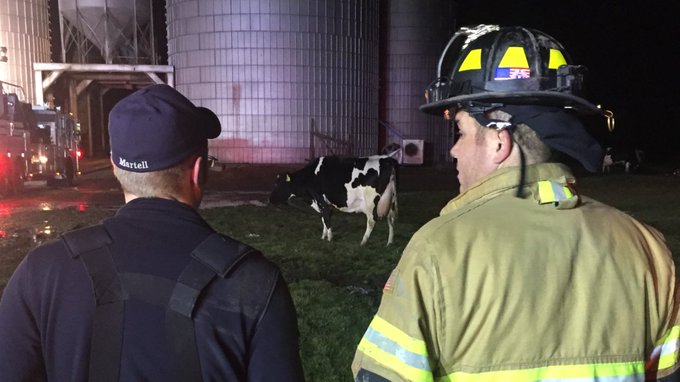
 The refund is part of a class action settlement against dairy producers.
 “America’s dairy farmers are looking forward to working with Secretary of Agriculture-designate Sonny Perdue, whose role as the chief advocate for farmers and rural America is absolutely crucial in the new Trump Administration, especially when milk prices have been in a prolonged slump.
 U.S. President-elect Donald Trump will name former Georgia Governor Sonny
 Holstein Canada’s commitment to young dairy leaders across the country remains evident in the Education awards given annually. The $1,000-Education Awards fall under pillar three of ‘Awards and Recognition’ in the Association’s Young Leader program, and are awarded to up to six exemplary Young Leaders from across the country each year. The Young Leader Committee selected six worthy recipients from a fantastic crop of 2016 applicants. Candidates were evaluated on their farm and work involvement; youth program involvement; career choice; and scholastic achievements. Congratulations to the following six individuals chosen as the 2016 Education Award winners:
 Three passionate, aspiring Holstein Young Breeder (HYB) members have made it into the final selection for the Holstein UK’s President’s Medal. Holstein UK is delighted to announce the finalists as Andrew Patton (Northern Ireland), Mark Robinson (Western) and Andrew Patterson (Shropshire).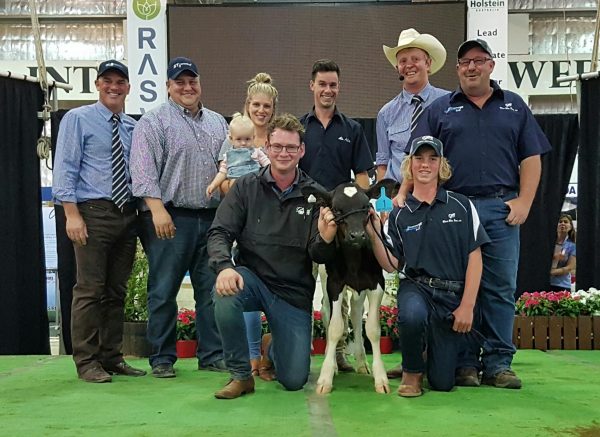
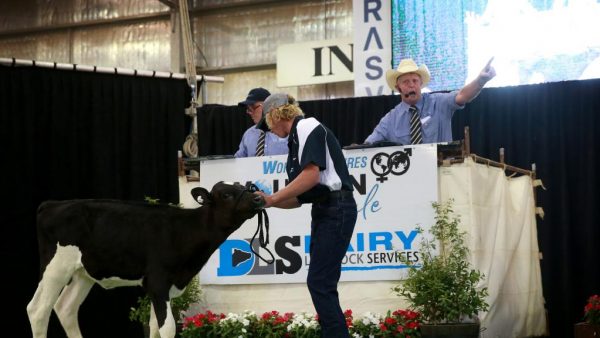

 Dozens of U.S. farm and agri-business groups on Thursday urged President-elect Donald Trump to build upon progress made by the Obama administration in relations with Cuba, calling trade with the former Cold War foe particularly important at a time of a severe downturn in farm incomes.
 A CASH-STRAPPED industry can never be a safe industry – and farming will continue to claim lives as long as it suffers from the full force of the corporate retail sector’s price pressure.
 Farmers have identified product price as the key issue that will impact on their farm enterprise in 2017, according to the IFA barometer of farmer sentiment which is part of the Farm Income Review.
 Americans love their cheese, but maybe not as much as dairy farmers do.
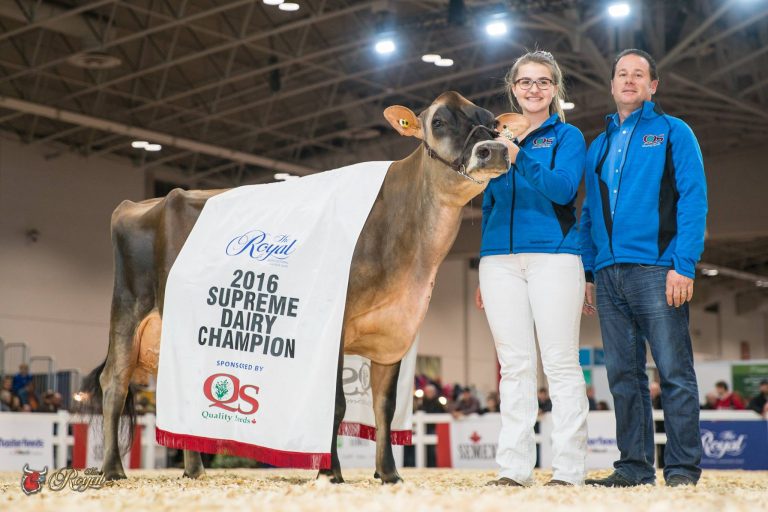 Jersey Canada is pleased to announce the winners of the 2016 All Canadian Contest!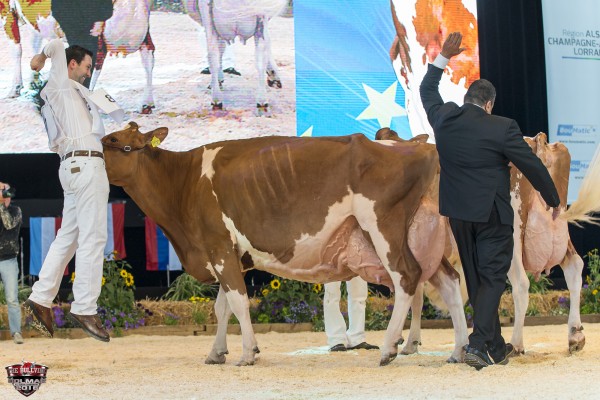
 Pamela Selz-Pralle and her husband, Scott, operate a 400-cow dairy farm in Clark County, Wisconsin. They are both fourth-generation dairy farmers.
 Half a million Dutch dairy cows have a pretty big problem. If the Netherlands can’t find a way to manage the dung they produce, European Union environmental rules mean they will have to be killed.
 Milk may not be a traditional staple in the diet of most Chinese people, and beef has long played a minor role in the mainland diet, too. It’s far behind pork and chicken in the pecking order. But both products are seeing a surge in demand as tastes evolve, exposure to Western cuisine increases, and the middle class wields its wallet. Financiers have begun to take note.

 Livestock genetics innovator STgenetics™ has rolled out a new flagship A.I. product that packs twice the number of sex-sorted sperm cells per straw as its previous products, leading to conception rates that are very close to those achieved using conventional semen. High fertility SexedULTRA 4M™ sex sorted semen boasts 4 million cells per straw. Previous SexedULTRA™ semen straws contained 2.1 million cells per straw. During a field trial in Germany conducted by STgenetics in collaboration with German Genetics International, SexedULTRA 4M™ delivered conception rates comparable to conventional semen packaged at a concentration of 15 million cells per straw over 7,500 inseminations.
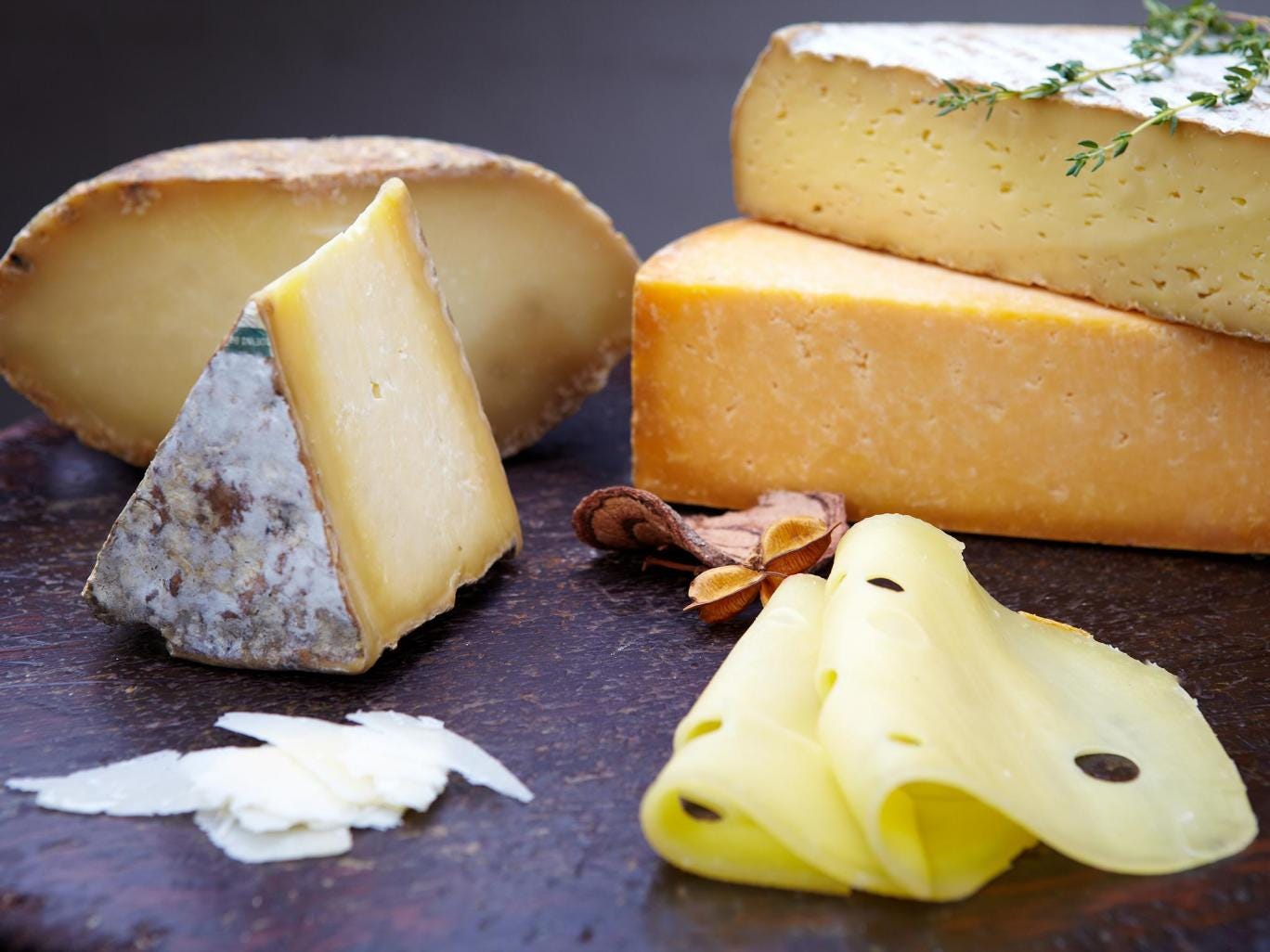 American cheese is so much more than those sticky neon-yellow slices in cheap burgers.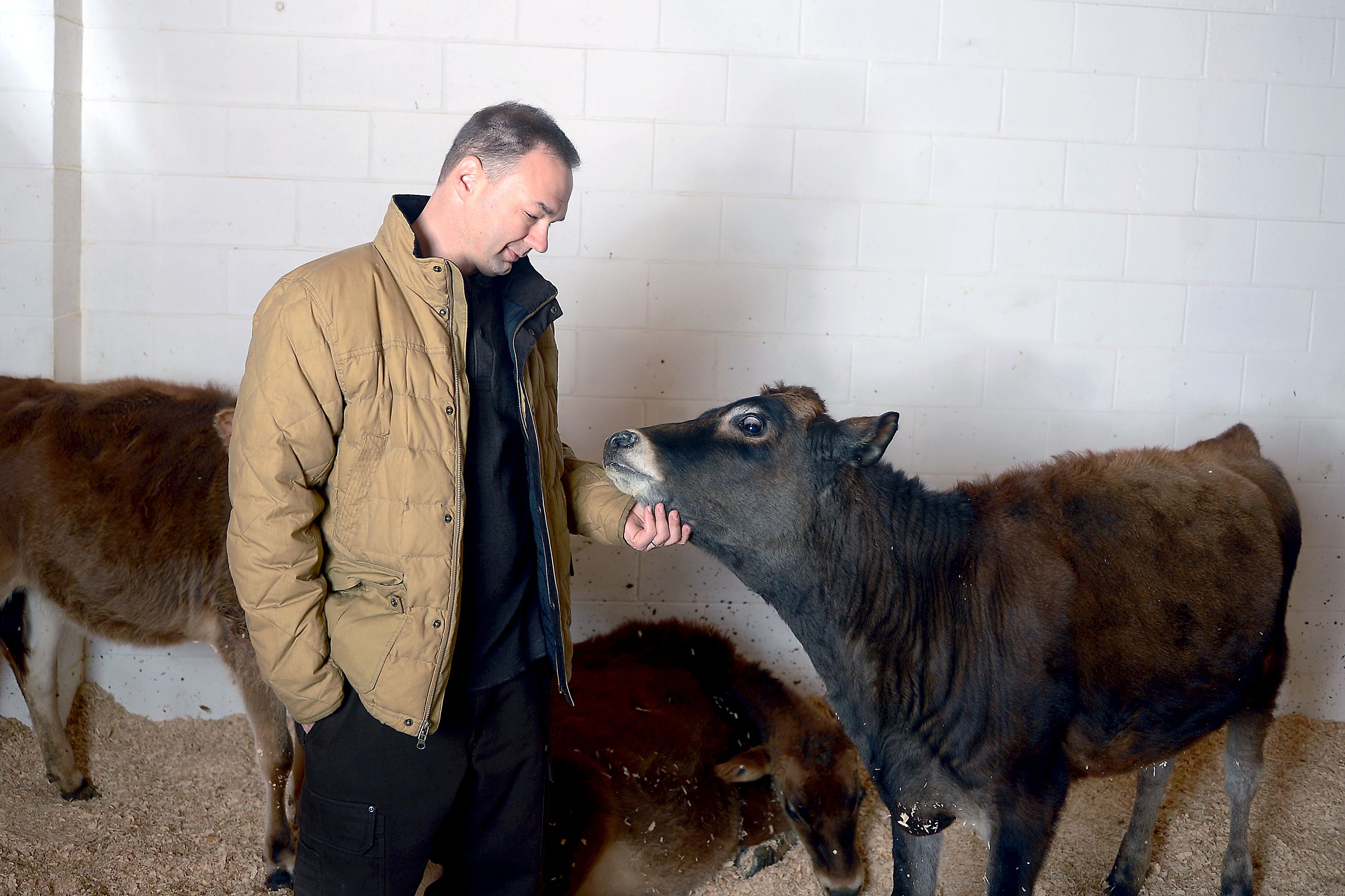
 Holstein Switzerland have announced “5 New” Master Breeder for 2017. The awards recognise and honor the dedication, care and expertise that these breeders bestow upon their cattle and farms and reward a lifetime of hard work and excellence.
 The other day, NPR wrote a
 Manawatu/Rangitikei Federated Farmers sharemilking chairman, Richard McIntyre said it had been a tough three years, but the dairy industry was turning a corner and he was feeling more positive and less stressed.
 It often takes a crisis to catalyse major change. For Gippsland’s Sallie Jones and Steve Ronalds, it took three.
 How desensitization saved our son from an adolescence void of Sweet Cow Ice Cream.
 Six Mexican veterinarians who say they were recruited to work at an



