Archive for News – Page 132

2017 National Guernsey Queen

Guernsey royalty from six different states competed for 2017’s title of National Guernsey Queen at the National Guernsey Convention and 141st Annual Meeting in Saratoga Springs, New York. Lauren Robison of Mulberry Grove, Illinois was named National Guernsey Queen and Ellie Wantland of Niangua, Missouri was named National Guernsey Princess. Both Lauren and Ellie were crowned by the retiring 2016 royalty, Queen Stefani Evers of Oregon and Princess Cara Trotter of Pennsylvania.

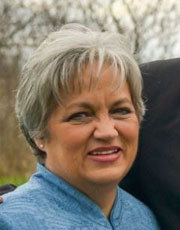
Robison is the 18-year-old daughter to Emily and Kevin Hartmann of Hartdale Guernseys. Her roles on the farm include assisting with feeding calves, vaccinations and other medical treatments, fair cattle entries, and collecting tail samples for A2A2 testing alongside her dad. Robison hopes to continue learning about the breeding and nutrition program her family executes. She is optimistic about genomics data that is gathered and looks forward to future opportunities the Guernsey breed has. Currently, Robison is a student at Kaskaskia College where she is studying Animal Science and Agribusiness. She is also interning with the University of Illinois Extension Service. Robison was heavily involved in 4-H and FFA, and served as Director on the Youth Board for the American Junior Guernsey Association for 2016-2017. She has participated in multiple contests for numerous years at National Guernsey Conventions and has shown her cattle at state and national levels. She received her Illinois State FFA Degree in 2016 and was the recipient of the 4-H Illinois Livestock Scholarship. When asked what the Guernsey breed should emphasize to stay competitive, Lauren wrote, “We need to expand our efforts on A2 to provide a marketing niche for our breeders. We need to look beyond what’s right in front of us and consider what other options we might have to improve our efficiencies. We all need to do our part!”

Wantland is the 17-year-old daughter to Jeff and LeeAnn Wantland of Wantland Farms. Wantland Farms is a third- generation dairy farm that has primarily Holsteins, but is gradually adding Guernseys to their 50-cow herd. Wantland was her high school’s varsity volleyball captain this year and has competed in choir competitions throughout her high school career. She is beginning at Kaskaskia College this fall to study Animal Science. Wantland is a member of 4-H and FFA as well as the Missouri State 4-H Dairy Judging Team. She has had years of experience showing cattle, exhibiting 4-H projects and learning more about the dairy industry. When she isn’t busy showing cows, she travels with a local Guernsey Farm and helps with fitting cows and chores. When asked what the Guernsey breed should emphasize, her response was, “I believe that the Guernsey breed should emphasize high fat and protein milk that the Guernsey cow produces. We could increase the demand for the breed and continue to be competitive in the dairy industry.”

Man dies after being trapped in collapsed silage pile

A half-covered silage pile sat quietly at the edge of Twin View Farm on Friday where a mountainous pile of the fermenting feed collapsed and trapped a man who later died.

On Friday morning, the 30-year-old man worked on top of the corn silage pile, removing the tarp that covered it and the tires that held the tarp in place, said Weld County Sheriff’s Office spokesman Cpl. Matt Turner. He climbed down and went to go pick up the tires when the silage pile collapsed on top of him.

Weld County Sheriff’s deputies responded to the emergency call about 9 a.m. at Twin View Farms near Weld County roads 15 and 38, about 5 miles south of Johnstown.

Deputies found the man unconscious and in pretty bad shape, Turner said. The deputies started tending to the man and emergency responders from Front Range Fire Rescue arrived and began performing CPR.

Emergency responders managed to get the man’s heart beating, but he died later that morning, Turner said.

Turner said the man’s name could not be released until his next of kin were notified. That information along with the exact cause of death will come from the Weld County Coroner’s office.

Silage is often found as a standing pile of fermenting feed. At Twin Valley Farms — like many agricultural operations around Weld County — the silage piles tower, standing at tall as some two-floor buildings covered in white tarps and stretch hundreds of feet.

Representatives of the farm did not wish to comment for this story. Numerous phone calls seeking additional information from Front Range Fire Rescue, which serves Johnstown, Milliken and portions of unincorporated Weld County were not immediately returned.

Source: The Tribune

Dairy farmer seeking more than $6 million in stray voltage suit

A Trempealeau County dairy farmer suing Xcel Energy for more than $6 million will try to convince a jury that stray voltage from the utility’s lines harmed his cattle.

Paul Halderson, who with his wife, Lyn, has almost 1,000 cows on his Galesville farm, claims the herd suffered illness and decreased milk production for more than a decade because of improperly grounded power lines.

The Haldersons filed a suit in 2012 against Northern States Power, a subsidiary of Xcel Energy. The Haldersons are seeking to recoup damages incurred as long ago as 1993 that would be a record award by a Wisconsin jury in a stray voltage case, according to their attorney, Barry Hammarback.

The term stray voltage refers to current that leaks from neutral wires into the earth. Animals that come into contact with a grounded object — such as a watering trough — can receive small shocks. This can cause dairy cattle to avoid eating, become stressed and generally produce less milk, according to research from the U.S. Department of Agriculture.

Wisconsin’s Public Service Commission established guidelines in 1996 for acceptable levels of stray voltage for utility service, although a farm or home’s own wiring can also be the source, said Doug Reinemann, professor and chair of biological systems engineering at the University of Wisconsin-Madison.

“It’s typically some of each,” Reinemann said. “There’s always some coming from each side.”

According to the Haldersons’ suit, NSP found excessive voltage in one of their barns beginning in 1996 but failed to report it. In 2011, the Haldersons hired a consultant who found high levels of electricity and concluded it was coming from the utility’s distribution system.

Halderson, a longtime member of the Gale-Ettrick-Trempealeau school board, claims this led to reduced milk production and the loss of $5.8 million in profits between 2004 and 2011 when Xcel installed equipment designed to reduce stray voltage.

“Until the stray voltage was eliminated, the Haldersons had to deal with the consequences of watching their herd struggle and fail to thrive,” the suit claims that Xcel “left the Haldersons to sit for 15 years when, even under its own guidances, it had data from which it should have concluded that there was a significant stray voltage issue at the dairy.”

Also named in the suit was Star Blends LLC, which the Haldersons said provided bad feed in June 2011 — shortly after Xcel installed equipment to address the stray voltage — that killed some of their cows and left others sick. The Sparta feed company settled out of court for an undisclosed sum.

An Xcel spokeswoman said the company would not comment on pending litigation, but in court documents Xcel counters that the Halderson’s claim “teeters on the false premise that their herd should have produced milk at levels exceeding state and local averages.”

The utility claims “no one detected harmful currents” where cows were present and says Halderson’s problems resulted from his expansion during difficult times for the dairy industry, bad feed, disease, inadequate veterinary care and poor conditions for the cattle.

Arctic View expanded its operation in 2001 and 2005, growing the herd from around 200 cows to more than 900. Xcel says it tested for stray voltage each time new wiring was installed and did not find significant levels.

The case is scheduled for a three-week trial beginning Monday in Trempealeau County Circuit Court.

Reinemann, who has studied the issue for 27 years, said stray voltage lawsuits are rare these days because of state-level efforts to address the problem

“We’ve been working very hard on reducing levels in Wisconsin for over 30 years,” he said. “Wisconsin has put more effort into the stray voltage issue than any other state in the nation.”

The utility claims “no one detected harmful currents” where cows were present and says Halderson’s problems resulted from his expansion during difficult times for the dairy industry, bad feed, disease, inadequate veterinary care and poor conditions for the cattle.


Canada’s New Draft Food Guide Favors Plant-Based Protein and Eliminates Dairy as a Food Group

Last fall, when the Canadian government began consulting the public on its plan to revise national food guidelines, I wrote that the existing food guide had lost all usefulness and credibility because lobbyists and economic concerns, rather than science, had been the driving force behind their structure and content.

I wrote that we don’t need food categories (other countries have done away with them) but if we retain them we absolutely don’t need a milk category, and the “meat and alternatives” category should instead be “protein” that gives due prominence, given their health advantages, to legumes.

Frankly, this was pie-in-the-sky. Despite these suggestions being based on sound nutrition science, I wasn’t optimistic that government would escape the long reach of the animal foods industries that have been effective in maintaining undue prominence in dietary guidelines since the 1940s.

Happily, I was very wrong.

The Canadian government has issued new draft healthy eating recommendations, which would overhaul the antiquated system of food categories—focusing instead on eating patterns—and emphasize the importance of including a “high proportion of plant-based foods.” The milk category is indeed gone in the draft recommendations, and the powerhouse legume has been elevated above animal foods.

The draft food guide’s first, foundational recommendation establishes the importance of whole foods and specifies that plant-based foods (such as legumes) are a preferred source of protein. The recommendation is for “regular intake of vegetables, fruit, whole grains and protein-rich foods, especially plant-based sources of protein.”

The Morning Email

Wake up to the day’s most important news.

The draft guidelines also encourage a shift away from animal foods by advising that people eat foods with unsaturated fat instead of saturated fat (saturated fat is found almost exclusively in animal foods). The recommendation is for the “inclusion of foods that contain mostly unsaturated fat, instead of foods that contain mostly saturated fat.”

There’s no more dairy food group, a win not only for public health but also cultural inclusivity, given that up to 90 percent of some non-European ethnicities are lactose intolerant. It’s also a huge win for the cows who really don’t want us to kill their babies so we can steal their milk. Instead, the guidelines will sensibly advise people to drink water.

The draft guidelines acknowledge that our food system is inextricably linked to our environment, contributing to greenhouse gas emissions, soil degradation, decreases in water quality and availability, and wildlife loss. The draft food guide states that “diets higher in plant-based foods and lower in animal-based foods are associated with a lesser environmental impact.” Expanding our conception of health to include environmental considerations makes sense because our short- and long-term mental and physical health are directly related to the health—or not—of our environment.

The guidelines are based on a comprehensive review of health evidence, considering both quality and source of the information, as well as actual information about Canadians’ eating habits. Industry-commissioned reports were excluded from consideration.

Still, the draft guidelines are not without concerns. Industry and economic influences linger. For example, in the first guiding principle—after acknowledging up-front the healthfulness of plant-based foods—an unnecessary non-sequitur sentence talks about the nutritive value of animal foods. And it is recommended that people “limit”—rather than “avoid”—saturated fat, even though this unhealthy form of primarily animal fat is linked to a variety of preventable lifestyle diseases.

Nevertheless, these draft guidelines are a dramatic improvement, putting Canada alongside Brazil as a world leader in taking back our eating recommendations from industry and promoting evidence-based eating patterns to benefit our health and planet.

This food guide hasn’t been finalized yet, so now is a critical time to participate by saying what you like (and don’t like) about the draft. Industry is already organizing and lobbying, trying to unfairly retain its foothold at the expense of our health. We need our voices to be equally loud.

Source: Huffington Post

Reese enjoys new chapter of life

Reese Burdette was up at 5:30 Tuesday morning to get her cows ready for the 4-H Dairy Round-up at the Franklin County Fair.

“I am not a morning person. One day I slept til lunchtime,” the 10-year-old observed.

“She’s just a normal kid,” said her mother, Claire. “She doesn’t even know she has challenges.”

Three years ago over Memorial Day weekend, the Mercersburg youngster was seriously burned and suffered smoke inhalation in a house fire.

In July 2014, the dairy show at the Franklin County Fair was dedicated to Reese and her grandmother, Patricia Stiles, who also was injured in the fire. There was a moment of silence for positive thoughts and prayer dedicated to Reese when news struck that she wasn’t doing so well.

In March 2016, after 662 days at Johns Hopkins, Reese’s homecoming was greeted by cheering crowds lining the streets of Mercersburg. Two days earlier, her favorite cow, Pantene, gave birth to Pardi Gras, one of two cows she is showing this week at the fair.

“It’s great to be at the fair, seeing her interacting her friends,” Claire Burdette said. “It’s a great comparison from last year when she was in a wheel chair and on oxygen.”

“I like taking care of my cows and showing them,” Reese said as she smiled, bee-bopped around the barn and got ready to change into her white competition clothes. “I’m happy to be back here.”

Reese is a member of the Western 4-H Dairy Club, but members come from all over the county, according to Robert Eckstine, who leads the club with Jamie Hartman and Shani Ferguson.

Erika Cauffman, 19, lives in the Quincy area and joined the club last year. Her friend, Quinn Cashell, 24, has been involved with 4-H her whole life. Quinn knew Erika was interested in agriculture and thought 4-H would be a good fit.

Erika is majoring in ag business management at Penn State and plans to minor in agronomy. Her family owns farmland, but rents it to the neighboring farmer.

“I see cows every day,” said the 2016 graduate of Waynesboro Area Senior High School. The family of her boyfriend, Logan Moon, is involved in farming.

At the fair, she is showing her own cow, Jess, a red and white Holstein, and Fate, a black and white Holstein, on loan from Quinn.

The Greencastle-Antrim 4-H Dairy Club also has members beyond the geography of its name.

“We have herds from south of Waynesboro to Dry Run and Newburg and everywhere in between,” said Dr. Daniel Oliver, who leads the club with Lucy Crider and Emily Wingert.

Linda Steck was in the G-A barn with her grandchildren, Hallie and Gary Steck, on Tuesday. On Wednesday she will be in Hershey when their father, Mark, receives the award for South-Central Pennsylvania Conservation Farmer of the Year.

“I’m really proud of him. My husband died 21 years ago and Mark took over the farm at 19,” she said.

He earned the award last year at the county level for work done at the family’s Green Valley Farm in Dry Run, including the installation of a manure pit.

Dealing with manure is a big part of farming and Kaleb Keefer, 10, of Greencastle, said his brother, Brandon, 8, “likes taking poop to the manure spreader.”

Their parents, Melissa and Barron, own Valley View Farms near Greencastle, Kaleb is showing two cows, Jill and Leeza, but Brandon’s cow came down with pink eye and could not go to the fair.

Brandon said he is disappointed and Kaleb said, “My brother might show Jill in the open show (Thursday night).”

Source: The Record Herald

EU Free Trade Deal Likely to Hurt Japan’s Dairy Farmers

The economic partnership agreement between the European Union and Japan comes as a corrective to the rising wave of protectionism in the United States and Britain but could deal a blow to Japanese dairy farmers and wineries, experts say.

Japan and the EU reached a broad agreement on the free trade deal last week to start abolishing or reducing tariffs on food and industrial goods as soon as early 2019.

Under the pact, Japan will set a low-tariff import quota of 20,000 tons on European soft cheeses such as Camembert and mozzarella in the first year and lift the tariff entirely for up to 31,000 tons after 15 years. Japan currently imposes a 29.8 per cent tariff on cheese.

Tariffs on other products such as European wine will be eliminated immediately, while levies on pasta and chocolate are slated for a more gradual removal period stretching about 10 years.

In exchange, the EU will bring tariffs on Japanese cars down from 10 per cent to zero over seven years, reports The Japan Times.

The Foreign Ministry believes signing the economic partnership agreement (EPA) with the EU will establish “one of the world’s largest free and advanced economy zones,” accounting for about 28 per cent of global GDP.

The ministry also said signing the EPA amid rising protectionism will send a “strong message to the world” that the two parties will become “the standard bearer of free trade.”

Kunihiko Miyake, a research director at the Canon Institute of Global Studies and a former diplomat, evaluated the accord as a “significant step forward” for Japan and the EU in sending a signal to the increasingly protectionist US and Britain.

“As uncertainty stemming from the protectionism in US and Britain spreads… I believe the move will send the message that Japan and EU will lead the global momentum toward free trade,” Mr Miyake said.

But the deal could significantly hurt domestic industries — in particular, dairy farmers producing raw milk for cheese products, said Yasufumi Miwa, a senior economist at the Japan Research Institute Ltd. who specializes in the domestic food industry.

Although the agreement should boost domestic consumption of cheese and wine, it will introduce competition with high-quality European products, Miwa said, drawing a comparison to the potential impact on farmers from the Trans-Pacific Partnership.

Currently, the TPP is languishing since President Donald Trump signed an order in January to withdraw the United States from the 12-party pact.

When Japan signed the TPP, rice farmers were worried that cheap imports would eat away at the market for rice used in processed foods but were less concerned about direct competition for domestic rice, which tends to be of higher quality than foreign-grown, he said.

“But the quality of European cheese and wine is usually as good as or even better than that produced in Japan,” he said, adding that the competition with high-quality European products will hurt the sales of domestic cheese and wine brands.

Domestic dairy farmers and wine producers will have less of a buffer against these risks compared with rice farmers, who were afforded guarantees when the government signed the TPP.

When Japan agreed to join the TPP in 2015, the government declared that it would buy up the same amount of domestically grown rice as the volume of the zero-tariff import quota for stockpiling, in order to protect local farmers from price drops.

Miwa said that behind the government’s rather “hasty” deal with Europe may be an urgent desire to make up for the overall slowing-down of international free trade deals.

“When it comes to bilateral free trade accords, Japan is behind other countries like South Korea. From the manufacturing industry’s standpoint, I think Japan certainly needs to put trade deals like EPAs in effect promptly so as to overcome the handicap,” he said.

“Some experts say that it is still too early to evaluate the deal as few details have become clear, while others view it negatively” if no measures to protect domestic farmers will be taken, he said.

Mr Miyake of the Canon Institute also warned that reaching the broad agreement doesn’t necessarily mean the process for finalizing the deal will be as smooth as planned.

“There are still many points where the two parties need to find a compromise,” he said.

“You have to keep in mind that the devil is always in the details.”

Source: The Dairy Site

Qatar’s First Shipment of Air-Lifted Cows Lands in Doha

The first batch of an anticipated 4,000 dairy cows was flown into Qatar Tuesday, five weeks after the start of a Saudi Arabia-led boycott of the Gulf country.

A shipment of 165 cows, sourced from Germany and flying via Budapest, are ready to produce milk immediately and the product should reach local markets this week, according to a spokesman for Power International Holding, which is importing the animals.

Other shipments will include cows from Australia and the U.S., and should arrive every three days, the company spokesman said Tuesday. In total, the bovine airlift is expected to bring in the 4,000 cows within about a month.

Led by Saudi Arabia, Qatar has been accused of supporting Islamic militants, charges the sheikdom has repeatedly denied. The boycott that started on June 5 has disrupted trade, split families and threatened to alter long-standing geopolitical alliances. The showdown has forced the world’s richest country per capita to open new trade routes to bring in food, building materials and equipment for its natural gas industry.

As part of its response, Qatar has imported Turkish dairy goods along with Peruvian and Moroccan fruit.

Until last month, most of the fresh milk and dairy products for Qatar’s population of 2.7 million was imported from Saudi Arabia. When all the cows purchased by Power International Chairman Moutaz Al Khayyat are flown in, his brand of milk will supply about 30 percent of the country’s needs, he said in an interview last month.


Source: Bloomberg

Russia may Curb Dairy Imports from N.Zealand, Turkey

Russia’s agriculture safety watchdog Rosselkhoznadzor said on Wednesday it could limit dairy product imports from New Zealand and Turkey due to quality violations, RIA news agency reported. 

Source: Reuters

Prisoners learn dairy skills

A Wisconsin prison education program that trains inmates for farm work has its first graduates. Eight men just graduated from the first Dairy Worker Training Certificate program that is offered to inmates. Moraine Park Technical College offers the two-credit certificate in milking, feeding, calf care, and cow reproduction. The training is designed to help the graduates get jobs after serving time, or they can transfer the credits and continue their dairy education.

Sixty inmates work every day at one of five Department of Corrections facilities. The state-owned farms milk more than 500 cows and supply dairy products to the University of WWisconsin-Madison and to prisons in Wisconsin and Minnesota.

State Representative Michael Schraa says, “Matching capable employees with available jobs is certainly a good thing for the dairy industry, and finding steady employment is an even better thing for ex-offenders who will be re-entering the workforce.”

Source: Brownfield

Heat Wave Could Impact Butter Production

California is the largest milk producing state, representing 20 percent of U.S. milk production every year. The Central Valley has nearly 1.5 million dairy cows and one of the highest concentrations of livestock in the nation, Figure 1. The Central Valley has faced some extreme heat already this year, with nine days in June over 100 degrees. The historical average daily temperature in the Central Valley is 87 degrees, with a record of 111 degrees. This year, the temperature averaged 91 degrees and peaked at 109 degrees. July is typically the warmest month for this region, averaging a high of 95 degrees.  However, the first seven days of July shows this could be an unusually warm month as well. Temperatures were between 97 and 101 degrees July 1-7, with daily forecasts for the next two weeks all above 100 degrees. Figure 2 shows the three-month outlook from the Climate Prediction Center.


Milk production takes a significant hit during times of high heat due to animal stress.  However, it’s not just yields that will be affected.  Extreme heat can reduce component levels and affect downstream processing by changing the yield in dairy products such as butter and cheese.

California is home to 14 of the 86 butter production facilities in the U.S.  These butter facilities produce over 30 percent of the nation’s butter production on an annual basis, averaging about 603 million pounds per year. Butter contains at least 80 percent milkfat and the remainder is water, protein and salt.  Because of this heavy milkfat component, yield per pound of milk is highly dependent on the milkfat content.  The rule of thumb is 1 pound of butter takes about 21 pounds of whole milk.  U.S. milkfat has been climbing steadily higher as components have become a larger and larger piece of the dairy complex.  Figure 3 shows the trend line of higher milk fat content over time as well as the seasonality.


Milkfat can be affected by many factors, including weather, nutrition and genetic variability.  The seasonality alone on average varies 7 percent from the depths of summer to the highest point in December.  California milkfat has been running high this year, about 1 percent above last year. However, data has been released only through May. June data, which should show the impact of the hot weather, will be released July 31, 2017, by USDA’s National Agricultural Statistics Service. Figure 4 shows California’s milkfat relative to last year and the five year average.


The direct impact heat has on butter production may be difficult to tease out, because California butter plants have been producing less butter this year anyway.  Year-to-date, California has produced 6 percent less butter through May, while New York is up 2 percent, Pennsylvania, up 1 percent and other states increased 1 percent. California is also entering into the seasonal low for butter production.  In addition, cheese production has increased slightly this year, up about half a percent year to date.  If milk components take a big hit in June, its likely cheese production will also be affected.  Lower yields on dairy products could prop up the demand for whole milk as it will take larger quantities to produce the same amount of cheese or butter.  However, let’s not bet the farm that higher milk prices will follow.  Butter and cheese inventories are still at fairy higher levels on a historical basis and exports have dragged notably in the butter complex this year.  Total U.S. butter exports through May are down 25 percent, and although cheese exports are up 22 percent, this heat wave is largely regional.  California produces a much larger proportion of butter than cheese relative to the national picture.  Cheese production in California is about 8 percent of national production annually. 

Source: Farm Bureau

German Cows to Be Flown to Qatar to Meet Dairy Demand

A business entrepreneur tackles dairy demand by airlifting 4,000 cows to the desert nation.

A herd of 140 German cows will be flown to Qatar this week to help the country meet its dairy demand as it struggles under the Saudi-led blockade.

The first shipment of cattle will be followed by additional flights over the next few days, with over 4,000 cows from Germany, Australia, and the U.S. expected to arrive by the end of this week.

Given Qatar’s desert climate, with daily temperatures reaching at least 114 degrees Fahrenheit (46 degrees Celsius), and lack of grazing pasture, the cows will be kept in air-conditioned hangars in the desert.

The complete delivery is expected to take 60 flights and will hit the records books as the biggest airlift of livestock ever attempted.

The initiative comes as Qatar vows to ride out the isolation imposed on it by fellow Arab states.

Until recently, the middle eastern country imported 90 percent of its food, keeping only two days worth of water in reserve. With neighboring countries closing their borders, Qatar has been forced to look for new food sources, depending heavily on its Turkish and Iranian allies for the majority of its resources.

The plan to airlift cows was developed by Moutaz al-Khayyat, a businessman and the chairman of Power International Holding, who says he hopes it will help Qatar become a self-sustaining producer in the dairy industry.

Al- Khayyat originally came up with his plan years ago, but due to the current situation, he decided to accelerate the initiative.

“The crisis is giving new opportunities for local businessmen to increase their business and open up new lines of work,” he said.

In an interview with The Sunday Telegraph, Qatar’s Ambassador to Moscow, Fahad al Attiyah compared the initiative to the Berlin airlift of 1948, when West Berlin broke the Soviet blockade with a brigade of supply flights soaring in from Tempelhof airport.

“The point the Western world wanted to make was: we will make Berlin survive despite the siege that it faces,” he said. “It’s not practicality or pragmatism, it’s about ideology. If the price of Qatar’s independence is to airlift every single pint of milk then we will do so.”

Despite the loss of its trade partners, the small country home to a rich natural gas reserve as well as America’s biggest military base in the Middle East is standing strong developing its relationships with outside countries.


Source: Telesur

Heat wave leads to the deaths of thousands of cows; Fresno County rendering plant says they can’t keep up

Despite efforts to keep cows cool during last month’s Valley heat wave the dairy industry still suffered big losses. Close to 10,000 animals died during the hot spell. So many the Baker Commodities Rendering Plant in Kerman was overwhelmed. It could not take on any more cows due to the large number of carcasses and mechanical issues.

“The capacity of the plant is about a million pounds a day, and due to the heat losses because to the night time temperatures, incoming to the plant increased about a million and a half pounds,” said Les Wright, AG Commissioner.

In a special meeting Fresno County Supervisors voted to extend a local emergency which was declared on June 30th. The decision allows dairy operators to compost or bury carcasses on the farm until Baker Commodities can catch up to the recent spike in cow deaths.

“As of last week they had actually stopped picking up the animals because they had nowhere to physically put them on their property,” said Brian Pacheco, Supervisor.

Pacheco is a dairy owner– he said the afternoon highs don’t always pose the biggest problems to very young and very old cows.

“What happened during the heat wave is when the night-time temperatures didn’t get below 80 degrees it causes severe hardship.”

The Valley is in the middle of another heat wave, though Wright doesn’t believe dairies will be hit as hard.

“I think the night-time temperatures in this next heat event are going to be in the low to mid 70’s, so our losses are going to be considerably less.”

Wright said local dairies typically see a three-percent loss of animals each year due to the summer heat. But one woman at the special meeting felt the average number was too high.

“I think it’s criminal that 7,500 is a typical loss and 10,000 is a little too much, and now we have to deal with how to deal the carcasses,” said Debby Martsolf, Fresno.

Dairy cow deaths due to the high heat have been reported all around the state.

Baker Commodities is expected to resume full rendering operations on Friday and county officials hope to lift the emergency declaration at the next Board of Supervisors meeting– that meeting is scheduled for next Tuesday.

The back-up at Baker Commodities is being felt valley-wide– on Thursday Tulare County Supervisors declared an emergency due to heat-related livestock deaths.

The declaration also allows South Valley dairies to use alternative disposal methods.

Source: ABC30

Caveats placed on $10m Brighton mansion owned by dairy tsar Antonio Esposito

It’s the $10 million Brighton mansion as bold and brash as its owner, with a spiral staircase, grand piano, chandeliers and a swimming pool.

But the trophy home of fallen dairy tsar Antonio Esposito also has another, less desirable, feature: two caveats on the title.

Mr Esposito’s National Dairy Products went into liquidation in February, owing creditors – many of them dairy farmers – as much as $6.8 million.

The seven-bedroom Kinane Street property, barely a squint through designer sunglasses from Brighton’s famed bathing boxes, was the perfect backdrop for an advertising campaign featuring television personality Matt Preston, wearing a lilac blazer and matching cravat, launched last year

Once, the mansion signified Mr Esposito’s success, first as the founder of United Dairy Power, which he sold to a Hong Kong-based company for $70 million, and then as the founder of National Dairy Products.

Now, it is a sign of how many people want a piece of him.

And the caveats are not even related to the collapse of NDP, meaning dairy farmers could be left without a cut of the profits should Mr Esposito sell. 

Mr Esposito has come out swinging, saying he would welcome a public hearing into NDP, denying any wrongdoing and claiming dairy farmers have been lied to by the former management of the company.

The first caveat on the Brighton mansion was lodged by Mr Esposito’s ex-wife in April.

The second was lodged earlier this month by the current owners of UDP, who claim Mr Esposito misled them about the value of the company when they purchased it in 2014.

It is understood lawyers for Mr Esposito’s ex-wife, Margaret, who he separated from several years ago, claim an interest in the property as part of ongoing separation proceedings. Mr Esposito remains married to Violetta, who was a director of NDP.

Lawyers for William Hui, the owner of UDP, registered an interest because there is evidence the mansion was funded from the sale.

Mr Esposito and Mr Hui are locked in a dispute about the sale of UDP, with both parties making claims against the other.

Creditors of NDP are questioning why a caveat has not been put on the Brighton mansion on their behalf.

The dairy farmers are troubled by Mr Esposito’s champagne lifestyle, which includes spending summers on his yacht on the Gold Coast, and his lavish parties, including his daughter’s christening, which featured a performance from Delta Goodrem.

But it is believed liquidator Deloitte Australia are yet to find evidence that links the Brighton property to withdrawals Mr Esposito made from NDP, meaning a caveat cannot be placed on behalf of creditors.

The collapse of NDP led to widespread fears he duped dozens of dairy farmers.

“How are we going to get a piece of it when it’s already being carved up?” one NDP creditor said.

Mr Esposito, a dairy broker, essentially acted as a middleman, buying milk directly from farmers, which he then on-sold to the producers of dairy products.

He denies he acted inappropriately, saying it was common practice for a business owner to withdraw cash from a company when they could, and repay it when the company needed it.

“My intention was never to shut any business, and I want to get to the bottom of why it happened,” he said.

“I’d rather a public inquiry into what’s happened so everyone knows.”

Mr Esposito said he was pursuing defamation action against former chief executive of NDP, Darryl Cardona​, who has taken out a court order preventing Mr Esposito from contacting him.

Mr Esposito sent abusive texts to Mr Cardona, who has been outspoken about the conduct of his former boss.

Source: The Age

Holstein Association USA Recognizes Jerry Strandlund with the 2017 Distinguished Leadership Award

Jerry Strandlund, Bellingham, Wash. was recognized with the 2017 Distinguished Leadership Award during the 2017 National Holstein Convention banquet on July 1 in Belleuve, Wash. A lifelong servant to the dairy industry, Jerry has devoted a great deal of time and energy to promoting the Holstein breed and providing opportunities for Holstein breeders.

Jerry, born and raised on his parents’ dairy farm in Mora, Minn., grew up milking 19 cows. Jerry attended the University of Minnesota and completed the Herdsman Short Course. He continued his undergraduate studies and in 1962 he graduated with a degree in Animal Husbandry. 

Diligent about broadening his horizons in the purebred dairy industry, he gained insight in the Registered Holstein® business by completing internships with notable herds such as, Carnation, Pinehurst, Pineyhill and Elmwood Farms. After graduating from college, Jerry went to work for Mor-Ayr Ayrshire Farm, where he mated the highest classified Ayrshire ever at that farm. 

In 1967, the National Holstein Association hired Jerry as a fieldman. Covering seven Pacific Northwest states, he kept busy traveling between farm visits, shows, sales, and meetings. After moving to Washington, Jerry began working as the marketing manager for All West Breeders. He created a successful marketing campaign by developing the “Family Album” sire directory. He also was instrumental in the “One Jump Ahead” advertisements, a campaign that put All West Breeders on the map and is still used today. 

After four years with All West Breeders, Jerry started Bovagraph, a cattle photography business. Jerry merged his cattle photography business with his love of advertising and took over the quarterly newspaper, Northwest Holstein News. Today, Jerry publishes an inclusive directory called the Northwest Holstein Annual which covers the six states of Colorado, Idaho, Montana, Oregon, Utah, and Washington, along with one Canadian providence, British Columbia.

As editor of the Northwest Holstein News for over 40 years, Jerry has been an integral part of many events. His desire for breeders to succeed is evident in each quarterly and annual publication.

During the past 35 years, he hasn’t missed a single Western Spring National Holstein Show in Richmond, Utah. He has regularly attended the Washington, Oregon, and Idaho state shows and sales, volunteering his time to photograph the class winners. 

Jerry’s commitment to the future of the dairy industry and continually lending his time and expertise for the benefit of our industry make him deserving of this honor. By always putting the good of the cause above his own personal benefit, Jerry has ensured his legacy will be lasting. 

Be aware of indicators of farmer suicide

A farmer ended his life by suicide recently, which raised questions about his and other farmers’ self-destructive behavior. He became financially pressured over the past three “down” years, much like he experienced a dozen years ago. Now he was being forced to sell either land, livestock or farming equipment in order to make overdue farm loan payments.

The farmer forbade his wife and their children — all adults, to contact legal authorities to require him to seek professional behavioral healthcare. He refused to share his economic and emotional plight with his siblings, his mother (his father is deceased) and neighboring farmers.


He told his wife and children that he would “figure out something” and persuaded them “to give him some time.” Two weeks after his family reluctantly agreed to his request, the farmer ended his life with his shotgun in a barn on their farmstead.

Today we follow up last week’s article about why the suicide rate of farmers is the highest of any occupation.

The agrarian imperative theory, as last week’s article explained, postulates that people engaged in farming have a strong urge to supply essentials for human life such as food and materials for clothing, shelter and fuel, and to hang onto their land and other resources needed to produce these goods at all costs.

The theory also suggests that when agricultural producers are unable to supply these requisites, they feel they are letting down those who depend on them, foremost — their families and communities, and all consumers as well. That’s when some farmers undertake what they may feel is their last alternative: to hold themselves responsible for their failure, even if it means taking their own lives.

The agrarian imperative theory is a plausible explanation of the motivations of farmers to be agricultural producers and to sometimes end their lives. There are additional questions that are fundamental to addressing the persistent problem of suicide by farmers and what can be done to prevent it, such as the following:

• What are signs of suicide by farm producers that most people don’t pay attention to?

• What are the best means of preventing suicide by farmers?

• What resources are available or need to be developed to assist suicidal farmers, their families, and other concerned people?

• What hampers the development of these resources?

There are observable signs of severe financial and emotional distress among farmers — if we pay attention:

• Verbalizations by farmers about hopelessness, such as “I feel like giving up because nothing I try works.”

• Persistent loss of interest, laughter and pleasure in anything for days on end, and grim statements like, “Nothing is fun anymore.”

• Threats, such as “I’ll get even, if it’s the last thing I do.”

• Avoiding social and public events such as church, their children’s activities and meetings.

• Flat emotional expression for days on end that is atypical of the farmer.

• Deterioration in the appearance of the farm, machinery, or livestock health that the farmer would usually not allow.

• Decline in the farmer’s usual personal appearance such as disheveled clothes, sallow complexion, weight loss, etc.

• Mention of feeling worried, distressed, difficulty sleeping, or no sleep for two or more successive nights.

• Acknowledgement of “having a lump in my throat, but I can’t cry.”

• Inability to undertake expected farm activities, such as harvesting crops when the weather is suitable, and difficulty making important decisions.

• Recognition that too many major stressors are occurring simultaneously, such as multiple livestock deaths, pressing debts, natural disasters such as drought or tornadoes, losses of key supports such as a parent or long-term employee, etc. Most farmers can manage two simultaneous stressors, but three or more may push them beyond their coping capacity.

In my experience — and research findings agree, the first three and the last four signs are particularly important indicators of possible suicidal deliberation. Unfortunately, those who know best aren’t around to tell us.

There also are farming practices and physical health cues that farmers and the people around them should pay attention to, including these:

• Has the farmer been exposed recently and/or repeatedly during previous occasions to farm chemicals that affect the nervous system?

• Certain insecticides are among the most hazardous farm chemicals; they are designed to kill insects by altering the synapses of their nervous system (synapses are the spaces between nerve cells that are filled with substances that regulate nerve signal transmission); they overstimulate the insects’ nervous systems and have the same effect on humans.

• Other substances used on farms can also enhance undesirable neuropsychological changes, such as certain fumes, veterinary treatments for parasites, herbicides and fungicides.

• Dust in grain bins, animal facilities and sometimes during harvest operations can harm pulmonary functioning among working farmers that may limit oxygen intake and lead to neurological compromise.

Next week’s column includes an interview with a farmer who has often considered suicide, as well as interventions to reduce farmer suicide, and useful supports for families.

Source: AgWeekly

How to get those tough and tender transition conversations started

Young farmers frequently ask me: “Elaine, how do we get the conversation about changes on the farm started?”

There is a longing look in their eyes, sometimes tears as they seek out help to talk to their parents about key issues the farm team know they need to address. Perhaps the younger generation is not speaking out due to a sense of respect for their parents. This could be partly true. I see many well-educated thirty–something skilled young farmers who are super frustrated that their dreams are not turning into profitable executed goals.

So where do we start?

1. Show up as adults. You are young, but skilled. Know that your parents are having sleepless nights rolling over scenarios in their heads that they just can’t sort out. Behave well as responsible adults. Choose to attack the issues, not the person delivering the ideas for change.

2. Understand that transition is a journey, like putting a large puzzle together with many pieces. Patience is a virtue here. If you get ticked at your slow Internet connection, you are likely not happy with pace of change on your farm either. There are many vital plans to address: lifestyle, incomestreams, debt servicing, farm business viability, fairness to non-farm heirs, etc. Don’t let the anxiety of not knowing the plan or your sense of overwhelm keep you stuck. How is your attitude about doing the work required to meet with several different kinds of professionals? Are you willing to drive the process? Are you gracious and positive?

3. Spend some quiet time with yourself. Yes, in silence, thinking. Reflect deeply on what you really want to accomplish with your life, and with your conversations. What is your intent? If you intend to be a bully, be manipulative, be dramatic or threatening, the conversations for change are not going to work out well. When you get clear about your expectations, then you are ready to start communicating them to your spouse and to your far team. Text to 1-855- 969-5300 and include “whatIwant” (yes, as one word) in the message line to receive a tool to help you do some hardcore reflecting.

4. Engage your spouse/or partner to see what they want. Make sure you listen and paraphrase back to them what you think you heard them say. Many farm founders are avoiding the transition conversation because as a couple they are not agreed on what they can live with together. Mom and Dad may be fighting or tense with goals that just don’t align for the same purpose.

For instance, Dad is happy to “keep being the hired man (employee)” but Mom is bent on travelling lots and leaving the main yard’s action. She wants a quieter pace, and Dad is energized to keep showing up at the shop at 8. The incidence of “grey” divorce is increasing. Divorce will really wreck havoc, so pay attention to goals and dreams that are being squished.

5. Brush up on your conflict resolution skills. Embrace courageous conversations as a business risk management tool. You can find my webinars on “Better Family Fights” at www.agri-webinar.com. Use eye contact. Ask permission with the other person to make sure it is a good time to talk. Write out your key points on paper or notes in your phone if you think you need a script to stay on track. Make requests, say “may I make a request, I have some important things to discuss, and I wonder when is a good time for you, on Tuesday after lunch?” Share your intent, your big “why”, this is so important for you to get out in the open.

6. Know that you are not alone. Over 120,000 farms need to transition in Canada. The average age of a farmer in Canada is 54. I know a lot who are 66, 75, and 83 who are still avoiding starting the conversation about changes in management and ownership. I call this the tsunami of agriculture. Now that you know that you are not the only one on the prairies, use this insight to bolster your courage and resolve to start asking the rest of your farm team for the changes you and your family need. You are getting older every day. At age 40 you will no longer qualify for young farmer programs and loan rebates. At age 40 you will also feel lots of resentment if you have not had a plan or access path to build some of your own equity.

7. Visit your lender of choice. Before you start talking about opportunities for equity or ownership you have to be comfortable with debt, and have the ability to service it. Know what your current net worth is, and how much debt you can service. It gives you data to talk to your parents about the reality of how much debt you are able to manage. It also shines a light on your living costs, which are way more than $30,000 per year. Do you know what you need to keep the family living equation happy? Do you want debt?

8. Build your tribe of support. This might be other young farmers who have succeeded with their transition experience. They can be a huge emotional support to you. Read every blog that I have written to encourage you, and give you practical skills to ask for what you and your family needs now.

9. Use great expertise. Consider a facilitator or coach for the process. Visit Cafanet to see who is available in your province. Sign up for GetFarm Transition Unstuck

You can do this. Get going now.

Source: Grain News

Holstein Youth Excel During 2017 National Junior Holstein Convention Competitions

Holstein Association USA recognized Junior members in Bellevue, Wash. for their participation in a variety of activities during the 2017 National Holstein Convention. Over 400 Holstein Junior members competed in contests and participated in various other activities. All contests are designed to help youth develop skills that will benefit them in future endeavors, and showcases their talents on a national stage.
Prepared Public Speaking 

Broken into three age divisions, 52 youth participated in the prepared public speaking competition. Following are the results from each division.

Junior Division (ages 9 through 13 years)

1st place: Julia Heijkoop, Florida 
2nd place: Shelby Sumner, Florida 
3rd place: Clancey Krahn, Oregon

Intermediate Division (ages 14 through 17 years)

1st place: Brianna Meyer, Wisconsin 
2nd place: Danielle Herrick, New York 
3rd place: Gracelyn Krahn, Oregon

Senior Division (ages 18 through 21 years)

1st place: Lora Wright, Missouri 
2nd place: Brock Irwin, Illinois 
3rd place: Ariel Staffin, New Jersey 

Folding Display Contest 
Forty entries were submitted in this year’s Folding Display competition. Participants create a free-standing display educating people about a dairy industry-related topic of their choice. Youth are divided into three age divisions, and each division has two categories – Scientific and Creative. Junior Holstein members are not required to attend the National Convention to enter a display and compete in this contest. Following are the results for each category.

Creative Division – Junior
1st place: Danica Rupard, Washington 
2nd place: Sarah Craun, Virginia 
3rd place: Jenna Larson, Florida 

Scientific Division – Junior 
1st place: Makenna Mase, Pennsylvania 
2nd place: Rachel Craun, Virginia 
3rd place: Shelby Sumner, Florida

Creative Division – Intermediate

1st place: Mycai Brooks, North Carolina 
2nd place: Anna Teachman, Washington 
3rd place: Molly O’Sullivan, New Jersey 

Scientific Division – Intermediate

1st place: Cole Verano, Florida 
2nd place: Barlie Schultz, Washington 
3rd place: Kara Teachman, Washington

Creative Division – Senior
1st place: Courtney Moser, Wisconsin 
2nd place: Nicole Buell, Washington 
3rd place: Elizabeth Acel, Pennsylvania 

Scientific Division – Senior
1st place: Marcy Bartelheimer, Washington 
2nd place: Katelyn Neff, Pennsylvania

State Scrapbook 
The state scrapbook contest gives each state the chance to tell the story of activities and events their Junior Holstein associations take part in each year. Eight states submitted traditional scrapbooks this year.

1st place: Illinois 
2nd place: Pennsylvania 
3rd place: New England 
4th place: Iowa 
5th place: Washington 

Digital State Scrapbook
The Digital Scrapbook division had 11 entries submitted this year. This division is judged on the same criteria as a traditional scrapbook, but entries must be presented on a computer, DVD player, or other digital format.

1st place: Florida 
2nd place: New England 
3rd place: Ohio 
4th place: New York 
5th place: Illinois 

State Banner 
The state banner competition allows states to creatively showcase their state pride, with eight entries submitted this year, displayed throughout the week at the Convention.

1st place: Missouri 
2nd place: Michigan 
3rd place: Washington

NHWSO Awards Scholarships
The National Holstein Women’s Scholarship Organization (NHWSO) presented scholarships to four deserving Junior Holstein members. Recipients include Kayla Windecker, N.Y., Austin Schmitt, Minn., Jordan Siemers, Wis., and Stephanie McBath, N.Y.

New Representatives Elected to Junior Advisory Committee (JAC)
Three new youth area representatives were elected to the National Junior Advisory Committee (JAC) during the National Junior Forum. These youth members were appointed to the Junior Advisory Committee: Area 1 – Sarah Thomas, N.C.; Area 3 – Danielle Warmka, Wis.; At-large – Zach Schilter, Wash. 

The JAC is the governing body of the Junior Association and oversees the organization’s activities. Youth committee members are elected by the Junior membership at the National Junior Forum, and members serve two-year terms.

Penny Wars
Ohio was the winning state in the Penny War contest. Juniors raised $870.31 for the Holstein Foundation.

See the Summer 2017 issue of the Holstein Pulse, and visit their website, for more coverage of the 2017 National Holstein Convention.

Holstein Foundation Contests Encourage Youth Involvement

Youth showed off their dairy knowledge in Dairy Bowl, Dairy Jeopardy and Dairy Knowledge Exam competitions at the 2017 National Holstein Convention, held June 27 through July 1, in Bellevue, Wash. Over 180 youth from around the country participated between the three contests.

Dairy Jeopardy 
Sixty-nine participants competed in the Dairy Jeopardy competition, divided into three age divisions. This competition is based on the popular television game show, featuring a wide range of dairy-related questions in a number of categories. Following are the top three individuals in each age division. 

Junior Division (ages 9 to 13)

1st Place: Jenn Larson, Florida 
2nd Place: Jordan Anderson, Pennsylvania 
3rd Place: Louis Hamlett, Iowa 

Intermediate Division (ages 14 to 17)

1st Place: Mackenzie Elmer, California 
2nd Place: Todd Allen, Maryland 
3rd Place: Daniel Clapp, Massachusetts Senior Division (ages 18 to 21)
1st Place: Jordan Siemers, Wisconsin 
2nd Place: Douglas Boop, Pennsylvania 

Dairy Bowl 

In the National Dairy Bowl contest, four-person teams compete within two age divisions; Junior, ages 9-15, and Senior, ages 16-21. A total of 28 Junior and Senior teams participated this year, with 20 states sending teams in each division. 

The Junior division championship came down to the teams from Pennsylvania and New York, with Pennsylvania rising as the champion in the final match. Team members included Caroline Arrowsmith, Nicole Arrowsmith, Jacob Bramm, and Amber Pownall, coached by Mandy Arrowsmith and Betsy Pownall. The New York team members included Blake Wadsworth, Adam King, Phil Rea, and Elizabeth Swatling, with coach Seth Wasworth. Rounding out the top five teams in the Junior division were California in third, Florida in fourth and New Jersey in fifth. 

The Senior division finals saw California squaring off against Illinois, with Illinois claiming the championship. Illinois team members were Charlie Elliott, Brock Irwin, Jordon Oellerich, and Riley Zettle, coached by Becky and Glen Meier and John Mitchell. Representing California were Hayley Fernandes, Jacob Fernandes, Kylie Konyn, and Abbi Prins, with coaches Kirsten Areias and Stacy Konyn. Other teams placing in the top five in the Senior division were Iowa in third, New England in fourth and New York in fifth. 

J. George & Anna Smith Sportsmanship awards are given to one team in each division who best exemplify the principles of courtesy, friendliness and team spirit throughout the competition. Each team receives a cash award and plaque. The Junior team receiving this award hailed from the state of North Carolina, with team members, Will Coltrane, Lemuel Coltrane, Joseph Coltrane, and Kate Dyson coached by Kay Coltrane. In the Senior division, the honor went to the Iowa team, consisting of Nathan Arthur, Brylie Volker, Mary Scott, and Sally Hamlett, coached by Jessie Hammerand. 

Dairy Knowledge Exam 

The Dairy Knowledge Exam is open to any youth attending the National Junior Holstein Convention who wants to put their brain to the test with a 25-question written test. Like Dairy Bowl, youth are divided into two groups by age. The top three individuals in each division for the Dairy Knowledge Exam were as follows. 

Junior Division
1st place: Andrew Bartelheimer, Washington 
2nd place: Caroline Arrowsmith, Pennsylvania 
3rd place: Daniel Clapp, Massachusetts 

Senior Division
1st place: Mackenzie Elmer, California 
2nd place: Abbi Prins, California 
3rd place: Hayley Fernandes, California 


Do hormones in milk lead to early puberty?

I had no idea, but many parents are worried artificial hormones in milk lead to early puberty in girls.

I first heard about this from a good friend who told me about her concerns a few weeks ago. Her name is Joslyn Taylor.

“Yeah, hormones. That’s what I care about. In the milk. Creeps me out,” Joslyn said.

She’s a mother of two daughters, and she’s got a big problem with conventional milk because of artificial hormones.

So, I asked other moms I know. Many shared similar concerns. Plus, on the internet, I found lots of chatter on the topic.

“What I had heard is it could potentially start the puberty process in girls earlier,” Joslyn said.

Dairy cows have a natural growth hormone that helps them produce more milk. It’s called BST. In the 70’s, scientists developed an artificial hormone, called rBST, that when injected into the cow, it helps them produce 10 to 15 percent more milk.

Do the hormones in milk cause early puberty in girls? I’m taking Joslyn to figure this out.

On the Farm

To see how a modern dairy produces milk, I’m taking Joslyn to the Southwest Regional Dairy Center in Stephenville, Texas. It’s both a dairy and a research facility.

“I still picture a person sitting on a stool with a pail, milking a cow, even though I don’t think that’s happened for like 70 years,” Joslyn says, as our visit begins.

Actually, they’re big on technology here. That’s what we’re learning from Ellisa Jimenez, a graduate student at Tarleton State University, who helps run the dairy. 

She’s showing a carousel parlor. It’s an elevated platform where the cows are milked.

“Mainly because it goes in a circular motion kind of like a merry-go-round or a carousel,” Ellisa said. 

The dairy tracks lots of data on these cows. They wear a collar that records how much they eat, how much they walk, how much milk they make.

“All that information gets sent to our database system. Gets filed into her cow record,” Ellisa said. 

One more piece of data is how much fat is in a cow’s milk. For that, Joslyn and I are helping grab milk samples from the carousel.

“That’s how we know what’s going on with them. Cows can’t really say, ‘I’m feeling sick today. Give me some Tylenol,’” Ellisa said. 

What does Joslyn think about how the cows seem to be treated?

“I don’t know if they’re happy. I can’t read the mind of a cow. I don’t think they were in cow distress,” she’s saying.

What’s in the Milk?

Now that we know how a dairy works, let’s get back to the question of artificial hormones and puberty.  Dr. Ellen Jordan is a professor and dairy specialist with Texas A&M University.

“Do you think the addition of hormones into feed and into the milk supply through feed is affecting our children through early onset puberty, or their development in any way?” Joslyn is asking Dr. Jordan.

“No, I don’t,” Dr. Jordan says.  

Why would she say that? For 25-years, the FDA has said, milk from cows treated with artificial hormones is “safe for humans.”  

And Dr. Jordan takes it one step further, she’s pointing us to a widely-cited research paper in the Journal of the American Dietetic Association.

It compared milk from cows that were treated with artificial hormones to milk from cows that were not. It found artificial growth hormone “does not affect milk composition.”

The 2008 report was funded by Monsanto, the company that first brought rBST to market.

“Are there are a lot of dairy farms in Texas that are adding it in?” Joslyn is asking Dr. Jordan.

“I don’t know of any producers that are actually using it that are going to the fluid market in Texas, at all,” Dr. Jordan said. 

Did you catch that?  

Dr. Jordan is saying Texas dairies do not treat their cows with hormones. She says consumers just don’t want artificial hormones and dairies stopped using them. So, artificial hormones are not even in the milk.

“It’s all a marketing gimmick to get more money out of the consumer, is what it amounts to. I probably shouldn’t have said that. But, you know, it is,” Dr. Jordan is saying.

“All those milks are safe. They’ve all basically got the same hormone levels in them. That’s virtually non-existent compared to what the human produces themselves. It’s not an issue,” Jordan finishes.

Now, Joslyn and I are back in the car, debriefing, after leaving the dairy. 

“Are you accepting of the argument that, if you’re concerned about early puberty don’t blame the milk?” I’m asking Joslyn.

“Well, I don’t think we can blame the milk anymore because apparently, the hormone is in none of the milk unbeknownst to us,” Joslyn is saying.

Early Puberty

So, if you can’t blame early puberty on the milk, what’s really going on?  

We’re at Children’s Medical Center in Dallas talking to Dr. Grace Tannin, a pediatric endocrinologist.  She’s telling us it is a fact that puberty is starting earlier. Breast development, in some girls, happens a year sooner than experts once thought.

“Body size and percentage of fat have a lot to do with the triggers for development,” she’s saying.

And there’s research to back this up in the Journal of the American Academy of Pediatrics. It finds “earlier maturation” is happening. Tannin says it is likely a result of better overall nutrition.  

“Can milk, from cows, who’ve been treated with an artificial growth hormone cause them to start the development process earlier?” Joslyn is asking Dr. Tannin.

“I don’t think there is any good evidence that actually happens,” Dr. Tannin answers.

Conclusion

So, Joslyn has learned a lot what’s in milk, what’s not and how it affects puberty. What’s her conclusion?

“I feel pretty comfortable that cows that have received an artificial growth hormone that milk, passed through to humans, is not doing anything to start the puberty process sooner,” she says.

“That has been, for me, verified,” she added.

So get out your Oreos, pour yourself a glass and enjoy because, we’ve verified, there’s nothing to fear from hormones and milk. 

Don’t take my word for it. Take hers.

Source: WFAA-TV

Create a Legend on the Colored Shavings – WDE Entries Open

World Dairy Expo® is now accepting entries for the 2017 Dairy Cattle Show, October 3-7, in Madison, Wis. Online and paper entry forms are due August 31 at 11:59 p.m. (CST). Late entries may be submitted online through September 10, and paper entries will be honored until the day of the show, both for an increased fee.
 
To be eligible to show, all animals must have an official USDA AIN or Canadian CCIA RFID number listed on the entry form at the time of submission. Animals lacking this number – or with a pending identification status – will not be accepted. For exhibitors residing within the United States and needing tags with USDA AIN numbers, Datamars, Inc. is generously providing up to ten 840-series RFID tag sets per exhibitor. More information regarding identification requirements is included in the Premium Book.
 
Enter today to compete on the colored shavings at World Dairy Expo
 
Entry forms, the schedule of events, rules and other updates can also be found in the Premium Book – mailed to recent dairy cattle exhibitors on July 1, or available online. New exhibitors may request a copy of the Premium Book by contacting Laurie Breuch, Dairy Cattle Show Coordinator or Ann Marie Magnochi, Dairy Cattle Show Manager.
 
For over five decades, the global dairy industry has been meeting in Madison, Wis. for World Dairy Expo. Crowds of nearly 75,000 people from more than 100 countries attended the annual event in 2016. WDE will return Oct. 3-7, 2017 as attendees and exhibitors are encouraged to “Discover New Dairy Worlds.” 
 

A third of children have no idea that milk comes from cows, new research has revealed

A THIRD of children have no idea that milk comes from cows, new research has revealed.
With more families living in cities than ever it seems a disconnect has emerged between supermarket produce and its origins, with one in five kids saying they think milk comes straight from the fridge or supermarket.

Nearly two fifths of four-year-olds think cows drink milk rather than produce it, and one in eight children from London don’t know that cows moo.

The research has been revealed as Cadbury launch an eight foot animatronic cow to educate families around what cows are really like.

Controlled through a mixture of robotics and two highly skilled puppeteers inside a realistic construction of the body of a cow, it took a team of 20 prop specialists over 500 hours to create.

Ensuring that it was as authentic as possible, the highly skilled performers studied the movements of real cows for over 300 hours to capture the true likeness for this one-of-a-kind build.

Phil Warfield, Senior Brand Manager for Cadbury Dairy Milk Buttons, says “We’re really proud to be able to give families the opportunity to learn more about these fascinating animals through our Adopt a Cow program and offer the chance to come face to face with some of our very special Cadbury cows.

“Cows are incredibly important to us and we hope to excite and inspire people across the country to adopt a cow.”

The research also revealed that one in ten children believe that a cow is the size of a double decker bus.

And over ten per cent think they’re as small as cats.

This activity was part of the Cadbury Adopt a Cow campaign, a new initiative that gives families the opportunity to adopt a Cadbury cow.

There are 23,000 cows that produce the fresh British and Irish milk that is used to make Cadbury Dairy Milk Buttons.

For those wanting to Adopt a Cow and get the chance to meet a real-life version, entering has never been easier – all chocolate fans need to do is buy one of the promotional packs and enter the unique code, found on back of packs, onto the website.


Source: The Sun

U.S Dairy Farmers following suit in trying to banish the term “soy milk”

In this Feb. 11, 2009, file photo, a shopper looks over the milk aisle at the Hunger Mountain Co-op in Montpelier, Vt.

Dairy farmers want U.S. regulators to banish the term “soy milk,” but documents show even government agencies haven’t always agreed on what to call such drinks.

The U.S. Department of Agriculture “fervently” wanted to use the term “soy milk” in educational materials for the public, according to emails recently released in response to a lawsuit. That irked the Food and Drug Administration, the agency that oversees the rule defining milk as coming from healthy cows.

It’s “not a trivial decision,” the FDA warned in one of the 2011 emails about the USDA’s desire to use the term.

The sour history over who gets to use “milk” reaches back to at least 1997, when a soy foods group petitioned the FDA to recognize the term “soymilk.” A couple of years later, the group pointed out that the FDA itself had used the term. Even now, the National Milk Producers Federation says it’s working to build support for legislation directing the FDA to enforce the federal standard. The dairy group says both “soy milk” and “soymilk” are inappropriate ways to describe non-dairy drinks made from soybeans, and that the one-word version is just an attempt to get around the definition.There are plenty of other food names at issue. A European Union court recently ruled that a company named TofuTown can’t describe its products as “cheese.” U.S. rice producers have railed against “pretenders ” like diced cauliflower and said they may take the issue to the FDA.

But the FDA hasn’t even always been able to get other agencies to go along, as illustrated in the emails obtained by the Good Food Institute, which advocates alternatives to industrial animal agriculture. The GFI sued the FDA for public records relating to soy milk.

The email exchange started when a nutrition adviser at the Department of Health and Human Services alerted the FDA that the USDA planned to use “soy milk” in educational materials about dietary guidelines.

“USDA staff are preparing consumer publications and fervently want to use the term ‘soy milk’ because beverages are widely marketed this way,” the adviser wrote.

The FDA bristled and provided the federal definition of milk as a “lacteal secretion” from cows. Therefore, the FDA declared that referring to soy, almond and rice drinks as “milk” would be incorrect. It suggested the other agency say “beverage” or “fortified beverage.”

When that didn’t put the matter to rest, the FDA warned that the USDA’s use of the term could undermine the FDA’s regulatory authority.

That apparently didn’t stop the USDA, either.

“They are adamant about using the term in consumer publications,” the nutrition adviser wrote. The USDA had indicated that it would use “soy beverage” in official policy documents, but it wanted to use “plain language” in materials for the public.

Despite the federal regulation, others may also consider “soy milk” an acceptable term. The Merriam-Webster dictionary doesn’t limit milk’s definition to cows, saying it is “a fluid secreted by the mammary glands of females for the nourishment of their young.”

It also allows for a “food product produced from seeds or fruit that resembles and is used similarly to cow’s milk.”

Asked how the spat was resolved, the USDA provided materials from 2011 that use both terms by referring to “soymilk (soy beverage).” The agency also uses the term elsewhere, including on its “Choose My Plate” website, which currently says “calcium-fortified soymilk (soy beverage)” is part of the dairy group.

The National Milk Producers Federation says the USDA’s usage of the term shows even other government agencies are confused about how to describe soy beverages in the absence of consistent enforcement by the FDA.

The FDA declined to comment.


Source: CTV News

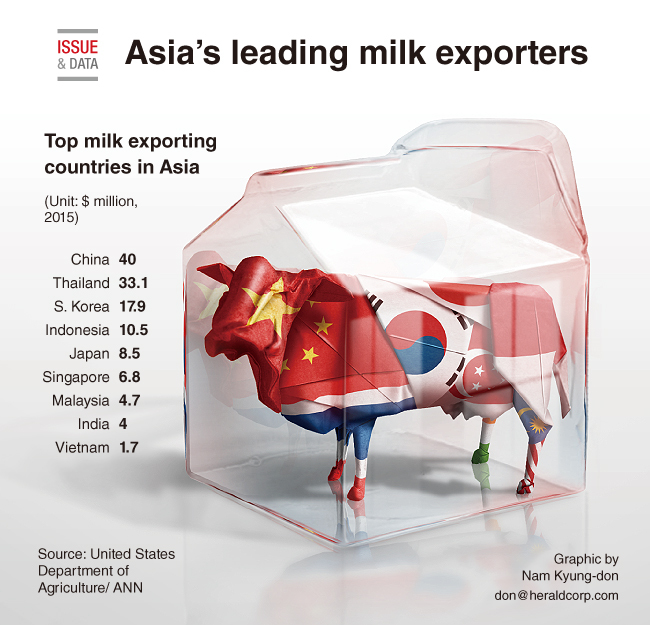
Asia’s leading milk exporters

India is the world’s largest milk producer, with 18 percent of global production, followed by the US and China. But when it comes to milk exports, Thailand is the largest milk exporter in Asia.

Thailand is also the largest producer and exporter of dairy products in ASEAN.

Thailand alone sold $33.1 million worth of milk, according to United States Department of Agriculture and The World Factbook of CIA.

The global sales from all milk exporting countries totaled $7.2 billion, out of which Asia sold $496.2 million worth of milk during 2015. Overall, the value of milk exports fell by an average 18.1 percent for all exporting countries since 2011, when milk shipments were valued at $8.8 billion.

Source: KOREA HERALD

Nautical Cattle Drive Ships Dairy Cows From Northwest To Vietnam

More than 1,500 dairy cows embarked on a long voyage Friday from the Pacific Northwest to Vietnam. 

The trans-Pacific cattle drive was a change of pace for Port of Olympia Marine Terminal Director Len Faucher. Instead of seeing logs lifted aboard for export to Asia — the port’s “bread and butter ” — he watched a stream of young heifers marched up a gangplank onto an ocean-going livestock carrier.

“Hup, hup, hup” and “C’mon girls!” a cattle exporter shouted, those words occasionally punctuated by the sounds of longshoremen positioned along the ramp slapping hairy butts to keep the animals moving, although the Holsteins actually needed little prodding to go onboard.

“This is a nautical cattle drive,” Faucher said.

“It’s a three-week cruise and it is all expenses paid,” he joked, noting the buffet of hay and cattle feed secured on the top deck.

The overnight loadout marks the fourth shipment of live dairy cattle to Vietnam from the Pacific Northwest since 2015. Around 6,000 future milkers have passed across the docks of Olympia and Vancouver, Washington.

These commercial transactions support a Vietnamese goal to increase fresh milk production, so eventually every child there has the opportunity to drink a glass of fresh milk daily.

This latest shipment from Olympia involved 1,634 head on a specialized livestock carrier named the Angus Express. The voyage to Nghi Son Port in Thanh Hoa Province, Vietnam, is scheduled to take close to three weeks.

“They do not give Dramamine to the cows,” Faucher said in a dockside interview. “Some cattle will get seasick and then they’ll adapt, like you would if you got seasick for the first couple days. And then you would start feeling better.”

Before loading, the herd was held for observation at an export quarantine farm near Yelm, Washington. There, veterinarians held back any animals that showed signs of illness or disease.

According to a Port of Olympia spokeswoman, a cattleman or veterinarian also travels with the ship to Vietnam to ensure the herd receives good care on board.

Dairy cattle imports from the Pacific Northwest, New Zealand and Australia are building up a herd of more than 30,000 cows and heifers at Vietnam’s single largest dairy farm, operated by Vietnamese company TH Milk with heavy investment from Israel.

A blog post by Israeli dairy technology supplier Afimilk recounted how the project started, in 2009, in the wake of media reports about melamine contamination of powdered milk produced in China.

Powdered milk still accounts for the majority of milk sold in Vietnam, according to Afimilk’s partner TH Milk Vietnam. Vietnam’s dominant dairy products company, Vinamilk, has also imported live cattle from the U.S.

Olympia port officials hailed their dairy cow exports as an example of successful diversification.

Underscoring the international nature of the dairy business, the previous ship to call at the Port of Olympia was a bulk freighter that unloaded organic corn from Turkey last weekend for use as feed at organic dairies here in the Northwest.

Source: KUOW

Tanker spills milk into Polk County waterway

The North Carolina Division of Water Resources continues to monitor the Green River in Polk County, N.C. after a tanker spilled 6,000 gallons of milk into a nearby creek leading into the river early Saturday morning.

A tanker truck hauling milk was traveling on Interstate 26 heading east when it crashed at mile marker 61 shortly before 7 a.m. according to N.C. Division of Water Resources Regional Supervisor Landon Davidson. Davidson said the single-vehicle accident ruptured the tanker, spilling milk into two storm water inlets leading to Cove Creek.

The N.C. Division of Water Resources was called to the scene at about 10:45 a.m., he said. A clean up crew managed to remove about 600 gallons of milk from the site prior to Davidson’s arrival. The spill entered into Cove Creek and pushed towards Green River by afternoon.

While the spill posed no risk to the public, Davidson said it did remove a lot of oxygen from the water. Several dead fish were spotted in the Green River by a game warden monitoring the situation, he said.

Landon said rain from thunderstorms Saturday night helped dilute the milk spill, which had spread 3.5 miles down the river. No further clean-up efforts are planned at the site, he said.

Polk County Emergency Management, North Carolina Department of Transportation, N.C. Highway Patrol, and N.C. Wildlife Resources Commission assisted at the scene. Landon said the tanker was owned by Harris Transport based in Loudon, Tenn.


Source: GoUpstate

Want milk delivered to your door? These companies are vying for your business

It’s been more than a few decades since the Pine State Creamery milkman dropped the day’s supply of dairy at Raleigh homes. But there are still companies battling to deliver fresh milk and cheese to your doorstep.

The latest entrant in the competition: Illinois-based Oberweis Dairy.

Oberweis arrived in Morrisville to home deliver milk and other products to Triangle residents in mid-May, muscling into a market that includes Jackson Dairy Farm of Sampson County and Maple View Farm of Hillsborough.

Kevin Heilbronner of Wake Forest got a flyer in the mail from Oberweis offering new customers a free cooler and reduced delivery fee and decided to give it a try.

“I pay about 10 percent more than at the store, and I’m completely fine with that because it’s delivered,” Heilbronner said. “The only thing I have to do is put the cooler on the porch. … If I need to fill in, I just go to the store.”

Heilbronner’s typical order is a half-gallon of whole milk (which costs $3.99), two containers of yogurt and chocolate milk or cheese for an average of $20 per week. He was surprised to learn that Oberweis doesn’t just deliver milk — it offers ice cream, eggs, orange juice and more.

The milk’s glass bottle fascinates Heilbronner’s sons, 7 and 10, and the 7-year-old eats a tube of Oberweis squeezable yogurt for lunch every day.

Oberweis milk is not organic, but Heilbronner doesn’t mind. He said after reading a Washington Post story about big organic milk companies not living up their promises, he decided he’d rather give his kids Oberweis milk, since its farmers pledge to provide antibiotic-free milk and not to use artificial growth hormones.

Oberweis milk is “gently” pasteurized so that it’s safe but retains maximum taste and nutrients, said Oberweis CEO Joe Oberweis. The USDA has a range of pasteurization temperatures and times it allows, and Oberweis is at the lower end of the spectrum. Its milk has a shorter shelf life than ultra-pasteurized milk (heated to 280 degrees Fahrenheit), which loses flavor but can last a month or more.

The northern Illinois-based dairy has been in the Oberweis family since the 1920s, and most of its milk is from small farms in Wisconsin and is bottled in Illinois. North Carolina subscribers receive milk brought in from the Midwest to the company’s Morrisville facility, just 20 minutes west of Raleigh.

Oberweis already spans much of the Midwest, from St. Louis to Milwaukee, its CEO said. Ice cream is a big part of its business in midwestern states. Oberweis has about 40 ice cream parlors and about 35 flavors, from plain vanilla to chocolate peanut butter.

Virginia Beach, Va., was Oberweis’ only southern location for eight years, until this spring when it added Richmond, Va., and Morrisville, which has about 10 employees and could grow to 50, CEO Oberweis said.

The plan is to partner with local dairy farms in the Richmond and Raleigh areas eventually, CEO Oberweis said. However, after nearly a decade in Virginia Beach, Oberweis still ships in milk from the Midwest. Oberweis milk goes from farm to front porch in three to four days.

Oberweis’ competitors in the Triangle point to that reliance on non-local cows as a tipping point in their favor.

“We’re definitely local, and [Oberweis is] not,” said Roger Nutter, owner of Maple View Farm, about 45 minutes northwest of Raleigh. “People will still buy local milk, whether it’s ours or somebody else’s.”

Maple View has been in Hillsborough since 1963 and started supplying milk for home delivery around 2007. Fresh food delivery services like Cary-based Papa Spud’s and Raleigh-based The Produce Box offer Maple View milk. Subscribers pay about $4 for a half-gallon. (In local stores, like Harris Teeter, that half-gallon would cost about $3.50, plus a “bottle charge” of $1.50; customers must bring the bottles back to the store to get the fee refunded.

Maple View’s cows are not given hormones and, like Oberweis milk, its milk is pasteurized at a lower temperature, but Nutter does not feel the need to tout his milk as “antibiotic-free.”

According to FDA standards, any milk with traces of antibiotics cannot be processed, much less sold. Cows are given antibiotics when they’re sick, Nutter said, and their milk isn’t used until the medicine is out of their systems.

Fuquay-Varina resident Rebeccah Cope gets a half-gallon of Maple View whole milk dropped off in a cooler on her porch once a week along with her Produce Box shipment. The milk reminds her of her childhood on a six-acre farm with goats, chickens and a Jersey cow in Savage, Md.

Cope and her husband make smoothies with the milk and blueberries, peaches and more that come in the weekly delivery.

“We’re eating as local and as seasonal as we can,” she said. “I’m avoiding the store, and I’m eating healthier because of it.”

Cris Jackson, who owns Jackson Dairy Farm, said he doesn’t plan on changing anything about his business because of Oberweis’ arrival. He began delivering to Raleigh homes in the 1990s and, at 78, still makes deliveries himself.

The farm has been in Jackson’s family since the 1800s, and he’s got more than 10 grandchildren and great-grandchildren, many of whom help out around the dairy.

Jackson’s milk is $5 per half-gallon.

“Our milk will be fresh when it’s delivered,” he said. “It hasn’t been pasteurized more than a day or two.”

Oberweis customer Heilbronner said his wife and kids love Oberweis milk and yogurt, but he’s never tasted any of their dairy products.

“I’m lactose intolerant,” he said. “If they get lactose-free ice cream, I’ll be adding that to my order.”


Source: The News & Observer

Detained dairy farmers released

Two dairy farmers detained on immigration charges were released Friday.

WCAX first told you about this two weeks ago, when Yesenia Hernández-Ramos and Esau Peche-Ventura were arrested.

The pair apparently works on a dairy farm in Franklin County.

Migrant Justice held protests to get them released, and was working with a Boston-based lawyer.

According to Migrant Justice social media accounts, the two were let go Friday.

According to the Migrant Justice Facebook page, the group gathered 1,400 signatures and presented their petition, along with letters from friends and family members, to a judge.
Source: WCAX News

Cheese and Drugs Wrangle Holds up EU-Canada Trade Deal

Disputes over cheese and pharmaceuticals are holding up the start of an EU-Canada free trade agreement that both sides have championed as a landmark deal for open markets against a protectionist tide.
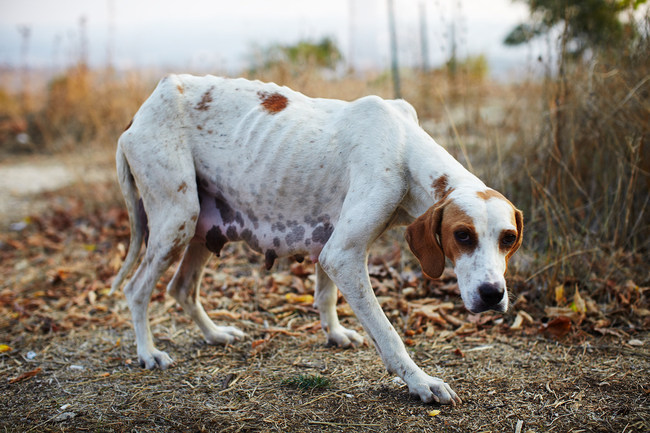
The Comprehensive Economic and Trade Agreement (CETA) has received all the clearances required for it to enter force provisionally, with officials on both sides hoping for implementation by July 1.

However, the European Union is not satisfied that Canada will effectively open up its markets to 17,700 additional tons of EU cheese and provide guarantees for the patents of European pharmaceuticals.

Canada is pushing for implementation as soon as possible, but the European Union is reluctant to start up the agreement before the problems are resolved.

“We are in the process of bringing the trade agreement with Canada to the point where it can be provisionally enter force. There are a few problems and we will solve them in the coming days,” Juncker told a news conference in Berlin on Thursday.

Juncker and Canadian Prime Minister Justin Trudeau spoke on Wednesday, Trudeau’s office said.

“Prime Minister Trudeau urged proceeding with the provisional application of the agreement as soon as possible so that its benefits can be realized,” the office said in a statement.

The EU dairy industry is concerned about Canada’s commitment to import EU cheese. As part of the CETA deal, Canada is supposed to assign 30 percent of its cheese import quota to “new entrants”, but there is an argument over what the term means.

The EU pharmaceutical industry is also demanding that Canada clear up planned changes to rules for generic medicine manufacturers. Under CETA, patent protection can be extended by up to two years.

Source: Reuters

Pennsylvania Law Will Protect Veterinarians Who Report Cruelty

The Pennsylvania Veterinary Medical Association (PVMA) is excited to announce that House Bill (HB) 1238, passed the Senate unanimously last week and now heads to Governor Wolf for his signature. Thank you to Representative Mark Keller for his long-standing support of PVMA and our profession and his tireless efforts to get veterinary immunity passed.

Representative Keller’s HB 268 is included in the sweeping changes and improvements of HB 1238 introduced by Representative Todd Stephens. This bill provides civil immunity for any veterinary professional who reports suspected cruelty of animals in good faith. The veterinary profession is strongly encouraged to report suspected cruelty under the Principles of Veterinary Ethics, but this legislation goes a major step forward and provides protection under the law to prevent veterinarians from being sued when they report suspected abuse. “I am pleased we were able to include my proposal in this comprehensive animal protection legislation to provide veterinarians, technicians and assistants with civil immunity when reporting cases of cruelty,” said Representative Keller (R-Perry/Cumberland). “This should end any legal concerns they may have when spotting an abused animal and lead to more prosecutions of those responsible for that abuse. HB 1238 is a huge win for those in the veterinary profession and the animals that receive their care.”

HB 1238’s passage is also a major victory for animals. Introduced by Representative Stephens and 30 co-sponsors, it is a bipartisan, comprehensive, anti-cruelty bill that provides needed updates to Pennsylvania’s cruelty statute and adds many provisions of various cruelty bills that have been introduced this session, including “Libre’s Law” strengthening penalties, tethering language, equine protections and more.

Pennsylvania’s animal cruelty law, Section 5511 of Title 18 of the Crimes Code, was originally passed into law in 1983. Since that time, it has been amended in a way that has created a law that is often difficult to interpret. The biggest change is that it will be possible to file felony level penalties for first time cruelty offenses outside of animal fighting or killing an endangered species. In addition, rather than a single section (5511(C)) lumping together every form of cruelty, the legislation breaks down the penalties for different grades of cruelty and different penalties based on the egregiousness of the conduct and how many prior offenses there have been. In addition, Humane Society Police Officers will be provided civil immunity from frivolous lawsuits, which is standard for all other law enforcement.

About the Pennsylvania Veterinary Medical Association (PVMA)
Founded in 1883, PVMA is PA’s only statewide professional membership organization for the veterinary profession representing over 3,000 veterinarians, certified veterinary technicians, assistants, practice managers, and other support staff. Our mission is to ensure the vitality of the profession by promoting excellence in veterinary medicine, advancing animal health and welfare, and protecting and enhancing human health.

Holstein USA Honors Thirteen Herds of Excellence

Thirteen herds have been named as Holstein USA Herds of Excellence for 2017.  This is the 9th year of the awards, and this year the competition was divided into 3 herd-size categories.
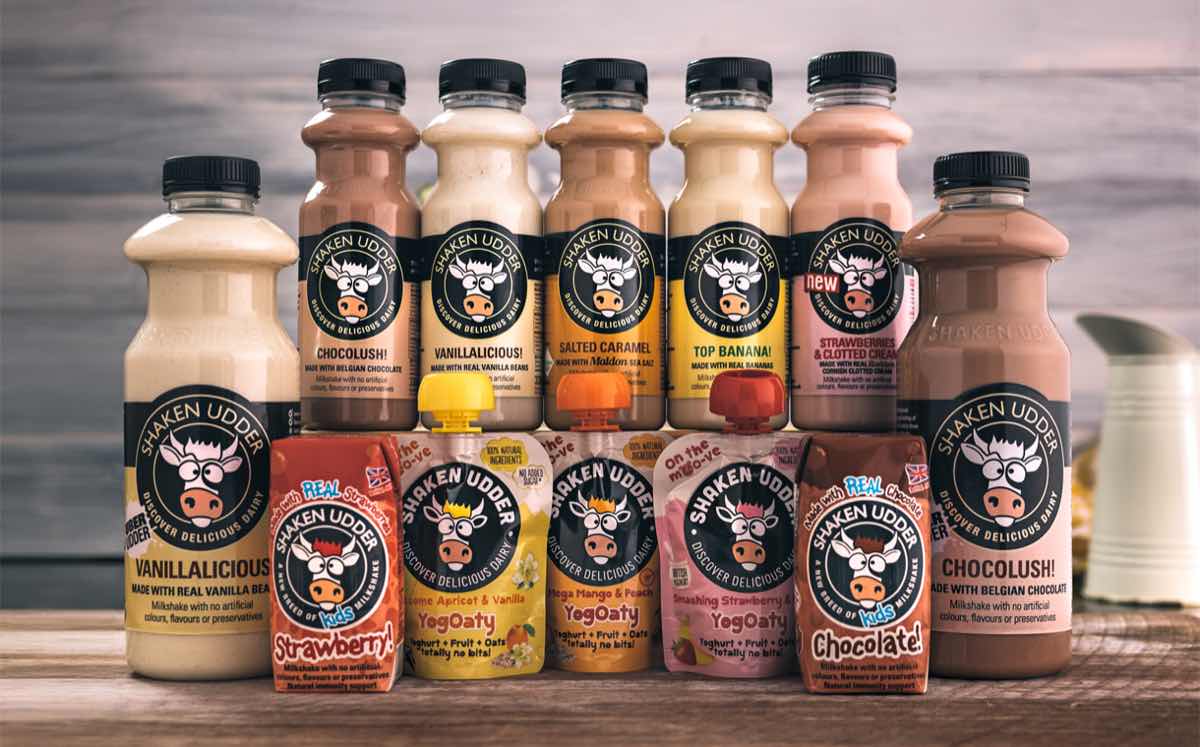
Winning in the division featuring herds of more than 500 cows were Bomaz Dairy, Emerald Acres, Siemers Holsteins and Sugar Creek Dairy, all of Wisconsin.

In the division of herds of 100-500 Cows, winners were Koester Dairy, IL; and Mystic Valley Dairy and Paradise-D Holsteins both of Wisconsin.

Herds of less than 100 cows included Appealing Holsteins, PA; and B-Long Holsteins, Bur-Wal Holsteins, Ever-Green-View Holsteins, Hilrose Holsteins and Jeffrey-Way Holsteins, all of Wisconsin

Highlights from the best brand categories at the World Dairy Innovation Awards

The best brand categories at the World Dairy Innovation Awards 2017 give us a picture of the emerging names and new players in the global dairy industry.

Whether that’s the hottest new brands and businesses, the best brand extensions or marketing campaigns, or even the most environmentally friendly and socially conscious companies in the market – these categories really can tell us a lot.

This year’s World Dairy Innovation Awards considered a host of innovation – entries from over 20 countries in 19 different categories.

FoodBev Media marketing director Isabel Sturgess said: “This is the eleventh annual World Dairy Innovation Awards, and once again we are fascinated by the level of innovation that is shown within the entries. We see new flavours, new concepts, clever packaging, state-of-the-art manufacturing technologies and new ground gained towards a more responsible and sustainable dairy industry.”

The crown for best new brand or business went to the French dairy producer En Direct Des Èleveurs, which was commended for its choice of Ecolean pouches for its sustainable and traceable milk. The pouch also won acclaim in the best packaging design category.

En Direct Des Èleveurs consists of 14 dairy farmers, with new producers continually joining the initiative. The set-up allows it to deliver products from the producer to the consumer in a direct chain, as well as providing support to the local community and supplying traceable and environmentally friendly dairy products to consumers.

The dairy company had to fight off competition in the category from Nanyang Polytechnic, for its moringa and carrot milk spread, as well as Dairy Farmers of America.

In the best brand extension category, YogOaty Yogurts from Shaken Udder Milkshakes came out on top. It offers a range of yogurt smoothies made from yogurt, oats and fruit and served in squeezable pouches. It’s the latest launch from Shaken Udder, which already produces a host of dairy milkshakes in several different formats.

BiPro Protein Water from Agropur/BioPro; Cracker Cuts from Dutch Farms; and Kerrygold Yoghurt from Ornua rounded off the category.

The best new brand or marketing activation, which celebrates the year’s most effective means of communicating with consumers, was taken by the Solid Stuff campaign from Quebec Dairy Farmers in collaboration with Lg2. Solid Stuff uses the fictional character Popeye to reinforce the nutritional value of dairy milk in a bright and fun consumer awareness bid.

Finally, there were two categories celebrating the industry’s commitment to social and environmental sustainability.

DairyPod Cogen from WoodCo Energy Ireland – a new way of heating water in a dairy plant – was the winner of the best environmental sustainability category. The Lake District Biogas Bio-energy Plant from Clearfleau was also a finalist here.

And in the best CSR report or initiative category, Dairy Farmers of America was commended for its DFA CSR report, which outlined how the company had met its goals on environmental stewardship, milk safety and quality, employee training, and animal care and wellness.

Solid Stuff – the campaign from Quebec Dairy Farmers & Lg2 – can continue its celebrations after being named a finalist in this category.


Source: Food Bev

India bans all Milk products from China for one year

The Government of India has banned milk, milk products and confectionary from China for one year.
Share prices of dairy products makers Prabhat Dairy, Parag Milk Foods and Vadilal Industries gained as much as 4-9 percent in morning trade Thursday after a ban on milk products from the world’s second largest economy.

The Government of India today banned milk, milk products and confectionary from China for one year, reported CNBC-TV18 quoting Cogencis.

In previous year as well, the government had imposed a ban on import of milk and its products from China and that was applicable till June 2017.

India had first imposed the ban in September 2008 on apprehension some milk consignments from the country contained melamine, a toxic chemical used for making plastics and fertilisers.

The ban is more a preventive measure as India itself being the world’s largest milk producer and consumer, hardly imports milk products from China.

In previous year as well, the government had imposed a ban on import of milk and its products from China and that was applicable till June 2017.

India had first imposed the ban in September 2008 on apprehension some milk consignments from the country contained melamine, a toxic chemical used for making plastics and fertilisers.

The ban is more a preventive measure as India itself being the world’s largest milk producer and consumer, hardly imports milk products from China.


Source: Dairynews.ind

Wonderfully Written Milk Ads Just Won Gold at Cannes

It says something that the most famous advertisements for milk are all about its absence. It’s not exactly a product that inspires powerful advertising. But could it be?

Colenso BBDO and New Zealand milk brand Anchor made three remarkable videos about milk this year, all featuring the delightfully cascading words of world champion slam poet Harry Baker. The point is to engage teenagers, famously ambivalent to advertising, when they’re still building their bone density.

The “performance poems” are enhanced by work from visual artists including Parris Goebel. See the three films below, which just won a gold Lion in the Health & Wellness category of the Lions Heath festival in Cannes.

“The campaign aligns directly with Anchor’s ‘Go Strong’ platform, the belief being that the nutrition in dairy provides the strength which builds confidence to give anything a go,” the agency says. “The project aims to inspire teenagers to be themselves and create their own definition of strength.”

Source: Ad Week

‘I Need More Mexicans’: A Kansas Farmer’s Message to Trump

Growers and dairies lobby for a path to legalization for the undocumented workers who power their businesses.

Undocumented immigrants make up about half the workforce in U.S. agriculture, according to various estimates. But that pool of labor is shrinking, which could spell trouble for farms, feedlots, dairies, and meatpacking plants—particularly in a state such as Kansas, where unemployment in many counties is barely half the already tight national rate. “Two weeks ago, my boss told me, ‘I need more Mexicans like you,’” says a 25-year-old immigrant employed at a farm in the southwest part of the state, who spoke on condition of anonymity because he’s trying to get his paperwork in order. “I said, ‘Well, they’re kind of hard to find.’”
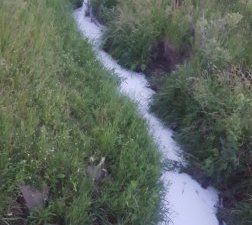
Arrests of suspected undocumented workers have jumped 38 percent since President Donald Trump signed a pair of executive orders targeting immigration in January. The crackdown is having a deterrent effect along the southern border: Apprehensions by U.S. Customs and Border Protection totaled 118,383 from January through May, a 47 percent decrease from the same period last year, which indicates fewer people are trying to enter the U.S. illegally. Michael Feltman, an immigration lawyer in Cimarron, Kan., says his firm has seen more people coming in with naturalization questions over the past six months than over the previous four years combined. “I’m really worried every little traffic ticket’s going to turn into detention,” he says.

Others feel the same way. “The threat of deportation and the potential loss of our workforce has been very terrifying for all of us businesses here,” says Trista Priest in Satanta, Kan. She’s the chief strategy officer at Cattle Empire, the country’s fifth-largest feed yard, whose workforce is about 86 percent Latino.

In Haskell County, where Cattle Empire is the biggest employer, 77 percent of voters cast ballots for Trump, compared with 57 percent statewide. But Priest and other employers interviewed for this story complained that the immigration policies emanating from Washington, 1,500 miles away, clash with the needs of local businesses.

Representative Roger Marshall, a Republican whose district includes southwest Kansas, says immigration is the No. 1 concern he hears about from constituents. The freshman congressman says he’s confident that once the border is secure, “President Trump will look at this, too, as an economic problem.”

The two executive orders issued in January call for a wall along the U.S.-Mexico border and prioritize the deportation of undocumented immigrants who’ve been convicted or charged with “any criminal offense.” The language is so broad that all the estimated 11 million undocumented immigrants in the U.S. could be targets, given that anyone who’s evaded border inspection or overstayed a visa could be charged with a misdemeanor or fraud.

Trump has said that even as he ramps up deportations, he doesn’t want to slam the door on immigrants. He’s proposed a merit-based system akin to those of Australia and Canada. Those countries confer legal status via a point system that rewards those with higher education, better employment histories, and language skills. He’s also spoken generally about reforming the short-term visa program for farmworkers. Agriculture Secretary Sonny Perdue told Congress last month that the existing H2A visa, which admits seasonal workers, “has not been as successful as we would like, and it’s very onerous,” especially for smaller farms, to navigate all the paperwork.

But those proposals do not offer a pathway to legalization for those who are already in the country, which is what agriculture and other industries including construction and restaurants have been calling for. Joe Jury, who’s been farming in Ingalls, Kan., since the 1970s and has employed “probably well over 100 Hispanic immigrants,” wants immigration reform that emphasizes making it easier for foreign-born residents to work as much as it ensures that criminals are deported. “The visa system is so slow and so expensive,” he says. “The government has dug this hole, and now they’re trying to dig themselves out through enforcement.”

The American Farm Bureau Federation (AFBF) has proposed that, to “minimize the impact on current economic activity,” unauthorized agricultural workers already in the country should be granted permanent legal status once they prove they have worked in the industry for a set period of time. The AFBF has warned that an enforcement-only approach could slash industry output by as much as $60 billion annually.

Feltman, the immigration lawyer, says his clients would be more than willing to pay hefty fines for assured legalization. If each undocumented worker were charged $1,000 or $1,500, that would change political sentiment, he says. “The people that are the naysayers to all that might say, ‘That’s a lot of money for our country.’” Pew Research Center estimates that 375,000 undocumented workers are employed in agriculture.

“I didn’t come over here because I wanted to—my parents brought me here,” says the undocumented worker from southwest Kansas, who says he’s spent $24,000 on immigration lawyers and other expenses in his quest for legal status. “I’m here, I have to work.”

The price of milk would jump to $6.40 a gallon if U.S. dairy farms were deprived of access to immigrant workers, according to a 2015 report commissioned by the National Milk Producers Federation, which estimated that half of all workers in the industry are immigrants. Lingering in Congress are two separate bills that would modify the existing H2A agricultural visa program so that dairy farms can hire workers year-round rather than seasonally. In an April 18 statement in support of the legislation, the milk producers’ trade group said: “Without the help of foreign labor, many American dairy operations face the threat of closure.”

Kyle Averhoff, general manager of Royal Farms Dairy in Garden City, Kan., says he’s seen the flow of applicants slow in recent months as the labor market has tightened. Unemployment in Finney County, where Royal Farms is based, was just 2.8 percent in April, down from 3.1 percent a year ago. “We’ve gone to some of the highest-unemployment counties in our state and ran ads, and without success,” he says. An entry-level job at Royal Farms could pay as much as $40,000 in wages and benefits, with no prior skills required, Averhoff says: “For us the immigration issue is not about cheap labor. It’s been about finding people who have the aptitude and want to work in our industry.”

Averhoff’s pain extends beyond Kansas. An extreme shortage of agriculture workers, attributed to “recent changes in immigration policy,” was responsible for some growers in California discarding portions of their harvest in April and May, according to the Federal Reserve’s Beige Book, which surveys businesses. Meanwhile, U.S. homebuilders, whose optimism soared after the election on promises of deregulation and tax reform, are back to citing severe labor shortages as a big reason for their subdued spirits, according to survey data from the National Association of Home Builders and Wells Fargo & Co.

i-need-more-mexicans1


Source: Bloomberg

Spilled Milk From Tanker in Iowa Causes Fish Kill Worries

Iowa officials say there could be reason to cry over the spilling of a lot of milk — at least some of which made its way into a southeastern Iowa river.

The Iowa Department of Natural Resources said Tuesday in a news release that the crash of a tanker hauling milk east of Fontanelle Sunday evening caused the spill. Officials say the tanker could have been carrying 7,500 gallons of milk, and that the tanker was almost empty when it was hauled away.

DNR officials say heavy milk concentrations can cause fish kills in streams.

Investigators who arrived Monday found milk in a road ditch flowing into an unnamed tributary. From there, the milk ran into the Middle Nodaway River, creating a visible plume.

The investigation into the spill continues.

Source: Associated Press

Trump Discusses Agriculture in Iowa Speech

President Donald Trump discussed agriculture during a stop in Cedar Rapids, Iowa Wednesday night.

In a 20-minute speech before a crowd of about 250 people at Kirkwood Community College, Trump touched on several ag-related topics.

“Family farms are the backbone of America and my administration will always support the farmer.”

“We will protect the corn-based ethanol and biofuels that power our country.”

“I will be including a provision in our infrastructure proposal to promote and enhance broadband access for rural America also.”

“We will rebuild rural America.”

Bob Hemesath of Decorah, Iowa, chairman of the Iowa Corn Growers Association, said he was glad to hear Trump reaffirm his commitment to ethanol and the importance of ag trade.

Read more: Brownfield

WI Purebred Dairy Cattle Association plans judging conference

The Wisconsin Purebred Dairy Cattle Association will conduct its Dairy Cattle Judging Conference on Saturday, July 1, 2017.  

The conference will begin at 9:30 a.m. at Lost-Elm Jerseys, Jason Luttropp farm, Berlin, WI. The afternoon session will follow at 1:00 p.m. at Wilstar Holsteins, Willis & Carla Gunst, Poy Sippi.

The conference leader will be Molly Sloan who has a wealth of experience judging shows across the U.S. and abroad.

To be a certified PDCA judge, placing shows from local to national levels, individuals should attend a conference on a regular basis. Judges who demonstrate appropriate skill levels at the conference are listed as PDCA Recommended with the Wisconsin Department of Agriculture, Trade and Consumer Protection (DATCP). DATCP maintains a listing of registered county fair judges.

The registration fee is $35.00 which includes lunch and beverages. Youth groups are encouraged to attend at a reduced rate of $10.00 per person. Reservations are appreciated by June 20.

If you have a neighbor, friend, relative, or other interested individuals interested in becoming a certified dairy cattle judge, please invite them.

For more information contact the WI PDCA committee Rick Bovre 920-960-0487, Mandy Sell 920-253-8773, or Ray Kuehl 608-712-5081.

For more information and the registration form visit: www.wipdca.com.

ADSA Election Results

During the recent ADSA election the following individuals were elected to leadership roles for the organization:

Vice President: Dr. Geoffrey Dahl, University of Florida

Director-Dairy Foods: Ms. Trish Dawson, Chr.Hansen, Inc.

Director-Production: Dr. James Quigley III, Cargill Animal Nutrition

Dr. Geoffrey E. Dahl, University of Florida was elected ADSA Vice President – Production. Dr. Dahl is Professor and Chair in the Department of Animal Sciences at the University of Florida, Gainesville He grew up on a dairy farm in Massachusetts and received his B.S. in Animal Science (with a minor in Food & Resource Economics) from the University of Massachusetts in 1985. Geoff completed his M.S. in Dairy Science at Virginia Tech in 1987, and earned his Ph.D. in Animal Science from Michigan State University in 1991. He then spent 3 years as a Post-doctoral fellow in the Reproductive Sciences Program at the University of Michigan, before joining the faculty at the University of Maryland in 1994. At Maryland, he served as Associate Professor and Undergraduate Program Coordinator in the Department of Animal & Avian Sciences. Prior to his current appointment, Dr. Dahl served as Professor and Extension Dairy Specialist in the Department of Animal Sciences at the University of Illinois, Urbana-Champaign (2000-2006). He has been an active member of ADSA since 1985, and has served as a member and chair of the Lactation Biology and Growth & Development committees, and the selection committees for the Cargill Young Scientist Award, the Merial Dairy Management Award, the Genevieve Christian Student Award, and the Pfizer Animal Health Award. Geoff served as the ADSA representative to CoFARM from 2005 to 2008 and served as Production Division Secretary (2010-11), Vice-Chair (2011-12), and Chair (2012-13). Geoff served as Overall Program Chair for the JAM in 2013 and again in 2015. He has been a member of the Journal of Dairy Science Editorial Board since 2001, became a Physiology & Management Section Editor in 2008, and served as Senior Editor from 2012 to 2014. Dr. Dahl also served on the Board of Directors for ADSA from 2011 to 2014.

As Chair of the Department of Animal Sciences, Dr. Dahl serves as liaison between the university, livestock producers, and allied industries. In addition to his administrative responsibilities, Dr. Dahl conducts applied and basic research with direct impact on dairy production. Specific research interests include effects of photoperiod manipulation on production and health, the impact of frequent milking in early lactation on milk production, and heat stress abatement during the dry period on cow productivity and health. Dr. Dahl’s extension activities included financial decision support tools for producers and development of on-line delivery of information and training to dairy producers and industry professionals. He has taught courses on dairy management, general and lactation physiology and endocrinology at the undergraduate and graduate levels. Dr. Dahl has authored over 100 peer-reviewed papers and numerous symposium and popular press articles. He has trained 22 graduate students and post-doctoral fellows.

Geoff received the Agway, Inc. Young Scientist Award (1999), the Merial Dairy Management Research Award (2004), the Pfizer Animal Health Physiology Award (2008), and the West-Agro Award from ADSA (2014). He has also been honored for with the Award for Excellence in Off-Campus Teaching from the University of Illinois in 2006. Dr. Dahl is a member of several other professional and honorary societies including the American Society of Animal Science, the Society for the Study of Reproduction, and the Endocrine Society.

Trish Dawson, Chr. Hansen, Inc., was elected to a three year term as ADSA Director – Dairy Foods. Ms. Dawson is a senior scientist with Chr. Hansen Inc., Milwaukee, WI. In 1981 she received her BS in microbiology (Honours Class 1) from The University of New South Wales (UNSW) in Australia. She received her MAppSci in food microbiology at UNSW in 1994 with a focus on microbial fermentation and food safety.

Dawson’s research interests have spanned the fields of marine biofilm formation, microbial nitrogen fixation, bio-fermentation processes, and methods development for the isolation and characterization of microorganisms. She has specifically worked with dairy starter cultures and their applications for more than 20 years in Australia and North America. Dawson currently works with applied microbiology and enzymology as it pertains to the production and development of cheese. Throughout her career she has developed and taught courses in microbiology for nursing, agriculture, science, medical, pharmaceutical, and dairy students. She is regularly a guest lecturer for extension courses and professional dairy meetings and strongly supports teaching and sharing of knowledge.

Dawson has served as a member of the Australian Society for Microbiology and on the committee for the Australian Institute of Food Science and Technology. She has been a member of ADSA for four years and is currently the chair for the Dairy Foods Division. She sees ADSA as the leading professional organization to influence superior dairy research and application worldwide with a spectrum that bridges production and dairy foods. Dawson is strongly committed to supporting the domestic and global growth of ADSA.

Dr. James Quigley III, Cargill Animal Nutrition, was elected to a three year term as ADSA Director — Production Division. He is manager of Calf Support at Cargill Inc. Quigley received his BS and MS degrees from the University of New Hampshire in 1979 and 1983, respectively, and his PhD from Virginia Tech Research and Technical in 1985. His current responsibilities are to develop and support calf and heifer nutrition and management programs for Cargill customers globally. In this position, Quigley travels extensively to train calf specialists, veterinarians, and nutritionists to implement feeding, management, and health programs for young calves and growing heifers. He has developed, in conjunction with Cargill colleagues, growth simulation models to accurately predict growth of calves from birth to calving. These models are being implemented globally to help farmers improve on-farm management and improve profitability of the heifer enterprise.

Prior to joining Cargill Animal Nutrition, Quigley held research (1998–2004) and management positions (2008–2012) with APC Inc., in Ankeny, Iowa. He was also vice president for Worldwide Research with Diamond V Mills (2004–2007) and served as assistant and associate professor at the University of Tennessee, Knoxville, from 1988 to 1998.

Quigley’s research centers on nutrition and management of young calves and heifers. He has authored 88 refereed journal articles, 115 abstracts, 3 book chapters, and numerous proceedings articles for conferences worldwide. Quigley is coauthor on two patents. While at the University of Tennessee, he advised 13 graduate students, and he served on several graduate committees while serving as an adjunct faculty member at Iowa State University from 1999 to 2012. Quigley is also a popular speaker and has presented seminars at conferences and symposia worldwide.

Quigley received the T. J. Whatley Distinguished Young Scientist Award from the University of Tennessee in 1994, the Gamma Sigma Delta Research Award of Merit at the University of Tennessee in 1996, and the 1999 ADSA Merial Dairy Management Award and was selected as a Diplomate, American College of Animal Nutrition, American Registry of Animal Sciences in 2011.

Quigley’s research has focused on the growth, development, and health of young calves and heifers. He has contributed extensively to the development and availability of safe and efficacious alternatives to maternal colostrum, the understanding of rumen and digestive development in young dairy calves, and feeding programs for calves and heifers to optimize growth and body composition. Throughout his career, Quigley has focused on solving practical problems faced by dairy producers and on the idea that healthy calves. that are fed and managed properly will become productive cows and ensure the future of the dairy industry.

Quigley has also provided technical information to government agencies, including the USDA Center for Veterinary Biologics and the FDA Center for Veterinary Medicine, members of Congress, and advisors to the president. He has contributed technical information to agencies in the governments of Argentina, Brazil, Denmark, and the United Kingdom on topics related to calf and heifer management and welfare.

He has been a member of ADSA since 1981 and has served the association in a number of capacities, including chair of the ADSA Microcomputer Subcommittee (1990); ADSA Management Committee (1991–1994); editorial board of the Journal of Dairy Science (1992–1996); vice chair (1993) and chair (1994) of the ADSA Informal Calf Conference; ADSA representative (1992–1996) and chair (1996) of the Bovine Alliance on Management and Nutrition; director, Southern Branch, ADSA (1996–1997); secretary-treasurer (1999), vice president (2000), president (2001), and past president (2002) of the Midwest Branch, ADSA; and member of the ADSA Production Division Council (1999–2001).

In addition to his professional activities, Quigley is an accomplished athlete and has competed in 27 marathons and two half-ironman triathlons.


Dairy Farm Workers Leaves for Mexico Amid Questions Over Immigration Crackdown

Miguel Hernandez cleans a barn on his last day of work on a Pepin County dairy farm owned by Doug and Toni Knoepke. He was leaving for Mexico with four other dairy workers the next day. He said he did not want to work the day before he left, but the farm owners needed the help. At the time, they did not have anyone lined up to replace him as assistant herdsman on the farm. He had worked there for 16 years, making $15 an hour by the time he left.

In the driveway of a two-story house on a dairy farm in western Wisconsin, five men focused on a unique construction project. Using a drill, hammer and nails, plywood and rope, they worked together in the afternoon sun to erect a structure that resembles a makeshift corral in the bed of a Honda pickup.

Luisa Tepole, 25, carried a suitcase or packaged appliance out of the house, handing it to her husband, Miguel Hernandez, 36.

By the end of the night, the back of the truck was piled high with bags of clothes and shoes, TV sets in boxes and a bucket of children’s toys, ready for the 2,300-mile drive to Veracruz, Mexico.

Farm owners Doug and Toni Knoepke watched Hernandez and the other workers from a few feet away as they loaded their two-truck caravan. It looked like a scene from “The Grapes of Wrath,” Doug Knoepke remarked, referring to the movie about the mass migration from the Oklahoma Dust Bowl to California in the 1930s.

Only this time, it was in reverse: The migrants were leaving a land abundant with economic opportunity for an uncertain future in their homeland.

Hernandez worked on the Knoepkes’ farm in Pepin County for 16 years. He shared that home with his wife and two young sons, Thomas, 5, and Liam, 4.

That day, at Thomas’ last day at Noah’s Ark Preschool, he cried as he told his classmates that he will not be starting kindergarten with them in the fall. He had never been to Mexico.

Earlier this month, Hernandez and four other men, who for years had milked and cared for cows on dairy farms among the hills of western Wisconsin, drove away in the direction of their mountainous hometown of Texhuacan. A few days later, Tepole and the children flew out of Chicago.

The Hernandez family left, in part, because of the threat of deportation — which could ban them from returning to the United States for 10 years — and what they described as increasingly harsh rhetoric by President Donald Trump and others toward immigrants, especially those here illegally.

They moved here to America’s Dairyland, the nation’s top cheese state and No. 2 milk producer, attracted by a dairy industry dependent on undocumented immigrant labor to keep cows milked three times a day, year-round. They have raised their children in communities where American workers stopped answering “help wanted” ads for cow milkers long ago.

And now, they have gone home.

“Miguel has been our right hand,” Knoepke said. “He treated (the farm) like he owned it. We’re really saddened, scared. I don’t know. It’s sad.”

In Wisconsin, farmers like Knoepke depend heavily on workers like Hernandez. Seeing him and the other workers leave worried this first-generation farmer with 650 cows.

“I don’t know where the industry would be without (immigrant labor) right now,” Knoepke says.

There are temporary visas for seasonal agricultural workers, but year-round workers who make up the vast majority of the labor force on Wisconsin’s large dairies have no special protections, and many are in the country illegally. Knoepke says Congress “better do something … because (workers) are leaving. You see it right here. They’re packin’ up.”

Hernandez’s brother, Damaso, who also works at a western Wisconsin dairy farm, says many workers he knows plan to leave because, “They’re scared of the government.”

“It’s strange, it’s difficult because all the Hispanic people knew the Americans here in Wisconsin were supporting Donald Trump. I think they made a mistake, because a lot of people are fleeing for precisely that reason.”

Arrests up in the Midwest

Federal figures show immigration-related arrests in the six-state Midwestern region, including Wisconsin, have risen since Trump took office.

Source: Madison.com

Vilsack: Modernize NAFTA to Take Canada’s Thumb off the Scale of Dairy Trade

USDEC’s president and CEO tells a Canadian business network that an updated free-trade agreement should confront Canada’s protectionist dairy policies.

Speaking on a Canadian business news network, U.S. Dairy Export Council CEO and President Tom Vilsack called for a modernization of the North American Free Trade Agreement (NAFTA) that ends Canada’s distortion of dairy markets.

“There are very technical issues, obviously, but at the end of the day this is about a fair and balanced market and allowing Canadian and U.S. consumers opportunities for quality at an affordable price,” Vilsack said in a Monday Business News Network (BNN) interview.

“It’s a question of making sure what you do from a government and policy standpoint doesn’t put the thumb so heavily on the scale that it makes it impossible for exports to take place.” 

In a news release issued last week, USDEC and the National Milk Producers Federation (NMPF) said it will work with the Trump Administration to modernize NAFTA. The main goals will be to safeguard open trade with Mexico and confront increasingly protectionist dairy policies by Canada.

Canada has implemented a new national pricing policy that effectively blocks some American dairy exports, such as ultra-filtered milk, to Canada while at the same time undercutting U.S. protein exports to other world markets. Even before that policy, the U.S. dairy industry was restricted by Canadian tariffs. Only limited market access is granted under NAFTA. 

“We want to make sure that the markets closest to home are free and fair and open, to be the best they can be,” said Vilsack. “We obviously have concerns about Canada.” 

BNN is Canada’s only business and financial news network, available in about 4.5 million Canadian homes. The complete interview with Vilsack, a former U.S. Agriculture Department secretary and Iowa governor, can be watched by clicking the video above.

Mexico is the largest U.S. dairy export market, accounting for $1.2 billion in U.S. dairy exports last year. That’s nearly double the size of Canada, the industry’s second-largest market, worth $632 million in 2016. 

To increase trade with Canada, USDEC and NMPF are asking the Trump Administration for a “decisive confrontation and resolution” of nontariff concerns, including the removal of Canadian milk pricing classes 6 & 7, and the inclusion of Canadian dairy tariffs.


Source: US Dairy Export Council

Send this to a friend