








Researchers at Livestock Improvement Corp (LIC) are working with the US Department of Agriculture (USDA) to piece together a genetic jigsaw of 15 million pieces.
They are using LIC Jersey and Holstein-Friesian bulls to build a genetic map of New Zealand dairy cattle.
Improving the genetic reference sequence is expected to help in identifying disease genes and speed up the delivery of breeding worth traits, among other things, LIC says. This will lead to more efficient cows and thus environmental benefits, and may help researchers to breed diseases out of the livestock population.
Improvements in genetic gain reward farmers and so help the NZ economy.
In 2009, after a six-year effort, the US Department of Agriculture (USDA) and 300 scientists from 25 countries published the first cattle genome sequence of a female Hereford cow called Dominette. Though now dead, this cow ‘lives on’ in research laboratories worldwide where researchers have used her DNA sequence for other genetics discoveries. Improved genome sequencing is enabling researchers to overhaul Dominette’s sequence to improve accuracy.
LIC’s work in charting the DNA differences between beef and dairy cattle will help scientists understand what role different genes play in milk production, fertility and body condition, and the potential these genetic markers might have for the country’s dairy herd. Each DNA sequence makes up a piece of this jigsaw puzzle.
This research was funded by the Transforming the Dairy Chain (TDVC) Primary Growth Partnership programme, a seven-year, $170 million innovation programme led by commercial partners including LIC, DairyNZ and Fonterra, and partnered by MPI.
LIC’s acting chief scientist, Dr Bevin Harris, says the work with the USDA will bring benefits for the NZ dairy herd.
The bovine genome has three billion base pairs (the building blocks of the DNA double helix) containing 22,000 genes, 80% of which are shared with humans. Within these 22,000 genes there are genetic variants.
To use a book analogy, each cow has the same number of chapters, i.e. 22,000. But there are a number of word and spelling changes (variants) in each chapter of each book.
You could read any book and be able to broadly describe what each is about, but there would be slightly different contextual differences with different interpretations.
This is what leads to diversity within a species. Put crudely, everybody looks the same (the same book of 22,000 genes) but there are slight differences in most traits or characteristics.
By the end of this year, genomes from 1000 dairy cattle will have been sequenced. Through this sequencing, LIC has identified about 19 million variations that exist within the NZ dairy cattle population.
These will be compared to Dominette’s and the new dairy cattle reference genomes, and the next job will be to identify which of these genes affect the traits that dairy farmers are interested in.
This information can then be used to improve the ability to predict how well animals will perform at birth based on their genome sequence.
DNA progress
In the last three years, improvements in DNA sequencing technology have cut the cost of sequencing a new genome and newer technology is allowing genomes to be sequenced more quickly.
A once-massive, costly exercise (US$50 million when Dominette’s genome was sequenced in 2006) now costs NZ$1000 per genome.
Harris says if genome sequencing had to be done manually, it would take someone typing 60 words per minute eight hours a day for 50 years to type the bovine genome.
“The entire DNA sequence would fill 200 one-thousand-page telephone directories,” he explains.
“The knowledge gained from this sequencing project will enable us to identify the potential benefits of genetic gains for the NZ dairy herd, and this will increase the accuracy of bull selection which will increase the national rate of genetic gain.”
NZ Animal Evaluation (NZAEL), a subsidiary of DairyNZ, estimates that improvements in genetic merit are worth $300m profit a year to the dairy sector.
 There’s an all-too-common story of the younger generation being unable to join the parents on the family farm because it can’t sustain two (or more) families, says U of M graduate Alise Sjostrom.
 Hundreds of dairy farmers in Northern Ireland are facing potential upheaval after LacPatrick announced it was looking at a tie-in with another business.
 A dairy farmer says seven federal immigration officers came onto his property without permission, arrested a Guatemalan worker without producing a warrant and handcuffed the farmer when he video-recorded their actions.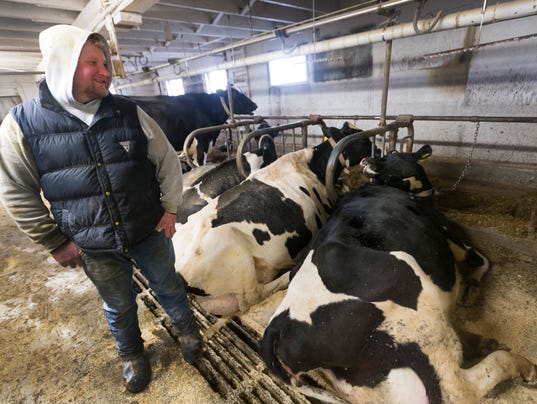
 Rock-bottom prices are being paid to farmers for raw milk right now across the United States.
 An updated NAFTA must include increased access to Canada’s protected dairy market, four Republican senators said Tuesday – just days before ministers from all three countries are expected to meeting Washington, D.C.


 The STRESS Act would provide support, but some farmers say it’s little more than a band-aid and real policy changes are needed.
 Agropur, Inc, a Canadian dairy processor is expanding its West Michigan facility. The processor has announced a three-year, $21.3 million expansion project at their Wyoming plant to add new equipment and make updates. The Michigan Economic Development Cooperation has awarded a $434,000 grant for the project. The Canadian-based company has 39 dairy plants in North America and processes more than 13 billion pounds of milk. This year they also announced expansion plans for their Lake Norden, South Dakota cheese plant.
 Australian farmers would “hate” to see the new Trans-Pacific Partnership renegotiated to allow the US to enter, and say America’s absence benefits local agriculture.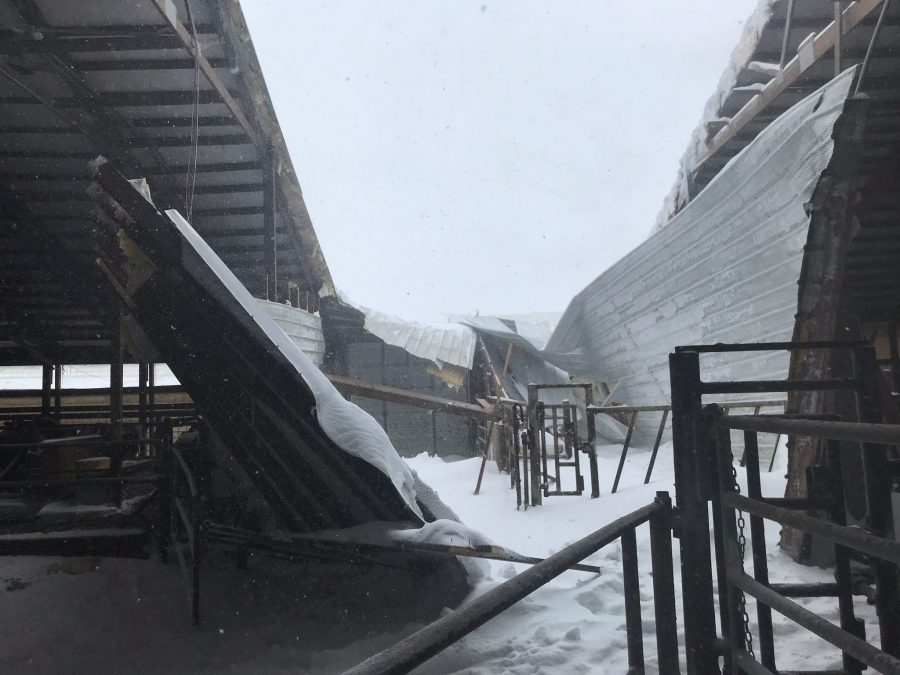

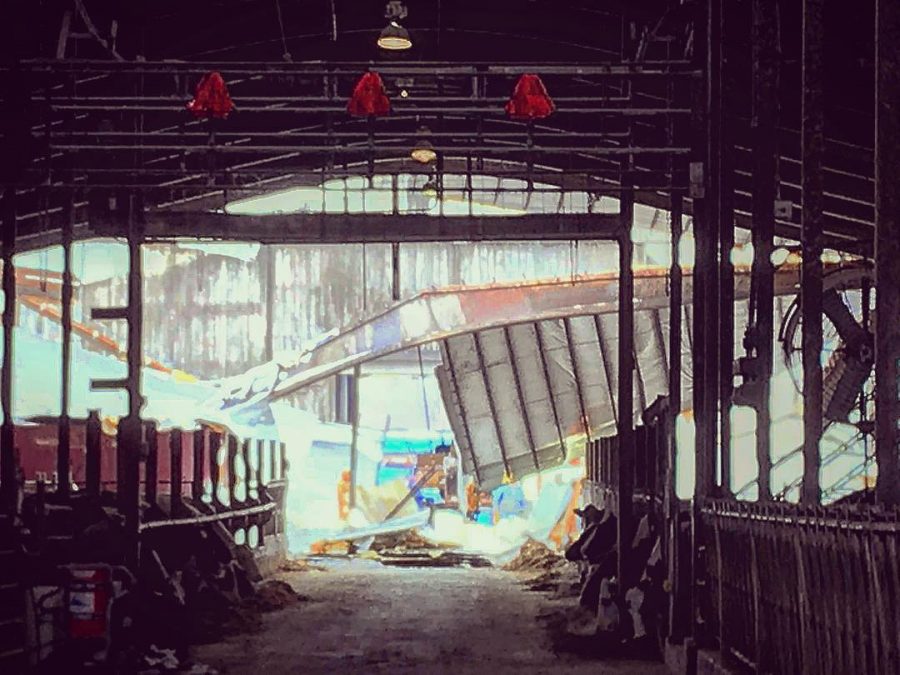
 The cattle disease Mycoplasma bovis has been confirmed on two new properties, lifting the total number of infected farms to 30.
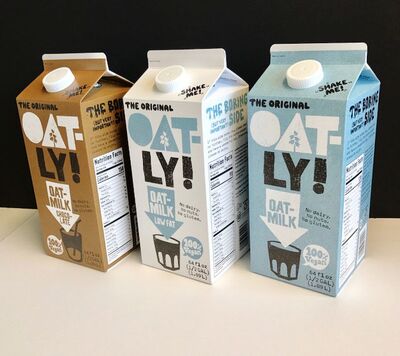
 There’s a new plant milk in town, and it’s started such a craze that coffee shops across the country are struggling to keep up with demand.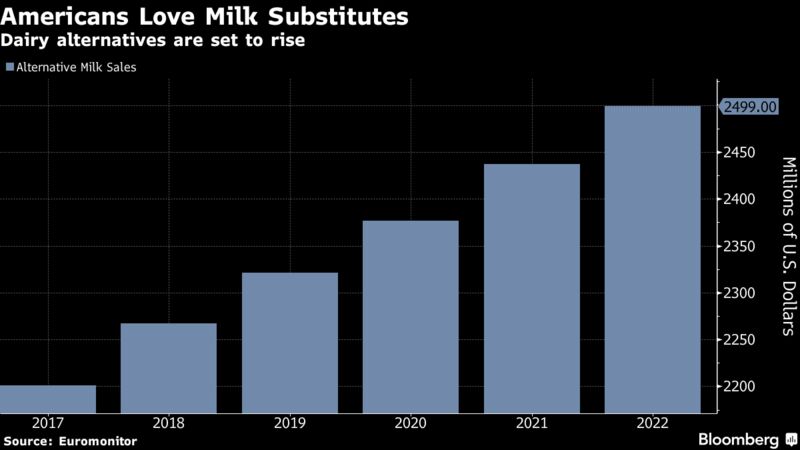
 A judge has ordered a controversial Oregon dairy not to interfere with the liquidation sale of its cattle herd to satisfy the demands of a creditor.
 Wisconsin Department of Corrections (DOC) Secretary Jon Litscher joined Lt. Governor Rebecca Kleefisch, leaders from Moraine Park Technical College, and guests to celebrate the second completion ceremony for inmate workers completing the Dairy Worker Training Certificate.
 Two dairy farm workers received 20-day jail sentences Wednesday in the first cases prosecuted after undercover videos showed cows being beaten, burned and kept in horrific conditions at dairy farms in Okeechobee County.
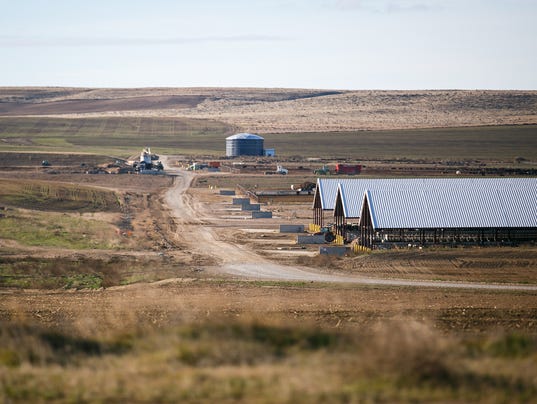 The owner of a controversial new Oregon mega-dairy told police last summer he uses meth every day and has patronized a dozen prostitutes in two countries.
 Agropur Inc. announced it will invest $21.3 million and create 62 news jobs over the next three years at its processing plant in suburban Grand Rapids.
 It’s been 10 years since the last revision, and it took two years and 20,000 submissions to overhaul it. And almost nobody will agree with the result.
 Today, Holstein UK officially crowned the winners of its Master Breeder Awards 2018. Ten high-performing herds have surpassed qualification and claim this prestigious breeder recognition.
 A team of 11 bulls will be used in a new sexed semen trial to assess its fertility compared with conventional straws during the new breeding season.
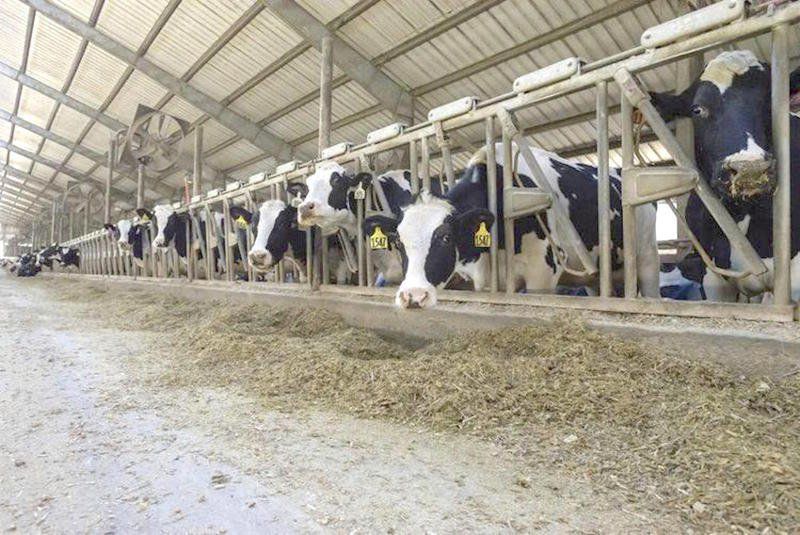 Relief for dairy farmers in the region could be coming.
 The a2 Milk Co says it is still “uniquely positioned” to benefit from its A1 protein-free products and that the company continues to perform strongly.
 Bushfire recovery advice for south-west Victorian farmers will be passed on through one-on-one visits, rather than public meetings.
/arc-anglerfish-syd-prod-nzme.s3.amazonaws.com/public/HZ7VS4XQYZC4TDLGC6Z4PVQBXE.jpg) New Zealand’s $3 billion beef export sector seems to be free so far of the serious new cattle disease Mycoplasma bovis.
New Zealand’s $3 billion beef export sector seems to be free so far of the serious new cattle disease Mycoplasma bovis./arc-anglerfish-syd-prod-nzme.s3.amazonaws.com/public/ZLQ4474KHBH3TNSUC5I7LYDTZI.jpg) Jules Benton will be the new chief executive of Dairy Women’s Network.
Jules Benton will be the new chief executive of Dairy Women’s Network. The other day, NPR wrote a
  For years you’ve been told to go for skim over full-fat dairy. Even the latest dietary guidelines for Americans urge people to avoid the full fat, and following this lead, school lunch programs provide only low-fat milk and no whole milk at all, even though they do allow chocolate skim milk with its added sugars. But large population studies that look at possible links between full-fat dairy consumption, weight and disease risk are starting to call that advice into question. And some research suggests people who consume full-fat dairy weigh less and are less likely to develop diabetes, too.



