U.S. farm milk prices continue to fall. The proverbial light at the end of the tunnel was seen in the Dec. 4 Global Dairy Trade auction. The weighted average of products offered jumped 2.2 percent following a 3.5 percent drop on Nov. 20 and a 2 percent decline Nov. 6, ending seven consecutive sessions of decline. Sellers brought 80.4 million pounds to market, down from 94.7 million in the last event.
Gains were led by buttermilk powder, up 16.9 percent, followed by anhydrous milkfat up 3.9 percent after plunging 9.4 percent on Nov. 20. Butter was up 2.7 percent after leading the declines last time with a 9.6 percent drop, and whole milk powder was up 2.5 percent after dropping 1.8 percent last time. Skim milk powder inched up 0.3 percent after it saw a 1.6 percent decline last time.
The only loss was Cheddar, down 2.2 percent after it inched 0.2 percent higher.
FC Stone equates the GDT 80 percent butterfat butter price to $1.6573 per pound U.S., up 4.8 cents from the last session but is 36.7 cents below where it was a year ago. CME butter closed Dec. 7 at $2.2075. GDT Cheddar cheese equated to $1.4443 per pound, down 3.1 cents from the last event, 23.2 cents below a year ago and compared to the Dec. 7 CME block Cheddar at $1.35. GDT skim milk powder averaged 89.35 cents per pound, up from 89.13 cents last time, and whole milk powder averaged $1.2095, up from $1.1789. CME Grade A nonfat dry milk closed Dec. 7 at 88.5 cents per pound.
The Daily Dairy Report credited the higher prices to New Zealand-based Fonterra reducing volumes in this auction, and “given that context and higher NZX futures prices in recent weeks, today’s GDT results were disappointing.”
October U.S. dairy exports were mostly higher than year-ago volumes, according to the DDR, but continue to lag volumes in the first half of the year, before China and Mexico levied higher tariffs on U.S. dairy products. U.S. cheese prices have been low enough to make up for the tariffs at least for now.
When asked about low milk prices in the U.S., Jerry Dryer, analyst and editor of the Dairy and Food Market Analyst newsletter, stated in the Dec. 10 Dairy Radio Now broadcast that the U.S. has been playing in a worldwide market the past several years.
Milk output in New Zealand is expected to be up 3 percent to 4 percent in the current market year, he said, but it’s expected to be flat or down in Europe and flat or down in the U.S. by some time in the first quarter of 2019.
He admits demand is strong right now in the U.S. because of the holidays “but not as strong as it could be and production is even stronger (than demand).”
The supply of milk is and will be impacted, according to Dryer, from weather issues in Europe and weather and economic issues in the U.S., so he expects higher milk prices ahead, “but they’re still a few months away.”
Dryer gave a small preview of his December forecast, stating, “Given some feed quality issues, etc., we’re going to see that milk production number get trimmed pretty significantly, the growth in it could turn negative before the end of the first quarter” (in the U.S.), and in response to a comment on how low Class III futures are right now, he said, “the futures aren’t always a good forecaster of the future.”
He believes we will see some $17 milk by the end of the year and, if his hunch on milk supply becomes reality, “we could see $20 milk by the end of next year.”
Cash prices headed lower the first week of December. Cheddar blocks closed at $1.35 per pound, down a penny on the week and 12.5 cents below a year ago when they fell almost 9 cents. Barrels finished at $1.2225, down 9.25 cents on the week, 44.75 cents below a year ago and with the spread at an unsustainable 12.75 cents. Three cars of block sold on the week and eight of barrel.
Midwest contacts tell Dairy Market News that cheese volumes are “plentiful on the whole, but some buyers are holding off, awaiting the potentiality of further market bears.” Demand is mixed. Some relay average, or just below average sales for this time of the year, while others suggest orders are fairly robust and last-minute holiday orders are keeping production active. Milk availability was a bit more mixed last week. Some plants were still taking milk at a discount while others find regional milk is a little tighter. Spot milk prices ranged $1 over to $3 under Class III. “Cheese markets remain stagnant, with many contacts pointing to export declines and cheese inventories as market agitators,” says DMN.
Western contacts report that export demand “ebbs and flows with the rise and fall of prices. With U.S. cheese prices lower than a few months ago, there has been renewed interest from international buyers, but some foreign cheese prices have declined along with U.S. prices, creating stiff competition in a few markets.” Domestic demand has been steady, according to DMN, but there is pressure from the heavy stocks at all levels. Contacts say there is plenty of cheese in warehouses, so “buyers have no sense of urgency to make immediate purchases. Instead, they would rather focus their energy on 2019 contracts.” Cheese output is heavy and related to plentiful milk intakes with many plants at or near capacity.
Cash butter closed at $2.2075 per pound, down 3.5 cents on the week and 1.25 cents below a year ago, with 10 cars sold on the week. Butter markets are maintaining steadfastness, says DMN, but there are reports and concern that New Zealand butter will make way into the U.S. in 2019.
October cheese output totaled 1.12 billion pounds, according to the latest Dairy Products report, up 6.1 percent from September and 3 percent above October 2017. Year-to-date output hit 10.7 billion pounds, up 2.5 percent from a year ago. October was the 67th consecutive month output exceeded that of a year ago.
Wisconsin vats contributed 290.2 million pounds, up 4.1 percent from September and 1.1 percent above a year ago. California produced 214.7 million pounds, up 4.5 from September and 1.2 percent above a year ago. Minnesota, with 58.3 million pounds, was down 2.5 percent from September and 1.5 percent below a year ago.
Former U.S. Agriculture Secretary Bob Bergland, a farmer from northern Minnesota who was tasked with selling President Jimmy Carter’s unpopular Soviet Union grain embargo to other farmers, died Sunday. He was 90.
Bergland died at a nursing home in his hometown of Roseau, near the U.S.-Canadian border, his daughter Linda Vatnsdal said.
As agriculture secretary, Bergland had the difficult job of defending to Midwest farmers Carter’s unpopular 1980 decision to embargo grain sales to the Soviet Union after the invasion of Afghanistan in 1979.
Walter Mondale, who was vice president when Carter was in the White House, recalled Sunday that both he and Bergland did not like the grain embargo.
“I don’t think it was good policy,” Mondale told The Associated Press. “This is going to mean Russians are going to buy their grain somewhere else. … I urged the president not to do it. He felt he had to do it.”
Carter lost his re-election bid to Ronald Reagan, and Bergland’s term as agriculture secretary ended with the Carter administration in 1981.
Mondale said Bergland was a “nice guy, also a very confident guy.”
“Carter felt very positive about him. He was very successful in that position. Farmers liked him. That’s a tough job. People in agriculture respected him, and he was always doing very well there,” Mondale added.
Bergland, a Democrat, was a U.S. House member from 1971 to 1977 before becoming agriculture secretary under Carter. While heading the U.S. Department of Agriculture, Bergland commissioned a major report on the structure of American agriculture, “A Time to Choose,” and also a USDA study on organic farming. He later served as vice president and general manager of the National Rural Electric Cooperative Association and as a regent at the University of Minnesota.
U.S. Rep. Collin Peterson of Minnesota said he was sorry to hear about Bergland’s death and sends condolences to his family.
“Bob served the Seventh District of Minnesota exceptionally before taking his farmer’s experience and work ethic to USDA to make sure that crop insurance, rural development, conservation and research programs worked better for farmers and ranchers across the country,” Peterson, the top Democrat on the House Agriculture Committee, who’s expected to become chairman next year, said in a statement. “I was fortunate to have visited with him back in August and am proud to continue in his footsteps in serving the residents of the 7th District.”
Minnesota Democratic-Farmer-Labor Party Chairman Ken Martin called Bergland “a champion of American farmers and consumers.”
“Growing up poor in the farmlands of Western Minnesota, Bob understood the difficulties and obstacles that face family farmers as well as anyone,” Martin said in his statement. “After losing his farm to foreclosure as a young man, Bob dedicated his life to elevating the standard of living for hard-working family farmers while at the same time safeguarding the interests of American consumers.”
A funeral for Bergland is planned for Saturday in Roseau.
U.S. dairy farmers are getting financially milked until dry by their existing co-op management.
The existing co-op management self-serving policies encourage and accommodate maximum, excess milk production yielding the lowest milk price possible, resulting in maximum profit for co-op management, their joint venture processing partners and the management of their many supported “dairy industry” organizations including NMPF, USDEC, CWT, DMI, etc.
Dairy farmers have allowed themselves and their milk to be used by co-op management and all others in the “dairy industry” to benefit themselves at the expense of the dairy farmer milk maker.
What the remaining U.S. dairy farmers need is a milk price greater than the cost to make the milk and NDPO has the co-op management policies that will provide a sustainable profitable milk price from the marketplace for most remaining dairy farmers by balancing the milk supply with profitable demand.
Dairy farmers need to turn the tables — instead of dairy farmers competing with each other as to who can make the cheapest milk and be the last dairy farmer standing, dairy farmers need to share in making milk that is balanced with profitable demand so that milk buyers compete with each other as to who gets the milk.
Dairy farmer member-owned co-ops handle 81 percent of the milk in this country, so it is up to you co-op dairy farmer member owners to properly manage the milk you make and your co-op and you can succeed at both by implementing the co-op management policies of NDPO.
The marketplace will provide the dairy farmer milk maker with a profitable milk price when the milk supply is balanced with profitable milk demand.
It has been a big year for the dairy industry and Australian Dairy Farmers – sometimes difficult, but often rewarding.
I want to reflect, in the final Dairy Insight for 2018, on some of the significant moments from the past year.
The industry lost Murray Goulburn, which for nearly 70 years has been a bedrock of the Australian dairy industry – our biggest farmer co-op and our largest dairy processor.
The sale of Murray Goulburn to Canadian dairy company Saputo has no doubt changed the dairy landscape forever and the industry is still coming to terms with this event.
ADF led an industry discussion on the code of practice. Working under the auspices of the Australian Dairy Industry Council, we reviewed the voluntary code of practice and, through consultations with our state dairy farmer members, developed draft clauses to be incorporated into a new code of practice being implemented by the federal government.
The government is now using the ADIC work as a foundation to engage farmers in consultations around what they want in a mandatory code of practice.
We called for a change to the federal government’s skilled worker visa system.
We told the government that the job of dairy farmer needs to be upgraded from an unskilled occupation to skilled.
We argued visa systems should provide skilled workers with access to longer visa period and a pathway for permanent residency.
This is important because the industry is losing too much money – up to $364 million per year – due to labour shortages.
The dairy industry employs more than 40,000, but we will continue to suffer if we can’t gain access to skilled labour.
The sale of Murray Goulburn to Canadian dairy company Saputo has no doubt changed the dairy landscape forever and the industry is still coming to terms with this event.– Terry Richardson
This year we pushed for the Murray-Darling Basin Plan to include a socio-economic test that is fair for all.
Dairy communities cannot tolerate further job losses or having to pay increased temporary water costs due to less water being available. We advocated for a test that will deliver neutral or positive benefits for basin communities.
We have also maintained an active policy focus on key areas such as animal welfare, trade and market access, biosecurity, and social licence.
But despite the achievements of this year, there is still much work to be done.
This has been a watershed year for the dairy industry.
I also want to highlight some of our priorities going forward.
Collaboration is vital between ADF, the state dairy farmer organisations, our industry services body Dairy Australia, and indeed across whole dairy value network.
With the departure of our major co-operative, the role of industry leadership falls fairly and squarely with farmers through their representative and service bodies.
There is no institution to provide weight to the farmers’ voice. That will only come with farmers speaking as one.
We are not in competition with one another at the farmgate, and there can be no reason to depart from the original purpose of ADF “to promote the interests of the dairy farmers of the Commonwealth in all matters affecting them”.
To do this requires we engage in the painstaking work of building consensus.
There will always be gaps and ambiguities, but is our greatest advantage in acting alone or together in the long-term interest of the industry?
We also need to seriously consider greater investment in leadership opportunities.
We must have open and honest discussions about the future of dairy advocacy.
Farmers should have greater ownership over the achievements and opportunities in the industry, and we need to develop opportunities to engage the next generation and harness their passion.
Looking ahead, it is important to keep in mind that while we are an industry that has been under intense pressure, we are also an industry that has the know-how and resilience to overcome adversity and thrive in the long term.
National Milk Producers Federation Senior Vice President Jaime Castaneda (L) participates in a congressional panel discussion in April 2016. (Getty/Kyodo)
The U.S. dairy industry pushed President Donald Trump’s administration on Thursday to ensure increased access to the Japanese market, saying the United States lags behind other farming nations that have tariff-cutting agreements with Japan.
In a hearing on bilateral trade negotiations that Washington and Tokyo are set to start as early as in mid-January, a labor union representing American automobile manufacturing employees meanwhile urged the administration to maintain U.S. tariffs on Japanese cars, parts and trucks to curb increases in imports.
Speaking at the United States International Trade Commission hearing, Jaime Castaneda, senior vice president of trade policy at the U.S. Dairy Export Council and the National Milk Producers Federation, said upcoming talks for a bilateral trade agreement should achieve “a high level of market access” in Japan.
Castaneda said that in terms of access to the world’s third-largest economy, the United States is behind Australia — which already has a bilateral free trade agreement with Japan — as well as the 11 members of a Pacific FTA and the European Union, a 28-nation bloc that has signed an FTA with Japan.
“America is already behind and we ask the administration to act soon,” he said.
In a written testimony, the council and federation effectively pushed Japan to reduce tariffs on dairy products beyond levels agreed to under the Comprehensive and Progressive Agreement for Trans-Pacific Partnership, the 11-nation FTA that will enter into force on Dec. 30, and the Japan-EU FTA.
The organizations urged the administration to use the trade talks with Japan to secure “a better outcome” than that contained in the CPTPP or in the Japan-EU FTA “for each tariff line.”
Japan and the European Union are speeding up domestic procedures for the early enforcement of their FTA.
“Japan’s market for imported dairy products is tightly restricted in most product areas,” the testimony said. “In addition to tariffs, Japan maintains a complex quota system for several of its dairy products which it uses to allocate its in-quota quantities according to designated uses.”
Josh Nassar, legislative director for the United Automobile, Aerospace and Agricultural Implement Workers of America International Union — also known as the United Automobile Workers, or UAW — accused Japan of having a “closed market” for American automobiles.
The United States should maintain tariffs on Japanese cars, parts and trucks “until their market is truly open to actually see big increases in allowing imports,” he said.
While acknowledging Japan imposes no tariffs on foreign cars, Nassar argued the Japanese government has set up “a web of closed systems” such as dealerships that make it difficult for foreign automakers to have successful sales in Japan.
Nassar also claimed Japan has not been hesitant about manipulating its currency to give its exports an unfair trade advantage.
Aside from Thursday’s hearing, the Office of the U.S. Trade Representative is scheduled to hold a separate hearing for industries on Monday regarding bilateral trade agreement talks with Japan.
If you’ve ever wondered what animals are thinking or how they’re feeling — researchers at the University of British Columbia are getting a little closer.
A recent study published in the journal, Scientific Reports is suggesting cows are able to exhibit signs of optimism and pessimism from a young age. (Submitted by Jon Raymond Dykstra)If you’ve ever wondered what animals are thinking or how they’re feeling — researchers at the University of British Columbia are getting a little closer.
A recent study published in the journal, Scientific Reports is suggesting cows are able to exhibit signs of optimism and pessimism from a young age.
Outlook on life
You can kind of tell which ones are the optimistic ones … they’re the first ones to the feed bunk.
– Bloyce Thompson
The study also suggests that a cow’s inherent outlook on life can predict the coping mechanisms it develop for stress.
Bloyce Thomspon is a third generation dairy farmer in Frenchfort, P.E.I.
Thompson has been a farmer for about 15 years at his dairy farm where he has about 250 cows, 85 of which are used for milking.
“You can kind of tell which ones are the optimistic ones … they’re the first ones to the feed bunk,” Thompson said.
The more pessimistic cows tend to stay at the back of the pen, he said
Thompson said his daughter is confident she can tell from the moment a calf is born what its disposition will be.
Thompson’s daughter explained to him, “If they want to cuddle me they’re optimistic. If they run to the back to the pen they’re pessimistic.”
There is a DNA test that can be done to test the temperament of an animal and it’s usually the ones with a low or mild temperament that tend to have an optimistic outlook on life, said Thompson.
If they test high, Thompson said, “it will usually pass on to the cow’s offspring.”
‘You can kind of tell which ones are the optimistic ones … they’re the first ones to the feed bunk,’ says dairy farmer, Bloyce Thompson. (Stephanie Brown/CBC)
Stress in the barn
The optimistic cows also tend to be the ones who cause the least amount of trouble in the barn, he said.
Pessimistic cows are often more nervous and don’t tend to handle the stress of daily farm life as well, said Thompson.
“Those are the ones you’re going to have problems with sickness and stuff like that,” he said.
It’s a similarity shared between humans and cows, said Thompson.
“When you’re stressed all the time your immune system is depleted a little bit,” he said.
But modern barns are “designed for a stress-free environment.”
They often have bigger stalls, wider alleyways and more bunk areas to help all animals — especially those which are easily stressed — to be as comfortable as possible, he said.
For Thompson, the research is just verifying what dairy farmers “have always known.”
Global dairy prices rose for the first time in six months at a fortnightly auction held early on Wednesday as lower volumes of key products were offered at the sale.
The GDT Price Index climbed 2.2pc, the first rise since May, to an average selling price of $2,819 per tonne.
The index had fallen 3.5pc at the previous sale.
Prices have been falling on ramped up supply from New Zealand, the world’s top dairy exporter, but lower volumes offered by dairy giant Fonterra had supported prices at the latest auction, according to analysts.
Prices for whole milk powder, the most heavily traded item, rose 2.5pc.
A total of 36,450 tonnes was sold falling 15.2pc from the previous one, the auction platform said on its website.
The price rally could prove to be temporary as New Zealand dairy supply ramped up and good weather conditions were expected to support production over the coming summer months.
“On this basis, we look through the result overnight and expect that dairy prices are on the whole likely to remain soft over the next few months,” said Nathan Penny, senior rural economist at ASB Bank.
Fanaost, an aged gouda made by Norwegian cheesemaker, Ostegården, has been named World Champion Cheese at the 31st edition of the World Cheese Awards in Bergen, Norway. Produced from a herd of just 12 cows on a farm less than 20km from Bergen, Fanaost rose to the top among a record breaking 3,472 entries judged in a single day at the city’s iconic Grieg Hall.
This truly artisan cheese stood out at every stage of the blind tasting process on Friday, as the competition visited Norway for the first time to form part of the brand new food festival, Matnasjonen Norge, in partnership with HANEN. Beating finalists from countries including Italy, France, Israel and South Africa in the final 16, cheesemaker Jørn Hafslund was in attendance to claim his trophy and receive a rapturous reception from the home crowd.
Having taken this year’s top prize at the largest cheese-only competition on the planet, Ostegården now joins a select group of cheesemakers to have earned this prestigious accolade over the past three decades.
The aged gouda was awarded 71 points out of a possible 80 by the Super Jury of 16 judges, ahead of two cheeses in joint-second place with 65 points; Agour Pur Brebis AOP Ossau Iraty from France, made by Fromagerie Agour and entered by QST International Limited; and Helfeit, Brun Geitost – Tinntradisjon, a traditional brown goat’s cheese from Norway, made by Stordalen Gardsbruk.
Records were broken across the board this year, as more nations than ever before entered cheeses into the world’s biggest cheese-only event. Representing 41 different countries, entries made their way by boat, truck, train and plane via 12 consolidation points around the world, from places including Brazil, Kenya, New Zealand, Russia, South Africa and the USA. 235 judges from 30 countries then tasted, nosed and graded cheeses from six continents, giving Bronze, Silver, Gold and Super Gold awards to worthy entries.
As 3,472 eventually became 16, the crowds then watched on as the International Super Jury debated the world’s top cheese. Made up of the finest palates from the international cheese community, this year’s panel featured cheese makers, cheesemongers, buyers, chefs, retailers and writers. Judges including José Pizarro, critically acclaimed Spanish chef, Cathy Strange, global executive coordinator for Whole Foods Market in the USA, Claus Meyer, co-founder of Noma in Denmark, and Carlos Yescas, author and cheesemonger from Mexico, all put forward their chosen cheeses live on World Cheese TV, before crowning this year’s World Champion Cheese.
After months of back-and-forth and a tumultuous summer of trade disputes between the US, Canada and Mexico, the three North American nations have officially signed the US Mexico Canada Agreement (USMCA), dismantling the previous North American Free Trade Agreement (NAFTA).
At the G-20 summit in Buenos Aires on Friday, US President Donald Trump, Canadian Prime Minister Justin Trudeau and Mexican President Enrique Peña Nieto collectively signed the USMCA deal. It’s an arrangement that has been closely followed and critiqued in the participating countries for its free trade successes and shortcomings.
“This new agreement will ensure a future of prosperity and innovation for Mexico, Canada, and the United States,” Trump said before signing the USMCA on Friday.
However, not everyone shared the optimism. Pierre Lampron, president of Dairy Farmers of Canada (DFC), pulled no punches when he said of the signing, “This is truly a dark day in the history of dairy farming in Canada.”
Canadians feel betrayed by Trudeau
In the last six months, Trump has engaged in several trade disputes with some of the US’ closest allies. A volatile disagreement with China has cost both nations billions of dollars in retaliatory tariffs on food and automotive products.
Trump’s trouble with Canada and Mexico has mostly stemmed from his displeasure with NAFTA, a deal he found restrictive on several trade commodities – dairy in particular. In order to protect the livelihood of its own farmers, Canada has traditionally imposed high tariffs on dairy imports. This prevents the US from flooding the Canadian market with low-priced dairy surplus and pricing Canadian family farms out of its own industry.
Throughout the process of settling this new trade agreement, Trudeau maintained he would only make a deal with Trump if it benefited Canadian farmers and workers. But after the US said it compromised with Mexico in August and then the initial USMCA news was announced at the end of September, Canadians were mostly disappointed and believed Trudeau had caved to what they see as an unfair deal.
Lampron said in the space of a few weeks, Canada’s federal government has gone beyond the original concessions made when the USMCA was announced, and signed the deal, which grants the US oversight in the administration of Canada’s dairy system.
Despite commitments from the Canadian government that these oversight measures would not be in the agreement, the signed trade deal includes such provisions, Lampron said.
“The oversight clause undermines Canadian sovereignty and its ability to develop and manage Canadian policies without US intervention. This should not be understated, and will have a lasting effect on our domestic dairy sector.”
The Dairy Processors Association of Canada (DPAC) estimated that the agreement will result in more than $2bn losses from market access and implementation.
Mathieu Frigon, president and CEO of DPAC, said “Over the past year and a half, we have repeatedly heard our government state that it would stand up for the Canadian dairy sector. However, what was agreed to [in the USMCA] demonstrates very little support for our interests.”
Americans still feel the tariff pain
US farmers have generally felt more favorable to the new deal thanks to the increased access to Canada’s market and move to settle tensions between the three countries. But financial effects have still been felt in US agriculture thanks to lingering tariffs from Trump’s frequent trade wars.
The deal will also not take immediate effect, as each country must ratify it through their own governments. Trump will have a tough time getting the USMCA through Congress in 2019 with the House of Representatives having recently flipped to Democrat control following the November midterm elections.
Laurie Fischer, CEO of the American Dairy Coalition, asked the president and legislators in a statement how long they will allow this confusion to continue before they address the hurt that’s been felt on dairy farms.
“Dairy farms from coast to coast face financial collapse with prices at current levels: Without an equitable resolution to the trade wars, Texas A&M AgriLife Extension Service projects US dairy producers will lose $3.4bn annually and nearly 16,000 jobs over the next five years,” Fischer said.
“The president’s government subsidy program has proven ineffective, incapable of keeping pace with the devastating impacts of what has been, essentially, a trade war on multiple fronts.”
“The American Dairy Coalition, which represents dairy producers throughout the United States, calls on President Trump to take action immediately by removing the steel and aluminum tariffs from Mexico in exchange for lifting tariffs on our dairy products. Furthermore, urgency is required to immediately come to an agreement with China that will remove tariffs against the US dairy products.”
A critical step forward?
The Edge Dairy Farmer Cooperative, which represents Midwest milk producers, applauded the deal and called its signing a ‘critical step forward’ in the separation of ‘damaging tariffs.’
However, it also said it “stressed the importance of clearing up remaining uncertainties in the deal and resolving the tariff issue that continues to hurt farmers.”
“The deal includes important provisions for dairy, including retaining market certainty with Mexico, protecting common cheese names in the Mexican market, adding transparency provisions for oversight of Canada’s internal pricing structure, and placing limits on certain Canadian exports. “
Brody Stapel, president of Edge, said “Given the importance of keeping a NAFTA-style agreement, we are thankful for the hard-fought progress the three countries have made. Mexico is the most important trading partner for our dairy community, and changes in the deal with Canada should provide benefits there also.”
“The agreement’s elimination of classes 6 and 7 pricing in Canada is welcome news. The pricing has shut exporters out of the Canadian market for ultra-filtered milk used in making cheese. And it has allowed Canada to under-sell U.S. processors in overseas sales of surplus skim milk.”
“Overlaying all of this is the ongoing tariff retaliation against our dairy products shipped into Mexico that are a result of the US’ separate tariffs against steel and aluminum imports. We can’t stress enough to the administration that the dairy community is suffering because of this situation. Without an end to the tariffs, the new agreement will be less than a complete win for us.”
Wisconsin Farm Bureau members are not pushing for dairy supply management, but they are willing to consider it. During the final day of their annual meeting on Monday, delegates of the Wisconsin Farm Bureau Federation voted to change their language regarding supply management. The change gives the WFBF board of directors and membership more flexibility in this area, providing an avenue to explore widespread supply management.
Although the initial resolution pushed for adoption of supply management, the passed resolution simply gives members the ability to “consider” it. According to Paul Zimmerman with WFBF, the delegates adopted language that provides the organization the opportunity to consider what kind of policy they want to have for the dairy industry going forward.
The resolution calling for the development of a supply management system was amended to only “consider” it.
Canada’s milk producers say Canada has surrendered its ability to independently manage its dairy system with the signing of the updated North American free-trade agreement on Friday.
The farmers say the final text of the trilateral agreement, announced on Sept. 30 and signed by leaders of the three countries at the G20 summit in Buenos Aires, grants the trading partners a say in the running of Canada’s dairy system, eroding Canadian sovereignty while giving up new market access.
The United States-Mexico-Canada Agreement (USMCA) opens 3.6 per cent of Canada’s dairy market to tariff-free imports and limits Canada’s global dairy exports of skim-milk powder, baby formula and milk-protein concentrates.
Additionally, the United States will have the right to be consulted or participate in the process on changes to Canada’s dairy classification system, wording that the dairy farmers say they were assured by Ottawa would not be in the final text.
“Not only have they conceded market access but they have also gone along with the U.S. to ensure we cannot be competitive on any world markets where the U.S. is present,” said David Wiens, vice-president of Dairy Farmers of Canada. “And then, further, to give up sovereignty in … our own domestic industry … . It raises some rather troubling questions for Canada as a whole.”
Foreign Affairs Minister Chrystia Freeland told reporters in the Argentine capital on Friday that the “modest increase” in U.S. dairy access was granted to help reach an agreement that provides the country with the “stability and predictability” of a deal that protects $2-billion a day in cross-border trade.
“We began with a very strong U.S. demand that we abolish the system of [dairy] supply management entirely,” Ms. Freeland said. “This agreement by contrast guarantees the continuation of supply management.”
For the auto sector, USMCA increases the regional content of tariff-free vehicles and requires that 40 per cent of a car be made by workers earning at least US$16 an hour, a shift that favours U.S. and Canadian assembly plants over low-wage Mexican assembly lines.
The final text of the deal also clarifies how car exports from Canada and Mexico will be protected if President Donald Trump follows through on threats to impose 25-per-cent tariffs on autos brought into the United States.
Under updated side letters released Friday, Canada and Mexico will have the power to “monitor and otherwise administer” how many cars produced by specific companies are protected from tariffs, but will have to “consult” with the United States on this. The letters also say Canada and Mexico have to consider whether an automaker is complying with USMCA’s auto-content rules − which mandate that vehicle makers source more car parts from North America – when determining how much of that company’s production to protect.
As The Globe and Mail reported previously, the United States has been pressing Mexico behind the scenes to allow the Trump administration to decide how much production from each company would be protected in the event of future tariffs. Having such power would allow the White House to punish automakers it is angry with by leaving some of their production unprotected from tariffs.
The side letters left unchanged the overall quota of autos (2.6 million units annually for each country) and auto parts (US$108-billion for Mexico and $32.4-billion annually for Canada) that the countries will be allowed to send to the United States without paying a potential 25-per-cent tariff.
USMCA also leaves unresolved the U.S. tariffs on steel and aluminium from Canada and Mexico. In talks over the past few months, the United States has demanded that the countries accept quotas on exports of the metals in exchange for the lifting of tariffs. One Canadian official told The Globe that Ottawa would only agree to a steel quota far higher than current exports, and would not agree to any quota at all on aluminium. The United States, for its part, wants Canada and Mexico to accept quotas that would force them to export less of the metals to the United States, said sources briefed on the negotiations.
USMCA must now be ratified by the U.S. Congress before taking effect – and legislators on both sides of the aisle have already signalled they could give the deal a rough ride. Democratic Senator Elizabeth Warren said she would vote against the pact unless it is reopened to toughen labour and environmental standards, and does more to stop U.S. companies from moving to Mexico.
With today’s signature of the US-Mexico-Canada trade agreement, Prime Minister Trudeau failed the Canadian dairy sector again. In the space of a few weeks, the federal government has gone beyond the original concessions made when the USMCA was announced, and signed a deal today granting the US oversight in the administration of our dairy system. This equates to no less than a loss of sovereignty for Canada.
Despite commitments from the Canadian government that these oversight measures would not be in the agreement, the signed trade deal includes such provisions. “The oversight clause undermines Canadian sovereignty and its ability to develop and manage Canadian policies without US intervention. This should not be understated, and will have a lasting effect on our domestic dairy sector,” said Pierre Lampron, President of Dairy Farmers of Canada.
Granting additional market access of 3.9% to our domestic dairy market, eliminating competitive dairy classes, and extraordinary measures to limit our ability to export dairy products to any country in the world will have a dramatic impact on investments by the whole sector. “We fail to see how this deal can be good for dairy farmers, their families, and the 221,000 people employed in the dairy industry,” added Lampron. “Our government is not only contributing to the dismantling of our dairy model in Canada, it is giving up our sovereign right to make our own policies and that should be of concern to all Canadians.”
Once recent trade deals – including CETA, CPTPP and USMCA – come into effect, total dairy imports will make up close to 20% of the Canadian dairy market. In other words, the thousand cuts from cumulative concessions granted in trade deals over the past decades will have displaced 1 out of 5 of our homegrown high quality dairy products. At the farm gate alone, this represents an annual loss of $1.3 billion for farmers. The agreement also means that locally produced milk from Canadian dairy farms is being pushed off the shelves to make way for imported products from the US.
The Government has said repeatedly that it values a strong and vibrant dairy sector – they have once again put that in jeopardy by giving away more access and letting the Americans dictate our dairy policies. “This is truly a dark day in the history of dairy farming in Canada,” declared Pierre Lampron in a statement released today.
A video reaction to the signature of USMCA from Pierre Lampron (in French) and David Weins, Vice-President of DFC (in English) are available here (for high resolution format, contact Rebecca.ritchie@dfc-plc.ca).
The International Dairy Foods Association issued the following statement by Michael Dykes, D.V.M., IDFA president and CEO, regarding the signing today of the U.S.-Mexico-Canada Agreement (USMCA) during the G20 Summit Meeting in Buenos Aires, Argentina.
“Although we’re pleased that the three countries have taken the next step in moving the USMCA forward, the agreement is a hollow victory unless the Section 232 tariffs on steel and aluminum imports are lifted.
“Mexico’s retaliatory tariffs of 25 percent on American cheeses continue to have a negative impact on dairy exports, and U.S. dairy’s access to the Mexican market remains at serious risk. We’re increasingly concerned that the benefits won’t be realized as long as the tariffs on steel and aluminum imports remain in place.
“Once those tariffs are lifted, we will welcome the progress on USMCA, because it achieved three important priorities for the U.S. dairy industry.
“First and foremost, we preserved the duty-free market access to Mexico, our number 1 market for U.S. dairy exports accounting for 25 percent of our total dairy exports. We are also pleased to see some progress on protecting our market access for certain cheese names with additional geographic indications provisions.
“Second, we eliminated the Canadian Class 7 pricing program. Third, we obtained increased market access to the Canadian market.
“A signed USMCA is a positive step forward for the U.S. dairy industry across the board. Free trade agreements like the USMCA that open markets and lower trade barriers are crucial to continuing the trend of growing U.S. dairy exports. Maintaining and expanding access to international markets is essential for the future success of the U.S. dairy industry.
“We recognize that, given the political changes in the recent midterm elections and the uncertainty over the resolution of the steel and aluminum tariffs, it is very difficult to predict the timing of the final approval of the USMCA by the United States and implementation of the agreement by both Mexico and Canada. We will advocate for expeditious congressional approval so the agreed-to changes can be implemented as soon as possible.”
On November 14, 2018, the Dairy Farmers’ Political Federation of Japan (Nihon Rakuno Seiji Renmei) gathered at the LDP headquarters in Nagata-cho, Chiyoda ward, Tokyo, to announce the launch of the initiatives for maintaining and developing small- and medium-sized businesses-most of them run by families-that are responsible for the majority of production of milk in Japan. Their ultimate goal to make a breakthrough for dairy farmers, many of which are close to being out of business. Approximately 700 farmers attended the meeting and explained the difficulties and the support they need to the diet members of the ruling party. The federation authorized the resolutions seeking political supports in stabilizing their businesses and strengthening their production infrastructure, including an increase in milk price and expanded measures against natural disasters.
The resolutions focus on five agendas including appropriate milk price to motivate current and new farmers, continued/expanded measures against frequent natural disasters including off-grid power systems and anti-heat facilities, and continued/expanded supports to domestic farmers facing the expansion of free trade.
“Just being able to feed one’s family is not enough to encourage engagement of new farmers,” a representative of the foundation emphasized in his address at the meeting. “Farming has to be lucrative, interesting, and enjoyable.” Tetsuro Nomura, chairperson of LDP Committee on Agriculture, Forestry and Fisheries, said, “We are committed to supporting the farmers as much as possible, especially the family-run businesses.”
After the meeting, the farmers marched on the street from the LDP building to the Hibiya Park in Chiyoda ward. “Increase milk price to maintain domestic dairy farming,” they called on the streets.
Times are tough for farmers across the nation, milk prices are low and dairy producers have been hit hard by tariffs on the products they export to some of our major dairy trading partners.
This year, President Trump imposed tariffs on steel and aluminum on Mexico and China to push back on trade agreements deemed unfair by the U.S. As a result, Mexico retaliated with its own tariffs of up to 25 percent. As a result, third quarter cheese exports to Mexico are down 11 percent from 2017. China also imposed its own tariffs of 25 percent on a large amount of U.S. dairy products, resulting in whey sales to China decreasing 8.2 percent so far this year.
Overall, the impact of the trade war on exports has taken more than 10 percent — or $1.78 per hundredweight — from already depressed US milk prices. For reference, Class III milk prices in 2014 averaged $22.34 per hundredweight. Today, the next twelve-months of the futures curve shows an average of $14.60 (a 35% decrease).
Dairy farms from coast to coast face financial collapse with prices at current levels: Without an equitable resolution to the trade wars, Texas A&M AgriLife Extension Service projects U.S. dairy producers will lose $3.4 billion annually and nearly 16,000 jobs over the next five years.
These tariffs are hurting the U.S. economy as a whole. The U.S. dairy industry exported $5.4 billion in 2017, with Mexico alone accounting for $1.3 billion of that business. In addition, China imported $577 million in U.S. dairy.
The stakes could not be higher. The U.S. dairy products industry supports nearly 3 million workers, generates more than $39 billion in direct wages and has an overall economic impact of more than $628 billion, according to the International Dairy Foods Association. The dairy industry provides jobs at feed mills, dairy manufacturing plants, construction companies, genetic companies, milk haulers, dairy plants plus much, much more.
However, the future of the dairy industry is at stake if the President does not address these damaging retaliatory tariffs soon. The president’s government subsidy program has proven ineffective, incapable of keeping pace with the devastating impacts of what has been, essentially, a trade war on multiple fronts.
The American Dairy Coalition, which represents dairy producers throughout the United States, calls on President Trump to take action immediately by removing the steel and aluminum tariffs from Mexico in exchange for lifting tariffs on our dairy products. Furthermore, urgency is required to immediately come to an agreement with China that will remove tariffs against the U.S. dairy products.
Laurie Fischer is the CEO of the American Dairy Coalition.
Dairy remains a sticking point between the United States and Canada as the countries prepare to sign a new North American trade pact this week, according to four sources familiar with the matter.
U.S. objections to Canada’s protected internal market for dairy products was a major challenge facing negotiators during talks on the new U.S.-Mexico-Canada Agreement (USMCA), and the issue remains a problem.
White House economic adviser Larry Kudlow on Tuesday said President Donald Trump would sign the deal on the sidelines of the Group of 20 summit in Argentina this week.
But with time running out there are still disagreements on dairy and other issues, and Canadian officials were slightly less emphatic about the chances of the deal being inked on Nov. 30 as originally planned.
“Our objective … (is) to get to a Nov. 30 signing, that’s what we are working towards,” Canadian Foreign Minister Chrystia Freeland told reporters.
Speaking separately, a senior Canadian official said, “We are still tracking towards signature of the agreement but … the discussions around the signing and the details remain to be worked out.”
Officials said differences sometimes emerge as bureaucrats examine language agreed upon by negotiators.
The sources said Ottawa was pushing back against U.S. demands for more information about Canada’s supply management system, a complex arrangement of production quotas and import tariffs designed to protect the domestic industry.
“There’s been good progress, but it’s true that not everything is done. There is some concern on dairy — there are transparency issues with Canada’s pricing scheme,” one of the U.S. sources said.
During negotiations, Trump repeatedly demanded concessions on dairy and accused Canada of hurting U.S. farmers with high tariffs.
Under the pact, Canada agreed to scrap a class of milk that U.S. producers said was tantamount to circumventing anti-dumping rules. It also offered around 3.5 percent of the domestic market. In exchange, the United States backed off efforts to force Canada to scrap supply management.
“The U.S. made a big compromise on that. … We want to know what they will do to prevent another circumvention,” said the source, who asked to remain anonymous.
Ottawa is uneasy over the amount of information Washington is seeking, said a Canadian source briefed on the matter.
“We really don’t want to be renegotiating the agreement,” said a second Canadian source.
The office of U.S. Trade Representative Robert Lighthizer was not immediately available for comment.
Michael Dykes, president and chief executive officer of the International Dairy Foods Association, said that during the talks Washington sought to ensure it had closed any loopholes that would prevent access on dairy.
“The U.S. wanted greater transparency to avoid any trickery … (it) has a long history of challenges trying to determine what exactly the dairy policy is in Canada,” he said in an interview.
Earlier this month a source said Canada was resisting U.S. attempts to change the USMCA text and the issue might have to be referred to ministers.
Rural Minnesota needs more dairy farmers and that’s not the same as more cows. Minnesota Milk, funded by the check-off funds from dairy farmers like myself, doesn’t seem to get that. The overwhelming majority of dairy farms in Minnesota are like mine — moderate-sized operations that are owned and operated by the family farmers who live on them. These farmers love dairying and are good at it — obvious in that they stayed in business during the downturn in prices we’ve had in the past and are currently facing.
But Minnesota Milk and other corporate ag interests are pushing hard to help one of the state’s largest dairies expand despite the concerns of neighbors. Daley Farms in Lewiston wants to expand from 1,728 cows to 4,628 cows, which would make them the 10th-largest dairy in Minnesota and the largest in Southeast Minnesota. For some perspective, 97 percent of dairy farms are under 500 cows, 86 percent are under 200 cows, and only 92 dairy farms are over 500 cows.
This massive operation would use 92-million gallons of groundwater a year and is proposed in a karst area where surface pollution can get into groundwater easily. The area has seen the collapse of municipal waste treatment lagoons. What if one of the manure lagoons, which will collectively hold 46-million gallons of liquid manure, fails? These are real concerns that those that live and farm nearby want more information about. But the mandatory state environmental review was timed so that the public comment period happened during harvest when it would be hard for people to review the hundreds of pages and make comments. Neighbors asked for this comment time to be extended and the MPCA granted a short two-week extension. It was then that Minnesota Milk, along with the Agri-Growth Council (Land O’ Lakes, Cargill, etc.), sued the state saying that this two-week delay would do irreparable harm to the project and the public should not be allowed more time to review the documents. How can Minnesota Milk see a two-week extension of a public comment period as a crisis for dairy farmers big enough to use our check off dollars to hire lawyers, sue the state and issue a press release for one massive dairy?
This isn’t surprising when you remember the Minnesota Milk testimony at the State Legislature in February given by U of M Dairy Economist Dr. Bozic. He said, “We are going to see a number of dairy farmers that are no longer competitive … We would be doing them a disservice by offering some handouts that would prolong their hope when really there is nothing there to hope for.” He then lifted Riverview Dairy, an 8,000-plus cow dairy in Morris, Minn., as the prime example of what type of operation resources should be focused on. That is what Minnesota Milk is doing here. Helping the biggest.
So, Minnesota Milk sues our state to prevent nearby farmers and neighbors from having more time to understand what this massive Daley expansion to 4,628 cows means for their community. It turns out that one of the co-owners of the Daley farms is on Minnesota Milk’s Board of Directors. Time and time again I see Minnesota Milk swinging hard for the big guy while doing little for the 97 percent of dairy farmers under 500 cows that pay the check-off. What have we got to show for the years of check-off dollars we have paid? Low prices, fewer dairy farms and disappearing communities.
New Zealand’s dairy cow population is nearly back at the five million mark.
A report from industry group Dairy NZ shows the country’s national milking herd stood at 4.99 million in the 2017-18 season, up 2.7 percent on the season prior.
This, however, is not the highest number ever recorded. Back in the 2014-15 season there were about 26,000 more dairy cows being milked, which pushed the national milking herd over five million.
The report shows the average dairy herd size for the season just ended was at 431 – that’s 17 cows more than 2016-17.
It found expansion of the dairy herd in the South Island contributed to that lift.
Meanwhile milk production per cow decreased by 3.4 percent to an average of 368 kilograms of milk solids, with the decline being put down to the difficult spring experienced in 2017.
“South Island farms have, on average, higher herd production than herds in the North Island, with North Canterbury recording the highest average herd production at 331 kilograms of milk solids,” the report said.
“This reflects a combination of larger herd sizes, a high stocking rate, and high kilograms of milk solids per cow.”
The report found just over half of dairy cows are based in the North Island, with the remaining 41 percent in the South.
“Farms in the South Island are, on average, larger than those in the North Island (both in terms of farm area and cow numbers),” it said.
Farmers who make Wisconsin America’s Dairyland are having a tough time as milk prices drop and operating expenses increase.
According to the state’s agricultural officials, the number of Wisconsin dairy herds has declined by nearly 50 percent in the last 14 years, with the largest number of farm closures happening this year.
Some farmers, like Molly and Jake Gehring, of Hartford, hope their use of robots will help cut down on long-term labor costs and allow for continued farming.
“It’s difficult thinking about all the people who put their entire lives and generations into this and they’re not able to continue,” Jake Gehring said. “It’s a very sensitive issue for all of our family members and our friends.”
The Gehrings currently have hundreds of cattle but just two full-time employees. Still, Jake Gehring keeps a day job that provides extra income and health benefits.
The barn Michael Dodd rented five miles from his home caught fire in August. He is struggling with debt from the fire and the low prices for dairy products.
Wisconsin dairy farms continue to struggle with low milk prices and high…
This was the year that longtime dairy farmer Jim Goodman decided to call it quits.
The third-generation farmer from Wonewoc, northwest of Madison, milked cows for more than four decades.
He loved the animals and the work, and had endured hard times, but the most recent downturn in dairy farming – now in its fourth year — was one of the worst he’d seen.
For many farmers, the price they’ve received for their milk hasn’t covered their expenses. Some have lost thousands of dollars a month, and there’s not much relief in sight as the marketplace is flooded with the commodity they produce.
Wisconsin is on track to lose more dairy farms this year than in any year since at least 2003, according to state Agriculture Department figures for dairy producer licenses.
As of Nov. 1, the dairy state had lost 660 cow herds from a year earlier, and the number of herds was down nearly 49 percent from 15 years ago. The number of dairy cows in Wisconsin has remained steady even as the number of farms has fallen. That’s because the remaining dairy operations are, in many cases, much bigger. But even some of the bigger farms have not survived.
‘Getting out from under the pressure’
For many farmers, it’s no longer a matter of how they’re going to endure a fourth year of financial hardship. Rather, it’s how they’re going to exit the business and get on with their lives.
Goodman is in the final stages of selling his farm. The organic dairy farmer quit milking at the end of June and sold his 45-cow herd, whose lineage could be traced to his grandfather’s farm more than a century ago.
It was a difficult decision, but he worried that he might not have a buyer for his milk much longer as smaller farms have been getting squeezed out of business.
“Life goes on,” Goodman said, and at 64 years old he was nearing retirement anyway.
“Getting out from under the pressure has been good,” he said.
Farms of all sizes have been caught in the conflict between low prices for milk and other commodities, and high farm operating costs.
Sometimes it’s even tough to exit dairy farming without losing a large amount of money.
“If you’re thinking about selling your cows, they’re probably worth considerably less than they were a few years ago,” said Goodman, who’s also president of the National Family Farm Coalition that represents about 30 different farm groups.
“From what I’ve read from dairy economists, no one is predicting that things are going to get substantially better. Most are saying it’s going to stay kind of like it is now, which is not very reassuring,” Goodman said.
Trying to get out of debt after fire
Michael Dodd, a dairy farmer in Pickett, near Oshkosh, says he’s losing about $3,200 a month from milking 61 cows.
He’s more than $500,000 in debt, behind on bills, and struggling to recover financially from an Aug. 11, 2017, fire that destroyed much of his milking operation.
It was 11 p.m. when Dodd and his wife, Ashley, got a call that the barn they rented five miles from home was engulfed in flames.
The glow in the sky was visible from two miles away, Dodd said, and as he got closer there were volunteer firefighters everywhere.
His cows broke out of the barn, smashing through boards to escape and then taking shelter in a building 34 feet away. The heat from the fire was so intense it melted the canvas sides of that building and left the cows choking on thick black smoke.
At that point, “We let them out and just let them run,” Dodd said.
His cows survived the fire, but 15 were so sickened from the smoke they later had to be destroyed.
His insurance wasn’t nearly enough to cover his losses, Dodd said, and he went from having a profitable milking operation to one that didn’t produce any income for six months.
He fell behind on loan payments and bills, including $1,200 a month in barn rent, and now that he’s milking again the price he gets for his milk doesn’t cover his costs.
Still, the 29-year-old farmer who worked in a foundry so that he could afford to start farming, refuses to give up.
“It’s in my blood. There’s nothing else I want to do,” he said.
Dodd says he could pay down his debts if he could afford barn repairs and increase his herd size to 90 cows.
His landlord has made repairs as Dodd could pay him, and he needs about $10,000 to finish the work.
As some other farmers have done, Dodd has started a Go Fund Me campaign to get some help from the public.
“We were making money … and then everything went downhill after the barn burned,” he said.
Wisconsin lost 500 dairy farms in 2017, and about 150 have quit milking cows so far this year, putting the total number of milk-cow herds at around 7,600 — down 20% from five years ago. Wochit
Ashley Dodd has a job on another farm which has several hundred cows.
“She’s sick of the stress and of being broke … but I am very stubborn,” Michael said.
Crisis calls increase
This winter, more dairy farmers will have to decide whether to quit before their situation gets worse or they have to borrow money for spring planting.
Dodd says he can hang on for another couple of months, but as the bills pile up he’s not so sure beyond that.
“Every time something breaks here, it costs money. I have two tractors with rotted, worn-out tires, but it costs $1,200 to $1,800 apiece to replace them. I spent $5,000 to fix a hay baler, and that was just for the parts.”
Crisis calls to the state Agriculture Department’s farm center are up about 10 percent this year, and they’ve been on the rise for several years as dairy farmers seek answers to their financial predicament.
“The farmers calling in are under a high level of stress. And no two cases are the same,” said Krista Knigge, a Wisconsin Department of Agriculture, Trade and Consumer Protection division administrator who runs the farm center.
‘Nothing in dairy farming makes any money’
At Wylymar Farms, an organic dairy farm in Monroe, Emily and Brandi Harris face a sharp drop in their income next spring if things don’t improve soon.
Their farm cooperative has warned them to expect about a 33 percent cut in their milk price after their current contract expires in May.
Emily is a fourth-generation farmer. A couple of years ago she and Brandi were milking 50 cows, but now it’s about 30 as they’ve tried to reduce expenses.
“Everything is hard now. The things I used to do to save money really don’t work anymore,” Emily said.
Brandi has taken a job off the farm to get health insurance and cover living expenses.
Emily said she doesn’t plan to quit farming, though she empathizes with farmers who face that precipice in their lives, and she could face it, too.
“There’s just nothing in dairy farming that makes any money right now,” she said.
“A lot of our income needed to make repairs, or to do something like replace a roof, used to come from selling 20 heifers for about $20,000. Now, heifers aren’t worth $300 each. We’ve lost any extra income we used to have.”
“Two dairy farms a day are going broke in Wisconsin,” she added. “It’s a sad deal.”
Just like the subdued, muted fall foliage, milk prices remain low, but started an upward trend. Class III and Class IV futures predict a Pennsylvania All Milk Price in the $18-$19/cwt range for the first half of 2019. Those ranges still fall below the average breakeven for 2018 cash flow plan evaluations completed by the Penn State Extension Dairy Business Management team. The Pennsylvania All Milk Price predictions may be optimistic. Historic differences between Class III and Pennsylvania All Milk Price ranged between $2-3/cwt. However, the last two months that difference has been $1-1.50/cwt. It could be feasible to see an All Milk Price in the $17-$18/cwt range in the first half of 2019.
Feed costs were lower this month than previous. It is hard to predict where feed prices will be in the next few months given harvest delays and quality issues. This continued tight and low milk margin requires producers to monitor their breakeven cost of production and look at opportunities to reduce expenses while maintaining or improving income.
Looking at the big picture, during September, the U.S. dairy cow herd was 13,000 head less than in September 2017. However, national milk production was up 1.5 percent from September 2017 because of increases in milk productivity (USDA). Because of low milk prices, the earning potential of dairy cows decreases, which is reflected in the cow prices. The average price of dairy cows fell by 24% ($380 per cow) year-over-year (LMIC).
The following graph shows how dramatically things have changed over the past five years. The green color boxes show the gross milk prices, the red boxes show the breakeven prices that are basically the prices that are needed to cover the cost of production, and the gray boxes are the difference between milk and breakeven prices, which can be considered as cash surplus per unit of milk. It is important to note that regardless of year, there is greater variation in break even costs than milk price across farms, providing individual farms varying levels of opportunity to evaluate and potential reduce their costs.
Based on our sample of nearly 100 annual actual cash flow plan analyses, more than 50% of dairy farmers reported cash surpluses in 2013 (i.e., gross milk prices above their break even cost). In 2014, while the production costs were reported to be higher than 2013, the increase in gross milk prices compensated for the increase in the production costs and more than 75% of dairy farmers in our sample reported gross benefits. However, the picture reversed in 2016 where the gross milk prices were below their average levels in 2014 and 2015 in such a way that producers could not benefit from lower costs of production. More than 75% of dairy farmers in our sample reported cash losses. In 2016, the increase in the costs of production, accompanied with flat gross milk prices made a dire situation even worse. Almost all of the dairy producers in our sample reported losses in 2016. While the situation got slightly better in 2017 due to a small increases in the gross milk price and lower production costs, more than 50% of dairy farmers in our sample reported cash losses.
Figure 1: Pennsylvania Year End Actual Gross Milk Price, Breakeven, and Milk Price Minus Breakeven
(Beck, Ishler, Goodling, 2018).
Income over Feed Cost, Margin, and All Milk Price Trends
Table 1: 12 month Pennsylvania and U.S. All Milk Income, Feed Cost, Income over Feed Cost ($/milk cow/day)
¹Based on corn, alfalfa hay, and soybean meal equivalents to produce 75 lbs. of milk (Bailey & Ishler, 2007)
²The 3 year average actual IOFC breakeven in Pennsylvania from 2014-2016 was $9.00 ± $1.67 ($/milk cow/day) (Beck, Ishler, Goodling, 2018).
Table 2: 12 month Pennsylvania and U.S. All Milk Price, Feed Cost, Milk Margin ($/cwt for lactating cows)
¹Based on corn, alfalfa hay, and soybean meal equivalents to produce 75 lbs. of milk (Bailey & Ishler, 2007)
²The 3 year average actual Milk Margin breakeven in Pennsylvania from 2015-2017 was $12.33 ± $2.29 ($/cwt) (Beck, Ishler, Goodling, 2018).
Figure 2: 12 month Pennsylvania Milk Income and Income over Feed Cost ($/milk cow/day)
²The 3 year average actual IOFC breakeven in Pennsylvania from 2015-2017 was $9.00 ± $1.67 ($/milk cow/day) (Beck, Ishler, Goodling, 2018).
Figure 3: 24 month Actual and Predicted* Class III, Class IV, and Pennsylvania All Milk Price ($/cwt)
*Predicted values based on Class III and Class IV futures regression (Gould, 2018).
Table 3: 24 month Actual and Predicted* Class III, Class IV, and Pennsylvania All Milk Price ($/cwt)
Month
Class III Price
Class IV Price
PA All Milk Price
Oct-17
$16.69
$14.85
$17.49
Nov-17
$16.88
$13.99
$17.61
Dec-17
$15.44
$13.51
$17.04
Jan-18
$14.00
$13.13
$15.83
Feb-18
$13.40
$12.87
$14.84
Mar-18
$14.22
$13.04
$14.85
Apr-18
$14.47
$13.48
$15.38
May-18
$15.18
$14.57
$15.49
Jun-18
$15.21
$14.91
$15.79
Jul-18
$14.10
$14.14
$15.01
Aug-18
$14.95
$14.63
$16.40
Sep-18
$16.09
$14.81
$17.10
Oct-18
$15.53
$15.01
$18.68
Nov-18
$14.88
$15.02
$18.61
Dec-18
$15.23
$15.17
$18.86
Jan-19
$15.19
$15.06
$18.69
Feb-19
$15.24
$15.20
$18.78
Mar-19
$15.40
$15.33
$18.92
Apr-19
$15.64
$15.53
$18.36
May-19
$15.73
$15.71
$18.49
Jun-19
$15.83
$15.85
$18.61
Jul-19
$16.08
$16.02
$18.92
Aug-19
$16.28
$16.15
$19.09
Sep-19
$16.49
$16.30
$19.26
*Italicized predicted values based on Class III and Class IV futures regression (Beck, Ishler, and Goodling 2018; Gould, 2018).
To look at feed costs and estimated income over feed costs at varying production levels by zip code, check out the Penn State Extension Dairy Team’s DairyCents or DairyCents Pro apps today.
Data sources for price data
All Milk Price: Pennsylvania and U.S. All Milk Price (USDA National Ag Statistics Service, 2018)
Current Class III and Class IV Price (USDA Ag Marketing Services, 2018)
Predicted Class III, Class IV Price (Gould, 2018)
Alfalfa Hay: Pennsylvania and U.S. monthly Alfalfa Hay Price (USDA National Ag Statistics Service, 2018)
Corn Grain: Pennsylvania and U.S. monthly Corn Grain Price (USDA National Ag Statistics Service, 2018)
Soybean Meal: Feed Price List (Ishler, 2018) and average of Decatur, Illinois Rail and Truck Soybean Meal, High Protein prices, National Feedstuffs (USDA Ag Marketing Services, 2018)
Dairy Farmers of Ontario (DFO) has committed to updating producers on the United States-Mexico-Canada Agreement (USMCA). The following highlights some of DFO’s recent related activities and further information on the USMCA.
It has been reported the U.S., Mexico and Canada are expected to sign the USMCA on Nov. 30, 2018, in Buenos Aires, Argentina, where the G20 international forum is being hosted. After the deal is signed, all three countries will still need to ratify the agreement through their respective legislative processes, which could take several months.
The USMCA is anticipated to come into effect three months following the last country’s legislative approval of the agreement. In addition to the impact it will have on the dairy and agriculture industries, other industries that will feel the impact of this trade deal include oil and gas, steel, automotive, other agriculture sectors, textiles and apparel, alcoholic beverages and many others. Until the new agreement comes into force, rules under the North American Free Trade Agreement still apply.
The federal government has not yet provided official text and further details regarding the USMCA.
Representatives from DFO, Dairy Farmers of Canada (DFC) and FarmGate 5 continue to work with the government to understand the agreement and expected impacts, as well as work toward the best possible outcome for the industry.
Minister of Agriculture and Agri-Food Lawrence MacAulay has announced new working groups composed of dairy producers and processors that will discuss strategies to fairly compensate the dairy industry in light of concessions made in the USMCA. The working groups will bring together officials from Agriculture and Agri-Food Canada, national dairy organizations and associations, as well as regional representatives. Ontario will have three representatives on the working groups. Their mandate will include:
Develop strategies to help producers and processors adjust to the short-term impacts of the USMCA, as well as impacts from the Comprehensive and Progressive Agreement for Trans-Pacific Partnership (CPTPP);
Determine how to help the dairy sector innovate and remain an important source of jobs and economic growth for future generations. Academic leaders, as well as industry and financial experts, will also provide support to the working groups as needed.
The federal government will engage with provincial and territorial governments throughout the process.
Over the past weeks, DFO representatives have met with many government officials to express their disappointment in concessions made in the USMCA. Meetings were held with government leaders, including Prime Minister Justin Trudeau, Ontario Premier Doug Ford (Ont.), Minister Agriculture and Agri-Food Lawrence MacAulay (P.E.I) and Minister of Agriculture, Food and Rural Affairs Ernie Hardeman (Ont.).
Additional meetings were held with:
Wayne Easter, MP, Malpeque (P.E.I.);
Bev Shipley, MP, Lampton-Kent-Middlesex (Ont.);
Kim Rudd, MP, Northumberland-Peterborough South (Ont.);
André Pratte, Senator (Que.);
Pierre Dalphond, Senator (Que.);
Hon. Jim Carr, Minister of International Trade Diversification, MP, Winnipeg South Centre (Man.);
Mike Bossio, MP, Hastings-Lennox and Addington (Ont.);
Harold Albrecht, MP, Kitchener-Conestoga (Ont.);
Ruth Ellen Brosseau, MP, Berthier-Maskinongé (Que.);
Luc Berthold, MP, Megantic-L’Erable (Que.);
Larry Miller, MP, Bruce-Grey-Owen Sound (Ont.);
Francis Drouin, MP, Glengarry-Prescott-Russell (Ont.);
Diane Finley, MP, Haldimand-Norfolk (Ont.).
DFO is asking the government to honour its commitment to supporting the Canadian dairy system. Dairy farmers are not prepared to discuss specifics of compensation until full impacts of the USMCA are understood. In the meantime, other areas the government can support are enforcement of border controls, Canada’s Food Guide, front-of-package labelling and a promotion levy on imported products.
DFO will continue to share relevant information as it becomes available.
For more information on the USMCA, refer to the consumer frequently asked questions (FAQs) document and infographic that are being shared on DFO’s website under the consumer tab, on DFO’s social media channels and directly with consumers.
Gillibrand Successfully Secured $73 million in Senate-Passed Farm Bill to Put Money Back into the Pockets of New York Dairy Farmers
As the Farm Bill Conference Committee works to craft a final Farm Bill in the final days of the current session of Congress, today U.S. Senator Kirsten Gillibrand called on President Trump to only support a Farm Bill that includes a refund for the failed Dairy Margin Protection Program and puts money back into the pockets of New York dairy farmers.
“Our dairy farmers have been suffering from abysmally low milk prices, unfair trade policies, and a failed insurance system for too long, which is why I fought to get $73 million in the Farm Bill for our dairy producers. The Farm Bill is our chance to finally fix some of these problems, and I urge President Trump to only support a final bill that includes my Dairy Premium Refund Act that would issue a refund to farmers who participated in the failed Dairy Margin Protection Program,” said Senator Gillibrand. “President Trump should reject any Farm Bill that comes to his desk that doesn’t give our dairy farmers the support and protection they urgently need. I will always do everything I can to continue fighting for our dairy farmers, and I urge my colleagues and the President to do the same.”
The Dairy Margin Protection Program (DMPP) is the main insurance option for dairy farmers to protect their revenue when the price they receive for their milk falls or feed costs rise. Since 2014, thousands of New York dairy farmers paid millions of dollars to the USDA for this coverage, but when milk prices and feed prices fell at the same time, most farmers lost money on every pound of milk they sold and never received a payment.
The bipartisan Farm Bill passed by the Senate in July included Gillibrand drafted provision that would secure $73 million for dairy farmers who paid millions of dollars into an insurance program that did not help them when milk prices dropped. This provision would ensure that dairy farmers automatically receive a refund check for any MPP insurance premium funds not used to pay claims to them during the previous year. Currently, these remaining funds are returned to the U.S. Department of Treasury rather than to the farmers who paid them.
A copy of Gillibrand’s letter may be found here and below:
November 19, 2018
The Honorable Donald J. Trump
President of the United States of America
1600 Pennsylvania Ave. NW
Washington D.C. 20500
Mr. President:
As the principals of the 2018 Farm Bill Conference Committee resume their work in the waning days of the current Congress, I write to urge you to support a Farm Bill only if it has at its core the interests of the American dairy farmer. Now is a time of unprecedented distress on dairy farms in every state and a failure to take meaningful action may condemn hundreds of dairy farms and farm families to financial ruin. As a fellow New Yorker, you know the important role that dairy plays in our state and you have spoken frequently in support of dairy farmers and their rural communities. Therefore, I urge you to keep your word and sign a Farm Bill that ensures our dairy farmers will have the tools and resources they need to succeed.
By every measure and across every product class, milk prices remain well below historic averages and, for many farmers, below the cost of production that means they lose money on every pound of milk they produce. In this fourth year of declining milk prices and farm incomes, farmers face additional challenges caused by shrinking access to foreign markets and uncertain commodity prices.
The Senate version of the Farm Bill contains several unique provisions that will assist dairy farmers including one to refund the premiums paid by producers for a previous version of the Dairy Margin Protection Program.
The ‘Repayment of Premiums’ in Section 1403(g) would compel USDA to return the premiums dairy producers paid to purchase coverage under the Dairy Margin Protection Program (MPP), a risk management tool specifically designed to protect dairy farmers from loss. MPP was not effective and many farmers paid millions of dollars in premiums for a program that never paid out even while milk prices fell 50 percent in three years (2014 – 2017). Returning these premiums to farmers is fair, simple, and can be accomplished quickly with existing mechanisms if this provision is retained in the final Farm Bill. This provision has strong support from dairy producers and farm advocacy organizations.
While there are many issues on which we disagree, I hope that we can find common purpose to assist the American dairy farmer by passing and signing into law a Farm Bill that will treat them fairly and give them the support they deserve. We owe them nothing less.
In 2006, Stephanie Doane moved from the San Francisco Bay Area to a small, rural community in the high desert of Nevada.
Smith Valley seemed like perfect place for the photographer to write and capture beauty with her lens and then later retire. An untamed river winds through the valley, carpeted with wind-swept grasses, trees, and flowering bushes. About 85 miles southeast of Reno, it’s home to deer and sage grouse. In the distance, the Sierra Mountains and other snow-capped mountain ranges frame the view.
Living in Smith Valley is like stepping back in time. There are no Starbucks, Costcos, or Walmarts. Residents have to drive 30 miles to shop. Fields of alfalfa stretch across the valley and ranchers tend small herds of cattle and sheep. In the morning, roosters crow.
“My wife describes it as coming to Brigadoon—a magical place in Scotland where life stands still,” said Jim Kinninger, another retiree who moved to Smith Valley about 15 years ago from San Luis Obispo, California. “The only traffic is a herd of cattle in the road,” he added, “or ranchers parked in the middle of the street talking.”
But that’s beginning to change.
Four years ago, a large dairy cooperative built a state-of-the-art dry milk production plant in Fallon, Nevada, about 80 miles from Smith Valley. The plant was designed for exports, mainly to China. It’s part of a strategy by the Dairy Farmers of America, a cooperative of 13,000 members, to keep the industry growing.
“We believe the future of the U.S. industry is [in exports],” said Jay Waldvogel, the cooperative’s senior vice president of strategy.
But the growth in sales to China has come with a price at home. As plants geared toward foreign sales like the one in Fallon have appeared, the dairies feeding them have expanded their herds. A dairy big enough to be considered a mega operation—it now has 8,000 cows—moved from California to Smith Valley in 2014. With it came odor, flies, dust, noise, and glaring industrial lights at night. And while the dairy produced for export has been sold by some as a boon for rural areas, it also has the potential to divide communities.
Stephanie Doane came to Smith Valley to enjoy the natural world. Photo by Kimberley Hasselbrink.
How a Plant Changes a Landscape
“The lights are so bright that people have to have blackout blinds on windows,” Doane, who lives five miles from the farm, said during a recent phone conversation. “I stepped out my door and it smelled like a sewer right now,” she added.
Nevada, like the rest of the country, protects the right to farm in a statute that shields farmers from nuisance lawsuits. Nevertheless, Smith Valley Dairy still has to abide by water and waste regulations under Nevada’s Division of Environmental Protection, keeping waste and manure contained to its site. But it faces no special use permits despite its designation as a concentrated animal feeding operation (CAFO).
Agriculture interests carry political weight in Nevada. One of the reasons that Dairy Farmers of America picked Fallon for its first export plant was for policy and financial considerations.
According to the coop’s fact sheet about Fallon, “Nevada is an ideal location for dairy farmers looking to start or expand an operation. It’s got ample water, low feed costs, state and local incentive programs, no corporate or personal income taxes, and agriculture-friendly regulations.”
And yet, beyond benefiting the plant’s owners, there’s little evidence that the plant has had a positive economic impact on the area. In Fallon, farming and fishing only accounts for 2 percent of the economy and 1.5 percent of the jobs. And if it’s reflective of the rest of the country, the jobs that do exist are more than 50 percent likely to be held by immigrants.
Meanwhile, the lax tax environment has also attracted retirees like Doane. And many of them don’t want to live next to mega-operations like Smith Valley Dairy.
Doane and other locals, including several who spoke to Civil Eats off the record, have formed a group, Save Our Smith Valley, or SOS, and created a Facebook group. The nonprofit, which Doane joined, has held meetings to rally support against the dairy. They’ve also tried to get the state to block the plant, appealing to the Nevada State Environmental Commission to challenge the dairy’s wastewater discharge permit. They’ve even filed a lawsuit.
They’ve faced an uphill battle.
Photo by Kimberly Hasselbrink.
A Growing Thirst for U.S. Dairy
Traditionally, Chinese people have eaten little dairy. But in recent decades, the country’s appetite for animal protein has grown. That’s led to increased U.S. beef exports to China. It also prompted a Chinese holding company to buy a leading U.S. pork producer, Smithfield Foods, in 2013 for $4.7 billion.
That purchase sparked worries in the U.S. about the country’s food security and safety, stemming in part from a dairy scandal that embroiled Chinese producers.
In 2008, six Chinese babies died and 300,000 were sickened by tainted infant formula. It contained melamine, normally used to make plastics, concrete, or fire-retardant additives. With a high nitrogen content, melamine masquerades as protein when added to milk products. Common tests measure nitrogen to gauge protein content.
To meet growing demand for infant formula in China, middlemen watered down thousands of gallons of milk to stretch the supply and then bulked it up with melamine to make it appear as if it had more protein. Melamine is not meant to be eaten. It’s not as harmful to adults, but poses a big threat to children, causing bladder and kidney stones and bladder cancer.
The scandal caused widespread outrage, both at home and abroad, deepening doubts about the safety of Chinese food. The government cracked down, executed two men, and convicted more than 20 others. It also tightened regulation of the industry.
The scandal eroded people’s trust in China’s dairy industry, and created an opening for U.S. dairy.
With more than 1 billion people, China represents a big opportunity for the industry. In 2017, the U.S. dairy industry sold $577 million in dairy products to China, nearly a 50 percent increase over the previous year. In terms of volume, exports rose 26 percent, making China the industry’s second biggest market. Exports to Mexico, the top market, barely rose 2 percent.
Add to that the fact that Tom Vilsack, the former agriculture secretary under President Obama, joined the U.S. Dairy Export Council as president and CEO in 2017—boosting the industry’s profile abroad.
“In an effort to meet the demand of 18 million children being born every year in the country, the Chinese began to look at ways they could complement and supplement their own dairy industry through exports,” Vilsack told Civil Eats.
That demand coincided with an effort in the U.S. to seek dairy export markets. As farms has consolidated, the size of the average dairy operation has also grown considerably. The number of dairy farms dropped by 88 percent between 1970 and 2006, and the industry continues to hemorrhagesmall producers, while total milk production rose and average milk production per farm increased by a magnitude of 12.
“About 15 years ago, the dairy industry in the U.S. was primarily focused on the domestic market,” Vilsack said. “But it became clear that the dairy industry was going to produce more product … So the industry began to look at potential export markets.”
U.S. dairy producers built a relationship with Mexico and Canada, its partners in the North American Free Trade Agreement (NAFTA). China, with its rising middle class and concerns over the safety of domestic milk, was an obvious market.
The European Union is currently the biggest dairy exporter to China, according to the U.S. Department of Agriculture (USDA), with a share of nearly 50 percent. New Zealand follows, with a 33 percent share of the market. Australia has nearly 7 percent, followed by 6 percent for the U.S.
Milk powder, which is easy to ship and can be used for beverages, infant formula, and other items, accounts for the biggest share of China’s dairy imports, according to the U.S. Dairy Export Council. That’s where the Dairy Farmers of America comes in. The group invested nearly $100 million in the Fallon plant, which turns 1.5 million pounds of milk daily into 250,000 pounds of whole milk powder, said Waldvogel.
“Quite a bit goes to China,” he said. The plant also ships to Mexico, other parts of Latin America, and Southeast Asia. “Everything we make in Fallon right now has a home overseas.”
The Fallon plant was the coop’s first experiment in building a plant solely for export. “The intent was to get a foot in the water for exports,” Waldvogel said. “The domestic milk production growth is about twice the rate of domestic consumption growth, which means the U.S. has to become a better exporter.”
When the Fallon plant proved a success, Dairy Farmers of America built a $200 million milk powder plant in Garden City, Kansas, which was completed last year. It can process 4 million pounds of milk a day, turning it into about 500,000 pounds of dry whole milk. The plant produces both whole and skim milk powder.
Much of the production has gone to countries in the Southern Hemisphere, where the U.S. has long shipped dairy products. The plant is still working on meeting the specifications required to sell to customers in China. “You get the protein and fat exactly the way the customer wants it and then you dry it down,” Waldvogel said.
To make its products, the dairy industry separates cow’s milk into cream and skim milk components and then recombines them in various proportions to achieve the desired fat content. Even whole milk is made that way. Leftover skim milk would have to be dumped if not used. When dried, it’s easily shipped to China, for example.
Milk powder exports make sense in a long-term business plan, said Andrew Novakovic, agricultural economist at Cornell University in New York. They open up new markets by serving as an introduction to a suite of dairy products, he said, like cheese, ice cream, and yogurt, which are higher-value items.
Photo by Kimberly Hasselbrink.
“The powder plants are subject to considerable scale economies,” Novakovic said. “If you are going to build one, go big.”
Environmental Concerns
Big is precisely the problem with the Smith Valley Dairy, the retirees say. The 8,000 cows produce a lot of milk, but they also excrete over 30,000 tons of manure annually. Seepage from manure lagoons at mega-dairies can contaminate groundwater, kill fish, and even force the closure of bodies of water like Tillamook Bay in Oregon. Last year, nearly 200,000 gallons of liquid manure escaped from a storage tank at a dairy that sells to the Tillamook County Creamery Association, which makes Tillamook cheese. The waste flowed across several people’s properties to a slough, ending up in a river that carried it to the bay. Oregon officials shut the bay to fishing for a week and fined the dairy nearly $20,000.
Smith Valley Dairy has not been cited for spillage, but some of the residents still worry about their water quality.
“We’ve tried to get the [Nevada Division of Environmental Protection] to monitor more closely,” Doane said. “There’s a single aquifer for the whole valley—we’re all on wells. If anything goes down into the groundwater and pollutes it, we’re done.”
Opponents said they tried to contact the dairy but were met with silence.
Dirk Vlot, the dairy’s manager, appealed to locals when the dairy opened by co-publishing an op-ed in a local newspaper. It said the dairy was environmentally responsible, took care of its animals, and tried to address local concerns. It read in part:
For example, we’ve minimized the brightness of the required lighting on our property to prevent disruption to our neighbors, and we work with environmental engineers to determine best practices for waste disposal and manure management…. We are installing monitoring wells, a state-of-the-art manure separator, and a flush system on concrete—all to be more environmentally friendly and protect local air and water quality.
When contacted by Civil Eats, Cole Vlot, an owner, declined to elaborate.
“I’m not sure if I feel comfortable giving any information,” Vlot said. “Dairymen are demonized.”
Business is not good right now, he said, with the Trump administration’s trade war with China. In April, the U.S. started imposing $34 billion worth in tariffs on Chinese goods. China responded with $34 billion worth of tariffs against U.S. imports. They include double-digit tariffs against whole milk and skim milk powder, the largest U.S. dairy export to China.
The Trump administration taxed another $16 billion in Chinese goods in August, and recently announced another $200 billion worth of tariffs on Chinese goods. China responded—with another $60 billion in tariffs against the U.S.
Photo by Kimberly Hasselbrink.
Vilsack recently visited China to make sure that “people understand that the U.S. dairy industry is committed to a relationship with China, Chinese consumers, and Chinese industry.”
“We see this as a long-term relationship that we hope grows over time,” Vilsack said, “notwithstanding the challenges that our two countries currently have.”
No one knows how the trade war will turn out, but if it lasts a long time, it could affect dairy farmers, Vilsack told Civil Eats.
“I’m not worried because the dairy exports for the first six months of this year reached record levels—we had the best months we’ve ever had,” Vilsack said. “But I do worry about our farmers.” Those on the edge might not survive the trade war, he said.
The export council has looked to other countries to diversify exports. In the meantime, the opponents to Smith Valley Dairy have taken their case to court.
Fourteen residents filed a complaint in the Third Judicial District Court of Lyon County against the dairy and Vlot. Seeking an unspecified amount of damages, the complaint says the operation continues to be a nuisance, with “offensive odors, emissions, particulate matter, lights, noise, and in some cases flies” causing “substantial” annoyance.
The suit says the county has repeatedly cited the dairy for violating its outdoor lighting code and that the U.S. Food and Drug Administration (FDA) noted violations of pest control in 2016. An FDA inspection report Civil Eats obtained through a public records request cited the dairy for overuse of “an approved human or animal drug above an established safe level, safe concentration, or tolerance.” The drug, sulfamethoxazole, is an antibiotic that’s used to treat or prevent infections.
Residents know they won’t shut the existing dairy. But they’re not giving up the fight against more mega-dairies moving in. A post in June on their Facebook page called for support: “Who has the most at stake? People trying to earn a living in agriculture, using methods that are proving to be unsafe for the environment and the people who live in the neighborhood, or the individuals whose lives are being changed against their will, who were living in the area before the unsafe farming practices were implemented?”
The two sides have built their cases and await their day in court when residents hope to sway a jury to support their complaints against Smith Valley.
Connecticut’s dairy farmers, who were caught in the middle of President Donald Trump’s trade wars with other countries this year, have received little money from a federal mitigation program meant to compensate them for losses.
They are hoping for more.
“It’s a drop in the bucket,” said Seth Bahler, co-owner of Oakridge Dairy Farm in Ellington, of the mitigation payments. “We’re hoping to get something. But right now, it’s like me giving you a dollar.”
The nation’s dairy farmers say the new tariffs the Trump administration has imposed on Mexico, China and Canada have cost them more than $1 billion in profits since May. The U.S. tariffs provoked those nations to impose retaliatory tariffs on U.S. farm products, which hurt exports.
So, the U.S. Department of Agriculture tried to come to the aid of those farmers with a new, $4.7 billion trade mitigation program that has issued subsidy checks to make up for lost sales.
But only about $127 million was allocated for dairy farmers, an amount that makes up for less than 13 percent of the industry’s losses to date, according to the National Milk Producers Federation.
According to information obtained by the Environmental Working Group, Bahler’s Oakridge Dairy Farm received $26,964 from the USDA, the largest trade mitigation payment made to any farm in Connecticut.
Some farm owners in the state have received less than $50. Mitigation payments to all Connecticut farmers in the first round of subsidies, which the USDA began to disburse in August, totaled a mere $121,798.
Skating on thin ice
The state’s dairy farmers have been hurt by years of low milk prices. Dairy prices were projected to rise this year, before the Trump administration issued new tariffs on aluminum and steel from Mexico, China and Canada, provoking those nations to counter with tariffs on U.S. goods.
“Projected gains began to evaporate,” said Alan Bjerga of the National Milk Producers Federation.
Joseph Cook, senior dairy analyst for Informa Economics, said the tariffs were imposed “at a time when U.S. … milk margins have remained at the lowest levels seen in years.”
“The impacts of the tariffs will continue to exacerbate lower margins for an industry seeing a high rate of retirement from small dairy farms,” Cook told FOX Business.
Bahler said his farm and most of the other dairy farms in Connecticut sell their products locally. But, as a whole, the U.S. dairy industry exports more than 17 percent of its product. Mexico was the largest importer of U.S. cheese. China was the biggest importer of U.S. whey. Now exports are down, producing a glut of milk and other dairy products on the U.S. market and driving down prices, Bahler said.
“The loss of the overseas market has hurt all dairy farmers,” he said.
In a letter to Agriculture Secretary Sonny Perdue, the National Milk Producers Federation’s chairman Randy Mooney, who is also a dairy farmer, said the first round of subsidies has done little to help the nation’s dairy farmers.
“We… applaud your desire to aid farmers through USDA’s tariff mitigation program,” Mooney wrote. “However, our members are greatly concerned about the level of aid that was provided in the initial effort…”
Perdue has promised the nation’s farmers a second round of trade mitigation payments before the end of the year.
Amanda Freund, a third generation dairy farmer in East Canaan, called the trade mitigation program “exceptionally disappointing.”
Her family milks 300 Holsteins at Freund Farms, which has received $3,918 in trade mitigation payments. That is less than the 12 cents-per-hundredweight of milk promised to dairy farmers, Freund said. She hopes a second round will bring the payments closer to what was promised.
With milk prices at $16.50 to $16.80 per hundredweight, the help the USDA is offering isn’t much, she said, especially in states like Connecticut where the cost of production is high and may exceed the price farmers receive for their products.
“We’re on thin ice,” she said. “You get to a point as a dairy farmer where you just think that you many have to cut your losses.”
Bjerga said he is hopeful there will be more money for dairy farmers in the second round of USDA payments, but isn’t sure there will be.
“You would expect something a little more in line with their losses,” he said.
Rep. Joe Courtney, D-2nd District, who represents many of the state’s dairy farmers, signed a bipartisan letter that will go to Perdue this week asking for more compensation for the industry.
“The second payment must better account for the significant damages dairy farmers have incurred and should exceed the $127 million payment made earlier this fall,” the lawmakers’ letter said.
The four UK farming unions are urging all dairy farmers to engage with the forthcoming government consultation on dairy contracts to make their voice heard and speak up for a more effective dairy supply chain, with fairer terms for farmers.
The organisations have today (23 November) reiterated their support for regulated contract terms for dairy farmers and will be extensively consulting with their members when the consultation is issued, in an effort to rebalance where the risk currently sits within the dairy supply chain.
In a joint statement, the dairy farmer representatives of the four UK farming unions said:
“For too long, dairy farmers have shouldered too much of the risk in the dairy market and in many cases have been subject to unfair contract terms and trading practices. As outlined in the GCA review published in February, there is clearly an imbalance of power within the dairy supply chain.
“As we wait for the government’s consultation on dairy contracts to be issued, in order for us to understand the proposals in full, we are using this time to consult with our members extensively. We want to understand their views on dairy contracts and our final response to that consultation will reflect our members’ views. We are keen to constructively engage with industry and government to deliver the improvements we all want to see.
“Together, we want to see flexible and innovative regulation that delivers fair terms for farmers and an equitable balancing of risk between farmers and buyers. We have been exploring a range of legal mechanisms to achieve this, including looking at Common Market Organisation legislation as well as other legal powers that the government might use to achieve effective regulation.
“As we leave the EU, the UK dairy market needs to be fit for purpose; commercially focused, innovative and competitive. It is vital that we have a properly operating dairy market where risk is shared across the supply chain.
“Dairy farmers need to be in a strong position to develop professional and sustainable relationships with their buyers, while operating to fair trading terms.”
Fewer bobby calves will be sent to slaughter if new Kiwi technology which allows farmers to select an animal’s sex takes off.
Auckland company Engender Technologies, which has just been bought by multi-national genetics company CRV-Ambreed, has developed the breakthrough technology.
Last year 1.77 million, 4-day-old bobby calves were sent to the freezing works, making farmers and the dairy industry the target of bitter criticism by animal welfare groups.
New Zealand is one of the few dairying countries where virtually all calves are born in spring. In most others, births are staggered throughout the year.
The driving force behind the technology is Dr Cather Simpson, who began the company as a University of Auckland professor and is now a fulltime employee of CRV-Ambreed.
Managing director Angus Haslett said it was a “huge coup” for New Zealand to keep the development in the country.
CRV-Ambreed, the New Zealand offshoot of Dutch co-operative CRV, employs 115 fulltime and about 300 part time staff.
Last year Engender sought $20 million to commercialise the technology. CRV-Ambreed had made a small investment several years ago but now has bought it outright, although Haslett would not disclose the price.
“It’s one of the largest investments it’s made as a company, the biggest one outside of Holland, and by far the biggest in this part of the world. It cost more than $20m,” Haslett said.
“We initially invested in it not necessarily with the intention to acquire Engender but to follow the technology as it was being developed. Over time we stepped up our level of interest.”
The first in-vitro fertilised calves using the method could be born in the next year or so, and artificial insemination will follow.
Simpson said the R&D team operating out of the university were “over the moon” with the deal with an international leader in the livestock industry because it would accelerate translating the technology to benefit farmers.
The work would continue to be carried out at the university. CRV-Ambreed would lease space and have a co-sharing arrangement over equipment.
Massey University’s School of Agriculture and Environment senior lecturer Dr Nicola Schreurs welcomed the news because it would enable farmers to target the cattle they wanted to breed.
She said farmers could choose their milking replacements – usually about 25 per cent of the herd – using their top cows mated with the best bulls.
They could then elect to have the remaining calves as steers or heifers, both of which go for prime beef sold in European markets. Or they could keep them as bulls, which are turned into mince for mainly the United States market.
“It will be less wasteful. How it gets taken up depends on individual farmers, a group will see it as a way of getting genetic advancement.”
Engender won the Agtech category of the prestigious Silicon Valley Forum Tech World Cup competition in 2016 for the high-tech method of sorting sperm by sex.
Kiwi farmers will not be the only ones to benefit from the technology. In India because of the “sacred cow” principle, farmers have to keep all cattle for their natural life, whether they provide an income or not, a situation that would ease if they could select the animal’s sex.
The government aid to farmers isn’t enough to help the trade-related losses that Minnesota’s dairy farmers are enduring, a trade group says.
Dairy farmers in Minnesota sent a letter to U.S. Secretary of Agriculture Sonny Perdue this week arguing that the government aid is not enough to offset losses from the trade war.
Nearly one out of 10 Minnesota dairy farmers have exited the business in the past 12 months, according to the Minnesota Milk Producers Association, and retaliatory tariffs by China and others against the U.S. have exacerbated an already dire situation.
Milk producers expect to lose up to $1.5 billion in revenue because of trade wars, and farm aid pledged to them in the first round of President Donald Trump’s “Market Facilitation Program” amounts to $127 million, not quite 10 percent of the revenue loss.
“It is not time to leave America’s dairy farmers short of whole due to the economic harm placed on them by retaliatory tariffs,” Lucas Sjostrom, executive director of the trade group known simply as Minnesota Milk, wrote in the letter.
Dairy farmers across the country have argued for months that the aid package doesn’t do enough for them. A second round of aid is being scheduled, and Sjostrom said dairy farmers in Minnesota are “pleased” about that, but milk prices were barely break even at the beginning of the year and dropped by 75 cents per hundredweight over the course of 2018.
For other types of farmers in Minnesota, it’s still too early to say how the aid program is playing out. Much of the aid promised by the U.S. Department of Agriculture will go to soybean farmers, but harvest this fall has been delayed and farmers cannot apply for the aid until their crops are in.
Farmers have other things on their minds at the moment, with the ground about to freeze for the winter, said Brent Renneke, of the Minnesota Corn Growers Association.
“In addition to actual harvest, farmers are also prioritizing tillage and fall nitrogen application before the ground freezes over,” Renneke said.
SHOPPERS are facing a big increase in the price of milk at supermarkets.
The hike comes in the wake of a surge in wholesale prices by farmers. On Wednesday, Morrisons became the first of the big supermarkets to raise prices by up to 7.5 per cent. The supermarket’s average price for fresh milk is up three per cent after it increased the cost of a fourpinter by 5p to £1.15, up 4.5 per cent.
The price of two pints is up 6p to 86p, a rise of 7.5 per cent.
It has also increased the price of its Milk for Farmers range, with four pints up 5p to £1.38, a rise of nearly four per cent, and two pints up 6p to 97p, up 6.5 per cent.
However, farmers said Morrisons has yet to increase the premium it pays them on the range, according to The Grocer trade magazine.
The increases follow a rise in farmgate prices in recent months after worries that the summer heatwave would hit dairy farmers.
Farmers said the hot weather reduced feed for dairy cattle.
Retail consultant John Allen said: “As sure as night follows day, retail prices will follow the cost of production in the end. The lack of feed is a real challenge for dairy farmers, it’s pushing up the cost of production.”
He added that more price increases were “inevitable”.
Wholesale wheat prices hit £175 a ton after the heatwave, with some experts predicting they could rise another £20 a ton.
Cattle feed prices were already up this year following last year’s cold winter.
Experts say other supermarkets are bound to increase milk prices.
Morrisons declined to comment on the price rise.
The average price of wholesale milk has risen 19 per cent since September 2017, official figures show.
Milk is not the only everyday shopping item to be hit by soaring prices.
Vegetables in UK supermarkets have also rocketed.
Latest figures reveal the cost of popular vegetables such as onions and carrots have climbed since August.
Growers had earlier warned that some crops have fared worse than forecast and prices started to go up at the beginning of September.
Earlier this week UK onion producers said their harvest had plummeted by 40 per cent as a result of the heatwave and growers on the Continent have similar problems.
NZ’s 4.99 million cows produced 20.7 billion liters of milk in the 2017-18 season.
Dairy cow numbers are on the rise in New Zealand, up 2.7 per cent from the 2016-17 year to total 4.99 million.
That is an extra 131,590 lactating cows, according to new statistics from DairyNZ and Livestock Improvement Corporation.
Statistics for 2017-18 show the amount of milk processed remained largely static at 20.7 billion litres.
Milk solid production continued its downward trend over the past three years, easing to 1.84m kilograms from 1.85 million kg in the previous year.
Federated Farmers dairy chairman Chris Lewis said the data shows cow numbers and production have largely stabilised since it hit record highs in 2014-15, when five million cows produced 21.25 billion litres of milk.
It showed farmers were trying to optimise their systems as best as they can, he said.
“In fact, farmers on average are pulling back a little bit and looking at their own systems, looking at their farms and fine tuning things.
“It’s not about putting more cows on or having less cows it’s about optimising your system to best fit your own land, environment and labour.”
Rival industries, particularly horticulture, have been making returns that are greater than dairy despite their high entry costs, he said.
“I see dairy stabilising, but land owners are asking: what is their best return on their investment? The challenge our industry will have to face is that while we might occupy some of the best land at the moment, others want that land and the returns are looking okay.”
Overall herd numbers fell by 158 to 11,590 for the third year in a row after seven consecutive seasons of small increases. However, herds got larger with the average size on a dairy farm up by 17 cows to 431.
Lewis said it shows large farm operators are buying up their smaller neighbour to use as a runoff or to expand their current operation.
Some are also being bought for the horticulture industry, but it’s a blow for people trying to buy their first farm.
“It is not great for young people trying to share milk or young people trying to succession plan with their family.”
However, it’s hard to draw conclusions that it is leading to the demise of family farms, he said.
“In a localised area, in some areas I do see that happening, in others, not so much.”
Regional statistics were largely unchanged with 72 per cent of all herds in the North Island and 41 per cent of all dairy cows located in the South Island.
There are 2.95m cows in the North Island and 2m in the South Island. North Canterbury remained the region with the country’s largest average herd size, averaging 803 cows.
Waikato remained the country’s largest dairying region with 22.7 per cent of all cows milked on 384,529ha. Its average herd size lifted slightly from 331 cows to 342.
The latest statistics showed no effect from Mycoplasma bovis, but Lewis expected that to show up in next year’s data.
Economists are sharpening their pencils and trimming milk price forecasts in the wake of record New Zealand dairy production.
ASB has trimmed its 2018-19 forecast by 25c to $6 while ANZ has revised its forecast from $6.40 to $6.10.
From a start of a $7 payout per kilogram of milk solids, Fonterra had already downgraded its payout forecast twice to the current $6.25-$6.50 prediction.
ASB senior rural economist Nathan Penny said the New Zealand production strength was proving too much for global markets to absorb.
Fortunately, production was relatively soft in the EU, the United States and Australia. However, given New Zealand’s large share of global dairy exports — particularly whole milk powder and butter — the mini glut in production was leading prices lower.
In net income terms, the higher production was not enough to offset the lower milk price and the bank estimated forecast farmer incomes were about $370million lower as a result of the forecast changes.
There were risks production could go even higher this season given the current production momentum, Mr Penny said.
There was also an increasing chance of an El Nino weather pattern this summer and the associated dry conditions could crimp production later in the season.
If production growth did exceed expectations, then dairy prices would come under further pressure. Season-to-date production was running more than 6% ahead of the corresponding time last season and, with growing conditions still favourable, production strength was expected to continue over the remainder of the year.
ASB had also lifted its 2018-19 production growth forecast from 4% to 5% which meant the season should set a new production record.
An update from ANZ said next season’s milk price was expected to be slightly stronger than this season, assuming some recovery in dairy commodity prices and a weaker New Zealand dollar.
The majority of the improvement in income was expected to be offset by higher farm working expenses.
Milk supply in the northern hemisphere was easing and farmers in the US and Europe were no longer expanding as returns did not support growth.
Feed was in short supply in Europe and expensive, reflecting less forage harvested earlier this year due to drought.
At some point during the next few months, markets should tip back in favour of suppliers but the exceptionally good start to the New Zealand production season was delaying that recovery, the report said.
Global demand was robust but, as usual, highly dependent on China, the world’s largest importer of dairy commodities. The evident slowing of China’s economy was yet to manifest in weaker demand.
America’s farmers have been shut out of foreign markets, hit with retaliatory tariffs and lost lucrative contracts in the face of President Trump’s trade war. But a $12 billion bailout program Mr. Trump created to “make it up” to farmers has done little to cushion the blow, with red tape and long waiting periods resulting in few payouts so far.
According to the Department of Agriculture, just $838 million has been paid out to farmers since the first $6 billion pot of money was made available in September. Another pool of up to $6 billion is expected to become available next month. The government is unlikely to offer additional money beyond the $12 billion, according to Sonny Perdue, the agriculture secretary.
The program’s limitations are beginning to test farmers’ patience. The trade war shows no signs of easing, with China and the United States locked in a stalemate that has reduced American farmers’ access to a critical market for soybeans, farm equipment and other products. Europe is planning more retaliatory tariffs on top of those already imposed on American peanut butter and orange juice, and Canada and Mexico continue to levy taxes on American goods, including on pork and cheese.
Mr. Trump, who has had broad support in many farm states, still insists that his get-tough approach to trade will ultimately help American farmers, a position Mr. Perdue reiterated last month when he said farmers are “resilient” and can plan ahead for market conditions.
Farmers are no strangers to foreign tariffs or to government subsidies. But receiving monetary support in response to a trade dispute set off by the United States government is unusual. The program, which is using a Depression-era fund, allows farmers earning less than $900,000 a year to receive money if they produce one of the agricultural products that has faced retaliation. Different types of commodities receive different rates — for instance, hog farmers get $8 per head for 50 percent of their herd, while dairy farmers get 12 cents for every hundred pounds of milk.
The government also plans to purchase about $1.3 million worth of certain products, such as apples, oranges and pork, which it will distribute through nutrition assistance programs.
Farmers had mixed feelings about the bailout when it was announced last summer, as they tend to prefer free enterprise over government intervention, but many are disappointed as the subsidies have not made up for their losses.
“I don’t think this is going to be enough to compensate them,” said Eric Belasco, an economist at Montana State University and a scholar at the American Enterprise Institute. “It seems like there’s not really an end in sight.”
The dairy industry has been particularly critical of the program and, in a letter to Mr. Perdue, asked the administration to rethink how it calculates subsidies and to make them more generous to dairy farmers. The milk federation expects dairy farmers to lose $1.5 billion from the tariffs in the second half of this year and it has received only $127 million in aid.
“This was supposed to make sure farmers were not the victims of this trade policy,” said Jim Mulhern, president of the National Milk Producers Federation. “I think most agriculture producers feel that the payments have not come close to making up for the damage for the tariffs.”
So far, farmers in Illinois, Indiana, Iowa, Kansas and Minnesota have been the biggest recipients of assistance, the U.S.D.A. said, with soybeans, wheat, corn, dairy and hogs being the goods most in need of support.
The bailout has also benefited two United States senators who continue to run active farms: Charles E. Grassley, the Republican of Iowa, and John Tester, a Montana Democrat.
Like any program offering free money, there are also opportunities to game the system. On Monday, the watchdog organization Environmental Working Group released a report that shows city residents who own shares in farms and relatives of farmers have been capitalizing on the bailout and that some farmers appear to have been paid large sums of money.
The program caps the amount farmers can receive, limiting payments to $125,000 per person or legal entity. But farms are often structured as partnerships, meaning that people who are not physically working on farms can still receive subsidies. Mr. Grassley, who owns a farm in Iowa but spends most of his time in Washington, told The Des Moines Register last month that he planned to split his subsidy with his son, who operates the 750-acre farm with him.
The Environmental Working Group’s analysis of 87,704 payments made through October found that 1,142 farmers in the nation’s 50 largest cities have received bailout payments.
The program has also been bogged down by bureaucracy as well as practical challenges, which made it slow to roll out. Farmers who want payments must fully complete their harvests before they can apply for aid — presenting a challenge for some crops that have been delayed by bad weather.
Roderick A. De Arment, who grows soybeans and corn in Virginia, said that the subsidy application paperwork had been sitting on his desk because he had been waiting for his beans to dry for harvest. The wet weather has delayed the entire process, but he expects that if he gets 1,000 bushels of beans, he may be entitled to about $800 in return from the government.
“It’s kind of a patch,” said Mr. De Arment, who is an old friend of Robert E. Lighthizer, the Trump administration’s top trade negotiator. “It’s a bad situation, but it provides some relief for the farmers who are impacted.”
That relief has not been enough to keep many farmers from feeling the pain of Mr. Trump’s trade war.
Lynn Rohrscheib, who farms 7,000 acres of soybeans and corn in eastern Illinois, said she needed to sell soybeans at $10 a bushel to break even, and she can get only $8 a bushel. She’s holding on to some of her beans, hoping for higher prices, but she had to sell a significant portion of this year’s crop to pay her bills. If the standoff with China continues, she said she would need to lay off some of her 18 employees.
“We don’t want a handout,” she said. “We want trade. We want to sell the crop.”
She said she was losing patience with the Trump administration. “We were all really supportive at the beginning,” she said. “We figured we didn’t know all the facts and something would happen and this won’t be a long-term thing. Now it looks like this is going to be a several-year thing and people are getting frustrated.”
Farmers in general are having a tough year. The Agriculture Department’s economic research service predicts net farm income in the United States this year will fall by $9.8 billion, to $65.7 billion, a 13 percent drop from 2017. Weak pricing, tight credit and corporate monopolies have put pressure on farms in recent years, and new trade barriers have exacerbated their economic problems.
Soybean farmers have received the most generous subsidies, but even for them it has been too little, too late. Through mid-October, according to federal data, American soybean sales to China — the world’s largest importer of soybeans — have declined by 94 percent from last year’s harvest. The subsidy rate of 82.5 cents per bushel is covering less than half the losses of American soybean farmers.
Pork has also been getting pinched. The National Pork Producers Council estimated that China’s pork tariffs, which were a response to Mr. Trump’s steel and aluminum tariffs, could cost the industry more than $2 billion this year.
Lawmakers from both parties have been skeptical of subsidizing farmers to blunt the impact of trade policies that they disagree with. Senator Brian Schatz, a Democrat from Hawaii, mocked the administration for essentially borrowing money from China to pay farmers to not sell their crops to China.
For many Republicans who oppose Mr. Trump’s trade policies, the program treats a self-inflicted wound. Senator Patrick J. Toomey, the Pennsylvania Republican, has said that the bailout “compounds bad policy with more bad policy.”
Government intervention in markets can have unintended consequences, and subsidizing agricultural industries is no exception.
After dairy prices plummeted in the 1970s, President Jimmy Carter poured money into the sector to prop it up. Flush dairy farmers then ramped up production and the federal government ended up having to buy the oversupply of butter, cheese and milk powder that could not be sold. It was stored in hundreds of warehouses across the country.
By the early 1980s, the Reagan administration was stuck with $3 billion of surplus dairy products and was spending up to $100 million a year to transport and store them.
Mr. Belasco suggests that the Trump administration could be treading carefully by saying that it will end the subsidies next year in an effort to avoid skewing markets further. However, using subsidies defensively in a trade war is different than employing them as a cushion during an economic downturn or because of weather fluctuations, he said, because consumers around the world who begin buying beans, corn and pork elsewhere might be slow to switch back to American producers.
Mr. De Arment, who has known Mr. Lighthizer since they were law students in the early 1970s, does not know how things will play out. He said he recently in jest urged Mr. Lighthizer to get a deal with China done before his harvest is ready.
Farmers who supply a Northern Ireland-based dairy cooperative are facing a “double blow” of not receiving a “promised bonus” on top of a 1p per litre milk price reduction.
There are reports that LacPatrick producers will not be paid their bonus this month, amid a penny per litre reduction in LacPatrick’s base price.
The dairy cooperative was formed in July 2015 as a result of the merger of Ballyrashane and Town of Monaghan co-op.
LacPatrick supports 700 local farmers and possesses processing facilities on both sides of the Irish border.
In October, the green light was given for LacPatrick and another dairy company, Lakeland, to merge.
But the Ulster Farmers’ Union (UFU) describes recent events at the cooperative as “worrying” for farmer suppliers.
UFU President, Ivor Ferguson said: “It seems LacPatrick members are paying for previous mistakes and that banks are now influencing the milk price, leaving a bad taste in the value banks attach to the family farm businesses.
“It is unfair that LacPatrick cooperative members should have to pay for past mistakes,” he said.
‘Widening price gap’
The UFU explained that in October it was assured by LacPatrick that everything was in place for a smooth transition to the merger, with the only issue the wait for formal approval from UK and Irish competition authorities.
The seasonal bonus is a structural tool, where milk has been produced in the knowledge that this payment would be paid, and farmers have already factored it into their own cash flows and business decisions.
The payment is seen as vital to underpin costs in what will be a costly winter for all dairy farmers, because of pressure on fodder stocks and high feed prices, the union said.
“Now we are concerned about the widening price gap for LacPatrick suppliers – not only against other milk buyers but when set against Lakeland prices in the run up to the merger,” said the UFU President.
He urged the banks involved to play fair by allowing the bonus payments to be released. “As a business about to merge, which is seeking goodwill from farmers, LacPatrick and the banks needs to steady the ship now to ensure that its members see a fair return for the milk they are producing,” said Mr Ferguson.
Milk prices are on the steady decline. It’s good for consumers but not for dairy farmers.
“Dairy farmers have been feeling prolonged low dairy prices. We need solutions as soon as possible,” says Mitch Schulte, executive director of the Iowa State Dairy Association.
The ISDA hopes it’s in the form of a strong trade agreement. Since the start of this year, 80 dairy farms have been forced to shut down. Iowa dairy experts say the ongoing trade war is to blame.
“When you look at the impact this trade war has had on our dairy farmers. We are definitely not getting compensation for all the lost and damages that are happening on the dairy farms right now,” says Schulte.
According to the New York Times, the Trump Administration created a $12 billion bailout program to help cushion the blow for farmers who lost money. However, the Department of Agriculture says only $838 million dollars have been given to farmers. The ISDA says it’s disappointed the subsides have not made up for farmers loses.
“I don`t think we expected it to compensate 100 – percent but I do think we expected it to come a little bit closer to the actual loses,” he says.
Schulte says livelihoods and the near future of the industry in Iowa are at risk.
“Dairy is a very perishable product, we don`t have the ability to store this over a long period of time. the prices that we are feeling right now are the prices dairy farmers are getting. Others can wait for the product to rebound. We don`t have that option.”
ISDA says the government has purchased some of Iowa’s dairy products. Metro food pantry DMARC says it has seen an increase in dairy donations.
The dairy sector plays a vital role in Canada’s economy, contributing $20.9 billion through sales by farmers and food processors, including over $7 billion in Quebec. The Government of Canada knows the importance of supporting a strong and competitive dairy sector, to ensure Canadian families continue to benefit from high-quality products while creating well-paying jobs.
Parliamentary Secretary to the Minister of Agriculture and Agri-Food and Member of Parliament (La Prairie), Jean-Claude Poissant, along with the Parliamentary Secretary to the Minister of Public Services and Procurement and Accessibility and Member of Parliament (Gatineau), Steven MacKinnon, today announced an investment of up to $584,063 to La Trappe à Fromage de l’Outaouais. This funding will help the cheese processor purchase and install automation equipment to optimize processing, improve product quality and production capacity, and food safety.
Also announced, on behalf of the Honourable Navdeep Bains, Minister of Innovation, Science and Economic Development and Minister responsible for Canada Economic Development for Quebec Regions (CED), is $300,000 in financial assistance in the form of a repayable contribution. The funding, provided under CED’s Quebec Economic Development Program, will allow the company to purchase and install equipment to digitize production.
La Trappe à Fromage’s ongoing expansion is expected to increase production and use of milk, lower production costs, expand markets in Quebec and Ontario, and improve the company’s competitiveness.
Quotes
“The dairy sector plays an important role in Canada and Quebec’s economic growth. Our Government is proud to support processors by investing in innovation to help improve efficiency and competitiveness, which will grow the sector and create well-paying jobs for the middle class. This funding to La Trappe à Fromage is one of the many ways our Government is continuing to support dairy farmers and processors in keeping their operations innovative and productive, while driving down costs, to ensure the sector remains strong.”
– Jean-Claude Poissant, Parliamentary Secretary to the Minister of Agriculture and Agri-food, and Member of parliament for La Prairie
“Quebec’s dairy sector – especially cheese making – has grown significantly in the last 10 years and the Outaouais has played a part of this growth. Through investments like we have announced today, our Government continues to support agri-businesses in their efforts to innovate and expand. This funding will enable La Trappe à Fromage to improve their production and diversify cheese varieties, increasing milk inputs from our dairy producers to benefit our economy.”
– Steven MacKinnon, Parliamentary Secretary to the Minister of Public Services and Procurement and Accessibility, and Member of Parliament for Gatineau
“By helping La Trappe à Fromage invest in digital equipment that will improve the company’s performance, the Government of Canada remains firm in its commitments to drive expansion and innovation in Quebec SMEs.”
– The Honourable Navdeep Bains, Minister of Innovation, Science and Economic Development and Minister responsible for CED
“Our team is extremely proud of how the Government of Canada is supporting the dairy processing sector and providing La Trappe à Fromage with assistance to modernize its facilities and open a large production factory. With this support, La Trappe à Fromage will be able to increase its production of fresh cheeses, ripened cheeses and other products as well as expand its distribution network by strengthening its offerings in the Outaouais region. Our focus on buying local and our support for the region’s farms will be enhanced thanks to the strength of our company.”
– Gilles Joanisse, President of La Trappe à Fromage de l’Outaouais
Quick Facts
La Trappe à Fromage de l’Outaouais’ expansion and automation project is supported by the Dairy Processing Investment Fund, a $100 million, four-year (2017-21) program designed to help dairy processors modernize their operations and diversify their product lines to pursue new market opportunities.
Gatineau-based La Trappe à Fromage is a small-scale enterprise in operation since 1995 (incorporated in 2010), which specializes in soft cheddar, vintage Brick, Colby and cheddar, specialty farmhouse cheese and raclette, and Brie, employing 60 workers.
Canada’s dairy sector is also supported by the associated Dairy Farm Investment Program, a $250 million, five-year federal investment launched in August 2017. To date, over 1900 projects have been approved for funding support valued at over $128 million, including over 870 projects and over $49 million in Quebec (as of November 2, 2018), in a wide array of projects from small investments in cow comfort equipment to large ones for automated milking systems.
A2 Milk shareholders have voted by an overwhelming 95.7 per cent in favour of chief executive Jayne Hrdlicka retaining her dual role of boss as well as board director.
This was despite a call from the Shareholders Association to oppose her appointment as managing director, on the grounds “there should be a clear separation of the governance and management roles and to avoid the conflicts of interest that will arise from a dual role”.
It said the chief executive should report to the board and not be a “first among equals”.
However, shareholders were less enthusiastic about a resolution that the pool for directors’ fees be lifted by $415,000 from $950,000 to $1,365,000. This was passed by 67.4 per cent, which Association chairman Michael Midgley said was “a clear message”.
Chairman David Hearn’s fee rises by 37.5 per cent to $165,000, as will the three independent non-executive directors, who will be paid a similar amount.
Deputy chairwoman Julia Hoare will receive $210,000, up 27.3 per cent. Her fee is higher than Hearn’s because he has an executive role in relation to the company in Europe and the United Kingdom, and she sits on more committees than he does.
Prior to Tuesday’s annual meeting, Hrdlicka said A2 would rise above the increasingly shaky world trading environment thanks to demand from Chinese consumers and its positive relationship with government.
China accounts for a quarter of A2’s business and has helped propel the marketing company to record revenue of $368.4 million for the first quarter of 2018-19, up 40.5 per cent on the same period last year.
“We have had no issues with respect to trade wars and dynamics at any level, because I think we just focus on building our brand for the long term,” she said.
Besides shipping product itself, A2 also relies on a second sales channel called “daigou” – shoppers living outside China who send products directly to Chinese consumers. From January the daigous will have to register as import retailers and pay tax.
Hrdlicka dismissed criticism by the US dairy industry of A2’s advertising and marketing claims, that A2 products are easier on digestion than conventional A1 protein milk and may help avoid stomach discomfort.
While most cows carry both A1 and A2 proteins, A2 milk comes from herds that that produce milk naturally free of the A1 protein.
Production of A1 or A2 type milk depends on a cow’s genetics. Some researchers have claimed A2 may be healthier for people who are susceptible to diabetes, heart disease, autism, schizophrenia and Crohn’s disease.
“The traditional dairy producers are nervous – so they’re going to fight dirty,” Hrdlicka said.
The Holstein Association USA, Inc. (HAUSA) board of directors were in Atlanta, Georgia for the fall meeting November 13-14. President Boyd Schaufelberger led the proceedings.The board approved the 2019 Management-by-Objective Business Plan and associated budget, as presented by management. Optimism for the future remains as the 2019 Business Plan forecasts growth in Holstein Association USA’s core products and services.
Update on 2018 Business Plan
Management reported registrations through November 3, 2018 totaled 307,812. Members continue to recognize the excellent value which the Holstein COMPLETE® program provides. Enrollment through October 2018 stood at 355,171 animals.
Holstein COMPLETE® offers dairy farmers the best value for their money by incorporating registration, mating information, classification, pedigrees, genetic reports, and production records into one convenient package. Those who participate in Holstein COMPLETE receive a 5% discount on all genomic tests ordered from Holstein Association USA.
General Manager Bill VerBoort of AgriTech Analytics (ATA), reported the highest enrollment at ATA in the past two years, and at the end of October stood at 964,137 cows in 542 herds. This is up 8,815 since the first of the year and is 13,308 more records when compared to October 2017.
Other Business
In 2014, the Holstein Association USA board approved that a portion of up to two and one-half percent of the reserve fund could be allocated for breed improvement and research. Last year, the board approved funding for a genetics research project, which is being led by Dr. Christian Maltecca of North Carolina State University. Results from the project, anticipated in the first half of next year, are expected to help members and Holstein breeders make better breeding decisions through a more thorough understanding of inbreeding.
The board approved moving forward with a three-year genetics research project which was submitted by Dr. Anna C. Denicol of the University of California-Davis. Dr. Denicol’s research focuses on breeding Holstein cows for heat tolerance using the SLICK gene. Funding for the research, over the three-year period, will be withdrawn from the reserve fund.
Recommendations from the Show Committee which the board approved include:
Designation of twelve (12) 2019 National Holstein Shows; and
2019 Judges Lists which include 45 individuals on the National List and 71 on the Qualified List; both lists will be published on the Association’s website.
The 2019 Judges Conference will be held during the Mideast Spring National Holstein Show on March 28th, in Columbus, Ohio. Details can be found at www.holsteinusa.com.
Each year since 2009, the board allows the release, for reuse by others, of a prefix after 20 years of non-use. This policy makes it easier for new members to acquire prefixes for their herds. At the meeting, the board approved the release of 1,590 prefixes, effective December 31, 2018.
The list of prefixes to be released will be posted on the Holstein Association’s website to give notice to membership. If someone wants to permanently retire his or her prefix prior to the release date, they may contact Customer Service at 800.952.5200 and request to do so for a $100 fee.
Upcoming Meetings
The next board meetings are:
· Spring board meeting – March 21-22, 2019, in New England.
· Summer board meeting – June 23-24, 2019, in conjunction with the 134th Annual Meeting in Wisconsin.
For more information about any of the Association’s programs and services, visit www.holsteinusa.com, or call Customer Service at 800.952.5200. For more information about ATA’s products and services, visit www.agritech.com.
As you grab ingredients for your Thanksgiving Day meal, you might have noticed lower milk prices.
It’s a good sign for consumers, but has Arizona dairy farmers concerned.
Rio Blanco Dairy Farm in Maricopa is one of dozens of Arizona dairy farms struggling to survive.
It’s been in Rosemarie Burgos-Zimbelman’s family since 1994.
“We’re losing money every day. I mean $2,000 a day and you times that by 365, that’s a lot of money,” she said.
According to the United Dairymen of Arizona (UDA), eight family dairy farms have shut down or sold out this year.
Zimbelman said there are a variety of reasons why the industry is hurting.
She explained it’s been on decline the last 10 years and people aren’t drinking as much milk as they used to.
“I think there are a lot of different beverage options. The ease of going to juice beverages is easier than taking milk somewhere,” she said.
Another challenge? It’s also too expensive right now to export dairy products to Mexico.
Zimbelman explained the added expense is Mexico’s retaliation to the Trump administration’s increased tariffs and that’s problem because 45 percent of Arizona dairy business relies on international sales.
It’s not known exactly why the eight Arizona dairies that closed this year, but believes some of the reasons were tariff-related.
Zimbelman has not considered closing up shop, but is worried about her family farm’s future. They’ve been producing milk for generations.
“We love what we do,” she said. “I think everyone is nervous and scared because we don’t know how long this is going to last. We certainly don’t want to give up our livelihood. We don’t want to give up what we love doing.”
Closing up shop could also cause a ripple effect in the agriculture industry. Zimelman said jobs could be in jeopardy.
“It’s a sad time when you think that maybe this time next year we’re not going to be here anymore,” she said. “It’s going to be a ripple down effect, because we buy commodities from other farmers who are also family farmers. We buy corn, wheat, barley, because we have to feed these animals.”
According to the UDA, there are currently 80 family dairy farms in Arizona. In 1960, there were nearly 400.
When all four of their children expressed interest in remaining on the family dairy farm, Jeff and Mariann Metz knew some big changes would be in order to make that happen.
Not wanting to expand their 200-cow herd, the Metzes opted to add more value to their milk by building an on-farm creamery where they produce more than a dozen different flavors of cheese curds, as well as Cheddar blocks and handcrafted string cheese.
Sales grow every year, Mariann said, and in light of the poor milk prices of the past couple years, they’re glad they went that route instead of adding more cows.
“My husband always had that in the back of his mind,” she said of the creamery. “In 2014, we took the leap of faith. We did a lot of research on what was missing in southeast Minnesota, and that was fresh cheese curds.”
For their innovation in adding a cheese plant to farm operations and social media and community involvement connecting consumers with dairy farming, Metz’s Hart-Land Dairy near Rushford, Minn., has been named the Minnesota Milk Producers Association’s 2018 Producer of the Year.
The family will be honored during the Minnesota Milk Dairy Conference and Expo set Nov. 27-28 in Welch, Minn.
“It’s very nice,” Mariann said. “In the agriculture industry, it’s always nice to have something positive.”
Mariann and Jeff began their first-generation farm in 1983, milking 24 cows.
“I’m known as the city kid that went farming,” said Jeff, who grew up in Minnesota City, Minn.
They married in 1985, eventually moving to their current farm site, where they have an on-site creamery and storefront.
“With four kids, over the years, I’ve always been thinking about how I can add value to the farm and grow our operation so that our kids can be a part of it,” Jeff said.
The couple’s children — Alicia Metz, Courtney Metz-Kalbarczyk, Brittany Agrimson and Nathan Metz — all are involved with the farm and cheese plant, along with Brittany’s husband, Nick Agrimson.
“It’s kind of rare that all four of them wanted to come back to the farm in some aspect,” Mariann said. “They obviously love the farm life and have a passion for crops and animals and farm stewardship.”
Three of the younger Metzes are involved with the farm, while one works in the creamery. Brittany also works off the farm as a nurse, and Alicia, who works for ABS Global, handles reproduction, record-keeping and calf chores on the farm.
Along with making cheese, the Metzes sell honey. In 2013, a neighbor decided to sell his beekeeping business, and while someone else was interested in taking the bees, he approached the Metzes about taking over the bottling and distribution component.
“We decided we had enough (animals) with the cows,” Mariann said, adding that it’s been a nice fit with the creamery. Every two weeks, they deliver a van full of honey to stores, bakeries and restaurants.
The Metzes ship 1,000 to 1,500 pounds of cheese each week. It’s sold on the farm and in grocery stores as far away as the Twin Cities, Mankato, Minn., and Austin, Minn.
They are ramping up for the busy holiday season, compiling gift boxes and prepare for holiday parties, as well as their secnd annual Christmas on the Farm, set from 10 a.m. to 2 p.m. Saturday, Dec. 8. More than 200 people attended last year, and the Metzes hope for a bigger crowd this year.
They will provide food samples, hot chocolate, hot cider and photo opportunities with a Christmas cow. Visitors also can take a hay ride, tour the milking parlor, roast marshmallows by the camp fire and make reindeer food out of oatmeal and edible glitter.
Mariann said the reindeer food activity provides a teachable moment as they use it to tell people how they feed their cows.
The Metz family continues to look into new products for their creamery. They recently added pizza-flavored cheese curds and are experimenting with more block cheese flavors.
“We’re not sure which way it will go,” she said. “We like to research before we just jump in because none of the equipment is cheap. We need markets first.”
The Metzes also offer yoga on the farm, called “Poses on the Pasture.” Participants practice yoga near grazing cows and enjoy wine and cheese samples.
Off the farm, the Metz family also is active in their community through their church council and the Rushford Chamber of Commerce. They also welcome tours of the farm and creamery, allowing people to see the work that goes into producing milk and making cheese.
As Producers of the Year, the family will receive a $1,000 scholarship toward educational programming, a trip to the conference where the award will be presented and a framed and matted art print.
Metz Hart-Land Dairy will be recognized during the awards banquet on the evening of Nov. 28. Also at that time, Minnesota State Senator Bill Weber, R-Luverne, will be honored as Legislator of the Year and Brant Groen, Director of Dairy Wellness for Form-A-Feed and former dairy management instructor at Ridgewater College, will receive the Bruce Cottington “Friend of Dairy” Award.
The MMPA will celebrate its 40th anniversary at this year’s conference with a focus on the future of the dairy industry. Lucas Sjostrom, executive director, encourages everyone to attend and learn from speakers while networking and having an enjoyable time.
“There’s truly something for everyone in dairy at this event,” Sjostrom said.
The annual conference provides allied businesses and dairy farmers with learning opportunities to strengthen the vitality of the dairy community, while providing networking, fun and entertainment for attendees.
The conference agenda includes opening remarks from U.S. Dairy Export Council Secretary Tom Vilsack on “Dairy Trade and the Next 5 Percent,” entertainment from the Johnny Holm Band, a farm succession training workshop by John Baker of Iowa State University Extension, numerous other speakers and the MMPA annual meeting.
Registration is $100 per person for members and $250 for non-members. Conference registration includes access to all educational speakers, meals and entrance to the expo. Online registration ends Nov. 26, but registration also will be available on-site.
Dairy Australia is predicting Australian milk supply could plummet by as much as 7% this season in a “worst case scenario”.
If that eventuated, it would bring the national milk pool to a two-decade low of 8.6 billion litres and lead to extensive pressure across local supply chains, Rabobank’s latest Agribusiness Monthly said.
That was in stark contrast to production conditions in New Zealand, where milk collections continued to pour in, leading to national supply climbing almost 6% for the first four months of the 2018-19 season to September 2018.
With weather conditions and pasture growth largely favourable in October, milk collections across the peak supply month were expected to remain elevated compared to the previous year.
International guidance suggested a 88% chance of El Nino conditions developing for the tropical Pacific over the coming months to January.
International modelling also suggested El Nino conditions might continue through to autumn 2019, while NIWA noted some long-range models suggested such conditions might linger through to winter next year.
Oceania commodity prices were mixed in October; the general theme of plentiful production in New Zealand continued to underpin pricing pressure on whole milk powder, while butter and skim milk powder prices moved fractionally upwards.
RaboResearch expected further upside in commodity prices to occur through 2019, helped by steady demand and tighter global milk supplies.
Meanwhile, farmgate beef prices continued to fall in Otago, as the number of cattle coming forward for slaughter gained momentum against the backdrop of weak US imported beef prices.
With the new season kill now well under way, increasing supplies were putting downward pressure on prices as processors looked to regain some margin, the report said.In the longer term, Rabobank expected total beef production for 2018-19 to be slightly down on last season (-3%), ensuring a certain amount of procurement pressure was likely to remain present in the market throughout the season.
While demand from the US for New Zealand’s lean grinding beef products remained weak, there were signs that demand was starting to improve. China’s demand outlook remained positive and buyers were currently actively seeking product.
To provide the best experiences, we use technologies like cookies to store and/or access device information. Consenting to these technologies will allow us to process data such as browsing behavior or unique IDs on this site. Not consenting or withdrawing consent, may adversely affect certain features and functions.
Functional
Always active
The technical storage or access is strictly necessary for the legitimate purpose of enabling the use of a specific service explicitly requested by the subscriber or user, or for the sole purpose of carrying out the transmission of a communication over an electronic communications network.
Preferences
The technical storage or access is necessary for the legitimate purpose of storing preferences that are not requested by the subscriber or user.
Statistics
The technical storage or access that is used exclusively for statistical purposes.The technical storage or access that is used exclusively for anonymous statistical purposes. Without a subpoena, voluntary compliance on the part of your Internet Service Provider, or additional records from a third party, information stored or retrieved for this purpose alone cannot usually be used to identify you.
Marketing
The technical storage or access is required to create user profiles to send advertising, or to track the user on a website or across several websites for similar marketing purposes.
To provide the best experiences, we and our partners use technologies like cookies to store and/or access device information. Consenting to these technologies will allow us and our partners to process personal data such as browsing behavior or unique IDs on this site and show (non-) personalized ads. Not consenting or withdrawing consent, may adversely affect certain features and functions.
Click below to consent to the above or make granular choices. Your choices will be applied to this site only. You can change your settings at any time, including withdrawing your consent, by using the toggles on the Cookie Policy, or by clicking on the manage consent button at the bottom of the screen.
Functional
Always active
The technical storage or access is strictly necessary for the legitimate purpose of enabling the use of a specific service explicitly requested by the subscriber or user, or for the sole purpose of carrying out the transmission of a communication over an electronic communications network.
Preferences
The technical storage or access is necessary for the legitimate purpose of storing preferences that are not requested by the subscriber or user.
Statistics
The technical storage or access that is used exclusively for statistical purposes.The technical storage or access that is used exclusively for anonymous statistical purposes. Without a subpoena, voluntary compliance on the part of your Internet Service Provider, or additional records from a third party, information stored or retrieved for this purpose alone cannot usually be used to identify you.
Marketing
The technical storage or access is required to create user profiles to send advertising, or to track the user on a website or across several websites for similar marketing purposes.







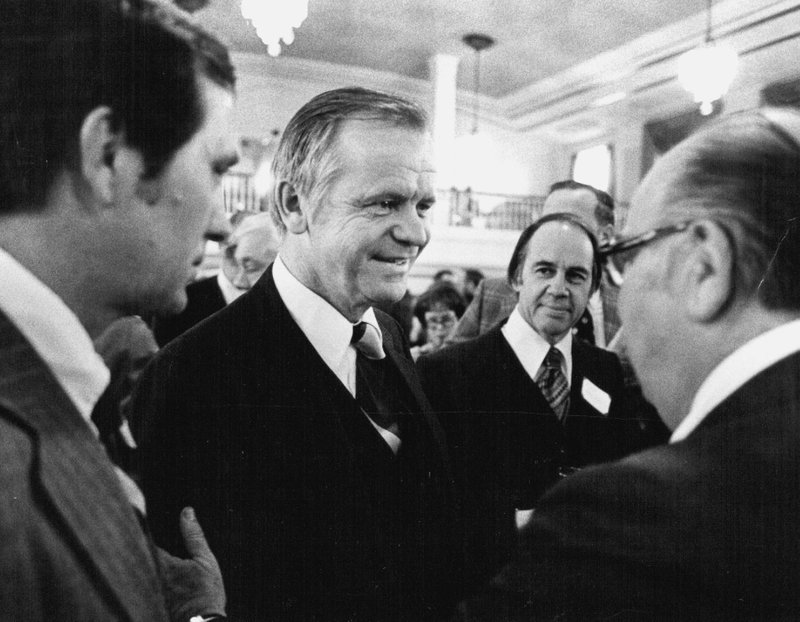 Former U.S. Agriculture Secretary Bob Bergland, a farmer from northern Minnesota who was tasked with selling President Jimmy Carter’s unpopular Soviet Union grain embargo to other farmers, died Sunday. He was 90.
 It has been a big year for the dairy industry and Australian Dairy Farmers – sometimes difficult, but often rewarding.


 Global dairy prices rose for the first time in six months at a fortnightly auction held early on Wednesday as lower volumes of key products were offered at the sale.
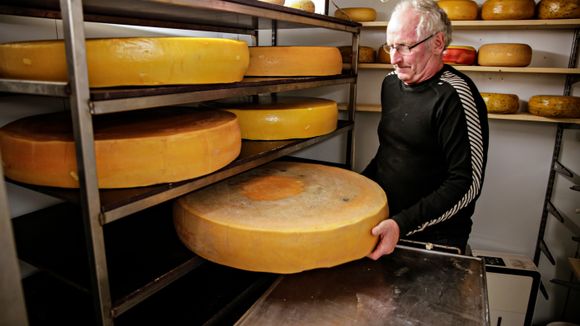 Fanaost, an aged gouda made by Norwegian cheesemaker, Ostegården, has been named World Champion Cheese at the 31st edition of the World Cheese Awards in Bergen, Norway. Produced from a herd of just 12 cows on a farm less than 20km from Bergen, Fanaost rose to the top among a record breaking 3,472 entries judged in a single day at the city’s iconic Grieg Hall.
 After months of back-and-forth and a tumultuous summer of trade disputes between the US, Canada and Mexico, the three North American nations have officially signed the US Mexico Canada Agreement (USMCA), dismantling the previous North American Free Trade Agreement (NAFTA).
/arc-anglerfish-tgam-prod-tgam.s3.amazonaws.com/public/X4UFR5HTY5E3VD6U3R3AJ3C354.jpg) Canada’s milk producers say Canada has surrendered its ability to independently manage its dairy system with the signing of the updated North American free-trade agreement on Friday.
Canada’s milk producers say Canada has surrendered its ability to independently manage its dairy system with the signing of the updated North American free-trade agreement on Friday. With today’s signature of the US-Mexico-Canada trade agreement, Prime Minister Trudeau failed the Canadian dairy sector again. In the space of a few weeks, the federal government has gone beyond the original concessions made when the USMCA was announced, and signed a deal today granting the US oversight in the administration of our dairy system. This equates to no less than a loss of sovereignty for
  “Although we’re pleased that the three countries have taken the next step in moving the USMCA forward, the agreement is a hollow victory unless the Section 232 tariffs on steel and aluminum imports are lifted.
 On November 14, 2018, the Dairy Farmers’ Political Federation of Japan (Nihon Rakuno Seiji Renmei) gathered at the LDP headquarters in Nagata-cho, Chiyoda ward, Tokyo, to announce the launch of the initiatives for maintaining and developing small- and medium-sized businesses-most of them run by families-that are responsible for the majority of production of milk in Japan. Their ultimate goal to make a breakthrough for dairy farmers, many of which are close to being out of business. Approximately 700 farmers attended the meeting and explained the difficulties and the support they need to the diet members of the ruling party. The federation authorized the resolutions seeking political supports in stabilizing their businesses and strengthening their production infrastructure, including an increase in milk price and expanded measures against natural disasters.
 Times are tough for farmers across the nation, milk prices are low and dairy producers have been hit hard by tariffs on the products they export to some of our major dairy trading partners.
 Dairy remains a sticking point between the United States and Canada as the countries prepare to sign a new North American trade pact this week, according to four sources familiar with the matter.
 New Zealand’s dairy cow population is nearly back at the five million mark.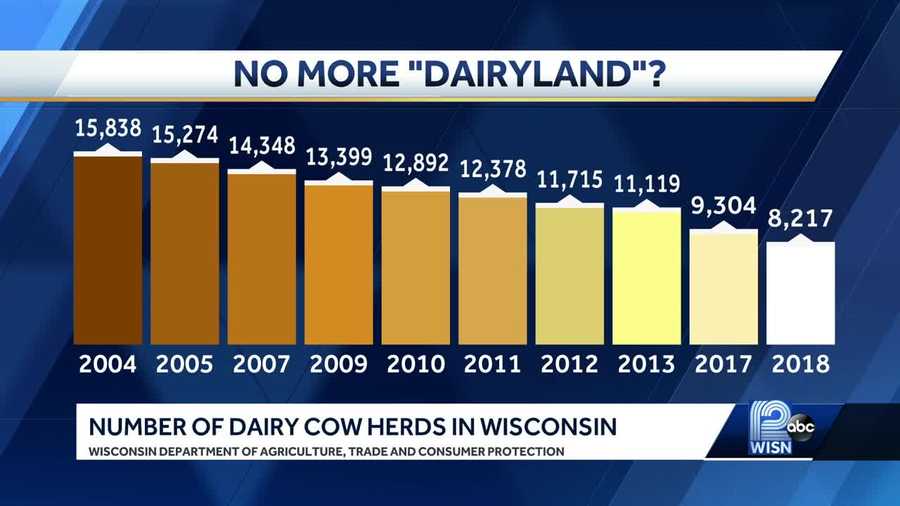
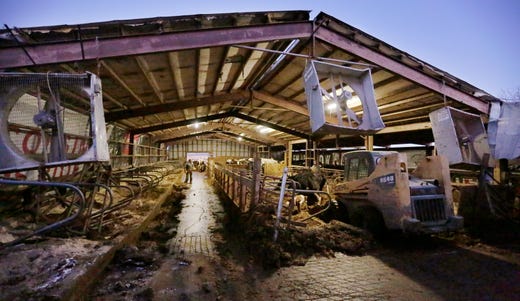

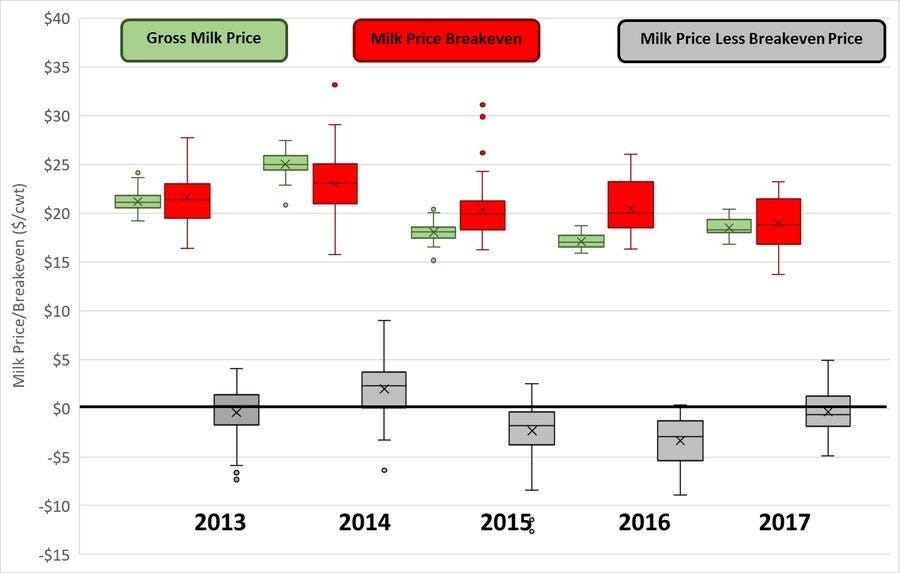
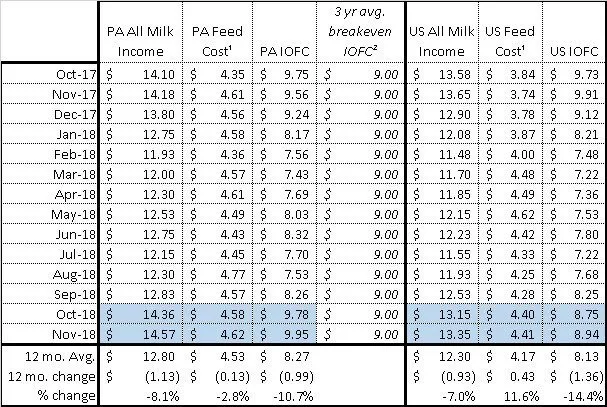
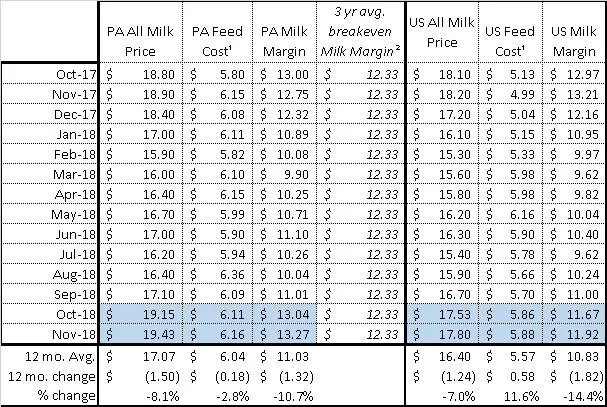
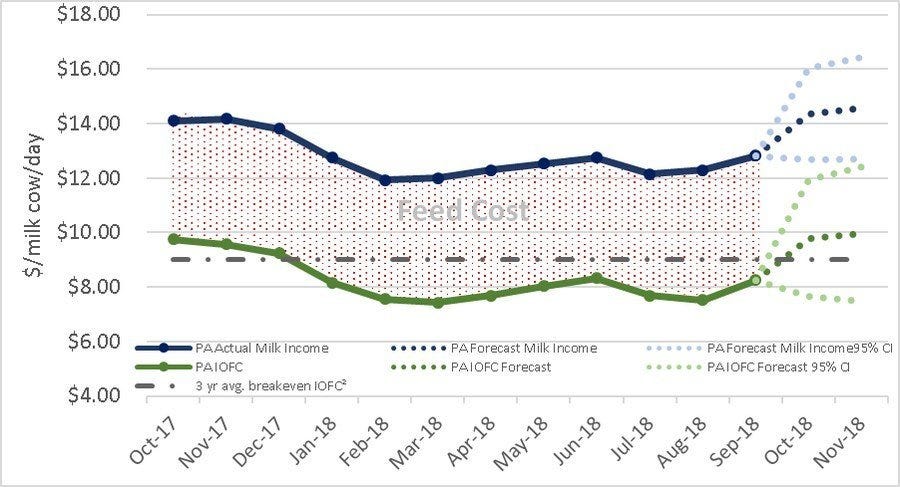
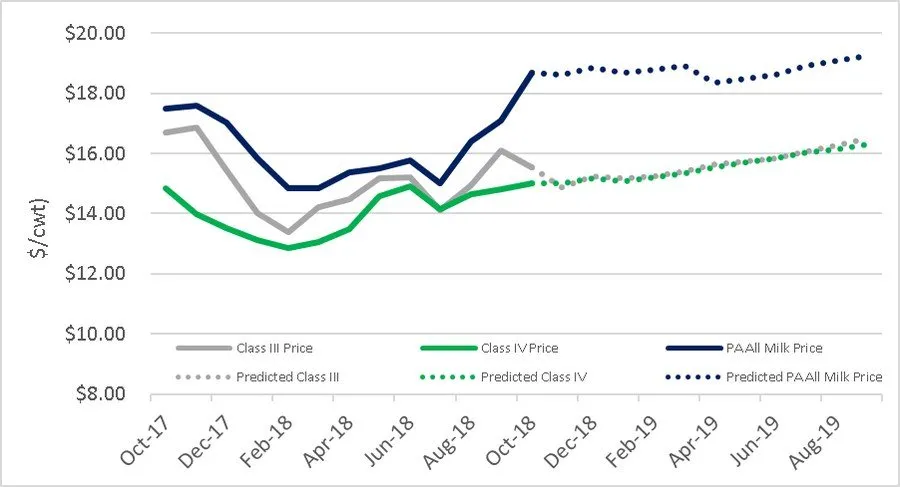
 Dairy Farmers of Ontario (DFO) has committed to updating producers on the United States-Mexico-Canada Agreement (USMCA). The following highlights some of DFO’s recent related activities and further information on the USMCA.
 Gillibrand Successfully Secured $73 million in Senate-Passed Farm Bill to Put Money Back into the Pockets of New York Dairy Farmers
 In 2006, Stephanie Doane moved from the San Francisco Bay Area to a small, rural community in the high desert of Nevada.


 “The impacts of the tariffs will continue to exacerbate lower margins for an industry seeing a high rate of retirement from small dairy farms,” Cook told FOX Business.
 The four UK farming unions are urging all dairy farmers to engage with the forthcoming government consultation on dairy contracts to make their voice heard and speak up for a more effective dairy supply chain, with fairer terms for farmers.
 Fewer bobby calves will be sent to slaughter if new Kiwi technology which allows farmers to select an animal’s sex takes off.
 The hike comes in the wake of a surge in wholesale prices by farmers. On Wednesday, Morrisons became the first of the big supermarkets to raise prices by up to 7.5 per cent. The supermarket’s average price for fresh milk is up three per cent after it increased the cost of a fourpinter by 5p to £1.15, up 4.5 per cent.
 Economists are sharpening their pencils and trimming milk price forecasts in the wake of record New Zealand dairy production.
 America’s farmers have been shut out of foreign markets, hit with retaliatory tariffs and lost lucrative contracts in the face of President Trump’s trade war. But a $12 billion bailout program Mr. Trump created to “make it up” to farmers has done little to cushion the blow, with red tape and long waiting periods resulting in few payouts so far.
 Farmers who supply a Northern Ireland-based dairy cooperative are facing a “double blow” of not receiving a “promised bonus” on top of a 1p per litre milk price reduction.
 A2 Milk shareholders have voted by an overwhelming 95.7 per cent in favour of chief executive Jayne Hrdlicka retaining her dual role of boss as well as board director.
 As you grab ingredients for your Thanksgiving Day meal, you might have noticed lower milk prices.
 When all four of their children expressed interest in remaining on the family dairy farm, Jeff and Mariann Metz knew some big changes would be in order to make that happen.



