The prestigious 2018 President’s Medal Award was awarded last night by Holstein UK. Jess Mills from the Derbyshire Holstein Young Breeders Club claimed the title, and has won an engraved medal and a trip to the Royal Winter Fair in Toronto, kindly funded by HYB’s principal sponsor, Semex, later this year. Holstein UK also congratulate the two runners up James Doherty from the Shropshire Club and Jess Hurren from the North East Club.
Sponsored by Semex, the Holstein UK President’s Medal is regarded as an ‘Oscar’ of the dairy world; it recognises and rewards young talent and highlights individuals who are the dairy farmers of the future. The Award, presented at the Semex Conference last night in Glasgow, recognises a HYB member who has made an outstanding contribution to the breed, Holstein Young Breeders, and, in particular, their own Club.
The entry process started with each HYB Club being asked to nominate one young breeder aged between 23 and 26 years of age. Six young breeders were shortlisted for interview with the panel of judges, including Peter Waring (Holstein UK President), Darren Todd (Holstein UK Geneticist) and Rodger Mather (Semex Representative), following submission of an essay titled “Nine years after the first genomic bulls were used female genomic testing is on the rise. Discuss the role of this technology within modern dairy farming and how you could use this data within your own herd management”. Following the interviews, the final three were selected and, last night, the winner was officially announced.
Holstein UK President, Peter Waring, was one of the judges and commented on the winner, “All three candidates were very impressive and came across as particularly hard-working, dedicated young people. We were very impressed by their passion and enthusiasm for the industry as a whole, but in particular pedigree breeding. They displayed some very innovative thinking in their quest to improve their herds. HYB has obviously been a great experience for them, both socially and in terms of developing their knowledge of dairying. With the future of our industry in the hands of such capable young people, we should be confident that British dairying will progress and thrive in the years to come.”
Hannah Williams, Head of Events & Marketing for Holstein UK, added, “It is wonderful to see such inspirational young people coming through Holstein Young Breeders and we would like to congratulate them all. On behalf of Holstein UK and HYB I would also like to thank our principal sponsor Semex UK who continue to make a significant financial contribution to the advancement and success of Holstein Young Breeders.”
Total 2018 Cooperatives Working Together (CWT) assisted member sales reached 72.5 million pounds of American-type cheeses, 17.4 million pounds of butter (82% milkfat) and 41.6 million pounds of whole milk powder. The milk equivalent of these sales is 1.364 billion pounds on a milkfat basis.
For the week of December 17th, member cooperatives accepted 23 offers of export assistance from CWT that helped them capture sales contracts for 3.214 million pounds (1,458 metric tons) of Cheddar and Monterey Jack cheeses, 204,462 pounds (100 metric tons) of butter and 476,199 pounds (216 metric tons) of whole milk powder. The product will be delivered during the period from January through June 2019.
Assisting CWT members through the Export Assistance program positively affects all U.S. dairy farmers and all dairy cooperatives by strengthening and maintaining the value of dairy products that directly impact their milk price. It does this by helping member cooperatives gain and maintain world market share for U.S dairy products. As a result, the program has significantly expanded the total demand for U.S. dairy products and the demand for U.S. farm milk that produces those products.
The amounts of dairy products and related milk volumes reflect current contracts for delivery, not completed export volumes. CWT pays export assistance to the bidders only when export and delivery of the product is verified by required documentation.
All dairy farmers and all dairy cooperatives should invest in CWT. Membership information is available on the CWT website.
Speaking at the Irish Grassland Association’s (IGA) Dairy Conference on January 9 in Co. Cork, John Roche from Down to Earth Advice presented on the topic of producing marginal milk to the large crowd in attendance on the day.
“In the Irish system of milk production, base milk is cheap and marginal milk is very expensive to produce. Many dairy farmers are eroding their profits for the pleasure of producing extra milk; ego farming is what I like to call it,” the Kerry man explained.
Touching on what marginal milk is, John said: “Marginal milk is the addition or reduction in milk production when you make a change to a farming system according to the reports published in agriland.ie.
“By knowing the increase or decrease in milk – and the change in the total cost – we can work out what was the effect of changing the farming system on overall profitability.
“There is no such thing as a fixed cost; I like to call them mixed costs because they are a mixture of fixed and variable costs. As feed expense goes up, variable costs also go up, but by almost 20%.”
Continuing, he said: “When you feed more bought in feed – such as concentrates to support the higher stocking rate – you are either milking more cows or producing more milk/cow.
“As a result, you’re harvesting more milk which means the parlour is running for longer and more milk has to be cooled. This means the electricity bill goes up. Electricity is a fixed cost, yet it goes up when you intensify,” he added.
According to Johns calculations, for every €100 extra a dairy farmer spends on feed on average, total costs go up by €153.
Agriland.ie further added that voicing his concerns, John said: “The trap many farmers fall into when doing their own calculations is that they do it based on milk price and not total costs. Irish research from Teagasc shows that 45c/L is the cost of marginal milk in Ireland.
“Using supplements to increase stocking rate results in very expensive marginal milk and is rarely profitable. This is not the message farmers want to hear in an expanding industry,” he concluded.
More than 100 Indiana dairy farms had to call it quits in 2018.
Agriculture-dependent Indiana saw 10-percent of its dairy farms close in 2018.
The Indiana State Board of Animal Health says there were 1,000 dairy farms in the state producing Grad A milk at the start of the year. By the end of 2018, there were 892 dairy farms still operating.
Going back to 2013, there were nearly 1,500 grade A dairy farms in Indiana.
What’s putting the squeeze on those farmers who are used to doing the squeezing? Indiana Dairy Producers executive director Doug Leman told The Columbus Republic people are drinking less milk than they used to. Leman adds that the United States as a whole is producing too much milk for the lower demand, and that the White House’s recent tariff spat hasn’t help things either.
Hoosier dairy farmers are also trying to maintain high sanitation standards, high costs, and low margins, the BOAH says.
Southeastern Indiana dairy farms have not been immune from losing dairy farms. So much so, that the BOAH is looking at a different way of servicing farms in the region.
“In Southeastern Indiana, as the number of dairy farms has dropped, the agency has had to adapt efficiently,” the BOAH stated in its January quarterly report. “Our most recent hire in the area is being cross-trained on dairy farm inspection as well as animal health specialist duties. This change will help reduce excessive travel times that would be necessary if that area was absorbed by another inspector.”
I want to personally thank you for the millions of dollars that you have made available to the American dairy farmers. This is the first time that I can remember when a US Secretary of Agriculture has taken a position to make funds available to American dairy farmers. Your action is much appreciated.
The following petition is being circulated by the Dairy Farmers’ Freedom Committee in connection with the Progressive Agriculture Organization (Pro Ag)
However, as a result of actions taken or not taken by the United States Congress or the USDA, the number of dairy farmers in the US has declined from nearly 360,000 in 1981 down to the present level of approximately 40,000. The loss of these dairy farmers has had a devastating effect on rural America. The end result is the following: During each of the years 2015, 2016, 2017, and 2018, dairy farmers have lost nearly 12 billion dollars with the loss to rural America of about 60 billion dollars per year.
Actions must be taken to preserve our remaining dairy farms. Therefore we are requesting that you immediately conduct milk hearings across the United States, giving our average dairy farmers an opportunity to tell you how deplorable conditions are on the majority of our dairy farms.
There are three or four things we are asking you to consider at the hearing. 1) It is time for a new pricing formula in our Federal Orders to be changed to consider the dairy farmers’ cost of production.
2) If a milk supply management program is needed, it should be patterned after the program contained in the Federal Milk Marketing Improvement Act (formerly known as S-1640 or the Specter-Casey Bill).
3) It is time that an investigation be conducted to determine if the usage of whey protein concentrate and milk protein concentrate is safe to be used, and the impact these products are having on the so-called surplus of milk in the United States.
4) If everything else fails, then a $20 per cwt. (hundredweight) floor price must be placed under milk used to manufacture dairy products. This letter will be circulated all across the United States. I hope you can act immediately upon it. We are submitting a large number of petitions to you, already signed by dairy farmers and consumers. Anyone that is circulating this petition may remit it to Pro-Ag at our address, 1300 Rattlesnake Hill Rd, Meshoppen, PA 18630.
US dairy farmers, after enduring years of low milk prices, are now hurting even more thanks to the trade war. Ryan Mercer, Free Press Staff Writer
After years of low milk prices, about 75 dairy farms closed across Vermont in 2018. Harold Howrigan of Fairfield says the past year set a new low for dairy farmers in the state.
And the year isn’t looking any better. In fact, dairy farmers say that it’s looking worse.
President Donald Trump’s tariff actions and the resulting trade war shut off access to foreign markets for U.S. dairy farmers. The U.S. Dairy Export Council, an organization funded almost entirely by dairy farmers, has worked for decades developing those same markets around the world for their dairy producers.
“Those markets were taken away with the stroke of a pen,” Howrigan said, referring to Trump’s move in July 2018 that imposed billion of dollars of tariffs on Chinese goods and prompted China to impose retaliatory tariffs of its own. The trade war then expanded to other countries like Canada and Mexico.
Now that U.S. farmers have been cut off from those markets, there’s no guarantee that they will get them back.
“It’s going to take some time,” said Mark Magnan, a dairy farmer in Fairfield, who owns and operates a fourth-generation dairy farm.
Magnan said that if the trade war ended tomorrow and U.S. dairy farmers were allowed to sell to the foreign markets they lost, they’d have to compete to get back. And to do that Magnan says they’ll have to lower U.S. milk prices.
And lower prices are the last thing dairy farmers need right now. Years of low prices have already taken a heavy toll. Aside from just not covering costs, Magnan said sustained low prices have driven down the value of cattle and have devalued other assets that farms rely on for collateral at the bank. That lack of value means farmers can’t borrow as much money for things like seed for the next year’s feed crop or to buffer financial losses from the previous years.
And back to those foreign markets, when U.S. dairy farmers were forced out by the trade war, other countries started moving in to fill the void. So competition is fierce, from countries like Canada, Australia, New Zealand and more.
“There is tremendous competition from the European Union now for those same export destinations,” Howrigan said.
The government did make a one-time payment to dairy farmers to help limit the impacts of the trade war, but of the estimated $1.5 billion lost in 2018, according to the U.S. Dairy Export Council, that payment covered just $127 million of what dairy farmers lost.
“It’s a slap in the face,” Magnan said
He would much rather see some kind of program to drive up milk prices by reducing production which he says would not only solve cash flow problems farmers are seeing now, but would also serve as a long-term benefit after years of financial loss because of low milk prices.
Adding insult to injury, an additional payment scheduled for December never happened because of the government shutdown, which is also preventing dairy farmers from taking advantage of any other farm programs that might help.
“When you force farmers into the economic position we are in now, it makes me wonder where we are going to be in five years,” Magnan said.
Magnan doesn’t see a viable future for his farm if things continue the way they have for the past four or five years.
As for the Trump Administration’s trade war and the impacts on his livelihood, Magnan doesn’t think there is much hope at the moment.
“I don’t think they fully understand [the problem], nor do I think they care.”
Shawn Hernley and daughter Miranda Hernley stand for a photo at the Pennsylvania Farm Show. (Photo: by Ed Mahon, PA Post)
When the tariffs started, Shawn Hernley knew other countries would retaliate.
But he figured — in the big picture — the tariffs would be good for the United States economy.
Then the trade war with China, Mexico and other countries dragged on. Milk prices remained low. And a heifer Hernley could sell for $2,500 to $3,000 a few years ago now might sell for $1,100.
Hernley, a 61-year-old Lebanon County dairy farmer, is one of many farmers struggling in Pennsylvania, a state that is second only to Wisconsin for its number of dairy farms.
The tariffs between the United States and other countries have hit soybean, pork and dairy farmers the hardest in Pennsylvania, according to Mark O’Neill, a spokesman for the Pennsylvania Farm Bureau.
And the issue is especially problematic for Pennsylvania’s about 6,000 dairy farms. The industry has been struggling with low prices because of a global oversupply. In 2016 — before President Donald Trump took office and before the trade war began — the state lost 120 dairy farms, according to the Center for Dairy Excellence in Pennsylvania.
Hernley has seen friends sell off their cattle and find whatever work they can.
“It’s heartbreaking,” Hernley said, adding, “It’s a passion, and it’s who you are. And that is being taken away from you through no fault of your own.”
The tariffs are one more challenge for the industry. Jayne Sebright, executive director of the Center for Dairy Excellence, said the trade war has had an impact on the the amount of dairy products, particularly powdered milk, sent to China, as well as cheese products sent to Mexico.
There have been some positive signs for Pennsylvania farmers hoping for relief from the trade war and other assistance. But even then, there are limits.
In the fall, the United States reached an agreement with Canada and Mexico to replace the North American Free Trade Agreement, but the new pact hasn’t gone into effect yet.
In December, the BBC reported that China bought U.S. soybeans for the first time since the trade war began, although it was uncertain whether a broader deal would follow.
The December farm bill had general provisions helpful to farmers, Sebright said, but some have been delayed because of the partial federal government shutdown.
Sebright said dairy farms in Pennsylvania tend to be smaller than in other parts of the country, and it’s harder for those farmers to weather this type of downturn.
Before the Farm Show officially began, as officials gathered to unveil a half-ton, superhero-themed butter sculpture, Democratic Gov. Tom Wolf acknowledged some of the challenges facing the dairy industry.
His administration recently announced a new $5 million grant program to help dairy farmers. Lawmakers approved the grant program as part of the state budget in June.
Among other things, the program will encourage farmers to expand their products, such as by offering cheese and yogurt, and to use organic production methods.
At the federal level, the Trump administration announced in July that it would make an estimated $12 billion in government assistance available to farmers, including soybean, dairy and hog producers.
Mark O’Neill, with the Pennsylvania Farm Bureau, said that funding might help some farmers pay bills, but he said it’s not enough to make them whole. And some payments will be on hold because of the shutdown.
“Farmers really don’t want this money. They want a free market system,” O’Neill said, as he stood near a Pennsylvania Farm Bureau booth where people could pick up pink pig hats and take photos in front of a farm picture. “They want to be able to sell their products on the open market, get the best price they can possibly get.”
‘Never want to come to that’
Miranda Hernley, 24, arrived at the Farm Show Tuesday and planned to stay there with her family’s heifers until Saturday. She brought a cot to sleep near the animals.
She splits her time between working on the family’s dairy farm and working at a feedmill — where farmers buy food to feed their animals.
At a Christmas party, the feedmill owner told employees that company gave some feed away for free to farmers who didn’t have the money to pay. So that’s one side of the industry she sees.
And on the other side, the thought of leaving the dairy industry feels like it’s always in the back of her mind. “But you never want to come to that,” Miranda Hernley said.
On Tuesday, her father, Shawn Hernley, was clipping the hair of his white and brown heifers inside the Pennsylvania Farm Show Complex.
He took a break to talk to a reporter about the tariffs, which he supported at first. At one point — just as Hernley finished talking about how much less heifers sell for now — a man walked up to him asked if there were any animals his child could pet. Shawn Hernley pointed to the end of a row.
“The calf on the end you can certainly pet, yeah,” Shawn Hernley told the man.
He turned back to the reporter. These days, Hernley is more on the fence about the tariffs. He thinks they’ve been a burden on the economy. He’s skeptical that any deals would help smaller farms.
“As long as you have big money involved, mega corporations — yeah, the family farm has such a small voice,” Hernley said.
‘Trump says he loves the farmers’
Jill Dice grew up on a dairy farm and married a dairy farmer. She and her husband can only afford staying in the dairy business because her husband’s family has multiple businesses.
She thinks the tariffs have had a big impact on her family’s Lebanon County farm.
“Trump says he loves the farmers. Well, it’s really not helping us right now,” Dice said. “And I’m not political in any way. …We just need help so that we can survive.”
Jason Nailor, a 36-year-old Cumberland County dairy farmer, voted for Trump in 2016 and remembers telling his wife that his only fear was that Trump would make other countries mad.
“Sure enough, he did that,” Nailor said.
But Nailor said before the tariffs went into effect, he locked in the price of soybeans he sells to a local mill. It was a risk, but it ended up benefiting him this past November. He sold those soybeans for what they were going for before the tariffs.
He doesn’t have a soybean rate locked in for the next season, and he’s not not sure how many he’ll plant. As for milk, he doesn’t think the tariffs were that big of a factor.
And Nailor has received payments from the federal government as part of the $12 billion program Trump announced last year. He said he’s talked to a lot of other farmers who were skeptical of those payments.
“I’ve been, like, you know, ‘Hey, it’s the real deal, guys,’ ” Nailor said.
Still, there are a lot of questions for Nailor and farmers like him.
His day starts around 4 a.m. to milk cows. Sometimes, he wonders why he’s doing it.
When asked if he’s thought about leaving the dairy industry, Nailor laughed.
“Every day for the last couple years now,” he said. “But it’s going to be a decision we’re going to look at hard at the end of this year, if things don’t turn around.”
Before he became a farmer, Nailor studied electronics engineering at a technical institute. He worked with computers.
Maybe, he has sometimes thought, he’ll go back to that.
A former dairy barn, now empty of cows. (Photo: John Oncken)
Tammi Kohlman spent a half-hour talking to 120 agricultural professionals about recognizing the signs of, and helping prevent, suicide.
Her presentation at a meeting in Kiel this week aimed to help those who work with farmers navigate the multi-year crisis the dairy industry and other farm sectors are facing in 2019.
That includes helping producers who might be suicidal.
Kohlman, coordinator of CSI Destination Zero in Fond du Lac, an organization focused on suicide prevention, pointed to the number of people at the meeting as a bright spot as farmers face tough decisions and unknown market and price conditions in the new year.
“It shows people care and that people recognize there is an issue and want to help,” she said at the meeting.
“This is going on the fifth year of very low milk prices, and other commodity prices,” said Scott Gunderson, agriculture agent with Manitowoc County University of Wisconsin-Extension. “It’s taking an economic and emotional toll on people — farmers especially — but also those who work with farmers.”
The event was hosted by extension offices in Manitowoc, Fond du Lac, Calumet, Sheboygan, Ozaukee and Washington counties.
Herd decline
Participants ranged from ag lenders, to dairy equipment providers and dairy nutritionists. Farmers are their clientele, but in some cases, they’re more akin to family.
“Those people take the stress home with them as well,” Gunderson said. “They’ve worked with farmers, in some cases, for generations… Their families feel the stress.”
The economics of milk prices below the break-even point is also squeezing some farmers out of the industry. The October all milk price received by the state’s farmers was $17.60 per hundredweight. Break-even is generally around $18, but varies by operation.
“If you can’t show a profit, in any business, ultimately that business is doomed to not succeed, and I think that’s where we are in some cases,” Gunderson said.
Manitowoc County lost a dozen farms in 2018, a trend he hopes can be reversed in 2019, but many unknowns — including foreign trade and domestic consumption of dairy products — remain question marks.
There were 8,163 milk cow herds in the state in December, down almost 16 percent from 9,711 in 2015, according to state figures. Many of the cows, however, have remained in the state, moving to other operations.
Older farmers are choosing to retire while some farms are leaving, or will leave, the business because it simply doesn’t pay to continue.
Industry impact
What happens on the farm ripples to suppliers and lenders working directly with farmers as they navigate the rocky shoals of staying in business.
Denmark State Bank in Denmark sent its ag lending specialists to the meeting.
“Every farmer that calls maybe has no problem, a small problem, or a big problem, and it’s our job to figure out what size problem they have and what we can do to help,” said David Kappelman, senior vice president/agribusiness manager with the bank. “We share in their success and we feel their failures as well, so we’re not immune to that.”
He said most farms that have left the business have been voluntary, but that might change.
“Now there are going to be more stressed situations where they can’t do anything but file or stop paying,” Kappelman said.
That’s the backdrop of dairy farming in 2019.
Kohlman said asking people if they’re thinking about suicide, taking the time to listen, and showing they care are ways everyone can help producers in crisis. That’s anyone from veterinarians to bankers to the faith community.
“The financial burdens are very real and the uncertainty with everything,” she said. “You might not be mental health professionals, but we all have a role to play in preventing suicide.”
A hard Brexit could, indirectly, provide some opportunities for high profit dairy farmers, according to one leading Agri Consultant.
Cork consultant Mike Brady told the Grassland Conference this week that at the moment young people coming into dairy farming have to be prepared to move for their chosen career.
He said that young dairy farmers who don’t own or even come from a farm can have a successful and profitable career in farming, but they must be prepared to move location to do so.
“If you’re from West Cork you’re not going to end up milking 300 cows in West Cork. So you better be prepared to move where there will be opportunities.”
However, he also said that a hard Brexit may present an opportunity for some farmers, notably high profit dairy farmers.
“It’s a harsh thing to say but a hard Brexit might be the best thing ever for the dairy industry. That will free up lots of land.”
He said that a hard Brexit might be tough on the dairy industry, but it would be ‘catastrophic’ on the beef industry in Ireland.
“There is going to be substantially less single farm payment and if there are tariffs going into Britain, it will be catastrophic for the beef industry in this country.
“Figures from the National Farm Survey show that if you take out the subsidies, the average beef farmer with 100 acres loses €3,000 a year. If that goes to minus €20,000 a year, will he continue to do it?
“I doubt it. So that will free up land for dairy farmers, which is profitably and will be profitable, even if you take a 20pc hit if we have a hard Brexit, they will still survive.”
“It could be an opportunity for high profit dairy farmers, which it is for high profit farmers in the UK.”
Land in the West
Meanwhile, growing inequality in the farming sector will lead to a return of “landlordism” in the west, Roscommon-Galway TD Michael Fitzmaurice has claimed.
Deputy Fitzmaurice said land purchases in the West were now dominated by either large-scale dairy operations or forestry interests, with small drystock farmers losing out.
“It’s either trees or the big dairymen that are mopping up all the ground that’s coming for sale,” Mr Fitzmaurice said.
He said local drystock farmers did not have the borrowing capacity to compete with either of these groups, adding that large dairy operators had the access to credit and the CAP payments to outbid most drystock farmers for any good parcels of land that came on the market.
Private forestry interests were also willing to pay more for planting ground, he said. Deputy Fitzmaurice (right) claimed that over €5,000/ac was paid for a section of land near the Galway-Roscommon border recently that is likely to go for trees.
“I see this happening around the country. Local farmers with 50-60ac who are trying to buy 20-30ac more just can’t get the finance to compete with the dairy farmers or forestry interests,” he said.
“The small man and woman are being pushed out.” He said State-backed low-interest loans should be made available to farmers with under 100ac who are seeking to expand the size of their holding to a commercial level, or who are looking to consolidate a fragmented farm.
“Something has to be done to help these farmers, because Ireland is heading for a return to landlordism the way the land market is going,” he stated.
There is a massive 1.4 billion pound cheese glut in the United States. But what that cheese glut reveals is that it’s getting harder for small dairy farms to compete.
“Milk is so complicated. And nobody knows how it got this way,” said farmer Layne Klein.
Klein is a third-generation dairy farmer and owner of Klein’s Dairy Farm in Northampton County. According to the USDA, milk production has gone up 13 percent in the last 10 years.
“40 years ago the average cow produced 15 or 16,000 pounds a year. Now they’re producing 23 to 24,000 a year,” said Klein.
But dairy consumption is on the decline, thanks to Americans adopting vegan diets and nut milks.
“Fluid milk consumption per person has gone down for the last 30 years,” said Klein.
So if demand is down, why is supply up? Could it be subsidies? Not really.
“What they’ve done now is they’ve put the burden of subsidy on the farmer. So you’re supposed to take out almost basically an insurance policy,” said Klein.
Klein has a different explanation.
“We do not control the price of milk when it goes to the dairy. They tell us what they’re gonna pay us. The only way you can make more income is make more milk,” said Klein.
Which has created a vicious cycle. In order for dairy farms to make enough income, they make more milk. The more of a surplus there is, the more prices fall.
And in order to keep all that milk from perishing, they turn it into cheese.
“They have huge, huge refrigerated warehouses where they store it in. It’s commercial cheese,” said Klein.
1.4 billion pounds to be exact of commercial American cheese that consumers don’t really want to eat either. So the more cheese that’s added to storage, the worse it is for dairy farmers.
“I remember when there were 150 dairy farms in Northampton County. We’re down to a dozen,” said Klein.
Milk prices have dropped nearly 40% over the last four years.
“Dear President [Donald] Trump – Liquidate surplus cheese,” the American Dairy Coalition wrote this week on the behalf of U.S. dairy farmers who are in “a crisis.”
“As each week passes, an increasing number of hard-working dairy families are going out of business. Many of us feel helpless, and we struggle to support our families; some have even required food stamps to put food their tables,” the letter stated.
While the group said the recent government assistance was appreciated, the industry needs higher milk prices. “We want to become profitable, but due to the uncertainty created by lingering retaliatory tariffs, we only see a slight — if any — rebound anytime soon,” the coalition explained.
According to the group, milk prices have dropped nearly 40% over the last four years. Additionally, cheese exports from the U.S. to Mexico are down more than 10% annually, and shipments to China have fallen almost 65% annually.
“If this isn’t bad enough, the industry faces onerous and costly dairy regulations as well as a shortage of workers — making it hard to find a way each day to stay in business,” the letter added.
Also, despite the government seeking to offset the negative impacts of milk prices due to the tariffs set by Mexico, Canada and China, more action is needed, the coalition said.
“Currently, 1.4 billion lb. of American, cheddar and other types of cheese are sitting in cold storage facilities throughout the U.S. With the price of milk at a record low, it is necessary that this surplus be liquidated to jump-start the industry,” it said.
Further, the group pointed out that an estimate 40 million Americans struggle with hunger and food insecurity and that the U.S. dairy product industry supports nearly 3 million workers, generates more than $39 billion in direct wages each year and has an overall economic impact of more than $628 billion.
“The diets and the jobs of countless Americans depend on the success of the dairy industry to provide an important nutritional staple at an affordable price. Please help us by helping food insecure families across the nation,” the American Dairy Coalition said.
The coalition encouraged people to reach out to Congress to “stop the hemorrhaging” of the U.S. dairy industry.
The state of Indiana once featured more than 2,000 dairy farms. However, according to Indiana Dairy Producers, that number has now dipped below 900.
“It’s not a state by state issue,” said Executive Director of the Indiana Dairy Producers Doug Leman, citing similar struggles across the Midwest and the entire country. “It’s a general industry issue.”
In 2018 alone, Leman says 10 percent of all Indiana dairy farms stopped production. One of those farms was Kelsay Farms, which stopped milking on November 20.
“Just walking around here, it’s like the rapture happened and we didn’t go,” owner Joe Kelsay said while walking through the building that once housed 500 cows, most of which have now been sold. “It’s so quiet and lonely and empty.”
It was a tough decision for Kelsay and his brother to make. He says after crunching the numbers, the move was an obvious choice to make financially. However, the emotional connection to the land and the business made the obvious choice the more difficult one.
“I grew up here,” said Kelsay as he motioned to the house on the property. “My brother and I in the house here, it’s difficult to walk outside and not see milk cows.”
Founded in 1835, Kelsay Farms has been run by six generations of Kelsays on their Whiteland, Indiana property. While dairy was their main business for decades, Kelsay says the farm is now shifting its focus to corn, soybeans, alfalfa and wheat. It’s a tough but necessary change.
“You really somewhat kind of identify as ‘I’m a dairy farmer, and I take care of these cows and they take care of me and my family,” Kelsay said. “To get to the point where you need to choose to do something different… It’s excruciating.”
At one point in time Kelsay farms was producing 12 million pounds of milk a year. But with the rise of alternative dairy products, lower prices and a slew of other factors, it only took four years to bring the 184 year old family business to a halt.
“2014 was probably one of the best years the industry ever experienced,” Leman said. “Since that time it’s just been in the doldrums.”
Leman says in 2014, Indiana had about 1,400 diary producers in the state. He can’t remember a time when the state featured less than 900 operations.
“It’s a sad day for the farmer, it really is,” Leman said. “They feel like their way of life is changing.”
Leman knows the struggle firsthand. It wasn’t too long ago that Leman himself was a dairy farmer, faced with the decision to close down his operation.
Today, he talks from experience about how challenging that time was. He can also tell you from experience that everything will be okay, because the resilience of a farmer is second to none.
“Life does go on,” Leman said. “The sun will come up tomorrow… and God is good.”
It’s a stinky time for the American cheese industry.
While Americans consumed nearly 37 pounds per capita in 2017, it was not enough to reduce the country’s 1.4 billion-pound cheese surplus, according to the U.S. Department of Agriculture. The glut, which at 900,000 cubic yards is the largest in U.S. history, means that there is enough cheese sitting in cold storage to wrap around the U.S. Capitol.
The stockpile started to build several years ago, in large part because the pace of milk production began to exceed the rates of consumption, says Andrew Novakovic, professor of agricultural economics at Cornell University.
Over the past 10 years, milk production has increased by 13 percent because of high prices. But what dairy farmers failed to realize was that Americans are drinking less milk. According to data from the USDA, Americans drank just 149 pounds of milk per capita in 2017, down from 247 pounds in 1975.
Suppliers turn that extra milk into cheese because it is less perishable and stays fresh for longer periods. But Americans are turning their noses up at those processed cheese slices and string cheese — varieties that are a main driver of the U.S. cheese market — in favor of more refined options, Novakovic tells Here & Now’s Jeremy Hobson. Despite this shift, sales of mozzarella cheese, the single largest type of cheese produced and consumed in the U.S., remain strong, he says.
“What has changed — and changed fairly noticeably and fairly recently — is people are turning away from processed cheese,” Novakovic says. “It’s also the case that we’re seeing increased sales of kind of more exotic, specialty, European-style cheeses. Some of those are made in the U.S. A lot of them aren’t.”
Novakovic also notes that imported cheeses tend to cost more, so when people choose those, they buy less cheese overall. The growing surplus of American-made cheese and milk means that prices are declining. The current average price of whole milk is $15.12 per 100 pounds, which is much lower than the price required for dairy farmers to break even.
“It’s the same as it is for everything else: If you’ve got too much of something, the price has to go down until consumption rises,” Novakovic says.
Some analysts have raised fears that U.S. trade disputes with China and Mexico could also negatively impact the dairy industry. But according to the U.S. Dairy Export Council, the impact of retaliatory tariffs on American dairy products has been relatively small, not to mention that the U.S. exports only about 6 percent of its cheese.
That is to say that the price of letting pounds of cheese sit idle in cold storage comes back to dairy farmers. Since the 1970s, the industry has consolidated with more cows housed on larger farms, but now even those farms can’t compete. In Wisconsin alone, hundreds of farms closed in 2018, The Wall Street Journal reported.
“A lot of farmers would say, ‘Well, make it stop.’ But the fact of the matter is we’re still pushing out a little bit more milk than we know what to do with,” Novakovic says. “And really, it’s not a big number, but until those two numbers get reconciled, we’re going to continue to see these low prices.”
Dairy export rival the United States has sounded the alarm about New Zealand’s latest trade agreement, saying it’s critical the US accelerates efforts to hunt new export trade deals.
The United States Dairy Export Council (USDEC) said US dairy competitors were “aggressively” pursing new trade deals in key US export markets, noting the Comprehensive and Progressive Trade Agreement for Trans-Pacific Partnership (CPTPP) which includes New Zealand, Australia, Canada and Japan, took effect from December 30.
In a message to USDEC subscribers, chief operating officer Matt McKnight said for US dairy farmers to stay competitive it was critical the US upped efforts to pursue bilateral negotiations with “high potential” markets like Japan, the United Kingdom, Vietnam and “other agriculture importers”.
The Trump administration had announced its intention to start talks with Japan, the UK and the EU this year and had expressed interest in a model trade agreement with an African nation, McKnight said.
One of the big questions for 2019 was how quickly would markets shift in response to competitors’ trade deals, he said.
“The other big question is: even though trade negotiations can take considerable time to finalise, will we see US progress in advancing talks with Japan and other markets to match or counter our competitors’ efforts?”
USDEC is pushing for the US dairy industry to build exports from the equivalent of about 15 per cent of all milk solids produced to 20 per cent.
Last year, the first full year of its plan, US dairy exports were equal to 16.3 per cent of total US milk solids, which was a record.
McKnight said how far further USDEC’s growth plan developed in 2019 depended on what he called signposts that would shape market opportunities and direction.
These included the need to chase trade deals and efforts to remove Chinese and Mexican retaliatory tariffs.
A report from Texas A&M University had forecast US dairy export losses from these tariffs as high as $800 million a year, resulting in American dairy farmers losing up to $2.8 billion a year in lost sales and lower milk prices, said McKnight.
USDEC was hopeful for a resolution with Mexico and was heartened by a temporary truce in December between the US and China, with the agreement to postpone additional tariff hikes set to kick in on January 1. The two sides had set a deadline of March 2 to reach a deal and avoid escalation of the trade conflict.
“The retaliatory tariffs won’t grind all US dairy exports to a halt, and on their own, do not doom growth aspirations,” said McKnight.
“Indeed US suppliers have had some success redirecting product to other markets like Southeast Asia. But the tariffs make us less competitive in two critical markets and heighten the challenge of getting to the next 5 per cent.”
China’s dairy consumption was another signpost to the outlook for this year, he said.
China’s dairy imports grew by more than 7 per cent by volume in the first 11 months of 2018.
“China continues to drive global dairy trade, even though second-half buying slowed. Much will depend on China’s economic health in 2019, but if the nation’s imports are up 5-10 per cent again as many expect they could be, coupled with tighter supply and little to no stock overhang, we could be in for a sizeable shift in market sentiment in the second half of the year.”
Another factor affecting dairy exports in 2019 would be the terms of the UK’s exit from the European Union, a controversy due to be settled in March, said McKnight.
Whether the outcome was no deal or a “hard” Brexit, there would be a ripple effect on global dairy markets and US export ambitions.
A look at the key variables that will impact dairy trade this year.
In 2016, the U.S. Dairy Export Council (USDEC) devised a plan we called “The Next 5%.” It was a set of strategies and tactics aimed at providing a foundation for U.S. dairy suppliers to build U.S. dairy exports from the equivalent of about 15 percent of U.S. milk solids to 20 percent.
In 2018, the first full year of that plan, the industry used that foundation to build the first floor. Through 10 months, U.S. dairy exports were equal to about 16.3 percent of U.S. milk solids, a record. By comparison, exports in 2017 were 14.7 percent of milk solids; the previous high was 15.5 percent in 2013.
How far we get in completing the building in 2019 is the subject of this article. What follows is not a forecast of U.S. growth expectations, but rather eight signposts that will shape market opportunities and direction in the year ahead.
1. Efforts to remove retaliatory tariffs.
A report from Texas A&M’s Center for North American Studies forecast U.S. dairy export losses from Chinese and Mexican retaliatory tariffs as high as $800 million per year, resulting in U.S. dairy farmers losing up to $2.8 billion per year due to lost sales and lower milk prices. We are already seeing erosion in the U.S. position in China in skim milk powder, whey and cheese, and slower growth for U.S. cheese in Mexico.
USDEC has made the dangers clear in comments to the U.S. government, letters to policymakers and meetings with officials. We are hopeful for a resolution with Mexico, where the retaliatory tariffs are specifically related to U.S. Section 232 tariffs on steel and aluminum. China’s retaliatory tariffs, however, are related to much broader U.S.-China economic differences and likely will take more time to resolve.
On the plus side, after months of stalemate, U.S. and Chinese leaders came to a temporary truce in December, agreeing to postpone additional tariff hikes that were set to kick in Jan. 1, 2019. The two sides are back at the bargaining table and have set a March 2, 2019, deadline to reach a deal and avert further escalation of the trade conflict.
The retaliatory tariffs won’t grind all U.S. dairy exports to a halt and, on their own, do not doom growth aspirations. Indeed, U.S. suppliers have had some success redirecting product to other markets, like Southeast Asia. But the tariffs make us less competitive in two critical markets and heighten the challenge of getting to The Next 5%.
2. Impact of supply and demand realignment.
The main anchor to dairy expansion over the past two years has been oversupply: Aggregate milk production growth from the major supply regions around the world has outpaced global demand, exacerbated by 380,000 tons of skim milk powder (SMP) languishing in EU intervention. In 2019, that market anchor is poised to be hoisted.
Collective milk production growth from the four largest global dairy suppliers (Australia, the EU, New Zealand and the United States) eased significantly in the second half of 2018, the result of poor weather, fodder shortages and rising margin pressure for most farmers.
Historically, milk production from those four has increased about 1.5 percent per year. This year it will be less than 1 percent. In the first half of 2019, we could see growth close to flat—a rare occurrence.
Aided by strong overseas demand, the EU executed an orderly and minimally disruptive draw-down of intervention stocks in 2018, selling more than 277,000 tons. We expect the remaining 100,000 tons, mostly older product, to exit intervention bound for the animal feed sector over the first quarter of 2019. The last time EU SMP intervention stocks were at zero was mid 2015.
Supply conditions are setting up to be markedly different than the past two years. Should demand continue as expected (U.S. NDM/SMP exports soared 25 percent over the first 10 months to 617,095 tons, a new annual record with two full months to go), we could see markets tighter than they have been for quite a while.
For example, expectations for continued steady demand for SMP without the backdrop of the EU stockpile could see U.S. NDM/SMP prices averaging above $2,000/ton in the coming year, a level unseen since a brief spike in mid 2017.
3. USMCA approval and implementation.
While USDEC argued for deeper market expansion and stronger dairy disciplines on Canada in the U.S.-Mexico-Canada Agreement (USMCA), the deal meets the biggest U.S. dairy objectives. It maintains the overall U.S.-Mexico trading structure of the 24-year-old North American Free Trade Agreement (NAFTA) while incorporating new commitments to strengthen U.S. dairy export prospects throughout the North American region, including scrapping Canada’s trade- distorting Class 6 and 7 milk pricing schemes and tackling the misuse of geographical indications to restrict U.S. cheese trade.
Whether the beneficial provisions of USMCA foster U.S. dairy export growth in 2019 lies in part with the deal’s congressional approval and implementation.
Approval in 2019 is not assured, and the path forward is filled with unknowns, including what might happen should President Trump follow through on threats to withdraw from NAFTA prior to a USMCA vote.
The ultimate impact of the agreement will depend on how it is then subsequently implemented by the three countries involved.
The U.S. dairy industry will engage with both parties in Congress to seek their support for the agreement’s passage while at the same time seeking assurances that Canada will comply with its commitments in a fair and transparent manner.
4. Progress on other U.S. trade talks as competitors implement new deals.
To ensure U.S. dairy suppliers remain competitive, it is critical that the United States accelerate efforts to pursue bilateral negotiations with high-potential markets like Japan, the UK, Vietnam and other agriculture importers. The Trump administration announced its intention to start talks with Japan, the UK and the EU in 2019 (although EU and U.S. officials have yet to agree on agriculture’s role in the EU talks and Brexit uncertainty overhangs the prospect of talks with the UK) and expressed a desire to establish a model trade agreement with a nation in Africa.
U.S. headway on new trade deals is so important because our competitors are not only aggressively pursuing new deals, they are implementing two pacts in key U.S. dairy export markets this year. The Comprehensive and Progressive Trade Agreement for Trans-Pacific Partnership (CPTPP)—which includes Australia, New Zealand, Canada, Japan, Mexico, Vietnam and others—went into effect on December 30, 2018, to allow Year 2 tariff levels to kick in in 2019. The new EU-Mexico trade agreement is expected to enter into force soon.
One of the big questions for 2019 is: How quickly will markets shift in response to these competitors’ trade deals?
The other big question is: Even though trade negotiations can take considerable time to finalize, will we see U.S. progress in advancing talks with Japan and other markets to match or counter our competitors’ efforts?
5. Global economic growth.
Strong demand driven by a robust global economy was a big reason behind this year’s record U.S. dairy exports. The recovery in oil prices, which began ramping up at the end of 2017 until they peaked in mid-2018, was particularly helpful in reviving demand from oil-producing nations.
For 2019, the economic picture is growing cloudier. To start, oil prices began to tumble again in the fourth quarter on concerns of oversupply and worries over the global economy. They ended the year well down from the 2018 peak.
Groups like the International Monetary Fund, the World Bank and the World Trade Organization are all sounding warning bells on trade and economic growth. Economic indicators from individual countries—China, Germany, Japan—point to what Federal Reserve Chairman Jerome Powell called “a bit of a slowdown” that is “concerning.”
At the same time, Rabobank warned that geopolitical tension, the El Niño weather system and the potential spread of livestock diseases suggest higher world food prices in 2019. Coupled with slower economic growth, they could provide some dairy demand headwinds.
6. Chinese dairy consumption.
China dairy imports grew more than 7 percent by volume over the first 11 months of 2018, compared to the same period the previous year. It was another strong year for the world’s largest dairy buyer.
The country purchased 2.6 million metric tons of dairy over that period, nearly 180,000 metric tons more than the first 11 months of 2017—a record pace. Most major product categories posted gains: WMP imports rose 7 percent; SMP grew 10 percent; whey increased 7 percent; butter jumped 30 percent; and lactose soared 35 percent. Cheese fell 3 percent, one of the few to see a decline.
China continues to drive global dairy trade, even though second-half buying slowed. Much will depend on China’s economic health in 2019, but if the nation imports are up 5-10 percent again (as many expect they could be), coupled with tighter supply and little to no stock overhang, we could be in for a sizable shift in market sentiment in the second half of the year.
7. Global cheese demand direction.
The world’s cheese suppliers—particularly in New Zealand, the EU and the United States—have been gearing for export growth by investing in new cheese capacity for some years now. No one doubts that demand growth is imminent, but those expecting it in 2018 faced some disappointment.
Cheese exports from the top 20 suppliers declined 0.4 percent in the first 10 months of the year, compared to January-October 2017. New Zealand shipments were down 7 percent and EU exports were up only 0.4 percent over that period. Given the flat market, the U.S. export gain of 3 percent (in the face of retaliatory duties in China and Mexico) looks like a healthy showing.
The United States, in fact, was on track to retake the crown as the largest single-country cheese exporter in the world through the first 10 months of 2018—a title that alternated between the U.S. and New Zealand since 2014.
In 2019, pending other factors such as global economic development, we expect to see global cheese demand growth recover and will watch if U.S. suppliers can continue to build share even as they face retaliatory tariffs and other hurdles to cheese trade like restrictive geographical indications.
8. Brexit progress and fallout.
With less than three months until the Brexit deadline, the UK and the EU have yet to finalize the terms of their divorce. The two agreed to a tentative deal but that deal faces so much opposition from Britain’s Parliament that most experts are certain it will not pass.
Should it (or a replacement) fail to pass, the UK could try to extend the March 31, 2019, deadline or face a “no deal” or “hard” Brexit. Either way, what happens will have a ripple effect on global dairy markets and U.S. export ambitions. Uncertainty abounds, but the eventual outcome could:
Impact and possibly displace up to $4 billion in dairy products exported each year from Ireland to the UK and about $1.7 billion from the UK to Ireland.
Upend operations at Irish dairy processors—aggressive global exporters—who currently utilize about 800 million tons of raw milk annually from Northern Ireland to run their plants.
Limit the UK’s freedom to negotiate free trade deals outside the EU, including one with the United States.
Limit the UK’s right to make independent decisions about geographic indications, potentially limiting U.S. and other non-EU cheese exports to the UK.
Impact how tariff rate quotas are handled for shipments to the EU and UK, hindering export efforts to both.
With the deadline looming at the end of the first quarter, we won’t have long to wait to learn more.
Last year was extremely challenging for dairy. But as the year drew to a close, it ended on a very positive note. On Dec. 20, with NMPF Chairman Randy Mooney in attendance, President Donald Trump signed the new farm bill into law – with dairy the biggest winner. This key moment represented nearly two years of critically important work by congressional agriculture leaders and dairy champions.
The bill enhances protections against low prices and offers greater flexibility for producers of all size operations to choose the programs that are best for their needs. It caps several years of consistent effort by NMPF and dairy farmers throughout the country to impress upon Congress the unique challenges our sector has faced in recent years and the need to tailor legislation to meet those challenges.
It shows just how powerful a voice dairy can have in Washington – and not just because the president introduced our chairman by name when he welcomed farm leaders to the White House for the bill-signing. It shows how, when we unite toward common goals that improve the health of our industry, and when we work with the optimism that’s just as necessary in crafting policy in Washington as it is in sustaining a dairy operation, we can help build an environment in which dairy farmers’ needs for an economic safety net to offset milk price volatility can be met.
We’ve provided extensive information about this bill since Congress passed it on Dec. 12, and we will provide even more once the federal government re-opens and USDA can begin implementing the improved program in the weeks to come. Our website already features numerous resources where members can learn more about the bill and begin planning for its implementation next year. At the center of the law’s dairy provisions is an improved safety net, now renamed the Dairy Margin Coverage program, that gives both smaller and larger producers new incentives to enroll and greater protection when they participate. These changes benefit all producers and build upon the gains we made last February in the Bipartisan Budget Act. Some highlights of the new safety net:
Affordable higher coverage levels that will permit all dairy producers to insure margins above $8.00 on their Tier 1 (first five million pounds) production history, the previous limit under the Margin Protection Program. By going up to $9.50/cwt., producers will have greater opportunities for assistance during difficult price environments like the one we are currently living through.
Affordable $5.00 coverage that lowers premium costs by roughly 88 percent. This aids larger producers, creating a baseline for meaningful catastrophic coverage at a reasonable cost without distorting the market signals needed to balance supply with demand.
Greater flexibility to participate in a suite of USDA programs, including the DMC, the Livestock Gross Margin insurance program and the Dairy Revenue Protection program. That helps producers of all sizes choose programs that best fit their needs, allowing them to effectively manage their risk and plan their business for the next five years.
We owe a sincere debt of gratitude to several members of Congress who fought to enact these reforms both in the Farm Bill and in the Bipartisan Budget Act. In the Senate, Agriculture Committee Ranking Member Debbie Stabenow (D-MI) and Appropriations Committee Vice Chairman Patrick Leahy (D-VT) championed efforts to improve the dairy safety net, with support from Agriculture Committee Chairman Pat Roberts (R-KS) as well. In the House, newly-minted Agriculture Committee Chairman Collin Peterson (D-MN) and then Chairman (now Ranking Member) Mike Conaway (R-TX) both spearheaded dairy policy reforms, with important support from senior committee members Reps. Glenn Thompson (R-PA) and Jim Costa (D-CA).
The farm bill also strengthens the industry as a whole – and that came through industry-wide teamwork among NMPF and the International Dairy Foods Association which, beginning in 2017 preparations for the bill, forged an unprecedented industry consensus.
The farm bill includes an agreement reached between the two organizations on risk management that will help producers, cooperatives and processors to better hedge price risk. The bill will change the Class I fluid milk price mover from the previous higher of Class III or Class IV to the average of Class III and Class IV, plus a $0.74 adjustor. The so-called “Class I mover” provision aids the entire supply chain, showing how all can benefit when we work in unity to accomplish a common effort.
That momentum will continue into the new year.
Now that Congress has passed the law and the president has signed it, the U.S. Department of Agriculture is committed to making sure dairy is at the front of the line when it writes the rules and implements the law. Even before the farm bill was signed, Agriculture Secretary Sonny Perdue said the department is “looking forward to prioritizing” dairy-program implementation. NMPF will work closely with the USDA, answering questions, providing analysis and advocating for our members to make sure the law’s good intentions become a fruitful reality.
This is not to say the new law alone turned 2018 into a positive year. It didn’t. Congress’s attention arose from the unfortunate reality that dairy farmers needed help – and that need doesn’t vanish with a new law. A new farm bill doesn’t bring back strong prices. It doesn’t restore access to foreign markets that farmers need to flourish. It doesn’t solve supply gluts, and it alone won’t keep every dairy afloat. These are hard realities – and they don’t go away with the stroke of a pen.
But an improved safety net can relieve some of the financial pressure that’s kept hard-working families awake at night. It can give producers renewed reason for hope. And it’s a motivation to keep working – we didn’t give up simply because the farm bill looked too difficult to pass or the budget environment was too difficult to navigate. That was true at the beginning of 2018 – but by year’s end, we got a bill in which even observers outside our sector acknowledged that dairy was a big winner.
We at NMPF don’t have a crystal ball for 2019. We know we have fights ahead – on trade, on immigration, and on labeling, just to name a few. And we know that 2018 wasn’t easy. We do know that, heading into this year, dairy’s safety net is stronger than it was a year ago – and, more importantly, so is our unity. That first fact will provide comfort in the new year. The second will help bring us continued success.
Health Canada is set to publish a revised Canada Food Guide later this month.
Indications are that the document would de-emphasize the scientifically proven nutritional value and health benefits of dairy products by eliminating the Milk and Alternatives group and actively advocating that Canadians shift towards consuming more plant-based sources of protein.
Not only could this be detrimental to the long-term health of future generations by leading them to erroneously think that dairy products are unhealthy, it will also have an effect on a sector that continues to be negatively impacted by the concessions granted in recent trade agreements.
“There is no scientific justification to minimize the role of milk products in a healthy diet as they are a key source of 6 of the 8 nutrients that most Canadians already fall short of. The current scientific evidence clearly demonstrates that the daily consumption of 2 to 4 servings of milk products has a beneficial role to play in promoting bone health and preventing several chronic diseases that Health Canada wants to address with the new Food Guide such as hypertension, colorectal cancer, type 2 diabetes and stroke,” said Isabelle Neiderer, Dairy Farmers of Canada’s (DFC’s) Director of Nutrition and Research, and a registered dietitian.
Research continues to confirm that milk proteins rank as some of the highest quality protein available, and are particularly important for growing children and preserving healthy bones and muscles in aging Canadian adults.
This is especially true when compared to the plant-based proteins Health Canada is considering prioritizing over dairy within the new Food Guide. Unlike milk products, these plant-based sources of protein do not even meet Federal requirements to be called “source of protein” on their packaging.
“Milk products and other protein foods are not interchangeable. Milk products provide different nutrients aside from protein that are important to health. Lumping milk products together with other protein foods will lead to inadequate intakes of important nutrients,” she added.
To make matters worse, these changes to Canada’s domestic health guidelines come at the same time when the dairy sector is still reeling from the latest rounds of concessions made by the federal government to secure recent trade agreements. “This would cause further harm to the dairy sector by deliberately diminishing the nutritional value of dairy in the eyes of Canadians – in spite of scientific evidence,” said DFC president, Pierre Lampron. “Not only will this harm the dairy sector and the hundreds of thousands who depend upon it for their livelihoods, it also risks harming Canadian consumers by creating confusion about the nutritional value of dairy”, he continued.
For more than 75 years, milk and dairy products have been clearly recognized within Canada’s Food Guide as playing a key role in a healthy, balanced diet. The scientific evidence supporting a role for milk products in the prevention of chronic diseases, is stronger than ever, and new evidence continues to accumulate. As highlighted by members of Canadian Clinicians for Therapeutic Nutrition, which consists of nearly 3,000 member clinicians, in a letter written to the Health Minister, there are many scientific studies now showing the benefits of full fat dairy.
The direction proposed by the new Food Guide is not evidence-based, and could have further long-lasting consequences on a sector that has already been placed in a difficult position by this Government. Dairy Farmers of Canada asks that Prime Minister Trudeau direct the Minister of Health do her homework by considering and taking into account all available scientific evidence prior to the release of the new Food Guide. The health of Canadians, and the health of a vibrant Canadian sector, are at stake.
The state of Indiana once featured more than 2,000 dairy farms. However, according to Indiana Dairy Producers, that number has now dipped below 900.
“It’s not a state by state issue,” said Executive Director of the Indiana Dairy Producers Doug Leman, citing similar struggles across the Midwest and the entire country. “It’s a general industry issue.”
In 2018 alone, Leman says 10 percent of all Indiana dairy farms stopped production. One of those farms was Kelsay Farms, which stopped milking on November 20.
“Just walking around here, it’s like the rapture happened and we didn’t go,” owner Joe Kelsay said while walking through the building that once housed 500 cows, most of which have now been sold. “It’s so quiet and lonely and empty.”
It was a tough decision for Kelsay and his brother to make. He says after crunching the numbers, the move was an obvious choice to make financially. However, the emotional connection to the land and the business made the obvious choice the more difficult one.
“I grew up here,” said Kelsay as he motioned to the house on the property. “My brother and I in the house here, it’s difficult to walk outside and not see milk cows.”
Founded in 1835, Kelsay Farms has been run by six generations of Kelsays on their Whiteland, Indiana property. While dairy was their main business for decades, Kelsay says the farm is now shifting its focus to corn, soybeans, alfalfa and wheat. It’s a tough but necessary change.
“You really somewhat kind of identify as ‘I’m a dairy farmer, and I take care of these cows and they take care of me and my family,” Kelsay said. “To get to the point where you need to choose to do something different… It’s excruciating.”
At one point in time Kelsay farms was producing 12 million pounds of milk a year. But with the rise of alternative dairy products, lower prices and a slew of other factors, it only took four years to bring the 184 year old family business to a halt.
“2014 was probably one of the best years the industry ever experienced,” Leman said. “Since that time it’s just been in the doldrums.”
Leman says in 2014, Indiana had about 1,400 diary producers in the state. He can’t remember a time when the state featured less than 900 operations.
“It’s a sad day for the farmer, it really is,” Leman said. “They feel like their way of life is changing.”
Leman knows the struggle firsthand. It wasn’t too long ago that Leman himself was a dairy farmer, faced with the decision to close down his operation.
Today, he talks from experience about how challenging that time was. He can also tell you from experience that everything will be okay, because the resilience of a farmer is second to none.
“Life does go on,” Leman said. “The sun will come up tomorrow… and God is good.”
The Agriculture Improvement Act of 2018 (the Farm Bill’s official name) was signed by the President on December 20. In this article we discuss several important changes to federal dairy programs as a result of the 2018 Farm Bill.
Dairy Risk Management Programs
The most significant changes in the 2018 Farm Bill, and the ones which will affect farmers most directly, are those to the USDA risk management programs. Producers will now have three programs to choose from:
The new Dairy Margin Coverage (DMC) which replaces the Margin Protection Program (MPP)
Livestock Gross Margin – Dairy (LGM)
Dairy Revenue Protection (DRP)
DMC is available through the USDA Farm Service Agency, and LGM and DRP are available through crop insurance agencies, such as Crop Growers, LLP.
LGM and DRP remain in place and are not altered by the 2018 Farm Bill. However, a significant change is that producers can now elect to participate in the DMC program and LGM or DRP, if they choose. Previously, producers could not participate in both programs simultaneously.
Changes to the programs
There are a number of changes from the old MPP program to the new DMC. Just as with MPP, producers who choose to participate make two basic decisions: 1) How much milk to cover, and 2) the level of margin they want to insure. However, both of these decisions now come with more options, and the likelihood of positive payouts have increased under some scenarios.
The first change is that farmers can now ensure up to a $9.50/cwt margin rather than the original maximum of $8.00. Second, farmers can now choose to ensure any amount of their adjusted production history from five to 95 percent.
The DMC program continues the structure of two premium tiers: one for the first five million pounds of milk marketed and a second for milk production levels above that. Tier I premiums are significantly below those of the original MPP program. Tier 2 premiums remain significantly higher. However, DMC has a provision where if farmers elect coverage of $8.50 or higher, they may choose to select a different coverage level in tier 2.
Larger producers with volume that exceeds five million pounds can now choose to take advantage of the expanded coverage up to $9.50 at the favorable tier 1 premiums. For production levels above five million pounds of milk, large producers can then opt for a lower coverage for their additional milk, thus managing their tier 2 premium costs.
One of the reasons why many producers were disappointed in the Margin Protection Program was that producer margins seemed to hover at roughly $8.00/cwt. This margin was low enough to cause economic hardship, but not low enough to trigger payments. Although future margins can’t be predicted with certainty, it is clear that the increase in coverage levels from $8.00 to a maximum of $9.50 will make the DMC much more likely to issue payments. Considering the past five years, a $9.50 level of coverage would trigger a payment roughly two-thirds of the time, and net benefits (payments less premiums) would be significantly positive at the premium levels below five million lbs.
Refund Provision
The 2018 Farm Bill included an MPP refund provision. Farmers who had previously participated in MPP and had net premiums (premiums exceeding payouts) can take 75 percent of that net premium value as a credit towards DMC premiums or receive 50 percent of their premiums as a cash refund.
Federal Milk Marketing Order Class I Pricing
The 2018 Farm Bill also contained changes in how Federal Milk Marketing Order prices are set. Federal Milk Marketing Orders set minimum prices that processors must pay farmers for their milk. Four product classes exist, each with its own minimum price.
Class I, fluid milk;
Class II, soft, high-moisture cheeses, such as cottage cheese, frozen desserts, sour cream, yogurt, puddings and infant formula;
Class III, most spreadable and hard cheeses; and
Class IV, butter, powder, evaporated and condensed milk
Only classes III and IV are traded on the Chicago Mercantile Exchange. This complicates hedging strategies since class I pricing has been based on the higher of class III or IV pricing. Therefore, farmers trying to hedge their milk price wouldn’t know whether the class I milk price would be driven primarily by class III or IV in the future.
To address this issue, Federal Order pricing provisions have been amended to change the class I price mover to the average of the monthly class III and IV prices, rather than the higher of the two. To compensate for the fact that this average will always be lower than the higher of the two, an adjustment factor of $0.74 per hundredweight (cwt) will be added to the average of the two classes.
The exact impact this change will have on farm milk prices is dependent on the relative value of Class III and Class IV milk going forward, but the intent is that these slight adjustments to the farm price will make hedging strategies easier. The USDA has until the end of March 2019 to implement this change.
Dairy Donation Programs
The 2014 Farm Bill included a provision for the USDA to purchase dairy products for donation to public and private food assistance organizations if the Actual Dairy Producer Margin (ADPM) fell below $4.00/cwt for two consecutive months or more. This provision remains in effect, but has not come close to kicking in since it was passed.
The new farm bill includes a milk donation program to incentivize dairy processors to make donations. Previously, donations of fluid milk would have been paid for at the class I price, which made it cheaper for processors to dump milk rather than packaging and donating it.
Under the new donation program, processors have the opportunity to be reimbursed for a portion of costs incurred for donating consumer-packaged fluid milk. The reimbursement is based on the difference between the class I price and the lower of class III or IV prices for the applicable month. The milk would remain pooled at the class I price and would not affect the farm blend price. Up to $5 million per year is authorized for this program.
The Take-away
The 2018 Farm Bill contains several provisions that affect Northeast dairy producers. There are, of course, many more details than can be provided in this brief summary. For more on the expanded risk management options, visit DairyMarkets.org and see their briefing paper. You may also wish to consult with your local Farm Service Agency office or Crop Growers agent.
Much of the information contained in this article is summarized from: “Dairy Margin Coverage – The New Margin Protection Plan for Dairy Producers,” Briefing Paper 18-2, December 11, 2018, by Andrew M. Novakovic and Mark Stephenson.
Becoming an “Employer of Choice” in Today’s Job Market
We’ve all seen the headlines about falling unemployment. In today’s tight job market, many agricultural employers are facing challenges sourcing and hiring employees. Yet hiring isn’t the only area of importance; perhaps even more important is holding on to the good ones you’ve got. If you lose a good employee, what are the odds that you find a replacement that’s a better fit?
Farming, fishing and forestry are not easy occupations, and owners are often being pulled from all sides to “put out fires” and deal with problems. But how many of us focus on “catching people doing things right,” celebrating success and appreciating our team? We often focus on the problems, and neglect to acknowledge when things go right, but that is the precise opportunity to manage your staff in a positive, constructive manner.
With the current economy’s demand for good employees exceeding supply, it’s up to you to become an “employer of choice” and make your business a great place to work. Here are a few tips to becoming that employer of choice.
People want to be on a winning team, and feel like they are making a contribution. Celebrate successes – even small ones. The current market is stressful, and prices may not be what we would like, but you can always find some positive things occurring in your business. Think about how you interact with employees. If you’re spending more time addressing people “doing things wrong” rather than “doing things right,” maybe it’s time to refocus.
Get to know – and genuinely care about – all your employees. You may know your key managers well, but do you really know all your front-line employees? When people are treated as replaceable cogs in the wheel, the result is high turnover. Making people feel like they are appreciated and part of the organization is essential to retention. Replacing even an entry-level position is not only work, there’s time and expense involved in employee turnover. All of your employees should feel comfortable coming to you with a concern, question or idea. You may find that some of the best ideas come to you from front-line employees. If they speak a foreign language, try learning a few words in their native tongue. In some situations, a bilingual staff member to help translate can go a long way. The key to a successful organization is treating everyone like they matter.
Set people up for success. Too often, people are set up to fail. They are given inadequate training and direction, and then criticized when things don’t work out. Instead, set them up for success and recognize success when it occurs. Provide good organization, training and direction. Give them the resources and tools they need. Your best people really want to do a good job and may leave if they are not given that opportunity.
Recognize and challenge your key employees. Some employees are content where they are, and do not want additional responsibility. But many (including your best people) will want to grow and advance. Does a laborer on your team have the potential to become a foreman? Maybe a shop technician would like to take a welding class. There may also be a task on your plate that could be delegated to one of your staff and serve as a growth opportunity. Whatever level they may be, show employees that their position is more than just a job, but a career path that will allow them to develop their skills.Even with your best efforts, it may be inevitable that you lose a great employee. In the meantime, you had an excellent person and your business benefitted from their presence. While some employees may take the next step in their career, the point is to continuously invest in their growth; if they can’t grow at your business, they will somewhere else.
Develop positive leaders at all levels. As your business grows, you will no longer be directly supervising every employee. It’s not enough for you alone to be a “great boss” – everyone in a leadership position at your company needs to be as well. A toxic supervisor at the field level can wreak havoc, create turnover and lead to poor results. People don’t usually quit because of top management, they quit because they don’t see eye-to-eye with their immediate supervisor. Developing positive, encouraging leadership throughout your organization can be a key to success and functioning as a high-performing team.
You may have gotten into farming, fishing or forest products because you were good at it, and you had a passion for it. But as your business grows, you will find that success requires more than just good technical skills – it requires great people skills. More and more, your role is about leading and developing your people and that may require you to develop some new skills. Some business owners worry about investing time and money into training employees only to have them leave, but think of the alternative – not investing in them and having them stay!
Steps 1-5 may be easier said than done, but they are essential to building a successful business. In today’s economy, help is scarce at all skill and experience levels. Becoming an “employer of choice” is not just a best practice or something to aspire to, it’s essential in today’s environment. If you don’t transform your business into one, you’ll be competing for staff with a business that is.
2019 shapes up as another challenging year for dairy farmers and the dairy industry. As has been the case for the past eight years, retail pricing and the impact on dairy farmer and processor incomes is still by far the biggest challenge to overcome. Other key issues include the Australian dairy industry plan and biosecurity.
After many years of no change re retail milk prices, finally in 2018 some movement occurred largely as a result of a concerted campaign by QDO. This has led to an increase in prices received by Queensland dairy farmers. For some this increase was very short lived while for others it will lead to an increase in price of around 5 cents a litre for almost a year.
The challenge in 2019 is to turn these temporary increases into a permanent long-term solution. This needs to occur for all dairy products, across all of Australia and lead to more sustainable prices for both dairy farmers and processors. For this outcome to be achieved we need to have a united industry and run a concerted campaign across Australia.
The dairy industry will develop a plan for the entire Australian dairy industry in 2019. It is very important that this process leads to a small number of clear priorities to help farmers significantly increase profits and manage risk. In addition, there needs to targets set, clear plans to achieve targets and responsibility with resources given to organisations best able to achieve these targets. We need to ensure that significant outcomes for farmers are achieved given the significant investment made by farmers in industry organisations.
In the first half of 2019, QDO will undertake free Johnes disease testing for QDO members. This needs to be undertaken by June 2019. It follows the considerable effort made by QDO, with the assistance of the Department of Agriculture and Fisheries, in providing education workshops on Johnes disease and helping farmers develop farm biosecurity plans.
2018 is on track for the worst year-on-year growth in domestic milk production since 2013, according to a new report from Rabobank. Prospects don’t look much better for 2019 as the industry continues to grapple with overproduction, tariffs and volatile market dynamics, Dairy Reporter wrote.
Despite increases in consumer spending, retail dairy sales have mostly declined. The hardship is in part due to a dramatic oversupply that has forced prices down and left dairy manufacturers reeling.
Nevertheless, U.S. milk solids exports were up 18% across the board. Trade disputes have provoked shifts in the market. As exports to China saw a 22% decline, U.S. milk flooded markets in the Philippines and Indonesia, where exports spiked 47% in Q3.
Dive Insight:
It’s been a bad few years for dairy in America. Prices have been falling consistently since 2014 and dairy farms are closing left and right. The number of dairy cows decreased by 30,000 as producers struggle to keep up with a market that continues to demand more for less. Dairy cow slaughter rates increased 11% over 2017 as of October. All the while, breeders have increased the per cow milk yield, contributing both to increases in production and reduced herd size.
Faced with more fluid milk than they can sell fresh, dairy farmers have turned to cheesemakers. Once transformed into cheddar, Swiss or marbled jack, fluid milk has a much longer shelf life. It’s a better alternative than dumping the excess milk. But now U.S. cheese producers are sitting on billions of pounds of surplus product, driving down prices across the board.
But underlying the dairy crisis is a growing U.S. economy. While food service and consumer sales are up 7% and 6% respectively, retail dairy sales are tanking. Although consumers are spending on food and drinks, they aren’t spending on milk. Processed cheese, yogurt and fluid milk sales are all down. That could be partially attributed to the growing popularity of alternative dairy products, like nut and oat milks. Additionally, milk prices have dropped 40% from 2014 and more than 600 dairy farms closed last year in Wisconsin. Only natural cheese sales grew during this period, according to the report.
But it’s not just a domestic problem. U.S. exports were actually up last year, despite the uncertainty of both Brexit and the U.S.-China trade war. While exports in China dropped 22%, U.S. producers sent more dairy products elsewhere. Cheese sales to Mexico declined year over year, but milk exports grew overall. However, despite some gains, some predict that the diminished market for U.S. milk products in China could present a $12.2 billion loss by 2023.
Given the continued pressure from Chinese and Mexican tariffs, prices for products like dry whey and cheese are likely to remain low. The dairy industry will start 2019 with lower prices than ever. The report predicts a 0.75% growth in the first six months of the year — coupled with yet more growth in per cow yield and continued reduction in average herd size.
With retail sales down considerably and unlikely to pick back up, exports will remain critical for the U.S. dairy industry in 2019. Production is down in the European Union and Australia too, where weather conditions have wrought havoc on feed. Much of northwestern Europe is struggling with a drought likely to slow production rates into 2019. That could present an opportunity for American producers to send more milk products abroad, at least in the short term.
But the biggest unknown remains trade with China and regionally in the U.S. If the international market continues to be this volatile and milk prices drop even lower, the industry will continue to struggle this year.
Dairy cows feed at Seagull Bay Dairy in American Falls. Overproduction by Idaho dairy producers, relative to the state’s processing capacity, is a key reason why Idaho’s net farm income dropped 27 percent in 2018, according to a new University of Idaho report. Courtesy of Greg Andersen
Idaho farm income plummeted for a second consecutive year in 2018, due largely to overproduction by the state’s dairy producers, according to a recent University of Idaho Extension economic report.
The report estimates the state’s total net farm income, representing earnings paid to farmers after subtracting their expenses, dropped 27 percent to $902 million in 2018. Farm cash receipts, estimated at $7.18 billion for the year, held relatively flat.
UI Extension agricultural economists Ben Eborn and Garth Taylor prepared the report for the 16th year, based on USDA estimates and interviews with farmers and suppliers of farm production inputs. They presented their findings Thursday to the state’s Joint Finance-Appropriations Committee and will soon make presentations to the Legislature’s agricultural committees.
“Our (state’s) economy is heavily dependent on agriculture,” Eborn said. “When agriculture is down, it can hurt the state economy.”
Eborn said Idaho’s net farm income has continued on a prolonged downward spiral and also dropped about 27 percent in 2017 from the prior year.
“It’s the fifth year that’s declined in net farm income. It’s pretty rough,” Eborn said. “Farmers are making 40 percent of what they were making in 2011. There’s low prices for everything.”
Cash receipts have mostly increased for Idaho’s major crops: the economists estimated hay receipts rose 26 percent, wheat rose 16 percent and barley and sugar beet payments were both up 3 percent. Receipts for potatoes were down by 4 percent.
“Hay was one of the bright spots,” Eborn said. “The hay crop was good production, good prices, and they stayed consistent for premium hay.”
Livestock, however, represents the majority of Idaho’s farm economy — with dairy responsible for 33 percent of the state’s agricultural receipts, and cattle and calves bringing in 23 percent of the total farm revenue, according to UI.
While agricultural revenue has held flat, farm expenses have risen significantly.
For 2018, Eborn and Taylor calculated contract labor costs were up 4 percent, hired labor was up 6 percent, fuel prices were up 18 percent, interest expenses were up 18 percent and fertilizer and chemicals were up 4 percent.
Dairy farmers have struggled the most recently. Fifteen Idaho dairies went out of business during 2018, including an extremely large dairy in Jerome, according to the Idaho Dairymen’s Association.
Eborn said milk has sold for below break-even prices for three consecutive years. He said milk prices haven’t traditionally remained at or below break-even rates for more than a year. Eborn explained the largest dairies have too much invested in their operations to scale back when prices drop. As a result of the industry’s failure to quickly adjust supply to meet demand, Eborn said Idaho dairies have produced beyond the state’s processing capacity.
Alan Andersen, who is an owner of medium-sized dairies in Declo and American Falls, said low beef prices have also hurt dairies. With the price of cull cows at less than 40 cents per pound — about half the usual rate —Andersen said dairymen have avoided slaughtering surplus dairy cows to keep their output in check.
“It’s the production beyond the processing capacity in Idaho that’s the biggest problem we have now,” Andersen said.
Though foreign trade has remained strong, Andersen believes recently enacted trade tariffs have limited opportunities for Idaho farmers to find relief through exports.
Andersen has found a niche in his operation to help weather tough times, offering high-end dairy cow genetics to help others improve herd performance. He knows of other dairies that have carved niches by making their own cheese or bottling their own milk.
“It’s a real thing that it’s a difficult time, and I don’t see that changing any time soon,” Andersen said.
Eborn believes most Idaho farmers still have decent debt levels compared with their equity, based on farmland values that have continued to increase.
“If that ever turned around, we’d be in a world of hurt,” Eborn said.
In the meantime, Eborn said Idaho farmers have started rolling over their operating loans, and interest rates are rising.
Six months and numerous sub-committee meetings into their mission, Governor Scott Walker’s Dairy Task Force 2.0 has released two proposals aimed at restoring the future of America’s dairyland.
With 638 Wisconsin farms shut down in 2018, it is no secret the state is battling a dairy crisis. A joint effort between the Wisconsin Department of Agriculture, Trade and Consumer Protection (DATCP) and the University of Wisconsin system, the task force’s goal is to ensure a successful and profitable future for the industry, much like the first dairy task force tried to do in 1985.
Ryan Klussendorf sits on two sub-committees of the task force, while operating Broadland Grass Farm in Medford with his father. For him, it is about making sure there is a future for the state’s dying industry and protecting his farm to pass on to his three sons.
“We’re trying to put the pieces in place to help stabilize it for the future,” Klussendorf reflected. “We want action sooner than later, but it takes time to make sure we’re doing the right thing.”
The new proposals, passed December 13, hinge on state funding. The first plan recommends an expansion to Wisconsin Housing & Economic Development Authority (WHEDA) loan programs that farmers currently use, essentially giving farmers access to more capital when applying for loans.
“The state would use funding to guarantee a loan for special purpose facilities in rural communities,” Task Force Chairman Mark Stephenson explains. He adds that what is available to them now is considerably less than what is being proposed—and that those current limits often are not enough to help them move forward with expansions.
“We just would like to have the state to be willing to stand behind the collateral value of a building and structure,” Stephenson told 7 Investigates.
“If a business goes south, the lender would have to fall back on collateral value of facilities, and if they can’t cover collateral value, they may be unwilling to make the loan.”
That is where the task force wants the state to step in, by increasing the amounts by which WHEDA would guarantee loans for rural farmers.
The second proposal—ranked by task force members as their highest priority—involves an injection of $7.6 million annually into the UW system to fund a dairy research innovation hub on three of the system’s agricultural campuses. The research hub would focus on four topics, including better stewardship of farming land and resources, new product development for human health, improved animal health, and boosting farm businesses in rural communities.
“Right now, when farmers are hurting, our rural communities are hurting,” Klussendorf noted.
The proposals are not being met with unanimous approval in the farming community, however. Pleasant View Dairy farm owner James Juedes feels he speaks for many farmers when he says the task force is not addressing the true needs of Wisconsin farmers.
“It doesn’t do anything to solve the problem we have of over-supply. It just kind of throws money at it,” he said.
Investing money in research is already being done by the Wisconsin Milk Marketing Board and other groups, Juedes told 7 Investigates. He feels the true need of the industry is addressing what he identifies as the root of Wisconsin’s dairy problems: supply and demand.
“Until that stuff gets settled,” he explained, “One way or another, all the rest of the stuff isn’t really going to matter.”
And he cites the biggest part of that problem as falling milk prices—something most farmers agree on, as is evident in the public comments submitted by farmers across the state in the task force meetings.
Klussendorf recognizes some farmers are concerned task force members are not doing enough to address the milk price issue. But Stephenson says the task force cannot prioritize fixing milk prices, because the market controls costs. Instead, he believes increased demand combined with fewer dairy farms could eventually fix the milk price problem on its own.
“The milk price will recover before the task force implementation could ever claim credit for it,” Stephenson explained.
Ultimately, concern for the next generation of farmers is both Klussendorf and Juedes’ biggest priority. They both have children they hope will continue their farming legacy.
“If we could work together to come out with a common goal to make Wisconsin the dairy state and keep it that way—it would be great,” Klussendorf added.
The proposals–along with any future plans that will come out of additional sub-committee meetings of the task force–will be forwarded to incoming Governor-elect Tony Evers to implement, should he choose to do so. His team told 7 Investigates they do plan on working with the task force, once newly-appointed DATCP secretary Brad Pfaff has the opportunity to review their ideas.
We, the dairy farmers of the United States are in a crisis. As each week passes, an increasing number of hard-working dairy families are going out of business. Many of us feel helpless and we struggle to support our families — some have even required food stamps to put food their tables. We very much appreciate your recent assistance, but we need milk prices to rise. We want to become profitable, but due to the uncertainty created by lingering retaliatory tariffs, we only see a slight — if any — rebound anytime soon.
Our milk price has dropped nearly 40% over the last 4 years. Cheese exports from the U.S. to Mexico are down more than 10% annually and shipments to China have fallen almost 65% annually. If this isn’t bad enough, the industry faces onerous and costly dairy regulations, as well as a shortage of workers — making it hard to find a way each day to stay in business.
Despite assistance to offset the negative impacts of milk prices due to the implementation of tariffs with Mexico, Canada and China, more action is needed. Currently, 1.4 billion pounds. of American, cheddar and other types of cheese are sitting in cold storage facilities throughout the U.S. With the price of milk at a record low, it is necessary that this surplus be liquidated to jump start the industry. It is estimated that 40 million Americans struggle with hunger and food insecurity. Stored dairy in the form of cheese provides an excellent source of nutrition for families who do not know where their next meal will come from.
The U.S. dairy products industry supports nearly 3 million workers, and each year generates more than $39 billion in direct wages and has an overall economic impact of more than $628 billion. The diets and the jobs of countless Americans depend on the success of the dairy industry to provide an important nutritional staple at an affordable price. Please help us by helping food insecure families across the nation.
Sincerely,
The Working Dairy Farmers of the United States
The American Dairy Coalition is encouraging everyone to spread the word by reaching out to their legislators asking them to work with President Trump and stop the hemorrhaging of the U.S. dairy industry.
About 60 straws of semen from six different bulls was stolen sometime between 9pm on 30 December and 4am on 31 December in Cossington, Bridgwater, Somerset from a building next to the dairy parlour at Brookhayes Farm.
Matthew Bell, a son in the family farming business, was in shock after brazen thieves stole hundreds of pounds worth of his sexed semen used to generate replacement heifers.
Mr Bell believes that whoever took the semen was organised and “knew what they were doing”.
He said: “It’s a very unusual theft. I had only just stocked up, but they took all the sexed semen.
“The easiest thing to do would have been to take the flask. But they must have had their own flask and transferred the goods across.
“They were professional. They clearly knew what they were doing. It would have taken them about 10-15 minutes to sort the flask out. There was semen for about six different bulls in that one pot.
“The writing on the straws is very small, with the bull’s name.”
Mr Bell uses the sexed semen on maiden heifers to guarantee herd replacements. It is a frozen semen product that requires storage in liquid nitrogen until use.
Appealing for information, he said: “Somebody must know where it is. If you are offered the product, you will know something is not right.”
Avon and Somerset Police has appealed to anyone with information to contact them.
In Wisconsin, Ag Department officials say the Dairy State lost 1.7 licensed dairy herds every day. The economic downturn caused many dairy farmers to get out in 2018.
In December fifty-four more dairy operations closed bringing the year’s total to 638. February and March had the least number of closings with 41. November saw the greatest number leave, as 87 farmers quit dairying, or nearly 3 farms a day. June Dairy Month saw the second-most dairy farms shut down with 78.
According to University of Wisconsin dairy economist Mark Stephenson, even with fewer farms, the other farms are growing in size and the state is producing more milk than before.
It is estimated that in the last 25 years, global milk production has increased by 61% (average 2% per annum) and there would be an increase up to 177 million metric tons by 2025.
However, the fast growing population and the ubiquitous movement of people away from rural farming areas mean the fewer farmers will either have to increase the amount of milk each cow produces or improve efficiency in milk production.
Keeping the cows happy and healthy is important in dairy farming and efforts to raise the bar in milk production efficiency require farms to know how much an individual cow eats, how much she drinks, how much she moves, her body temperature and stress levels so as to correctly judge farm profitability and top performing cows for breeding purposes.
Technology has been the main driving force in bridging the intelligence and efficiency gap although it may not seem apparent but new technologies involving sensors and big data analytics are making farms approach light speed efficiency in how they operate.
There’s currently a huge influx of big data through sensor in the agricultural economy.
Sensors are what recognize cows through their spot patterns, internal and external behavior, nose print, width between the eyes, placement of the ear tag, or the length of their head. Information gotten from hundreds of these sensors can then be processed for autonomous machine control that matches each individual animal. Examples includes a tractor connected to an online mapping system to harvest overgrown hay, moisture precision devices placed amidst crops that can detect sunlight levels, pest pressure in the environment, water and nutrient levels. Ill cows can be easily spotted while grazing.
Here are some modern gadgets and devices that will aid in boosting milk production and herd management:
Robotic cow milking equipment
“This multi-million dollar technology is by far the most well-known application of robots in the dairy industry,” said Chen Yuanrong, the founder and chairman of Blue River Nutrition. “It not only milks the cows, but it also washes, massages and feed cows.”
Whereas prior to robots, cows were only milked twice a day due to time and labour constraint; with robots, companies like Delaval robotic milking system and miRobot, provide milking systems that are able to milk multiple cows simultaneously while maintaining a clean and sanitized environment to keep the cows in healthy comfortable shape. Cows seem to enjoy getting milked three or more times as they often go back on their own free will.
Use of drones
Through aerial monitoring of land and cows grazing, farmers can respond immediately to emergencies and possibly save the life of crop or an animal. With development in battery life and autonomous flying ability, drones will be able to map, inspect/survey and photograph pasture areas where growth has been detected suitable for cow grazing.
Rotating swinging cow brush
Used for almost a decade. This is a simple rotating brush similar to one used in a carwash but made specifically to match the contours of a cow’s body.
It rotates at a comfortable speed that cows love and often queue to be next in line to use this massager. In an effort to boost cow’s comfort, research shows the rotating cow brush aid blood circulation which in turn improves milk production and child birth
Collar technology
An ID collar that sends information to the farmer through a transponder to keep track of cow’s health, milk production levels, milking frequency and how much activity the cow is getting vs. how much the cow is eating. This wearable technology is vital in individual cow management as it allows farmers to detect cow’s welfare and quite possibly respond before milk production or the herd is affected. SCR Diary is a market leader in the area of animal wearable technology which can be worn on ears, neck, legs or tail.
3D Printing
There are a multitude of applications of 3D printing in the dairy industry. A primary application is the replacement of machine parts in rural farmers will not only save valuable time but also money.
As 3D printers become more and more accessible, research is ongoing to re-engineer dairy products cutting out the use of cows itself. This means milk consumption which has been dwindling in countries like US and UK due to deficiencies such as lactose intolerance can be reversed and there will no longer be any reason to avoid it.
“We’re taking the shine off,” says new Fonterra chairman John Monaghan on the way to his office, apparently the only one in the dairy company’s very shiny headquarters on Auckland’s Fanshawe St.
Everyone else – including new chief executive Miles Hurrell – free ranges on the open floors, and Monaghan, in jeans because it’s Friday, was heading for a meeting space among them until the Herald asked for a tape recorder-friendly talking spot.
Maybe Monaghan was thinking there was safety in numbers. Or maybe giving his office a swerve was in the spirit of the promised new culture of glasnost at New Zealand’s biggest but under-the-weather company.
Whatever, Monaghan’s comment suggests he won’t be mincing words today.
Clearly, there’s nothing shiny about Fonterra’s 2018 financial performance.
It posted a historic net annual loss of $196 million and has debt of $6.2 billion.
The share price has slumped by more than 27 per cent and $1.5b was wiped off the balance sheets of its dairy farmer owners.
What Monaghan’s saying is under Fonterra’s new leadership the big co-operative’s reputation for spin and gloss is on the way out.
“We are trying to speak very directly, and part of that is doing a bit more listening,” he says.”
Is he agreeing that straight talking has been missing in action as shareholders and market commentators have long complained?
“There’s room for us to improve in that regard.
“I am very respectful of the past but I use words like breathing fresh air into the co-op, so we will be subtly different. But that will be really demonstrated by actions and I think you will see that culture right across the business and you’ll see it in our key management and how they engage.”
To understand why shareholders, investors, the public and politicians lately feel entitled to scorn the world’s biggest dairy exporter, and why Monaghan and his board feel the need to set a new course, some background may help.
The farmer-owned co-operative was created in 2001 from a huge industry merger via special enabling legislation which allowed it to bypass Commerce Commission approval.
Its dairy leader architects pitched it to be a national champion in global markets, achieving annual revenue of $30b in 10 years.
Eighteen years on it is still the gorilla of the raw milk market, collecting 80 per cent of all milk, but annual revenue is barely nudging $20b, much-hyped and costly value-add business strategies have largely failed to fire and wealth destruction from overseas investments has plunged its 10,000 farmer-shareholders into a crisis of confidence.
In the 2018 financial year more than $1.5 billion was written off their balance sheets, the effect of a 27.6 per cent fall in the share price and a constrained dividend.
It was the sixth consecutive year the listed Fonterra Shareholder Fund had underperformed in the NZX market. The share price started the year at $6.08 and finished it at $5.12.
Since late 2012 when dividend-carrying, non-voting units in Fonterra farmer shares were listed, the co-operative’s market value has declined from $10.3 billion to $7.5b, ensuring unit holders are grumpy too.
Stir in big management salaries – former chief executive Theo Spierings took home $8m in 2017 – stiff prices at the supermarket dairy chiller and public antagonism over dairying’s impact on the environment, and Fonterra is feeling very unloved right now.
Spierings exited in August, followed closely by chairman John Wilson, for health reasons.
Enter Eketahuna dairy farmer John Monaghan (Fonterra’s chairman must be a farmer-shareholder), today Fonterra’s most experienced director with 10 years at the top table, and Miles Hurrell, a long-time Kiwi employee as interim chief executive (and, according to Monaghan, paid “substantially less” than Spierings).
Prominent market commentator Brian Gaynor said it if it wasn’t for the “positive” change of leadership giving the “perennial disappointment” Fonterra Shareholder Fund the benefit of the doubt, it would have easily won his vote for worst performer of 2018.
With Fonterra under fire from all sides, the new leaders swiftly promised a thorough review of the company’s strategic direction, assets, partnerships and joint ventures, and a “back to basics” style of doing business.
Four months on, how are they doing?
Monaghan says Hurrell is “smashing through some of the bureaucracy which is welcome”.
A decision on the permanency of Hurrell’s job can be expected very soon, he says.
Consultants are not being used in the review.
“That’s quite a cultural change,” says Monaghan, acknowledging the Herald’s suggestion that as a long-time director he is part of Fonterra’s problems.
“I’ve heard that before. But I look at it that I’m very much part of the past and part of the future. That’s why it’s important that the past is given context and it’s typical of New Zealand that the pendulum lurches too far one way with criticism.
“We’ve been very transparent about reducing our debt by $800m, reducing our capex from $850m to $650m and getting our gearing ratio back into policy (between 40 and 45 per cent) and probably at the conservative end of that policy.
“We’ve committed to do that by the end of the 2019 calendar year, when hopefully it’s done and if not it should be well-planned and under way.”
He says the board, which has three new farmer directors this year, will meet late this month for a two-day strategy decision and will start making decisions on the results of the internal portfolio analysis soon.
That Fonterra is considering asset sales to relieve the pressure on its balance sheet instead of milk price payout retentions has been criticised by some shareholders, and the public didn’t like news the iconic Tip Top icecream business could go on the block.
Noting Tip Top actually only returned from Australian ownership in 2001, Monaghan says the public upset was expected but emotion has no place in the decisions ahead.
“I’m very serious, there are no sacred cows. We’ll have more announcements in the first half or first quarter of (2019) but work is well under way.”
Interestingly, when asked why Fonterra doesn’t stick to what it is very good at which is manufacturing and exporting high quality ingredient commodities instead of chasing value-add consumer business for which it doesn’t have the capital, Monaghan says the back to basics review means “you might want to go a lot harder in food service and ingredients”.
He won’t say if he as a director supported Fonterra’s disastrous $750m investment in Chinese child nutrition company Beingmate, on which it has lost $439m so far.
The 18 per cent stake must be one of the least sacred cows in the current review along with the company’s big investment in its consistently loss-making China dairy farms.
Were the farms a mistake?
“No, there is debate around the size and scale of the investment. There’s always been an intention at some point to sell down some of the investment, and the main prize is to get further use for the milk downstream, get it into Starbucks, McDonald’s, Alibaba etc,” says Monaghan.
With Chilean processing business Prolesur losing suppliers, Fonterra’s South American operations including Soprole will also be under close scrutiny.
“You can take it there’s not an asset we are not looking at. We have nearly $2 billion of capital in Australia – we have quality choices around the globe.”
But the joint China farming venture with US pharmaceutical company Abbott will not be for sale.
Monaghan acknowledges some overseas investments have been “disappointing”. But he doesn’t agree with claims Fonterra doesn’t have the capability and skill to pick winners.
“I get the focus on our problem child Beingmate but I’d like another sentence on the end of that for context – that we’ve built a $4 billion revenue business in China in a timeframe no-one else has and we wouldn’t have seen the milk prices (to farmers) we have if not for that.”
Monaghan says next job for the board after the portfolio analysis will be to look at what capital is required.
“We have started a discussion about flexibility and setting the co-op up for the future. We will have the discussion with our farmer-shareholders in the first instance about what capital requirements are and what structural changes are needed.
“We are not talking about in three or four years, we are talking about this discussion taking place in the next 12 months to provide the (market) clarity you quite rightly challenge me on.”
But a debate about Fonterra’s capital structure is not on the horizon, he says.
“Two things are always on the co-op’s agenda – evolving governance and capital structure but to be quite clear we are not going into a capital structure debate next year.
“We just don’t need that distraction at the moment.”
Fonterra’s hybrid capital structure is an oddball.
Only farmers can own and control shares, but market punters can invest in listed dividend-carrying, non-voting units in those shares.
Market commentators say the structure creates tension between investor classes with Fonterra constitutionally bound to pay the highest milk price possible to its farmer-owners, but also expected to deliver robust dividends.
In short, Fonterra’s identity and purpose has become confused, which has contributed to its failure to be our national champion.
Its recent financial performances have sparked calls for the company to be broken up into a farmer co-operative and a separate listed company which could pursue outside capital to fund high-value product business.
The concept was mooted by Fonterra leaders about 10 years ago but shot down by farmer-shareholders. The compromise was the hybrid structure called Trading Among Farmers (TAF) in 2012.
But one issue Monaghan does want to see debated soon is the Fonterra director election process.
Another controversial oddball, it sees aspiring farmer-directors, who dominate the board, nominated for election by either the board or by a group of backing farmers. All nominees can opt to go before Fonterra’s “independent selection panel”.
A shareholder backlash in elections late last year saw one sitting board-recommended director voted off and three new farmer directors voted in – two of whom notably were nominated by farmers and chose to bypass the panel.
Clearly smarting from that outcome, Monaghan wants a review begun in the new year.
“The only way the owners can represent their disappointment is at the ballot box……(but) one thing we don’t want is people coming on to the board on what I call a single issue of the day. We are a global business, not a place to arrive on training wheels.”
In the next breath he says: “Our board is new, it hasn’t got the depth of governance experience maybe, but it has got a lot of capability and there is no-one on there who is not contributing.”
Past chairmen of Fonterra have been accused of meddling in daily management – having “their hands in the gearbox”, as critics put it.
Monaghan says that won’t be his style.
“We’ve had some strong personalities. I don’t want to speak about the past but what I can say is ….we have refined our governance agenda.”
The board will meet less this year, a number of work groups have been axed and sub-committees refined to put a strong focus on issues affecting profitability, he says.
“It’s very important to me that I have management speaking for the business. I believe in utilising bench strength and I believe you’ll see that demonstrated.
“I look where the share price is for our farmer-owners and unit holders and I’m very aware of the effect of the lower share price on their investments. We are very focused on doing something about that… and with some urgency.”
Meanwhile, Monaghan’s not short of advice from those “strong personalities”.
“I get a lot of advice from ex-leaders, there are a lot of big personalities around the dairy industry.
“But I’m very much my own man and with respect, the leaders from yesterday won’t give us the answers to today’s and tomorrow’s problems we face.”
A bid to help drought-stricken dairy farmers stay afloat amid crippling drought has seen $3.1 million in relief payments split between farms.
Woolworths’ Drought Relief Milk initiative, which started in September, has seen more than 280 dairy farmers across NSW, Queensland and Victoria share in the monthly windfall.
Sixteen from the Hunter received another payment – through milk processing company Parmalat, before Christmas and it’s making a huge difference.
The supermarket giant has now said it will continue the venture for another six months.
Mrs Hassett milks 320 cows with her husband Michael. They’ve been in the industry for 10 years and the past 12 months have been their hardest yet.
“The drought on top of the price we are paid for milk has made it worse. The cows have to have grain in the dairy and it has tripled in price to what it normally is … our costs have risen $10,000 to $20,000 per month.”
Shoppers are funding the relief payments when they buy Woolworths full cream or lite milk for $2.20 (for two litres) or $3.30 (for three litres). Ten cents per litre goes into the fund.
The money is distributed through the Drought Relief Committee, which includes Premium Milk Limited Chairman Peter Jervis, Dairy Connect CEO Shaughn Morgan, Parmalat General Manager – Supply Chain Vince Houlihan and an independent auditor from KPMG.
Payments are made on the 15th of each month and based on the volume of milk provided to Parmalat. Each farmer receives a minimum of $1000.
“This means any extra money collected on the range is sent directly to drought affected dairy farmers by Parmalat in line with the usual monthly payment cycle.
“We want to find a pathway to a more sustainable dairy industry over the long term and will be engaging closely with industry to this end over the coming months.”
Dairy Connect CEO and Drought Relief Committee member Shaughn Morgan said farmers had used the money to help with the cost of buying in feed for their cows.
Rabobank has published its Dairy Q4 Quarterly report, which states the US saw just 1% growth in milk production in 2018, the lowest year-on-year (YOY) growth since 2013. Milk production was also down in the EU and Australia last year, but rose in New Zealand, South America and China.
Feed quality and quantity in milk production were most severely affected by bad droughts in Europe and Australia in 2018, causing stalled growth. The US also posted its worst YOY levels in five years.
Herd numbers are still shrinking in the three regions, according to the Rabobank report, in response to rising costs and poor farmgate milk prices. This is expected to continue into 2019, particularly in Australia and with farm consolidation in the US.
The US dairy herd was at 9.365m head in October, down from peaking at 9.404m head in May and down by 30,000 compared to October 2017.
Pending risk
The global industry outlook is uncertain when considering geopolitical factors like the ongoing Brexit negotiations, the growing trade war between the US and China and falling oil prices, according to Rabobank.
The ‘Big 7’ milk regions (US, EU, New Zealand, Australia, Brazil, Argentina, Uruguay) all face a contentious market in 2019. Rabobank predicts a “slow and very modest milk production growth” for the coming year out of the major export markets.
The biggest pending risk is that the market moves rapidly upwards and catches buyers unaware in the first half of 2019 due to low stocks and steady demand.
Lingering trade war effects
US cheese and dry whey prices felt pressure in 2018 due to President Donald Trump’s trade wars with China and Mexico. This is likely to continue and prices will fall throughout 2019 until the retaliatory tariffs are removed, ultimately hurting US farmers, the report says.
Meanwhile, retail sales volumes of all key dairy categories have declined in the US since 2017, excluding natural cheese. Sales are down in processed cheese by 4.1%, yogurt by 3.4% and fluid milk by 2%.
Rabobank warns that signs of an economic slowdown are evident in the US, and it will need to continue heavily leaning on export growth to offset low domestic dairy demands.
Import growth in China is expected to improve at a double-digit pace in 2019. Average milk prices were up 3.5% between Q4 and Q3 2018 and demand for dairy across China continues to grow.
Uncertainties surrounding China’s general economy are common due to the ongoing trade difficulties with the US. As a result, it just got back to double-digit import growth in October for the first time in five months after a tense summer of back-and-forth trade disputes. Rabobank expects China will have an 11% import need in 2019 with less production growth.
Mike Lindley works at his dairy farm in Meridian, Idaho. (Katherine Jones / Idaho Statesman)
Idaho farm income fell for a second straight year in 2018 largely due to overproduction by dairy farmers, according to a recent economic report.
The University of Idaho Extension report estimates total net farm income declined 27 percent to $902 million. Total net farm income represents earnings paid to farmers after subtracting expenses.
Farm cash receipts, estimated at about $7.2 billion, were relatively flat, the Idaho State Journal reported . Cash receipts relate to cash income the farm sector receives from commodity sales.
Findings were presented recently to a state legislative committee.
Extension agricultural economist and report co-author Ben Eborn said farm net income also declined about 27 percent in 2017 from the prior year. Farmers are making 40 percent of what they made in 2011, he said.
Cash receipts for the state’s major crops generally increased – including hay, wheat, barley and sugar beets. Receipts for potatoes declined by 4 percent.
But livestock comprise much of Idaho’s farm economy, and dairy farms have struggled. According to the Idaho Dairymen’s Association, 15 Idaho dairies went out of business last year.
Farm expenses also have risen.
Eborn and co-author Garth Taylor calculated that costs were higher for labor, fuel, interest expenses and fertilizer and chemicals.
Eborn said milk prices traditionally have not remained at or below break-even rates for more than a year. But he said milk has now sold for below break-even prices for three straight years.
He said Idaho’s largest dairies have invested too much to scale back when prices decline. Consequently, he said they produce beyond the state’s processing capability.
Alan Andersen, an owner of medium-sized dairies in Declo and American Falls, said with cull cow prices about half the usual rate, dairy producers have avoided slaughtering surplus dairy cows as a way to keep production in check.
To endure tougher times, Andersen has found a niche offering high-end dairy cow genetics to help others’ herds. He said other dairies are making their own cheese or bottling their own milk.
“It’s a real thing that it’s a difficult time, and I don’t see that changing any time soon,” Andersen said.
Sen. Charles Schumer at a Byrne Dairy milk plant in East Syracuse.
A new federal proposal would change the way New York’s military installations get milk and could hurt local dairy farmers. Sen. Charles Schumer (D-NY) is trying to stop it.
Byrne Dairy, which buys milk from more than 250 dairy farms in central new york, delivers more than 250,000 gallons of it to military installations across the state each year. But instead of just directly shipping the milk to bases like Fort Drum, the new plan would send products to a warehouse down south, before coming back up to New York. Byrne Dairy CEO Carl Byrne said he doesn’t want to see that happen.
“To bring all the milk from central New York down to Virginia and then back up to Watertown, just doesn’t make any sense for anybody,” Byrne said. “Byrne Dairy can just bottle it here locally and bring it up to Watertown.”
The idea by the Defense Commissary Agency is to try to be more efficient by buying bigger amounts and using a warehouse, which makes sense for nonperishable goods, Schumer said, but not, he said, for perishable items like milk.
“I think when I present it to the top staff of the military they will see how dumb it is,” Schumer said. “We have to stop this because it would really hurt central New York.”
Plus, Byrne Dairy would be forced to compete for larger accounts and incur increased shipping costs, which they might not be able to do.
“Maybe they can’t supply milk for the whole Northeast,” Schumer said. “It would have the big boys come in. But the big boys don’t produce the best milk and they don’t produce it at the best price.”
Right now, it’s still just a proposal and a decision won’t be made until spring. This comes amidst an already struggling dairy industry for farmers, who have been suffering through four years of low milk prices.
There is no doubt the industry has come up against challenges over a number of years – rising production costs, price competition in domestic and international markets, tough seasons and market volatility.
To work through this, there is a clear need for the industry to work together and create a positive future for dairy.
The Australian Dairy Industry Council’s (ADIC) 2018 Industry Leaders’ Breakfast, on November 30 in Melbourne saw the launch of the Australian Dairy Plan.
The dairy plan aims to be a driving force that rallies the industry to set a clear vision and purpose for the next five years and beyond.
ADIC chair Terry Richardson announced at the breakfast, that the whole-of-industry plan would be developed to drive the direction of the industry.
Farmers, processors and the broader dairy community will have an opportunity to have their say in dairy’s future through a nationwide consultation process. “The industry needs to be strong and united, with farmers, processors and broader industry working together,” Mr Richardson said.
“By speaking as one, the dairy industry will be stronger and more confident.”
Mr Richardson announced the launch of the Australian Dairy Plan on behalf of the ADIC, Australian Dairy Farmers, Australian Dairy Products Federation, Dairy Australia and the Gardiner Foundation.
At Dairy Australia’s annual general meeting following the launch, chair Jeff Odgers said the plan positioned the various parts of dairy to operate within an overarching whole-of-industry strategy, with a renewed sense of purpose and agreed direction.
Australian Dairy Products Federation president Grant Crothers supported Mr Odgers’s comments and further highlighted the importance of the whole industry joining forces to define its future.
“One of the core strengths of the dairy industry is the ability for the whole supply chain to work together,” Mr Crothers said.
Everyone is encouraged to participate and be part of the conversation during consultations that will be held across Australia, starting in autumn 2019.
Gardiner Foundation chair Dr Bruce Kefford said: “We agree it is now time for broad participation in setting the future direction, and we see enormous value in a single industry plan that provides guidance for all.”
Keep informed about the Australian Dairy Plan and consultation by visiting www.dairyplan.com.au.
Amish dairy farmers who lost their milk buyer the first day of the new year have been given another chance to maintain the livelihood they’ve held for generations.
Meanwhile, some non-Amish farmers facing a similar predicament also appear to have landed on their feet in one of the worst dairy industry downturns in recent history.
One of them, Robert Pierce of Darlington, is hopeful that he won’t have to dump his milk on the ground now that a local cooperative has agreed to step in and become his buyer in the next few days.
The last five weeks have been stressful, Pierce said, since he learned that his previous milk buyer, Wisconsin Cheese Group, was dropping him effective Jan. 1.
He made a flurry of calls to cheese plants and cooperatives, only to be turned down by all but one in a marketplace awash in milk and cheese.
“It’s stressful when nobody calls you back or everybody keeps saying the same thing,” Pierce said.
It was also rough on Amish farms in his area, including some who milk their small dairy herds by hand.
About 10 percent of Wisconsin’s dairy farmers, primarily Amish, still ship milk to plants in large metal cans — the way it was done by other farmers decades ago.
But when Wisconsin Cheese Group signed a marketing agreement with Rolling Hills Dairy Producers Cooperative as a milk supplier, it shut out the Amish, a religious sect known for living simply, wearing plain clothing and shunning modern technology.
“Unfortunately, the Cooperative does not accept Grade B or Amish dairy farm milk into their milk supply,” Wisconsin Cheese Group said in a Nov. 28 letter to Amish farmers and Grade B milk producers.
Most milk is classified as Grade A, meaning it can be used as a beverage and for butter, cheese, yogurt and other dairy products. Grade B milk, not held to the same standards, can be used only for manufactured dairy products such as cheese.
The Amish dairy farmers dropped by Wisconsin Cheese Group could not be reached for comment. But about a dozen of them, and six other Amish dairy farms, have formed a cooperative to sell their Grade B milk to Wisconsin Whey Protein in Darlington.
For now, at least, they will be able to continue milking cows on small farms that collectively have some marketing muscle.
“It seems like it’s working out OK,” Wisconsin Whey Protein plant manager Walter Weber said.
Meanwhile, Pierce is making changes to his small dairy operation that will allow his milk to be classified as Grade A and be accepted by a local cooperative with whom he’s reached a deal.
“I’m just waiting for a state inspection,” he said.
Pierce said the Amish would not accept non-Amish farmers into their cooperative even if they lived in the same area and were in the same predicament of having been dropped by Wisconsin Cheese Group.
“It was understandable,” he said, because the cooperative is a new business venture that can only handle so many farms in a marketplace where there’s a great deal of uncertainty.
Norm Monsen with the Wisconsin Farm Center, part of the state Department of Agriculture, Trade and Consumer Protection, said he’s been monitoring the farmers’ predicament since Wisconsin Cheese Group made its announcement.
“We’ve been hopeful, just listening to the wind, that everybody was going to find a home for their milk,” he said.
Farmers across the nation are now in their fifth straight year of frequently depressed milk prices, a downturn that resulted in about 700 Wisconsin dairy farms going out of business in 2018, an unprecedented rate of nearly two farms a day.
“There are a lot of tough decisions being made now by farmers, lenders and suppliers,” said Peter Hardin, publisher of The Milkweed, a dairy industry publication in Brooklyn, Wisconsin.
Many farmers are shipping their dairy cattle to slaughter as beef.
One livestock hauler told Hardin he’d recently had his busiest two weeks in 30 years.
The number of farms dumping cattle just to pay bills is shocking, Hardin said.
A national glut of cheese is to blame for at least part of the downturn.
Last summer, the U.S. Department of Agriculture said there was almost 1.4 billion pounds of surplus cheese stored in refrigerated warehouses around the country even as dairy production hadn’t slowed.
“If formed into one giant wheel, the current 1.39-billion-pound cheese surplus would be about as big as the U.S. Capitol Building,” Investors Business Daily wrote in July.
Early last year, a cheese plant reopened in Sheboygan County, tossing a lifeline to four dairy farms that were about to lose their milk buyer for the second time in two years.
Now it seems that plant, in Adell, has stopped production.
The owners did not return a Milwaukee Journal Sentinel call asking what had happened. But the plant hasn’t made cheese in about two weeks, according to state officials who say they’re working with the owners to ensure that farmers get paid for their milk.
“It’s a complicated dairy market now,” Monsen said.
The federal farm bill, legislation recently signed into law by President Donald Trump, supposedly fixes a dairy safety net program that didn’t work for many small farms.
But for many farms, it could be too little, too late.
“This pain is exacerbated by the administration’s mishandling of international trade and biofuel policies, which are further depressing farm prices,” the National Farmers Union said in a statement.
Pierce, a third-generation dairy farmer, has managed to hang on by keeping his operating costs and debts low. He’s milking only 20 cows now, but combined with some other things it’s enough for a modest living.
“We’ve kept it simple … old equipment, and we do most of our own repairs,” he said. “The cost of living may be higher now, but we can still make money the way it was done in the 1960s and ’70s.”
Still, two years ago he could sell a calf for $200. Now he’s lucky to get $25.
“A heifer that sold for $600 now sells for about $200 or $300,” Pierce said.
Even with reduced income, and the uncertainty he faced after losing his milk buyer, he’s still passionate about farming.
“Is it worth it? Hell yes,” Pierce said. “What else would I do for stress relief, if it wasn’t for milking cows.”
Too often, in mainstream media agricultural topics are covered by someone who can’t pick out the north end of a southbound cow. When a real farmer speaks, people love to listen, and that creates ripple effect, for better or for worse, on the entire agriculture community.
The current dairy economy is very challenging right now. Any producer can tell you that. But when an article pops up in The Washington Post with the grim title “Dairy farming is dying” written by a former grass-based organic Wisconsin dairy farmer, it adds a special flavor of insult to injury.
This is exactly the kind of talk the anti-agriculture animal-rights activist crowd loves to hear. Frothing at the mouth, they blow up every comment section scoffing and jeering. After all, if a bonafide farmer says things are so dire and it’s all the fault of a corrupt industry, who dares to argue against him?
To be fair, a part of me hurts very deeply for author Mr. Jim Goodman. In the perfect world, I’d love to see his 45-cow dairy could hold its own as well as a 4,500-cow one. Expand or stay the same, all farms would stay in business. But that is not the reality of the world we live in.
Nevertheless, we must ask: Does this give the right to broadcast frustrations in a very public arena, drop the mic, and walk away having thrown countless other fellow dairymen under the bus?
I do applaud Mr. Goodman for explaining the economic side of the dairy crisis to the layman. He highlighted the difficult times farmers endured in the 1980s and how the current situation is starkly different. Likewise, addressing the often-understated suicide and mental health crisis among farmers was commendable. Kudos to you on shedding some light on these difficult topics, Mr. Goodman.
But the overarching caustic tone sounds of a man who is not only deeply hurt, but also feeling jaded and bitter toward an entire era of food production.
“Farming becomes a business where it used to be a way of life,” Goodman says in the article.
I’m sorry — what? If you’re small or large, organic or conventional … farming has always been a business. If you are producing something with the intent of making even a cent of profit you are an industrial (yes, part of an industry) operation. You tax it like a business, you sell like a business, you market like a business, you do your bookkeeping like a business. Look beyond what’s in the bookwork, and there is your way of life. That’s why we call it agriculture.
The largely non-ag backgrounded audience is subsequently directed toward the notion that conventional farmers are unsustainable and don’t care for the soil properly. These seemingly grim places are “more factory than farm.” According to the article, this is anywhere that isn’t a pasture-based organic farm with more animals than can be personally known by name. There’s the running implication that keeping cattle and hogs in confinement and on concrete is intrinsically contrary to their welfare. Anything “big” is synonymous with bad.
Of course, we know that research, science, and observation tell us this is not the case. Likewise, being small, organic and pasture-based isn’t necessarily a hallmark of quality or sustainability. Such concepts tend to be foreign to the non-ag minded public. Naturally when they hear these sentiments from perhaps the only farmer they’ll ever hear from, it leaves a lasting impression.
There are also a few odd complaints about machinery getting bigger and used more frequently. And (gasp!) farms now spreading their manure on their crops, as if this is less sustainable and environmentally friendly than letting it stand in a pasture and be (hopefully, fingers crossed) dealt with by the elements.
Large organic dairies are not spared Mr. Goodman’s criticisms either. They, while following the USDA requirements, just aren’t organic enough because they aren’t pasture-based, or rather, don’t farm the way Mr. Goodman used to.
He notes that such operations have “effectively done away with much of the peaceful countryside.” Personally, I much prefer the hum of grain dryers and farm machinery to construction work and police sirens. Last I checked, it is no longer labor or economically efficient to break ground with horses or 2-cylinder tricycle tractors. As the human population grows, we are forced to make more with less. Why is agriculture about the only industry where efficient and sustainable innovations are frowned upon?
Mr. Goodman illustrates exactly why he is done farming — and it had nothing to do with those big bad noisy manure-spreading-concrete-and-confinement conventional dairies. Milking a 45-cow herd was enough for him.
To live by the mindset of “that’s not how I do things here” or “this is how we’ve always done it” or “I will never do X, Y or Z on my farm” is to hammer the very first nail in a farm’s coffin. Sure, you might be able to get along for some time. But as the world changes faster and faster, eventually reality will catch up. Animal agriculture isn’t an industry for prisoners of the past. I know, sounds harsh, but think about it for a minute.
The glorious days of milking less than 100 cows and supporting a family with luxuries of limitless pasture and a steady economy are gone. Dairymen can stand and argue the politics, economics, and causation of the milk crisis ’til their cows come home. Regardless of personal opinions, the situation cannot be pinned on any one type of dairying practice.
Why the need to attack families with large operations? I know many producers who don’t agree with organic dairying practices but never felt the need to talk down those who do it. Does anyone change or grow their farm just for kicks and giggles? Go to a “mega-dairy” and find the family in charge. Ask them how much fun it was to go through those growing pains. They sacrificed so they could be around for the next generation and continue to efficiently provide wholesome dairy products for the growing world.
I have no doubt Mr. Goodman loved his farm and his cows, the pain is evident in his penmanship. I just wish he showed some love to the industry that made those things possible. The dire words echo a somewhat relatable frustrated cry, but they are laced with far more emotion than hard fact and critical thinking. Dairy is certainly changing, in some ways painfully. But dying? Hardly. As long as there are folks with a cow passion, there will be dairy.
Some members of the Oregon Legislature and a coalition of environmental groups and small-farm advocates want the state to ban large dairy farms.
Their argument: large dairy farms are bad.
They also want tighter regulations governing dairy farms. The argument is the legislature and the state government know the best size for a dairy farm.
Pardon our skepticism.
This is the same state government that can’t build a much-needed Interstate 5 bridge over the Columbia River, that can’t produce a website for its Obamacare program, that can’t figure out how to plow snow in Portland, that can’t operate its foster care program, that can’t fix its out-of-control retirement plan.
Yet this coalition wants that same state government to tell farmers how to farm by dictating how big a dairy should be.
The Oregon Senate Committee on the Environment and Natural Resources last week decided to introduce two bills during next year’s session targeting dairies larger than 2,500 cows, or 700 cows if access to pasture isn’t available.
One concept would classify a large dairy as an industrial facility and strip it of protections under the state “right to farm” law. That law allows Oregon farmers to use normal farm practices, provided they follow the many rules and regulations already placed on them by the state and federal governments.
Another legislative concept would ban more large dairies at least until the state comes up will a new permitting system.
Neither proposal makes any sense.
The fact of the matter is that all sizes of dairy farms in Oregon are already robustly regulated. Any farmers who don’t follow the rules will find themselves in deep you-know-what, both literally and figuratively. Whether a dairy has 20, or 200 or 20,000 cows matters not one bit. What matters is the quality of management. Large or small, a farm with good management will meet the many regulatory requirements placed on it.
This coalition points to the Lost Valley Farm, a bankrupt dairy in Eastern Oregon that was poorly managed, implying that all large farms are equally bad. State regulators saw the problems when they occurred and took the owner to court, forcing him into bankruptcy and putting him out of business.
That is exactly what regulators do. If someone screws up, tell him or her to fix the problems. If the problems persist, take the owner to court.
But the main argument — that big farms or bad — is simply not supported by the facts. The way Lost Valley Farm was managed, it would have failed no matter how many cows it had.
But the “big-is-bad” argument has even more holes in it.
Only a few miles from the failed dairy farm, another larger dairy farm, Threemile Canyon Farms, is well-managed and recognized as a good steward of the land. They care for their 30,000 cattle and have an independent inspector check up on them, they have the largest manure digesters in the West to handle the waste and grow a variety of crops; they treat their 300 year-round employees well; and they are constantly innovating to do things better. They are good neighbors in every sense of the word and are a point of pride in the community.
Those who are hung up on size ignore the realities of 21st century agriculture. A farm needs to be the right size for its market and to find economies of scale.
To say a farmer is doing something wrong because he, or she, has been successful and sustainable and built a small family farm into a large family farm is illogical.
The state of Oregon should not pick winners and losers in agriculture. It should see that all sizes of farms are well-regulated to protect the environment and produce safe food. If a farmer messes up, he or she should correct the problem, whether the operation is 5 acres or 50,000 acres.
When it comes to regulating farms, size really shouldn’t matter.
OPINION: When Australia’s largest dairy processor and farmer co-operative Murray Goulburn announced in April 2016 that it was slashing the farmgate milk price in an attempt to claw back $183 million it had already paid to suppliers, the dairy industry was plunged into a deep crisis.
Farmers were rightly outraged that the industry became paralysed by events that were seemingly preventable.
The Australian Competition and Consumer Commission (ACCC) took action against the processor in the Federal Court for making false or misleading representations to farmers that it could maintain its opening milk price of $5.60 a kilogram milk solids and a forecast final milk price of $6.05/kg MS when in fact this was not sustainable.
But while Murray Goulburn admitted to this breach of the Australian Consumer Law, which at the time carried a maximum fine of $1.1 million, the ACCC elected not to pursue a financial penalty because as a farmer co-operative, any penalty would likely end up being paid by the very people who were hurt by the company’s actions in 2016.
Instead, the blame was dumped squarely at the feet of former managing director Gary Helou, who copped a $200,000 fine for being “knowingly concerned” in Murray Goulburn’s false or misleading claims about the farmgate milk price.
He must also pay $50,000 to help cover the ACCC’s legal costs and has been banned for three years from any involvement in the dairy industry.
This outcome should have brought closure to the farmers whose livelihoods were affected by the milk crisis.
But instead, new questions are being raised over the strength of penalties meted out for misleading suppliers and the need for greater information sharing in ensuring robust accountability processes.
Some farmers have reacted angrily to a $200,000 fine, which appears to pale in comparison to the $10 million Mr Helou reportedly pocketed during his tenure at the helm of Murray Goulburn – especially when the co-op’s former unitholders have been ordered to pay the ACCC’s remaining legal costs, also amounting to $200,000.
Farmers are valid in their anger, considering the impacts of the milk crisis on their own businesses and the whole industry.
But we must remember that at the time the ACCC intervened, the maximum fine that could be imposed on an individual for this breach of the consumer law was just $220,000.
This has subsequently been increased to $500,000 under new legislation, but the door is open to discuss whether penalties imposed for breaches of the consumer law and Corporations Act are a sufficient deterrent for executive wrongdoing.
We must consider how these penalties improve governance processes, provide accountability and maintain the trust between farmers and their processors that is vital for success.
The Murray Goulburn saga reinforces the need to maintain high standards of corporate governance. Anyone who wants to retain a position on a company’s board of directors must be prepared to be held ultimately accountable.
The dairy industry’s primary goal in the past three years has been to ensure that another governance catastrophe never happens again.
Australian Dairy Farmers, as the peak dairy farmer body, has done its best to bring the industry together behind measures that will help repair relationships across the supply chain.
The Federal Government is now moving closer to implementing a mandatory code of practice for the industry.
There has been intense community interest for the health and well-being of farmers.
It is encouraging to know that Australians who aren’t involved in the dairy industry understand the stresses caused by the events of 2016.
The dairy industry needs closure and we are trying to achieve that outcome.
The recent judgment against Murray Goulburn’s former management is another step towards repairing trust.
The loss of the Murray Goulburn co-op – which for nearly 70 years was the cornerstone of the Australian dairy industry – continues to cast a long shadow over the industry.
We must take seriously the lessons learned from the 2016 milk crisis so that we can genuinely rebuild trust between farmers and processors and repair once strong relationships.
When Australia’s largest dairy processor and farmer co-operative Murray Goulburn announced in April 2016 that it was slashing the farmgate milk price in an attempt to claw back $183 million it had already paid to suppliers, the dairy industry was plunged into a deep crisis.
Farmers were rightly outraged that the industry became paralysed by events that were seemingly preventable.
The Australian Competition and Consumer Commission (ACCC) took action against the processor in the Federal Court for making false or misleading representations to farmers that it could maintain its opening milk price of $5.60 a kilogram milk solids and a forecast final milk price of $6.05/kg MS when in fact this was not sustainable.
Breach admitted
But while Murray Goulburn admitted to this breach of the Australian Consumer Law, which at the time carried a maximum fine of $1.1 million, the ACCC elected not to pursue a financial penalty because as a farmer co-operative, any penalty would likely end up being paid by the very people who were hurt by the company’s actions in 2016.
Instead, the blame was dumped squarely at the feet of former managing director Gary Helou, who copped a $200,000 fine for being “knowingly concerned” in Murray Goulburn’s false or misleading claims about the farmgate milk price.
He must also pay $50,000 to help cover the ACCC’s legal costs and has been banned for three years from any involvement in the dairy industry.
This outcome should have brought closure to the farmers whose livelihoods were affected by the milk crisis.
But instead, new questions are being raised over the strength of penalties meted out for misleading suppliers and the need for greater information sharing in ensuring robust accountability processes.
Some farmers have reacted angrily to a $200,000 fine, which appears to pale in comparison to the $10 million Mr Helou reportedly pocketed during his tenure at the helm of Murray Goulburn – especially when the co-op’s former unitholders have been ordered to pay the ACCC’s remaining legal costs, also amounting to $200,000.
Farmers are valid in their anger, considering the impacts of the milk crisis on their own businesses and the whole industry.
But we must remember that at the time the ACCC intervened, the maximum fine that could be imposed on an individual for this breach of the consumer law was just $220,000.
This has subsequently been increased to $500,000 under new legislation, but the door is open to discuss whether penalties imposed for breaches of the consumer law and Corporations Act are a sufficient deterrent for executive wrongdoing.
We must consider how these penalties improve governance processes, provide accountability and maintain the trust between farmers and their processors that is vital for success.
The Murray Goulburn saga reinforces the need to maintain high standards of corporate governance. Anyone who wants to retain a position on a company’s board of directors must be prepared to be held ultimately accountable.
Some farmers have reacted angrily to a $200,000 fine, which appears to pale in comparison to the $10 million Mr Helou reportedly pocketed during his tenure at the helm of MG – especially when the co-op’s former unitholders have been ordered to pay the ACCC’s remaining legal costs.
The dairy industry’s primary goal in the past three years has been to ensure that another governance catastrophe never happens again.
Australian Dairy Farmers, as the peak dairy farmer body, has done its best to bring the industry together behind measures that will help repair relationships across the supply chain.
Code of practice
The Federal Government is now moving closer to implementing a mandatory code of practice for the industry.
There has been intense community interest for the health and well-being of farmers.
It is encouraging to know that Australians who aren’t involved in the dairy industry understand the stresses caused by the events of 2016.
The dairy industry needs closure and we are trying to achieve that outcome.
The recent judgment against Murray Goulburn’s former management is another step towards repairing trust.
The loss of the Murray Goulburn co-op – which for nearly 70 years was the cornerstone of the Australian dairy industry – continues to cast a long shadow over the industry.
We must take seriously the lessons learned from the 2016 milk crisis so that we can genuinely rebuild trust between farmers and processors and repair once strong relationships.
SOUTH Australian dairy farmer Mike Green wanted to improve the health and fertility of his herd in 2004, so he turned to Australian Reds.
The move was a resounding success and in March, he’ll show his integrated herd to the world when he hosts delegates from the International Red Dairy Breed Federation conference.
The conference is held every three years and is in Australia for the first time since 2000.
It will run from March 22 to March 29 and includes a two-day forum in Mt Gambier on March 26 and 27.
Mike runs a 167ha irrigated milking farm at Mt Schank with about 300 Aussie Reds, 300 New Zealand Friesians and 50 three-way cross cows with Montbeliardes as the third breed.
He and his family moved from New Zealand in 2001 because of high land prices in the South Island.
The Mt Schank farm came with 600 North American Holsteins.
“The Holsteins didn’t want to get in calf and when they did, you had to pull them,” Mike said.
After a tour of Sweden in 2004, he bought 400 straws of Swedish Red semen for crossbreeding.
In 2008, the Greens bought 300 purebred Australian Reds from John and Monica Williams at Meningie, South Australia.
“We started crossbreeding our original herd to breed out the black and white genetics,” Mike said.
“The good cow families are now pure bred.”
Sire selection is based on smaller stature, fertility, lower milk volume with higher milk components, longevity and disease resistance, with a focus on feet and legs.
The Reds, Friesians and crossbreds run in the same herd.
Based on similar amounts fed, the Reds match the other breeds in milk solid production. The farm’s peak came in 2013-14, achieving close to 700kg of milk solids a cow, though poor springs in recent years have reduced that figure.
The farm has exported Aussie Red heifers to Vietnam, the Philippines and Pakistan.
More than 100 people are expected to attend the conference and tour, with registrations already confirmed from seven countries.
To provide the best experiences, we use technologies like cookies to store and/or access device information. Consenting to these technologies will allow us to process data such as browsing behavior or unique IDs on this site. Not consenting or withdrawing consent, may adversely affect certain features and functions.
Functional
Always active
The technical storage or access is strictly necessary for the legitimate purpose of enabling the use of a specific service explicitly requested by the subscriber or user, or for the sole purpose of carrying out the transmission of a communication over an electronic communications network.
Preferences
The technical storage or access is necessary for the legitimate purpose of storing preferences that are not requested by the subscriber or user.
Statistics
The technical storage or access that is used exclusively for statistical purposes.The technical storage or access that is used exclusively for anonymous statistical purposes. Without a subpoena, voluntary compliance on the part of your Internet Service Provider, or additional records from a third party, information stored or retrieved for this purpose alone cannot usually be used to identify you.
Marketing
The technical storage or access is required to create user profiles to send advertising, or to track the user on a website or across several websites for similar marketing purposes.
To provide the best experiences, we and our partners use technologies like cookies to store and/or access device information. Consenting to these technologies will allow us and our partners to process personal data such as browsing behavior or unique IDs on this site and show (non-) personalized ads. Not consenting or withdrawing consent, may adversely affect certain features and functions.
Click below to consent to the above or make granular choices. Your choices will be applied to this site only. You can change your settings at any time, including withdrawing your consent, by using the toggles on the Cookie Policy, or by clicking on the manage consent button at the bottom of the screen.
Functional
Always active
The technical storage or access is strictly necessary for the legitimate purpose of enabling the use of a specific service explicitly requested by the subscriber or user, or for the sole purpose of carrying out the transmission of a communication over an electronic communications network.
Preferences
The technical storage or access is necessary for the legitimate purpose of storing preferences that are not requested by the subscriber or user.
Statistics
The technical storage or access that is used exclusively for statistical purposes.The technical storage or access that is used exclusively for anonymous statistical purposes. Without a subpoena, voluntary compliance on the part of your Internet Service Provider, or additional records from a third party, information stored or retrieved for this purpose alone cannot usually be used to identify you.
Marketing
The technical storage or access is required to create user profiles to send advertising, or to track the user on a website or across several websites for similar marketing purposes.






 The prestigious 2018 President’s Medal Award was awarded last night by Holstein UK. Jess Mills from the Derbyshire Holstein Young Breeders Club claimed the title, and has won an engraved medal and a trip to the Royal Winter Fair in Toronto, kindly funded by HYB’s principal sponsor, Semex, later this year. Holstein UK also congratulate the two runners up James Doherty from the Shropshire Club and Jess Hurren from the North East Club.
 Speaking at the
 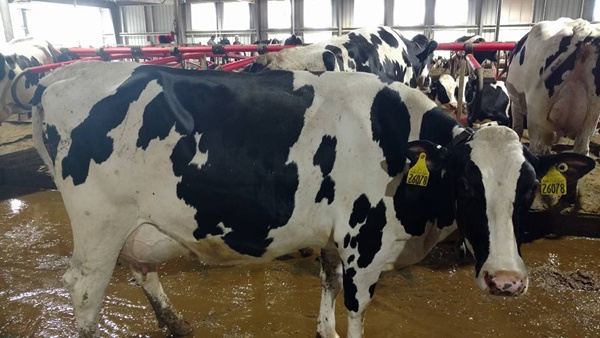 Agriculture-dependent Indiana saw 10-percent of its dairy farms close in 2018.
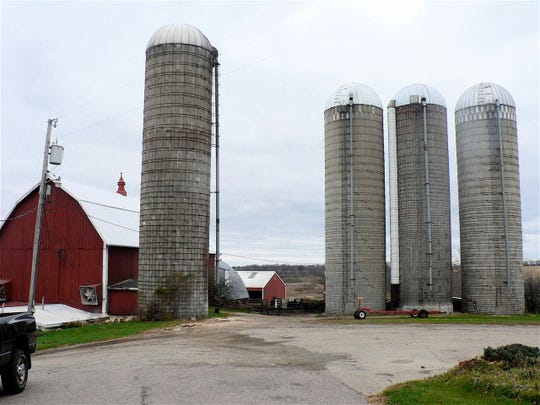
 A hard Brexit could, indirectly, provide some opportunities for high profit dairy farmers, according to one leading Agri Consultant.
 You cheddar believe it.
 “Dear President [Donald] Trump – Liquidate surplus cheese,” the American Dairy Coalition wrote this week on the behalf of U.S. dairy farmers who are in “a crisis.”
 The state of Indiana once featured more than 2,000 dairy farms. However, according to Indiana Dairy Producers, that number has now dipped below 900.
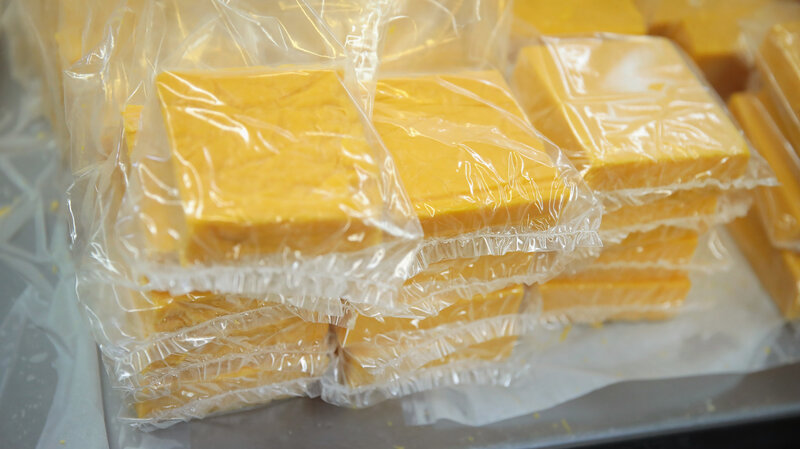 It’s a stinky time for the American cheese industry.
.jpg?width=554&name=2019(7).jpg) In 2016, the U.S. Dairy Export Council (USDEC) devised a plan we called “The Next 5%.” It was a set of strategies and tactics aimed at providing a foundation for U.S. dairy suppliers to build U.S. dairy exports from the equivalent of about 15 percent of U.S. milk solids to 20 percent.
In 2016, the U.S. Dairy Export Council (USDEC) devised a plan we called “The Next 5%.” It was a set of strategies and tactics aimed at providing a foundation for U.S. dairy suppliers to build U.S. dairy exports from the equivalent of about 15 percent of U.S. milk solids to 20 percent. Last year was extremely challenging for dairy. But as the year drew to a close, it ended on a very positive note. On Dec. 20, with NMPF Chairman Randy Mooney in attendance, President Donald Trump signed the new farm bill into law – with dairy the biggest winner. This key moment represented nearly two years of critically important work by congressional agriculture leaders and dairy champions.
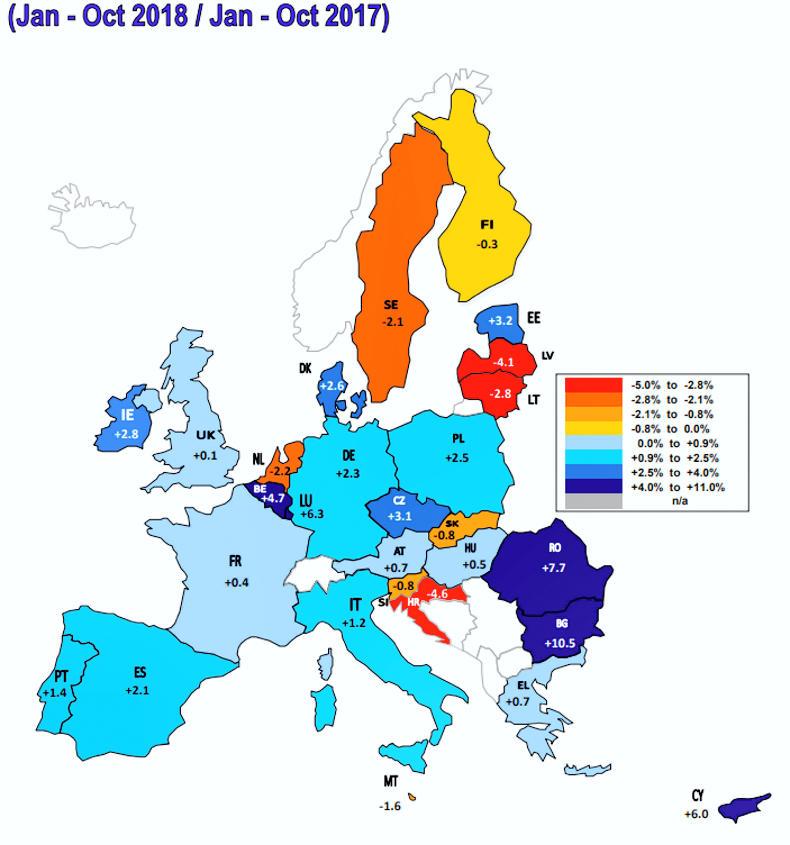
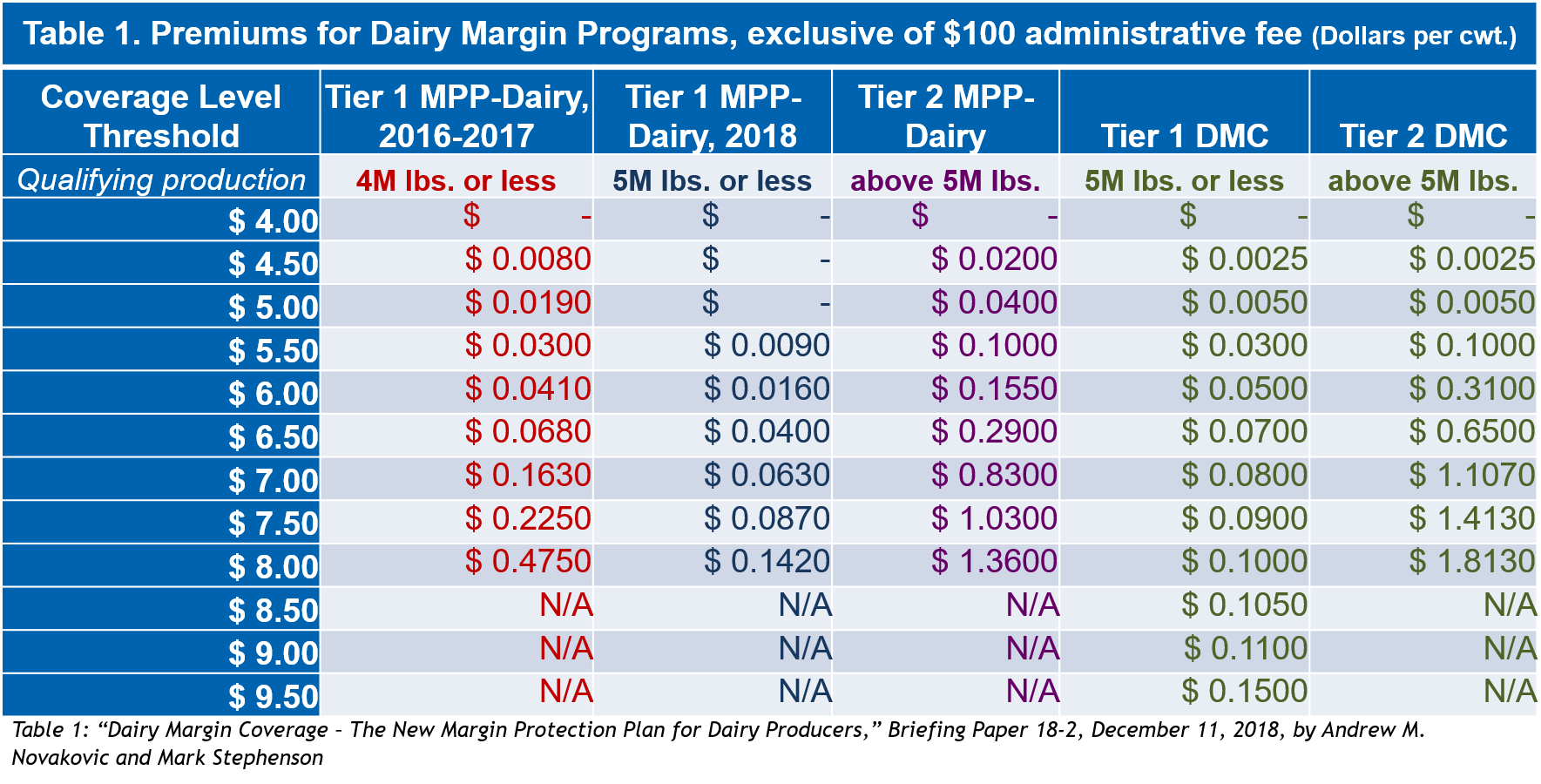
 2019 shapes up as another challenging year for dairy farmers and the dairy industry. As has been the case for the past eight years, retail pricing and the impact on dairy farmer and processor incomes is still by far the biggest challenge to overcome. Other key issues include the Australian dairy industry plan and biosecurity.
 Dive Brief: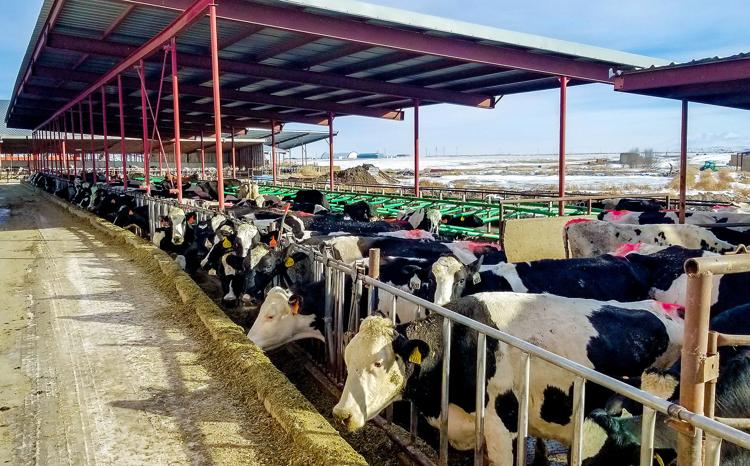
 Six months and numerous sub-committee meetings into their mission, Governor Scott Walker’s Dairy Task Force 2.0 has released two proposals aimed at restoring the future of America’s dairyland.
 About 60 straws of semen from six different bulls was stolen sometime between 9pm on 30 December and 4am on 31 December in Cossington, Bridgwater, Somerset from a building next to the dairy parlour at Brookhayes Farm.
 It is estimated that in the last 25 years, global milk production has increased by 61% (average 2% per annum) and there would be an increase up to 177 million metric tons by 2025.
/arc-anglerfish-syd-prod-nzme.s3.amazonaws.com/public/XIWB537PDZDSPLMRG3HYTI6DPQ.jpg) “We’re taking the shine off,” says new Fonterra chairman John Monaghan on the way to his office, apparently the only one in the dairy company’s very shiny headquarters on Auckland’s Fanshawe St.
“We’re taking the shine off,” says new Fonterra chairman John Monaghan on the way to his office, apparently the only one in the dairy company’s very shiny headquarters on Auckland’s Fanshawe St. A bid to help drought-stricken dairy farmers stay afloat amid crippling drought has seen $3.1 million in relief payments split between farms.
  Rabobank has published its Dairy Q4 Quarterly report, which states the US saw just 1% growth in milk production in 2018, the lowest year-on-year (YOY) growth since 2013. Milk production was also down in the EU and Australia last year, but rose in New Zealand, South America and China.

 There is no doubt the industry has come up against challenges over a number of years – rising production costs, price competition in domestic and international markets, tough seasons and market volatility.
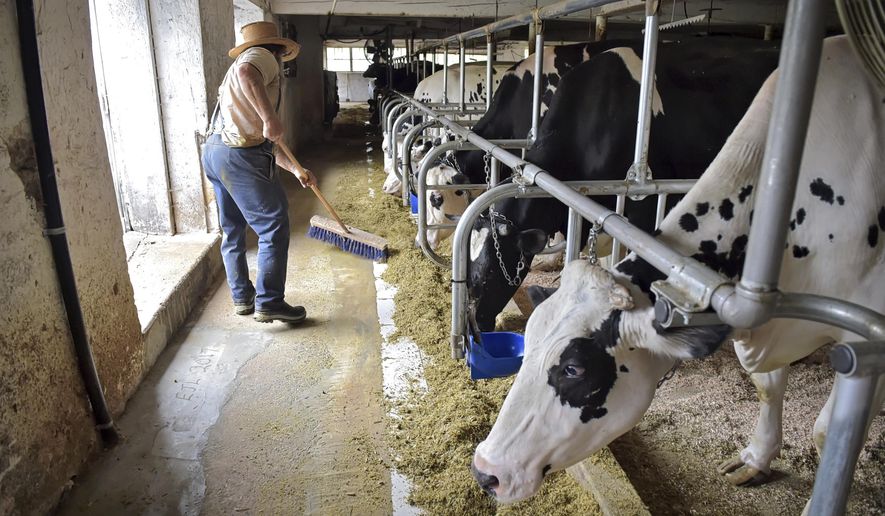 Amish dairy farmers who lost their milk buyer the first day of the new year have been given another chance to maintain the livelihood they’ve held for generations.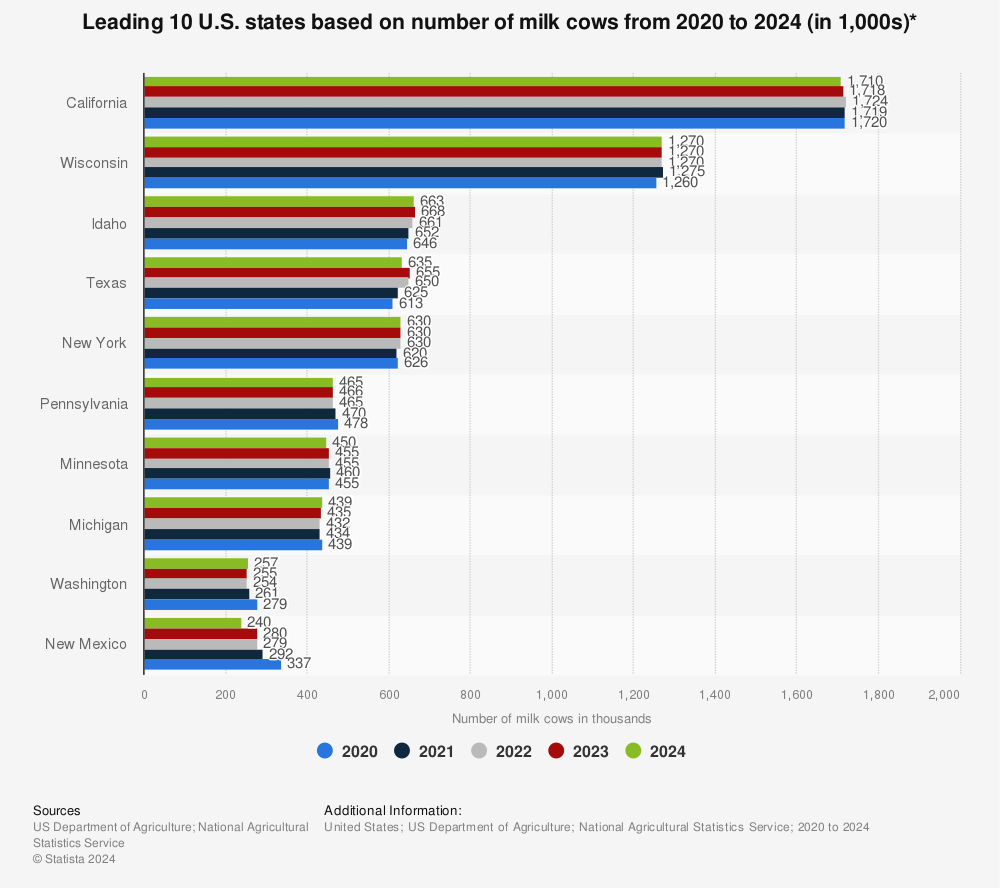
 Some members of the Oregon Legislature and a coalition of environmental groups and small-farm advocates want the state to ban large dairy farms.
 OPINION: When Australia’s largest dairy processor and farmer co-operative Murray Goulburn announced in April 2016 that it was slashing the farmgate milk price in an attempt to claw back $183 million it had already paid to suppliers, the dairy industry was plunged into a deep crisis.
 When Australia’s largest dairy processor and farmer co-operative Murray Goulburn announced in April 2016 that it was slashing the farmgate milk price in an attempt to claw back $183 million it had already paid to suppliers, the dairy industry was plunged into a deep crisis.
 SOUTH Australian dairy farmer Mike Green wanted to improve the health and fertility of his herd in 2004, so he turned to Australian Reds.



