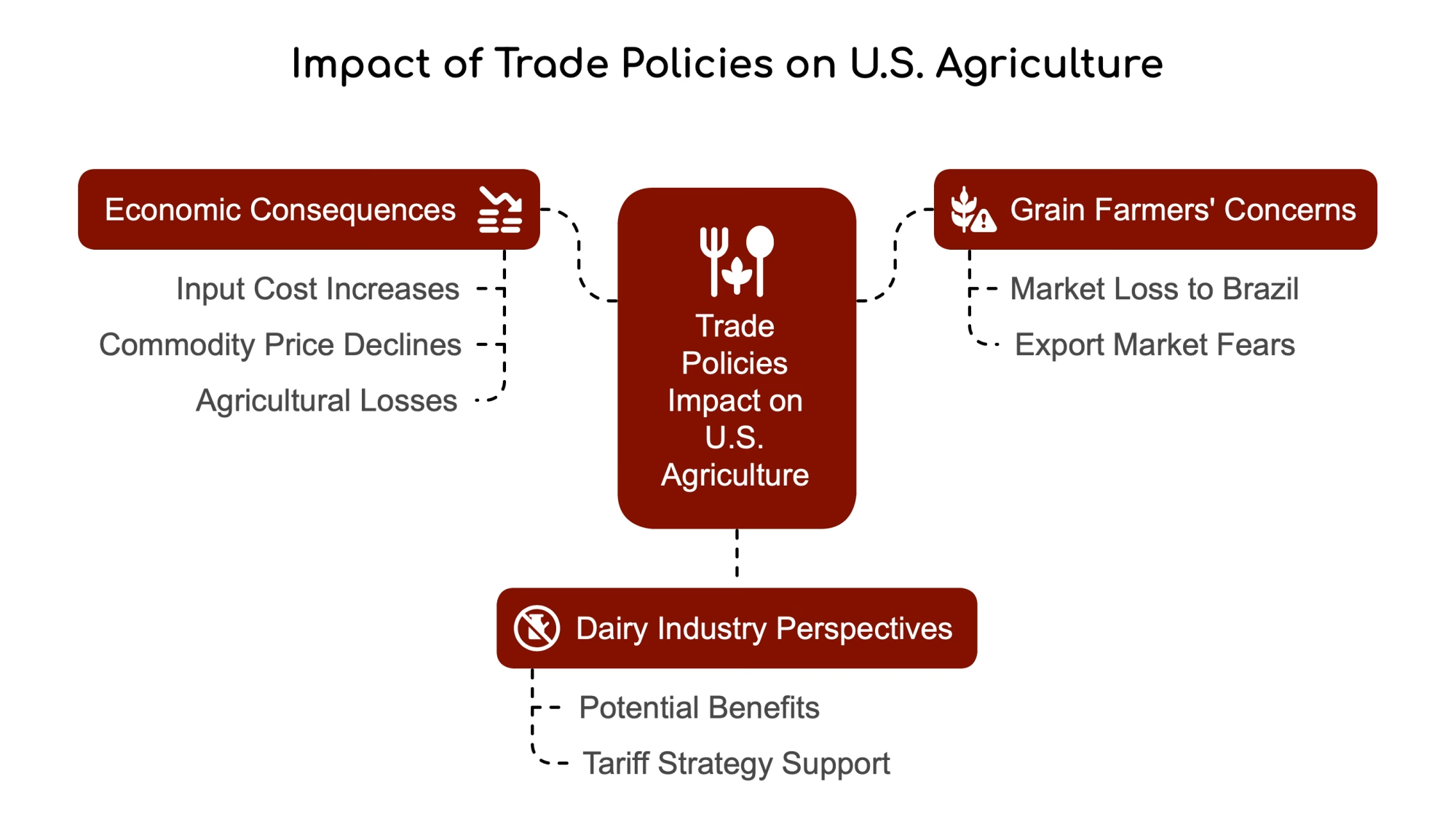
Archive for Trump tariffs

Breaking: Dairy Caught in Trump’s Tariff Crosshairs as Rollins Teases Trade Deals by Friday

Trump’s 104% tariffs rock dairy exports. Ag Secretary eyes deals by Friday. Survival strategies inside.

EXECUTIVE SUMMARY: President Trump’s sweeping tariffs, including 104% duties on Chinese imports effective immediately, have plunged dairy markets into turmoil, with $8.2B in annual exports at risk. Agriculture Secretary Brooke Rollins hints at potential trade deals by week’s end as 70 nations seek negotiations. Retaliatory measures from Canada and China threaten critical dairy sectors, while Cornell economists project B in losses over four years. Industry leaders urge farmers to lock feed costs, leverage federal programs like Dairy Margin Coverage, and diversify markets. Analysts warn of unprecedented price volatility, but strategic planning could mitigate the blow to producers.

KEY TAKEAWAYS

  • Immediate Tariff Impact: 104% duties on Chinese goods and Canada’s 25% retaliatory tariffs target butter, cream, and infant formula exports.
  • $6B Crisis Looming: Projected losses could erase profits for U.S. dairy through 2029 without intervention.
  • Survival Playbook: Lock feed contracts, enroll in DMC/DRP programs, and pivot milk to domestic markets.
  • Processor Pivot: Major exporters like Darigold and Leprino are shifting production to cushion export losses.
  • Rollins’ Gamble: Potential deals with 70 nations could soften the blow – but farmers must prepare for volatility now.
Trump tariffs, dairy export crisis, retaliatory tariffs, U.S.-China trade war, Dairy Margin Coverage

As the agricultural world reels from President Trump’s sweeping tariff implementation, U.S. Agriculture Secretary Brooke Rollins has offered hope amid escalating trade tensions. Speaking Tuesday, Rollins expressed optimism that new trade agreements could materialize within days, even as significant duties on Chinese imports take effect tonight.

GLOBAL MARKETS RATTLED AS TARIFF WAR ERUPTS
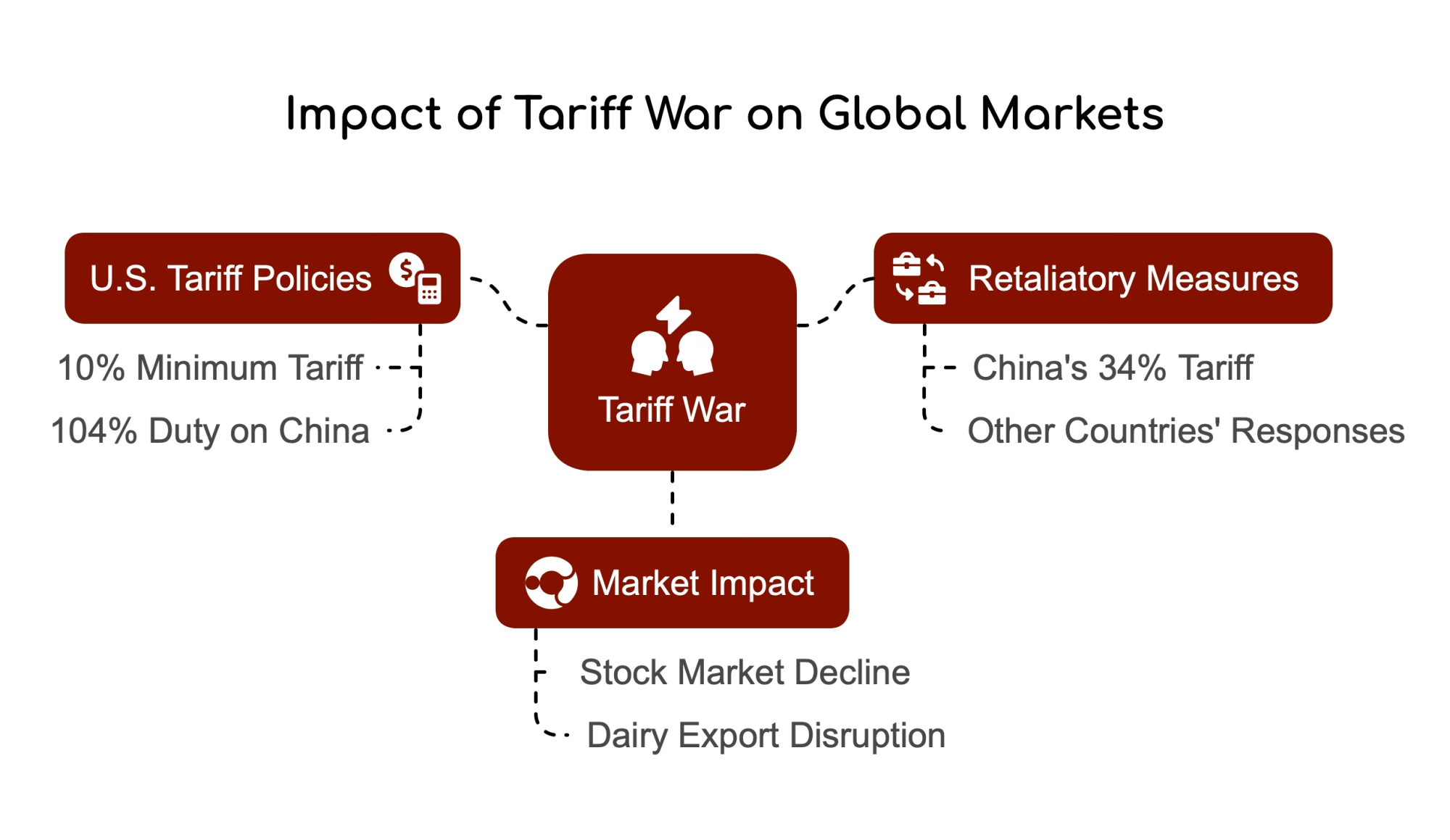
President Trump’s April 2nd announcement implementing “reciprocal” tariffs has triggered market volatility and prompted immediate retaliation from key trading partners. The policy imposes a minimum 10% tariff on all imports, with additional duties reaching as high as 50% for specific countries.

After China announced retaliatory measures, the Trump administration escalated the situation by declaring 104% duties on Chinese imports, set to take effect shortly after midnight tonight. Not to be outdone, China has announced a 34% retaliatory tariff on all U.S. goods effective April 10.

STOCKS PLUNGE AS DAIRY EXPORT CHANNELS FACE EARTHQUAKE
U.S. stocks have dropped for four consecutive trading days since the initial tariff announcement, reflecting widespread economic concern. The picture is particularly troubling for dairy producers as export markets face immediate disruption.

ROLLINS PROMISES “DEALS BY FRIDAY” – CAN SHE DELIVER?

Despite mounting tensions, Secretary Rollins maintains that negotiations are progressing rapidly behind the scenes: “I believe, sincerely, it will be sooner rather than later. We’ll be hearing about new deals that are being struck, perhaps by the end of the week.”

This optimism comes with a significant revelation – 70 countries have already initiated discussions with the United States to negotiate exemptions or modifications to the tariff structure potentially.

BILLION-DOLLAR BAILOUT BACK ON THE TABLE
Critically for dairy producers, Rollins has indicated the Trump administration is preparing another round of market disruption payments if tariffs result in a downturn of agricultural exports. During Trump’s first term, the USDA provided farmers approximately $16 billion in trade assistance, with dairy receiving $2.9 billion in direct payments.

$8.2 BILLION IN DAIRY EXPORTS NOW AT RISK

The U.S. exported $8.22 billion of dairy products in 2024 alone, with Mexico, Canada, and China serving as the top destinations in dollar terms. These three markets – all targets of Trump’s tariff plan – collectively represent over half of U.S. dairy exports by value annually.

CountryExport Value (2024)Key Products Affected
Mexico$2.47 billionCheese, SMP, Whey
Canada$1.14 billionButter, Cream
China$584 millionInfant Formula, Whey
Japan$394.6 millionCheese, Lactose

THE BRUTAL NUMBERS DAIRY PRODUCERS MUST FACE:

  • China (third largest export market): $584 million in U.S. dairy imports (2024)
  • 26 specific dairy products are now subject to 10% Chinese tariffs, with feed whey exempted
  • Historical context: 2019-2021 China tariffs cost U.S. dairy $2.6 billion in lost revenue
  • Projected damage: Cornell’s Charles Nicholson forecasts $6 billion in lost dairy profits over four years

Canada has already implemented 25% retaliatory tariffs on key dairy products, including milk, cream, and butter – critical export categories directly impacting U.S. producer margins.

INDUSTRY HEAVYWEIGHTS SQUARE OFF ON TARIFF STRATEGY

The agricultural community has expressed various responses to the tariff implementation, ranging from cautious support to outright alarm.

American Farm Bureau Federation President Zippy Duvall didn’t mince words: “Tariffs will drive up the cost of critical supplies, and retaliatory tariffs will make American-grown products more expensive globally.” He emphasized that more than 20% of farm income comes from exports.

National Milk Producers Federation President Gregg Doud took a more nuanced approach: “Tariffs can be a useful tool for negotiating fairer terms of trade. To that end, we are glad to see the administration focusing on long-time barriers to trade that the European Union and India have imposed on our exports.”

U.S. Dairy Export Council President Krysta Harden similarly called for a focus on eliminating tariff and non-tariff barriers, particularly with the European Union and India.

MARKET ANALYST WARNS: “BRACE FOR PRICE WHIPLASH”

Mike North, president of Ever.Ag a sober assessment: “Predictably, this will add volatility to demand that may overshadow the ongoing focus around supply. Only small changes can have large impacts on price. Producers are well advised to brace for the disruption that these tariffs will likely create.”

Metric2019-2021 China Tariffs2025 Projected Losses
U.S. Dairy Revenue-$2.6B-$6B (4-year estimate)
Milk Price Impact-$1.20/cwt-$2.80/cwt (projected)
Jobs at Risk4,20016,500

With Canada implementing 25% tariffs on cream and butter, North notes these measures could significantly affect U.S. dairy prices, as Canada represents a significant export destination.

LESSONS FROM THE 2018-2021 TRADE WAR
“We’ve been here before, and the operations that survived did three things right,” explains Wisconsin dairy farmer John Vosters, who weathered the previous tariff storm. “First, they locked in feed costs early. Second, they maximized federal risk management programs. And third, they diversified their processor relationships beyond those heavily dependent on exports.”

SURVIVAL TOOLKIT: 7 CRUCIAL STEPS FOR DAIRY PRODUCERS

FINANCIAL ARMOR:

  • Lock in feed contracts before potential retaliatory grain tariffs drive costs higher
  • Review Dairy Margin Coverage (DMC) and Dairy Revenue Protection (DRP) options immediately
  • Calculate potential 10-15% revenue impacts from top export markets

MARKET OFFENSE:

  • Identify alternative domestic outlets for milk that would typically enter export channels
  • Maintain close contact with processors about their export contract contingency plans
  • Consider component adjustment strategies (shifting butterfat/protein ratios based on market signals) if butterfat export values decline dramatically
  • Evaluate on-farm processing opportunities to capture domestic value-add potential

RISK MANAGEMENT PROGRAM DEADLINES: The 2025 enrollment period for Dairy Margin Coverage (DMC) runs from January 29 to March 31, 2025. DMC offers coverage levels ranging from $4.00 to $9.50 per hundredweight (cwt) of milk in $0.50 increments. The program provides financial protection when the margin between milk price and feed costs falls below selected coverage levels.

The Dairy Revenue Protection (DRP) program, available year-round, ensures against unexpected declines in quarterly revenue from milk sales. Producers can select coverage levels between 80% and 95% of expected revenue and choose either class or component pricing options.

ROLLINS’ GRAND VISION: BEYOND THE TARIFF BATTLE

Beyond the immediate tariff situation, Rollins has articulated an ambitious agenda to transform U.S. agricultural trade. Upon taking office, she pledged to slash the agricultural trade deficit and boost American exports across all sectors.

Her approach includes leveraging existing trade agreements like USMCA while aggressively pursuing new deals to expand market access for U.S. dairy products. “Our goal is to make ‘Made in America’ the gold standard for dairy products worldwide,” she declared.

MetricPre-USMCA (2019)Post-USMCA (2024)Change
U.S. Export Value to Canada$442M$1.14B+158%
TRQ Enforcement (Tariff-Rate Quota access)LimitedUSMCA Panel VictoryImproved
Canadian Market AccessRestrictedExpanded but ChallengedOngoing

The USMCA, signed into law in January 2020, has already shown significant benefits despite implementation challenges. The U.S. prevailed in a dispute settlement panel under USMCA when Canada was found to be breaching commitments by reserving dairy tariff-rate quotas (TRQs) for Canadian processors.

COUNTDOWN TO EXEMPTIONS: WHO’S FIRST IN LINE?
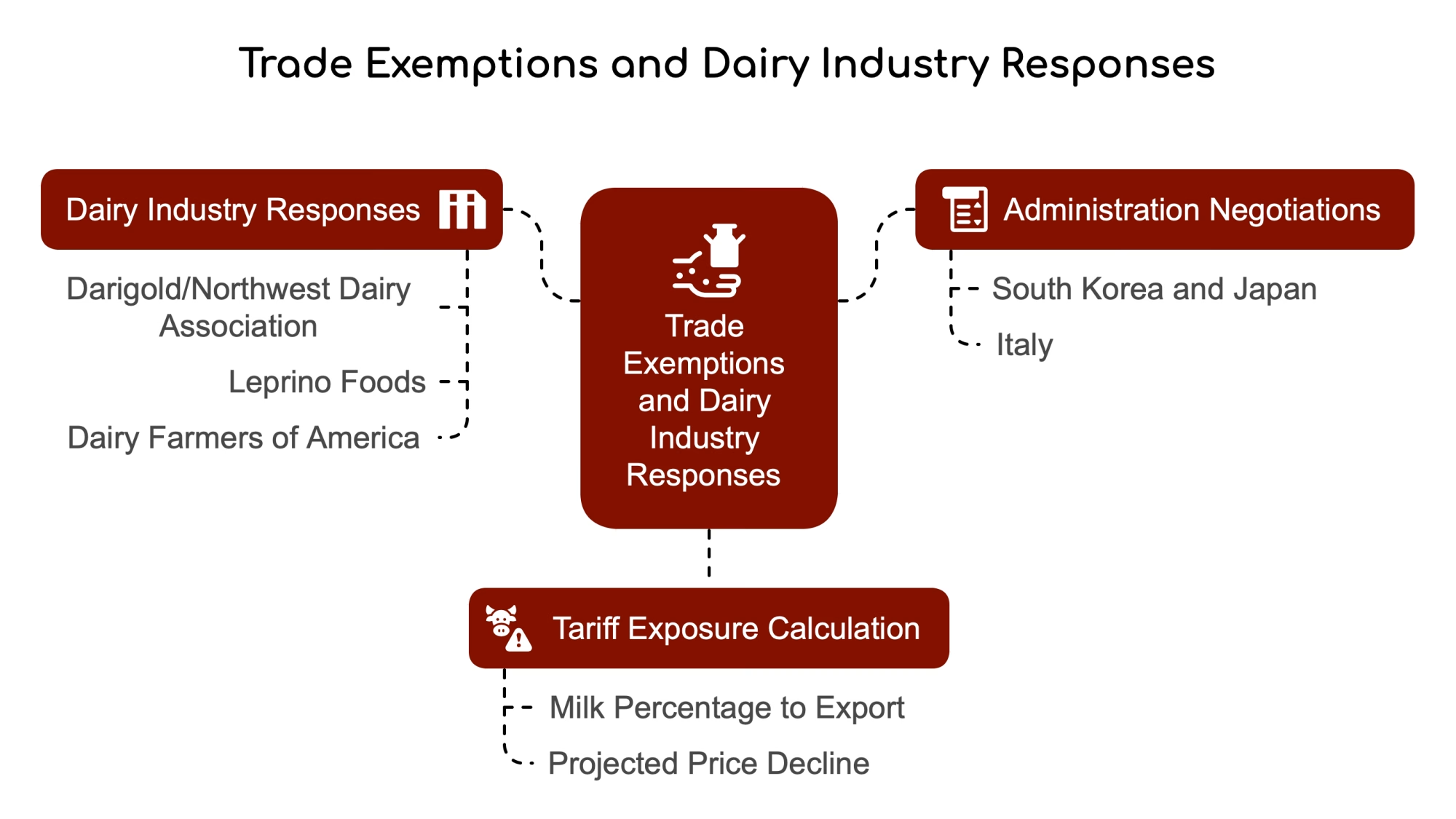
The administration has already scheduled talks with South Korea and Japan, two major trading partners. Italian Prime Minister Giorgia Meloni is due to visit next week. These discussions represent the first wave of negotiations that could potentially lead to exemptions or modifications to the tariff structure.

Secretary Rollins frames the current situation as temporary pain for long-term gain, asserting that the comprehensive approach addresses not just tariffs but also unfair trade practices and unjust trade barriers.

PROCESSOR WATCHLIST: HOW MAJOR EXPORTERS ARE RESPONDING

  • Darigold/Northwest Dairy Association: Accelerating domestic market development while maintaining Asian export commitments
  • Leprino Foods: Repositioning some cheese production from export to domestic food service markets
  • Dairy Farmers of America: Reportedly developing contingency plans for redirecting milk supply from export-focused plants

CALCULATING YOUR FARM’S TARIFF EXPOSURE
Use this simple formula to estimate your operation’s risk:

  1. Determine your milk percentage going to export markets (ask your processor)
  2. Multiply by projected price decline ($2.80/cwt in worst-case scenario)
  3. Result = potential revenue impact per cwt

THE BULLVINE BOTTOM LINE: The tariff situation represents a critical moment requiring strategic navigation. Secretary Rollins’ optimism about imminent deals provides hope to prepare for increased volatility and potentially extended market disruption. Those who position strategically now – both defensively and opportunistically – will be best positioned to weather this trade storm.

THE BULLVINE VERDICT: This high-stakes trade reshuffling demands daily monitoring and nimble management. We’ll continue tracking developments, processor reactions, and market opportunities as they emerge. Buckle up – this ride just got a whole lot bumpier.

Learn more:

Join the Revolution!

Join over 30,000 successful dairy professionals who rely on Bullvine Daily for their competitive edge. Delivered directly to your inbox each week, our exclusive industry insights help you make smarter decisions while saving precious hours every week. Never miss critical updates on milk production trends, breakthrough technologies, and profit-boosting strategies that top producers are already implementing. Subscribe now to transform your dairy operation’s efficiency and profitability—your future success is just one click away.

NewsSubscribe
First
Last
Consent

Trump’s Tariff Gambit: Will Dairy Farmers Win or Lose in Global Trade Showdown?

Trump’s tariff gamble: Dairy sees trade war leverage while grain fears collapse. Will new tariffs crack EU cheese barriers or spark Chinese retaliation?

EXECUTIVE SUMMARY: President Trump’s new tariffs on major trade partners have divided agriculture, with dairy leaders cautiously supporting the measures as potential leverage against long-standing EU cheese restrictions (blocking $168M in exports) and Canada’s quota system (where U.S. exports fill less than 30% of allowed volumes). However, grain producers warn of permanent market loss to Brazil, citing 2018’s $25B trade war damage. The tariffs target EU GIs, India’s lactose taxes, and China’s retaliatory risks, with dairy advocating for swift negotiations to dismantle barriers. While the strategy could pressure reforms, farmers face uncertainty as implementation begins today.

KEY TAKEAWAYS:

  • Canada’s dairy paradox: 200%+ tariffs exist but apply only if exports exceed quotas—a scenario that’s never occurred due to systemic barriers.
  • EU’s $168M cheese blockade: Geographical Indications block U.S. products from using names like “feta,” costing millions annually.
  • China gamble: 34% tariffs risk retaliation in America’s third-largest dairy export market ($584M), already down 12% YoY.
  • Sector divide: Dairy backs tariffs as negotiation tools; grain growers fear irreversible market loss, per Purdue’s Ag Barometer.
  • TRQ reality: Complex tariff-rate quotas govern global dairy trade, with most countries failing to fill allocated volumes.

As President Trump’s newly announced tariffs are set to take effect tomorrow, dairy industry leaders are expressing cautious optimism that these measures could help address longstanding trade barriers that have hindered U.S. dairy exports. The tariff plan, which includes both a baseline 10% duty on all imports and higher targeted rates for specific countries, is being viewed by some dairy representatives as a potential lever to create more equitable trade conditions.

Breaking Down Trump’s Bold Tariff Strategy for Dairy Markets

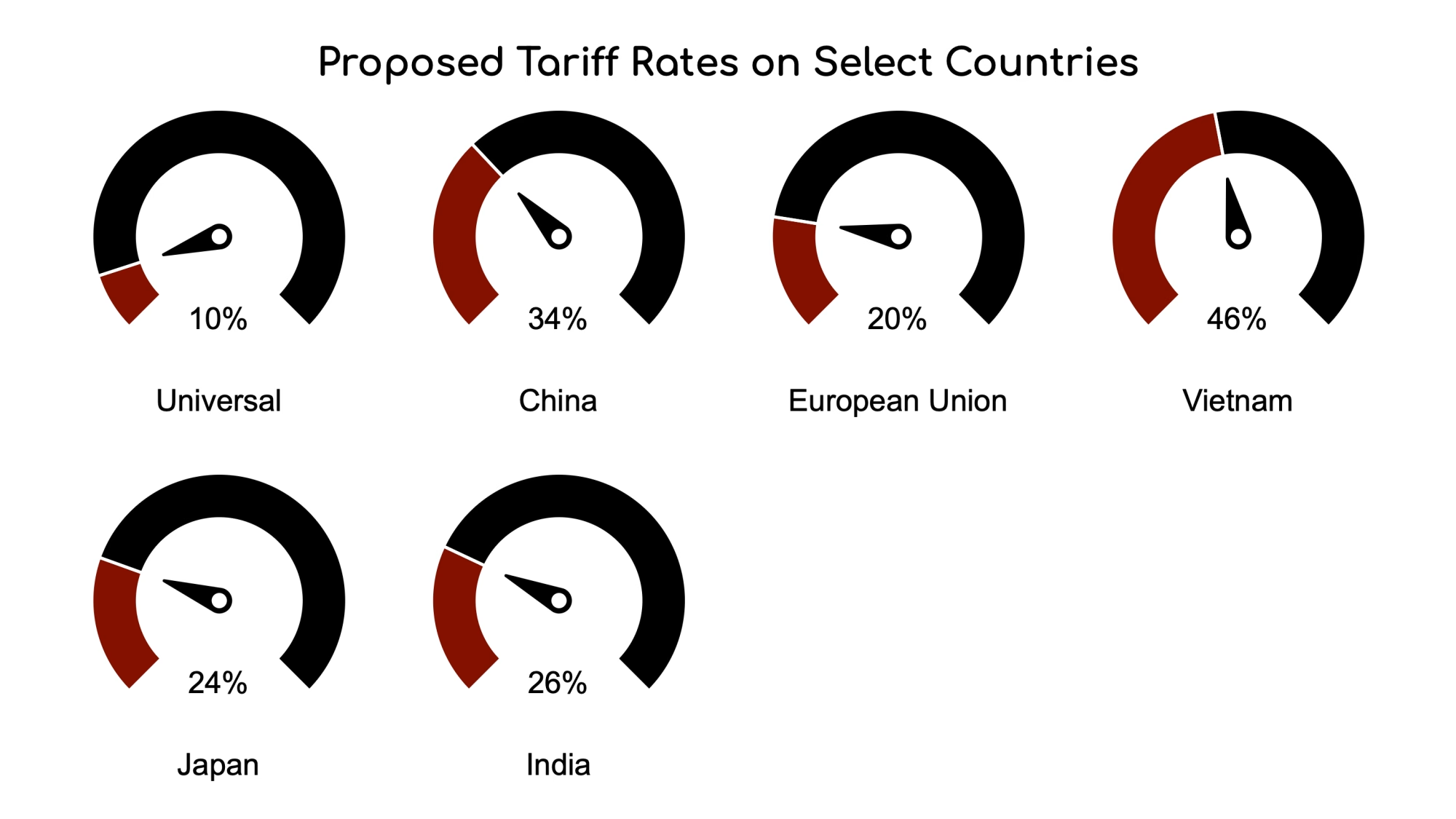
President Donald Trump unveiled his tariff plan during a “Make America Wealthy Again” event at the White House Rose Garden, announcing a universal 10% tariff on all imports beginning April 5, 2025, with additional targeted tariffs on countries with which the U.S. has significant trade deficits starting April 9. The higher rates include 34% for China, 20% for the European Union, and targeted percentages for countries including Vietnam (46%), Japan (24%), and India (26%).

Unlike some agricultural sectors expressing concern, dairy industry leaders offered measured support for the administration’s approach. Gregg Doud, President and CEO of the National Milk Producers Federation (NMPF) framed the tariffs as potentially beneficial for U.S. dairy producers.

“Tariffs can be a useful tool for negotiating fairer terms of trade,” Doud stated. “We are glad to see the administration focusing on long-time barriers to trade that the European Union and India have imposed on our exports.”

Krysta Harden, President and CEO of the U.S. Dairy Export Council (USDEC), echoed this sentiment, emphasizing that a “firm hand and decisive approach” is particularly needed with the European Union and India “to correct their distortive trade policies and mistreatment of American agriculture.”

The USMCA Paradox: How Canada Blocks U.S. Milk Despite “Zero” Tariffs

President Trump has specifically highlighted Canadian dairy policies as problematic, claiming Canada imposes tariffs of 250-270% on U.S. dairy products. While these high rates do exist on paper, the reality is more complex and often misrepresented.

These triple-digit tariffs would only apply if U.S. exports exceeded predetermined quota thresholds established under the United States-Mexico-Canada Agreement (USMCA), which Trump himself negotiated during his first term. Below these quotas, American dairy sales to Canada face zero tariffs.

The critical fact often overlooked is that U.S. dairy exports have never come close to reaching these quota limits. For dairy products subject to a quota year tariff, the average fill rate as of March 2025 was only 21.24%. In practice, this means “these tariffs are not actually paid by anyone,” according to agricultural economists.

“We’ve never hit 50% of our tariff-free milk quota. Canada’s system is designed to look open while keeping U.S. products out.”

Becky Rasdall Vargas, IDFA Senior VP of Trade Policy
Dairy ProductTRQ Year Basis2024 Fill RateMarch 2025 Fill Rate
Cheese & CurdCalendar18%14%
Skim Milk PowderQuota (Aug-Jul)32%23%
Fluid MilkCalendar29%19%
ButterQuota (Aug-Jul)41%27%

The real issue, according to U.S. dairy representatives, lies in Canada’s implementation of the quota system. Becky Rasdall Vargas, senior vice president of trade and workforce policy at the IDFA, argues that “Canada imposes unfair barriers that make it increasingly difficult for U.S. products to enter the Canadian market”.

“Our complaint is we’re not able to get anywhere near the quota cap, even though we have buyers who tell us they would like to bring in our product,” Rasdall Vargas explained.

USMCA Promised Big Gains for Dairy—But Delivery Falls Short

The USMCA established significant growth in market access for U.S. dairy exports to Canada, with TRQ volumes scheduled to increase substantially over the agreement’s implementation period.

Product CategoryYear 1 TRQYear 6 TRQYear 19 TRQGrowth Mechanism
Cheese10,416 MT15,624 MT17,860 MT+25% Y3, +20% Y6, +1% annually
Skim Milk Powder5,000 MT7,500 MT8,575 MT+50% Y2, +1% annually
Fluid Milk7,000 MT10,500 MT12,005 MT+33% Y3, +1% annually
Butter3,000 MT4,500 MT5,145 MT+50% Y2, +1% annually

Under CUSMA (the Canadian term for USMCA), butter TRQs increased by 25% in the 2023/24 dairy year. With an 81.3% fill rate, this year’s rate is lower than last year’s at 97%, indicating some challenges in fully utilizing the expanded market access.

$168 Million Lost: How EU Cheese Rules Block American Exports

The relatively moderate 20% tariff on European Union goods reflects a strategic approach to a complex trade relationship. According to Doud, this rate is “a bargain for the EU considering the highly restrictive tariff and nontariff barriers the EU imposes on our dairy exporters.”

One of the most contentious issues between U.S. and EU dairy trade involves Geographical Indications (GIs), which the EU uses to protect regional food names. These designations prevent U.S. cheesemakers from labeling their products as “feta” or “gorgonzola” when exporting to EU markets, as these terms are reserved for regionally produced cheeses.

The EU’s GI restrictions effectively “erase American products from store shelves overseas,” as Krysta Harden of USDEC has noted, blocking $168 million in potential U.S. cheese exports in 2024 alone.

“If Europe retaliates against the United States, we encourage the administration to respond strongly by raising tariffs on European cheeses and butter,” Doud stated, signaling the industry’s support for a tough stance on this issue.

China’s $584 Million Dairy Market at Risk: Will Retaliation Follow?

The highest targeted tariff rate—34% on Chinese goods—raises significant questions for U.S. dairy exports to what has become America’s third-largest dairy export market, worth $584 million in 2024. U.S. dairy exports to China declined by 12% year-over-year in 2024, reaching their lowest level since 2020, a trend that could be exacerbated by new trade tensions.

China has previously imposed retaliatory tariffs on U.S. dairy imports in response to earlier Trump-era tariffs, with dairy products facing a 10% duty. During the 2018 trade war, these retaliatory measures cost dairy farmers $1.5 billion in lost revenue. With the new 34% U.S. tariff set to take effect April 9, there is concern about potential escalation.

“China will take necessary measures to firmly safeguard its legitimate interests against these WTO-violating tariffs.”

Guo Jiakun, Chinese Foreign Ministry Spokesperson

Chinese officials have already signaled their opposition to the new tariffs. Foreign Ministry Spokesperson Guo Jiakun stated that the measures “seriously violate WTO rules” and promised that “China will resolutely take countermeasures to safeguard its legitimate interests”.

The Trade Barrier Paradox: U.S. Import Quotas Remain Unfilled Too

While much attention focuses on barriers to U.S. exports, it’s worth noting that many countries face challenges accessing the U.S. market as well. Current data shows varying utilization rates for dairy TRQs established under U.S. free trade agreements:

Trade PartnerTRQ Type2024 UtilizationKey Barrier
CanadaCheese1%Quota allocation complexity
EUButter44%GI restrictions
MexicoSMP8%Section 232 tariffs

This data from the USDA Dairy Import Circular shows that trade barriers can flow in both directions, with complex quota systems sometimes limiting the effectiveness of market access provisions.

“We’re Handing China to Brazil”: Grain Farmers Fear Permanent Market Loss

While dairy industry representatives see potential benefits in Trump’s tariff strategy, grain producers have expressed significant concerns. Chase Dewitz, who operates a large farming operation in North Dakota, worries about permanent market loss.

“We’re handing China to Brazil,” warns Dewitz, reflecting grain growers’ fears of losing export markets. “I think there’s going to be some pain here for a while, and the biggest thing is these export markets.”

These concerns are reflected in broader industry sentiment, with 43% of farmers citing shifting trade policy as their primary concern in the Purdue University-CME Group Ag Economy Barometer for March.

During the 2018 trade war with China, U.S. agriculture experienced more than $25 billion in losses. The United States has yet to fully recover its former market share of soybean exports to China, the world’s largest buyer of the commodity.

“Tariffs tear us apart—raising input costs while crushing commodity prices. This isn’t trade policy; it’s economic vivisection.”

Vance Ehmke, Kansas Farmer (6th Generation)

“These tariffs are just absolutely bad news,” said Vance Ehmke from the western Kansas farm his ancestors homesteaded in 1885. “They cause the prices for everything that we buy to go up, and the price for everything that we sell to go down. I mean, it is being economically drawn and quartered”.

Tariff Rate Quotas Explained: Why the “Milk Tank” Analogy Matters

Think of Tariff Rate Quotas (TRQs) like a milk tank—fill it tax-free, but overflow costs steeply. Both the U.S. and Canada use this system for dairy products, allowing a certain number of imports at low or zero tariffs, with significantly higher rates applied to imports exceeding these quotas.

For example, while U.S. dairy exports to Canada face potential tariffs of 241-298.5% if they exceed quota limits, these exports have never reached even 50% of their tariff-free allocation. Similarly, Canadian butter exported to the U.S. faces no tariffs under quota thresholds but would be subject to over-quota tariffs of about 24-39%.

Understanding these mechanisms is crucial for dairy producers navigating international markets and evaluating the potential impact of Trump’s new tariff strategy.

Will Your Dairy Operation Benefit or Suffer Under New Tariffs?

As the April 5 implementation date approaches tomorrow, dairy producers should consider how these tariffs might affect their specific operations. Would a 34% tariff on Chinese imports benefit your bottom line? Or would retaliatory bans on milk powder erase your profits?

The contrasting reactions between dairy and grain sectors highlight the diverse impacts trade policies can have across different agricultural commodities. While dairy organizations see an opportunity to leverage tariffs for negotiations with problematic partners like the EU, India, and Canada, they also emphasize the importance of quickly resolving tensions with constructive trading partners.

“Through productive negotiations, this administration can help achieve a level playing field for U.S. dairy producers by tackling the numerous tariff and nontariff trade barriers that bog down our exports,” Doud stated.

Tariffs as Leverage: Strategic Tool or Economic Self-Harm?

As the dairy industry navigates the complex landscape of international trade, the response to Trump’s tariff announcement reflects a strategic calculation: potential short-term disruption weighed against the possibility of addressing persistent barriers to U.S. dairy exports.

“Every farmer says trade needs fixing—until it affects their bottom line. Well, buckle up: this storm will hit us all.”

James Mintert, Purdue Ag Economist

“Broad and prolonged tariffs on our top trading partners and growing markets will risk undermining our investments, raising costs for American businesses and consumers, and creating uncertainty for American dairy farmers and rural communities,” warns Becky Rasdall Vargas of the IDFA.

The dairy sector appears poised to support targeted use of tariffs while advocating for swift negotiations to expand export opportunities and eliminate both tariff and non-tariff barriers that have limited U.S. dairy’s global competitiveness. As implementation begins tomorrow, the industry will be watching closely to see whether these tariffs serve as effective negotiating tools or trigger costly trade conflicts.

Learn more:

Join the Revolution!

Join over 30,000 successful dairy professionals who rely on Bullvine Daily for their competitive edge. Delivered directly to your inbox each week, our exclusive industry insights help you make smarter decisions while saving precious hours every week. Never miss critical updates on milk production trends, breakthrough technologies, and profit-boosting strategies that top producers are already implementing. Subscribe now to transform your dairy operation’s efficiency and profitability—your future success is just one click away.

NewsSubscribe
First
Last
Consent

Trump’s Tariffs: Can History Repeat Without Repeating Mistakes?

Farmers are on edge as President Trump reaffirms 25% tariffs on Canadian dairy. While some see this as a chance to dismantle Canada’s supply management system, others worry about repeating the costly mistakes of past trade wars. Will these tariffs lead to long-term gains or just more short-term pain?

Summary

President Trump’s confirmation of 25% tariffs on Canadian dairy imports, set to take effect March 4, 2025, has ignited fierce debate within the U.S. agricultural sector. While the administration frames this move as a strategic push to break Canada’s supply management system, many farmers remain skeptical, recalling the painful aftermath of similar tariffs in 2018. That trade war resulted in a $28 billion government bailout and accelerated the decline of small dairy operations. This time, stakeholders are demanding more than just temporary measures, calling for structural reforms to address labor shortages, subsidy inequities, and global competition. As the deadline approaches, the dairy industry finds itself at a crossroads, weighing the potential for long-term market access against the risks of immediate economic disruption and retaliatory measures from Canada and Mexico. The outcome could reshape North American dairy trade for decades to come.

Key Takeaways

  • President Trump has renewed criticism of Canada’s dairy supply management system, calling it unfair to U.S. farmers and threatening tariffs.
  • The U.S. imposed 25% tariffs on most Canadian imports on February 4, 2025, with Canada retaliating with tariffs on $30 billion of U.S. goods.
  • Trump is pushing to renegotiate USMCA in 2026, potentially threatening Canada’s dairy protections.
  • Canada’s supply management system imposes high tariffs (up to 298%) on imported dairy products to protect domestic farmers.
  • The dairy dispute impacts $1.2 billion in annual trade between the U.S. and Canada.
  • Canadian farmers fear losing the stability provided by supply management, while U.S. farmers seek increased market access.
  • Canada passed Bill C-282 to protect supply management from trade concessions, but it faces challenges under U.S. pressure.
  • Some argue Canada needs to reform its dairy system to remain competitive, while others say eliminating it would devastate Canadian farmers.
  • The dispute has reignited debate over food sovereignty vs. free trade principles in agriculture.

As President Trump reaffirms 25% tariffs on Canadian dairy effective March 4, farmers face déjà vu. While the administration touts this as a decisive blow against Canada’s protectionist supply management system, critics warn of repeating 2018’s costly trade war. This $28 billion bailout debacle failed to secure long-term gains. This time, stakeholders demand structural reforms, not just short-term salvos.

Lessons From 2018: Bailouts and Broken Promises

The $28 Billion Hole

Trump’s 2018 tariffs triggered retaliatory measures that crushed U.S. agricultural exports, particularly soybeans, which plummeted from $19.5 billion in 2017 to $9 billion by 2018. To stem the bleeding, the USDA funneled $23 billion through its Commodity Credit Corporation, with soybean growers alone receiving $7.3 billion. Despite this, farm bankruptcies rose 20% in 2019, and small dairy operations collapsed at twice the national average.

Wisconsin dairy farmer Jake Mueller reflects:

“We got checks, sure—but they were Band-Aids on bullet wounds. Most neighbors sold their herds or retired. The bailouts just delayed the inevitable.”

Subsidy Inequities Exposed

While the 2018 bailouts stabilized prices, they disproportionately benefited megafarms. USDA data shows 42% of dairy revenue now comes from government support, with 70% of subsidies flowing to operations with 500+ cows. This accelerated the 40% decline of small dairies since 2000, as family farms lacked the scale to leverage robotic milking systems or methane digesters.

Proposed Fix:

  • Subsidy Caps: Limit payments to farms with <200 cows to prevent corporate consolidation.
  • Trade War Insurance: USDA-backed revenue guarantees for small producers during disruptions.

Canada’s Supply Management vs. U.S. Efficiency

The Quota Conundrum

Canada’s supply management system—described by Trade Rep Katherine Tai as “a state-sponsored cartel”—imposes 298% tariffs on dairy imports and forces farmers to discard excess milk. Since 2012, 7 billion liters of Canadian milk (worth $14.9B) have been wasted. Yet Ottawa’s lobby ensures political immunity: dairy farmers contribute 25% of federal campaign funds in rural ridings.

U.S. Competitive Edge

American dairies operate at 10x Canada’s scale, slashing per-unit costs by 34%. However, retaliatory tariffs threaten key inputs:

  • Potash: 30% of U.S. supply comes from Canada; tariffs could raise fertilizer costs by $60/acre.
  • Labor: 16% of dairy workers are undocumented migrants; visa reforms lag despite sector collapse risks.

Idaho Dairy Cooperative CEO warns:

“Without H-2A visa expansion, tariffs will starve us of workers before they squeeze Canada.”

Strategic Opportunities Amid Risks

Short-Term Realities

  • Cheese Exports: 23% of U.S. cheese heads to Canada ($650M/year). Mexico’s threat to tax Wisconsin cheddar could cost $1.5B annually—repeating 2018’s Midwest losses.
  • Inflation: Trump’s 2018 steel tariffs raised appliance prices by 12–30%; dairy inputs (feed, equipment) may follow.

Long-Term Plays

  1. USMCA Renegotiation: Demand Canada triple tariff-free quotas (currently 3% of their market).
  2. Diversification: Target China’s $12B dairy import gap, leveraging USDA’s $2B “Dairy 2030” AI initiative.
  3. Value-Added Shift: Redirect surplus milk to lactose-free/protein products—a $4.8B growth sector.

Political Crosscurrents

Rural Base Solidifies… For Now

68% of dairy farmers back tariffs in Farm Pulse polls, swayed by Canada’s 270% butter duties. Yet skepticism simmers. Iowa GOP Chair:

“We’ll tolerate short-term pain if Trump dismantles supply management—not just postures.”

Democratic Nuance

Even critics concede strategic merit. Senator Jon Tester (D-MT) notes:

“Canada’s system is rigged. But tariffs without immigration reform and subsidy caps? That’s 2018’s playbook—and we saw how that ended.”

The Road Ahead: Structural Reform or Cyclical Bailouts?

  1. March 4 Deadline: Canada could avert tariffs by expanding U.S. access to 5% of its market, creating 12K U.S. jobs.
  2. Labor Fixes: Pair tariffs with H-2A visa expansions to address 16% workforce gaps.
  3. Anti-Consolidation Measures: Tax incentives for small farms adopting robotics/AI.

Conclusion: Beyond the Tariff Bluster

Trump’s tariffs could either catalyze long-overdue reforms or repeat 2018’s cycle of bailouts and consolidation. For farmers, the stakes transcend milk quotas: it’s about proving protectionism can be dismantled without sacrificing rural America’s backbone. As Wisconsin’s StarkD_01 bluntly observes:

“Bailouts just paid for vacations. This time, we need wins—not welfare.”

Learn more

Join the Revolution!

Bullvine Daily is your essential e-zine for staying ahead in the dairy industry. With over 30,000 subscribers, we bring you the week’s top news, helping you manage tasks efficiently. Stay informed about milk production, tech adoption, and more, so you can concentrate on your dairy operations. 

NewsSubscribe
First
Last
Consent

Trump’s Tariff Strategy: A Game-Changer for America’s Dairy Industry  

Trump’s 25% dairy tariff gamble: A crisis for some, a golden opportunity for innovative American farmers – find out why.

President Trump plans to impose a 25% tariff on dairy imports from Canada and Mexico, which could significantly change the U.S. dairy industry. While some worry about trade problems, these tariffs might help American dairy farmers grow by encouraging them to invest in new technology and expand their operations. The tariffs aim to support local farmers by increasing domestic demand, stimulating economic growth, promoting self-sufficiency, and fostering innovation through new technology investments. This article explores the impact of Trump’s tariffs on dairy markets and why U.S. farmers can be optimistic about them. 

Shielding America’s Dairy Core: The Domestic Impact of Tariffs 

President Trump’s planned 25% tariffs on dairy imports from Canada and Mexico, starting on February 1, 2025, are a strong move meant to help U.S. dairy farmers and change the industry. While this might seem challenging initially, it is a step to strengthen the U.S. dairy industry. It should be seen as a positive change.

Key Domestic Impacts:

  • More U.S. Dairy Production: U.S. dairy farmers will likely produce more milk with fewer imports. According to the USDA, milk production is projected to increase by 1.2% annually, reaching 228 billion pounds in 2025. This is possible because of rising demand and better farming technology, such as robotic milkers, AI tools for monitoring cow health and planning feeding schedules, and precision feeding systems. These advanced technologies should encourage American dairy farmers.
  • Higher Milk Prices: With fewer imports, milk prices might increase for farmers. The USDA says milk prices will be around $22.55 per hundredweight in 2025, a bit lower than before. These higher prices can enable farmers to enhance their farms by investing in new technologies and prioritizing sustainability efforts.
  • Focus on Sustainability: Farmers are increasingly focusing on sustainable practices. Land O’Lakes aims for all its farms to complete sustainability checks by 2025. These methods, including precision feeding, optimize nutrition and waste recycling to reduce environmental impact, benefit the environment, and enhance productivity on dairy farms.

Even though there are challenges, such as labor shortages due to stricter immigration rules, farms are using automation to help. Robotic milking systems streamline operations by reducing labor requirements, ensuring consistent milking schedules, and enhancing farm efficiency. 

“This policy gives American farmers a chance to improve how they work,” says Dr. Emily Chen, an agricultural economist. “By prioritizing innovation, farmers can compete effectively in both local and global markets.” 

While the tariffs help local farmers produce their supplies, they also bring challenges. Farmers must balance making more milk with sustainable practices to succeed in the changing market. Additionally, the increased production leads to oversupply, which could drive down prices and affect the profitability of the dairy industry.

Global Trade Shifts: New Opportunities for U.S. Dairy 

As American dairy farmers find themselves at the cusp of a dynamic shift, the landscape of dairy product pricing is indicative of the transitions occurring within the market due to tariff implications. The following table shows how these changes have affected the prices of key dairy products in the U.S. from 2024 to 2025: 

Product2024 Price ($/lb)2025 Price ($/lb)% Change
Cheddar Cheese$1.895$1.800-9.5%
Butter$2.755$2.685-7.0%
Nonfat Dry Milk$1.250$1.300+4.0%
Dry Whey$0.553$0.595+7.5%

Market Diversification

Due to rising incomes and urban living, countries in Asia and Africa are seeing more demand for dairy. For instance, China’s need for imported dairy grew by 12% in 2024. In Southeast Asia, places like Indonesia, Malaysia, and Vietnam are buying more cheese and milk powder. Africa also wants to import more dairy, with Nigeria and Kenya showing potential. 

The global dairy trade is changing, offering new market opportunities. The USDA notes that the milk supply from key regions will rise by 0.8% in 2025. Countries like Argentina and New Zealand are producing more. New Zealand is shifting its exports from milk powder to cheese, butter, and infant formula, with exports of protein products growing 13.8% in early 2024. 

Global Price Changes

As Canada and Mexico change import plans, dairy prices may quickly change. U.S. producers using advanced tech can take advantage of competitive pricing. While cheddar and butter prices may drop in 2025, nonfat dry milk and dry whey prices may increase. This offers both challenges and opportunities for U.S. exporters. 

“According to Mark Lewis, an analyst at Global Dairy Insights, “The global market is ready for change.” “With growing Asian and African markets and U.S. investments in processing, American exports have a great chance. The key is to adapt to consumer needs and handle global trade deals well.”

Innovation Catalysts: How Tariffs Drive Efficiency 

The proposed tariffs are not just about protection but also igniting a wave of innovation in the U.S. dairy industry. Farmers are embracing new technologies to enhance efficiency and sustainability, demonstrating the industry’s resilience in the face of change. 

Technological Advancements 

Robotic milking systems are just the beginning. Farms now use AI tools to monitor cow health and plan feeding schedules, which can increase milk yields by up to 15%. For example, Connecterra’s system uses AI to track livestock health and behavior, helping farmers better manage their herds. 

Another significant change is precision feeding. The DairyFeed F4500 robot mixes and delivers feed to cows, reducing feed waste. With this system, a farm in France increased milk production from 28 to 36 liters per cow per day. 

Real-World Success Stories 

Green Valley Farms in California uses water recycling to reduce water usage by 40%, lowering costs and promoting sustainability. In Wisconsin, one farm used AI to catch a drop in milk production, allowing quick fixes and preventing losses. 

Sustainability and Profitability 

AI technology is boosting both sustainability and profits in dairy farming. It helps farms reduce waste and use resources like water and energy more wisely. 

The financial gains, such as increased profits and cost savings, are significant. Farms using AI can see a 10%- 20%boost in milk production and cut operating costs by 25%. A recent report showed profits grew by an average of 20%over three years on farms using advanced tech. 

By leveraging these technologies, U.S. dairy farmers address the challenges posed by tariffs and excel in efficient and sustainable production, maintaining global competitiveness and responsibility.

Labor Challenges: Automation as a Solution 

Amid the labor shortages in U.S. dairy farms, technology offers hope. Automation, using robotic machines and innovative software, is changing how dairies work. It keeps production steady and improves cow welfare

Robotic Feeding: Robots are revolutionizing cow feeding on farms by providing precise feed amounts and improving cow health. They give the right amount of feed, need less human work, and keep cows healthy. The GEA DairyFeed F4500 is one such robot that mixes and gives outfeed. In France, using such technology increased milk from 28 to 36 liters per cow daily. This demonstrates the direct role of robots in increasing farm productivity. 

TrainingWorkers need training to use these robots well. Farms partner with schools to teach workers about new technology, such as robotic milkers. DairyTech Institute programs help workers learn these skills. According to Zach Rutledge from Michigan State, “Automation isn’t taking jobs—it’s improving them by enhancing efficiency and creating new opportunities for skilled workers.” 

New Jobs Needed: While robots perform easy tasks, farms need skilled workers for tech jobs. These new jobs offer good pay and opportunities to advance. 

Automation addresses labor shortages and enhances farming efficiency and sustainability, contributing to overall farm success. Using new technology and training workers, dairies can handle labor issues and remain competitive in the changing farming world.

Strategic Planning Amid Volatility  

As the U.S. dairy industry faces challenges from tariffs and market changes, thoughtful planning is key for farmers and leaders. Dairy producers need strategies that boost their strength and ensure success to thrive. 

  • Diversifying Revenue Streams: Farmers can boost income by creating products like organic milk or specialty cheeses, which sell for more in niche markets. Some farms are turning to agritourism, inviting people for tours and events, which brings in extra money while engaging the community. A recent survey showed that farms in agritourism saw a 25% rise in revenue. Selling by-products like whey protein or ice cream can also help balance income when milk prices drop.
  • Leveraging Government Subsidies: Government programs help farmers manage financial risks during tough times. The USDA’s Dairy Margin Coverage (DMC) provides money when milk prices are low or feed costs are high, helping to make earnings more predictable. Enrollment for 2025 starts on January 29, 2025. In Canada, the Dairy Direct Payment Program provides funds to help farmers cope with trade changes, ensuring stability and fostering innovation in the dairy industry. 
  • Successful Adaptation Strategies: Other agriculture sectors offer lessons for dairy farmers. Some grain growers use renewable energy, such as solar panels or wind turbines, to earn extra income and cut energy costs. Dairy farms in Canada are improving their processing facilities to make better products. New Zealand’s dairy farms often mix crops and livestock, boosting income and soil health

It is vital to plan smartly in uncertain times. Diversifying income sources, utilizing government assistance, and drawing lessons from other sectors can help dairy farmers strengthen their operations and work toward future success.

The Bottom Line

President Trump’s tariff strategy is a turning point for the American dairy industry. The proposed 25% tariffs on imports from Canada and Mexico will change trade patterns and create new opportunities for growth and innovation. The U.S. dairy sector can bolster its global strength and competitiveness by embracing cutting-edge technologies, expanding into diverse markets, and fostering strong partnerships with farmers and industry leaders. 

Flexibility, adaptability, and strategic planning are essential elements that contribute to success in the dairy industry, allowing for agility in response to market changes and long-term planning for sustainable growth. American dairy farmers demonstrate resilience and creativity by utilizing AI for herd management and developing new products. Despite changes, the industry’s focus on sustainability, efficiency, and quality helps it seize new opportunities at home and abroad. Trump’s tariffs are not just about protection; they’re driving change. By investing in innovation, workforce skills, and new markets, the American dairy industry can remain a global leader in quality and efficiency. 

What specific strategies are you considering to adapt to the changing landscape of the dairy industry with the new tariffs in place? How are you getting ready for these changes? What challenges have you faced or opportunities have you explored in response to the tariff implications on the dairy industry? Feel free to share your experiences and insights below. 

Key Takeaways:

  • Proposed tariffs on imports from Canada and Mexico are intended to bolster the U.S. dairy market by increasing market share and domestic prices.
  • The realignment of global trade flows due to tariffs creates new opportunities for U.S. dairy exports in several international markets.
  • The U.S. dairy industry is investing in innovation and technology to improve efficiency and sustainability, spurred by tariff pressures.
  • Strict immigration policies and labor challenges are being addressed through automation in the dairy industry, leading to higher-skilled workforce opportunities.
  • The American dairy industry shows resilience, turning potential volatility into growth and innovation strategies amidst tariff changes.

Summary:

As we head into 2025, President Trump’s tariff plans are changing the game for American dairy farmers. The proposed 25% tariffs on dairy imports from Mexico and Canada could help local farmers by boosting demand for their products. This may also lead to higher milk prices and encourage farmers to use new technologies. As trading partners rethink their import plans, U.S. dairy producers could find new opportunities in international markets. These changes are pushing American farmers to adopt more innovative and efficient practices, helping them stay competitive globally. The future looks bright for U.S. dairy, with chances to grow and lead the market in quality and efficiency.

Learn more:

Join the Revolution!

Bullvine Daily is your essential e-zine for staying ahead in the dairy industry. With over 30,000 subscribers, we bring you the week’s top news, helping you manage tasks efficiently. Stay informed about milk production, tech adoption, and more, so you can concentrate on your dairy operations. 

NewsSubscribe
First
Last
Consent
Send this to a friend