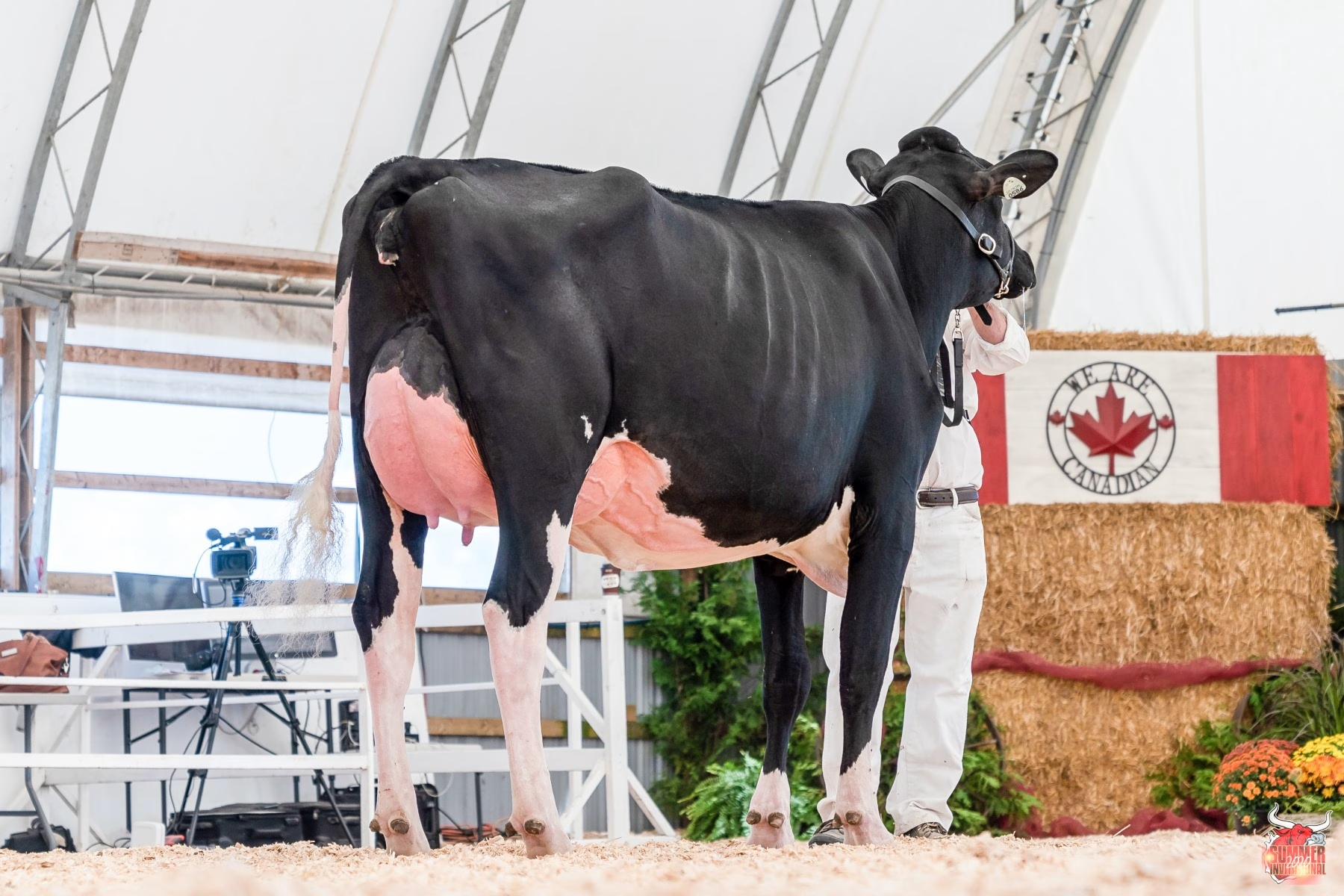
From $2,100 sale reject to Holstein royalty: How a John Lennon-bred underdog cow reshaped global dairy genetics.
HANOVERHILL DESIGNER MISS (EX-95 12*). Purchased as a day-old calf for just $2,100-the lowest price at the 1985 Hanover Hill dispersal-this unassuming heifer would develop into one of Holstein history’s most influential matriarchs, producing four Excellent daughters and establishing the renowned Mavis family line. Her journey from sale-day afterthought to breed-defining foundation dam exemplifies the unpredictable magic of dairy cattle breeding.
There’s a certain magic in the unpredictability of dairy breeding. While most eyes are drawn to the record-breaking sales and celebrated pedigrees, sometimes the most profound impact comes from unexpected sources. Such is the remarkable story of Hanoverhill Designer Miss-a Holstein, whose journey from sale-day afterthought to breed-defining matriarch reminds us why we fell in love with this industry in the first place.
The Beginning: A Chance Discovery
The story begins not with Designer Miss herself but with a conversation between two industry professionals in the late 1970s. Jeffrey Nurse, the ambitious owner of Nurseland Farms in Georgetown, Ontario, was chatting with Halton County’s agricultural representative, Phyllis MacMaster, about securing some “index cattle, “a concept that had the dairy community buzzing with excitement.
Jeff Nurse (center) receives the 2013 Curtis Clark Achievement Award from 2012 winner Don Schwartz (left) and Orville Schmidt (right) at the Royal Agricultural Winter Fair-a moment honoring Nurse’s lifelong dedication, sportsmanship, and respected leadership in the Canadian dairy industry.
This conversation led Nurse south to Bill Hughes’ Apex, South Carolina farm. Hughes wasn’t just any breeder-he had an almost supernatural talent for spotting exceptional animals. There, amid the warm Carolina atmosphere, Nurse found himself captivated by a three-month-old Astronaut calf with a pedigree that would raise eyebrows. (Read more: Jeff Nurse: This Dairy Gentleman Walks the Talk)
From Peace Signs to Pedigrees: John Lennon and Yoko Ono during the period when they ventured into Holstein breeding in the late 1970s. Their brief foray into agriculture produced Miss Dreamstreet Fond Helen, a significant link in the maternal line that would eventually lead to Hanoverhill Designer Miss. This unexpected connection between rock royalty and Holstein bloodlines adds a unique chapter to the remarkable pedigree behind one of the dairy industry’s most influential foundation females.
The calf’s dam, Miss Dreamstreet Fond Helen, had a story worth telling. As a Matt daughter, she’d been acquired by Hughes and his neighbor Gordon Newton at a Dreamstreet sale. But here’s where things get interesting-Helen had been bred by none other than John Lennon and Yoko Ono! Yes, that John Lennon. The Beatles icon and his wife had a brief but notable venture into cattle breeding. (Read more: John Lennon and Yoko Ono’s Hidden Past: The Surprising Story of Their Dairy Cattle Farms)
The Rock Star Connection
Helen’s dam, Velnare Proud Harriet, descended from Kerchendall Proud Clarion and could trace her lineage to a Canadian Holstein cow named Mooreline Reflection Bell. This pedigree blended quality and reliability with, quite literally, rock and roll flair.
Recognizing potential where others might not, Nurse purchased the calf, naming her Helen’s daughter Astronaut Keepsake Ray. Back in Canada, Ray thrived, eventually earning her place among the elite cows that would form the foundation of the Hanoverhill legacy.
The Sale That Changed Everything
Brookview Tony Charity (EX-97): The legendary Holstein who commanded a world-record $1.45 million at the 1985 Hanover Hill dispersal sale where Designer Miss was the lowest-priced lot. While Charity dazzled in show rings with four Royal Winter Fair Grand Championships, it was the unassuming Designer Miss whose genetic influence would ultimately reshape the Holstein breed. Photo: Maggie Murray
Fast forward to summer 1985. If you were anyone in the dairy industry, you were focused on Port Perry, Ontario, where the historic Hanover Hill dispersal sale was underway. The star attraction? Brookview Tony Charity, a phenomenal cow who commanded an astounding $ 1,450,000 world record at the time. (Read more: Brookview Tony Charity (EX-97-USA-11*): Incredible Perfection)
Meanwhile, elsewhere in the sale lineup, a different story was unfolding. Nurse had bred Ray to Hanover-Hill Triple Threat, resulting in a heifer named Monteith Miss Kanada. When this heifer was four months old, Nurse consigned her to the Allangrove Triple Threat Invitational Sale, where she caught Peter Heffering’s eye. Though the average price that day was $9,721, Heffering acquired Miss Kanada for significantly less-$4,800.
This impressive Holstein represents the elite maternal line that produced one of the breed’s most influential foundational cows. MONTEITH MISS KANSAS, classified Excellent, achieved All-Canadian 5-Year Old honors in 1991 and shares her maternal heritage with Miss Kanada – the dam of legendary Hanoverhill Designer Miss. While her sister’s daughter sold for the lowest price at the historic 1985 Hanover Hill dispersal, the family’s genetic strength was validated through generations of excellence. Sired by Medway Missile rather than Triple Threat (who sired Miss Kanada), KANSAS demonstrates how maternal consistency can produce champions through different sire lines. The Monteith prefix connects her to Jeffrey Nurse’s breeding program, where this remarkable cow family’s journey began.
By July 1985, Miss Kanada had just calved to Hanoverhill Designer at the Hanover Hill dispersal, producing a heifer calf with a double cross of Roybrook Telstar. Enter Doug Dixon, a 24-year-old breeder from Dixellen Farm in Cheltenham, Ontario. While others focused on the record-breaking prices and celebrity cows, Dixon purchased this day-old calf for a mere $2,100-the lowest price of the entire sale.
Two months later, when Dixon received the registration paper, he learned her name: Hanoverhill Designer Miss. Little did anyone suspect that this bargain purchase would become the cornerstone of an extraordinary legacy.
Building a Dynasty: The Designer Miss Impact
Designer Miss made her home at Dixellen Farm until she died in 1997, proving herself to be what breeders call a “Complete Cow.” She scored an Excellent classification with 95 points for rump, udder, feet, and legs. Her production was equally impressive: over eight lactations, she produced 176,367 pounds of milk, 7,755 pounds of fat, and 5,920 pounds of protein.
But her true value emerged through her offspring. She produced four Excellent and eight Very Good daughters, earning 12 Star Brood Cow points. Her son by Aerostar, Dixellen Design, became a popular Semex bull, particularly in Germany. During the Royal Agricultural Winter Fair, busloads of German breeders would visit Dixellen Farm specifically to inspect his family- a testament to Designer Miss’s growing international impact.
Erbcrest Duplex Marvellous (EX-94): A sixth-generation Excellent descendant of Hanoverhill Designer Miss, Marvellous exemplifies the family’s hallmark combination of elite type, production, and longevity-building on a legacy that has shaped show rings and breeding programs across North America.
The Mavis Legacy Takes Flight
One of Designer Miss’s most influential daughters was Dixellen Prelude Mavis, who produced Dixellen Rudolph Mavis. This exceptional cow topped the Dixellen Dispersal 2004, selling for $15,000 to Dan Erb of Erbcrest Holsteins in Milverton, Ontario. Rudolph Mavis classified Excellent five times and produced a staggering 253,000 pounds of milk in her lifetime. She gave birth to 23 daughters, none classified below Good Plus.
What’s truly remarkable is the consistency across generations. While many cow families deteriorate in quality over time, the Designer Miss lineage maintained even improved its excellence. From Designer Miss (EX-95) through Prelude Mavis (EX), Rudolph Mavis (EX-5E), and beyond, each generation upheld and advanced the family’s reputation.
Erbcrest Doc Marilou EX-93-95MS: Sixth generation excellence from the legendary Designer Miss family line. This exceptional daughter of Woodcrest King Doc continues the tradition of superior type and production established by her famous ancestor. Classified Excellent with an outstanding 95 points for mammary system, Marilou proudly represents the remarkable consistency of the Mavis maternal line at Erbcrest Farms and Quality Holsteins, showcasing how Designer Miss’s genetic influence continues to impact elite Holstein breeding programs today.
From Show Ring to International Impact
The Mavis family continued to excel, producing show ring champions like Erbcrest Allen Melody, Damion Marvell, and Duplex Marvellous, all classified as Excellent. Duplex Marvellous produced Erbcrest Atwood Mariella, whose Stanleycup daughter became the sixth generation Excellent in this family branch.
This consistent achievement across multiple generations and through various sire lines (Prelude, Rudolph, Leduc, Allen, Damion, Duplex, Atwood, Stanleycup) demonstrates the incredible genetic influence of the Mavis family. They exemplify the power of a prepotent maternal line capable of stamping quality onto offspring regardless of the specific sire used- the holy grail for breeders aiming to build consistent, high-performing herds.
Holstein Legacy in Motion: Westmuir Doorman Vellous represents the ninth generation of excellence descending from Hanoverhill Designer Miss. This Val-Bisson Doorman daughter from the renowned Mavis family line exemplifies how Designer Miss’s genetic influence continues to produce superior type and production nearly four decades after being the lowest-priced animal at the historic 1985 Hanover Hill dispersal. With maternal ancestors including Erbcrest Duplex Marvellous EX-94 and the legendary Dixellen Rudolph Mavis EX-92-5E, Vellous carries forward the balanced traits that have made the Designer Miss lineage one of the Holstein breed’s most influential maternal dynasties.
The Crowning Achievement: Charwill Attic Marcy
Perhaps the most dramatic chapter in the Designer Miss story comes through her great-granddaughter, Charwill Attic Marcy. Born to Dixellen Leduc Mavis, William Martin purchased Marcy for just $2,500 at the Dixellen Dispersal. Despite numerous offers, she remained unsold as a yearling when Martin’s asking price of $6,000 wasn’t met.
The triumphant moment as Charwill Attic Marcy is presented as Grand Champion Holstein at the prestigious Royal Agricultural Winter Fair. This remarkable great-granddaughter of Hanoverhill Designer Miss represents the pinnacle of the Mavis family legacy, completing the journey from lowest-priced sale calf to show ring royalty. After being purchased by MilkSource Genetics earlier that year, Marcy’s championship victory cemented her place in Holstein history and validated the extraordinary genetic potential that had been passed down through four generations of excellence.
Marcy’s fortunes changed dramatically when she was sold to Gen-Com Holsteins in Quebec. Under their ownership, she became All-Canadian and All-American as both a two-year-old and a three-year-old. In March 2015, she was sold to MilkSource Genetics in Wisconsin for a rumored $500,000. Later that year, Marcy claimed the grand championship at the Royal Winter Fair, cementing her place in Holstein history. (Read more: Gen-Com Holsteins – Dairy Breeder Video Interviews)
Her journey from a $2,500 purchase to a $500,000+ show queen highlights the immense value that can emerge from seemingly modest beginnings. While Designer Miss provided the genetic blueprint, it took the expertise of operations like Gen-Com and MilkSource to realize Marcy’s championship potential fully.
The Invisible Threads of Holstein History
To fully appreciate the significance of Designer Miss, we need to understand the broader context of Hanoverhill Holsteins. Established in Canada in 1973 by R. Peter Heffering and Kenneth Wesley Trevena, Hanoverhill represented a paradigm shift in Holstein breeding philosophy. (Read more: How Hanover Hill Holsteins Revolutionized the Dairy Breeding Industry)
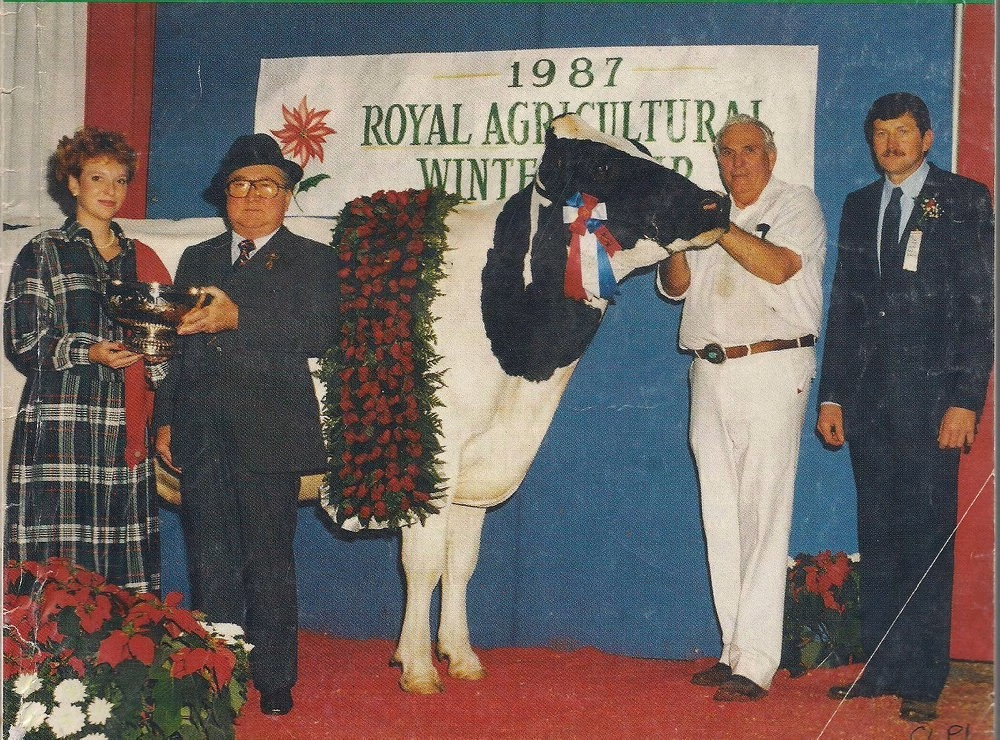
History in Motion: R. Peter Heffering presents Brookview Tony Charity (EX-97-USA-11), as Judge Jeff Nurse awards her Grand Champion at the 1987 Royal Winter Fair. Charity made history as the only cow to win four Royal grand championships, symbolizing the culmination of generations of breeding excellence. This iconic moment connects the visible achievement to the invisible threads of Holstein genetics-where carefully cultivated cow families, visionary breeders, and strategic matings converge to create lasting legacies.
Before crossing the border, these visionaries had already achieved remarkable success in the United States in establishing what would become “the epicenter of the Holstein universe and the planet’s most influential Holstein herd.” Their approach was revolutionary: mating deep cow families with the breed’s best sires, emphasizing high production alongside exceptional type, and developing sophisticated marketing strategies.
By the mid-1980s, Hanoverhill’s influence had become truly global. Their breeding program had produced nine Class Extra sires-more than any operation in history-breaking the record previously held by Mount Victoria Farms.
Designer Miss stands out even more remarkably within this context of excellence. She emerged as one of the most significant maternal influences despite her humble beginnings in a program known for producing record-breaking cows and influential bulls.
Meier’s Showtime Meike (Glauco Meggie EX-91-6YR-CH EX-93-MS), a striking representative of the Hanoverhill Designer Miss family, exemplifies five consecutive generations of Excellent cows-proof of the enduring genetic strength and type transmitted by this legendary Canadian matriarch.
Lessons for Today’s Breeders
Designer Miss’s story offers profound insights for modern breeders. First, it reminds us that price tags rarely tell the whole story-genetic potential often reveals itself gradually across generations. Second, it demonstrates the value of focusing on fundamental traits rather than following trends. While the industry increasingly emphasized indexes and numbers, Designer Miss embodied the importance of physical conformation, production efficiency, and genetic prepotency.
Perhaps most importantly, her rise from sale-day afterthought to breed influencer reminds us of the beautiful unpredictability of genetic expression. In breeding, as in life, greatness often emerges from unexpected sources. Designer Miss wasn’t the product of a record-breaking mating, or a marketing phenomenon-she was simply an exceptional cow whose qualities became increasingly apparent with time.
The Bottom Line
As I reflect on Hanoverhill Designer Miss’s legacy, several lessons remain relevant for today’s dairy producers. First, genetic potential isn’t always obvious at first glance- the most promising animals sometimes come in unassuming packages. Second, consistency across generations is crucial; long-term success stems from cows that reliably produce quality offspring generation after generation. Third, the most valuable cows excel in both production and conformation.
While Brookview Tony Charity commanded headlines and a record-breaking price at the 1985 Hanover Hill Dispersal, it was Hanoverhill Designer Miss-the, the lowest-priced animal in the sale, proved to be arguably the best transmitting dam Hanover Hill ever bred. Her story is a powerful reminder of dairy breeding’s unpredictable nature and the potential for greatness within every calf.
So, the next time you’re at a sale and your eye wanders to that unheralded heifer in the corner, or you’re evaluating genetic potential beyond glossy catalog pages, remember Designer Miss. Her journey teaches us that in breeding and business, sometimes the best investments aren’t the ones with the highest price tags but those with the deepest foundations.
Key Takeaways
Undervalued Potential Matters: The industry’s most impactful animals may emerge from overlooked sale lots rather than record-priced “sure bets.”
Prep Potency Outshines Hype: Designer Miss’s ability to stamp quality across six generations of diverse sire pairings demonstrates rare genetic consistency.
Legacy > Instant ROI: While Brookview Tony Charity sold for $1.45M in 1985, Designer Miss’s descendants generated exponentially greater long-term value through sustained excellence.
Data Tells Half the Story: Physical conformation, mammary structure, and longevity proved more predictive of lasting impact than contemporary indexing systems.
Global Influence: From German AI programs to Wisconsin show champions, this Canadian cow family reshaped Holstein genetics across continents.
Executive Summary
Hanoverhill Designer Miss, the lowest-priced animal at a historic 1985 dispersal sale, defied expectations to become one of Holstein history’s most influential matriarchs. Descended from cattle bred by John Lennon and developed through Hanover Hill’s revolutionary program, this unassuming cow produced six generations of elite show champions and high-producing daughters while establishing a prepotent maternal line. Her story challenges conventional valuation methods, proving that genetic potential often reveals itself across generations through consistent type, production, and transmission of superior traits. The article underscores the importance of recognizing foundational breeding stock beyond immediate market trends, offering timeless lessons about patience, pedigree depth, and the unpredictability of genetic excellence in modern dairy operations.
Join over 30,000 successful dairy professionals who rely on Bullvine Weekly for their competitive edge. Delivered directly to your inbox each week, our exclusive industry insights help you make smarter decisions while saving precious hours every week. Never miss critical updates on milk production trends, breakthrough technologies, and profit-boosting strategies that top producers are already implementing. Subscribe now to transform your dairy operation’s efficiency and profitability—your future success is just one click away.
How one unassuming cow born in rural Ontario revolutionized Holstein genetics worldwide, bridging show ring glamour with genomic science.
Do you know what amazes me about the dairy world? How a single cow can change everything. That’s exactly what Aitkenbrae Starbuck Ada did. Born in 1986, this remarkable cow didn’t just win ribbons—she created an entire dynasty that’s still shaping Holstein genetics worldwide. I’ve always been fascinated by how one exceptional animal can transform an entire breed’s trajectory. Ada’s story perfectly exemplifies this—bridging old-school showring excellence with today’s cutting-edge genomics.
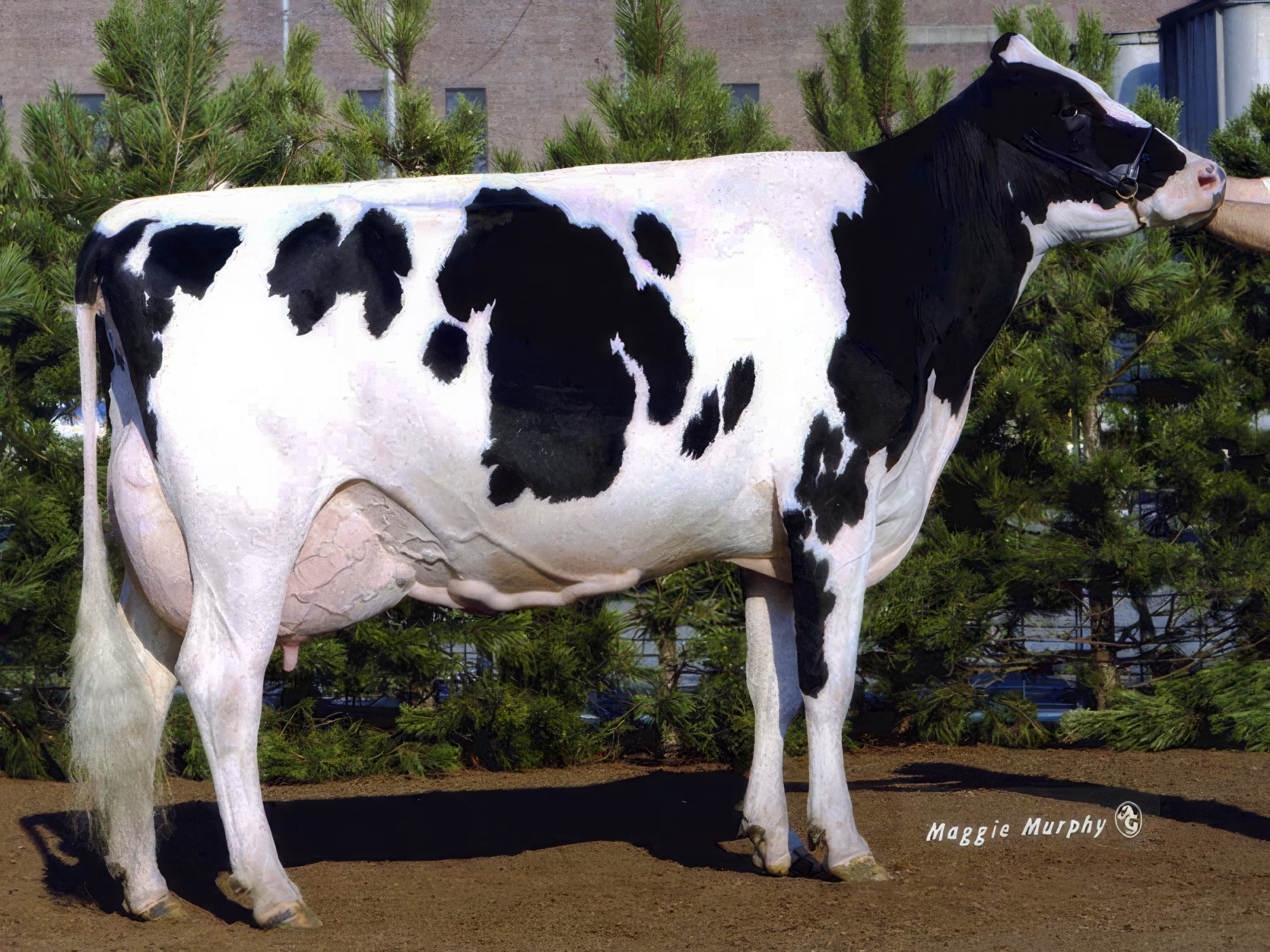
Aitkenbrae Starbuck Ada: The legendary Holstein matriarch whose exceptional conformation earned her Unanimous All-American Senior Three-Year-Old honors in 1990, but whose true legacy lives on through her daughters Alicia and Adeen, whose descendants continue to revolutionize Holstein genetics worldwide. Her remarkable balance of show ring excellence and genetic prepotency bridged the divide between type and production, establishing a dynasty that remains influential in modern genomic breeding. Photo: Maggie Murphy
The Holstein Landscape of the Mid-1980s
The 1980s were a weird time for dairy breeding. Remember that period everyone calls “The Great Divide Between Type and Production”? The industry was at this fascinating crossroads. Since the mid-60s, all this genetic evaluation data had been pouring in, especially for milk output and fat content. Meanwhile, AI organizations were pushing young sire sampling programs.
This created this massive philosophical split. You had your traditional display herds stubbornly focused on type traits—making sure their cows looked gorgeous in the showring. Then you had these forward-thinking farmer-breeders embracing genetic indexes and production metrics. Two completely different approaches to breeding! Honestly, the type-focused herds were gradually losing influence as those production-oriented operations started showing better economic returns.
Ada walked into this changing landscape where the pendulum was swinging away from pure conformation toward a more balanced approach. The industry analysts noted how “leadership in genetic improvement started to shift from breeds and prominent herds to artificial insemination organizations.” Little did anyone know that Ada’s descendants would eventually bridge these competing priorities through their incredible dual excellence in type and production.
The Birth of a Legend
So here’s where it all begins. September 13, 1986—Aitkenbrae Starbuck Ada is born at the Aitkenbrae farm in Holstein, Ontario. Her pedigree? A fascinating combination: sired by the legendary Hanoverhill Starbuck out of Aikenbrae Sheik Arlene (Good Plus-80-2YR-CAN). This genetic cocktail would prove transformative for the Holstein breed.
But Ada’s story starts much earlier. Her lineage traces back to the 1940s with Banostine Dutchland Clothilde, who set a world fat record as a senior two-year-old in 1948 with 623 pounds of fat from 16,272 pounds of 3.8% milk. Tom Hayden, who established the Banella prefix (combining names from his foundation cows Banostine and Ella), bred Banostine to Spring Farm Sovereign Supreme. The resulting heifer, Banella Sovereign Supreme Delight, was disappointingly poor—so much so that Hayden sold her cheaply to his friend Cecil Barber.
Barber, however, saw potential in Delight and bred her to Lifloc Re-Echo Voyageur, producing Sheila Voyageur. When bred to Pabst Walker Ollie, Sheila produced C-Bar Ollie Belle, born May 1, 1959. In the mid-1960s, Walter Aitken, looking to improve his herd, purchased the five-year-old Ollie Belle through cattle dealer Bill Sniveley.
Aitkenbrae Farm wasn’t just any dairy operation. It was run by the partnership of Morley Aitken and Don Lantz, who started working together in 1978. They developed a superior herd under the Aitkenbrae prefix, regularly winning Premier Breeder and Exhibitor banners at Grey County Black & White Day. Their breeding expertise earned them two Master Breeder shields, a prestigious recognition in the Holstein world.
Don Lantz’s connection to the farm began in childhood. When his father died in 1962, Don was just six years old, and his uncle Walter Aitken took him under his wing. Don spent his weekends and summer holidays at Aitkenbrae Farm, developing a deep love for farming and Holstein cattle. This attachment lasted through his youth, and when he came of age, Don went straight to his uncle for his first job. When Walter retired, he was farming in partnership with his son Morley, and recognizing Don’s talent and work ethic, Walter offered to sell his nephew his share of the business.
Despite Ollie Belle’s apparent lack of maternal instinct (her first two calves at Aitkens died at birth), one daughter did survive—Aitkenbrae Radar Olive. Through several generations of strategic breeding, this line eventually produced Aitkenbrae Sheik Arlene, who bred to Hanoverhill Starbuck and gave birth to Aitkenbrae Starbuck Ada on September 13, 1986.
When Ada calved in 1988, Brian Carscadden, first noticed something special about her. At the time, he was working as a fitter and attending school but also wheeling and dealing with cattle. He and Ken Empey were regulars at the Aitkenbrae barn, having bought animals from them before. As Lantz recalled, “When Ada calved in 1988, Brian Carscadden was first to notice her. He was wheeling and dealing in cattle while fitting and attending school. He and Ken Empey were always in and out of Aitkenbrae. Aitkenbrae had sold cattle to both. There was some consultation between Carscadden and Empey about Ada. Empey ended up buying her.
Don Lantz had this practical philosophy about their breeding program: “Morley and I were always willing to let a good one go. We were trying to cash flow with a 50-cow herd and realized that for a cow to get a full opportunity, she would need to get out of here, into the hands of a good promoter.”
The Early Career: From Ontario to the American Show Ring
After Ken Empey purchased Ada, her journey was just beginning. An Ohio investment group, Hygerian Associates, including Robert Binger and William Atkins, was looking to invest in Holsteins. They contacted Empey, who took them to see Ada when she was two months fresh and looking fantastic. They bought the heifer and took her to Ohio, where she completed her impressive two-year-old record: 25,000 pounds of milk with 908 pounds of fat at 3.6% and 798 pounds of protein at 3.2%.
During this lactation, Binger and Atkins and a new partner named Lawson Bennett took Ada to the Michigan State Fair in the summer of 1989. There, she won the senior two-year-old class and was named grand champion. Her next stop was Madison, where, with Howard Binder judging, she 2nd and later moved to third after the milk out behind Dupasquier Stab Winnie and Comestar Laurie Sheik.
At Madison, Ada caught the attention of Douglas King of Kingstead Farms in Damascus, Maryland, and Grey Wilcom of Ijamsville, Maryland. King initially considered Ada “a little on the small side but very correct.” He was impressed enough that he and Wilcom approached Hygerian to buy her, which they did in December 1989.
Under King and Wilcom’s ownership, Ada grew taller and was prepared for the 1990 show season. This would prove to be her breakout year. She won the three-year-old class and was named Supreme Champion at the Eastern National Show. She continued her winning streak by placing first with the best udder in class at Madison. These impressive showings culminated in her being named the Unanimous All-American Senior Three-Year-Old of 1990.
The Shore Connection: Strategic Breeding Decisions
At the close of the 1990 show season, Hardy Shore, Jr., principal of Shoremar, Inc., purchased a half-interest in Ada. Shore had previously worked as a hoof trimmer and was particularly impressed by Ada’s feet and legs. He described her as the best “footed” cow he had ever seen. This appreciation for functional conformation would influence his breeding decisions with Ada.
When the Shoremar herd was dispersed in 1991, Ada sold for $71,000—the sale’s second-highest price—returning to the ownership of Kingstead and Wilcom, who dissolved their partnership with Shore.
During his ownership period, Shore made a critical breeding decision that would shape Holstein history. He flushed Ada to several bulls, including Donnandale Skychief (EX-Extra). Shore admired Skychief but recognized that the bull needed improvement in feet, an area where Ada excelled. This strategic pairing would produce the daughters establishing Ada’s legacy as a brood cow.
Charlie McEvoy, a respected figure in the dairy industry with decades of experience, singles out Ada as “one of my favorite young cows of all time.” He emphasizes her lasting importance, noting, “Her descendants, whether male or female, have changed our barns and show strings forever.” This endorsement from an industry veteran underscores the significance of Ada beyond her accomplishments.
The Skychief Sisters: Building the Ada Empire
The flush to Donnandale Skychief produced two daughters who would become legends in their own right: Shoremar S Alicia and MS Kingstead Chief Adeen.
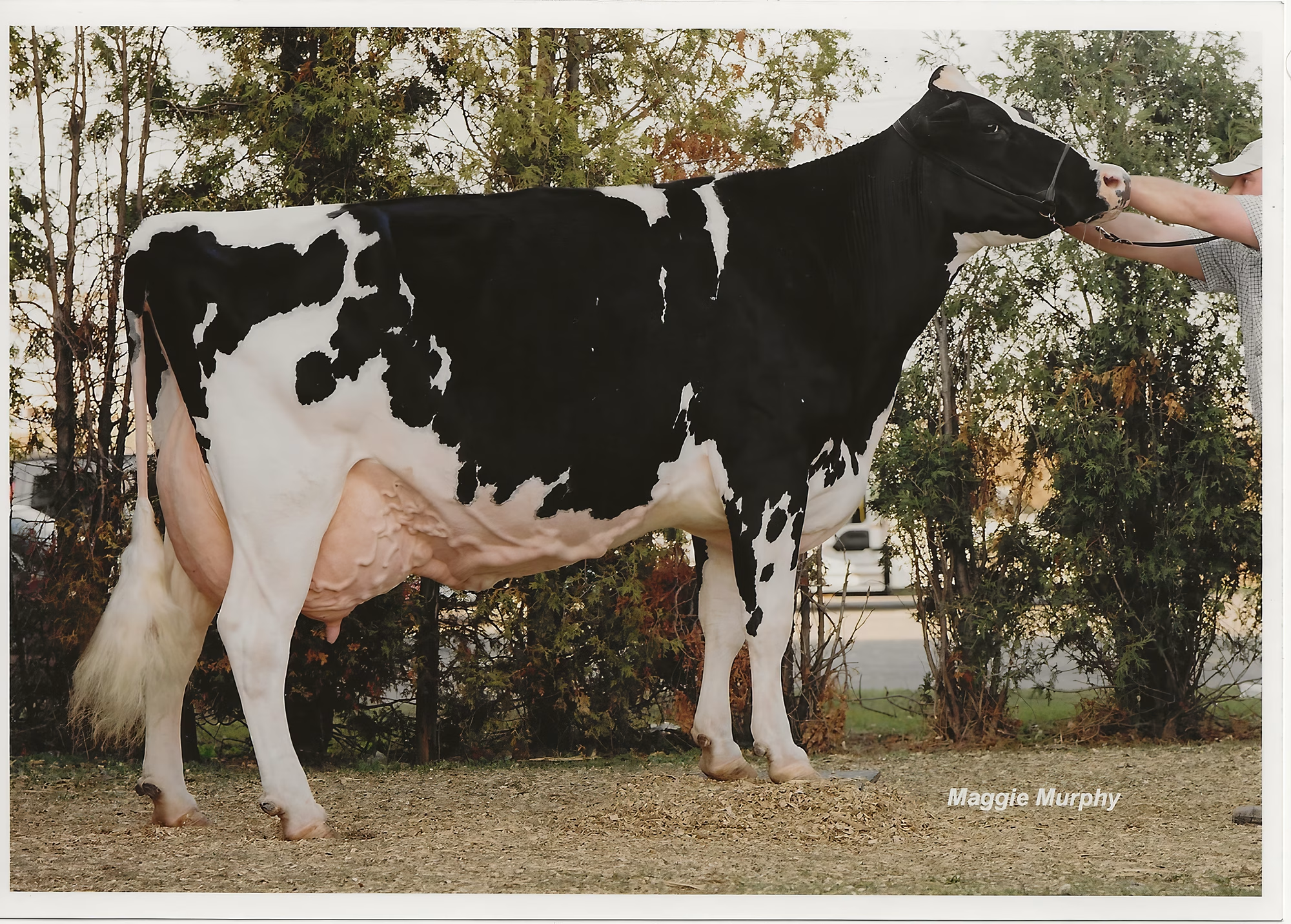
Shoremar S Alicia EX-97 3E 7*: Daughter of Aitkenbrae Starbuck Ada and one of only 35 registered Holsteins in North America to achieve the coveted Excellent-97 classification. This remarkable cow was nominated All-American five times, crowned Supreme Champion at the 2000 Royal Winter Fair, and established herself as an exceptional brood cow with more than a dozen Excellent daughters. Her legacy continues through descendants that dominate show rings and breeding programs worldwide. Photo: Maggie Murphy
All-American Alicia: Extending Excellence
Shoremar S Alicia, born in 1995, elevated the family’s status to unprecedented heights. Classified Excellent-97, Alicia joined an elite group of only 35 registered Holsteins in North America to achieve this near-perfect score. Her show career eclipsed even her dam’s impressive record, as she was nominated All-American five times in milking form and crowned Supreme Champion of the Royal Winter Fair in 2000.
The story of how Alicia came to be involves another key figure in Holstein breeding. David Innes of the City-View herd at Woodstock, Ontario, met Hardy Shore at a show and inquired about buying embryos. Ada had just produced a great flush to Skychief, so a deal was made for two embryos. The two resulting calves were jointly owned by Shore and Innes, one of them being Shoremar Alicia, who would become a World Champion.
Under the ownership of Jeff Butler, Howard Binder, and Kingstead, Alicia topped the five-year-old class at Madison and won the grand championship at the Royal Winter Fair in 2000. These accomplishments made her the unanimous choice for All-American and All-Canadian 5-year-old that year. After winning the 125,000-lb. cow class and the grand championship at the Eastern National Show in 2003, she was voted All-American aged cow. She continued her show ring success with a Reserve All-American nomination in 2004 and High Honorable Mention in 2005.
Beyond her show ring dominance, Alicia firmly established herself as a brood cow in her own right. With more than a dozen Excellent daughters from various sires, she continued Ada’s pattern of reliably transmitting elite type. Her influence branched primarily through her Startmore Rudolph daughter, Cityview R Alicia (Excellent-92-CAN 23*), and her Durham daughters BKB Abby (Excellent-95 3E DOM) and BKB Amanda (Excellent-92 GMD DOM).
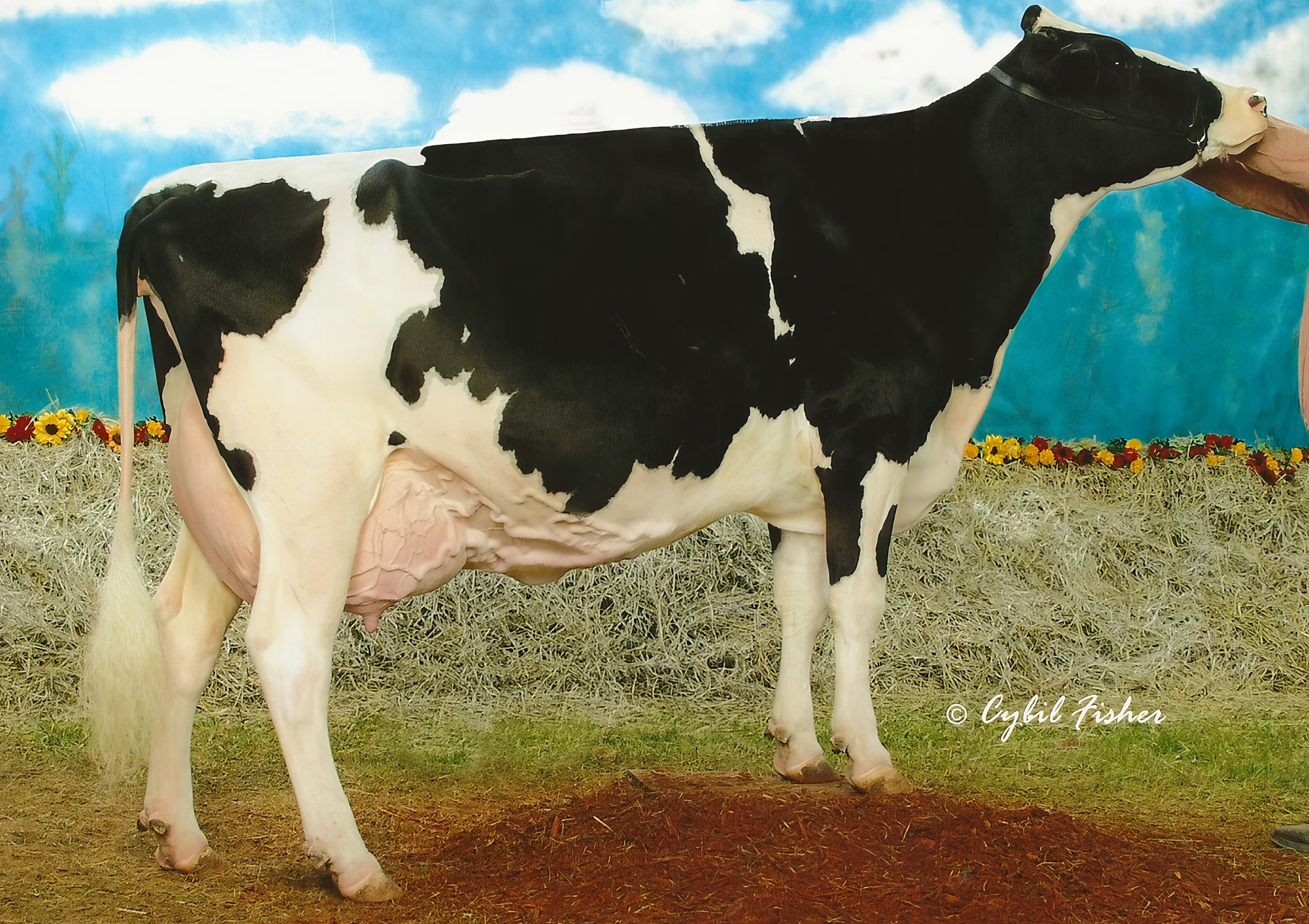
MS Kingstead Chief Adeen EX-94 2E DOM (1997-2011): The extraordinary daughter of Aitkenbrae Starbuck Ada who left an indelible mark on Holstein breeding with 51 Excellent daughters worldwide—ranking her second all-time for most EX offspring. This influential matriarch established a genetic dynasty through sons including Atwood, Atlantic, and Aftershock, while demonstrating the rare ability to transmit both superior type and genomic excellence across generations. Her profound impact continues through descendants winning championships globally, cementing her legacy as one of the most consequential brood cows in modern Holstein history. Photo: Cybil Fisher
All-American Adeen: Expanding the Influence
The second Skychief daughter, MS Kingstead Chief Adeen, born in 1997, proved equally influential but through different channels. Described as a “foundation cow for several herds,” Adeen established connections to names that would become Holstein royalty: Atwood, Atlee, Ariel, and Autumn.
Adeen’s story takes an interesting turn. In 1997, Kingstead sold their herd to three Maryland breeders. By the flip of a coin, one of the buyers, Cranberry Meadows Farm, owned by Gary and Crystal Dell of Westminster, acquired the two-week-old Chief Adeen. When the time came, she was flushed to Maughlin Storm, resulting in five heifers that all classified Very Good as two-year-olds. One of these was MD-Delight Storm Amberlee-ET, who would play a crucial role in extending the family’s influence.
Adeen was later sold as a two-year-old to a syndicate of Billy and Mike Heath, Gerald Todd, and Amlaird Callum McKinven. During the six months she was in their ownership, she was flushed successfully to Comestar Lee. The star of this flush was Amlaird Lee Alice, the first Junior 2-year-old at the World Dairy Expo in 2003 and named All-American.
In 2000, the Shoremar S Alicia and MS Kingstead Chief Adeen duo reached their pinnacle in the show ring. They were the unanimous choice for All-American Produce of Dam. Chief Adeen was nominated All-American as a junior 3-year-old in 2000 for Jeff Butler and Lance and Amy Ruppert, producing over 30,000 pounds of 4% milk that year.
Adeen then sold to Jeff Butler, Lance, and Amy Ruppert. At the World Dairy Expo 2000, Adeen stood 6th in the Junior-3 class and paired with her older sister Alicia to win the Produce of Dam class. Shortly afterward, Kingstead bought out Ruppert’s share, and from that time onwards, all progeny were registered with the BVK prefix for Butlerview and Kingstead.
Jeff Butler of Butlerview Farms, who owned Chief Adeen from 1999 until she passed away in 2011 at age 14, described her as “one of the most influential and one of the only cows in the breed with offspring over +2500 on genomics and All-American progeny.” This dual achievement—excelling in traditional show type and modern genomic metrics—foreshadowed the family’s future significance, bridging these two worlds.
Adeen’s reproductive career was remarkable by any standard. She left behind 51 Excellent daughters classified worldwide, ranking her second only to Ashlyn for the most Excellent daughters of all time. This prolific production of high-quality offspring established her as an “industry elite” and exponentially expanded the Ada family’s influence.
Douglas King reflected on working with these remarkable cows: “It was the thrill of a lifetime to work with those two great cows, Adeen and Alicia. I’ve often thought how special it would be to assemble all the daughters of Adeen and Alicia in one barn. What a sensational barn full of cows you would have!”
From Show Ring to Genomic Revolution
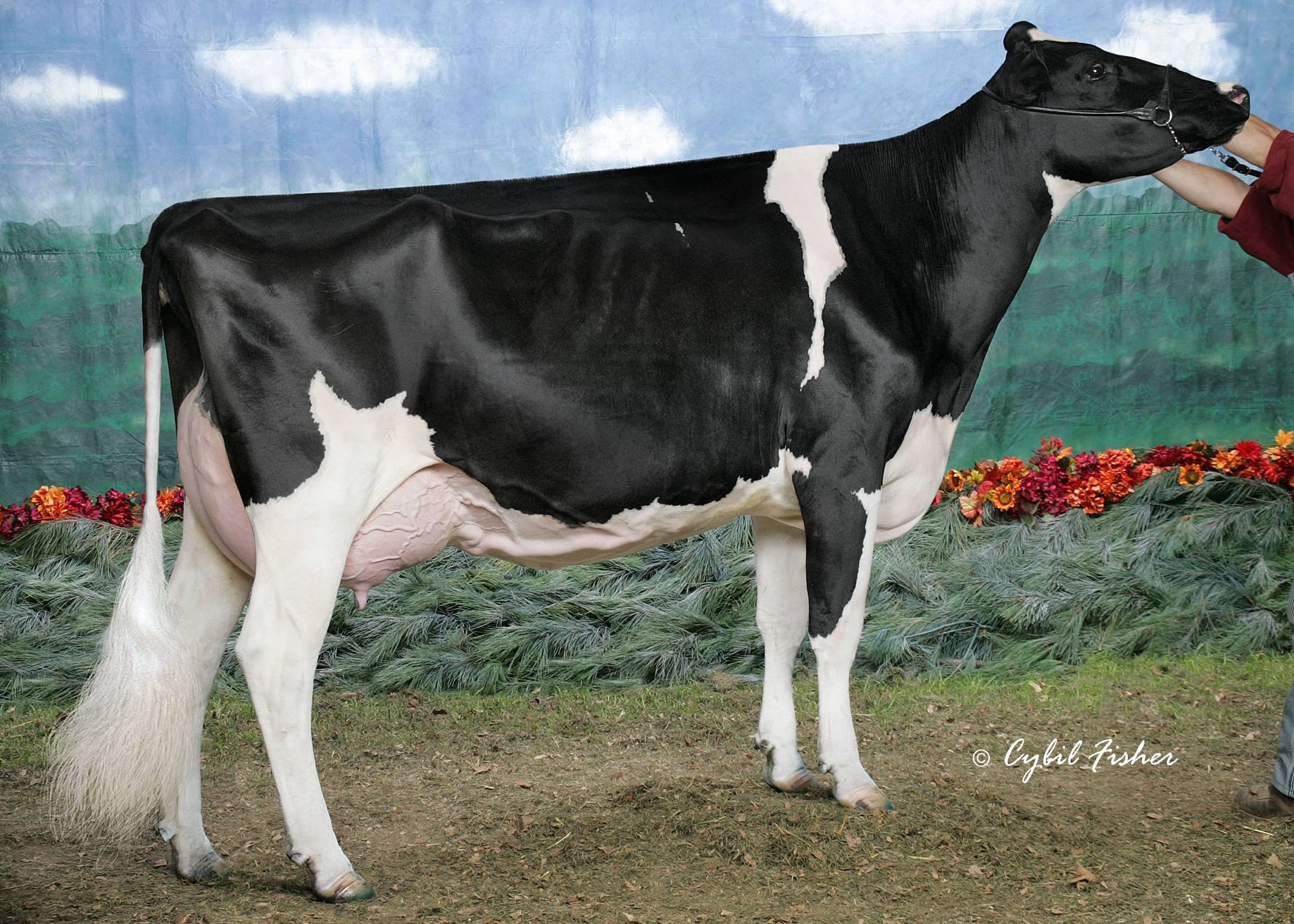
MD-Delight Durham Atlee EX-92-4YR-USA DOM GMD 2*: The pivotal Holstein matriarch whose Goldwyn sons revolutionized type breeding worldwide. After catching Michael Heath’s eye as a young heifer and selling for $20,000, she achieved Reserve Intermediate Champion at the 2005 International Holstein Show. Though her life was cut short by cancer in 2008, her legendary “golden flush” to Braedale Goldwyn produced six sons with Superior Type credentials, including the influential Atwood, Atlantic, and Aftershock. As a granddaughter of Aitkenbrae Starbuck Ada through MS Kingstead Chief Adeen, Atlee represents the perfect bridge between show ring excellence and genomic merit in modern Holstein breeding. Photo: Cybil Fisher
The Durham-Atlee Connection: A Critical Genetic Branch
While many breeding decisions contributed to the Ada family’s expansion, perhaps none proved more consequential than those involving Adeen’s granddaughter, Durham Atlee. On September 11, 2001, MD-Delight Storm Amberlee gave birth to MD-Delight Durham Atlee-ET, sired by Regancrest Elton Durham. Michael Heath of Heath Holsteins, Rick, Shannon Allyn, and Jason Lloyd purchased Atlee as a bred heifer from the Dells.
Heath’s decision to buy Atlee came with some hesitation. He was working his last sale as a professional fitter, the Maryland Convention Sale, when he first noticed Atlee. “Where we had the fitting chute set up, Atlee was tied just six feet away. I kept looking at the calf, liking the calf, looking at the calf, liking the calf, but she was small for her age,” Heath shared. About a year later, Heath traveled to North Carolina to Foster’s, who had bought Atlee at the Maryland Convention Sale. Priced at $20,000 as a springing heifer, Heath took a chance on her. He liked her pedigree and thought she could make money selling embryos if she classified at least Very Good-85 as a two-year-old.
Heath’s gamble paid off spectacularly. Atlee was trucked from North Carolina to Massachusetts for their state show on one of the hottest summer days, but she pulled it together and won her class the following day. She later placed 15th in the senior two-year-old class at the World Dairy Expo.
As a senior three-year-old, Atlee was supposed to be due September 1, but they had the wrong breeding date. She ended up calving mid-September, and the partners weren’t sure if she would be ready for the show. Heath convinced them to send her anyway, figuring they had nothing to lose. Less than a week later, MD-Delight Durham Atlee was named Reserve Intermediate Champion of the 2005 International Holstein Show.
Heath reflected, “She is worldwide known by name, and I don’t know how big of name she would have been if she hadn’t gone to Madison.” This observation highlights the continued importance of show ring exposure in building a cow family’s reputation, even as the industry moved toward more data-driven breeding decisions.
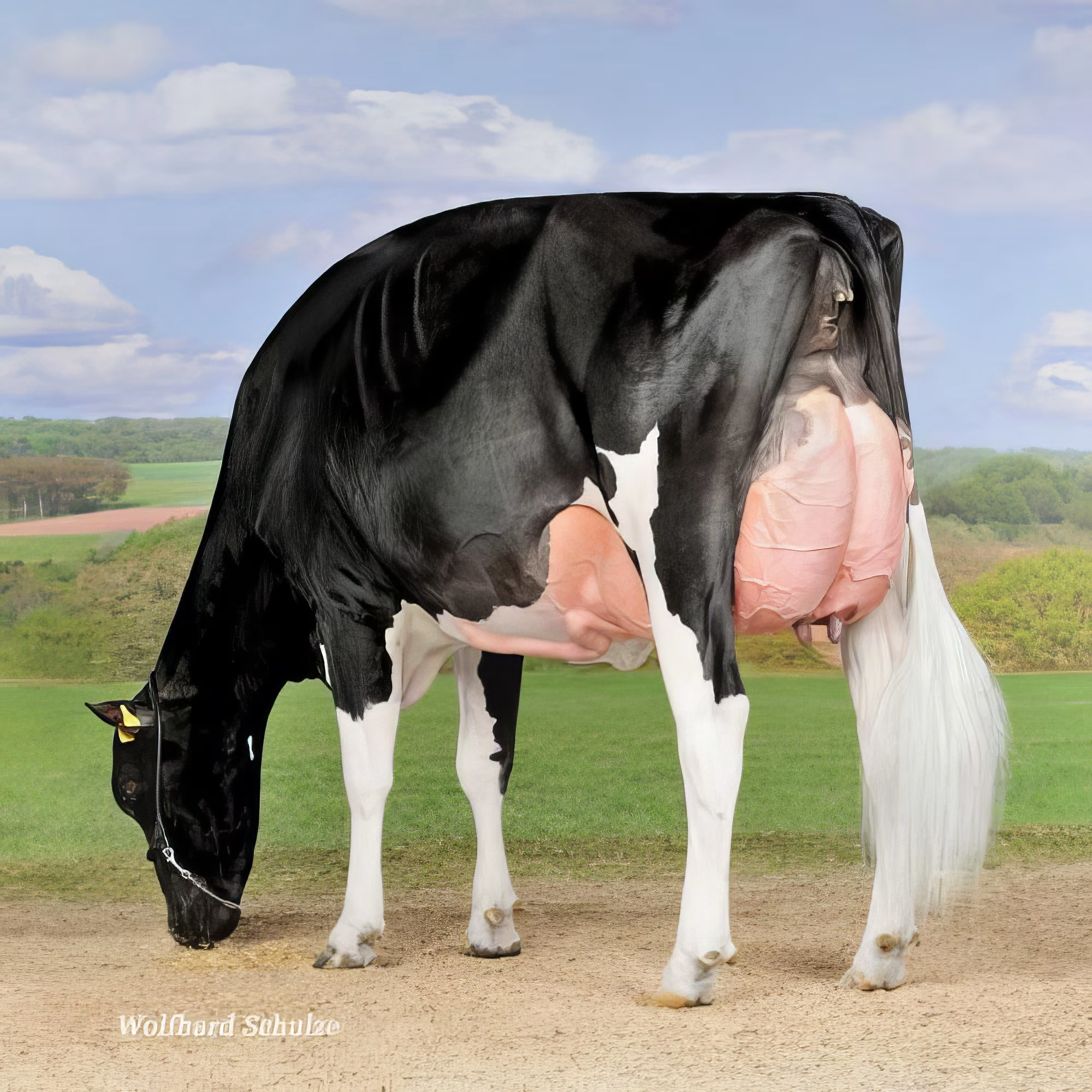
Whittier-Farms Jasper Atlanta VG-85-CH 2YR: This striking cow exemplifies the global impact of the Ada family’s genetic excellence, earning 2nd place honors at the prestigious Swiss Expo 2014. As a granddaughter of MD-Delight Durham Atlee EX-92-USA, she represents a critical branch in the Ada dynasty, connecting directly to the influential maternal line that produced industry-changing sires Atwood, Golden Dreams, Delete, Amazing, and Aftershock. Her dairy strength, angularity, and overall style showcase the consistent type transmission that has made this cow family so valuable to Holstein breeders worldwide. Atlanta’s international success further validates the Ada family’s remarkable ability to produce superior animals across continents and generations, continuing a legacy of excellence that began with Aitkenbrae Starbuck Ada. Photo: Wolfhard Schulze
The Golden Flush: Birth of a Genomic Giant
The truly transformative moment for the Ada family’s international impact came through what has become known as the “golden flush”—the breeding of Durham Atlee to Braedale Goldwyn. In 2007, this mating produced several sons who would become influential sires: Maple-Downs-I GW Atwood, Allyndale-I Attic, Allyndale-I Atticus, Maple-Downs-I GW Atlantic, Allyndale-I GW Arden, and Mr. Atlees Altaamazing.
These bulls were distributed among major AI organizations: Atwood, Arden, and Atlantic went to Select Sires, Attic, and Atticus to Semex, and Altaamazing to AltaGenetics Inc. In the same year, MS Atlees SHT Aftershock, Atlee’s Shottle son, was purchased by St. Jacobs A.B.C.
GALYS-VRAY EX-94-CH EX-95-MS: This exceptional Atwood daughter exemplifies the enduring legacy of Aitkenbrae Starbuck Ada. Grand Champion at the 2016 European Show in Colmar and Swiss Expo, GALYS-VRAY showcases the perfect blend of show ring excellence and production prowess that defines the Ada family. Her achievements, including multiple Grand Champion titles at Expo Bulle, cement her status as one of the most influential cows in modern Holstein breeding, bridging continents and generations with her remarkable genetic impact. Photo: Wolfhard Schulze
Steve Velthuis of Velthuis Farms purchased embryos from this flush, resulting in three heifers and five bulls. In a twist of fate that demonstrates the sometimes unpredictable nature of breeding, Velthuis shared that Atwood was initially “the one left that no one wanted” when other AI organizations made their selections. “He was right at the time of genomics, and the other brothers were high enough that they didn’t need to test Atwood. We collected him before we got his genomics,” shared Velthuis.
Through a conversation between Velthuis and Ed Fellers, a syndicate was formed for Atwood that enabled his sampling program. The results would exceed all expectations, as Atwood emerged as the leader with soaring demand. As Velthuis noted, “Most people can’t get Goldwyn semen, so Atwood is a good replacement for those that want Goldwyn blood.”
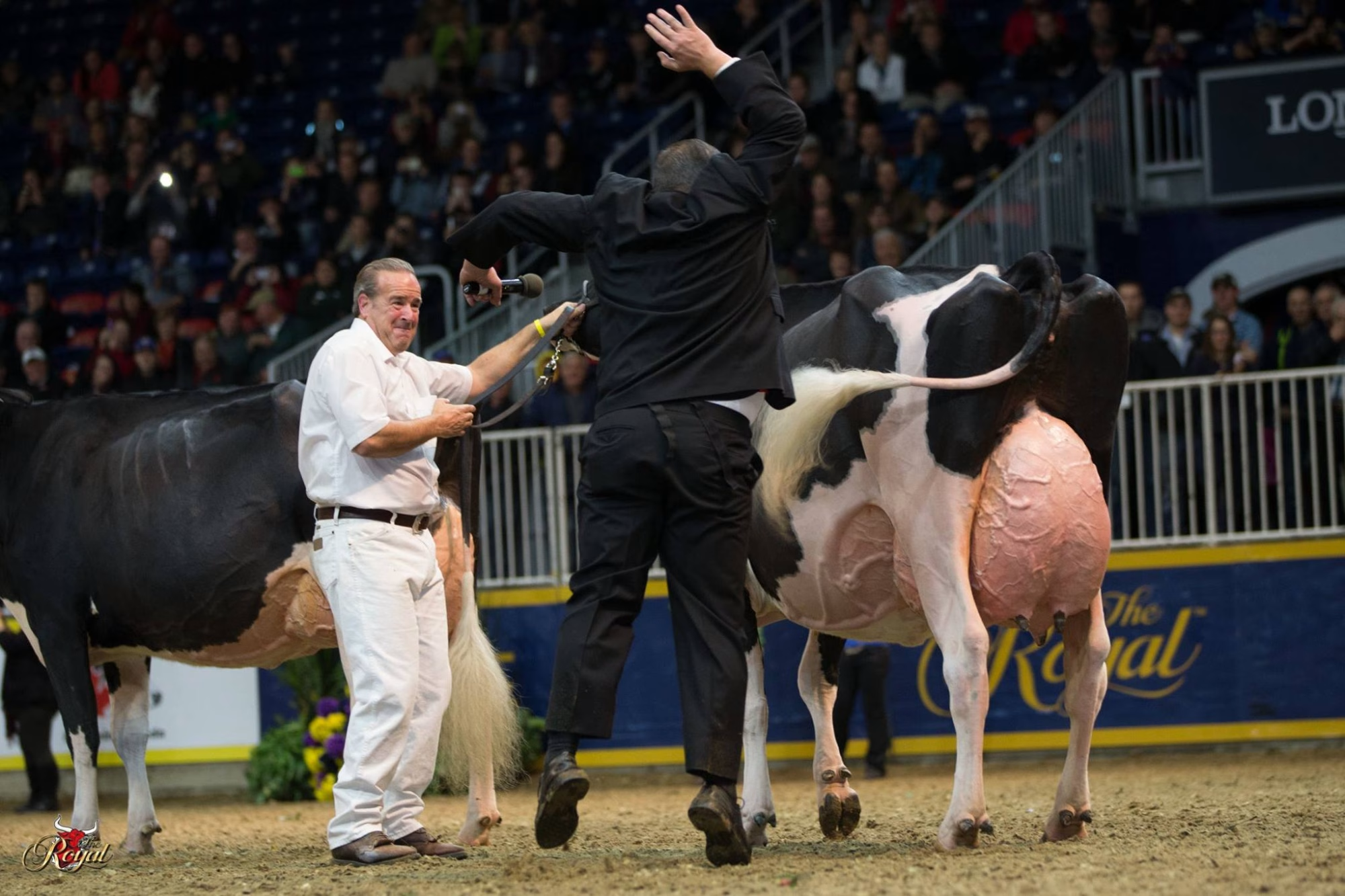
Charwill Attic Marcy: The triumphant 2015 Royal Winter Fair Grand Champion represents the culmination of the Ada legacy through her sire Attic, a son of Durham Atlee. This exceptional female validated Tim Abbott’s claim about Atlee’s extraordinary type transmission, completing an undefeated show season by capturing grand championships at both Madison and the Royal. Her victory under judge Michael Heath—who had earlier recognized Atlee’s potential—demonstrates how the Ada family continues to dominate show rings worldwide, extending the dynasty’s influence into yet another generation of Holstein excellence. Photo: The Bullvine
By the end of 2013, Atlee’s six proven sons had all earned Superior Type credentials; five were in the top 10 for type. This remarkable achievement prompted Tim Abbott to claim that “Atlee’s ability to transmit type appears to be as strong as any cow in breed history.” This assessment was validated in the fall of 2015 when Charwill Attic Marcy (EX-95-USA), a daughter of Allyndale-I Attic owned by MilkSource, Kaukauna, Wisconsin, ended an undefeated show season by winning the grand championships at both the Royal Winter Fair and International Holstein Show.
The same flush also produced MS Atlees Goldwyn Ariel-ET (VG-89), Reserve All-American junior 2-year-old 2009. She was later purchased for $1.5 million by a Canadian syndicate, further cementing the family’s economic impact on the breed.
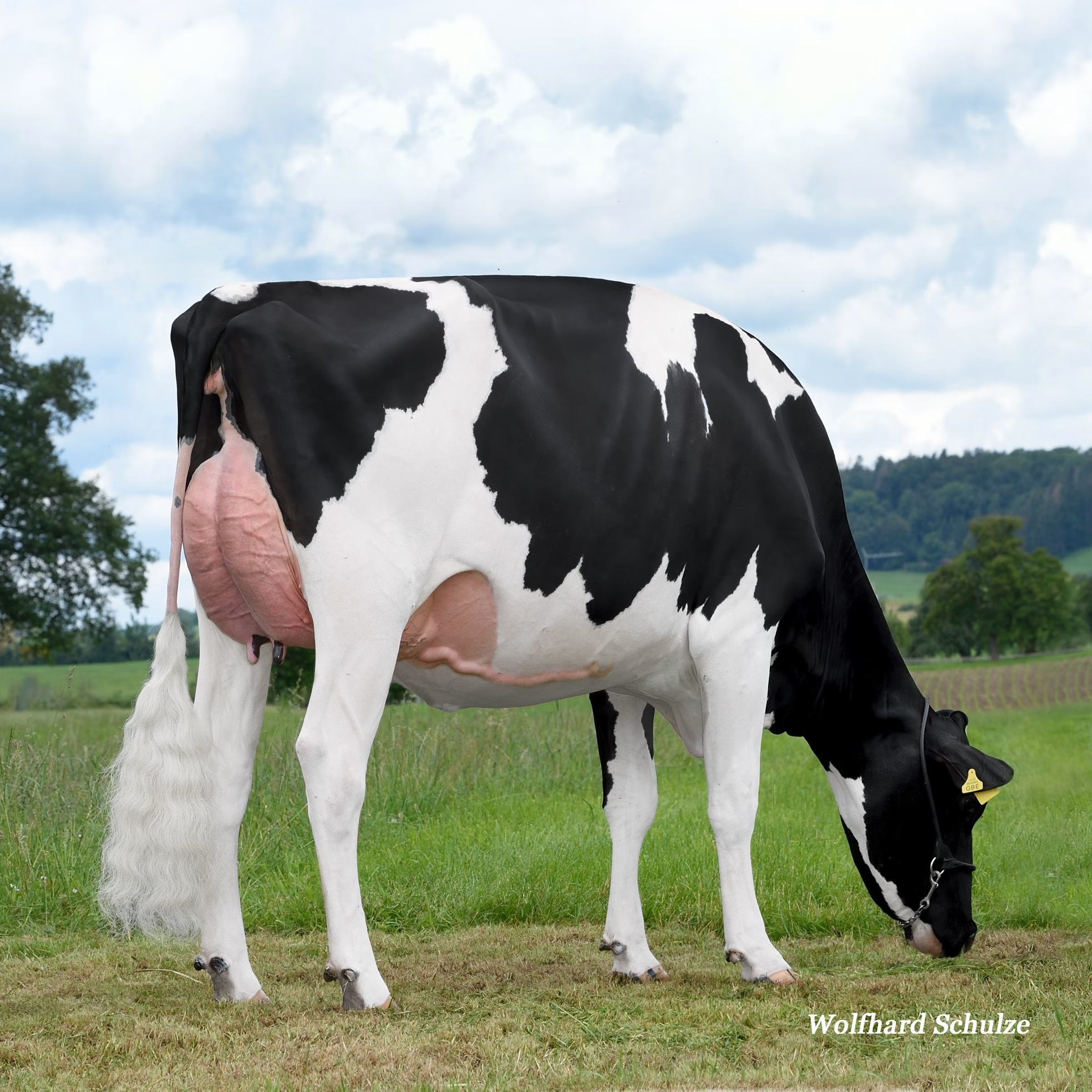
Ruegruet High Octane ALLYSON VG-86-2YR CH: The sixth-generation descendant of Aitkenbrae Starbuck Ada exemplifies the enduring legacy of this extraordinary Holstein family. With her balanced dairy form and strong mammary system, ALLYSON showcases the genetic excellence that has defined the Ada lineage for over three decades. As a Very Good-86 two-year-old, she continues the tradition of superior type and production that flows through her impressive maternal line—from her dam Whittier-Farms Jasper ATLANTA EX-91-3E (2nd place Swiss Expo Lausanne 2014) back to the legendary foundation dam Ada. ALLYSON represents the global reach of the Ada influence, with her success in European show rings demonstrating how strategic breeding decisions continue to produce exceptional animals across generations and continents. Photo: Wolfhard Schulze
The Ada Legacy in Modern Holstein Breeding
Bridging Breeding Philosophies
The evolution of the Ada family parallels the broader transformation of dairy cattle breeding over the past four decades. From the mid-1960s through 1980, the industry experienced what has been described as “The Great Divide Between Type and Production,” where traditional display herds focused exclusively on conformation while progressive farmer-breeders embraced genetic indexes for production traits.
Their ability to excel across this divide makes the Ada family remarkable. This family has maintained relevance through every phase of the industry’s development, beginning with Ada’s show ring success, continuing through Alicia and Adeen’s exceptional type transmission, and culminating with Atwood’s emergence as a genomic giant.
In today’s breeding landscape, “DNA indexes have become the starting point in animal selection decisions for breeders regardless of their trait priority: type, production, fertility, health, or functionality.” The Ada family’s success in adapting to this paradigm shift demonstrates the rare ability to combine traditional type excellence with modern genetic merit.
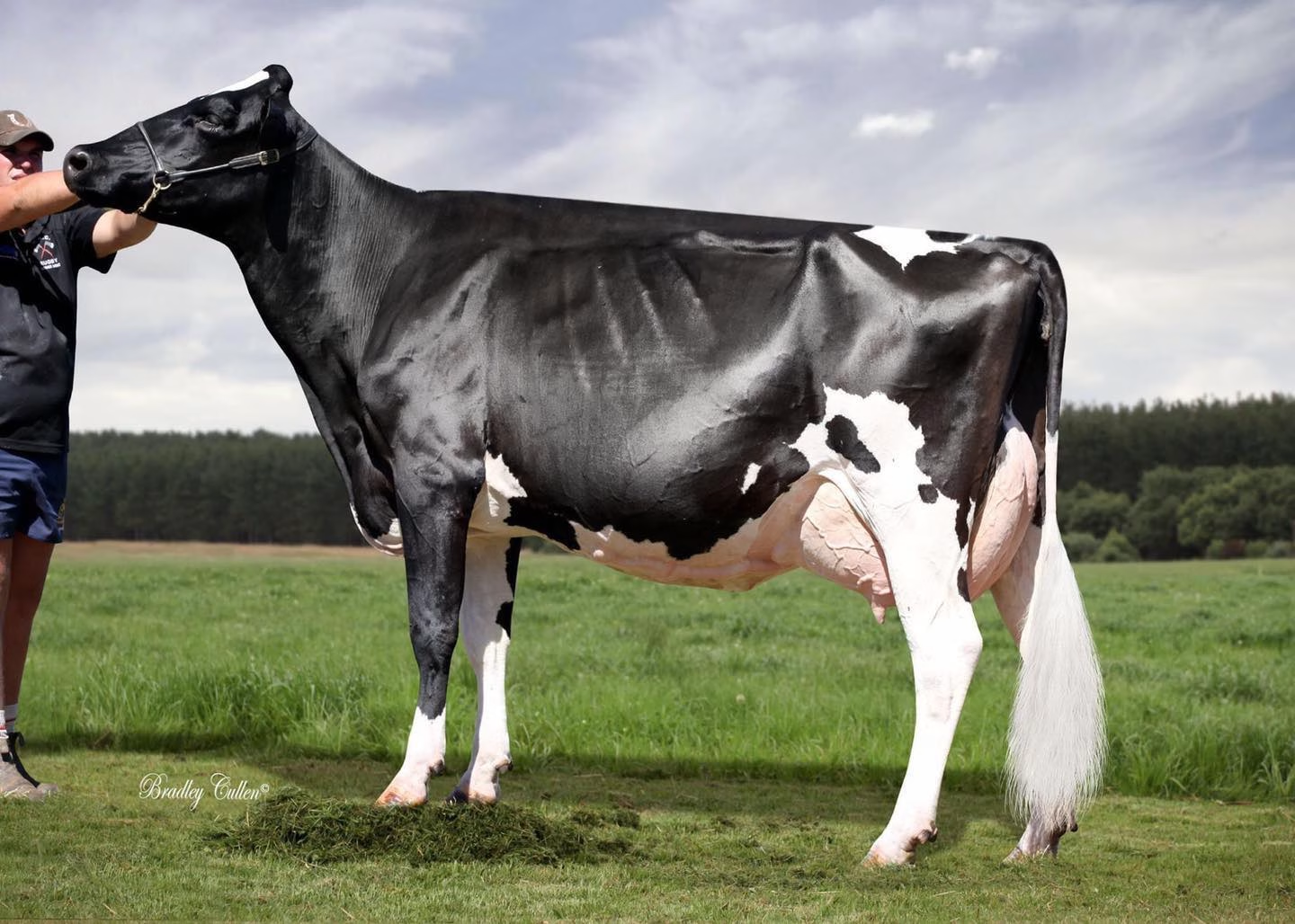
Mario Park Goldwyn Alicia EX-93-3E 8*: The 2018 Holstein Australia Cow of the Year exemplifies the global impact of the Ada family legacy. Descending from world-renowned Aitkenbrae Starbuck Ada through Shoremar S Alicia EX-97-3E, this exceptional Goldwyn daughter combines remarkable production (lifetime exceeding 80,000 liters) with superior type traits, including an EX-95 score for dairy strength. Owned by Murray and Jane Polson, she’s established herself as one of Australia’s most influential brood cows, with her progeny consistently excelling in both show rings and production records. Her extraordinary fertility, production persistence, and ability to transmit superior type to her offspring demonstrate how the Ada genetics continue to shape Holstein breeding excellence worldwide. Photo: Bradley Cullen
Global Impact Through Multiple Generations
The influence of the Ada family extends far beyond North America. Their descendants have succeeded in show rings and breeding programs worldwide, demonstrating the family’s genetic prepotency across diverse environments and management systems.
In Japan, for example, TMR Adeen Dundee Chief-ET, a Dundee daughter of Chief Adeen, was named first place senior three-year-old and grand champion at the Hokkaido Black and White Show, described as “the biggest spring show in Japan.”
Blondin T&L Avalanche Angela VG-87-2YR (Max): Exemplifying the continuing excellence of the Ada family, she traces directly back to the influential MS Kingstead Chief Adeen-EX-94-11*. Her maximum VG-87 score as a two-year-old highlights her outstanding conformation and dairy quality, continuing the legacy of elite type that defines descendants of Aitkenbrae Starbuck Ada. Exhibited proudly by Ferme Blondin of Saint-Placide, Quebec, she represents the enduring impact of the Ada maternal line in modern Holstein breeding. Photo: The Bullvine
Lessons for Modern Breeders
If there’s one thing the Ada family teaches us, it’s the value of strategic mating decisions. From Ada’s original mating to Donnandale Skychief that produced Alicia and Adeen to the “golden flush” of Durham Atlee to Braedale Goldwyn that produced Atwood, key breeding decisions amplified the family’s influence exponentially.
In today’s era of genomic selection, where 70% of dairy breed pregnancies come from high-index genomic bulls, the principles demonstrated by the Ada family remain relevant. The most successful breeding programs still balance genetic data with visual assessment and family history.
The Ada family shows us how to balance tradition and innovation. While modern dairy breeding has embraced genomic selection and advanced reproductive technologies, the fundamental principles of identifying and propagating superior genetics haven’t changed.
Want to see the impact of this approach? Just look at the production statistics. Holstein cows in 1920 produced about 2000 kg of milk annually. Today’s Holsteins average over 10,000 kg annually with the same solids content. That’s not just progress—that’s transformation.
The commercial success of the Ada family demonstrates the economic potential of elite genetics. The “Impact of Ada Sale” averaged an estimated $6,200 on 103 head, all from a single bloodline. This premium has only increased in the genomic era, exemplified by the $1.5 million price tag for MS Atlees Goldwyn Ariel.
MS GOLDWYN ALANA EX-96-2E (97MAM): The epitome of Holstein excellence as captured at her Grande Championne victory at the 2015 Quebec Spring Show. This extraordinary Goldwyn daughter exemplifies the continuing legacy of Aitkenbrae Starbuck Ada through her dam line, descending from the legendary Shormar BKB S Alicia. Her near-perfect classification score, including an exceptional 97 points for mammary system, reflects the superior genetic transmission that has defined the Ada family for generations. With multiple championship titles including Reserve Grand at the 2015 Royal Winter Fair, ALANA showcases the remarkable balance of dairy strength, angularity, and udder quality that has made descendants of Ada so influential in both show rings and breeding programs worldwide. Her commanding presence continues to validate the remarkable prepotency of the Ada maternal line across four generations of Holstein breeding excellence. Photo: Vicki Fletcher
The Future of Holstein Breeding: Building on Ada’s Legacy
The Holstein breed continues to evolve, with genomic selection accelerating improvement. The Ada family’s ability to maintain relevance through these technological shifts provides a blueprint for breeders seeking sustained success.
As the dairy industry evolves, the challenge for breeders will be maintaining Holstein’s distinctive characteristics while advancing performance across multiple traits. The Ada family shows how the elite type can coexist with production efficiency and genetic merit.
Remember, the modern Holstein results from centuries of selective breeding, dating back to the crossing of black “Batavians” with white “Friesians” 2000 years ago in The Netherlands. The breed has continuously adapted to changing agricultural needs throughout this long history while maintaining its core identity.
Conclusion: The Enduring Significance of Aitkenbrae Starbuck Ada
Isn’t it amazing how one cow born in Ontario in 1986 could reshape an entire breed globally? Through her daughters Alicia and Adeen, her granddaughter Atlee, and descendants like Atwood, the Ada family has maintained relevance across multiple eras of dairy breeding—from the show-focused 1980s through the production-driven 1990s and into today’s genomic age.
As Charlie McEvoy perfectly put it, her descendants “have changed our barns and show strings forever.” This transformation extends beyond the show ring to commercial dairy operations worldwide.
For modern breeders navigating an increasingly complex landscape, the Ada family offers an inspiring example—a reminder that behind all the genomic data and reproductive technologies, the art of identifying and propagating exceptional individuals remains at the heart of successful dairy breeding.
The final chapter of Aitkenbrae Starbuck Ada’s story is still being written. But one thing’s for sure—her influence will continue to shape the Holstein breed for generations.
Key Takeaways
Ada’s story exemplifies how a single exceptional individual can transform an entire breed through thoughtful breeding decisions and genetic prepotency
The Ada family’s rare ability to excel in both show ring type and modern genomic metrics provides a blueprint for breeders seeking to balance tradition with innovation
Strategic matings—particularly Ada to Skychief and later Atlee to Goldwyn—demonstrate how complementary genetic pairings can exponentially amplify desirable traits
The economic value of elite genetics is highlighted by the commercial success of Ada’s descendants, including the $1.5 million sale of MS Atlees Goldwyn Ariel
The continued relevance of the Ada family across multiple eras of dairy breeding underscores how fundamental breed quality maintains value even as selection technology evolves
Executive Summary
Born in 1986 at Aitkenbrae farm in Ontario, Aitkenbrae Starbuck Ada transformed from promising show cow to Holstein dynasty matriarch through strategic breeding decisions that amplified her genetic influence across generations. After being crowned Unanimous All-American Senior Three-Year-Old in 1990, Ada’s true legacy emerged through her two exceptional Donnandale Skychief daughters—Shoremar S Alicia and MS Kingstead Chief Adeen—who produced dozens of excellent offspring and established Ada’s family as genetic royalty. This lineage reached its pinnacle with the “golden flush” breeding of Ada’s granddaughter Durham Atlee to Braedale Goldwyn, producing the globally influential bull Atwood and other superior sires. Ada’s family uniquely bridged the historical divide between show ring conformation and production traits, creating a genetic pathway that continues influencing modern Holstein breeding across all continents.
Join the Revolution!
Join over 30,000 successful dairy professionals who rely on Bullvine Daily for their competitive edge. Delivered directly to your inbox each week, our exclusive industry insights help you make smarter decisions while saving precious hours every week. Never miss critical updates on milk production trends, breakthrough technologies, and profit-boosting strategies that top producers are already implementing. Subscribe now to transform your dairy operation’s efficiency and profitability—your future success is just one click away.
To provide the best experiences, we use technologies like cookies to store and/or access device information. Consenting to these technologies will allow us to process data such as browsing behavior or unique IDs on this site. Not consenting or withdrawing consent, may adversely affect certain features and functions.
Functional
Always active
The technical storage or access is strictly necessary for the legitimate purpose of enabling the use of a specific service explicitly requested by the subscriber or user, or for the sole purpose of carrying out the transmission of a communication over an electronic communications network.
Preferences
The technical storage or access is necessary for the legitimate purpose of storing preferences that are not requested by the subscriber or user.
Statistics
The technical storage or access that is used exclusively for statistical purposes.The technical storage or access that is used exclusively for anonymous statistical purposes. Without a subpoena, voluntary compliance on the part of your Internet Service Provider, or additional records from a third party, information stored or retrieved for this purpose alone cannot usually be used to identify you.
Marketing
The technical storage or access is required to create user profiles to send advertising, or to track the user on a website or across several websites for similar marketing purposes.
To provide the best experiences, we and our partners use technologies like cookies to store and/or access device information. Consenting to these technologies will allow us and our partners to process personal data such as browsing behavior or unique IDs on this site and show (non-) personalized ads. Not consenting or withdrawing consent, may adversely affect certain features and functions.
Click below to consent to the above or make granular choices. Your choices will be applied to this site only. You can change your settings at any time, including withdrawing your consent, by using the toggles on the Cookie Policy, or by clicking on the manage consent button at the bottom of the screen.
Functional
Always active
The technical storage or access is strictly necessary for the legitimate purpose of enabling the use of a specific service explicitly requested by the subscriber or user, or for the sole purpose of carrying out the transmission of a communication over an electronic communications network.
Preferences
The technical storage or access is necessary for the legitimate purpose of storing preferences that are not requested by the subscriber or user.
Statistics
The technical storage or access that is used exclusively for statistical purposes.The technical storage or access that is used exclusively for anonymous statistical purposes. Without a subpoena, voluntary compliance on the part of your Internet Service Provider, or additional records from a third party, information stored or retrieved for this purpose alone cannot usually be used to identify you.
Marketing
The technical storage or access is required to create user profiles to send advertising, or to track the user on a website or across several websites for similar marketing purposes.









 Join the Revolution!
 Join the Revolution!