







California’s dairy heartland faces existential water threats from dam removals, regulations, and political neglect. Can rural resilience prevail?
EXECUTIVE SUMMARY: California’s dairy industry and rural water users are battling a triple threat: aggressive dam removals, groundwater restrictions under SGMA, and political marginalization. Remote regions like Siskiyou and Mendocino counties already face devastating water cuts, serving as a warning for the Central Valley. Projects like the Klamath dam removal have unleashed ecological chaos, while reduced Potter Valley diversions threaten $8.8M in economic losses per 100 acre-feet lost. Survival demands urgent unity among farmers, investment in modern infrastructure, and innovative water strategies. Without collaboration, California risks losing 1M acres of farmland and its status as America’s dairy powerhouse.
KEY TAKEAWAYS:
- Regulatory Siege: SGMA could fallow 500K–1M acres of farmland by 2040, costing $1.5B annually in the San Joaquin Valley alone.
- Dam Removal Fallout: Klamath River sediment releases are harming salmon recovery goals, while Potter Valley cuts threaten Mendocino’s wine industry.
- Rural vs. Urban Imbalance: Agriculture holds <13% political sway in Sacramento despite producing $60B in output.
- Innovate or Collapse: Precision irrigation, groundwater recharge, and urban-rural partnerships are critical to stretching scarce water supplies.
- Unity or Extinction: Dairy producers must ally with other sectors to advocate for infrastructure funding and counter “rewilding” agendas.
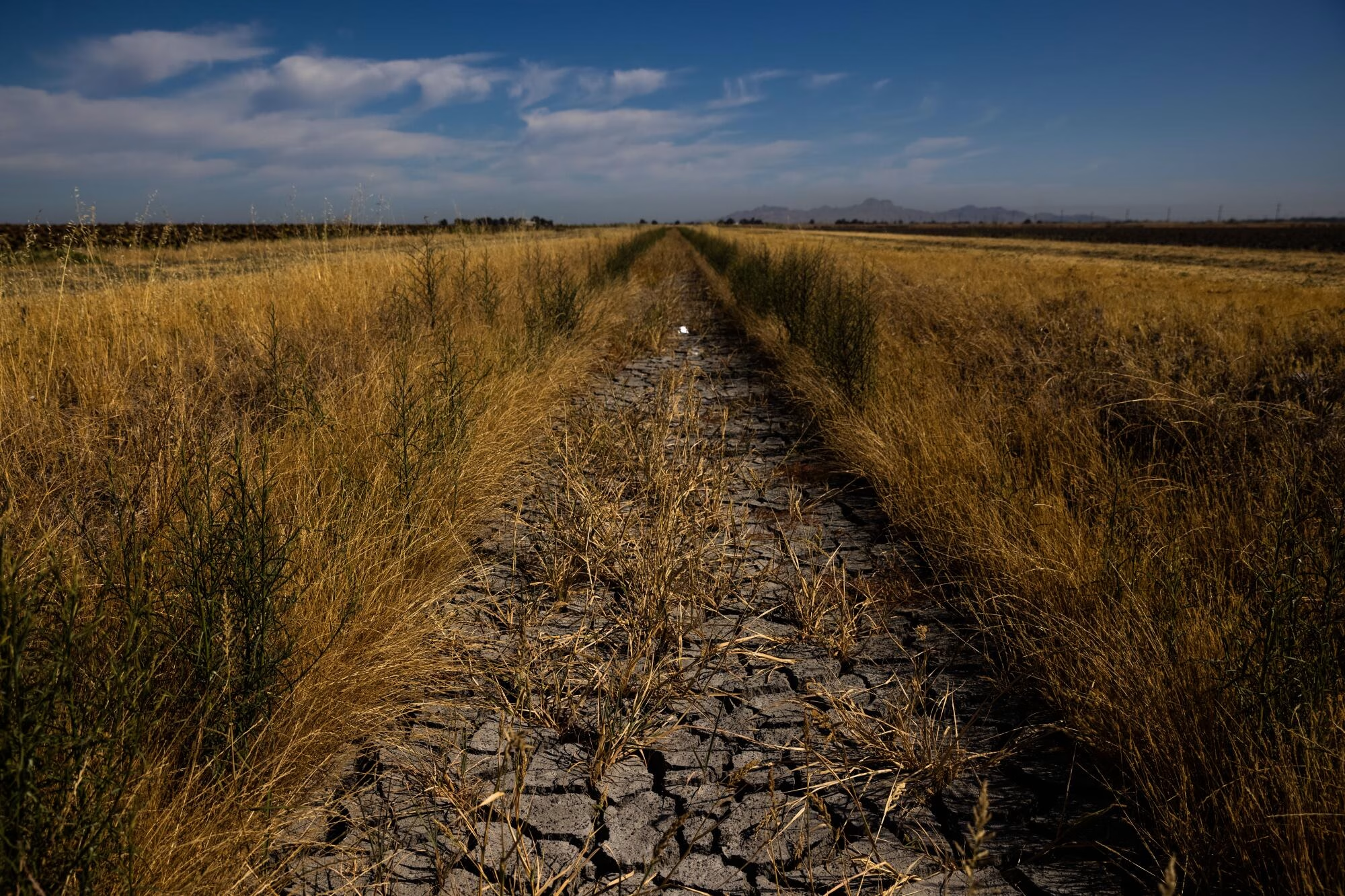
California’s dairy industry faces an existential water crisis far beyond typical drought concerns. This isn’t merely about water scarcity—it’s a perfect storm of regulatory mandates, infrastructure removal, and political marginalization threatening the very foundation of America’s dairy powerhouse. While remote agricultural regions are already devastated by water curtailments, these “canaries in the coal mine” signal what’s coming for dairy’s heartland. Geoff Vanden Heuvel, director of regulatory and economic affairs with the California Milk Producer Council, bluntly says, “California has over drafted about 2-million-acre feet on average over the years. We had a crisis in 2014 with a drought, and the state decided to regulate groundwater, which they probably should have done 50 years ago.” This isn’t just about surviving until the next wet year—it’s about adapting to an entirely new water reality or watching California’s dairy industry permanently diminish.
THE POWER PLAY: AGRICULTURE’S POLITICAL DISADVANTAGE
California agriculture faces a stark political reality: despite being an agricultural superpower, Sacramento’s farming sector wields relatively little influence. When you evaluate the state’s GDP components, financial services, IT, and real estate sectors dominate at around $500 billion each, while agriculture’s $60 billion output appears comparatively modest.
This economic reality translates directly to political muscle. California’s top ten agricultural counties represent just 13% of the state’s population. Even with complete agricultural solidarity, these regions lack the voting power to counter regulatory decisions favoring urban and environmental interests.
The numerical disadvantage becomes even more pronounced in remote agricultural regions like Modoc County, where the population has declined to an estimated 8,262 residents, down nearly 15% from 2010. These sparsely populated regions are powerless against regulatory changes and environmental interests’ intent on “rewilding” California.
THE CANARIES IN THE COAL MINE: WHAT’S ALREADY HAPPENING
Three case studies illustrate what’s already happening to water access in California’s agricultural outposts:
1. Klamath Basin: When Politics Trumps Productivity
The Klamath Basin, spanning parts of Siskiyou and Modoc counties, offers a sobering glimpse of agriculture under regulatory siege. In 2023, federal officials allocated 215,000 acre-feet of water from Upper Klamath Lake for farms and ranches—much better than drought years, but still woefully inadequate.
“This is only half our historical demand,” explained Moss Driscoll, director of water policy at the Klamath Water Users Association. “We never thought we’d be in a position where we’d have so much snow and rain in the Klamath Basin and have such a paltry irrigation supply.”
The economic stakes are massive. With water restrictions, the region could lose hundreds of jobs and tens of millions in income. If groundwater access is restricted, these losses could balloon to over 1,340 jobs and $64 million in revenue.
2. Potter Valley Project: Cutting Off a Century-Old Lifeline
After 100 years of water diversions from the Eel River to the Russian River, the Potter Valley Project is being decommissioned. According to PG&E’s Initial Draft Surrender Application published in November 2023, Potter Valley Project operations will end, and Scott Dam will be removed.
This is a critical inflection point for Mendocino County, as much of the local agriculture on which the economy relies today owes to the 1905 establishment of the Potter Valley Project. The removal of this infrastructure threatens to dramatically reduce water availability in a region where agriculture depends on these historic diversions.
3. Water Quality Regulatory Pressure
Beyond quantity issues, California’s dairy industry faces mounting regulatory pressure on water quality. The California State Water Resources Control Board has proposed new regulations requiring all dairies to meet a nitrogen discharge limit of 10 milligrams per liter, matching the drinking water standard.
This represents a fundamental shift from viewing manure as fertilizer to categorizing it as waste. The dairy industry has criticized these proposed regulations as “unworkable” and “unreasonable,” arguing they mischaracterize the beneficial use of manure and impose substantial economic burdens on already stressed operations.
THE DOUBLE SQUEEZE ON DAIRY OPERATIONS
California’s dairy industry faces a uniquely challenging position in this water crisis, hit by direct operational needs and feed supply chain disruptions.
Direct Operational Impacts
Water is fundamental to dairy operations beyond just animal consumption. A dairy cow requires approximately 30-50 gallons of water daily between drinking and facility needs. Dairies need reliable water for:
- Animal hydration
- Facility sanitation and cleaning
- Milk processing and cooling
- Waste management systems
- General facility operations
These critical daily functions become jeopardized when water access becomes restricted or uncertain.
The Feed Supply Chain Vulnerability
The more severe threat comes through the disruption of the feed supply chain. Research shows that cattle feed accounts for 32% of all water consumption in the Western U.S. The Sustainable Groundwater Management Act (SGMA) implementation will remove between 500,000 and 1 million acres from irrigation in the San Joaquin Valley alone by 2040.
The economic impact is stunning. ERA Economics estimates SGMA will reduce the gross output of dairy cattle and beef sectors by .2 billion (about 7%) and eliminate 7,530 jobs. Total dairy herd size is estimated to fall by 130,000 head (about 10%), which will be slightly offset by increased milk productivity per head.
Ryan Junio, owner of Four J Jerseys in Pixley, California, with 4,200 milk cows, puts it bluntly: “As a dairy producer, this is an ever-growing challenge and is my top concern.”
THE MIGRATION QUESTION: HARD FACTS ABOUT DAIRY’S FUTURE
The mounting water pressures have raised legitimate questions about whether California will experience a significant exodus of dairy operations to more water-secure regions. RaboResearch has examined this possibility, with analyst Roland Fumasi noting:
“We put out a paper a couple of years ago around this idea that the dairy cows are migrating toward the center of the country, closer to the feed. That’s where the dairy processing capacity expansion is primarily happening. And that’s where the cows are heading. And really, it’s being driven partially by all the water challenges we see in the West.”
However, industry experts caution against expecting a mass exodus. Mike North of ever.ag observes: “What’s happening is the water threatened people may be looking to reduce their herd, but producers who aren’t water threatened are buying their cattle and quotas. So, you won’t see the number of dairy cattle in California dramatically drop.”
USDA data support this assessment. According to their November Milk Production report, California was home to 1.723 million dairy cows, up slightly from 1.719 million a year earlier. However, milk production dropped from 3.447 billion pounds to 3.429 billion pounds.
What’s more likely is continued consolidation of dairy operations, with smaller herds facing greater challenges while larger operations with better water security absorb their production capacity. This means fewer dairy farms, larger operations, and a dairy industry increasingly concentrated in areas with the most secure water rights.
HOW TO FIGHT BACK: FOUR BATTLE STRATEGIES
For California’s dairy industry to navigate this water crisis, traditional approaches won’t suffice. The path forward demands unprecedented unity and innovative strategies across multiple fronts.
1. Build Agricultural Solidarity
The days of agricultural sectors competing for a shrinking water pie must end. California’s dairy organizations must join with other agricultural stakeholders to aggressively advocate for expanded water supply infrastructure:
- Surface storage projects like Sites Reservoir (potential capacity of 1.5-1.8 million acre-feet)
- Modernization of conveyance systems like the proposed Delta Conveyance Project
- Coastal desalination projects for urban areas that could indirectly benefit agriculture
As one coalition-building example, dairy farmers have joined other farmers, food processors, manufacturers, and cities to ensure residents can access clean drinking water through Management Zones as part of the Central Valley’s Nitrate Control Program.
2. Embrace On-Farm Innovation
Progressive dairy operations are implementing water-saving technologies and practices with impressive results:
| Technology/Practice | Potential Water Savings | Implementation Considerations |
| Precision irrigation for feed crops | 15-30% reduction in water usage | Requires investment in soil moisture sensors, weather stations, and control systems |
| Water recycling systems | Up to 85% of parlor water can be recycled | Needs appropriate treatment systems and storage capacity |
| Drought-tolerant feed crops | Varies by crop and region | May require different harvesting equipment or storage |
| Soil health improvements | 5-15% reduction in irrigation needs | Takes time to build; cover crops, reduced tillage, organic matter addition |
These innovations improve water security and often deliver additional benefits such as reduced labor costs, lower energy usage, and improved environmental performance.
3. Explore Multi-Benefit Approaches
Forward-thinking dairy operations are finding ways to transform water challenges into opportunities through multi-benefit projects that integrate agricultural needs with environmental restoration and community well-being.
For dairy operations, this might include:
- Converting marginal cropland to solar installations with grazing underneath
- Establishing managed recharge areas that capture flood flows
- Creating buffer strips that improve water quality while providing habitat
- Implementing rotational systems that reduce water demand during critical periods
4. Get Politically Active at the Local Level
The most immediate impacts on water access are locally through Groundwater Sustainability Agencies (GSAs) implementing SGMA. Dairy producers must:
- Actively participate in GSA meetings and governance
- Form or join coalitions of agricultural water users to increase influence
- Support candidates for local water boards who understand agriculture’s needs
- Engage with county supervisors who make critical land use decisions affecting water
THE BOTTOM LINE: UNITE OR PERISH
California’s dairy industry faces an unprecedented water challenge that threatens its existence. The threats aren’t theoretical—they’re already manifesting in remote agricultural communities and will inevitably expand into the dairy heartland without decisive action.
For individual dairy producers, this involves industry organizations advocating for water security, investing in water-efficient technologies, developing contingency plans for feed sourcing, and exploring innovative partnerships within and beyond agriculture.
The alternative—continuing with business as usual—risks the gradual erosion and potential collapse of California’s dairy industry, with profound consequences for rural communities, food security, and the state’s agricultural heritage. As Ryan Junio of Four J Jerseys warns: “State regulations need to change, or we will be looking abroad to feed our country.”
Learn more:
- California’s Water Crisis: Why Adaptive Dairy Producers Will Thrive While Others Fail
- California’s Dairy Dilemma: Can the Golden State’s Industry Survive Its Triple Threat?
- Sustainable Dairy Farming: Revolutionizing Practices for a Greener, Profitable Future
 Join the Revolution!
 Join the Revolution!
Join over 30,000 successful dairy professionals who rely on Bullvine Weekly for their competitive edge. Delivered directly to your inbox each week, our exclusive industry insights help you make smarter decisions while saving precious hours every week. Never miss critical updates on milk production trends, breakthrough technologies, and profit-boosting strategies that top producers are already implementing. Subscribe now to transform your dairy operation’s efficiency and profitability—your future success is just one click away.




