






Feed costs dropped 30% but farms lose more money—the 35% cost share shift changes everything
EXECUTIVE SUMMARY: What farmers are discovering right now challenges everything we thought we knew about feed economics—operations spending more strategically on feed at $4.20 corn are generating $100,000 to $110,000 in additional annual revenue per 100 cows, according to Wisconsin Extension’s 2025 profitability analysis. The math has fundamentally shifted: feed now represents just 35-40% of total production costs (down from the historical 50%), while labor costs have jumped 15-20% since 2020, and replacement heifers have doubled to $3,000-4,000 per head based on USDA market data. Cornell PRO-DAIRY’s benchmarking reveals that farms tracking Return on Feed Cost rather than minimizing feed expense are capturing an extra $3 for every additional 50 cents invested in quality nutrition. Geographic disparities are widening, too—Midwest operations maintain positive margins while California and Northeast dairies face $45-60 per hundredweight structural disadvantages from freight, water, and regulatory costs. Penn State Extension research shows another opportunity most miss: reducing feed shrink from 15-18% to 8-10% through systematic inventory management returns $150-200 per cow annually. The path forward isn’t about spending less on feed—it’s about investing strategically in nutrition, measurement, and multi-layered risk protection that positions your operation for the new economic reality.
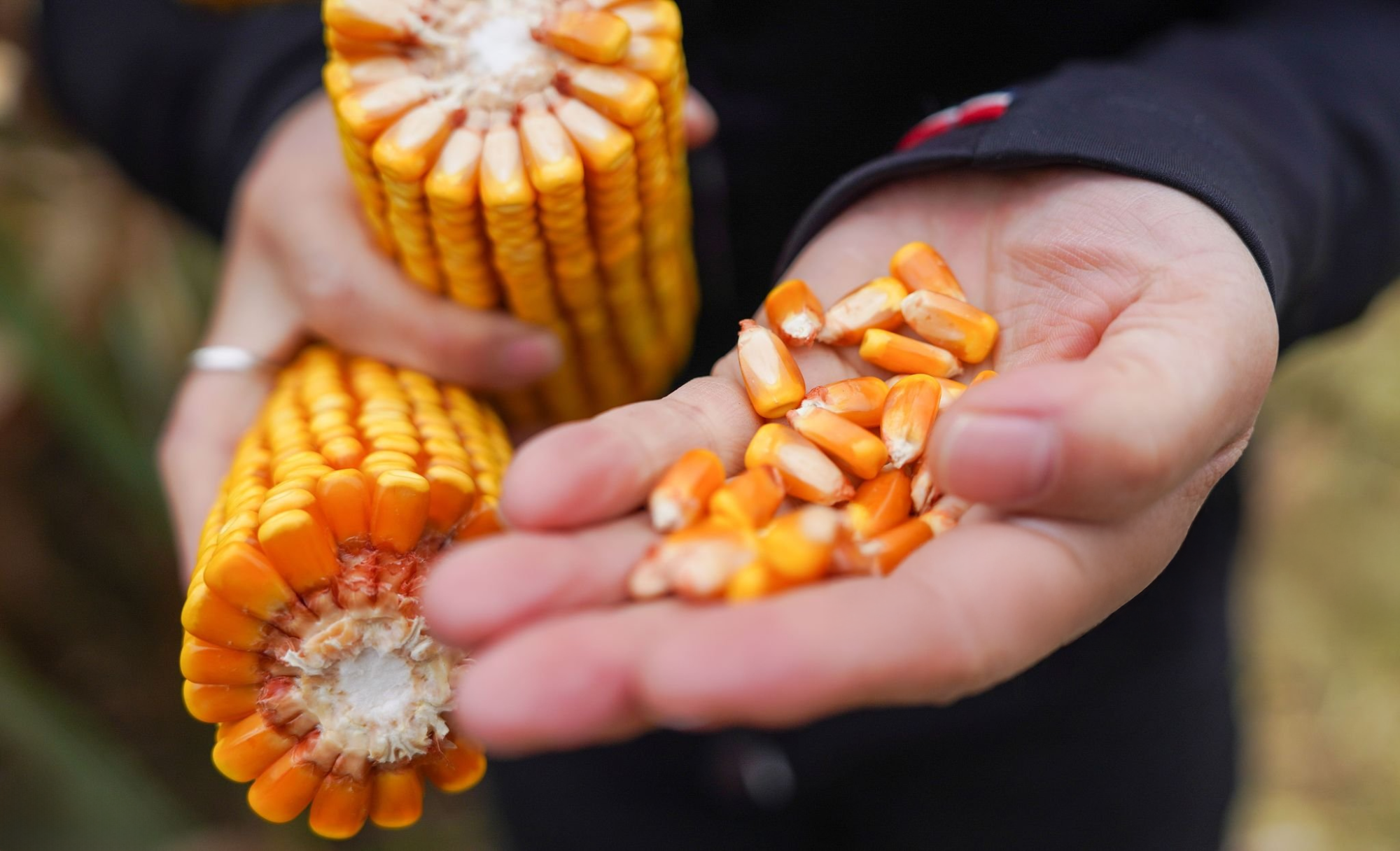
Feed costs dropped 30%, yet most dairy operations are bleeding cash harder than when corn hit $7. Here’s what’s really happening—and what the profitable few are doing differently.
There’s an interesting disconnect this October. Corn futures on the Chicago Board of Trade sit at $4.13 a bushel—down from over $6 last year. USDA’s Agricultural Marketing Service reports soybean meal in the $270s. Dairy Margin Coverage formulas suggest margins above $11 per hundredweight.
By all traditional measures, this should be a boom time.
Yet producers from Wisconsin to California report rising operating loans and shrinking working capital. They’re asking why lower feed costs aren’t boosting profitability the way they used to.
Understanding the New Cost Structure
Looking at this trend, it’s clear that feed no longer dominates expenses. Wisconsin Extension’s 2025 analysis shows feed now accounts for just 35–40% of total production costs, down from the historical 50% benchmark.
That shift has big implications:
- Labor Costs have jumped 15–20% since 2020, with Midwest wages near $19.50/hour (USDA NASS).
- Replacement Heifers now run $3,000–4,000 apiece, more than double past norms (USDA AMS).
- Machinery Costs are up 25% over three years (Association of Equipment Manufacturers).
- Insurance Premiums climbed 18–25% with shrinking coverage (Farm Bureau data).
When feed is only a third of your costs and these other expenses are escalating, grain-price relief alone can’t solve profitability challenges.

A Different Way to Measure Success

What I’ve found is that top-performing dairies track Return on Feed Cost (ROFC) rather than just feed cost per cow. Extension case studies from the Midwest illustrate this:
| Metric | Operation A | Operation B |
| Feed cost per cow daily | $5.40 | $5.90 |
| Milk production per cow | 62 lbs | 73 lbs |
| Income per feed dollar | $14.00 | $16–17 |
| Annual difference (100 cows) | Baseline | +$100,000 |
That extra 50 cents spent can return nearly $3—a powerful insight backed by Cornell PRO-DAIRY’s 2025 benchmarking.
Rethinking Protein Sourcing
While everyone watches corn, a quieter opportunity lies in protein markets. Research from the University of Saskatchewan shows that canola meal delivers digestible protein on par with soybean meal (18.2% vs. 18.6%) and a superior amino-acid profile.
UC Davis Extension reports larger herds blending canola meal with distillers grains, saving $10,000–15,000 monthlyand often gaining 1.5–2 lbs of milk per cow daily after the transition period.
- Lysine, histidine, and threonine availability increases by 20g, 13g, and 24g, respectively (Canadian Journal of Animal Science).
- Canada supplies 75% of U.S. canola meal, so price volatility is possible (USDA FAS).
- Southern Extension data shows small-herd cooperatives saving $8–12 per ton by pooling purchases.
It’s worth noting that smaller dairies without bulk-buying power can still capture these gains by teaming up locally.
The Hidden Drain on Profitability
Here’s something that might surprise you: feed shrink. Penn State Extension’s 2024 research indicates farms lose 15–18% of purchased feed to spoilage, storage losses, mixing errors, and waste.
Implementing:
- Weekly dry matter tests
- Monthly inventory reconciliations
- Quarterly mixer-wagon audits
can cut shrink to 8–10%, saving $150–200 per cow annually on a 200-cow operation after investing $3,000–4,000 in equipment and labor (Michigan State Extension).
Regional Realities and Their Impact
Geography’s structural cost differences are widening, according to USDA ERS and state Extension studies:
- Midwest operations maintain margins of $1–2 per cwt
- California dairies often lose $50–60 per cwt
- Northeast farms typically lose $45–55 per cwt
Key drivers include:
- Freight addons of $0.60–0.75/bu for Midwest corn (USDA).
- Water costs of $1.00–1.50/cwt in California (UC Cooperative Extension).
- Hay priced $90–100/ton above Midwest markets (USDA).
- Labor regulations adding 20–25% to payroll (state employment data).
Yet some operations adapt—organic premiums of $8–10/cwt and grass-fed verification adding $5–6/cwt can offset structural disadvantages.
The Evolving Industry Structure
The 2022 Census of Agriculture shows a clear trend:
- 39% of dairy farms closed between 2017 and 2022 (USDA Census).
- Milk production rose 4% despite fewer farms.
- 66% of production now comes from operations with 1,000+ cows, up from 57%.
Farm Credit Mid-America’s 2024–25 analysis finds dairies investing $25,000–40,000 annually in professional services—nutrition consulting, risk management, quality control—often generate $150,000–250,000 in additional value.
Evaluating Nutrition Advisory Services
Nutrition advice bundled with feed purchases often seems “free,” but Ohio State research warns of structural conflicts when advisors represent feed companies.
Extension analyses estimate 200-cow operations face $60,000–90,000 in annual opportunity costs from:
- Limited ingredient options
- Protein over-feeding
- Missed contracting windows
- Lack of ROFC tracking
Independent consulting costs $10,000–15,000/year yet often returns 4–6 times that through optimized rations (Professional Dairy Producers benchmarking).
Building Comprehensive Risk Protection
Recent volatility shows one layer of protection isn’t enough. University of Illinois farmdoc analysis and Risk Management Agency data recommend:
Layer 1: DMC at $9.50 coverage (~$0.15/cwt)
Layer 2: Dairy Revenue Protection covering 40–60% (cost $0.30–0.40/cwt)
Layer 3: Forward Feed Contracts for 60–70% of needs (saves $0.20–0.40/bu corn, $15–25/ton protein)
Layer 4: CME Micro-Futures (investment $8,000–10,000 quarterly protects $30,000–50,000)
Layer 5: Cash Reserves to cover 60–90 days of feed
Total cost: $60,000–80,000 annually for 300–500 cows, with protected value reaching $200,000–250,000 in volatile years.
Five Common Patterns Among Profitable Operations
What producers are discovering is that successful dairies consistently:
- Prioritize ROFC over raw cost cutting—worth $50–80 per cow.
- Measure everything—weekly tests, monthly inventories, and daily refusals yield $60,000–130,000 returns.
- Invest in expertise—$10,000–15,000 consulting generating 4–6x returns.
- Layer protection—diversified risk tools guard $200,000+ in potential losses.
- Act decisively—delays in contracting or enrollment can cost $20,000–30,000 annually.
These aren’t secrets—they’re documented best practices. The challenge is moving from knowledge to action.
Your 90-Day Action Plan
Opportunities are time-sensitive. Over the next 90 days:
☐ Lock Feed Contracts (Nov–Dec 2025) at $4.05–4.20/bu for Q1–Q2 2026 (grain quotes vary by region).
☐ Enroll in Dairy Revenue Protection (Jan 2026) for Q2–Q3 coverage.
☐ Finalize Planting Decisions (Feb 2026) to lock forage costs through fall 2027.
Each month’s delay can cost $5,000–7,000 in missed optimization. Three months equals $15,000–21,000 plus $20,000–30,000 in lost harvest pricing.
Moving Forward
This isn’t a temporary market glitch. It reflects structural shifts in dairy economics:
- Feed’s cost share has shrunk.
- Labor, equipment, and regulatory expenses have soared.
- Geography drives growing cost disparities.
- Professional management is essential.
The tools and expertise to succeed exist—forward contracts, risk programs, independent advisors, and measurement systems. Success today isn’t about working harder—it’s about working differently.
What I’ve found is that the most resilient operations out-think challenges instead of simply out-working them. The path forward exists. The question is whether we’ll take it.
KEY TAKEAWAYS
- Shift focus to Return on Feed Cost (ROFC): Operations generating $16-17 in milk revenue per feed dollar versus $14 are banking an extra $100,000 annually per 100 cows—that 50-cent strategic investment in better nutrition returns nearly $3, making quality more profitable than cheap
- Attack the 15-18% feed shrink hiding in plain sight: Weekly dry matter testing, monthly inventory reconciliations, and quarterly mixer audits can cut losses to 8-10%, saving $150-200 per cow annually with just $3,000-4,000 invested in measurement systems
- Build five-layer risk protection now: Combine DMC foundation coverage, Dairy Revenue Protection for 40-60% of production, forward contracts locking 60-70% of feed needs, CME micro-futures, and 60-90 days cash reserves—total cost of $60,000-80,000 protects against $200,000+ in potential losses
- Act on the 90-day window: Lock November-December feed contracts at $4.05-4.20 before March’s typical $4.45+ pricing, enroll in January’s DRP for Q2-Q3 coverage, and finalize February planting decisions that lock forage costs through fall 2027
- Recognize regional realities and adapt accordingly: If you’re facing California’s $50-60/cwt disadvantage or the Northeast’s $45-55/cwt structural costs, consider organic premiums ($8-10/cwt), grass-fed verification ($5-6/cwt), or value-added processing to offset geography’s impact on profitability
Complete references and supporting documentation are available upon request by contacting the editorial team at editor@thebullvine.com.
Learn More:
- 11 Proven Strategies to Lower Feed Costs and Boost Efficiency on Your Dairy – This article provides a tactical guide for implementing the concepts discussed in the main piece. It offers a step-by-step framework for monitoring feed conversion, implementing grouping strategies, and ensuring rumen health to immediately improve your operation’s financial performance.
- 2025 Dairy Market Reality Check: Why Everything You Think You Know About This Year’s Outlook is Wrong– For a strategic perspective, this analysis dives into the market dynamics and economic forecasts shaping dairy profitability. It explores how component production (butterfat and protein), export markets, and policy volatility are creating new risks and opportunities for producers.
- Stop Blaming Your Robots: The Million-Dollar Management Mistakes Killing Your Dairy’s Profitability – This case study-driven article explores the intersection of technology and management. It reveals how successful operations leverage data from robotic systems—tracking over 120 variables per cow daily—to optimize feeding, health, and productivity, providing a blueprint for maximizing technology ROI.
 The Sunday Read Dairy Professionals Don’t Skip.
 The Sunday Read Dairy Professionals Don’t Skip.
Every week, thousands of producers, breeders, and industry insiders open Bullvine Weekly for genetics insights, market shifts, and profit strategies they won’t find anywhere else. One email. Five minutes. Smarter decisions all week.




