





Still treating biosecurity like optional insurance? What if I told you it’s the difference between profit and going under in 2025?
EXECUTIVE SUMMARY: Look, I’ve been watching this industry long enough to know when something’s a game-changer—and biosecurity isn’t just about keeping bugs out anymore, it’s about keeping your operation profitable. The HPAI outbreak affected 930+ farms across 17 states, costing producers $800-$ 1,100 per cow, when factoring in lost milk and culling. But here’s what caught my attention: farms with solid biosecurity protocols saw 420% returns on their calf investments while others watched $5,000 walk out the door with every dead calf. Meanwhile, 80% of Salmonella Dublin strains are now resistant to multiple antibiotics, making prevention your only effective defense. Countries like New Zealand reduced BVD infections from 15% to 5% by implementing coordinated biosecurity—proof that this approach works when done correctly. Bottom line? With milk prices around $20/cwt, you can’t afford NOT to get serious about biosecurity.
KEY TAKEAWAYS:
- Cut calf losses by $5,000 each through strict 21-30 day quarantine protocols—test every new animal for BVD and Salmonella Dublin before they touch your herd. One infected calf can cost you more than most people’s annual salary.
- Generate 420% ROI on calf health investments by implementing the “High-Impact Five” protocol—quarantine, zoning, visitor control, feed protection, and proper sanitation. Smart producers are turning biosecurity from a cost center into a profit driver.
- Avoid BVD outbreaks, which can cost $ 2,600-$100,000+, by following New Zealand’s playbook: bulk milk testing, targeted individual testing, and systematic removal of persistently infected animals. They cut infection rates by two-thirds using simple, cost-effective tools.

The thing about calf ranches these days is you can’t just treat biosecurity like another box to check — it’s become the backbone of every successful dairy operation’s survival.
What’s happening right now across the industry is pretty eye-opening. In 2024 and 2025, Highly Pathogenic Avian Influenza (HPAI) spread through over 930 dairy farms in 17 states, according to USDA reports. Areas like California’s Central Valley and Texas took a serious hit — losses sitting somewhere between $800 and $1,100 per cow on affected farms when you count lost milk, sickness, and culling. But here’s the kicker: this virus jumped species — from birds to cattle and then to people working those dairies, flipping our whole understanding of risk on its head.
When Reality Hit Hard
We saw a rapid federal response. By April 2024, the USDA required negative Influenza A tests on all lactating cows moving between states, and later that year, it launched a National Milk Testing Strategy. Dairy producers had been sounding the alarm about animal movement being the weak link, and this finally pushed regulation to catch up.
Now, here’s the thing, though — it’s not just about the new kid on the block. Salmonella Dublin, for instance, is sneaking in the back door, and the problem’s only getting worse. According to recent work by Michigan State University Extension and veterinary researchers, more than 80% of Salmonella Dublin strains in North America are resistant to multiple antibiotics. This is more than a treatment headache; it’s a game-changer. And Mycoplasma bovis? That bacterium’s not just stubborn; it’s shape-shifting its way around vaccines and hitching rides in colostrum and waste milk, making respiratory disease and arthritis a constant challenge.
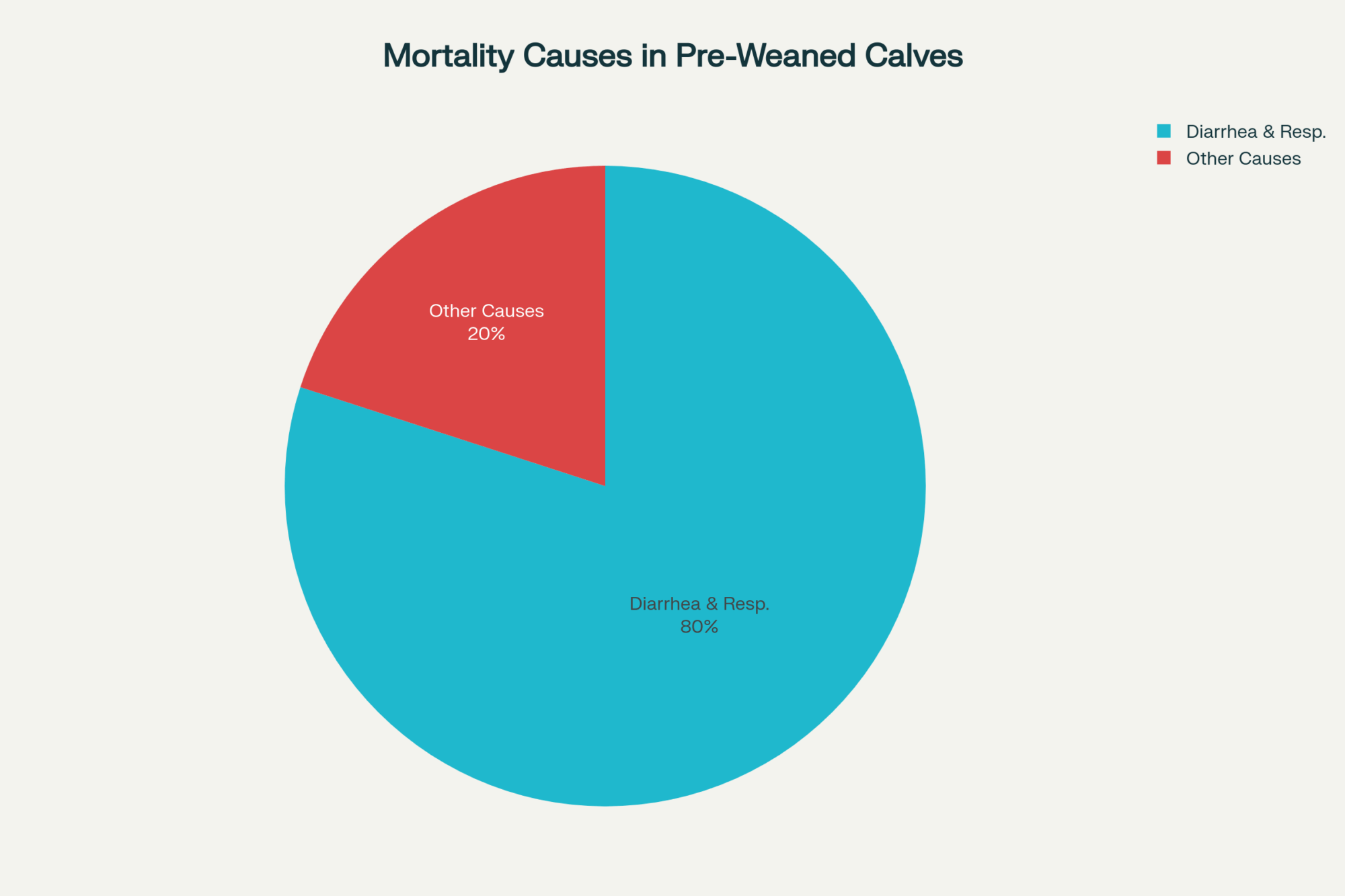
Dairy calf groups recommend keeping pre-weaning mortality below 5% and scours under 25%, but hitting those marks? It’s still an uphill battle for many. I keep hearing about producers losing calves — and financially, it adds up fast. A 2023 University of Minnesota Extension study estimates the total economic impact of a lost calf, factoring in genetics, treatment, and future production, to be approximately $5,000. That’s serious money walking out the gate.
The Numbers That Make Sense
What about the ROI for all this biosecurity talk? A 2022 study examining 156 Irish dairy farms found that vaccination and bulk tank milk testing were associated with improved gross margins. Not exact dollar-for-dollar returns, but the evidence is there that investing in solid biosecurity pays off. The Bullvine’s 2025 analysis estimates a potential return of up to 420% per calf when top protocols are in place.
With milk prices hovering around $20 per hundredweight lately, these numbers aren’t just academic. Bovine Viral Diarrhea outbreaks are costing farms between $2,600 and over $100,000, depending on herd size and the severity of the infection. That’s something you can’t ignore.
Learning from the Winners
There’s a lot we can learn from the global stage as well. New Zealand’s industry-driven BVD program, for example, has reduced active infections from 15% to under 5% by identifying persistently infected calves, utilizing bulk milk testing, and strategically culling. A laser-focused but straightforward approach.
Canada, meanwhile, kept their herds HPAI-free through aggressive cattle import testing and domestic milk surveillance — solid border biosecurity at work.
Across the pond, European farms are taking biosecurity seriously — they build it in. Young calves and adult herds are kept well apart, quarantine areas are clearly defined, and there’s tight perimeter fencing to keep wildlife out. Additionally, their traceability systems enable outbreaks to be identified and contained quickly.
What Actually Works (From Someone Who’s Seen It)
Here’s what’s really getting the job done day-to-day:
- First, quarantine. Every. Single. New animals spend at least 21-30 days apart, are tested for BVD, Salmonella Dublin, and other threats.
- Then, zoning. Keep clean and dirty spaces separate. Handle your youngest and healthiest calves first, then move on to older or sick animals.
- Manage people and vehicles closely — visitors must log in, wear farm boots and coveralls, and trucks aren’t allowed to travel through manure-heavy areas.
- Keep feed and water safe. Never use tools for manure handling to deliver feed, and pasteurize waste milk before giving it to calves.
- And clean right. Scrape off all dirt and manure first, then wash with hot water and disinfect thoroughly. Sunlight drying on hutches isn’t just nature’s bonus—it’s free sanitizer.
Technology’s buzzing in the background with AI sensors, rapid DNA tests, even drones, but most producers I talk to? They see tech as a luxury, not a lifesaver just yet.
Dr. Sarah Raabis, DVM — a seasoned veterinary consultant in dairy calf health — hits the nail on the head: “Technology can enhance what you do, but it can’t replace consistent, disciplined biosecurity by your staff. The culture is what drives success.”
The Human Factor (Always the Wild Card)
And culture’s tricky. Without management buying in and staff fully engaged, even the best plans fall flat.
With all this uncertainty — fluctuating markets, changing rules, and evolving pathogens — the farms that stick to smart, evidence-based biosecurity will have the upper hand.
When winter hits the Upper Midwest, for instance, I’ve seen that dry lot sanitation and keeping vehicle traffic out of frozen, mushy lanes make a huge difference. Small dairies have their own challenges, but these core principles hold true everywhere.
Your Monday Morning Game Plan
If you’re wondering what to tackle next Monday morning, here’s what I’d do: pull your calf morbidity and mortality numbers and benchmark them against the Dairy Calf and Heifer Association standards; get serious about quarantines; walk through your barn with fresh eyes to spot contamination risks; separate your feed and manure tools; and run a solid staff training on biosecurity basics.
This is no longer an optional extra. It’s what profitable, sustainable dairy farming looks like in 2025 — and beyond.
Complete references and supporting documentation are available upon request by contacting the editorial team at editor@thebullvine.com.
Learn More:
- The 10 Commandments for Healthy Calves – This article provides a tactical checklist for daily calf management, from colostrum to weaning. It offers practical strategies for executing the hands-on protocols the main article advocates, helping you turn biosecurity theory into consistent, actionable results in your barns.
- The 5 Biggest Threats to the Future of the Dairy Industry – Gain a strategic market perspective on why biosecurity matters beyond your farm gate. This piece reveals how managing disease and animal welfare directly impacts consumer trust and your social license, connecting on-farm practices to long-term industry viability and profitability.
- Dairy Cattle Breeding: Are We Sacrificing Health for Production? – Look beyond immediate prevention and explore the future of herd resilience. This innovative article demonstrates how to leverage genomics and balanced breeding to create inherently healthier animals, reducing your reliance on reactive treatments and building a more robust, profitable future herd.
 Join the Revolution!
 Join the Revolution!
Join over 30,000 successful dairy professionals who rely on Bullvine Weekly for their competitive edge. Delivered directly to your inbox each week, our exclusive industry insights help you make smarter decisions while saving precious hours every week. Never miss critical updates on milk production trends, breakthrough technologies, and profit-boosting strategies that top producers are already implementing. Subscribe now to transform your dairy operation’s efficiency and profitability—your future success is just one click away.




