






Vaccine race intensifies as HPAI devastates dairies: Elanco’s shot nears approval while nasal sprays challenge old protocols. Can science outpace the virus?
EXECUTIVE SUMMARY: The U.S. dairy industry faces an existential threat from HPAI H5N1, with over 1,000 herds infected since March 2024 causing 20% milk loss and zoonotic risks. Elanco and Medgene lead the vaccine race with a platform-based candidate nearing conditional approval, while Zoetis and Merck leverage poultry expertise. Revolutionary nasal sprays and mRNA tech promise faster adaptation but face practical hurdles. Critical challenges include DIVA-compliant diagnostics for global trade acceptance and cold-chain logistics for novel vaccines. With conditional approvals likely in 2025, producers must balance biosecurity vigilance with prep for complex vaccination economics.
KEY TAKEAWAYS
- $20K/day losses per 1,000-cow herd demand urgent solutions as HPAI slashes milk output
- Elanco/Medgene’s platform vaccine leads with 10M-dose capacity; Zoetis/Merck poultry-tested tech close behind
- Nasal sprays face udder reality check – respiratory immunity may not protect milk-producing mammary glands
- Conditional licenses accelerate access but require producer trust in “reasonable efficacy” standards
- DIVA or disaster – without trade-accepted infection/vaccine differentiation, exports face billion-dollar bans

While regulators and multinational corporations debate protocols, your herd remains at risk. The race to develop effective HPAI vaccines for dairy cattle isn’t just a scientific challenge – it’s an urgent battle that will determine the future of your operation. The emerging technologies and regulatory hurdles will reshape how we approach disease control forever, but are decision-makers moving fast enough to save your bottom line?
WHY THIS VACCINE RACE MATTERS TO YOUR OPERATION RIGHT NOW
Let’s cut through the noise – HPAI is unlike anything we’ve faced before. Since March 2024, this virus has torn through over 1,000 dairy herds across 17 states, slashing milk production by 20% in infected operations and sending feed conversion ratios into the gutter. While the industry plays defense with biosecurity measures, the stark reality is these tactics alone haven’t stopped the spread.
Here’s what you need to understand: this isn’t just another respiratory bug – it’s a mammary gland assassin that hits your cattle where it hurts most – milk production. The virus goes straight for the udder, not primarily the lungs. Traditional biosecurity thinking falls short because the transmission dynamics don’t match our usual playbook.
Wisconsin dairy farmer Chad Bell put it perfectly: “It’s a full-time job tending to livestock during normal challenges. Tractors don’t start; skid steers can’t maneuver the drifts and freezing cold results in gelled-up diesels.” Now add managing a highly contagious disease outbreak and tell me how you’re supposed to stay afloat with a 20% production drop.
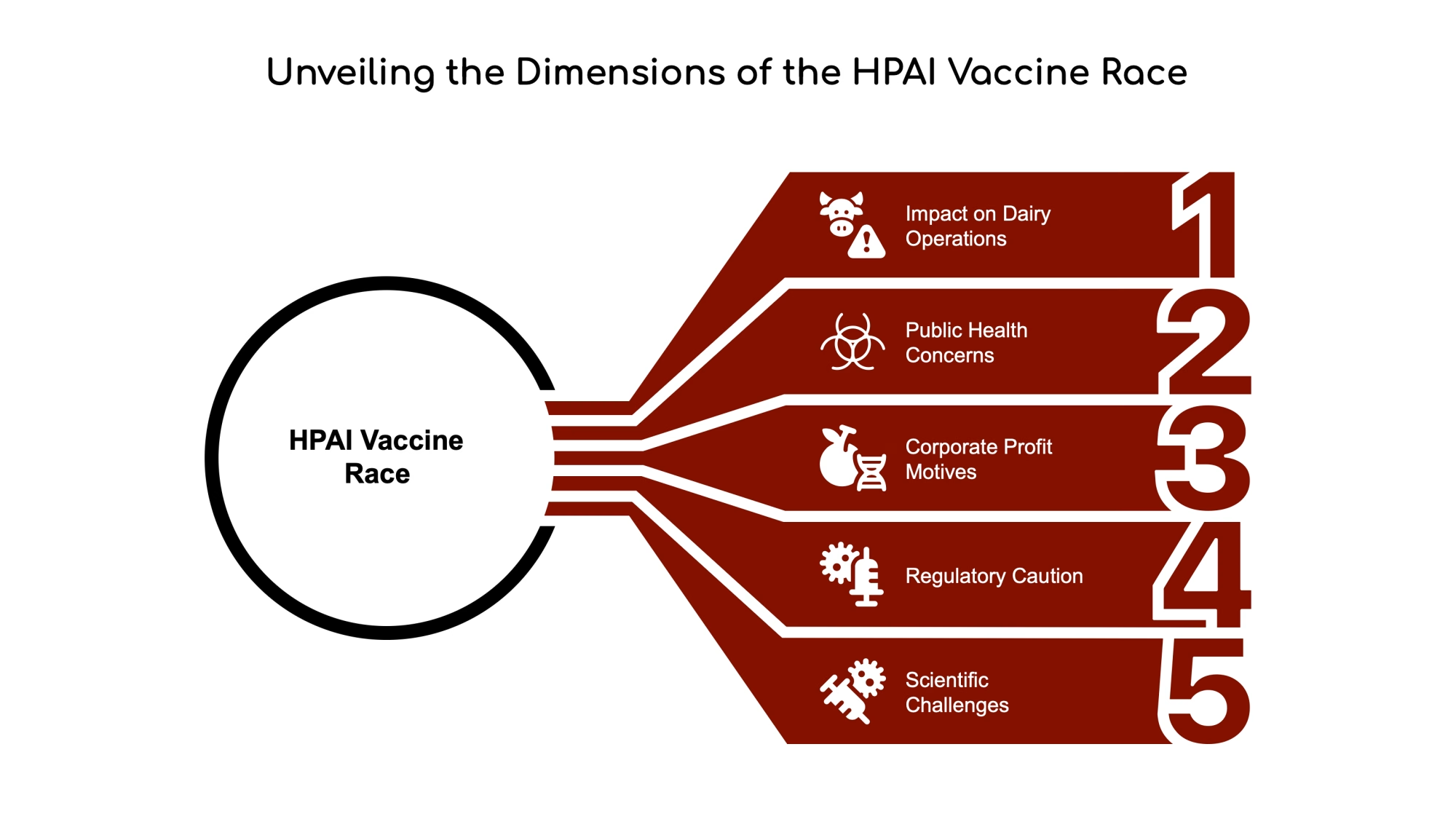
But here’s what the suits aren’t telling you plainly: the rush for a vaccine isn’t just about saving your herd – it’s about preventing a potential human pandemic. With over 60 human cases already reported from exposure to infected cattle, the public health establishment is rightfully terrified. While the CDC keeps saying the risk to the public is “low,” every dairy professional knows what they’re really worried about – the longer this virus circulates in mammals, the more chances it must mutate into something that spreads between humans.
So, what does this mean for you? Simple – you’re caught in the crossfire between corporate profit motives, regulatory caution, and genuine scientific challenges. The question isn’t whether we need vaccines – it’s whether the right ones will reach your operation in time to matter.
THE PLAYERS: WHO’S ACTUALLY DELIVERING AND WHO’S JUST TALKING
The race for an effective HPAI vaccine has drawn competitors from every corner of animal health. But let’s be honest – not all players are equally committed or capable. Here’s the unfiltered truth about who’s delivering results:
Elanco-Medgene: First Mover Advantage or Rushed Science?
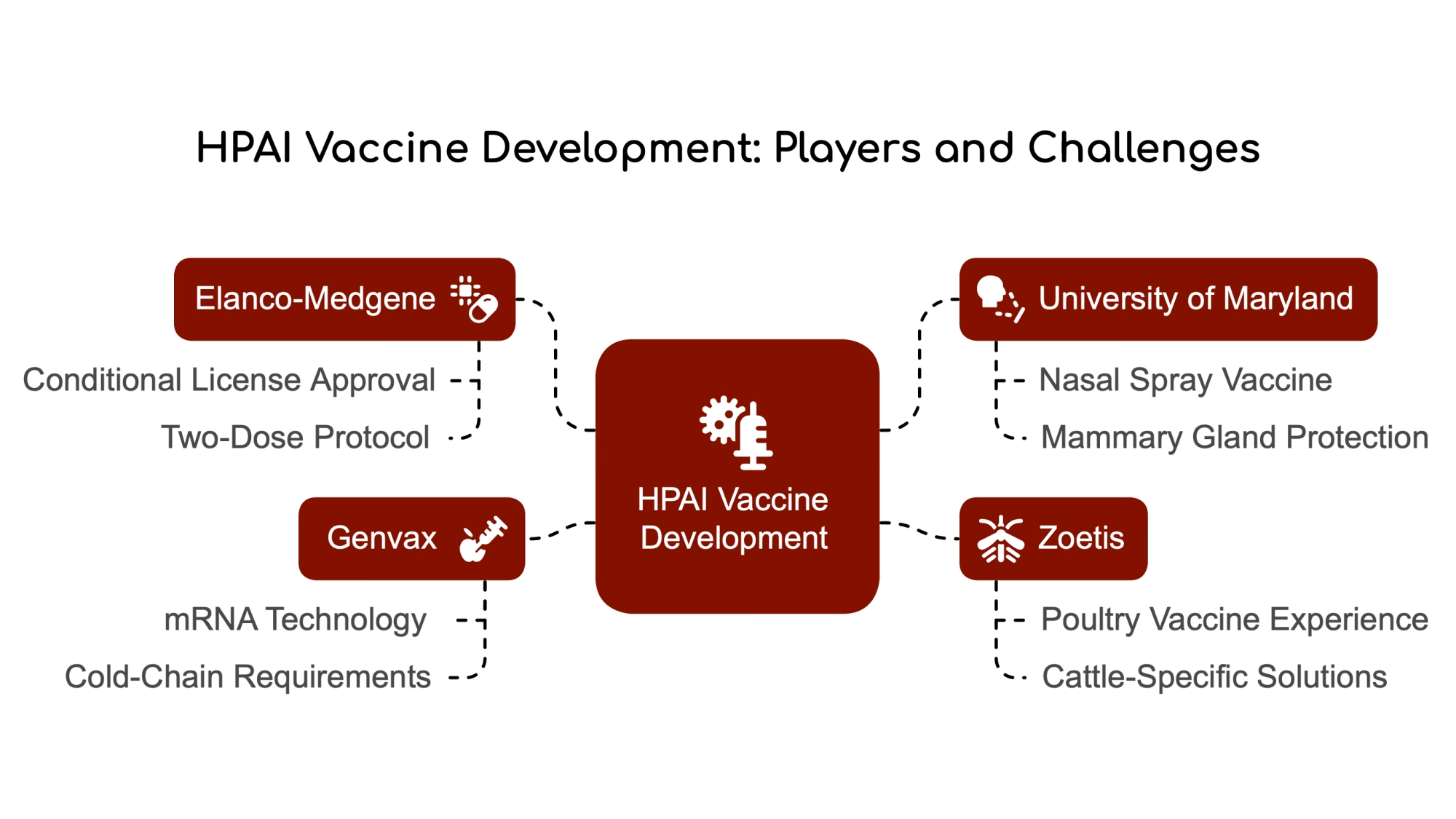
The Elanco-Medgene partnership currently leads the pack, with their candidate reportedly in “final stages of conditional license approval.” Medgene CEO Mark Luecke confidently states they’ve met all USDA requirements and have manufacturing ready to roll. What gives them the edge? They’re leveraging a previously approved platform technology – essentially a vaccine “template” the USDA has already green-lit for cattle use.
This regulatory shortcut is precisely why they’re ahead of the competition. But here’s what I’m concerned about – is speed coming at the expense of comprehensive efficacy? Elanco’s Tim Bettington acknowledges that “one dose does not provide complete control, which is why a two-dose protocol is recommended.” This raises serious questions about real-world protection in commercial settings where second doses often get delayed or missed entirely.
Their initial manufacturing capacity is 10 million doses annually – substantial but not enough to vaccinate the entire U.S. dairy herd twice yearly. How will they prioritize distribution when demand inevitably outstrips supply? And with the vaccine requiring two doses per year, the economics get tricky fast.
University of Maryland’s Nasal Approach: Revolutionary or Impractical?
The University of Maryland and USDA Agricultural Research Service are pursuing what might be the most innovative approach – a nasal spray vaccine adapted from human COVID-19 technology. They secured a $648,881 grant in April 2025 to develop this needle-free alternative.
The theory sounds compelling – block the virus at its entry point and reduce transmission risk. Researcher Xiaoping Zhu argues, “Preventing the initial infection and spread of H5N1 in cows means reducing exposure to the virus for other mammals, dairy workers, and the general public.”
But here’s what everyone’s tiptoeing around: If the primary infection site is the mammary gland, not the respiratory tract, will a nasal vaccine protect what matters most? It’s a classic case of academic innovation potentially missing the practical realities of how this disease behaves in commercial dairy settings.
And let’s be realistic about implementation – have you ever tried administering nasal sprays to hundreds of full-grown dairy cows in a production environment? The elegant science might collapse under the practical challenges of consistent delivery and dose control.
Zoetis: Experience or Complacency?
Zoetis brings unparalleled experience with avian influenza vaccines, currently holding conditional licenses for H5N1 and H5N2 killed virus vaccines for poultry. They began developing a cattle-specific vaccine in spring 2024.
But here’s what needs addressing: Despite their head start in understanding HPAI, Zoetis appears to be playing catch-up in the cattle race. They don’t currently have a conditional license for using any existing poultry vaccines in cattle, despite common industry misconceptions. In February 2025, Zoetis did receive a conditional license from the USDA for its “Avian Influenza Vaccine, H5N2 Subtype, Killed Virus” – but this is specifically labeled for use in chickens, not cattle.
Their poultry vaccine experience is both an advantage and a potential liability – are they simply retrofitting poultry approaches for cattle, or truly developing bovine-specific solutions that address the unique mammary tropism of HPAI in dairy cows?
The Cutting-Edge Contenders: Genvax’s mRNA Gamble
Iowa-based Genvax Technologies represents the bleeding edge of vaccine technology with their self-amplifying mRNA (saRNA) platform. This approach could potentially enable rapid updates to match viral evolution – critical for a pathogen as mutation-prone as influenza.
The Foundation for Food & Agriculture Research (FFAR) recently invested in Genvax’s technology with a 8,163 grant to develop an H5N1 vaccine for dairy cows. What makes their approach unique? Think of saRNA like a self-copying instruction manual – it not only tells cells how to make protective proteins, but it makes multiple copies of these instructions, potentially requiring much smaller doses than traditional vaccines.
But here’s the reality check: mRNA technology remains unproven in large-scale livestock vaccination programs. Questions about cold-chain requirements, stability in farm environments, and production costs remain significant hurdles. Is cutting-edge science always better medicine for your herd?
THE TECHNOLOGY SHOWDOWN: WHICH APPROACH WILL ACTUALLY WORK?

Let’s cut through the marketing hype and examine what these different technologies offer your operation:
Injectable Vaccines: The Devil We Know
Most HPAI vaccine candidates use traditional injection routes, but with vastly different underlying technologies:
mRNA/saRNA Vaccines: These deliver genetic instructions for your cow’s cells to produce specific viral antigens. They offer lightning-fast development and adaptability to variants but face real-world challenges with stability and cold storage. You’ve heard the buzz about mRNA from human COVID vaccines, but are your facilities ready to handle vaccines that might require specialized refrigeration? Many operations lack the infrastructure for maintaining strict cold chains.
Killed Virus Vaccines: The traditional approach uses chemically inactivated whole virus. It’s proven and familiar but typically requires multiple doses and boosters. Zoetis uses this approach for its poultry vaccines. The upside? Your veterinarians and staff already know how to handle and administer them. The downside? These vaccines can’t be updated quickly if the virus mutates significantly.
Subunit Vaccines: These contain only specific parts of the virus, like the H5 protein. Medgene’s platform likely falls here. They generally have excellent safety profiles but may require strong adjuvants and multiple doses to stimulate adequate immunity. The advantage? They’re likely cheaper to produce at scale.
Nasal Innovation: Promising Theory vs. Practical Reality
The UMD/USDA nasal vaccine aims to create a mucosal immune barrier in the upper respiratory tract. In theory, this provides front-line defense against infection by blocking the virus from establishing a foothold.
But I need to ask the question no one seems willing to address: How will immunity in the nose protect the udder? Given that HPAI primarily affects the mammary gland in cattle, respiratory protection alone might not translate to economic protection for your operation.
The nasal approach does offer compelling advantages – needle-free administration reduces labor, eliminates injection site issues, and potentially reduces stress on animals. But unless the developers can demonstrate clear mammary protection, these benefits might remain academic rather than practical.
REGULATORY GAMES: READING BETWEEN THE LINES

The USDA’s Center for Veterinary Biologics (CVB) controls which vaccines reach your farm and when. Understanding their processes reveals how politics and science are colliding in this race:
Conditional Licensure: The Fast Track with Fine Print
For urgent situations like HPAI, the CVB offers conditional licensure – an expedited pathway requiring demonstration of safety and purity, but only a “reasonable expectation of efficacy” rather than conclusive proof. This typically means antibody responses in lab tests rather than real protection from disease.
Here’s what this means for you: The first wave of HPAI vaccines will likely reach farms with less efficacy data than vaccines you typically use. Conditional licenses last just one year (renewable at CVB’s discretion), reflecting the temporary, emergency nature of this approval.
Is this a troubling compromise or necessary flexibility? The answer depends on how transparent manufacturers are about what their vaccines can achieve in real-world conditions.
Platform Technology: The Regulatory Hack That’s Changing Everything
Perhaps the most significant regulatory innovation enabling rapid vaccine development is the CVB’s acceptance of platform technology licensing. Once a core vaccine technology is pre-approved, subsequent vaccines using that platform but targeting different diseases benefit from faster review.
This is exactly how Medgene gained its leading position – their underlying platform was already USDA-approved for cattle, allowing them to fast-track their HPAI vaccine. Genvax is attempting the same approach with their saRNA platform.
While this approach accelerates availability, it raises important questions: Does a platform approved for one disease necessarily translate to effective protection against a novel pathogen with unique characteristics? The regulators seem to think so, but the jury is still out.
THE UNCOMFORTABLE TRUTH: THE DIVA DILEMMA
Let’s address the elephant in the barn – even after vaccines receive approval, one massive hurdle remains that could make or break their practical utility: the DIVA capability.
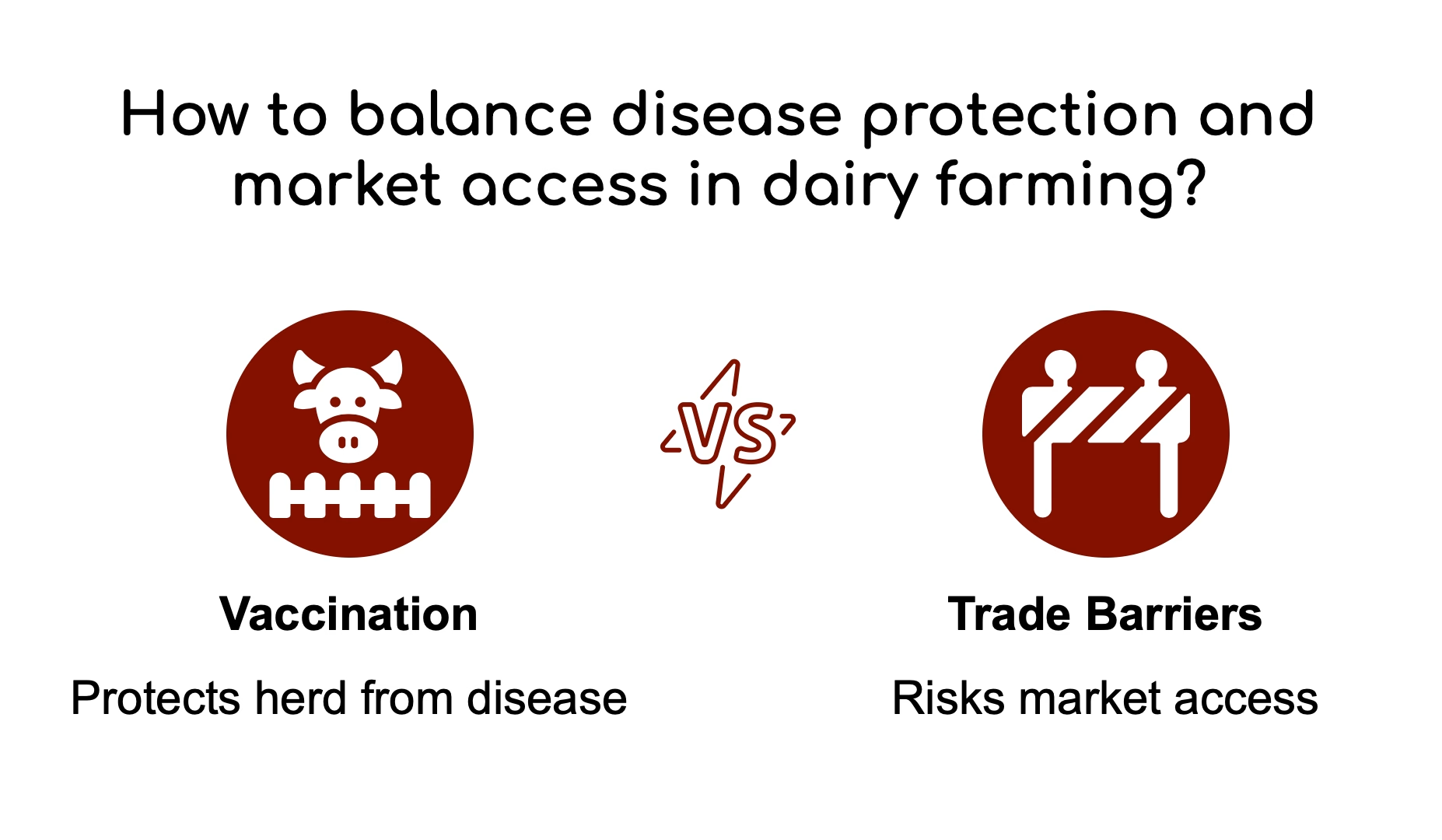
DIVA stands for “Differentiating Infected from Vaccinated Animals,” and it’s critical for international trade. Without reliable DIVA testing, countries importing U.S. dairy products could reject everything from a vaccinating region, unable to distinguish if positive tests come from natural infection (high risk) or vaccination (low risk).
This isn’t just a technical footnote – it’s potentially a multi-billion-dollar trade barrier that could devastate the industry if not addressed properly. The hard truth is that many countries have historically banned imports from regions that vaccinate against highly contagious diseases precisely because of this differentiation challenge.
Elanco’s Tim Bettington acknowledges this reality: “In the past, concerns about trade and exports created reluctance to vaccinate.” He points to France’s success with HPAI vaccination as a positive example, but glosses over the complex trade negotiations required to maintain market access.
The uncomfortable question every dairy producer needs to ask: Will vaccinating my herd protect me from disease but destroy my access to international markets? Until regulatory agencies worldwide align on acceptable DIVA standards, this question will hang over every vaccination decision.
MYTHS VS. FACTS: WHAT YOU NEED TO KNOW ABOUT HPAI VACCINATION

Let’s cut through the noise with some straight talk about what’s real and what’s not when it comes to HPAI vaccines for dairy cattle:
MYTH: Vaccines won’t work because H5N1 is primarily an avian disease
FACT: Research from VIDO (Vaccine and Infectious Disease Organization) has shown that dairy cows can develop natural immunity after initial exposure to H5N1, strongly suggesting vaccines would be highly effective. “This discovery is a great indication that a vaccine will be effective which has significant implications for how we approach HPAI outbreaks in dairy cattle,” said Dr. Antonio Facciuolo, study co-lead researcher.
MYTH: A one-size-fits-all approach will work for all herds
FACT: Different vaccine technologies offer different advantages. The Elanco-Medgene vaccine requires two doses per year for full protection, while other approaches like Genvax’s saRNA technology might offer different immunization profiles.
MYTH: Once vaccinated, we can stop biosecurity measures
FACT: Vaccination will be one tool in a comprehensive approach. Even vaccinated herds will need to maintain rigorous biosecurity. As demonstrated in Colorado and Mississippi, which achieved “disease absence” status, regular testing and strict protocols remain essential even after the threat appears controlled.
MYTH: The vaccines are completely experimental and untested
FACT: While the specific HPAI cattle vaccines are new, many use established platforms. The USDA previously approved Medgene’s vaccine platform technology in cattle, meaning the basic technology has already passed safety reviews.
MYTH: Vaccinated cows might spread H5N1 to humans
FACT: The non-replicating vaccines being developed cannot cause disease or shedding. As the USDA has confirmed through its approvals for field trials, these vaccines pose no risk to other animals or humans.
PRODUCTION ECONOMICS: WILL THE NUMBERS WORK FOR YOUR OPERATION?
The business case for vaccination isn’t straightforward and depends heavily on your specific operation’s risk profile and economics:
The Vaccination Value Equation
For a 1,000-cow dairy experiencing HPAI, the math is sobering: A 20% production drop across the herd could mean losing thousands of dollars daily in milk revenue. Add in discarded milk from infected cows, veterinary costs, and potential culling, and the economic toll becomes devastating.
A two-dose annual vaccine protocol for 1,000 cows plus administration costs must deliver value against this potential loss. But unlike predictable diseases with established patterns, HPAI’s risk varies dramatically by region, season, and management practices, making the ROI calculation highly farm specific.
Supply Chain Reality Check
Manufacturing sufficient doses for the entire U.S. dairy herd presents significant challenges. Medgene claims readiness with “existing vaccine manufacturing supply ready to deploy with the ability to support the U.S. dairy herd”, but history tells us scaling up production for novel vaccines inevitably faces bottlenecks.
Cold chain requirements present another hurdle, especially for mRNA technologies that have traditionally required ultra-cold storage. Can your operation maintain proper storage conditions for these more advanced vaccine platforms? This practical question could determine which technology ultimately dominates, regardless of theoretical efficacy differences.
DAIRY FARMER PREPARATION CHECKLIST: WHAT TO DO BEFORE VACCINES ARRIVE
Don’t wait for vaccines to hit the market before preparing your operation. Here’s what progressive dairy producers should be doing right now:
✓ Weekly Bulk Tank Testing: Implement regular testing through your state’s program or the USDA’s National Milk Testing Strategy. Mississippi achieved disease-free status by testing every farm weekly.
✓ Map Your Decision Timeline: Establish clear criteria for when you’ll adopt vaccination based on regional spread, proximity of outbreaks, and your operation’s risk tolerance.
✓ Prepare Your Cold Chain: Evaluate your medication refrigeration capacity and protocols. Some vaccines-especially mRNA formulations-may require stricter temperature control than you currently maintain.
✓ Review Export Exposure: If you sell animals, genetics, or dairy products internationally, consult with your cooperative or processor about how vaccination might affect market access.
✓ Create a Biosecurity Audit: Document your current practices and identify gaps, particularly around milking equipment sanitation, given the mammary gland tropism of this virus.
✓ Train Your Team: Develop protocols for potential vaccine administration, including tracking systems for ensuring animals receive all required doses.
✓ Connect with Your State Veterinarian: Many state agriculture secretaries are already expressing interest in vaccination programs. Establishing this relationship now could give you early access to programs.
✓ Join Surveillance Programs: Enroll in the Dairy Herd Status Pilot Program if available in your region to facilitate safer animal movement and earlier detection.
THE BOTTOM LINE: WHAT SMART PRODUCERS SHOULD DO NOW
The race to develop HPAI vaccines for dairy cattle is accelerating, with the Medgene/Elanco candidate potentially receiving conditional approval soon, though Elanco’s Tim Bettington acknowledges that “a definitive timeline for approval has not yet been set”. So, what should you, as a progressive dairy producer, do right now?
First, recognize that vaccines will be a tool, not a silver bullet. Biosecurity remains your first line of defense and will continue to be critical even after vaccines become available. Are your protocols being followed consistently, or just written in a binder gathering dust? Now is the time for honest self-assessment.
Second, start conversations with your veterinarian about how vaccination might fit into your specific operation. The risk profiles, economics, and implementation strategies will vary tremendously between different farming models and regions. Your vet should be preparing now for these potential additions to your herd health program.
Third, get involved in the policy conversation. Industry associations need to hear from actual producers about concerns regarding DIVA capabilities and potential trade implications. The decisions being made now about regulatory frameworks will impact your livelihood for years to come.
Finally, demand transparency from vaccine manufacturers. As these products approach market, insist on clear communication about efficacy expectations, duration of immunity, and potential limitations. The conditional licensing process means these vaccines will reach farms with less complete data than typical products – understanding these knowledge gaps is essential for making informed decisions.
Is the industry moving fast enough on HPAI vaccines? Probably not. Are the technologies perfect? Definitely not. But will having imperfect tools be better than the current situation? Almost certainly yes.
The uncomfortable reality is that HPAI is likely here to stay in the dairy industry. The question isn’t whether we’ll need vaccines, but whether we’ll deploy them strategically and with clear understanding of their capabilities and limitations. The producers who thrive through this challenge will be those who cut through the hype, understand the science, and make decisions based on their specific operational realities rather than fear or industry groupthink.
What’s your HPAI strategy beyond hoping it doesn’t hit your herd? The time to develop one is now, not when the virus arrives at your doorstep or when vaccines become available. Your bottom line depends on it.
Learn more:
- HPAI H5N1: The 2025 Science-Based Dairy Farm Survival Guide-Because Hope Isn’t a Biosecurity Plan
A hard-hitting survival guide with the latest vaccine data, proven biosecurity hacks, and financial triage tips for producers facing HPAI. - Battle Plan: How to Protect Your Dairy Herd from HPAI
No-nonsense strategies-early detection, treatment, and worker safety-to shield your herd and bottom line from avian flu’s costly impact. - H5N1 Crisis One Year Later: What Dairy Farmers Need to Know
A deep dive into H5N1’s evolution, transmission risks, and the economic/health fallout for dairies one year after the first outbreak.
 Join the Revolution!
 Join the Revolution!
Join over 30,000 successful dairy professionals who rely on Bullvine Weekly for their competitive edge. Delivered directly to your inbox each week, our exclusive industry insights help you make smarter decisions while saving precious hours every week. Never miss critical updates on milk production trends, breakthrough technologies, and profit-boosting strategies that top producers are already implementing. Subscribe now to transform your dairy operation’s efficiency and profitability—your future success is just one click away.




