







Stop treating methane like a feed problem. Genomic selection slashes emissions by 30%—permanently—while boosting feed efficiency and your bottom line.
EXECUTIVE SUMMARY: It’s time to challenge the industry’s costly obsession with methane-reducing feed additives. New research proves that breeding for low-methane, high-efficiency cows delivers permanent, compounding reductions in emissions—up to 30%—with zero recurring costs. Unlike additives, which can cost $150–$300 per cow per year and only work as long as you keep feeding them, genetic improvements are passed down through generations, improving both feed conversion ratios and milk yield. International leaders like Canada and the Netherlands have already implemented methane efficiency breeding values, with early adopters seeing both environmental and economic gains. Methane represents a 4–12% energy loss from feed—energy that could be redirected into higher butterfat and protein output. With the global market shifting toward sustainability premiums and carbon credits, now is the time to rethink your breeding strategy. Evaluate your current approach: Are you investing in permanent solutions, or just paying for temporary fixes?
KEY TAKEAWAYS
- Genetic selection for methane efficiency delivers up to 30% permanent emission reduction per cow, compounding every generation—no recurring costs.
- Feed additives cost $150–$300/cow/year and only work while fed; genetic gains are inherited and improve both feed conversion and milk yield.
- Methane represents a 4–12% loss of gross feed energy—selecting low-methane cows redirects that energy into more milk, butterfat, and protein.
- Early adopters in Canada and Europe are already seeing premium payments and improved income over feed costs by selecting for methane efficiency.
- With global markets and regulators demanding lower emissions, breeding for methane efficiency positions your herd—and your business—for future profitability and compliance.
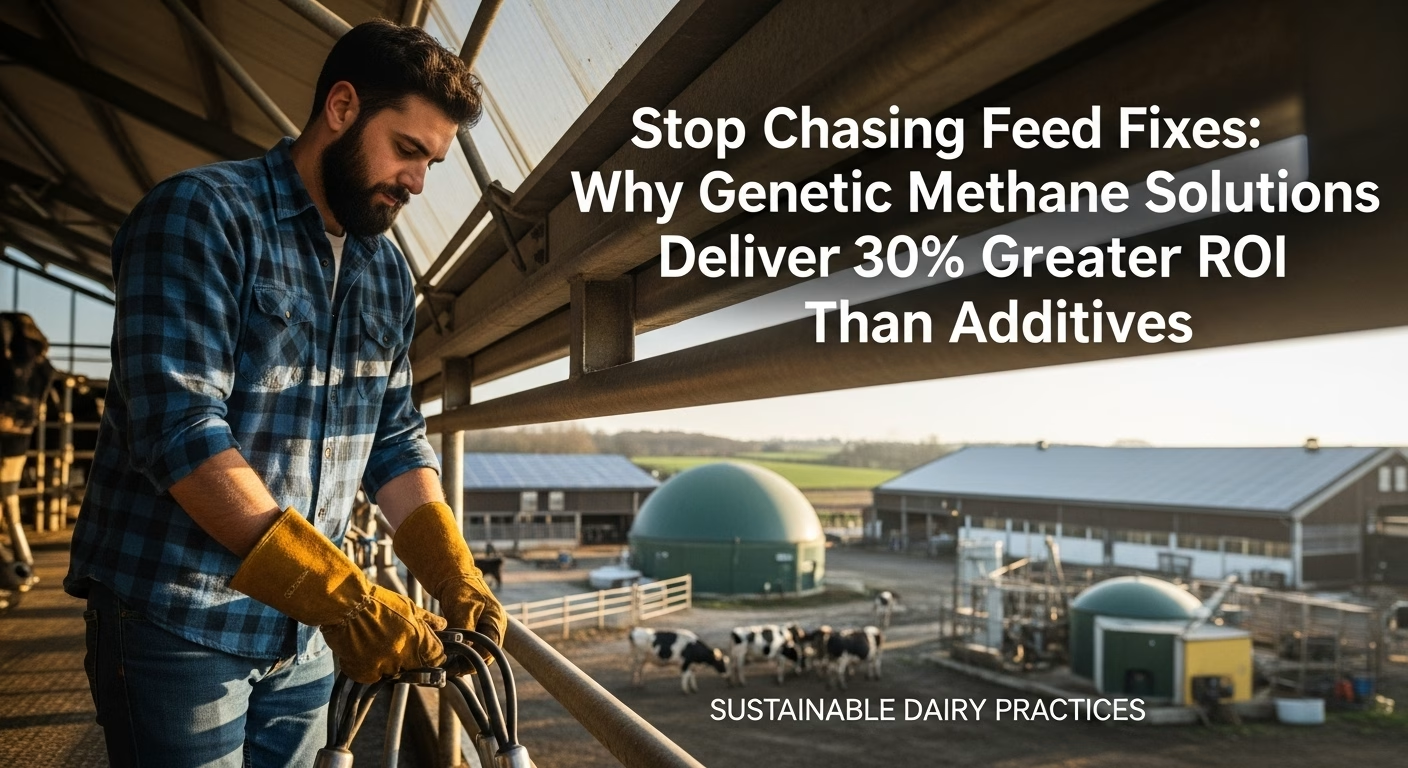
While your feed rep is pushing the latest 0/cow methane additive with temporary results, countries like Canada and the Netherlands are breeding permanent 25% emission cuts that compound every generation. The $27.4 million Bezos Earth Fund investment isn’t going to feed companies—it’s backing genetic solutions that deliver once and keep delivering forever.
The dairy industry has a methane problem, and we’ve been solving it backward. While everyone’s obsessing over the latest seaweed supplement promising to cut emissions by 50%, smart farmers in 25 countries are quietly building herds that naturally produce 30% less methane without touching their DMI calculations. The difference? They’re thinking like geneticists, not like customers at the feed store.
Jeff Bezos just dropped $27.4 million on livestock genetics research, and it’s not because he’s bored with space travel. The Bezos Earth Fund, partnering with the Global Methane Hub, is betting big on permanent solutions rather than expensive daily treatments. This isn’t feel-good environmentalism—cold, hard economics could revolutionize how you think about TPI scores and genetic merit.
But here’s the critical question the industry refuses to ask: Why are we still treating the symptoms instead of breeding away the cause?
Why Feed Additives Are the Industry’s Expensive Subscription Service
Let’s talk numbers that matter to your milk check. That fancy methane-reducing feed additive your nutritionist is recommending? It’ll cost you $150-300 per cow annually. Every year. Forever (Who Will Foot the Bill for Methane-Reducing Feed Additives in Dairy Farming). Compare that to genetic selection, where you make the investment once through superior genomic testing and EBVs, then reap the benefits for generations.
Think of it this way: feed additives are like paying for Netflix—stop the subscription, lose the benefits. Genetic selection is like buying the entire movie collection—pay once to own it forever.
The Feed Additive Reality Check:
- Seaweed-based supplements (Asparagopsis taxiformis) can reduce methane by 50-90% but require continuous application
- Essential oils like Agolin Ruminant adjust the rumen microbiome but need daily feeding (Cutting Dairy’s Methane: 3-NOP’s Promise and Financial Hurdles)
- Yeast cultures (Alltech’s Yea-Sacc) improve production but come with ongoing costs
- The moment you stop feeding them, your methane emissions bounce right back
The feed companies won’t tell you that these additives treat symptoms, not causes. You’re essentially paying a subscription fee to maintain emission reductions that could be permanently bred into your herd through superior genetic merit.
Consider this sobering reality: A recent study found that 3-NOP additive reduced methane by 27.9% but decreased income over feed costs by $0.35 per cow daily—that’s $128,320 annually for a 1,000-cow operation. Are you prepared to sacrifice profitability for temporary emission reductions?
The Genetics Game-Changer: Natural Variation Already Exists in Your Herd
Some of your cows are already methane superstars—you just don’t know it yet. Research shows that natural variation means that some cattle emit up to 30% less methane than their herdmates, even when they are fed identical TMR and managed under similar conditions (Genetic Analysis of Methane Emission Traits in Holstein Dairy Cattle). This isn’t random—it’s genetically controlled, with heritability values ranging from 0.16 to 0.27 for different methane traits (Genetic Analysis of Methane Emission Traits in Holstein Dairy Cattle).
Wageningen University measured methane emissions from 14,000 dairy cows across 3 million AMS visits. What they discovered challenges everything the industry assumes about methane reduction. The lowest-emitting cows weren’t necessarily the smallest or lowest-producing. They were simply more energy-efficient in converting feed to milk.
The Energy Efficiency Connection
Here’s the part that should get every dairy farmer’s attention: methane emissions represent 4-7% energy loss for the animal. When cattle produce methane through enteric fermentation, they’re literally belching away ME (metabolizable energy) you paid for. Animals producing less methane are what Angus Genetics Inc. calls “lower input cost kind of cattle.”
Think about it this way: if a cow loses less energy through methane, she converts more feed into components. That’s immediate cost savings without changing a single thing about your nutrition program or transition period management.
Why This Matters for Your Operation
For a 100-cow herd averaging 80 pounds of milk per day, that 4-7% energy efficiency improvement could mean:
- Feed cost savings: $4,000-7,000 annually on a $100,000 feed budget
- Improved lactation curves: More persistent milk production from better energy conversion
- Enhanced reproductive performance: Less metabolic stress during transition periods
Here’s a scenario that should make you rethink your breeding strategy: Take two Holstein cows producing 85 pounds of milk daily. Cow A emits 450g of methane daily, while Cow B emits 315g—a 30% difference. Over a 305-day lactation, Cow B saves approximately 41kg of methane emissions while likely converting feed more efficiently. Which cow would you rather have 100 copies of in your herd?
The $27.4 Million Bet on Permanent Solutions
Why Angus Genetics Inc. Said Yes to Bezos
Angus Genetics Inc. (AGI) received $4.85 million to lead North American research on low-methane beef genetics. AGI President Kelli Retallick-Riley was initially skeptical—methane research can be “polarizing within our industry.” However, two factors convinced her: the initiative isn’t controlled by outside forces and uses external funding rather than member dollars.
Over five years, AGI will evaluate the genotypes of more than 10,000 animals while collecting methane emissions data. Their goal isn’t just environmental compliance—it’s identifying “genetically more efficient cattle” that deliver “long-term, low-cost benefits.”
Wageningen University’s Dairy Revolution
The Dutch researchers aren’t thinking small. Their .7 million grant targets a 25% reduction in methane emissions over 25 years through genomics and breeding programs. That translates to a 1% annual improvement that compounds every generation—like earning interest on your genetic investments.
Wageningen has already demonstrated this work without compromising production traits. They proved selection for low methane could occur “without ignoring all the other important traits in the breeding programs, such as health, fertility, longevity, and productivity.”
But here’s the uncomfortable truth the industry won’t discuss: While we’re debating whether to invest in genetic solutions, other livestock sectors are already reaping the benefits. Why has dairy been so slow to embrace what beef and even poultry producers have already proven works?
Global Implementation: Learning from International Leaders
Regional Comparison: Who’s Leading the Charge
| Region | Implementation Status | Key Metrics | Economic Incentives |
| Netherlands | 30% methane reduction target by 2030 | 14,000 cows measured via AMS systems | FrieslandCampina pays premiums for low-emission milk |
| Canada | National genetic evaluations active (Canadian dairy cows among first in world bred to belch less methane) | >70% reliability for genotyped animals | Lactanet offers Methane Efficiency EBVs |
| United States | AGI collecting 10,000+ animal data | Integration with existing EPD systems | California Low Carbon Fuel Standard rewards |
| Europe | Multi-country consortium active | 50 institutions across 25 countries | EU climate policy alignment |
| New Zealand | Research participation | Focus on pastoral systems | Market positioning for exports |
Why This Matters for Your Operation
Low-methane genetics could become a competitive advantage if you’re exporting dairy products, particularly to EU markets. European consumers increasingly demand climate-smart dairy products and genetic solutions provide verifiable, permanent emission reductions.
Canada’s Lactanet has already launched the world’s first national genomic methane evaluation, producing results from Holstein cows and heifers on 6,000 farms representing nearly 60% of Canada’s dairy operations. Canadian methane emissions from dairy cows vary widely, from 250 to 750 grams per day—a 200% variation that proves genetic potential exists today.
The Technology Making It Scalable: From Research Lab to Your Parlor
Breakthrough: Milk MIR Analysis
The biggest breakthrough isn’t in genetics—it’s in measurement technology. Direct methane measurement using specialized equipment costs $50,000+ per system. But, researchers have cracked the scalability code using Milk Mid-Infrared (MIR) spectral data.
Your current milk quality analysis already collects this data routinely. AI and machine learning can now predict methane emissions with an 85% genetic correlation to direct measurements. This means you can identify low-methane genetics using data you’re already collecting for butterfat %, protein content, and SCC counts.
Global Data, Local Application
The Global Methane Genetics Initiative plans to sample over 100,000 animals across different breeds and production environments. All this data will be publicly available, enabling prediction of methane emissions for any animal from participating breeds.
Countries implementing methane genetic evaluations—Canada, Netherlands, Spain—show no production trade-offs when selecting for efficiency rather than raw methane output. Lactanet in Canada already offers genetic evaluations for Methane Efficiency in Holstein cattle with over 70% reliability for genotyped animals (Reducing dairy cattle methane emissions through genetic improvement).
Implementation Timeline for Your Operation
- Immediate (2025): Request methane efficiency data when evaluating AI sires
- 6-12 months: Incorporate methane EBVs into breeding decisions
- 2-3 years: First progeny expressing improved methane efficiency
- 5-10 years: Significant herd-wide improvements in energy efficiency
What’s stopping you from starting this process today? Your AI company likely already has access to bulls with methane efficiency data—you just need to ask for it.
The Economics That Matter to Your Milk Check
Immediate Returns vs. Ongoing Costs
Let’s break down the real economics using industry-standard numbers:
Feed Additive Approach:
- Annual cost: $150-300 per cow
- 100-cow herd: $15,000-30,000 annually
- 10-year total: $150,000-300,000
- Benefits: Temporary, require continuous application
Genetic Selection Approach:
- Initial investment: Superior AI sires ($50-100 per breeding)
- Ongoing costs: Zero
- Feed efficiency gains: 4-7% of feed costs ($4,000-7,000 annually for 100-cow herd)
- Benefits: Permanent, compound every generation
Think of genetic selection, like installing solar panels versus feed additives, like paying your electric bill forever.
Market Premiums Are Already Here
FrieslandCampina already pays premium prices for low-emission milk. The Netherlands has committed to 30% methane reduction by 2030. California’s Low Carbon Fuel Standard rewards methane reduction today. These aren’t future possibilities—they’re current market realities creating additional revenue streams for climate-smart farmers.
Why This Matters for Your Operation
Progressive dairy processors are beginning to differentiate based on sustainability metrics. Early adopters of low-methane genetics position themselves for:
- Premium milk prices: $0.50-1.00 per hundredweight premiums emerging
- Supply chain preferences: Access to sustainability-focused markets
- Regulatory compliance: Ahead of mandated emission reductions
Real-world example: A recent study using the Dairy Wellness Profit (DWP$) index found that enteric methane intensity decreased by 0.00017 kg CO2e/kg FPCM for each (Reduction of environmental effects through genetic selection). With the average herd making
genetic progress annually, lifetime enteric methane intensity is expected to be 2.5% lower for each year’s replacement heifers.
The Bulls and Tools You Need Now
Canadian Leadership in Methane Genetics
Lactanet in Canada launched a national genetic evaluation for Methane Efficiency in Holstein cattle, achieving over 70% reliability for genotyped young bulls and heifers. This enables producers to select for reduced methane without sacrificing production traits.
Integration with Existing Tools
AGI plans to integrate methane efficiency into genomic-enhanced Expected Progeny Differences (EPDs). This means selecting for low methane becomes as simple as choosing bulls with favorable TPI scores for any other trait. No new technologies to learn, and no management changes are required.
Implementation Checklist for Your Operation
✓ Request genomic testing for methane efficiency from your AI company ✓ Include methane EBVs in sire selection criteria ✓ Track feed efficiency metrics in your data management system ✓ Monitor lactation curves for energy efficiency improvements ✓ Document sustainability practices for premium milk opportunities
Overcoming Industry Resistance: The Adoption Reality Check
What This Means for Your Operation
A petition has emerged calling for the American Angus Association to return the Bezos grant, arguing that accepting funding for methane research endorses a narrative portraying cattle as environmental problems. This resistance reflects broader industry concerns about external pressure and regulatory implications.
However, smart farmers focus on economics: improved feed efficiency equals better profitability, regardless of environmental considerations. The correlation between low methane and energy efficiency means you’re optimizing for performance, not just compliance.
Addressing Common Concerns
“Will selecting for low methane hurt production?” International data shows methane-efficient cattle maintain production levels while improving feed conversion. A Spanish study demonstrated that while incorporating methane into breeding objectives had minimal impact on production traits, it could achieve a 20% reduction in methane production over 10 years through selective breeding (Mitigation of greenhouse gases in dairy cattle via genetic selection).
“Is this just another environmental regulation?” Market incentives are already emerging independent of regulations. FrieslandCampina pays premiums today. Focus on the business case: lower input costs and potential premium payments.
“Do we really need this complexity?” Integration with existing EPD and TPI systems means no additional complexity. You’re already making genetic selections, which adds another profitable trait to consider.
Here’s the reality check no one wants to discuss: While we debate complexity, other industries have moved forward. The pork industry just approved gene editing for disease resistance, saving $1.2 billion annually. When did dairy become the industry that chooses expensive daily treatments over permanent genetic solutions?
Global Collaboration, Local Benefits: The International Advantage
Learning from International Leaders
The Global Methane Genetics Initiative spans four continents with over 50 institutions in 25+ countries. This unprecedented collaboration ensures genetic tools work across breeds, production systems, and geographic regions.
Regional Market Advantages
- US producers: Position for potential carbon credit programs and export market preferences
- EU operations: Align with aggressive climate targets and consumer demands
- Export-focused farms: Develop sustainability credentials for international markets
- Organic/premium producers: Add scientifically-backed sustainability claims
Why This Matters for Your Operation
International collaboration means faster development of reliable genetic tools. Instead of waiting decades for domestic research, you benefit from global data collection and validation across diverse production environments.
Research shows that achieving net-zero greenhouse gas emissions in dairy production will require a>50% reduction in enteric methane emissions, making genetic selection a crucial component of comprehensive climate strategies (The Path to Net-Zero in Dairy Production).
Critical Industry Challenge: Conventional Wisdom vs. Evidence
The Uncomfortable Truth About Industry Priorities
The dairy industry has spent decades perfecting nutritional approaches to maximize production while largely ignoring the genetic potential for efficiency improvements. This represents a fundamental misallocation of resources and research priorities.
Consider this: We’ll spend $50,000 on a new TMR mixer to improve feed efficiency by 2-3% but resist investing in genetic tools that could deliver permanent 4-7% efficiency improvements. Why do we embrace mechanical solutions while questioning biological ones?
Evidence-Based Alternative Strategy
Research demonstrates that genetic improvements in methane efficiency are heritable (0.16-0.27 heritability) and strongly correlated with overall efficiency metrics (Genetic Analysis of Methane Emission Traits in Holstein Dairy Cattle). The evidence is clear: genetic selection works.
The path forward requires challenging three industry assumptions:
- That feed-based solutions are more practical than genetic ones
- That environmental traits compromise production performance
- Temporary fixes are preferable to permanent improvements
Each assumption has been disproven by research, yet industry adoption remains slow.
Future Industry Implications: What’s Coming Whether You’re Ready or Not
The Regulatory Reality
Climate regulations aren’t slowing down. The Netherlands requires a 30% methane reduction by 2030. California’s Low Carbon Fuel Standard already rewards emission reductions. Federal programs are expanding carbon credit opportunities.
Early adopters position themselves as regulatory winners rather than victims. Late adopters will face compliance costs without the efficiency benefits that genetic selection provides.
Market Evolution
Consumer demand for sustainable dairy products continues growing. Export markets increasingly require sustainability credentials. Premium processors are beginning to differentiate based on carbon footprint metrics.
Will you be positioned as a solution provider or a problem that needs solving?
The Bottom Line: Genetics Beat Subscriptions Every Time
The dairy industry’s obsession with feed-based methane solutions is economically backward when genetic selection offers permanent, accumulating benefits without ongoing costs. While your competitors are signing up for expensive subscription services disguised as feed additives, you could build a herd that naturally produces less methane while converting feed more efficiently.
The numbers don’t lie:
- Feed additives cost $150-300 per cow annually and require continuous application (Who Will Foot the Bill for Methane-Reducing Feed Additives)
- Genetic improvements cost nothing after sire selection and deliver 4-7% feed efficiency improvements that compound every generation
- Countries implementing methane genetics show no production trade-offs while improving profitability (Canadian dairy cows are among the first in the world bred to belch less methane)
Your Action Plan for Immediate Implementation:
- Start now: Contact your AI provider about methane efficiency genetics—request bulls with favorable methane EBVs for your next breeding decisions
- Track metrics: Implement feed conversion monitoring in your data management system to establish baseline efficiency measurements
- Document benefits: Record improvements for potential premium milk opportunities and carbon credit programs
- Stay informed: Follow international developments in methane genetics through industry publications and university extension programs
- Network: Join producer discussion groups exploring climate-smart breeding strategies
Critical Questions for Self-Assessment:
- Are you treating symptoms or breeding solutions? If you spend more on feed additives than genetic improvements, you choose expensive band-aids over permanent fixes.
- What’s your 10-year methane strategy? Feed additives will cost you $15,000-30,000 annually for a 100-cow herd. Genetic selection costs nothing after implementation and improves efficiency permanently.
- How much energy loss can you afford? With methane representing 4-12% of energy waste, can you ignore genetic tools that redirect this loss toward productive purposes?
Think of methane efficiency like udder health—you wouldn’t ignore SCC counts because they indicate energy waste through an immune response. Methane emissions indicate energy waste through inefficient digestion. Both impact your bottom line, and both can be improved through genetics.
The Bezos Earth Fund didn’t invest $27.4 million in feed companies. They invested in genetics because permanent solutions beat expensive subscriptions every time. The only question is whether you’ll join the genetic revolution or keep funding the feed additive industry’s retirement plans.
Ready to revolutionize your breeding program? Start by requesting methane efficiency EBVs for your next sire selections and watch your feed conversion improve while your energy costs shrink—permanently. The technology exists, the genetics work, and the economic benefits are proven. What are you waiting for?
Implementation Support Resources:
- Contact your AI provider about methane efficiency genetics availability
- Join producer discussion groups exploring climate-smart breeding through university extension programs
- Consider genomic testing services that include methane traits in their evaluation panels (Reducing dairy cattle methane emissions through genetic improvement)
- Explore carbon credit opportunities through programs like California’s Low Carbon Fuel Standard
The choice is yours: continue paying subscription fees for temporary solutions or invest once in permanent genetic improvements that compound every generation. Which strategy aligns with your long-term vision for profitable, sustainable dairy production?
Learn More:
- Why The Industry’s Obsession with Feed Additives Is Costing You Money While Genetics Offers the Real Solution – Discover practical strategies for immediately integrating methane efficiency into your breeding program, with actionable tips on selecting bulls and leveraging milk data for permanent, cost-effective emission reductions.
- Cash from Cow Burps: How Dairy Farmers Are Turning Climate Challenges Into $1,200/Head Profit – See how leading producers are turning methane reduction into real profit with a mix of genetics, feed, and manure management—plus case studies showing measurable ROI and premium market access.
- Inspiring Birth of Hilda: IVF Calf Paves the Path to a Greener Dairy Future – Explore the future of dairy innovation with the Cool Cows project, which demonstrates how advanced genetic tools like IVF can double the rate of methane-reducing progress and help you build a more sustainable, profitable herd faster.
 Join the Revolution!
 Join the Revolution!
Join over 30,000 successful dairy professionals who rely on Bullvine Weekly for their competitive edge. Delivered directly to your inbox each week, our exclusive industry insights help you make smarter decisions while saving precious hours every week. Never miss critical updates on milk production trends, breakthrough technologies, and profit-boosting strategies that top producers are already implementing. Subscribe now to transform your dairy operation’s efficiency and profitability—your future success is just one click away.




